
If you’re just starting out as a notary public in the Beehive State, or you’ve been practicing for years, getting a handle on Utah notary stamp requirements is essential. After all, every official act you perform hinges on that durable little seal. But what do these requirements really look like, and how can you maintain full compliance? In this guide, we’ll explore everything from proper ink colors to commission renewal timelines so you can notarize documents accurately and confidently.
Learn Utah Notary Stamp Basics
You might be surprised at how much detail goes into your simple, everyday notary stamp. The state’s requirements cover the stamp’s design, ink color, placement, and even how you use it. Here’s a closer look at the fundamentals.
Comply With Legal Mandates
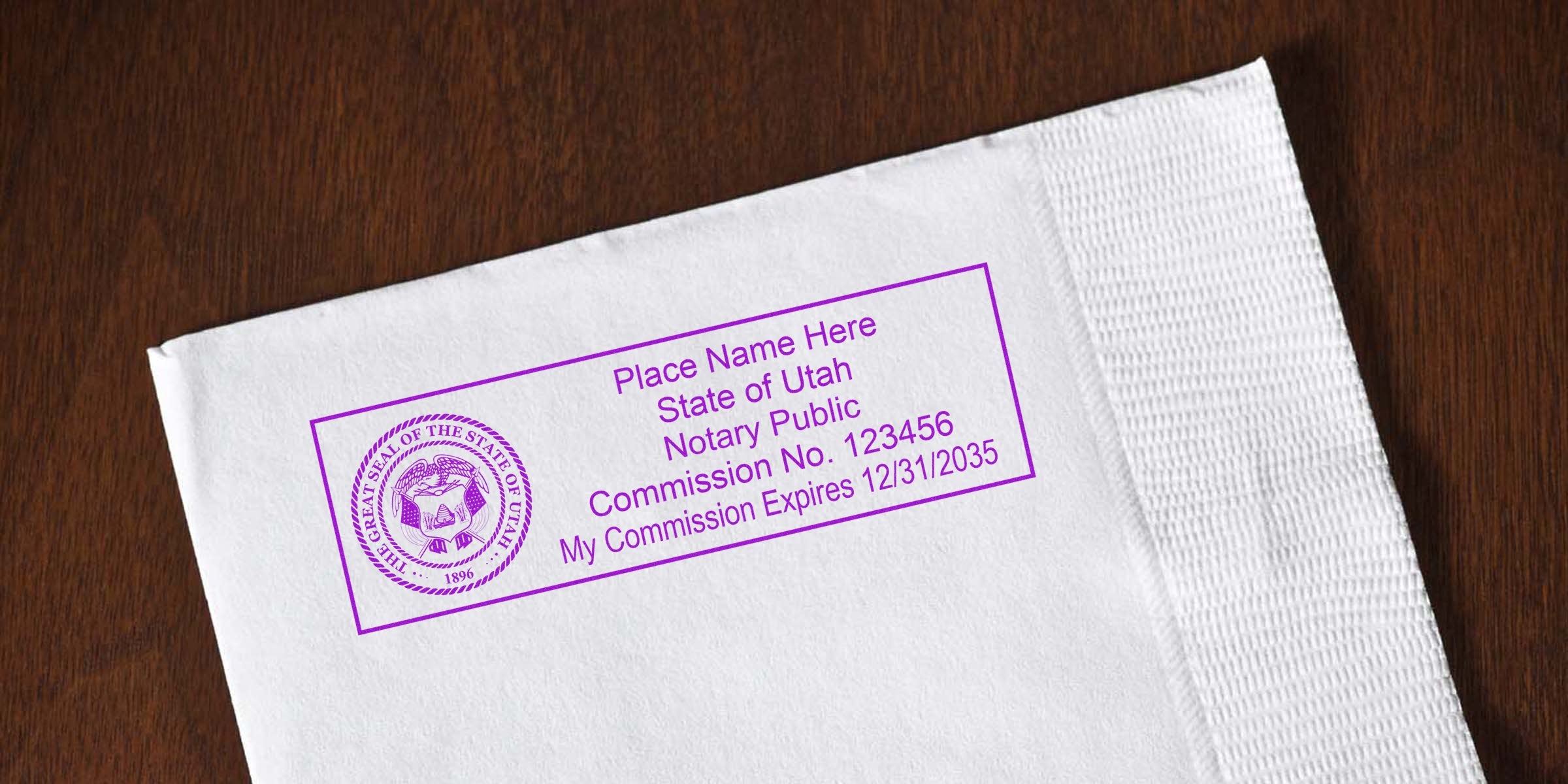
Under Utah law, every official notarial act must include a notarial certificate (the written statement describing the act) along with your signature and stamp. Your Utah notary stamp should feature:
- Your full legal name
- The words “Notary Public”
- The state of Utah
- Your commission expiration date
Think of these elements as the vital ingredients ensuring your notarial acts stand up in court and meet state guidelines. If any of that information goes missing, you risk the document being rejected by the county clerk or other receiving authority.
Keep Your Stamp Near Your Signature
You’re responsible for placing your stamp near your official signature on the notarial certificate, which helps recipients quickly verify authenticity. Make sure it’s sharp, legible, and photographically reproducible. In other words, the impression needs to be crisp enough that someone can scan, copy, or photograph the document without losing critical details.
Understand Territorial Boundaries
Ever wonder if you can sign and stamp documents when you’re on vacation in a neighboring state? The short answer: no. Utah notaries cannot exercise their duties outside of state lines, and out-of-state notaries can’t notarize inside Utah. Your notarial commission is valid only within Utah boundaries. So, once you step outside the state, leave that stamp in your bag.
Pick the Correct Ink Color
In many states, black or blue ink is the norm, partly because it’s easily reproducible. However, Utah is a bit unique in that it specifically requires notary seals to use purple ink. This distinction matters more than you might think.
Why Purple Ink?
Utah’s official stance is that notary seals must be clear and easily discernible. Purple ink stands out from the typical black text on most printed documents, which helps with photographic reproduction. That color contrast reduces confusion by ensuring your seal is immediately noticeable and can’t be mistaken for part of the standard document text.
Keep Extra Ink on Hand
Even if your stamp is self-inking, a fresh supply of the right color can save you from a last-minute scramble. Utah notary stamp requirements can’t be overlooked just because your stamp is running dry. Make it a habit to test your stamp on a spare piece of paper every few weeks to confirm you’re still getting a clean, bold impression. If it’s fading, it’s time for a refill or a new stamp.
Renew Your Commission Correctly
Picture this scenario: your current notary commission is about to expire, and you’re unsure if you can continue using your old stamp once the new commission kicks in. The state law is pretty direct on this point. A new notary stamp should be ordered with every new commission, reflecting the updated dates and info.
Follow the Application Process
To renew your commission, you’ll need to fill out a new application through the State of Utah. The fee for the application is $55.00, and you must also pay a $40.00 testing fee—unless you’re retaking the test within 30 days of a previous failure, in which case the process repeats. The test ensures that new and renewing notaries alike remain informed on the current regulations.
Take a New Oath
Even if you’ve been a notary for years, you won’t escape the oath requirement. The oath acts as your formal promise that you’ll uphold the state’s notary standards. Be sure to do this step before you start using your newly commissioned stamp. The oath is typically quick, but skipping it invalidates your new commission.
Order Your Updated Stamp
Once your commission is approved, waste no time ordering your new notary stamp. Your fresh stamp should reflect your updated commission details—specifically, the new expiration date so that all your future notarizations stay legally valid. Avoid using your old stamp as soon as your current commission expires. Instead, properly dispose of it and get that new seal in action.
Dispose of Your Expired Stamp
It might sound harsh to toss out an old stamp—it served you well, after all. But the state sees expired notary stamps as potential liabilities. If another person got hold of your outdated seal, they could misuse it. Here’s how to keep your professional integrity intact.
Destroy the Impression Area
When your commission ends, remove or obliterate the rubber or inked portion that actually makes the impression. Some people choose to cut out the rubber portion on the stamp to ensure it’s no longer usable. Others shred or burn the piece after removal. The key is rendering it unreadable, so it can’t create an unauthorized notary seal.
Avoid “Just in Case” Storage
You might be tempted to stash your old stamp in a drawer as a backup, but that’s not a good idea. Old stamps with outdated info can create confusion and legal risks. The safest route is to destroy them professionally and move forward with your new commission’s seal.
Have a Notarial Certificate Ready
Utah notary law says that affixing your stamp without a notarial certificate is a violation. It can be easy to forget if you’re in a rush, but the certificate is the heart of the notarial process. Make sure you always attach or include that certificate with each document you stamp.
Keep Certificates in Your Inventory
Staying organized goes a long way, so keep a stack of notarial certificate forms in your notary bag or briefcase. If you run out or notice you’re running low, restock immediately. Accidentally missing a certificate invalidates the notarization, which can lead to errors or even disciplinary measures from the state.
Differentiate Types of Certificates
Remember, there are different notarial acts, like acknowledgments, jurats, and oaths or affirmations. Each act typically requires a specific certificate wording. If you’re administering an oath, for example, your certificate needs to reflect that. Be sure you’re using the correct language for the type of service you’re performing.
Consider a Notary Journal
Interestingly, Utah does not mandate a written notary journal for standard notarizations. However, it’s a recommended best practice for many reasons, especially legal protection. If a signing is ever questioned in court, your journal can be your best friend, proving you followed the correct procedure.
Journal Basics
If you decide to keep one, your journal can be simple or elaborate. Some prefer a basic log with the signer’s name, type of ID, and date. Others track each act in detail—address, phone number, and a quick note confirming the document type. Either approach is fine, but more detail can mean better legal backing.
Remote Notarization Requires Electronic Journals
If you’re a remote notary in Utah, the story is different. You’re required to keep a secure digital journal of each notarization. Approved Remote Notary Vendors integrate an electronic journal function right into their notarization software. These records are just as important as paper logs, helping keep your remote notarizations transparent and defensible.
Stay Bonded and Protected
Utah demands every notary maintain a $5,000 bond to protect the public from potential notarial errors or misconduct. If a mistake causes someone financial harm, the bond covers it—up to that $5,000 limit. Beyond that, you could be personally liable.
Bond Is Mandatory
The bond is a non-negotiable requirement for all commissioned Utah notaries. Luckily, many surety companies offer four-year notary bonds for around $50. It’s a small price to pay for peace of mind and state compliance.
Consider Errors and Omissions Insurance
While not required, errors and omissions (E&O) insurance is a popular option. This policy adds an extra layer of personal protection if someone tries to hold you financially responsible for an unintentional error. It’s not mandated by law, but it can be a lifesaver if a dispute escalates.
Understand the Fees and Supplies
Not sure how much this whole process costs? Let’s break down a quick snapshot of the typical fees and supplies needed for a Utah notary public. These figures aren’t carved in stone but can be helpful for planning.
| Item | Approx. Cost |
|---|---|
| State Application Fee | $55.00 |
| State Testing Fee | $40.00 |
| Surety Bond (4-Year) | $50.00 |
| Utah Notary Stamp | $25.00 |
| Notary Journal (Optional) | $10.00–$15.00 |
Along with these basics, consider whether you need an embosser (an optional raised seal). While not legally required in Utah, an embossed seal can add security and flair to important documents.
Work With a Trusted Supplier
Where you get your notary stamp and supplies matters. You want a provider who knows Utah notary stamp requirements inside and out, ensuring you get a compliant, official-looking seal the first time around.
Look for a State Board Guarantee
With so much at stake—document rejections, potential fines, and your professional reputation—you need a dependable company. Acorn Sales has been in the stamp and seal-making business for over 60 years, offering quick turnaround times, professional designs, and a state board guarantee. That means each stamp or seal meets the legal specifications for your state, so you can order with confidence.
Explore Utah Notary Supplies
When you’re collecting everything you need, be sure to check out utah notary supplies. Whether that’s a new seal, an extra bottle of purple ink, or a fresh, bound journal, staying stocked up helps you function smoothly. You’ll find that keeping your notary bag well-equipped can save you and your clients from any last-minute inconveniences.
Follow Best Practices for Impressions
Even the perfect stamp won’t do much good if your impression is blurry or partially missing. Lets be honest: a faint, half-lost seal is basically a no-go.
Test on Scrap Paper
Before notarizing any document—especially if your bag or briefcase has been tossed around—test your stamp on a blank sheet. You’ll confirm that the ink is consistent, the impression is straight, and everything is readable. If something looks off, change the ink or reposition the stamp until you get a crisp seal.
Aim for a Clear, Centered Image
Don’t put the stamp too close to text or near the edge of a paper. You risk a partial stamp or an overlap that’s unreadable. Give yourself enough space so the entire seal shows, ensuring the receiving authority can verify the stamp’s details without squinting or second-guessing its authenticity.
Know the Scope of Your Duties
Along with using the right stamp, it’s essential to confirm you’re performing the correct notarization service for each client. For instance, you can administer acknowledgments, jurats, or take verifications upon oath. But you can’t create or edit the document itself, offer legal advice (unless you’re separately licensed to practice law), or notarize a document without the signer physically or digitally present.
Types of Notarial Acts
- Acknowledgments: The signer appears before you and acknowledges signing the document.
- Jurats: You watch the individual sign, then administer an oath.
- Oaths and Affirmations: You officially swear someone in to truthfulness.
- Copy Certifications: You certify that a copy matches the original document in your possession (allowed in specific circumstances under Utah law).
Each act requires precise certificate language. Using the wrong certificate can make your notarization invalid, so always confirm which act your client needs.
Avoid Conflicts of Interest
You shouldn’t notarize if you have a direct financial or personal interest in the document. While not every scenario is black-and-white, using your best judgment is part of your duty. If you stand to gain from the document’s outcome, it might be better to refer the signer to another notary. This precaution keeps your notarial integrity above reproach.
Practice Good Record-Keeping
While you’re not legally required to maintain a written journal (unless you’re a remote notary), it’s still a wise practice to document your acts. That documentation can protect you from future disputes or accusations that you didn’t verify someone’s identity.
Minimal vs. Detailed Logs
Go with whatever style suits you, but do keep consistent records once you start. If you prefer something thorough, note the signer’s details, ID type, date, time, and specific document. If you’d rather keep it short, that’s fine, too—just be systematic so you can easily look up a date or name if a question arises.
Remote Journal Requirements
For remote notaries, an electronic journal is required by the Utah Code. The journal must capture enough information to show every step you took, from verifying the signer’s identity to carrying out the audio-video conference. These details help maintain trust in the remote notarization process.
Handle Special Circumstances
Notaries sometimes encounter unusual scenarios—and in these cases, it’s good to know if your everyday approach still applies. Think about foreign-language documents, clients with limited English skills, or even signers who can’t hold a pen.
Foreign Language Considerations
Utah doesn’t require documents to be in English. However, you do need to be certain the signer understands what they’re signing. If the signer only speaks Spanish and you don’t, consider employing a translator. The notary certificate itself, though, should ideally be in English to meet Utah’s legal standards.
Physical Limitations
For a signer who physically cannot sign (due to injury or disability), some states allow notaries to sign on their behalf, but only if specific legal criteria are met. Always consult the Utah Code or an attorney for the exact procedure. When in doubt, it’s safest to refer them to a resource or an official who can confirm the best approach.
Troubleshoot Common Issues
Mistakes happen, but they needn’t turn into legal catastrophes. If you spot an error, the best route is usually to fix it as soon as possible, guided by Utah’s notary laws.
Mistake on the Certificate
If the certificate has a misspelled name or incorrect date, you can correct it—just make sure the signer is present and that you both initial the fixes. If in doubt, fill out a new notarial certificate altogether, ensuring absolute clarity.
Faded or Duplicate Impression
If your stamp impression is faded or slightly offset, you can typically place a second impression near the first. However, make a note in your journal about the duplication, so you’re never accused of tampering. If the receiving authority objects, you may need to re-notarize the document with a fresh form.
Safeguard Your Stamp
A lost or stolen notary stamp can endanger your commission and lead to fraudulent notarial acts. Always store it in a secure location—like a locked drawer—when not in use. Never lend your stamp to anyone, not even a trusted coworker. You alone are authorized to use your seal.
Report a Missing Stamp
If your stamp goes missing, notify the state immediately. While it’s not the scenario anyone hopes for, quick action can prevent unauthorized notarizations. The state may direct you to file a police report if you suspect theft.
Recap the Key Takeaways
By now, you’ve got a firm handle on the short list of must-dos and best practices for your Utah notary stamp. Here’s a cheat sheet:
- Use a purple-ink stamp bearing your name, “Notary Public,” “State of Utah,” and your commission expiration date.
- Affix your stamp near your signature on every notarial certificate.
- Renew your commission before it expires, submit a new application and oath, and get a new stamp for your next term.
- Destroy your old stamp after your commission ends, preventing misuse.
- Maintain a notarial certificate for every notarization, as required by law.
- Consider keeping a journal for added legal protection, even if it’s not mandated.
- Stay bonded with a $5,000 surety bond, and optionally invest in E&O insurance for further peace of mind.
- Work with a trusted supplier like Acorn Sales for high-quality stamps and quick turnarounds.
- Always test your stamp’s impression before notarizing, especially if you haven’t used it in a while.
Follow these guidelines, and you’ll be well on your way to consistently reliable, legally sound notarizations.
By keeping these points in mind, you’ll confidently navigate every notarial act, from the simplest acknowledgment to the most detailed jurat. Happy stamping!
Frequently Asked Questions
Do I really need to get a new stamp every time I renew my commission?
Yes. Utah law indicates that once your old commission expires, the stamp attached to that commission is no longer valid. You must order a new stamp reflecting your updated commission details before performing any new notarial acts.
Can I use black ink if I already have that color on hand?
Not in most circumstances. Utah specifically requires that notary seals use purple ink due to its clarity and uniqueness. This helps ensure your seal is easily distinguishable.
Is a journal optional or mandatory in Utah?
For standard in-person notarizations, a paper journal is optional, although highly recommended. If you practice remote notarization, an electronic journal is mandatory to comply with Utah Code.
What if my stamp impression fades on an important document?
You can typically make another impression on the same document, as long as it doesn’t overlap crucial text. To be safe, note the duplicate impression in your journal if you maintain one.
Where can I find Utah notary supplies for a quick turnaround?
Check out utah notary supplies from Acorn Sales. They’ve offered professional notary products for over 60 years, so you’ll find everything you need, including state board-compliant stamps, certificates, and journals.








