
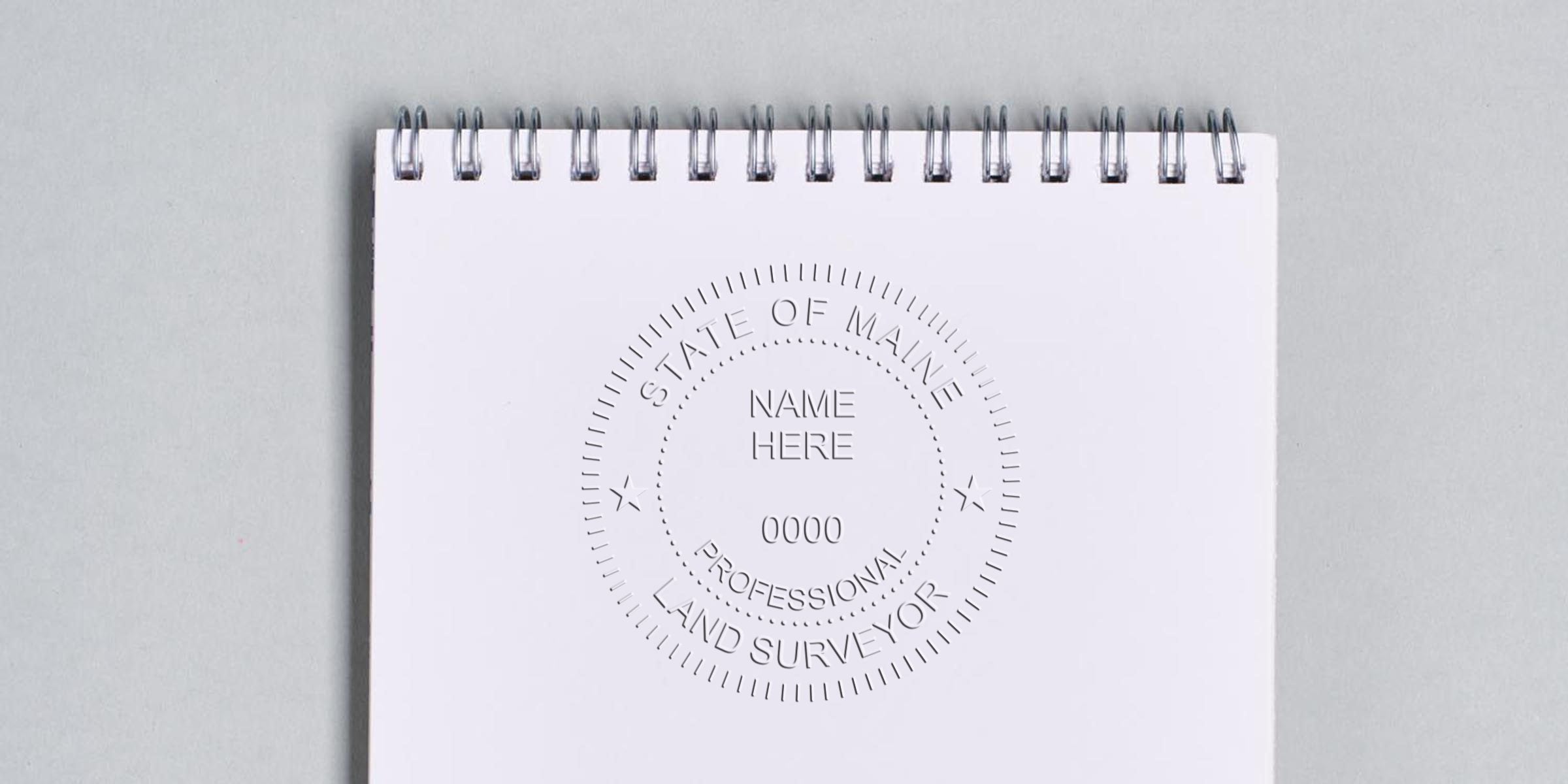
If you’re a licensed land surveyor in Maine, chances are you’ve come across the phrase “maine land surveyor seal embosser.” It might sound like just another tool in the office, but let me tell you, it’s a game-changer. This embosser is not only a mark of your professional authority but also a handy way to keep your documents and plats looking perfectly official. Ready to learn more? Let’s walk through its purpose, the Maine-specific guidelines, and how to get the most out of your embosser so you can make each survey you sign a breeze.
Discover the Purpose
Picture this: You’re submitting a final boundary survey for a local property, and you want to be absolutely sure the documents can’t be mistaken for anything else. An embossed seal literally raises an impression of your credentials on the page, sending a clear statement of legitimacy.
What makes an embosser so useful?
- It physically imprints the paper, adding an element of security to your work.
- It reflects your unique, state-verified credentials.
- It helps distinguish official copies from preliminary versions.
When you apply an image that’s pressed instead of just printed in ink, you signal that the document is final and the information is validated. In other words, the embosser acts like your personal handshake on every survey you complete.
Understand Maine Requirements
If you’re practicing land surveying in Maine, you already know how important it is to keep up with state regulations. These rules ensure that the public trusts land surveyors and that each survey meets a high standard of accuracy, clarity, and authenticity. Maine typically requires professionals to use a seal or stamp that follows state guidelines.
For a deeper look into the specific standards of seals, check out the requirements for Maine Land Surveyor stamps. You’ll find guidance there on size, acceptable formats, and whether digital or physical versions are permitted. In general, the seal must clearly show your name, license number, and the words “State of Maine” along with “Professional Land Surveyor” (or the appropriate abbreviation). If the seal is unreadable or incomplete, it could fail a compliance check.
Why is all of this crucial? It’s simple. Without a compliant seal, you risk having your work sent back or questioned by local authorities. The “maine land surveyor seal embosser” you use should match — in style and content — what’s outlined in Maine’s official statutes, so it’s worth reviewing those guidelines before you order your seal to confirm you’ve got every requirement right.
Explore the Benefits
So, what’s the big deal about embossers in particular? Couldn’t you just use an ink stamp? There are indeed multiple ways to authenticate your documents, but embossers stand out for a few important reasons:
Professional Appearance
Embossed seals have a clean, elevated look. When clients, local government offices, or other surveyors see that raised impression, they immediately recognize the official nature of the papers.-
Durable Mark
The raised impression won’t fade or blur over time, unlike some ink stamps. Even if a document is scanned or photocopied, you’ll still see the imprint’s texture on the original. Security
An embossed seal is harder to tamper with or forge. While not entirely impossible, altering an embossed paper often leaves noticeable damage or evidence of tampering.Compliance and Validation
An embosser, when designed to meet Maine’s standards, keeps you aligned with local regulations. This is especially useful if you ever need to produce an original copy in court or during a dispute.
In short, the embosser offers a straightforward way to convey authority and trustworthiness. If you’re serious about your craft (and I assume you are), it’s well worth the small investment.
Set Up Your Embosser
Once you’ve decided to bring a Maine land surveyor seal embosser into your workflow, there are a few steps you’ll want to take to ensure a smooth setup.
1. Verify Your Details
Double-check the spelling of your name, your license number, and any additional text the state requires. If there’s a single typo, it’ll be on every seal you press. This is why a thorough review is key before you place your order.
2. Choose Your Orientation
Some embossers can press from the top of the page, some from the bottom, and others from the side. Decide how you typically use your seal. For example, if you prefer to position your seal near the bottom boundary line, you’ll want an embosser designed accordingly.
3. Practice on Scrap Paper
Take a few practice runs on blank pages. You’ll quickly notice the right amount of pressure needed and how to position the embosser. Consistency here prevents off-centered or uneven impressions from ending up on official documents.
4. Store It Safely
When you’re done, store the embosser in a secure spot, away from heat, moisture, or unnecessary handling. A padded case or compartment in your desk drawer works well. You don’t want it floating around your vehicle or jammed into a crowded toolbox.
See the Acorn Sales Advantage
Not all embossers are created equal, and if you’re on the hunt for one that checks every box, Acorn Sales has you covered. Established in 1964, Acorn Sales has provided quality stamps and seals to professionals across various industries — including Maine land surveyors like you.
What sets Acorn Sales apart?
- Longevity and Trust: With decades of experience under their belt, they’ve seen just about every requirement and preference out there. If you have a question, they’ll probably have the answer.
- Free Digital Seal: Along with your physical embosser, you can get a digital version of your official seal at no extra cost. That’s a big bonus if you’re sending documents electronically or working with remote clients.
- Maine-Focused Expertise: They know what the state needs, so you won’t have to worry about compliance issues or guesswork.
If reliability matters to you (and let’s be honest, it does), then you’ll appreciate the peace of mind that comes from working with a professional supplier that’s been around for over half a century.
Compare Stamps and Seals
When it comes to authenticating your work, you might weigh the choice between a rubber stamp and a seal embosser. Which option is best for you? Each has its place, and sometimes you might even use both. Here’s a quick look:
| Feature | Seal Embosser | Ink Stamp |
|---|---|---|
| Physical Impression | Raised impression, tamper-evident | Flat stamped ink, could fade |
| Professional Appearance | Refined and classic | Simple but sometimes less formal |
| Durability | Impression lasts indefinitely | Ink may smudge or wear off |
| Setup | Slightly more expensive upfront | Generally cheaper |
| Compliance | Often meets statutory requirements | Also valid but may vary by state |
For official documents, many land surveyors gravitate toward an embosser because of its longevity and sharp, professional look. On the other hand, an ink stamp can be faster if you’re mass-signing documents. Ultimately, it comes down to your personal style, your clients’ expectations, and how meticulously you want to guard against tampering.
Maintain Your Embosser
Once you have your embosser, the last thing you want is a tool that locks up, rusts, or makes crooked impressions. Here’s how to keep it in good shape for the long haul:
Keep It Clean
Every so often, wipe away dust or paper fiber buildup with a soft cloth. Grit can get lodged in the grooves, making your seal appear uneven.
Avoid Excessive Force
Applying more force than recommended won’t create a deeper impression. You might just strain the handle or damage the raised die (the metal piece that creates the embossed image). A gentle but firm press is enough.
Check Alignment Regularly
Over time, even the best-built devices can shift or loosen. If your seal starts to look tilted, carefully adjust the screws or alignment pins (if available). Regular maintenance helps avoid frustrating misprints.
Climate Considerations
If your desk is near a window in the sunny part of the office, consider storing your embosser elsewhere when not in use. Extreme heat, humidity, or cold can affect the metals and cause unwanted warping.
Key Takeaways
- A Maine land surveyor seal embosser is a must if you want to solidify your documents with an official, professional mark.
- Verify you’re following Maine state guidelines about name, license number, and wording, so your seal meets compliance.
- Embossers deliver a secure, authentic finish that ink stamps might not fully replicate.
- Before you invest, confirm the orientation you want, practice on blank pages, and store your embosser in a safe spot.
- For a trusted, all-in-one solution, Acorn Sales offers a physical embosser plus a free digital seal to make your life easier.
By this point, you can see how the right embosser will save you from headaches and elevate your professional presentation. Whether you’re new to the field or have decades of experience, updating your toolkit to include a reliable embosser is a small step that can pay off in a big way.
Feel free to invest in the kind of embosser that makes your work easier, more secure, and more satisfying for everyone who sees your official seal. It’s all about making sure your signature, quite literally, stands out — and with a Maine land surveyor seal embosser, it definitely will.
Frequently Asked Questions
Do I have to use an embosser if I already have an approved stamp?
Maine might allow both stamps and embossers, but you’ll want to confirm with the Board of Licensure for Professional Land Surveyors. Some folks use both, but the raised impression often appears more professional and can be harder to forge.
Is a digital seal acceptable for electronic documents?
Many agencies do accept digital seals, especially if they follow digital security standards. At Acorn Sales, you’ll get a free digital seal with your purchase, making it simple to cover both physical and electronic submissions.
How often should I check my embosser for wear and tear?
A quick inspection every few months should suffice. Look for misaligned parts or any debris in the seal. If impressions seem light or off-center, adjust or clean as needed.
What if my license details change, like if I upgrade or renew my credential?
Whenever license information changes, you’ll likely need a new seal to stay compliant. Verify any updated name or license number as soon as possible, so your embossed documents stay valid.








