
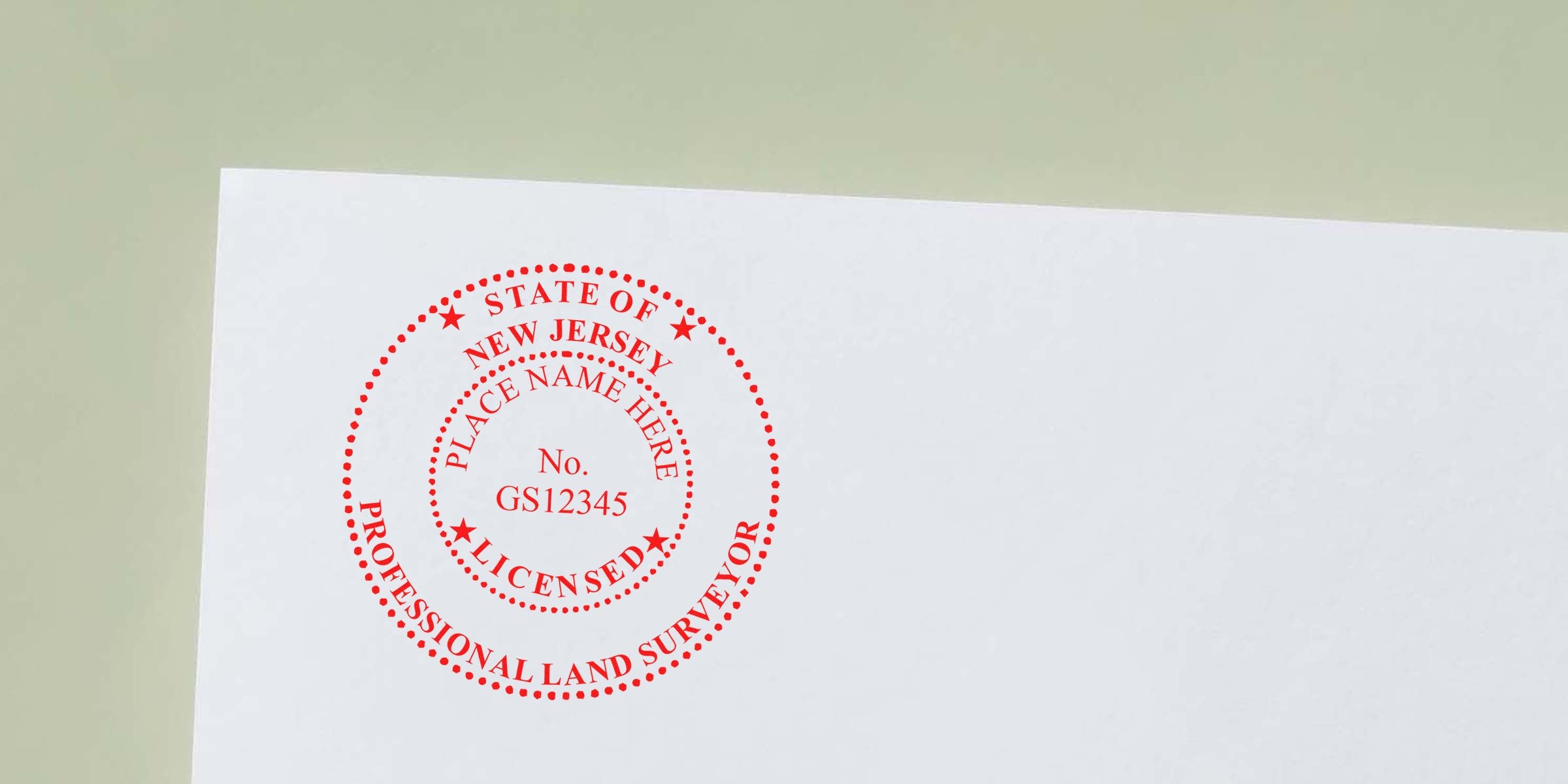
If you’re a licensed land surveyor in the Garden State, there’s one piece of equipment you simply can’t skip—the new jersey land surveyor seal. Think of it as your professional signature, a vital mark that confirms the accuracy and legality of your work. Without a proper seal, your surveys might be viewed with skepticism, and that’s not a spot you want to be in. It’s similar to signing a contract without a signature: sure, the words are there, but they don’t carry much weight. In this post, we’ll walk through why you need this seal, how it aligns with New Jersey regulations, and what to look for when choosing one. You’ll also learn a few expert tips on stamps versus seals, plus find answers to FAQs. By the end, you’ll feel confident about where to get your land surveyor seal and how to use it like a pro.
Know The Land Surveyor Seal’s Role
The Basics
The term “land surveyor seal” refers to the official imprint or impression you place on your completed survey documents, plans, or drawings. This seal often includes your name, your license number, and state-required text. It verifies that you, the licensed professional, stand behind the accuracy and completeness of the work. Imagine you’re handing over critical property boundary plans, and someone wants proof of your qualifications. Your seal is that tangible evidence, like a personal stamp of trust and authenticity.
But why is it so central to your practice? For starters, it outlines your responsibility. When you seal a survey, you’re effectively saying, “I’ve got this covered, and here’s the official proof.” Also, it protects the public from fraudulent or unlicensed work. When a homeowner, contractor, or government agency sees your seal, they gain immediate confidence in those lines, measurements, and notes. No second-guessing equals smoother projects and fewer headaches.
Primary Benefits
Securing your land surveyor seal for New Jersey isn’t just a checkbox on a to-do list. It’s a cornerstone of your professional standing. Here are a few of its top perks:
- Legitimacy in your field: A sealed plan carries more weight than an unsealed one, particularly when you’re dealing with real estate transactions or zoning boards.
- Legal protection: Should there be any dispute over property boundaries, your sealed documents often serve as official legal evidence, backed by your license.
- Industry recognition: Peers and clients know a properly sealed survey is beyond reproach, reflecting accurate math, methodology, and record-taking.
- Prompt project approvals: Municipalities and regulatory offices tend to process projects faster when all documentation is in order, including a properly applied seal.
Essentially, your seal plays two roles at once: it’s your credibility statement and your insurance policy. You stand behind each stroke of your pen (or click of your mouse you used to create the survey) with an official mark that says “I guarantee the quality here.”
Comply With New Jersey Rules
Key Requirements
New Jersey takes professional standards seriously, and land surveyors are no exception. The State Board of Professional Engineers and Land Surveyors has specific rules for how you use and manage your seal. Typically, you need the exact language, format, and layout spelled out in their guidelines. The text around your seal might say something like “Licensed Professional Land Surveyor,” along with your name and license number. Put simply, the board wants to make sure you’re identifiable and properly credentialed.
You’ll want to keep a close eye on updates from the board as well. Regulations can shift, and the last thing you want is to find out your trusty seal no longer meets the latest rule. Routine checks of official New Jersey resources—even a quick read once a year—can keep you in the loop. If you ever have doubts, it’s a good idea to ask seasoned colleagues or consult the board directly. You might even stumble upon new tips for improving your practice along the way.
Typical Penalties
Failing to use your seal properly, or skipping it altogether, could mean trouble. Worst-case scenario, you risk suspension or revocation of your surveyor’s license. That’s a hefty price to pay for ignoring a simple, yet crucial, requirement. In less extreme cases, you could face penalties like fines or warnings. Either way, it can tarnish your reputation, especially in a tight-knit professional community.
Beyond legal repercussions, you’re also gambling with your credibility. If you submit an unsealed survey for a building permit or a property transaction, don’t be surprised if it’s rejected. That leads to delays and possible conflicts with clients. Agencies and municipalities won’t budge on this rule, so making sure you’re sealing all official documents correctly saves you time, money, and stress in the long run.
Choose The Right Tools
Stamp Vs Seal
You’ve probably noticed two terms floating around: stamp and seal. Often, people use them interchangeably, but they come in different forms:
- Physical Rubber Stamp: The traditional route, featuring a rubber or self-inking surface you press onto paper for a visible impression.
- Embossing Seal: A handheld or desk-style device that creates a raised impression in the paper itself.
- Electronic/Digital Seal: A secure electronic file or image used on digital documents.
Each option has its advantages. A rubber stamp is quick, cost-effective, and easy to carry in your bag. An embossing seal, on the other hand, offers a tactile sense of authenticity—great when you need to ensure documents stand out. Meanwhile, digital options are becoming more common, especially when you’re submitting electronic plans. They’re convenient, especially if you’re emailing or uploading PDF files. Still, you should double-check that your digital seal meets New Jersey’s technical standards, including secure encryption or password protection, if required.
One crucial factor? You might actually need both a physical and a digital approach. Local boards or city offices vary in their acceptance. Some require a wet ink stamp for official records, while others are fine with a digital seal. When you’re in doubt, it’s better to have more tools than less.
Factors To Consider
Before you pick one product and run with it, pause to think about your routine. Do you mostly work on-site with clients, or are you sending everything electronically? If you’re doling out blueprints in person, a compact rubber stamp might simplify your life. But if your workflow is predominantly online, shifting to a digital seal ensures your documents arrive sealed in just a few clicks.
Consider how often you’ll use the stamp or seal. High-volume usage might require a sturdy, professional-grade embosser that won’t wear out after a few dozen imprints. Also, pay attention to re-inking options and overall durability. Look for:
- Consistent Impression Quality: Nobody wants a muggy, blurry seal at a critical moment.
- Clear Lettering: Your name, license number, and “New Jersey” text should be easy to read.
- Guaranteed Compliance: Make sure the seal meets official board standards for shape, size, and wording.
- Ease of Maintenance: Replacement ink pads, easy reassembly, or convenient storage.
If you prefer a digital workflow, review the software requirements. Some digital seals let you lock the PDF after applying the mark, so recipients can’t easily tamper with your signature. Remember, your seal’s security is as important as visibility.
Enjoy The Acorn Advantage
About Acorn Sales
When you’re ready to order a new seal, you’ll want a trusted supplier. Since 1964, Acorn Sales has specialized in creating top-notch handheld embossers, pre-inked stamps, and digital seals for surveyors, engineers, and other licensed professionals. That’s more than half a century of expertise at your service. Over the years, we’ve fine-tuned our process, ensuring that each impression is crisp, legible, and fully compliant with state regulations.
We focus on delivering quality you can rely on. After all, your profession depends on precision and integrity, so your equipment should hold the same standard. Our team understands that even a small smudge on your seal can raise eyebrows. That’s why we test our embossers and stamps meticulously. Our goal is to partner with you throughout your career, not just send you a one-time product. Many of your fellow surveyors swear by our reliability for good reason: we’re dedicated to making every impression count.
Free Digital Seal
In today’s digital era, paper documents aren’t always the norm. You might be drafting site plans on specialized software and emailing them for review. We get that. That’s why Acorn Sales offers free digital seals to pair with your physical stamp or embosser. As soon as you order your physical seal device, you receive a secure digital version to use on electronic files. This means less waiting around for approvals and a more streamlined way to keep projects on schedule.
Convenience is huge, but so is accuracy. Our digital seals are created with the same eye for detail as our physical products, ensuring clarity and professional style. Most importantly, they meet the latest guidelines set by regulatory boards. If you want to compare your options, take a look at our new jersey land surveyor stamp to find the right fit. Whether you prefer the feel of crisp paper beneath a raised impression, or the lightning speed of emailing official documents, we have you covered.
New Jersey has firm regulations about the wording, shape, and certain details displayed on land surveyor seals. You usually can’t stray from the prescribed layout. However, some customization is possible in terms of handle design for stamps or the frame style for embossers, as long as you don’t alter the required text or format. At Acorn Sales, we’ll guide you through any allowable custom options so you get a look that fits your personal style while staying 100% compliant.
Conclusion
Your seal is more than an official symbol; it’s a promise that you’re delivering accurate, reliable land survey results every time. By learning which type of seal best suits your workflow, staying on top of New Jersey’s rules, and choosing a reputable supplier like Acorn Sales, you’re setting yourself up for lasting success. Since 1964, we’ve helped professionals just like you safeguard their integrity through dependable stamps, embossers, and digital seals. It’s all part of making your job a little easier, more efficient, and fully compliant.
The next step is simple: decide which seal format best aligns with your projects, and consider taking advantage of Acorn Sales’ free digital seal. That way, you’re ready for any document format that comes your way. Whether you’re deep into boundary surveys or finalizing complex site plans, don’t let something as basic as a missing seal derail your work. Place that crisp impression, and let everyone know you’re a professional they can trust.
Frequently Asked Questions
Do I Need Both A Stamp And An Embosser?
It really depends on your workflow. Many land surveyors like having both on hand to cover all their bases. An embosser creates that raised impression, which offers a sense of formality. A stamp, by contrast, is a breeze to use on-site or in tight corners. Some localities accept either, while others have their own preferences. Having both can save you from headaches when you’re juggling multiple projects with different submission requirements.
What Happens If I Don’t Use My Seal?
If you omit the seal or use an incorrect version, you risk running into trouble with the State Board of Professional Engineers and Land Surveyors. You might face fines, a warning, or even license suspension in the worst scenarios. Beyond that, unsealed documents can be rejected by local officials, resulting in project delays. It’s much easier to seal it right the first time than to scramble for compliance after the fact.
How Do I Maintain My Physical Seal Or Stamp?
Regular maintenance can extend the life of your seal. Keep your embosser clean by gently wiping away any dust or debris, and if you’re using a self-inking stamp, monitor the ink level. Replace or refill ink pads as needed. Also, store your seal in a dry place at room temperature. Moisture or heat could warp certain parts, making your imprint less clear. If you notice smudging, streaking, or uneven impressions, it might be time for fresh ink or a quick checkup.








