
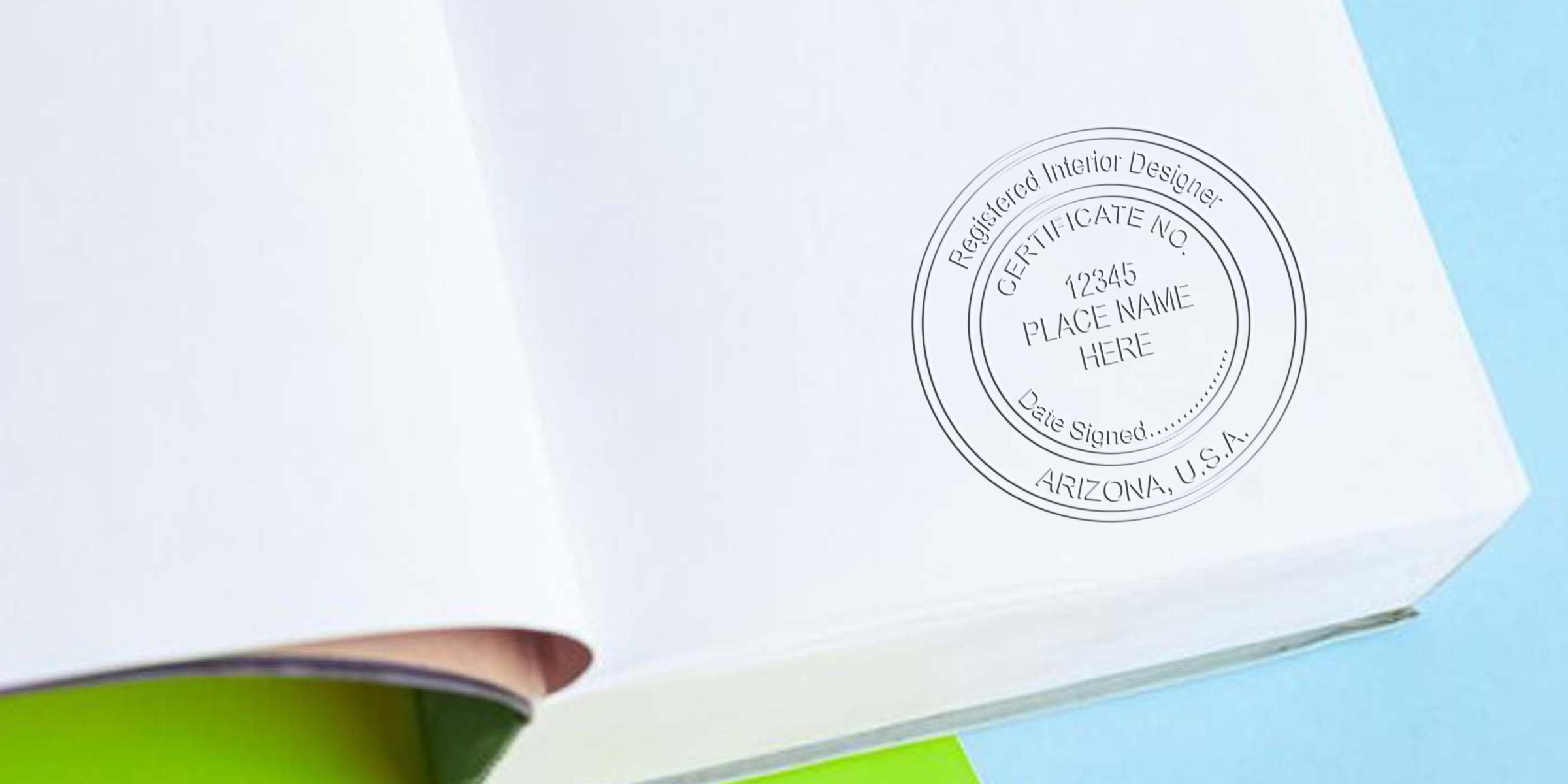
If you work as an interior designer in Arizona and you have been told you need a proper seal on your project documents, start here instead. Arizona does not register interior designers. The Arizona State Board of Technical Registration is real and it is the agency people have in mind, but the definitions in A.R.S. section 32-101 do not include an interior design credential. There is no Arizona interior designer registration, no registration number, and no seal the state prescribes for this profession.
That is worth knowing before you spend money, and it does not mean a seal is a bad purchase. Designers in Arizona emboss proposals, drawing sets, finish schedules and client copies because a raised impression beside a signature marks who prepared the work and makes a page look finished. This guide covers where the state stands, what to put on a seal when nothing is prescribed, how embossing compares with ink, and how to order without a reprint. For the sources behind all of it, read Arizona Interior Designer Seal: Five Legends Only.
Know The Basics
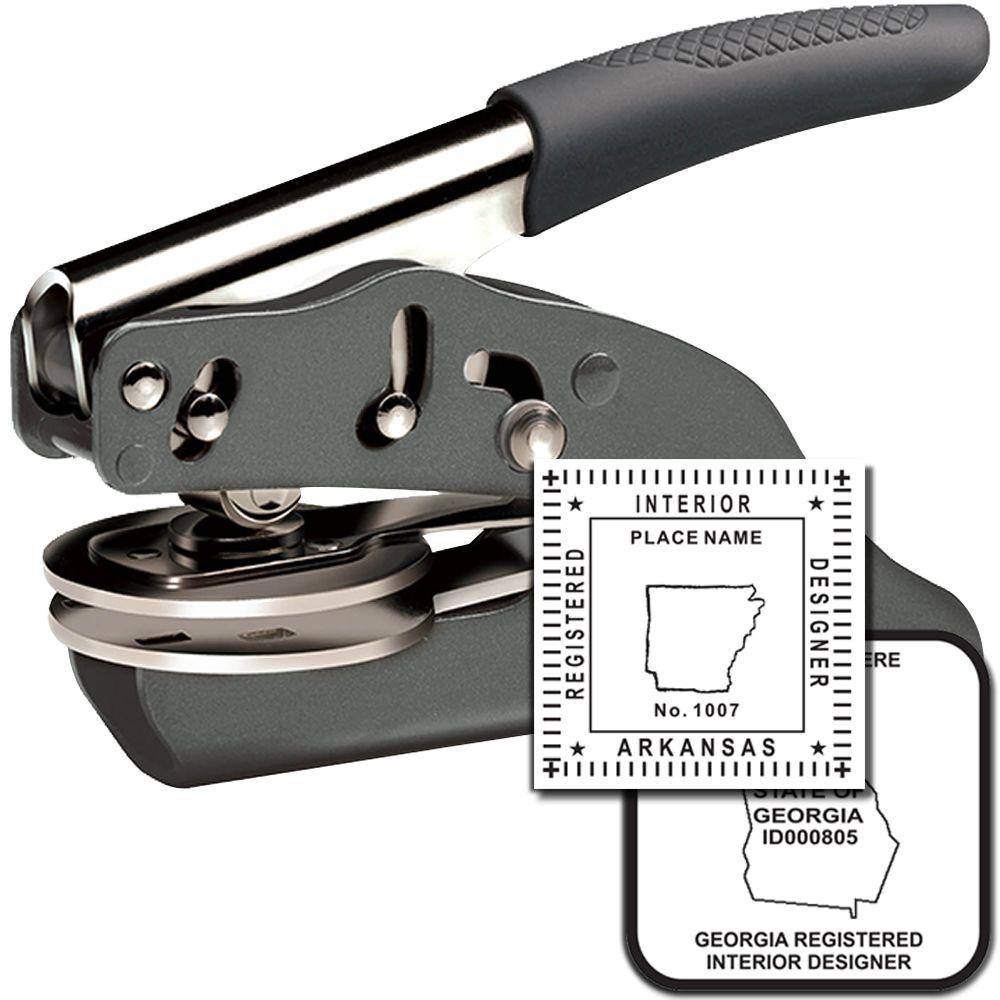
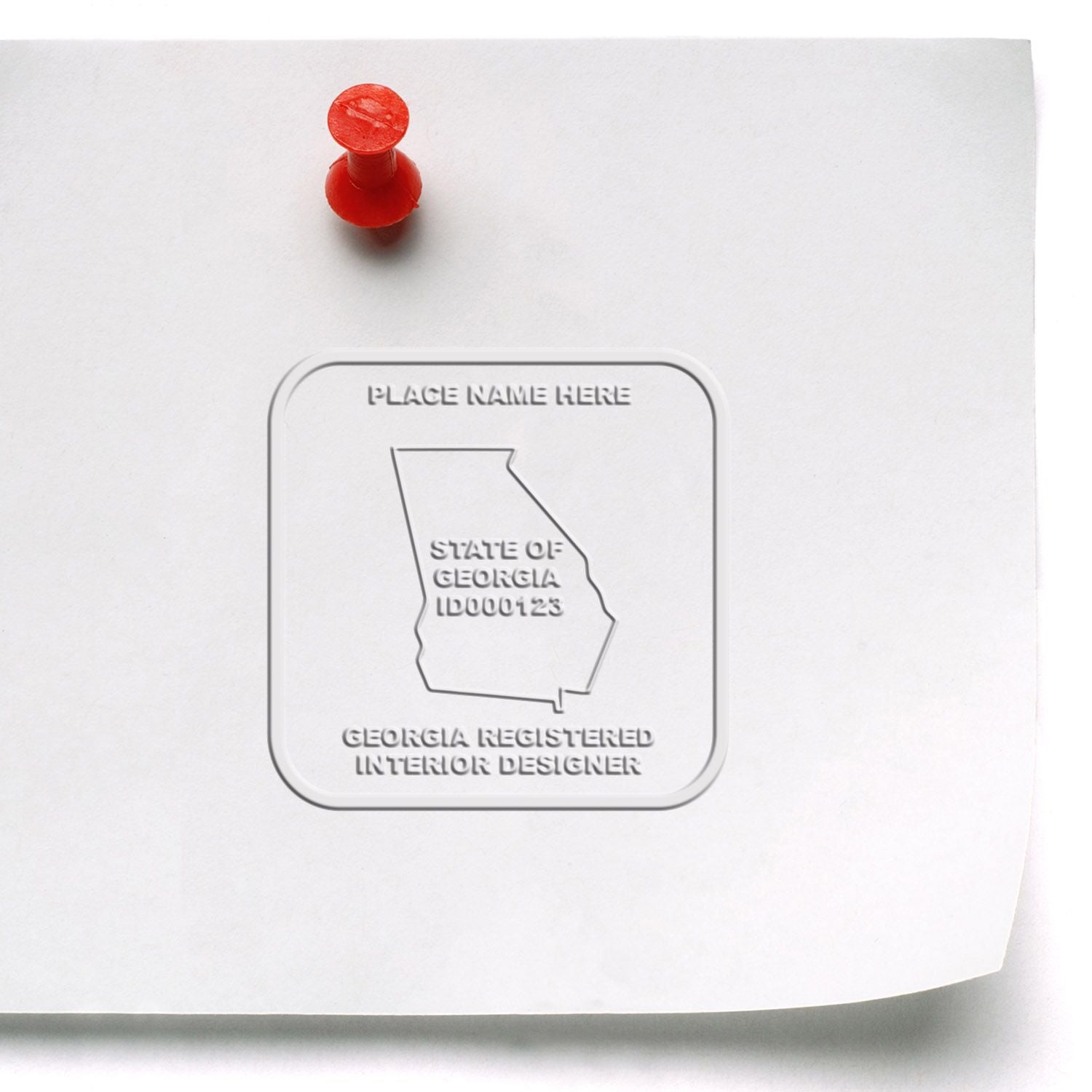
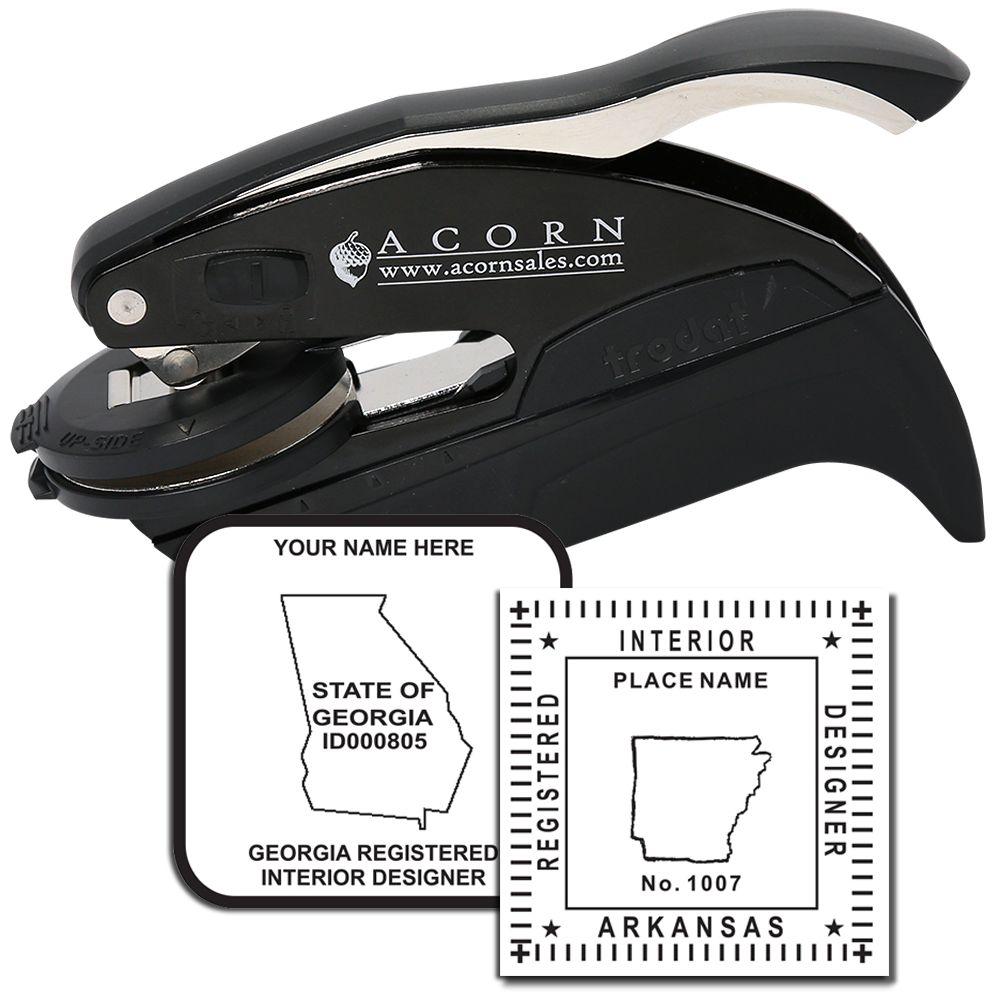
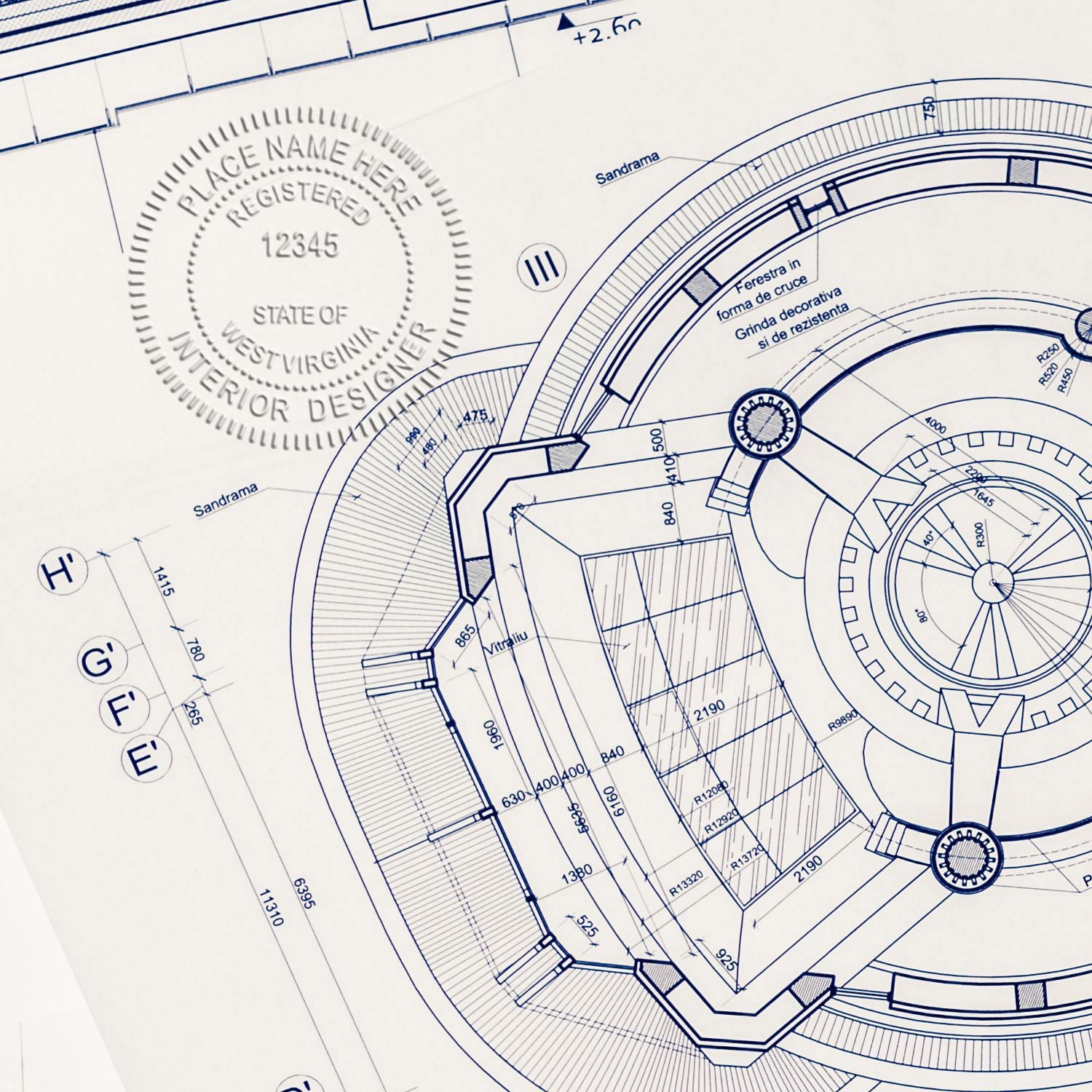
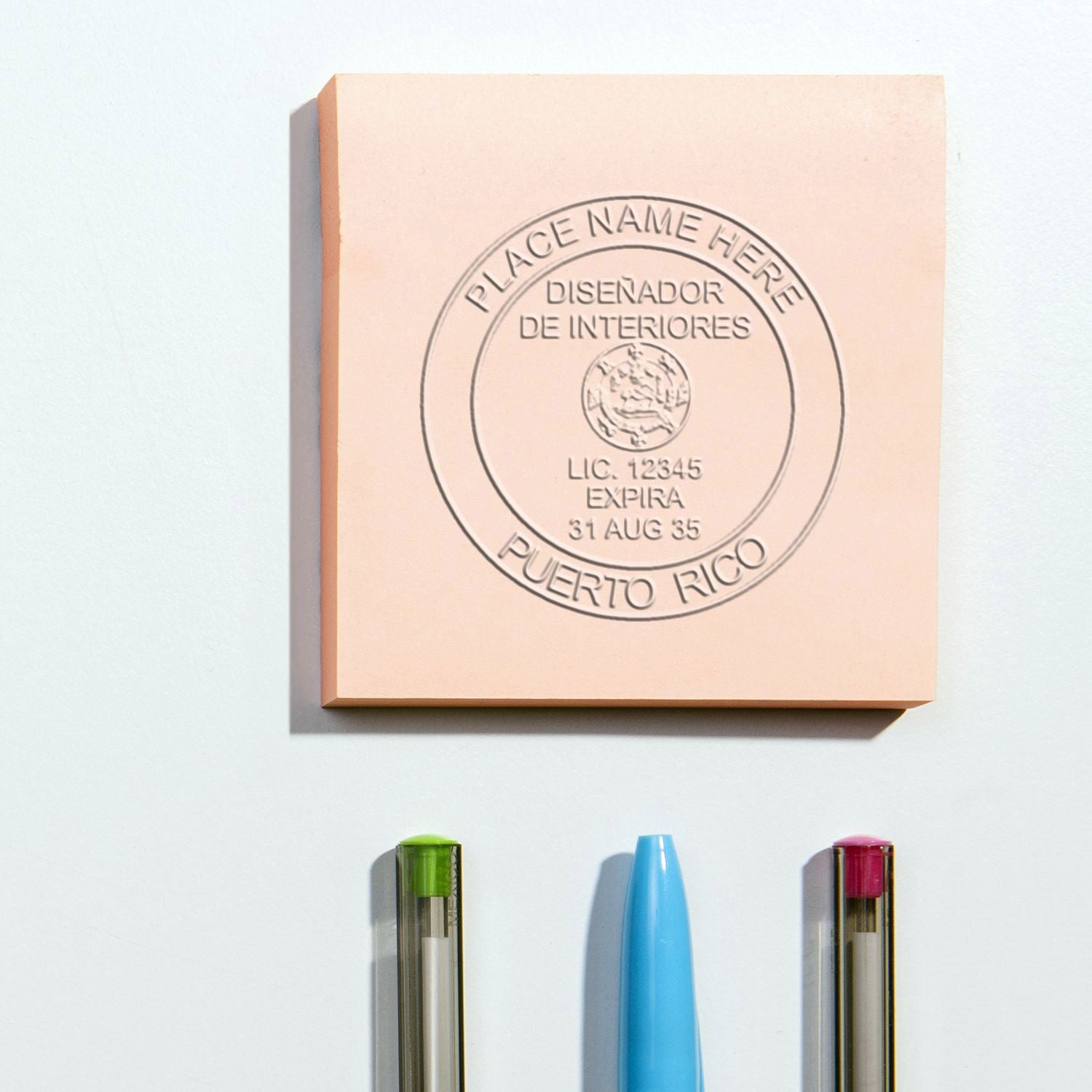
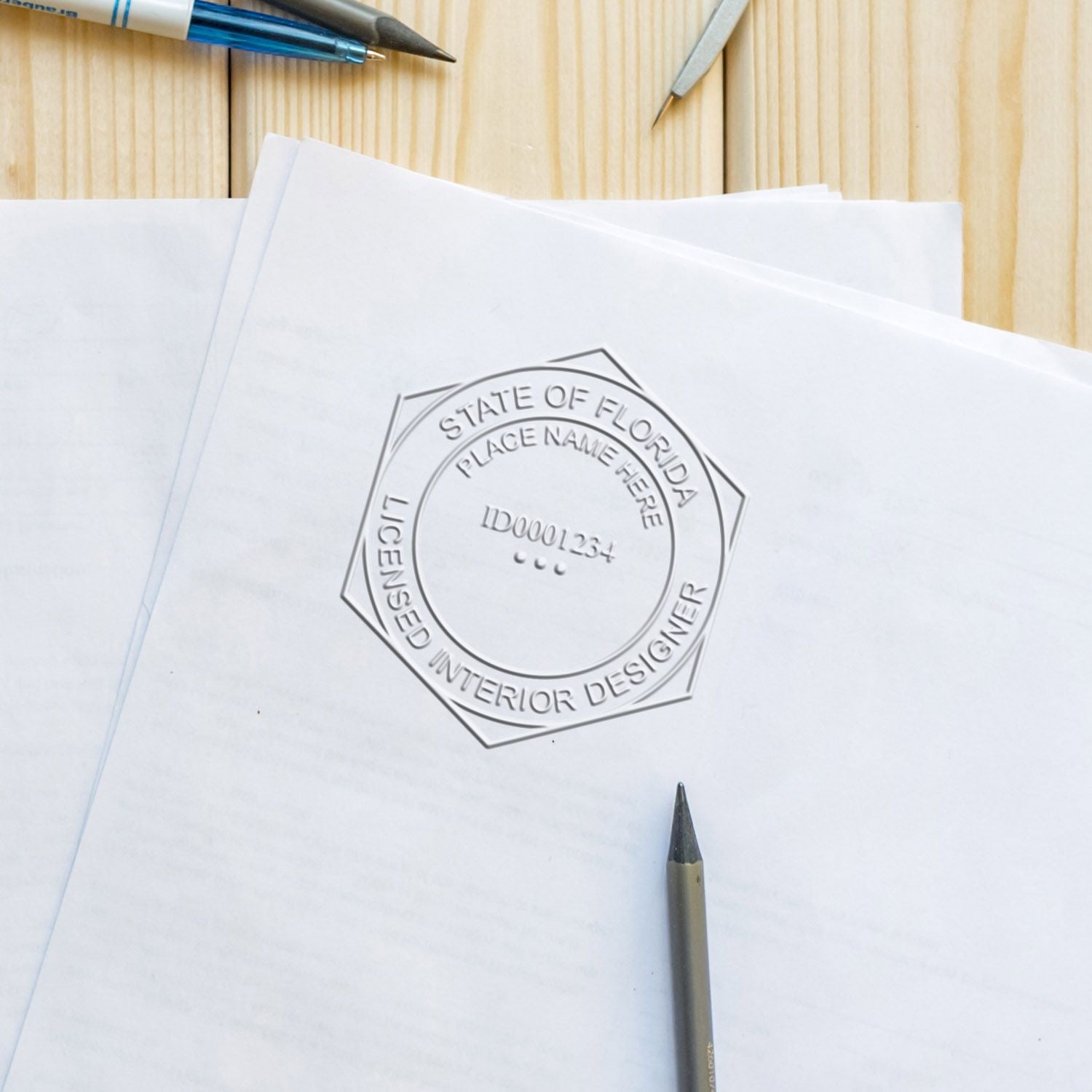
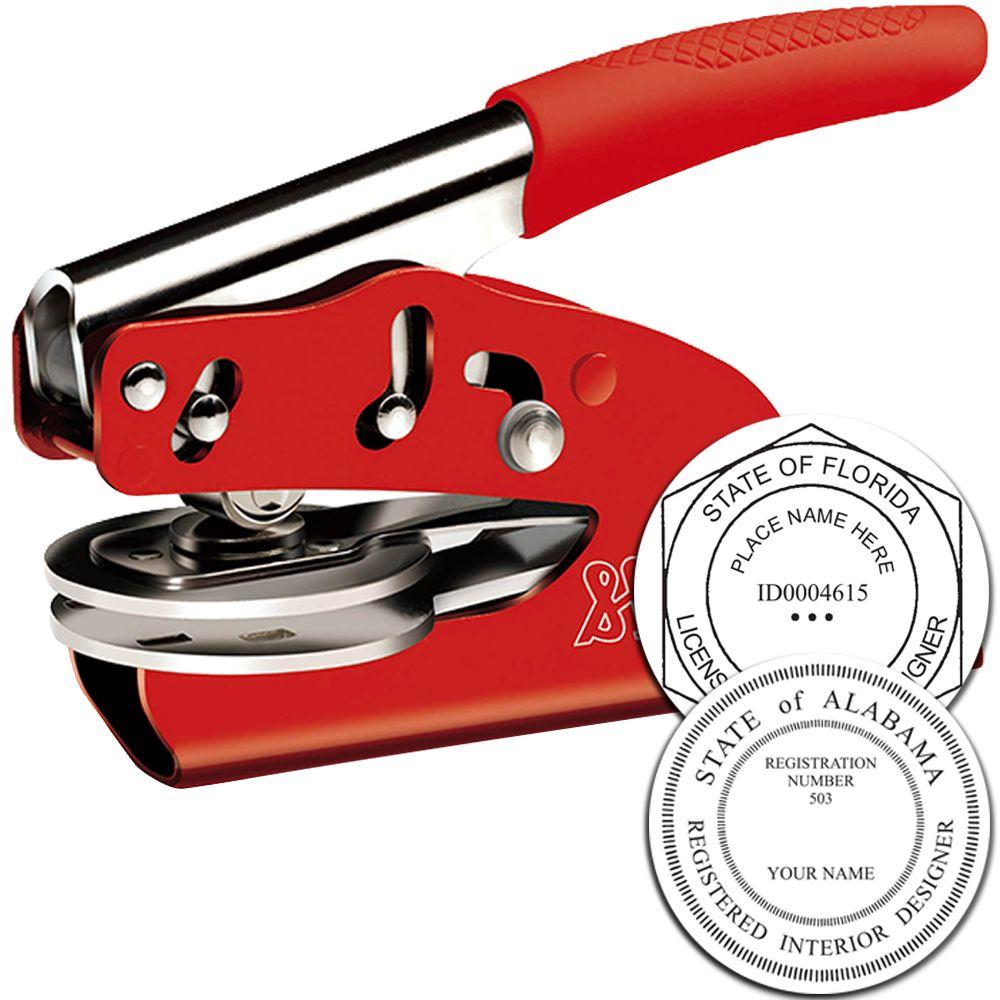
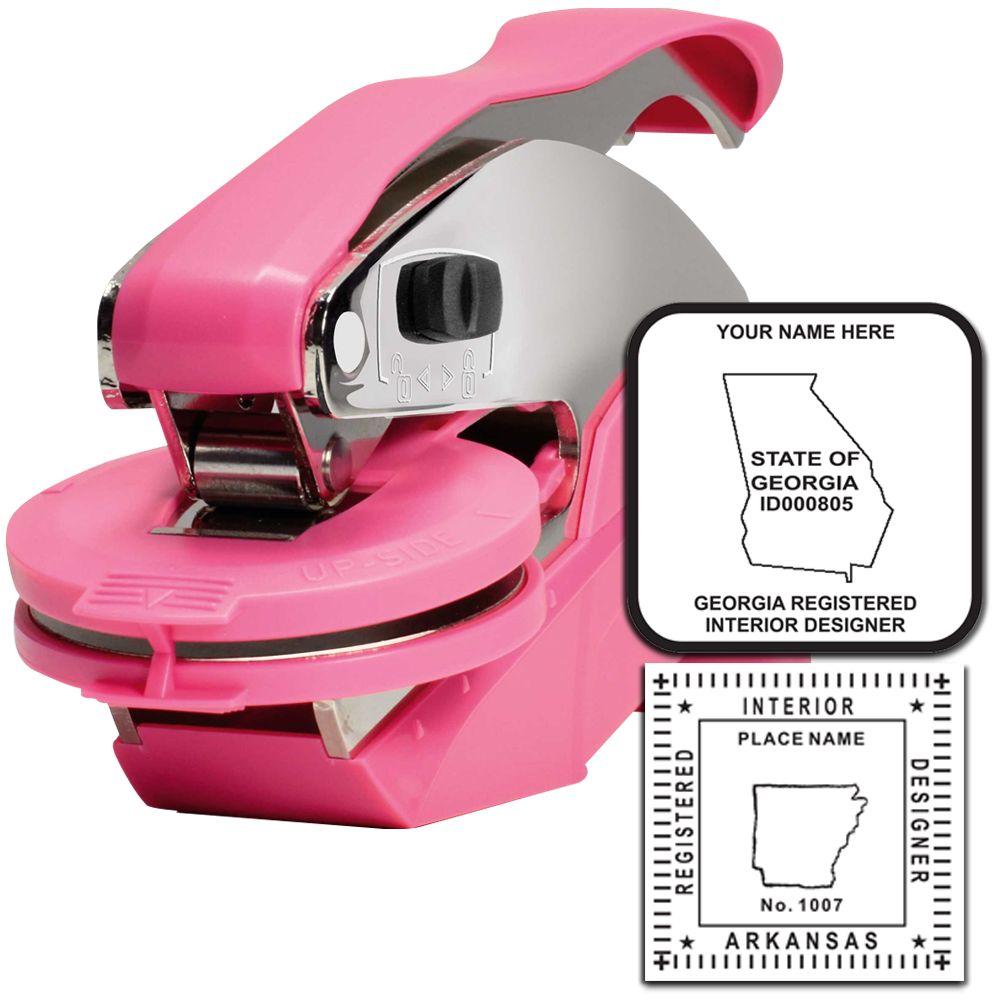
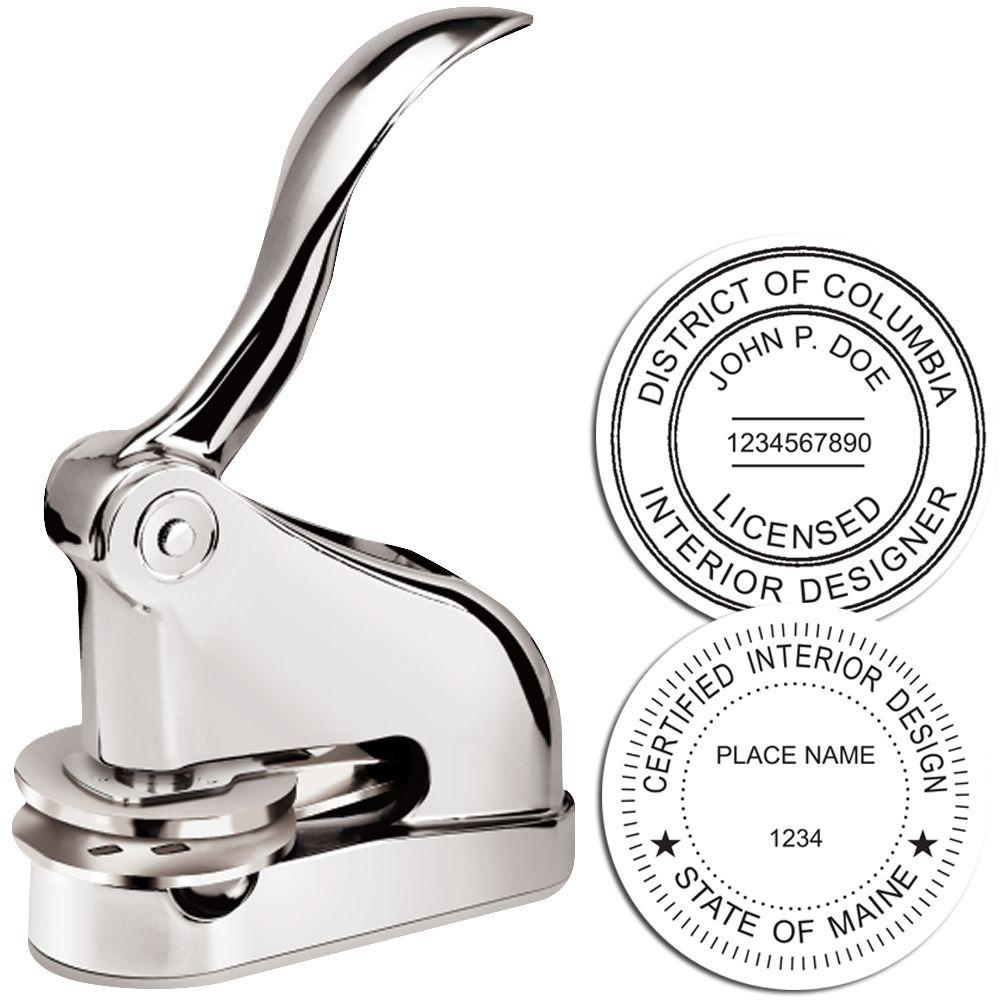
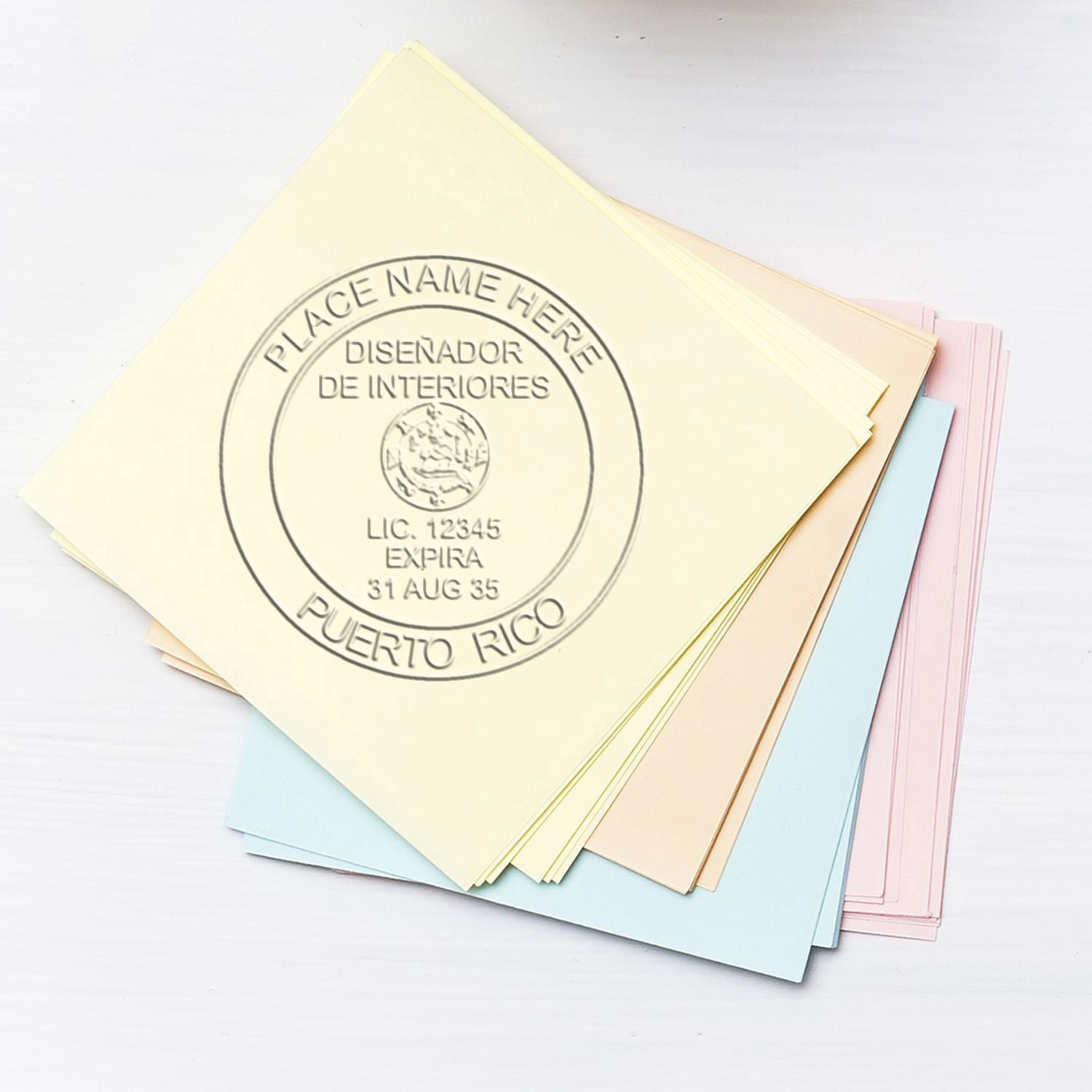
An embossing seal is a hand-operated device that raises your design in the paper itself rather than laying ink on top of it. You slide the sheet between the jaws, squeeze the handle, and the page takes the shape of the die. The result is tactile, it survives ink smears and fading, and it is difficult to reproduce.
What The Seal Is Doing
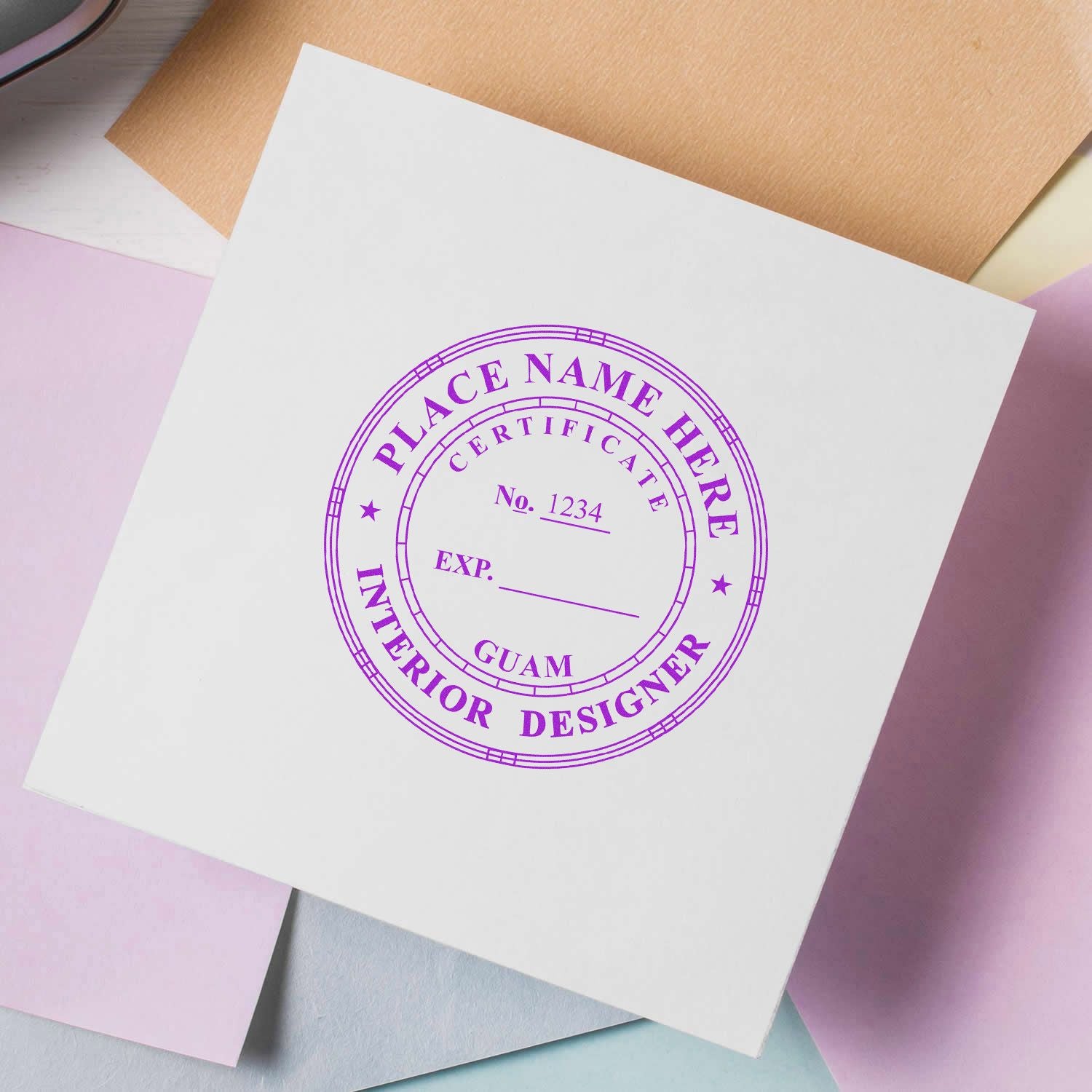
In Arizona, an interior designer's seal marks authorship. It says who prepared the document and that they meant to release it. That is a smaller claim than the one most vendor pages make, and it is also the true one. On a set that will be copied, emailed, printed and marked up by people who were never in the room, a consistent mark keeps your name attached to your work.
What it does not do is prove a state credential, because Arizona grants none to interior designers. Nothing about your seal is reviewed, approved or registered by anyone.




Where Arizona Actually Stands
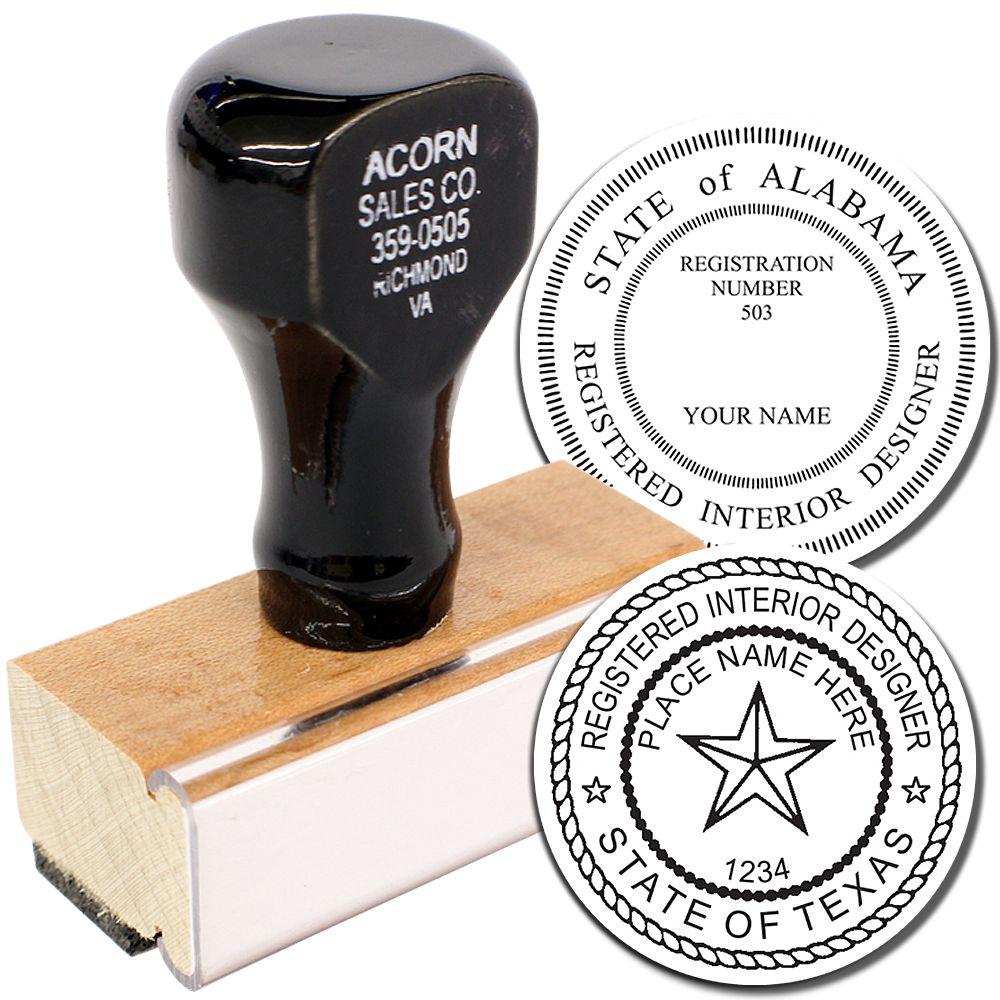
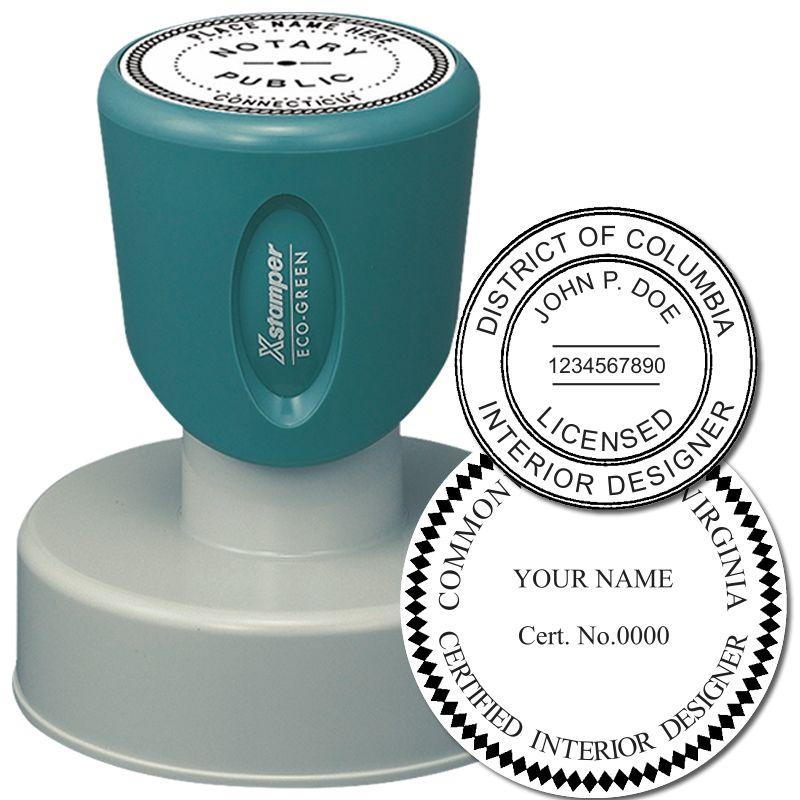
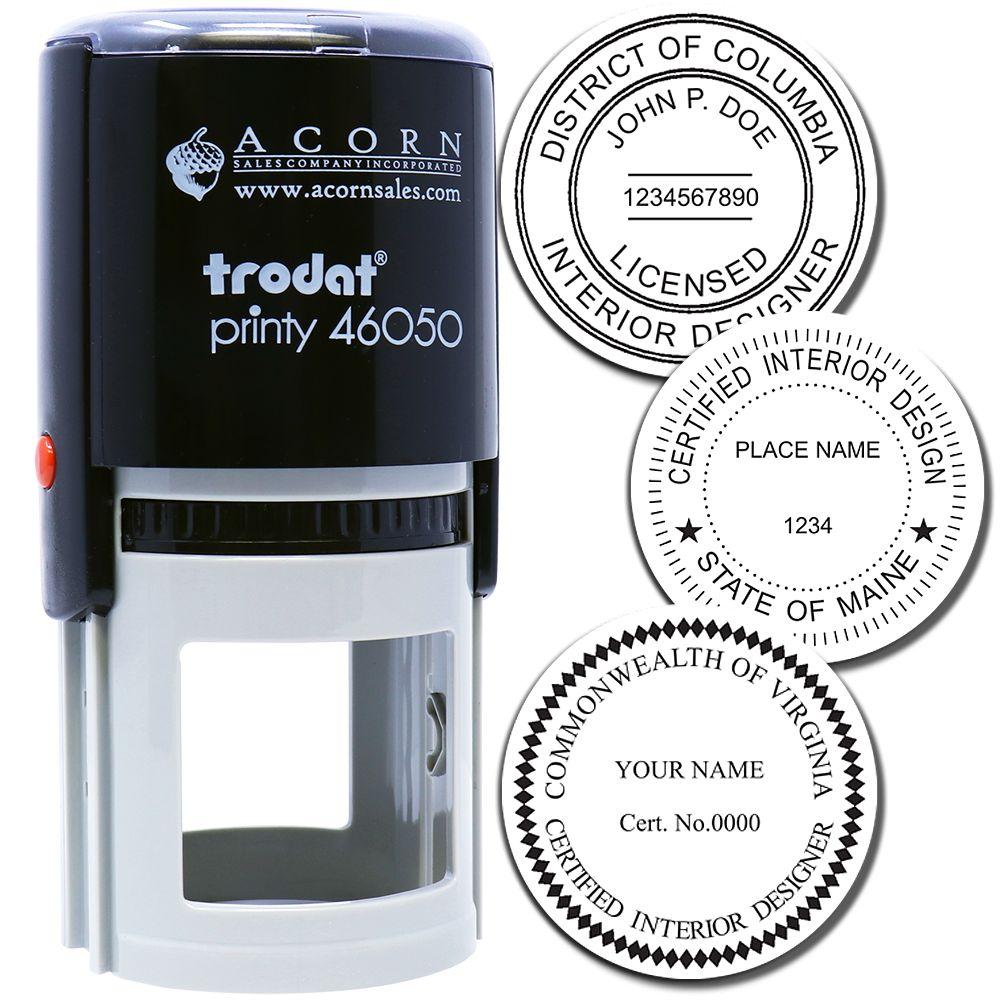
The Board of Technical Registration administers registration for the technical professions named in A.R.S. Title 32, Chapter 1, and its seal rule at A.A.C. R4-30-304 applies to registrants. The center legends that rule allows on a registrant's seal correspond to the professions the board registers. Interior designer is not among them, because the board does not register interior designers in the first place.
A few consequences follow from that, and they are all practical:
- There is no Arizona registration number for you to print on a seal.
- No Arizona document asks for an interior designer's seal.
- No state rule governs the size, shape, wording or ink color of your mark.
- Nothing about the device expires, and there is nothing to renew.
The Wording Mistake To Avoid
This is the part worth reading twice. A die that says Registered Interior Designer, State of Arizona claims a title the state does not issue. So does anything reading Licensed Interior Designer with Arizona named next to it. The state is not going to prescribe your wording, so the accuracy of it is on you, and a reviewer or a client who notices the gap will remember it.
What works instead is plain and true:
- Your name as you sign it
- Interior Designer, or the description of your work you actually use
- Your studio or firm name and city
- A certification from a national body or another state, printed in that body's exact wording, with the state named, and only while it is current
Tips For Keeping It Clean
- Keep a practice sheet nearby and press a test impression before you seal a real sheet.
- Store the device somewhere it will not walk off, since it carries your name.
- Reserve it for work you stand behind rather than every memo, so the mark keeps its meaning.



Choose The Right Seal Option
With no rules to satisfy, the decision is about how your documents travel. Most designers land on an embosser, an ink stamp, or one of each.
Embossing vs. Stamping
| Method | Strengths | Trade-offs |
|---|---|---|
| Embosser | Raised impression, hard to reproduce, no ink to smear or fade | Needs firm hand pressure and may not show on a photocopy |
| Ink stamp | Fast, consistent, clearly visible on copies and scans | Ink fades over long storage |
Embossers give a set a tactile finish that some clients notice immediately. Ink is quicker when you have a lot of pages to mark and it survives the copier. Some designers choose a rubber stamp for daily use and keep an embosser for anything a client will hold.
What About Electronic Seals?
Most design documents move as files now, so an electronic seal gets used more than the physical device for a lot of practices. It is a high resolution image of your mark that you place on a PDF or a drawing file next to your signature, with no printing and scanning in between. Some suppliers include one with a physical order, which is worth checking before you compare two prices that look similar.



Trust Acorn Sales
Where you buy matters more than usual here, because there is no template to fall back on. What you are paying for is a clean die, a sensible layout and a supplier who will read the proof with you.
Our Experience
Acorn Sales has been making stamps and seals since 1964. In that time our people have set thousands of layouts and know which arrangements fall apart once the impression is reduced to actual size. When nothing is prescribed, that experience is the whole value: we start from what reads well at the size you picked rather than from a form you have to match.
Our Value
A free electronic stamp comes with every order, which covers the digital side of your workflow from day one. The devices are built for repeated impressions and comfortable to use, so a stack of cover sheets does not become a chore. Other things you will find:
- Competitive pricing across embossers and stamps
- A proof before production, so a misspelled studio name never reaches the die
- Friendly service from people who will talk through wording with you
Keep The Mark Meaningful
Because no rule governs any of this, the discipline is yours to set, and a little of it goes a long way.
- Be consistent. Put the impression in the same place on every sheet. Wandering marks look accidental.
- Be selective. Reserve it for drawing sets, specifications, schedules, proposals and formal transmittals. Sealing a short email adds nothing.
- Match the digital copy. Use the same mark on PDFs so your printed and electronic sets look like they came from the same practice.
- Keep your own records. A short log of what you sealed and when makes it easy to point at a specific version months later.
Clarity and consistency are what a reader actually notices. A well ordered, clearly marked set says more about your practice than any wording on the die.
Summing It Up
Arizona does not register interior designers and prescribes no seal for them, so nobody can tell you that you need one. What a seal gives you is a finishing touch on work you put real effort into, and a clear answer to the question of who prepared the page. That is a better reason to buy than a rule would have been, and it is the honest one.
Keep the wording accurate, pick the device that matches how your documents travel, look carefully at the proof, and take the electronic file so your digital sets carry the same mark. Embossing does not have to be complicated. With Acorn Sales, you will make a crisp impression every time.
Frequently Asked Questions
Does Arizona Require An Interior Designer Seal?
No. Arizona does not register or license interior designers, so no state rule asks for a seal and no document depends on one. Designers order a seal because it identifies the author of a set and makes the presentation look finished.
Can My Seal Say Registered Interior Designer?
Not with Arizona attached to it, since the state grants no such title. Use your name, a description of your work such as Interior Designer, and your studio name. If you hold a national certification or a credential from another state, print that body's exact wording and name the state that issued it.
Do I Need A Different Seal If I Also Work In Other States?
Possibly. States that do register interior designers set their own wording, and a mark describing one state's credential does not describe another. A separate device for each credential keeps every one of them accurate.
Is An Electronic Seal Acceptable?
There is no Arizona rule to satisfy either way, so what counts is whether the client or the reviewing office accepts a sealed PDF. Ask them before a deadline rather than after. The image file works the same as the inked or embossed impression: it identifies the author.
How Often Should I Replace My Embossing Device?
An embosser lasts for years when it is stored well and kept clean. Order another when the impression stops coming out crisp, or when your name, studio or credentials change and the die no longer describes you.
What Do I Get When I Order From Acorn Sales?
A durable embosser or stamp made to the wording you approved, plus a free electronic stamp with your purchase. You also get a proof before anything is cut, and a team that has been making these devices since 1964.








