
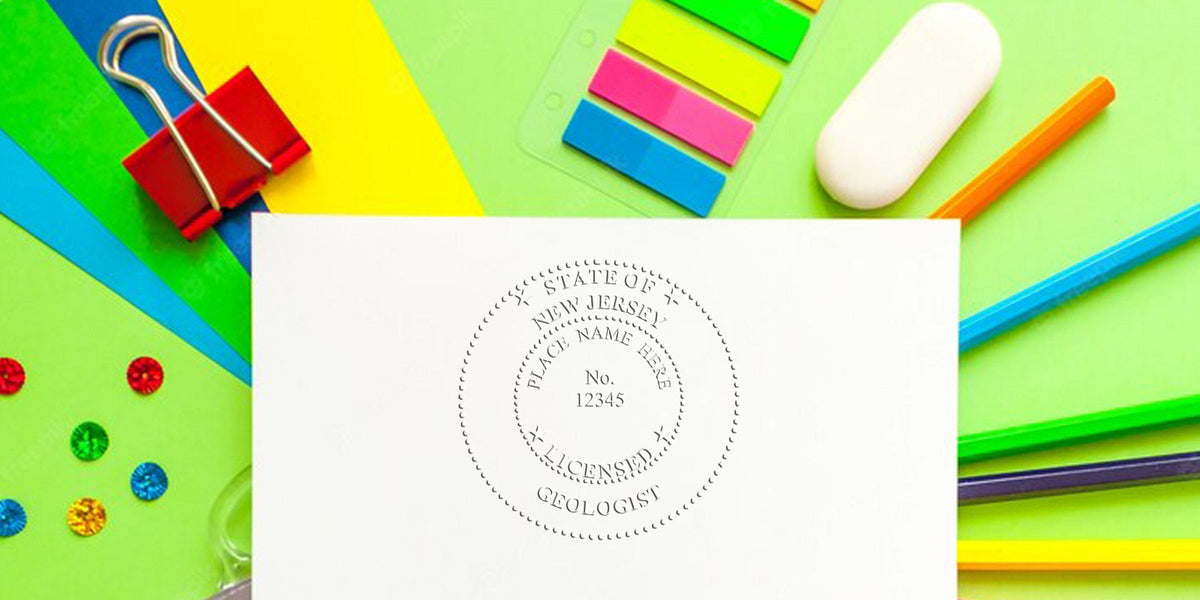
Have you been told you need a geologist seal in New Jersey and wondered why it matters? Whether you’re preparing official geological reports or finalizing site evaluations, having a proper seal is essential for demonstrating credibility and compliance. In this guide, you’ll discover how the New Jersey geologist seal works, why it’s required, and how to use it effectively on your professional documents. By the end, you’ll have a clear sense of the licensing requirements, design guidelines, and best practices for your seal or stamp. Let’s dig in.
Understand the Role of the Geologist Seal
A geologist seal is more than a themed rubber stamp. It’s a legal symbol that shows you have the qualifications and authority to provide certified geological insights. This official imprint tells others—government agencies, clients, and fellow professionals—that your reports meet New Jersey’s professional standards for licensed geologists.
Why a Seal Matters
- It demonstrates you’ve fulfilled state licensing requirements.
- It identifies your work as legitimate and recognized by the appropriate board.
- It signifies that you take responsibility for the findings and conclusions inside your documents.
In short, your seal is a hallmark of trust. If you’ve ever seen an engineer’s stamp on architectural blueprints, the principle is similar. The difference: geologists deal with everything from groundwater contamination to bedrock analysis, so your seal must clearly display your name, license number, and any required wording.
Review the Licensing Requirements
Before you can order or use your seal, you’ll need to confirm your license status with the New Jersey State Board of Professional Engineers and Land Surveyors. There are specific steps to follow, including education, exams, and experience. Here’s a quick breakdown of what you should expect in the process.
Essential Steps for New Jersey
-
Complete the requisite education
- Typically a bachelor’s degree in geology or a closely related field.
- Ensure your institution meets accreditation standards recognized by the state.
-
Confirm practical experience
- Accumulate the required years of geological field or research experience.
- Document your projects thoroughly, since you’ll need detailed proof.
-
Pass the exam
- New Jersey often requires the ASBOG (National Association of State Boards of Geology) exam or a state-mandated equivalent.
- Plan ahead, because exam windows can fill up quickly.
-
Submit an application
- Provide transcripts, references, and proof of passing your exams.
- Pay any applicable fees.
-
Maintain your license
- Many states expect continuing education to ensure your skills stay fresh.
- Check for updates on required professional development hours.
The moment you receive that license approval letter is exciting. You’re now ready to purchase and use your geologist seal in accordance with New Jersey regulations.
Know the Official Seal Specifications
It’s important to follow the proper design format so that your seal meets New Jersey’s legal standards. Details can vary from state to state, so don’t just assume a drifting circle with your name slapped on. Expect to see specific instructions on wording, shape, size, and the inclusion of terms like “Licensed Professional Geologist” or “State of New Jersey.”
Design Elements
- A circular layout is standard, although some states allow variations.
- Your name, your license number, and the phrase “Licensed Professional Geologist” typically appear around the seal’s perimeter.
- The center might feature the state outline or a relevant insignia, depending on board regulations.
Reproducibility Rules
Your seal must be scannable and reproducible on official documents. Avoid fancy fonts or anything too small to read clearly. Some geologists prefer embossed seals for a highly professional look, while others stick with a simple rubber stamp. Whichever you choose, make sure your text is easy to see and the embossed or stamped impression is crisp.
Choose a Reliable Supplier
Once you know the exact specifications, you’ll need a supplier who can create your seal or stamp according to state guidelines. You might be tempted to grab a discount online, but cheap is rarely cheerful in a scenario that involves big legal responsibility. A smudged or unreadable seal can lead to a headache of reworks or compliance issues.
Acorn Sales Advantage
For more than 60 years, Acorn Sales has been a trusted supplier for official seals and stamps—particularly for New Jersey geologists. You can be confident that their products meet professional standards and include consistent designs that comply with state mandates. Moreover, each order comes with a free digital seal, which is perfect for electronic submissions or remote projects. When you’re shopping for your official New Jersey geologist stamp, working with a reliable company is key to ensuring your seal is properly recognized across the board.
Apply Your Seal Correctly
A beautifully crafted seal isn’t worth a thing if you don’t apply it where and how regulations specify. Whether you’re stamping a geological report, a site assessment, or public record documents, you’ll want to keep best practices in mind.
Placement on Documents
When you get your geologist seal in New Jersey, you’ll learn that it’s usually placed near your signature block. This is often in the bottom corner of the page or wherever your professional statement is declared. Check relevant regulations for exact instructions, but these guidelines typically apply:
- Use permanent, contrasting ink so that the seal image is legible in photocopies.
- Keep the seal close to your signature, not too far off in a random margin.
- Ensure the seal does not overlap essential text or images.
Some geologists use their seal on every page of a crucial report, but that can vary by municipal or agency requirements. When in doubt, place the seal on any page containing a professional statement you endorse.
Electronic Seal Use
Digital documents are here to stay, and so is the need to secure them properly. Many official entities accept an electronically reproduced seal if it meets authenticity requirements. With a free digital seal from Acorn Sales, you can embed your seal image in PDFs or other electronic files. Just remember:
- If you’re using an electronic seal, pair it with a secure signing platform or digital certificate.
- Always confirm the accepted format with the receiving agency before finalizing a submission.
Avoid Common Pitfalls
Even the savviest geologists can run into trouble if they’re not mindful of a few common mistakes. From forgetting to keep the license current to misunderstanding the difference between signature and seal usage, here are pitfalls you’ll want to sidestep.
Mistakes in Seal Usage
- Not renewing your license on time. If your license is lapsed, your seal is essentially invalid for official use.
- Altering the design. Any deviation from state-approved format can result in penalties or document rejection.
- Overlooking minor details. Even an incorrect abbreviation can require re-issuance of official paperwork.
- Mixing up seals in multiple states. If you’re licensed in multiple jurisdictions, be sure to use the correct seal on each state’s documents.
Be thorough and double-check everything before stamping or embossing. The extra minute or two can save you a hefty fine or an embarrassing back-and-forth with the state board.
Make the Most of Your Stamp or Seal
Owning the correct seal is half the battle. Using it effectively in your day-to-day practice will streamline your professional workflow and reinforce your credibility. Here are a few additional tips:
- Keep a dedicated stamping station: Having a clear, flat surface with plenty of light will reduce errors or smudges.
- Use proper ink pads: If you opt for a stamped seal instead of an embosser, a high-quality ink pad is essential. Cheap ink can fade or create blotchy imprints.
- Maintain digital backups: Keep your free digital seal stored in multiple secure locations. If your computer crashes, you won’t lose this vital file.
- Organize your documents: Stamp or emboss as you finalize each page, then file everything systematically. That way, you won’t rummage around for unsealed pages later.
One final note: Routinely check the clarity of your seal. Rubber stamps can wear out over time, and embossing equipment might need periodic maintenance. A crisp seal is essential for every submission.
Summary of Key Takeaways
Buying a geologist seal in New Jersey isn’t just a formality. It’s a crucial aspect of your professional standing and a way to uphold the standards of geological practice throughout the state. By understanding the design requirements, choosing a reputable supplier like Acorn Sales, and carefully applying your seal on the correct documents, you’ll safeguard your reputation and meet legal obligations.
In the end, that little circle or emboss speaks volumes about your expertise and accountability. It’s worth getting it right.
The physical device can last for years if properly maintained. Just remember to update or replace it whenever you renew your license or if the state changes its design requirements. If you notice fading, smudging, or general wear, it may be time to upgrade to a new stamp or embosser.
Hopefully, this guide helps you feel more prepared to secure and use a geologist seal in New Jersey. Once you’ve passed the licensing hurdles and ordered your seal, applying it to official documents becomes second nature. You’ll have the satisfaction of knowing your stamp stands for both expertise and integrity. If you’re ready to order, consider working with a trusted supplier, and don’t forget to grab that free digital seal so you can tackle files onsite or online with ease. Happy stamping—and here’s to your success as a New Jersey geologist!
Frequently Asked Questions
Is a Geologist Seal Mandatory in New Jersey?
Yes. If you’re a licensed geologist practicing within the state, you’re generally required to use an approved seal or stamp. This seal indicates that your work meets New Jersey’s professional standards. Without it, your reports may not be accepted by local or state authorities.
Can I Use One Seal for All States?
Not typically. Seals are state-specific, reflecting the unique license number and required wording for each jurisdiction. If you’re licensed in multiple states, you’ll need to have a separate seal or stamp for each state to remain compliant.
What Does “Free Digital Seal” Mean?
When you order your physical stamp or embosser from Acorn Sales, you’ll get a digital version of your seal at no additional charge. This is perfect for electronic documents and remote filings. Always confirm with the relevant agency that they accept digitally reproduced seals, as rules can vary.








