
Written by Acorn Sales Company, manufacturing stamps and seals since 1964 · Reviewed by Holly R, VP of Sales and Marketing at Acorn Sales, against Commissioner of Energy and Environmental Protection, Department of Energy and Environmental Protection, Division of Forestry on 22 September 2026 · Updated 22 September 2026
Connecticut prescribes no seal and no stamp for foresters, and there is nothing to buy in order to comply. We read Conn. Gen. Stat. 23-65h and all nineteen subsections of Regs. Conn. State Agencies 23-65h-1, and neither contains the word seal or the word stamp, or any requirement that a certified forester mark a plan, map, report or contract with any device. There is also no endorsement duty of the kind Alabama, Georgia and Maine impose. If you came here to find out which Connecticut forester seal to order, the answer is none, and you can stop reading at the end of this paragraph with the right answer.
The second thing to know is that Connecticut’s credential is not a forester license in the ordinary sense. There is no board of foresters in Connecticut. What the Department of Energy and Environmental Protection runs is a certification program for commercial forest practices, with three classifications: forester, supervising forest products harvester, and forest products harvester. It is a real practice restriction inside its scope and it does not reach forestry work outside commercial forest practices. That distinction shapes everything else on this page.
Connecticut forester seal requirements at a glance
| Requirement | Connecticut rule | Source |
|---|---|---|
| Seal required | No. Not addressed anywhere. Neither Conn. Gen. Stat. 23-65h nor Regs. Conn. State Agencies 23-65h-1, subsections (a) through (s), contains the word seal or stamp or any document marking duty. All nineteen subsections were read. | Regs. Conn. State Agencies 23-65h-1(a) to (s); Conn. Gen. Stat. 23-65h |
| Required elements | Not addressed, because there is no device. The credential is a certificate issued by the Commissioner showing the holder’s full name, the type of certification, the certificate number and the expiration date. That is a state document, not an engravable block. | Regs. Conn. State Agencies 23-65h-1(k) |
| Size and shape | Not addressed. No dimension is published for any forester marking device, because none exists. No dimension is published for the vehicle decal either. Do not let anyone infer a Connecticut size from a neighboring state. | Conn. Gen. Stat. 23-65h; Regs. Conn. State Agencies 23-65h-1 |
| Device allowed | No practitioner device is contemplated. The only physical marking device anywhere in the scheme is a vehicle decal: the Commissioner may require display of a decal or other evidence of certification on licensed motor vehicles used in operations, with a fee to cover costs. | Conn. Gen. Stat. 23-65h(c)(8) |
| Signature and date | The only signature requirement found is on the application, not on work product. The applicant signs a certification that the submitted information is true, accurate and complete to the best of their knowledge and belief. No rule prescribes how a certified forester signs or dates a client document. | Regs. Conn. State Agencies 23-65h-1(f) |
| What must be sealed | Nothing. No plan, map, report, contract or management document is required to carry a seal, a stamp, a certificate number or a name endorsement under the forest practices statute or its regulation. | Conn. Gen. Stat. 23-65h; Regs. Conn. State Agencies 23-65h-1 |
| Electronic seal | Not addressed. There is no electronic or digital seal or signature provision and no third party digital certificate requirement, which follows from there being no seal provision at all. | Conn. Gen. Stat. 23-65h; Regs. Conn. State Agencies 23-65h-1 |
| Renewal and lapse | The statute sets certification “valid for a period not to exceed five years”; the regulation sets the certificate term at four years. Renewal is applied for at least 60 calendar days before expiration with fee and continuing education evidence, with a 60 day extension available for an additional $100.00. Nothing happens to a seal on lapse because there is no seal. | Conn. Gen. Stat. 23-65h(c)(4); Regs. Conn. State Agencies 23-65h-1(k), (l), (m), (n) |
| Firm requirements | Not addressed as a firm certification. Certification runs to persons. A certified harvester may not supervise more than two noncertified persons. | Conn. Gen. Stat. 23-65h(b) |
| Regulator | The Commissioner of Energy and Environmental Protection, through the DEEP Division of Forestry and the State Forester’s Office. There is no board of foresters in Connecticut. | Conn. Gen. Stat. tit. 23, ch. 451a |



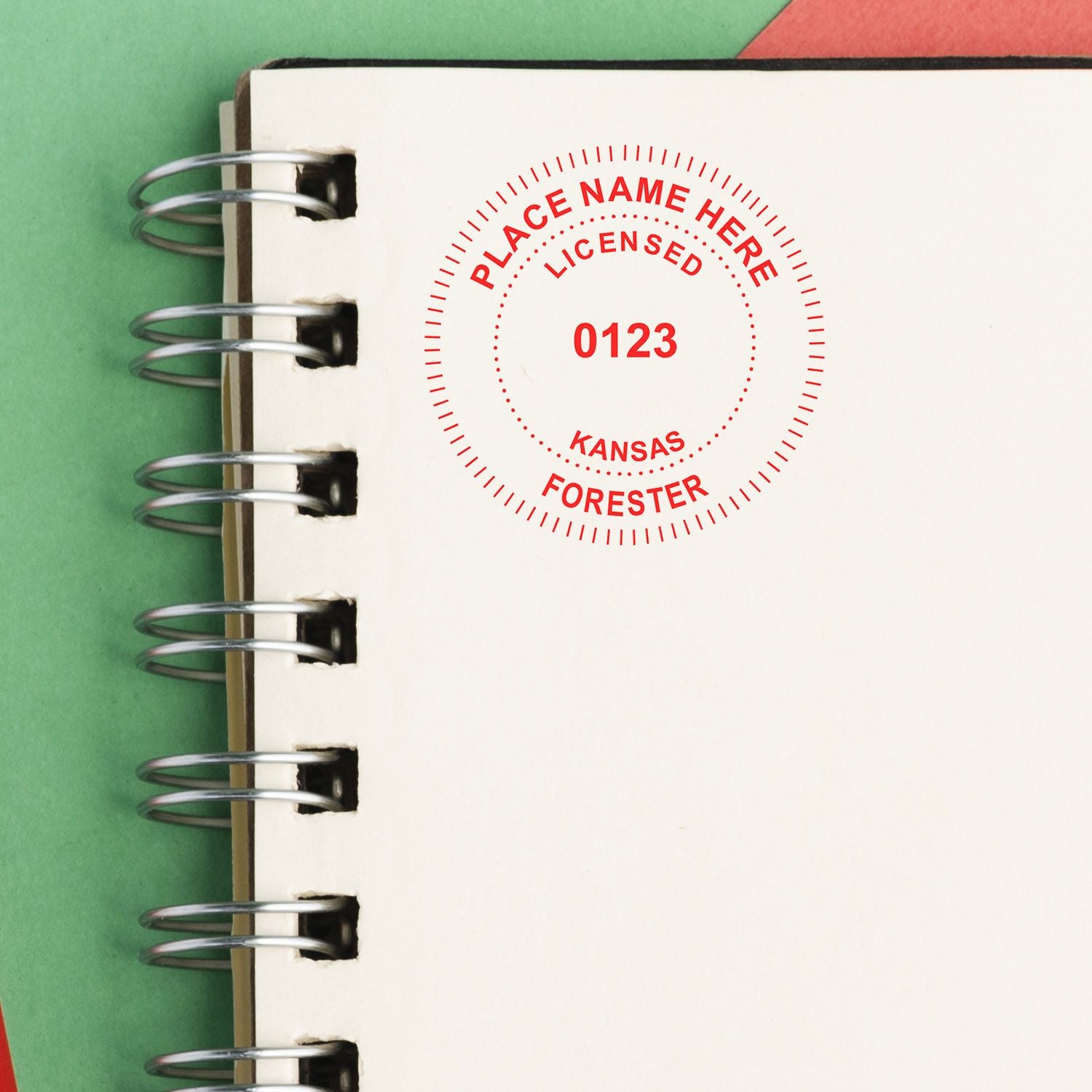
Does Connecticut require a forester to have a seal?
No, and we want to be specific about how we know rather than leaving you with a bare negative. The certification scheme lives in two places: Conn. Gen. Stat. 23-65h, which is the statute, and Regs. Conn. State Agencies 23-65h-1, which is the regulation the Commissioner made under it. We read the statute and we read all nineteen subsections of the regulation, (a) through (s). Neither text contains the word seal. Neither contains the word stamp. Neither imposes any duty to mark a plan, a map, a report, a contract or any other work product with any device, number or endorsement.
That is a stronger negative than the ordinary one. In most no seal states there is still a marking duty of some kind, usually a name and license number endorsement. Connecticut does not have one of those in the forest practices scheme. The certification is a qualification to practice, and what evidences it is a certificate in your file and, if the Commissioner requires it, a decal on your truck.
Certification, not licensure, and why the distinction matters
Connecticut does not license the profession of forestry at large. There is no board of foresters. What exists is a certification requirement attached to commercial forest practices, administered by the Commissioner of Energy and Environmental Protection through the DEEP Division of Forestry.
The operative prohibition is at Conn. Gen. Stat. 23-65h(a): “no person shall advertise, solicit, contract or engage in commercial forest practices within this state at any time without a certificate issued in accordance with the provisions of this section”, subject to an exception for persons working under the direct supervision of a certified practitioner. Within that scope it is a real restriction, and it reaches advertising and soliciting, not just doing the work. Outside that scope, someone practicing forestry that is not commercial forest practice is not reached by the certification requirement at all.
We are laboring the point because it changes what a Connecticut credential means when you present it, and because a page that called this “forester licensure” would be setting you up to misdescribe your own standing.
The three classifications
The program certifies three things, and the titles are not interchangeable: forester, supervising forest products harvester, and forest products harvester. Each has its own examination and its own continuing education requirement on renewal, which is how you can tell the state treats them as distinct credentials rather than tiers of one.
The continuing education figures at renewal are 12 CEUs for the forester classification, 8 for supervising forest products harvester, and 6 for forest products harvester. If you hold the forester certification, the credential term used in the program is Certified Forester, evidenced by a certificate number.
What the state actually issues: a certificate and a wallet card
Since there is no seal, it is worth being clear about what does exist. Regs. Conn. State Agencies 23-65h-1(k) provides that certificates are valid four years and must show “the full name of the certificate holder, the type of certification granted, the certificate number, the date of expiration of the certification, and shall be signed by the commissioner”. A wallet card carrying the same information is also issued.
Two points follow. First, the signature on that document is the Commissioner’s, not yours. It authenticates a state document. It is not a practitioner seal and it has no counterpart you apply to your own work. Second, a certificate and a wallet card are state issued paper. They are not products a stamp maker can supply, and nobody should be selling you a replacement for either.
The one device in the scheme is a truck decal
There is exactly one physical marking device contemplated anywhere in Connecticut’s forest practices statute, and it does not go on paper. Conn. Gen. Stat. 23-65h(c)(8) permits the Commissioner to require display of a decal, or other evidence that a commercial forest practitioner has met the requirements, in a prominent location on licensed motor vehicles used in operations, with a fee to cover the cost.
We are mentioning it because a reader searching Connecticut forestry law for something to display will find this and might wonder whether it is the state’s version of a seal. It is not. It is vehicle identification for field enforcement. No dimension is published for it either, and it comes from the Commissioner rather than from a supplier.



Working under direct supervision, and what the exception covers
The certification requirement at 23-65h(a) carries an exception for persons working under the direct supervision of a certified practitioner, and it is the provision most likely to apply to someone on your crew rather than to you. A person working under direct supervision is not required to hold their own certificate to be on the job.
Two things follow for a working operation. The supervision has to be direct, which is a stronger relationship than general employment, and the certified practitioner is the one whose certificate stands behind the work. Separately, the statute at 23-65h(b) limits a certified harvester to supervising no more than two noncertified persons, which puts a hard number on how far one credential stretches on a harvesting crew. Neither provision creates a marking duty, and neither gives a supervised person anything to put on a document. It is worth knowing because the natural next question after “do I need a seal” is usually “does my crew need one”, and the answer to both is no.
The one place Connecticut asks for your certificate number
Since there is no endorsement duty, it is fair to ask where the certificate number is used at all. The answer is on the renewal application. DEEP’s published application packet asks an existing practitioner for their certification number when renewing, which is an administrative identifier for the Department rather than a marking requirement for your work.
We checked that packet for a seal or a stamp as part of this research, on the theory that a program that expected practitioners to mark documents would say so somewhere in the material it hands them. It says nothing of the kind. Neither does DEEP’s own forester certification program page. Between the statute, the regulation, the application packet and the program page, four separate places where a marking duty would naturally surface, Connecticut is consistently silent, and that consistency is why we are comfortable stating the negative as firmly as we do.
Renewal, the four year term and the 60 day rules
Connecticut has two numbers here that look like a conflict and are not. The statute at 23-65h(c)(4) says certification “shall be valid for a period not to exceed five years and may be renewed by the commissioner with or without further examination”, with staggered expirations and a sixty day renewal extension available. The regulation sets the actual certificate term at four years, which sits inside the statutory ceiling.
The renewal machinery in the regulation is specific. Subsection (l)(1) requires the renewal application at least 60 calendar days before expiration, with the fee and evidence of continuing education. Subsection (l)(2) allows a 60 day extension for an additional $100.00. Subsection (m) bars renewal unless the reports required by Conn. Gen. Stat. 23-65i have been submitted. Subsection (n) requires re examination if the governing statutes or regulations have changed since your last certification. The application and renewal fee is $235.00 and each examination is $65.00.
Denial, enforcement and why there is no seal misuse rule
Regs. Conn. State Agencies 23-65h-1(j) provides that the Commissioner denies certification to applicants who fail the examination or provide false information, with denial sent by certified mail. The statutory prohibition at 23-65h(a) makes it unlawful to advertise, solicit, contract or engage in commercial forest practices without a certificate.
What you will not find is a seal misuse provision, and that is not an oversight in our research. A seal misuse rule presupposes a seal. States that prescribe one almost always pair it with a penalty for using it after lapse or on work you did not prepare, as Alabama and Arkansas both do. Connecticut has neither half of that pair, which is itself a small piece of confirming evidence that the absence of a seal rule is deliberate rather than an omission.






Nothing to sell, and we would rather say so
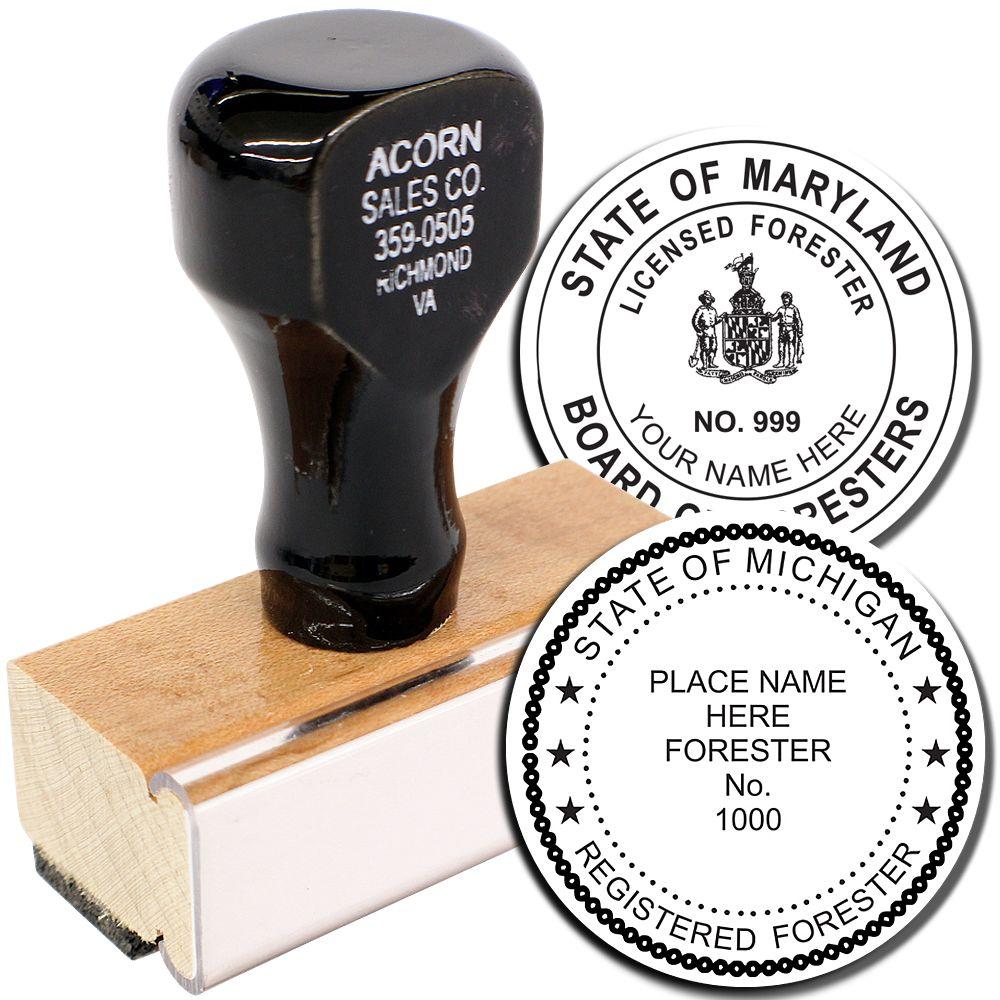
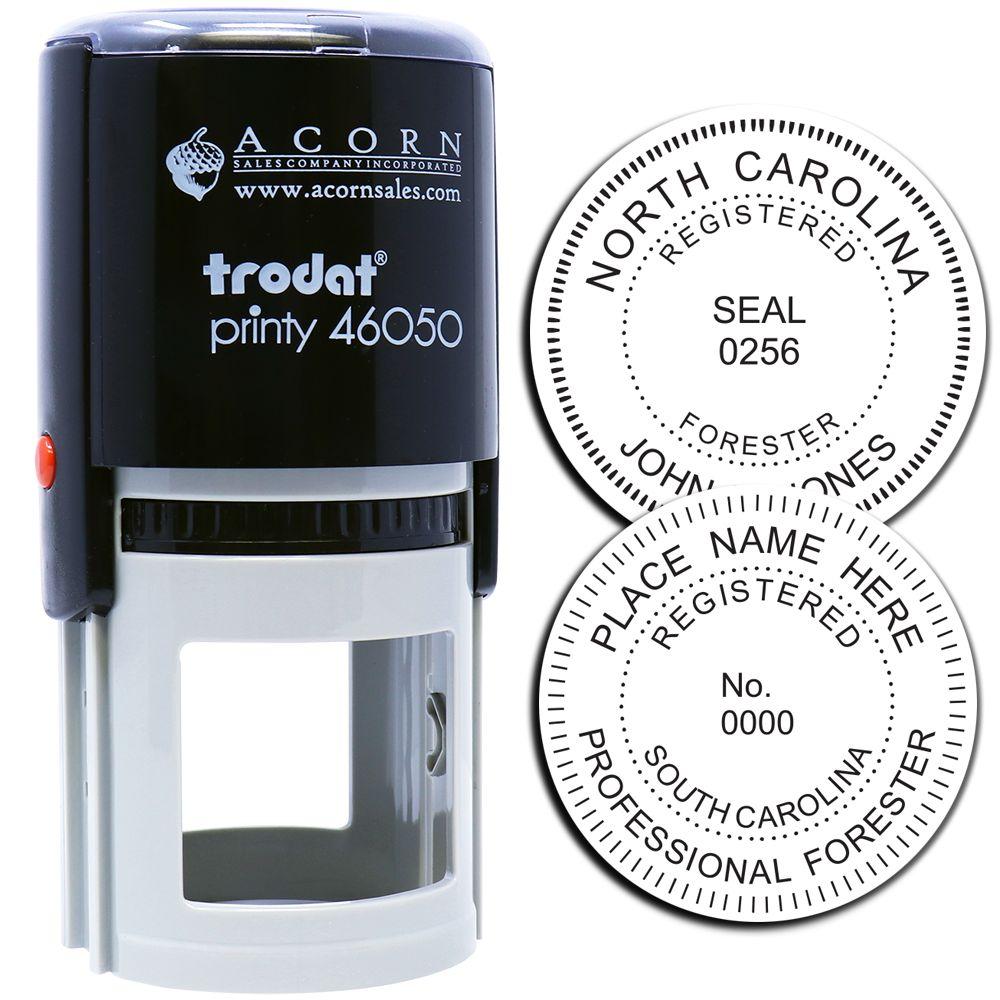
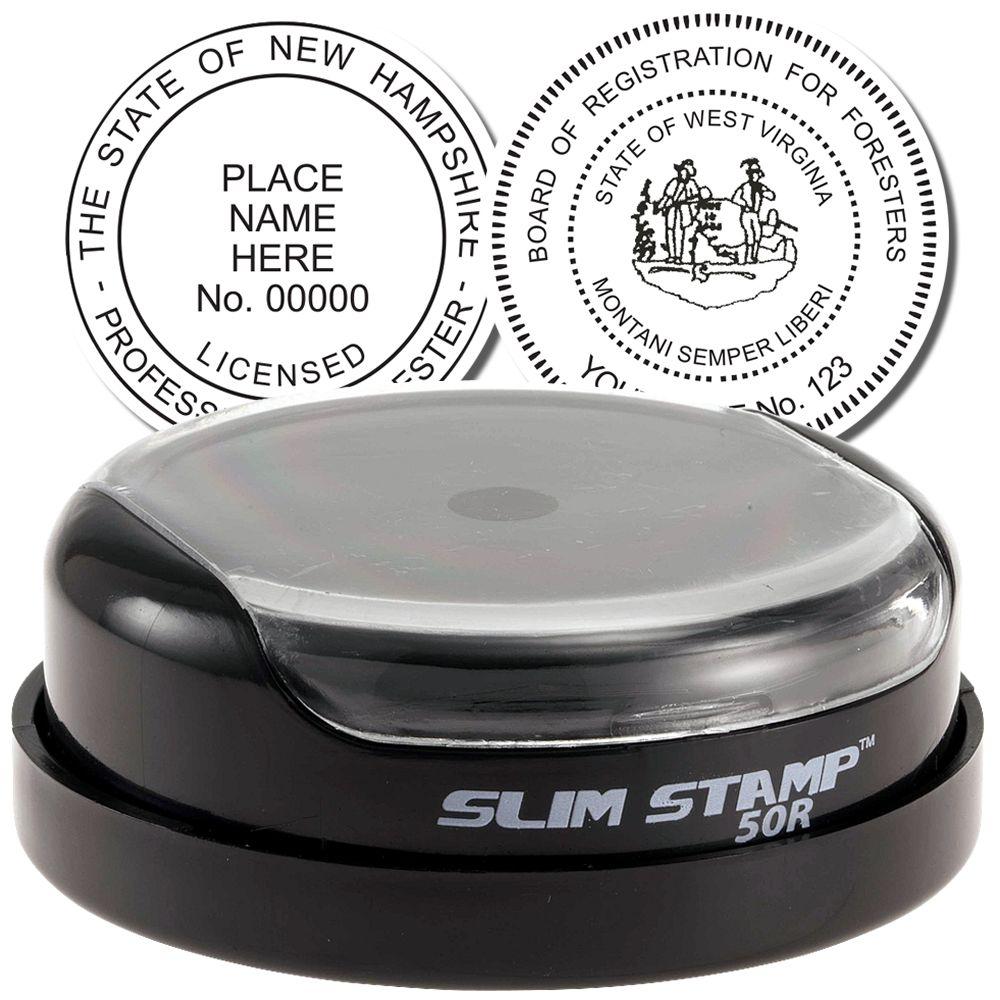
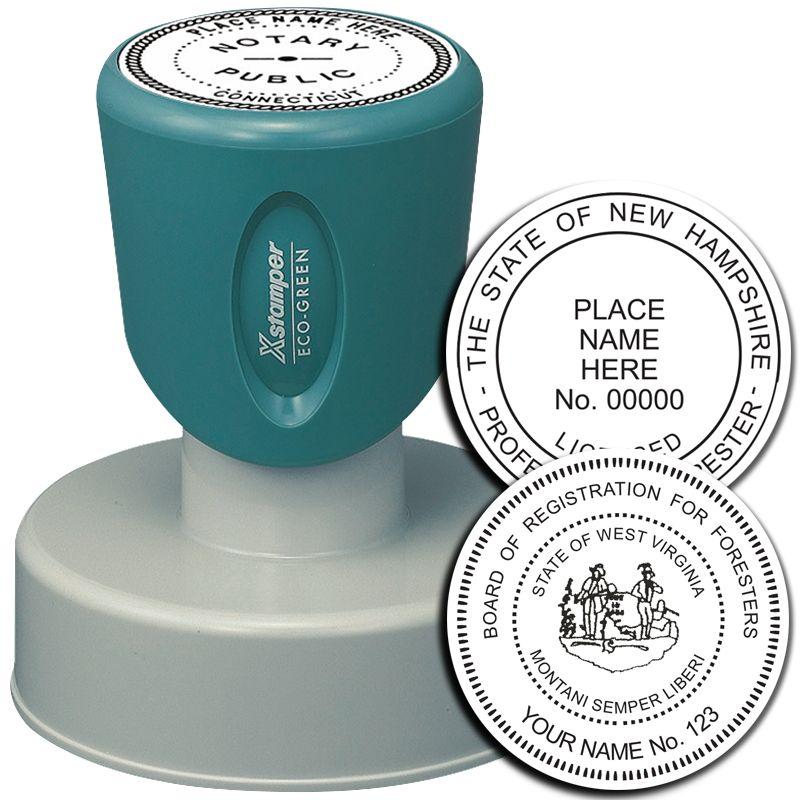
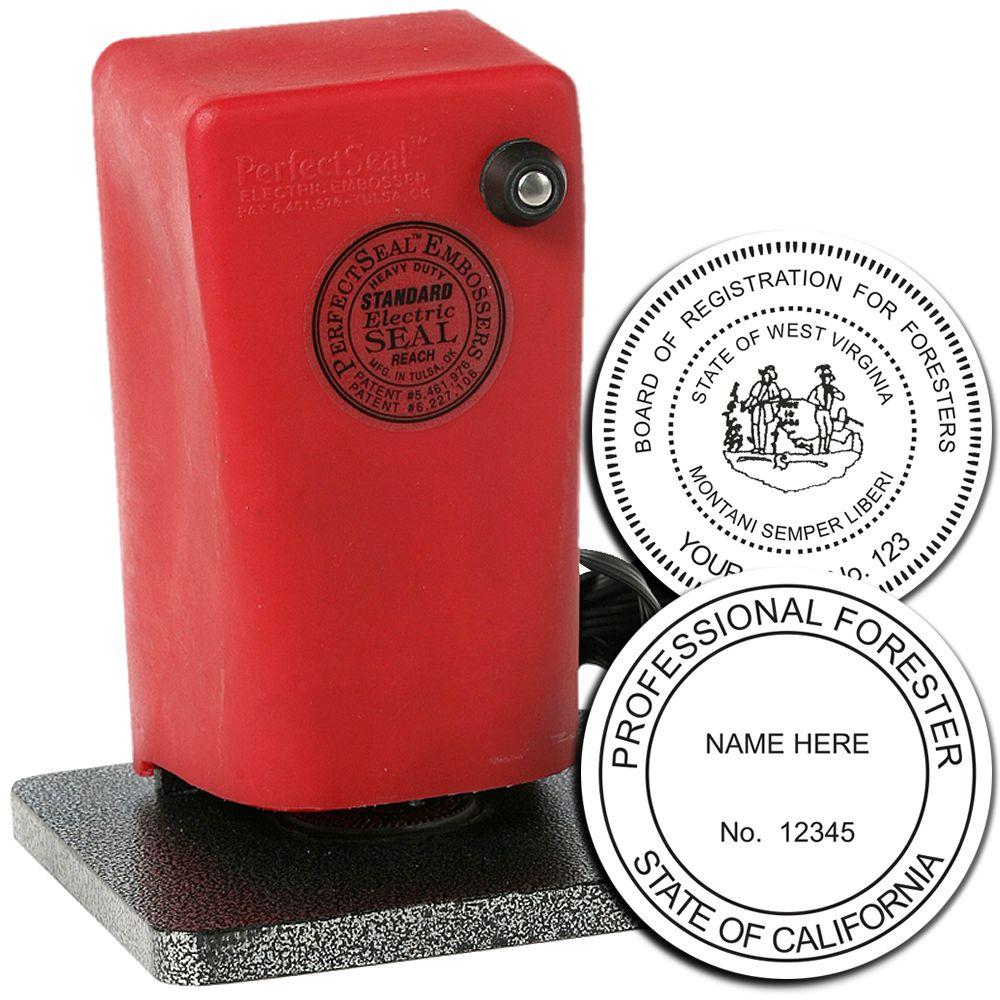
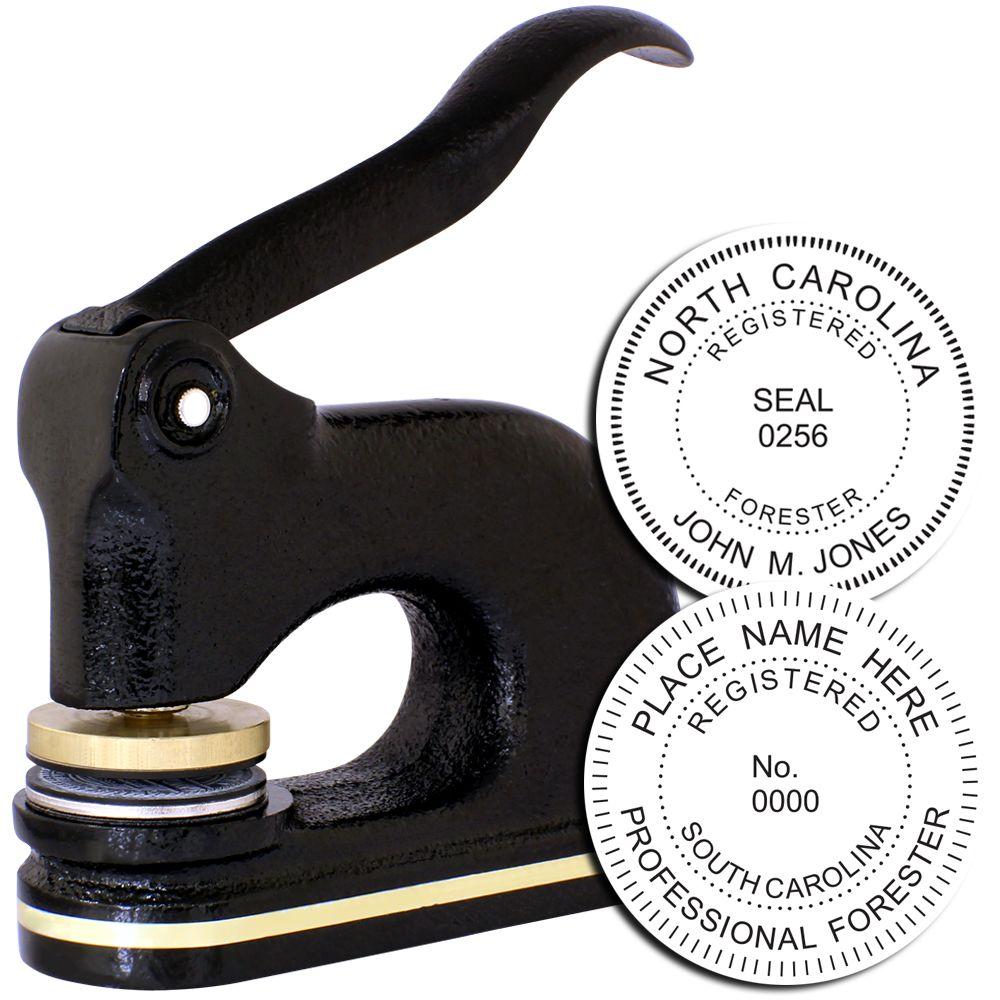
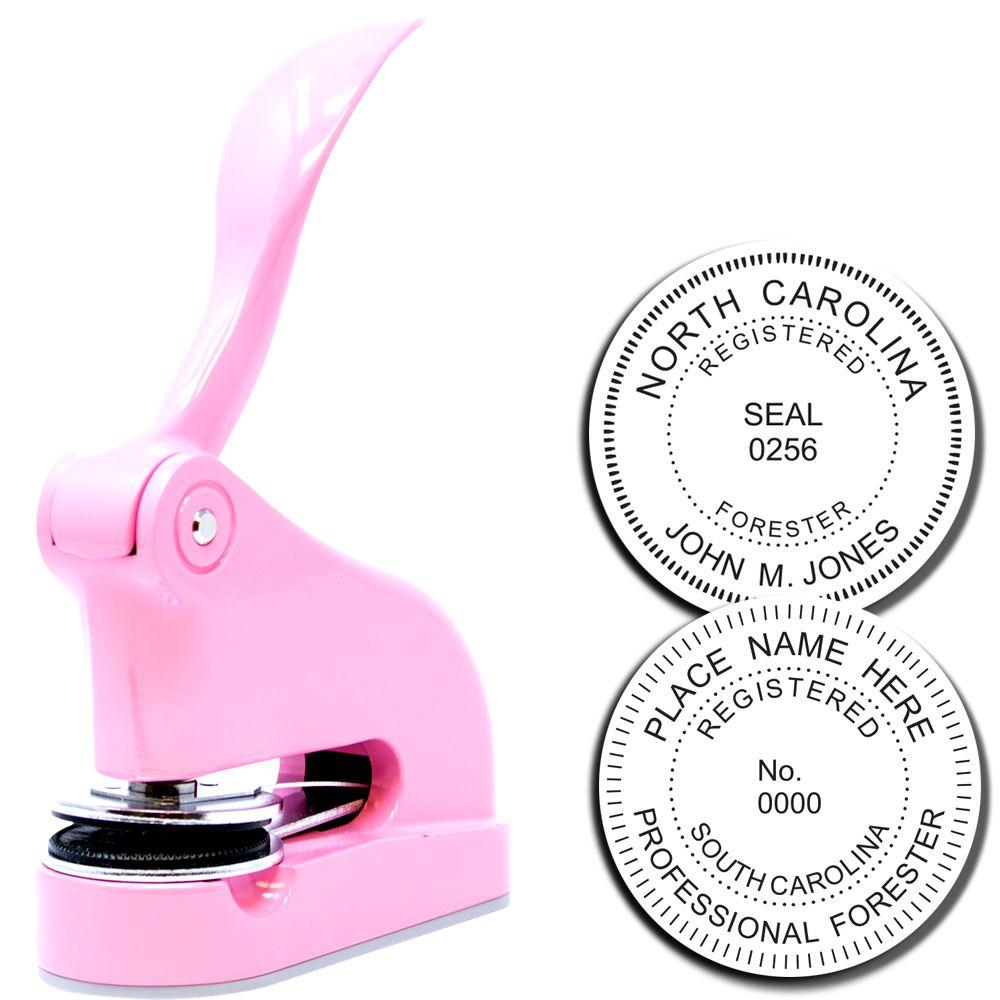
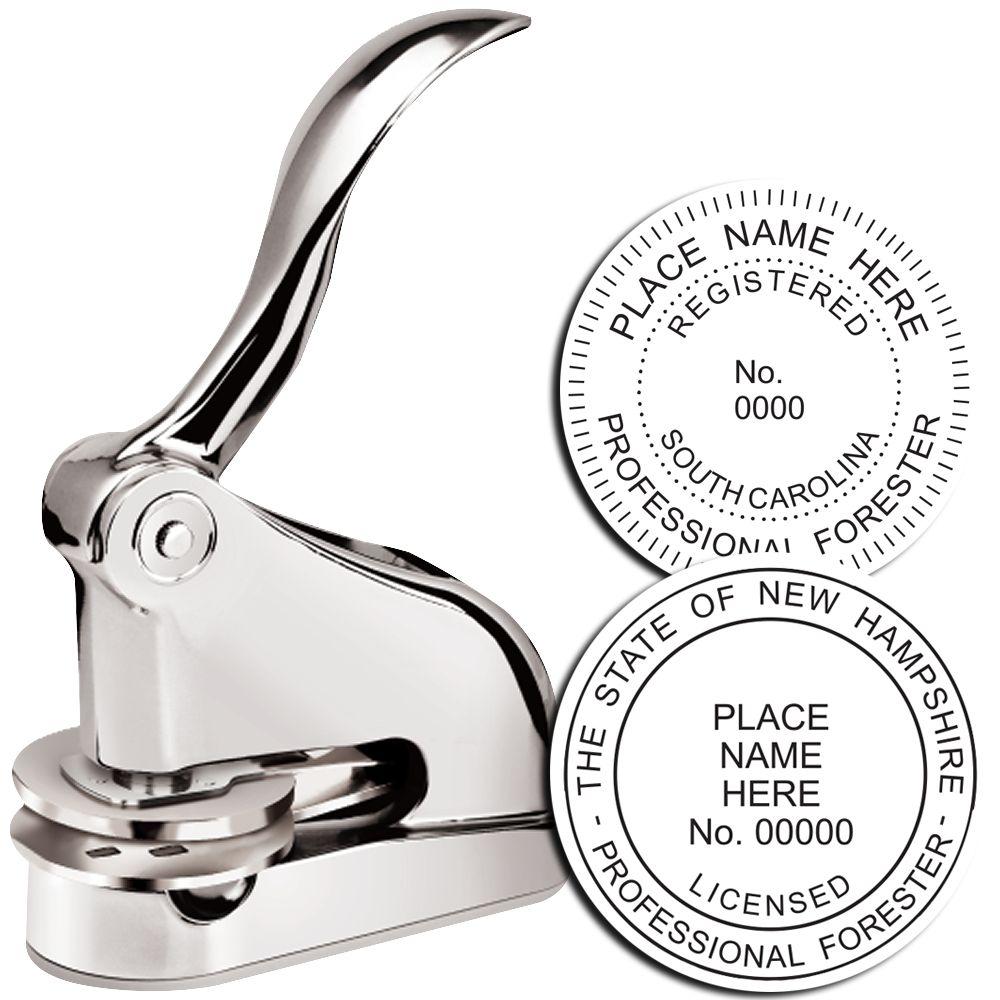
We manufacture stamps and seals, and have since 1964, so it is worth being direct about what this page is not. There is no Connecticut forester seal, so there is no Connecticut forester seal to sell you, and a supplier offering one is offering you a private ornament with a state name on it. That is not a small distinction on a document that ends up in front of a landowner or an agency, because a mark that looks official implies an authority the state has not granted.
It would be equally dishonest to pretend there is no possible use for a stamp. A certified forester who wants their name, credential and certificate number to print in one press on cover letters and management plans can have that, and it is a reasonable office tool. What it is not is a Connecticut seal, it carries no legal weight, and no rule sets its size, wording or content. If you want one on those terms, contact us and we will set out the block exactly as you specify it. We will not draw a state outline or the word seal onto it.
If you also practice in a neighboring state
Connecticut foresters commonly work across state lines, and the rules do not travel. Massachusetts licenses foresters and, like Connecticut, prescribes no seal and no endorsement. Maine licenses foresters and requires plans, maps and reports to be endorsed with the forester’s name and license number. Maryland requires a seal outright. New England is not a single regime and neither is the East Coast.
The practical consequence is that a device made for one state’s rule is not a general purpose forestry seal. If you hold credentials in more than one jurisdiction, the marking that goes on a document should match the rule of the state whose work it is, and that usually means separate blocks rather than one combined one.
What we read, what we could not, and where the gaps are
Read in full: Conn. Gen. Stat. 23-65h on the General Assembly’s own site, and Regs. Conn. State Agencies 23-65h-1 subsections (a) through (s). Cross checked against DEEP’s own forester certification program pages and its published application packet, neither of which mentions a seal or a stamp anywhere.
Not read: Conn. Gen. Stat. 23-65i, the reports provision, which the regulation references as a renewal precondition and which is not a seal provision. Access caveat: the official Connecticut eRegulations portal returned only its portal shell through our connection, so the verbatim subsection wording quoted here came from a republisher and was cross checked against the state’s own pages. The no seal finding is not in doubt. If you plan to quote the exact words of 23-65h-1(k) in a document of your own, confirm them on the state portal. This page is a research summary and not legal advice.
- Forester Stamps and Seals: State Rules, Sizes and Prices
- Massachusetts Forester: No Seal, No Endorsement
- Maine Forester: No Seal, Endorsement on Plans
Frequently asked questions
Does Connecticut require a forester to have a seal or stamp?
No. Neither Conn. Gen. Stat. 23-65h nor Regs. Conn. State Agencies 23-65h-1 contains the word seal or stamp, or any duty to mark a plan, map, report or contract with a device. We read all nineteen subsections of the regulation to confirm it.
Is Connecticut a forester licensing state?
Not in the ordinary sense. There is no board of foresters. Connecticut certifies commercial forest practitioners in three classifications: forester, supervising forest products harvester, and forest products harvester. Within commercial forest practices it is a real practice restriction; outside that scope it does not reach forestry work.
Do I have to put my certificate number on my plans and reports?
No rule requires it. Connecticut imposes no endorsement duty on work product, unlike Alabama, Georgia and Maine, which each require a name and license number on plans, maps and reports. Putting your name and certificate number on your own documents is good practice and it is your choice rather than a rule.
What does Connecticut actually issue me?
A certificate and a wallet card. The certificate is valid four years and shows your full name, the type of certification, the certificate number and the expiration date, and it is signed by the Commissioner. That signature is the state’s, not yours, and it has no counterpart you apply to your own work.
What is the decal mentioned in the statute?
Conn. Gen. Stat. 23-65h(c)(8) lets the Commissioner require a decal or other evidence of certification to be displayed prominently on licensed motor vehicles used in operations, with a fee to cover the cost. It is vehicle identification for field enforcement, not a document seal, and no dimension is published for it.
How often do I renew, and what does it cost?
The regulation sets a four year certificate term inside a statutory ceiling of five years. Apply at least 60 calendar days before expiration with the fee and continuing education evidence; a 60 day extension is available for an additional $100.00. The application and renewal fee is $235.00 and each examination is $65.00. Continuing education on renewal is 12 CEUs for foresters, 8 for supervising forest products harvesters and 6 for forest products harvesters.
Can I buy a Connecticut forester seal anyway?
You can buy a stamp that prints your name, credential and certificate number, and that is a reasonable office tool. It is not a Connecticut seal, it carries no legal weight, and no rule sets its size or wording. Any supplier presenting a product as a state prescribed Connecticut forester seal is describing something that does not exist.








