
Written by Acorn Sales Company, manufacturing stamps and seals since 1964 · Reviewed by Holly R, VP of Sales and Marketing at Acorn Sales, against Forester Licensing Board on 22 September 2026 · Updated 22 September 2026
Massachusetts prescribes nothing for a licensed forester to put on a document. No seal, no stamp, and not even a name and license number endorsement. We read M.G.L. c. 132, sections 47 through 50, and all seven sections of 302 CMR 14.00, the Forester Licensing regulation. The words seal and stamp do not appear in either, and neither imposes any duty to sign, number or otherwise identify a plan, map or report. That makes Massachusetts the emptiest of the eight states in this batch, and it means there is nothing here you need to buy.
What Massachusetts does have is real licensure, which is worth saying because it is sometimes described as a voluntary or cooperating forester program. It is not. M.G.L. c. 132, section 48 provides that “no person shall hold himself out as a forester and engage in the practice of forestry in the commonwealth unless he is licensed in accordance with section forty-nine”, and violations carry a fine of not less than five hundred nor more than one thousand dollars for each violation. The credential is genuine. It simply does not come with a marking rule attached.
Massachusetts forester seal requirements at a glance
| Requirement | Massachusetts rule | Source |
|---|---|---|
| Seal required | No. Nothing is prescribed at all. The words seal and stamp do not appear anywhere in 302 CMR 14.00 or in M.G.L. c. 132, secs. 47 to 50. Unlike Alabama, Georgia and Maine, Massachusetts does not even impose a name and license number endorsement duty. | 302 CMR 14.00; M.G.L. c. 132, secs. 47 to 50 |
| Required elements | Not addressed, because there is no device and no endorsement. No element list exists to reproduce, and any block you use is your own choice of wording. | 302 CMR 14.00 |
| Size and shape | Not addressed. Nothing is published, for a seal or for anything else a licensed forester might put on a document. Do not infer a Massachusetts dimension from a neighboring state; Maine and Maryland are both different regimes. | 302 CMR 14.00; M.G.L. c. 132, secs. 47 to 50 |
| Device allowed | Not addressed. No device is named, required or excluded anywhere in the licensing statute or the regulation, because no marking duty exists for a device to satisfy. | 302 CMR 14.00 |
| Signature and date | Not addressed. 302 CMR 14.00 imposes no signature or dating requirement on a Licensed Forester’s work product. 302 CMR 14.06 does require disclosure of measurement methods in public or private offerings and due diligence in boundary research, but it prescribes no signature block. | 302 CMR 14.00, sec. 14.06 |
| What must be sealed | Nothing. No plan, map, report or contract has to carry a seal, a stamp, a license number or a name endorsement under the forester licensing statute or its regulation. | 302 CMR 14.00; M.G.L. c. 132, secs. 47 to 50 |
| Electronic seal | Not addressed. No electronic or digital seal or signature provision exists, and no third party digital certificate is required, which follows from there being no marking duty at all. | 302 CMR 14.00 |
| Renewal and lapse | Licenses “expire annually on the anniversary date of the license granted”. A Licensed Forester submits a renewal application with the fee not less than 30 days before expiration. The initial fee is $100 and the renewal fee is $50. Nothing happens to a seal on lapse, because there is no seal. | M.G.L. c. 132, sec. 49; 302 CMR 14.00, sec. 14.04 |
| Firm requirements | Not addressed. No firm or business entity licensing provision and no firm seal provision appears in M.G.L. c. 132, secs. 47 to 50, or in 302 CMR 14.00. | 302 CMR 14.00; M.G.L. c. 132, secs. 47 to 50 |
| Regulator | Forester Licensing Board, constituted under M.G.L. c. 132, sec. 50. Licenses are issued by the Director of the Division of Forests and Parks, within the Department of Conservation and Recreation. | M.G.L. c. 132, secs. 49, 50 |




Does Massachusetts require a forester to have a seal?
No, and the negative here is broader than in most states. We read M.G.L. c. 132, sections 47 through 50, which is the whole of the forester licensing statute, and all seven sections of 302 CMR 14.00: 14.01 Authority and purpose, 14.02 Definitions, 14.03 Forester Licensing Board, 14.04 License application, education and experience requirements and fees, 14.05 Disciplinary actions and appeals, 14.06 Standards of Professional Conduct, and 14.07 Severability. The words seal and stamp appear nowhere in any of them.
Most no seal states still ask for something. Alabama, Georgia and Maine each require plans, maps and reports to carry the licensee’s name and license number. Connecticut has no marking duty either, but Connecticut runs a certification program rather than licensure. Massachusetts is the one state in this batch with genuine forester licensure and no document marking duty of any kind. There is no explicit requirement in 302 CMR 14.00 that a Licensed Forester sign or identify a document at all.
It is real licensure, and the prohibition is conjunctive
Because the marking rules are empty, it is worth being precise about what the license does. Massachusetts licensure has been in place since 30 June 1999 and it is not voluntary. But the prohibition is worded in a way that matters, and it should be stated exactly rather than paraphrased into a practice act.
M.G.L. c. 132, section 48, first paragraph: “No person shall hold himself out as a forester and engage in the practice of forestry in the commonwealth unless he is licensed in accordance with section forty-nine.” The operative word is and. The statute reaches a person who both holds out as a forester and practices forestry. It is not a pure practice act, because practicing without claiming the title is not on its face reached, and it is not a pure title act, because claiming the title without practicing is not on its face reached either.
In practice the exceptions follow that logic. Tree wardens, arborists, utility foresters and urban foresters are generally outside the requirement unless they specifically practice forestry and use the forester title. If your work sits near that boundary, the boundary is in the conjunction, not in a list.
What the license is worth on a document, even without a rule
So if nothing has to go on the page, what does the credential do for a document? It does the thing a credential does everywhere: it tells a reader who stands behind the work. A landowner reading a management plan, a town conservation commission reading a report, a buyer reading a cruise, all of them are better served by a document that names the licensed forester behind it.
Massachusetts leaves that entirely to you. You choose whether to put your name on it, whether to include your license number, and how to word your credential. The regulation defines Licensed Forester at 302 CMR 14.02 as one holding a Massachusetts forestry practice license, so that is the accurate phrase if you want one. Nothing obliges you to use it, and nothing stops you.
The standards of professional conduct, which is where the real duties sit
302 CMR 14.06 is the section that actually shapes how a Massachusetts Licensed Forester works, and it has nothing to do with marking documents. It requires accurate statements about the services you are qualified to provide, disclosure of all fees, and disclosure of conflicts of interest, with a business relationship of $50 or more annually treated as reportable. It bars taking compensation from multiple parties on the same project without disclosure. It requires client confidentiality. It requires notification to the Forester Licensing Board of a license suspension or revocation in another jurisdiction.
It also carries two content duties that touch work product without prescribing a signature block: disclosure of measurement methods in public or private offerings, and due diligence in boundary research. Those are substantive obligations about the accuracy of what you produce, and they are what a Massachusetts board would look at in a complaint, rather than whether a number appeared under your name.


Renewal, fees and the annual anniversary date
M.G.L. c. 132, section 49 provides that “licenses issued by said director shall expire annually on the anniversary date of the license granted”, so your date is personal to you rather than fixed by the calendar. Fees are set annually by the Secretary of Administration under M.G.L. c. 7, section 3B, and fee revenue covers administration of sections 47 through 50.
302 CMR 14.04 sets the current figures and the timing: an initial fee of $100, a renewal fee of $50, and a renewal application submitted with the required fee “not less than 30 days before the expiration” of the license. Because no seal exists, nothing happens to a device on lapse, and a name change has no device consequence either. The only thing a lapse touches is your standing to hold yourself out and practice.
Discipline, penalties and why there is no seal misuse rule
The second paragraph of M.G.L. c. 132, section 48 sets the penalty: a person who violates section 48, fraudulently obtains a license, or continues to practice forestry after suspension, expiration or revocation is subject to “a fine of not less than five hundred nor more than one thousand dollars for each such violation”, with the superior court holding jurisdiction to enforce and to remedy. Section 49 lets the director revoke or suspend a license after hearing for “fraud, negligence, incompetence or misconduct in the practice of forestry”. 302 CMR 14.05 governs disciplinary actions and appeals.
What you will not find is a seal misuse provision, and that absence is consistent rather than accidental. A seal misuse rule presupposes a seal. States that mandate one almost always pair it with a penalty for using it after lapse or on work the licensee did not prepare, as Alabama and Arkansas both do. Massachusetts has neither half, which is a small piece of confirming evidence that the silence on seals is deliberate.
Forest cutting plans: a common assumption that does not hold
The question we expect a Massachusetts forester to actually be asking is about forest cutting plans, because that is the document with the most official weight in the state’s forestry practice. The assumption many people carry is that a cutting plan must be prepared and sealed by a licensed forester. It does not hold.
The forest cutting plan regulation does not require the plan to be prepared or signed by a licensed forester, and it requires no seal and no stamp. What it licenses is timber harvesters, who hold a different credential from a Licensed Forester. The landowner may submit the plan themselves, or through a landowner’s agent, with no professional credential mandated.
One caveat on our own reading. We read that regulation in its rescinded 304 CMR 11.00 form as posted by the state, and we did not separately read the replacement at 302 CMR 16.00. If cutting plans are the core of your practice, check the current regulation directly before you rely on this. We would rather flag that than let you assume we read a version we did not.
Chapter 61 forest management plans, which we did not check
A second gap, and we are naming it for the same reason. Massachusetts forest management plans prepared under M.G.L. c. 61 and c. 61A, the forest and agricultural classification programs, are a large part of what consulting foresters in the state produce. Those plans are prepared by foresters in practice.
We did not examine chapter 61 or its regulations for a signing or sealing formality. Nothing in the licensing statute or 302 CMR 14.00 creates one, but a program specific requirement can live in a program specific chapter, and a seal duty hiding in a neighboring chapter is a real pattern rather than a theoretical one. If chapter 61 plans are your bread and butter, read the program requirements rather than assuming the licensing chapter is the whole story.




There is no Massachusetts forester seal to sell you
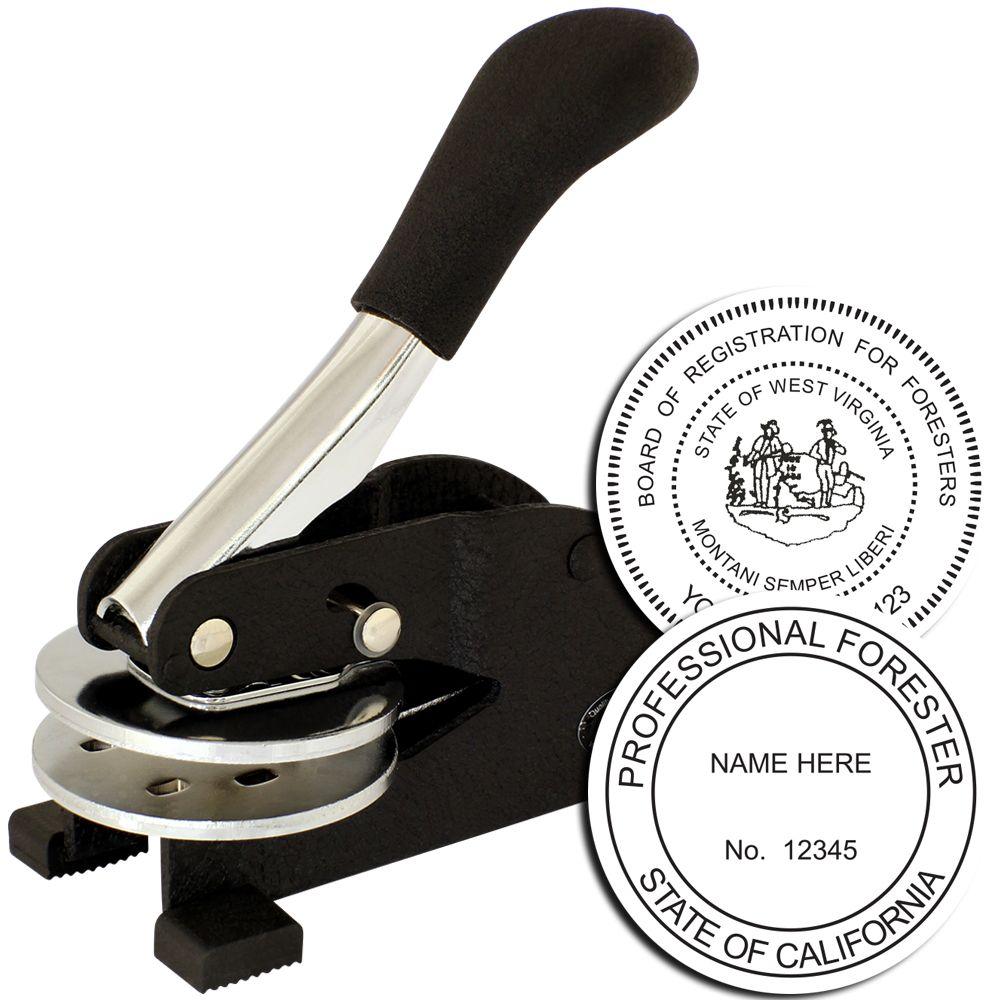
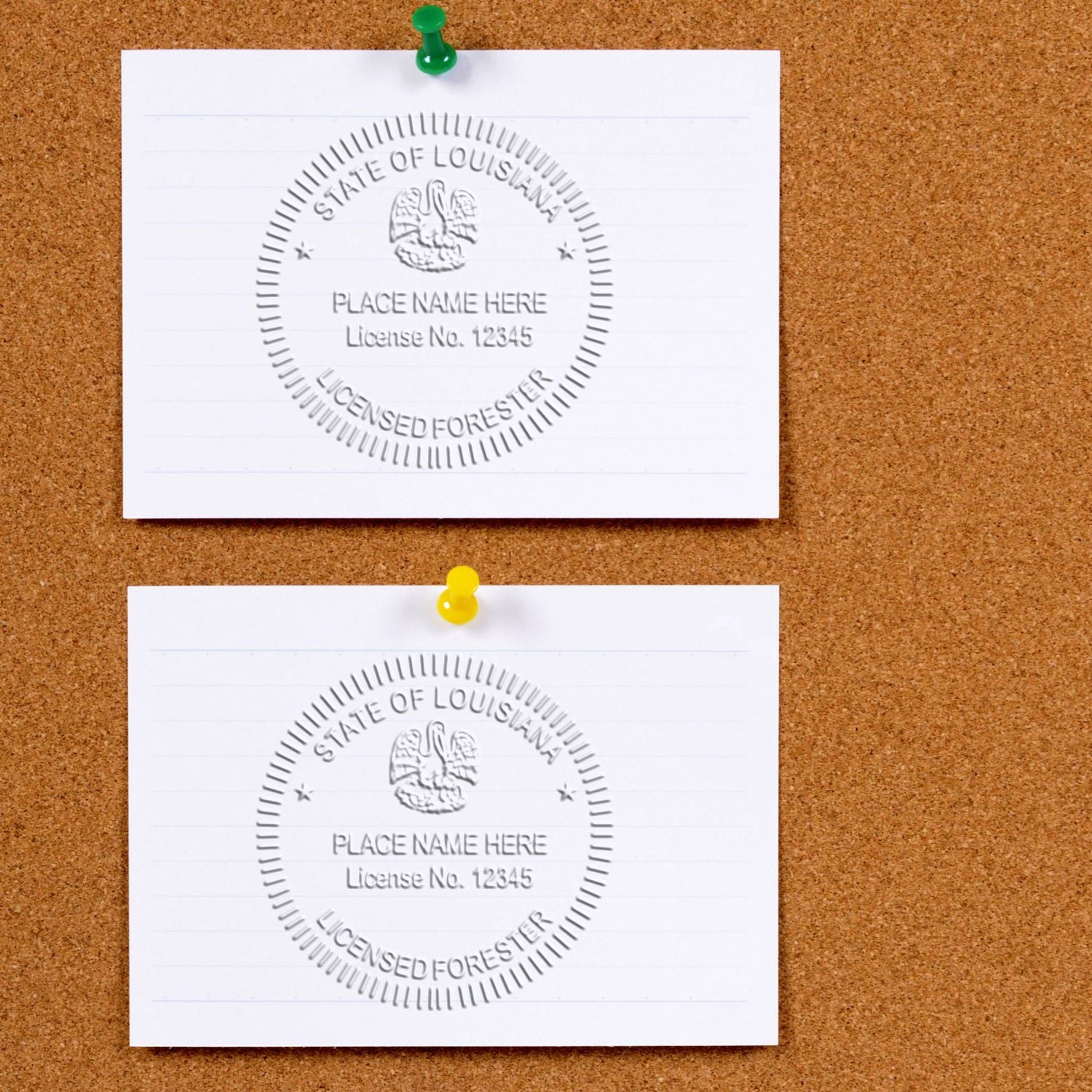
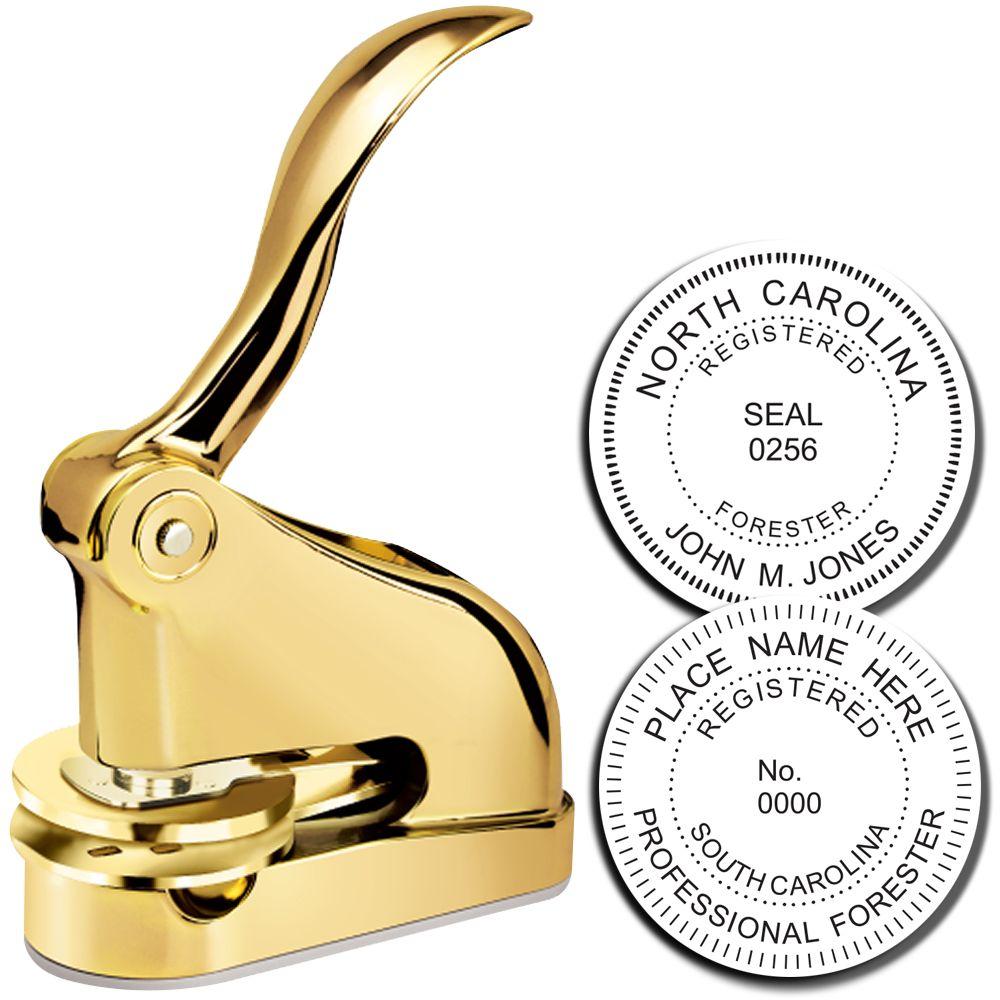
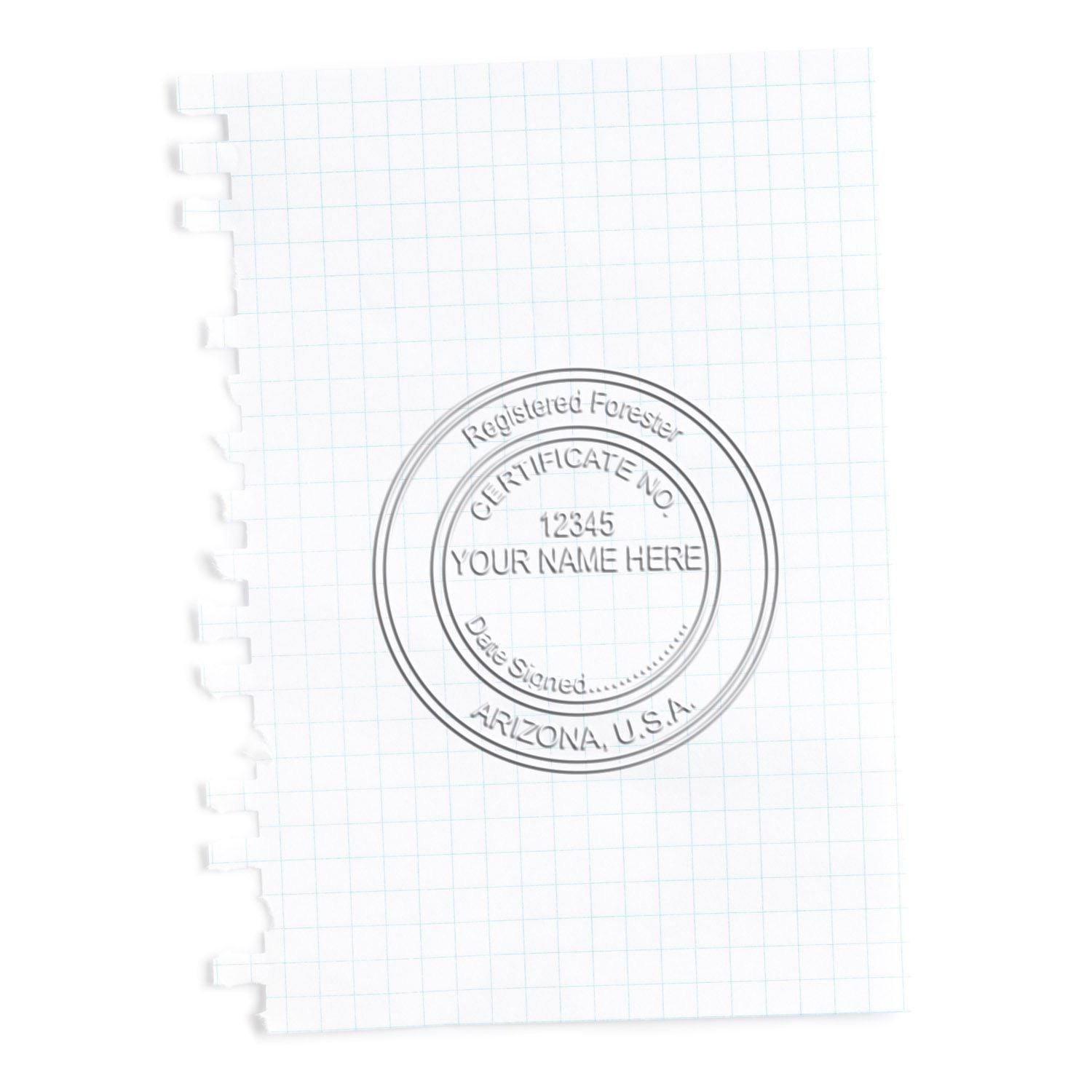
We have manufactured stamps and seals since 1964, so we will be direct about what this page is not. There is no Massachusetts forester seal. A supplier offering one is offering a private ornament with a state name on it, and on a document that reaches a landowner, a town board or a buyer, an official looking mark implies an authority the Commonwealth has not granted. That is a real risk to you rather than to the supplier.
What is honest is a plain identification stamp with wording you choose. Many Massachusetts Licensed Foresters want their name, the phrase Licensed Forester and their license number to print in one press on plan covers, cruise reports and correspondence, and that is a reasonable office tool for a real habit. It carries no legal weight, no rule sets its size or content, and the wording is entirely your call. If you want one on those terms, contact us and we will set out exactly the block you specify. We will not add a state outline, a border that reads as official or the word seal.
If you also hold a license in a neighboring state
New England is not one regime, and a device made for one state’s rule is not a general purpose forestry seal. Maine licenses foresters and requires plans, maps and reports to be endorsed with the forester’s name and license number. Connecticut certifies commercial forest practitioners and prescribes nothing. Maryland, a little further down the coast, requires a seal outright and delegates its design to a state board.
If you carry credentials in more than one jurisdiction, the marking on a document should match the rule of the state whose work it is. In practice that usually means separate blocks rather than one combined block, because a combined block advertises a credential that has no standing on that particular document. Order what each state’s rule actually calls for, and where a state calls for nothing, order what makes your own documents readable.
What we read, what we did not, and the honest bottom line
Read in full: M.G.L. c. 132, sections 47, 48 and 49 on the Massachusetts Legislature’s own site, and all seven sections of 302 CMR 14.00 from the state’s own published copy. Section 50, on the composition of the Forester Licensing Committee, was identified but not read verbatim; it is a membership provision and would not carry a seal rule.
Not read: the current forest cutting practices regulation at 302 CMR 16.00, which replaced the rescinded 304 CMR 11.00 that we did read, and the M.G.L. c. 61 forest management plan requirements. Neither gap moves the seal answer, which rests on the licensing statute and its regulation, but either could carry a program specific formality we have not seen. The bottom line for a buyer stands: Massachusetts prescribes no seal, no stamp and no endorsement, so nothing you buy is compliance and anything you buy is for your own documents. This page is a research summary and not legal advice.
- Forester Stamps and Seals: State Rules, Sizes and Prices
- Connecticut Forester: Certified, No Seal Required
- Maine Forester: No Seal, Endorsement on Plans
Frequently asked questions
Does Massachusetts require a licensed forester to have a seal?
No. The words seal and stamp do not appear anywhere in 302 CMR 14.00 or in M.G.L. c. 132, sections 47 to 50. Massachusetts also imposes no name or license number endorsement duty on work product, which sets it apart from Alabama, Georgia and Maine.
Is Massachusetts forester licensing voluntary?
No. It is genuine licensure, in place since 30 June 1999. M.G.L. c. 132, section 48 bars a person from holding himself out as a forester and engaging in the practice of forestry without a license, with a fine of not less than five hundred nor more than one thousand dollars for each violation.
Do I have to put my license number on my plans and reports?
No rule requires it. 302 CMR 14.00 imposes no signature, numbering or identification duty on a Licensed Forester’s work product. Naming yourself and your license number on your own documents is sensible practice and it is your choice rather than an obligation.
Does a forest cutting plan have to be prepared or sealed by a licensed forester?
The forest cutting plan regulation does not require the plan to be prepared or signed by a licensed forester and requires no seal or stamp. It licenses timber harvesters, who hold a different credential, and the landowner may submit the plan themselves or through an agent. We read that regulation in its rescinded 304 CMR 11.00 form; check the replacement at 302 CMR 16.00 if cutting plans are central to your work.
What are the Massachusetts license fees and renewal dates?
Licenses expire annually on the anniversary date of the license granted. 302 CMR 14.04 sets an initial fee of $100 and a renewal fee of $50, with the renewal application submitted with the fee not less than 30 days before expiration.
Can I buy a Massachusetts forester seal anyway?
You can buy a stamp that prints your name, the phrase Licensed Forester and your license number, and that is a reasonable office tool. It is not a Massachusetts seal, it carries no legal weight, and no rule sets its size or wording. A supplier presenting a product as a state prescribed Massachusetts forester seal is describing something that does not exist.
What does 302 CMR 14.06 actually require of me?
Accurate statements about the services you are qualified to provide, disclosure of all fees, disclosure of conflicts of interest including a business relationship of $50 or more annually, no compensation from multiple parties on the same project without disclosure, client confidentiality, notification to the Board of discipline in another jurisdiction, disclosure of measurement methods in offerings, and due diligence in boundary research. None of it prescribes a signature block.








