

Written by Acorn Sales Company, manufacturing stamps and seals since 1964 · Reviewed by Holly R, VP of Sales and Marketing at Acorn Sales, against the Utah Professional Engineers and Professional Land Surveyors Licensing Board, which acts with the Utah Division of Professional Licensing and Utah Code §§ 58-22-601, 58-22-602 on 21 September 2026 · Updated 21 September 2026
Utah’s 1-1/2 inches is a minimum, not the size. Utah Admin. Code R156-22-601(1)(a) reads “Each seal shall be a circular seal, 1-1/2 inches minimum diameter.” No maximum is stated, no inner circle or milled edge is prescribed, and sources that quote 1-1/2 inches as the Utah dimension have turned a floor into a fixed number. A 1-5/8 or 1-3/4 inch die is compliant. A 1-1/4 inch die is not.
That matters because of where Utah makes you sign. R156-22-601(1)(c) requires each seal to be “signed and dated with the signature and date appearing across the face of each seal imprint.” The signature has to cross the stamp, not sit beside it. A 1-1/2 inch die with the four required items packed edge to edge leaves no clear band to sign across, so buying up and keeping the interior open is the practical fix, and the rule permits it.
The face carries four things and nothing is mandated beyond them: your name as licensed, your license number, State of Utah, and your title as licensed. No expiration date, no discipline line, no state outline.
Utah PE seal requirements at a glance
| Requirement | Utah rule | Source |
|---|---|---|
| Seal required | Yes | Utah Code §§ 58-22-601, 58-22-602 |
| Required elements | Your name as licensed, Your license number, State of Utah and Your title as licensed: Professional Engineer, Professional Structural Engineer, or Professional Land Surveyor | Utah Admin. Code R156-22-601(1)(b) |
| Size and shape | Circular, 1-1/2 inches minimum diameter. | Utah Admin. Code R156-22-601(1)(a) |
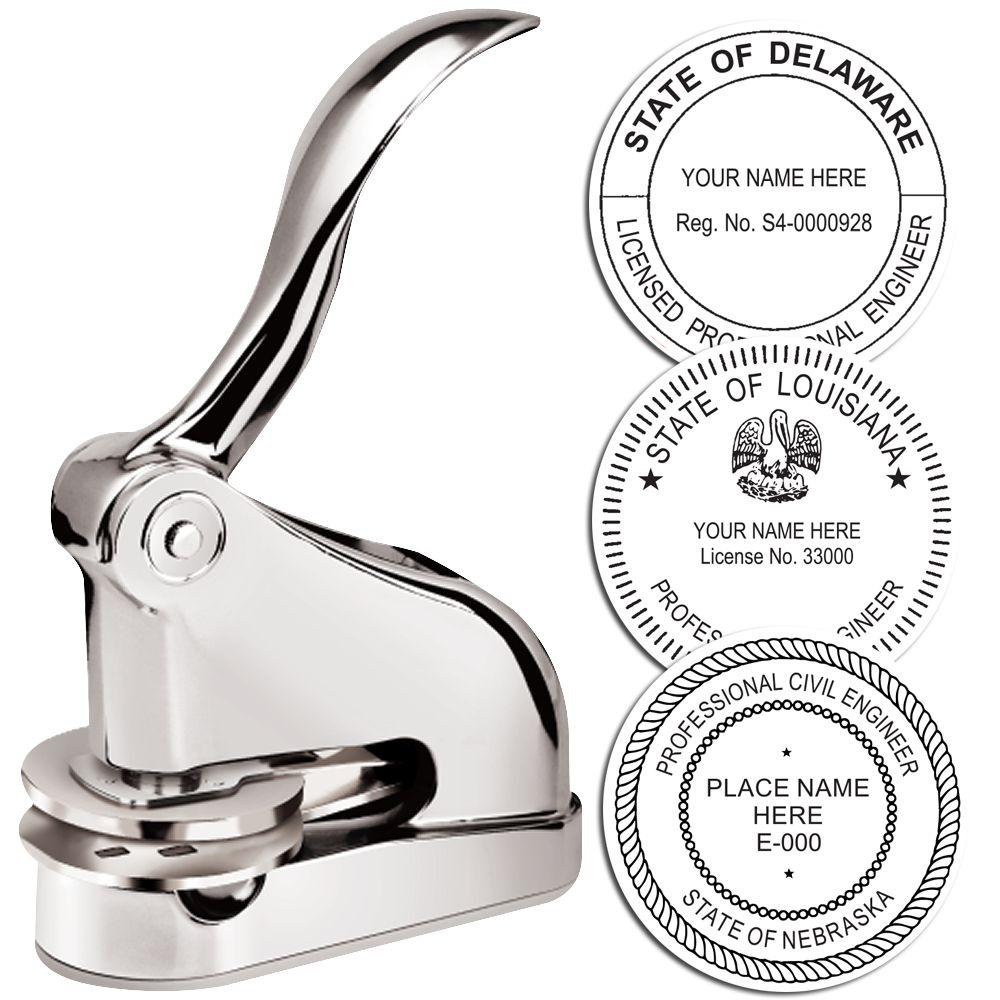
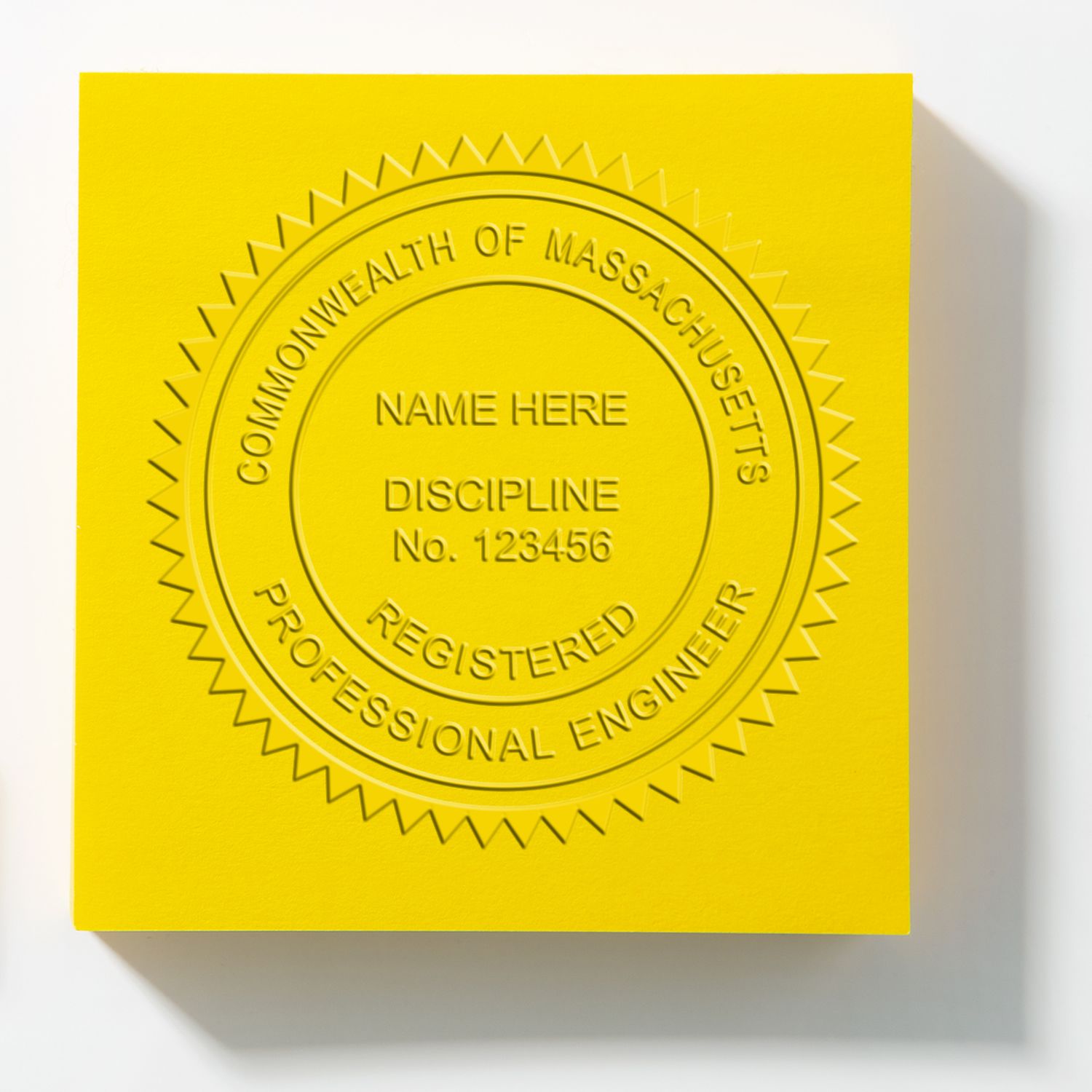
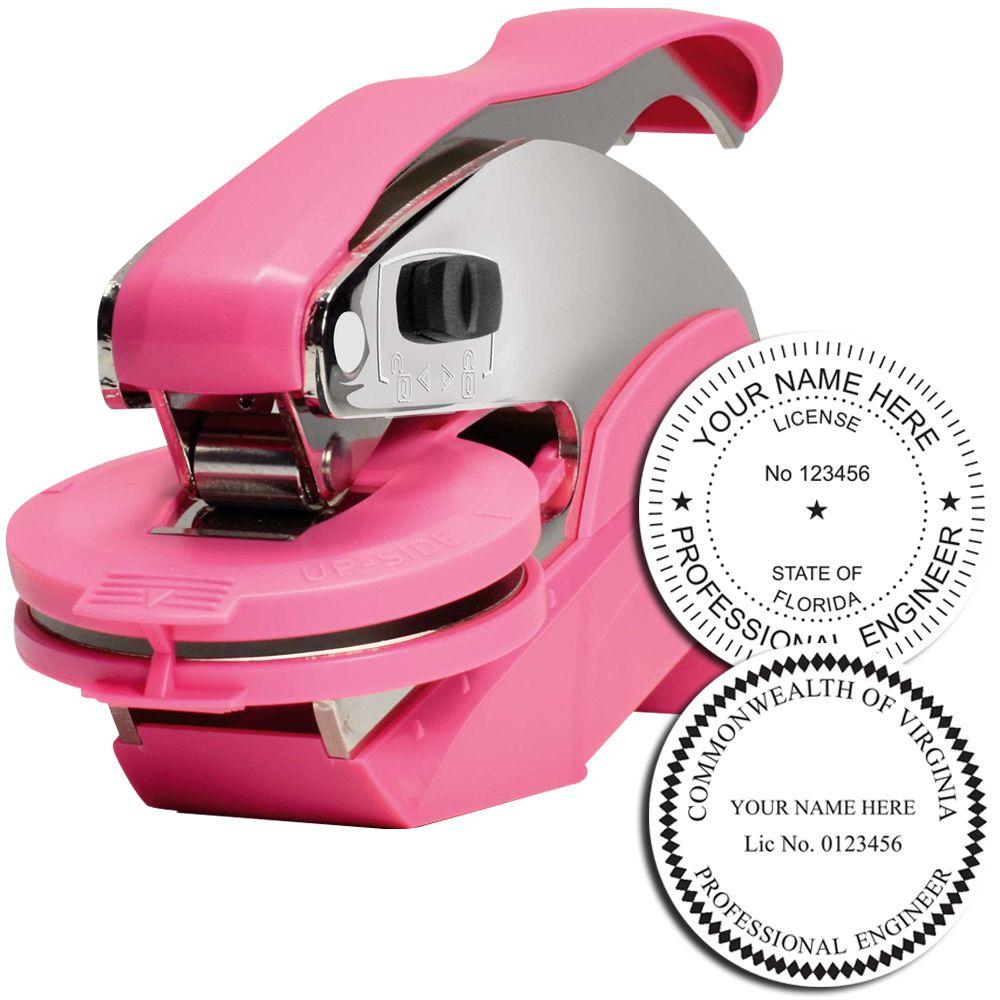
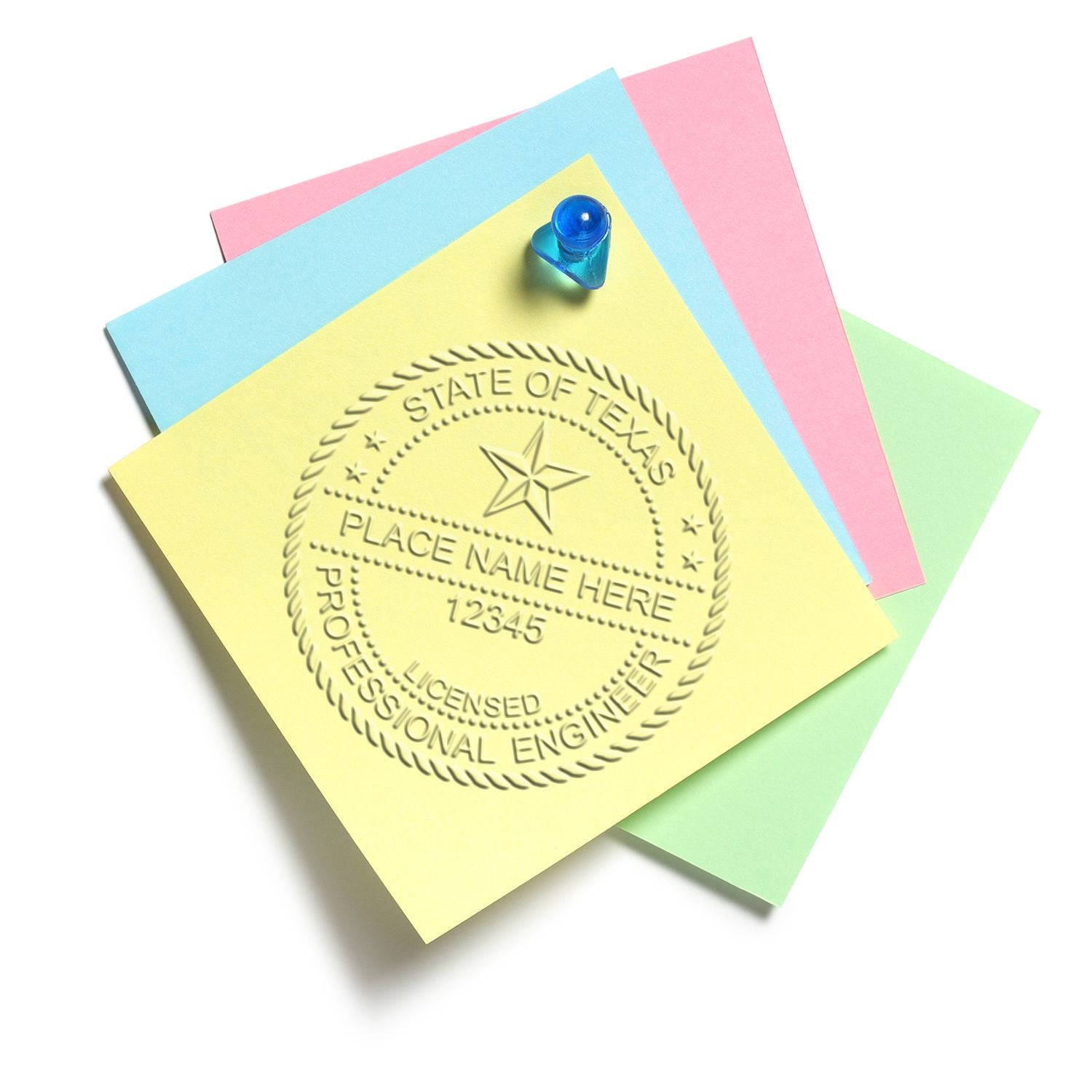
| Device allowed | Three devices are named and all three are lawful: “A seal may be a wet stamp, embossed, or electronically produced.” The safe buy is an inked rubber or self-inking stamp at 1-1/2 inches or larger, because the seal, signature, and date have to survive copying under R156-22-601(1)(h), and an embossed-only impression frequently does not. | Utah Admin. Code R156-22-601(1)(e) |
| Signature and date | The signature and the date must physically cross the stamp. | Utah Admin. Code R156-22-601(1)(c), (d), (f), (h) |
| What must be sealed | All final plans, specifications, reports, maps, sketches, surveys, drawings, documents, and plats prepared by the licensee or under the licensee's supervision. | Utah Admin. Code R156-22-601(1)(a), (g) |
| Electronic seal | Utah names no technology. | Utah Admin. Code R156-22-601(1)(e), (f), (g) |
| Renewal and lapse | Licenses renew on a two-year cycle ending March 31 of each odd-numbered year, with 30 hours of continuing professional education. | Utah Admin. Code R156-22-304, R156-22-305 |
| Firm number on documents | Not applicable. | Utah Code § 58-22-301(2) |
| Licensing board | The Utah Professional Engineers and Professional Land Surveyors Licensing Board, which acts with the Utah Division of Professional Licensing | Utah Code Title 58 Chapter 22, Professional Engineers |
Rules for other states are on PE stamp requirements by state.


Is a seal required in Utah?
Utah requires a seal Utah requires a seal on final work product, and the duty sits in statute rather than in board rule. Utah Code § 58-22-602(1) provides that any final plan, specification, and report of a building or structure erected in the state shall bear the seal of a professional engineer or professional structural engineer. Subsection (2) reaches further: a final plan, specification, or report prepared by or under the supervision of a licensee “shall bear the seal of the professional engineer or professional structural engineer when submitted to a client, when filed with public authorities, or when submitted to a building official for the purpose of obtaining a building permit, even if the practice is exempt from licensure under Section 58-22-305”. Subsection (3) applies the same duty to a professional land surveyor's final plan, map, sketch, survey, drawing, document, plat, and report when submitted to a client or filed with public authorities. Section 58-22-601 then hands the design and implementation of the seal to the Division in collaboration with the board, which is why the physical specification lives in rule R156-22-601.
What must appear on the seal
- Your name as licensed
- Your license number
- State of Utah
- Your title as licensed: Professional Engineer, Professional Structural Engineer, or Professional Land Surveyor
The rule lists four items and stops. There is no required expiration date, no discipline line, no state outline, no NCEES record number. Nothing in R156-22-601 prohibits extra content either, so a die that adds a discipline is not automatically bad, but a die that drops any of the four is. Two traps. First, Professional Structural Engineer is a separate license classification under Utah Code § 58-22-301(2)(b), so that title may go on a seal only if the person actually holds the structural license; a general PE who orders it is ordering an invalid seal. Second, R156-22-601(2) states that a person who qualifies for and uses the title of professional engineer intern is not permitted to use a seal, so there is no lawful Utah EI or intern stamp.
Size and shape
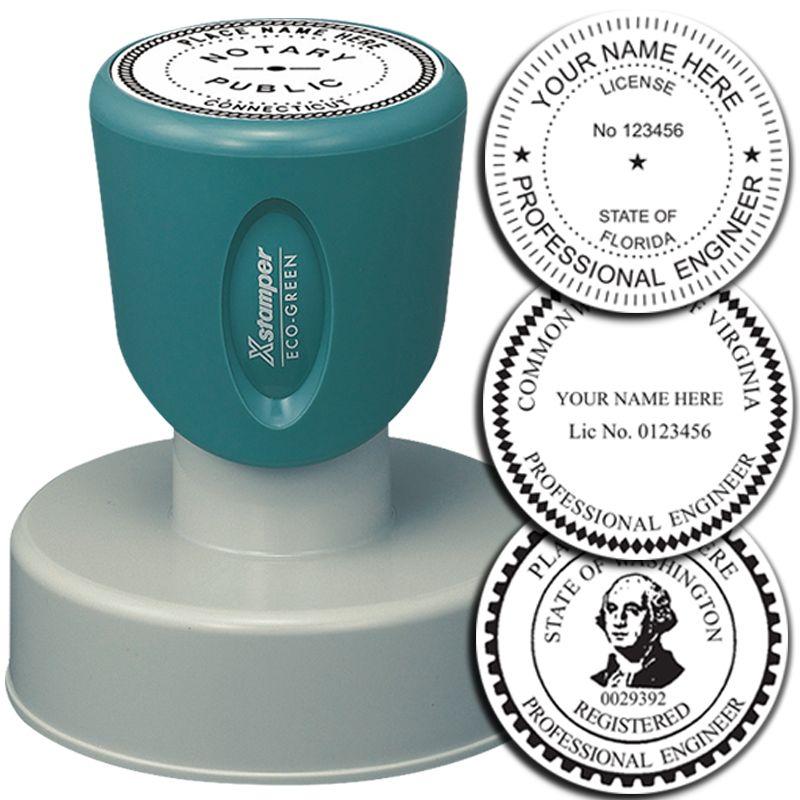
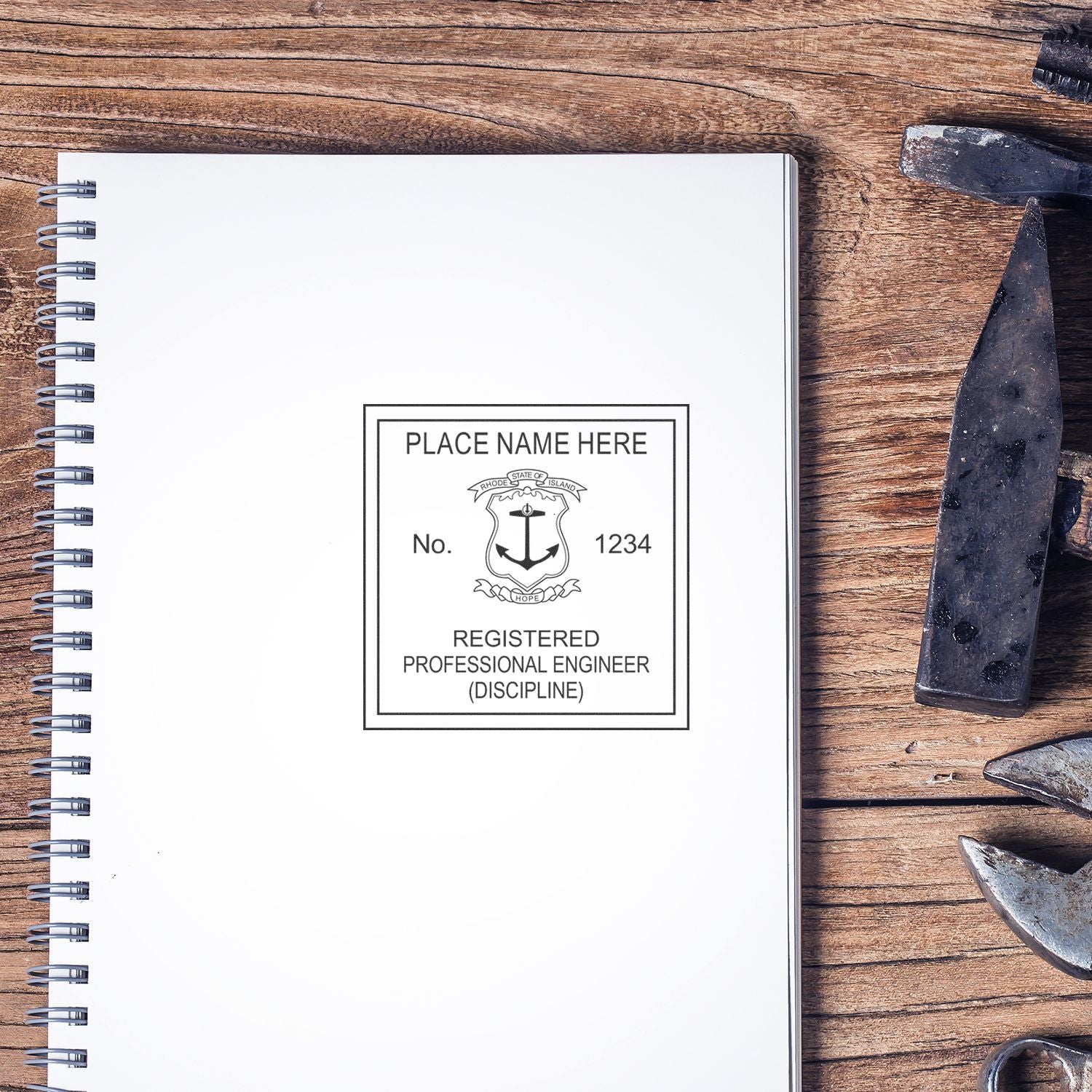
Circular, 1-1/2 inches minimum diameter. This is a floor and not a fixed dimension: the rule reads “Each seal shall be a circular seal, 1-1/2 inches minimum diameter.” No maximum is stated, and no inner circle, milled edge, or concentric ring construction is prescribed. A 1-5/8 inch or 1-3/4 inch die is compliant; a 1-1/4 inch die is not.


Embosser, rubber stamp or digital
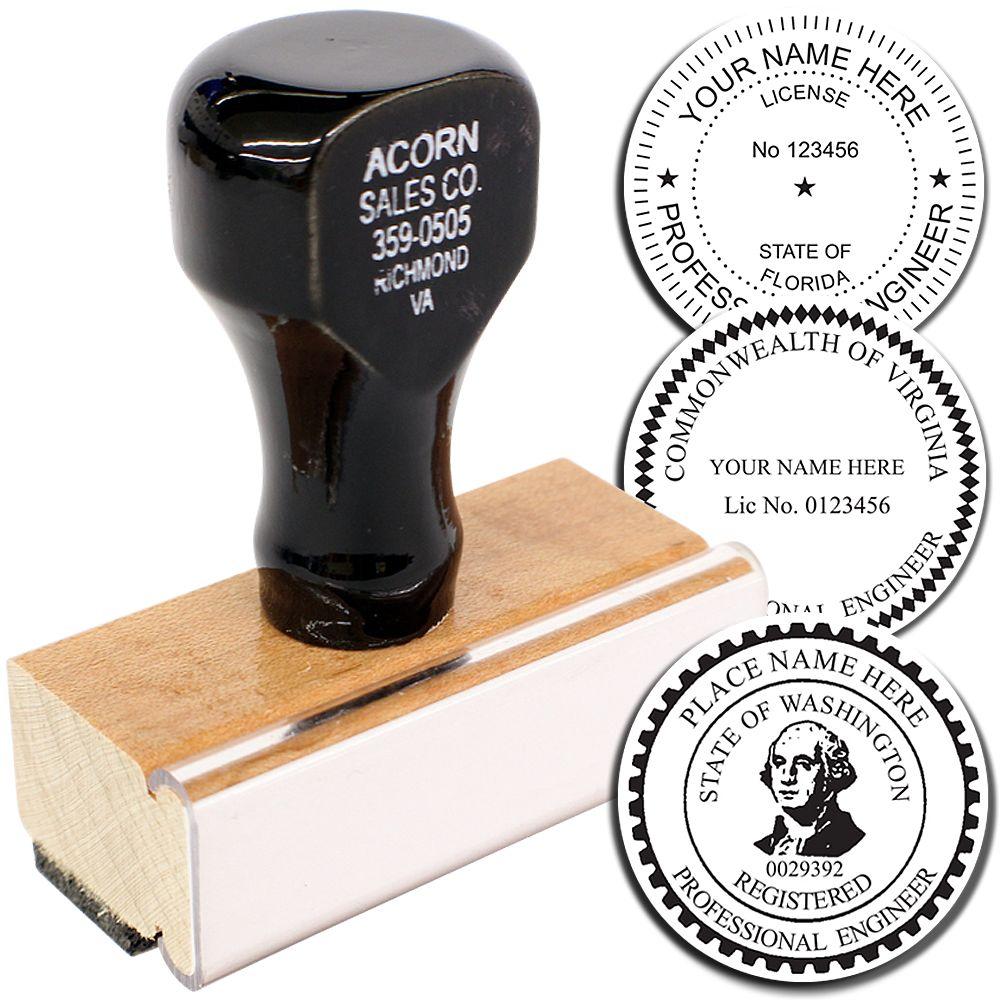
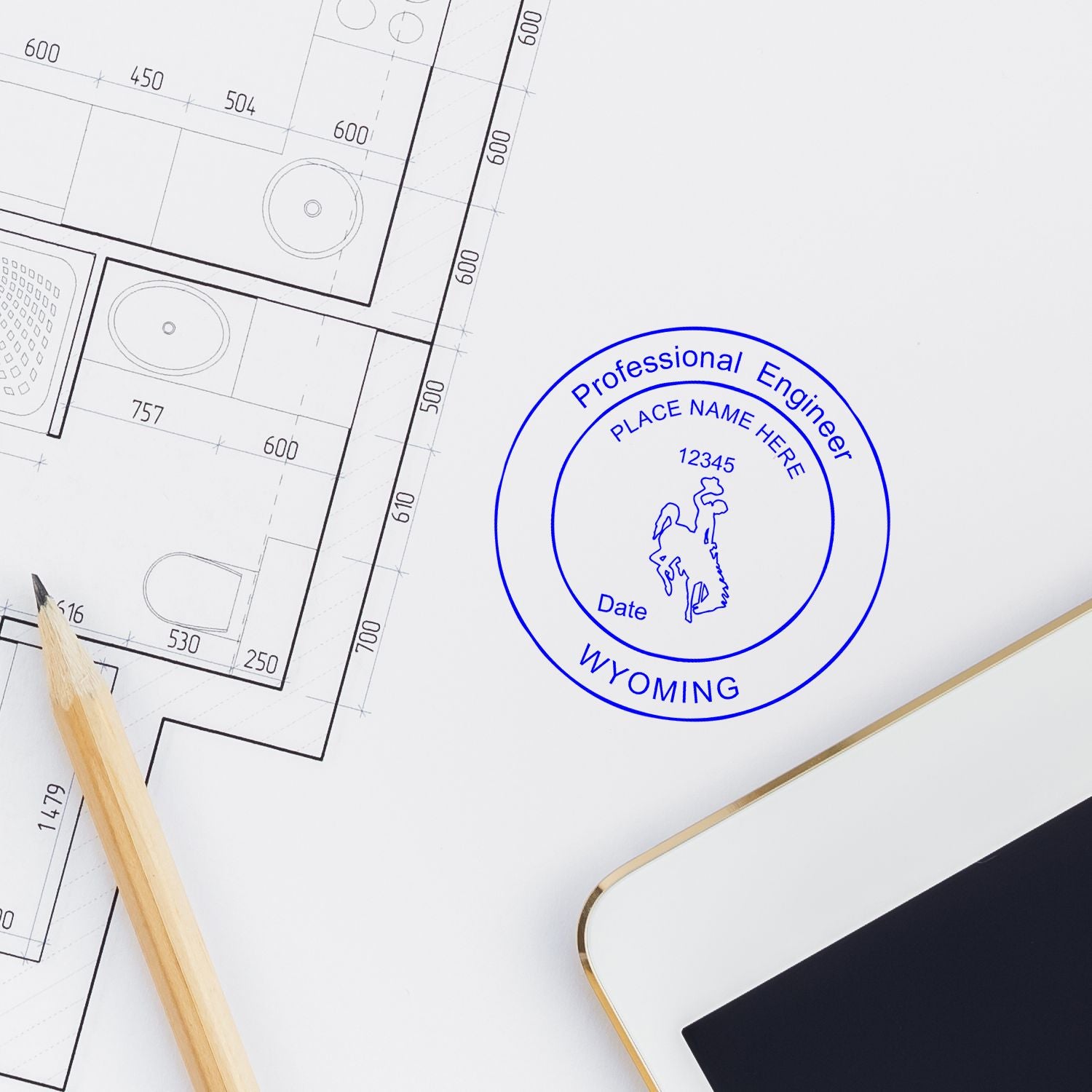
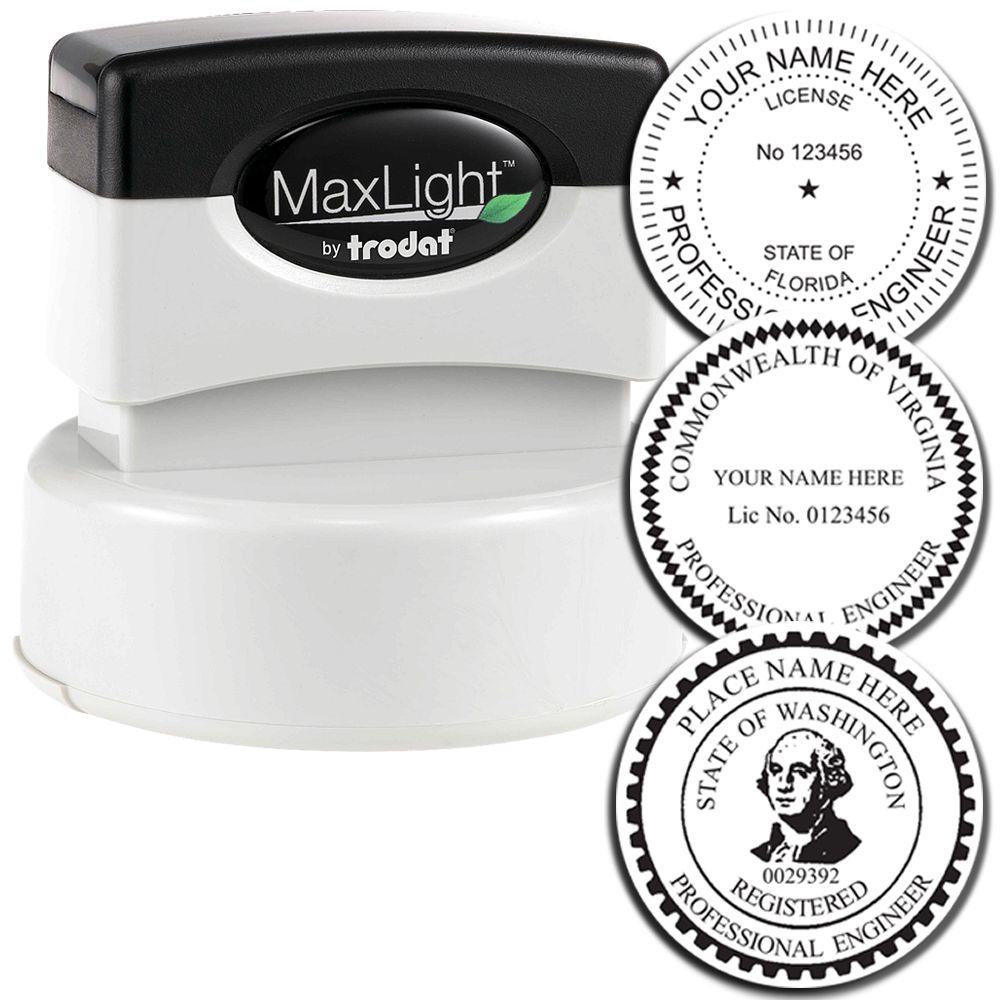
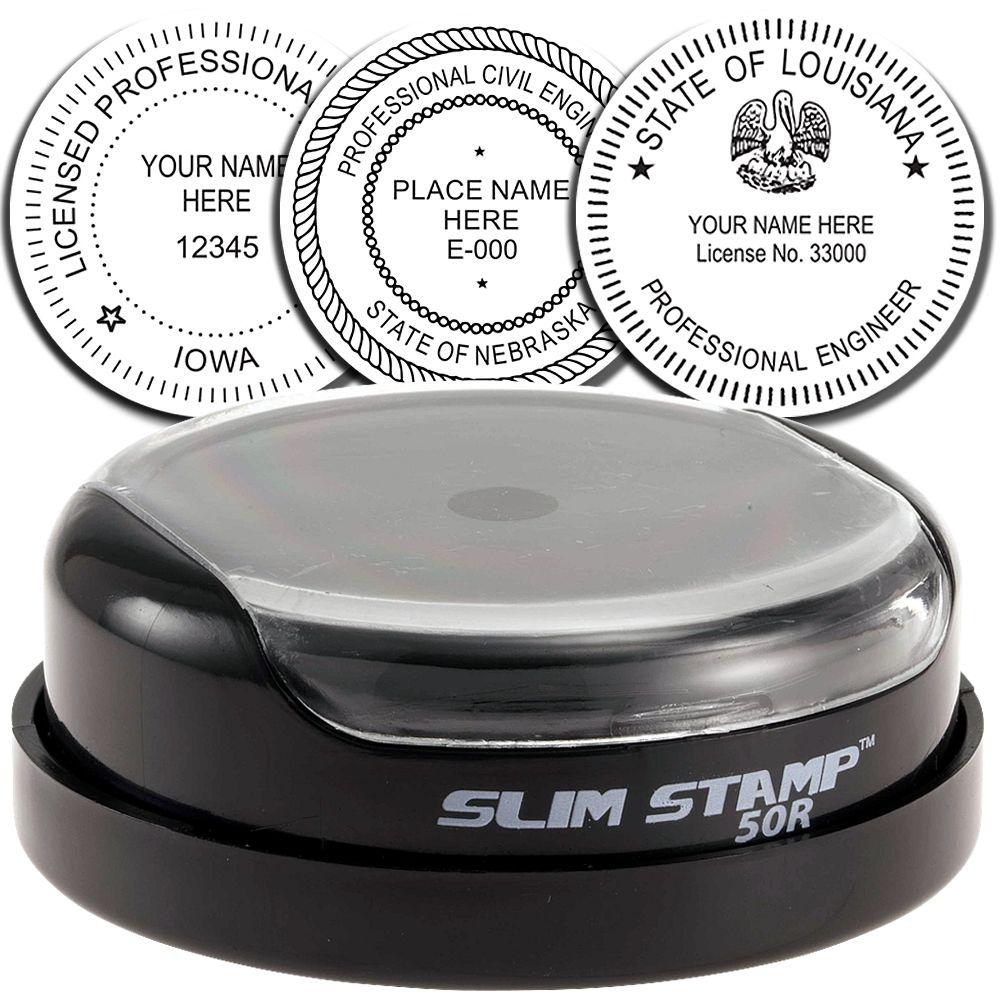
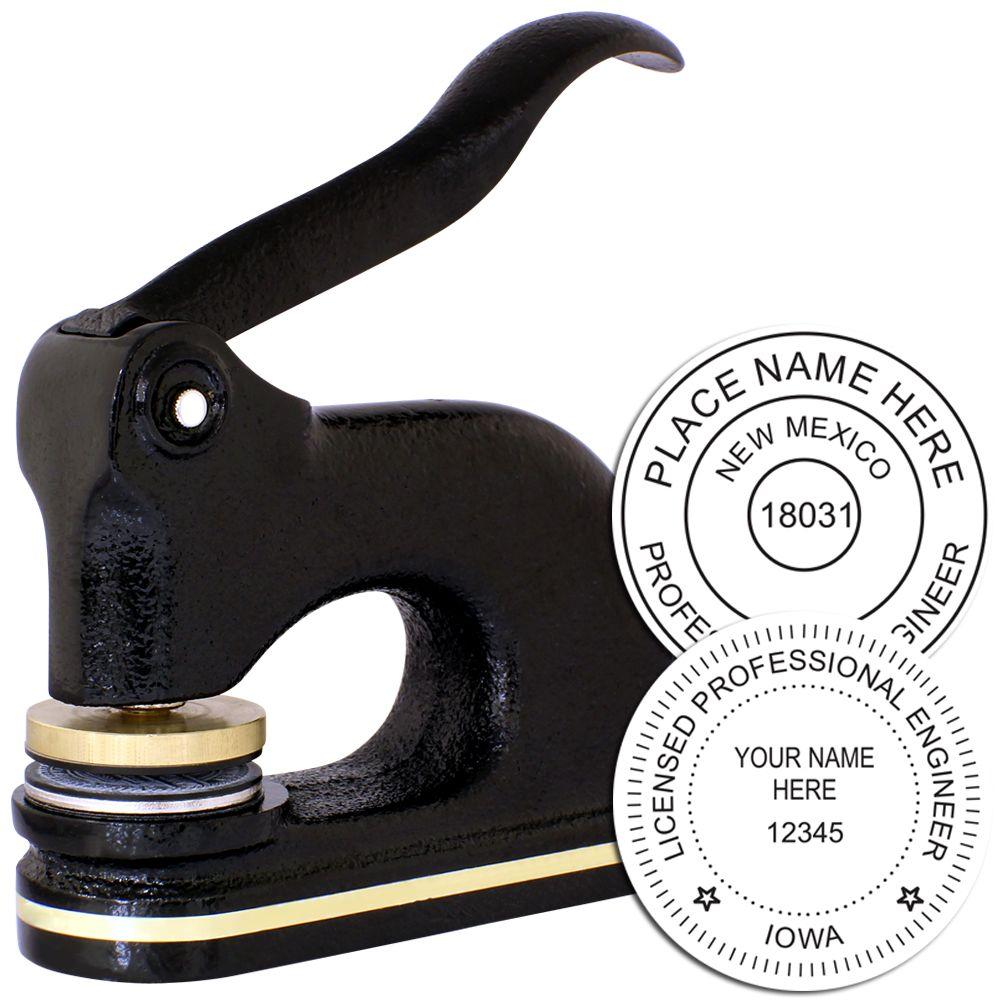
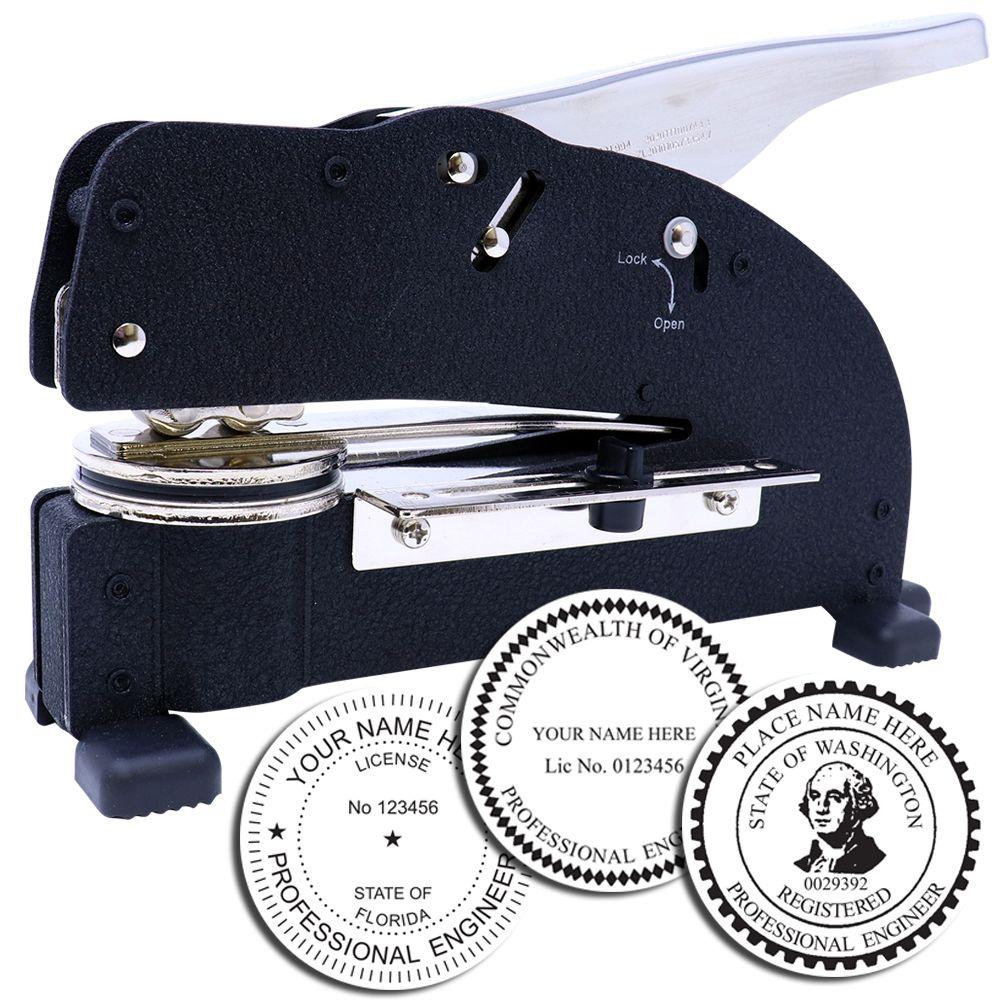
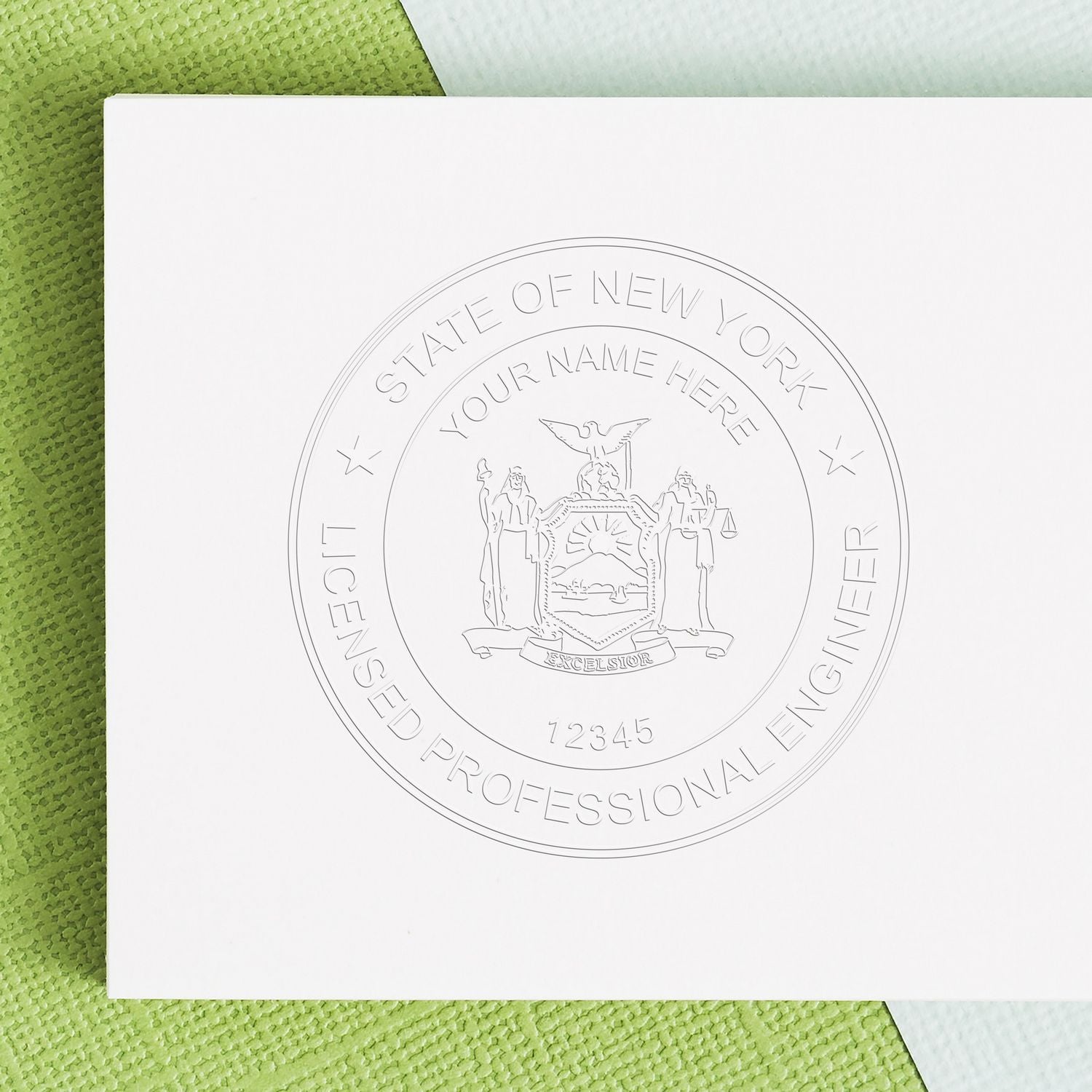
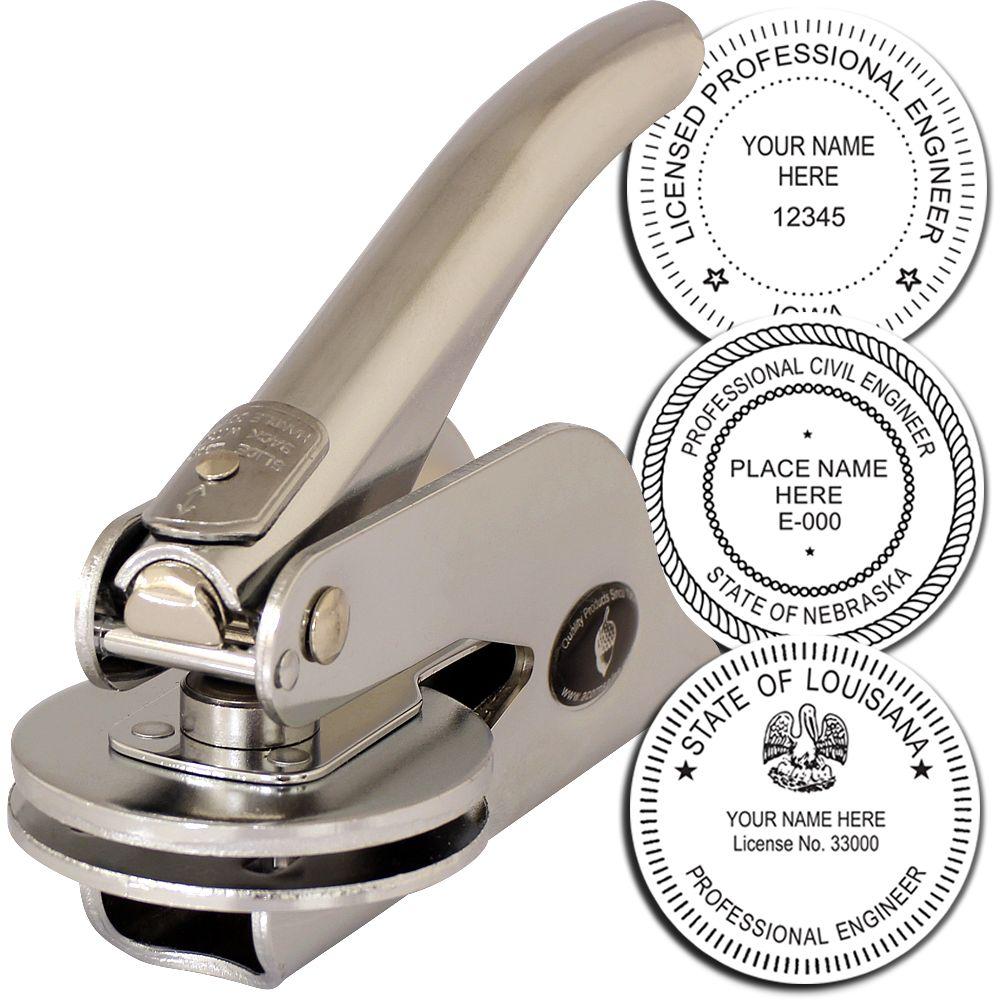
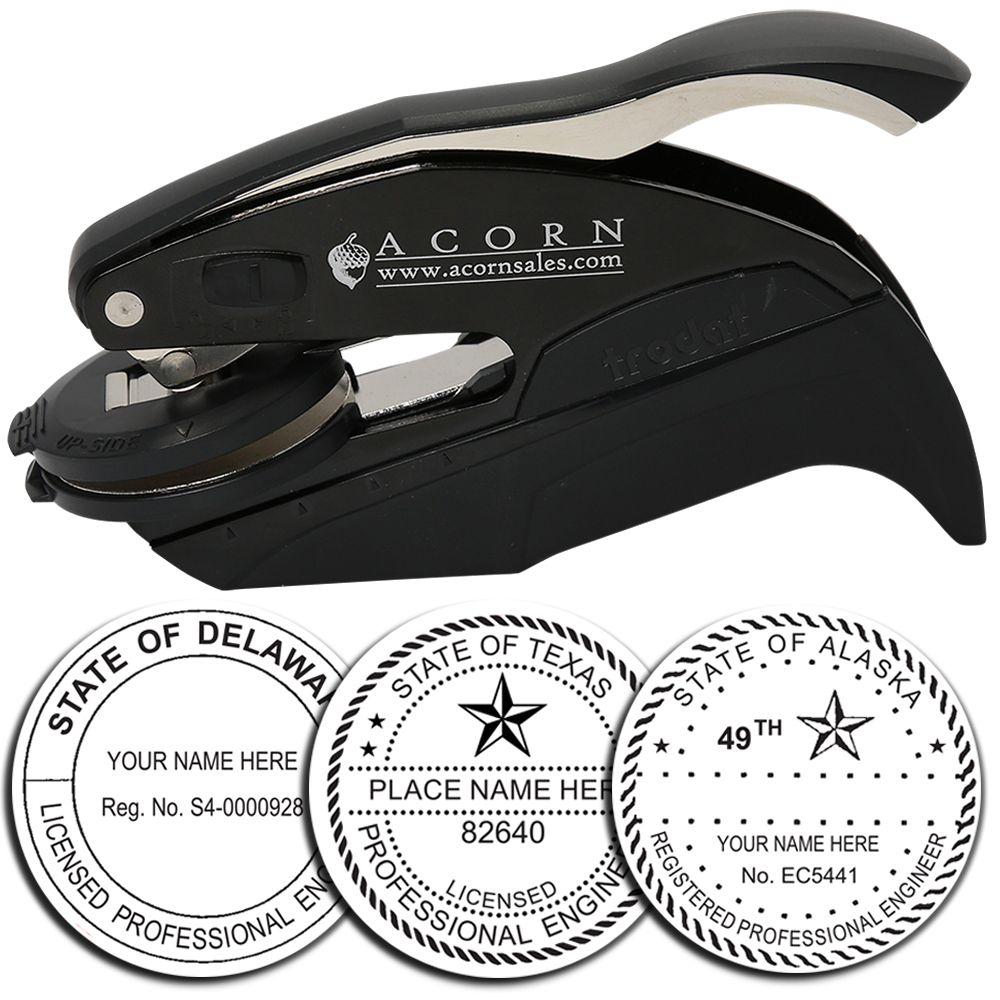
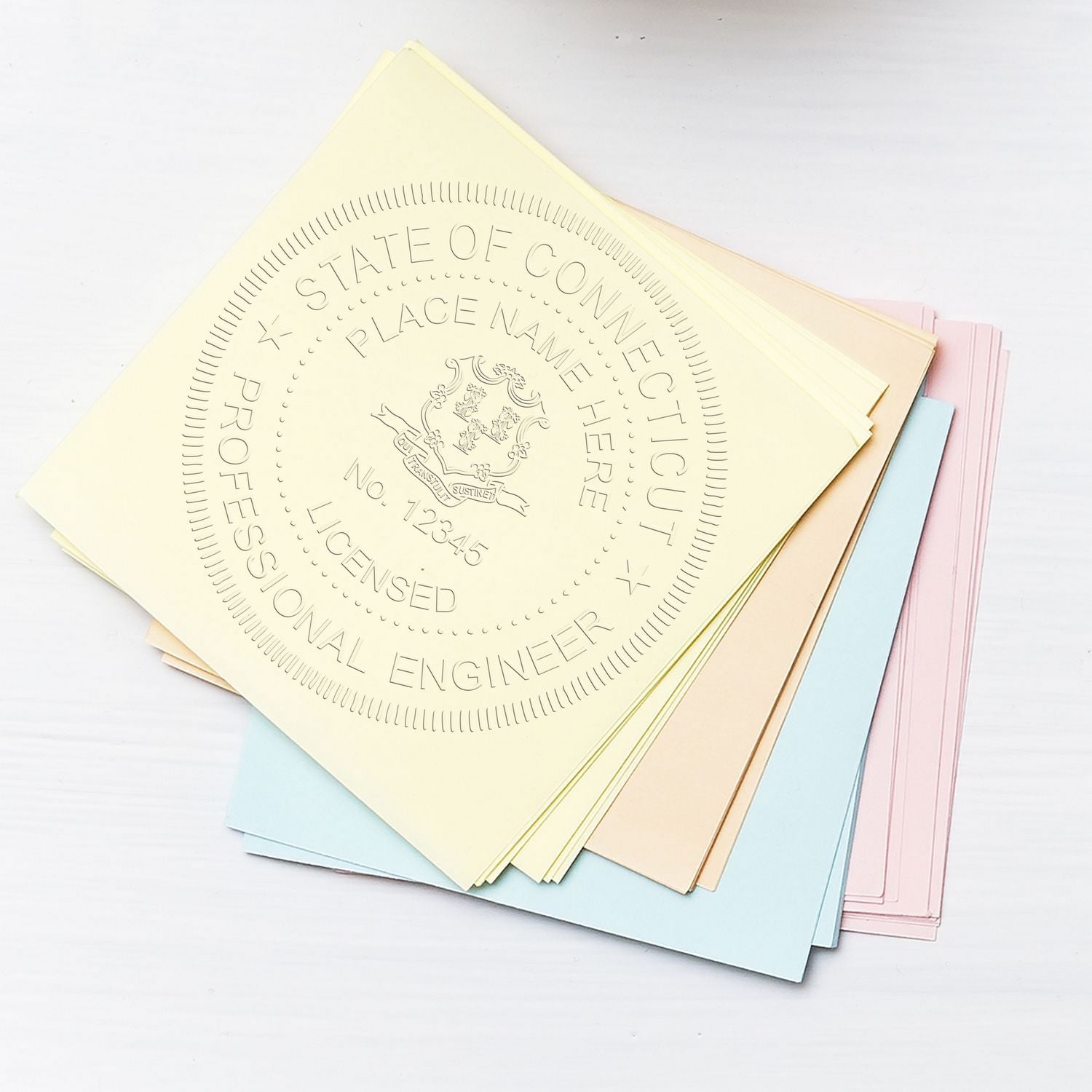
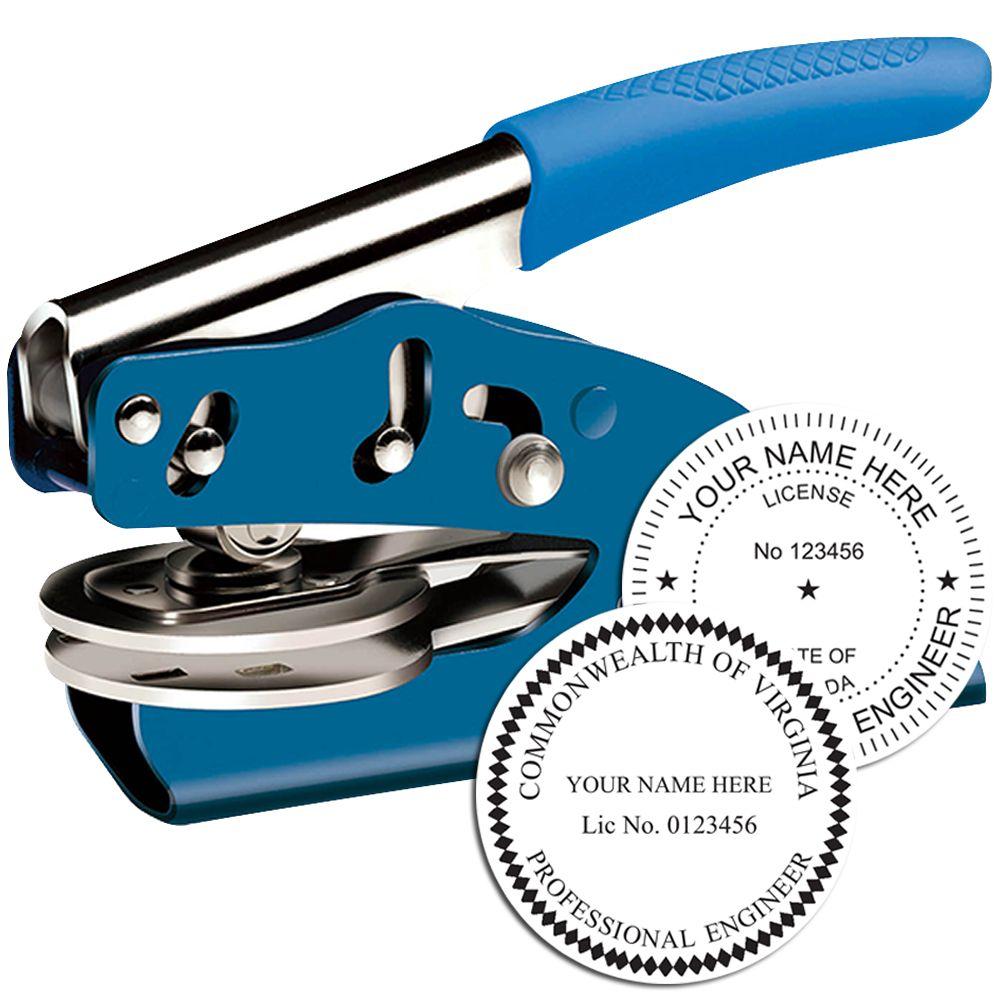
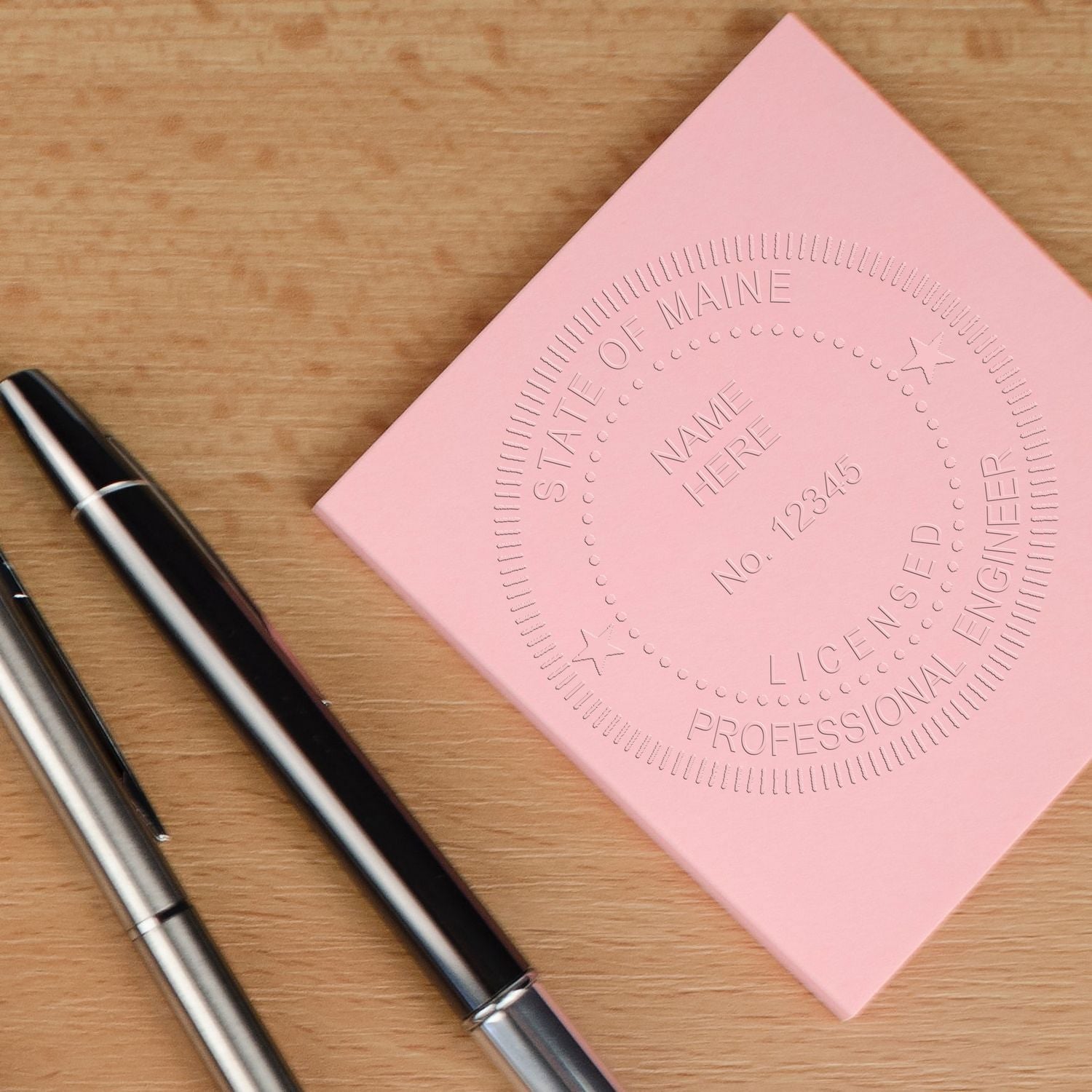
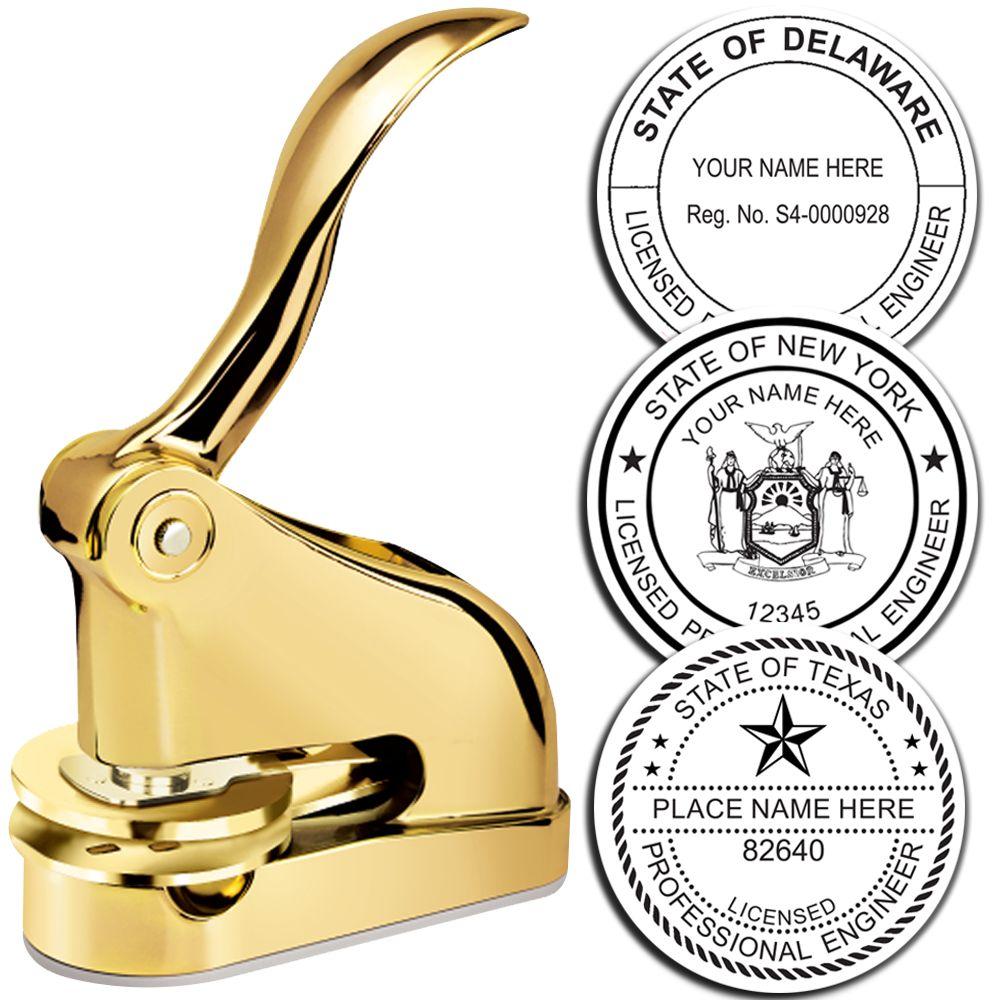
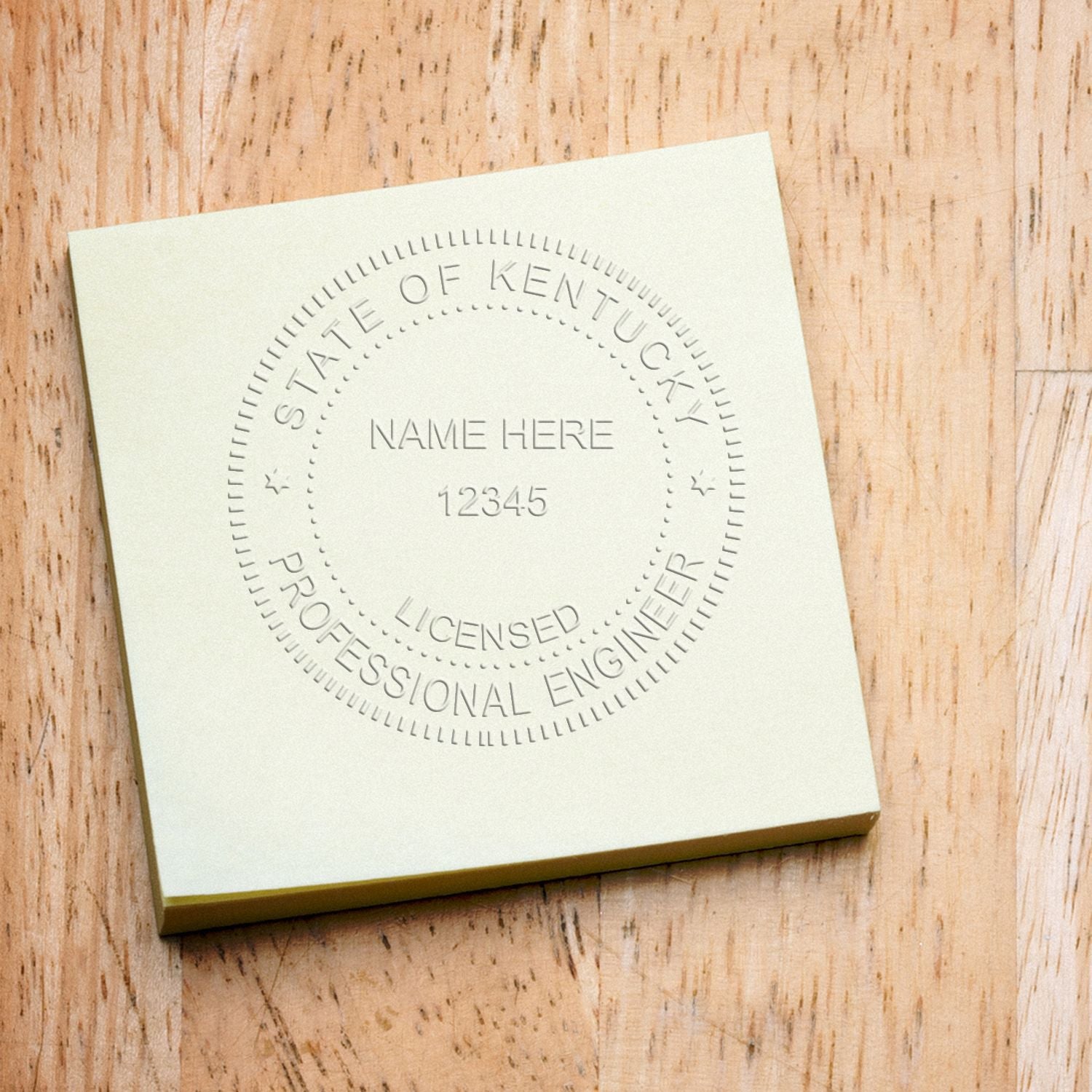
Three devices are named and all three are lawful: “A seal may be a wet stamp, embossed, or electronically produced.” The safe buy is an inked rubber or self-inking stamp at 1-1/2 inches or larger, because the seal, signature, and date have to survive copying under R156-22-601(1)(h), and an embossed-only impression frequently does not. An embosser is fine as a supplement, not as the only device.
Signing and dating
The signature and the date must physically cross the stamp. R156-22-601(1)(c) requires that each seal be “signed and dated with the signature and date appearing across the face of each seal imprint.” The date is the date of signing, not a seal issue date or an expiration date. Each original set must carry the original seal imprint, original signature, and date on the cover or title sheet, per subsection (1)(d). Electronically generated signatures are expressly acceptable under subsection (1)(f), so an original wet signature is not mandatory. Copies of an original set are permitted if the seal, signature, and date are clearly recognizable, per subsection (1)(h).
The signature and date have to run across the stamp, not beside it
Utah is one of the states where placement is written into the rule as a validity condition. R156-22-601(1)(c) requires the signature and date to appear “across the face of each seal imprint”. A signature set neatly to the right of the stamp, which is the habit most engineers bring from states that say across or adjacent, does not satisfy the Utah wording.
This changes what a buyer should order. A 1-1/2 inch die with the four required items crammed edge to edge leaves no clear band to sign across, and the resulting imprint is either unsigned in the rule's sense or illegible once copied. Ordering at 1-5/8 or 1-3/4 inches, with the interior kept open, is the practical fix, and the rule allows it because 1-1/2 inches is a minimum with no stated maximum.
The second half of the same rule matters just as much. Subsection (1)(d) wants the original seal imprint, original signature, and date on the cover or title sheet of each original set, and subsection (1)(h) allows copies only where the seal, signature, and date remain clearly recognizable. An embosser alone photographs and scans poorly, so an embossed-only Utah seal tends to fail the reproducibility test even when the die itself is correct.
Which documents must be sealed
All final plans, specifications, reports, maps, sketches, surveys, drawings, documents, and plats prepared by the licensee or under the licensee's supervision. The one real carve-out inside the rule is that “Sheets subsequent to the cover of specifications are not required to be sealed, signed and dated.” The statutory carve-outs are the exemptions in Utah Code § 58-22-305, the Architects Licensing Act, and the State Construction Code, but note that § 58-22-602(2) pulls exempt practice back in whenever a licensee actually prepared or supervised the final document.
Electronic and digital seals
Utah names no technology. The rule permits an electronically produced seal and electronically generated signatures, and then places the burden on the licensee: “It is the responsibility of the licensee to provide adequate security when documents with electronic seals and electronic signatures are submitted.” There is no required certificate authority, no PKI standard, no third party authentication service, and no board-approved digital signature process. Guidance that says Utah requires a digital certificate is wrong.
Renewal, lapse and retirement
Licenses renew on a two-year cycle ending March 31 of each odd-numbered year, with 30 hours of continuing professional education. An inactive licensee must certify that the licensee will not engage in the profession while inactive, except to identify as an inactive licensee, which means the seal goes unused. Not addressed: neither Utah Code §§ 58-22-601 through 603 nor R156-22 says the seal must be destroyed or surrendered on lapse, revocation, or retirement, and neither says whether a license number changes on reinstatement. Checked the full text of R156-22 and Part 6 of Chapter 22.
Firm registration
Not applicable. Utah Code § 58-22-301(2) directs the Division to issue licenses to “individuals” in three classifications only, professional engineer, professional structural engineer, and professional land surveyor. No certificate of authorization, firm license, or business registration number is created by Title 58 Chapter 22 or by R156-22, and nothing in either requires a firm name or firm number on a sealed document. Checked both documents in full.
What to check before you order
Four text items are required and nothing more: your name as licensed, your license number, State of Utah, and the exact title you hold. Be sure which of the three Utah classifications you hold before the title line is set, because professional structural engineer is a distinct license and not a discipline of the PE license. The device is circular with a 1-1/2 inch minimum and no maximum, so go larger rather than smaller and leave interior white space for a signature that must cross the imprint. An inked or self-inking stamp is the primary device and an embosser is a secondary one; electronic seal files are lawful, and no particular file format or signing technology is mandated. A professional engineer intern may not hold a seal, because R156-22-601(2) forbids it, and Utah requires neither proof of your licensure nor the filing of an impression with the Division.
Browse professional engineer stamps and seals.
Frequently asked questions
Do I need a PE stamp in Utah?
Yes, and the duty is statutory. Utah Code § 58-22-602(1) requires any final plan, specification and report for a building or structure erected in the state to bear the seal of a professional engineer or professional structural engineer. Subsection (2) reaches further, requiring the seal on a final plan, specification or report prepared by or under a licensee’s supervision “when submitted to a client, when filed with public authorities, or when submitted to a building official for the purpose of obtaining a building permit, even if the practice is exempt from licensure under Section 58-22-305.”
What size does a Utah PE seal have to be?
Circular, at least 1-1/2 inches in diameter, with no stated maximum. R156-22-601(1)(a) gives a minimum only. Because the signature and date have to run across the imprint, ordering at 1-5/8 or 1-3/4 inches leaves room for both without crowding the required text.
What has to appear on a Utah PE seal?
Four items, listed at R156-22-601(1)(b): your name as licensed, your license number, State of Utah, and your title as licensed. The rule names three titles, Professional Engineer, Professional Structural Engineer and Professional Land Surveyor. Nothing in the rule prohibits extra content, so a die that adds a discipline is not automatically bad, but a die that drops one of the four is.
Where do the signature and date go on a Utah stamp?
Across the face of the imprint. R156-22-601(1)(c) requires the seal to be “signed and dated with the signature and date appearing across the face of each seal imprint.” The date is the date of signing, not a seal issue date or an expiration date. Subsection (1)(d) then requires each original set to carry the original seal imprint, original signature and date on the cover or title sheet.
Can I use an embosser for my Utah seal?
Yes, but not as your only device. R156-22-601(1)(e) permits a wet stamp, an embossed seal or an electronically produced seal. The problem is reproduction: subsection (1)(h) allows copies of an original set only where the seal, signature and date remain clearly recognizable, and an embossed impression frequently does not survive scanning or photocopying. An inked or self-inking stamp is the primary device and the embosser a supplement.
Can I sign a Utah document electronically?
Yes. R156-22-601(1)(f) expressly accepts electronically generated signatures, so an original wet signature is not mandatory, and subsection (1)(e) permits an electronically produced seal. Utah names no technology at all: no certificate authority, no PKI standard, no third party authentication service and no board approved signing process. What the rule does impose is the duty in subsection (1)(g), that “It is the responsibility of the licensee to provide adequate security when documents with electronic seals and electronic signatures are submitted.” Guidance telling you Utah requires a digital certificate is wrong.
Can I order a stamp that says Professional Structural Engineer?
Only if you hold that license. Professional Structural Engineer is a separate classification under Utah Code § 58-22-301(2)(b), not a discipline of the PE license, so a general PE who orders that title has ordered an invalid seal. Check which of the three Utah classifications you hold before the title line is set.
Can a Utah engineer intern get a stamp?
No. R156-22-601(2) states that a person who qualifies for and uses the title of professional engineer intern is not permitted to use a seal. There is no lawful Utah EI or intern stamp.
Which Utah documents need the seal, and does every page get stamped?
All final plans, specifications, reports, maps, sketches, surveys, drawings, documents and plats prepared by you or under your supervision. The relief inside the rule is narrow: “Sheets subsequent to the cover of specifications are not required to be sealed, signed and dated.” Statutory exemptions sit at Utah Code § 58-22-305, the Architects Licensing Act and the State Construction Code, but § 58-22-602(2) pulls exempt practice back in whenever a licensee actually prepared or supervised the final document.
Does Utah require a firm number on sealed documents?
No. Utah Code § 58-22-301(2) directs the Division to issue licenses to “individuals” in three classifications only. No certificate of authorization, firm license or business registration number is created by Title 58 Chapter 22 or by R156-22, and nothing in either requires a firm name or number on a sealed document. Both documents were checked in full.
Do I need a new Utah seal at renewal?
No. Utah licenses renew on a two year cycle ending March 31 of each odd numbered year with 30 hours of continuing professional education, and nothing on the seal face expires. An inactive licensee must certify they will not practice while inactive, except to identify as inactive, which means the seal goes unused. Whether a seal must be destroyed or surrendered on lapse, revocation or retirement is not addressed: the full text of R156-22 and Part 6 of Chapter 22 was checked and neither says, and neither says whether a license number changes on reinstatement.
Does Utah make me file a seal impression with the Division?
No. Utah does not require a licensee to file an impression with the Division and does not require a vendor to verify licensure before selling a seal.