
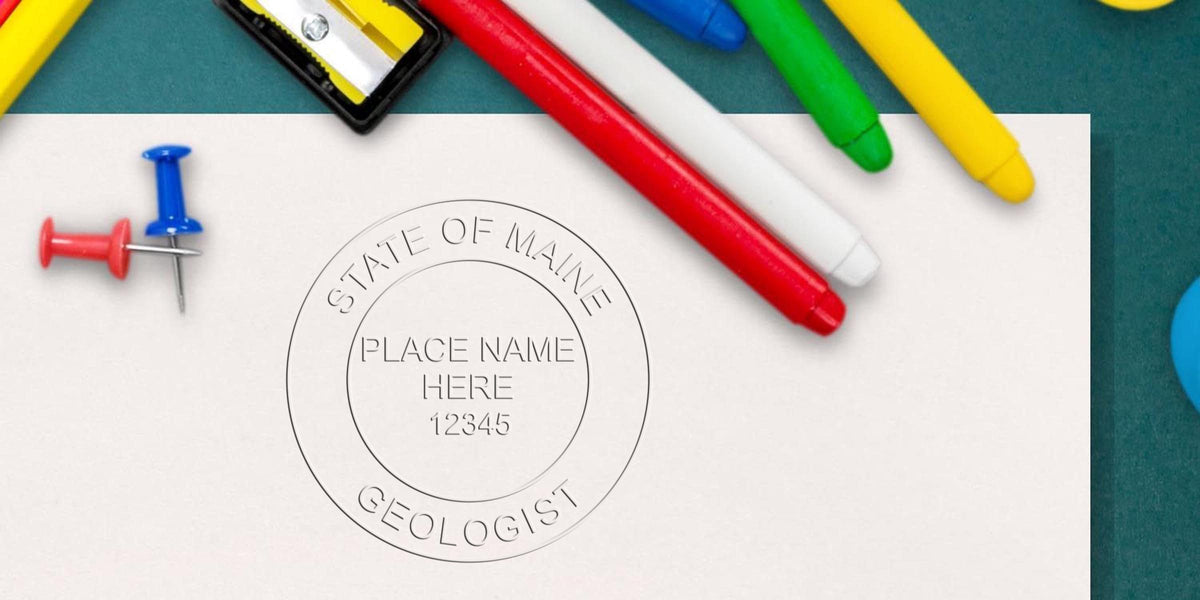
If you are shopping for a geologist stamp in Maine, start with what the state actually asks of you. Maine does license geologists, through the Maine State Board of Licensure of Geologists and Soil Scientists, and 32 M.R.S. section 4918 is the provision that covers geologic plans and documents. It prescribes no seal. What carries your work is your signature as the licensed geologist. There is no state seal design to match, no prescribed wording, and no size to hit.
That does not make a stamp a waste of money. Geologists here order one because a clean impression beside a signature says who prepared the report and makes the page look finished. This guide covers what Maine asks for, what to put on a stamp when nothing is prescribed, how to choose the device, and how to keep it printing cleanly. For the statute sections and the sourcing behind them, read Maine Geologist Seal: Why a Signature Does the Job.
What Maine Asks For
A Maine geologist stamp is a professional mark rather than a state credential check. The state grants the credential when it issues your license. The stamp is how you present it on paper, and the design is yours.
A Signature, Not a Seal
Section 4918 puts the duty on the signature. Geologic plans, specifications, reports and documents prepared by a licensed geologist, or by a subordinate working under that geologist's direction, go out signed by the licensed geologist. The statute is silent as to a date and silent as to placement, so where the signature sits is your habit and whatever the receiving client or agency prefers. No seal is prescribed anywhere in the chapter.
Electronic Documents
Chapter 73 contains no electronic or digital signature provision for geologists. It names no technology, no certificate authority and no verification standard, and the board's rules add none either. When a client or an agency wants a signed PDF, ask them what form they accept, because the state has not answered that question for you.


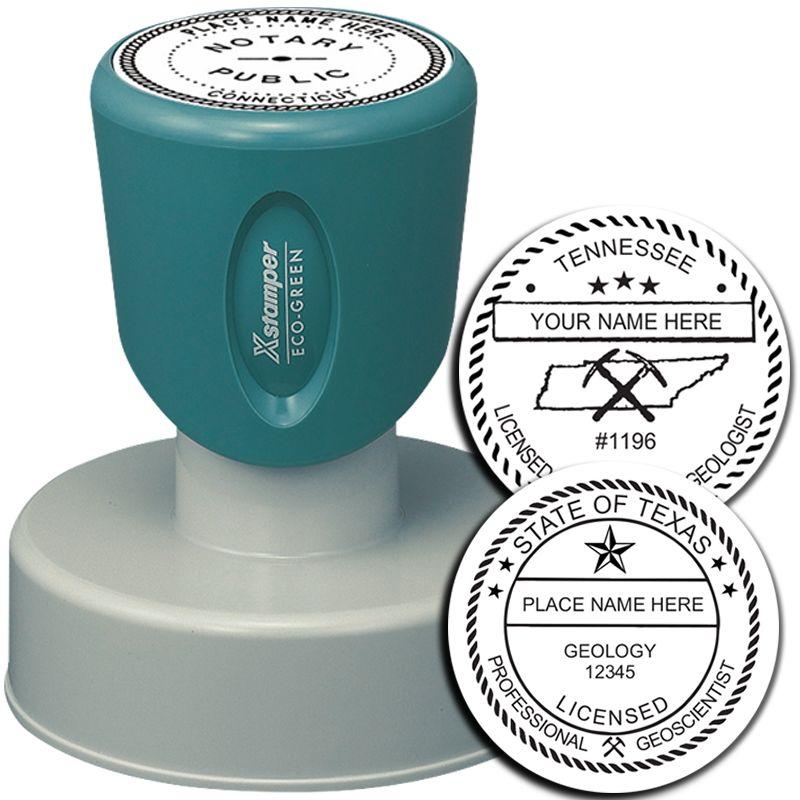



Why Maine Geologists Order a Stamp Anyway
Take the rule out of it and a good reason to buy is still standing. Reports leave your desk and land in front of clients, contractors, town staff and agency reviewers who have never met you. An impression beside your signature identifies the author at a glance and sets your page apart from the unsigned pages around it.
What the Impression Does
- Names the person behind the work in a way a fast signature does not.
- Gives a report cover, transmittal letter or proposal a finished look.
- Keeps your name, title and license details consistent across everything you send out.
- Shows a reader you treat the document as something you stand behind.
Documents People Stamp
- Geologic reports and evaluations
- Site assessments, figures and boring logs
- Specifications and plan sheets
- Cover letters, proposals and client copies
What Lands on Your Stamp
Because Maine prescribes nothing, you choose the wording. Most Maine geologists put on their name as they sign it, their license number, and a title line such as Licensed Professional Geologist. Some add a firm name or a city so a reader with a question knows where to send it.
Maine issues you a real license, so a license number on the mark is accurate here. Keep the rest honest as well. If you hold a registration from another state, name that state next to it rather than letting a reader assume Maine granted it. An accurate stamp is also a more useful one.


Durability and Imprint Quality
You will use a geologist stamp on final reports, cover sheets and official letters, so look for products built for repeated pressing: a sturdy mount and a deeply engraved die. A crisp impression is the whole point of owning one. A muddy one undercuts the reason you bought it.
Mount Types and Sizing
Choose the mount first, because it drives everything else. Then pick a size that holds your longest line of text without crowding it. Ask the supplier to set the type at the finished size so you can see it before you approve anything.
- Self-inking stamps: fast, convenient and well suited to high volume work.
- Pre-inked stamps: they hold fine detail well and stay clean in a drawer.
- Traditional hand stamps: durable and simple, with a separate ink pad.
- Embossers: a raised impression that reads as formal on a cover page.
How Acorn Sales Helps
Once you have settled on a style, the next step is finding a supplier who makes professional marks regularly. That is where our geologist stamps and seals come in. Our layouts start from what reads well at the size you pick, since there is no template to match, and a proof comes back to you before the die is cut.


Trusted Supplier Since 1964
Acorn Sales has been in business since 1964, and that length of record shows up in the finished product. The people setting your layout have seen thousands of them and know which arrangements fall apart once the impression is reduced to its actual size.
Free Electronic Seal
Electronic documents are how most reports travel now. Acorn Sales includes a free electronic seal with your geologist stamp, so you have the image file ready to drop into a PDF, a proposal template or an email signature without printing and scanning a page first.
Quick Tips for Using Your Stamp
A well made stamp gives you a clean page, but how you handle it decides how long that lasts. A few habits cover most of it.
Proper Ink Application
With a self-inking or pre-inked stamp, press firmly and evenly. A quick tap leaves a faint or partial impression, and holding it down too long lets the ink bleed. With a traditional hand stamp, set it on the pad in a light rocking motion so ink reaches the whole die rather than the center of it.
Maintenance and Storage
- Keep the stamp out of direct sunlight and away from heat, which dries ink early and can warp rubber.
- Test on scrap paper now and then.
- Store it upright in a clean, dry drawer or case so ink does not migrate and dust does not settle on the die.
- Wipe an embosser clean so paper fibers do not soften the detail over time.
Choosing Your Stamp
Maine asks a licensed geologist for a signature, not a seal, so the entire stamp decision belongs to you: what the mark says, how big it is, and how it feels in the hand. Settle the wording first, pick the mount to match how often you stamp, and read the proof letter by letter before you approve it.
When you are ready, Acorn Sales has been making these since 1964, and the free electronic seal comes with the order so your digital copies carry the same mark as your printed ones. Order it because you want your reports to look like they came from someone who takes the work seriously, which is the honest reason to own one.
Frequently Asked Questions
Is a Maine geologist stamp required by the state?
No. Maine prescribes no geologist seal. Section 4918 asks that geologic plans, specifications, reports and documents carry the signature of the licensed geologist who prepared them or who directed the work. People buy a stamp because it identifies the author on the page and makes a deliverable look finished.
Can I put my license number on it?
Yes. Maine issues geologist licenses, so your number is an accurate thing to show. Just make sure any out of state registration you add names the state that granted it.
How long does a self-inking stamp last?
A self-inking stamp produces thousands of impressions before the ink runs thin. Actual life depends on how often you use it. Sensible storage and the occasional wipe extend it considerably.
Can I customize the design of my geologist stamp?
Yes, and more freely than in most states, because Maine sets no layout, wording, shape or size for a geologist seal. Send the exact text you want and a proof comes back before anything is made.
Do I have to buy a separate electronic seal?
No. Acorn Sales includes a free electronic seal with your physical stamp. It is an image file you place on a PDF or other digital document, which saves scanning a stamped page every time something goes out by email.