
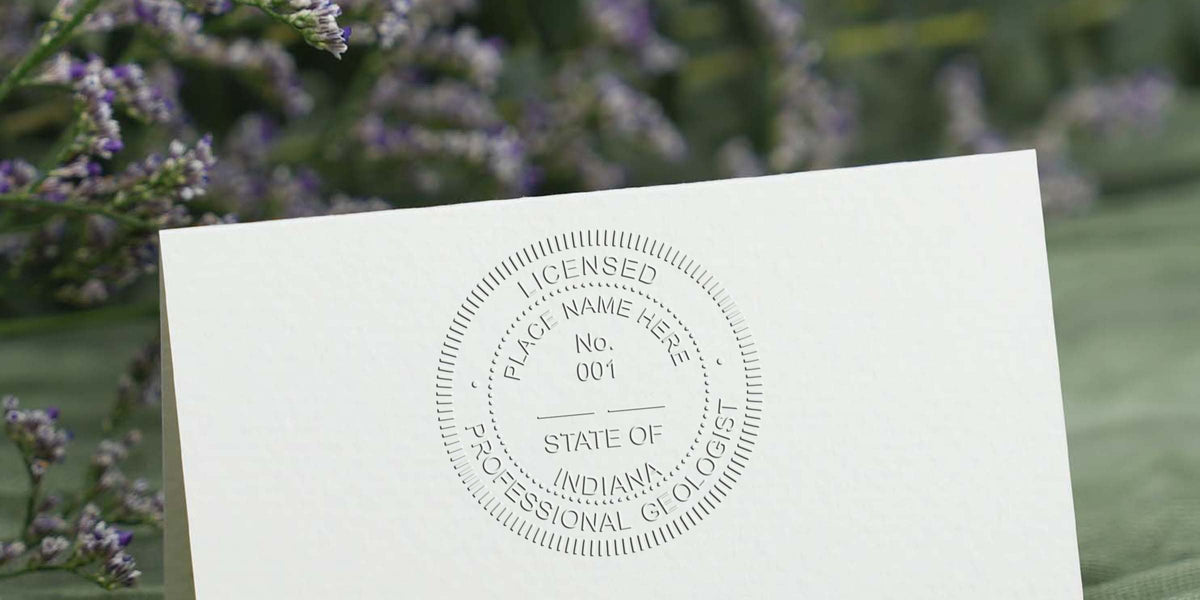
Designing your official stamp or seal might feel like a minor task, but it actually carries significant weight. If you’re an Indiana Geologist, your professional insignia instantly communicates your credentials and meets state regulations. From font styles and border shapes to official wording, the Indiana geologist seal design demonstrates your legitimacy and attention to detail. In this in-depth guide, you’ll discover what goes into creating the ideal seal, how to stay compliant with state rules, and tips for ordering from a trusted supplier.
Explore Indiana Geologist Regulations
Before you dive into aesthetics, it’s essential to understand why geologists in Indiana need an official seal or stamp in the first place. Regulations require you to authenticate and validate the work you produce, whether it’s a site analysis or environmental assessment. The absence of a compliant seal might call into question your qualifications, and no one wants that.
- The seal confirms your identity as a state-licensed geologist.
- It ensures your documents stand on par with official guidelines.
- It adds credibility when you sign off on professional reports.
If you’re curious about further rules on imprint size, ink color, or format, check out our dedicated resource on Indiana Geologist Stamp Requirements. This quick read will help you double-check your compliance boxes and avoid any unexpected compliance issues.
Focus On Seal Design Requirements
When it comes to seal design for Indiana geologists, a few standardized elements come into play. You’re typically expected to include your name, your license number, and a reference to your professional title. The design must be clear and easy to reproduce, whether on digital documents or physical printouts.
Here are the top factors you’ll want to consider:
-
Required Text
Some states mandate the exact phrase “Licensed Professional Geologist,” whereas others may allow abbreviations. Make sure you confirm the precise wording Indiana requires for your seal. -
Shape and Size
Indiana guidelines often specify a circular seal, typically a certain diameter to maintain consistency. That diameter range is key to ensuring the seal is legible and fits onto project documents without crowding them. -
Legibility
Every letter and numeral on your seal must be readable in full. There’s no point in having an embossed stamp if some of the text disappears or blurs.
By nailing these basics, you’re already on track to fulfilling the necessary steps for your official seal. After all, it’s not just about having a good-looking design but also about meeting Indiana’s professional standards.
Compare Seal And Stamp
In everyday conversation, people often use “seal” and “stamp” interchangeably. However, there is a subtle difference worth describing:
- A seal is traditionally recognized as the official imprint you might see on a certificate, embossed into paper.
- A stamp is what you physically press onto documents, usually with ink or using an embosser.
For geologists, many providers sell the design itself, which can be engraved on an embosser or turned into a rubber stamp. Whether you opt for a self-inking rubber stamp or a manual embosser, you’ll want the final seal artwork to match official guidelines. The choice between an inked stamp or an embossing seal usually depends on your document type, printing preferences, or personal taste. Some geologists even carry both—one for everyday projects and one for more formal or legal documents.
Steps To Acquire Your Seal
You might be asking, “So how exactly do I get my official seal?” Here’s a clearer breakdown of the process to help you start on the right foot:
-
Confirm Your Licensing Details
Make sure your name and license number match what’s on record with the Indiana licensing board. Accuracy here is a big deal, as any mismatch could raise red flags. -
Choose The Right Provider
Opt for a reputable company that specializes in professional seals or stamps. Look for years of experience and positive customer reviews. -
Provide The Correct Artwork
If you have a template from the licensing board, share that with your manufacturer. In many cases, you’ll just provide your name and license number, and the design company prepares your custom seal layout. -
Double-Check Digital Proofs
Most suppliers will send you a digital version (proof) before production. Inspect every letter and number, so you can be confident it’s correct. -
Finalize And Receive Your Seal
Once you approve, the finished stamp or embosser is mailed out to you. If your provider offers a free digital seal, it can arrive even faster through email, ready for immediate use on PDF documents and other digital files.
By following these steps thoroughly, you won’t have to deal with rework or wasted time. When you place that first imprint on an official document, you’ll have extra peace of mind that it meets every requirement.
Why Choose Acorn Sales
Picking the right supplier is often the difference between a painless order and a big headache. Acorn Sales has been in business since 1964, specializing in professional seals and stamps for a wide range of industries, including geology. Not only do you get a seal that’s fully compliant with Indiana guidelines, but you also enjoy top-notch customer service.
- Free Digital Seal: Along with your physical stamp or embosser, you get a digital seal at no extra cost. This comes in handy when you’re submitting electronic reports or emailing documents.
- Durable Materials: All stamps and embossers are crafted with high-quality parts. That means your imprint stays sharp, and your seal equipment lasts for years.
- Ready Templates: Because they’ve served so many geologists, Acorn Sales already has standardized Indiana templates. You add your key data, and their team does the rest.
- Reliable Customer Support: Have a question about your design? Their representatives respond quickly, offering tips on sizing, text placement, or special requests.
It’s a plus to collaborate with a company that truly understands geologist seals. With decades of experience under their belt, Acorn Sales makes the entire process straightforward.
Common Design Mistakes
Even with the best intentions, mistakes happen. Avoid these pitfalls by being aware of the most common errors geologists face when finalizing their seal:
-
Missing Or Incorrect Text
A tiny spelling error in your name or a wrong license number can invalidate your seal. Always verify those details thoroughly. -
Illegible Fonts
Overly fancy fonts might look great on a personal logo, but they’re usually problematic for professional seals. Keep it functional and easy to read. -
Poor Contrast
If the ink color is too light or if you use the wrong kind of paper, the seal may not show up clearly. Consistent ink application ensures a legible impression every time. -
Cropped Or Off-Center Seals
The circle might cut off at the edges, or text may drift into the borders. Review your digital proof to ensure everything is properly aligned. -
Overcrowded Layout
Too many decorative elements can create confusion. Stick to the required text and a simple border to maintain clarity.
By sidestepping these common blunders, you’ll protect your professional reputation and avoid reprints or do-overs.
Wrap Up And Next Steps
Creating your seal is a major piece in your professional journey as a geologist seal. By double-checking your name, license number, and compliance requirements, you’re guaranteeing the legitimacy of your work in Indiana. Make sure to stick with fonts that are easy to read and keep your layout uncluttered, whether you go for a stamp or an embosser.
If you’d like a seamless ordering experience, take a look at what Acorn Sales offers. The free digital seal alone can save you effort on e-documentation. Plus, knowing the company has been around since 1964 might give you extra peace of mind that they truly understand the needs of geologists.
However you choose to create it, your Indiana geologist seal design is more than a formality. It’s an essential symbol of both your expertise and your dedication to observing professional standards. With the right design choices, you’ll feel confident and ready to stamp your mark on every geological report or document that comes your way.
Frequently Asked Questions
Do I Have To Use A Particular Shape For My Indiana Seal?
” In most cases, Indiana calls for a circular shape. If you’re ever unsure, confirm with the state licensing board to ensure that you don’t stray from approved guidelines.
What’s The Benefit Of Having A Free Digital Seal?
” A digital seal is perfect for electronic submissions, presentations, and archiving. You won’t need to print and physically stamp every single document. You simply insert your digital file onto PDFs or Word documents.
Can I Include Additional Graphics On My Seal?
” Generally, seals should stay within official guidelines. Extra graphics can clutter the design. You risk overshadowing the mandatory text or causing confusion about legitimacy.
How Long Does It Typically Take To Receive My Stamp Or Embosser?
” Production times vary depending on the company you choose. With Acorn Sales, once you approve the final proof, it usually ships within days. You’ll also get a digital version quickly via email.
Do I Need Separate Seals For Different Professional Licenses?
” If you hold multiple licenses, you’ll typically need distinct seals or stamps for each profession. Always keep them separate to avoid any regulatory mix-ups.








