
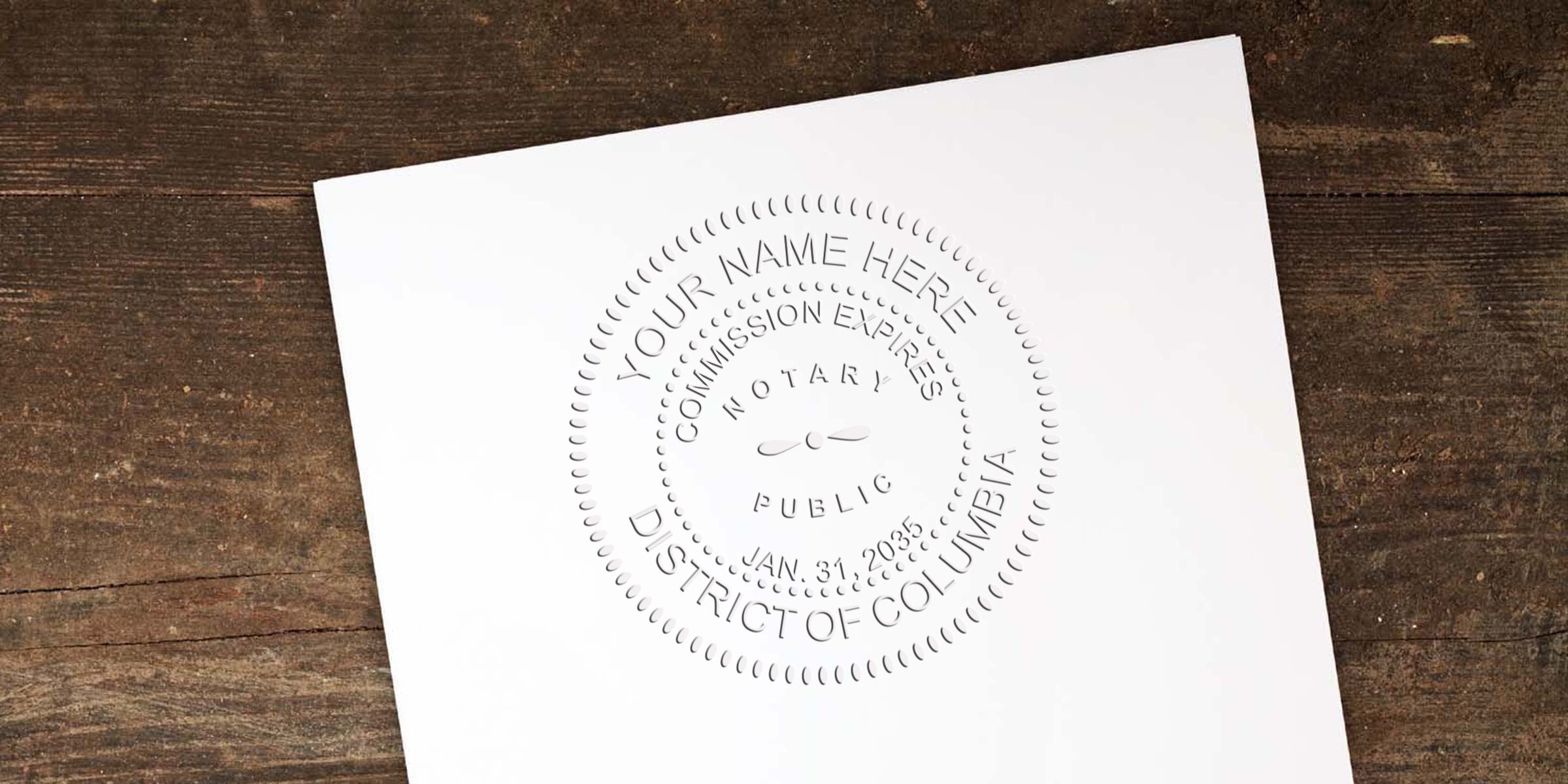
Why an Expired Stamp Is Still a Legal Liability
Here is a fact that should get your attention: almost every case of deed fraud involves a compromised notarization. That expired notary stamp sitting in your desk drawer or tossed in a wastebasket is not just clutter. It is a ready-made fraud tool.
Even after your notary commission lapses, your physical stamp can still produce a convincing impression. Bad actors can use it to forge deeds, wills, and powers of attorney. Worse, the former notary can be held personally liable for fraudulent acts committed with their discarded stamp.
The legal consequences are real and specific. In Tennessee, acting in an official notary capacity after your commission expires is a Class C misdemeanor. In Alabama, it is explicitly unlawful for architects and engineers to use a seal after their license expires. Virginia's Administrative Code ties affixing a professional seal to direct personal responsibility, meaning an expired seal's misuse becomes your liability.
Proper disposal is straightforward and takes only a few minutes. Here is exactly what you need to do.
Who Needs to Read This (It's Not Just Notaries)
If you hold any type of official professional seal, this applies to you. Architects, engineers, land surveyors, geologists, and interior designers all face the same disposal obligations and legal risks as notaries, yet guidance for these professionals is almost nonexistent online.
Changed your name? Notaries who marry, divorce, or legally change their name must destroy their old stamp immediately. The name on your stamp must match your active commission, period.
Changing jobs? Your notary stamp is your personal property, not your employer's, even if your employer paid for it. Leaving it behind when you switch jobs creates a disposal gap and an unauthorized-use risk that falls squarely on you.
Handling an estate? If a notary passes away, the estate representative is legally responsible for properly disposing of the stamp in accordance with state regulations. This is an often-overlooked obligation.
And if you recently renewed your commission, destroy your old stamp before you start using the new one.
Check Your State's Specific Disposal Requirements First
Before you grab the scissors, take five minutes to check whether your state has explicit disposal laws. Some states spell out exactly what you must do, and failing to follow those rules can create problems down the road.
Indiana law explicitly requires notaries to destroy or disfigure their seal at the end of their commission term. New Mexico requires notaries to notify the Secretary of State within ten days if a seal is stolen, lost, damaged, or otherwise rendered unusable. North Dakota requires notaries to return an impression of their new stamping device after renewal; the old device may only be used until the prior commission's expiration date.
For design professionals, note that California's Assembly Bill 645 (effective 2010) removed the license expiration date requirement from engineer and surveyor seals. However, the seal itself must still be current and valid at the time of use.
Your best resource is a quick search for "[your state] notary disposal requirements" or a direct call to your Secretary of State's notary division. Even where no specific law exists, physical destruction is the universally accepted best practice.
Step-by-Step: How to Destroy a Rubber Ink Stamp or Pre-Inked Stamp
First, a quick note on stamp types. Traditional rubber stamps have a die mounted on a wood or acrylic block. Self-inking stamps house the die inside a built-in ink pad mechanism. Pre-inked stamps have ink embedded directly in the die itself. Each requires slightly different handling.
For all rubber and pre-inked stamps, start by removing the rubber die from the stamp body.
For self-inking stamps, remove the ink cartridge separately. Ink cartridges are not recyclable and should be disposed of according to your local ink or chemical waste guidelines. Do not simply toss them in the recycling bin.
Next, cut the rubber die into multiple pieces using heavy scissors or a utility knife. Cut thoroughly so the impression can never be reconstructed. Ideally, discard the pieces in separate trash containers to prevent anyone from reassembling the impression.
Wear gloves during this process to avoid ink contact with your skin, especially with pre-inked stamps where the ink is saturated throughout the die material.
Once the die is destroyed, the stamp body (handle, frame, mechanism) can be discarded normally. It poses no fraud risk without the die.
Step-by-Step: How to Destroy a Metal Embosser (Seal Embosser)
Embossers present a different challenge because the impression is created by two hardened metal die plates, not a rubber die. Simply breaking the handle is not enough.
Start by removing the die plates from the embosser body. Most embossers allow the die to be unscrewed or popped out with basic tools.
Physically deface the die plates by hammering, filing, or scraping until all lettering and design elements are completely illegible. The plates must not be able to produce a readable impression under any circumstances.
Wear safety goggles during hammering. Metal fragments and debris can fly unpredictably, and this is a genuine safety step, not just a formality. A pair of work gloves is also a good idea.
Once the die plates are defaced beyond reconstruction, the embosser body can be discarded normally. The entire process takes just a few minutes with a hammer and a flat work surface.
What About Digital or Electronic Seals?
With 43 states and the District of Columbia now allowing Remote Online Notarization (RON), many notaries hold digital or electronic seal credentials alongside their physical stamps. Disposal guidance for these digital assets is almost entirely absent from existing resources, but the need is just as urgent.
When your commission expires, permanently delete all digital seal image files (PNG, PDF, or other formats) from every device, cloud storage account, and email where they may be saved. Electronic seal files are arguably more dangerous than physical stamps because they can be copied infinitely and used remotely.
Revoke access to any RON platform accounts tied to your expired commission and contact the platform provider to confirm credential deactivation.
Document your digital disposal steps with a dated note confirming what you deleted and when. This creates a personal liability record that could prove invaluable if questions arise later.
State guidance on electronic seal disposal is still evolving. Check with your Secretary of State for the latest requirements, as rules in this area are changing quickly.
Free Disposal Options: Mail It In Instead of DIY
If you are uncomfortable with DIY destruction, or you simply want documented proof of disposal, some notary supply vendors and professional associations offer free disposal services. You can mail your expired stamps and embossers to them for proper destruction.
This is a legitimate, convenient option. Look for this service when purchasing a replacement stamp; some suppliers bundle disposal with new orders.
Keep in mind that mailing a stamp for disposal does not transfer your legal responsibility until the vendor confirms destruction. Always keep your shipping receipt as documentation.
If you have questions about replacement stamps or need help finding disposal resources, our friendly expert support team at Acorn Sales is happy to point you in the right direction.
When You Need a Replacement Stamp: What to Look For
After destroying your old stamp, the natural next step is getting a compliant replacement. Here is what matters most.
Professional seals must meet your state board's exact specifications. Look for a supplier that offers a state board guarantee on all professional seals so you never have to worry about compliance. Fast turnaround matters too; most working professionals cannot afford to wait. The best suppliers ship custom orders within one business day.
At Acorn Sales, we have been a family-owned business since 1964, with over 18,000 verified customer reviews and a 4.82-star rating. We guarantee every professional seal meets your state board's requirements, and most custom orders ship in one business day. When you need a replacement you can trust, we are here to help.
Quick Disposal Checklist: Don't Skip a Step
Keep this checklist handy when it is time to dispose of your expired stamp or seal:
- Check your state's specific disposal requirements by contacting your Secretary of State's office or searching online.
- For rubber and pre-inked stamps: Remove the die, cut it into multiple pieces, and discard the pieces in separate bins.
- For self-inking stamps: Remove the ink cartridge separately and dispose of it according to local guidelines before destroying the die.
- For embossers: Remove the die plates and deface them until completely illegible. Wear safety goggles.
- For digital and electronic seals: Permanently delete all image files from every device and cloud account, and revoke RON platform access.
- Keep a dated record of your disposal for your personal files.
- If your stamp was employer-paid, take it with you. It is your property and your responsibility.
- Order a compliant replacement before your next notarization or professional signing.
Protect Your Name, Your License, and Your Clients
Proper disposal is not bureaucratic box-checking. It is a direct, meaningful protection for your professional reputation, your license, and your personal liability.
With more than 1.25 billion documents notarized in the United States every year (roughly 40 per second), the notarial seal carries enormous legal weight. Treating it carelessly at end-of-life undermines the trust the entire system depends on.
The process is simple, takes minutes, and costs nothing. There is no good reason to delay.
If you have questions about replacement stamps, state-specific seal requirements, or anything else related to your professional supplies, our expert support team at Acorn Sales is always happy to help. We have been guiding notaries and licensed professionals through these decisions since 1964, and we would love to help you too.
A notary or professional who disposes of their seal correctly is doing exactly what the law and their clients expect of them. Take those few minutes today. You will be glad you did.
Frequently Asked Questions
Why should I destroy an expired notary stamp or professional seal?
An expired stamp or seal can still create a readable impression, which means it could potentially be misused for fraud. Even if your commission, license, or authorization has expired, the physical stamp may still look official to someone reviewing a document. Properly destroying it helps protect your name, your license, your clients, and your professional liability.
Is an expired notary stamp still a legal risk?
Yes. An expired notary stamp can still be a legal risk if it is lost, stolen, discarded, or misused. Since the stamp contains your official information, it could be used to create fraudulent notarizations or misleading documents. That is why notaries should destroy old stamps as soon as they are no longer valid.
Do engineers, architects, surveyors, and other licensed professionals need to destroy old seals?
Yes. Professional seals used by engineers, architects, surveyors, geologists, interior designers, and similar licensed professionals should be destroyed when they are no longer valid. These seals carry legal authority and professional responsibility, so keeping an outdated or expired seal creates unnecessary risk.
How do I properly destroy a rubber stamp or pre-inked stamp?
Remove the rubber die from the stamp body and cut it into several pieces using heavy scissors or a utility knife. The goal is to make sure the impression cannot be reconstructed or reused. For added protection, discard the pieces in separate trash containers. If the stamp is pre-inked, wear gloves because ink may be embedded throughout the die material.
How should I dispose of a self-inking notary stamp?
For a self-inking stamp, remove the ink cartridge first and dispose of it according to your local waste guidelines. Then remove the rubber die and cut it into multiple pieces so the impression is no longer readable. The plastic stamp body can usually be discarded once the die has been destroyed.
What is the safest way to destroy a metal embosser seal?
Remove the metal die plates from the embosser and physically deface them until the lettering and design are completely illegible. This can usually be done by hammering, filing, or scraping the plates. Simply breaking the embosser handle is not enough because the die plates are what create the official impression.
What should I do with digital or electronic seal files when my commission expires?
Delete all electronic seal files from your computer, phone, cloud storage, email, and any other location where they may be saved. If you use a remote online notarization platform or other digital credential service, revoke access or contact the provider to confirm deactivation. It is also a good idea to keep a dated record showing when and how you deleted or deactivated your electronic seal.








