
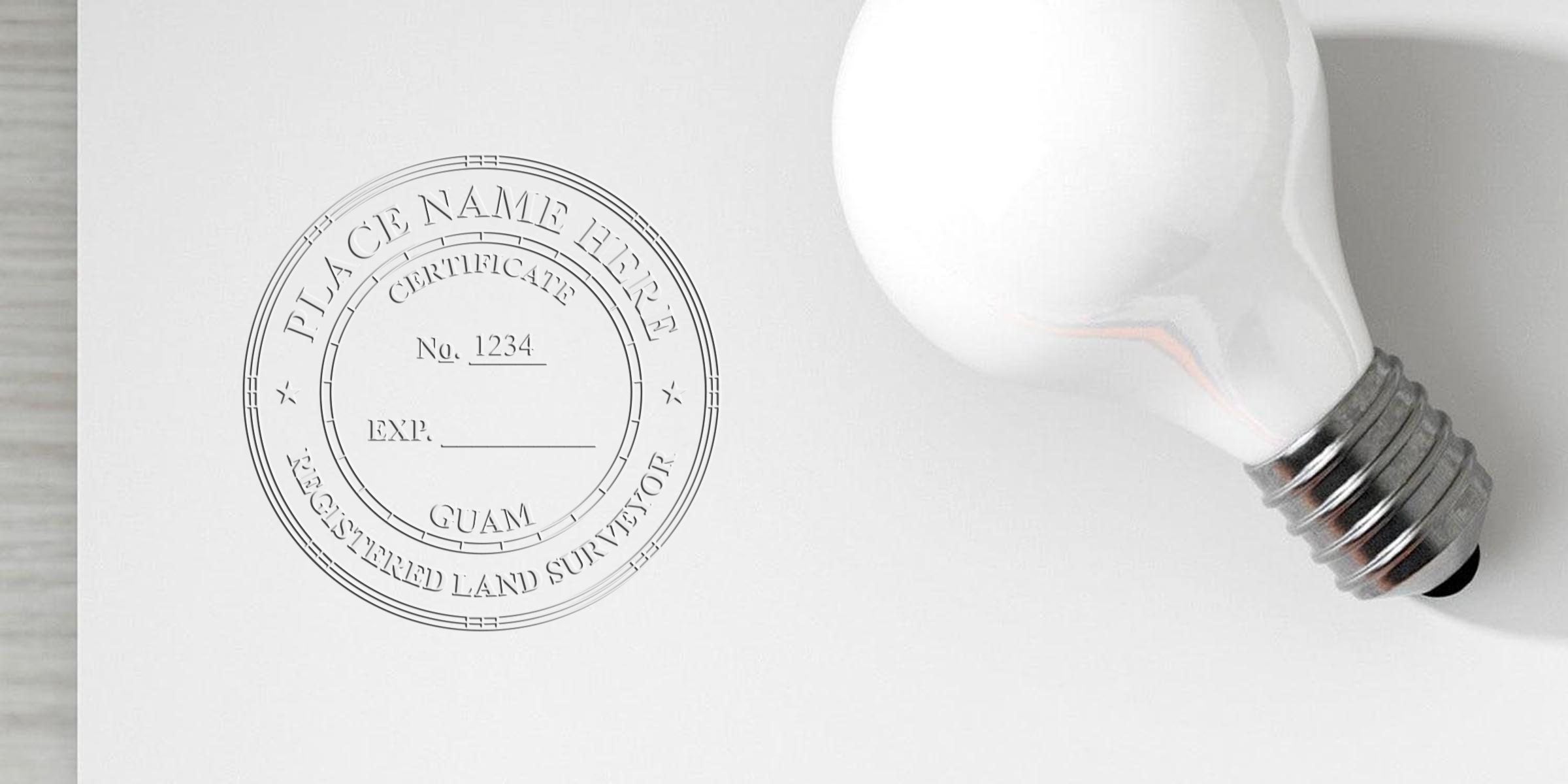
If you’re handling professional surveying duties on the island, complying with Guam Land Surveyor Seal Specifications is crucial. Whether you’re just starting out or you’ve been surveying for years, your projects require precise adherence to local regulations. In Guam, the government and regulatory boards have specific standards for seals and stamps used by licensed land surveyors like you. Falling short of these guidelines can cause headaches, from project delays to approvals being sent back. To make sure your paperwork stands out as credible and official, it helps to understand each requirement and why it matters.
Below, you’ll get an in-depth look at what goes into a compliant Guam Land Surveyor Seal, how it should be displayed, and the key features to keep on your radar. You’ll also learn practical tips to avoid common missteps, along with pointers on maintaining your seal so it’s always ready for multiple projects.
Know the Core Requirements
When dealing with official documents, the right seal can make all the difference. It’s more than a rubber stamp—it’s your professional signature and a testament to your credentials. In Guam, you’ll usually find three main options for seals: a traditional rubber stamp, an embossing seal, or a digital seal. All can be valid, so long as they meet the official size, layout, and text specifications.
Typical Seal Contents
Each seal must include specific details that confirm your authority to practice land surveying in Guam. While requirements may evolve over time, most seals you’ll encounter need:
- Your full name, matching your official licensing records.
- Your license number, clearly legible.
- The phrase “Professional Land Surveyor” (or a related comma-delimited title) to designate your discipline.
- The word “Guam,” ensuring that you’re licensed and permitted to operate locally.
The overall look should be neat and easy to read, leaving no doubt as to whose stamp or seal is on the page.
Proper Size And Shape
For land surveyors, standard guidelines often call for a circular seal format. Many boards require a circle measuring around 1½ to 2 inches in diameter, but double-check local regulations to see if something else applies. A circle typically pulls the eye right to your name and credentials, reinforcing the authority behind the documents you sign. Because different agencies have slight variations, confirm you’re using the exact dimensions stated by Guam authorities.
Digital Versus Physical Seals
In an increasingly paperless world, digital seals are gaining popularity. If you submit plans electronically, a digital seal can streamline your workflow and ensure your papers still carry legal standing. That said, some projects still prefer or require physical impressions, like an embossed seal in original ink. It’s best to keep both options available so you can adapt to any client’s or agency’s preference.
Understand Guam-Specific Nuances
While many states and territories share similar guidelines, Guam has its own unique set of standards. This often involves a distinct phrase or reference to local statutes. For instance, if your Guam land surveyor seal specifications detail a particular line of text or a unique border style, you’ll want to include that. Getting even small details wrong can result in costly rejection or the need to re-submit documentation—something you definitely want to avoid.
Respecting Regulatory Authority
Professional engineering and surveying boards have the power to discipline licensees who misuse seals or fail to meet regulations. In Guam, that means you’re expected to place your seal only on documents you’ve either prepared yourself or thoroughly reviewed. If you sign off on a document you didn’t have a hand in, you could face serious penalties.
Document Retention And Record Keeping
Apart from stamping the final plans, you’ll usually need to retain archives of your work for a specific number of years, ensuring you can defend your designs if a question or dispute arises later. In Guam, keep copies of all sealed drawings, field notes, and supporting data in a secure place. Digital backups are a must, especially if you’re working with a digital seal, so consider multiple layers of data protection.
Choose The Right Materials
A well-made seal is a long-term investment for any Guam land surveyor. You’ll likely be using it day in and day out, so durability and clarity matter. One approach is to have both a traditional rubber stamp for everyday uses and an embosser for more formal documents. If you’re regularly sending digital files, a carefully designed electronic template can make a professional impression in seconds.
Comparing Seal and Stamp Options
Below is a quick breakdown of common seal types you might use for Guam-specific tasks:
| Type of Seal | Pros | Considerations |
|---|---|---|
| Rubber Stamp | Easy to apply, cost-effective, quick drying | Needs fresh ink pad, can blur if pressed unevenly |
| Embossing Seal | Official look, raised imprint signals authenticity | Requires a sturdy handle, sometimes less saturated on thick paper |
| Digital Seal | Convenient for electronic submissions, eco-friendly | Must adhere to secure software and encryption practices |
Each option can meet Guam regulatory guidelines as long as it includes the required text and design elements. You might even switch between these types depending on your client’s needs or the format of the final documents.
Long-Lasting Impressions
If you choose a rubber stamp, look for premium rubber that won’t crack under heat or with repeated use. If you’re leaning toward an embosser, pick one with sturdy construction so it won’t wear out after a few months. When it comes to digital seals, ensure you have the correct design file format (often a high-resolution PNG, JPEG, or vector-based PDF) that you can drop into your electronic plans. Every detail should appear crisp, even when documents are enlarged on a screen or resized for printing.
Follow Submission Guidelines
Submitting plans to local authorities in Guam often involves a multi-step review process. The clearer and more official your seal appears, the smoother it is for inspectors to check your credentials. If your seal is illegible or missing mandatory text, your documents risk a sudden halt in the approval process.
Position On The Document
Most regulatory bodies require the seal near your signature, typically at the bottom of each drawing or plan sheet. Keep in mind some agencies may call for multiple seals—one on each page—while others only need one on the cover sheet. Double-check the instructions so you don’t inadvertently over-seal, which can come across as unprofessional or borderline spammy.
Ink Color And Contrast
Many land surveyors use black ink for crisp contrasts that copy or scan well. On the other hand, blue ink can be useful to distinguish an original seal from a photocopy. Whichever color you choose, keep it consistent across all pages in a set. Consistency is key, ensuring plan reviewers can easily follow your submissions.
Ensure Legal Compliance
Your Guam stamp or seal is more than a decorative mark. It signals legal responsibility for the content of each document you approve. Misuse—whether accidental or intentional—can jeopardize your license. So, always verify that each piece of data is accurate and that you’ve done the relevant checks before stamping.
Documentation Backup
Before finalizing, it’s wise to keep a log or checklist noting which documents you’ve sealed, along with their date and project reference. That way, you can quickly reference what you approved if there’s ever a dispute. Think of it as your personal defense system, ensuring you can back up your sign-off with clear, trackable records.
Reviewing Revisions
If a client requests changes to a sealed plan after you’ve already provided your stamp, you need to reevaluate and reseal. You can’t just rely on your old seal—any updates must pass the same rigorous scrutiny as the original design. Too often, professionals overlook this step and end up with conflicting drawings that cause confusion down the line.
Acorn Sales: Your Trusted Source
Finding high-quality seals that line up with Guam’s requirements can feel like chasing a moving target. For over 60 years, Acorn Sales has specialized in precision seal manufacturing, making sure you get a crisp, compliant seal every time. With each purchase, you also receive a free digital seal, making it easy for you to transition between paper-based and electronic documentation. Because your professional reputation hinges on the clarity of your seal, it pays to invest in a brand with a proven track record.
We’re not just about the seals themselves—we also understand how important it is to get them delivered quickly and correctly. If time is tight or you need help deciding between an embosser or rubber stamp, Acorn Sales can talk you through the options. We know the ins and outs of Guam’s guidelines, so you’ll have one less thing to worry about for your next big project.
You can always order another seal if yours gets lost, damaged, or you just want a second one for emergencies. Replacement seals are perfectly legal as long as they match your current credentials and follow Guam’s specifications. To avoid confusion, you might keep a note in your records of when you started using the new seal, especially if the design or layout differs slightly from the older version.
Bringing It All Together
As a land surveyor working on Guam, you’re responsible for meeting—and maintaining—Guam Land Surveyor Seal Specifications. That means making sure you include every required detail in your seal, using the correct size and shape, and properly placing it on all official docs. Whether you prefer a classic embosser, a quick rubber stamp, or a digital imprint, the key is ensuring readability and compliance. After all, your seal is your signature. It’s a testament to your skill and legitimacy as a surveying professional on the island.
When you’re ready to equip yourself with a durable, regulation-friendly seal, consider connecting with Acorn Sales. You’ll benefit from over 60 years of experience, plus a free digital seal that simplifies your workflow. Add that to your thorough knowledge of retaining records, re-sealing revised documentation, and keeping your ink color consistent, and you’re well on your way to smooth approvals and satisfied clients. All it takes is a little forward planning, the right tools, and a commitment to meeting every standard Guam sets forth. Your seal—and your professional standing—will stand out for all the right reasons.
Frequently Asked Questions
Do I Need Multiple Seals For Different Projects?
Generally, you can use the same official seal or stamp across as many projects as you like, provided your license is current and the seal still meets Guam’s layout rules. If you want an embosser for large, formal submissions and a rubber stamp for quick checks, that’s perfectly valid too. The key is consistency and clarity, so authorities can instantly recognize your seal.
Can I Use A Digital Seal On All Documents?
Many agencies in Guam are moving toward electronic submissions, which means digital seals can be widely accepted. However, you’ll want to confirm the specific project’s requirements. Some ongoing or legacy projects still request wet-ink or embossed seals. If so, keep your physical seal on hand to avoid delays in the review process.
How Often Should I Update My Seal So It Stays Compliant?
As long as your license details (name, number, and status) haven’t changed, you can continue using the same seal design indefinitely. If the Guam board modifies their regulations—like size or wording—then you’ll need to replace your seal to comply with the updated rules. Checking for changes at license renewal time is a helpful habit.








