
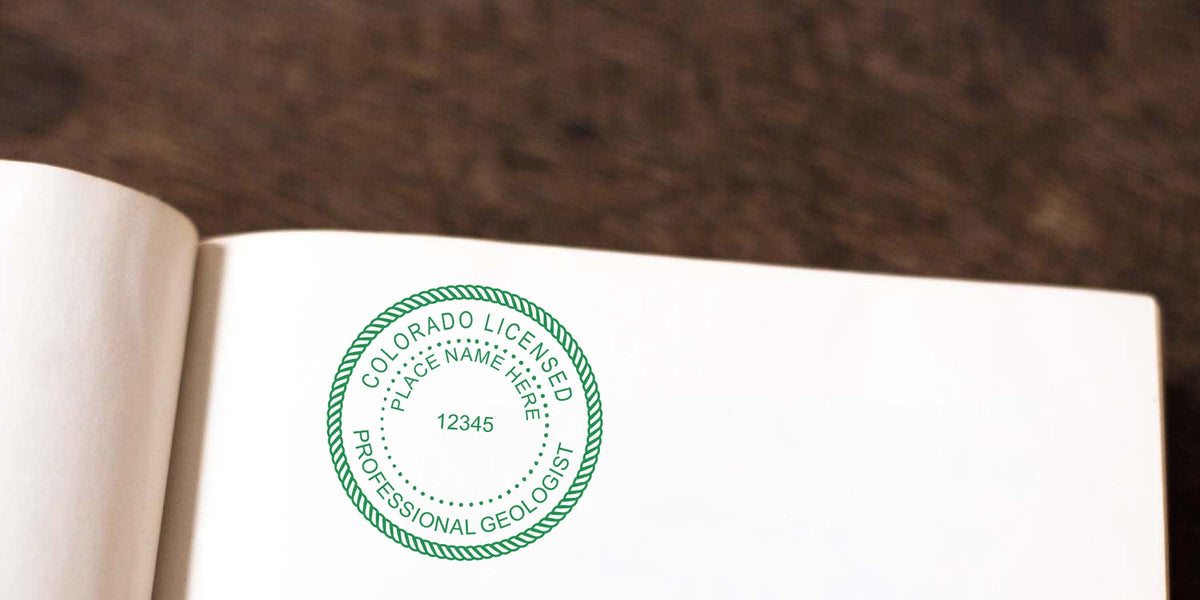
Get Started: Why You Need a Colorado Geologist Seal Embosser
You’ve worked hard to establish yourself in the geosciences. Whether you’re helping companies assess mineral deposits or analyzing geological hazards in Colorado, you’ll likely need a professional seal to finalize reports and legal documents. Enter the colorado geologist seal embosser. This small but crucial tool leaves a raised impression on paper, providing a clear, official mark of your expertise.
But why is it so important to have an embosser instead of a simple rubber stamp? By using an embosser, you ensure that your seal is permanent and tamper-resistant. With Colorado’s strict regulations for registered geologists, you can’t cut corners. An embosser sets your documentation apart, showing your clients, peers, and the state licensing board that you meet every legal requirement. Plus, the embossed seal looks polished, so your final reports or official letters leave a professional first impression.
The truth is, having a dependable seal embosser can be the difference between a document that’s easily disputed and one that’s properly validated. It indicates you’re serious about your work and that you’re ready to comply with Colorado’s guidelines. In the next sections, you’ll learn exactly how to get one, what to look for before you buy, and how to keep it in top shape.
Understand Regulatory Requirements
Colorado’s Board of Licensure for Professional Geologists sets specific standards for seals and stamps. If you’re not sure where to look for official guidelines, consider starting with summarized pointers in resources like colorado geologist stamp requirements. This resource breaks down basic rules and clarifies the sizes, shapes, and labeling that your seal must include.
-
Certification Status
- Make sure you’re fully certified as a geologist in Colorado before getting your seal. The state usually wants documents to reflect your official license number and name.
- Double-check that you’ve passed every prerequisite exam, and confirm your status is active. If your license is expired, renewing it is the first step to a valid seal.
-
Placement and Usage
- Colorado regulations require you to place your seal on geological reports, maps, or other documents where you’re signing off on critical data.
- Always ensure that the seal impression (or stamp imprint) is clear enough to read. Fuzzy seals can lead to questions about authenticity.
-
Legal Liability
- Keep in mind, once you emboss a document with your seal, you’re taking responsibility for the accuracy of that information.
- Failing to use your seal properly might open you up to legal or professional repercussions.
If you’re ever unsure about specific rules, it’s best to reach out to the Colorado state licensing board or consult an expert. The guidelines can change over time, so you’ll want to stay updated to keep your professional credentials in good standing.
Pick Between Embosser or Stamp
You might wonder, “Do I really need an embosser, or will a simple rubber stamp do?” The answer depends largely on the nature of your work. Traditional rubber stamps will leave flat ink on the page. An embosser, on the other hand, creates a raised impression, making it nearly impossible to replicate or tamper with. Here’s a quick comparison to help you decide:
| Feature | Rubber Stamp | Embosser |
|---|---|---|
| Impression Type | Flat ink imprint | Raised, embossed imprint |
| Security Level | Moderate | High |
| Professional Look | Good | Excellent |
| Usage Difficulty | Easy | Slightly more effort |
-
Rubber Stamp Benefits:
-
Faster for high-volume tasks.
-
Great for routine internal documents.
-
Embosser Benefits:
-
More secure and tamper-resistant.
-
Adds a polished, official appearance to external documents.
For Colorado geologists, embossers are often considered the gold standard. Since the state board strongly emphasizes accuracy and professionalism, an embosser shows your commitment to top-quality work. If you handle sensitive or legal documents often, go for the embosser to keep everything above reproach.
Gather Important Details
Before you order your colorado geologist seal embosser, take a moment to collect a few crucial details. If you skip this step, you might end up with an incorrect seal that’s unusable in official contexts.
-
Exact Name on Record
- Check your license paperwork to confirm how your name appears, including any middle initials or suffixes.
- Make sure the name matches exactly. Even a slight variation can raise questions from regulating bodies.
-
License Number
- Your unique state-issued geologist license number is a must-have on the seal.
- Write it down carefully, and double-check for accuracy.
-
State-Specific Text
- Typically, you’ll see something like “Licensed Professional Geologist” and “State of Colorado” around the seal’s border.
- Confirm what wording Colorado requires, and don’t add extra wording that isn’t permitted.
-
Size Requirements
- Colorado usually specifies size ranges for the official seal. Most are about 1 ⅝ inches to 2 inches in diameter.
- Confirm that your design won’t exceed or fall short of these ranges.
Putting this information together makes your ordering process smoother. You won’t have to worry about reordering or revising your seal later and wasting valuable time.
Order From a Trusted Supplier
Not all stamp companies understand Colorado’s unique requirements for professional geologists, so it’s wise to choose a supplier that knows the ropes. That’s where Acorn Sales shines. We’ve been in business since 1964, providing quality seals and stamps to professionals across the country.
Here’s what to keep in mind when selecting a supplier:
-
Expertise in Professional Seals
-
You want a company that’s experienced in creating seals specifically for licensed geologists, architects, or engineers. Acorn Sales has supported thousands of professionals with official stamps that meet state licensing rules.
-
Free Digital Seal
-
Digital versions of your seal come in handy for electronic documents, from PDFs to online project submissions. Acorn Sales includes a complimentary digital seal with your embosser purchase, so you’re covered in both physical and digital spaces.
-
Simple Ordering Process
-
Look for an easy-to-navigate website with clear instructions. You’ll typically upload your name and license number, confirm the design, and pick your preferred seal layout.
-
Quality Construction
-
Seek out metallic or steel frames that stand up to frequent use. If you’re embossing multiple official documents each month, you’ll need something durable.
Once you settle on a supplier, take a moment to review the final design proof. Verify every bit of text, making sure your name, license number, and any relevant phrases match Colorado’s guidelines. Once everything checks out, just place your order and wait for your new embossing tool to arrive.
Maintain and Use Your Seal
What’s the point of ordering a seal if it isn’t crisp and easy to read? Proper maintenance is key to ensuring that each impression stays sharp. After all, you don’t want smudges or half-embossed text to cast doubt on your professional standing.
-
Store in a Clean, Dry Spot
- Keep your embosser away from humidity or dust. Damp environments might dull the metal rings that press the seal into paper.
- A desk drawer organizer can protect it from loose items that could scratch or damage the plates.
-
Test Before Each Use
- If you’re about to stamp several documents, do a quick test on scrap paper to confirm clarity.
- If the impression looks faint, apply steady pressure, or consider adjusting the tension on your embosser (if possible).
-
Clean Carefully
- Residue builds up over time, especially if you work in dusty field locations. Wipe the plates gently with a soft cloth to remove any debris.
- Avoid chemical cleaners that could corrode metal parts.
-
Replace Worn Parts
- The metal plates may wear down over many years of steady use. Watch for signs of dullness, which can cause unclear impressions.
- If you notice a gradual decline in clarity, contact your supplier to replace or refurbish those parts.
Remember, an unreadable seal impression can undermine the legitimacy of your paperwork. By spending a little time on regular upkeep, you’ll preserve that crisp, professional finish that sets your documents apart.
Avoid Common Pitfalls
Even seasoned professionals slip up, especially when juggling multiple client projects or fieldwork. Here are a few mistakes to sidestep so your seal always meets Colorado’s standards:
-
Forgetting to Update License Status
-
Don’t emboss documents with a lapsed license. If your certification expires, temporarily refrain from stamping anything until you renew.
-
Double-check your renewal date. Missing that deadline can invalidate your authority to confirm geological work.
-
Using Incorrect Wording
-
Some people mistakenly shorten “Licensed Professional Geologist” to just “LPG” or leave out “State of Colorado.” That’s a no-go if your board’s regulations are strict.
-
Confirm the exact phrasing with official sources or the colorado geologist stamp requirements, and stick to it.
-
Mixing Personal and Professional
-
Your seal is for licensed geology work, not for personal memos or random documents. Using it for anything outside authorized tasks can dilute its value and even breach ethics guidelines.
-
Always keep your seal in a secure spot, so no one else can use it improperly.
-
Overlooking Paper Quality
-
Embossers can tear through thin, low-quality paper. On the flip side, thick or coated paper might require more force to get a clear imprint.
-
Test different paper stocks before finalizing large batches of documents.
In short, being cautious upfront will save you the hassle of reprinting and re-embossing an entire set of geological reports.
Get a Free Digital Seal
Physical embossers are essential for tangible documents, but life is simpler when you also have a digital seal. With more offices going paperless, a digital version of your seal can help you sign documents electronically without losing that professional touch. Acorn Sales offers a free digital seal with every Colorado Geologist Seal Embosser order, which you can insert into PDFs, word processing files, or project management platforms.
-
Why a Digital Seal Matters
-
You’ll handle urgent tasks even when traveling or working remotely.
-
Clients appreciate faster turnaround times for electronically submitted reports.
-
How to Use It
-
Once you receive the file, keep it in a secure folder or document management system.
-
Insert into your digital documents as an image layer, then lock the file to prevent tampering.
This added convenience ensures you’re ready to meet requests for both physical and digital documents, staying ahead in an ever-evolving industry.
Frequently Asked Questions
-
Do I Need a Colorado Geologist Seal Embosser if I Only Do Consulting Work?
Absolutely. If you’re working on official reports or site evaluations that require your professional signature, the state board generally wants a legitimate seal. Your status as a consultant doesn’t exempt you. -
Will I Receive a Free Digital Seal Automatically When I Order My Embosser?
Yes. At Acorn Sales, the digital seal is included in your purchase. You don’t have to pay extra for a file that helps you sign electronic documents. -
How Long Does an Embosser Typically Last?
A high-quality metal embosser can last for years. With routine cleaning and occasional part replacements, many professionals use the same embosser throughout their career. -
Can I Change the Text on My Seal if I Move to a Different State?
Each state has different wording rules. If you move, you’ll need a new seal that meets that state’s specifications. Check with the relevant licensing board for updated standards. -
Are Fonts and Artwork on the Seal Customizable?
Some suppliers offer minor design tweaks within legal limits. However, you can’t remove required text or alter the official circle layout mandated by Colorado. Stick to the approved design to keep your seal valid.
Summary and Next Steps
Securing your Colorado Geologist Seal Embosser is more than a formality. It’s your badge of credibility, showing clients, colleagues, and regulators that you hold yourself to the highest professional standards. Plus, with added perks like a free digital seal and a dependable supplier such as Acorn Sales, you’ll have everything you need to verify your work both physically and electronically.
Ready to make the leap? Start by confirming your license information, deciding on a seal design that meets state rules, then ordering through a trusted vendor. Once you’ve got the embosser in hand, focus on regular maintenance and apply your seal only to documents that genuinely need it. That way, your official stamp of approval stays meaningful—backed by the power of your expertise and the regulations that support it.








