
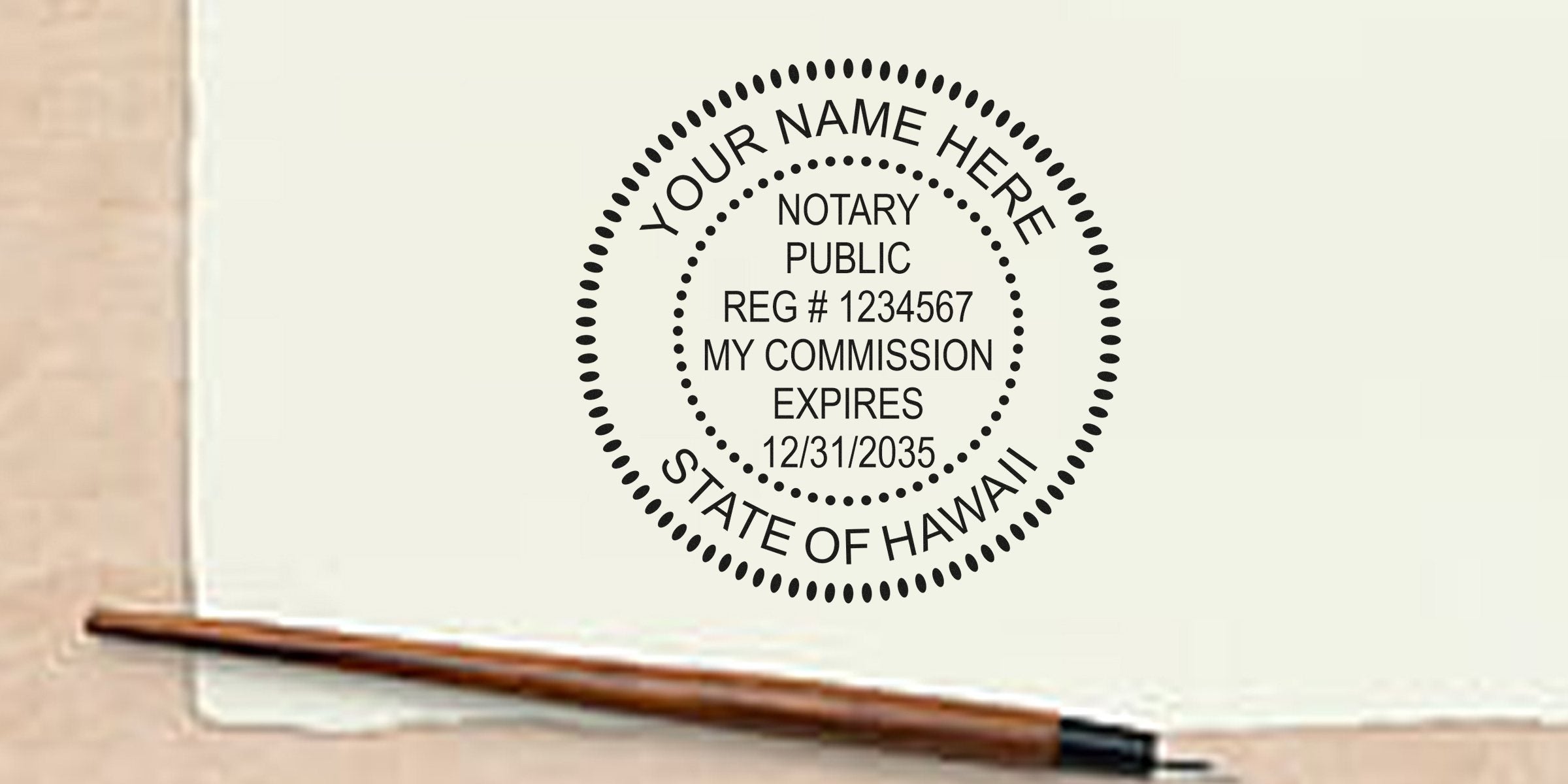
If you’re gearing up to become a notary in the Aloha State or simply looking to update your existing stamp, it’s only natural to wonder about Hawaii notary public seal guidelines. After all, you want to do your job right and avoid any hiccups when authenticating important documents. In this post, we’ll walk through everything you need to know about designing, ordering, and caring for your official Hawaii notary stamp or seal. By the end, you’ll feel confident about where to find the best supplies, how to stay within state rules, and how to keep your seal in tip-top shape.
Understand the notary seal’s significance
Before we jump straight into the details, let’s talk about why your notary seal is such a big deal. Think of it as your personal stamp of authenticity. When you place your seal on a document, you’re confirming that the signer’s identity was verified and acknowledging that legal formalities have been fulfilled.
- Your seal helps prevent fraud by proving a document has been properly notarized.
- In Hawaii, using the wrong type of stamp or overlooking specific text could turn an official paper into a rejected one.
- The seal typically includes details such as your commissioned name, the words “Notary Public,” and references to the State of Hawaii.
It’s easy to see why those small details matter. When you take the time to ensure your seal meets legal requirements, you’re doing more than following the rules, you’re protecting people’s important transactions.
Ensure correct seal elements
Now that you appreciate the seal’s role, let’s break down the elements your Hawaii notary seal should contain. Although design and wording can vary slightly by supplier, Hawaii maintains specific guidelines that you’ll want to follow.
Common required details
Below is a quick reference table you can use when confirming your stamp order:
| Requirement | Typical Specification | Reason for Inclusion |
|---|---|---|
| Commissioned Name | Must match your official name on record | Ensures authenticity and identity match |
| Notary Public Text | Should include “Notary Public” and “State of Hawaii” | Makes clear the official capacity and jurisdiction |
| Commission Number | Must be accurate and visible | Allows for easier verification by authorities |
| Expiration Date | Typically included if required by the state | Informs when your commission will end |
Quick note: You might find minor variations in how these details are laid out, especially when comparing older seals with newer ones. The safest route is to include all mandatory elements neatly and legibly so the imprint is crystal clear.
Spellings and spacing
One place where people trip up is the spelling of their legal name. For instance, using a nickname instead of your full commissioned name can invalidate your notarial act. Also, watch those spaces and punctuation. Your name should appear exactly as it’s registered with the state. If you changed your legal name, make sure your notary commission reflects that before you order a new seal.
Size and shape considerations
While Hawaii law may not dictate the exact size or shape of your seal, you’ll generally see round seals (around 1.5 to 2 inches in diameter) or rectangular stamps that comfortably fit the necessary text. The goal is for your stamp to leave enough space for clear, readable impressions that include every required detail. If your text looks squashed, you might want to adjust the dimensions.
Pick the right ink color
Ink color might seem like a small detail, but it can make a big difference. You’ll often see either blue or black ink recommended for a Hawaii notary seal. Why? Because these hues show up well on most documents and in photocopies.
- Blue Ink: Offers a clear contrast that helps differentiate original signatures and seals from copies.
- Black Ink: Widely accepted and easy to read, especially if you work with a lot of official documents.
Check local guidance to verify any specific color requirements, but in many cases, you get to make a personal choice. Just remember that it should be dark enough to be visible on a standard photocopy or scan. Light or fluorescent inks can cause your seal impression to look faded or incomplete, which defeats the whole purpose of having a stamp.
Find a reliable supplier
Choosing a reputable supplier is a key ingredient in following Hawaii notary public seal guidelines without stress. The good news is that you don’t have to guess which vendor to trust.
Look for industry experience
At Acorn Sales, we’ve mastered the craft of stamp and seal making for over 60 years. That’s a lot of in-house expertise that flows into creating high-quality notary supplies. Our seals are designed with state compliance in mind, and we turn orders around quickly. That way, you won’t be left waiting if your commission date is right around the corner.
Verify compliance
Not all suppliers prioritize state regulations, so make sure yours does. If you’re shopping for Hawaii notary stamps, confirmed compliance means you can expect the correct wording, layout, and size. This is especially helpful if you’re new to being a notary and want that extra peace of mind.
When you’re ready to browse, check out our Hawaii Notary Supplies. You’ll find various options, from pre-inked stamps to convenient self-inking models, all carefully designed to comply with Hawaii’s guidelines.
Compare additional perks
- Customer Support: Look for suppliers who offer live help or quick email responses when you have questions.
- Guarantee or Warranty: Ask whether stamps or embossers come with any quality guarantee.
- Pricing and Bundles: Sometimes you’ll find package deals that bundle stamps, embossers, and ink refills.
- Turnaround: Speed matters if your current seal is about to expire.
If you find a supplier who ticks all these boxes, you’ll spend less time worrying and more time enjoying your role.
Stay aligned with legal requirements
A big part of your job as a notary is staying on top of legal obligations. The exact requirements for notary seals can evolve, so you’ll want to keep an eye out for any official updates.
Where to find updates
- Official Government Websites: The Hawaii Department of Commerce and Consumer Affairs or the Secretary of State’s office are prime sources of credible announcements.
- Professional Groups: Joining notary associations can help you stay current on changing rules or recommended best practices.
- Service Emails: Some seal suppliers and professional notary organizations send out informational newsletters.
Staying updated will help you avoid a scenario where you invest in a new stamp while the laws are about to shift. If you haven’t bookmarked relevant Hawaii government pages yet, it’s worth doing so now.
Ongoing training
Notarizing documents is more than slapping a stamp and signing. You may be required to attend refresher courses or stay in the loop about new legislation. By regularly updating your knowledge, you’re demonstrating a commitment to professional integrity, which clients appreciate. It might feel like extra work, but being well-informed actually saves time in the long run.
Protect and store your seal
Your notary seal isn’t just another office gadget. It’s an official instrument that can make or break the legitimacy of important documents. Because of this, you need to store it securely and handle it with care.
Storage tips
- Keep it under lock and key, such as in a drawer or safe to which only you have access.
- If you use a self-inking stamp, store it upright and away from direct sunlight.
- Avoid exposing your seal to extreme temperatures or damp conditions.
Most importantly, never lend your seal to another person, even if they’re a close friend or fellow notary. The risk of misuse or fraudulent acts is just too high.
Maintenance basics
Seals with self-inking or pre-inked mechanisms will need occasional refills. You’ll know it’s time for new ink when your impressions start to look faint or patchy. If you’re using an embosser, check the plates periodically to ensure nothing is worn or bent. You can gently wipe any dust or residue from the plates and store the embosser in a protective pouch.
If you ever notice damage to your stamp or embosser, don’t attempt a DIY fix that might worsen the problem. Instead, contact your supplier for advice or a replacement if needed.
Review the essential steps
Let’s take a quick moment to summarize the core actions you’ll want to remember. Think of this as your checklist for stress-free notary supply shopping and usage.
- Confirm your commissioned details are accurate.
- Make a note of the correct seal wording and layout required by Hawaii.
- Decide on ink color, leaning toward dark, easily scannable shades.
- Shop through a reputable source, like Acorn Sales, to guarantee state compliance.
- Keep an eye on changing laws and refresh your knowledge routinely.
- Store your seal securely and refill or replace as needed.
By checking off each item on this list, you’ll be well on your way to a properly executed notarial act that satisfies all Hawaii regulations.
That’s about it for your guide to Hawaii notary public seal guidelines. Once you have your notary seal in hand, you’ll be able to perform your official duties confidently. If you follow the tips we’ve covered here, including verifying that your stamp includes all required elements, picking the right ink color, and purchasing from a reputable supplier, you’ll have a smooth experience.
Feel free to share this article with anyone else who’s a budding notary or looking to refresh their seal. And remember, if you ever have questions or concerns, the friendly folks at Acorn Sales are here to help. Here’s to making your notarial journey a breeze!
Frequently Asked Questions
What happens if I lose my notary stamp?
Losing your stamp can be stressful, but it’s important to act quickly. First, you should report it to the proper Hawaii authorities to document that your seal is lost. Next, replace it as soon as possible through a trusted supplier. In the meantime, avoid notarizing any documents without a valid seal, since that could lead to legal issues.
Can I use a notary seal from another state if I move to Hawaii?
Generally not. Each state has its own rules and requirements. If you’re relocating and want to perform notarial acts in Hawaii, you should apply for a Hawaii commission and order a Hawaii-compliant seal. Using an out-of-state seal could invalidate any documents you notarize in Hawaii.
How long does it take to get my notary stamp from Acorn Sales?
Acorn Sales offers quick turnaround times, often shipping orders in just a few business days. If you’re up against a tight deadline, reach out to confirm current processing times. Our goal is to help you meet your commissioning start date without complications.








