

Written by Acorn Sales Company, manufacturing stamps and seals since 1964 · Reviewed by Holly R, VP of Sales and Marketing at Acorn Sales, against the State Board for Professional Engineers and Md. Code Ann., Bus. Occ. & Prof. § 14-4A-02 on 21 September 2026 · Updated 21 September 2026
COMAR 09.23.01.03B requires a Maryland PE seal to consist of the pictorial device of the Great Seal of Maryland as a center, surrounded by the words State of Maryland and Professional Engineer and the licensee’s name and license number. That is a specific piece of state artwork, not a ring with a blank field, a star or a state outline in the middle, and it is the reason a generic multi-state template cannot be relabeled into a compliant Maryland seal.
The expiration date is the second thing people get wrong, and they get it wrong by putting it in the right state in the wrong place. Maryland does require one, but COMAR 09.23.03.10D puts it in the printed certification next to the seal: “Professional Certification. I hereby certify that these documents were prepared or approved by me, and that I am a duly licensed professional engineer under the laws of the State of Maryland, License No._____, Expiration Date:_______________.” No expiration date belongs on the seal face, and putting one there creates a device that has to be recut every renewal cycle for no regulatory reason.
There is no stated diameter anywhere. COMAR 09.23.01.03, 09.23.03.09 and 09.23.03.10 set no minimum and no maximum. The only layout constraint is relational: under COMAR 09.23.03.10E, “The titleblock, certification, seal, and signature shall appear close to each other,” so the seal is sized to read clearly inside that cluster. Acorn cuts this seal to 1-5/8 inches. That is our production record rather than a Maryland rule; COMAR states no diameter for the engineer’s seal, minimum or maximum.
Maryland PE seal requirements at a glance
| Requirement | Maryland rule | Source |
|---|---|---|
| Seal required | Yes | Md. Code Ann., Bus. Occ. & Prof. § 14-4A-02 |
| Required elements | The pictorial device of the Great Seal of Maryland at the center, State of Maryland, Professional Engineer, Your name and Your license number | COMAR 09.23.01.03B |
| Size and shape | Acorn cuts this seal to 1-5/8 inches, and that is a production record rather than a published rule. | Acorn Sales production record, Maryland professional engineer seal |
| Device allowed | Two physical forms are named and both are legal. | COMAR 09.23.01.03A |
| Signature and date | Maryland requires an original signature and the date of signature, and it defines original signature rather than leaving it to custom. | COMAR 09.23.03.09E, 09.23.03.10E |
| What must be sealed | The statutory trigger is issuance or submission: any plan, specification or report issued to a client or submitted to a public authority, endorsed by the engineer who prepared or approved it. | Md. Code Ann., Bus. Occ. & Prof. § 14-4A-02(a) |
| Electronic seal | Maryland does not run a separate electronic seal rule. | COMAR 09.23.03.09E |
| Renewal and lapse | Maryland enforces the license status twice on the same sheet. | Md. Code Ann., Bus. Occ. & Prof. §§ 14-501, 14-4A-02 |
| Firm number on documents | Maryland requires a firm permit but does not require the permit number on the document. | Md. Code Ann., Bus. Occ. & Prof. § 14-402 |
| Licensing board | The State Board for Professional Engineers | Md. Code Ann., Bus. Occ. & Prof. §§ 14-402, 14-4A-02, 14-501; COMAR 09.23.01.03, 09.23.03.09, 09.23.03.10, as published by the Maryland Division of State Documents |
Rules for other states are on PE stamp requirements by state.




Is a seal required in Maryland?
Maryland requires a seal Maryland puts the duty in the statute and the seal design in the regulation. Md. Code Ann., Bus. Occ. & Prof. section 14-4A-02(a) provides that “Before a professional engineer issues to a client or submits to a public authority any plan, specification, or report, the professional engineer who prepared or approved the document shall endorse on the document the professional engineer’s: (1) original signature and date of signature; and (2) seal or a facsimile of the seal.” Subsection (b) puts teeth in it from the receiving end: “A public authority may not accept any engineering plan, specification, or report unless the document is endorsed as required under subsection (a) of this section.” COMAR 09.23.01.03A then requires the device itself: “A licensee who engages in the practice of engineering in Maryland shall obtain an impression seal or a rubber stamp facsimile.”.
What must appear on the seal
- The pictorial device of the Great Seal of Maryland at the center
- State of Maryland
- Professional Engineer
- Your name
- Your license number
The regulation is unusually literal about the center of the seal: “A licensee’s seal shall be a seal consisting of the pictorial device of the Great Seal of Maryland as a center, surrounded by the words ‘State of Maryland’ and ‘Professional Engineer’ and the licensee’s name and license number.” A blank center, a star, a generic state outline or a discipline name in the middle is not what the rule describes. No license expiration date is required inside the seal. The expiration date obligation exists in Maryland, but it lives in the professional certification block next to the seal, not on the seal face, which is the single most common mix up in Maryland orders.
Size and shape
Acorn cuts this seal to 1-5/8 inches, and that is a production record rather than a published rule. The state publishes no dimension, so the figure below is what we make and ship for Maryland licensees rather than something you can point a reviewer at. COMAR states no diameter for the engineer’s seal, minimum or maximum, in 09.23.01.03 or in the signing and sealing rules that follow it. What the state publishes: COMAR states no diameter, minimum or maximum, for the engineer’s seal. The sources here are COMAR 09.23.01.03, the seal regulation itself; COMAR 09.23.03.09, Signing and Sealing Requirements; and COMAR 09.23.03.10, Titleblock Rules. The only placement constraint is relational rather than dimensional: under COMAR 09.23.03.10E, “The titleblock, certification, seal, and signature shall appear close to each other.”



Embosser, rubber stamp or digital
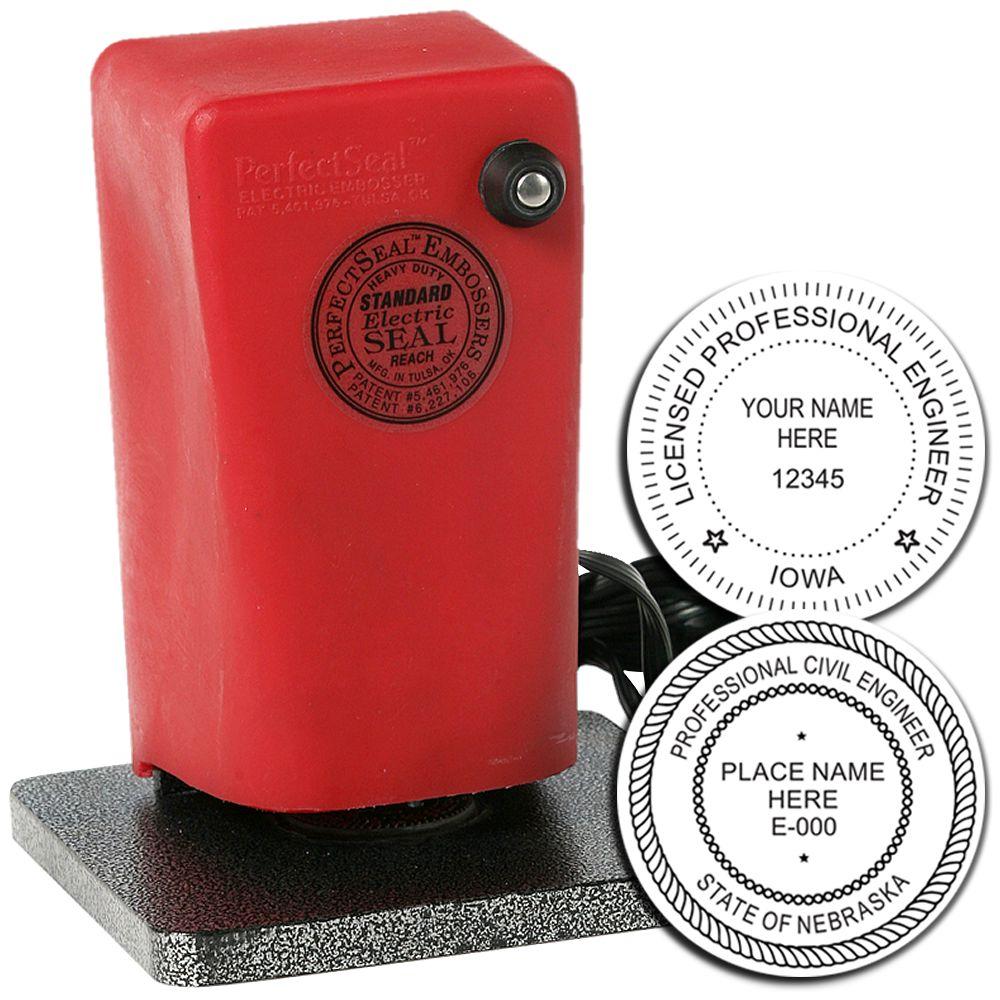
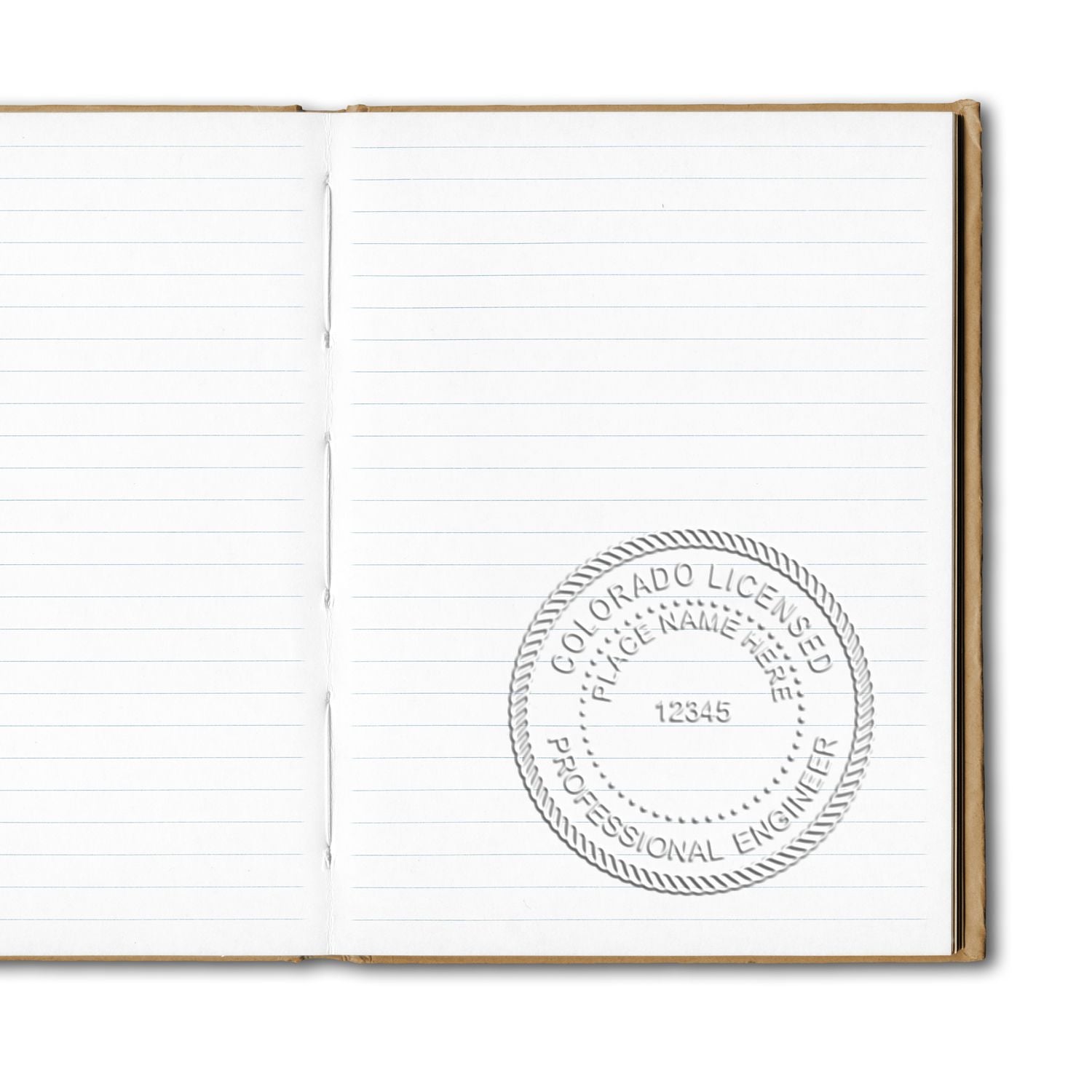
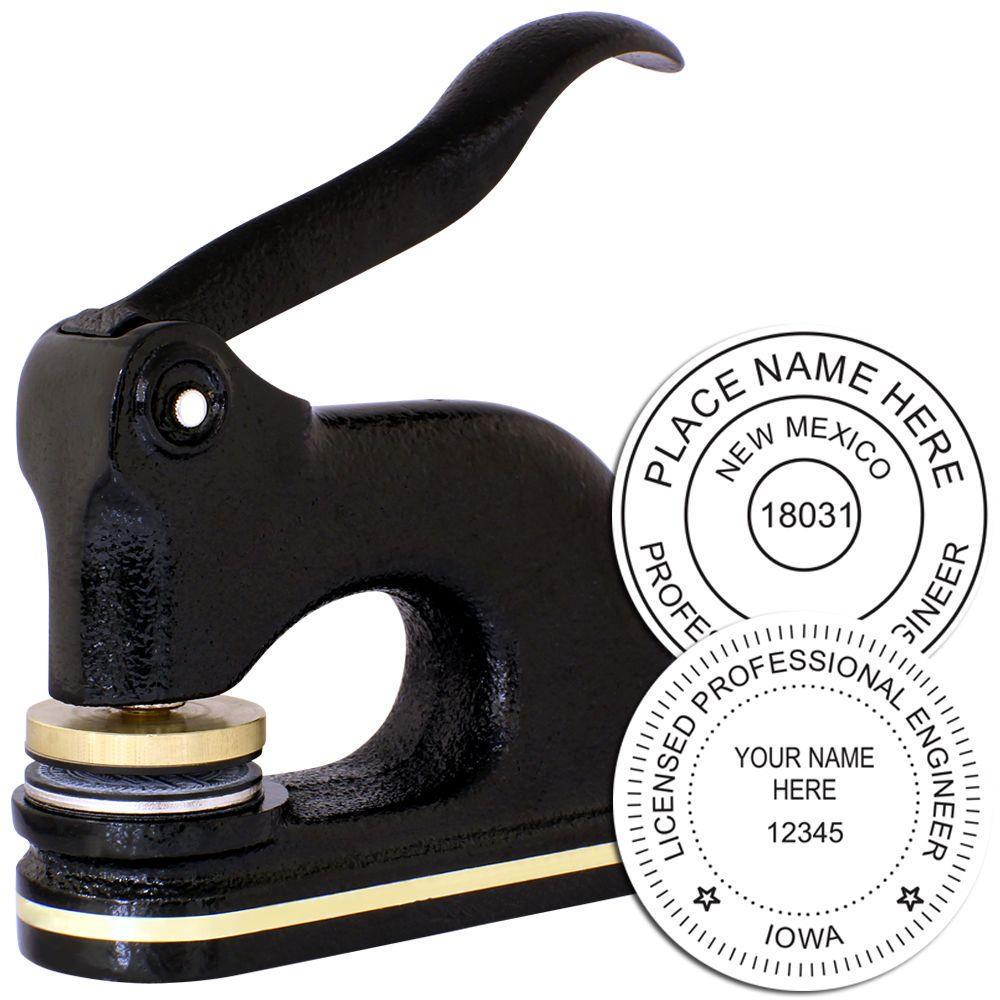
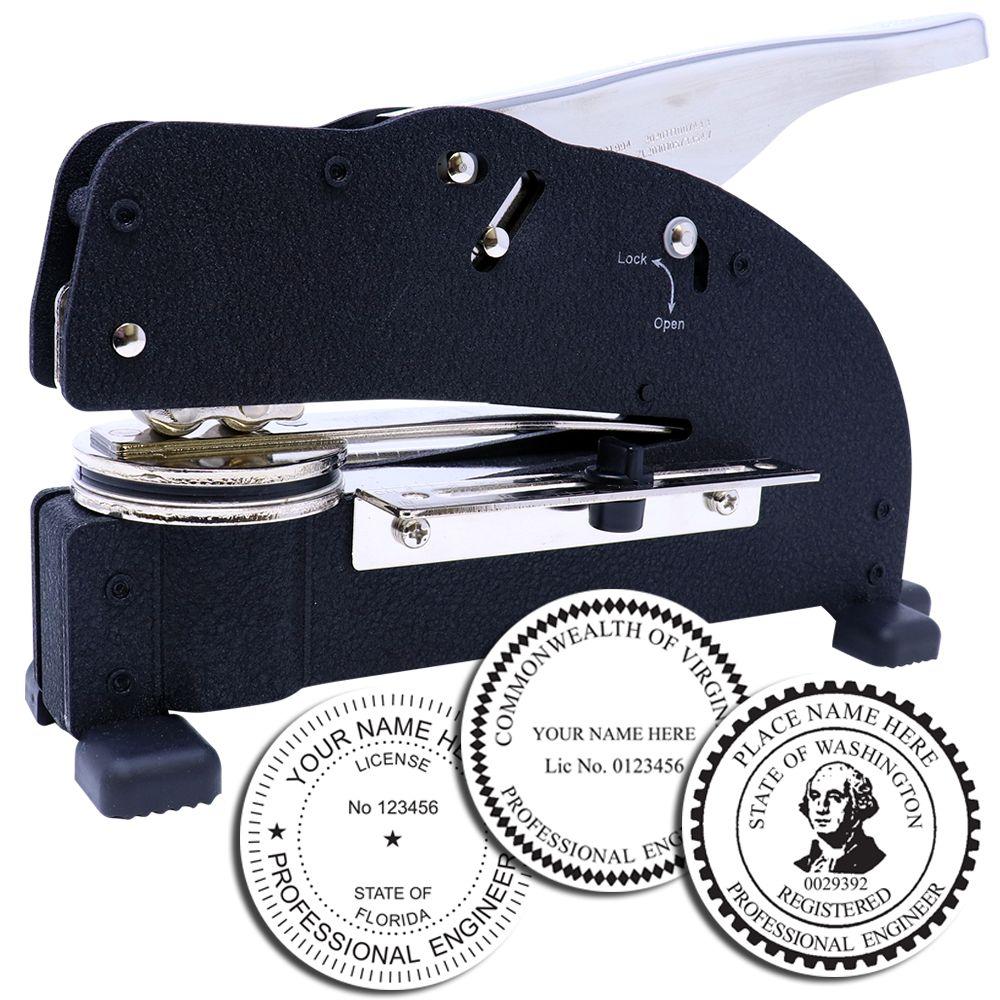
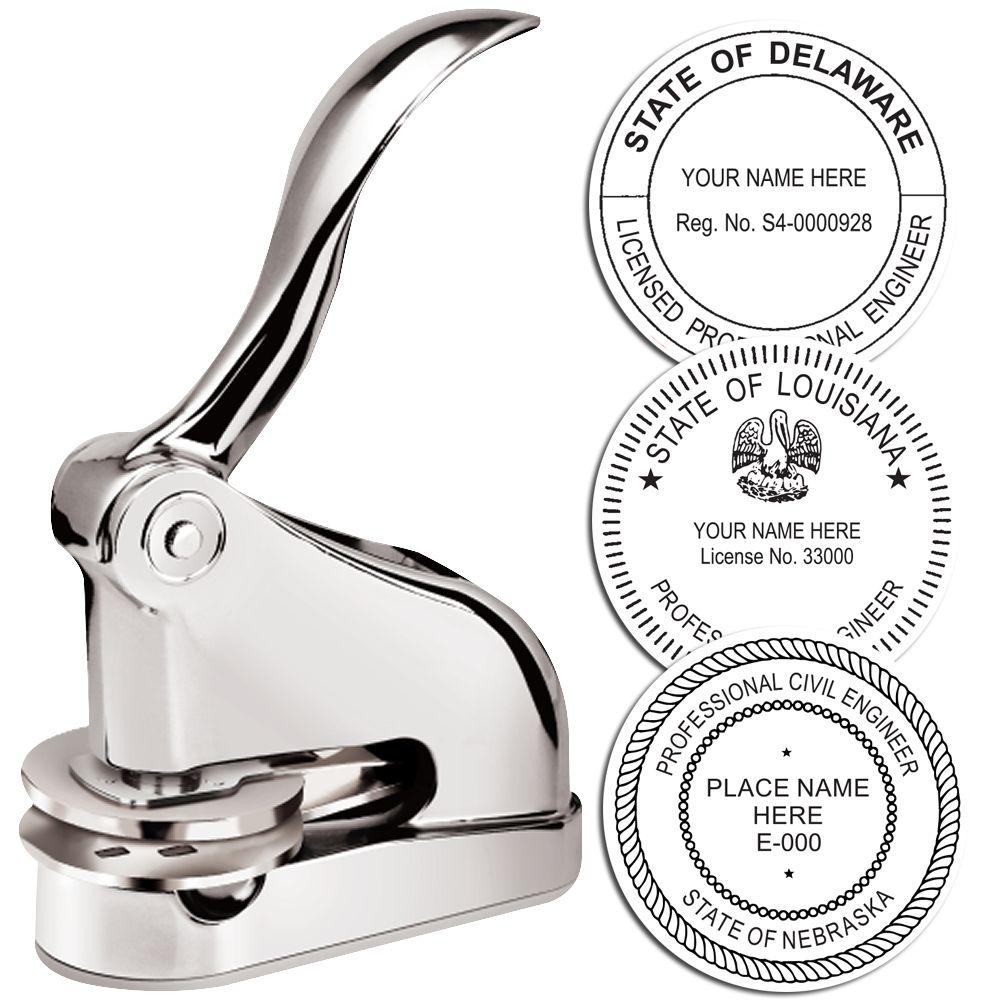
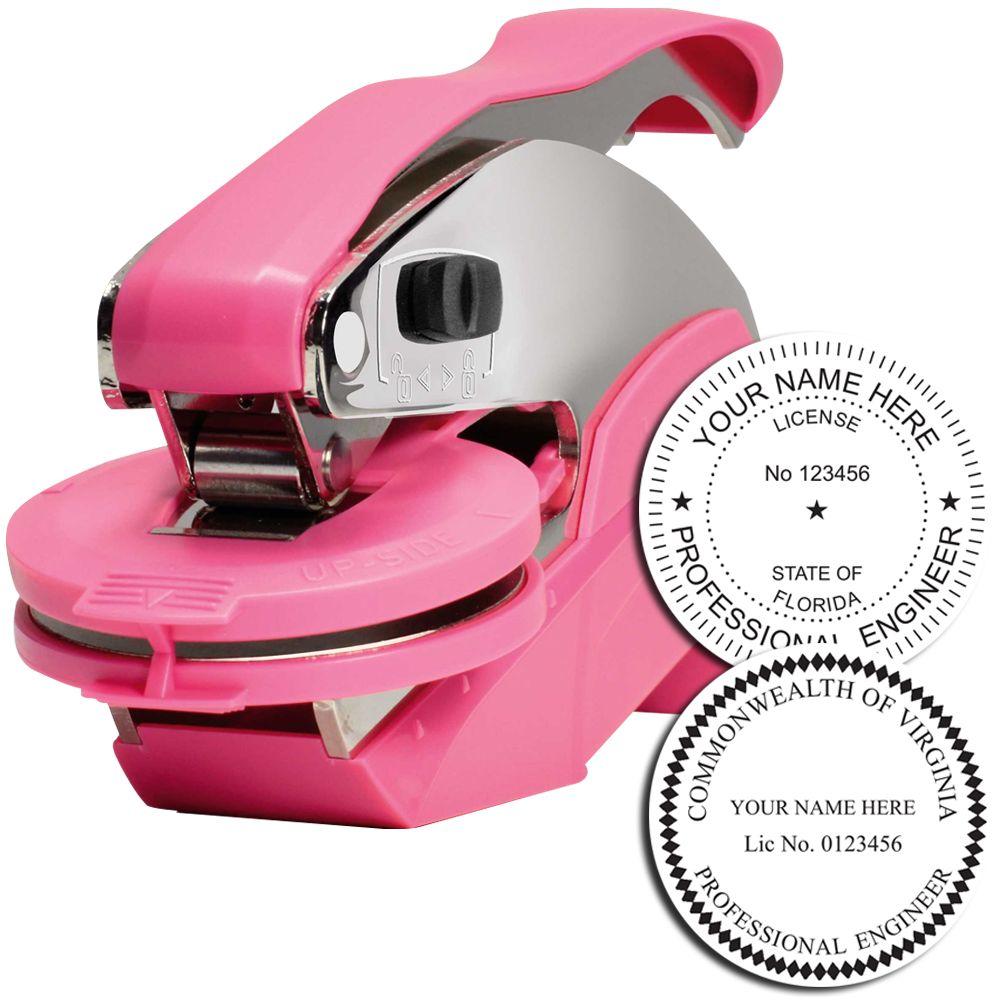
Two physical forms are named and both are legal. COMAR 09.23.01.03A requires the licensee to obtain “an impression seal or a rubber stamp facsimile,” and the statute at section 14-4A-02(a)(2) accepts the “seal or a facsimile of the seal.” The safe buy is the rubber stamp facsimile. An embossed impression alone is accepted by the regulation but reproduces badly through scanning and plan printing, and Maryland expects the seal to sit close to a title block and a certification block that are themselves printed. A computer generated facsimile is functionally the facsimile the statute contemplates, and a digital signature route is expressly provided for in COMAR 09.23.03.09E.
Signing and dating
Maryland requires an original signature and the date of signature, and it defines original signature rather than leaving it to custom. Under COMAR 09.23.03.09E, an original signature is either a handwritten signature applied in permanent ink or a digital signature that satisfies four conditions: it uniquely identifies the licensee by name and license number, it is under the licensee’s exclusive control, it supports non repudiation and can be independently verified, and it is linked to the document so that a change made after signing cannot go undetected. The date is the date of signature, not the license expiration date, although an expiration date must separately appear in the certification block. Nothing in COMAR requires the signature to cross or overlap the seal. What is required is proximity: COMAR 09.23.03.10E puts the title block, the certification, the seal and the signature close to each other.
The Great Seal of Maryland belongs in the middle, and the expiration date belongs beside it
COMAR 09.23.01.03B requires the licensee’s seal to consist of the pictorial device of the Great Seal of Maryland as a center. That is a specific piece of state artwork, not a decorative ring or a generic emblem, and a stock circular template with State of Maryland and Professional Engineer around a blank field does not match the regulation. Maryland is one of the few states where the seal face is defined by a state device rather than by dimensions and text alone, and it is the reason a generic multi state template cannot be relabeled into a compliant Maryland seal.
Which documents must be sealed
The statutory trigger is issuance or submission: any plan, specification or report issued to a client or submitted to a public authority, endorsed by the engineer who prepared or approved it. COMAR 09.23.03.09B defines approved to require that the licensee maintained technical knowledge and responsible control over the content during preparation and performed a substantive review with authority to revise. COMAR 09.23.03.09C permits a licensee to complete, correct, revise or add to another licensee’s work where the client supplies prior documentation, the original licensee receives immediate written notice, and the revising licensee takes responsibility for the contribution, while 09.23.03.09D preserves the original licensee’s liability for the original work. COMAR 09.23.03.10A separately prohibits removing a titleblock from any print or reproduction of those documents.



Electronic and digital seals
Maryland does not run a separate electronic seal rule. It folds the digital case into its definition of original signature at COMAR 09.23.03.09E, which permits a digital signature that uniquely identifies the licensee by name and license number, remains under the licensee’s exclusive control, supports non repudiation and independent verification, and is bound to the document so that post signature modification is detectable. No certificate authority, no cryptographic algorithm and no software product is named. The seal itself may be a facsimile under section 14-4A-02(a)(2), so a digitally signed PDF carrying a facsimile seal and a compliant digital signature meets both halves.
Renewal, lapse and retirement
Maryland enforces the license status twice on the same sheet. First, section 14-501 provides that “Except as otherwise provided in this title, a person may not practice, attempt to practice, or offer to practice engineering in the State unless licensed by the Board,” and section 14-4A-02 reserves the endorsement to a professional engineer. Second, and more practically, the certification language required by COMAR 09.23.03.10D carries the license number and the expiration date in the text next to the seal, so an out of date expiration date is visible on the face of the document. Because the expiration date is not a seal element, renewal itself does not require a new seal device, and the license number stays on the seal unchanged. Not addressed in COMAR 09.23.01.03 or 09.23.03: whether a lapsed, suspended or revoked licensee must surrender or destroy the seal.
Firm registration
Maryland requires a firm permit but does not require the permit number on the document. Section 14-402(a) provides that “Beginning on October 1, 2015, except as provided in subsection (b) of this section, a corporation, partnership, or limited liability company shall hold a permit issued by the Board before the corporation, partnership, or limited liability company may operate a business through which engineering is practiced,” with subsection (b) excepting entities providing engineering services for themselves or an affiliate. What must appear on the document is the entity name, not the permit number: COMAR 09.23.03.10B requires that “The titleblock shall contain at least the printed name of the engineering entity.” COMAR 09.23.03.10C allows directors, partners or members to authorize another licensed employee to sign and seal where that employee holds a Maryland license and prepared or approved the specific project documents.
What to check before you order
Your seal has to reproduce the pictorial device of the Great Seal of Maryland at its center, surrounded by State of Maryland and Professional Engineer, along with your name and license number. Either an impression seal or a rubber stamp facsimile satisfies COMAR 09.23.01.03A, and the rubber stamp facsimile is the practical choice because Maryland documents cluster the seal with a printed title block and a printed certification. No diameter is prescribed, so size yours for legibility inside that cluster. Leave any expiration line off the seal face, since Maryland puts the expiration date in the certification text instead. No Maryland source reviewed here restricts who may make or sell you a seal, and nobody has to verify your licensure first.
Browse professional engineer stamps and seals.
Frequently asked questions
Do I need a PE seal in Maryland?
Yes, and the receiving agency is required to check. Md. Code Ann., Bus. Occ. & Prof. § 14-4A-02(a) provides that before a professional engineer issues to a client or submits to a public authority any plan, specification or report, the engineer who prepared or approved it shall endorse on it an “original signature and date of signature” and a “seal or a facsimile of the seal.” Subsection (b) adds that a public authority “may not accept any engineering plan, specification, or report unless the document is endorsed as required under subsection (a).” COMAR 09.23.01.03A then requires the licensee to obtain the device itself.
What has to appear on a Maryland PE seal?
Five things: the pictorial device of the Great Seal of Maryland at the center, the words State of Maryland, the words Professional Engineer, your name and your license number. COMAR 09.23.01.03B states the design in one sentence and it is unusually literal about the middle of the face. No license expiration date is required inside the seal.
What size does a Maryland PE seal have to be?
Not addressed. COMAR states no diameter, minimum or maximum, for the engineer’s seal. COMAR 09.23.01.03, the seal regulation itself, COMAR 09.23.03.09 on signing and sealing, and COMAR 09.23.03.10 on titleblocks were all checked. Size the device so it stays legible in the cluster required by COMAR 09.23.03.10E, where the titleblock, certification, seal and signature all sit close together. Acorn cuts this seal to 1-5/8 inches. That is our production record rather than a Maryland rule; COMAR states no diameter for the engineer’s seal, minimum or maximum.
Embosser or rubber stamp in Maryland?
Both are legal, and the rubber stamp facsimile is the practical buy. COMAR 09.23.01.03A requires the licensee to obtain “an impression seal or a rubber stamp facsimile,” and the statute at § 14-4A-02(a)(2) accepts the seal or a facsimile of it. An embossed impression alone reproduces badly through scanning and plan printing, and Maryland expects the seal to sit beside a printed titleblock and a printed certification.
What counts as an original signature in Maryland?
Handwritten ink or a qualifying digital signature. COMAR 09.23.03.09E defines an original signature as either a handwritten signature applied in permanent ink or a digital signature that uniquely identifies the licensee by name and license number, remains under the licensee’s exclusive control, supports non repudiation and independent verification, and is linked to the document so that a change made after signing cannot go undetected. The date is the date of signature.
Does the signature have to cross the Maryland seal?
No. Nothing in COMAR requires the signature to cross or overlap the seal. What is required is proximity: COMAR 09.23.03.10E puts the titleblock, the certification, the seal and the signature close to each other. Leave room in the layout for all four rather than stacking the signature onto the impression.
Which Maryland documents have to be sealed?
Any plan, specification or report issued to a client or submitted to a public authority, endorsed by the engineer who prepared or approved it, under § 14-4A-02(a). COMAR 09.23.03.09B defines approved to require that the licensee maintained technical knowledge and responsible control over the content during preparation and performed a substantive review with authority to revise. COMAR 09.23.03.09C permits a licensee to complete, correct, revise or add to another licensee’s work where the client supplies the prior documentation, the original licensee receives immediate written notice, and the revising licensee takes responsibility for the contribution, while 09.23.03.09D preserves the original licensee’s liability for the original work.
Can I use a digitally signed PDF in Maryland?
Yes. Maryland does not run a separate electronic seal rule; it folds the digital case into the definition of original signature at COMAR 09.23.03.09E. No certificate authority, cryptographic algorithm or software product is named, and the test is functional. Because the seal itself may be a facsimile under § 14-4A-02(a)(2), a digitally signed PDF carrying a facsimile seal and a compliant digital signature satisfies both halves.
Do I need a new seal when my Maryland license renews?
No. The expiration date is not a seal element, so renewal does not require a new device, and the license number on the face does not change. The status check happens on the document instead: the certification language required by COMAR 09.23.03.10D carries the license number and the expiration date in the text next to the seal, so an out-of-date expiration is visible on the face of the submittal. Whether a lapsed, suspended or revoked licensee must surrender or destroy the seal is not addressed in COMAR 09.23.01.03 or 09.23.03.
Does my firm permit number go on a Maryland drawing?
No, but the entity name does. § 14-402(a) requires a corporation, partnership or limited liability company to hold a board permit before operating a business through which engineering is practiced, with subsection (b) excepting entities providing engineering services for themselves or an affiliate. What has to appear on the document is the name: COMAR 09.23.03.10B requires that “The titleblock shall contain at least the printed name of the engineering entity.” COMAR 09.23.03.10C lets directors, partners or members authorize another licensed employee to sign and seal where that employee holds a Maryland license and prepared or approved the specific project documents.
Can a Maryland titleblock be removed from a reproduction?
No. COMAR 09.23.03.10A prohibits removing a titleblock from any print or reproduction of a sealed plan, specification or report. That makes the titleblock part of the sealed instrument rather than a drafting convenience, and it is a reason to lay the sheet out with the titleblock, certification, seal and signature together from the start.