
The Difficult Journey to Attaining Your Licensure
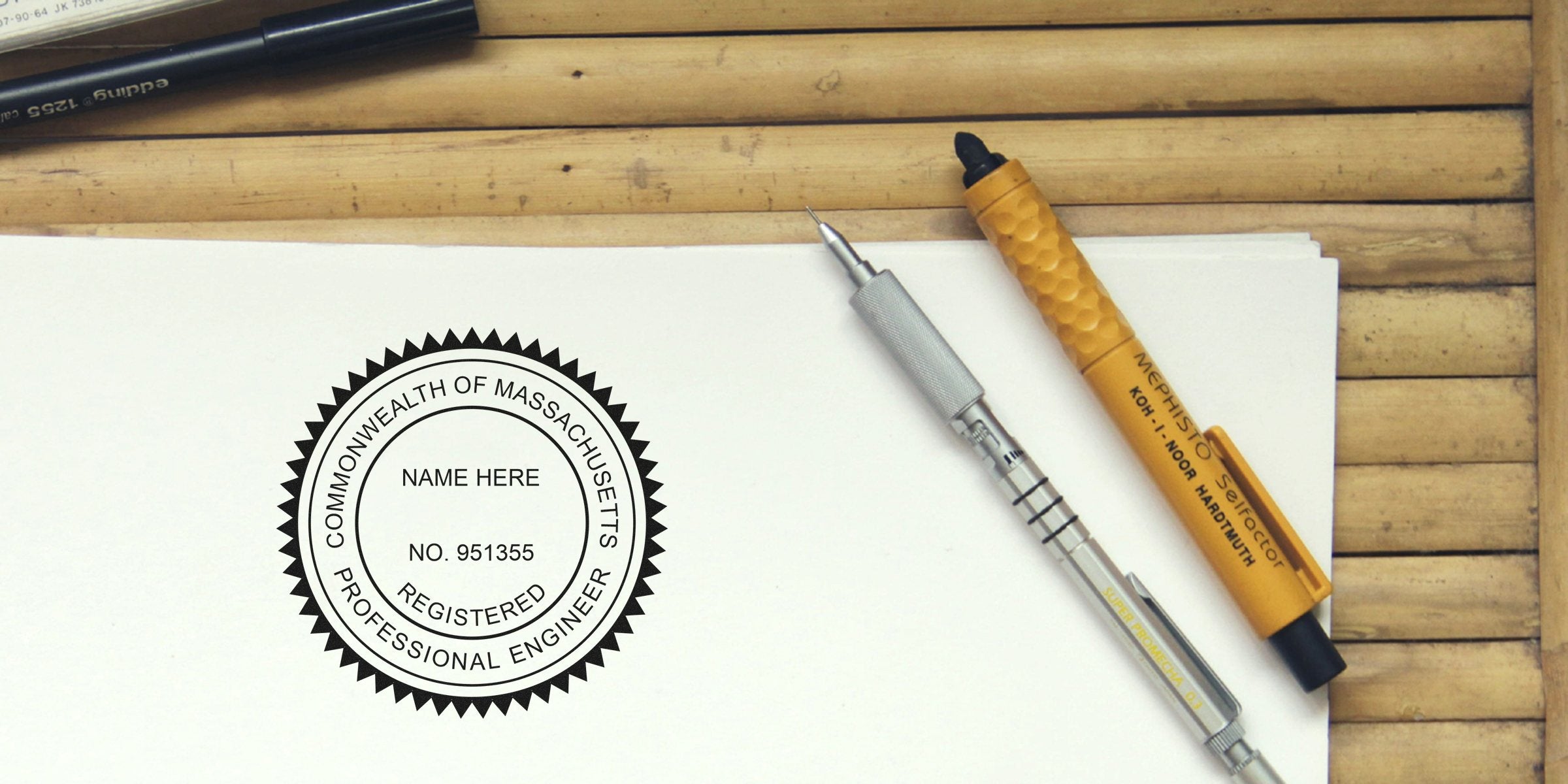
There’s no easy path to becoming a professional engineer in the United States, as the hoops you’ve got to jump through are absolutely enormous. When it comes to earning your Massachusetts engineering embossers and stamp, for example, it’s not just having to put in your time at a four-year college or university that’s accredited with the Accreditation Board for Engineering and Technology (ABET); as you’ve got to spend at least four years working in the field under a licensed PE, take not one but two tests administered by the National Council of Examiners for Engineering and Surveying (NCEES), and then submit a series of professional and personal references to the commonwealth of Massachusetts before you’ll be told whether or not you’re Professional Engineer material – and whether you’ve earned your Massachusetts engineering embossers and stamp.
Ensuring Professionalism and Safety is Paramount
The process sounds exhausting, but that’s done that way on purpose – the role that professional engineers play in modern society is so important that there needs to be these stringent controls. Only the most accomplished individuals end up being able to satisfy all these requirements to earn their Massachusetts engineering embossers and stamp, and that means that only those that are skilled and experienced, as well as morally and ethically sound, end up putting their stamp on the kinds of civil engineering projects that would be disastrous if they failed.
States learned this the hard way in the early 1900s, back before there was any sort of licensure requirements – anyone could practice engineering then without having to show their credentials, and you can imagine what kinds of disasters that led to. It’s important to public safety to ensure that such follies never happen again – or that they can be minimized to the point of nearly never happening in the future. That’s why earning your Massachusetts engineering embossers and stamp is so difficult.What If You're Licensed Elsewhere Already?
If you’re lucky, you’ve already gone through the process to become licensed with another state. If you have, you’ll be glad to know that Massachusetts has comity, or reciprocity, with other states when it comes to professional engineering licensure. All you’ll have to do is to just submit your NCEES records, or their equivalent, to Massachusetts’ licensure board for professional engineers and you should be able to have your license honored in the commonwealth – and get your Massachusetts engineering embossers and stamp - without having to go through another battery of tests.
Got all that? Good. Now you can get those Massachusetts engineering embossers and stamp that you’ve been wanting so badly.
Frequently Asked Questions
What are the requirements to become a Professional Engineer in Massachusetts?
To become a Massachusetts Professional Engineer, you typically need an ABET-accredited engineering degree, at least four years of qualifying engineering experience under a licensed PE, and passing results on the required NCEES exams. You will also need to submit references and a licensure application to the Massachusetts board for review.
Do I need both the FE and PE exams to get a Massachusetts PE license?
Yes, most applicants must pass both the Fundamentals of Engineering (FE) exam and the Principles and Practice of Engineering (PE) exam. The FE is usually taken first, and the PE exam is taken after completing the required engineering experience. These exams are part of the standard path to earning a Massachusetts engineering license.
How much work experience is required for Massachusetts PE licensure?
Massachusetts generally requires at least four years of progressive engineering experience after graduation, usually under the supervision of a licensed Professional Engineer. This experience should demonstrate increasing responsibility and professional judgment. Proper experience verification is a critical part of the PE license application process.
Can I get my PE license in Massachusetts if I’m already licensed in another state?
Yes, Massachusetts offers comity or reciprocity for engineers already licensed elsewhere. If you hold an active PE license in another state, you may be able to apply through license endorsement by submitting your NCEES records or equivalent documentation. This can help you avoid repeating the full exam process.
How long does it take to become a Professional Engineer in Massachusetts?
The timeline usually depends on how quickly you complete your degree, pass the FE exam, gain four years of supervised experience, and pass the PE exam. For most engineers, the process takes several years after college. Delays can happen if documentation, references, or exam scheduling take longer than expected.
What is the Massachusetts engineering seal or stamp used for?
The Massachusetts engineering seal or stamp is used by licensed Professional Engineers to sign and certify engineering documents, drawings, and plans. It shows that the work was prepared or approved by a qualified professional and meets licensure standards. Earning the right to use the PE stamp is one of the final steps after becoming licensed in Massachusetts.








