

Written by Acorn Sales Company, manufacturing stamps and seals since 1964 · Reviewed by Holly R, VP of Sales and Marketing at Acorn Sales, against the Pennsylvania State Registration Board for Professional Engineers, Land Surveyors and Geologists and 49 Pa. Code §§ 37.58, 37.59 on 21 September 2026 · Updated 21 September 2026
Pennsylvania prints the seal rather than describing it, and a land surveyor takes Design B. 49 Pa. Code section 37.58(a) requires every registrant to obtain, at the registrant’s own expense, “a seal in the identical design authorized by the Board,” and then reproduces three designs inside the rule: Design A for Registered Professional Engineer, Design B for Registered Professional Land Surveyor and Design C for Registered Professional Geologist. Because the designs are images rather than descriptions, the only safe way to cut the die is from the figure in the Pennsylvania Code. The word identical leaves no room for a specialty line, a firm name or a decorative element.
The diameter is a point, not a range. Section 37.58(c) states that “The seal shall be 1 3/4 inch in diameter” and that “The diameter of a pocket seal may be reduced to 1 1/2 inch if the design is in the same relative proportions.” A 1 5/8 inch device, the commonest size sold in the United States, is out of specification here.
The seal also lands in two forms on one document. Section 37.59(2) requires the seal on the first page of a final or complete document to be impressed, stamped or digital, and requires facsimile or digital seals on all subsequent pages of plans or plats. That is effectively a two item order: a physical device for page one and a matching image for the rest.
Pennsylvania land surveyor seal requirements at a glance
| Requirement | Pennsylvania rule | Source |
|---|---|---|
| Seal required | Yes | 49 Pa. Code §§ 37.58, 37.59 |
| Required elements | The legend Registered Professional Land Surveyor, Your name as registered, Your registration number and A reference to the Commonwealth of Pennsylvania | 49 Pa. Code § 37.58(b) |
| Size and shape | 1 3/4 inch in diameter, with one exception: a pocket seal may be reduced to 1 1/2 inch. | 49 Pa. Code § 37.58(c) |
| Device allowed | Four devices, with a condition attached. | 49 Pa. Code §§ 37.58(d), 37.59(2) |
| Signature and date | Pennsylvania permits signing across the seal and protects one part of it. | 49 Pa. Code § 37.59(2), (4), (7) |
| What must be sealed | Final or complete documents, in two situations: issued to a client for the client’s records, or submitted to public or governmental agencies for final review. | 49 Pa. Code § 37.59(1), (2), (3), (6) |
| Electronic seal | Section 37.60, added December 16, 2022 and effective December 17, 2022 at 52 Pa.B. 7709, sets parallel requirements for a digital signature and a digital seal. | 49 Pa. Code §§ 37.56a, 37.60 |
| Renewal and lapse | Registration is biennial and the period ends on a fixed date: under section 37.19(a), registration for a biennial period “shall expire on September 30 of every odd numbered year.” The seal duty tracks it exactly. | 49 Pa. Code §§ 37.18, 37.19, 37.59(5) |
| Firm requirements | No firm seal, no certificate of authorization and no firm number on the document. | 49 Pa. Code § 37.71 |
| Regulator | The Pennsylvania State Registration Board for Professional Engineers, Land Surveyors and Geologists | Engineer, Land Surveyor and Geologist Registration Law, Act 367 of 1945, 63 P.S. §§ 151(l) and 154, cited as the authority for the seal sections |




Is a seal required in Pennsylvania?
Pennsylvania requires the seal at the point a document becomes final. 49 Pa. Code section 37.58(a) requires every registrant to obtain, at the registrant’s own expense, “a seal in the identical design authorized by the Board.” Section 37.59(2) supplies the trigger: when a registrant issues final or complete documents to a client for the client’s records, or submits final or complete documents to public or governmental agencies for final review, the seal and signature of the registrant who prepared or directed and controlled the preparation, “along with the date of issuance, shall be prominently displayed on the first page of all documents.” The duty sits in the board rule; the statutory hook is the Engineer, Land Surveyor and Geologist Registration Law at 63 P.S. sections 151(l) and 154, cited as the authority for sections 37.58, 37.59 and 37.60.
What must appear on the seal
- The legend Registered Professional Land Surveyor
- Your name as registered
- Your registration number
- A reference to the Commonwealth of Pennsylvania
Nothing is optional. Section 37.58(a) requires the seal to be “in the identical design authorized by the Board” and then reproduces three designs inside the rule itself: Design A for Registered Professional Engineer, Design B for Registered Professional Land Surveyor and Design C for Registered Professional Geologist. A land surveyor takes Design B. Section 37.58(b) lists the four contents, and the designs are published as images rather than as text, so the arrangement of those four elements on the face must be copied from Design B as printed in the Pennsylvania Code and not reconstructed. The word identical leaves no room for a specialty line, a firm name or a decorative element. The registration number has its own section, 37.57, which provides only that each registrant is assigned a unique registration number on approval.
Size and shape
1 3/4 inch in diameter, with one exception: a pocket seal may be reduced to 1 1/2 inch. Section 37.58(c) states that “The seal shall be 1 3/4 inch in diameter” and that “The diameter of a pocket seal may be reduced to 1 1/2 inch if the design is in the same relative proportions” as the design in subsection (a). This is a single fixed figure and not a range, so a 1 5/8 inch or 2 inch device is out of specification, and the 1 1/2 inch allowance is conditional on the reduced design holding the same proportions.




Embosser, rubber stamp or digital
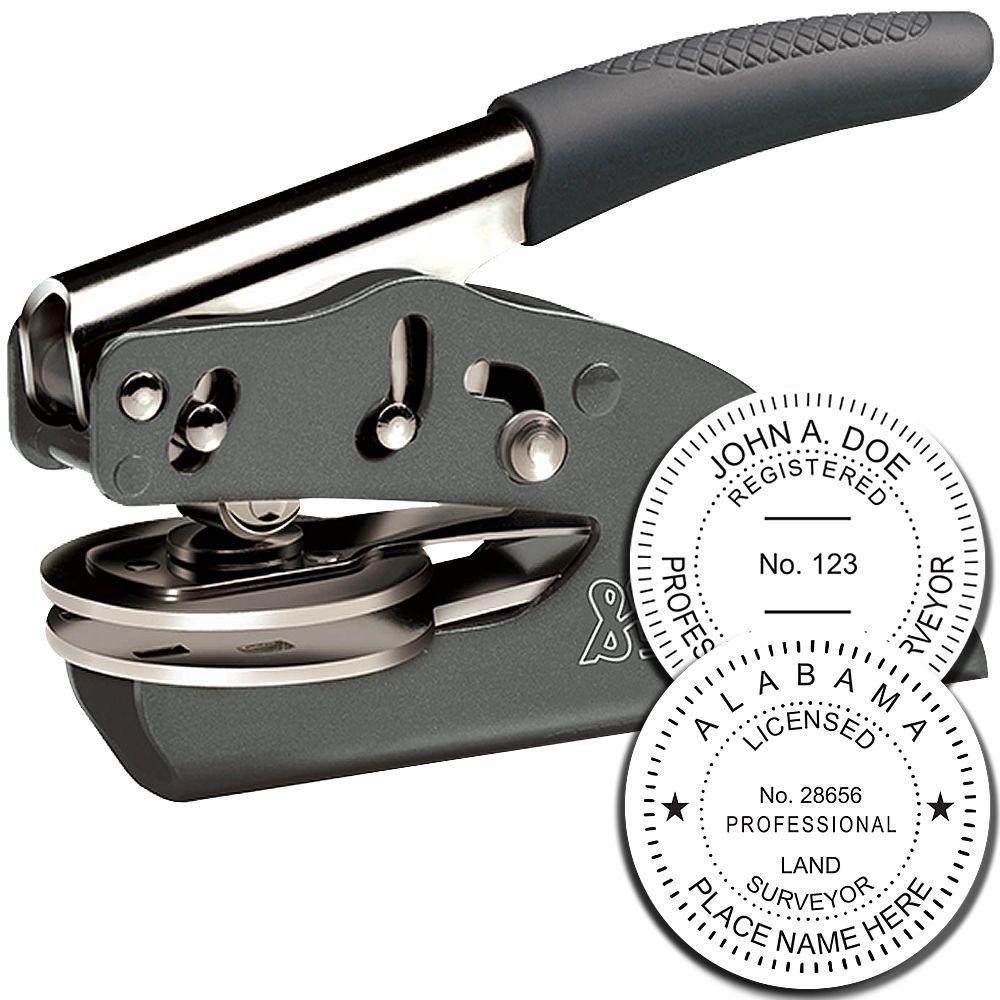
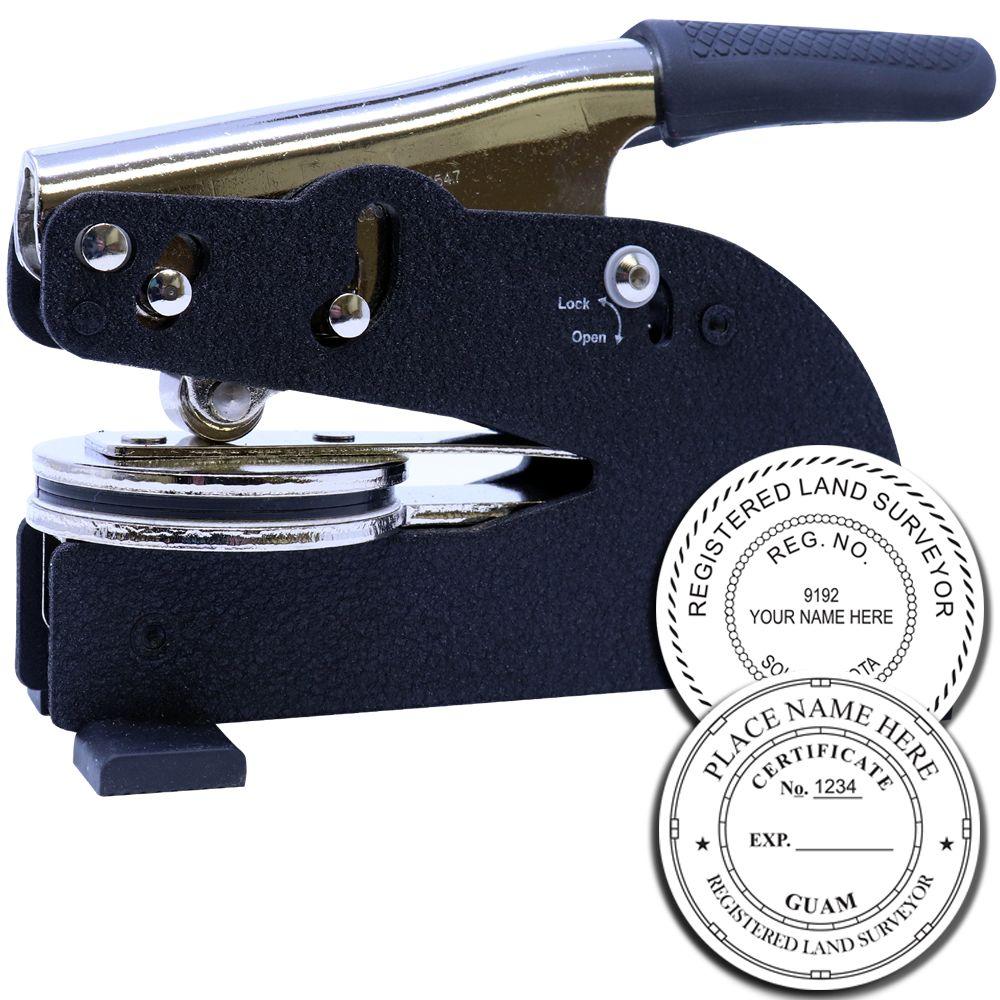
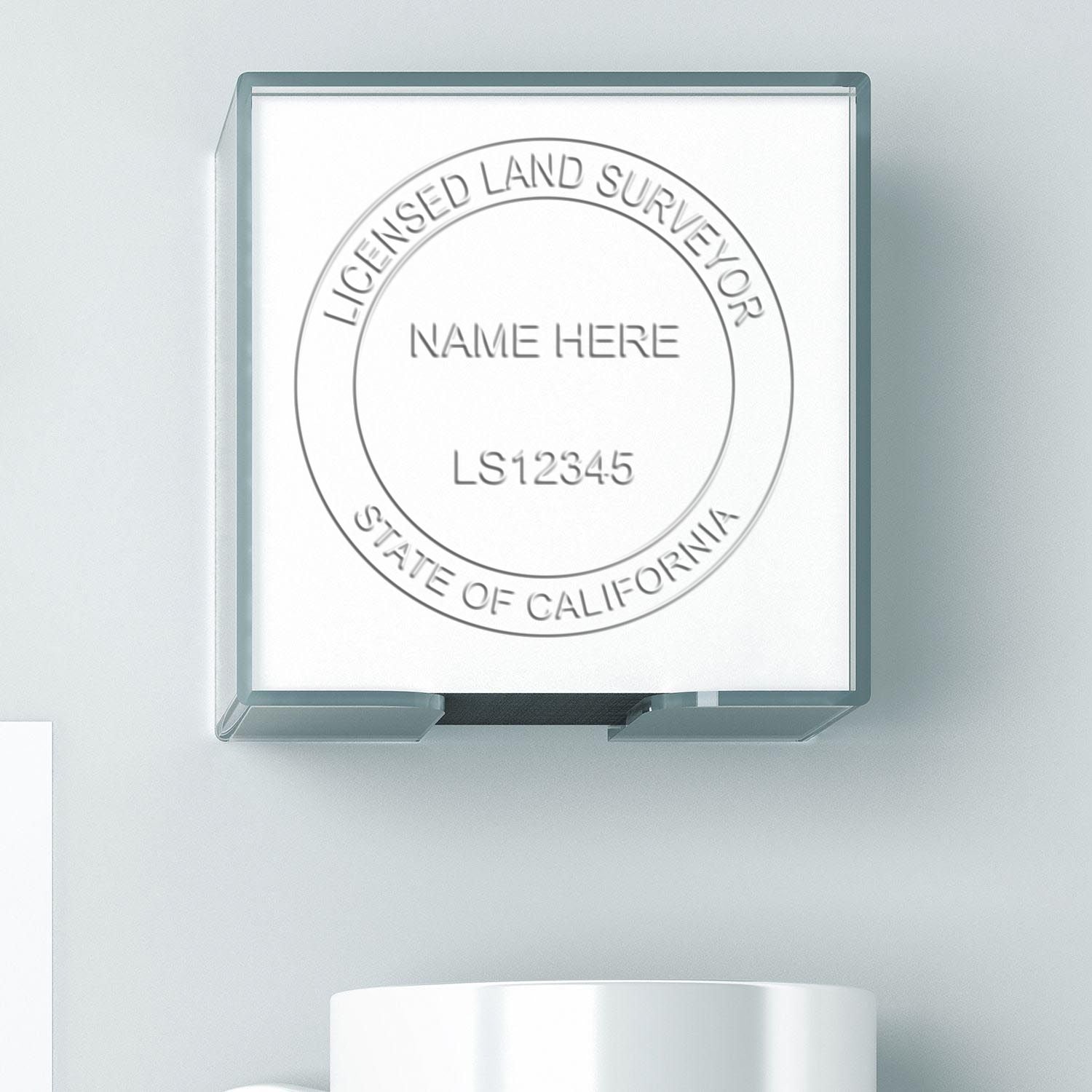
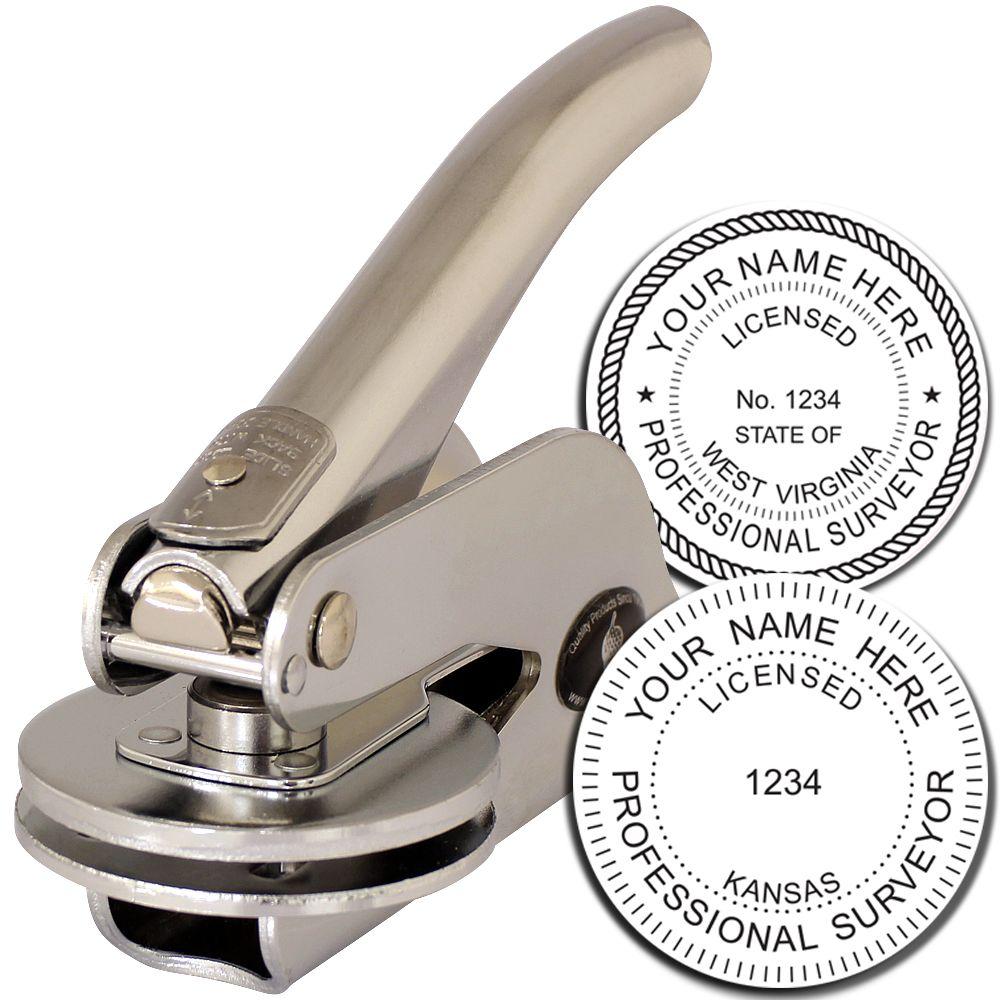
Four devices, with a condition attached. Section 37.58(d) provides that a registrant “may use a metal seal, rubber stamp, computer image which is a facsimile of the seal or digital seal, if the registrant first obtains a seal in accordance with this section.” The conditional clause means the facsimile is derivative of a properly obtained seal rather than a substitute for one. Placement then restricts which device goes where: under section 37.59(2), “The seal on the first page of a final or complete document shall be impressed, stamped or digital,” while “Facsimile or digital seals shall appear on all subsequent pages of plans or plats.” The safe buy is a rubber or self inking stamp at 1 3/4 inch for the first page, with a matching facsimile image for the interior sheets and a 1 1/2 inch pocket seal only if you want one.
Signing and dating
Pennsylvania permits signing across the seal and protects one part of it. Section 37.59(4): “When a registrant’s signature is applied, it shall be applied near or across the seal, but not in a location that obliterates the registration number.” The date required is the date of issuance, displayed prominently on the first page with the seal and signature under section 37.59(2), rather than a date printed on the seal face. Since the 2022 rewrite, section 37.59(7) enumerates the only three permitted combinations: physical placement of a seal with a handwritten signature in permanent ink containing the registrant’s name; digital placement of a seal with a handwritten signature in permanent ink containing the name; or digital placement of a seal with a digital signature containing the name. A printed facsimile of a handwritten signature is not among them.
One chapter, three designs, and the word identical
Section 37.58(a) does not describe the Pennsylvania seal in words and then leave the layout to the engraver. It requires “a seal in the identical design authorized by the Board” and prints three of them: Design A for a Registered Professional Engineer, Design B for a Registered Professional Land Surveyor, Design C for a Registered Professional Geologist. A land surveyor takes Design B. Because the designs are images rather than descriptions, the only safe way to cut the die is from the figure in the Pennsylvania Code.
Which documents must be sealed
Final or complete documents, in two situations: issued to a client for the client’s records, or submitted to public or governmental agencies for final review. On those, the seal, signature and date of issuance go on the first page, and facsimile or digital seals go on all subsequent pages of plans or plats, under section 37.59(2). Where several registrants contributed, each seals and signs the first page, or the first page of the identifiable portion or section each prepared or directed and controlled, if the respective responsibilities can be reasonably segregated, under section 37.59(3). A registrant may use the seal and signature “only when the work being sealed and signed was prepared by the registrant or under the registrant’s complete direction and control” under section 37.59(1). Out of state holders of a Pennsylvania temporary permit do not buy a Pennsylvania seal: section 37.59(6) directs them to use the seal of their home state and to affix their signature and a copy of the temporary permit to the work. Preliminary and draft documents are not addressed by a marking rule; the rule instead keys the duty to documents that are final or complete.




Electronic and digital seals
Section 37.60, added December 16, 2022 and effective December 17, 2022 at 52 Pa.B. 7709, sets parallel requirements for a digital signature and a digital seal. Each must be unique to the registrant, capable of verification, under the sole control of the registrant, and “linked to a document in such a manner that the digital signature is invalidated if any data in the document is changed,” with the same formula repeated for the seal. Both must be attached to or logically associated with the electronic document through an electronic authentication process. Under section 37.60(c), a hard copy printed from the transmitted electronic file bears the facsimile of the digital signature and seal and confirms that the file was not altered after the initial digital signing, and alterations void the signature and seal. Definitions are at section 37.56a, which defines sole control as “A situation in which only the registrant decides when and where the signature and seal are applied.” No named vendor technology and no federal standard is incorporated.
Renewal, lapse and retirement
Registration is biennial and the period ends on a fixed date: under section 37.19(a), registration for a biennial period “shall expire on September 30 of every odd numbered year.” The seal duty tracks it exactly. Section 37.59(5) provides that a registrant “may not affix or permit a seal and signature to be applied to a document after the expiration of the registrant’s licensure status,” or to aid another person in evading the act. Reactivation under section 37.18 requires the current registration fee, a reactivation application verifying the period of non-practice, and completion of all delinquent continuing education up to 24 PDH. The registration number does not change. Nothing in chapter 37 requires the device to be surrendered or destroyed, which is a real divergence from the Pennsylvania architect rule at section 9.145, which has a surrender procedure. A change of mailing address must be reported in writing within ten days under section 37.19(b).
Firm requirements
No firm seal, no certificate of authorization and no firm number on the document. Pennsylvania controls the firm at the naming stage instead. Section 37.71 requires an application for a certificate of approval of a fictitious name or corporate name, on board forms, “prior to submission of articles of incorporation or fictitious name registrations to the Corporation Bureau of the Department of State,” identifying the parties with an ownership interest and the licensed and unlicensed professional staff. The board approves the name if at least one of the persons filing, one of the incorporators of a proposed corporation, or one of the directors of an existing corporation is properly registered as a professional engineer or professional land surveyor in Pennsylvania, and on approval the board issues the certificate to the Corporation Bureau. That certificate never appears on a sealed drawing.
What to check before you order
Order the Board’s Design B, copied from the figure printed at 49 Pa. Code section 37.58(a), at exactly 1 3/4 inch in diameter. The face carries the legend Registered Professional Land Surveyor, your name as registered, your registration number and a reference to the Commonwealth of Pennsylvania, arranged as the published design shows. A pocket seal may be reduced to 1 1/2 inch only if the design keeps the same relative proportions. Pair the physical stamp with a matching facsimile image, because the first page of a final document takes an impressed, stamped or digital seal while every later page of plans or plats takes a facsimile or digital seal. Do not add a specialty line or a firm name, and do not order a facsimile of your handwritten signature, which is not among the three combinations section 37.59(7) permits.
Browse land surveyor stamps and seals.
Frequently asked questions
Is a seal required for land surveyors in Pennsylvania?
Yes, at the point a document becomes final. Section 37.58(a) requires every registrant to obtain a seal in the identical design authorized by the Board, and section 37.59(2) supplies the trigger: when a registrant issues final or complete documents to a client for the client’s records, or submits them to public or governmental agencies for final review, the seal and signature of the registrant who prepared or directed and controlled the preparation, “along with the date of issuance, shall be prominently displayed on the first page of all documents.” The statutory hook is the Engineer, Land Surveyor and Geologist Registration Law at 63 P.S. sections 151(l) and 154.
What has to appear on a Pennsylvania land surveyor seal?
Four contents under section 37.58(b): the legend Registered Professional Land Surveyor, your name as registered, your registration number and a reference to the Commonwealth of Pennsylvania. Their arrangement on the face must be copied from Design B as printed in the Pennsylvania Code rather than reconstructed. Your registration number has its own section, 37.57, which provides only that each registrant is assigned a unique number on approval.
What size is a Pennsylvania land surveyor seal?
1 3/4 inch in diameter, with one exception: a pocket seal may be reduced to 1 1/2 inch if the design is in the same relative proportions as the published design. This is a single fixed figure and not a range.
What devices may I use in Pennsylvania?
Four, with a condition. Section 37.58(d) provides that a registrant “may use a metal seal, rubber stamp, computer image which is a facsimile of the seal or digital seal, if the registrant first obtains a seal in accordance with this section.” The conditional clause means the facsimile is derivative of a properly obtained seal rather than a substitute for one. Placement then restricts which device goes where under section 37.59(2).
Where does the signature go on a Pennsylvania seal?
Near or across it, but clear of the number. Section 37.59(4): “When a registrant’s signature is applied, it shall be applied near or across the seal, but not in a location that obliterates the registration number.” The date required is the date of issuance, displayed prominently on the first page with the seal and signature, rather than a date printed on the seal face.
What seal and signature combinations does Pennsylvania allow?
Exactly three, since the 2022 rewrite. Section 37.59(7): physical placement of a seal with a handwritten signature in permanent ink containing the registrant’s name; digital placement of a seal with a handwritten signature in permanent ink containing the name; or digital placement of a seal with a digital signature containing the name. A printed facsimile of a handwritten signature is not among them.
Which Pennsylvania documents need the seal?
Final or complete documents in two situations: issued to a client for the client’s records, or submitted to public or governmental agencies for final review. The seal, signature and date of issuance go on the first page, and facsimile or digital seals go on all subsequent pages of plans or plats. Where several registrants contributed, each seals and signs the first page, or the first page of the identifiable portion each prepared or directed and controlled, if the responsibilities can be reasonably segregated, under section 37.59(3). A registrant may seal only work “prepared by the registrant or under the registrant’s complete direction and control” under section 37.59(1).
Do I need a Pennsylvania seal on a temporary permit?
No. Section 37.59(6) directs out of state holders of a Pennsylvania temporary permit to use the seal of their home state and to affix their signature and a copy of the temporary permit to the work.
What does Pennsylvania require for digital sealing?
Section 37.60, added December 16, 2022 and effective December 17, 2022 at 52 Pa.B. 7709, sets parallel requirements for a digital signature and a digital seal. Each must be unique to the registrant, capable of verification, under the sole control of the registrant, and “linked to a document in such a manner that the digital signature is invalidated if any data in the document is changed,” with the same formula repeated for the seal, and both attached to or logically associated with the electronic document through an electronic authentication process. Under section 37.60(c), a hard copy printed from the transmitted file bears the facsimile of the digital signature and seal and confirms the file was not altered after the initial digital signing. Section 37.56a defines sole control as “A situation in which only the registrant decides when and where the signature and seal are applied.” No named vendor technology and no federal standard is incorporated.
What happens when my Pennsylvania registration expires?
Sealing stops. Registration is biennial and, under section 37.19(a), “shall expire on September 30 of every odd numbered year.” Section 37.59(5) provides that a registrant “may not affix or permit a seal and signature to be applied to a document after the expiration of the registrant’s licensure status,” or to aid another person in evading the act. Reactivation under section 37.18 requires the current registration fee, a reactivation application verifying the period of non-practice, and completion of all delinquent continuing education up to 24 PDH. The registration number does not change, and nothing in chapter 37 requires the device to be surrendered or destroyed, which is a real divergence from the Pennsylvania architect rule at section 9.145. A change of mailing address must be reported in writing within ten days under section 37.19(b).
Does a Pennsylvania surveying firm need a seal?
No, and there is no certificate of authorization number on the document either. Pennsylvania controls the firm at the naming stage instead. Section 37.71 requires an application for a certificate of approval of a fictitious name or corporate name, on board forms, “prior to submission of articles of incorporation or fictitious name registrations to the Corporation Bureau of the Department of State,” identifying the parties with an ownership interest and the licensed and unlicensed professional staff. The board approves the name if at least one of the persons filing, one of the incorporators, or one of the directors of an existing corporation is properly registered as a professional engineer or professional land surveyor in Pennsylvania. That certificate never appears on a sealed drawing.








