
Discover Delaware Geologist Requirements
If you’re aiming to practice geology in Delaware, you already know that meeting state requirements is essential. This includes everything from maintaining up-to-date credentials to using an approved seal on official documents. The state expects you to display your qualifications clearly, so your work can be trusted as accurate and professional.
Those credentials also help preserve public confidence. After all, clients want to see that you’ve met the strict criteria to call yourself a licensed geologist. A Delaware geologist seal embosser plays a pivotal role in that process because it’s the official mark that verifies your information and your authority. With just a quick impression on a document, you show you’ve taken the time, passed the examinations, and followed the regulations.
If you’re unsure about the specific design standards or the steps required to earn your official seal, don’t worry. Delaware’s guidelines may feel complex, but once you break them down, they’re actually pretty straightforward. By understanding these rules from the start, you’ll set yourself up for success, protect your professional status, and even safeguard your client relationships.
Understand The Value Of A Seal Embosser
A professional seal isn’t just another stamp in your desk drawer. It’s proof you’ve demonstrated the skills and knowledge required by the Delaware Board of Geologists. Every time you place your embossed impression on a report, map, or proposal, you reinforce your expertise. Think of it as a handshake and a signature rolled into one.
But why an embosser? While digital seals or rubber stamps can work, an embosser gives a physical, tactile element of authenticity. Clients can actually feel the raised imprint on a page, and there’s a certain gravitas that comes along with it. This physical impression makes it more challenging for unauthorized parties to replicate or tamper with your documents. In other words, it provides security and helps you maintain a solid reputation.
Even if you’re someone who’s used stamps for years, switching to an embosser can feel like an upgrade. You’ll notice how crisp and professional the detail appears. Plus, it’s pretty simple to use, especially once you understand the standard layout that Delaware requires for your name, license number, and any relevant wording. Over time, this small device becomes an essential part of your professional toolkit, offering reassurance to you, your colleagues, and your clients.
Meet The Official Delaware Standards
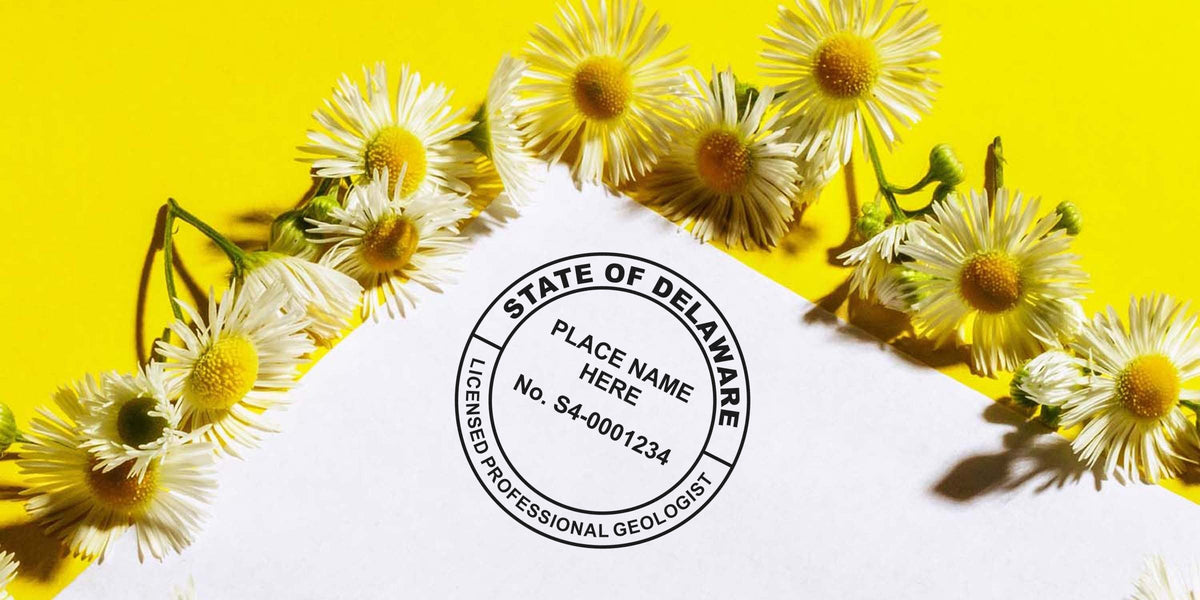
Delaware has specific regulations regarding geologist seals, which often include design elements such as your name circling the top, the words “Professional Geologist,” and your license number near the bottom. The exact details vary, so you’ll want to confirm what’s required. One good starting point is to check out delaware geologist stamp requirements for an in-depth look at the basics.
In Delaware, your seal should be clear, legible, and placed on most official documents you produce, like geologic reports or studies. Failing to use the correct seal format might stall your paperwork or trigger a review by the licensing board. When in doubt, be sure the seal you’re using is the proper size and shape specified by the state. While these details can feel a little granular, they ensure that your seal is recognized instantly and considered valid.
Keep in mind that your seal is more than just a stamp of approval. It’s an emblem of your expertise. When you follow Delaware’s guidelines, you avoid any risk of misinterpretation or rejection of your documents. By adopting the correct seal layout, you demonstrate respect for the profession and the regulatory framework that keeps the industry trustworthy and consistent.
Choose The Best Embosser For You
When you’re gearing up to purchase a geologist seal embosser, it’s worth thinking about the style and features that best fit your day-to-day work. Some embossers are handheld and compact, which makes them perfect if you travel to field sites or client offices. Others are desk-style models with a sturdy base, ideal if most of your stamping is done from a fixed workstation.
Comfort is another big factor. If you’ll be embossing multiple pages regularly, you might want an embosser that requires less force. You’ll find options with ergonomic grips, giving you a smoother action that keeps hand fatigue to a minimum. Meanwhile, if you only occasionally mark documents, a simpler, smaller unit can be just fine.
Quality always matters, of course. Look for an embosser made from durable materials like steel because it’ll last for years, even if it sees daily use. And don’t forget about the design clarity. Sometimes the difference between a crisp seal and a blurry one comes down to how meticulously the text and lines are engraved. Taking that extra time to compare models will help you find something that’s comfortable, long-lasting, and, most importantly, compliant with Delaware’s rules.
Comparison Table: Handheld vs. Desk Embosser
| Feature | Handheld Embosser | Desk-Style Embosser |
|---|---|---|
| Portability | Easy to carry in a bag or case | Stays put on your workspace |
| Force Needed | Slightly more effort to press | Generally requires less hand force |
| Price Range | Moderately priced to premium | Typically higher, but durable |
| Best Use Case | Field visits, on-the-go stamping | Consistent office use, bulk stamping |
Work With Acorn Sales
Looking for a trusted supplier to get your new embosser? Consider Acorn Sales. We’ve been in business since 1964, providing professional seals and stamps to geologists, engineers, and other licensed pros nationwide. Our experience spans decades, so you can count on a level of expertise that ensures you receive a compliant and top-quality seal.
Acorn Sales also offers a free digital seal with your order, which can be a game-changer in today’s hybrid world. That means you’ll have both a tangible seal embosser in your briefcase and a digital version ready to place on electronic documents. You’ll feel prepared for every scenario, from submitting online proposals to stamping archived paper records.
Customers often appreciate our straightforward ordering process. You can typically upload your license details, review a proof of the design, and then receive your seal quickly. Because we’ve specialized in compliance requirements for decades, we’ve seen all kinds of unique requests. Our team rechecks each design to make sure it meets state regulations, so you can place orders confidently.
Learn How To Apply Your Seal
Ready to make your first impression in a literal sense? Using your Delaware geologist seal embosser is surprisingly simple. Start by aligning the document between the plates of the embosser, making sure your desired spot is well-centered. Next, apply even pressure by squeezing the handle or pressing the lever. For the crispest results, hold the pressure for a moment before releasing.
- Select Your Document: Identify where on the page you’d like to place your seal. Typically, you’ll want it in a clear area near your signature.
- Position The Embosser: Slide the page into the embosser slot. Double-check the top and bottom edges of your seal’s design so it’s not upside down.
- Apply Firm Pressure: Squeeze (or press) firmly, holding steady for a second or two to make sure the raised design is well-formed.
- Inspect Your Impression: Look closely to confirm that your license number and text are sharp and accurate.
It can be helpful to practice on scrap paper until you’re fully comfortable with the motion. You might also label any test prints for reference, so you can track how much pressure yields the cleanest impression. Over time, using your embosser becomes second nature, and it’s a pretty satisfying final step in your documentation routine.
Remember, a seal embosser isn’t just a fancy gadget. It’s a visible marker of your professionalism, and it helps you stand out in a field where trust and expertise matter a lot. So, take a little extra time to choose the perfect embosser, learn to apply it correctly, and keep your credentials updated.
At the end of the day, ensuring the validity of your documents can be as simple as placing a notably crisp impression from your Delaware geologist seal embosser. You’ll stand behind every submission with confidence, strengthen your reputation, and build fruitful client relationships. After all, when you have all the right tools and practices in place, you can focus on what you do best—delivering top-notch geological insights that benefit everyone involved.
Frequently Asked Questions
Do I Need A Specific Size For The Delaware Geologist Seal Embosser?
Yes. The Delaware Board of Geologists typically specifies a certain diameter for seals, often around 1.75 to 2 inches. Always confirm with the current rules to make sure your embosser matches these dimensions.
Can I Use My Delaware Seal In Other States?
Usually, seals are state-specific. If you’re licensed in multiple states, you may need a separate seal for each jurisdiction. Each state board has its own guidelines for design and usage.
How Often Should I Replace My Embosser Plate?
As long as the impression remains clear and accurate, you can keep using your existing plate. However, if you notice signs of wear or the text becomes unreadable, it’s time for a replacement.
What If My Name Changes Or I Get A New License Number?
You’ll want a new embosser that reflects any change in your legal name or updated license details. In such cases, be sure to order a fresh plate to stay compliant.








