

Written by Acorn Sales Company, manufacturing stamps and seals since 1964 · Reviewed by Holly R, VP of Sales and Marketing at Acorn Sales, against the New York State Board for Engineering, Land Surveying and Geology and N.Y. Educ. Law § 7209(1) on 21 September 2026 · Updated 21 September 2026
A New York professional engineer needs two inked devices, not one. The round seal is the familiar part. The second is the alteration warning stamp: Education Law § 7209(2) requires that to any sealed plans, specifications, plats and reports “there shall also be applied a stamp with appropriate wording warning that it is a violation of this article for any person, unless he or she is acting under the direction of a licensed professional engineer or land surveyor, to alter an item in any way.” Buyers routinely order the round seal and find out at filing that the warning block is missing.
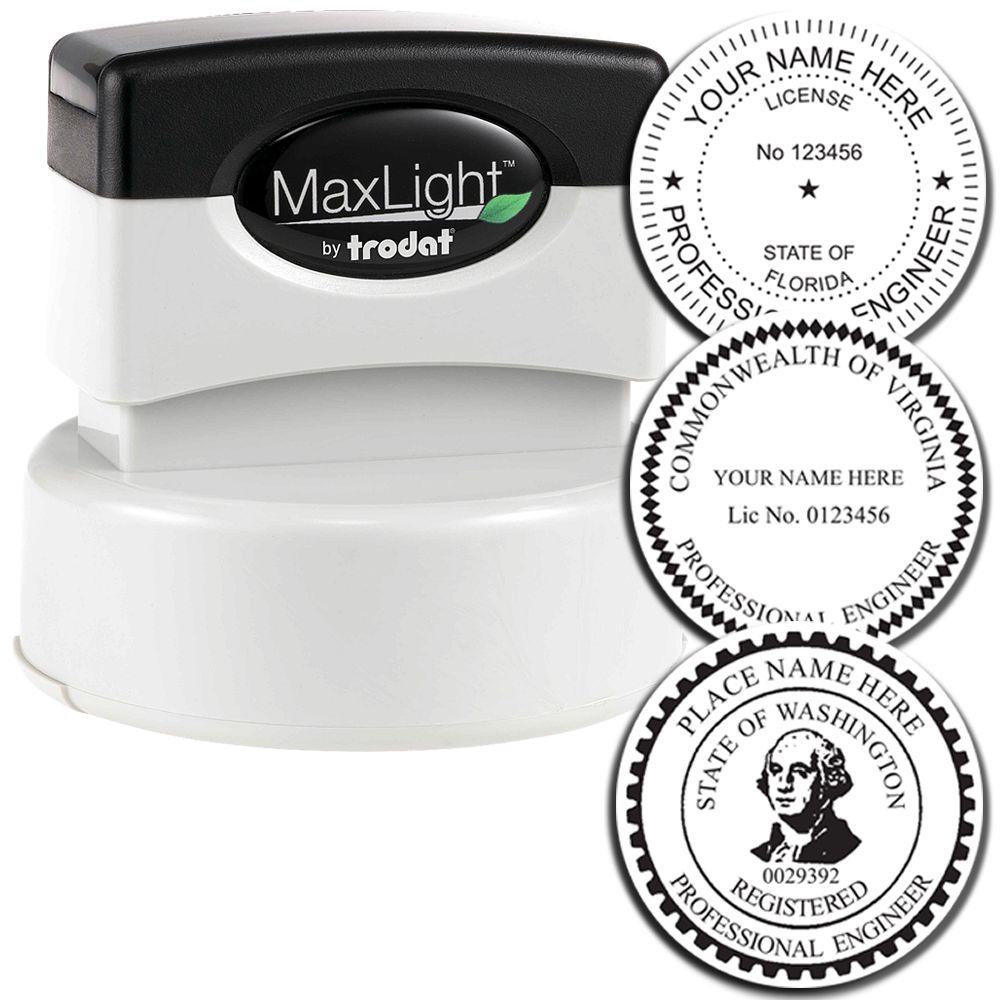
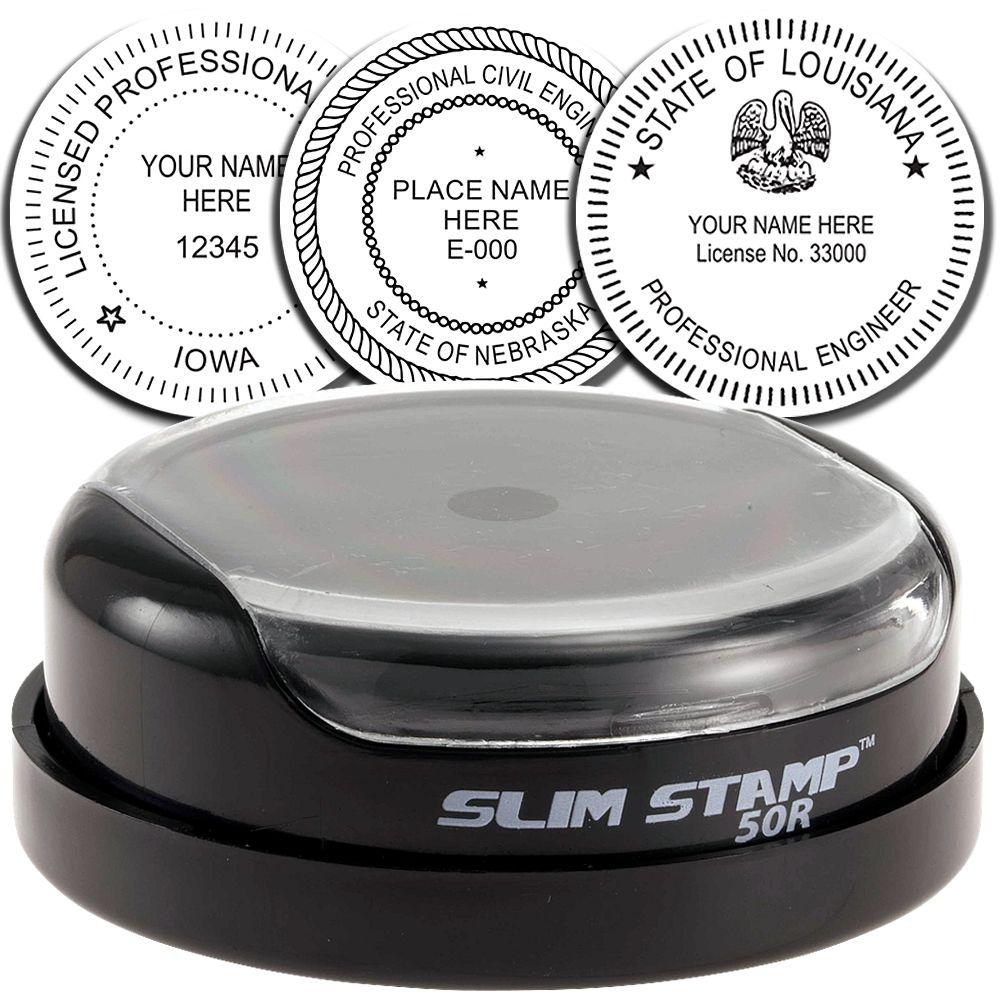
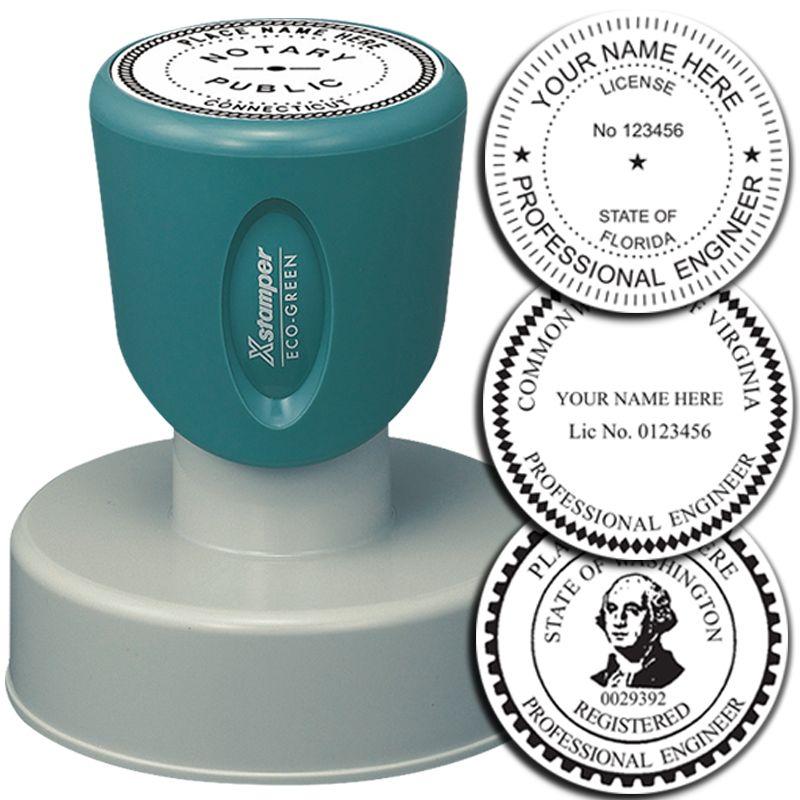
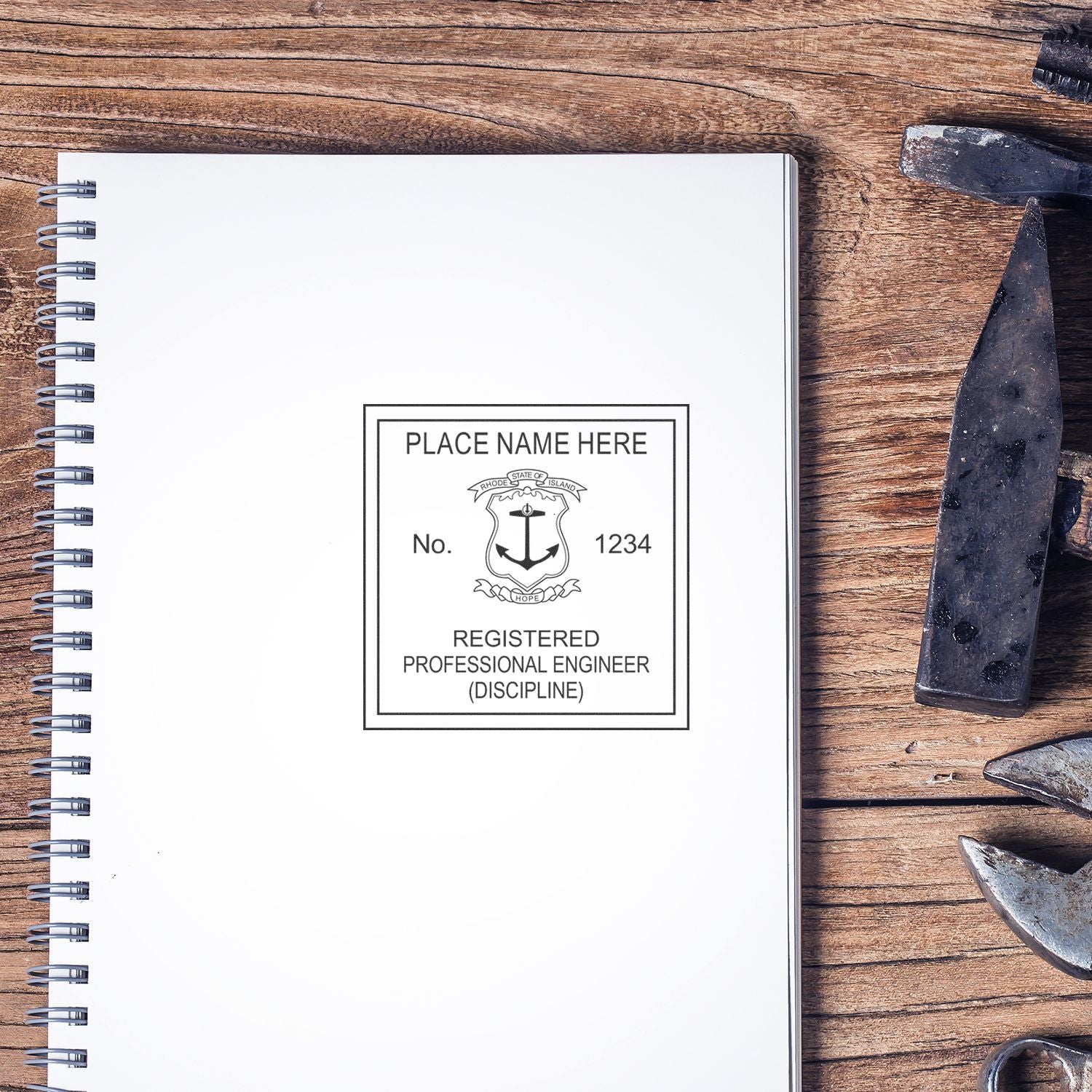
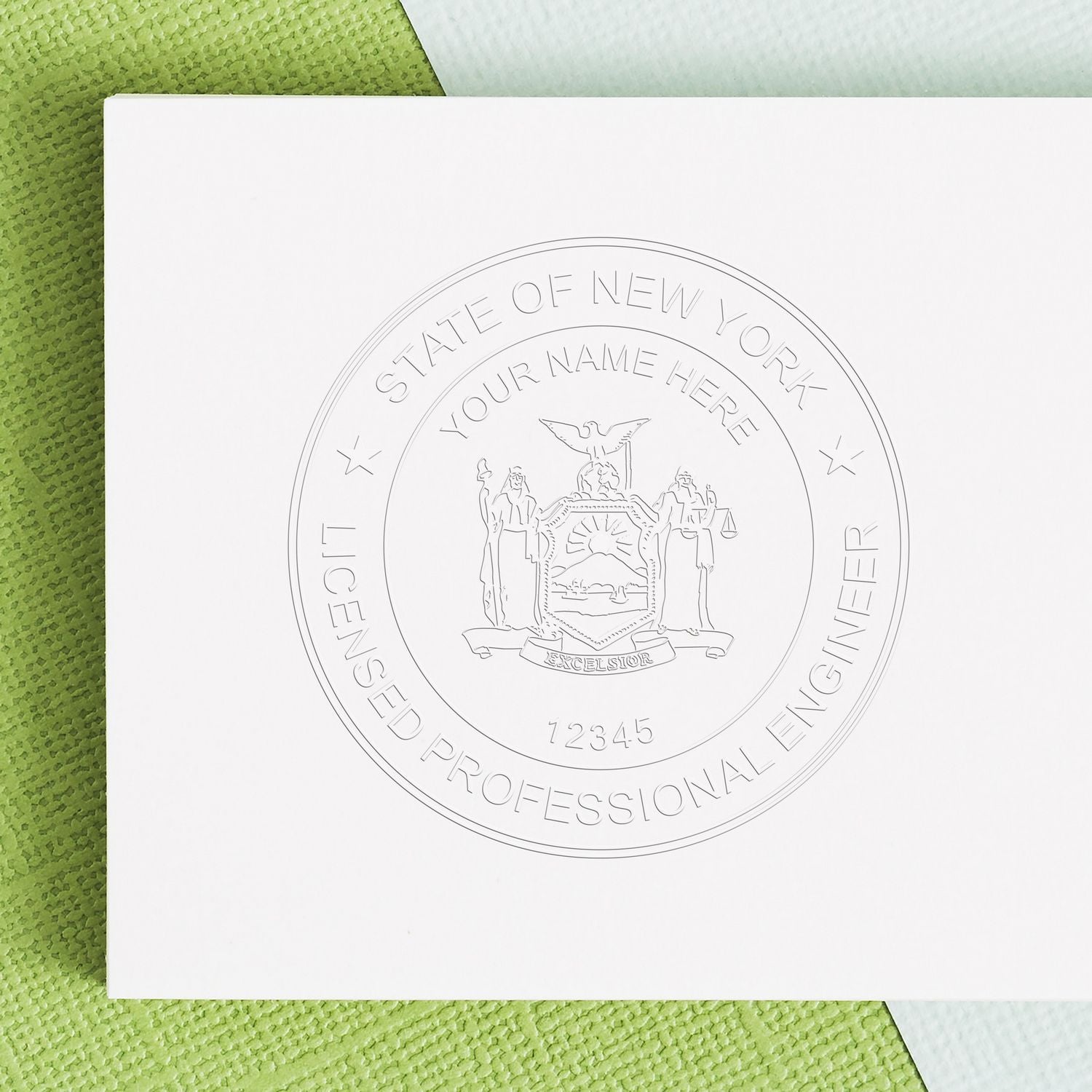
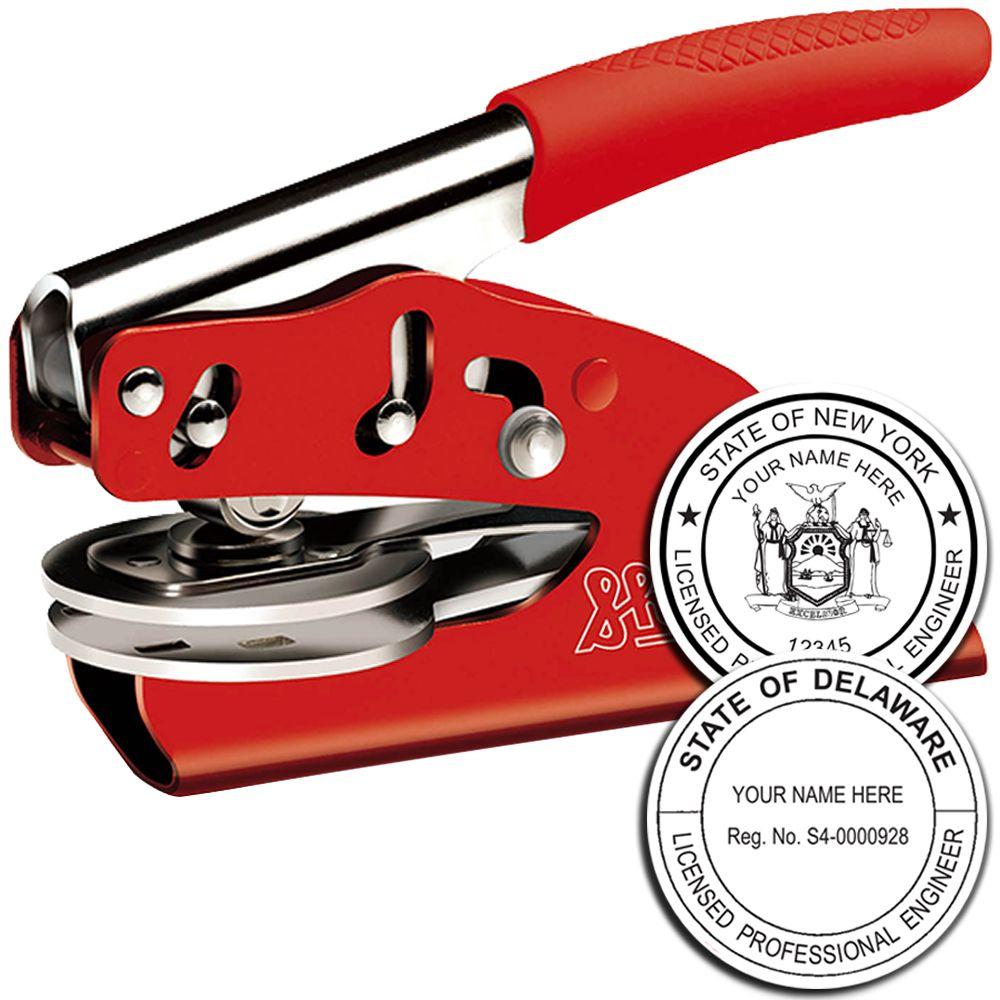
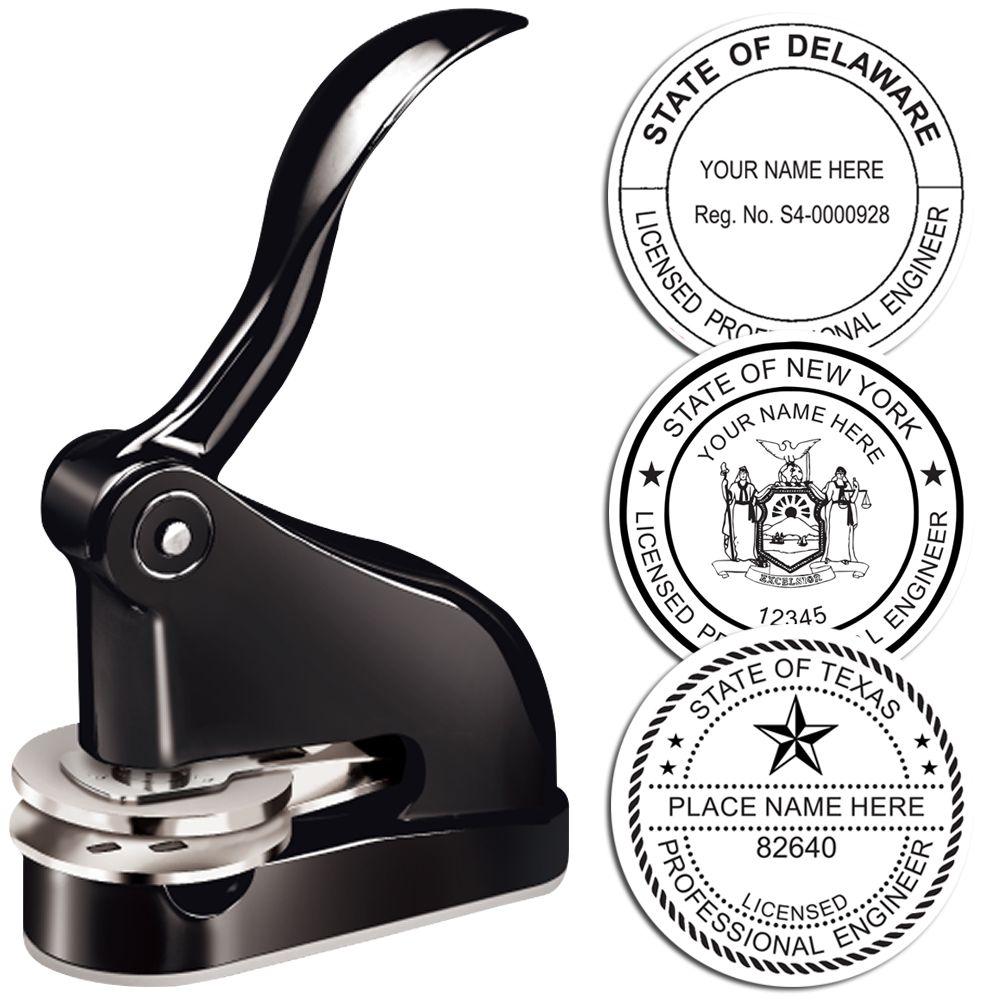
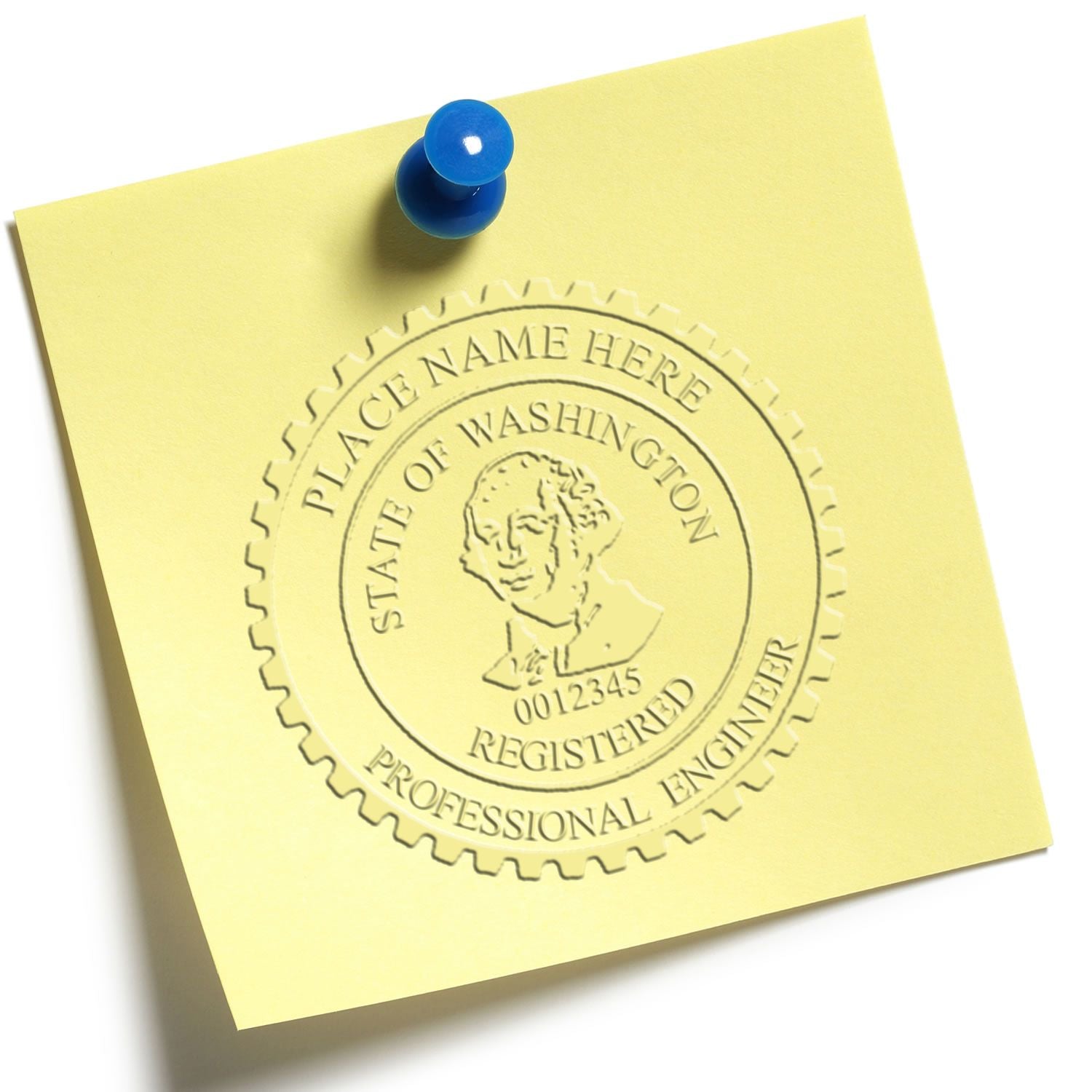
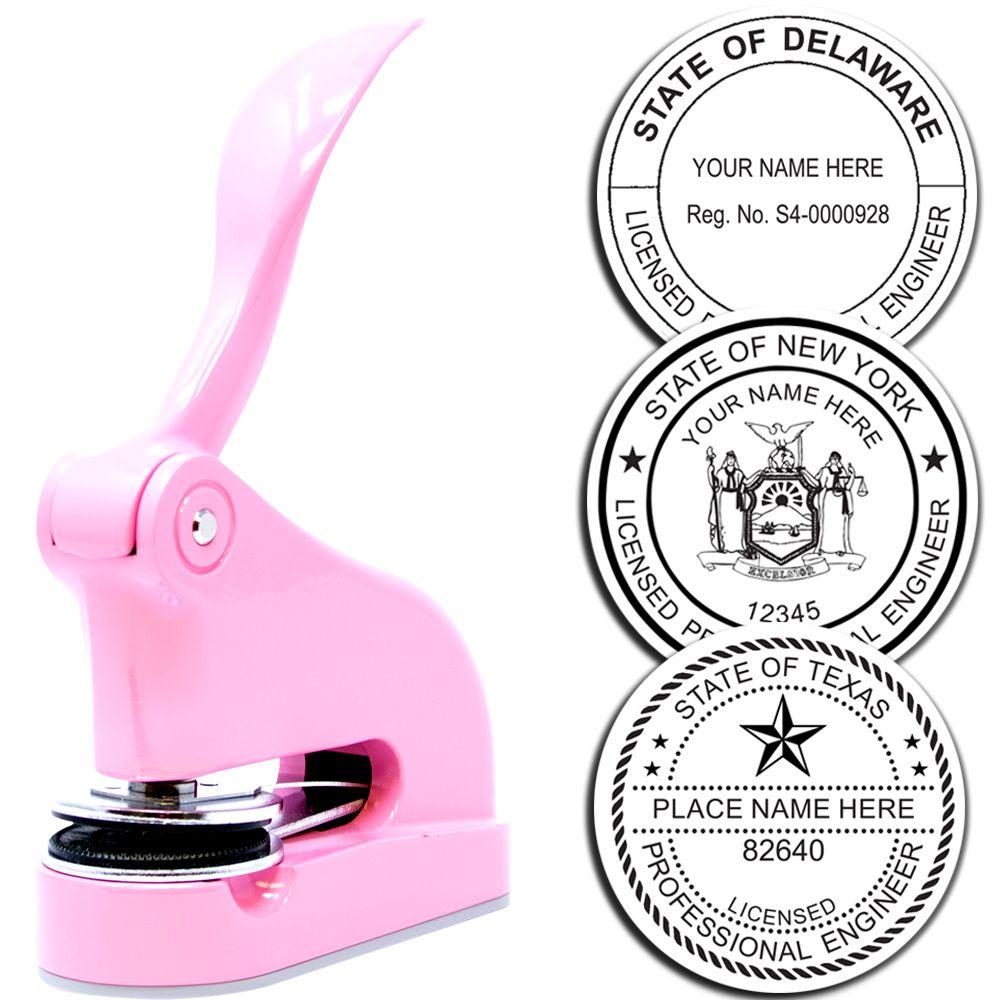
The seal itself is circular and approximately 1 3/4 inches in diameter under 8 NYCRR § 68.13, with the Great Seal of New York in the inner circle, your name as licensed above it and your license number below it “with no other letters or numbers.” That closing phrase rules out a PE prefix, a discipline, a registration expiration date, a firm name and a certificate of authorization number. The outer band reads STATE OF NEW YORK at the top and, at the bottom, one of four fixed legends: LICENSED PROFESSIONAL ENGINEER, LICENSED LAND SURVEYOR, LICENSED PROFESSIONAL ENGINEER AND LAND SURVEYOR, or LICENSED PROFESSIONAL GEOLOGIST. Generic round engineer templates almost always omit the Great Seal, which is the one element New York will not do without. A licensee holding both the engineering and the land surveying license uses the single combined legend rather than two devices.
One more point worth knowing before you build a workflow around it: the engineer’s statutory sealing duty is narrower than the folk rule. Education Law § 7209(1) attaches it to plans, specifications, plats and reports relating to the construction or alteration of buildings or structures, plus geologic drawings and reports, and ties the signing duty to filing with public officials. Land surveyors get the broad version covering all plans, specifications, plats and reports.
New York PE seal requirements at a glance
| Requirement | New York rule | Source |
|---|---|---|
| Seal required | Yes | N.Y. Educ. Law § 7209(1) |
| Required elements | State of New York legend at the top of the outer band; Your professional legend at the bottom of the outer band; Your name as licensed, above the Great Seal of New York; The Great Seal of New York in the inner circle; Your license number below the Great Seal | 8 NYCRR § 68.13 |
| Size and shape | Circular, approximately 1 3/4 inches in diameter. | 8 NYCRR § 68.13 |
| Device allowed | The Office of the Professions practice guideline states the device may be an embossing seal, a rubber stamp or an electronic version, all being acceptable. | NYSED Office of the Professions, Practice Guideline 3: Professional Seals and Signatures |
| Signature and date | The seal alone is not enough. | N.Y. Educ. Law § 7209(1), (2) |
| What must be sealed | Plans, specifications, plats and reports as described above, when filed with public officials. | N.Y. Educ. Law § 7209(1), (2) |
| Electronic seal | New York names no cryptographic standard. | NYSED Practice Guideline 3, section III |
| Renewal and lapse | The New York license itself does not expire; registration does, on a three year cycle running from the date the license is issued. | N.Y. Educ. Law § 7209 |
| Firm number on documents | A firm practicing engineering, land surveying or professional geology in New York needs a certificate of authorization from the Department under Education Law § 7210, issued for three years. | N.Y. Educ. Law § 7210 |
| Licensing board | The New York State Board for Engineering, Land Surveying and Geology | N.Y. Education Law art. 145 (§§ 7200 to 7211, principally §§ 7205, 7209, 7210); 8 NYCRR Part 68 (§ 68.13, Seals); NYSED Office of the Professions Practice Guideline 3, Professional Seals |
Rules for other states are on PE stamp requirements by state.



Is a seal required in New York?
New York requires a seal New York requires a seal by statute, not merely by board rule. Education Law § 7209(1) provides that “Every professional engineer, land surveyor and professional geologist shall have a seal, approved by the board”, and then fixes when it must be used: plans, specifications, plats and reports “shall be stamped with such seal and shall also be signed, on the original with the personal signature” of the licensee “when filed with public officials.” The scope of that duty is not the same for the three professions the Board covers. For a professional engineer it reaches plans, specifications, plats and reports “relating to the construction or alteration of buildings or structures” plus geologic drawings and reports. For a land surveyor it reaches all plans, specifications, plats and reports. For a professional geologist it reaches all geologic drawings and reports. Work by a full-time or part-time subordinate under the licensee's supervision is covered on the same terms.
What must appear on the seal
- State of New York legend at the top of the outer band
- Your professional legend at the bottom of the outer band
- Your name as licensed, above the Great Seal of New York
- The Great Seal of New York in the inner circle
- Your license number below the Great Seal
Nothing is optional inside the inner circle. Section 68.13 puts the license number below the Great Seal “with no other letters or numbers”, so a PE prefix, a discipline, a registration expiration date, a firm name or a certificate of authorization number all break the design. The bottom legend is drawn from a closed list of four: LICENSED PROFESSIONAL ENGINEER, LICENSED LAND SURVEYOR, LICENSED PROFESSIONAL ENGINEER AND LAND SURVEYOR, or LICENSED PROFESSIONAL GEOLOGIST. A licensee holding both engineering and land surveying licenses uses the single combined legend rather than two devices. Template stamps sold as generic round engineer seals almost always omit the Great Seal of New York, which is the one element New York will not do without.
Size and shape
Circular, approximately 1 3/4 inches in diameter. Section 68.13 says “approximately”, so the tolerance is real, but the diameter has to leave the Great Seal legible at the center. The rule binds applicants who first applied for licensure on or after July 1, 1984; a seal issued under the earlier design is not retrofitted by this rule.

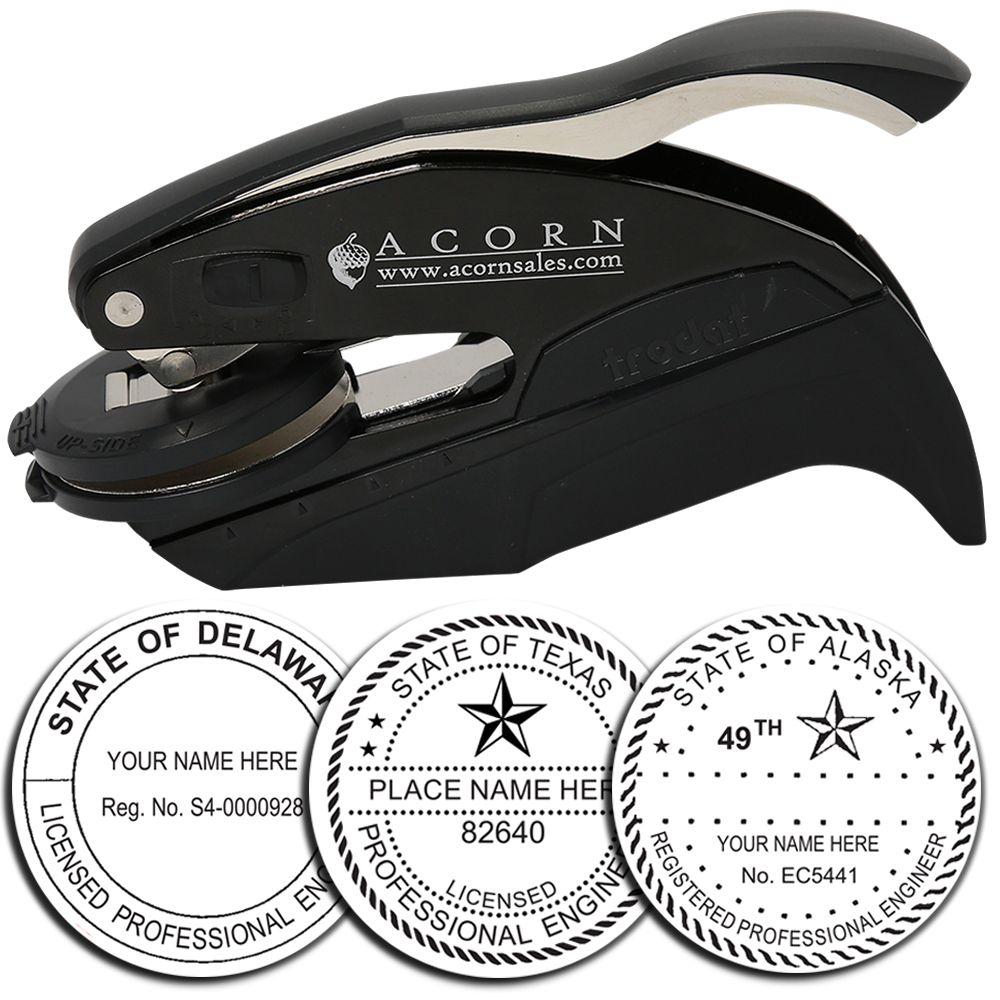
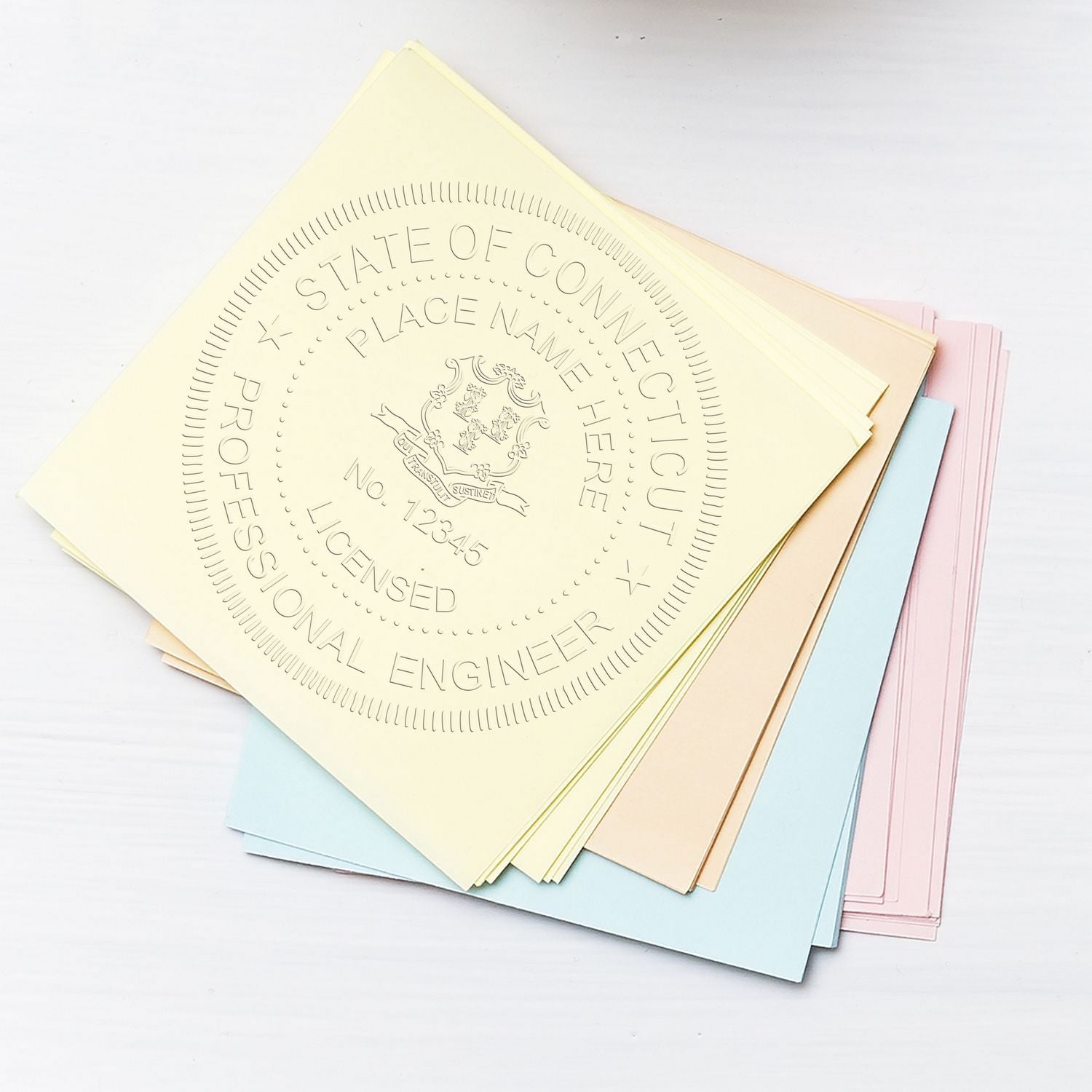
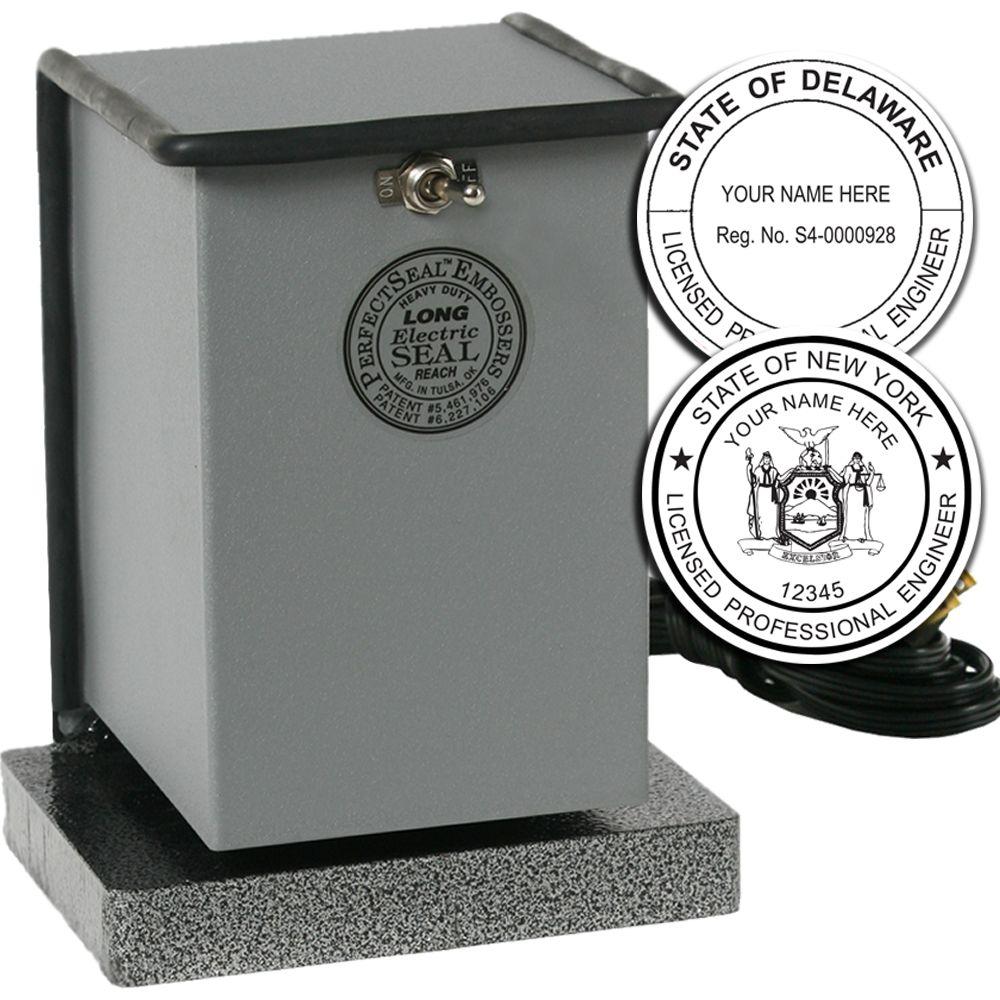
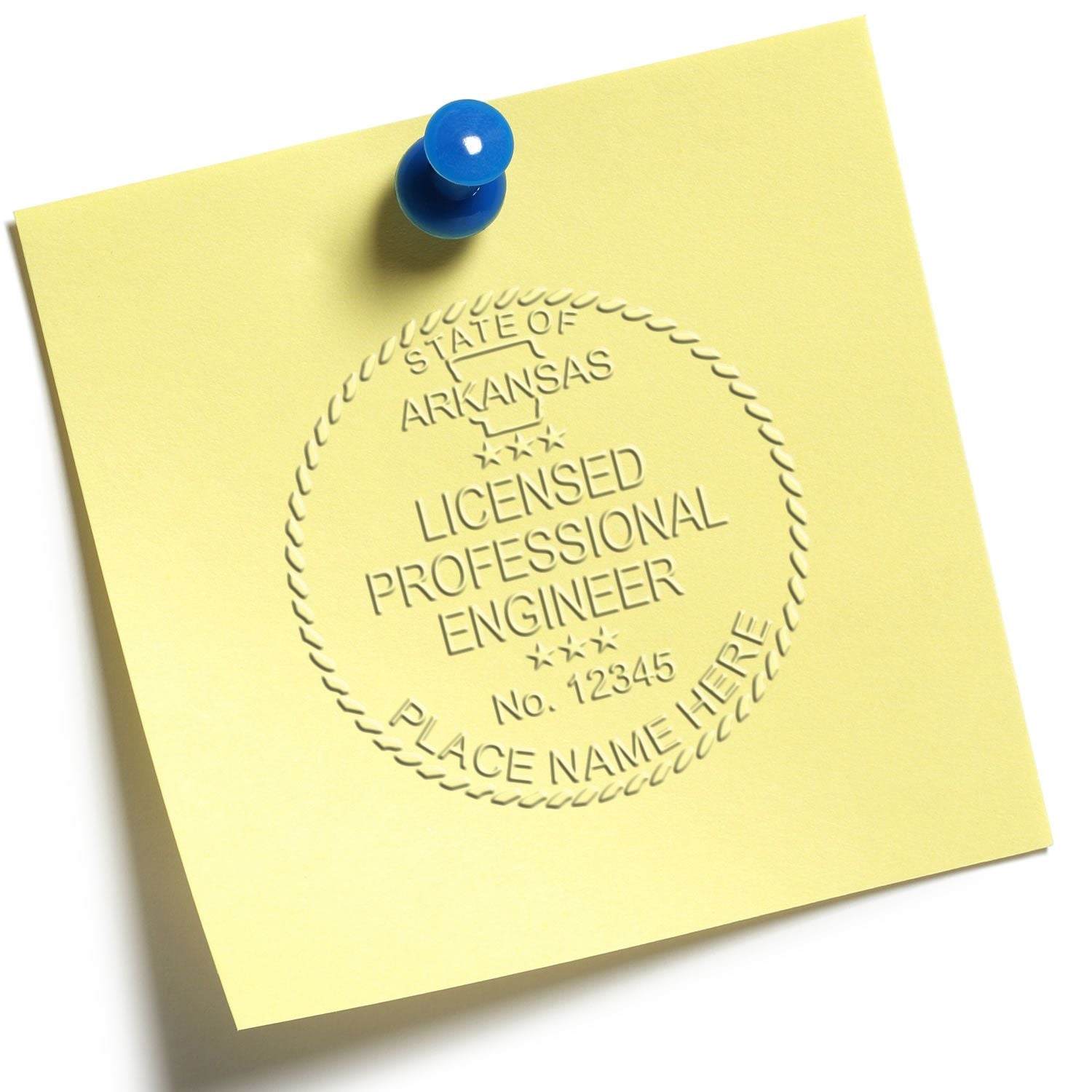
Embosser, rubber stamp or digital
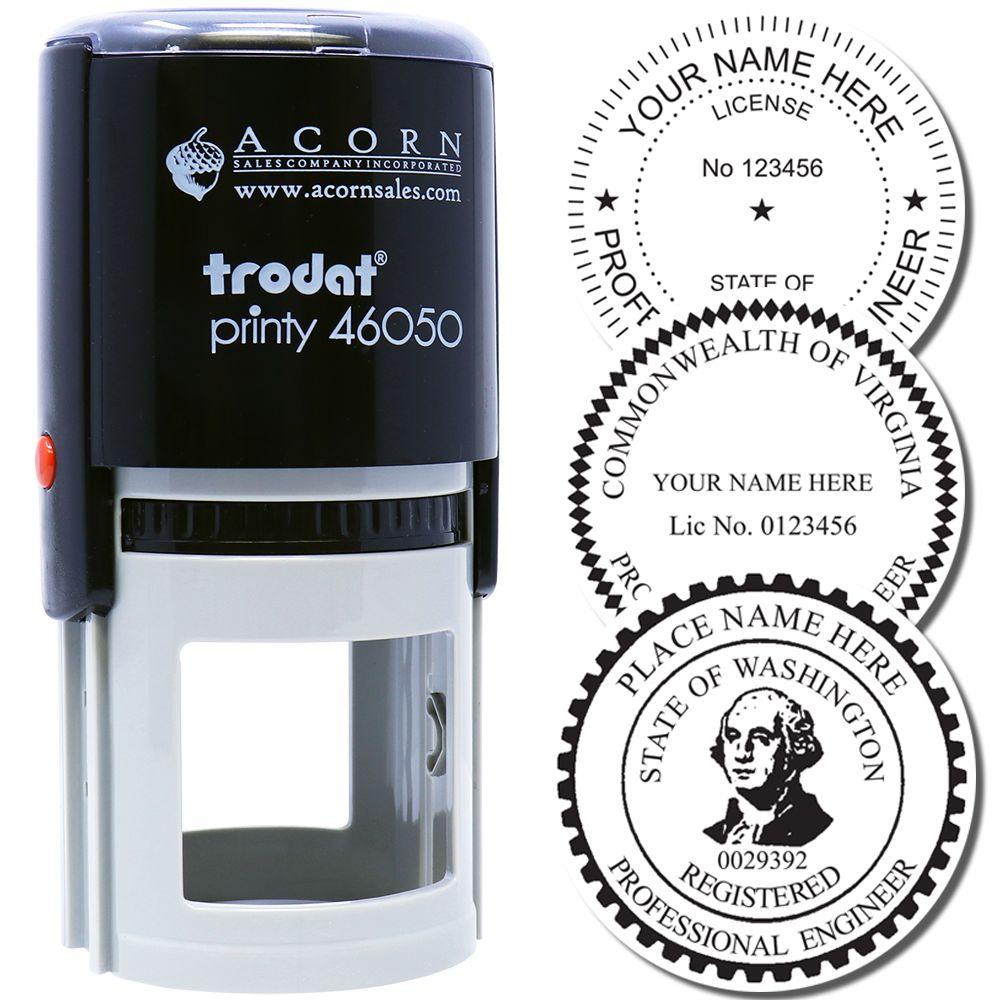
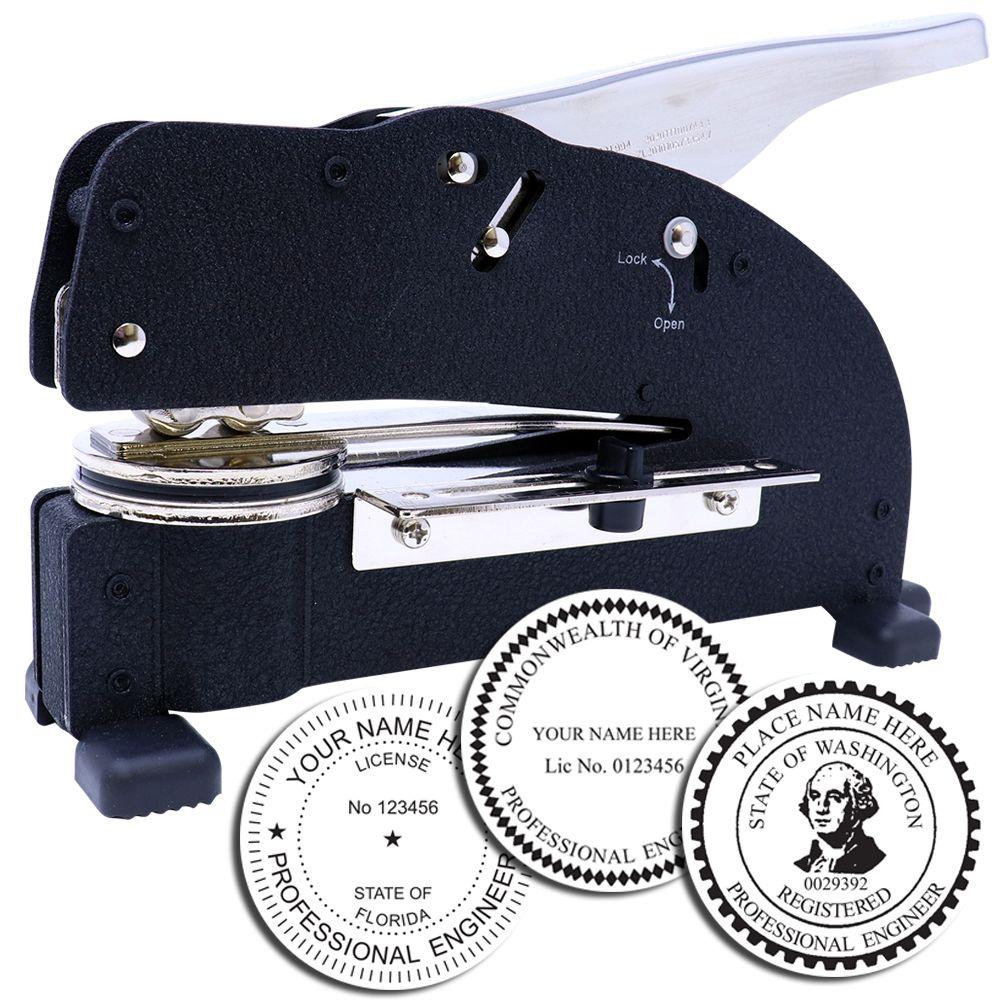
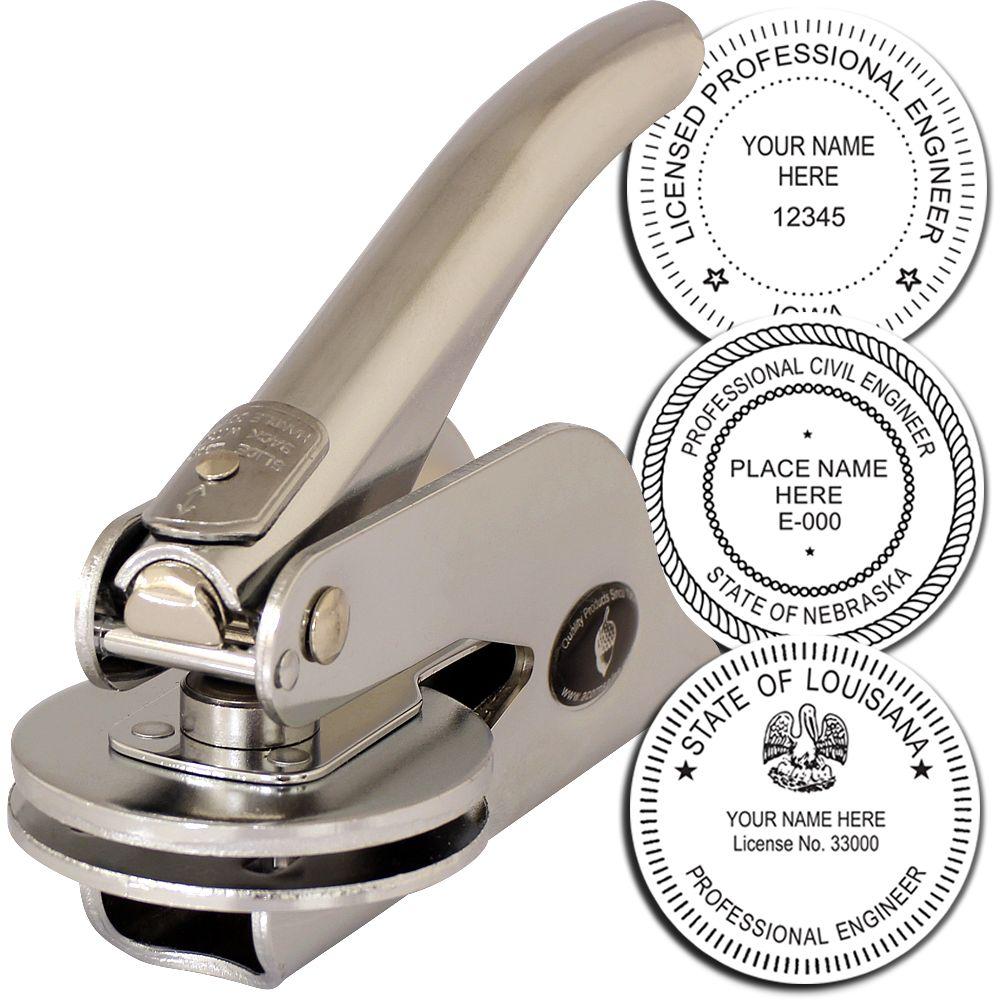
The Office of the Professions practice guideline states the device may be an embossing seal, a rubber stamp or an electronic version, all being acceptable. The safe buy is a rubber stamp, because Education Law § 7209(1) still wants a personal signature on the original filed with public officials and an inked impression reproduces on the copies that get filed. An embosser alone photocopies badly. NYSED does not manufacture, sell or pre-approve seals; its seals notice tells licensees to take the specification to their own engraver.
Signing and dating
The seal alone is not enough. Education Law § 7209(1) requires the document to be stamped with the seal and also signed “on the original with the personal signature” of the licensee when filed with public officials. That is an original signature on the original document, not a printed facsimile. Guideline 3 adds that the signature must not obscure the name and license number on the seal, which rules out signing straight across the face of the impression. Neither Education Law § 7209 nor 8 NYCRR § 68.13 prescribes a date beside the seal; the only dating duty in the statute attaches to alterations, where the altering professional must add the date of the alteration. A date block is normal practice in New York but is not a rule requirement.
The Great Seal of New York is the part nobody gets right
Most states let a seal be a ring of text around a number. New York does not. Rule 68.13 puts the Great Seal of New York in the middle of the device, the licensee's name above it and the license number below it, and then closes the door: the number sits there “with no other letters or numbers.” A stamp ordered from a generic round template, with a star or a state outline in the middle and a PE prefix on the number, is not a New York seal.
Which documents must be sealed
Plans, specifications, plats and reports as described above, when filed with public officials. Two further duties ride with the seal. First, Education Law § 7209(2) requires that to any sealed plans, specifications, plats and reports “there shall also be applied a stamp with appropriate wording warning that it is a violation of this article for any person, unless he or she is acting under the direction of a licensed professional engineer or land surveyor, to alter an item in any way.” That is a second inked device most buyers do not know they need. Second, an altering professional must apply his or her own seal plus the notation “altered by” followed by signature, the date of the alteration and a specific description of it. Subdivision 2 carries a parallel paragraph for geologic material naming the professional geologist. Guideline 3 says preliminary documents should be clearly noted as preliminary, allows sealing of record drawings with a qualifying statement where the engineer did not observe construction, and permits sealing work prepared by others only with a thorough written evaluation retained for six years.

Electronic and digital seals
New York names no cryptographic standard. Guideline 3 grounds electronic seals and signatures in the New York State Electronic Signatures and Records Act, under which an electronic signature has the same validity and effect as a signature affixed by hand. The guideline is explicit that no particular protocol is mandated and that use by state and local entities is voluntary, so a municipality is not obliged to accept an electronically sealed filing. The practical consequence is that New York cannot be satisfied by buying a product: the licensee and the receiving authority have to agree in advance on a compatible method.
Renewal, lapse and retirement
The New York license itself does not expire; registration does, on a three year cycle running from the date the license is issued. Because 8 NYCRR § 68.13 puts only the license number on the seal, and no expiration date, the device does not change at renewal and a licensee never needs a fresh stamp for registration reasons. The license number does not change. Whether a seal must be destroyed or surrendered on lapse, retirement or revocation is not addressed: neither Education Law § 7209 nor 8 NYCRR Part 68 says anything about surrendering the device, and the Office of the Professions seals notice and Guideline 3 are silent on it as well.
Firm registration
A firm practicing engineering, land surveying or professional geology in New York needs a certificate of authorization from the Department under Education Law § 7210, issued for three years. The firm gets no seal of its own. The statute does not require the certificate number to appear on sealed documents; Guideline 3 lists the certificate of authorization number as a title block best practice, not a rule. So a New York stamp carries no firm data, and a firm block is set in the title block by the drafter.
What to check before you order
Your seal carries the Great Seal of New York, your name exactly as licensed above it, and your license number below it with nothing else. The outer band reads STATE OF NEW YORK at the top and one of the four fixed legends at the bottom, on a circular device of approximately 1 3/4 inches. Leave off any PE prefix, discipline, registration expiration or certificate of authorization number. Order the Education Law § 7209(2) alteration warning stamp as a companion device, because it is a statutory requirement and is not part of the round seal. NYSED asks you for no proof of licensure and directs you to your own engraver.
Browse professional engineer stamps and seals.
Frequently asked questions
Do I need a PE seal in New York?
Yes, by statute. Education Law § 7209(1) provides that “Every professional engineer, land surveyor and professional geologist shall have a seal, approved by the board”, and that plans, specifications, plats and reports “shall be stamped with such seal and shall also be signed, on the original with the personal signature” of the licensee “when filed with public officials.” For a professional engineer the duty reaches documents relating to the construction or alteration of buildings or structures plus geologic drawings and reports. Work by a full-time or part-time subordinate under the licensee’s supervision is covered on the same terms.
What size is a New York PE seal?
Circular, approximately 1 3/4 inches in diameter, under 8 NYCRR § 68.13. The rule says approximately, so the tolerance is real, but the diameter has to leave the Great Seal of New York legible at the center. The rule binds applicants who first applied for licensure on or after 1 July 1984; a seal issued under the earlier design is not retrofitted by it.
What has to appear on a New York seal?
Five things, per § 68.13: the State of New York legend at the top of the outer band, your professional legend at the bottom of that band, your name as licensed above the Great Seal, the Great Seal of New York in the inner circle, and your license number below the Great Seal. The number sits there “with no other letters or numbers,” so a PE prefix, a discipline, a registration expiration date, a firm name or a certificate of authorization number all break the design.
What is the alteration warning stamp, and do I really need it?
It is a second device and it is statutory. Education Law § 7209(2) requires that sealed plans, specifications, plats and reports also carry a stamp with wording warning that it is a violation of the article for any person to alter an item in any way unless acting under the direction of a licensed professional engineer or land surveyor. Subdivision 2 carries a parallel paragraph for geologic material naming the professional geologist. The warning is not part of the round seal.
Embosser, rubber stamp or electronic seal in New York?
All three are acceptable. The Office of the Professions practice guideline states the device may be an embossing seal, a rubber stamp or an electronic version. A rubber stamp is the practical choice, because Education Law § 7209(1) still wants a personal signature on the original filed with public officials and an inked impression reproduces on the copies that get filed, while an embosser alone photocopies badly. NYSED does not manufacture, sell or pre-approve seals; its seals notice tells licensees to take the specification to their own engraver.
Where does the signature go, and does New York require a date?
The signature must be an original personal signature on the original document filed with public officials, not a printed facsimile, under Education Law § 7209(1). Practice Guideline 3 adds that it must not obscure the name and license number on the seal, which rules out signing straight across the face of the impression. Neither Education Law § 7209 nor 8 NYCRR § 68.13 prescribes a date beside the seal; the only dating duty in the statute attaches to alterations, where the altering professional adds the date of the alteration. A date block is normal practice in New York but is not a rule requirement.
I hold both a PE and a land surveyor license. Do I need two New York seals?
No. The bottom legend is drawn from a closed list of four, one of which is LICENSED PROFESSIONAL ENGINEER AND LAND SURVEYOR. A licensee holding both licenses uses that single combined legend rather than ordering two devices.
Which New York documents have to be sealed?
Plans, specifications, plats and reports as described above, when filed with public officials. An altering professional must apply his or her own seal plus the notation “altered by” followed by signature, the date of the alteration and a specific description of it. Practice Guideline 3 says preliminary documents should be clearly noted as preliminary, allows sealing of record drawings with a qualifying statement where the engineer did not observe construction, and permits sealing work prepared by others only with a thorough written evaluation retained for six years.
Does my New York seal change when my registration renews?
No. The license itself does not expire; registration does, on a three year cycle running from the date the license is issued. Because § 68.13 puts only the license number on the seal and no expiration date, the device does not change at renewal and a licensee never needs a fresh stamp for registration reasons. The license number does not change either.
Do I have to surrender my seal if my New York registration lapses?
Not addressed. Neither Education Law § 7209 nor 8 NYCRR Part 68 says anything about surrendering or destroying the device on lapse, retirement or revocation, and the Office of the Professions seals notice and Practice Guideline 3 are silent on it as well.
Does a New York engineering firm need a certificate of authorization?
Yes. A firm practicing engineering, land surveying or professional geology in New York needs a certificate of authorization from the Department under Education Law § 7210, issued for three years. The firm gets no seal of its own. The statute does not require the certificate number to appear on sealed documents; Practice Guideline 3 lists it as a title block best practice, not a rule. So a New York stamp carries no firm data, and the firm block is set in the title block by the drafter.
Does New York accept digitally sealed drawings?
It permits them without mandating a method, which is the catch. Practice Guideline 3 grounds electronic seals and signatures in the New York State Electronic Signatures and Records Act, under which an electronic signature has the same validity and effect as a signature affixed by hand. The guideline is explicit that no particular protocol is mandated and that use by state and local entities is voluntary, so a municipality is not obliged to accept an electronically sealed filing. New York cannot be satisfied by buying a product: the licensee and the receiving authority have to agree in advance on a compatible method.