
Written by Acorn Sales Company, manufacturing stamps and seals since 1964 · Reviewed by Holly R, VP of Sales and Marketing at Acorn Sales, against South Carolina State Board of Registration for Foresters on 22 September 2026 · Updated 22 September 2026
South Carolina does not require a registered forester to own a seal, but it does say exactly what one has to be if you own it. S.C. Code Ann. Regs. Sec. 53-5 provides that “Each registered forester may use an impression seal or stamp on his plans, maps, specifications and reports.” That is permissive: may use. The very next sentence of the same provision is not permissive at all. It reads “The seal shall be circular, 1 and 5/8 inches in diameter and the stamp shall be 1 and 3/4 inches in diameter both of which are standard size,” and it closes with “Both designs shall be similar to the following,” followed by a published specimen.
Read those two sentences together and the position is clear. Optional to own. Fixed once you do. And fixed at two different diameters, one for an impression seal and a larger one for a stamp, which is the unusual feature of South Carolina and the detail most often got wrong. This page states the permissive verb and the mandatory specification plainly, because the combination is the whole point of the rule.
South Carolina forester seal requirements at a glance
| Requirement | South Carolina rule | Source |
|---|---|---|
| Seal required | No, permitted rather than required. “Each registered forester may use an impression seal or stamp on his plans, maps, specifications and reports.” There is no provision anywhere in Chapter 53 or Title 48 Chapter 27 that obliges a registrant to own or apply one. | S.C. Code Ann. Regs. Sec. 53-5 |
| Required elements | Three, taken from the published specimen: SOUTH CAROLINA; the words “Registered Forester” followed by “No.” and the registrant’s registration number; and the registrant’s name. The specimen prints as “SOUTH CAROLINA / Registered Forester No. 3 / W. J. BARKER”. The governing standard is that “Both designs shall be similar to the following.” | S.C. Code Ann. Regs. Sec. 53-5 |
| Size and shape | Two sizes, one per device. “The seal shall be circular, 1 and 5/8 inches in diameter and the stamp shall be 1 and 3/4 inches in diameter both of which are standard size.” The impression seal is stated as circular. The stamp is given only by diameter, which implies round. | S.C. Code Ann. Regs. Sec. 53-5 |
| Device allowed | Two, both named: an impression seal or a stamp. Each carries its own diameter. No device is excluded and no reproduction or legibility test is imposed. | S.C. Code Ann. Regs. Sec. 53-5 |
| Signature and date | Not addressed. Nothing in S.C. Code Ann. Regs. ch. 53 or in S.C. Code Ann. Title 48 Chapter 27 requires a signature or a date to accompany a forester’s seal. Reg. 53-2 does require a Board officer to “Sign all certificates and other official documents,” but that is a duty on the Board, not on a registrant. | S.C. Code Ann. Regs. ch. 53, Sec. 53-1 to 53-20; S.C. Code Ann. Sec. 48-27-10 to 48-27-260 |
| What must be sealed | Nothing must be. Where a forester chooses to use the device, the provision names “his plans, maps, specifications and reports”. Note that specifications appear in South Carolina’s list and contracts do not. | S.C. Code Ann. Regs. Sec. 53-5 |
| Electronic seal | Not addressed. Chapter 53 contains no provision on electronic or digital seals, digital signatures or third party certificates. We read the chapter section list, 53-1 through 53-20, and found none. | S.C. Code Ann. Regs. ch. 53, Sec. 53-1 to 53-20 |
| Renewal and lapse | Licenses “shall expire on June 30th, every two years on the odd numbered year, and shall become invalid on that date unless renewed,” with a three month grace on payment of an additional fee and an exception for those in the Armed Services. Effect on the seal is not addressed: no provision governs using a seal after a lapse and none requires surrender of one. Name change is not addressed. | S.C. Code Ann. Regs. Sec. 53-9; S.C. Code Ann. Sec. 48-27-190 |
| Firm requirements | None, and none is possible. “No firm, company, partnership, or corporation shall be licensed.” There is accordingly no firm seal in South Carolina. | S.C. Code Ann. Sec. 48-27-170 |
| Regulator | South Carolina State Board of Registration for Foresters, within the South Carolina Department of Labor, Licensing and Regulation. The regulation chapter heading reads “DEPARTMENT OF LABOR, LICENSING AND REGULATION - STATE BOARD OF REGISTRATION FOR FORESTERS”. | S.C. Code Ann. Regs. ch. 53; S.C. Code Ann. Sec. 48-27-10 to 48-27-260 |




Is a seal required in South Carolina, or only allowed?
Only allowed. The operative words are “Each registered forester may use an impression seal or stamp on his plans, maps, specifications and reports.” May use. We read S.C. Code Ann. Regs. ch. 53 from Sec. 53-1 through Sec. 53-20 and S.C. Code Ann. Title 48 Chapter 27, and there is no section anywhere that turns that permission into an obligation. A registered forester who never buys a device is not in breach of anything.
That is worth saying clearly because South Carolina is a practice act with title protection, and people reasonably assume a strong credential brings a mandatory seal with it. Sec. 48-27-120 does provide that “No person shall engage in the practice of professional forestry as defined in this chapter or in any manner advertise or hold himself out as engaged in such practice without first being licensed as a registered forester,” and the same section restricts the title. Strong as that is, it says nothing about sealing documents. The seal provision is separate, and it is permissive.
The same provision says what the device shall be
Here is the part that catches people out. Reg. 53-5 does not stop at “may use”. It continues: “The seal shall be circular, 1 and 5/8 inches in diameter and the stamp shall be 1 and 3/4 inches in diameter both of which are standard size. Both designs shall be similar to the following,” and it then prints a specimen. Three uses of shall, inside the same regulation as the permissive may.
So South Carolina is not a state where nothing is prescribed. It is a state where the choice to own the device is yours and the design of the device is not. Writing this page as “no seal required, order whatever you like” would be wrong, and so would writing it as “South Carolina requires a seal”. Both halves have to be said, and the second half is what governs the artwork.
Two devices, two different diameters
This is the feature of South Carolina we have not seen written correctly anywhere else. The regulation names two devices and gives each its own size. An impression seal is circular and 1 and 5/8 inches in diameter, which is 1.625 inches. A stamp is 1 and 3/4 inches in diameter, which is 1.75 inches. The regulation calls both “standard size”.
An eighth of an inch is not much on a ruler and it is a great deal on a die. If you order a stamp cut at 1 and 5/8 inches because that is the number you remembered, you have a stamp at the seal’s diameter, not the stamp’s. The practical rule is to say which device you are buying first and take the diameter from that, rather than picking one number and applying it to both. If you hold both a seal and a stamp, they are two different sizes carrying the same content.
What goes on the face
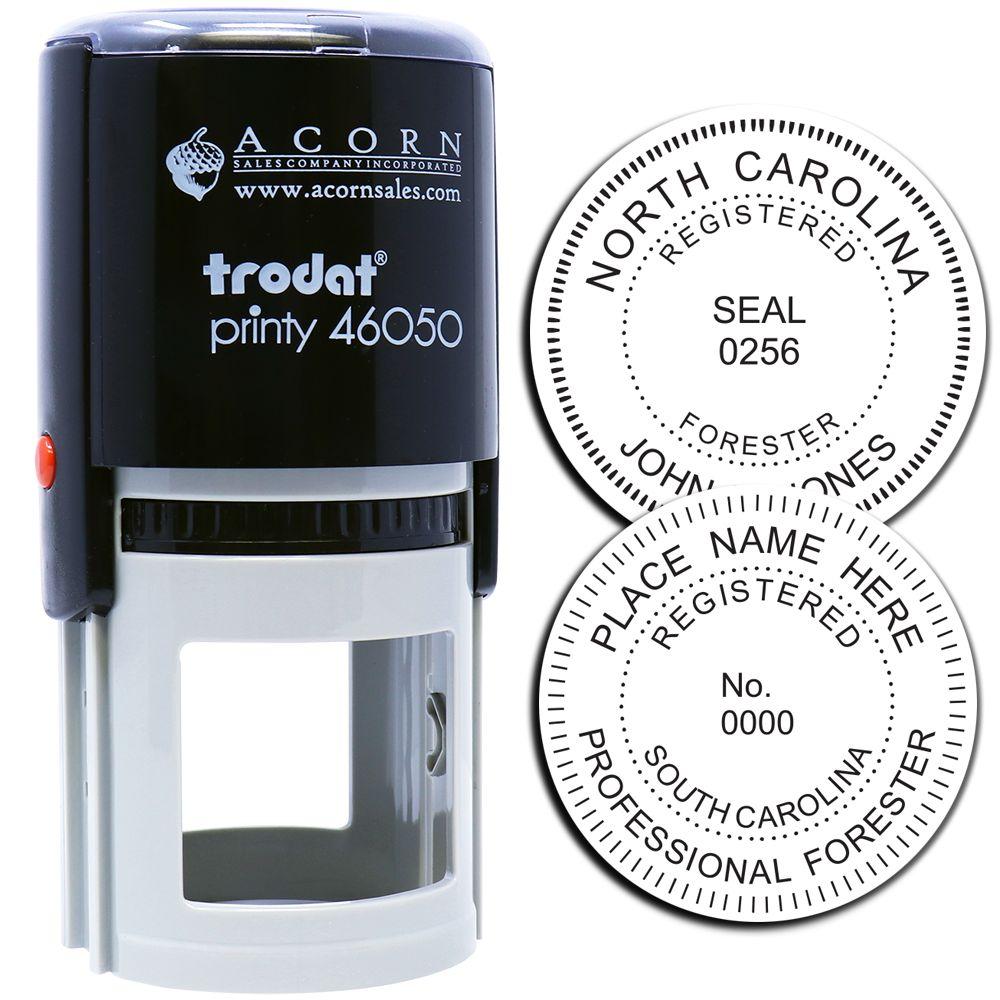
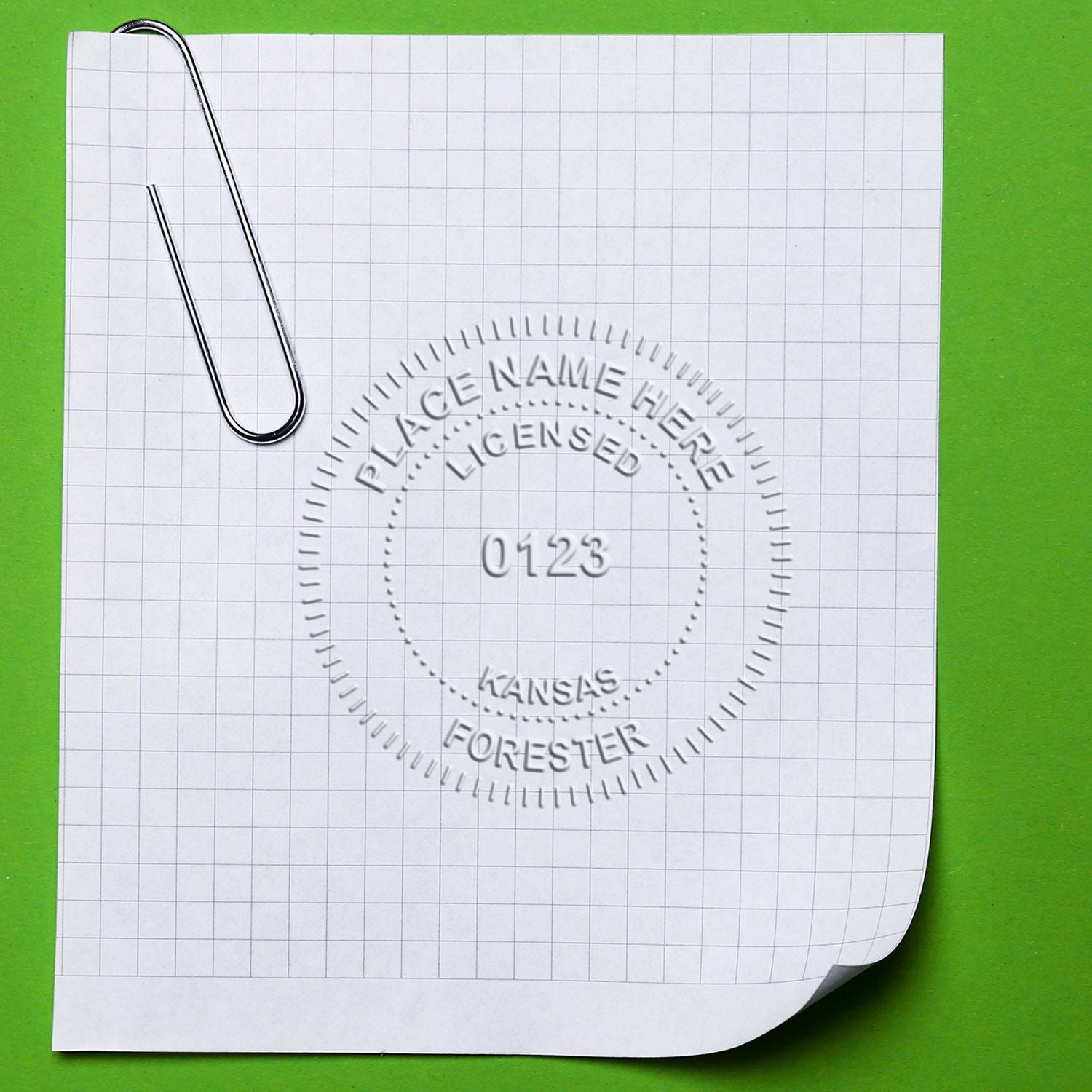
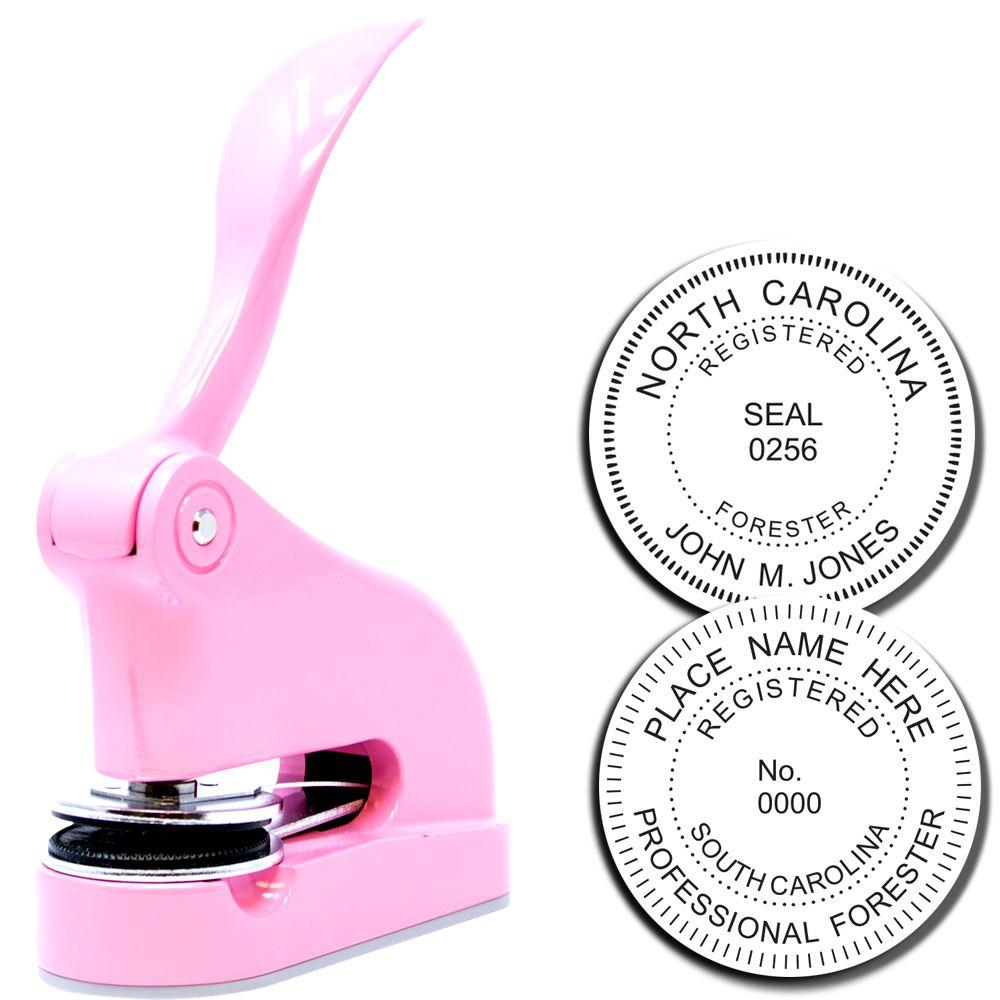
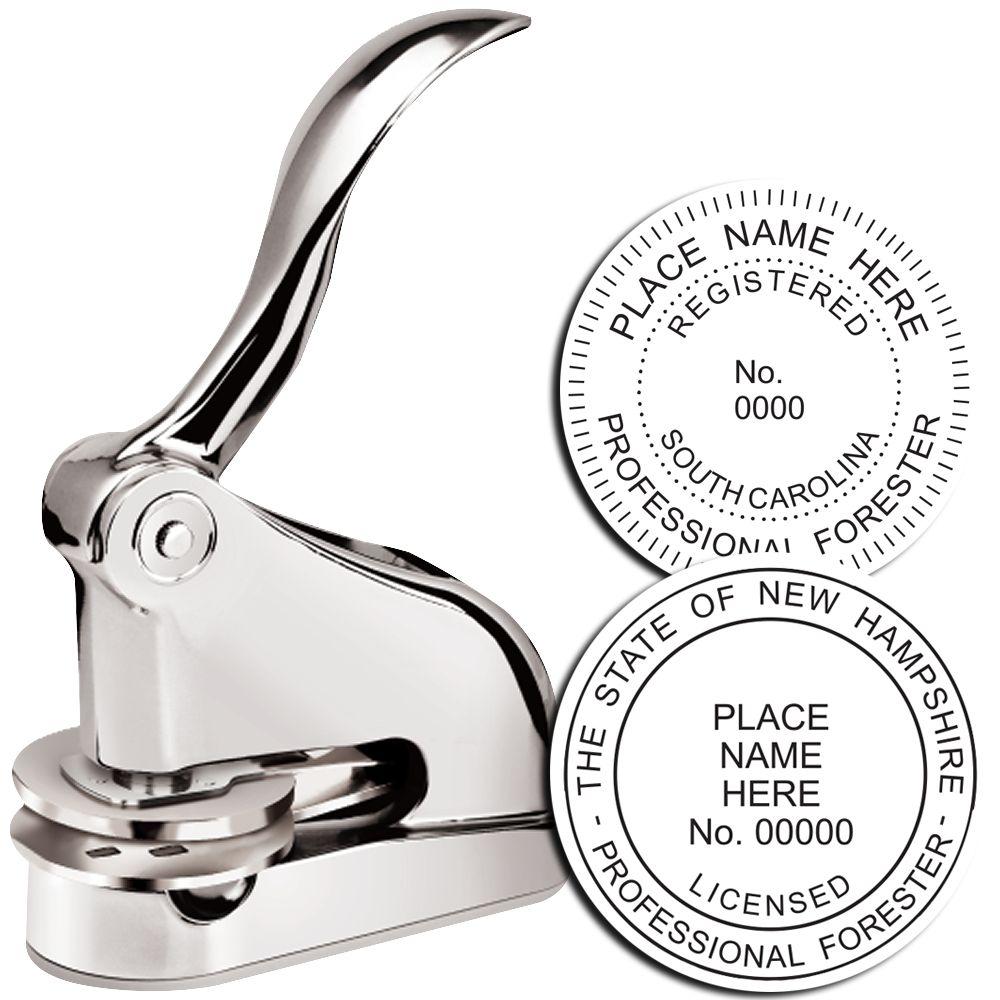
The regulation gives the content by specimen rather than by list. The printed example reads “SOUTH CAROLINA / Registered Forester No. 3 / W. J. BARKER”. From that, the engraved elements are three: the state name, the credential words “Registered Forester” followed by “No.” and your registration number, and your name. W. J. Barker and number 3 are the sample, not a template to copy.
Note the credential wording. It is “Registered Forester”, which matches the statutory credential in Sec. 48-27-120, and the number is introduced by “No.” rather than standing alone. Nothing else appears in the specimen: no board name, no expiration date, no signature line. Adding elements the regulation does not show is a choice, and the standard the regulation sets is similarity to what it printed.
What “similar to the following” means for artwork
The governing sentence is “Both designs shall be similar to the following.” Similar, not identical. That is a lighter standard than a rule which dictates line by line placement, and it gives a manufacturer some room on typography while leaving no room at all on the two diameters or on which words appear.
There is a limit to how precisely we can describe the layout, and we would rather say so than guess. The specimen in the official Chapter 53 PDF is reproduced as two side by side images rather than as text. We captured the wording from it with confidence. We did not capture the exact typographic layout, meaning the line breaks and whether each line is set on an arc or horizontally. If the arrangement of the lines matters to you, ask the Board for the specimen before artwork is cut. The “similar to” standard means a clean, conventional circular arrangement of those three elements at the correct diameter should answer the regulation.


Which documents the seal goes on
Where a forester does use the device, the regulation names “his plans, maps, specifications and reports.” Specifications are in South Carolina’s list, which several neighboring states leave out. Contracts are not in the list, which New Hampshire’s rule does include. Those differences are real and they are the reason a device and a habit carried in from another state is a poor guide here.
Because the whole provision is permissive, this list describes where the seal belongs when you use one, not a set of documents that must bear it. A registered forester who seals management plans and maps but not written reports is not violating Reg. 53-5, though consistency is better practice and easier for clients to read.
The Board’s own seal is a separate instrument
The first two sentences of Reg. 53-5 are not about you. They read “The Seal of the Board was adopted at the meeting on October 13, 1961. It shall be used on all official papers, registration certificates and other formal documents of the Board.” That is the Board’s own corporate seal, the Board applies it, and it uses shall because the duty falls on the Board.
The statute does the same thing twice more. Sec. 48-27-90 provides that “The Board shall adopt and have an official seal,” and Sec. 48-27-160 provides that “Licenses shall show the full name of the registrant, shall have a serial number and shall be signed by the chairman and the secretary of the Board under seal of the Board.” Every one of those references is the Board’s seal on the Board’s paperwork. None of them describes a device a registrant buys, and none of them is a source for your artwork. The forester’s seal is the third sentence of Reg. 53-5 and nowhere else.
Signature, date and electronic seals are not addressed
Three things South Carolina does not say, all worth knowing before you design a layout around them. There is no requirement that a signature accompany the seal. There is no requirement that the seal be dated, and no date element appears in the specimen. And there is no provision anywhere in Chapter 53 on electronic seals, digital signatures or third party certificates.
That last point deserves care. The absence of an electronic seal rule is not a prohibition on applying an image of your seal to a PDF, and it is not an authorization either. The regulation names an impression seal and a stamp and says nothing about electronic form. We report that as unaddressed. If electronic sealing is central to how you deliver work, that is a question for the Board rather than for a manufacturer.
Renewal, lapse, and what the rules leave open
Registration runs on a two year cycle. Reg. 53-9 provides that “Licenses shall expire on June 30th, every two years on the odd numbered year, and shall become invalid on that date unless renewed.” The Department notifies each registrant at least a month before expiration, payment is due during June, and a renewal made within the three months after June carries an additional fee set by the Board for each month or fraction of a month. The Board makes an exception for a person in the Armed Services of the United States. Sec. 48-27-190 says the same in statute.
What happens to the seal on a lapse is simply not addressed. No provision governs use of a seal after a license lapses, none requires surrender of a device, and none covers a name change. Chapter 53 also contains no rule against sealing another person’s work or sealing outside your competence; the general standard is Reg. 53-15, which adopts “The most current version of the Code of Ethics as recommended by the Society of American Foresters ... as the standards of professional conduct for all foresters in this state.” Practicing on an invalid license is a separate matter under Sec. 48-27-120.






Why registered foresters here buy one anyway
Since the device is optional, the honest question is what it does for you. A seal or stamp puts your name, your credential and your registration number on a document in one press. On a management plan, a timber cruise, a set of specifications or a report going to a landowner, a lender or a county office, that block identifies the author at a glance and says which of the several people who touched the file is standing behind it.
There is also a signal in the wording itself. South Carolina restricts the term registered forester to people who hold the credential, and Reg. 53-5 puts those two words and a number on the face of the device. A client who reads it is reading a claim the state controls. That is a plainer thing to show than a line of text at the bottom of page one, and it is why many registrants here keep a stamp for paper deliverables even though nothing obliges them to.
Ordering a South Carolina forester seal or stamp
Four things. Which device you want, because that decides the diameter. Your name as you want it engraved. Your registration number, to follow the words Registered Forester and the abbreviation No. as the specimen shows. And a note that the artwork should follow the Reg. 53-5 specimen.
Get the diameter right against the device: an impression seal at 1 and 5/8 inches, a stamp at 1 and 3/4 inches. Ask for a proof at actual size, since three lines in a circle under two inches across is a tight fit for a long name. We can proof either device before cutting; contact us with your details, and the forester stamps and seals overview shows how South Carolina compares with the states around it.
Looking after the device
Re ink a self inking stamp when the impression starts to gray rather than when it fails, keep a pre inked stamp capped, and store any ink device away from heat and direct sun, which is what dries a pad early. An embosser needs little beyond keeping grit off the die faces and storing it flat.
The check at each renewal is short. Does the name on the die still read the way you want it to read. Does the registration number still match your record. Is your registration current, since the credential words on the face are a claim about a live registration even though no South Carolina rule addresses sealing after a lapse. A correctly made die does not expire; the registration behind it does. This page is a research summary and not legal advice.
- Forester Stamps and Seals: State Rules, Sizes and Prices
- New Hampshire Forester Seal: Exact 1-9/16 Inch Spec
- North Carolina Forester Seal Rule Expired in 2015
Frequently asked questions
Does South Carolina require a registered forester to have a seal?
No. Reg. 53-5 says “Each registered forester may use an impression seal or stamp on his plans, maps, specifications and reports.” The verb is may. Nothing in Chapter 53 or in Title 48 Chapter 27 requires a registrant to own one or to apply one.
If it is optional, why does the regulation give sizes?
Because the same provision that permits the device also specifies it. Reg. 53-5 continues “The seal shall be circular, 1 and 5/8 inches in diameter and the stamp shall be 1 and 3/4 inches in diameter,” and “Both designs shall be similar to the following.” Optional to own, fixed once you own it.
Why are there two different diameters?
Because the regulation sizes each device separately. An impression seal is 1 and 5/8 inches. A stamp is 1 and 3/4 inches. The regulation calls both standard size. Confirm which device you are ordering before you quote a diameter, because the two numbers are not interchangeable.
What has to be on a South Carolina forester seal?
The specimen in Reg. 53-5 shows three elements: SOUTH CAROLINA, the words Registered Forester followed by No. and the registration number, and the registrant’s name. The published example uses No. 3 and W. J. BARKER as the sample.
Does South Carolina allow an electronic or digital seal?
Not addressed. Chapter 53 contains no provision on electronic seals, digital signatures or third party certificates. The regulation names an impression seal and a stamp only. We report the silence rather than reading it either way, and suggest asking the Board if electronic delivery matters to your practice.
Does the seal need a signature or a date beside it?
Not addressed. Nothing in Chapter 53 or Title 48 Chapter 27 requires a signature or a date alongside a forester’s seal, and no date appears in the published specimen.
Is the Board’s seal the same as mine?
No. The first two sentences of Reg. 53-5 describe the Seal of the Board, adopted on October 13, 1961, which the Board uses on its own official papers and registration certificates. Sec. 48-27-90 and Sec. 48-27-160 refer to the same Board instrument. It is separate from the device a registered forester buys and it is not a source for your artwork.
Can a firm hold a South Carolina forester seal?
No. Sec. 48-27-170 provides that “No firm, company, partnership, or corporation shall be licensed.” Registration is individual, so there is no firm seal.








