

Written by Acorn Sales Company, manufacturing stamps and seals since 1964 · Reviewed by Holly R, VP of Sales and Marketing at Acorn Sales, against the South Dakota State Board of Technical Professions, within the South Dakota Department of Labor and Regulation and SDCL 36-18A-44, 36-18A-45 on 21 September 2026 · Updated 21 September 2026
South Dakota gives a range and a ratio rather than a size. SDCL 36-18A-44 requires a seal with “an outer circle with a diameter measuring at least one inch and no greater than two inches and an inner circle with a diameter measuring five-eighths of the diameter of the outer circle.” The two dimensions move together. A 1-1/2 inch outer circle needs a 15/16 inch inner circle; a 1-3/4 inch outer needs a 1-3/32 inch inner; and a die with an outer circle but no inner circle does not meet the statute at all.
That is where template dies fail quietly. A generic 1-3/4 inch concentric blank with a 1-1/4 inch inner ring, which is the North Dakota and Wyoming geometry, gives an inner circle of about five-sevenths of the outer. The outer dimension is legal and the seal looks correct, so nobody catches it until someone measures.
Four text items are required: the name South Dakota, your name as licensee, your license number, and the appropriate title or combination of titles. One option is expressly allowed, since “Titles may be prefixed with the words, Licensed or Registered,” so confirm which the licensee wants instead of guessing. And two categories hold no seal at all: the statute ends with “Petroleum release assessors and remediators, or interns, may not use a seal.”
South Dakota PE seal requirements at a glance
| Requirement | South Dakota rule | Source |
|---|---|---|
| Seal required | Yes | SDCL 36-18A-44, 36-18A-45 |
| Required elements | The name, South Dakota, Your name as licensee, Your license number and The appropriate title or combination of titles: Professional Engineer, Architect, Land Surveyor, or Landscape Architect | SDCL 36-18A-44 |
| Size and shape | Outer circle at least 1 inch and no greater than 2 inches in diameter; inner circle exactly five-eighths of the outer diameter. | SDCL 36-18A-44 |
| Device allowed | Four device classes are named, with a catch-all controlled by the board: “The seal may be an embossed seal, a rubber stamp, a computer-generated seal, or other facsimile found acceptable to the board.” The safe buy is a rubber or self-inking stamp sized so the inner circle stays crisp, because SDCL 36-18A-45 conditions compliance on the seal, signature, and date being placed so they can be legibly reproduced, and because the same seal has to work on originals, copies, tracings, and electronic submittals. | SDCL 36-18A-44 |
| Signature and date | Placement is permissive: “The licensee's signature and the date shall be adjacent to or across the seal.” South Dakota does not require signing through the stamp, so beside it is acceptable, provided the trio reproduces legibly. | SDCL 36-18A-44, 36-18A-45.1 |
| What must be sealed | All originals, copies, tracings, electronic submittals, or other reproductions of final drawings, specifications, reports, plats, plans, land surveys, design information, and calculations presented to a client or any public or governmental agency. | SDCL 36-18A-45, 36-18A-71 |
| Electronic seal | The standard is functional, not proprietary. | SDCL 36-18A-45(1), 36-18A-45.1 |
| Renewal and lapse | ARSD 20:38:37:01 makes the licensee responsible for the security and proper use of the seal and makes improper use, or failure to sign and seal final work, grounds for disciplinary action. | ARSD 20:38:37:01 |
| Firm number on documents | A certificate of authorization is required, and no firm seal exists. | SDCL 36-18A-47, 36-18A-48, 36-18A-49, 36-18A-50 |
| Licensing board | The South Dakota State Board of Technical Professions, within the South Dakota Department of Labor and Regulation | South Dakota Codified Laws chapter 36-18A, Architects, Engineers |
Rules for other states are on PE stamp requirements by state.




Is a seal required in South Dakota?
South Dakota requires a seal South Dakota carries the whole scheme in statute, and it is one of the more detailed in the country. SDCL 36-18A-44 opens with the mandate: “Any licensed professional engineer, architect, land surveyor, and landscape architect shall use an appropriate seal.” SDCL 36-18A-45 sets the trigger and the certification effect: application of the seal, signature, and date constitutes certification that the work was done by the licensee or under the licensee's responsible charge, and the three must be placed so they can be legibly reproduced on all originals, copies, tracings, electronic submittals, or other reproductions of all final drawings, specifications, reports, plats, plans, land surveys, design information, and calculations “when presented to a client or any public or governmental agency.” The board rule adds that the seal shall be used on all final documents and that improper use of the seal or failure to sign and seal final work is grounds for disciplinary action.
What must appear on the seal
- The name, South Dakota
- Your name as licensee
- Your license number
- The appropriate title or combination of titles: Professional Engineer, Architect, Land Surveyor, or Landscape Architect
One optional element is expressly permitted: “Titles may be prefixed with the words, Licensed or Registered.” So Licensed Professional Engineer and Registered Land Surveyor are both lawful, and so is the bare title. A combination of titles is allowed on a single seal for a person holding more than one South Dakota license. Two categories are flatly prohibited from holding a seal at all: the statute ends with “Petroleum release assessors and remediators, or interns, may not use a seal,” and ARSD 20:38:37:01 repeats that no petroleum release assessor, petroleum release remediator, or intern may obtain or use a seal. No expiration date and no discipline line are required. The board rule requires the license number to appear with the signature on each drawing sheet, so the number belongs on the die, not only on the certificate.
Size and shape
Outer circle at least 1 inch and no greater than 2 inches in diameter; inner circle exactly five-eighths of the outer diameter. This is a range rather than a single value, which is unusual. The statute reads that the seal “shall be legible and shall have an outer circle with a diameter measuring at least one inch and no greater than two inches and an inner circle with a diameter measuring five-eighths of the diameter of the outer circle.” A 1-1/2 inch outer circle therefore requires a 15/16 inch inner circle, and a 1-3/4 inch outer requires a 1-3/32 inch inner. A die with an outer circle but no inner circle does not meet the statute.
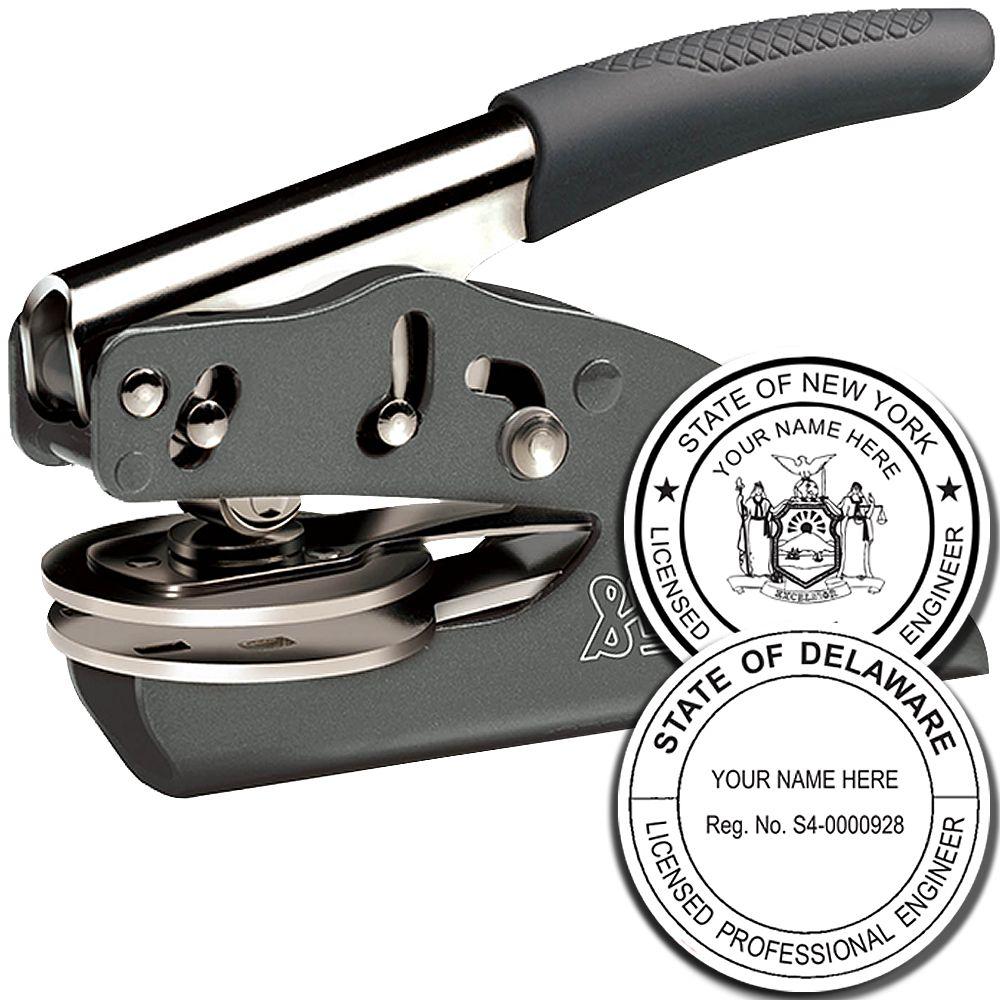

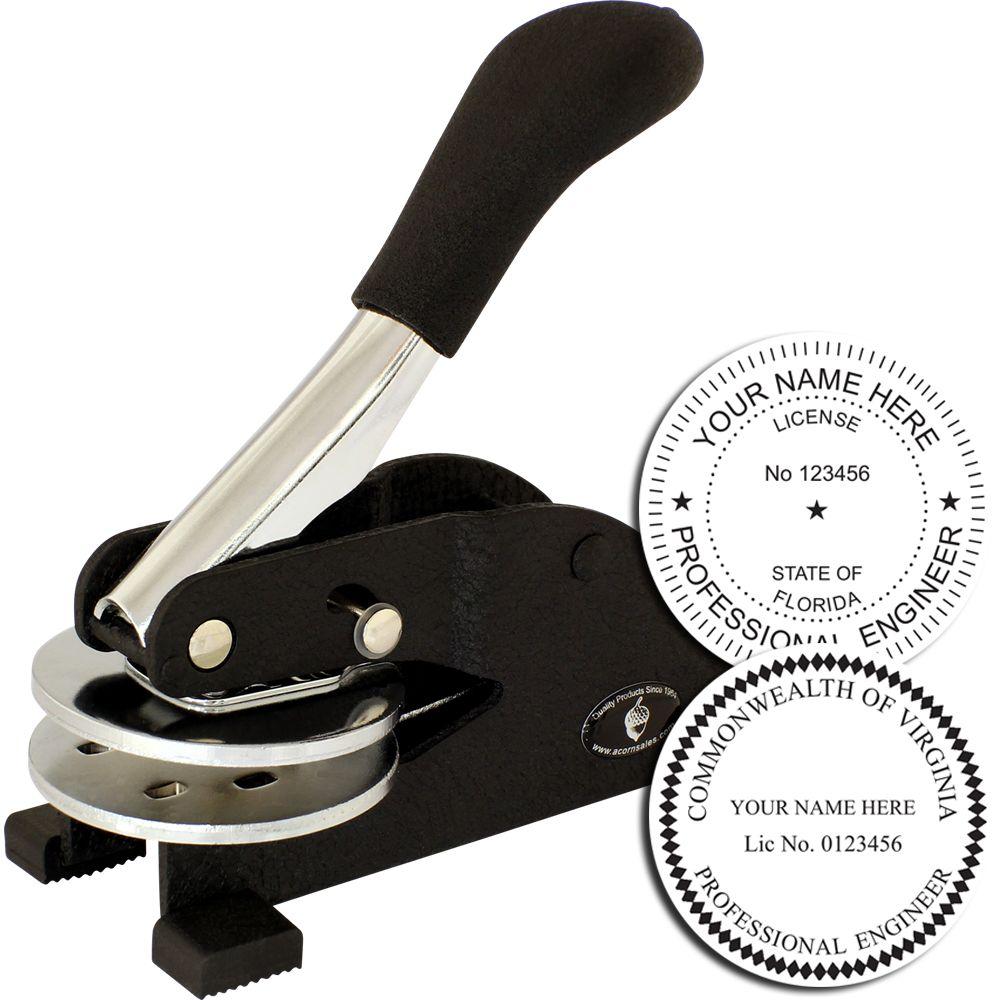

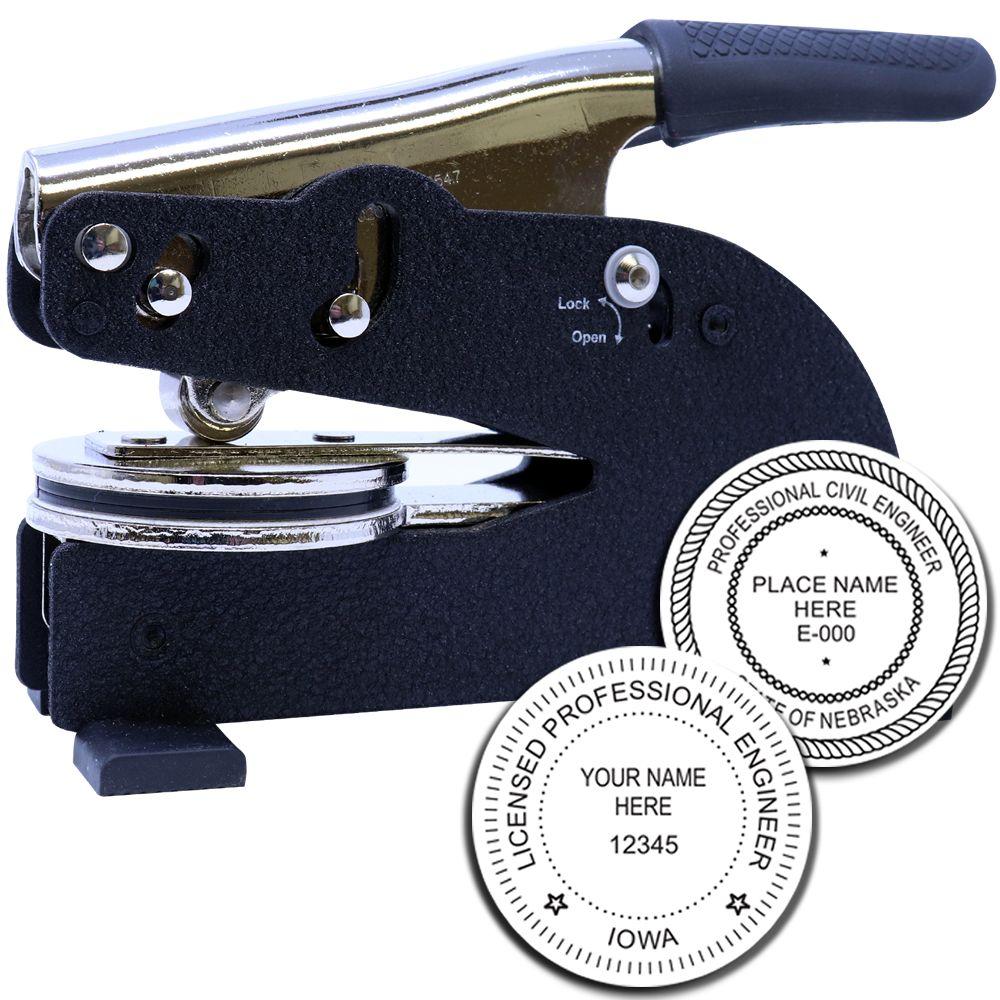

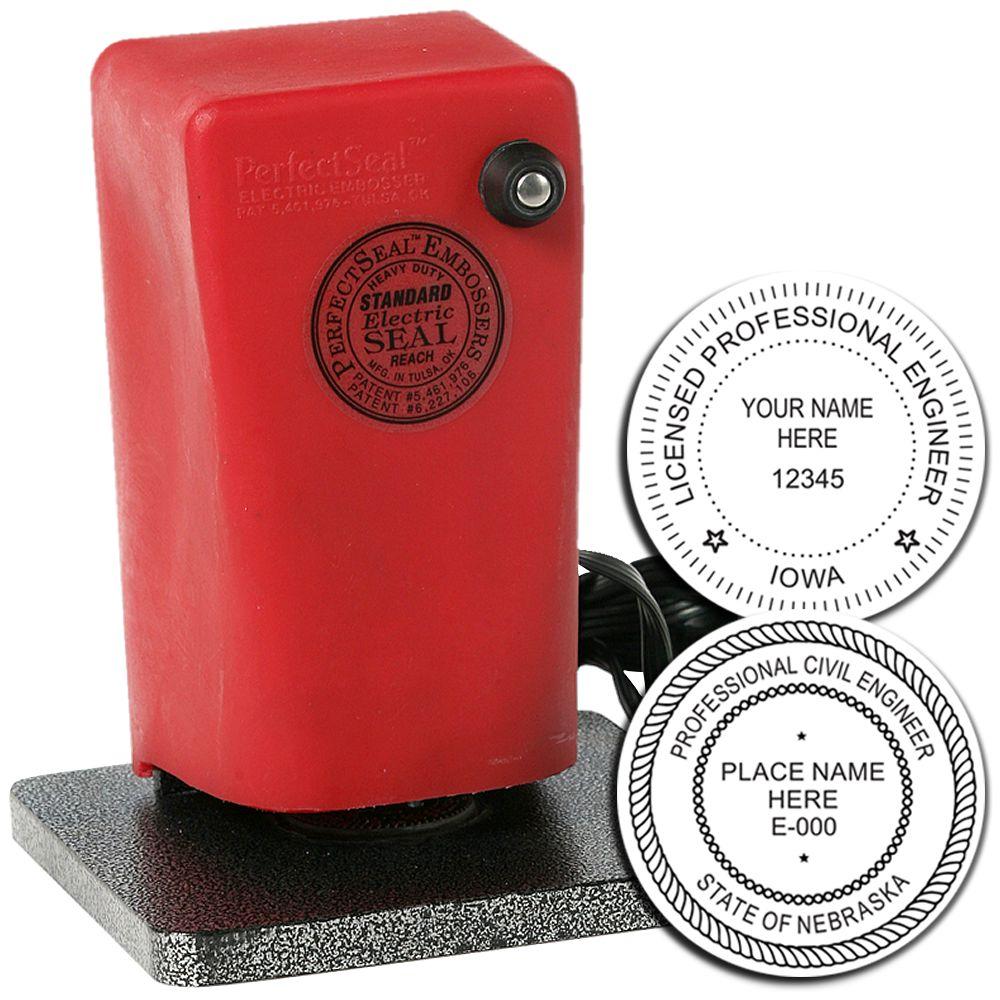
Embosser, rubber stamp or digital
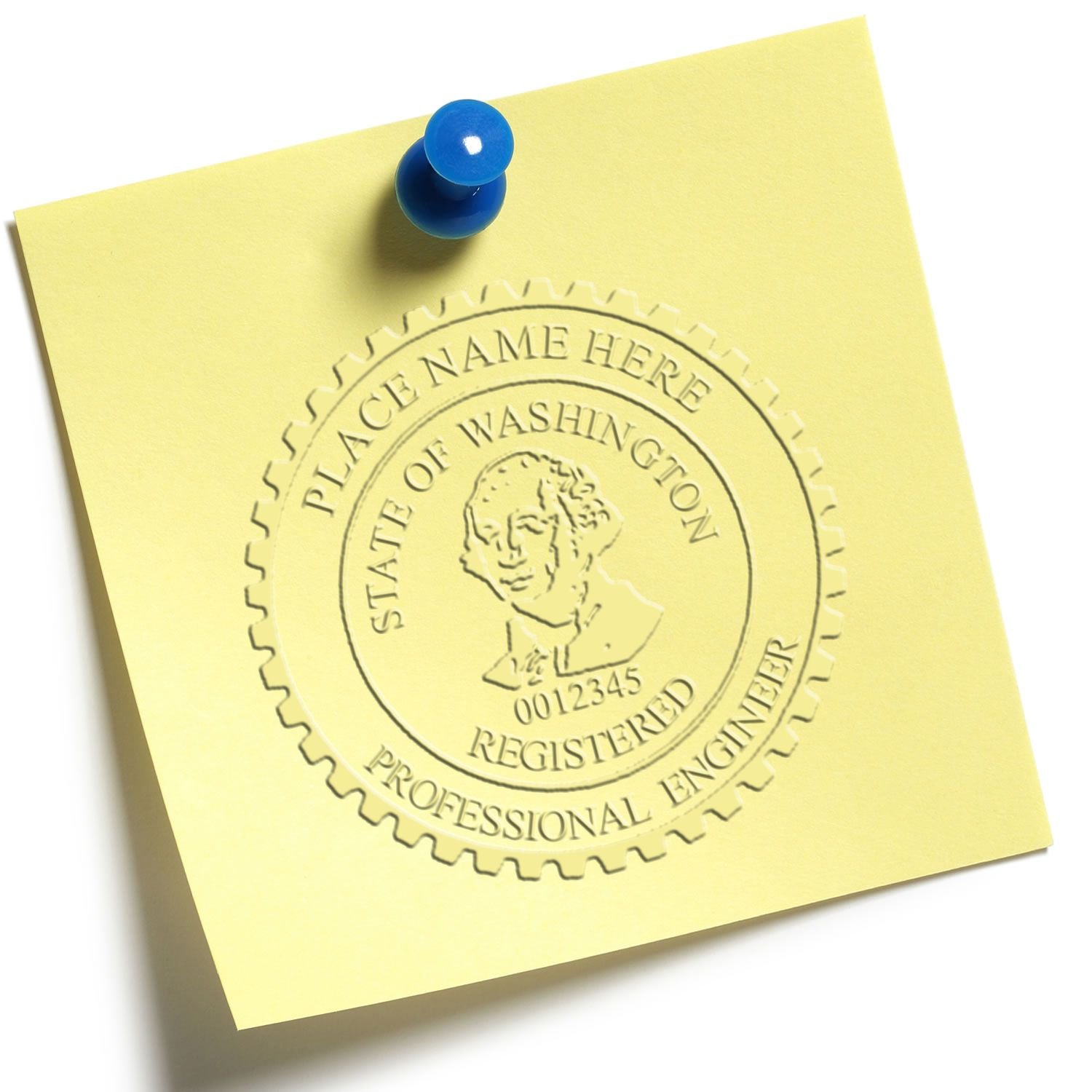
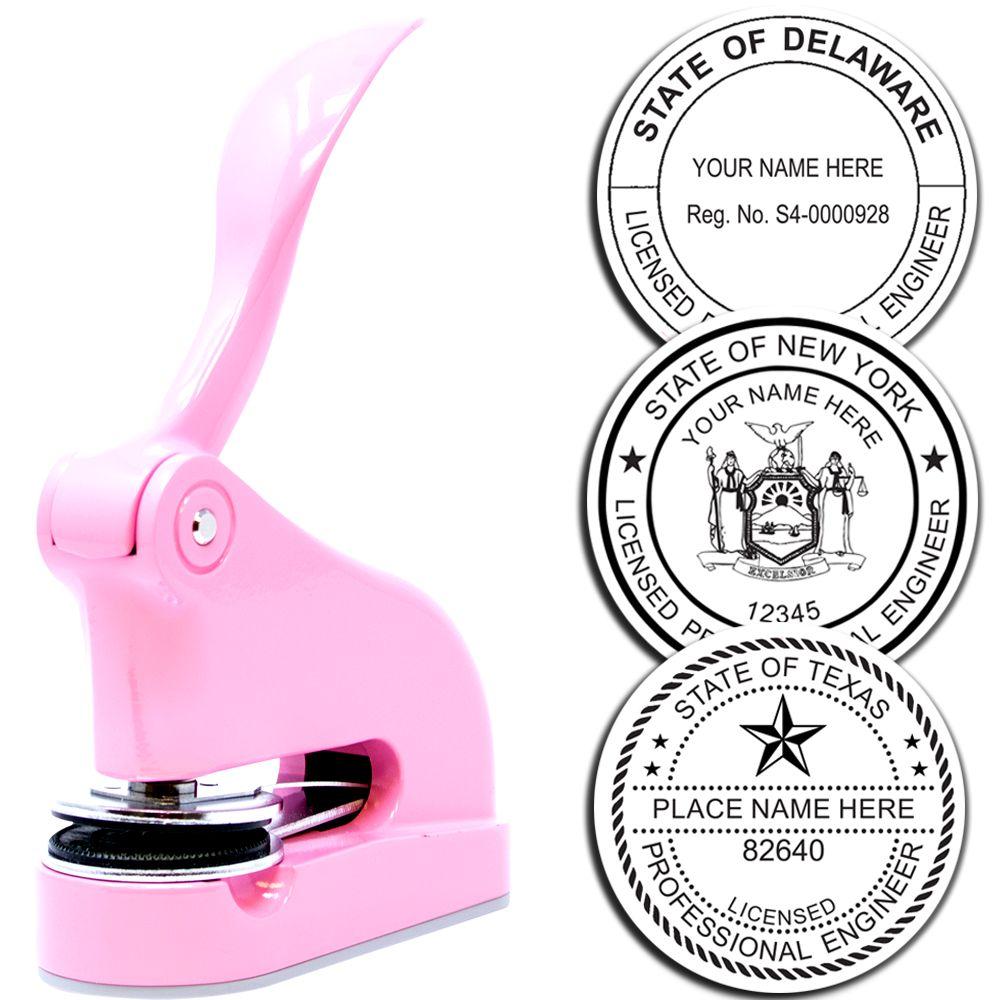
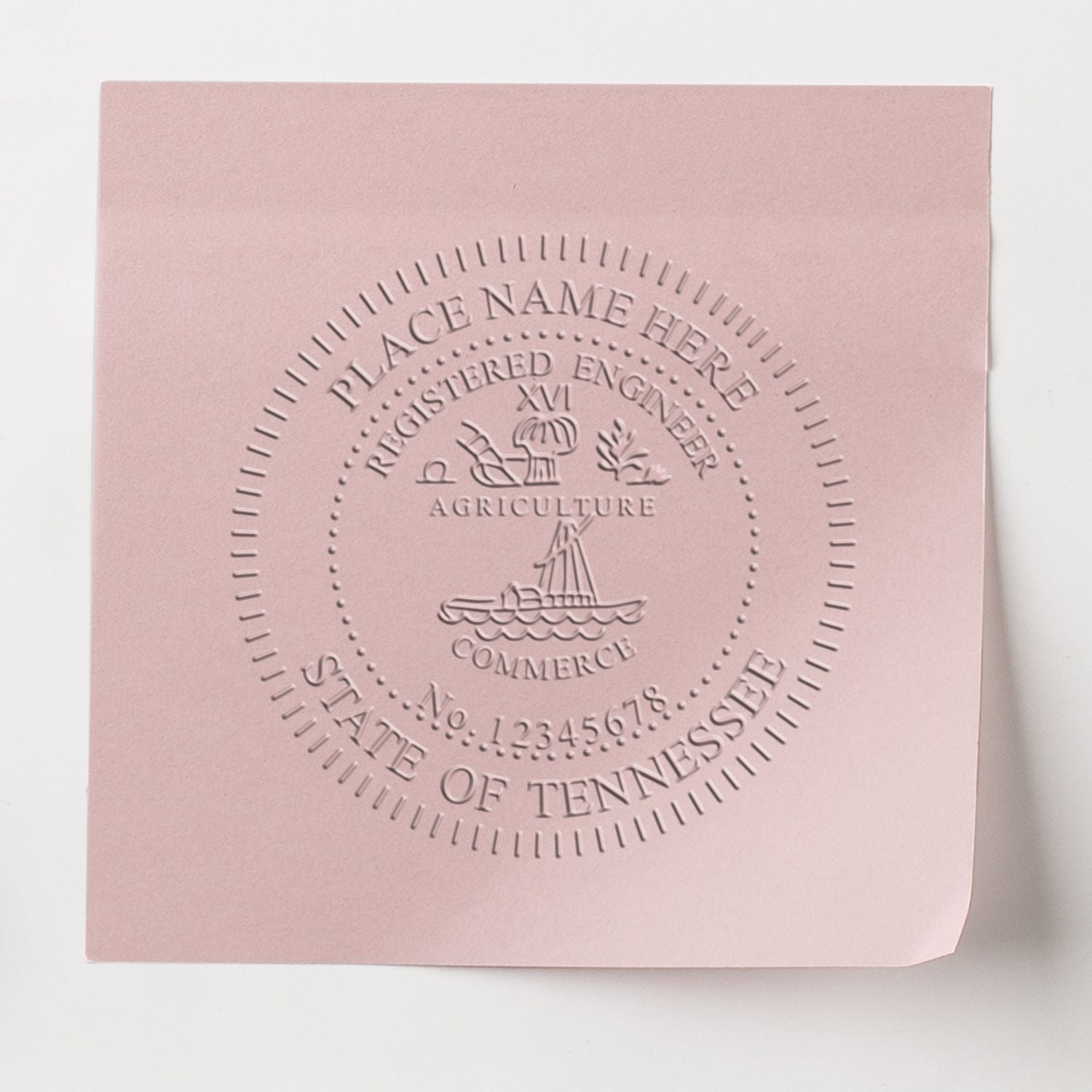
Four device classes are named, with a catch-all controlled by the board: “The seal may be an embossed seal, a rubber stamp, a computer-generated seal, or other facsimile found acceptable to the board.” The safe buy is a rubber or self-inking stamp sized so the inner circle stays crisp, because SDCL 36-18A-45 conditions compliance on the seal, signature, and date being placed so they can be legibly reproduced, and because the same seal has to work on originals, copies, tracings, and electronic submittals. Reserve the embosser for supplementary use.
Signing and dating
Placement is permissive: “The licensee's signature and the date shall be adjacent to or across the seal.” South Dakota does not require signing through the stamp, so beside it is acceptable, provided the trio reproduces legibly. The date accompanies the signature. Digital signatures are optional and governed by SDCL 36-18A-45.1: if used, the signature must be unique to the licensee, capable of verification, under the sole control of the licensee using it, and linked to the document so that the digital signature is invalidated if any data in the document is changed, with an electronic authentication process attached to or logically associated with the document. A digital signature using a process approved by the board is presumed to meet those criteria, and any hard copy printed from the transmitted file must bear the facsimile of the signature and seal and confirm the file was not altered after the initial digital signing.
The inner circle is a ratio, not a fixed size, so the two dimensions move together
Most states that prescribe concentric circles give two fixed numbers. South Dakota gives a range and a ratio: SDCL 36-18A-44 allows an outer circle anywhere from one inch to two inches, and then requires the inner circle to measure five-eighths of whatever outer diameter you chose. Change the outer size and the inner size must change with it.
That is where template dies fail. A supplier who keeps a generic 1-3/4 inch concentric-circle blank with a 1-1/4 inch inner ring, which is exactly the North Dakota and Wyoming geometry, produces a South Dakota seal whose inner circle is about five-sevenths of the outer, not five-eighths. The outer dimension is legal and the seal still looks right, so nobody catches it until someone measures.
Two more South Dakota specifics belong on the same order form. The word on the seal is South Dakota, and the title may optionally be prefixed with Licensed or Registered, so confirm which you want rather than guessing. And interns hold no seal here at all: the statute and ARSD 20:38:37:01 both bar interns, petroleum release assessors, and petroleum release remediators from obtaining or using one, which makes an intern stamp order a refusal rather than a build.
Which documents must be sealed
All originals, copies, tracings, electronic submittals, or other reproductions of final drawings, specifications, reports, plats, plans, land surveys, design information, and calculations presented to a client or any public or governmental agency. ARSD 20:38:37:01 requires drawings prepared by a licensed professional to carry “the seal and license number with a signature of the licensee who is in responsible charge on each sheet of those drawings,” and SDCL 36-18A-45(3) adds that on a multi-profession project the title or index sheet is sealed, signed, and dated by the prime professional coordinating the project, with each sheet sealed by whoever prepared or is in responsible charge of it. Carve-outs: SDCL 36-18A-45(2) allows preliminary work to carry a Not for Construction or Preliminary note instead of a seal, and ARSD 20:38:37:01 exempts review drafts and presentation documents such as renderings or drawings used to communicate conceptual information only. Going the other way, the same rule provides that “Any exempt project services performed by a licensed professional shall be sealed,” and that construction administration work must be sealed if it affects the intent of the project or changes life safety aspects. Land surveying has a hard recording rule: under SDCL 36-18A-71 no register of deeds may file or record any map, plat, survey, or other land surveying submission that does not have the surveyor's personal signature, seal, and date impressed and affixed.


Electronic and digital seals
The standard is functional, not proprietary. SDCL 36-18A-45.1 sets the four-part digital signature test described above and makes board approval of a process a safe harbor rather than a precondition, and the statute expressly makes use of a digital signature optional. Electronic submittals are already inside the sealing requirement, since SDCL 36-18A-45(1) lists electronic submittals among the things the seal, signature, and date must legibly reproduce on. No certificate authority, file format, or vendor product is named.
Renewal, lapse and retirement
ARSD 20:38:37:01 makes the licensee responsible for the security and proper use of the seal and makes improper use, or failure to sign and seal final work, grounds for disciplinary action. Not addressed: neither SDCL 36-18A-44, 36-18A-45, nor ARSD 20:38:37:01 requires the seal to be destroyed or surrendered on expiration, lapse, retirement, or revocation, and none says whether a license number changes on reinstatement. Checked SDCL ch. 36-18A and ARSD art. 20:38 for seal and stamp language.
Firm registration
A certificate of authorization is required, and no firm seal exists. SDCL 36-18A-48 provides that any business entity that desires to practice engineering, architecture, land surveying, landscape architecture, or petroleum release assessment or remediation in the state shall register with the board by applying for a certificate of authorization, and makes the entity responsible for the conduct of its agents, employees, officers, partners, members, or managers, without relieving any individual of responsibility for that individual's own conduct. A licensee who renders occasional, part-time, or consulting services to a business entity may not be designated as the person in responsible charge. SDCL 36-18A-47 separately requires a firm or office to have an appropriately licensed person in charge. Nothing in SDCL ch. 36-18A or ARSD art. 20:38 requires the certificate of authorization number to appear on a sealed document; checked both for the phrase.
What to check before you order
The inner circle is computed from the outer, every time: the outer falls between 1 and 2 inches inclusive, and the inner is exactly five-eighths of the outer. Four text items are required, South Dakota, your name, your license number, and the appropriate title or combination of titles, with Licensed or Registered available as an optional prefix you should confirm. Embossed, rubber stamp, computer-generated, and board-accepted facsimiles are all lawful; take the inked stamp as your primary because the seal, signature, and date must reproduce legibly on copies, tracings, and electronic submittals. Your signature may sit adjacent to or across the seal, so tight interior space is less dangerous here than in Utah or Wyoming, and your license number is required beside the signature on every drawing sheet, so expect heavy use. Interns, petroleum release assessors and petroleum release remediators may not hold a seal at all, because South Dakota prohibits those seals by statute and by rule.
Browse professional engineer stamps and seals.
- Shop Smart: South Dakota Engineer Seal Embosser Essentials
- Be Cautious Going Digital with Your South Dakota Engineer’s Seal Stamp
Frequently asked questions
What size does a South Dakota PE seal have to be?
The outer circle is at least 1 inch and no greater than 2 inches in diameter, and the inner circle is exactly five-eighths of whatever outer diameter you chose. SDCL 36-18A-44 also requires the seal to be legible. This is a range rather than a single value, which is unusual, and the inner circle is a ratio rather than a fixed figure.
How do I work out the inner circle for a South Dakota seal?
Multiply the outer diameter by five-eighths. A 1-1/2 inch outer circle gives a 15/16 inch inner circle. A 1-3/4 inch outer gives a 1-3/32 inch inner. Change the outer size and the inner size has to change with it, which is why a stock concentric blank is the usual failure point here.
What has to appear on a South Dakota seal?
Four items under SDCL 36-18A-44: the name South Dakota, your name as licensee, your license number, and the appropriate title or combination of titles, meaning Professional Engineer, Architect, Land Surveyor or Landscape Architect. A person holding more than one South Dakota license may put a combination of titles on a single seal. No expiration date and no discipline line are required. The board rule requires the license number to appear with the signature on each drawing sheet, so the number belongs on the die rather than only on the certificate.
Can my South Dakota seal say Licensed Professional Engineer?
Yes. The statute provides that “Titles may be prefixed with the words, Licensed or Registered,” so Licensed Professional Engineer and Registered Land Surveyor are both lawful, and so is the bare title with no prefix at all.
Which sealing devices are allowed in South Dakota?
Four classes, with a catch-all the board controls: “The seal may be an embossed seal, a rubber stamp, a computer-generated seal, or other facsimile found acceptable to the board.” The practical buy is a rubber or self-inking stamp sized so the inner circle stays crisp, because SDCL 36-18A-45 conditions compliance on the seal, signature and date being placed so they can be legibly reproduced, and because the same seal has to work on originals, copies, tracings and electronic submittals.
Where do the signature and date go in South Dakota?
Either place. SDCL 36-18A-44: “The licensee’s signature and the date shall be adjacent to or across the seal.” South Dakota does not require signing through the stamp, so beside it is acceptable provided the three reproduce legibly together. The date accompanies the signature.
Are digital signatures allowed in South Dakota?
Yes, and they are optional rather than required. SDCL 36-18A-45.1 provides that a digital signature, if used, must be unique to the licensee, capable of verification, under the sole control of the licensee using it, and linked to the document so that the digital signature is invalidated if any data in the document is changed, with an electronic authentication process attached to or logically associated with the document. A digital signature using a process approved by the board is presumed to meet those criteria, so board approval is a safe harbor rather than a precondition. Any hard copy printed from the transmitted file must bear the facsimile of the signature and seal and confirm the file was not altered after the initial digital signing. No certificate authority, file format or vendor product is named.
Which South Dakota documents have to be sealed?
All originals, copies, tracings, electronic submittals or other reproductions of final drawings, specifications, reports, plats, plans, land surveys, design information and calculations presented to a client or any public or governmental agency, under SDCL 36-18A-45. ARSD 20:38:37:01 requires drawings prepared by a licensed professional to carry “the seal and license number with a signature of the licensee who is in responsible charge on each sheet of those drawings,” and SDCL 36-18A-45(3) adds that on a multi-profession project the title or index sheet is sealed, signed and dated by the prime professional coordinating the project, with each sheet sealed by whoever prepared it or is in responsible charge of it. Applying the seal, signature and date certifies that the work was done by the licensee or under the licensee’s responsible charge.
Does preliminary work need a seal in South Dakota?
No, if it is marked. SDCL 36-18A-45(2) allows preliminary work to carry a Not for Construction or Preliminary note instead of a seal, and ARSD 20:38:37:01 exempts review drafts and presentation documents such as renderings or drawings used to communicate conceptual information only. The same rule runs the other way in two places: “Any exempt project services performed by a licensed professional shall be sealed,” and construction administration work must be sealed if it affects the intent of the project or changes life safety aspects.
Can an engineer intern get a seal in South Dakota?
No. SDCL 36-18A-44 ends with “Petroleum release assessors and remediators, or interns, may not use a seal,” and ARSD 20:38:37:01 repeats that no petroleum release assessor, petroleum release remediator or intern may obtain or use a seal. An intern stamp is not something South Dakota allows to be made.
Does a South Dakota certificate of authorization number go on the document?
No, and there is no firm seal. SDCL 36-18A-48 requires any business entity that wants to practice engineering, architecture, land surveying, landscape architecture or petroleum release assessment or remediation in the state to register with the board by applying for a certificate of authorization, and makes the entity responsible for the conduct of its agents, employees, officers, partners, members or managers without relieving any individual of responsibility for that individual’s own conduct. A licensee who renders occasional, part-time or consulting services to a business entity may not be designated as the person in responsible charge, and SDCL 36-18A-47 separately requires a firm or office to have an appropriately licensed person in charge. Nothing in SDCL ch. 36-18A or ARSD art. 20:38 requires the certificate of authorization number to appear on a sealed document; both were checked for the phrase.
Do I have to surrender my South Dakota seal if the license lapses?
Not addressed. Neither SDCL 36-18A-44, SDCL 36-18A-45 nor ARSD 20:38:37:01 requires the seal to be destroyed or surrendered on expiration, lapse, retirement or revocation, and none says whether a license number changes on reinstatement. Checked SDCL ch. 36-18A and ARSD art. 20:38 for seal and stamp language. What the rule does impose is custody: the licensee is responsible for the security and proper use of the seal, and improper use, or failure to sign and seal final work, is grounds for disciplinary action.
Do land surveyors follow the same South Dakota seal rule?
Yes, with one addition. The seal statute and rule govern professional engineers, architects, land surveyors and landscape architects on identical terms, differing only in the title placed on the die. The one surveyor-only provision is SDCL 36-18A-71, a hard recording rule: no register of deeds may file or record any map, plat, survey or other land surveying submission that does not have the surveyor’s personal signature, seal and date impressed and affixed.