

Written by Acorn Sales Company, manufacturing stamps and seals since 1964 · Reviewed by Holly R, VP of Sales and Marketing at Acorn Sales, against the Acorn Sales craft stamp and art stamp range (12,421 published SKUs, 170 product sample) on 21 September 2026 · Updated 25 September 2026
A decorative rubber stamp at Acorn costs between $11.95 and $32.95, and the 170 product sample drawn from this cluster lands on five prices and nothing in between: $11.95, $19.95, $24.95, $26.95 and $32.95. The median across the cluster is $26.95. Those five prices are five different bodies, not five different picture sizes. Every craft stamp above the entry tier in the sample quotes the same 1-5/8″ die, so the extra money buys the handle, the inking system and the number of impressions you get before the ink runs thin. The $11.95 tier is the exception: wood mounted art stamps sized individually, from about three-quarters of an inch to about two inches, cut in red rubber on a white maple block. Acorn publishes 12,421 products in this cluster, so the design catalog is deep even though the mechanical choices are few.
What these are for
This range is aimed at people who decorate paper by hand and want the same mark to repeat cleanly. Card makers are the largest group in the sample, and the listings name greeting cards, note cards, place cards, postcards and invitations again and again. Scrapbookers come next, with memory pages, journaling blocks and photo borders. Third are small makers who need a consistent mark on the outside of a product: gift tags, favor tags, kraft bags, tissue and packaging. Teachers and church volunteers are a fourth group, with 28 teacher tagged and 39 Christian and religious tagged stamps in the sample. What unites them is batch work. One hand drawn sentiment on one card is quicker with a pen; forty identical cards, or a hundred favor tags for one event, is where a die that prints the same thing every time pays for itself.




The ranges we stock
Wood mounted art stamps at $11.95
These are the entry tier and the oldest format in the range, listed under the Art Stamp product type rather than Craft Stamp. Construction is stated plainly: red rubber, deeply etched or laser engraved, bonded to a sponge cushion and mounted on a white maple block, custom made in the United States. There is no ink in the tool. Every one of these listings says the stamp will require the use of a separate ink pad, which is also why they describe the stamp as easy to clean and easy to move between colors. Sizes are individual and given in words rather than figures. The Two Bears in a Boat Rubber Stamp at $11.95 is about two inches wide and one and three-quarter inches high, the Rabbit with Checkered Border Rubber Stamp about two inches by two inches, and the Boy Pilgrim Bear with Teddy Rubber Stamp about three-quarters of an inch wide by one and three-quarters inches high. The designs here are illustrative rather than typographic: bears, rabbits, boats, tractors and a novelty award seal. Only five appear in the sample, so this is a small corner of a large cluster, but it is the cheapest way in and the only tier where the catalog states the mount material.
Duo hand stamps at $19.95
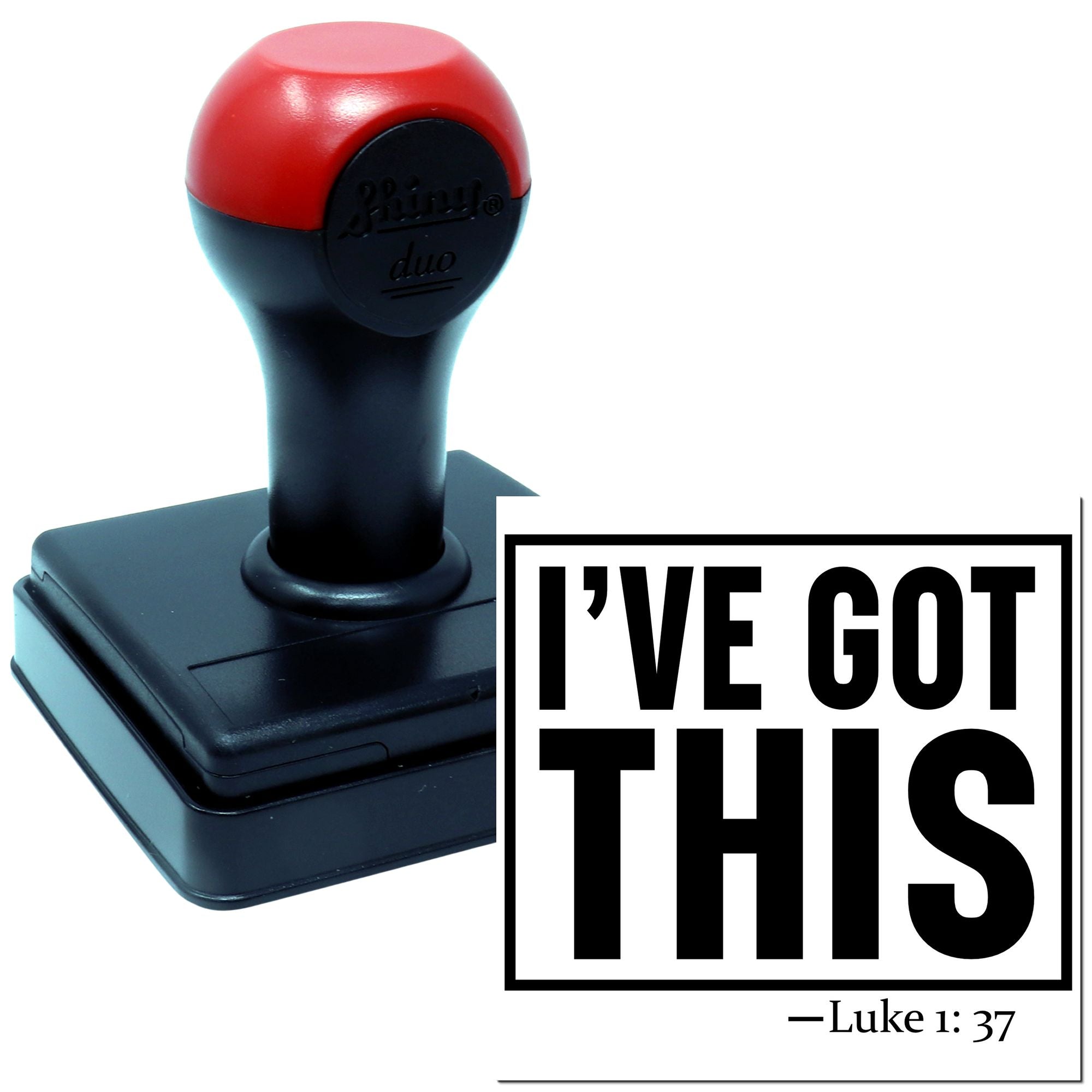
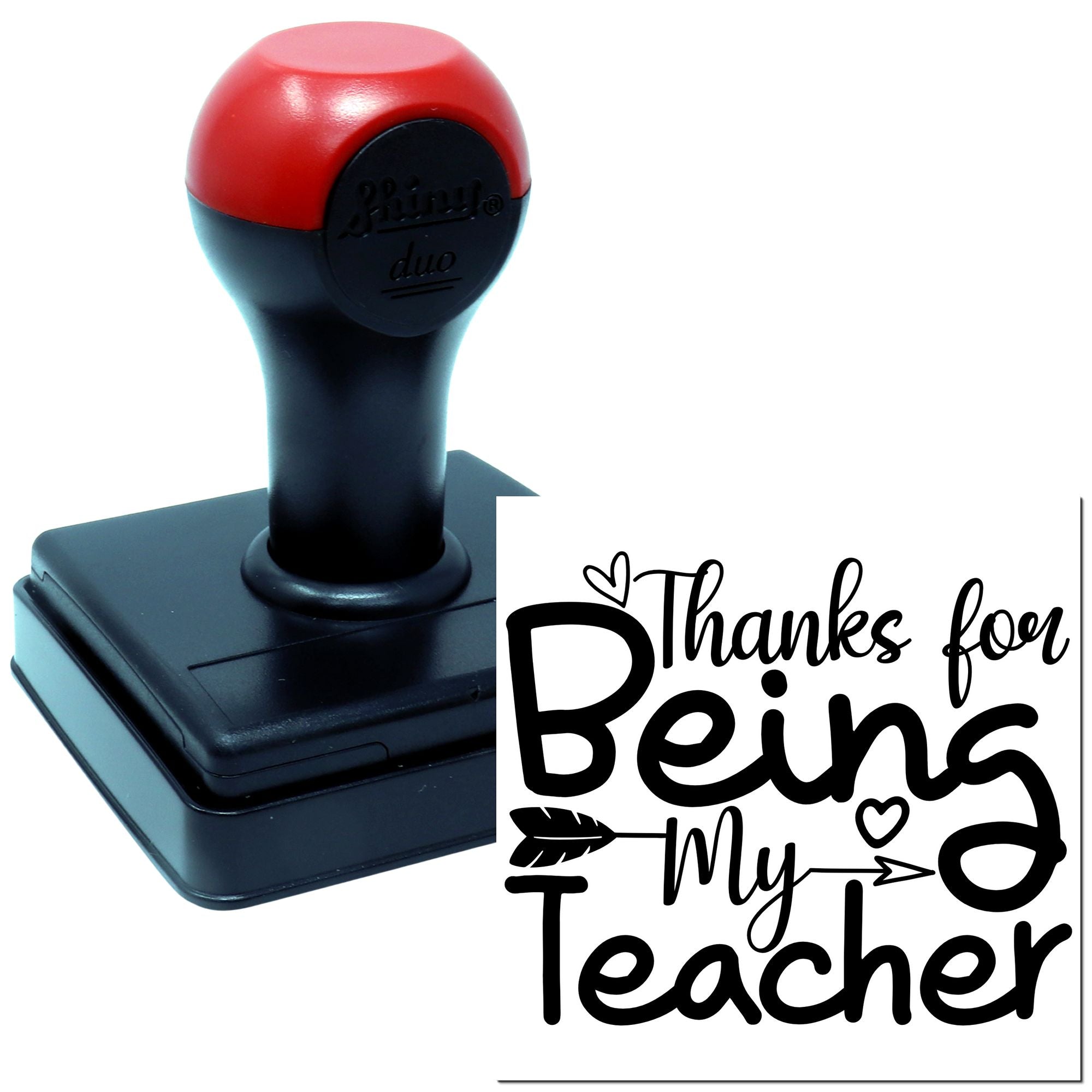
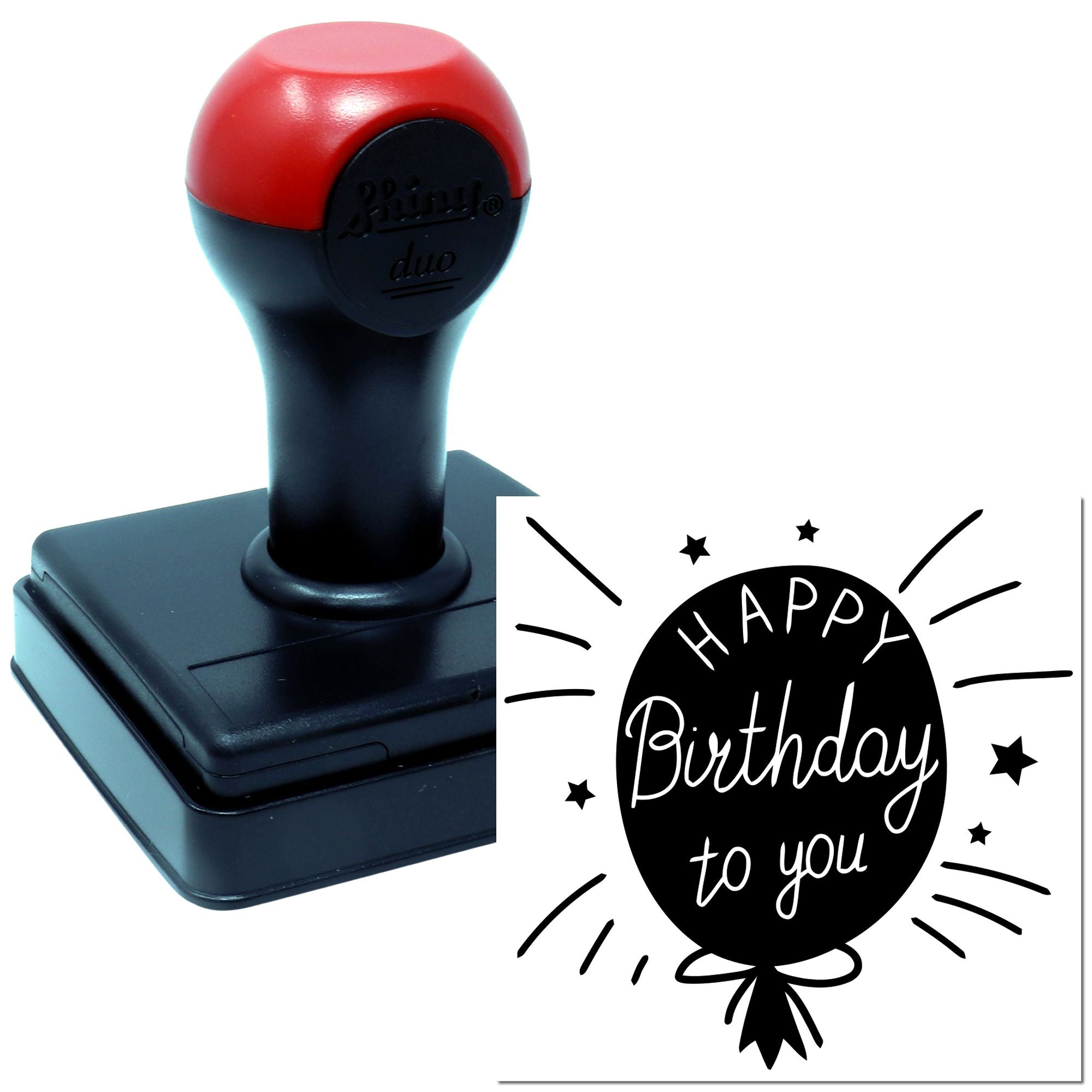
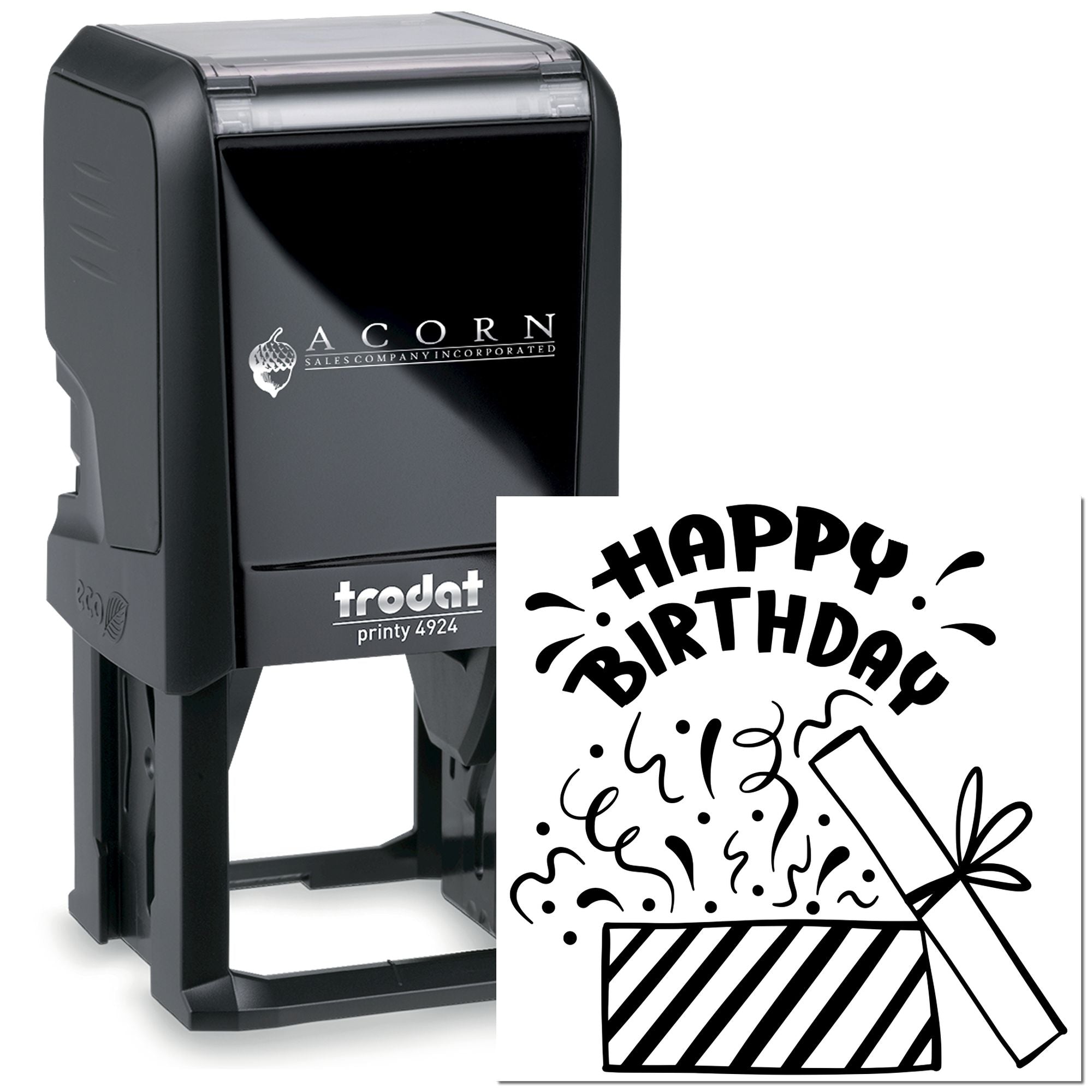
The $19.95 tier is built on the Shiny Duo platform and accounts for 41 of the 170 sampled products. It is still a hand stamp, so it still needs a pad, and the listings say so directly: ink pad sold separately. What the extra money buys over the wood block is the body. The listings describe a molded handle with built-in antimicrobial protection, named on several listings by the term fungistatic, and a protective dust cover that sits over the die between projects. The die is custom laser engraved rubber. Ink compatibility is the most open in the range. These listings name both industrial and water-based inks, and several add permanent inks, water-soluble inks, watercolor washes and embossing powders for raised effects. Ten of the 41 sampled duo stamps mention permanent ink and seven mention embossing powder, the clearest signal in the catalog that this body is meant to be paired with whatever pad the project needs. The design mix is broad: 10 motivational, 8 teacher, 7 Christian and religious and 6 birthday in the sample. The stated impression size is 1-5/8″.
Wood handle stamps at $24.95
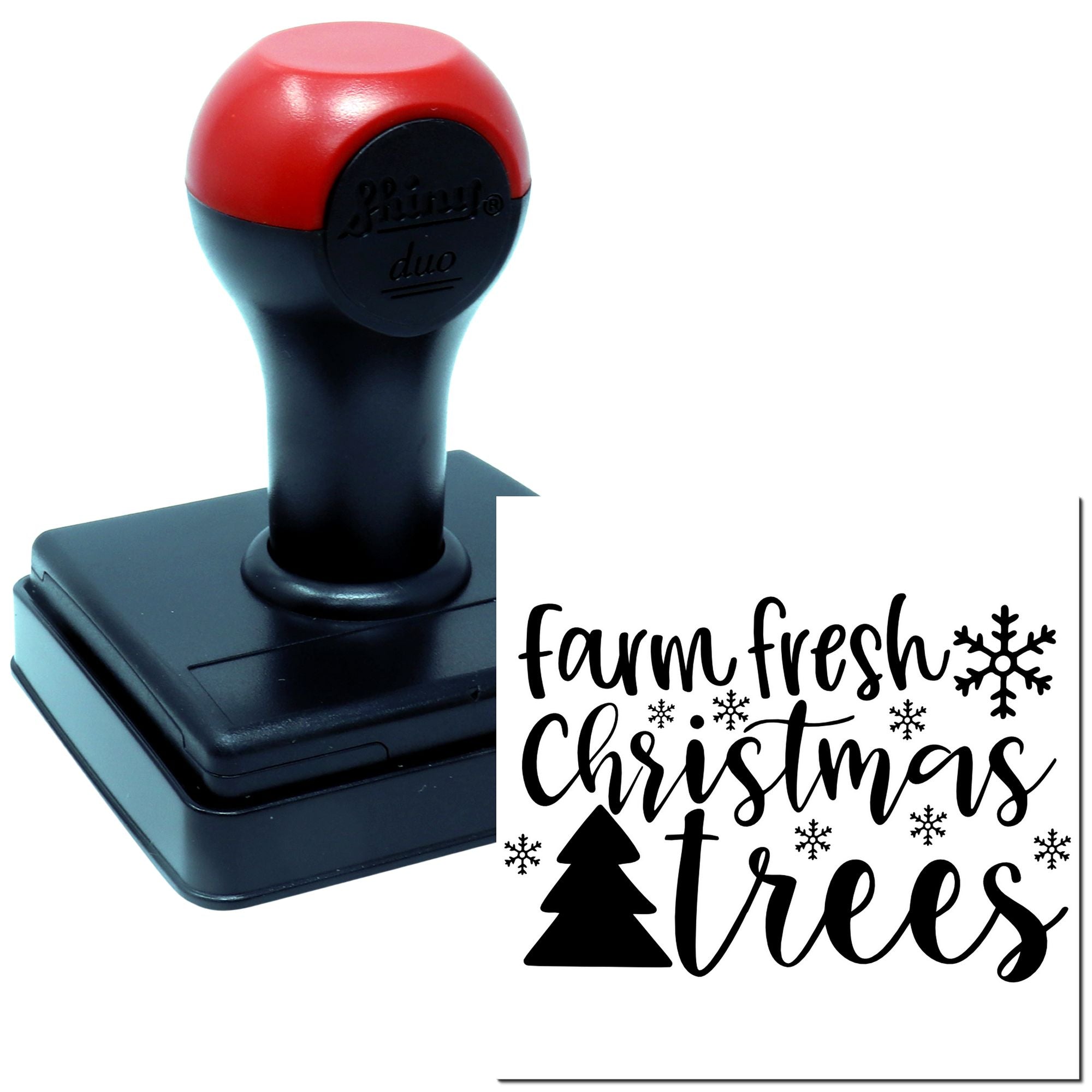
The $24.95 tier is the Acorn built wood handle stamp, 42 of the 170 sampled products and the largest single group in the sample. The body is a wooden handle with a black ergonomic grip over a laser engraved rubber face, and the listings lean on comfort during long sessions and on control for a centered impression. Like the two cheaper tiers it is a hand stamp with no ink inside. The catalog is not consistent about whether a pad comes with it: most listings describe pairing the stamp with your own pads or with quick-change pads, while two say a separate high-quality ink pad is included. That is a real inconsistency in the source data, so read the individual product page before assuming a pad is in the box. Where this tier separates itself is ink and surface. Nine sampled listings name industrial inks specifically, and the surface claims go past paper: fabric, vinyl, glass, metal, wood, leather and other non-absorbent surfaces, always qualified by the phrase with appropriate or stronger inks. Christmas and holiday is the strongest design family here at 15 of 42, then Christian and religious at 13. The stated impression size is 1-5/8″.
Self-inking stamps at $26.95
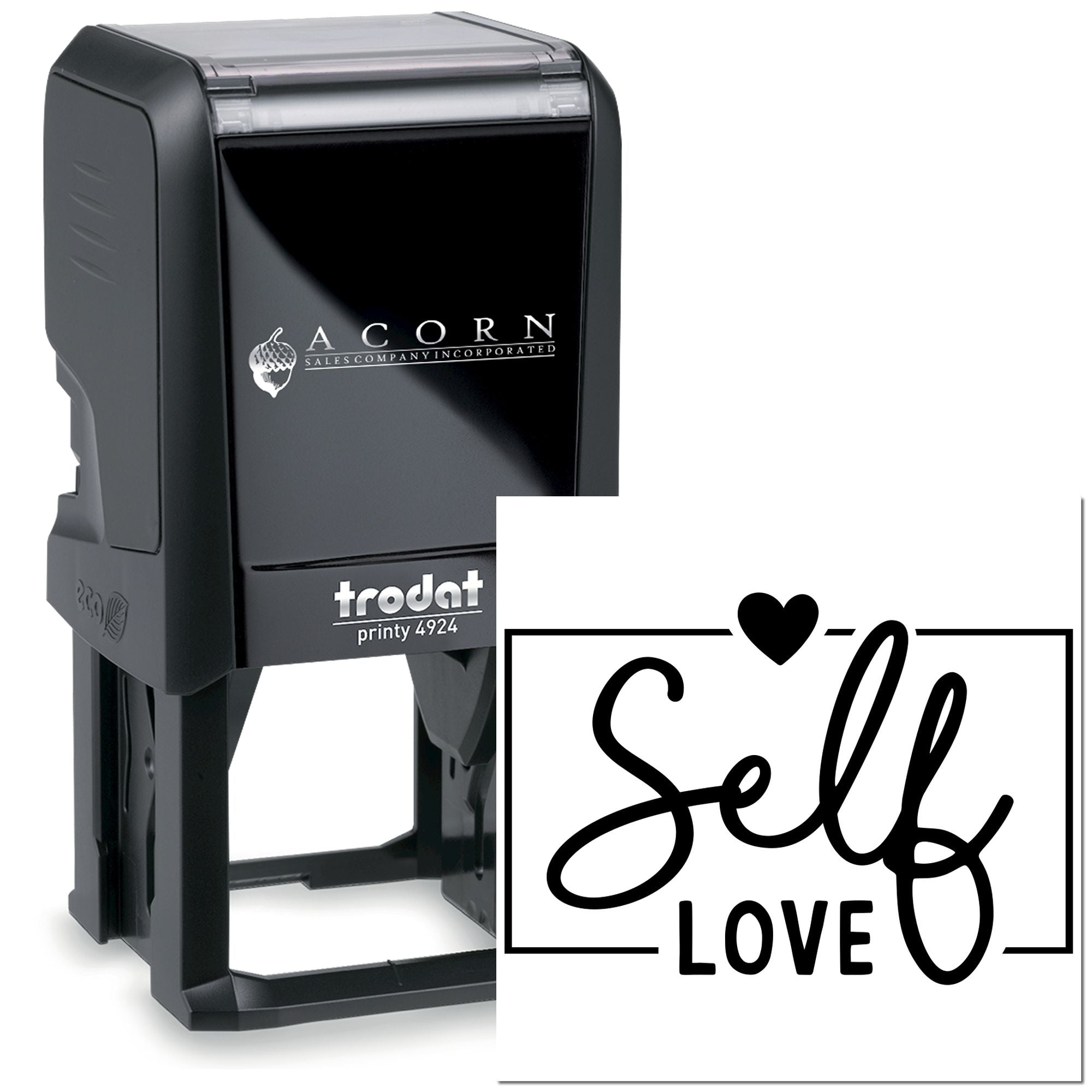
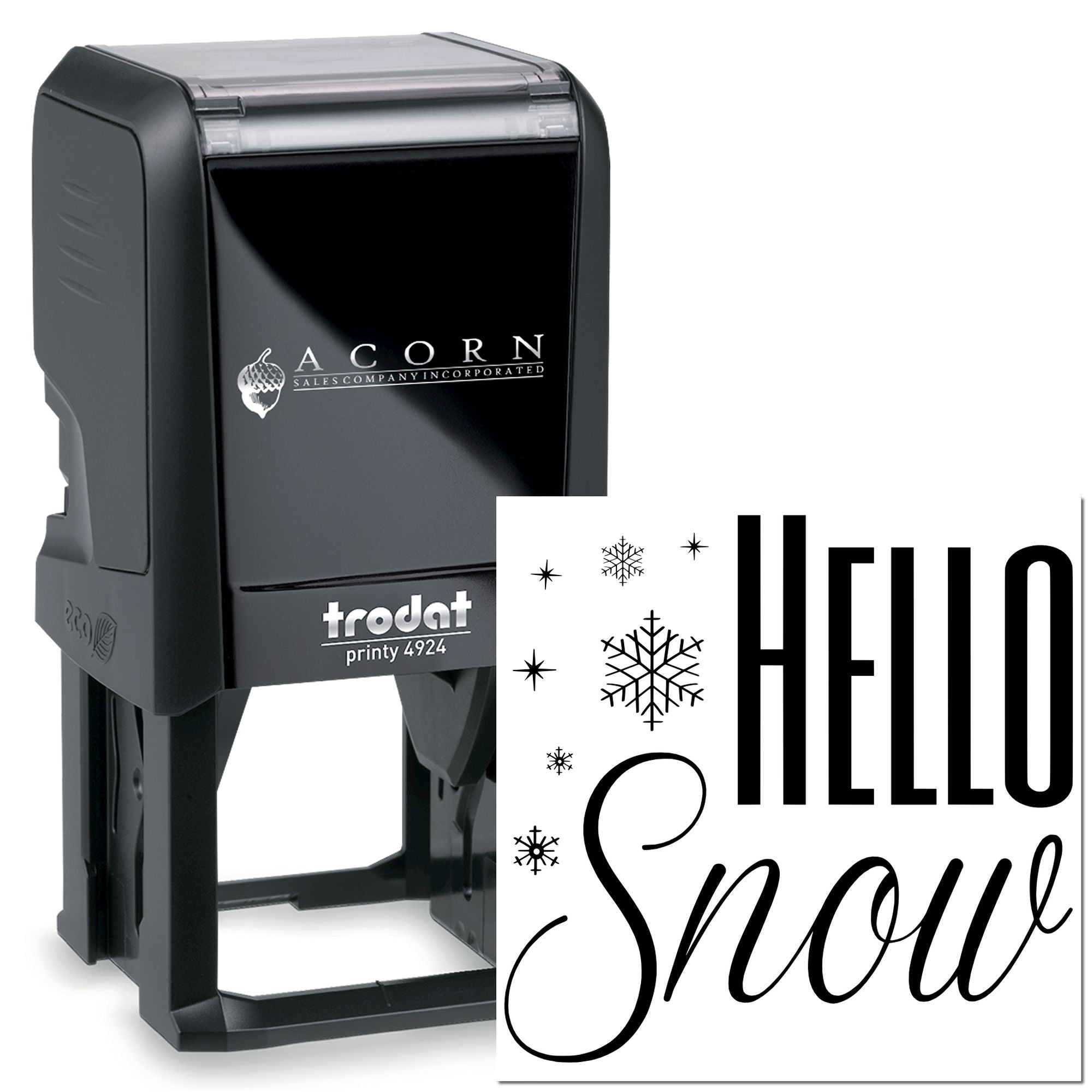
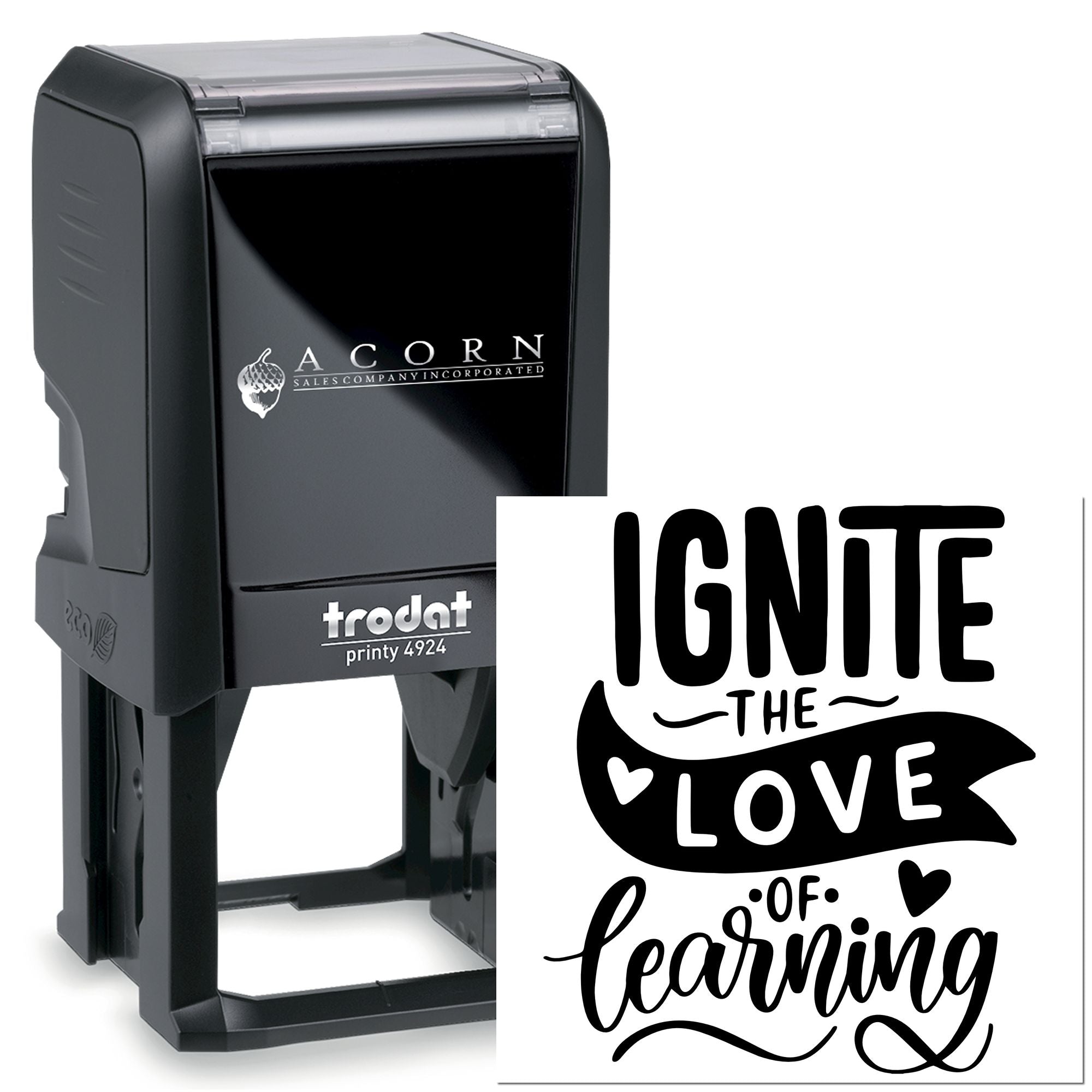
At $26.95 the ink moves inside the tool. This tier is Trodat built, 41 of the 170 sampled products, and it is the median price of the cluster. The listings describe a press and print action where one smooth press inks the die and lays down the impression, with the ink contained inside the body so there is no open pad on the table. Two numbers are consistent across all 41 sampled listings. The first is 11 ink colors, the widest color choice anywhere in this range. The second is up to 10,000 impressions. Impressions are called quick-drying on six sampled listings and smudge resistant on 13. The stated impression size is 1-5/8″, the same as the hand stamp tiers below it. Motivational is the largest design family here at 12 of 41, then teacher at 9.
Pre-inked stamps at $32.95
The top of the range is $32.95 and covers two bodies from two vendors, 41 sampled products between them. The PSI pre-inked stamps are 23 of those. Their listings describe a press mechanism that delivers even pressure with low noise and reduced hand strain, and an internal reservoir of oil-based ink that dries instantly for crisp, smudge-free impressions; oil-based ink is named on 21 of the sampled pre-inked listings. The Slim pre-inked stamps are the other 18, and their selling point is shape rather than mechanism: a razor-thin body that fits a pocket, a planner or a craft bag, with the same built-in reservoir and no pad required. Both share the ink choice: five colors, listed as red, blue, green, purple and black, against the 11 offered one tier down. Life is up to 25,000 impressions on the Slim and up to 15,000 on the PSI, described as fade and smear resistant. Those are the highest impression counts in the range and the narrowest color choice, the trade this tier asks you to make.
Design families across the whole range
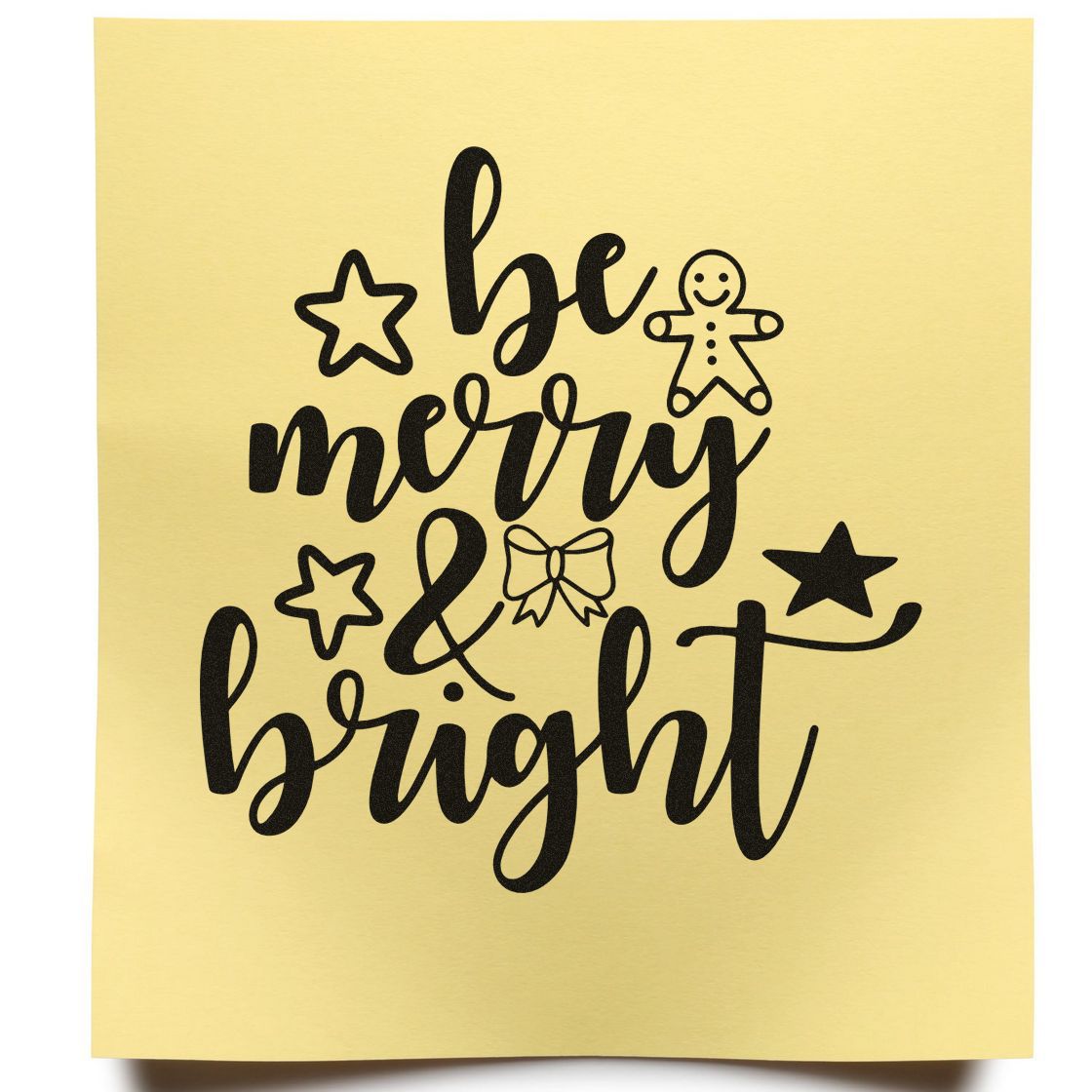
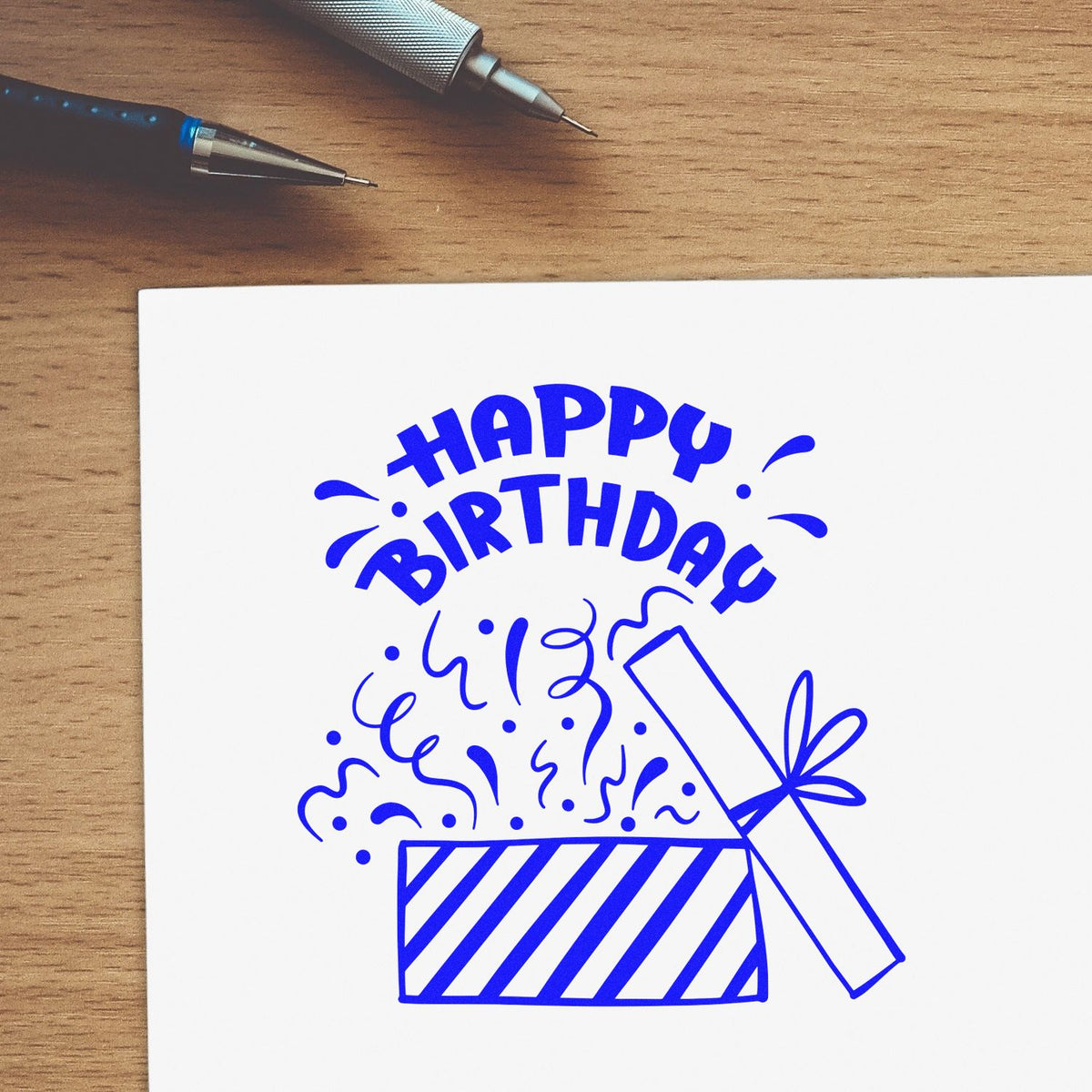
The bodies are few and the designs are many, which is why the cluster runs to 12,421 published products. In the 170 product sample the tagged design families break down as 39 Christian and religious, 38 motivational, 30 Christmas and holiday, 28 teacher, 15 birthday and 5 basketball, with a long tail of untagged designs covering gaming, music, travel, food, sports and animals. Most of these families run across all four of the bodies priced $19.95 and above, so a sentiment you like is usually available in more than one mechanism. Christmas and holiday is heaviest at $24.95; birthday is heaviest at $19.95 and $26.95. The illustrative animal designs sit alone in the $11.95 tier. Design style is typographic in the upper tiers, with hand-lettered script paired with bold block capitals, decorative borders, arrows, hearts, stars and floral motifs, almost always in black on white. The catalog publishes no browsable style index for this range, so the design is chosen by picking the individual product.
Sizes and dimensions
One figure covers almost the entire range. Every craft stamp listing above the entry tier quotes 1-5/8″, identically across the duo hand, wood handle, self-inking, PSI pre-inked and Slim pre-inked bodies. The catalog gives it as a single number and does not say whether it is a diameter, a side or a width, and it publishes no second dimension, so treat 1-5/8″ as the size of the stamping face rather than a full width by height specification. If you need the exact footprint of the printed image for a layout, the catalog does not give it. The $11.95 wood mounted art stamps are sized individually in the listing text, running from about three-quarters of an inch wide by one and three-quarters inches high to about two inches by two inches, with one round design at about one and three-quarters of an inch in diameter. Practically, 1-5/8″ is a focal size on a card front and a large accent on a gift tag, and the listings describe it both ways. No craft stamp in this cluster is a full-page background stamp.
How many impressions you get
Impression counts are published only where there is ink inside the tool. The self-inking stamps at $26.95 are rated at up to 10,000 impressions, a figure stated on all 41 sampled self-inking listings. The pre-inked stamps at $32.95 are rated at up to 25,000 impressions on the Slim and up to 15,000 on the PSI, described as fade and smear resistant. The three hand stamp tiers publish no impression count at all, for a simple reason: the ink comes from a pad you own, so the life of the stamp is the life of the rubber. Those listings talk about durability instead, and the $11.95 art stamps say deeply etched rubber delivers a lasting impression.





Ink and colors
Ink is the real difference between the tiers. The three hand stamp tiers, together 88 of the 170 sampled products, take ink from a pad you supply. The $19.95 duo hand listings are the most open about what that pad can hold: industrial and water-based inks are named on most of them, and individual listings add permanent ink, water-soluble ink, watercolor washes and embossing powder. The $24.95 wood handle listings push hardest toward industrial inks, named on nine sampled listings, and that is the tier the catalog ties to non-paper surfaces. The $11.95 art stamp listings simply say a separate ink pad is required. The $26.95 self-inking tier carries its own ink and offers 11 ink colors, stated on all 41 sampled listings. The $32.95 pre-inked tier carries oil-based ink in an internal reservoir and offers five colors: red, blue, green, purple and black, which is why those listings claim instant drying and smudge-free impressions. On surfaces, the catalog is confident about paper, cardstock, kraft, envelopes, tags, tissue and vellum. Beyond paper it gets conditional. Fabric appears on 42 sampled listings, mostly at $24.95, along with vinyl, glass, metal, wood and leather, always with a qualifier about appropriate, stronger or industrial inks. The catalog publishes no tested compatibility chart, so test a non-paper surface on a scrap first.
What you can customize
Nothing in this range is a personalized stamp. All 170 sampled products carry a stock stamp option tag, 88 of them the regular hand stamp set, 41 the self-inking set and 41 the pre-inked set, and none offers a text field, an artwork upload or a proofing step. The word personalized appears often in the listing copy, but it describes what the stamp does to your project, not what you can change about the stamp: it personalizes a gift bag, a favor tag or a place card. A few designs include a name in the fixed artwork, which reads as personalization but is part of that stock design and cannot be altered. What you choose is the design and the body. Pick the sentiment or image you want from a catalog of 12,421 published products, then pick the tier that matches how you work: $11.95 for a wood mounted art stamp with a pad you already own, $19.95 or $24.95 for a hand stamp with an open choice of ink, $26.95 for Self-Inking convenience in 11 colors, or $32.95 for the longest pre-inked life in five colors. If you need your own wording or your own artwork on a die, that is a different part of the Acorn range. Contact us about it rather than ordering a stock craft stamp and hoping it can be changed.
The price ladder buys a body, not a bigger picture
It is natural to read a range from $11.95 to $32.95 as a range of sizes. Here it is wrong. Every craft stamp in the sample from $19.95 upward quotes exactly the same 1-5/8″ stamping face. The duo hand stamp at $19.95, the wood handle stamp at $24.95, the self-inking stamp at $26.95 and both pre-inked bodies at $32.95 print an image the same size, and nothing in the catalog suggests the expensive one lays down a finer design.
What the ladder prices is where the ink lives and how long it lasts. At $19.95 and $24.95 the ink lives on your desk in a pad you bought separately, which costs you a setup step and a cleanup step but leaves the color and the ink chemistry open: water-based one day, industrial ink for a fabric tag the next, embossing powder on top when a card needs raised texture. At $26.95 the ink moves inside the body, you get 11 colors to choose from and up to 10,000 impressions before you think about it again, but you have given up the freedom to swap ink type at will. At $32.95 the ink is oil-based and sealed in a reservoir rated to 25,000 impressions on the Slim and 15,000 on the PSI, it dries instantly and resists smudging, and your color choice has narrowed to five.
So the question to settle first is not how big you want the image. It is whether you want one fixed color that is always ready, or an open pad and the ability to change ink for the surface in front of you. Someone who works in one house color and batches fifty cards at a time is better served at $26.95 or $32.95. A mixed media crafter who stamps kraft tags one hour and light fabric the next is better served by a hand stamp.



Ordering, proofs and delivery
The craft stamps are stock designs, so there is no artwork to approve and no proof to sign off. Design and body are fixed together in the product: a design is published as a duo hand stamp at $19.95 or a self-inking stamp at $26.95, not as one item with a body choice, so if you want the same sentiment in two mechanisms, check whether it is published in both. On dispatch, the catalog is specific in only one place. The $11.95 art stamp listings each state that the stamp typically ships in about 24 hours after ordering. The $19.95, $24.95, $26.95 and $32.95 listings use general language instead, describing fast or same-day turnaround without committing to a figure, so treat those as marketing copy rather than a published lead time. The catalog also publishes no shipping method, no transit time and no minimum order quantity for this range. If you are working to an event date, contact us before ordering.
Care and longevity
Acorn warrants embossing seals for two years and rubber stamps for six months. Every product in this cluster is a rubber stamp, so the six month term applies. It is worth saying plainly that no listing in the 170 product sample states a warranty term of its own; the word warranty does not appear anywhere in the sampled body copy, and the only guarantees mentioned are general satisfaction claims. The house rule governs here by default rather than by confirmation on the page. Day to day care is simple. The hand stamp tiers are described as durable and easy to clean, and cleaning between colors is what lets one stamp work in more than one ink, so clean the die before the ink dries on it. The duo hand stamps come with a protective dust cover that goes back over the die between projects. The catalog publishes no cleaning solution or storage case as a companion product for this range.
Products in this range
Browse the full range: Art Rubber Stamps and Craft Stamps, Craft Stamps, Handmade and Crafting Designer Stamps, Small Business Craft Stamps.
Related guides
- Self-Inking vs Pre-Inked vs Traditional Rubber Stamps
- Teacher and Classroom Stamps: Grading, Feedback and Rewards
- Custom Rubber Stamps: How They Are Made and How to Order
- Self-Inking, Pre-Inked and Traditional Rubber Stamps Compared
- Stamp Ink and Care: Complete Guide
- Personalized Holiday Stamps: A Gift Guide and When to Order
Frequently asked questions
How much does a craft rubber stamp cost?
From $11.95 to $32.95. The 170 product sample from this cluster sits on exactly five prices: $11.95 for a wood mounted art stamp, $19.95 for a duo hand stamp, $24.95 for a wood handle stamp, $26.95 for a self-inking stamp and $32.95 for a pre-inked stamp. The median across the cluster is $26.95, and there is nothing between those five points in the sample.
What size are these stamps?
1-5/8″ for every craft stamp above the entry tier, quoted identically on the duo hand, wood handle, self-inking and pre-inked listings. The catalog gives it as a single figure, does not say whether it is a diameter or a width, and publishes no second dimension. The $11.95 art stamps are sized individually, from about three-quarters of an inch to about two inches.
Does the stamp come with an ink pad?
Not on the $11.95 and $19.95 tiers, whose listings say a separate ink pad is required and sold separately. The $24.95 wood handle listings are inconsistent: most describe pairing the stamp with pads you supply, while two say a separate high-quality ink pad is included, so read the individual product page. The $26.95 and $32.95 tiers need no pad because the ink is inside the body.
Should I buy a hand stamp or a self-inking stamp?
Decide on ink, not on price. A hand stamp at $19.95 or $24.95 leaves the ink open, so you can use water-based, industrial or permanent ink, or embossing powder, at the cost of setting up and cleaning a pad. A self-inking stamp at $26.95 gives one fixed color from 11 choices and up to 10,000 impressions with no setup. Batch work in one color favors self-inking; mixed media favors a hand stamp.
What is a duo hand stamp?
The $19.95 tier, built on the Shiny Duo platform. It is a hand stamp with a molded handle the listings describe as ergonomic and fungistatic, meaning it carries built-in antimicrobial protection, plus a protective dust cover over the laser engraved rubber die. The ink pad is sold separately, and the listings name both industrial and water-based inks as compatible.
How many impressions do I get?
Up to 10,000 from a $26.95 self-inking stamp, quoted consistently across the sampled listings for that tier, and up to 25,000 from a $32.95 Slim pre-inked stamp or 15,000 from a PSI. The $11.95, $19.95 and $24.95 hand stamps publish no count, because the ink comes from your pad rather than from the tool.
What ink colors can I choose?
Eleven on the $26.95 self-inking tier, stated on all 41 sampled listings and the widest choice in the range. Five on the $32.95 pre-inked tier, listed as red, blue, green, purple and black. On the $11.95, $19.95 and $24.95 hand stamps the color is whatever pad you put under the die, so the choice is yours.
Can these stamps be used on fabric?
The listings say yes with the right ink, and they always attach that condition. Fabric is named on 42 of the 170 sampled listings, most heavily at $24.95, together with vinyl, glass, metal, wood and leather, and every mention is qualified by wording such as with appropriate or industrial inks. The catalog publishes no tested compatibility chart, so test on a scrap first.
Can I have my own name or wording put on one of these stamps?
No. Every product in the 170 product sample is a stock design with a fixed die, tagged accordingly, with no text field, no artwork upload and no proofing step. Where a listing uses the word personalized it describes what the stamp does to a card or a favor tag, not something you can change. For custom wording, contact us, since that sits outside this range.
What is the difference between the PSI and Slim stamps at $32.95?
Both are pre-inked, both cost $32.95, both print 1-5/8″ and both come in five colors; the Slim is rated to 25,000 impressions and the PSI to 15,000. PSI listings emphasize the mechanism: a press action with even pressure, low noise and reduced hand strain, fed by an internal reservoir of oil-based ink. Slim listings emphasize the shape: a razor-thin body that fits a pocket, a planner or a craft bag. In the sample there are 23 PSI and 18 Slim.
What are the stamps made of?
The catalog states materials only on the $11.95 art stamps: red rubber, deeply etched or laser engraved, on a sponge cushion, mounted on a white maple block, made in the United States. The four tiers above describe a laser engraved rubber die and a molded or wooden handle but do not name the rubber compound, so the catalog is silent on that detail from $19.95 upward.
Can I use embossing powder with these?
Several listings say so, mostly on the $19.95 duo hand tier, where seven sampled listings mention embossing powder for raised texture, and on the $24.95 wood handle tier, where four do. That fits, since only the hand stamp tiers let you choose the ink under the powder. The $26.95 and $32.95 tiers carry fixed ink chemistry and the catalog does not recommend them for heat embossing.
How quickly do these ship?
The $11.95 art stamps state it clearly: each of those listings says the stamp typically ships in about 24 hours or less after ordering. The other four tiers describe fast or same-day turnaround in general terms without publishing a figure, and the catalog gives no transit time, no shipping method and no minimum order. For a hard date, contact us first.
What is the warranty on a craft stamp?
Six months. Acorn warrants embossing seals for two years and rubber stamps for six months, and everything in this range is a rubber stamp. Note that no listing in the 170 product sample states a warranty term of its own, so the house rule applies by default rather than by confirmation on the product page. Contact us if a stamp fails inside its term.
Which tier suits a small maker selling at craft fairs?
It depends on the surface. If you stamp kraft tags, bags and tissue in one house color and need speed, the $26.95 self-inking tier gives 11 color choices and up to 10,000 impressions with no pad on the table. If you also stamp fabric or glass, the $24.95 wood handle tier is the one the listings tie to industrial inks. The $32.95 pre-inked tier gives the longest life, up to 25,000 impressions on the Slim and 15,000 on the PSI, but the narrowest color choice.








