
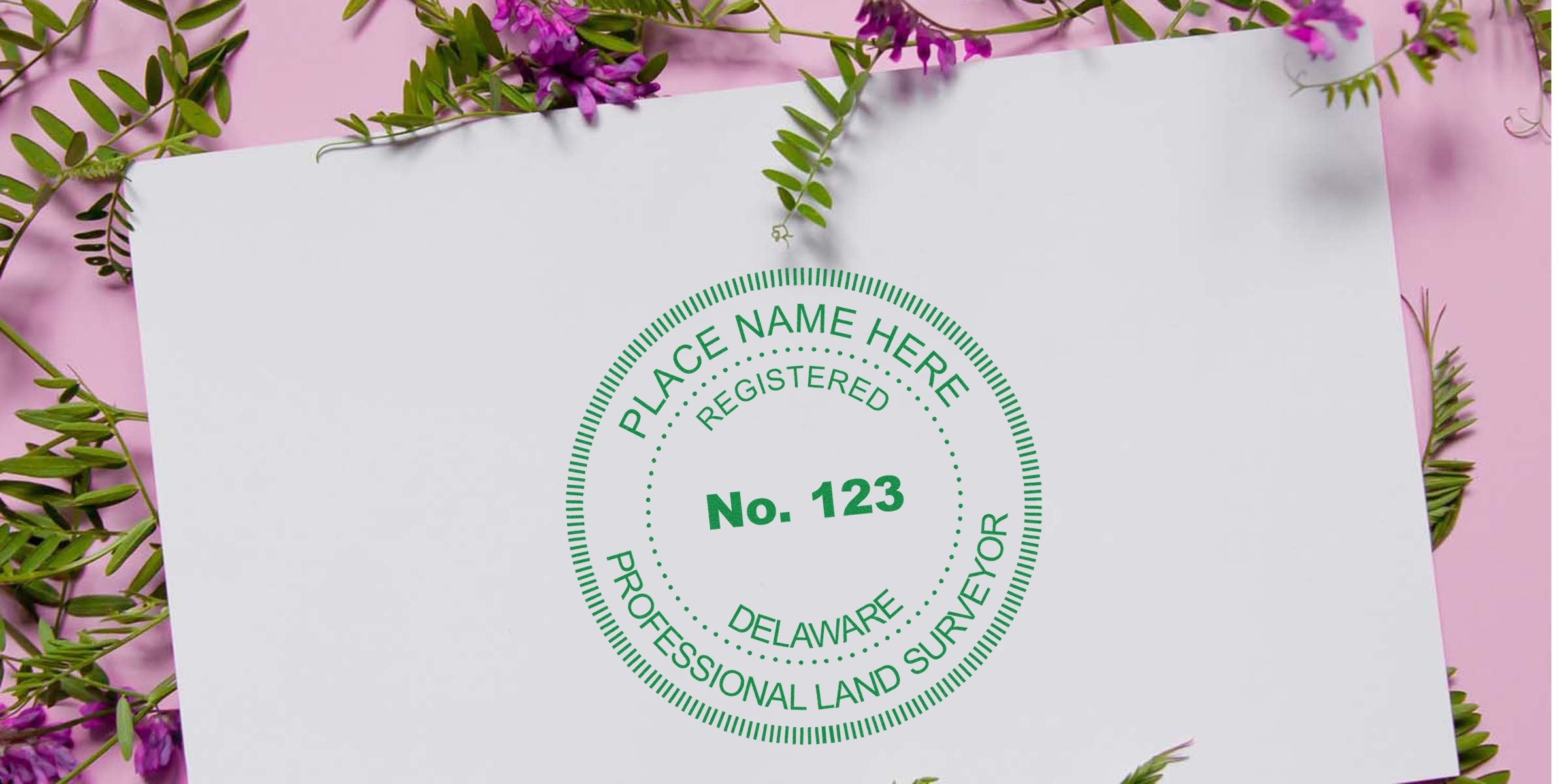
If you’re a licensed land surveyor in Delaware, you’ve probably heard that a Delaware land surveyor seal embosser is crucial for authenticating your work. This small, handheld device presses a raised impression onto official documents, making them both professional-looking and legally compliant. Because land surveying demands precision and integrity, your seal embosser is more than a formality. It’s a signal to clients, state regulators, and fellow professionals that you’ve taken every step to produce accurate results. And if you’re not sure how or why to get one, don’t worry. We’ll walk through everything you need to know so you can stamp or emboss your projects with complete confidence.
Before we dive into the details, it’s worth noting that land surveying in Delaware follows specific regulations set by governing bodies. You’ll also see references to the Delaware Land Surveyor Stamp or seal, which often complement an embosser. Although these may seem like interchangeable terms, each has its own role. In this post, we’ll clarify how they work, which guidelines apply to you, and why a reliable seal embosser belongs in every Delaware land surveyor’s toolkit.
Understand the Purpose
A professional seal or stamp confirms that you’ve conducted and finalized a survey in compliance with Delaware’s legal standards. Think of it like your signature—only it’s a physical impression rather than ink on paper. When you emboss a plat or report, you’re legally attesting that the measurements, calculations, and results reflect your expertise as a licensed practitioner.
Why an Embosser?
You might be wondering why an embossed seal is required when digital technology is everywhere. The most significant reason is authenticity. That raised impression is significantly harder to replicate, so it serves as a strong deterrent to forgery. Embossers also align with longstanding traditions that emphasize the professionalism and gravity of land surveying. While digital seals have their place in many offices, an embosser remains a tried-and-true way to underline your dedication to accuracy.
Added Benefit of a Physical Seal
Let’s be honest, sometimes we all crave something tangible. A physical seal embosser adds a layer of credibility in a world full of digital documents. You’ll find that local authorities, legal experts, and clients often appreciate this physical touchpoint. Plus, embossed documents stand out in your files—helpful if you ever need to reference or present your work face-to-face.
Explore Delaware Requirements
Delaware maintains specific rules that guide how land surveyors practice in the state. These rules cover everything from educational prerequisites to the specifications of a seal or stamp. If you’d like a deeper look into the state’s official standards, be sure to check out the delaware land surveyor stamp requirements. Understanding these guidelines up front can save you headaches later, especially if you ever need to justify your methodology or confirm that your documents meet local laws.
Reviewing State Board Guidelines
The Delaware Board of Professional Land Surveyors, or a similar regulatory body, typically lays out guidelines about the seal’s dimensions, border design, and text. For instance, your seal might need to display your name, license number, and the title “Professional Land Surveyor” encircled by “State of Delaware.” These design details ensure uniformity and trust. After all, when you see a perfectly formatted seal, you can bet it’s official.
Common Compliance Pitfalls
One of the most common compliance pitfalls is using an incorrect or incomplete seal design. Another is forgetting to emboss each page of key documents, such as final plats. Oversight on either front could lead to legal questions or project delays. Always triple-check that you meet every state requirement before you begin your actual fieldwork or at least before finalizing your maps and reports.
Choose the Right Embosser
As a land surveyor, you put your seal on some of the most important documents your clients will ever see. Your embosser should handle steady, repetitive use without losing clarity. So how do you pick the right one?
Types of Embossers
- Handheld Embosser: Simple, portable, and easy to store. Great for occasional or on-the-go use.
- Desk Embosser: Larger and more robust, often with a lever arm. Recommended for higher-volume stamping.
- Long-Reach Embosser: Designed to reach further into a page, which can be handy if you want your seal in the center rather than along the edge.
Partnering With a Trusted Supplier
Relying on a reputable supplier can save you from frustration. At Acorn Sales, we’ve been in business since 1964, helping professionals get quality embossers that meet different state standards. One advantage of working with a specialized provider is that you can rest assured the final product aligns perfectly with Delaware’s rules. Some suppliers, like Acorn Sales, even include a free digital seal alongside your physical embosser, giving you extra flexibility in how you finalize documents.
Learn Maintenance Tips
A well-maintained embosser gives you crisp, clear impressions every time, which goes a long way toward affirming your reputation as a detail-oriented surveyor.
Simple Upkeep Steps
- Store in a Cool, Dry Spot: Keep your embosser away from direct sunlight and moisture. It’ll help preserve the cutting dies that create the impression.
- Wipe the Surface: Use a lint-free cloth to remove dust or debris that might accumulate from storage or daily use.
- Avoid Excessive Force: Press steadily, not aggressively. Forcing the handle can misalign the plates.
- Test Before Official Use: Always test your seal on a scrap page if it’s been sitting idle for a few weeks. Ensuring alignment and clarity prevents embarrassing misprints.
Trouble-Shooting Common Issues
- Faint Impressions: This often results from worn embossing plates. If your design starts looking fuzzy, it may be time for a replacement.
- Misaligned Impression: A jam or accidental drop can shift the alignment. Gently realign the top and bottom plates according to the manufacturer’s instructions.
- Sticky Mechanism: A quick dab of light, non-staining lubricant on the hinge can solve this. Just be sure to wipe away surplus oil to avoid inky smudges.
Consider the Benefits
If you’re still on the fence about whether you really need a Delaware land surveyor seal embosser, let’s look at a few undeniable advantages.
Establishes Trust
When your stamp or embosser is consistently crisp, it reinforces your professional credibility. Clients know they’re getting the real deal, and any regulatory boards instantly see that you’re following protocol. The seal speaks louder than a promise—it’s a visual statement that you’re accountable.
Protects Your Work
In an industry where thoroughness can make or break a boundary dispute, your seal is a form of insurance. Let’s say a question arises about a property line years down the road. Your embossed documents can serve as official proof that you dutifully performed every step required by state regulations. This proof can be invaluable in defending your methods or clarifying confusion.
Stay Compliant and Confident
Having an embosser is just the tip of the iceberg. You’ll also want to stay updated on changes in legislation, new surveying technologies, and best practices in documentation. When you maintain a golden standard for compliance, you’ll find that everything from project approvals to client satisfaction becomes easier.
Staying Current With Regulations
Rules evolve, especially as new technologies emerge. Subscribe to your state board’s newsletter, join professional organizations, and read official advisories. Regularly refreshing your knowledge not only keeps you out of trouble but also makes you a go-to expert among your peers. That’s the kind of reputation that can boost word-of-mouth recommendations.
Boosting Client Confidence
When you consistently follow Delaware’s guidelines, clients get the message that you take your license seriously. The presence of a finely embossed seal, along with thorough documentation, can calm any nervous homeowner or real estate developer. They’ll see that you’ve marked every ‘i’ and crossed every ‘t.’ In a way, that seal is a final handshake saying, “I’ve verified everything here, and I stand behind it.”
In Delaware, you’ll likely need an updated seal or stamp that reflects your new details. Check with the state board for the exact steps. Once your information is officially updated, you can order a replacement embosser. Many suppliers, including Acorn Sales, can handle these changes quickly so your practice remains uninterrupted.
Final Thoughts
A Delaware land surveyor seal embosser is more than a rubber stamp—it’s your guarantee of authenticity, your professional signature, and sometimes even your legal shield. When you choose the right embosser and follow Delaware’s guidelines, you’re not just adding flair to your maps and reports. You’re stating that every measurement and calculation adheres to the state’s high standards. From establishing trust with your clients to safeguarding yourself against future legal disputes, the seal embosser is a non-negotiable tool in your surveying arsenal.
If you’re ready to invest in a reliable embosser or want to learn more about ensuring compliance, consider partnering with a trusted supplier like Acorn Sales. We’ve been honing our craft since 1964 and offer a free digital seal alongside our physical embossers. This lets you choose the style that best fits each job, providing both convenience and authenticity when you need it most. Don’t forget to keep up with evolving regulations, keep your tools maintained, and stay proud of the professional mark you leave on every page. By doing so, you’ll show clients, peers, and regulators alike that you’re serious about accuracy, diligence, and the long-lasting value of reliable land survey documentation.
Frequently Asked Questions
Do I Actually Need an Embosser if I Have a Digital Seal?
While digital seals are convenient, an embosser remains a key component for most Delaware land surveyors. Many local agencies, courts, and clients prefer the traditional form because it creates a tactile and recognizable mark of authenticity. Plus, in certain legal situations, embossed documents carry more weight if questions arise about document legitimacy.
How Often Should I Replace the Embosser Die?
It depends on your usage. If you’re embossing dozens of sheets daily, you may need a replacement die sooner—perhaps annually or biannually. If your practice is part-time, the plates might last several years. Keep an eye on the impression quality. If details become faded or uneven, it’s time to swap in a new die.
Can My Embosser Fulfill Requirements for Surrounding States?
Usually, you need a separate seal for each state in which you’re licensed. Regulations differ from state to state, so there’s rarely a single design that meets every state’s requirements. If you’re licensed in multiple jurisdictions, be sure to get embossers or stamps specifically designed for each one.








