
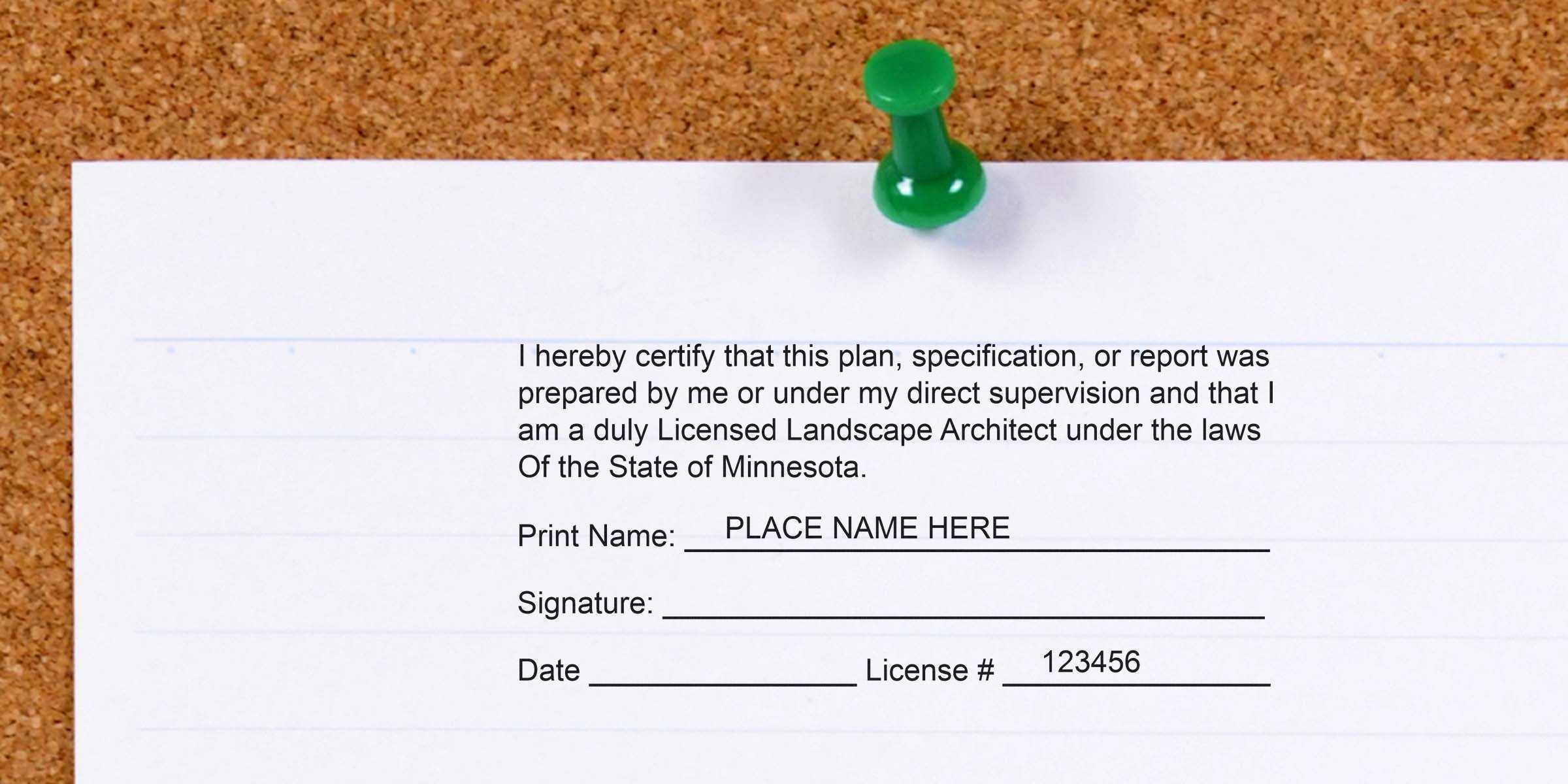
If you’re searching for a Minnesota Landscape Architect Stamp Official guide, you’re in the right spot. This post will walk you through the essential rules, requirements, and best practices so you can confidently use your stamp and seal. You’ll learn about licensing details, format options, correct usage, and how to stay compliant over time. Let’s dive in!
Recognize Minnesota Licensing Requirements
Before you order your first stamp, it’s crucial to know why Minnesota requires it in the first place. As a landscape architect, you’re responsible for designing outdoor environments that meet specific safety, aesthetic, and environmental standards. Because of this responsibility, the Minnesota Board of Architecture, Engineering, Land Surveying, Landscape Architecture, Geoscience, and Interior Design (commonly known as the Board) oversees licensure.
You may already be familiar with registration exams, continuing education, and other professional maintenance duties. But the official stamp is one more piece of the licensing puzzle. It verifies that plans and documents you submit are indeed your work, and that you stand behind them. Essentially, that little seal can say a lot about your professional credibility.
Key Points to Remember
- A valid license or registration is required to legally practice as a landscape architect in Minnesota.
- Your stamp or seal must convey authenticity and accountability for your presented drawings or reports.
- You should always comply with the state board’s guidelines for stamp usage, size, and wording.
Understand the Official Stamp Role
The stamp isn’t merely a rubber imprint of your name. It’s an official seal that demonstrates your project documents meet the quality standards of the state. In other words, your Minnesota Landscape Architect Stamp and related seal prove that a licensed professional (you!) has reviewed, approved, and taken responsibility for the design work.
Why Stamps Are Critical
- Authentication: It’s a quick, reliable way for clients, regulatory bodies, and fellow professionals to confirm that you’re involved in a project.
- Compliance: Minnesota’s regulations require licensed landscape architects to affix a stamp on certain filings or final drawings.
- Protection: Your seal, along with your license number, ensures that legal accountability is traceable and official.
You might also come across separate terms like “seal” and “stamp.” They typically refer to the same concept, although a “seal” can be an embosser or digital file, and a “stamp” can be self-inking or pre-inked. Whichever version you use, it must adhere to state regulations.
Meet Minnesota Stamp and Seal Standards
So how do you ensure your stamp meets all of Minnesota’s guidelines? The Board typically lays out the dimensions, wording, and arrangement. Additionally, the actual format used—whether rubber stamp, embossed seal, or digital seal—must be recognized as valid in Minnesota.
Common Requirements
- Bearing Your Name: Your full legal name, as stated on your license.
- License Number: Must be visible, accurate, and distinct.
- “Licensed Landscape Architect” or Official Title: Typically required wording around the seal’s circumference.
- Crisp, Readable Font: Large enough to remain legible when reproduced.
Since each state has unique rules, you’ll want to confirm the exact instructions through the Board’s official documentation. Keep in mind that these rules may occasionally change. Checking for updates before you buy or reorder is a smart move.
Choose a Trusted Supplier
Once you confirm the necessary layout, the next step is finding a reputable provider for your Minnesota Landscape Architect Stamp and Seal. You want a supplier who’s familiar with state requirements, offers durable products, and provides top-notch customer support.
At Acorn Sales, we’ve been in business since 1964, focusing on quality stamps and seals for licensed professionals. We understand the specific guidelines for Minnesota’s landscape architects and offer a variety of products tailored to meet them. Plus, we offer a free digital seal with your purchase, making it easy to authenticate your digital documents.
Factors to Consider
- State Compliance: Ensure your supplier can produce stamps that follow Minnesota’s guidelines.
- Quality Materials: Look for sturdy construction that lasts, especially on frequently used stamps.
- Digital Seal Availability: More projects now require electronic submissions, so having a digital file is a big plus.
If you need more details or want to see how these stamps look, check out our Minnesota Landscape Architect Stamp page. You’ll find product examples and additional tips for stamping success.
Explore Stamp Options and Formats
You can’t just pick any stamp off a store shelf. To maintain a professional look and meet Minnesota standards, you’ll want the right format. The main options include hand stamps, embossers, self-inking designs, and digital seals. Each has pros and cons, which you can see below:
| Stamp/Seal Type | Pros | Cons |
|---|---|---|
| Pre-Inked Rubber Stamp | - Crisp impressions - Less mess than traditional pads |
- Requires refilling ink over time |
| Self-Inking Stamp | - Convenient for frequent use - Integrated ink pad |
- Can dry out if not stored properly |
| Embosser | - Distinct raised impression - Hard to forge |
- Not always suitable for copies and scans |
| Digital Seal | - Essential for e-submissions - Easily updated |
- Must ensure secure electronic usage |
Choosing the right approach might depend on the kind of documents you produce and whether you work with physical or digital drawings. If you often handle large volumes of prints, a self-inking stamp or a sturdy pre-inked one can speed up your workflow. If you’re shifting toward paperless operations, a digital seal is key.
Use and Preserve Your Stamp
Having the official stamp is only half the battle. You also need a plan to store and maintain it properly. Here are some steps to keep your stamp in good shape:
- Store It Safely: Consider a small case or protective pouch, especially if you travel between job sites or offices.
- Keep It Clean: Wipe away any built-up ink or residue after use. This preserves clear impressions and helps extend the life of your stamp.
- Check Alignment: If you’re stamping large drawing sets, test on a scrap sheet first to ensure everything lines up correctly.
Proper Imprint Placement
Where should the seal go on a set of plans or a formal report? Generally, you’ll place it near your signature or where the Board indicates it. Avoid the edges of the page where partial impressions can occur. Also, keep an eye on any mandatory disclaimers or date lines that might need to appear next to the stamp.
Keep Up with Renewals
Licensing doesn’t stand still. If your Minnesota license lapses, you’ll need to renew it to continue stamping legitimate documents. Typically, the Board requires a renewal every few years, along with proof of continuing education credits.
Renewal Tips
- Mark Calendar Reminders: Don’t let the renewal window slip by.
- Complete CE Requirements: Make sure you meet any continuing education classes, seminars, or training sessions.
- Update Your Stamp If Needed: If you change your name or your license number changes for any reason, you’ll need a new stamp or seal that reflects your correct credentials.
It’s also wise to track changes in stamping rules. If the Board modifies your required seal design, plan for an updated stamp so you remain fully compliant.
Summary and Next Steps
As a Minnesota landscape architect, your stamp is a big part of your professional identity. It verifies that you meet the state’s stringent guidelines for safety, design, and accountability. By understanding the Board’s rules, choosing a reliable supplier like Acorn Sales, and following best practices for usage, you’ll keep your projects on track and your license in good standing.
If you’re just getting started, consider these immediate next steps:
- Double-check your current license status with the Minnesota Board.
- Decide whether you need a pre-inked stamp, self-inking stamp, or embosser.
- Order the correct stamp from a trusted supplier with knowledge of Minnesota’s requirements, such as Acorn Sales.
- Download your free digital seal for any e-submissions you might have.
Once you’ve got your stamp and seal all sorted out, you can focus on doing what you love most: designing beautiful, functional landscapes that make Minnesota’s outdoor spaces shine.
Feel free to share this post with fellow landscapers who might also need the inside scoop on staying compliant in Minnesota. Stamping and sealing might not be the most glamorous part of landscape architecture, but it’s definitely one of the most important. Good luck on your projects, and happy stamping!
Frequently Asked Questions
Do I Need a Physical Stamp If I Mostly Work Digitally?
If you submit a project in paper format, the Board generally requires a physical stamp. However, digital seals are widely accepted for electronic submissions. Many professionals opt to have both, so they’re prepared for any submission method.
Can I Use the Same Stamp if My License Number Changes?
No. If your license number changes or if you legally change your name, you’ll need an updated stamp that matches the new information. Using an outdated seal could lead to compliance issues.
Is an Embosser Enough to Meet Minnesota Requirements?
Embossers are often acceptable, but they must include all the same details a rubber or self-inking stamp would have, including your name, license number, and the words “Licensed Landscape Architect.” Always verify with the state Board to be certain.
How Soon Can I Start Using My Stamp After Ordering It?
As soon as you have your stamp and you’re officially licensed, you can begin stamping. Just confirm that the impression meets the Board’s size, legibility, and layout requirements first. Also, keep your license documentation handy in case you need to prove valid registration.








