

Written by Acorn Sales Company, manufacturing stamps and seals since 1964 · Reviewed by Holly R, VP of Sales and Marketing at Acorn Sales, against the Tennessee State Board of Examiners for Architects, Engineers, and Land Surveyors and Tenn. Code Ann. § 62-2-306(b) on 21 September 2026 · Updated 21 September 2026
The die holds four pieces of information and nothing more. Rule 0120-02-.08(8)(a): “Such stamps or seals shall not include the registrant’s signature or date of signature.” No facsimile signature, no engraved date and no blank date line inside the artwork. Everything else is added by hand, because rule 0120-02-.08(3) requires you to superimpose “his signature (not a rubber stamp) and date of signature across the face and beyond the circumference of the seal.” Across it and past the outer circle, in ink.
The legend is Registered. Tenn. Code Ann. § 62-2-306(b) names the exact words, and for this registration they are Registered Landscape Architect, alongside Registered Architect and Registered Engineer, with either State of Tennessee or Tennessee. Licensed and Professional are both wrong here, even though both are common on landscape architect seals elsewhere.
No diameter appears anywhere. Rule 0120-02-.08(1) prescribes the seal by diagram, printing three images labeled (a) Engineer, (b) Architect and (c) Landscape Architect, and states no dimension, tolerance or inner-circle figure. Work from diagram (c) or from a board-approved sample rather than letting a supplier improvise or relabel an architect diagram.
Tennessee landscape architect seal requirements at a glance
| Requirement | Tennessee rule | Source |
|---|---|---|
| Seal required | Yes | Tenn. Code Ann. § 62-2-306(b) |
| Required elements | Your name as registered, Your registration number, Registered Landscape Architect and State of Tennessee or Tennessee | Tenn. Code Ann. § 62-2-306(b) |
| Size and shape | Not addressed. Rule 0120-02-.08(1) prescribes the seal by diagram, printing three images labeled (a) Engineer, (b) Architect and (c) Landscape Architect, and states no diameter, no tolerance and no inner-circle. | Tenn. Comp. R. & Regs. 0120-02-.08(1)(c) (design given by diagram only) |
| Device allowed | Rule 0120-02-.08(8)(a) provides that “Subject to the requirements of this rule, rubber-stamp, embossed, transparent self-adhesive or electronically generated seals may be used.” The transparent self-adhesive option is unusual and permitted here. | Tenn. Comp. R. & Regs. 0120-02-.08(8)(a) |
| Signature and date | Rule 0120-02-.08(3) requires that “The registrant shall superimpose his signature (not a rubber stamp) and date of signature across the face and beyond the circumference of the seal on documents listed above.” The signature must cross the seal and run past the outer circle, the date of signature goes with it, and a signature stamp is prohibited outright. | Tenn. Comp. R. & Regs. 0120-02-.08(3), (8)(b) |
| What must be sealed | Rule 0120-02-.08(2) requires the seal on all original sheets of any bound or unbound set of working drawings or plans, including tracings and other reproducible sheets; the original cover or index pages identifying all specification pages covered; and the original cover or index pages for design calculations or reports submitted for review. | Tenn. Comp. R. & Regs. 0120-02-.08(2), (4), (5), (9) |
| Electronic seal | Criteria rather than products. | Tenn. Comp. R. & Regs. 0120-02-.08(8)(a), (b) |
| Renewal and lapse | Tenn. Code Ann. § 62-2-306(b) provides that documents “shall be stamped with the seal during the life of a registrant’s certificate, but it is unlawful for anyone to stamp or seal any document with the seal after the certificate of the registrant named on the seal has expired or has been revoked.” The bar reaches anyone, not only the registrant. | Tenn. Code Ann. § 62-2-306(a), (b) |
| Firm requirements | Not applicable as a seal matter. | Tenn. Comp. R. & Regs. 0120-06-.01 to 0120-06-.03 |
| Regulator | The Tennessee State Board of Examiners for Architects, Engineers, and Land Surveyors | Tenn. Code Ann. Title 62, Chapter 2, Part 3 (§ 62-2-306), Part 6 (§§ 62-2-601, 62-2-602) and Part 8 (§§ 62-2-801 to 62-2-807) |





Is a seal required in Tennessee?
Tennessee puts landscape architects in the same statute and the same rule chapter as architects and engineers. Tenn. Code Ann. § 62-2-306(b) requires each registrant to “obtain and keep a seal of the design authorized by the board” and to “stamp with the registrant’s seal all original sheets of any bound set of plans and the first sheet of any specifications or reports prepared by the registrant or under the registrant’s responsible charge.” Rule 0120-02-.08(2) extends that to all original sheets of any bound or unbound set of working drawings or plans, the original cover or index pages identifying all specification pages covered, and the original cover or index pages for design calculations or reports submitted for review. Rule 0120-02-.01 applies the whole chapter to persons registered to practice architecture, engineering or landscape architecture.
What must appear on the seal
- Your name as registered
- Your registration number
- Registered Landscape Architect
- State of Tennessee or Tennessee
Nothing optional, and one flat prohibition. The statutory legend is “Registered Landscape Architect”, alongside Registered Architect and Registered Engineer, so Licensed Landscape Architect and Professional Landscape Architect are both wrong wording for Tennessee. Rule 0120-02-.08(8)(a) then bars two things many suppliers add as a matter of course: “Such stamps or seals shall not include the registrant’s signature or date of signature.” No facsimile signature, no engraved date, and no blank date line inside the artwork. Tennessee has a separate seal diagram for landscape architects at 0120-02-.08(1)(c), so do not have an architect diagram relabeled.
Size and shape
Not addressed. Rule 0120-02-.08(1) prescribes the seal by diagram, printing three images labeled (a) Engineer, (b) Architect and (c) Landscape Architect, and states no diameter, no tolerance and no inner-circle dimension. Chapters 0120-01 and 0120-02 were checked for the words inch and diameter with no hit, and Tenn. Code Ann. § 62-2-306 states none either. The diagrams carry no extractable text, so take the layout from the published diagram (c) in the Secretary of State’s copy of 0120-02 or from a board-approved sample.

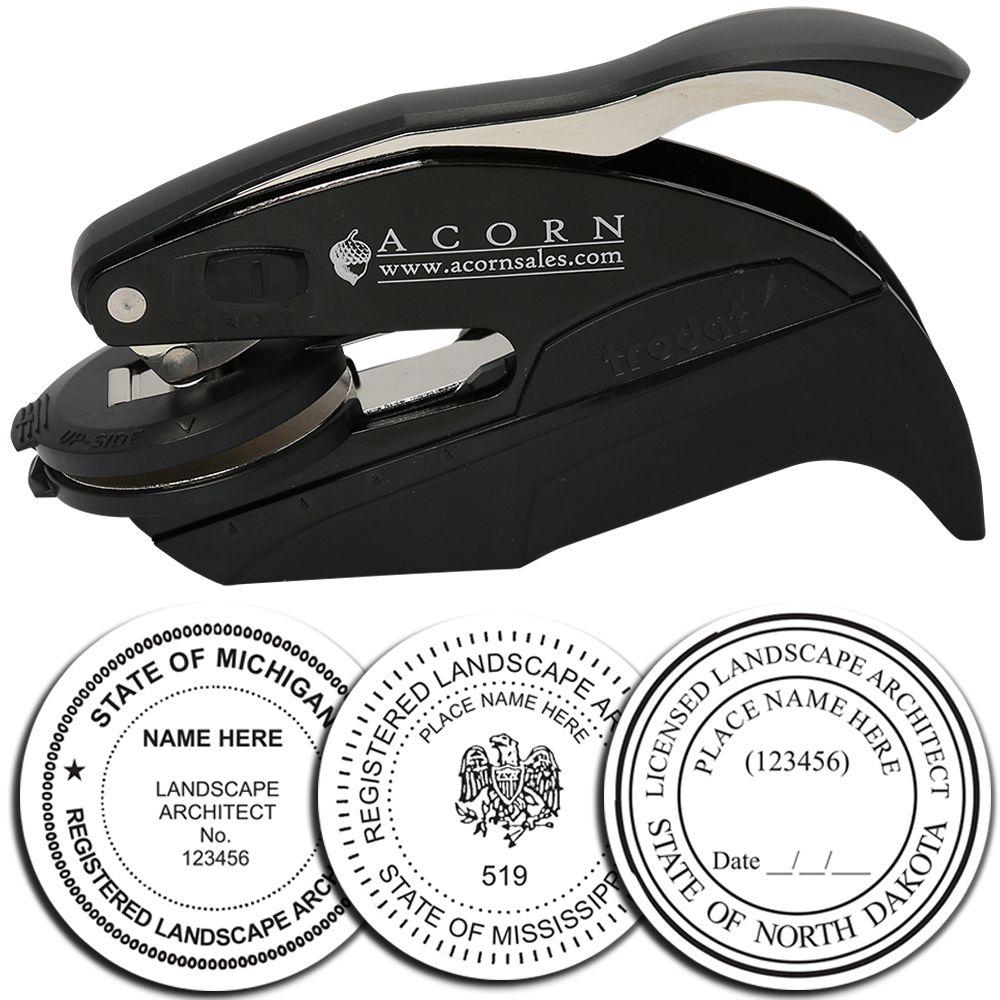

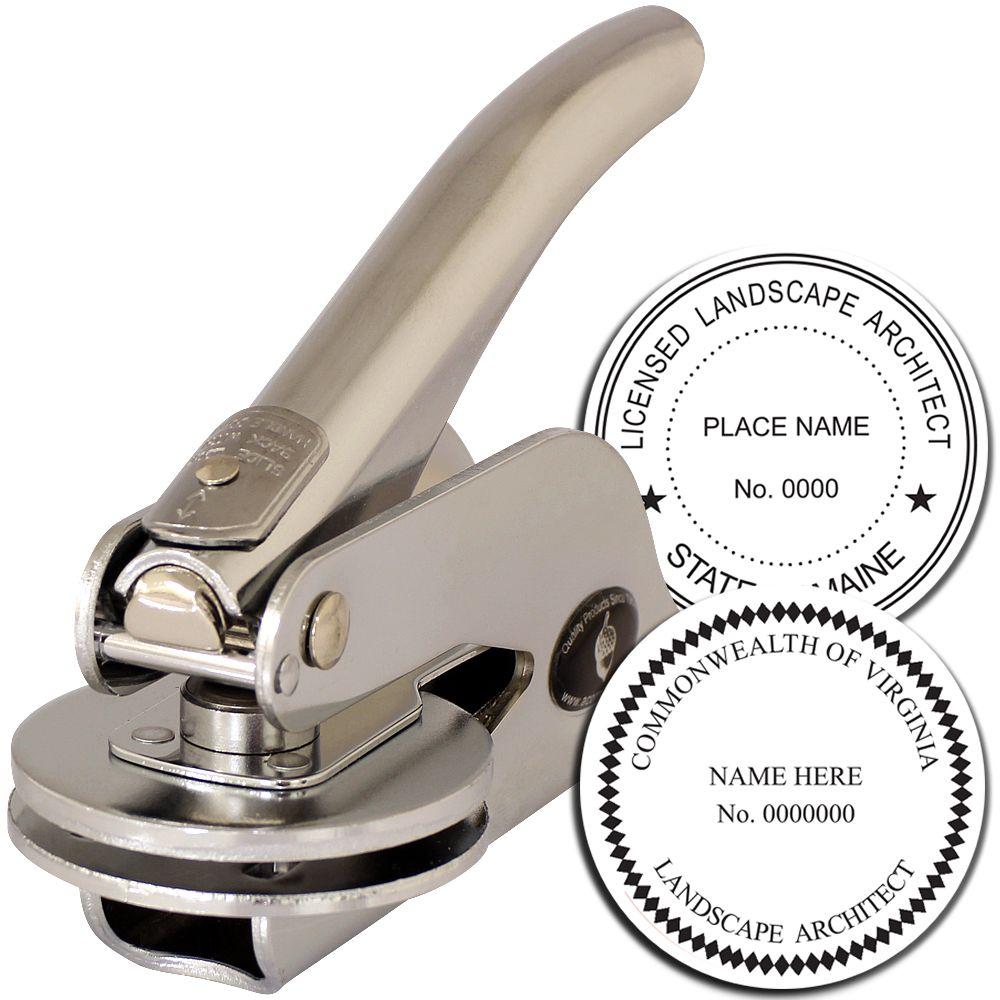
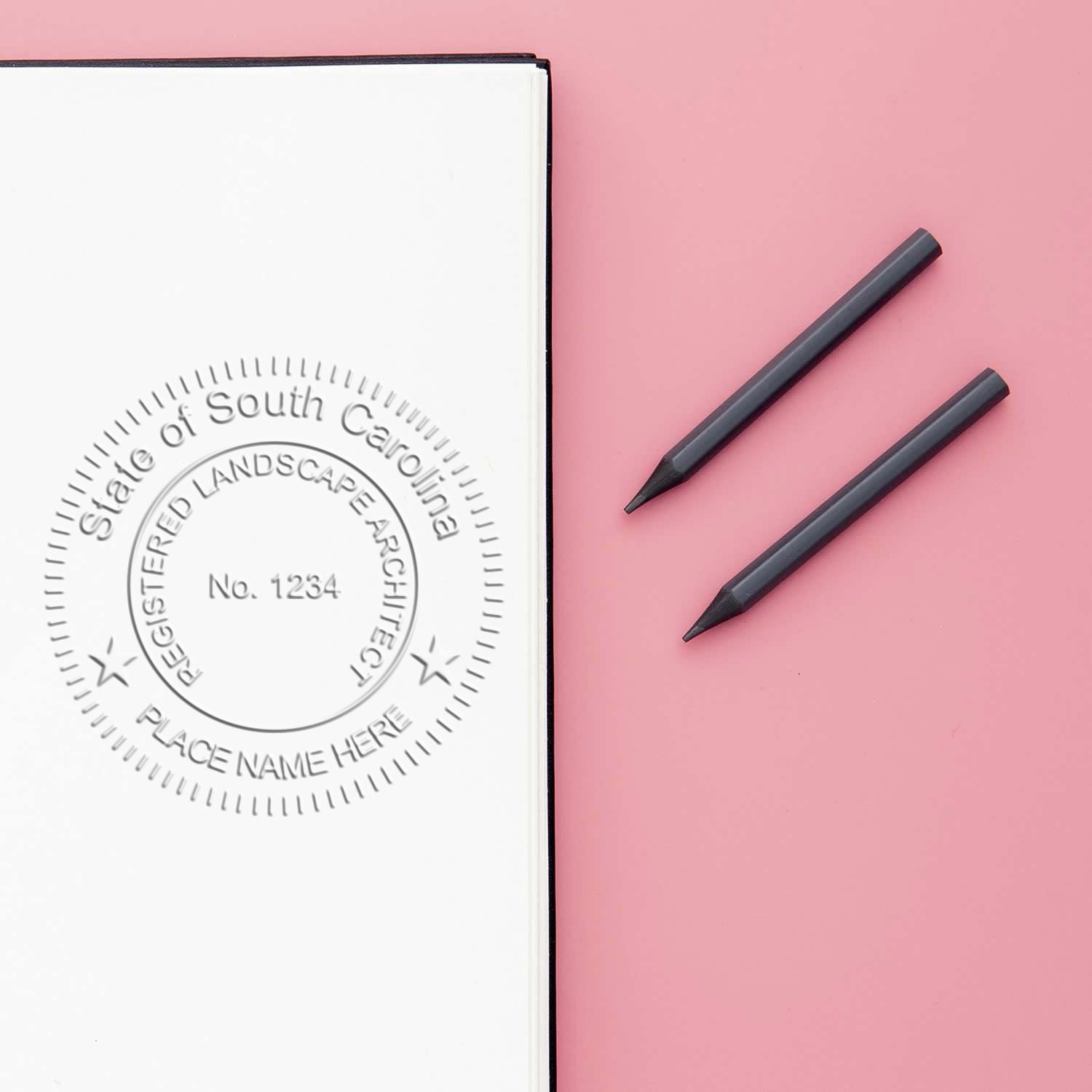
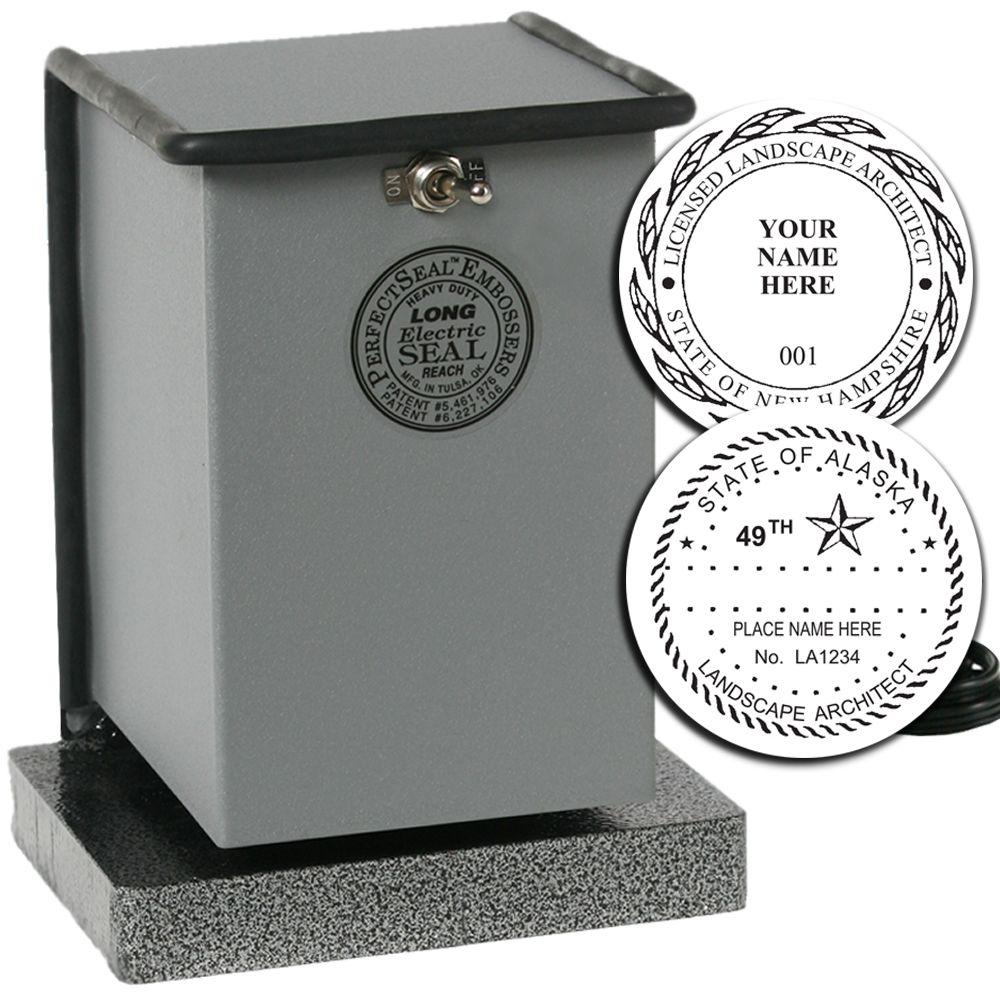

Embosser, rubber stamp or digital
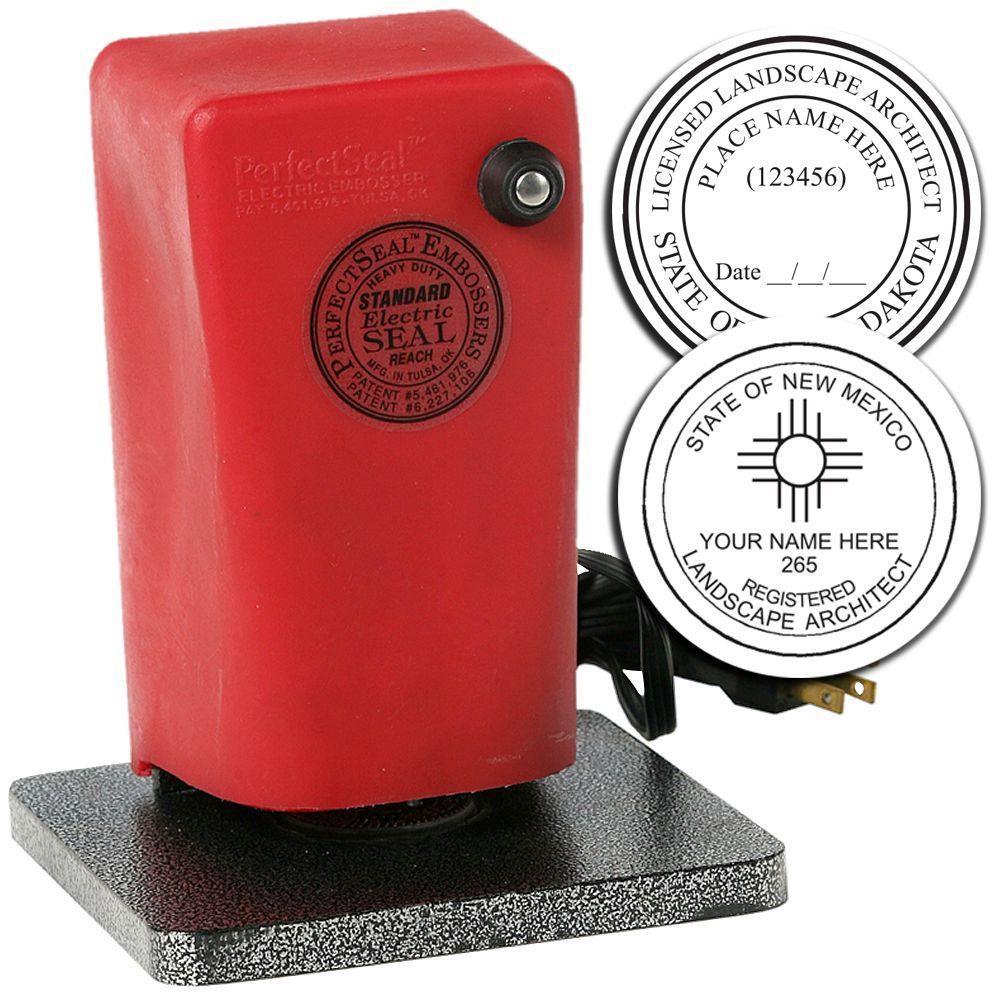
Rule 0120-02-.08(8)(a) provides that “Subject to the requirements of this rule, rubber-stamp, embossed, transparent self-adhesive or electronically generated seals may be used.” The transparent self-adhesive option is unusual and permitted here. The rubber stamp is the safe buy because the signature has to cross the seal in ink. Whichever device you choose, it carries no signature and no date.
Signing and dating
Rule 0120-02-.08(3) requires that “The registrant shall superimpose his signature (not a rubber stamp) and date of signature across the face and beyond the circumference of the seal on documents listed above.” The signature must cross the seal and run past the outer circle, the date of signature goes with it, and a signature stamp is prohibited outright. For electronic work, 0120-02-.08(8)(b) allows an electronically generated signature and date “either across the face and beyond the circumference of the seal or adjacent to the seal”.
Landscape architects get their own diagram, the word Registered, and a die with no date
Three Tennessee facts decide this order. First, the legend. Tenn. Code Ann. § 62-2-306(b) names the exact words, and for this registration they are “Registered Landscape Architect”, with either “State of Tennessee” or “Tennessee” alongside. Licensed and Professional are both wrong here, even though both are common on landscape architect seals elsewhere.
Second, the artwork. Rule 0120-02-.08(1) reproduces three separate diagrams, (a) Engineer, (b) Architect and (c) Landscape Architect, and gives no diameter for any of them. Diagram (c) is the one to work from. There is no stated dimension to fall back on if a supplier improvises.
Third, the emptiness of the die. Rule 0120-02-.08(8)(a) says “Such stamps or seals shall not include the registrant’s signature or date of signature”, and 0120-02-.08(3) requires the registrant to superimpose “his signature (not a rubber stamp) and date of signature across the face and beyond the circumference of the seal”. So the stamp holds four pieces of information and nothing more, and everything else is added by hand in ink that runs past the outer edge.
Which documents must be sealed
Rule 0120-02-.08(2) requires the seal on all original sheets of any bound or unbound set of working drawings or plans, including tracings and other reproducible sheets; the original cover or index pages identifying all specification pages covered; and the original cover or index pages for design calculations or reports submitted for review. Subsection (4) requires each registrant in responsible charge to seal the portions they are responsible for, which is the usual position for a landscape architect whose sheets sit inside a larger set. Subsection (5)(a) bars sealing work developed outside the registrant’s responsible charge, and subsection (9) requires working or partially completed plans that are not construction documents to be designated preliminary and not for construction, or “for review only,” or “draft,” or otherwise clearly marked as incomplete.




Electronic and digital seals
Criteria rather than products. Rule 0120-02-.08(8)(b) requires an electronic authentication process attached to or logically associated with the document, and requires the digital signature to be “Unique to the individual using it”, “Capable of verification”, “Under the sole control of the individual using it”, and “Linked to a document in such a manner that the digital signature is invalidated if any data in the document is changed.” No certificate authority, algorithm or format is named. An electronically generated seal is allowed on the same terms as a rubber stamp and must carry no signature and no date.
Renewal, lapse and retirement
Tenn. Code Ann. § 62-2-306(b) provides that documents “shall be stamped with the seal during the life of a registrant’s certificate, but it is unlawful for anyone to stamp or seal any document with the seal after the certificate of the registrant named on the seal has expired or has been revoked.” The bar reaches anyone, not only the registrant. Whether the registration number changes on reinstatement, and whether a dead seal must be destroyed or surrendered, are not addressed in § 62-2-306 or in chapters 0120-01 or 0120-02.
Firm requirements
Not applicable as a seal matter. Rule 0120-06-.03(1) requires corporations, partnerships and firms offering architectural, engineering and landscape architectural services to the public to comply with Tenn. Code Ann. §§ 62-2-601 and 62-2-602, and 0120-06-.03(2) exempts an individual registrant practicing in the registrant’s own name as a sole proprietorship from filing a disclosure form. The word seal does not appear in chapter 0120-06. No firm seal, no firm number on the sheet.
What to check before you order
Order a plain seal carrying your name as registered, your registration number, the words Registered Landscape Architect, and either State of Tennessee or Tennessee. Nothing else goes in the die: no facsimile signature, no date, no blank date line. Rubber stamp, embosser, transparent self-adhesive and electronic image are all permitted, and the rubber stamp suits the wet-ink signature that has to cross the seal. Take the layout from diagram (c) at 0120-02-.08(1) or from a board-approved sample, because Tennessee states no diameter anywhere.
Browse landscape architect stamps and seals.
Frequently asked questions
Is a seal required for landscape architects in Tennessee?
Yes. Tenn. Code Ann. § 62-2-306(b) requires each registrant to “obtain and keep a seal of the design authorized by the board” and to “stamp with the registrant’s seal all original sheets of any bound set of plans and the first sheet of any specifications or reports prepared by the registrant or under the registrant’s responsible charge.” Rule 0120-02-.01 applies the whole chapter to persons registered to practice architecture, engineering or landscape architecture.
What has to appear on a Tennessee landscape architect seal?
Your name as registered, your registration number, the words Registered Landscape Architect, and either State of Tennessee or Tennessee. Nothing else, and in particular no signature and no date of signature inside the die.
What size is a Tennessee landscape architect seal?
Tennessee states none. Rule 0120-02-.08(1) prescribes the seal by diagram and gives no diameter, no tolerance and no inner-circle dimension, and neither chapter 0120-01 nor 0120-02 nor Tenn. Code Ann. § 62-2-306 supplies one. Take the layout from diagram (c) in the Secretary of State’s copy of 0120-02 or from a board-approved sample.
Which devices does Tennessee permit?
Four, including an unusual one. Rule 0120-02-.08(8)(a): “Subject to the requirements of this rule, rubber-stamp, embossed, transparent self-adhesive or electronically generated seals may be used.” The transparent self-adhesive option really is on the list. The rubber stamp is the practical buy because the signature has to cross the seal in ink.
How do I sign a Tennessee sealed document?
Rule 0120-02-.08(3) requires the registrant to superimpose “his signature (not a rubber stamp) and date of signature across the face and beyond the circumference of the seal on documents listed above.” The signature crosses the seal and runs past the outer circle, the date of signature goes with it, and a signature stamp is prohibited outright. For electronic work, 0120-02-.08(8)(b) allows an electronically generated signature and date “either across the face and beyond the circumference of the seal or adjacent to the seal.”
Which Tennessee documents have to be sealed?
Rule 0120-02-.08(2) requires the seal on all original sheets of any bound or unbound set of working drawings or plans, including tracings and other reproducible sheets; the original cover or index pages identifying all specification pages covered; and the original cover or index pages for design calculations or reports submitted for review. Subsection (4) requires each registrant in responsible charge to seal the portions they are responsible for, which is the usual position for a landscape architect whose sheets sit inside a larger set, and subsection (5)(a) bars sealing work developed outside your responsible charge.
How do I mark incomplete Tennessee drawings?
Rule 0120-02-.08(9) requires working or partially completed plans that are not construction documents to be designated preliminary and not for construction, or “for review only,” or “draft,” or otherwise clearly marked as incomplete.
What is the Tennessee digital signature standard?
Criteria rather than products. Rule 0120-02-.08(8)(b) requires an electronic authentication process attached to or logically associated with the document, and requires the digital signature to be “Unique to the individual using it,” “Capable of verification,” “Under the sole control of the individual using it,” and “Linked to a document in such a manner that the digital signature is invalidated if any data in the document is changed.” No certificate authority, algorithm or format is named, and an electronically generated seal must carry no signature and no date, just like a rubber stamp.
Can anyone use a Tennessee seal after the certificate expires?
No. Tenn. Code Ann. § 62-2-306(b) provides that documents “shall be stamped with the seal during the life of a registrant’s certificate, but it is unlawful for anyone to stamp or seal any document with the seal after the certificate of the registrant named on the seal has expired or has been revoked.” The bar reaches anyone, not only the registrant. Whether the registration number changes on reinstatement, and whether a dead seal must be destroyed or surrendered, are not addressed.
Does a Tennessee landscape architecture firm need a seal?
No. Rule 0120-06-.03(1) requires corporations, partnerships and firms offering architectural, engineering and landscape architectural services to the public to comply with Tenn. Code Ann. §§ 62-2-601 and 62-2-602, and 0120-06-.03(2) exempts an individual registrant practicing in the registrant’s own name as a sole proprietorship from filing a disclosure form. The word seal does not appear in chapter 0120-06, so there is no firm seal and no firm number on the sheet.








