

Written by Acorn Sales Company, manufacturing stamps and seals since 1964 · Reviewed by Holly R, VP of Sales and Marketing at Acorn Sales, against the Missouri Board for Architects, Professional Engineers, Professional Land Surveyors, and Professional Landscape Architects and § 327.411.1 and.4, RSMo (current version effective August 28, 2026) on 21 September 2026 · Updated 21 September 2026
A Missouri PE seal is one and three-quarters inches in diameter, exactly. 20 CSR 2030-3.060(1) opens by requiring each licensee to “secure a seal one and three-quarters inches (1 3/4″) in diameter of the following design,” and it gives no range, no minimum and no tolerance.
The design is equally fixed. Two concentric circles, with State of Missouri in roman capitals on the upper part of the annular space and Professional Engineer on the lower part, and inside the inner circle the licensee’s name together with the license number preceded by the roman capitals PE. The letter prefix is part of the number, so a Missouri engineer’s seal reads PE and then the digits, not the bare digits. Roman capitals are specified, so a script or mixed-case ring is wrong, and the rule prescribes no expiration date and no board logo on the face.
Missouri also gives the device unusual legal weight. Section 327.411.2, RSMo, makes the seal “the legal equivalent of the licensee’s signature whenever and wherever used,” and section 327.411.1 requires it on all final technical submissions, defined to include drawings, specifications, plats, surveys, exhibits, reports and certifications of construction.
Missouri PE seal requirements at a glance
| Requirement | Missouri rule | Source |
|---|---|---|
| Seal required | Yes | § 327.411.1 and.4, RSMo (current version effective August 28, 2026) |
| Required elements | Two concentric circles, State of Missouri, Professional Engineer, Your name as licensed and Your license number prefixed PE | 20 CSR 2030-3.060(1) |
| Size and shape | One and three-quarters inches (1-3/4 inches) in diameter. 20 CSR 2030-3.060(1) opens by requiring each licensee to “secure a seal one and three-quarters inches (1 3/4″) in diameter of the following design”. That is a single stated dimension, not a range and not a minimum, and the rule gives no tolerance. | 20 CSR 2030-3.060(1) |
| Device allowed | All three common devices are legal. 20 CSR 2030-3.060 provides that “The seal may be in the form of an embossing seal, a rubber stamp, or a computer-generated image, identical in size, design and content with the provisions of section (1) above.” The safe buy is a 1-3/4 inch inked rubber stamp, because it satisfies the paper case outright and because the computer-generated image has to match it in size, design and content anyway. | 20 CSR 2030-3.060 |
| Signature and date | Missouri accepts three signature forms and ties the date to the sealing event, not the transmittal. | 20 CSR 2030-3.060(3) |
| What must be sealed | Everything final. | § 327.411.1,.3,.4, RSMo |
| Electronic seal | No named technology and no named cryptographic standard. 20 CSR 2030-3.060 sets functional criteria instead: the digital signature must be “unique to, and under the sole control of the person using it; it must also be capable of verification and be linked to a document in such manner that the digital signature is invalidated if any data on the document is altered”. That is the familiar four-part test, satisfied in practice by a certificate-based digital signature, but the rule names no issuer, no certificate authority and no algorithm. | 20 CSR 2030-3.060(3) |
| Renewal and lapse | Not addressed. | § 327.411, RSMo, and 20 CSR 2030-3 (silent) |
| Firm number on documents | The firm needs a certificate of authority, but not a seal and not a number on the drawing. | 20 CSR 2030-10.010 |
| Licensing board | The Missouri Board for Architects, Professional Engineers, Professional Land Surveyors, and Professional Landscape Architects | Sections 327.411 |
Rules for other states are on PE stamp requirements by state.




Is a seal required in Missouri?
Missouri requires a seal The duty sits in statute and is absolute for finished work. Section 327.411.1, RSMo, provides that each professional engineer “shall have a personal seal in a form prescribed by the board, and he or she shall affix the seal to all final technical submissions”, and defines technical submissions to include “drawings, specifications, plats, surveys, exhibits, reports, and certifications of construction”. Section 327.411.2 gives the seal unusual legal weight: it “shall be the legal equivalent of the licensee’s signature whenever and wherever used”. The board rule, 20 CSR 2030-3.060, prescribes the form and adds the signature and date mechanics. Preliminary work is expressly out: section 327.411.4 states that nothing in the section or any board rule “shall require any professional to seal preliminary or incomplete documents”.
What must appear on the seal
- Two concentric circles
- State of Missouri
- Professional Engineer
- Your name as licensed
- Your license number prefixed PE
The design is fixed, not a menu. 20 CSR 2030-3.060(1) requires “two concentric circles between which appear in roman capital letters, the words, ‘State of Missouri’ on the upper part of the seal and either ‘Architect,’ or ‘Professional Engineer,’ or ‘Professional Land Surveyor’ or ‘Professional Landscape Architect,’ as the case may be, on the lower part, and within the inner circle the name of the licensee, together with his/her license number preceded by the roman capital letter(s) A for Architect, PE for Professional Engineer, PLS for Professional Land Surveyor or PLA for Professional Landscape Architect.” The letter prefix is part of the number, so a Missouri engineer’s seal reads PE followed by the number, not the bare digits. Roman capitals are specified, so a script or mixed-case ring is wrong. Interns and individuals in-training are excluded from the rule and get no seal. The rule prescribes no expiration date on the face and no board logo, and adding either is a deviation from a design the rule states exactly.
Size and shape
One and three-quarters inches (1-3/4 inches) in diameter. 20 CSR 2030-3.060(1) opens by requiring each licensee to “secure a seal one and three-quarters inches (1 3/4″) in diameter of the following design”. That is a single stated dimension, not a range and not a minimum, and the rule gives no tolerance. The rule does not separately dimension the inner circle.
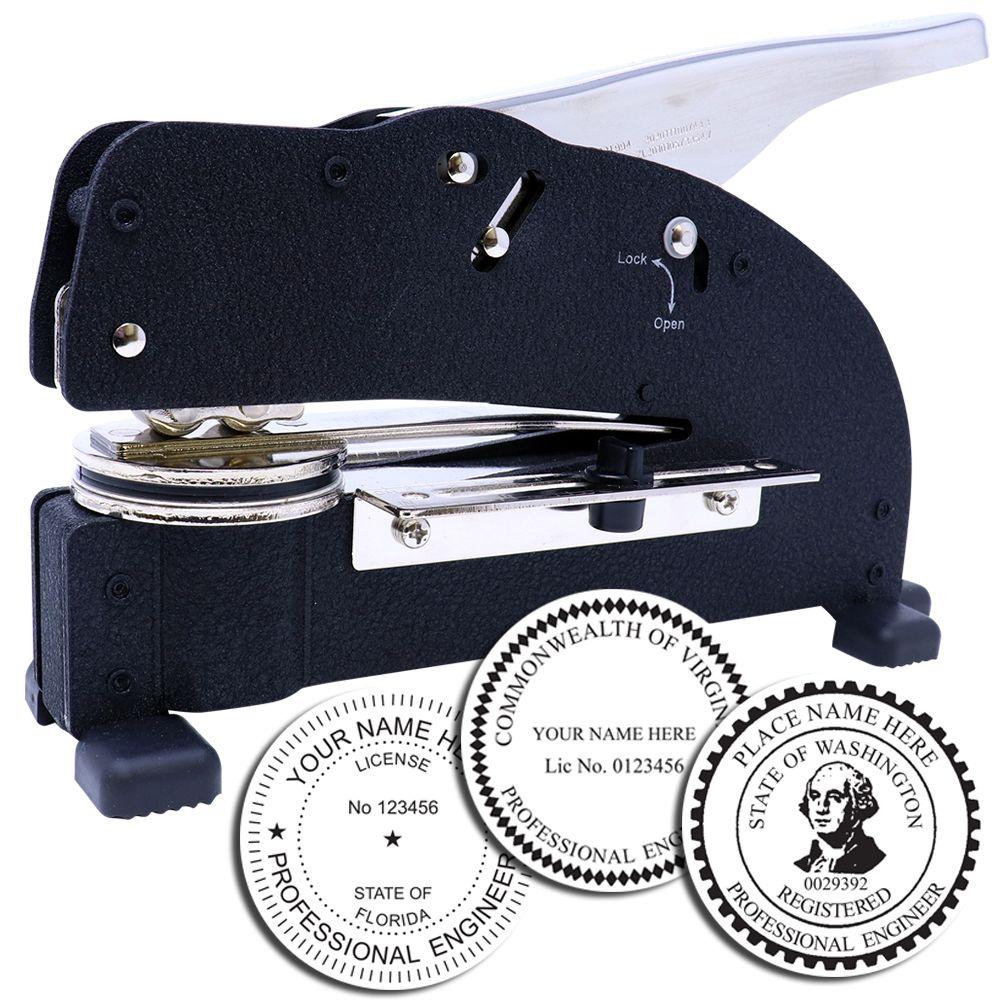

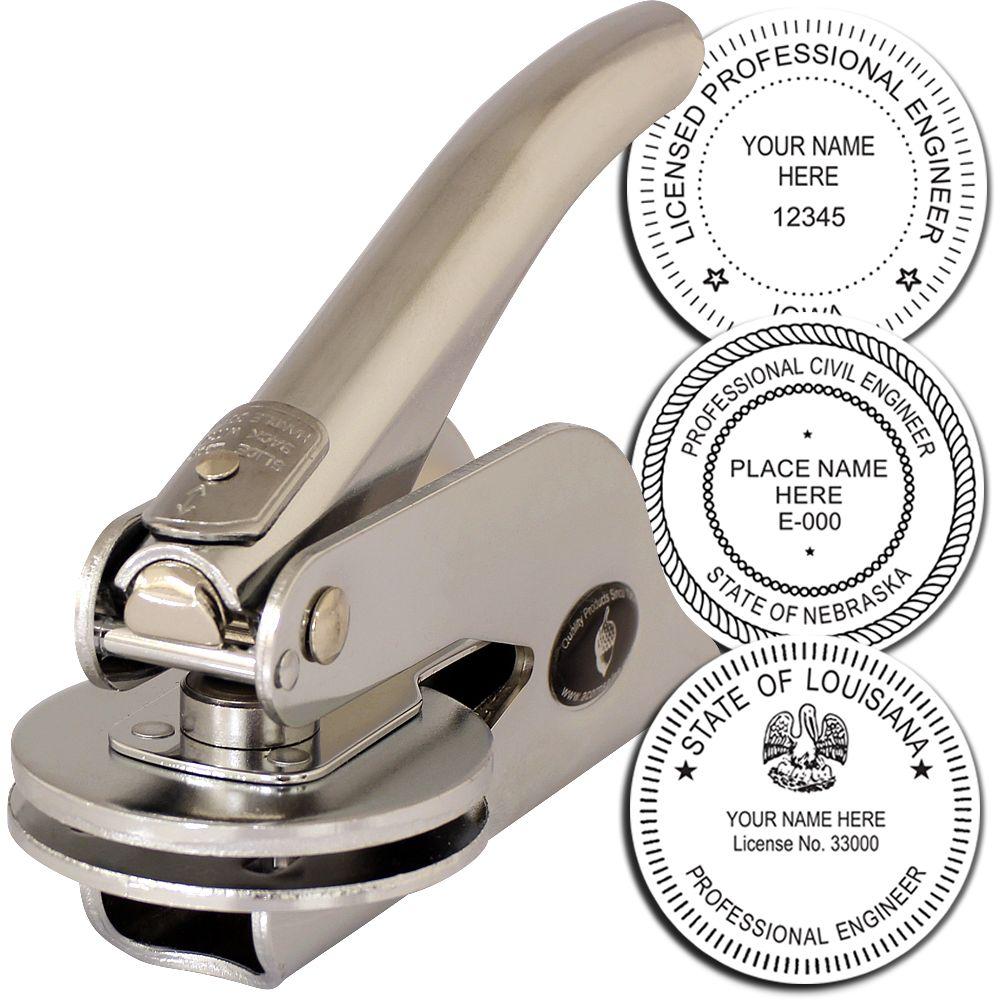

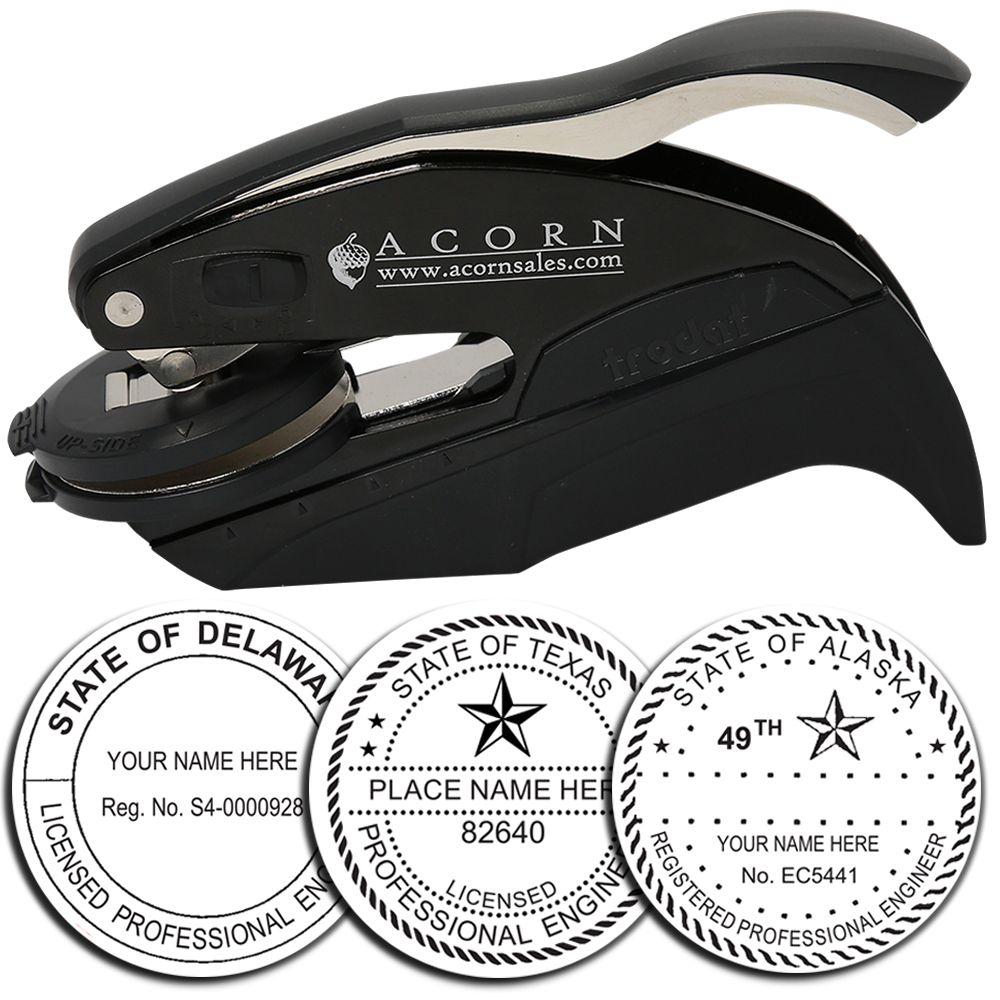

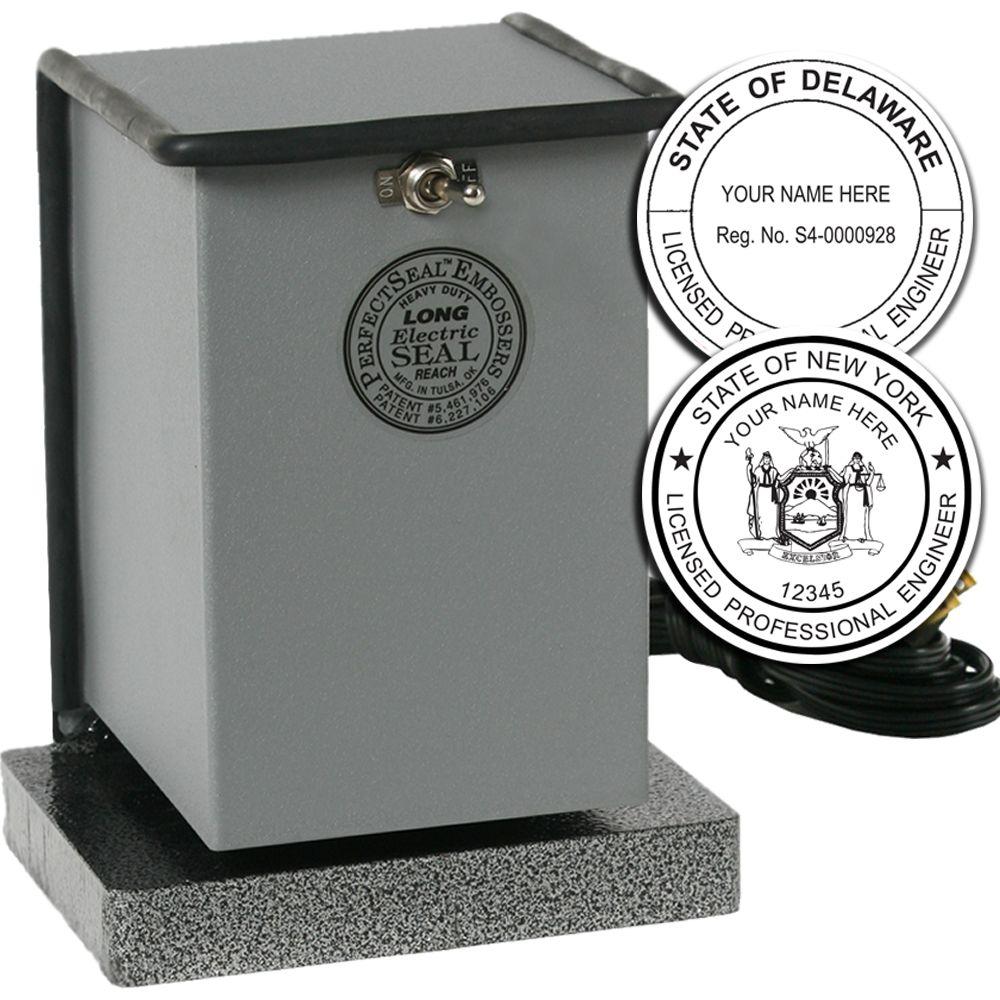

Embosser, rubber stamp or digital
All three common devices are legal. 20 CSR 2030-3.060 provides that “The seal may be in the form of an embossing seal, a rubber stamp, or a computer-generated image, identical in size, design and content with the provisions of section (1) above.” The safe buy is a 1-3/4 inch inked rubber stamp, because it satisfies the paper case outright and because the computer-generated image has to match it in size, design and content anyway. An embosser alone is legal here but leaves a blind impression that reproduces poorly on the scanned and PDF submittals the same rule contemplates.
Signing and dating
Missouri accepts three signature forms and ties the date to the sealing event, not the transmittal. The rule requires the licensee to “affix his/her signature and place the date when the document was originally sealed, at the minimum”. For hand drawings and printed documents that means “a handwritten ‘wet signature’ identification containing the name of the person who applied it”. For an electronic document in its native format it means “a digital signature with an electronic authentication process attached to or logically associated with the document”. For PDF and similar formats, “a scanned signature is acceptable if it is an accurate depiction of the licensee’s actual signature”. Signing across or over the face of the seal is NOT addressed anywhere in 20 CSR 2030-3.060 or in section 327.411, RSMo, so the Missouri habit of writing across the seal is practice, not a rule.
The statute now covers licensed interior designers; the seal rule still does not
Section 327.411, RSMo, was amended by S.B. 1233 and the new text took effect on August 28, 2026. The version that ran from 2014 to 2026 required a personal seal of “each architect and each professional engineer and each professional land surveyor and each professional landscape architect”. The current version adds “and each licensed interior designer” to the same sentence and to subsections 2 and 3.
The board rule that actually prescribes the seal, 20 CSR 2030-3.060, was last amended in 2018 and has not caught up. Its design paragraph still names only Architect, Professional Engineer, Professional Land Surveyor and Professional Landscape Architect, and still lists only the prefixes A, PE, PLS and PLA. The word interior does not appear in the rule at all.
For an engineer this changes nothing: PE, 1-3/4 inches, State of Missouri, two concentric circles, exactly as before. For anyone ordering a Missouri interior designer seal it matters a great deal, because there is currently no prescribed design to order against, and the statute says the seal must be “in a form prescribed by the board”. That order should wait for the board to amend 20 CSR 2030-3.060 rather than be guessed from the engineer pattern.
Which documents must be sealed
Everything final. Section 327.411.1, RSMo, reaches all final technical submissions, expressly including drawings, specifications, plats, surveys, exhibits, reports and certifications of construction. For bound work the rule allows a single sealing point: the licensee “may sign, seal, and date the title page, an index page, or a seals page on bound multiple page documents”, provided the signed page clearly identifies all the other pages it covers. Preliminary or incomplete work is excused from sealing by section 327.411.4 but not from labeling: the rule requires the legend “The information on this document is preliminary or incomplete, not for construction, recording purposes, or implementation” in an obvious, easily readable location. Sealing another person’s work is barred: “The signing and sealing of technical submissions not prepared by the licensee or under his/her immediate personal supervision is prohibited.” Section 327.411.3 lets a licensee attach an optional statement over signature and seal identifying which submissions the seal authenticates and disclaiming the rest.





Electronic and digital seals
No named technology and no named cryptographic standard. 20 CSR 2030-3.060 sets functional criteria instead: the digital signature must be “unique to, and under the sole control of the person using it; it must also be capable of verification and be linked to a document in such manner that the digital signature is invalidated if any data on the document is altered”. That is the familiar four-part test, satisfied in practice by a certificate-based digital signature, but the rule names no issuer, no certificate authority and no algorithm. Note the split the rule draws: a full digital signature is required only for documents delivered in a native electronic format, while a scanned image of the real signature is enough for a PDF.
Renewal, lapse and retirement
Not addressed. Neither section 327.411, RSMo, nor 20 CSR 2030-3 says what happens to the seal when a license lapses, is revoked or is surrendered, and neither requires the seal to be destroyed or turned in. The sources here are the full text of section 327.411 in all five effective versions on the Missouri Revisor site, a section-by-section scan of Chapter 327, RSMo, for the word seal, and the whole of 20 CSR 2030-3 (rules 3.010 and 3.060). The practical bar comes from elsewhere in Chapter 327, which prohibits practicing or holding out without a current license, and from section 327.411.2, which makes the seal the legal equivalent of the signature. Nothing found suggests the license number changes on renewal or reinstatement, and nothing found says it does not, so a reinstated licensee should confirm the number before reordering.
Firm registration
The firm needs a certificate of authority, but not a seal and not a number on the drawing. A corporation rendering architectural, engineering, land surveying or landscape architectural services in Missouri applies for a certificate of authority under 20 CSR 2030-10.010, which covers the application, the managing agent and renewal. Neither that chapter nor 20 CSR 2030-3.060 requires the certificate number or any corporate seal to appear on technical submissions. The individual licensee’s personal seal does the work, and section 327.411.1 keeps personal responsibility with that licensee whether or not another licensee drafted the sheet.
What to check before you order
Order a 1-3/4 inch die with two concentric circles, lettered in Roman capitals only. STATE OF MISSOURI arcs across the top of the annular space and PROFESSIONAL ENGINEER across the bottom, with your name and your license number carrying the prefix PE inside the inner circle. Leave off any expiration date, board emblem, branch or discipline line, since Missouri does not license engineers by branch. Rubber stamps, embossers and computer-generated images are all permitted and must be identical in size, design and content, so work from one master design and derive the digital image from it. Missouri asks you for no proof of licensure and requires no imprint filing with the board.
Browse professional engineer stamps and seals.
Frequently asked questions
What size is a Missouri PE seal?
One and three-quarters inches in diameter, stated as a single figure by 20 CSR 2030-3.060(1). It is not a range and not a minimum, and the rule gives no tolerance. The rule does not separately dimension the inner circle.
What has to appear on a Missouri PE seal?
Five elements: two concentric circles, State of Missouri, Professional Engineer, your name as licensed, and your license number prefixed PE. 20 CSR 2030-3.060(1) requires “two concentric circles between which appear in roman capital letters, the words, ‘State of Missouri’ on the upper part of the seal and either ‘Architect,’ or ‘Professional Engineer,’ or ‘Professional Land Surveyor’ or ‘Professional Landscape Architect,’ as the case may be, on the lower part, and within the inner circle the name of the licensee, together with his/her license number preceded by the roman capital letter(s) A for Architect, PE for Professional Engineer, PLS for Professional Land Surveyor or PLA for Professional Landscape Architect.” Interns and individuals in-training are excluded from the rule and get no seal.
Do I need a seal in Missouri, and on what?
Yes, on everything final. Section 327.411.1, RSMo, provides that each professional engineer “shall have a personal seal in a form prescribed by the board, and he or she shall affix the seal to all final technical submissions,” and defines technical submissions to include “drawings, specifications, plats, surveys, exhibits, reports, and certifications of construction.” Sealing work the licensee did not prepare or immediately personally supervise is prohibited by 20 CSR 2030-3.060.
Do I have to seal preliminary drawings in Missouri?
No, but you do have to label them. Section 327.411.4 states that nothing in the section or in any board rule “shall require any professional to seal preliminary or incomplete documents,” and 20 CSR 2030-3.060 then requires the legend “The information on this document is preliminary or incomplete, not for construction, recording purposes, or implementation” in an obvious, easily readable location.
Embosser, rubber stamp or computer image in Missouri?
All three, provided they match. 20 CSR 2030-3.060 provides that “The seal may be in the form of an embossing seal, a rubber stamp, or a computer-generated image, identical in size, design and content with the provisions of section (1) above.” A 1-3/4 inch inked rubber stamp is the practical buy, because it answers the paper case outright and the computer-generated image has to match it anyway. An embosser alone is legal but leaves a blind impression that reproduces poorly on the scanned and PDF submittals the same rule contemplates.
What kinds of signature does Missouri accept?
Three, chosen by the format of the document. The rule requires the licensee to “affix his/her signature and place the date when the document was originally sealed, at the minimum.” For hand drawings and printed documents that means “a handwritten ‘wet signature’ identification containing the name of the person who applied it.” For an electronic document in its native format it means “a digital signature with an electronic authentication process attached to or logically associated with the document.” For PDF and similar formats, “a scanned signature is acceptable if it is an accurate depiction of the licensee’s actual signature.” Note the split: a full digital signature is required only for native electronic formats.
Do I have to sign across a Missouri seal?
Not addressed. Signing across or over the face of the seal appears nowhere in 20 CSR 2030-3.060 or in section 327.411, RSMo, so the Missouri habit of writing across the impression is practice rather than a rule. What the rule does fix is the date, which is the date the document was originally sealed rather than the date it was transmitted.
Can I seal just the cover of a bound Missouri document?
Yes, if the cover identifies the rest. The rule permits the licensee to “sign, seal, and date the title page, an index page, or a seals page on bound multiple page documents,” provided the signed page clearly identifies all the other pages it covers. Section 327.411.3 separately lets a licensee attach an optional statement over signature and seal identifying which submissions the seal authenticates and disclaiming the rest.
What does Missouri require of a digital signature?
Functional criteria, with no product named. 20 CSR 2030-3.060(3) requires that the digital signature be “unique to, and under the sole control of the person using it; it must also be capable of verification and be linked to a document in such manner that the digital signature is invalidated if any data on the document is altered.” That is the familiar four-part test, met in practice by a certificate-based digital signature, but the rule names no issuer, no certificate authority and no algorithm.
What happens to a Missouri seal when a license lapses?
Not addressed. Neither section 327.411, RSMo, nor 20 CSR 2030-3 says what becomes of the seal on lapse, revocation or surrender, and neither requires it to be destroyed or turned in. The sources here are the full text of section 327.411 in all five effective versions on the Missouri Revisor site, a section-by-section scan of Chapter 327 for the word seal, and the whole of 20 CSR 2030-3, rules 3.010 and 3.060. The practical bar comes from elsewhere in Chapter 327, which prohibits practicing or holding out without a current license, and from section 327.411.2, which makes the seal the legal equivalent of the signature. Nothing found says the license number changes on renewal or reinstatement, and nothing says it does not, so confirm the number before reordering.
Does my firm certificate number go on Missouri technical submissions?
No. A corporation rendering architectural, engineering, land surveying or landscape architectural services in Missouri applies for a certificate of authority under 20 CSR 2030-10.010, which covers the application, the managing agent and renewal. Neither that chapter nor 20 CSR 2030-3.060 requires the certificate number or any corporate seal on technical submissions. The individual licensee’s personal seal does the work, and section 327.411.1 keeps personal responsibility with that licensee whether or not another licensee drafted the sheet.
Missouri now requires interior designers to seal. What design do they use?
There is not one yet. Section 327.411, RSMo, was amended by S.B. 1233 with the new text effective August 28, 2026, adding “and each licensed interior designer” to the seal duty in subsection 1 and to subsections 2 and 3. The rule that actually prescribes the seal, 20 CSR 2030-3.060, was last amended in 2018 and still names only Architect, Professional Engineer, Professional Land Surveyor and Professional Landscape Architect, with only the prefixes A, PE, PLS and PLA. The word interior does not appear in the rule at all. For an engineer nothing changes. For an interior designer there is currently no prescribed design to order against, and the statute requires a seal “in a form prescribed by the board,” so that order should wait for the board to amend the rule rather than be guessed from the engineer pattern.