
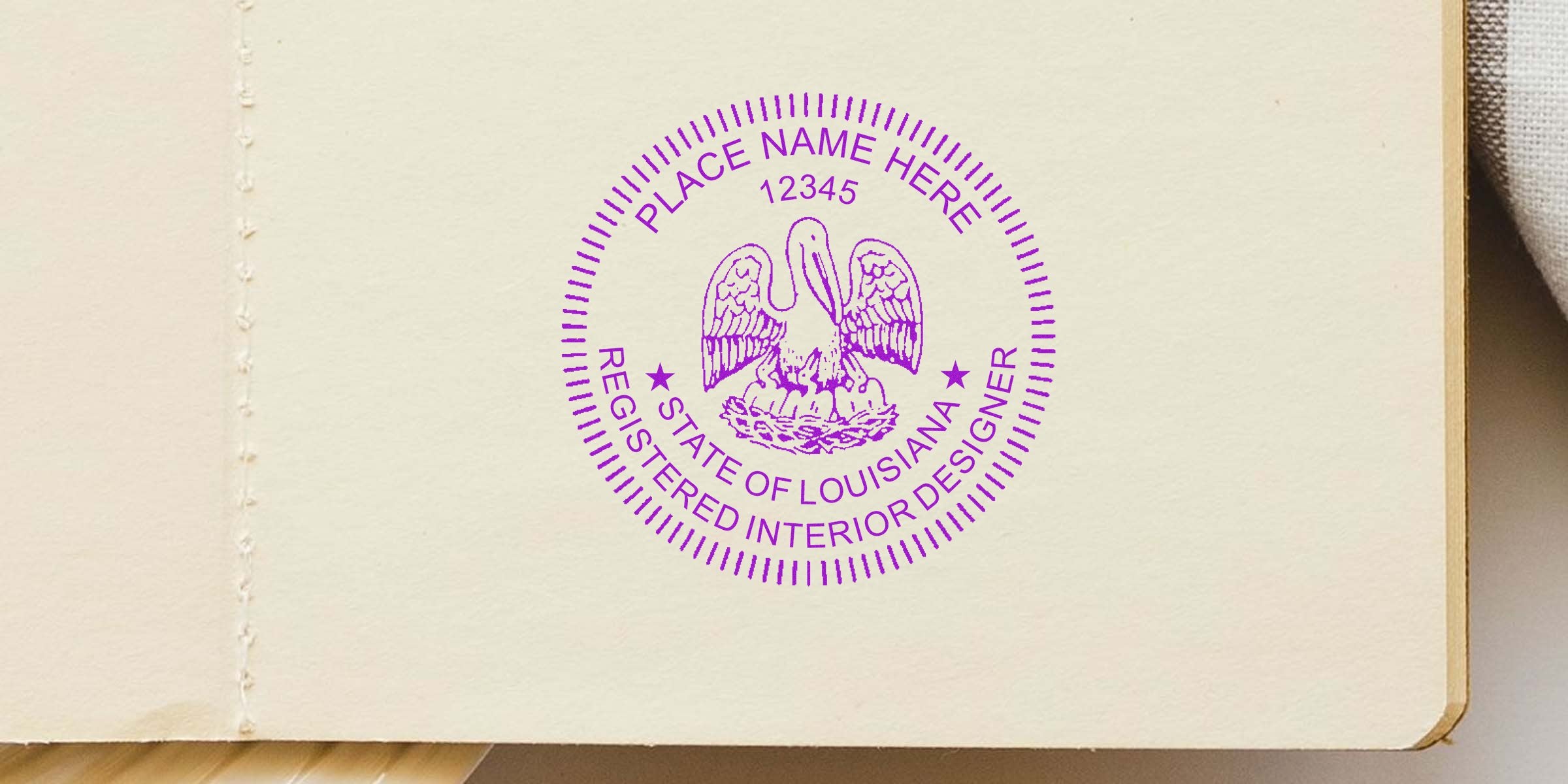
If you’re an interior designer in Louisiana, you’ve likely heard about how crucial it is to have a well-crafted seal. Getting the right Louisiana Interior Designer Seal Design can help you comply with state regulations, add a professional touch to your official drawings, and reinforce your credibility with clients. But what exactly goes into creating, obtaining, and using this seal effectively? In this guide, we’ll walk through everything you need to know about designing and obtaining a Louisiana Interior Designer seal, from the state requirements to helpful design tips and even where to purchase an official seal you can rely on.

## Understand Louisiana Requirements

To begin, let’s talk about why you need a seal in the first place. In Louisiana, professional interior designers must follow specific guidelines set by regulatory boards to ensure the public’s safety and trust. These guidelines usually include proof of formal education, state licensing considerations, and the requirement that official documents carry a distinct seal.

When you place your seal on official documents, you’re essentially stating that the plans adhere to professional standards and local building codes. A properly designed seal communicates that you’ve met your educational and licensing obligations. In other words, it’s a stamp of credibility—one that not only protects you legally but also gives your clients peace of mind.

### Official vs. Personal Preference

You might wonder how much creative freedom you have with your seal. Generally, Louisiana law specifies certain elements and legibility standards, but it still allows enough flexibility to represent your personal brand. You want a seal that meets state requirements while also reflecting who you are as a professional. Think of it as a blend of legal necessity and personal expression.

### State Board Guidelines

Before you finalize any design, review the guidelines from the Louisiana State Board of Examiners of Interior Designers or whichever governing body applies in your particular situation. Although the details can vary slightly depending on updates to rules and regulations, here are a few pointers that usually stay consistent:

- The seal needs to include your name as listed on your license
- It must feature your license number or registration number
- The design must be legible and follow prescribed size dimensions
- The seal should identify your profession clearly (e.g. “Licensed Interior Designer”)

By ensuring these key requirements are met, you’ll be on the right track to a compliant and authoritative seal.

## Identify Key Elements Of A Properly Designed Seal

When you think about Louisiana Interior Designer Seal Design, the focus often lands on visual clarity. Because your seal will appear on official documents—especially technical drawings—you need something that’s easy to read at a glance.

### Essential Components

While you can personalize your seal, a few primary elements remain non-negotiable if you want to stay on the right side of the law and industry standards:

1. Name: Your full legal name as it appears on your interior designer license.
2. Professional Title: Typically “Licensed Interior Designer” or a similar state-approved variant.
3. License Number: This is one of the core elements regulators look for.
4. Approved Size: The diameter and shape (round or rectangular) might be dictated by state rules.
5. Legibility: The text and any surrounding graphics should be easy to distinguish, even if the document is reduced in size.

### Decorative Flourishes

Do you have room for a decorative border or a small design motif? Absolutely, as long as it doesn’t interfere with the legibility of the text and essential information. Some designers add subtle scrollwork, a monogram, or small flourishes around the inner edge. You can also opt to showcase your personal style by choosing a font that matches your brand—again, just make sure it’s clear.

### Digital and Physical Formats

These days, many designers submit digital versions of their plans. So, your seal might need to exist in multiple formats:

- A digital file for electronic documents (often a PNG or JPG with a transparent background)
- A physical embosser or rubber stamp for hard-copy submissions

Having both options on hand helps ensure you’re prepared for any submission requirement, whether it’s a traditional print-out or a digital file upload.

## Follow Steps To Obtain Your Seal

Once you have an idea of how you want your seal to look, the next step is to actually acquire it. Each professional’s journey varies slightly, but the overall process in Louisiana typically goes like this:

1. Confirm Your License Status
   Make sure you have an active license or certification in good standing. If you need to renew or submit additional paperwork, handle that first. Your seal is only valid if you’re legally allowed to practice.

2. Design the Seal
   Craft a layout that includes the essential elements. Don’t forget to consider the size, shape, and whether you’d like a border or decorative embellishments.

3. Submit for Approval (If Required)
   Some state boards require a preview of your seal for official approval. Double-check whether Louisiana’s regulations mandate this. If so, be prepared to show a digital mock-up.

4. Order Physical and Digital Versions
   After you’ve squared away the design (and any needed approvals), place your order with a reputable seal supplier. You’ll likely want a rubber stamp, an embosser, and a digital version for maximum versatility.

5. Store and Use Properly
   Once your seal arrives, make sure to store it in a safe, accessible spot. If you’re working with a digital file, keep backups in secure folders so you don’t lose it during a computer upgrade or system crash.

### Simplifying the Process with Acorn Sales

We know that time is precious. Fortunately, you can simplify this whole process by ordering from a trusted supplier like Acorn Sales. Not only have we been in business since 1964, but we also understand the specific requirements for Louisiana interior designers. You get expert guidance, reliable manufacturing, and free electronic seal options with every order. That means you’ll walk away with a high-quality physical stamp or embosser plus a convenient digital file—no extra hassle or hidden fees.

## Apply Tips For Effective Seal Design

The difference between a generic, run-of-the-mill seal and one that truly works for you often boils down to design considerations. Here are a few tips for getting it right:

### Maintain Clarity

Legibility is the top priority. Think about the size of the seal on an average document. If the text is too small or the lines too intricate, you sacrifice readability. Aim for a balanced ratio between the text and any decorative elements.

### Allow White Space

White space isn’t just a design buzzword—it’s crucial for making your seal pop on a page. A cramped design can look unprofessional and be difficult to interpret. Give each element enough breathing room to stand on its own.

### Reflect Your Brand

While it’s an official mark, your seal can still reflect your personal or business branding. If you typically use a certain font or color scheme, incorporate subtle touches where possible. Just make sure you adhere to the legal text requirements. A tasteful hint of personal flair can set your seal apart from others—and stand out in a stack of documents.

### Decide on Ink and Embossing

Choosing between an ink stamp and an embosser can be part preference, part formality. Some professionals prefer an inked stamp because it’s straightforward, while others enjoy the raised texture of an embossed seal for a classic, tactile feel. Both are valid options for Louisiana interior designers, so pick the one that aligns best with your style and project needs. And remember, with suppliers like Acorn Sales, you can easily order both.

### Free Digital Seal

In today’s digital workflow, it’s essential to have an electronic version of your seal. That’s why it’s a game-changer to get a free electronic seal every time you purchase from certain suppliers. Having one ensures you won’t be scrambling for scans or low-resolution images when you need to quickly attach a seal to a PDF.

## Avoid Common Mistakes

Even with the best intentions, it’s easy to slip up. Let’s consider a few pitfalls you can avoid when planning your Louisiana Interior Designer Seal Design.

- Skipping a Proof: Always check a proof of your seal design before production. A quick glance helps catch typos or spacing issues that might render the seal invalid.
- Going Too Minimal: A clean, modern look is appealing, but make sure you don’t lose vital details. Cutting out crucial text or spacing can cause compliance problems.
- Over-Decorating: On the flip side, too many flourishes or scripts can be hard to read. Strike a balance between personal flair and professional clarity.
- Failing to Update: If anything changes—like your name, license status, or brand identity—you should update and reorder your seal. An outdated seal can lead to confusion or legal complications.

## Find The Right Place To Purchase

At this point, you know what the seal should include and pitfalls to avoid. So, where do you get yours? If you’re looking for a single source that’s got you covered from design to delivery, consider Acorn Sales. We’ve specialized in stamps and seals for licensed professionals since 1964, and we’re well-versed in Louisiana’s specific guidelines.

- High-Quality Materials: Stamps and embossers that stand the test of time
- Expert Guidance: Industry-specific insight to ensure compliance
- Free Electronic Seal: Perfect for digital document submissions
- Speedy Delivery: Get your stamp or embosser without lengthy waits

You might also want to check out the [Louisiana Interior Designer Stamp](/louisiana-interior-designer-stamp) if you’re in need of a straightforward option that meets standard requirements. With this product, you’ll get the convenience of traditional stamping, while still staying in line with Louisiana’s regulations.

## Get Answers To FAQs

Below are some common questions about designing, obtaining, and using a Louisiana Interior Designer seal. If you have more queries after reading these, don’t hesitate to consult official state guidelines—or reach out directly to your seal supplier.

1. What Are the Typical Dimensions for a Louisiana Interior Designer Seal?
   Most official seals are around 1½ to 2 inches in diameter, but exact measurements can vary based on local regulations. Always double-check with the Louisiana State Board to be certain.

2. Do I Need to Renew My Seal Over Time?
   Technically, you don’t need to “renew” the actual stamp or embosser. However, you do need to maintain an active license. If your name or license number changes, you’ll need an updated seal.

3. Can I Use a Generic ‘Interior Designer’ Seal from Any Supplier?
   It’s best to order a seal that explicitly meets Louisiana requirements. Generic seals might not have the proper wording or format mandated by the state. A specialized supplier can guide you so your seal stays compliant.

4. Does a Digital Seal Have the Same Legal Standing as a Physical One?
   Yes, as long as it contains the required information and follows Louisiana regulations. A digital seal serves as an electronic signature of sorts. However, some agencies may still require a physical stamp or embossed seal, so it’s wise to have both just in case.

5. What If My Seal Isn’t Approved by the State Board?
   You’ll typically receive instructions or feedback if something in your seal design is amiss. Work with your supplier to revise it. Once corrected, you can re-submit for approval. In many cases, a few small tweaks are enough to ensure full compliance.

## Wrap-Up And Next Steps

Designing and obtaining a Louisiana Interior Designer seal isn’t just about following rules. It’s also about projecting professionalism, building trust with clients, and leaving a memorable mark on every project. When that seal appears on a set of plans, it tells people you take your responsibilities seriously.

If you haven’t already, it might be time to review your existing seal (or finalize your design for a new one). Double-check the requirements, pay attention to legibility, and consider the benefits of ordering from a specialized supplier like Acorn Sales. You’ll not only find a reliable seal option, but you’ll also gain peace of mind knowing that everything’s in line with Louisiana’s guidelines.

As soon as you have your seal, why not take it for a spin? Attach it to a new project or an existing design that needs final approval. With a consistent, clear, and approved seal, you’ll keep your practice running smoothly, save time on corrections, and maybe even impress a client or two.

Good luck with your seal, and here’s to many beautifully stamped projects in the future!
Frequently Asked Questions
What information must be included on a Louisiana Interior Designer seal?
A compliant Louisiana Interior Designer seal should typically include your full legal name, your professional title such as “Licensed Interior Designer,” and your license or registration number. It also needs to be clearly legible and follow any size or formatting rules set by the Louisiana State Board of Examiners of Interior Designers or the applicable governing body.
What size should a Louisiana Interior Designer seal be?
Most Louisiana interior designer seals are generally around 1.5 to 2 inches in diameter, but the exact size can vary depending on current state requirements. Before ordering, it’s best to confirm the latest guidelines so your seal meets all compliance standards for official documents.
Can I use both a digital and physical Louisiana Interior Designer seal?
Yes, many interior designers use both formats. A digital seal is ideal for electronic plans and PDF submissions, while a physical stamp or embosser is often used for printed drawings and hard-copy documents. Having both helps you stay prepared for different submission requirements.
Do I need to update my seal if my name or license number changes?
Yes, if your legal name, license number, or professional status changes, you should update your seal right away. Using an outdated seal can create compliance issues and may cause delays with plan approval or document acceptance.
Where can I order a compliant Louisiana Interior Designer seal?
You can order a compliant seal from a supplier that specializes in professional stamps and seals, such as Acorn Sales. A knowledgeable supplier can help ensure your seal includes the correct wording, size, and format for Louisiana requirements, and may also provide a free electronic seal with your order.
What should I look for when choosing a Louisiana Interior Designer seal design?
Look for a design that is clean, legible, and compliant with state rules. Your seal should balance professionalism with clarity, meaning it can include subtle branding or decorative details as long as they do not interfere with required information. Choosing a design that works well in both inked and digital formats is also a smart move.








