

Written by Acorn Sales Company, manufacturing stamps and seals since 1964 · Reviewed by Holly R, VP of Sales and Marketing at Acorn Sales, against the Vermont Board of Architects, within the Secretary of State’s Office of Professional Regulation and 26 V.S.A. § 208 on 21 September 2026 · Updated 21 September 2026
The Office mails you the design, and you mail back an impression. Board rule 3.2: “After an applicant is approved for licensure as an architect, the Office will send him or her an exact replica of the architect seal design to be used in the State of Vermont. The architect must then purchase a seal which impresses the same design, plus the architect’s name, and send an impression to the Office for filing.” Three steps, and the last one is a filing obligation most states do not have. The Office keeps a specimen of your actual imprint.
That is why there is no Vermont diameter to quote. Neither 26 V.S.A. § 208 nor the Board’s rules give a diameter, a shape or a lettering height, across rules 1.1 through 4.1 and 26 V.S.A. ch. 3. The statute says only that the seal is “of such design as the Board shall authorize and direct.” Bring the replica to your supplier and match it exactly, rather than asking for a template.
The published rules carry an effective date of May 19, 1999, which predates the electronic sealing provisions most boards added over the following two decades. They say nothing about electronic or digital seals, and nothing about a signature or a date either. Sign and date anyway, and confirm the acceptable format with the permitting authority before relying on an electronic seal.
Vermont architect seal requirements at a glance
| Requirement | Vermont rule | Source |
|---|---|---|
| Seal required | Yes | 26 V.S.A. § 208 |
| Required elements | The seal design the Office sends you on licensure and Your name | Vermont Board of Architects Administrative Rules, rule 3.2 |
| Size and shape | Not addressed. Neither 26 V.S.A. § 208 nor the Board’s rules give a diameter, a shape or a lettering height. The sources here are the Board of Architects Administrative Rules in full, rules 1.1 through 4.1. | Vermont Board of Architects Administrative Rules, rule 3.2 (no dimension published) |
| Device allowed | The rule speaks of purchasing “a seal which impresses the same design” and of sending “an impression to the Office for filing.” It does not say inked or embossed, and it does not forbid either, so the regulation does not address device type. | Vermont Board of Architects Administrative Rules, rule 3.2 |
| Signature and date | Not addressed. Neither 26 V.S.A. § 208 nor rule 3.2 requires a signature or a date alongside the seal. The statute requires the plans and specifications to be stamped; the rule requires the seal to be stamped and. | 26 V.S.A. §§ 203(b), 208 |
| What must be sealed | All plans and specifications prepared by or under the direct supervision of the licensed architect. | 26 V.S.A. § 208 |
| Electronic seal | Not addressed. The Board of Architects Administrative Rules contain no electronic or digital seal provision, no digital signature standard and no authentication requirement. The sources here are rules 1.1 through 4.1 in. | Vermont Board of Architects Administrative Rules (no electronic seal provision) |
| Renewal and lapse | Rule 3.2 states the operative limit: “A seal may not be used if the architect’s license is not currently valid.” Not addressed: whether the device must be surrendered or destroyed, and whether a license number or seal design is reissued on reinstatement. | Vermont Board of Architects Administrative Rules, rule 3.1, rule 3.2 |
| Firm requirements | No certificate of authorization, and the entity route is conditioned on the personal seal. 26 V.S.A. § 203(a) provides that “The right to practice architecture is a personal right based on the qualities of the individual and evidenced by a nontransferable license.” Section 203(b) then permits a corporation, limited liability company, partnership, association or individual proprietorship to furnish architectural services provided a member or employee is a licensed architect in responsible charge and provided all plans and specifications are signed and stamped with the personal seal of that architect. | 26 V.S.A. § 203 |
| Regulator | The Vermont Board of Architects, within the Secretary of State’s Office of Professional Regulation | 26 V.S.A. ch. 3 (Architects), §§ 203, 206 and 208, from the Vermont General Assembly site |



Is a seal required in Vermont?
The statute requires the seal and leaves the design to the Board. 26 V.S.A. § 208: “Each licensee shall obtain a seal of such design as the Board shall authorize and direct. Plans and specifications prepared by, or under the direct supervision of, a licensed architect shall be stamped with the licensee’s seal.” Board rule 3.2 repeats the duty and adds that “The seal must be stamped on all plans and specifications prepared or directly supervised by the licensed architect.”
What must appear on the seal
- The seal design the Office sends you on licensure
- Your name
Vermont does not publish an element list. It sends you the artwork. Rule 3.2: “After an applicant is approved for licensure as an architect, the Office will send him or her an exact replica of the seal design to be used in the State of Vermont. The architect must then purchase a seal which impresses the same design, plus the architect’s name, and send an impression to the Office for filing.” So the only variable element named in the rule is your name. Not addressed: whether the license number appears on the face; the rule names the design and the name and stops. Work from the replica the Office sends, not from a catalog template.
Size and shape
Not addressed. Neither 26 V.S.A. § 208 nor the Board’s rules give a diameter, a shape or a lettering height. The sources here are the Board of Architects Administrative Rules in full, rules 1.1 through 4.1, and 26 V.S.A. ch. 3. The size comes from the replica design the Office supplies. Anyone quoting you a Vermont architect seal diameter is quoting something the published rules do not contain.


Embosser, rubber stamp or digital
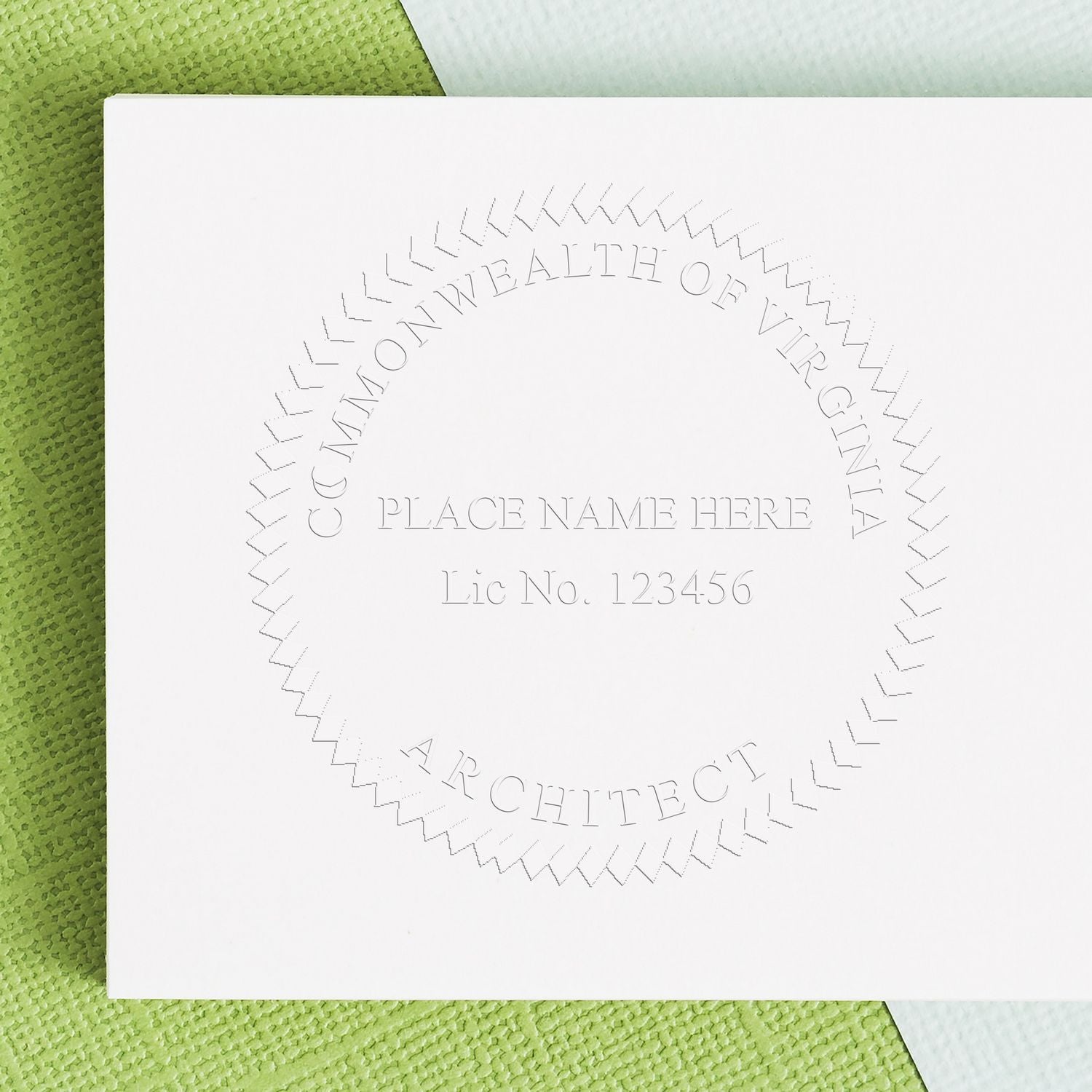
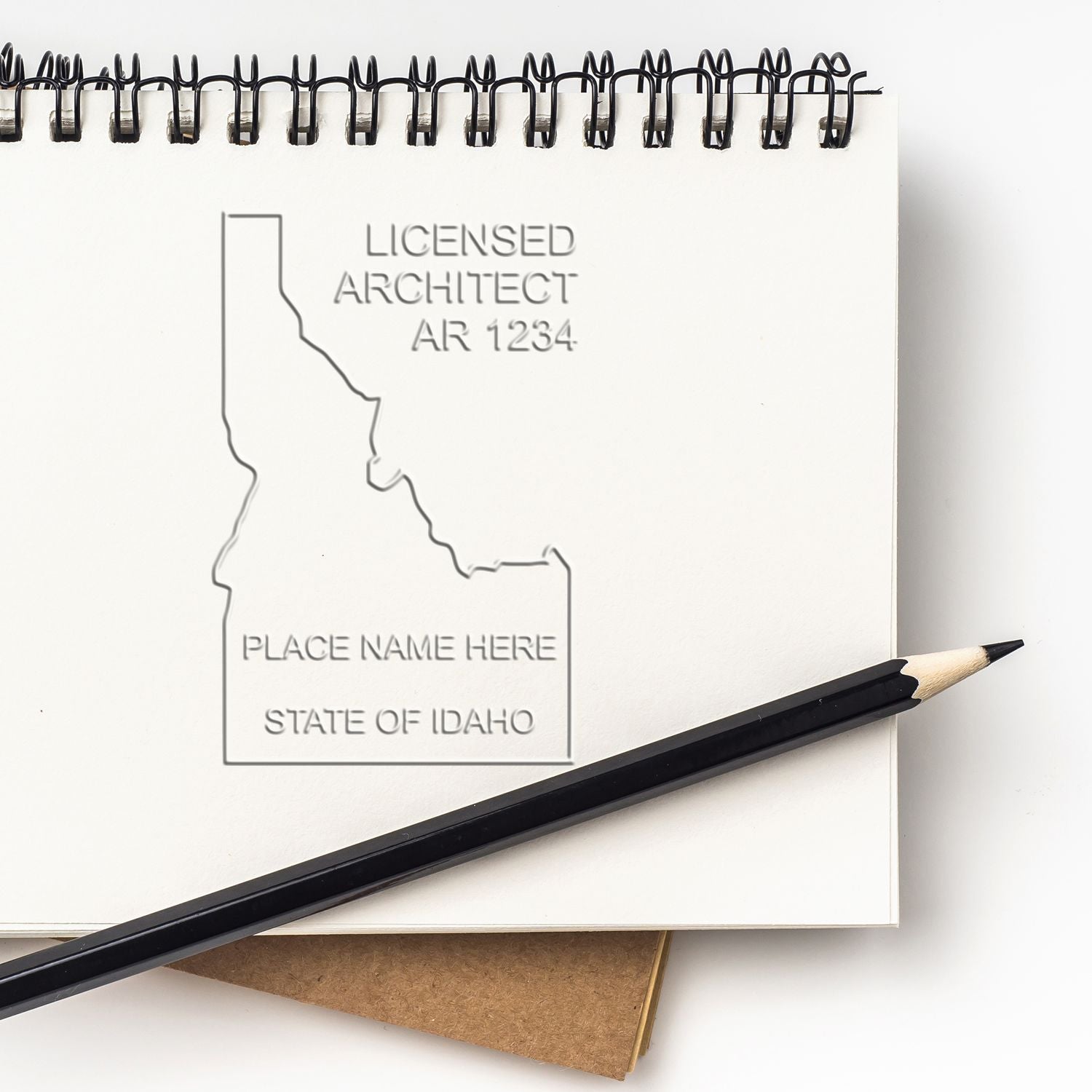
The rule speaks of purchasing “a seal which impresses the same design” and of sending “an impression to the Office for filing.” It does not say inked or embossed, and it does not forbid either, so the regulation does not address device type. What it does require is that the device be capable of producing an impression you can file with the Office, and that the impression match the replica exactly. The safe buy is an inked stamp cut precisely to the replica, because plans go into permit review and the imprint has to read on copies.
Signing and dating
Not addressed. Neither 26 V.S.A. § 208 nor rule 3.2 requires a signature or a date alongside the seal. The statute requires the plans and specifications to be stamped; the rule requires the seal to be stamped and forbids stamping work the architect did not prepare or directly supervise. The sources here are the rules in full. Sign and date anyway, because permitting authorities expect it and because 26 V.S.A. § 203(b) speaks of plans and specifications being “signed and stamped with the personal seal of the licensed architect in responsible charge,” which is the closest Vermont comes to a signature requirement.
The Office mails you the design, and you mail back an impression
Vermont does not publish a seal specification. Rule 3.2 says that once an applicant is approved, “the Office will send him or her an exact replica of the seal design to be used in the State of Vermont,” that the architect must then purchase a seal which impresses the same design plus the architect’s name, and that the architect must “send an impression to the Office for filing.” Three steps, and the last one is a filing obligation most states do not have. The Office keeps a specimen of your actual imprint.
Which documents must be sealed
All plans and specifications prepared by or under the direct supervision of the licensed architect. Rule 3.2 adds two prohibitions in the same paragraph: “An architect may not stamp the seal on plans or specifications not prepared or directly supervised by that architect,” and “A seal may not be used if the architect’s license is not currently valid.” There is no preliminary or draft carve-out and no title-sheet concession in the published rules.


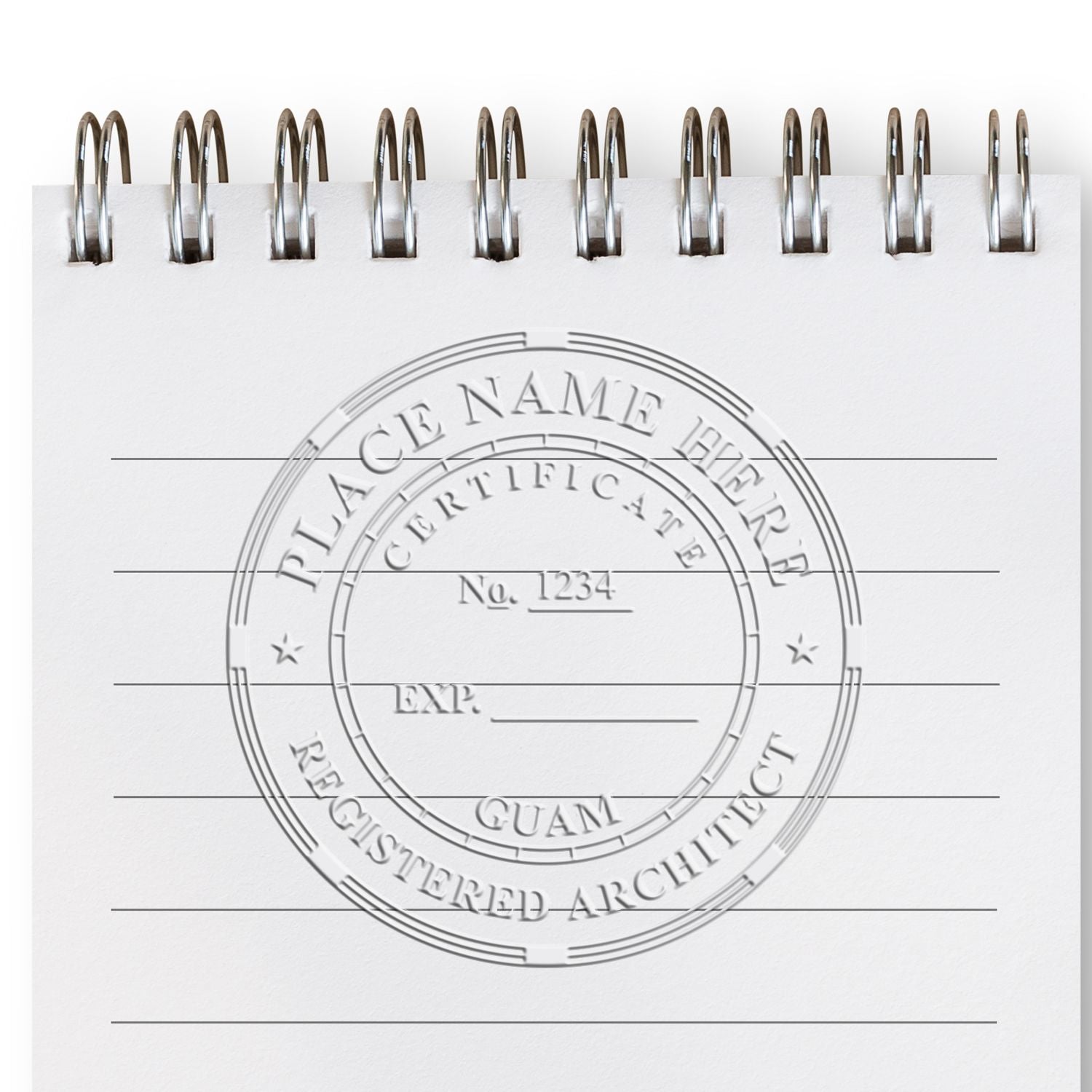
Electronic and digital seals
Not addressed. The Board of Architects Administrative Rules contain no electronic or digital seal provision, no digital signature standard and no authentication requirement. The sources here are rules 1.1 through 4.1 in full. Note that the published rules carry an effective date of May 19, 1999, which predates the electronic sealing provisions most boards added over the following two decades, so the silence is historical rather than deliberate. Confirm the acceptable format with the permitting authority and with the Office of Professional Regulation before relying on an electronic seal.
Renewal, lapse and retirement
Rule 3.2 states the operative limit: “A seal may not be used if the architect’s license is not currently valid.” Not addressed: whether the device must be surrendered or destroyed, and whether a license number or seal design is reissued on reinstatement. That is a sharp contrast with Rhode Island, where an architect returns the stamp to the Board on retirement, revocation or non-payment of a renewal fee. Vermont keeps the impression on file instead.
Firm requirements
No certificate of authorization, and the entity route is conditioned on the personal seal. 26 V.S.A. § 203(a) provides that “The right to practice architecture is a personal right based on the qualities of the individual and evidenced by a nontransferable license.” Section 203(b) then permits a corporation, limited liability company, partnership, association or individual proprietorship to furnish architectural services provided a member or employee is a licensed architect in responsible charge and provided all plans and specifications are signed and stamped with the personal seal of that architect. Section 203(c) makes the entity jointly and severally liable with the architect for work performed. The entity gets no seal of its own.
What to check before you order
Do not cut a Vermont architect seal from a template. The Office of Professional Regulation sends each newly licensed architect an exact replica of the seal design, and the architect purchases a seal that impresses that same design plus the architect’s name. Bring the replica to your supplier and match it exactly. Once you have the device, send an impression to the Office for filing, which is a step the rule requires and which people miss. No diameter is published, so the replica sets the size. The rule does not say whether the device is inked or embossed; an inked stamp is the practical choice because plans go through permit review. Stamp all plans and specifications you prepared or directly supervised, nothing else, and never while your license is not currently valid.
Browse architect stamps and seals.
- How to Easily Place Your Vermont Architect Stamp Order
- Vermont Architect Seal Stamping: A Friendly How-To Guide
Frequently asked questions
Is an architect seal required in Vermont?
Yes. 26 V.S.A. § 208: “Each licensee shall obtain a seal of such design as the Board shall authorize and direct. Plans and specifications prepared by, or under the direct supervision of, a licensed architect shall be stamped with the licensee’s seal.” Board rule 3.2 repeats the duty and adds that “The seal must be stamped on all plans and specifications prepared or directly supervised by the licensed architect.”
What has to appear on a Vermont architect seal?
The seal design the Office sends you on licensure, plus your name. Vermont does not publish an element list; rule 3.2 names the design and the name and stops. Whether the license number appears on the face is not stated in the rule, so work from the replica the Office supplies rather than from a catalog template.
What size is a Vermont architect seal?
No dimension is published. The size comes from the replica design the Office supplies, and anyone quoting you a Vermont architect seal diameter is quoting something the published rules do not contain.
Can I use an embosser in Vermont?
The rule does not address device type. It speaks of purchasing “a seal which impresses the same design” and of sending “an impression to the Office for filing,” and it neither requires nor forbids ink or embossing. What it does require is a device capable of producing an impression you can file with the Office, and an impression that matches the replica exactly. An inked stamp cut precisely to the replica is the practical choice, because plans go into permit review and the imprint has to read on copies.
Do I have to file my seal impression in Vermont?
Yes, and it is the step people miss. Rule 3.2 requires the architect to “send an impression to the Office for filing” after purchasing the seal. Vermont keeps the impression on file rather than taking the device back, which is the opposite of Rhode Island.
Does Vermont require a signature and a date?
Neither 26 V.S.A. § 208 nor rule 3.2 requires a signature or a date alongside the seal. The statute requires the plans and specifications to be stamped; the rule requires the seal to be stamped and forbids stamping work the architect did not prepare or directly supervise. Sign and date anyway, because permitting authorities expect it and because 26 V.S.A. § 203(b) speaks of plans and specifications being “signed and stamped with the personal seal of the licensed architect in responsible charge,” which is the closest Vermont comes to a signature requirement.
Which documents have to be sealed in Vermont?
All plans and specifications prepared by or under the direct supervision of the licensed architect. Rule 3.2 adds two prohibitions in the same paragraph: “An architect may not stamp the seal on plans or specifications not prepared or directly supervised by that architect,” and “A seal may not be used if the architect’s license is not currently valid.” There is no preliminary or draft carve-out and no title-sheet concession in the published rules.
Can I seal electronically in Vermont?
The Board of Architects Administrative Rules contain no electronic or digital seal provision, no digital signature standard and no authentication requirement, across rules 1.1 through 4.1. Given the 1999 effective date, the silence is historical rather than deliberate. Confirm the acceptable format with the permitting authority and with the Office of Professional Regulation before relying on an electronic seal.
What happens to my Vermont seal if my license lapses?
Rule 3.2 states the operative limit: “A seal may not be used if the architect’s license is not currently valid.” Whether the device must be surrendered or destroyed, and whether a license number or seal design is reissued on reinstatement, is not stated in the rule.
Does a Vermont architecture firm get a seal?
No, and there is no certificate of authorization. 26 V.S.A. § 203(a) provides that “The right to practice architecture is a personal right based on the qualities of the individual and evidenced by a nontransferable license.” Section 203(b) permits a corporation, limited liability company, partnership, association or individual proprietorship to furnish architectural services provided a member or employee is a licensed architect in responsible charge and provided all plans and specifications are signed and stamped with the personal seal of that architect. Section 203(c) makes the entity jointly and severally liable with the architect for work performed.








