
Written by Acorn Sales Company, manufacturing stamps and seals since 1964 · Reviewed by Holly R, VP of Sales and Marketing at Acorn Sales, against the Code of Virginia, the Delaware General Corporation Law and the Acorn Sales stock certificate listings on September 25, 2026 · Updated September 25, 2026
A stock certificate states the corporation's name and the state it is organized in, the shareholder's name, and the number and class of shares, and it is signed by two officers. That is the minimum Virginia's corporation law sets, and Delaware likewise calls for signatures by two authorized officers. Below are the required elements, the extra wording some certificates need, and how to issue one.
What must a stock certificate say?
Virginia's corporation statute lists the minimum each certificate must state on its face (Va. Code §13.1-647). Other states set their own rules, so check your state's corporation statute if you are not in Virginia or Delaware.
| Element | What the law says | Source |
|---|---|---|
| Corporation name and governing law | "The name of the corporation and that it is organized under the law of the Commonwealth" | Va. Code §13.1-647(B) |
| Shareholder | "The name of the person to whom issued" | Va. Code §13.1-647(B) |
| Shares | The number and class of shares, and the series, if any | Va. Code §13.1-647(B) |
| Signatures (Virginia) | Two officers, "who may be the same individual"; facsimile signatures allowed unless the articles or bylaws say otherwise | Va. Code §13.1-647(D) |
| Signatures (Delaware) | "Any 2 authorized officers"; "any or all the signatures on the certificate may be a facsimile" | 8 Del. C. §158 |
Virginia also keeps a certificate valid if an officer who signed it has left office by the time it is issued, so certificates signed before a change in officers remain usable.


What else is printed on a stock certificate?
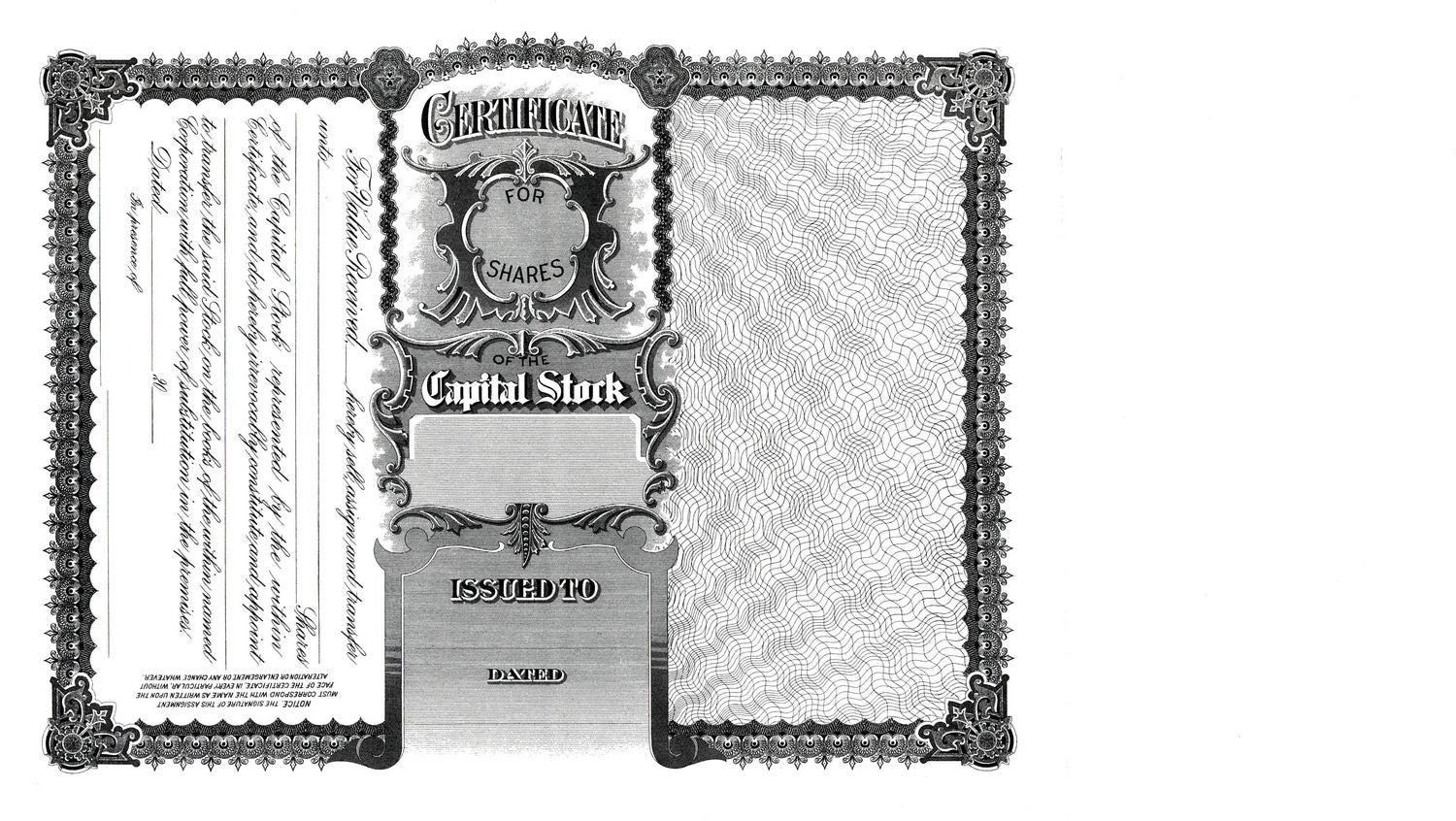
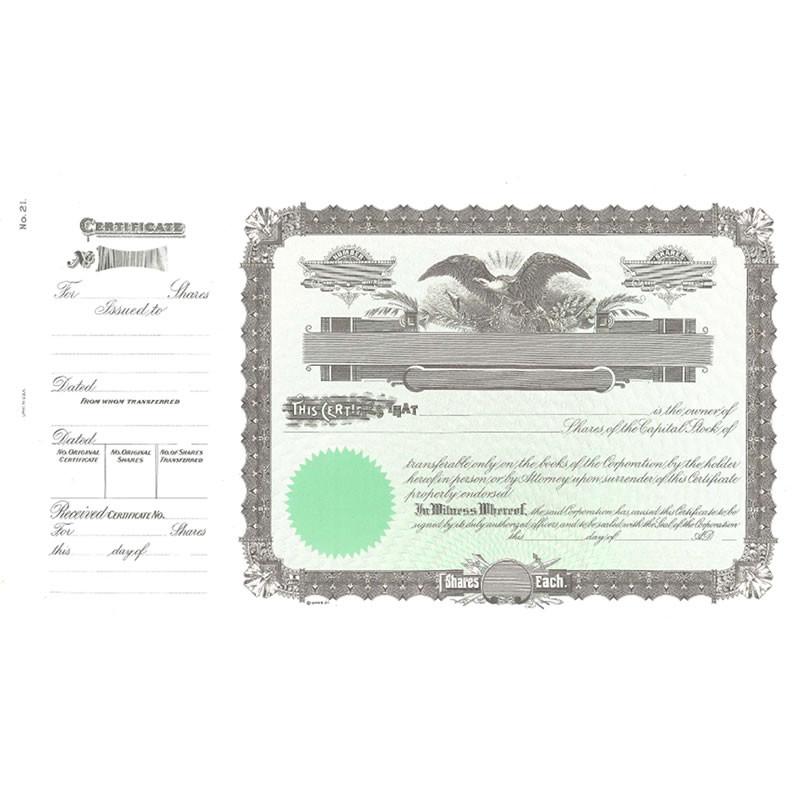
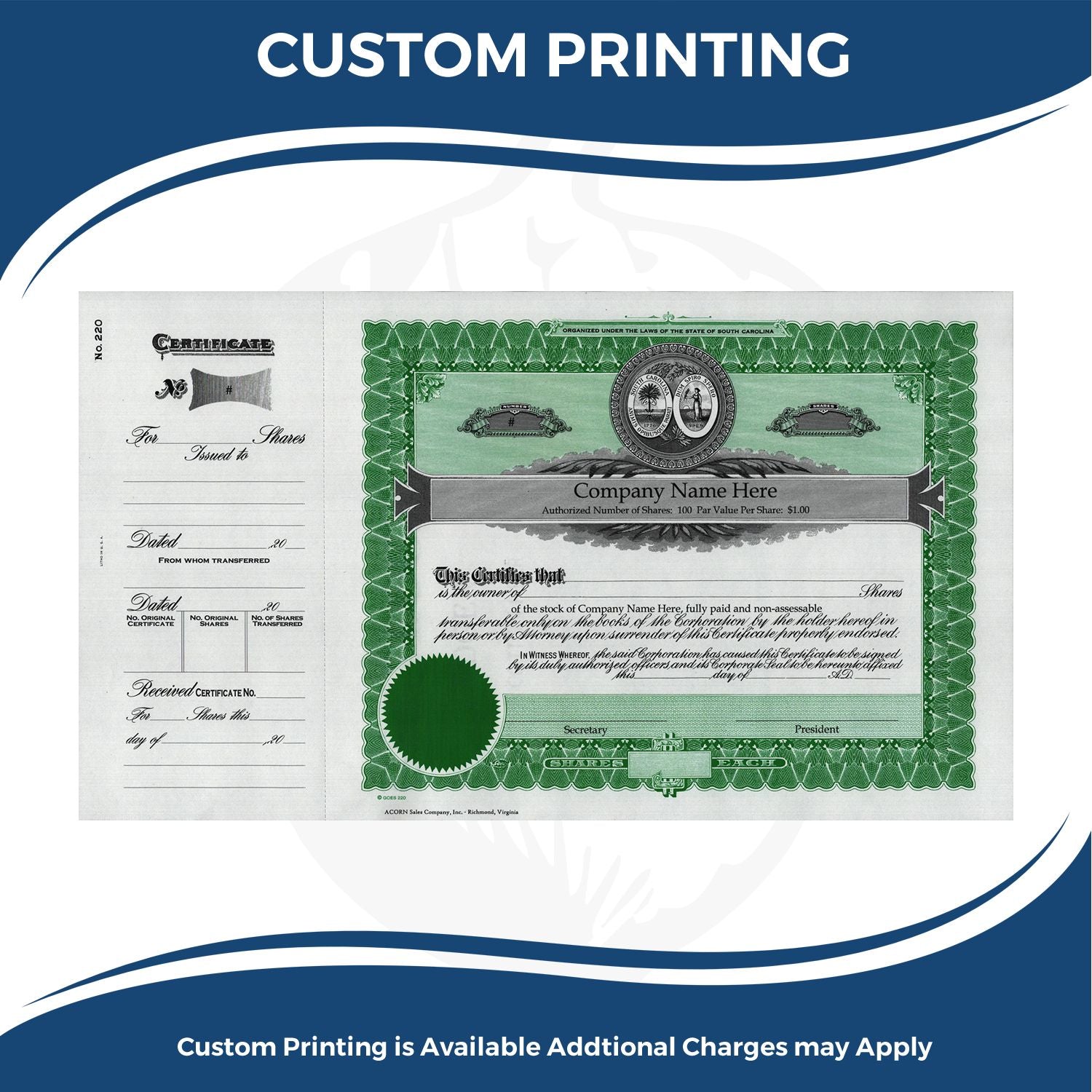
Acorn's custom printed certificates carry the standard corporate wording: the corporate or company name, the state of incorporation, the authorized number of shares and two signature lines, typically for the President and the Secretary. Kit certificates add par value, if any, and printed certificates are numbered in sequence, typically starting at 1.
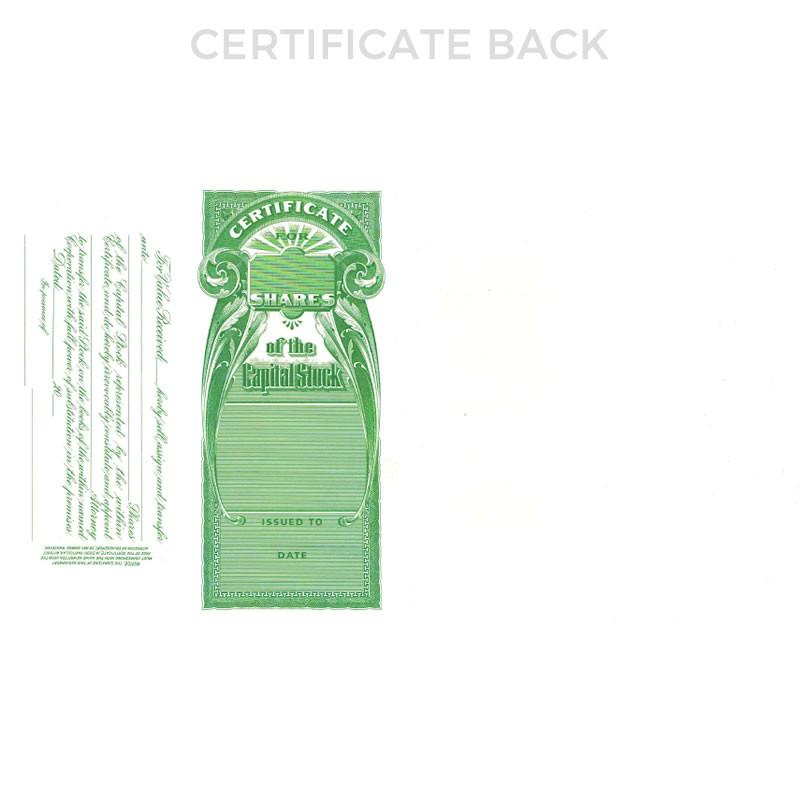
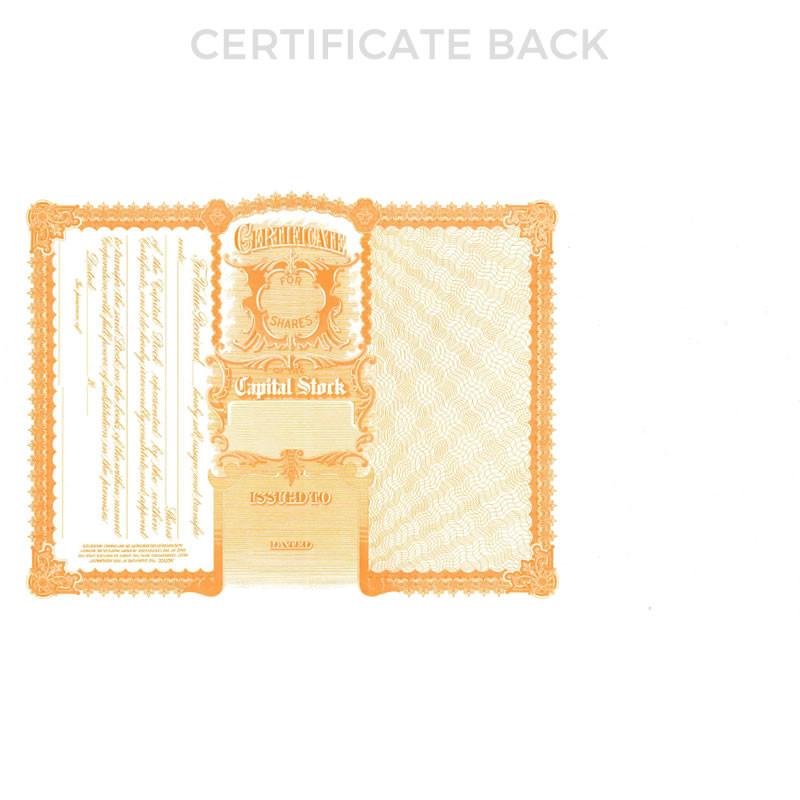
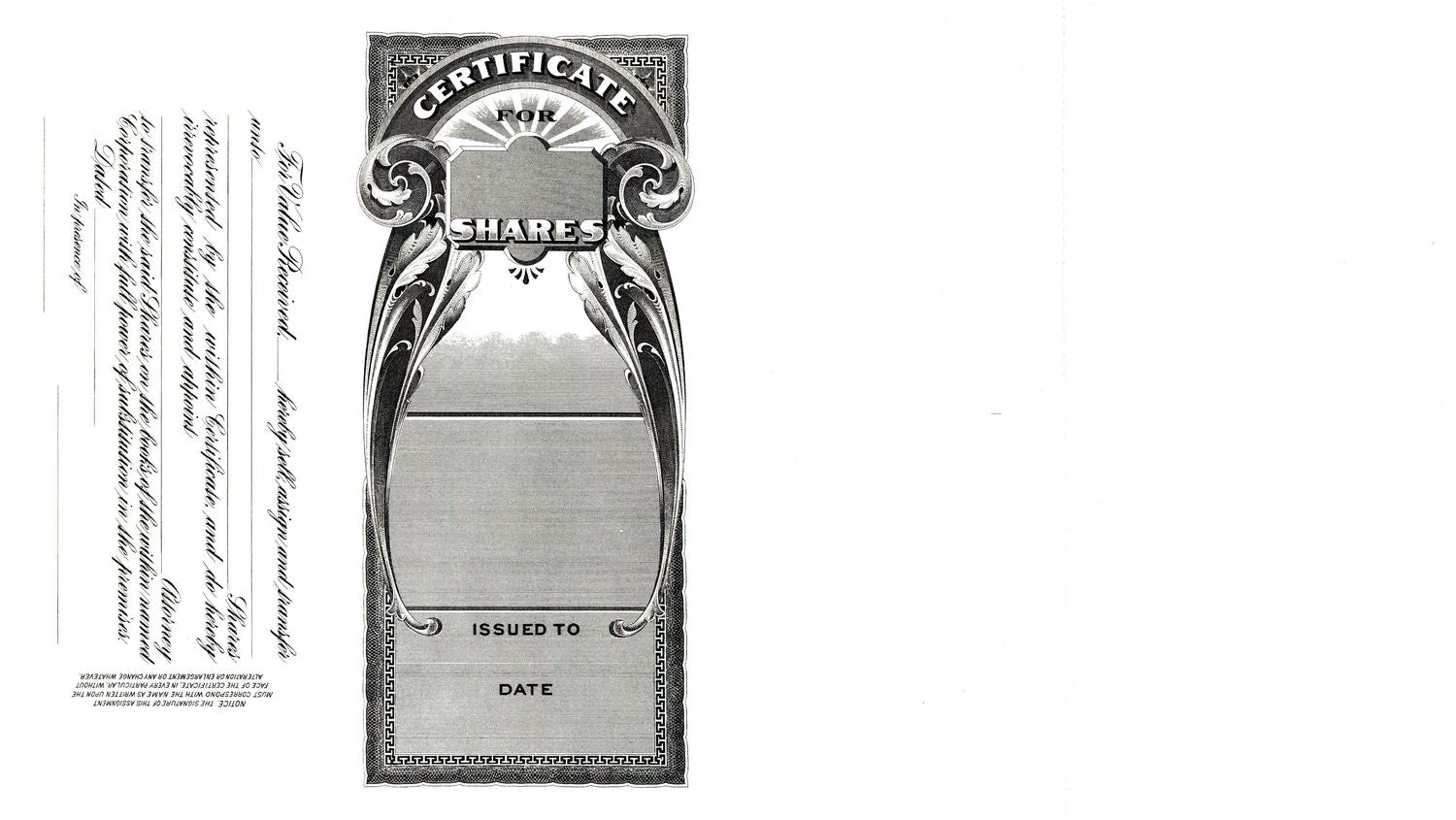
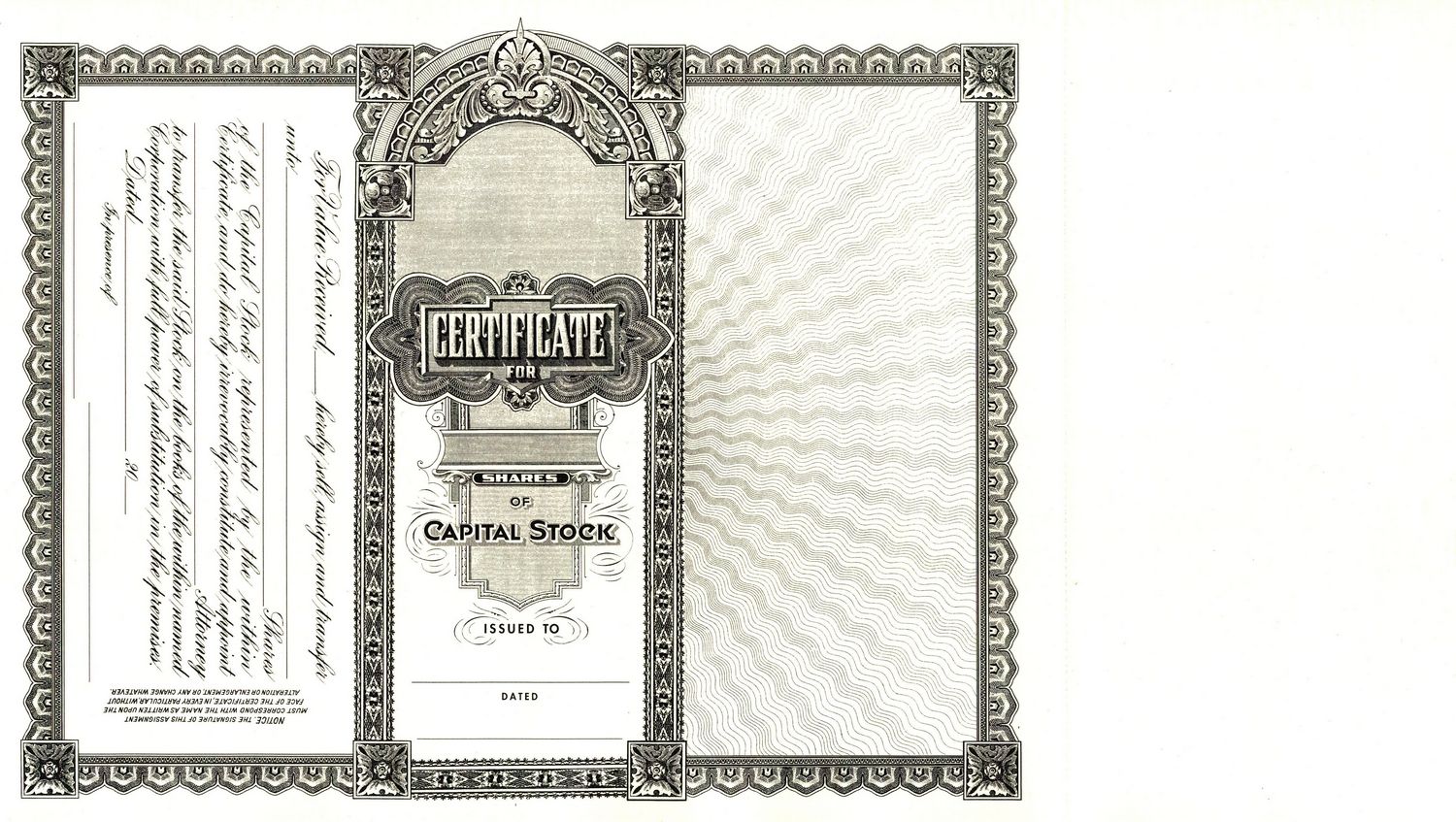
The shareholder's name, the number of shares on that certificate and the issue date are filled in when you issue it. Many long form certificates also have a printed back. If shares later change hands, our stock certificate transfer guide covers the endorsement step.
When does a certificate need extra wording?
Two situations add wording, and both come from statute rather than design.
- More than one class or series of stock. The certificate must summarize the rights of each class on the front or back, or state that the corporation will furnish that information on request and without charge (Va. Code §13.1-647(C); 8 Del. C. §151(f)).
- A restriction on transfer. In Virginia, a transfer restriction is enforceable against a holder if it is "noted conspicuously on the front or back of the certificate" (Va. Code §13.1-649). In Delaware, an unnoted restriction is "ineffective except against a person with actual knowledge of the restriction" (8 Del. C. §202).
If either applies, get the exact wording from your attorney and send it with your order so it can be set on the certificate.
Does a corporation have to issue paper certificates?
Not in Virginia or Delaware. Virginia law says shares "may but need not be represented by certificates," and shareholders' rights are identical either way.
A board may authorize shares without certificates, and the corporation then sends each holder a written statement with the same information within a reasonable time (Va. Code §13.1-648).
Delaware works the same way: the board may resolve that some or all classes are uncertificated. If your corporation does issue paper certificates, a corporate kit keeps them together with the ledger and minutes.
How do you issue a stock certificate?
- Confirm the shares are authorized. Compare the shares you are about to issue with the authorized number printed on the certificate and with the ledger.
- Take the next certificate number. Use certificates in order, and never skip or reuse a number.
- Fill in the shareholder and the shares. Write the holder's full legal name and the number and class of shares.
- Have two officers sign. In Virginia one person holding two offices may sign both lines.
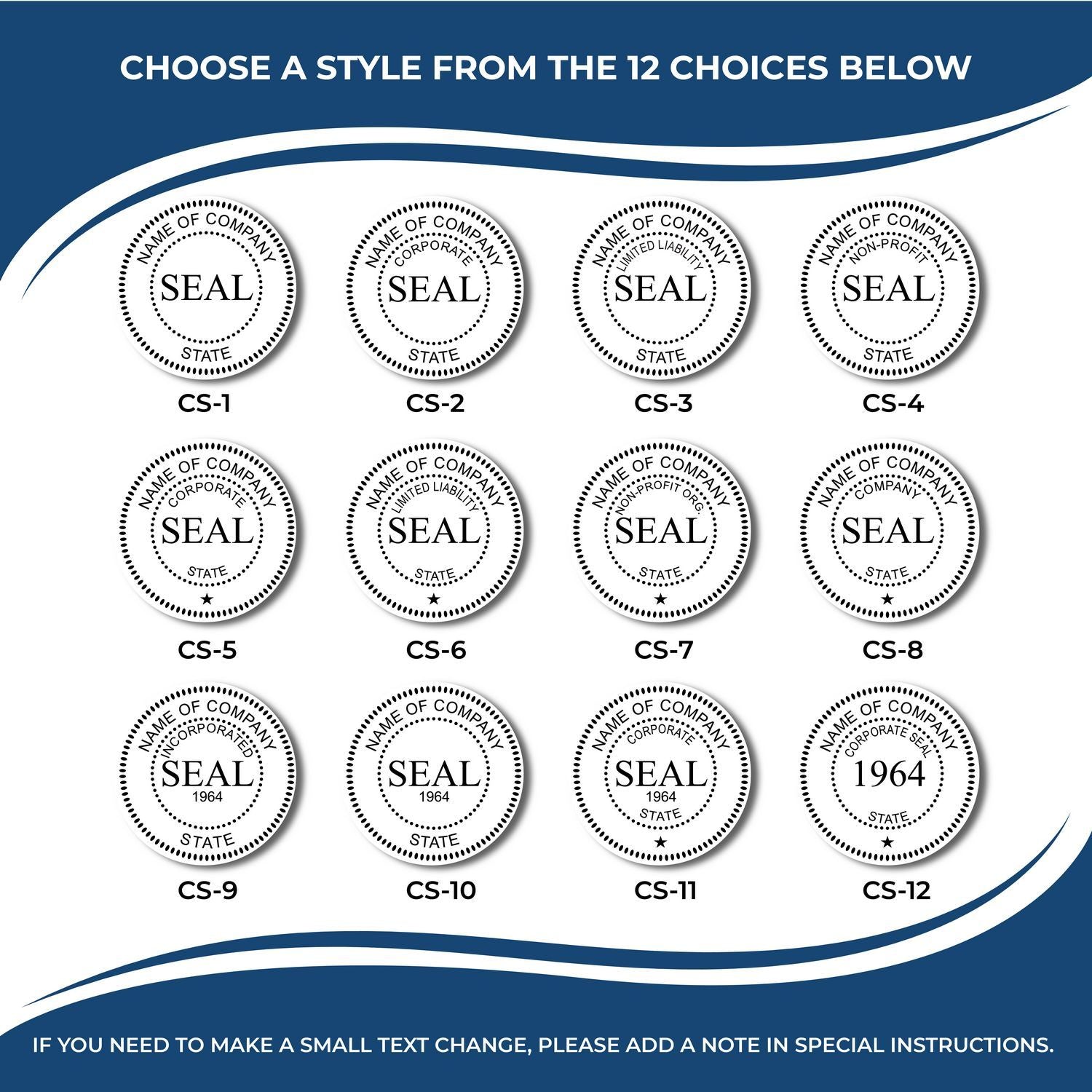
- Emboss it, if you use a seal. A foil seal under the impression adds emphasis. Texas, for one, does not require a business to have a seal.
- Record the issuance. Enter the certificate number, holder, shares and date in the stock and transfer ledger. Delaware defines the stock ledger as the record of all issuances and transfers of stock (8 Del. C. §219).



Which stock certificate should you buy?
Acorn stocks 89 Goes certificates in three sizes, priced at $2.50 or $2.75 each.
| Format | Size | Best for |
|---|---|---|
| Long form | 8-1/2″ x 15″ | The traditional lithographed certificate, sold loose or, for an additional charge, bound in a hard black binder stamped "Stock Certificates" in gold |
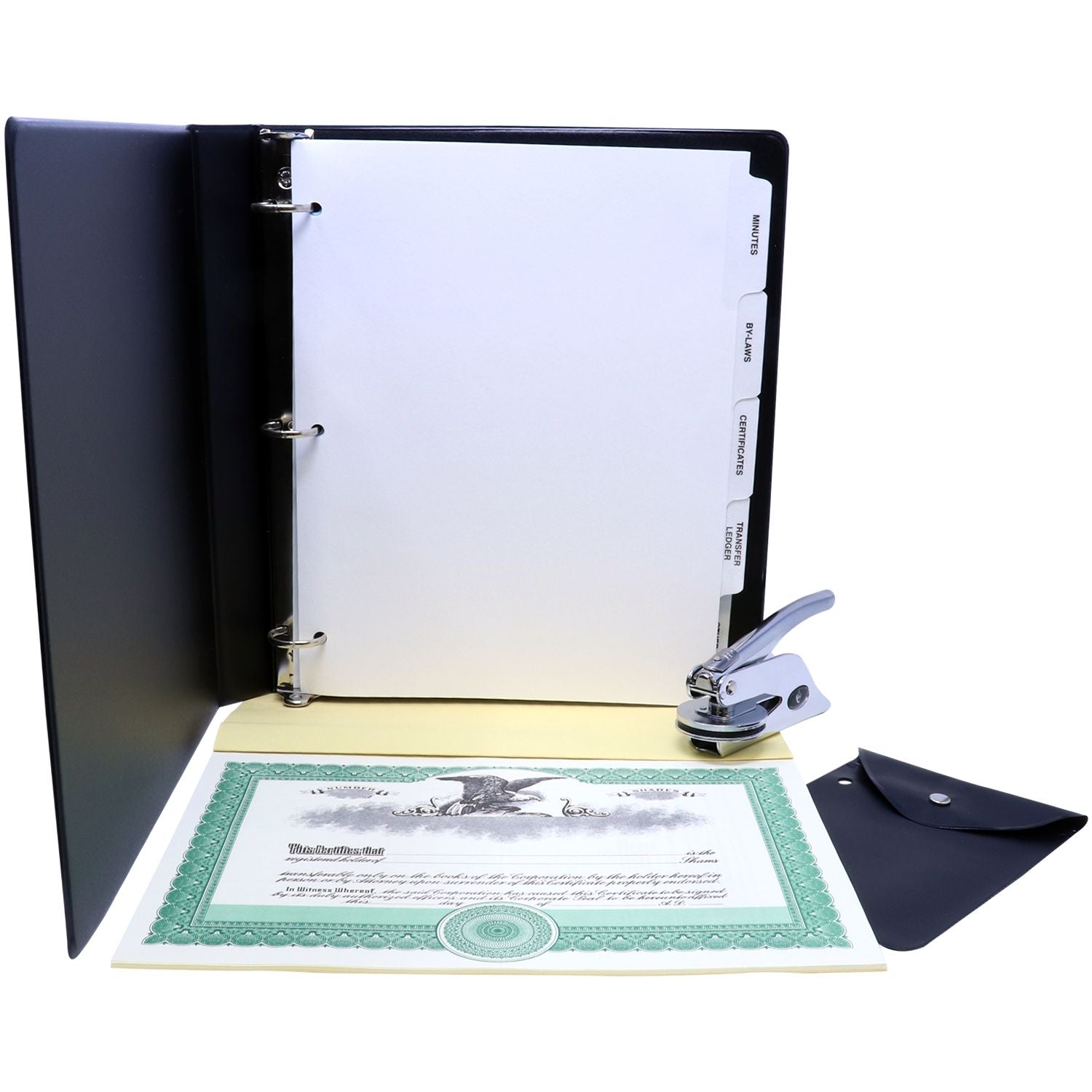
| Short form | 8-1/2″ x 11″ | Three-hole punched to sit in the minute book with your records |
| Oversize | 9-1/2″ x 16″ | One number only, the Goes 532-1/2 blank certificate |
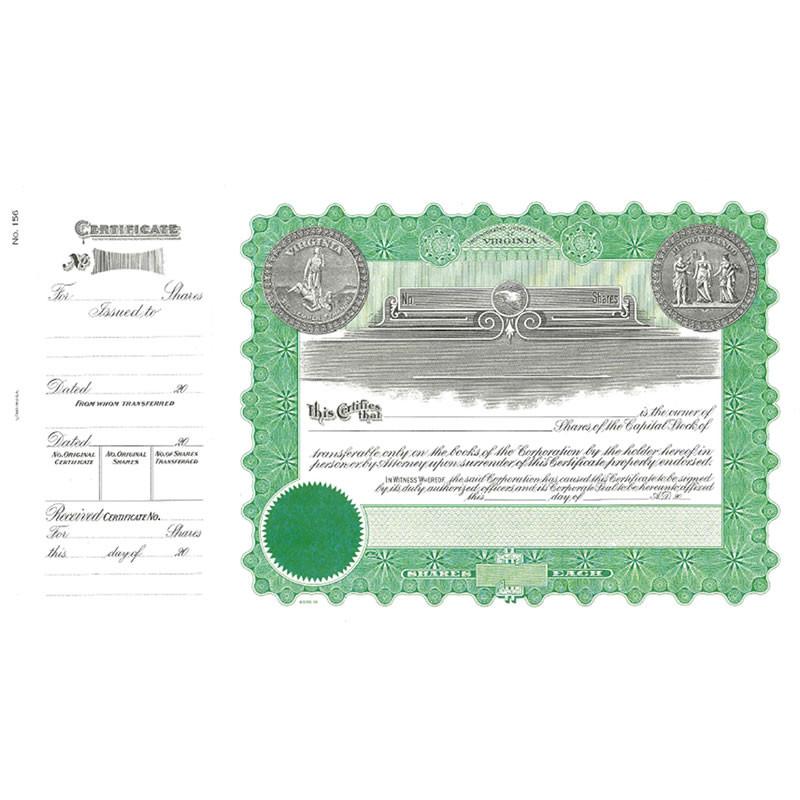
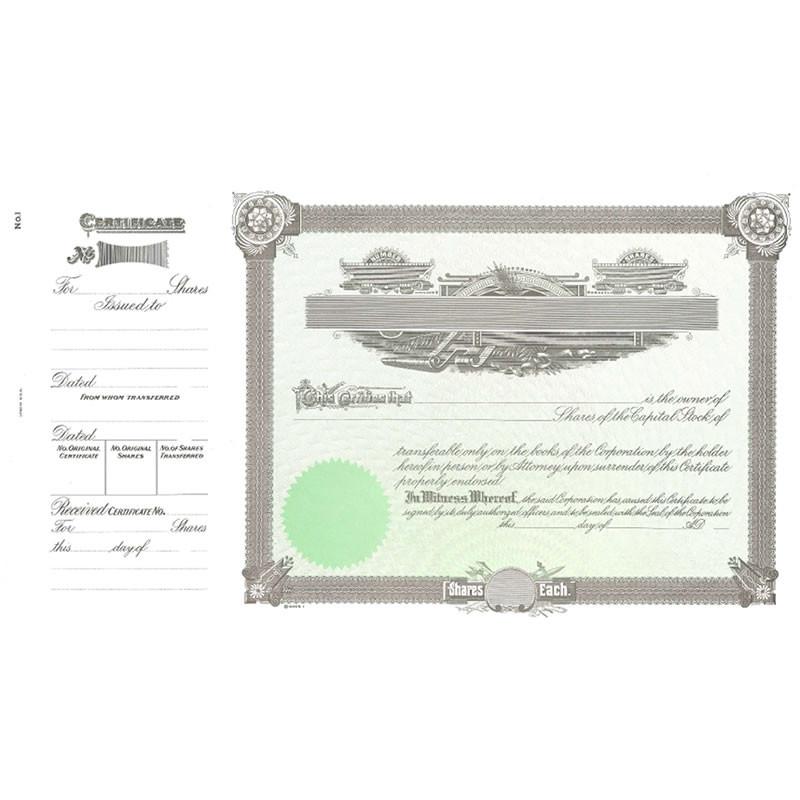
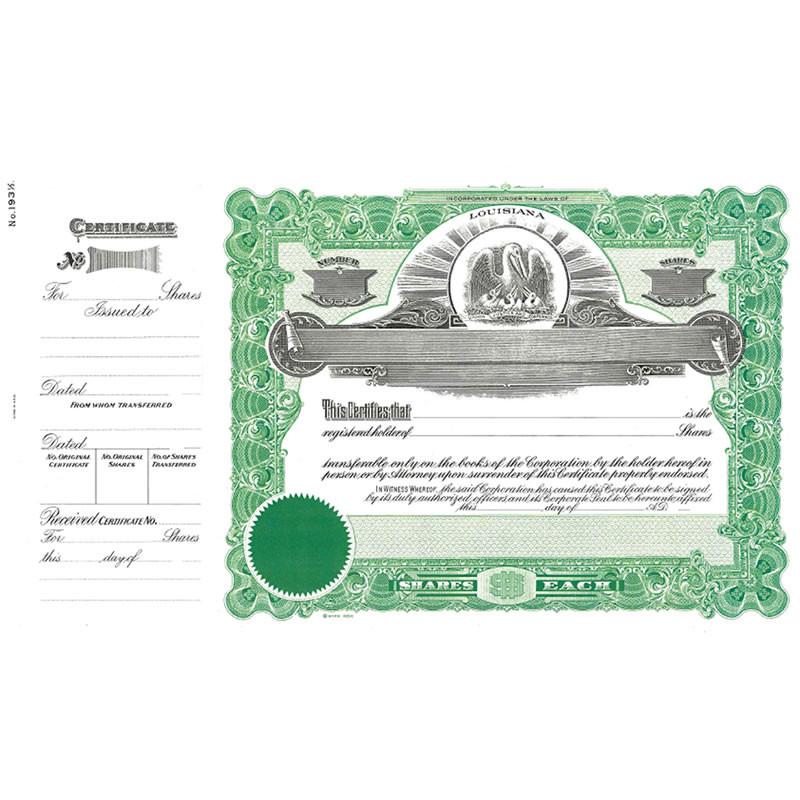
Many numbers are sold both custom printed and unprinted, and several are state specific, such as the Goes 156 Virginia Stock Certificate. For a general long form certificate, the Goes 1 Corporate Stock Certificate is green with a printed back at $2.75.
What you need besides the certificate
- Stock and Transfer Ledger, $9.95: 8 ruled ledger pages, indexed A to Z, 8-1/2″ x 11″, three-hole punched.
- Stock Transfer Sheets, $4.95 for a pack of 15, for tracking certificates as they are issued.
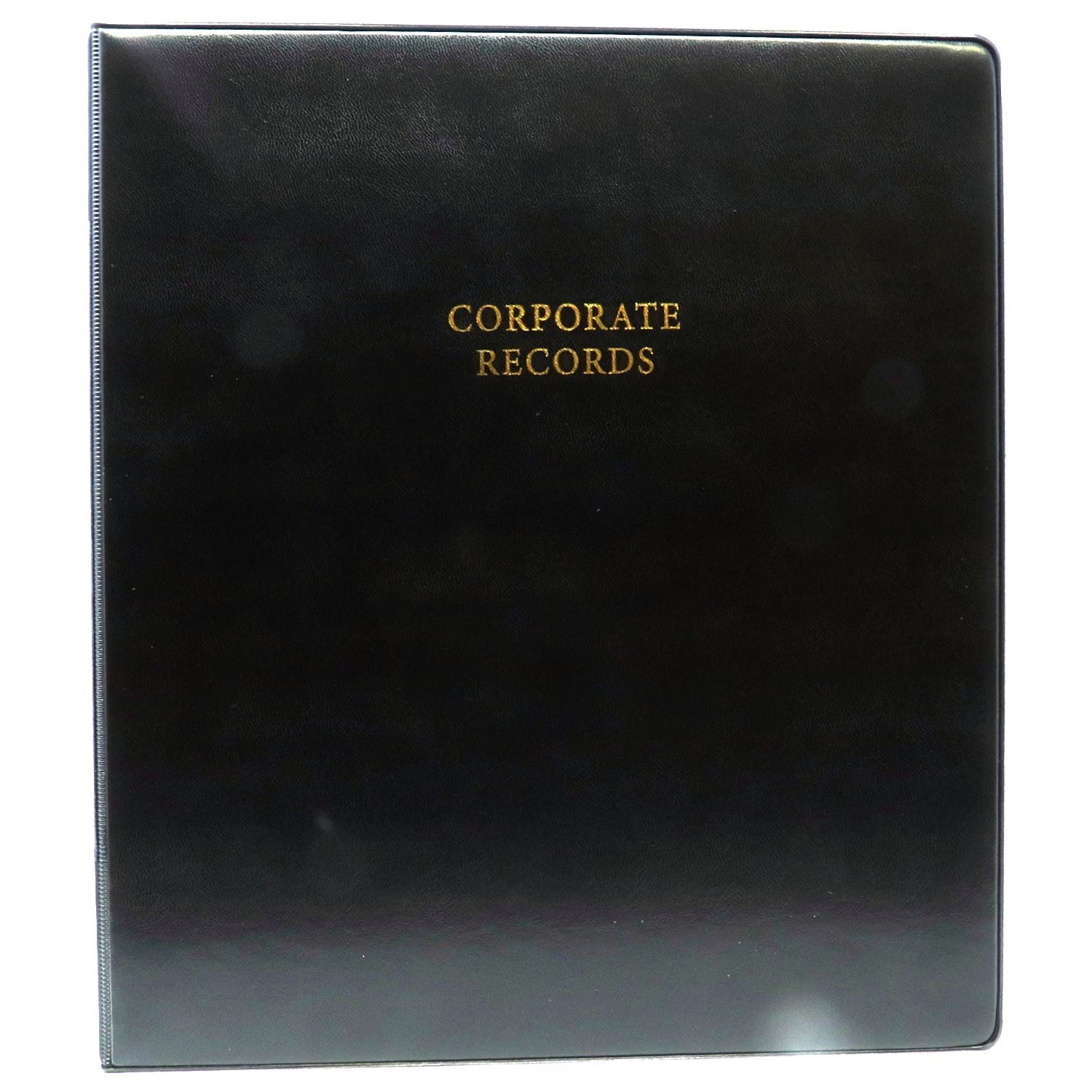
- Corporate Minute Book, $15.95: black three ring binder with 1″ rings and "Corporate Records" stamped in gold.
- Gold Foil Seals, $6.95 for 40, sized for a 1-5/8″ embosser.
The Basic Corporate Kit at $69.95 bundles a customized corporate seal, 10 unprinted certificates with transfer sheets, a minute book and a ledger.
Related guides
- Stock Certificates and Corporate Kits: Complete Guide
- Corporate and LLC Seals, Company Stamps and Kits
- LLC Membership Certificates: What They Are and What Goes on One
- Lost Stock Certificate: How a Corporation Replaces It
- Stock Certificate Transfer: The Steps and Documents
- What You Need to Know About Stock Certificate Size
Frequently asked questions
What does a stock certificate look like?
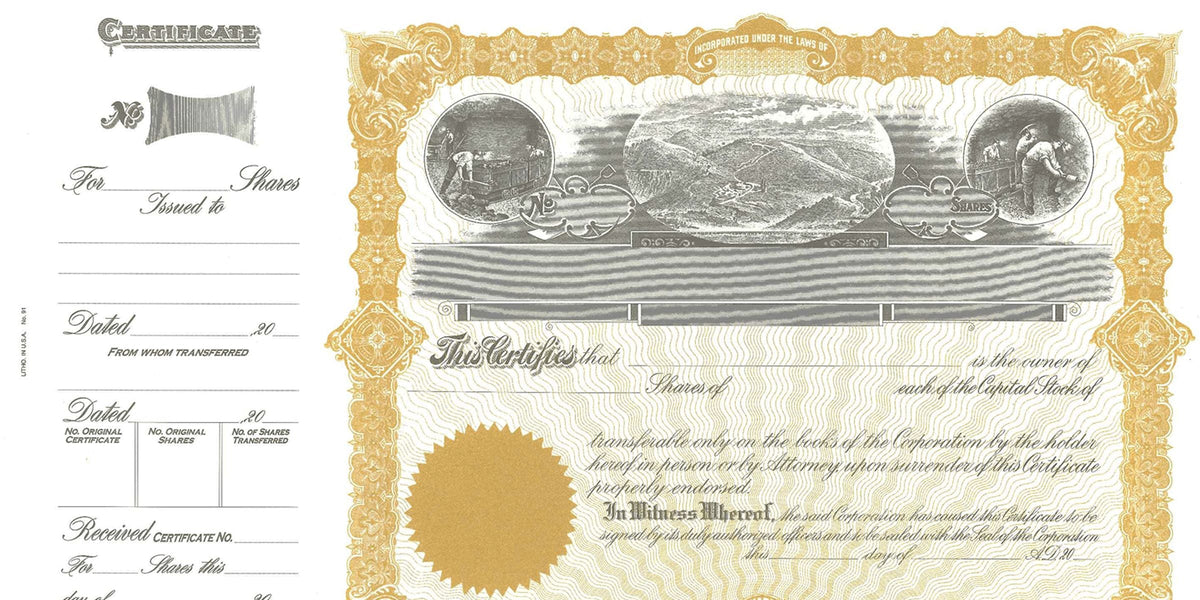
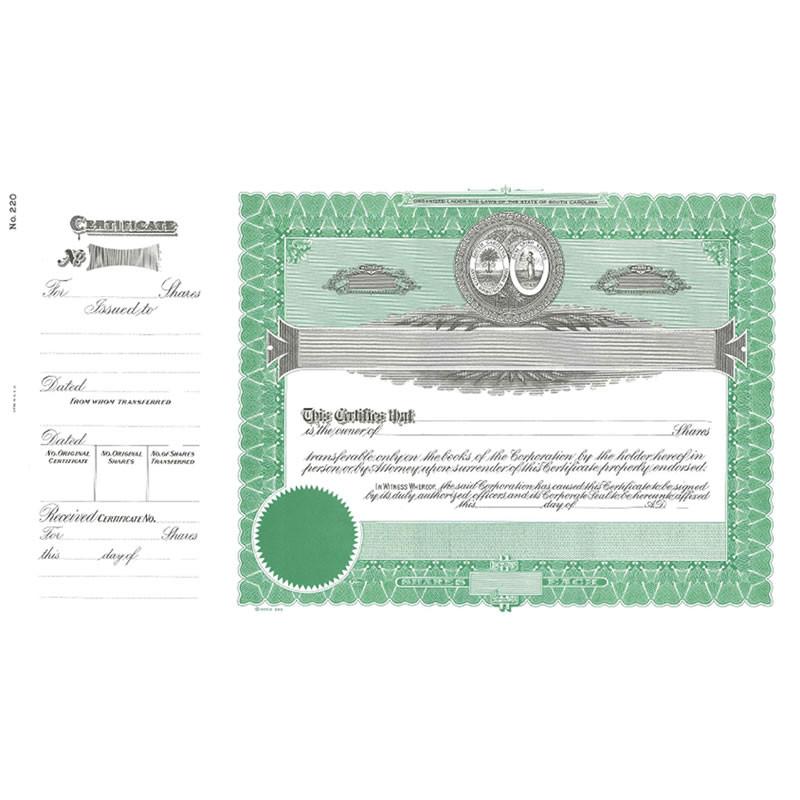
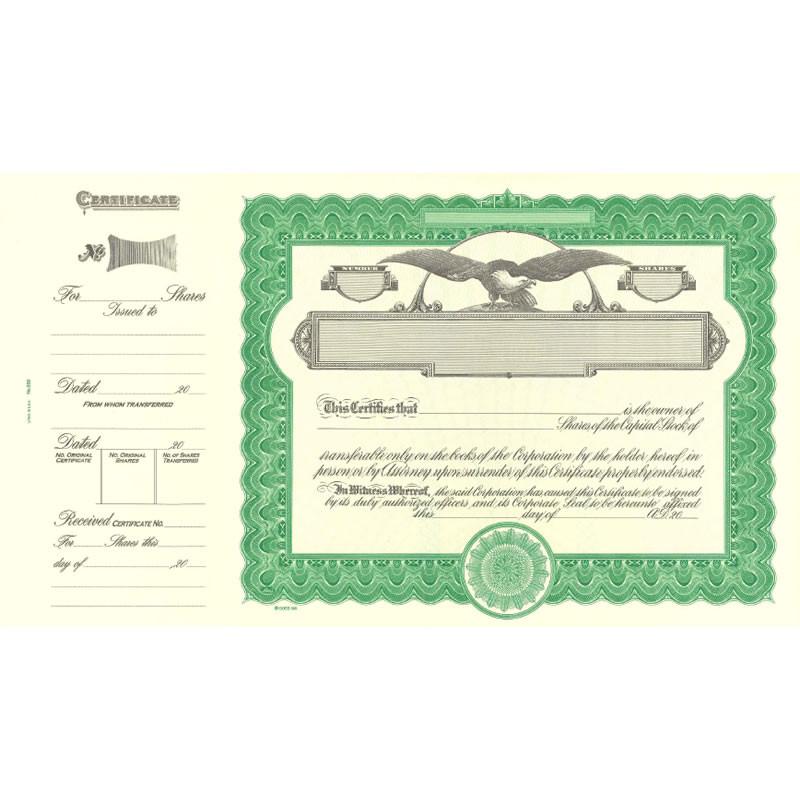
A traditional certificate is a lithographed sheet with a decorative border and a central image such as an eagle, printed on colored stock. Acorn's Goes certificates come in green, gold, blue, brown and orange, with the wording in black. Long form certificates measure 8-1/2″ x 15″ and short form certificates 8-1/2″ x 11″.
Who signs a stock certificate?
Two officers. Virginia requires two officers designated in the bylaws or by the board, who may be the same person, and Delaware requires any two authorized officers. Printed certificates usually carry lines for the President and the Secretary.
Can a stock certificate be signed with a stamp or printed signature?
Both Virginia and Delaware allow facsimile signatures. Virginia allows them unless the articles of incorporation or bylaws provide otherwise, and Delaware says any or all signatures may be a facsimile.
Does a stock certificate need a corporate seal?
Virginia's list of required certificate elements does not include a seal, and the Texas Secretary of State says Texas law does not require a business to have one. If you want to emboss certificates, every Acorn corporate kit includes a customized seal.
Can I print stock certificates myself?
Yes. Many Goes numbers are sold unprinted at $2.50 or $2.75 each, and the Basic Corporate Kit includes 10 unprinted certificates. A few blank numbers are marked Common or Preferred, so pick the one that matches the class of shares.
What is a stock ledger?
It is the corporation's record of who owns its shares. Delaware defines it as the records of stockholders of record, their addresses and shares, and all issuances and transfers. The Acorn Stock and Transfer Ledger is $9.95 and fits the minute book.
Ready to issue shares? Browse the full range on our Corporate Stock Certificates page.








