

Written by Acorn Sales Company, manufacturing stamps and seals since 1964 · Reviewed by Holly R, VP of Sales and Marketing at Acorn Sales, against the Florida Board of Professional Engineers and § 471.025(1), Fla. Stat. on 21 September 2026 · Updated 21 September 2026
A Florida PE seal is a minimum of 1-7/8 inches in diameter and it goes on top of your signature, not beside it. Rule 61G15-23.003(2) requires the licensee to use a wet seal, a digitally created seal or an embossing seal “placed partially overlapping the licensee’s signature on each page required to be sealed,” and adds that the placement shall not render the signature illegible.
The signature underneath has to be made by hand. Rule 61G15-23.003(1) requires an original hand signature on each page and states that “A scanned, facsimile, digitally created or copied image of the licensee’s signature shall not be used.” A signature stamp is never lawful for sealed Florida work. The date is a third, separate element: § 471.025(1), Fla. Stat. says final documents shall be “signed by the licensee, dated, and sealed.”
For a digital seal image the same 1-7/8 inch floor applies, measured the way the rule measures it: the minimum “shall be met when the image is represented in native (unreduced) document size.” A half-size print of a D sheet is fine. An undersized PNG dropped into a title block is not.
Florida PE seal requirements at a glance
| Requirement | Florida rule | Source |
|---|---|---|
| Seal required | Yes | § 471.025(1), Fla. Stat. |
| Required elements | Your name as licensed, The words State of Florida, The words Professional Engineer and Your license number | Fla. Admin. Code r. 61G15-23.002(2)(a) through (d) (designs prescribed by illustration) |
| Size and shape | Minimum 1-7/8 inches in diameter. | Fla. Admin. Code r. 61G15-23.002(2) |
| Device allowed | Three device forms are legal and named: a wet seal, an embossing seal, and a digitally created seal. | Fla. Admin. Code r. 61G15-23.003(2) |
| Signature and date | Florida demands a genuine wet signature on paper and puts the seal on top of it, not beside it. | Fla. Admin. Code r. 61G15-23.003(1) and (2) |
| What must be sealed | Final drawings, specifications, plans, reports or documents that are filed for public record, and all final documents given to the owner or the owner’s representative. | § 471.025(1), Fla. Stat. |
| Electronic seal | Florida runs two separate electronic systems and they do not mix. | Fla. Admin. Code r. 61G15-23.004 (eff. 4/21/2025) and r. 61G15-23.005 (eff. 5/26/2025) |
| Renewal and lapse | Section 471.025(2) is explicit: “It is unlawful for any person to seal or digitally sign any document with a seal or digital signature after his or her license has expired or been revoked or suspended, unless such license has been reinstated or reissued.” On revocation or suspension the device has to go back: the licensee shall, “within a period of 30 days after the revocation or suspension has become effective, surrender his or her seal to the executive director of the board and confirm to the executive director the cancellation of the licensee’s digital signature”. Nothing in the statute changes the license number on reinstatement, and the statute also allows a licensee to register the seal electronically with the board. | § 471.025(1) and (2), Fla. Stat. |
| Firm number on documents | No firm number goes on the document. | § 471.023, Fla. Stat. |
| Licensing board | The Florida Board of Professional Engineers | Chapter 471, Florida Statutes, sections 471.023 |
Rules for other states are on PE stamp requirements by state.





Is a seal required in Florida?
Florida requires a seal Florida puts the duty in statute, not only in board rule. Section 471.025(1) provides that “All final drawings, specifications, plans, reports, or documents prepared or issued by the licensee and being filed for public record and all final documents provided to the owner or the owner’s representative shall be signed by the licensee, dated, and sealed with said seal.” The same subsection requires each licensee to “obtain at least one seal in the form approved by rule of the board”. The board then fills in the form of the seal and the mechanics of applying it in chapter 61G15-23, Florida Administrative Code, which is titled Seals.
What must appear on the seal
- Your name as licensed
- The words State of Florida
- The words Professional Engineer
- Your license number
The four data points above are what the board’s own prescribed digital-seal caption carries, and they match the seal forms the board publishes. The seal designs in 61G15-23.002(2)(a) through (d) are illustrations inside the rule, and illustrations do not survive text extraction, so the exact typography and ring layout must be copied from the board’s published artwork rather than reconstructed. There is more than one approved form, which is why the statute says a licensee must obtain a seal “in the form approved by rule of the board” rather than a single form.
Size and shape
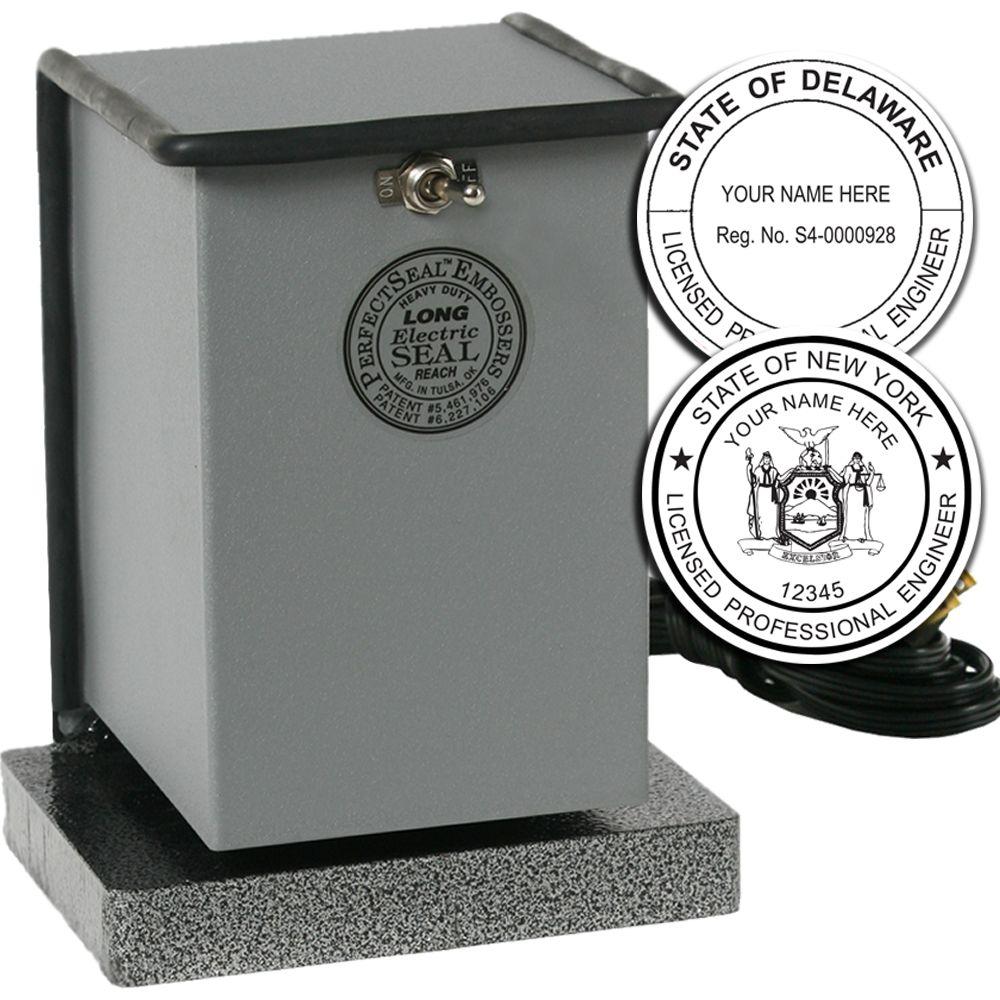
Minimum 1-7/8 inches in diameter. The rule reads “Wet Seals, Embossing Seals and Digitally Created Seals shall be a minimum of 1-7/8 inches in diameter and shall be of a design similar to those set forth in subsections (a), (b) and (c) below.” The same subsection settles the scaling question that used to cause arguments: “When utilizing Digitally Created Seals, the requirement of a minimum diameter of 1-7/8 inches shall be met when the image is represented in native (unreduced) document size.” So a half-size print of a D-size sheet does not violate the rule, and an undersized PNG dropped into a title block does.






Embosser, rubber stamp or digital
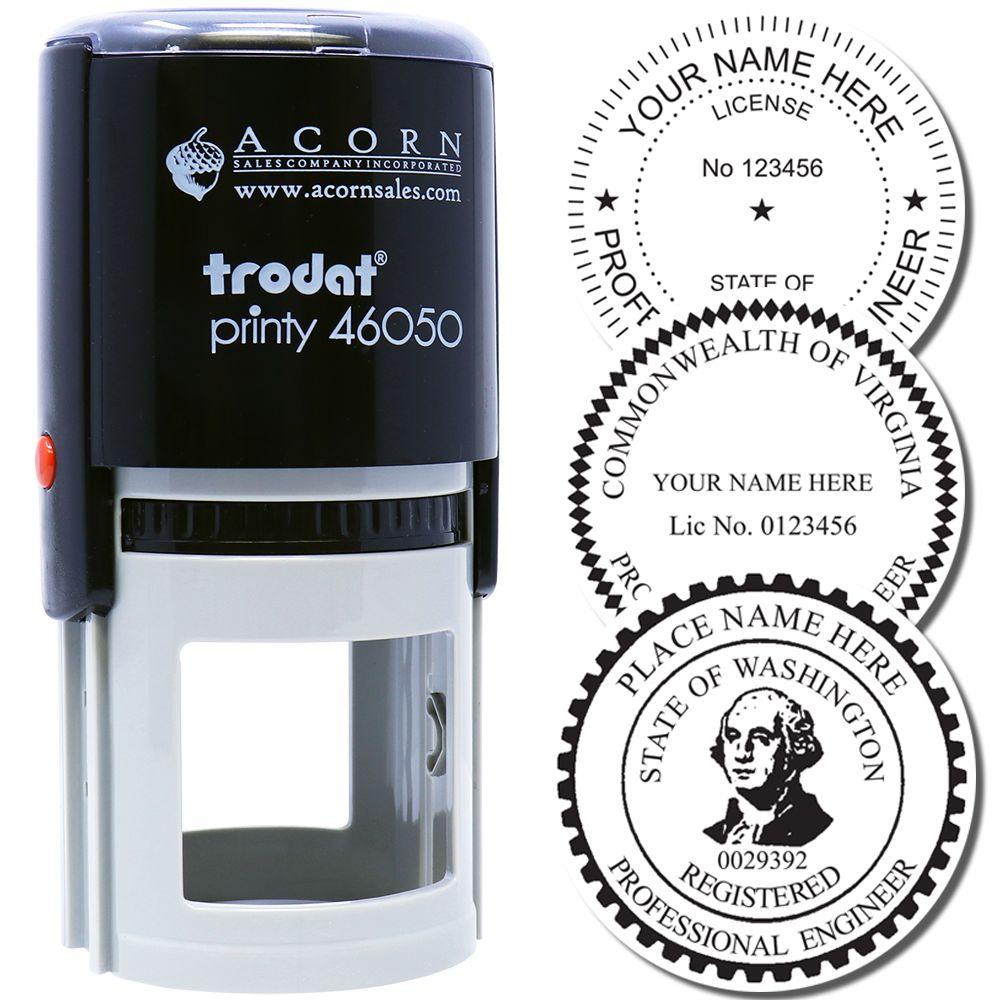
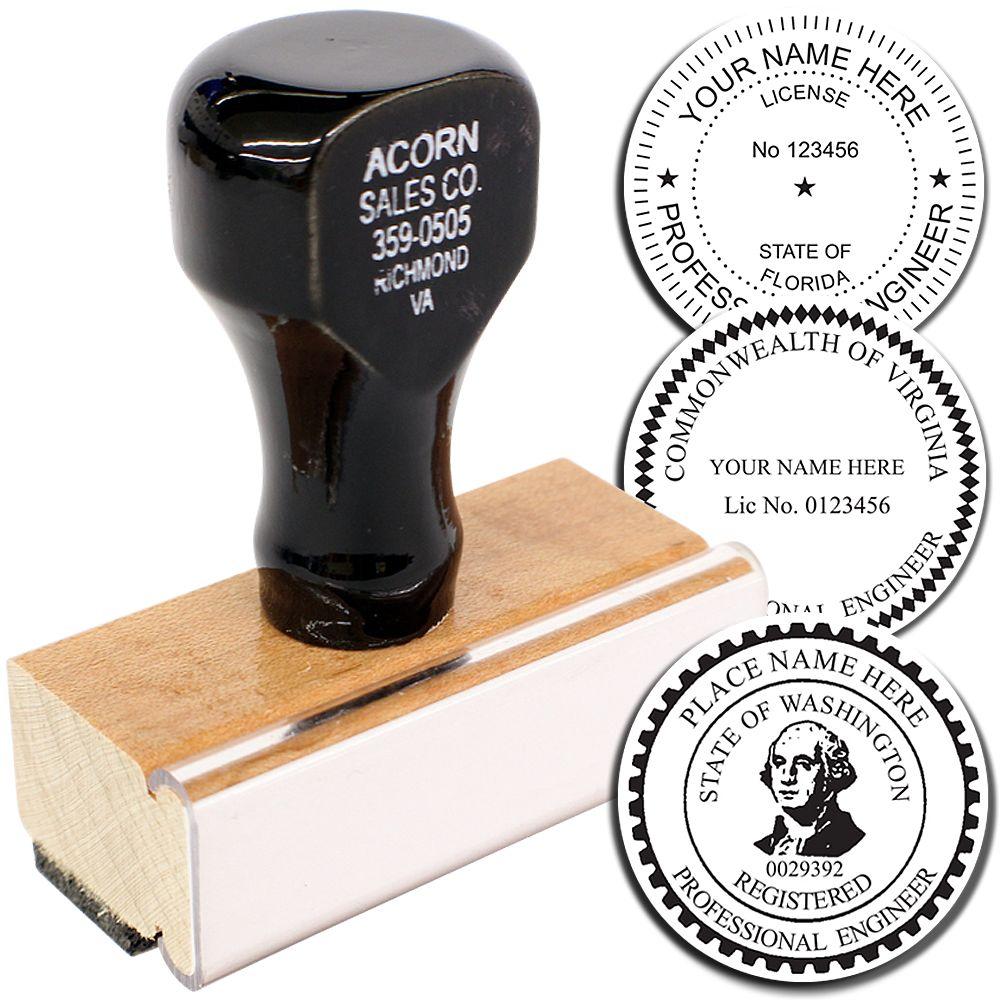
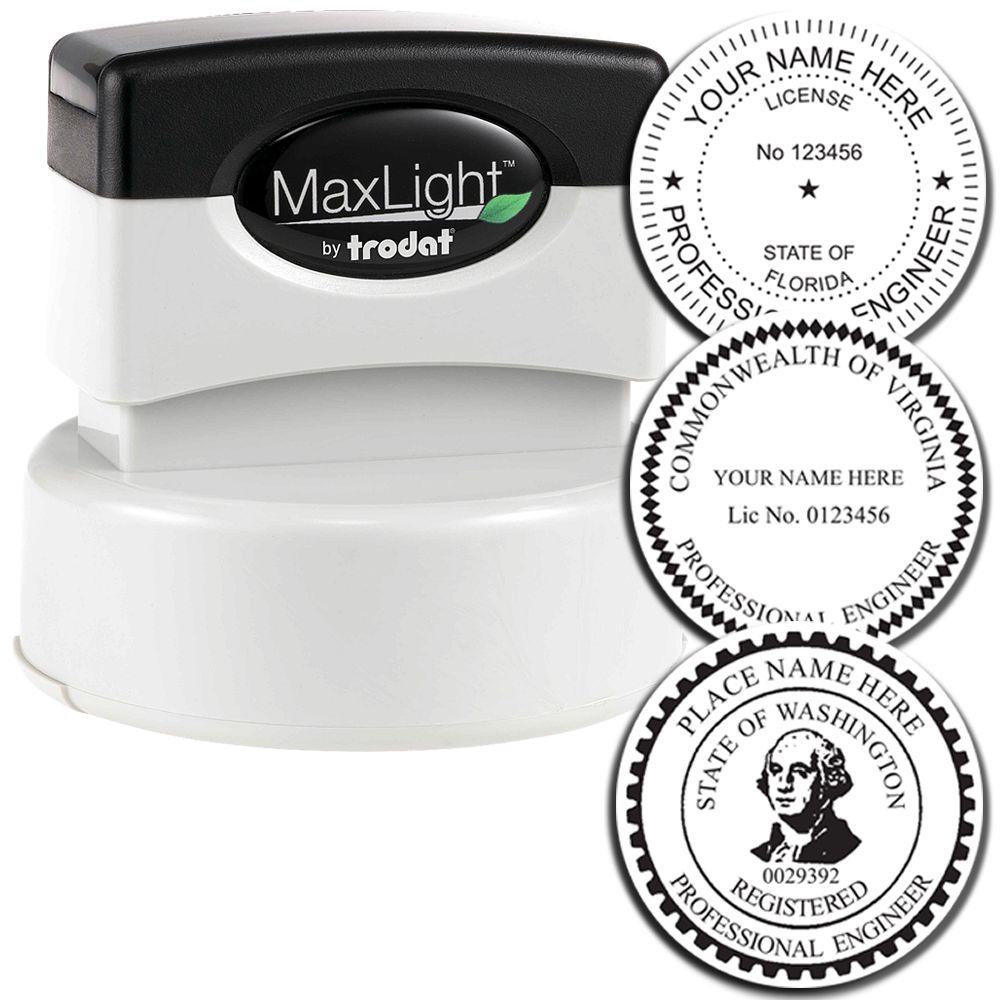
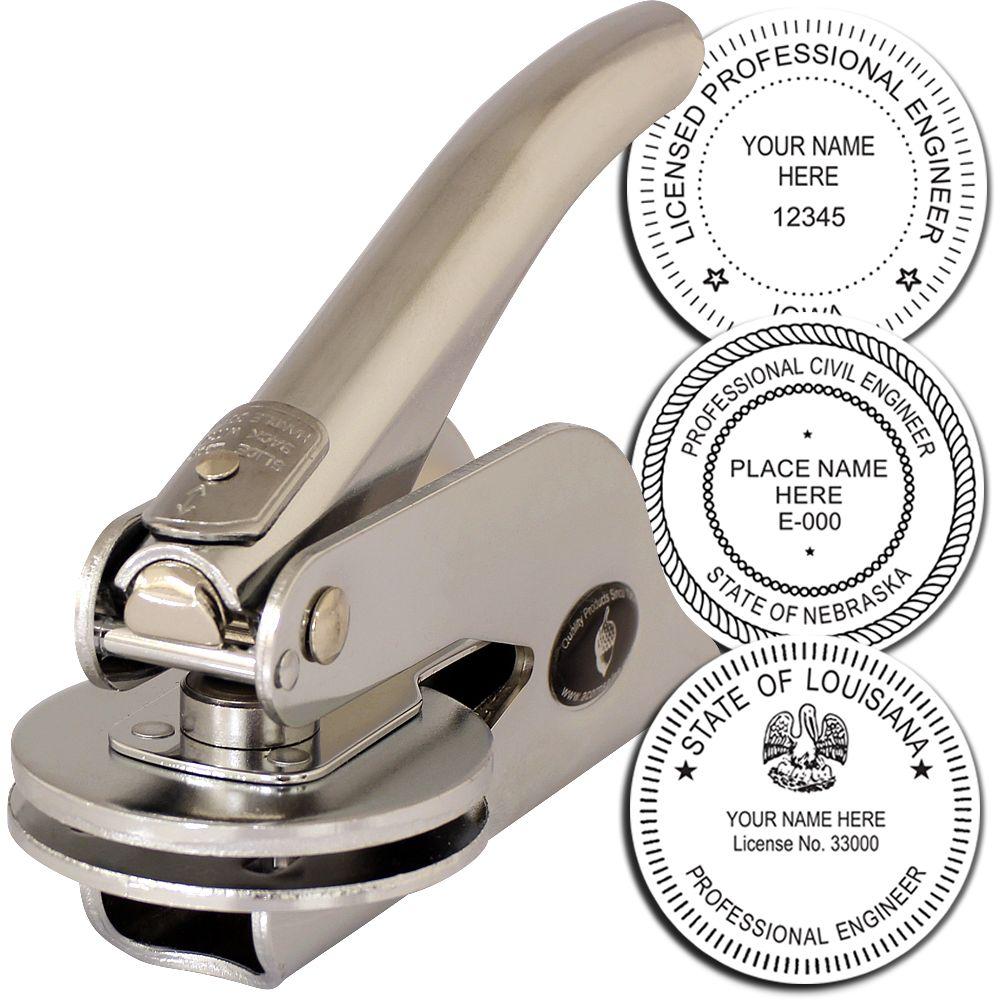
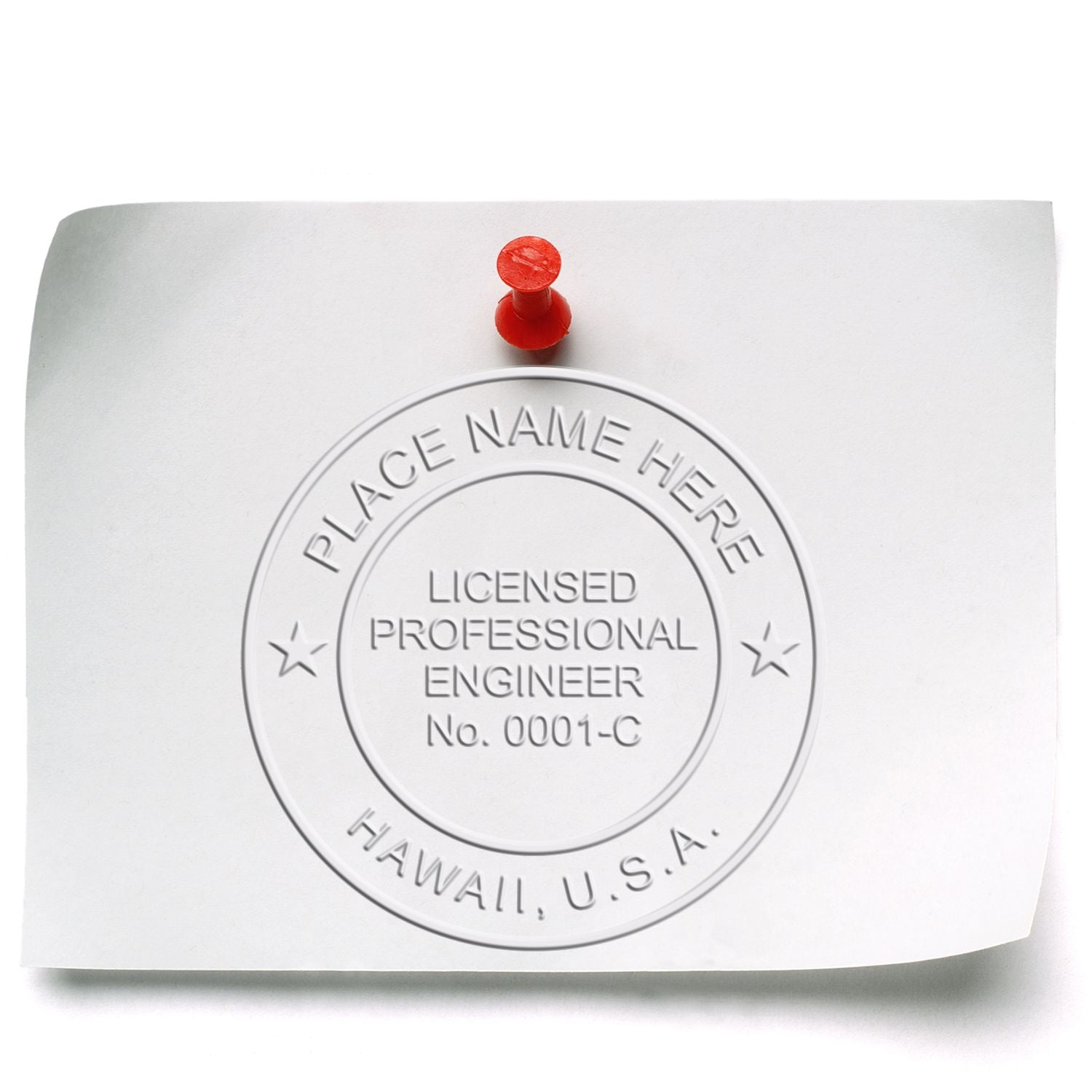
Three device forms are legal and named: a wet seal, an embossing seal, and a digitally created seal. Rule 61G15-23.003(2) requires that the licensee “use a wet seal, a digitally created seal, or an embossing seal placed partially overlapping the licensee’s signature on each page required to be sealed.” The safe buy is a self-inking or hand-stamp wet seal at the full 1-7/8 inch diameter, because it satisfies the physical signing route in 61G15-23.003 on its own. An embosser alone is legal but reproduces poorly, and Florida requires the seal to remain legible beside the signature.
Signing and dating
Florida demands a genuine wet signature on paper and puts the seal on top of it, not beside it. Rule 61G15-23.003(1) provides that “The licensee shall sign by hand an original of the licensee’s signature on each page required to be sealed. A scanned, facsimile, digitally created or copied image of the licensee’s signature shall not be used.” Subsection (2) then requires the seal to be “placed partially overlapping the licensee’s signature on each page required to be sealed” and adds that “The placement of the seal shall not render the signature illegible.” The date is the signing date, and the statute makes it a separate element: documents shall be “signed by the licensee, dated, and sealed”.
In Florida a printout and a scan are both unsigned, in opposite directions
Florida is one of the few states where the medium decides whether a document is sealed at all. Take the paper route under 61G15-23.003 and the original hand signature on the sheet is the signed and sealed document. Scan it and email the PDF, and the board’s own guidance says the scan is not a signed and sealed document. Take the digital route under 61G15-23.004 and the reverse applies: the electronic file with its verifiable digital signature is the signed and sealed document, and the printout of it is not.
Which documents must be sealed
Final drawings, specifications, plans, reports or documents that are filed for public record, and all final documents given to the owner or the owner’s representative. The carve-out is that the duty attaches to final documents, so work that is not final and not issued is outside it. Rule 61G15-23.001, titled Signature, Date and Seal Shall Be Affixed, carries additional requirements for plans and prints, engineering specifications and calculations, and engineering reports. Its subsections (1) through (3) were unchanged in the 2021 amendment and their text could not be pulled from the Florida Administrative Register in this session, so read 61G15-23.001 in full before writing copy about what a specific document type requires.





Electronic and digital seals
Florida runs two separate electronic systems and they do not mix. Rule 61G15-23.004 governs digital signing and sealing: a digital signature is applied to the electronic file and the rule prescribes the caption that must appear on each sheet, in a form beginning “This item has been digitally signed and sealed by” and ending with a statement that printed copies are not considered signed and sealed and that the signature must be verified on electronic copies. The board’s published guidance adds that the digital signature must be unique to the engineer, obtained from a third-party certification authority, and capable of verification, and that a self-authenticated signature such as Adobe’s default option does not qualify. Rule 61G15-23.005 governs electronic signing, a different method built on a secure hash algorithm authentication code, with a printable signature report carrying the SHA code that is then hand signed, dated and sealed. Both rules were amended in 2025, 61G15-23.004 effective 21 April 2025 and 61G15-23.005 effective 26 May 2025, so pre-2025 guidance circulating online is stale. The exact caption wording must be copied from the current rule text, character for character, because the board treats the wording as prescribed.
Renewal, lapse and retirement
Section 471.025(2) is explicit: “It is unlawful for any person to seal or digitally sign any document with a seal or digital signature after his or her license has expired or been revoked or suspended, unless such license has been reinstated or reissued.” On revocation or suspension the device has to go back: the licensee shall, “within a period of 30 days after the revocation or suspension has become effective, surrender his or her seal to the executive director of the board and confirm to the executive director the cancellation of the licensee’s digital signature”. Nothing in the statute changes the license number on reinstatement, and the statute also allows a licensee to register the seal electronically with the board.
Firm registration
No firm number goes on the document. Section 471.023 requires that “All final drawings, specifications, plans, reports, or documents involving practices licensed under this chapter which are prepared or approved for the use of the business organization or for public record within the state shall be dated and shall bear the signature and seal of the licensee who prepared or approved them.” That is the individual’s seal, not the firm’s. The firm itself must still be qualified through a licensed engineer acting as qualifying agent, but the old certificate of authorization has been replaced: the board states that “Engineering firms with previous Certificates of Authorization were rolled over into the Engineering Business Registry” and that registered firms “will no longer have to renew their registration, and there is no certificate or license to print.” A firm has no seal of its own.
What to check before you order
Order the die at a minimum of 1-7/8 inches in diameter, and if you also want a digital seal image, have it measure 1-7/8 inches at native document size, since the rule ties the minimum to the unreduced size rather than to the printed sheet. Wet seals, embossing seals and digitally created seals are all lawful forms. Take the face artwork from the board's published seal designs in 61G15-23.002(2)(a) through (d) rather than a generic ring template. Never use a signature stamp on sealed work. No rule imposes a licensure check before your seal is made.
Browse professional engineer stamps and seals.
- How to Choose the Right Florida Engineer Stamp Manufacturer
- Discover the True Florida Engineer Stamp Cost Today
Frequently asked questions
Do I need a PE seal in Florida?
Yes, and the duty is in the statute rather than only in board rule. Section 471.025(1), Fla. Stat. requires each licensee to “obtain at least one seal in the form approved by rule of the board” and provides that all final drawings, specifications, plans, reports or documents filed for public record, and all final documents provided to the owner or the owner’s representative, shall be signed, dated and sealed. Chapter 61G15-23, Florida Administrative Code, titled Seals, fills in the form of the seal and the mechanics of applying it.
What has to appear on a Florida PE seal?
Four data points: your name as licensed, the words State of Florida, the words Professional Engineer, and your license number. Those are the items in the board’s prescribed digital seal caption, which reads “[NAME], State of Florida, Professional Engineer, License No. [NUMBER]” under rule 61G15-23.004, and they match the seal forms the board publishes. The designs themselves live in rule 61G15-23.002(2)(a) through (d) as illustrations, so the typography and ring layout should be copied from the board’s published artwork rather than rebuilt from a generic template. There is more than one approved form, which is why the statute speaks of a seal in the form approved by rule rather than a single form.
What size does a Florida PE seal have to be?
At least 1-7/8 inches in diameter. Rule 61G15-23.002(2) sets that floor for wet seals, embossing seals and digitally created seals alike. It is a minimum, not a fixed figure, and for a digitally created seal the rule ties the measurement to native, unreduced document size rather than to the printed sheet, which settles the old argument about half-size prints.
Embosser, rubber stamp or digital seal in Florida?
All three are named and legal: rule 61G15-23.003(2) lists a wet seal, a digitally created seal and an embossing seal. The practical buy is a self-inking or hand-stamp wet seal at the full 1-7/8 inch diameter, because it satisfies the physical signing route in 61G15-23.003 on its own. An embosser alone is legal but reproduces poorly, and Florida requires the seal to stay legible where it overlaps the signature.
Where do the signature and the date go on a Florida sealed sheet?
The signature goes on each page by hand and the seal goes partly over it. Rule 61G15-23.003(1) and (2) put the seal “partially overlapping” the signature and forbid placement that renders the signature illegible. The date is the date of signing and is required separately by § 471.025(1), Fla. Stat., which lists signed, dated and sealed as three acts.
Can I use a signature stamp on Florida engineering documents?
No. Rule 61G15-23.003(1) requires the licensee to sign by hand an original of the signature on each page required to be sealed and rules out a scanned, facsimile, digitally created or copied image of that signature. That prohibition is about the signature, not the seal: the seal itself may be a wet, embossed or digitally created device.
Which Florida documents have to be sealed?
Final drawings, specifications, plans, reports or documents filed for public record, plus all final documents given to the owner or the owner’s representative, under § 471.025(1), Fla. Stat. The duty attaches to final work, so material that is neither final nor issued sits outside it. Rule 61G15-23.001, titled Signature, Date and Seal Shall Be Affixed, carries further requirements for plans and prints, for engineering specifications and calculations, and for engineering reports; read that rule in full before relying on a summary for a particular document type.
Is a printout of a digitally sealed Florida document signed and sealed?
No. Rule 61G15-23.004 prescribes a caption for digitally signed and sealed sheets that begins “This item has been digitally signed and sealed by” and ends by stating that printed copies are not considered signed and sealed and that the signature must be verified on electronic copies. The reverse holds on the paper route: the sheet carrying the original hand signature is the signed and sealed document, and the board’s guidance treats a scan of it as something less. Copy the caption wording from the current rule character for character, because the board treats it as prescribed.
What is the difference between digital signing and electronic signing in Florida?
They are two separate systems under two separate rules and they do not mix. Rule 61G15-23.004 covers digital signing: a digital signature applied to the electronic file, with the prescribed caption on each sheet. The board’s published guidance adds that the digital signature must be unique to the engineer, obtained from a third-party certification authority and capable of verification, and that a self-authenticated signature such as Adobe’s default option does not qualify. Rule 61G15-23.005 covers electronic signing, built on a secure hash algorithm authentication code, ending in a printable signature report carrying the SHA code that is then hand signed, dated and sealed. Both rules were amended in 2025,.004 effective 21 April 2025 and.005 effective 26 May 2025, so older guidance circulating online is stale.
What happens to my Florida seal if the license expires or is suspended?
Sealing stops immediately. Section 471.025(2), Fla. Stat. makes it unlawful to seal or digitally sign any document with a seal or digital signature after the license has expired or been revoked or suspended, unless it has been reinstated or reissued. On revocation or suspension the device goes back: the licensee shall “within a period of 30 days after the revocation or suspension has become effective, surrender his or her seal to the executive director of the board and confirm to the executive director the cancellation of the licensee’s digital signature.” Nothing in the statute changes the license number on reinstatement, and the statute also allows a licensee to register the seal electronically with the board.
Does a firm number go on a Florida sealed drawing?
No. Section 471.023, Fla. Stat. requires final documents prepared or approved for the use of a business organization or for public record to be dated and to bear the signature and seal of the licensee who prepared or approved them. That is the individual’s seal; a firm has no seal of its own. Firms are still qualified through a licensed engineer acting as qualifying agent, but the old certificate of authorization is gone. The board states that firms with previous certificates “were rolled over into the Engineering Business Registry” and that registered firms “will no longer have to renew their registration, and there is no certificate or license to print.”