
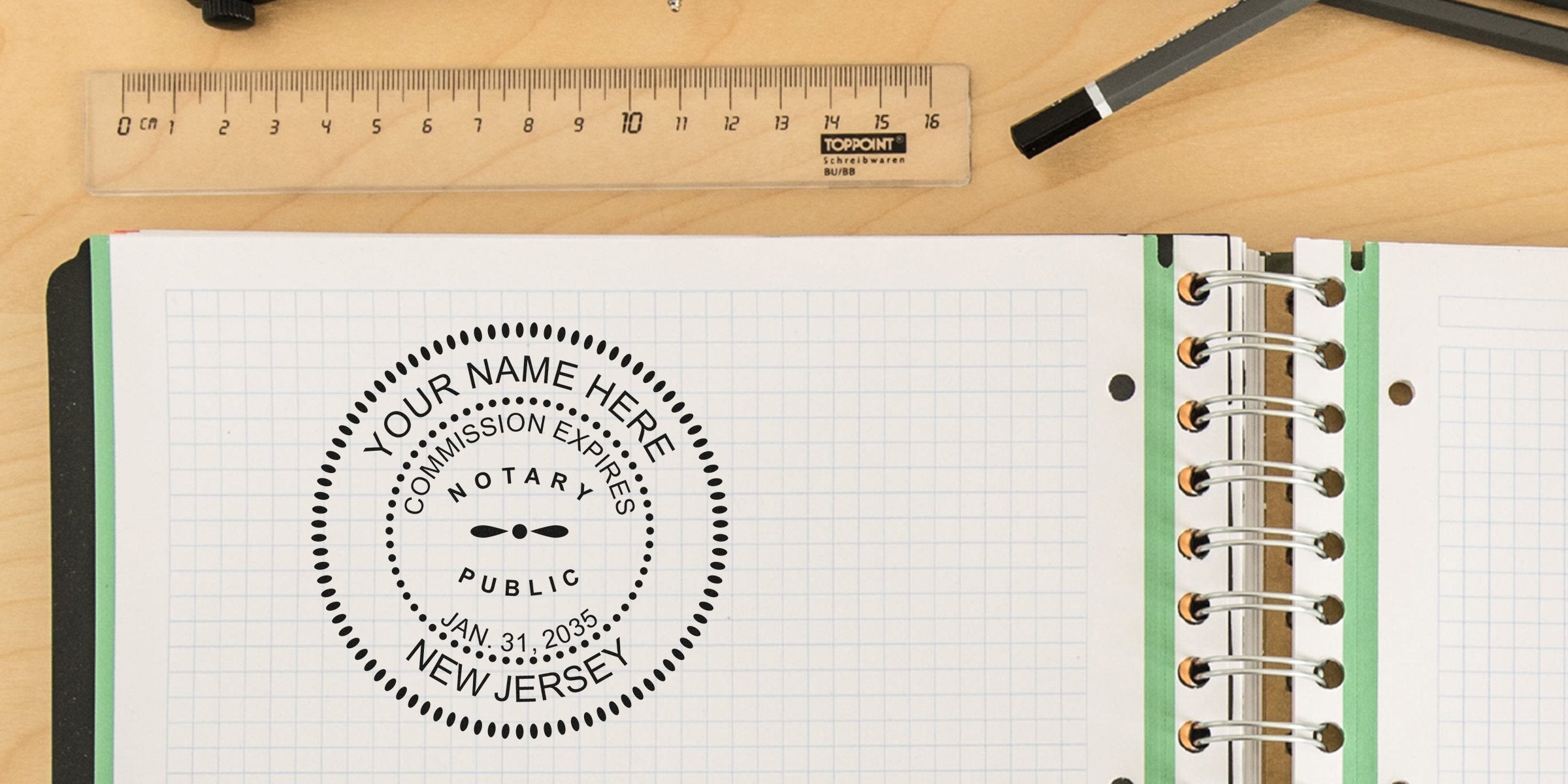
Natural light immediately enlarges a space—oops, you’re not here for apartment tips, are you? Let’s talk about something just as practical: understanding New Jersey Notary Public Seal Guidelines. Whether you’re a seasoned notary or just dipping your toes into the field, following these guidelines keeps your notarial acts valid and above board. Below, you’ll find a friendly breakdown of what you need to know, plus a few pro tips on choosing the right seal to stay compliant.
Follow State Regulations
Before you make any purchase, you want to be certain you’re following all of New Jersey’s notary laws. Under these regulations, your official seal or stamp must clearly display specific details, ensuring each notarized document can be traced back to you.
The Basic Requirements
- Your official name as it appears on your commission
- The words “Notary Public” and “State of New Jersey”
- Your notary commission expiration date
Your seal’s imprint must be easily readable and used on each document you notarize. Make sure you apply your seal near your signature to keep your notarial act consistent. Clarity is everything, so double-check that your name and commission details are spelled correctly.
Info That Goes on the Notary Seal
New Jersey typically requires your name and “Notary Public, State of New Jersey,” but you might see slight variations in recommended design. If in doubt, consult your local county clerk or check updated regulations on the official state website. No matter what, your seal should make it crystal clear you’re legally authorized to perform notarial acts.
Pick the Right Seal
Fact is, you can’t perform proper notarizations without a state-compliant seal or stamp. You’ll often see two primary options: a self-inking rubber stamp or an embosser. Each has its strengths, so it really comes down to preference and the type of documents you usually handle.
Rubber Stamp vs. Embosser
- Rubber Stamp: Quick, easy to re-ink, and offers a clear impression without much effort.
- Embosser: Produces a raised imprint. It’s a classic look that fosters authenticity, though some documents require the stamp for easier photocopying.
If you’re not sure which option suits you better, you might keep both on hand. That way, you’ll be ready for any document requirement that comes your way.
Why Turn To Acorn Sales
When you’re looking to buy a New Jersey Notary Stamp or seal, you want a reliable partner. Acorn Sales has been a stamp and seal maker for over 60 years, and we aim to deliver everything you need in one place.
- Trusted Supplier: We offer New Jersey Notary Supplies, so you don’t have to piece together items from multiple vendors. You can view our full range of new jersey notary supplies anytime.
- Quick Turnaround: Need your seal fast? We understand the urgency of frequent notarial duties. Our efficient process means you’ll have your seal in no time.
- Compliant Seals: We stay current with the latest New Jersey notary public seal guidelines to ensure your stamp or embosser meets the mark.
Avoid Common Pitfalls
A couple of missteps can complicate your notarial acts, so why not get them out of the way?
- Using an Expired Seal: Always check your commission expiration date. If it’s past due, renew before taking on new notarial tasks.
- Fading Impressions: A smudged or faded stamp might invalidate the notarization. Re-ink your stamp regularly or replace the pad if impressions aren’t crisp.
- Missing Details: Make it a habit to confirm that your seal matches your commission name exactly. That small detail can save you from future headaches.
Don’t wait too long to update or replace your seal. By following these New Jersey Notary Public Seal Guidelines, you’ll keep every notarial act valid, build trust with your clients, and maintain a smooth workflow. If you need any help picking out the perfect stamp or embosser, Acorn Sales is here with cost-effective, reliable solutions. Feel free to explore our selection and let us know if you have any questions. Happy stamping!
Frequently Asked Questions
How Soon Do I Need to Renew My New Jersey Notary Commission?
You’ll want to start the renewal process a few weeks before your current commission expires. This timeline gives you ample room to file paperwork and avoid any gaps in your notarial authority.
What’s the Difference Between a Notary Stamp and an Embosser?
A notary stamp uses ink to place an impression on the paper, while an embosser creates a raised seal. Stamps produce clear marks that show up well in copies. Embossers have a classic look but sometimes need an inked impression to be fully photocopy-friendly.
What If My Seal Is Lost or Stolen?
If your seal goes missing, notify the appropriate state authority as soon as possible. You’ll typically need to replace it promptly to continue your notarial duties and protect yourself from potential misuse.
Where Can I Find Official Guidelines for Compliance?
For detailed regulations, check the New Jersey State website or reach out to your county clerk’s office. They can confirm the most up-to-date requirements. You can also contact Acorn Sales for quick tips on staying compliant.








