
Written by Acorn Sales Company, manufacturing stamps and seals since 1964 · Reviewed by Holly R, VP of Sales and Marketing at Acorn Sales, against State Board of Forestry and Fire Protection on 22 September 2026 · Updated 22 September 2026
A California Registered Professional Forester may use a seal and is not required to. The whole of the rule is two sentences. Cal. Code Regs. tit. 14, sec. 1603, headed Seal, reads: “A seal may be used by a registrant. It shall be of the design shown here and shall not be less than one and one-half (1 1/2) inches in diameter.” The verb for using a seal is may. The shall in the second sentence is conditional: it constrains the design and the size of a seal if you use one, and it does not create a duty to use one.
What California does make mandatory is identification by name and number. 14 CCR 1602.1 requires any letter or document offering or implying the performance of professional forestry work to identify by name and license number the RPF who will be in charge of the work, and requires work plans and documents to bear the signature and license number of the responsible RPF. That is the duty on your paperwork. The seal is a choice you make on top of it, and this page tells you what the rule fixes about that choice and, honestly, what we could not read.
California forester seal requirements at a glance
| Requirement | California rule | Source |
|---|---|---|
| Seal required | No. Permissive. 14 CCR 1603: “A seal may be used by a registrant.” What is mandatory instead is identification of the responsible RPF by name, signature and license number under 14 CCR 1602.1. | Cal. Code Regs. tit. 14, sec. 1603; Cal. Code Regs. tit. 14, sec. 1602.1 |
| Required elements | Prescribed by a figure we could not read. The rule does not list elements in words; it says the seal “shall be of the design shown here”, and that design is published in the California Code of Regulations as a graphic. What is textually certain is the separate document duty: the RPF’s name, signature and license number. | Cal. Code Regs. tit. 14, sec. 1603; Cal. Code Regs. tit. 14, sec. 1602.1 |
| Size and shape | Not less than one and one-half (1 1/2) inches in diameter. That is a minimum, not a fixed size, and no maximum is published. The shape is circular, which is inferable only because the rule measures a diameter. | Cal. Code Regs. tit. 14, sec. 1603 |
| Device allowed | Not addressed, which means nothing is excluded. 14 CCR 1603 names no device and excludes none. There is no embosser requirement, no rubber stamp requirement and no reproduction test anywhere in chapter 10, article 1. | Cal. Code Regs. tit. 14, sec. 1603 |
| Signature and date | Signature is required independently of any seal: work plans and documents must bear “the signature and license number of the forester (RPF) responsible for said plans, work and reports”. No dating requirement appears in chapter 10, article 1. | Cal. Code Regs. tit. 14, sec. 1602.1 |
| What must be sealed | Nothing, because the seal is permissive. What must be identified is any letter or document that offers to perform or implies the performance of professional forestry work, plus work plans and documents reporting the work. | Cal. Code Regs. tit. 14, sec. 1602.1 |
| Electronic seal | Not addressed. No electronic or digital seal provision appears in 14 CCR chapter 10, article 1, and no third party digital certificate is required. | Cal. Code Regs. tit. 14, div. 1.5, ch. 10, art. 1 |
| Renewal and lapse | Licenses expire on alternating odd or even 1 July dates depending on assignment; renewal fees are due before expiration; a delinquent licensee is noticed by 1 September and has 60 days to reinstate before revocation. No rule says what happens to a seal on lapse or on a name change. | Cal. Code Regs. tit. 14, secs. 1606, 1607, 1608 |
| Firm requirements | None, and none is possible. 14 CCR 1604 limits registration to natural persons. There is no firm registration and no firm seal in California forestry. | Cal. Code Regs. tit. 14, sec. 1604 |
| Regulator | State Board of Forestry and Fire Protection. Registration is administered by the Professional Foresters Examining Committee. Authority for section 1603 is Pub. Res. Code sec. 759; the reference is Pub. Res. Code sec. 751. | Pub. Res. Code secs. 750 to 783; Cal. Code Regs. tit. 14, sec. 1603 |





Does California require an RPF to use a seal?
No. The rule uses the permissive verb and it uses it first: “A seal may be used by a registrant.” There is no sentence anywhere in the Professional Foresters Law or in the registration rules that obliges an RPF to seal anything. We checked this the careful way rather than by keyword: every section in Cal. Code Regs. tit. 14, div. 1.5, ch. 10, art. 1 was enumerated and looked at, from 1600 Definitions through 1614 Criteria for Rehabilitation, and 1603 is the only seal rule in the article.
The second sentence of 1603 does use shall, and that is where a hurried reader can go wrong in the other direction. “It shall be of the design shown here and shall not be less than one and one-half (1 1/2) inches in diameter.” The subject of both shalls is it, the seal. Those clauses tell you what a seal has to look like once you have decided to have one. They do not tell you to have one.
What is actually mandatory: name, signature and license number
If the seal is the optional part, the identification rule is the part you cannot skip. 14 CCR 1602.1 is headed Identity Required of RPF in Charge, and it does two things.
First, on the way in: “Any letter or document which offers to perform or implies the performance of any professional forestry work must identify by name and license number the forester (RPF) who will be in charge of such work when it is performed.” That reaches proposals, engagement letters and marketing material that implies forestry work, not just finished products. Second, on the way out: work plans and documents must bear “the signature and license number of the forester (RPF) responsible for said plans, work and reports”.
So the California signature block is name, signature, RPF and license number, on both the offer and the deliverable. That block is what a stamp is actually useful for in this state, and it is useful whether or not you ever buy a seal.
A correction: 14 CCR 1090.10 is not a seal rule
Our own earlier hub page cited 14 CCR 1090.10 for the California forester seal. That is wrong and we are correcting it here rather than quietly dropping it.
14 CCR 1090.10 is titled Registered Professional Forester Responsibility and sits in the article on administration of Nonindustrial Timber Management Plans. We read its five subsections. They cover the accuracy of an NTMP, notice of review inspections, the content of a Notice of Timber Operations, notice to the plan submitter, and the procedure when an RPF withdraws professional services from a plan. Subsection (e) requires an RPF withdrawing services to notify the licensed timber operator, the plan submitter or Designated Agent, and the Director without delay. None of that is about a seal. The word does not appear.
The correct citation for the California forester seal is 14 CCR 1603. If you have been given 1090.10 by a vendor, a checklist or an older version of this site, replace it.
The 1.5 inch minimum, and what a minimum means
The size rule is a floor: “shall not be less than one and one-half (1 1/2) inches in diameter”. No maximum is published anywhere in the article. So a 1.5 inch seal complies, a 1.75 inch seal complies, and a 1.25 inch seal does not, no matter how neatly it reads.
The shape question has a narrow answer. The rule never says circle. It says diameter, and a diameter is a circle measurement, so a round seal is what the text contemplates. We are flagging that as an inference from the word rather than as a stated shape rule, because that is what it is. If your intended layout is not round, ask the Committee before you commit, since the design is fixed by their figure in any event.
The design is a figure, and we could not read it
This is the item that should change what you do next, so we are giving it its own section. 14 CCR 1603 does not describe the seal in words. It says the seal “shall be of the design shown here”, and the design is published in the California Code of Regulations as a graphic figure embedded in the section. In the online text of the rule, that figure appears as a link to view an image rather than as readable text.
We could not read that image. The official CCR host is blocked to our connection. The Board’s own 2021 publication of the Professional Foresters Law and the Registration of Professional Foresters Rules reproduces the words of 1603 but the figure did not come through as text. We also checked the Board’s RPF pamphlet, its RPF licensing PDF and the Professional Foresters Registration Program Policies, and none of them describes the seal’s contents.
So here is the honest position. The size floor is certain. The permissive verb is certain. The element list is not certain, because it lives in a drawing we have not seen. We are not going to guess at it, and you should not buy a California RPF seal cut to any supplier’s house layout without checking. Write to the Professional Foresters Examining Committee and ask for a copy of the figure in section 1603 before anyone cuts artwork. If you send us that figure, we will match it.


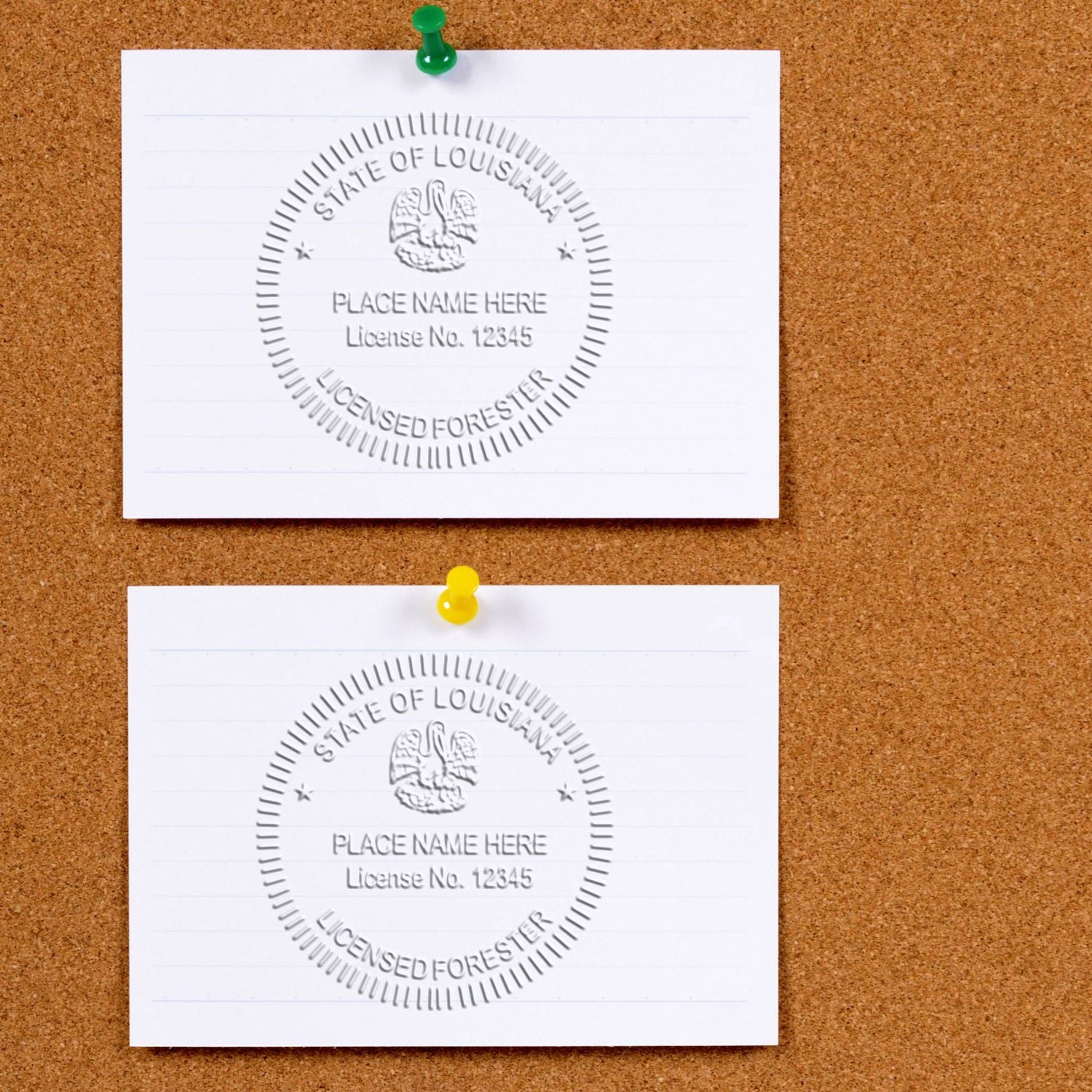


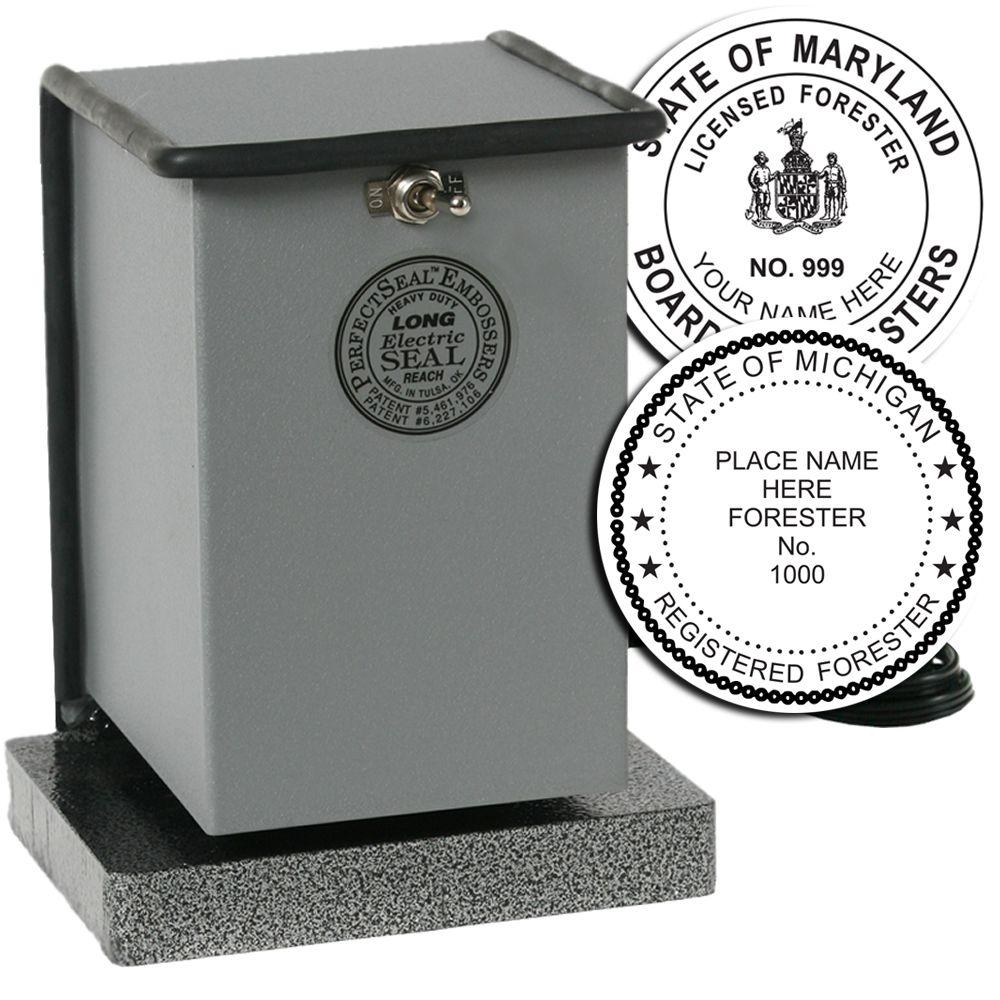

What the seal is not: the certified specialty titles
California has a second layer of credentials that is easy to confuse with the RPF seal question. Under Pub. Res. Code sec. 772, certified specialty titles exist, including Certified Rangeland Manager. Only a certified specialist may use the specialty title, and both RPFs and non RPFs may hold one.
Section 1603 is addressed to a registrant, meaning an RPF. Nothing we read prescribes a seal for a certified specialist as such, or authorizes a specialty title inside the 1603 figure. If you hold both credentials and want both on one die, that is a question for the Committee at the same time you ask for the figure, because the answer depends on what the figure fixes.
Who may hold a license, and why there is no firm seal
14 CCR 1604 limits registration to natural persons. There is no such thing as a registered forestry firm in California and therefore no firm seal, no firm number and no entity block to put on a die. A consulting company can employ RPFs; the company cannot be one.
That flows straight through to 1602.1. The identification duty names an individual: the RPF who will be in charge of the work, and the RPF responsible for the plans, work and reports. A letterhead with a company name on it does not answer 1602.1. A named RPF with a license number does.
Expiration, delinquency and the 60 day window
14 CCR 1607 sets the renewal machinery, and California’s is unusual enough to be worth stating. Licenses expire on alternating odd or even 1 July dates depending on assignment. Renewal fees are due before expiration. A delinquent licensee is noticed by 1 September and then has 60 days to reinstate before revocation. 14 CCR 1606 requires notice of an address change and 14 CCR 1608 covers withdrawals.
No rule addresses what happens to a seal on lapse, and no rule addresses a name change. We checked and we are reporting the silence rather than filling it. The practical reading is that a seal is only ever an optional addition to a mandatory identification block, and the identification block has to carry a current license number, so the number is the thing to keep accurate.
Do the Forest Practice Rules require a seal on a THP?
The question people actually ask is whether a Timber Harvesting Plan or a Nonindustrial Timber Management Plan has to be sealed. We searched the 2025 California Forest Practice Rules for seal and for stamp and found no Forest Practice rule requiring an RPF to seal a THP or an NTMP. Those rules require signature and license number, which lines up with 1602.1 rather than with 1603.
One caveat we will not hide: that document runs well over a thousand pages and our fetch of it was partial. Treat this as a strong indication rather than an exhaustive finding. If a specific plan type in your practice is the reason you are buying a seal, confirm the requirement in the rule that governs that plan type before you order.




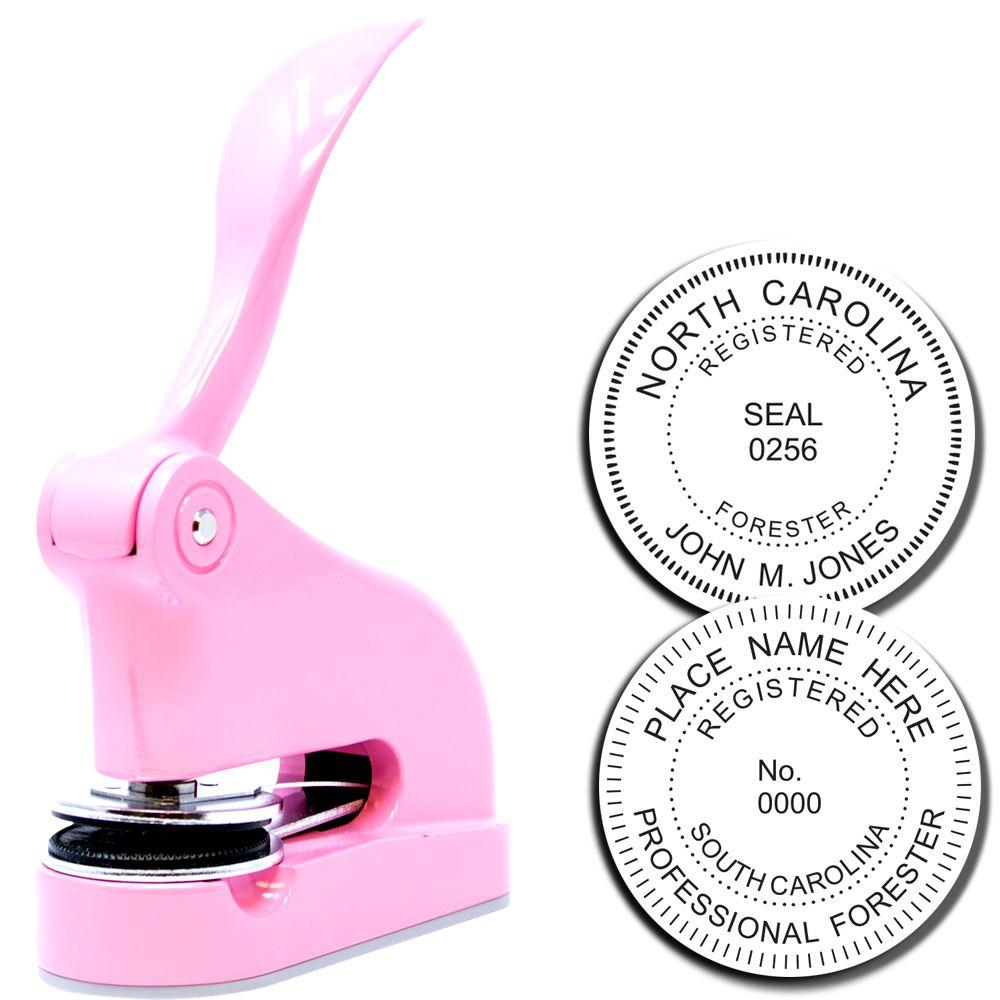

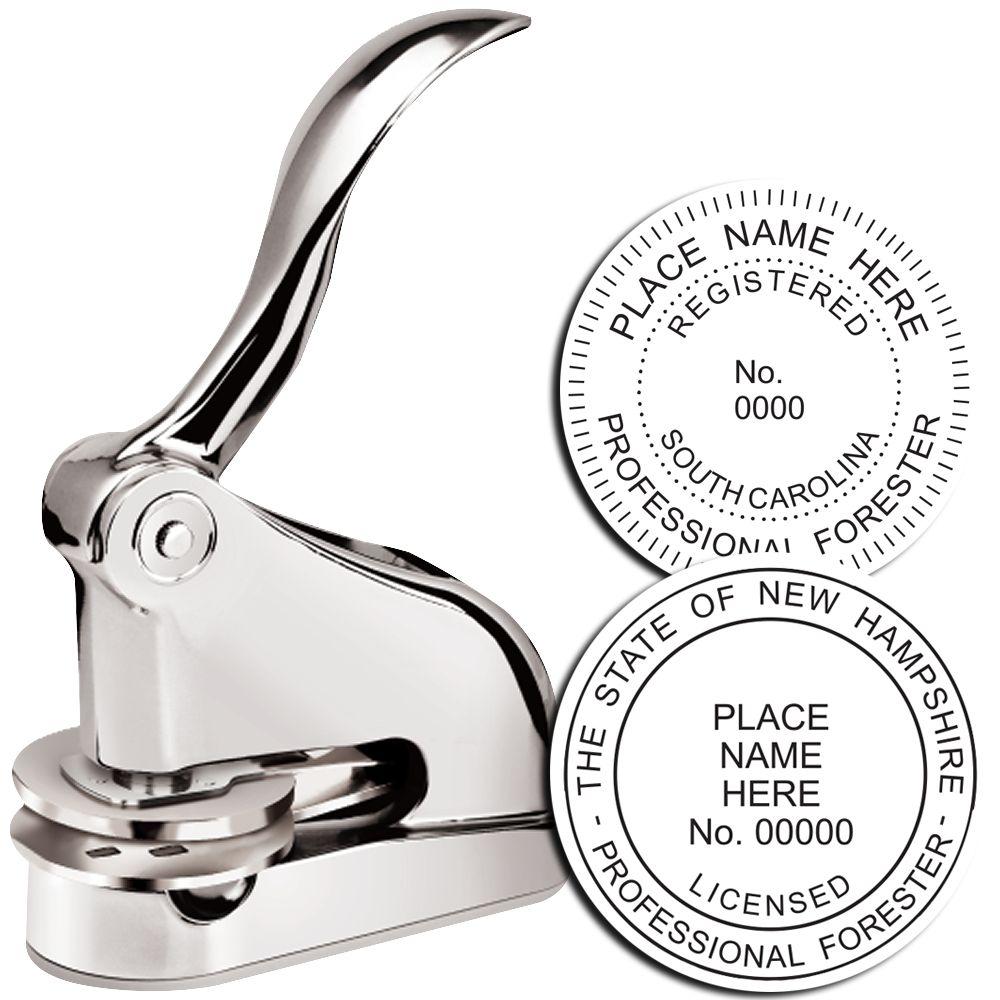

Choosing a device when the rule names none
1603 says nothing about how the impression is made. No embosser is required, no ink stamp is required, nothing is excluded, and there is no legibility or reproduction test of the kind some boards publish. So the decision is practical, and it turns on where your documents end up.
An embosser leaves a raised uninked impression that looks handsome on a signed original and often disappears in a scan or a flat PDF export. An ink stamp reproduces in every copy, which matters when a plan travels to an agency, a landowner and a licensed timber operator in three different formats. A seal image is what goes into a PDF you assemble yourself. Because the California seal floor is 1.5 inches, all three have to be cut at that size or larger, and at that size the lettering has room to stay readable, which is the one small mercy of a large minimum.
Ordering a California RPF seal or an identification stamp
Two different orders, and it is worth knowing which one you want. An identification stamp prints the block 1602.1 actually requires: your name, RPF, and your license number. Nothing about that block is fixed by a figure, you can order it today, and it answers a mandatory rule. A seal under 1603 has to match the Board’s published figure and be at least 1.5 inches in diameter, so the first step is getting that figure from the Committee.
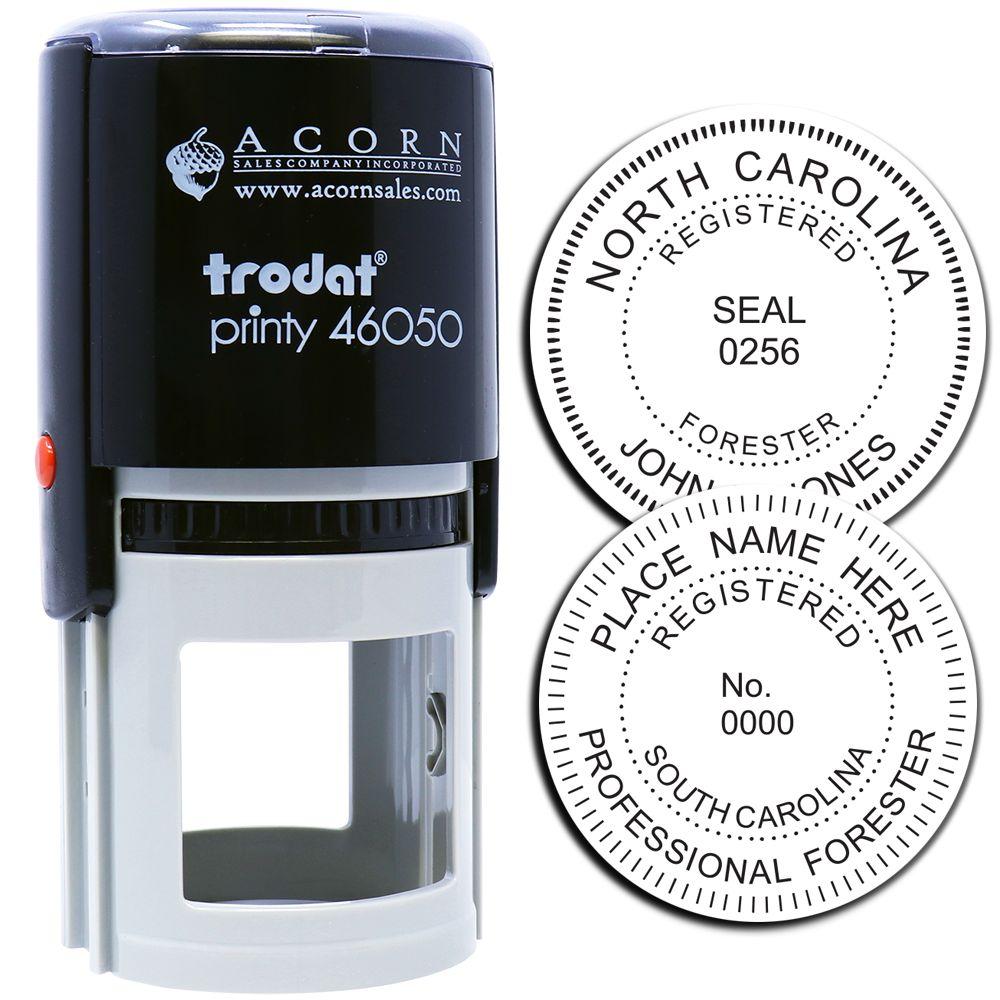
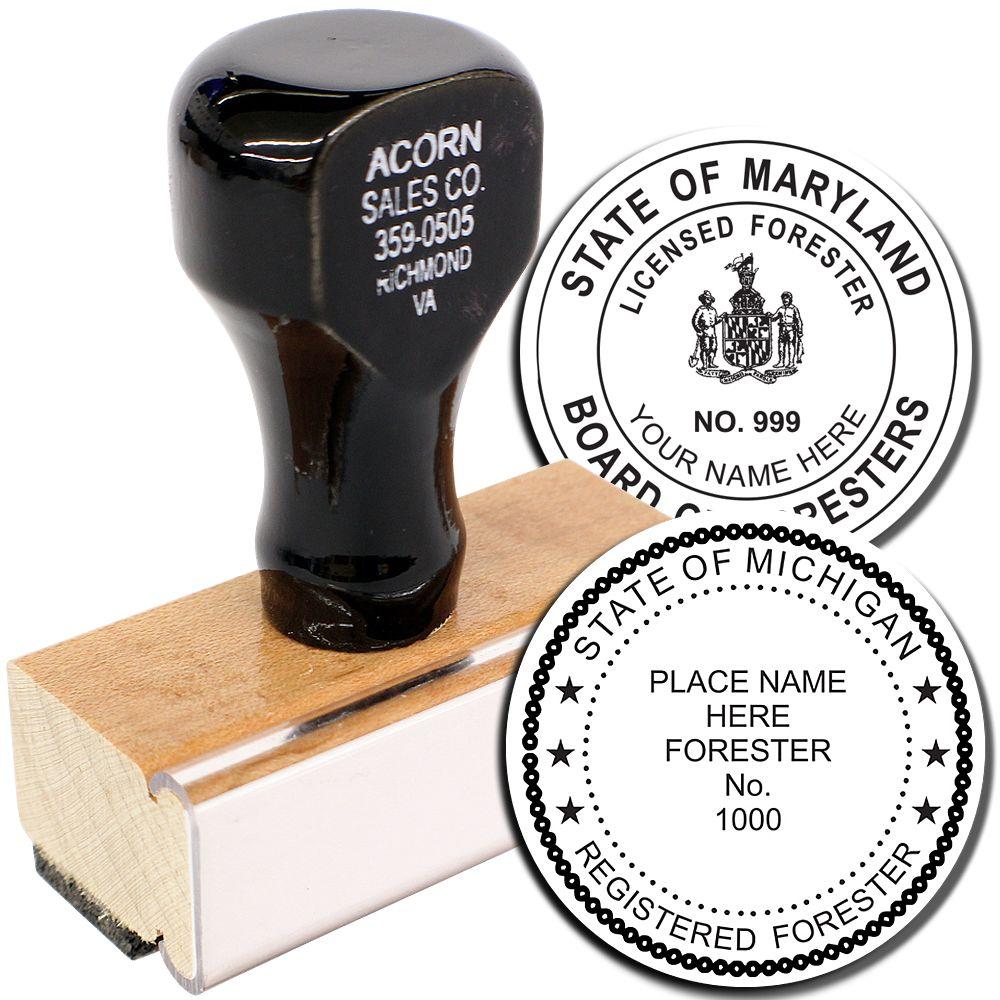
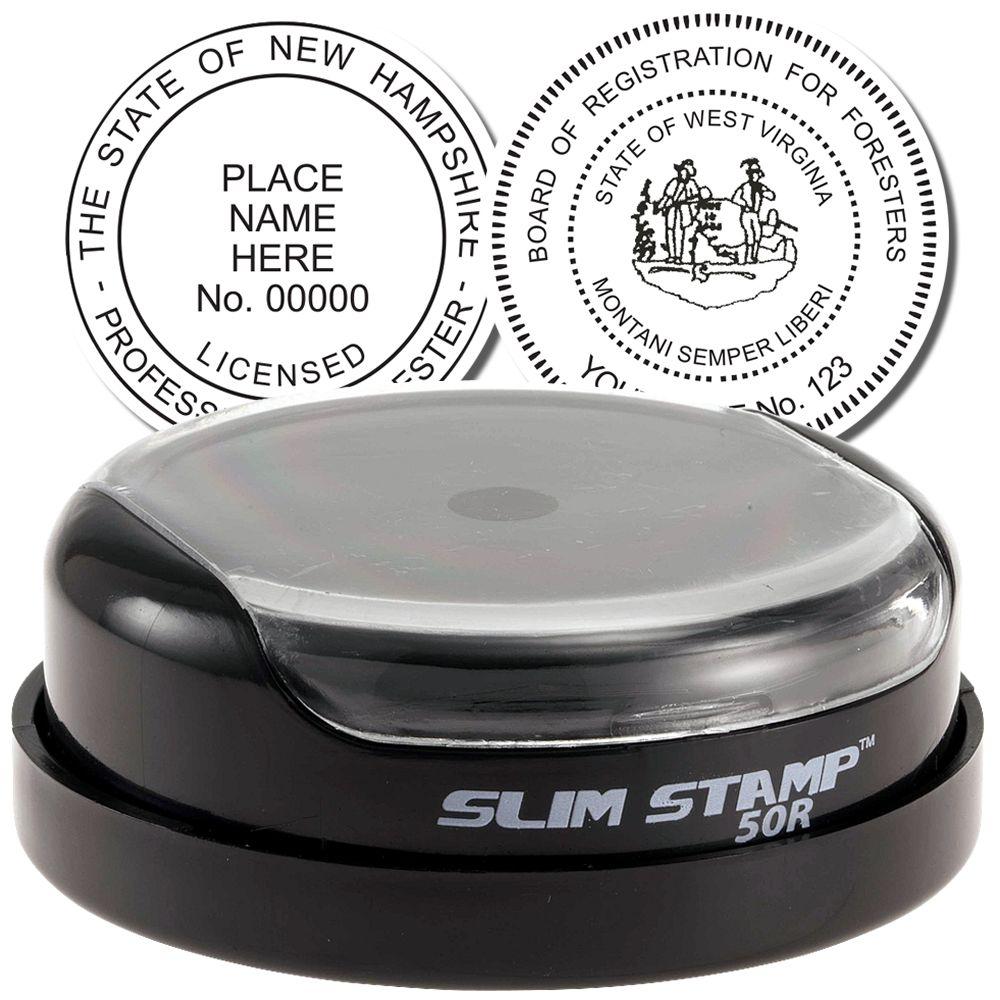
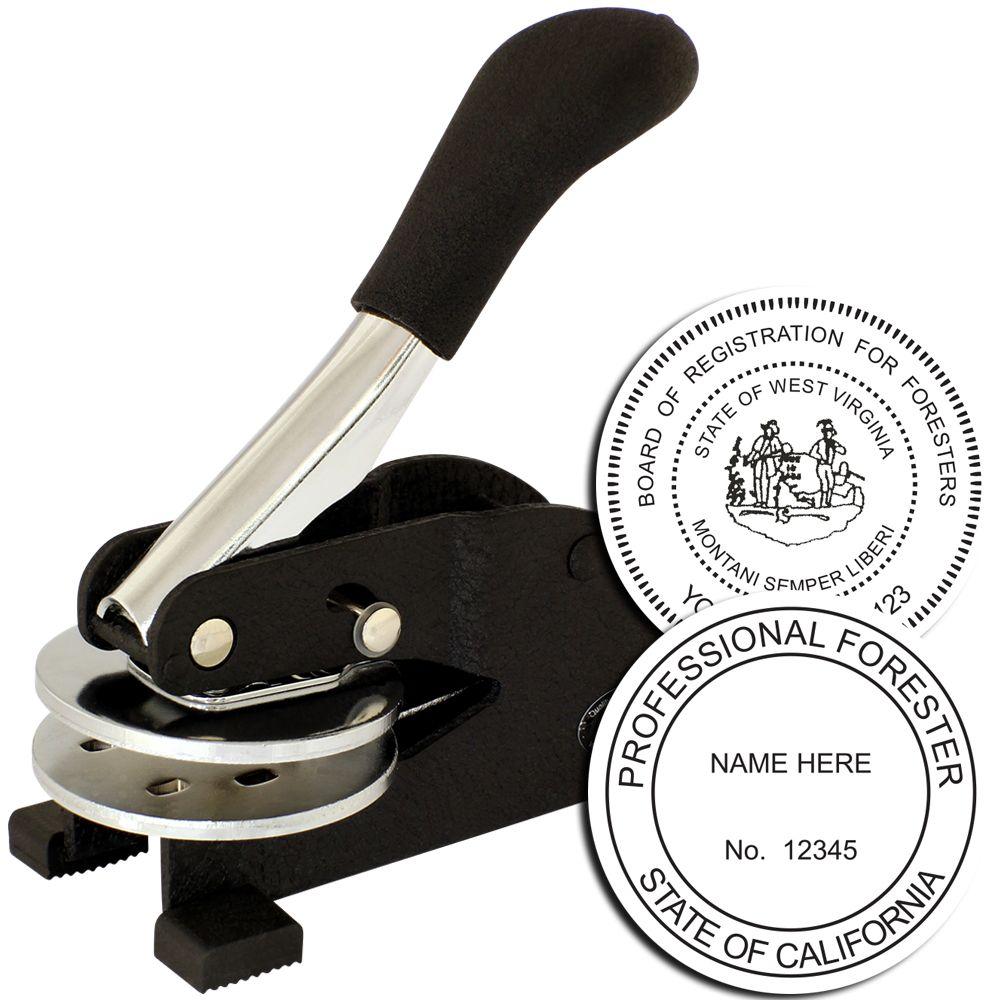
From the forester range, the Forester Self Inking Rubber Stamp of Seal at $39.95 and the Forester Regular Rubber Stamp of Seal at $34.95 are the everyday ink devices. The Forester MaxLight Pre Inked Rubber Stamp of Seal at $46.95 holds fine lettering best, which matters when a license number sits inside a 1.5 inch circle. On the embossing side the Forester Handheld Seal Embosser is $46.95 and the Forester Desk Seal Embosser is $44.95. For electronic files the Forester eSeal Electronic Image Stamp of Seal is $20.00. Browse the forester stamps and seals collection, or contact us with the section 1603 figure once you have it and we will cut to it. Acorn has been making professional seals since 1964, and matching a state figure rather than substituting a house layout is the part of the job that matters here.
What is settled and what is not
Settled: the seal is permissive; the minimum is 1.5 inches in diameter; the correct citation is 14 CCR 1603 and not 14 CCR 1090.10; registration is limited to natural persons; and the mandatory document marking is name, signature and license number under 14 CCR 1602.1. Those findings came from the Board’s own published law and rules and from a section by section read of the registration article.
Not settled: what the seal figure in 1603 actually contains. The official regulations host is blocked to us, the figure did not survive as text in the Board’s own reprint, and none of the Board’s pamphlets describe it. Ask the Professional Foresters Examining Committee for the figure before ordering a seal, and treat any supplier who tells you the California element list without producing that figure as guessing. This page is a research summary and not legal advice.
- Forester Stamps and Seals: State Rules, Sizes and Prices
- Maryland Forester Seal: Required, Design by Board
- Arkansas Forester Seal: May Obtain, Shall Impress
- Forester stamps and seals
Frequently asked questions
Does a California RPF have to use a seal?
No. 14 CCR 1603 says “A seal may be used by a registrant.” The verb is permissive. What is mandatory is identifying the responsible RPF by name, signature and license number on work plans and documents, and by name and license number on any letter or document offering professional forestry work, under 14 CCR 1602.1.
How big does a California forester seal have to be?
Not less than one and one-half (1 1/2) inches in diameter. That is a minimum and no maximum is published. The rule measures a diameter, which implies a round seal, though it never uses the word circle.
What has to appear on a California RPF seal?
The rule does not say in words. It says the seal “shall be of the design shown here”, and that design is published as a graphic figure inside the regulation. We could not read that figure: the official regulations host is blocked to us and the Board’s own reprint did not carry it as text. Ask the Professional Foresters Examining Committee for the figure before ordering.
Is 14 CCR 1090.10 the California forester seal rule?
No. 14 CCR 1090.10 is titled Registered Professional Forester Responsibility and sits in the Nonindustrial Timber Management Plan administration article. Its subsections cover plan accuracy, review inspection notice, Notice of Timber Operations content, notice to the plan submitter and withdrawal of services. The seal rule is 14 CCR 1603.
Do I need to seal a Timber Harvesting Plan?
We found no Forest Practice rule requiring an RPF to seal a THP or an NTMP. Those rules call for signature and license number. Our search of the 2025 Forest Practice Rules was partial because of the size of the document, so confirm against the rule governing your specific plan type if that is the reason you are buying.
Can a forestry firm hold a California license or a seal?
No. 14 CCR 1604 limits registration to natural persons. There is no firm registration and no firm seal. The identification duty in 1602.1 names an individual RPF, so a company letterhead does not satisfy it.
Does California accept an electronic seal for foresters?
Nothing is addressed. No electronic or digital seal provision appears in chapter 10, article 1, and no third party digital certificate is required. Since the mandatory marking is name, signature and license number, an identification block placed in a PDF meets that duty.
What happens to my seal if my license lapses?
No rule addresses it, and none addresses a name change either. What the rules do set is the renewal machinery: expiration on alternating odd or even 1 July dates, a delinquency notice by 1 September and 60 days to reinstate before revocation under 14 CCR 1607.








