
Written by Acorn Sales Company, manufacturing stamps and seals since 1964 · Reviewed by Holly R, VP of Sales and Marketing at Acorn Sales, against The state sealer, the Commissioner of Agriculture, Conservation and Forestry on 22 September 2026 · Updated 22 September 2026
Maine requires a public weighmaster seal, the statute says you buy it yourself, and the statute writes the words that go on it. 10 M.R.S. 2501(1): “Except as provided in subsection 2, a licensed public weighmaster shall, at the public weighmaster’s own expense, procure an impression seal.” The wording follows in the same subsection: “The public weighmaster’s name and the word ‘Maine’ must be inscribed around the outer margin of the seal and the words ‘licensed public weighmaster’ must appear in the center of the seal.” The seal must be impressed upon each weight certificate the licensed public weighmaster issues.
There is a second Maine seal that reads differently, and getting the two confused is the expensive mistake on this page. A corporate licensee procures its own seal at the corporation’s expense, with the entity name and the word Maine on the margin, the words licensed corporate public weighmaster in the center, and a number assigned by the state sealer identifying the individual. Both are embossers: the statute says impression seal and says it must be impressed, and the word electronic appears nowhere in the subchapter. No size or shape is published anywhere in Maine law, so do not order to a diameter someone quoted you from another state.
Maine public weighmaster seal requirements at a glance
| Requirement | Maine rule | Source |
|---|---|---|
| Seal required | Yes, and the licensee buys it. A licensed public weighmaster “shall, at the public weighmaster’s own expense, procure an impression seal”, and a corporate licensee “shall procure, at the corporation’s expense, an impression seal”. The state does not issue it, does not own it and does not reclaim it. | 10 M.R.S. 2501(1), (2) |
| Required elements | Individual: the public weighmaster’s name and the word “Maine” around the outer margin, and the words “licensed public weighmaster” in the center. Corporate: the business, company or corporation name and the word “Maine” around the outer margin, and the words “licensed corporate public weighmaster” in the center with a number identifying the individual. | 10 M.R.S. 2501(1), (2) |
| Size and shape | Not addressed. 10 M.R.S. 2501 prescribes the inscription and its layout, an outer margin and a center, which implies a round seal by its own geometry, but it states no diameter, no dimension and no shape. No administrative rule prescribing the seal was located. Do not infer a size. | 10 M.R.S. 2501(1), (2) |
| Device allowed | An embosser. The statute calls it an “impression seal” and requires that it “must be impressed upon each weight certificate”. Section 2505(1) speaks of a weighmaster who preseals a certificate with the official seal, again treating it as a physical impression. No ink stamp or electronic substitute is authorized anywhere in the subchapter. | 10 M.R.S. 2501(1); 10 M.R.S. 2505(1) |
| Signature and date | No separate signature and date rule is stated beyond the seal impression requirement. Section 2552 governs execution: a licensed public weighmaster may not enter weight values the weighmaster has not personally determined, may not make entries on certificates issued by others, and must prepare the certificate so as to show clearly that the weights were actually determined. | 10 M.R.S. 2552 |
| What must be sealed | Every weight certificate. “The seal must be impressed upon each weight certificate issued by the licensed public weighmaster.” The corporate subsection carries the same requirement for the corporate seal with its identifying number. | 10 M.R.S. 2501(1), (2) |
| Electronic seal | None. The word electronic does not appear in 10 M.R.S. 2501 through 2554 in connection with the weighmaster seal or the weight certificate. Maine requires a physical impression, which means every Maine licensee needs a physical device and no digital certificate question arises. | 10 M.R.S. 2501 through 2554 |
| Renewal and lapse | Licenses expire December 31 annually unless sooner revoked under section 2506. The individual annual fee is $25 and the corporate annual fee is $250. Nothing is surrendered. The statute does not make the seal state property and does not require its return, because the weighmaster bought it. A name change means a new seal, since the name is inscribed by statute. | 10 M.R.S. 2501(1), (2); 10 M.R.S. 2506 |
| Firm requirements | A separate corporate license exists. The business, company or corporation applies to the state sealer, names the owner or manager, pays $250 annually and files a list of employees who hold valid individual licenses. Section 2505(2): a corporate license holder “may not allow a person not licensed as a licensed public weighmaster to issue a weight certificate using the corporate seal”, with fines up to $500 for a first offense and $1,000 for repeat violations. | 10 M.R.S. 2501(2); 10 M.R.S. 2505(2) |
| Regulator | The state sealer. 10 M.R.S. 2401: “The Commissioner of Agriculture, Conservation and Forestry shall be, ex officio, the state sealer.” In practice that is the Maine Department of Agriculture, Conservation and Forestry, Division of Quality Assurance and Regulations, Weights and Measures. This is not a professional board. | 10 M.R.S. 2401 |


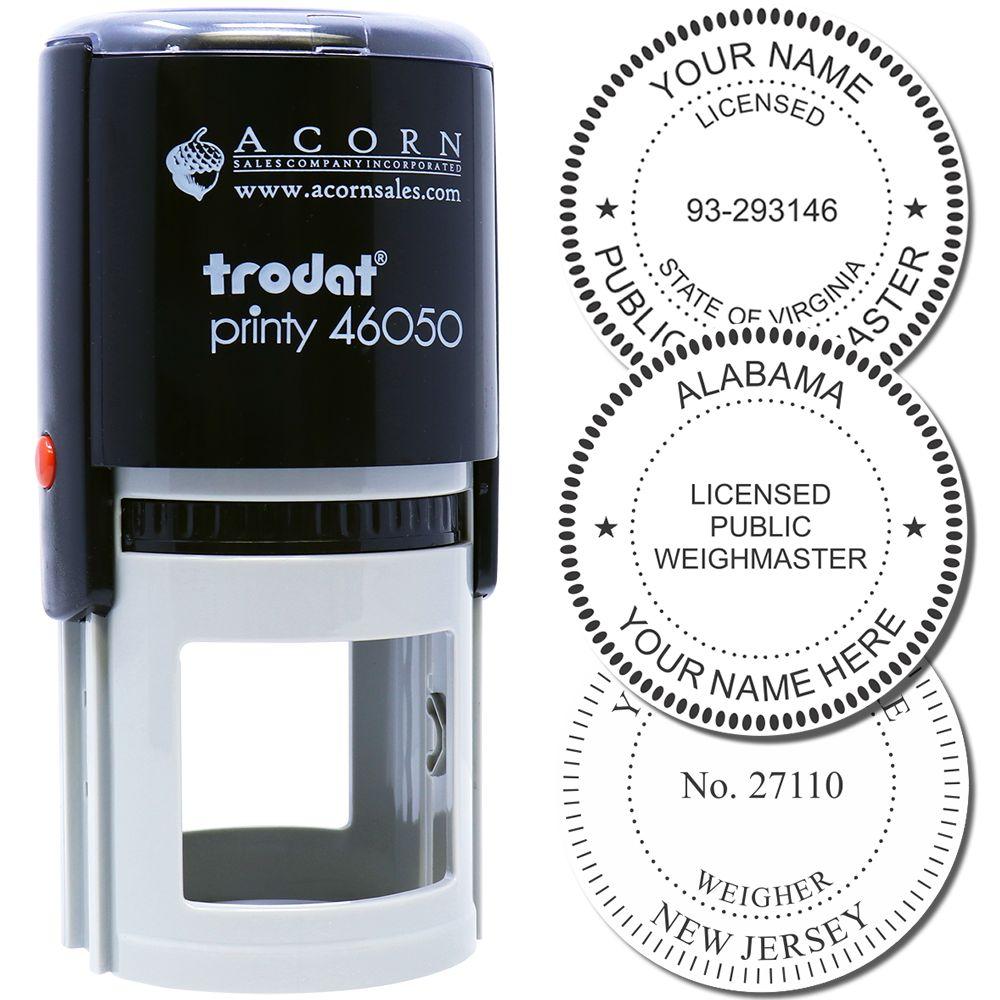
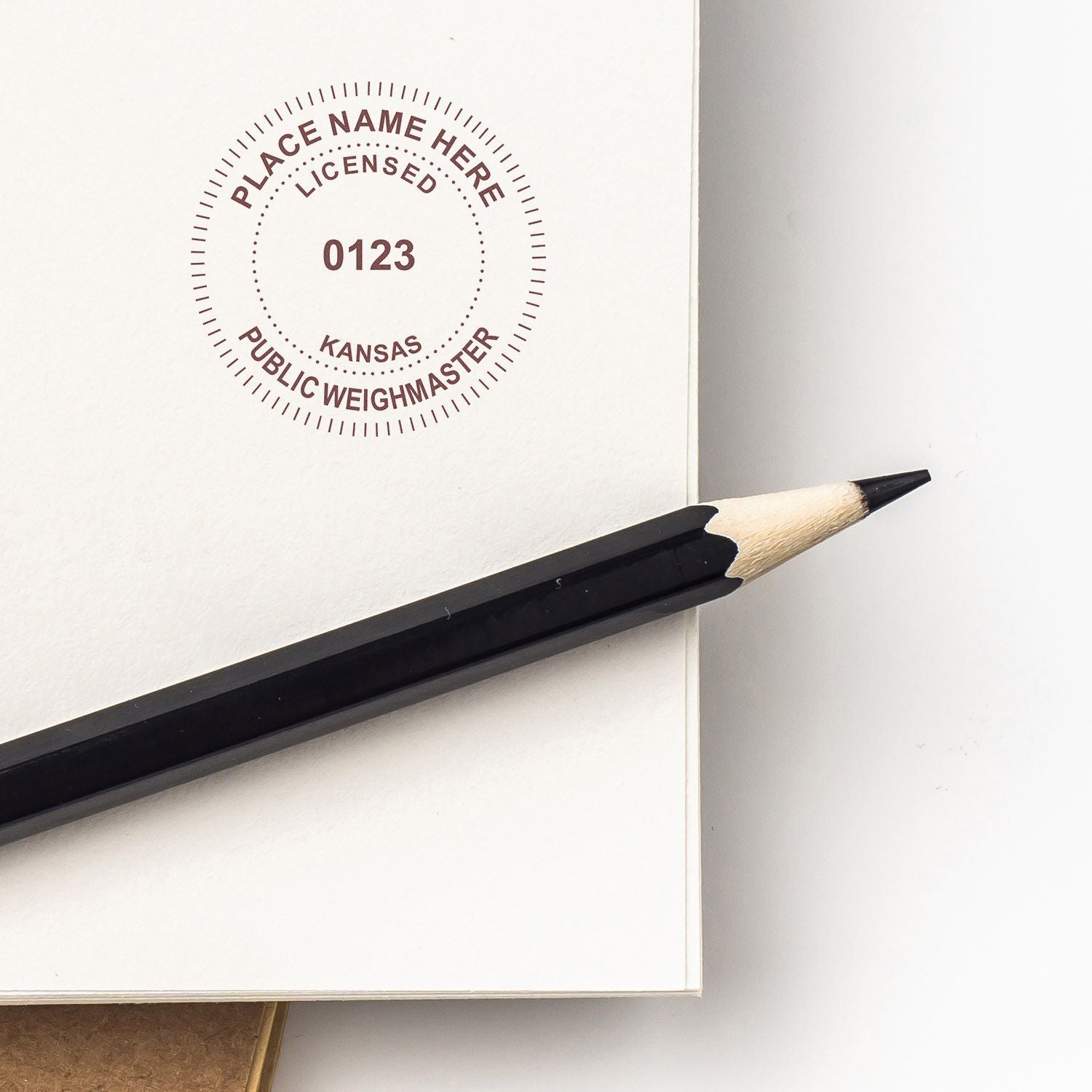
Does Maine require a public weighmaster seal?
Yes, and the sentence is unusually direct about who pays. 10 M.R.S. 2501(1) provides that, except as provided in subsection 2, a licensed public weighmaster “shall, at the public weighmaster’s own expense, procure an impression seal”. The verb is shall, the expense is yours, and the object is an impression seal.
The duty on the document follows in the same breath: “The seal must be impressed upon each weight certificate issued by the licensed public weighmaster.” Each certificate. Not a sample, not the ones going to a particular buyer. That is the whole obligation in two sentences, and everything else on this page is about getting the wording and the device right.
The individual seal, word for word
Here is the sentence to hand a manufacturer, quoted from 10 M.R.S. 2501(1): “The public weighmaster’s name and the word ‘Maine’ must be inscribed around the outer margin of the seal and the words ‘licensed public weighmaster’ must appear in the center of the seal.”
Read as a layout instruction that gives you two rings of content. Around the outer margin: your name, and the word Maine. In the center: licensed public weighmaster. The statute offers no abbreviation, so LPW is not on the table, and it does not ask for a license number on the individual seal. If your name as licensed includes a middle initial or a suffix, use it as the license shows it, since the statute says the public weighmaster’s name and the license is what establishes what that is.
The corporate seal is a different die
10 M.R.S. 2501(2) creates a second license and a second seal. A business, company or corporation applies to the state sealer, and on approval the state sealer grants it a license as a corporate public weighmaster. That entity “shall procure, at the corporation’s expense, an impression seal”.
The wording changes twice over. First, the margin carries “the business, company or corporation name and the word ‘Maine’” rather than a person’s name. Second, and this is the part people miss, the center reads licensed corporate public weighmaster, with the word corporate in it, and it carries “a number identifying the individual”. An entity that orders a die reading licensed public weighmaster because that is the phrase it found on a state page has ordered the wrong seal.
Where the number on a corporate seal comes from
Not from you. 10 M.R.S. 2501(2) provides that “the state sealer shall assign a number to each licensed public weighmaster operating under a corporate license”. The number identifies the individual doing the weighing, on a seal that otherwise carries the company name.
Two consequences for ordering. The number has to be in hand before artwork is cut, which means the licensing step comes first and the die comes after. And because the number identifies a person, a company running several licensed weighmasters is looking at several corporate dies bearing the same company name and different numbers, not one shared die. The corporate subsection also requires the licensee to notify the state sealer of employee changes and to file a list of employees who hold valid individual licenses, which is the record that keeps those numbers straight.
One more practical consequence follows from the wording. Because the corporate margin carries the company name and the center carries a number rather than a person’s name, a corporate die does not tell a reader who weighed unless the reader can look the number up. That is by design, and it is why the state sealer holds the employee list. It also means the number is the element to check most carefully at proof stage, since a wrong digit is invisible to everyone who does not already know the right one.
Embosser only, and why there is no Maine electronic seal
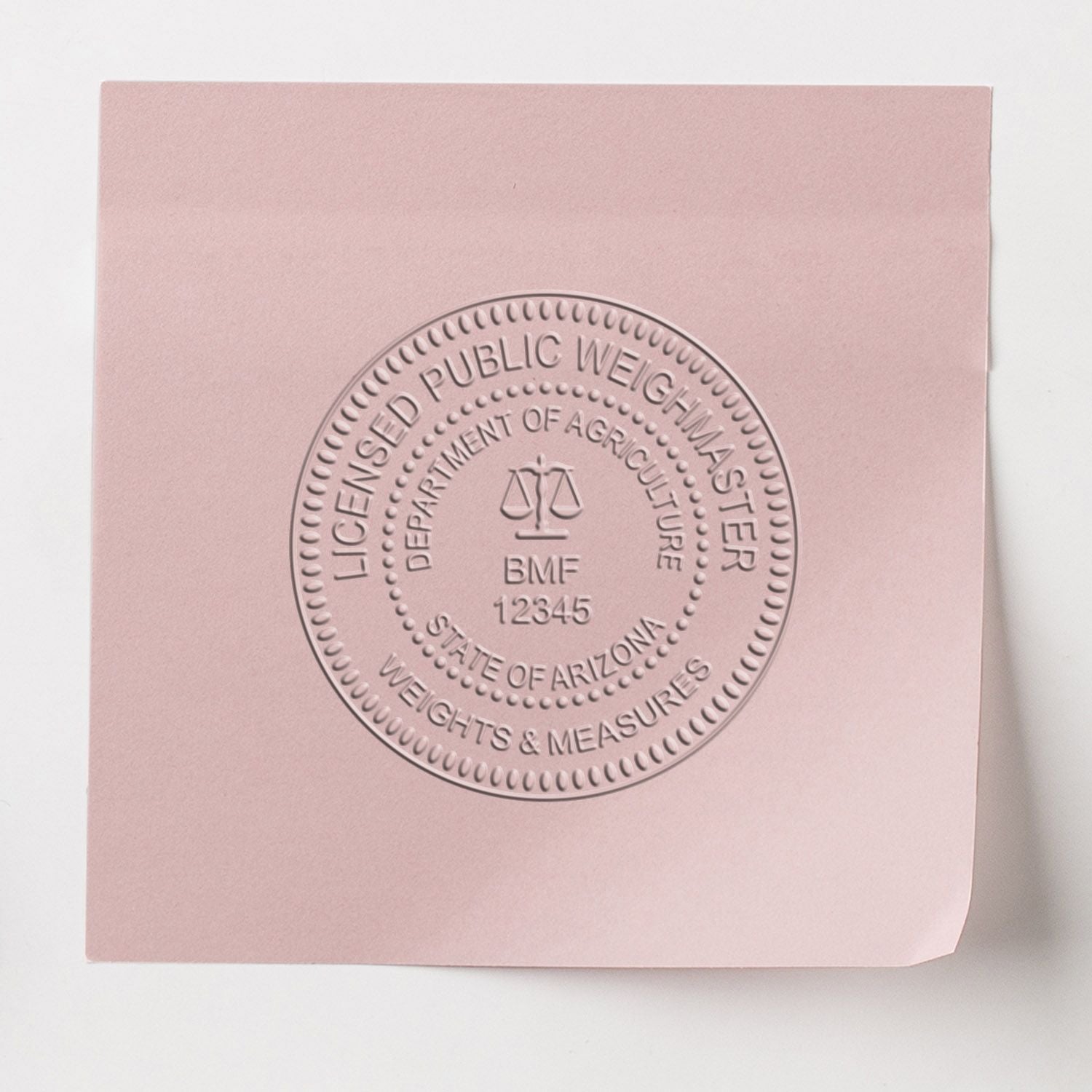
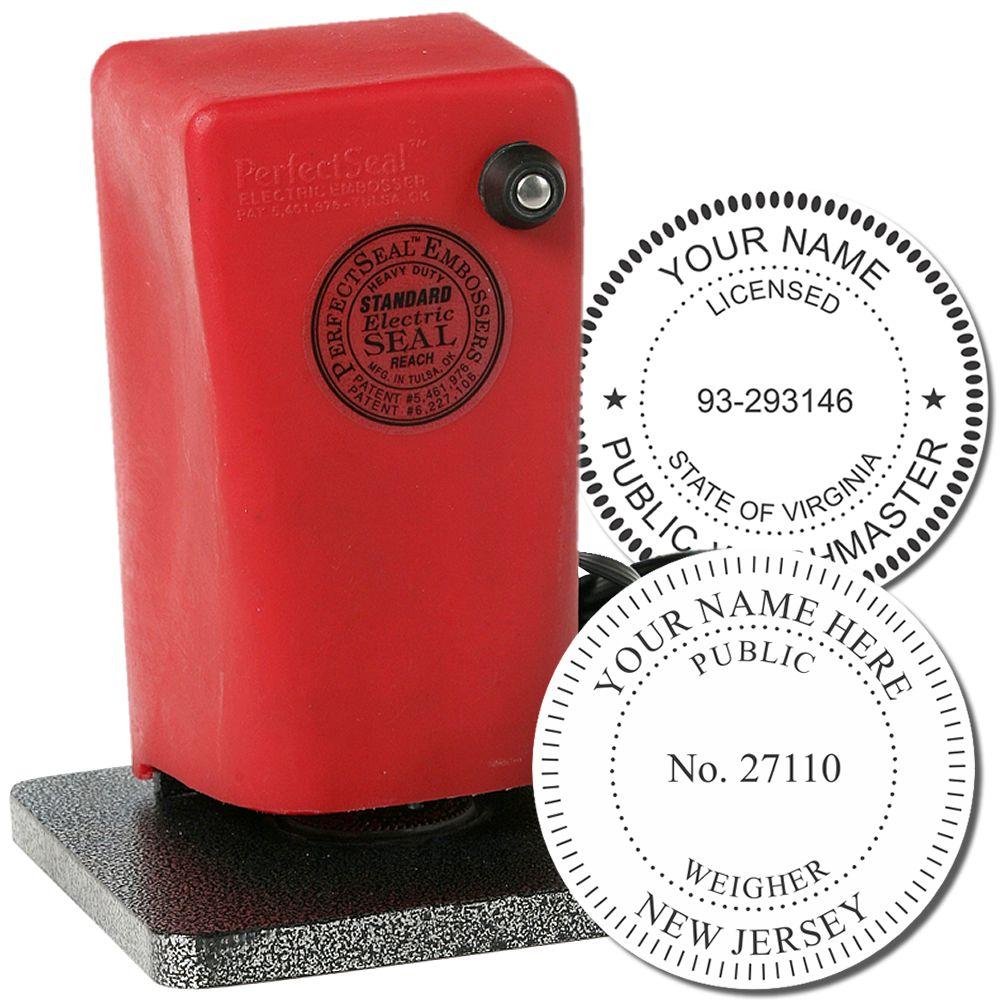
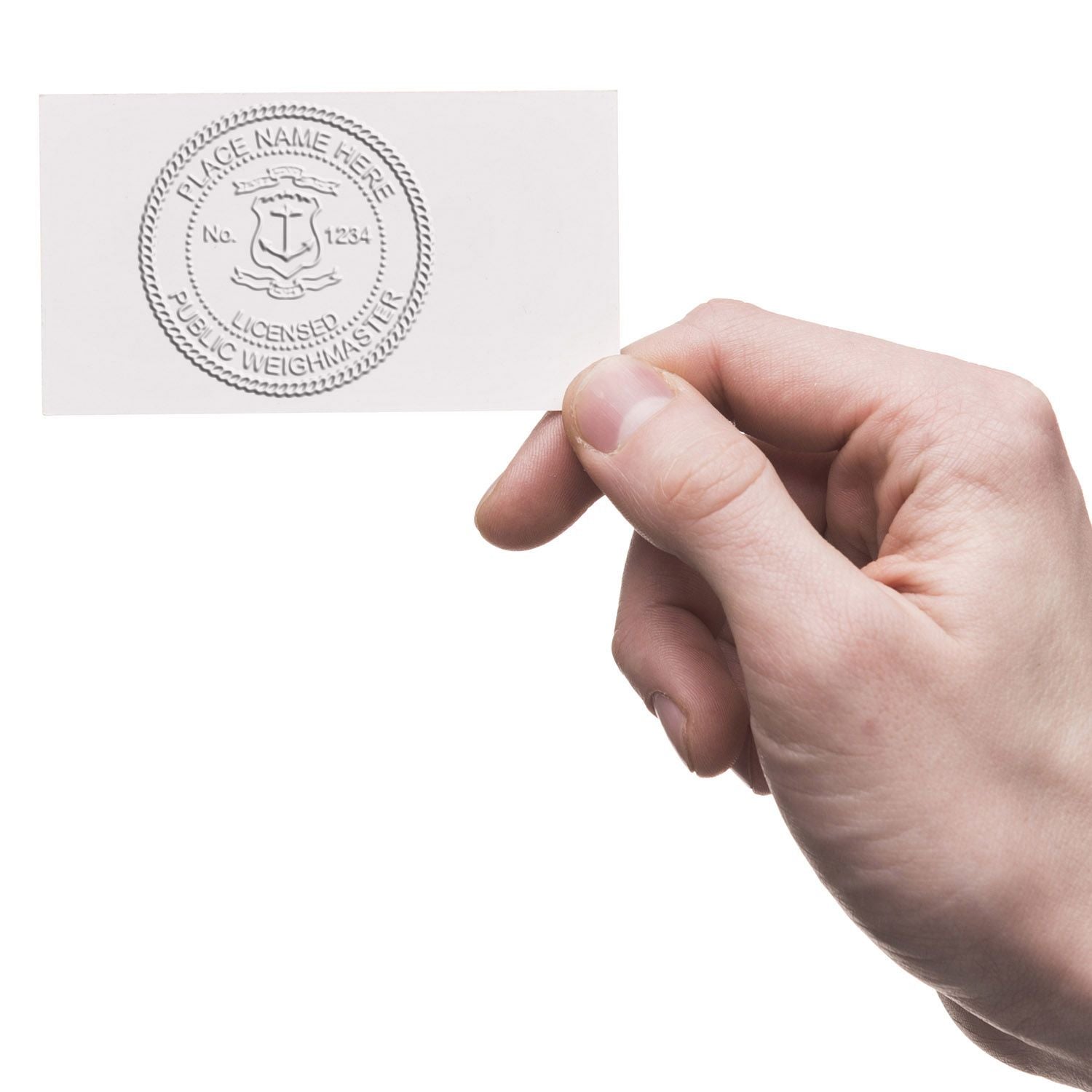
Maine says impression seal, and it says the seal must be impressed. Section 2505(1) uses the same physical language when it makes presealing a violation. Nothing in the subchapter describes an ink stamp, a printed facsimile or a digital image as an alternative, and the word electronic does not appear in 10 M.R.S. 2501 through 2554 in connection with the seal or the certificate.
Compare that with a state such as Mississippi, whose statute expressly allows the seal “or licensee’s name and number” to be “impressed or inscribed electronically”. Maine wrote no such clause. The practical result for a Maine licensee is that every certificate needs a device physically pressed onto it, and that a workflow which emails a PDF with an image dropped in has not met the requirement the statute wrote. If your operation is moving to digital tickets, that is a question for the state sealer, not for a manufacturer.
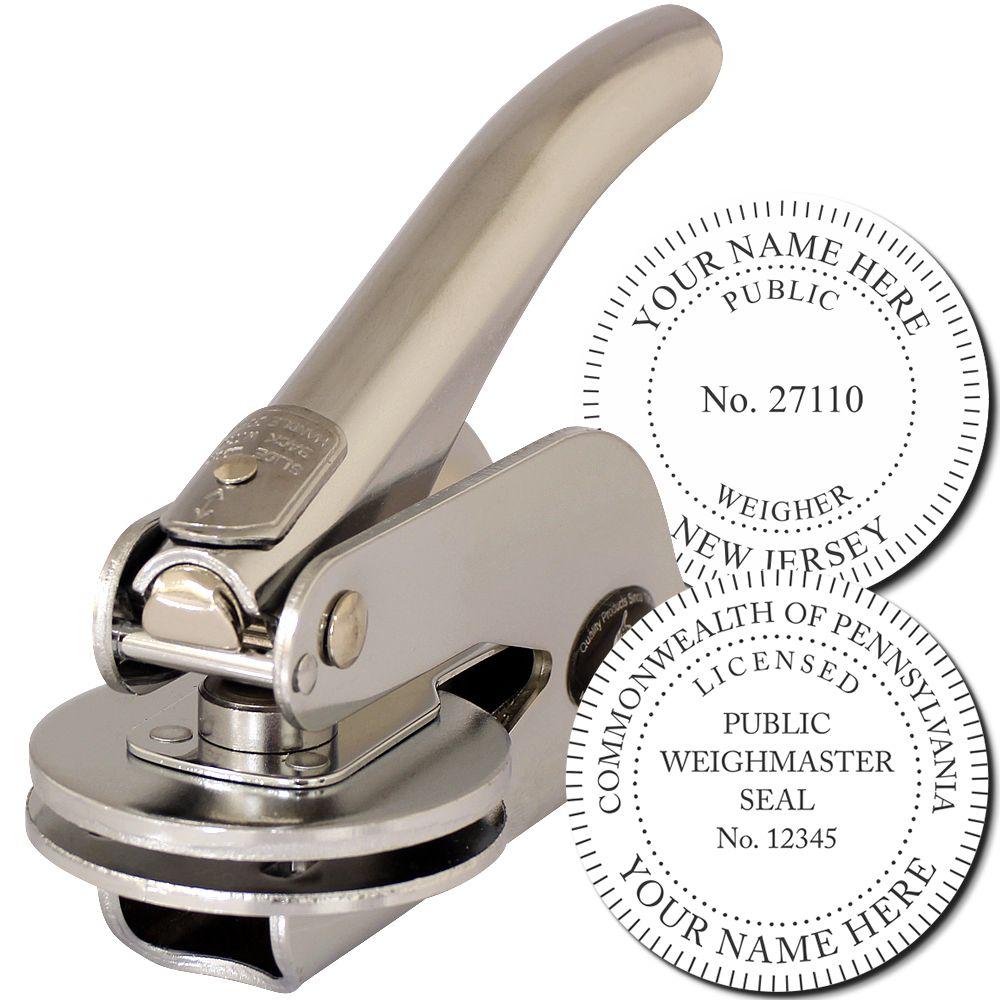
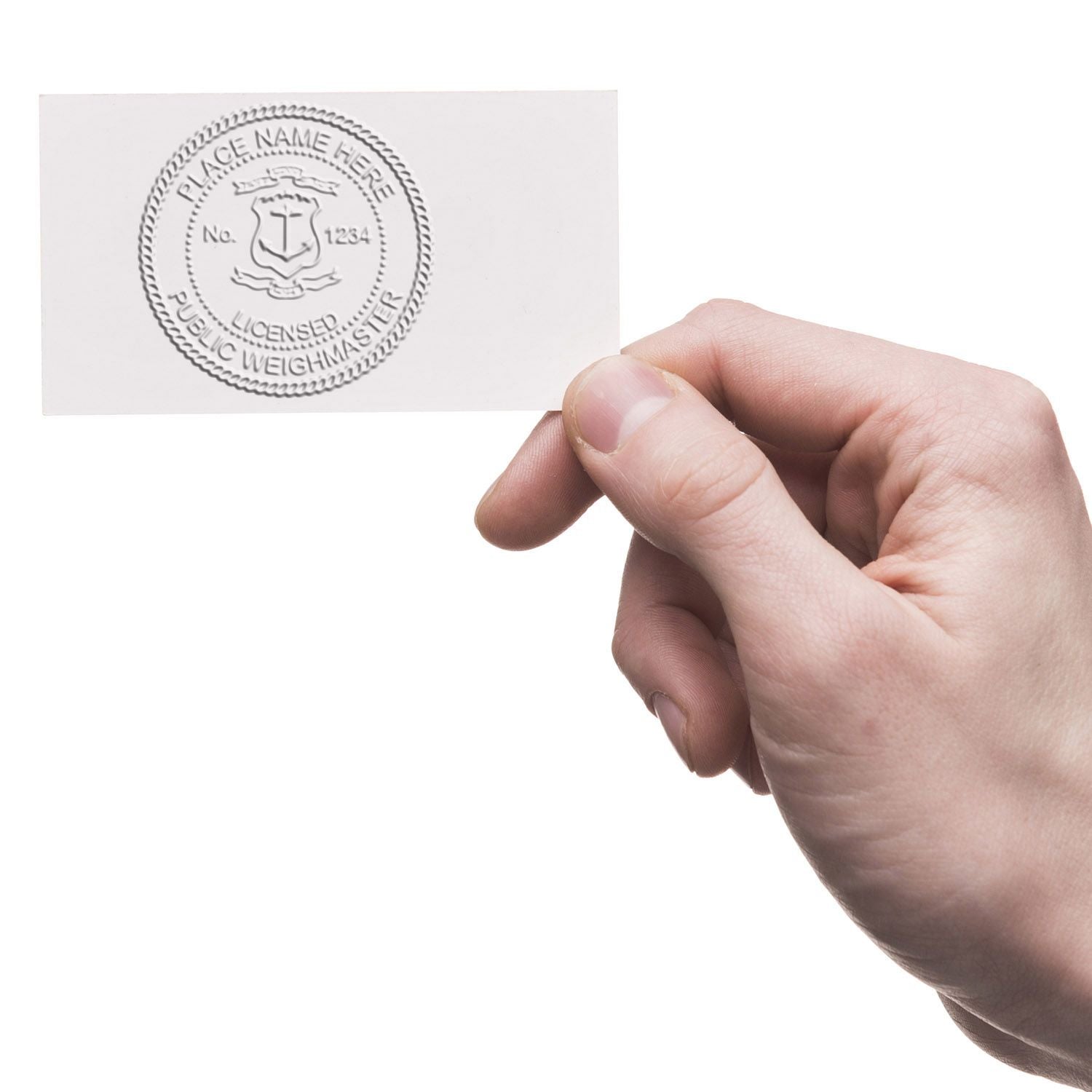

Presealing is a named violation
10 M.R.S. 2505 is headed Malfeasance, and subsection 1 makes it a civil violation, subject to a fine not exceeding $100, where a licensed public weighmaster “preseals a weight certificate with the licensed public weighmaster’s official seal before performing the act of weighing”.
That tells you how Maine understands the impression. It is a statement that the weighing happened, made at the time the weighing happened, and a stack of preembossed blanks in a drawer defeats it. It also explains a custody habit worth adopting: keep the embosser and the blank certificate stock in different places, so that preembossing is an act somebody has to decide to do rather than a shortcut that saves a step at a busy scale.
The corporate seal and unlicensed hands
Section 2505(2) carries the heavier penalty in the subchapter: a holder of a corporate public weighmaster’s license “may not allow a person not licensed as a licensed public weighmaster to issue a weight certificate using the corporate seal”. Fines run to $500 for a first offense and $1,000 for repeat violations.
Read that with the employee list requirement in 2501(2) and the design is clear. The corporate seal carries the company name, so it looks transferable, and the statute closes that off by making the licensee responsible for who uses it. If your yard has a seal at the counter and a rotating crew, the seal is the item that needs a named custodian.
What a licensed public weighmaster does with the certificate
10 M.R.S. 2552 governs execution, and it reads like a rule written by someone who has seen the errors. A licensed public weighmaster may not enter on a weight certificate issued by the weighmaster any weight values except those the weighmaster has personally determined, and may not make entries on certificates issued by others. A weight certificate must be so prepared as to show clearly that the weight or weights were actually determined.
Where only some weights are determined, the weighmaster “shall strike through or otherwise cancel the printed entries for the weights not determined or computed”. Where gross and tare come from different scales or different dates, the weighmaster identifies which scale and when. Section 2553 requires copies to be preserved and section 2554 addresses reciprocal acceptance of certificates.
Reciprocal acceptance under 2554 is worth knowing about if your certificates travel. It means a Maine weight certificate can be relied on outside the state, which is part of why the wording on the seal is fixed by statute rather than left open: a reader elsewhere has to be able to tell at a glance what the impression represents. It is also a reason to keep the impression crisp. A seal that reads clearly in the scale house but faintly on the copy that leaves it is doing only half the job.
Licenses, fees and the December 31 expiry
Both licenses run on the calendar. 10 M.R.S. 2501(1) and (2) provide that licenses expire December 31 annually unless sooner revoked under section 2506, which covers suspension and revocation. The individual annual fee is $25. The corporate annual fee is $250, and the corporate applicant names the owner or manager and files the list of employees holding valid individual licenses.
Sections 2502 and 2503 sit alongside and govern the equipment rather than the paperwork: the scale used, its type and test under 2502, and capacity, platform size and one-draft weighing under 2503. Section 2504 addresses action by unlicensed persons. None of those touch the seal, and the seal is unaffected by a renewal, since the statute ties the inscription to your name rather than to a license year.


What makes a correct Maine seal wrong
One event, and it is the same for both versions: a change of name. The individual seal carries the public weighmaster’s name on the margin by statute, and the corporate seal carries the business, company or corporation name. Change either and the inscription no longer matches the license, which means a new die rather than a correction.
For a corporate licensee there is a second trigger. The center of the corporate seal carries the state-assigned number identifying the individual, so a weighmaster leaving, joining or being assigned a different number is also a new die. Because the state does not own the old seal, there is no surrender obligation to comply with, but there is a sensible practice: retire the old embosser rather than leaving it in a drawer where it can still be pressed.
Size, shape and what Maine does not publish
We read 10 M.R.S. 2501 in full and no diameter, dimension or shape appears in it. No administrative rule prescribing the seal was located, so there is no rule elsewhere carrying a figure. The only geometry the statute supplies is implicit: it speaks of an outer margin and a center, which is how a round seal is described, and it stops there.
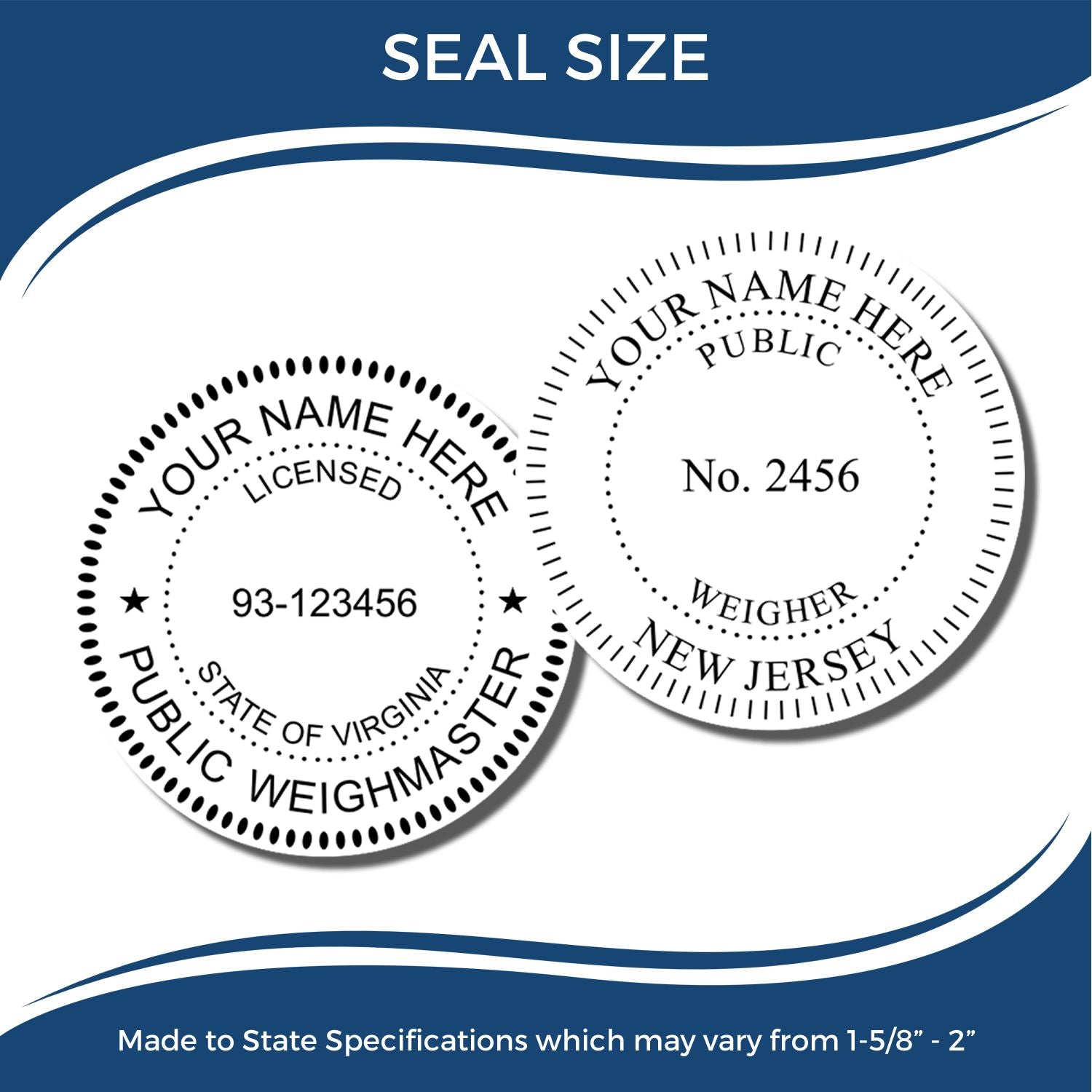
That means the size is your decision within the limits of legibility, and it means any page quoting you a Maine diameter is quoting something other than Maine law. Separately, and as Acorn’s own production record rather than as a rule, the weighmaster embossers we make run between a 1-5/8 inch and a 2 inch impression area depending on how much wording has to fit. That is what our presses do, not what Maine requires. The wording is the part the statute fixes, and the corporate version, with a company name on the margin and a number beside a long center phrase, is the one that benefits from the larger end of that range.
Ordering a Maine weighmaster embosser
Send us four things for an individual seal: your name exactly as licensed, confirmation that the margin is to read that name plus Maine, the center phrase licensed public weighmaster, and the size you want. For a corporate seal send the business, company or corporation name as licensed, the margin wording with Maine, the center phrase licensed corporate public weighmaster, and the number the state sealer assigned. We proof the layout before cutting so you can read it at actual size, which matters most on the corporate version.
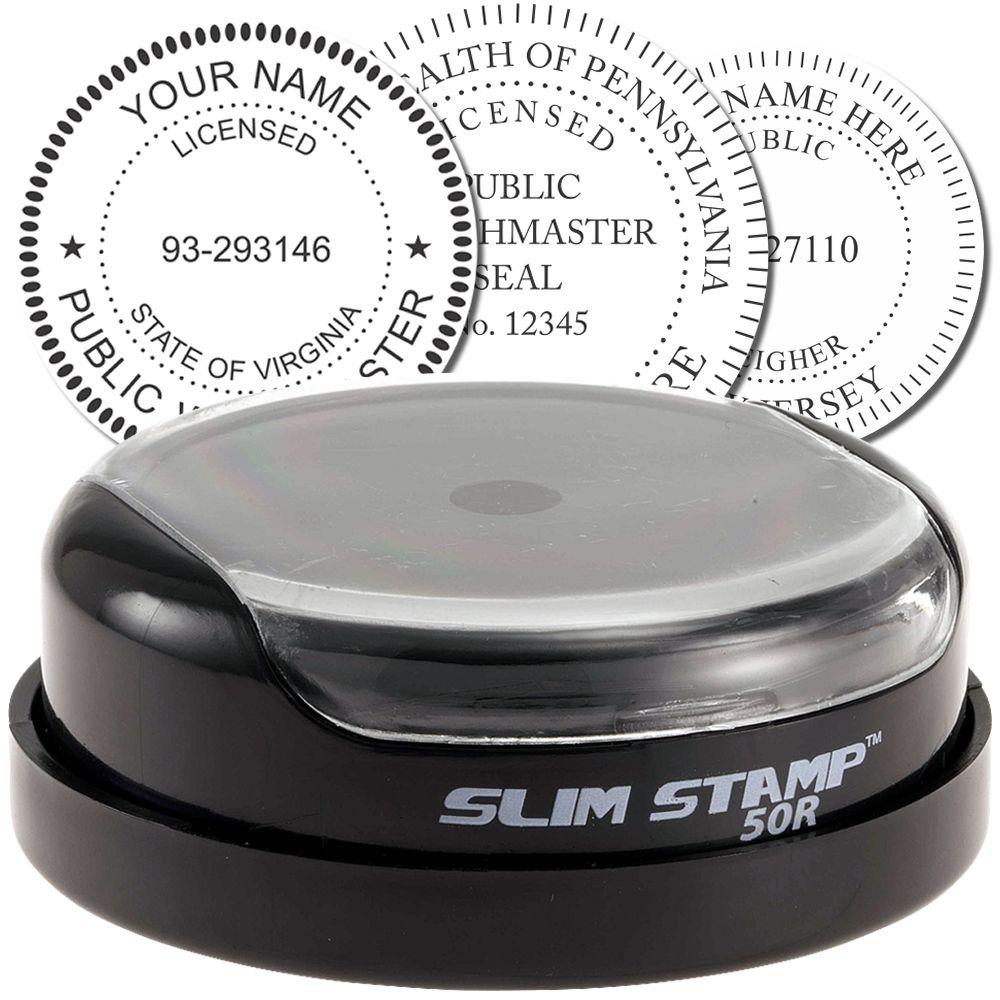
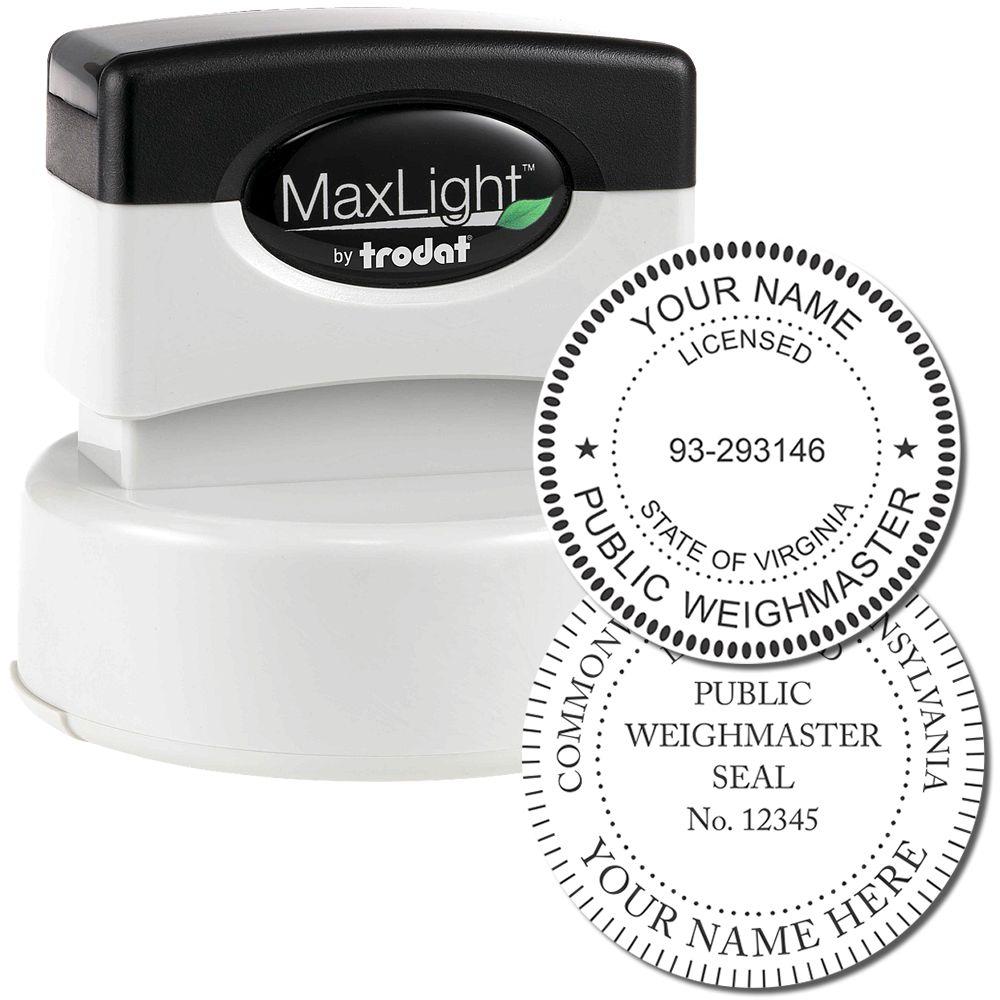
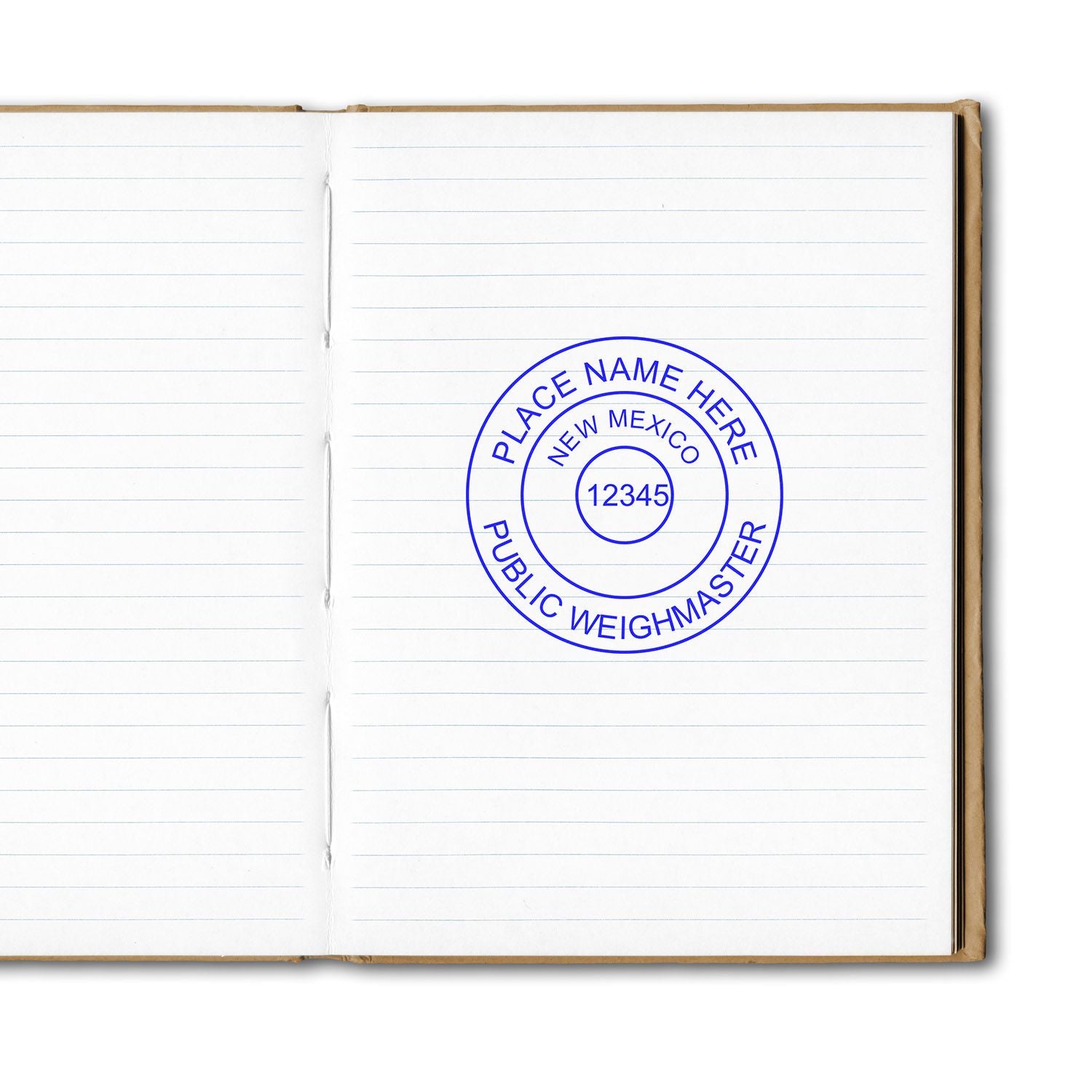
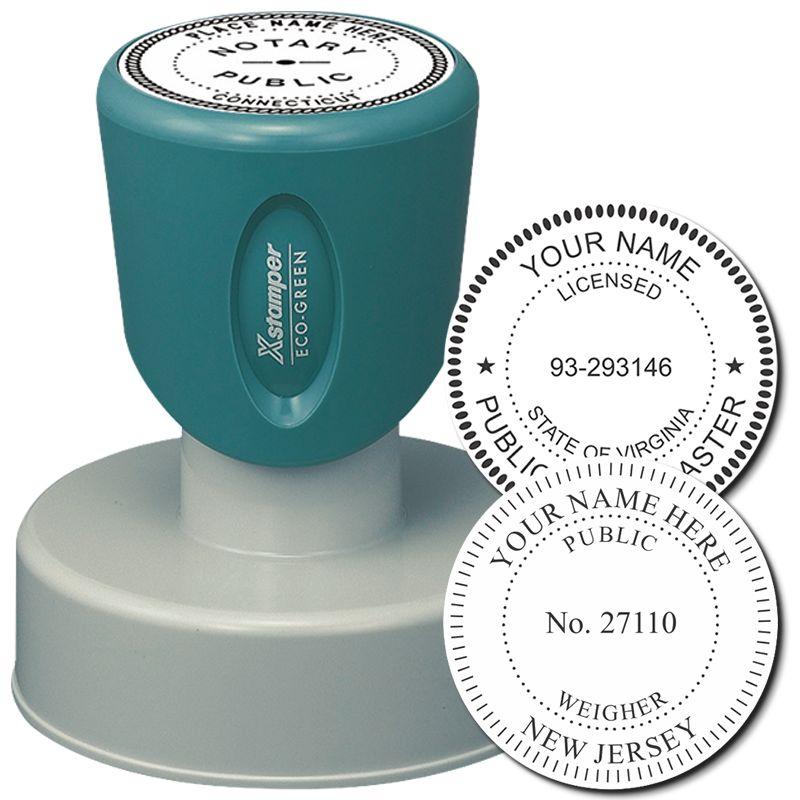
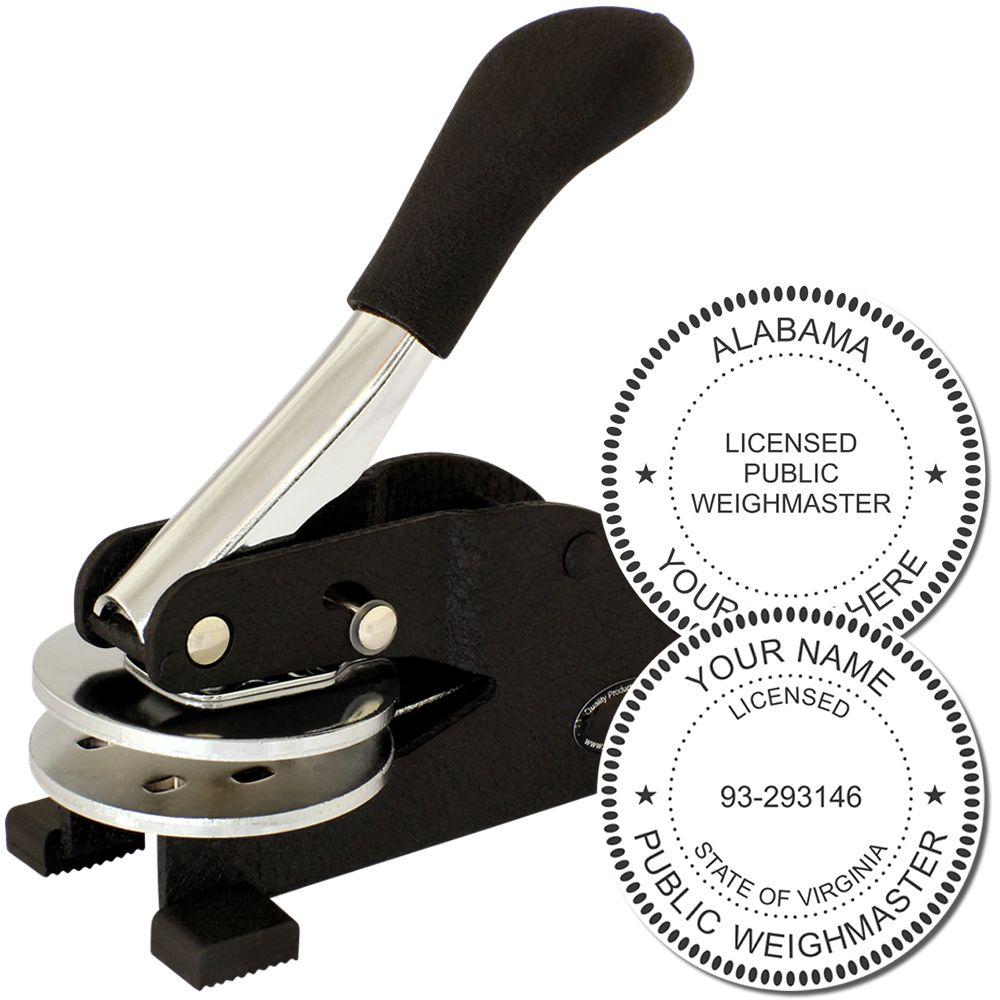
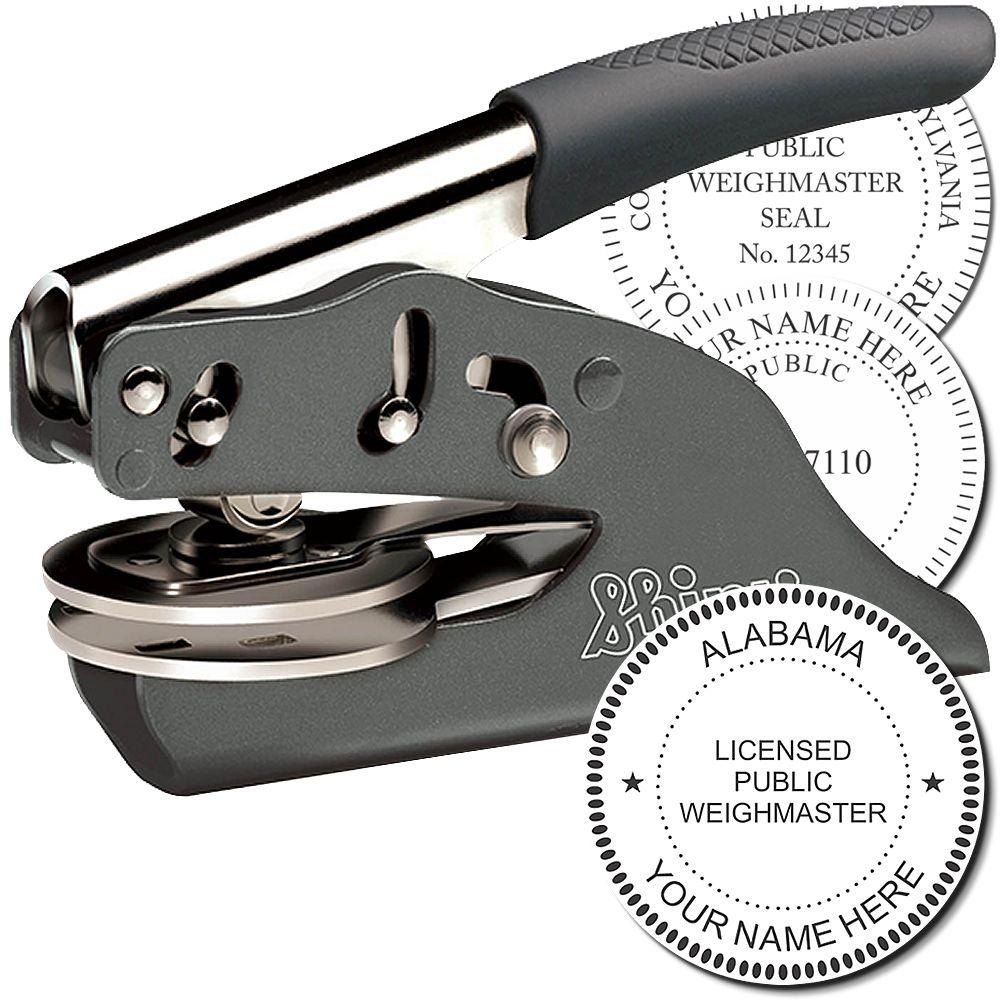
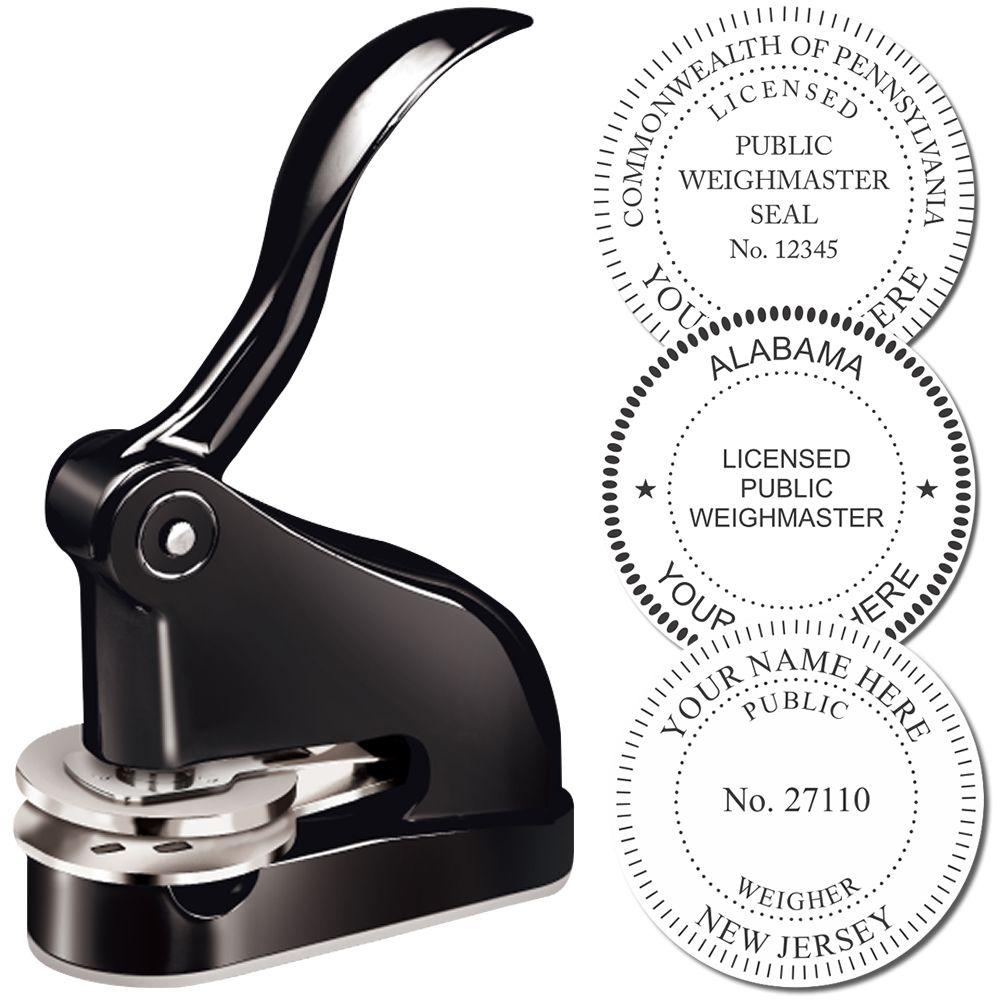
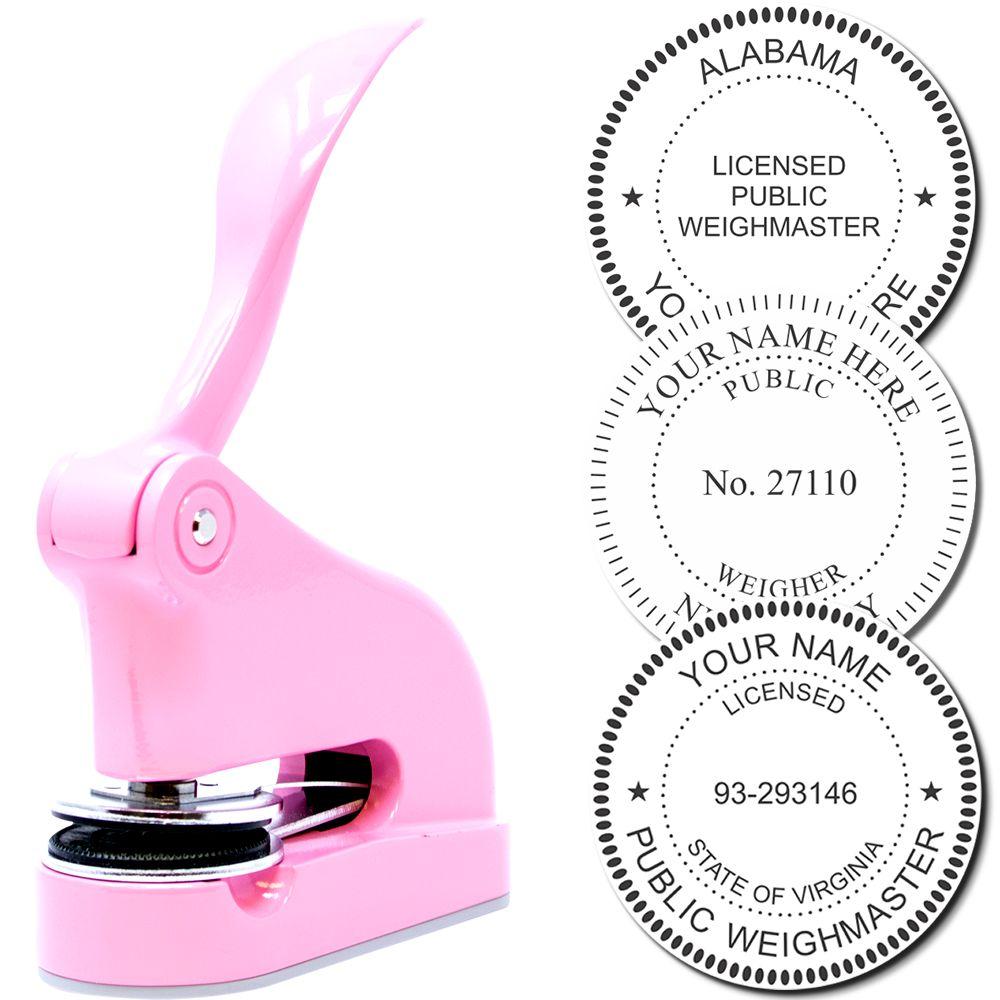
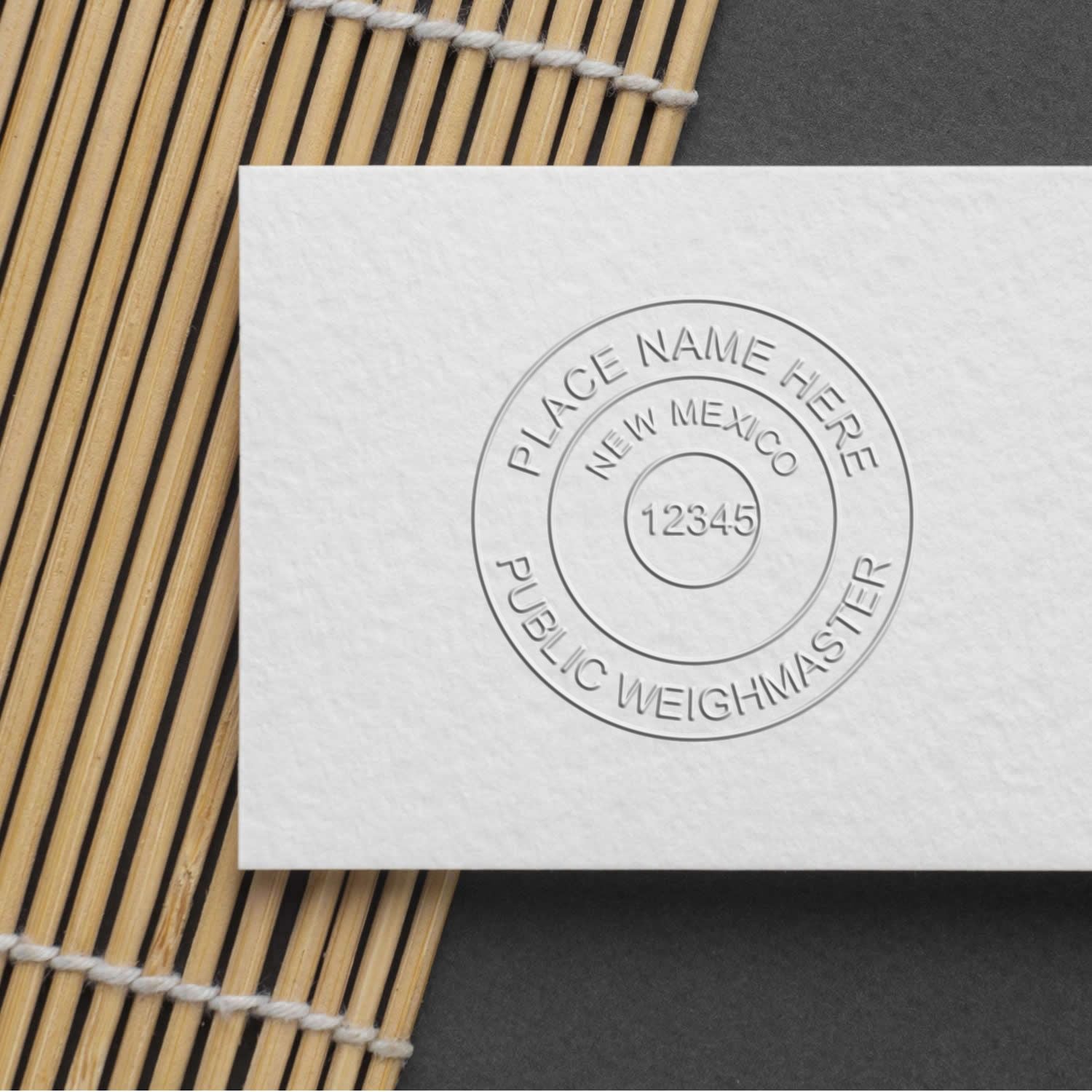
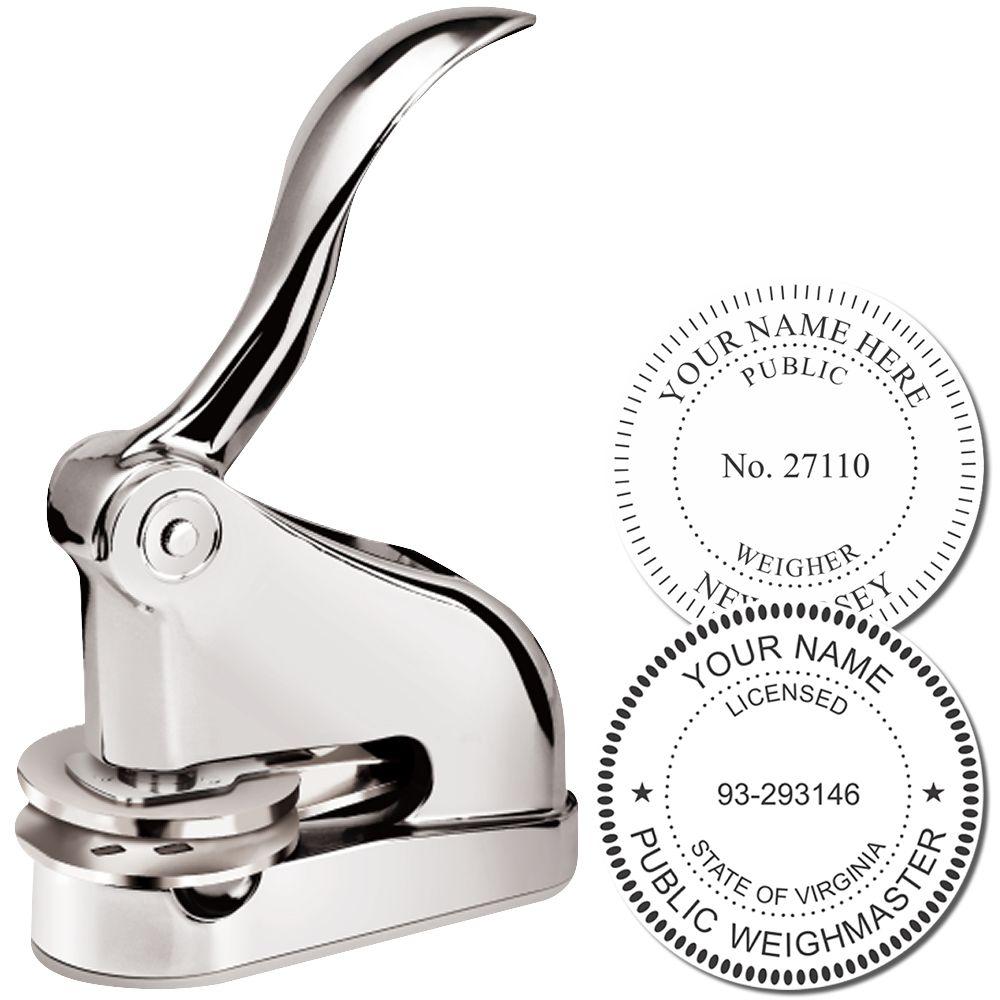
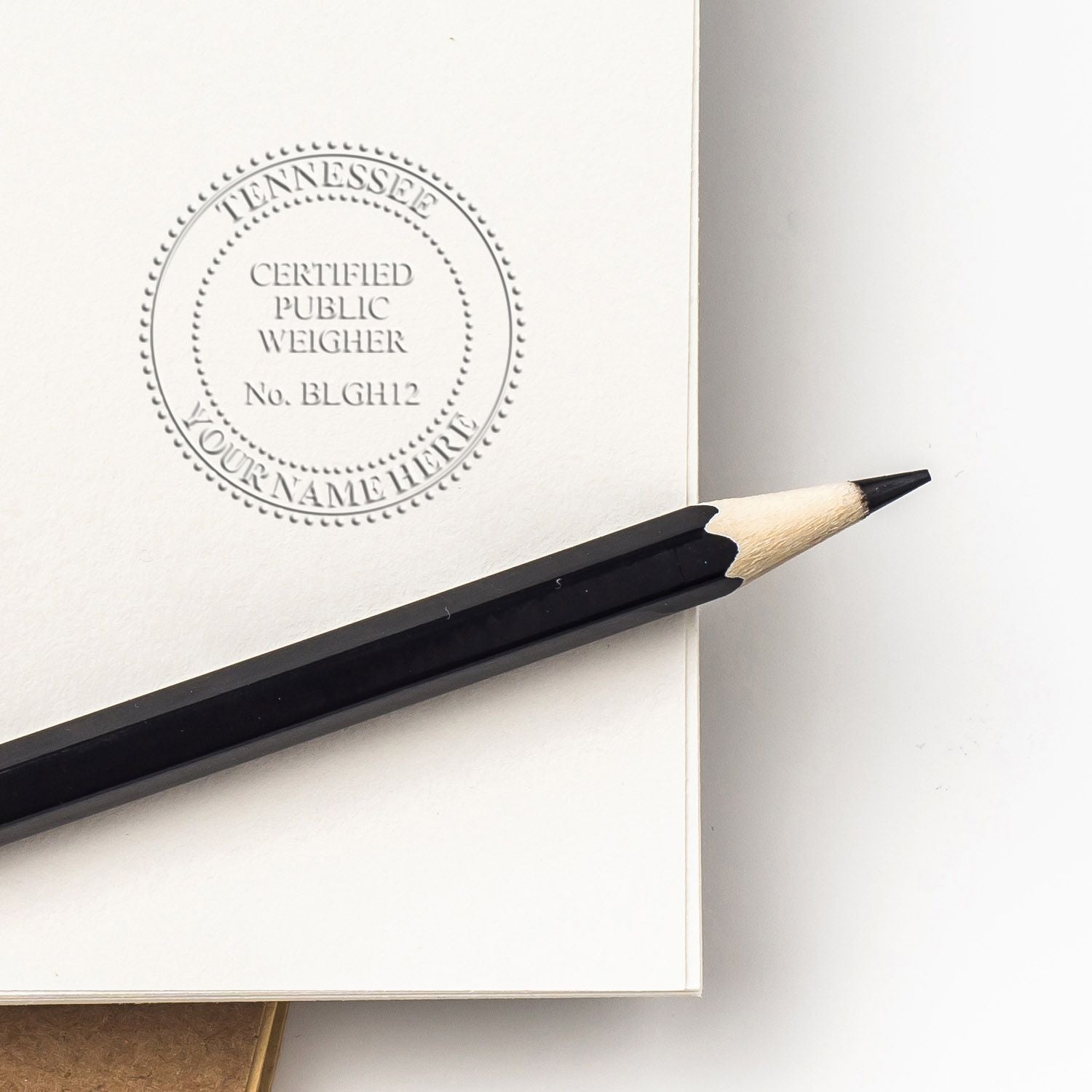
Because Maine requires an impression, the device is an embosser. The Public Weighmaster Handheld Seal Embosser at $46.95 is the portable option for a weighmaster who moves between scales, and the Public Weighmaster Desk Seal Embosser at $44.95 is the scale house choice, since a desk frame takes less effort per impression when you are sealing every certificate in a shift. The Soft Seal Embosser at $44.95 has a rubber handle that is easier to squeeze through a long day. For a high volume yard the Heavy Duty Standard Reach Embosser at $1,795.00 and the Heavy Duty Long Reach Embosser at $2,095.00 are built for continuous use. Browse the public weighmaster stamps and seals collection, or contact us with your wording and we will set a proof. This page is a research summary and not legal advice.
- Public Weighmaster Stamps and Seals
- New Jersey Weighmaster Seal Says Public Weigher
- Mississippi Bonded Weighmaster Seal: Exact Wording
Frequently asked questions
Does Maine require a public weighmaster to have a seal?
Yes. 10 M.R.S. 2501(1) requires a licensed public weighmaster to procure an impression seal at the weighmaster’s own expense, and requires the seal to be impressed upon each weight certificate issued. A corporate licensee has the same duty under 2501(2) at the corporation’s expense.
What exactly goes on a Maine weighmaster seal?
For an individual licensee: the public weighmaster’s name and the word Maine around the outer margin, and the words licensed public weighmaster in the center. For a corporate licensee: the business, company or corporation name and the word Maine around the outer margin, and the words licensed corporate public weighmaster in the center with a number identifying the individual.
Where does the number on the corporate seal come from?
The state sealer assigns it. 10 M.R.S. 2501(2) provides that the state sealer shall assign a number to each licensed public weighmaster operating under a corporate license. Get the number before you order artwork, because it is cut into the die.
Can I use a rubber stamp or an electronic seal in Maine?
Nothing in the subchapter authorizes either. The statute requires an impression seal and requires it to be impressed upon each weight certificate, and the word electronic does not appear in 10 M.R.S. 2501 through 2554 in connection with the seal or the certificate. Maine is an embosser state.
How big does a Maine weighmaster seal have to be?
No size is published. 10 M.R.S. 2501 prescribes the inscription and its layout and states no diameter, dimension or shape, and no administrative rule prescribing the seal was located. Choose a size that keeps the wording legible, and disregard a diameter quoted from another state.
Do I have to give the seal back if my license ends?
No. Unlike some states, Maine does not make the seal state property and does not require its return. You bought it, so you keep it. Retiring the device rather than storing it where it can still be pressed is sensible practice rather than a legal duty.
What happens if I seal a certificate before weighing?
It is a civil violation. 10 M.R.S. 2505(1) covers a licensed public weighmaster who preseals a weight certificate with the official seal before performing the act of weighing, subject to a fine not exceeding $100.
Can an employee use our corporate seal?
Only if that employee is a licensed public weighmaster. 10 M.R.S. 2505(2) provides that a holder of a corporate public weighmaster’s license may not allow a person not so licensed to issue a weight certificate using the corporate seal, with fines up to $500 for a first offense and $1,000 for repeat violations. The corporate licensee also files a list of employees holding valid individual licenses.








