
Written by Acorn Sales Company, manufacturing stamps and seals since 1964 · Reviewed by Holly R, VP of Sales and Marketing at Acorn Sales, against State Board of Geologist Examiners on 22 September 2026 · Updated 22 September 2026
Oregon requires a certified engineering geologist to obtain a stamp, and the registrant is the one who obtains it. ORS 672.605 says each registrant, upon issuance of a certificate, shall obtain a seal of the design authorized by the State Board of Geologist Examiners, bearing the registrant’s name and the legend. The Board authorizes the design; it does not supply, sell or own the device, and nothing in ORS 672.505 to 672.705 makes the stamp state property or requires its return. You get it made.
What separates a CEG stamp from a plain registered geologist stamp in Oregon is the wording and the number. The Board’s own guidance gives the two professional designations as “Registered Geologist” and “Certified Engineering Geologist”, and Oregon issues the specialty its own certificate series: registered geologists carry a G number, geologists-in-training a T number, and certified engineering geologists an E number. Two cautions before you order. Oregon publishes no stamp size that we could find, and the one rule that might contain one, OAR 809-050-0000, is behind a database we could not reach. Read the size section below before you assume a diameter.
Oregon engineering geologist seal requirements at a glance
| Requirement | Oregon rule | Source |
|---|---|---|
| Seal required | Yes. “Each registrant, upon issuance of a certificate, shall obtain a seal of the design authorized by the State Board of Geologist Examiners, bearing the registrant’s name and the legend ‘registered geologist’ or ‘certified specialty geologist.’” Documents “shall be signed by the registered geologist and impressed with the seal”. | ORS 672.605 |
| Required elements | The statute names two: the registrant’s name and the legend. The Board adds the number and fixes the wording: all registered geologists and certified engineering geologists “must use a stamp that shows their name, registration number, and their professional designation”, and the Board gives the designations as “Registered Geologist” and “Certified Engineering Geologist”. | ORS 672.605; Oregon State Board of Geologist Examiners, Professional Stamp & Code of Conduct |
| Size and shape | Not addressed in anything we could read. ORS 672.605 prescribes no size and no shape, and the Board’s current stamp page publishes no image, no dimension and no shape. A dimensional requirement, if one exists, would sit in OAR 809-050-0000, which the Secretary of State’s rules database would not serve to us. Do not assume a diameter from a neighboring state. | ORS 672.605; Oregon State Board of Geologist Examiners, Professional Stamp & Code of Conduct; OAR 809-050-0000 unread |
| Device allowed | ORS 672.605 uses “impressed with the seal”, which on its face contemplates an impression device, but Board practice throughout its guidance is the word stamp, and the Board describes a handwritten signature in permanent ink across the stamp, which presupposes an inked device. No source we could read excludes any device. The device rule, if any, is in OAR 809-050-0000, unread. | ORS 672.605; Oregon State Board of Geologist Examiners, The Geologist Examiner, Winter 2023 |
| Signature and date | “After placing your stamp on any document, you must also sign your name across the stamp and write your registration expiration date.” The Board states it as a handwritten signature in permanent ink across the stamp, then the word “Expires” followed by the expiration date written directly below the stamp. Neither is engraved into the die. | Oregon State Board of Geologist Examiners, Professional Stamp & Code of Conduct; Oregon State Board of Geologist Examiners, The Geologist Examiner, Winter 2023 |
| What must be sealed | All drawings, reports or other geologic papers or documents prepared or approved by a registered geologist, or by a subordinate under that geologist’s direction, for use by or delivery to any person or for public record. Board guidance narrows it in practice to every final geology product of public practice; documents clearly labeled and identified as draft are not required to be stamped. | ORS 672.605; Oregon State Board of Geologist Examiners, Professional Stamp & Code of Conduct |
| Electronic seal | Permitted. The Board states electronic and digital signatures are allowed if they comply with Board rules. The operative rule is OAR 809-050-0005 (Signature), whose text we could not read, so whether a third-party certificate, tamper-evidence or independent verification is required is unresolved. Confirm with the Board before relying on a digital workflow. | Oregon State Board of Geologist Examiners, Professional Stamp & Code of Conduct; OAR 809-050-0005 unread |
| Renewal and lapse | Annual. “Each year a person shall renew a certificate of registration at a time designated by the board.” A certificate that has expired for failure to renew may only be restored on application and the restoration fee. Signing or stamping after expiration, suspension or revocation is prohibited and is a Class A misdemeanor. | ORS 672.585(3), (5); ORS 672.525(4); ORS 672.991 |
| Firm requirements | No firm seal and no firm registration. Geologists may practice through a sole proprietorship, partnership or corporation, and in a partnership or corporation whose primary activity consists of geological services “at least one partner or officer shall be a registered geologist”. The seal is personal to the registrant. ORS 672.605 expressly recognizes the seal of a qualifying nonresident. | ORS 672.545(1); ORS 672.605 |
| Regulator | State Board of Geologist Examiners, which operates as a semi-independent state agency for the purpose of carrying out ORS 672.505 to 672.705. It publishes and brands itself as the Oregon State Board of Geologist Examiners. | ORS 672.615; rules at OAR chapter 809 |




Does Oregon require a certified engineering geologist to stamp?
Yes, twice over. ORS 672.605 carries two mandatory verbs in one short section. The first: “Each registrant, upon issuance of a certificate, shall obtain a seal of the design authorized by the State Board of Geologist Examiners, bearing the registrant’s name and the legend ‘registered geologist’ or ‘certified specialty geologist.’” The second covers documents: all drawings, reports or other geologic papers or documents involving geologic work that have been prepared or approved by a registered geologist, or by a subordinate employee under that geologist’s direction, for the use of or for delivery to any person or for public record within Oregon “shall be signed by the registered geologist and impressed with the seal”, which shall indicate responsibility for them.
Engineering geology is not optional practice in Oregon either. ORS 672.565(4) provides that engineering geology shall be one of the specialties requiring certification, and ORS 672.525(7) reserves the work: no person, including a person registered as a geologist, shall practice or offer to perform any activities of an engineering geologist unless certified as one. The Board’s own guidance says the same thing about the device in plainer words, using must: all registered geologists and certified engineering geologists must use a stamp that shows their name, registration number and their professional designation.
The registrant obtains the device, not the board
ORS 672.605 places the duty on you: each registrant shall obtain a seal of the design authorized by the Board. That is the standard split. The Board authorizes a design; the registrant has the device made. Nothing in ORS 672.505 to 672.705 makes the seal state property, requires the Board to supply it, or requires its return on lapse or revocation, and the Board’s stamp page names no approved vendor and puts no restriction on where you buy one.
One honest caveat, because Oregon does not say it as flatly as some states do. California writes into its rule that the seal may be purchased from any convenient source. Oregon publishes no sentence like that, and OAR 809-050-0000 was unreadable to us, so a supplier restriction buried in that rule cannot be completely ruled out. Everything we could read points one way, and we would order from a stamp maker without hesitation, but that is the shape of the evidence rather than a quoted permission.
What the board says has to be on the stamp
The statute prescribes only two elements, the registrant’s name and the legend. The Board fills in the third and fixes the wording of the second. Its stamp guidance says that all registered geologists and certified engineering geologists must use a stamp that shows their name, registration number, and their professional designation, and the page gives the two professional designations as “Registered Geologist” and “Certified Engineering Geologist”.
So the working element list for an Oregon CEG die is three items: name, number, designation. What it does not include is a date, a state outline, a license expiration or a signature. Two of those are positively excluded by the Board’s own practice, which is the subject of the section below on what not to engrave.
Engrave the board’s wording, not the statute’s
This is the trap on an Oregon CEG die. ORS 672.605 gives the legend as “registered geologist” or “certified specialty geologist”. The second of those is a generic statutory category that covers every specialty the Board might certify. The Board’s own published guidance does not use it on a stamp. It names the designations as “Registered Geologist” and “Certified Engineering Geologist”.
Engrave what the Board publishes. A die reading “Certified Specialty Geologist” is faithful to the statute and useless on a report, because it does not say which specialty and it does not match the wording the Board itself uses for the credential. That is the single most useful line on this page for anyone about to send artwork.
The E number, the G number, and an open question
Oregon issues the specialty its own certificate series, and the Board’s newsletter is where that shows. New registered geologists are listed with numbers in the form G plus four digits. Geologists-in-training are listed as T plus four digits. New certified engineering geologists are listed as E plus four digits. That is a different prefix and a different number from the geologist registration, which is the second way a CEG credential differs from a plain registration here.
Now the part we cannot close. Nothing on the Board’s stamp page, nothing in ORS 672.605 and nothing in the newsletter says whether a CEG’s stamp carries the E number, the G number, or both. Nor does any source we could read say whether a person holding both credentials needs one stamp or two. The rule that would most likely answer it, OAR 809-050-0000, is the rule we could not read.
What to do about it is simple and it costs one email. Ask the Board which number it expects on the die before you order, and hold the artwork until you have the answer in writing. A die is cut to the text you supply, and a wrong number is a wrong die. We would rather tell you that than guess on your behalf.

Two things that must not be engraved
Oregon is unusual in how much of the marking is done by hand after the stamp lands, and both of the handwritten items are things engravers are sometimes asked to cut into a die. The Board’s stamp guidance: “After placing your stamp on any document, you must also sign your name across the stamp and write your registration expiration date.” Its newsletter states the same practice at more length: the registrant is to place a handwritten signature in permanent ink across the stamp, and must then write the word “Expires” followed by the registration expiration date directly below the stamp.
Read that as two engraving instructions in the negative. The expiration date is handwritten below the stamp, so the device itself should not carry a date; an engraved date would be wrong within a year and is not what the Board asks for. The signature is handwritten across the stamp, so the device should not carry a facsimile signature either. What you are buying is a die with three pieces of text on it, and a clear enough impression that a signature written across it in permanent ink still leaves the name, number and designation readable.
That last point is a practical argument for how the die is laid out. If the signature crosses the face, crowding every element into the center is a bad idea. Elements that sit toward the border survive a signature; elements stacked in the middle do not.
No Oregon dimension is published, and one rule we could not read
We will say this plainly rather than fill the row. Oregon publishes no stamp size that we could find. ORS 672.605 prescribes no size and no shape. The Board’s current “Professional Stamp & Code of Conduct” page publishes no stamp image, no dimensions and no shape, which is worth stating because Oregon guidance has been assumed elsewhere to include prescribed stamp imagery, and the current page does not.
The Board’s stamp page cites two rules as the operative seal rules, OAR 809-050-0000 (Use of Seal) and OAR 809-050-0005 (Signature). We could not read either one. The Oregon Secretary of State’s Administrative Rules Database refused our connections, the division and compilation views refused as well, and no archived capture of the official pages was reachable. We did not substitute a third-party republisher for official rule text, because a rule quoted from an unofficial mirror is not a rule you should cut a die against.
So the honest instruction is this. If a size or a facsimile design exists for Oregon, it is in OAR 809-050-0000, and you should ask the Board for that rule before ordering. If the Board tells you there is no prescribed size, then the size is yours to choose and the thing to optimize is legibility under a handwritten signature. We will cut to whatever the Board tells you.
What gets stamped, and what a draft needs instead
The statutory list is broad: drawings, reports or other geologic papers or documents involving geologic work, prepared or approved by a registered geologist or by a subordinate under that geologist’s direction, for the use of or for delivery to any person or for public record within Oregon. The Board’s guidance narrows it to a workable rule of thumb: the stamp is required on every final geology product created as part of public practice.
Two carve-outs come with that. Documents clearly labeled and identified as draft are not required to be stamped, which means the label has to be on the document rather than in your head. And individual figures, maps or logs bound inside a stamped stand-alone report do not need to be separately stamped, unless they were created by someone else.
Responsibility follows the stamp, not the authorship. The Board states that if you stamp a final geology product you are responsible for the geology content of that product, including work done by supervised unregistered staff. Where several registrants collaborate, the product must designate who completed each section; if it does not, every stamping registrant is responsible for the whole thing.
Ink stamp, embosser, or both
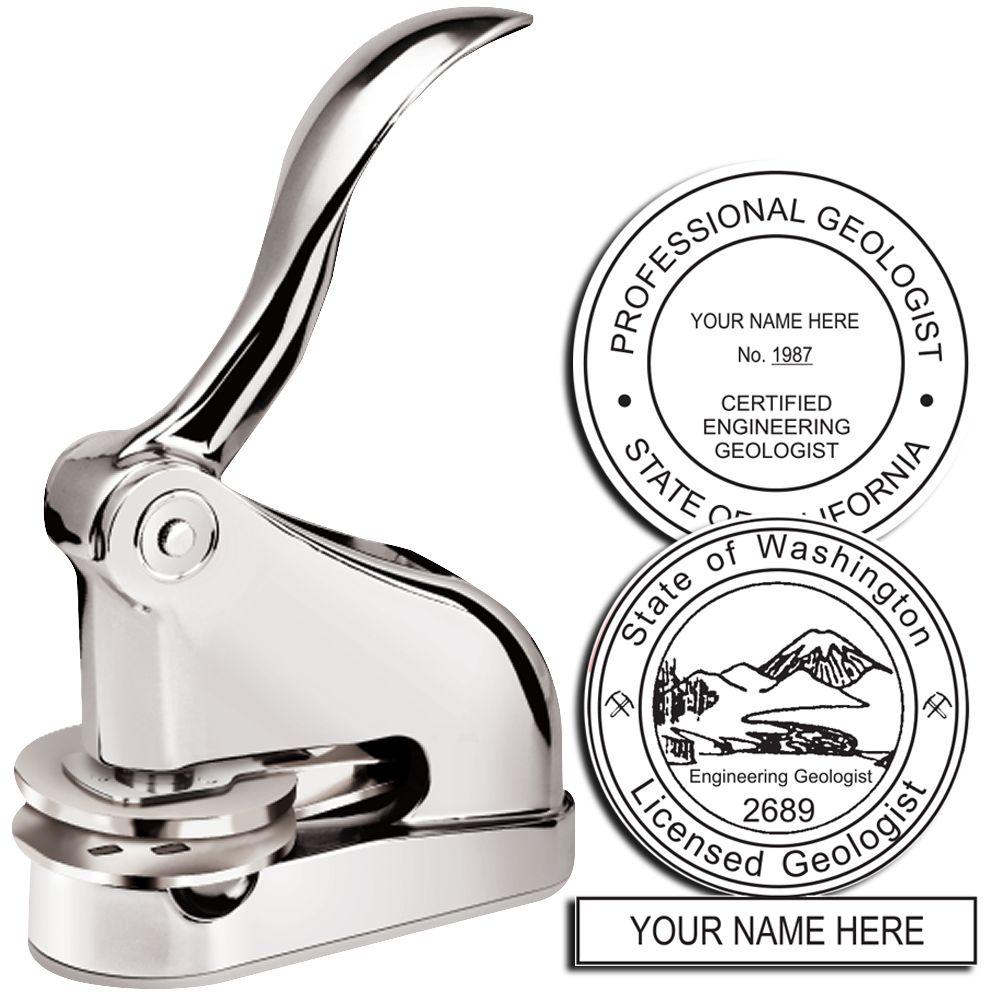
The statute says “impressed with the seal”, wording that on its face suggests an impression device, and if you read only ORS 672.605 you might buy an embosser. Board practice points the other way. The Board uses the word stamp throughout its guidance, and its newsletter describes a handwritten signature in permanent ink across the stamp, which presupposes something the ink can be written over and the reader can still see. A blind embossed impression signed over in ink does not give you that, and it does not photocopy.
No source we could read excludes any device, and the rule that might, OAR 809-050-0000, is the one we could not open. For a working Oregon CEG the safe reading is an inked stamp as the primary device, with an embosser only as a second device if you want one for original wet-signed copies. Buy the ink device first.


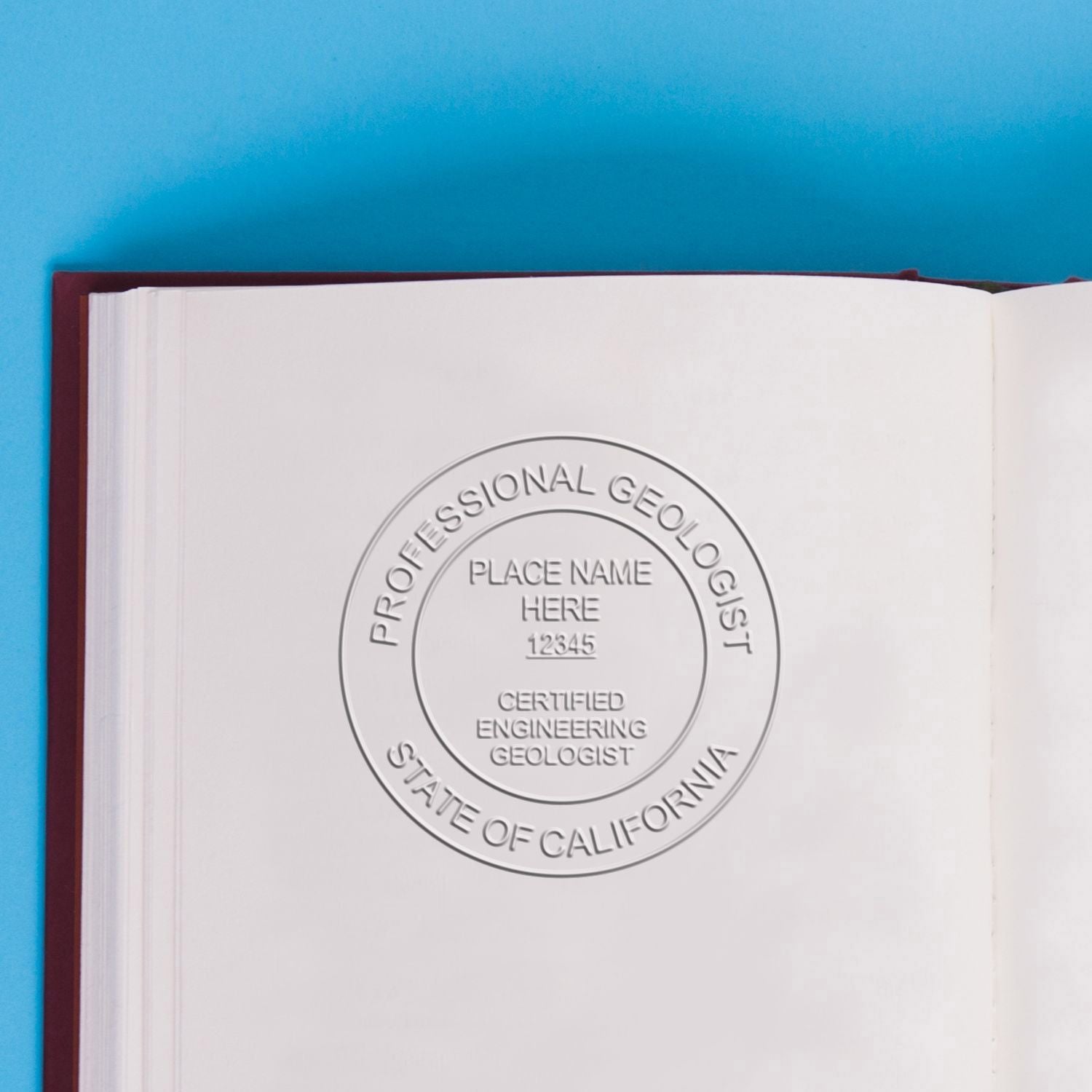
Electronic signatures, and one specification that is not the board’s
The Board states that electronic and digital signatures are permitted if they comply with Board rules. The operative rule is OAR 809-050-0005 (Signature), and we could not read it. That means the questions a digital workflow turns on, whether a third-party certificate is required, whether independent verification is required, whether the signature must invalidate on a change to the document, are unresolved for Oregon on this page. Ask the Board before you commit a firm-wide process to a particular tool.
One nearby document is worth naming, and worth naming carefully. The Oregon Department of Transportation requires that on ODOT documents, digital signatures on registered geologist stamps and certified engineering geologist stamps contain the words “Digitally Signed”, text stating the date and time the signature was applied, and the word “Expires” followed by the registrant’s expiration date. That is an ODOT contract-document specification, not a Board rule, and it binds you only on ODOT work. We mention it because it is the only detailed statement of Oregon digital stamping practice we could read, and because someone will otherwise find it and mistake it for the rule.
Annual renewal, lapse, and a criminal statute
Oregon registration renews every year. ORS 672.585(3): each year a person shall renew a certificate of registration at a time designated by the board. Subsection (4) requires application before the expiration date, payment of the renewal fee, and compliance with continuing education under ORS 672.588. Subsection (5) provides that a certificate that has expired for failure to renew may only be restored after application and payment of the prescribed restoration fee.
Using the stamp on a dead credential is not a paperwork matter here. ORS 672.525(4) provides that no person shall sign, stamp or seal any geologic maps, plans, plats, reports or other geologic documents after the certification of the registrant named on them has expired or has been suspended or revoked, unless the certificate has been renewed or reissued. ORS 672.991 makes a violation of any provision of ORS 672.525 a Class A misdemeanor. The same section reaches two other things worth knowing: stamping with the seal of a registered geologist without being one, and attempting to use the certificate or seal of another registrant.
The annual cycle has one practical consequence for the device. Because you handwrite “Expires” and the date below the stamp every time, the renewal date is something you write rather than something that ages in your desk drawer. Keep the current date in front of you and the die never goes stale.
Ordering an Oregon certified engineering geologist stamp
Send three pieces of text and one answer from the Board. The text is your name as the Board has it, your number, and the designation “Certified Engineering Geologist” in the Board’s own wording. The answer from the Board is which number belongs on a CEG die, the E certificate number, the G registration number or both, and whether OAR 809-050-0000 prescribes a size. Hold the order until you have it. Do not send a date and do not send a signature; both are handwritten in Oregon.
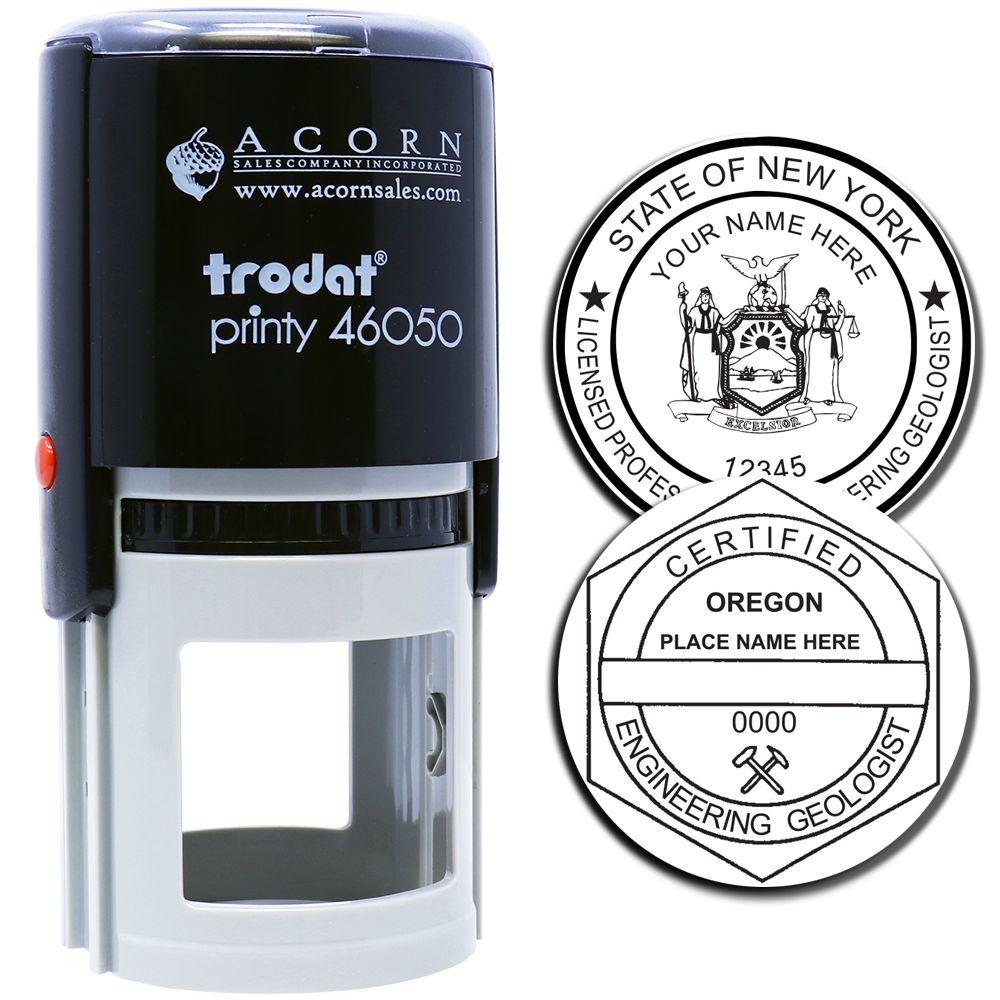
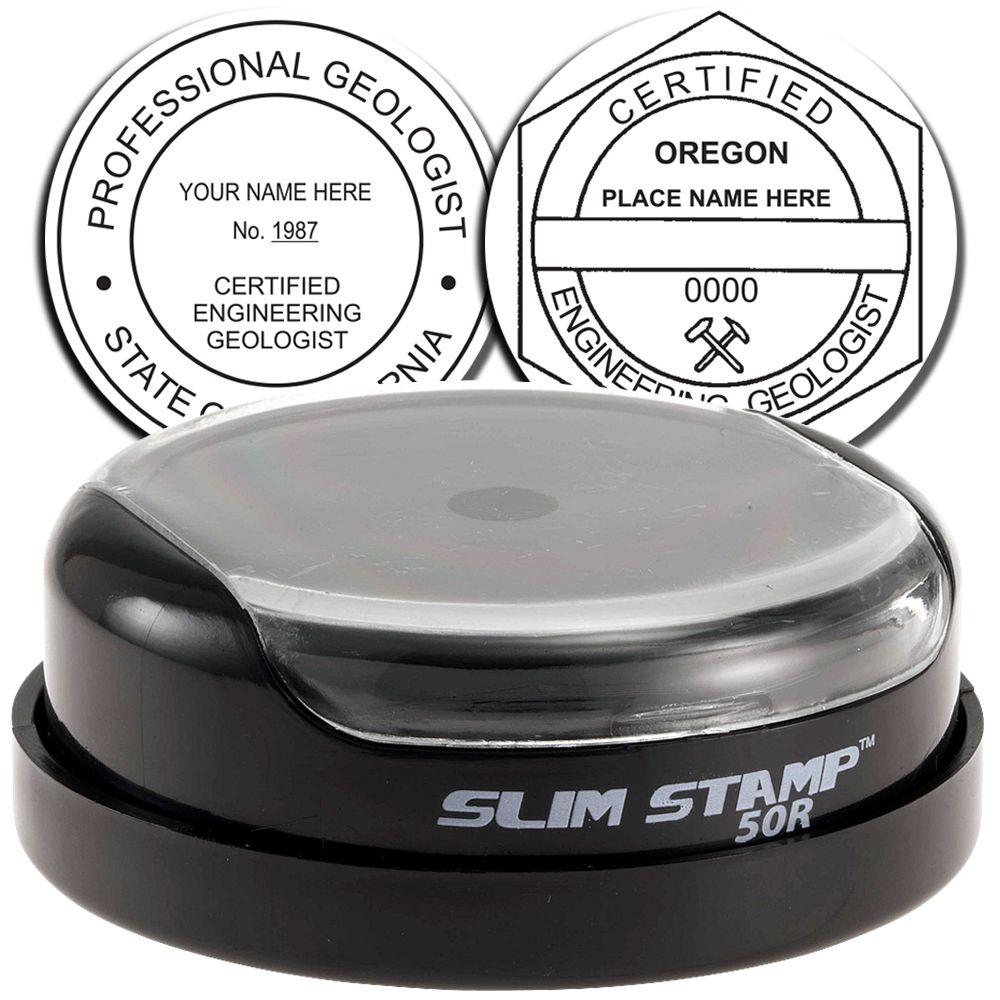
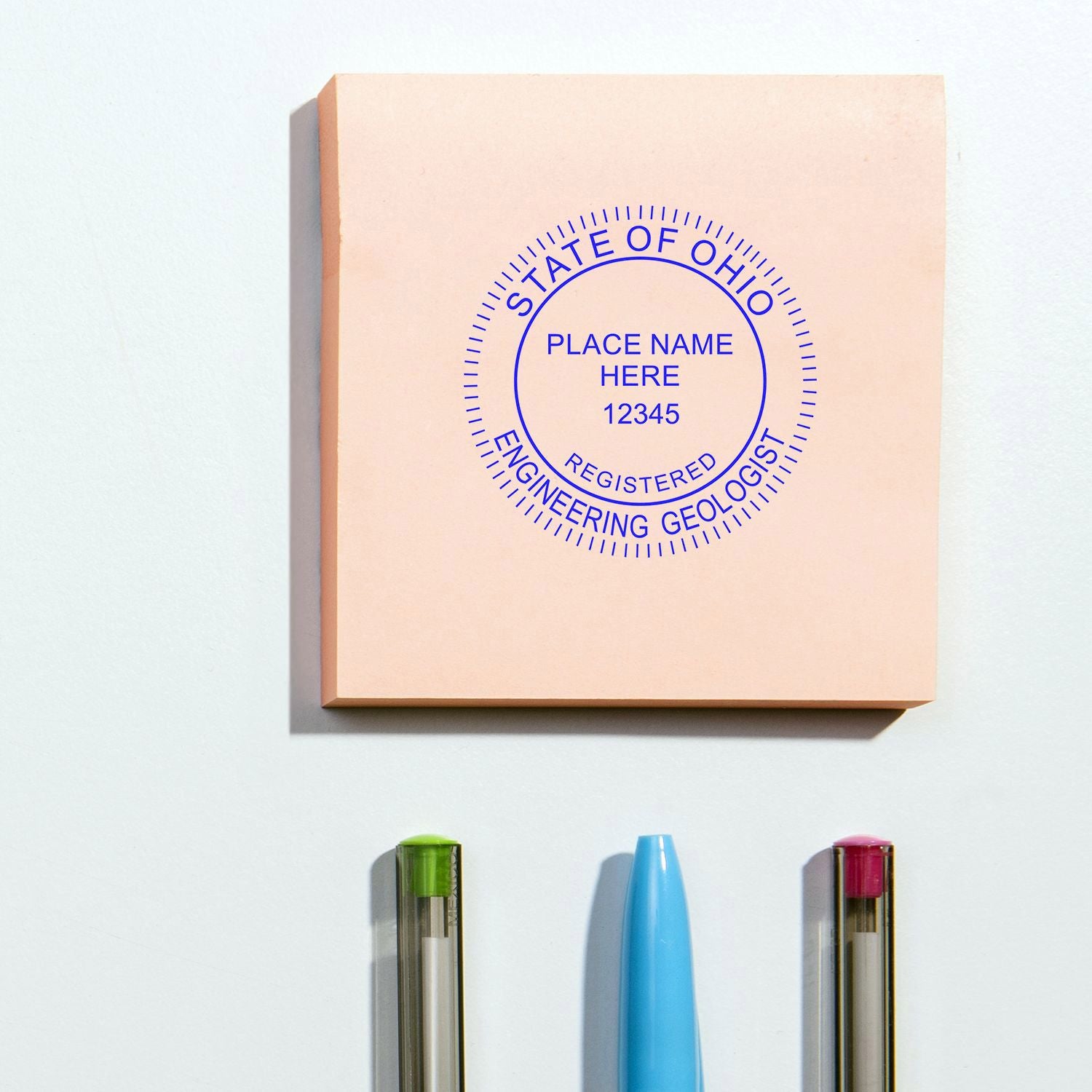
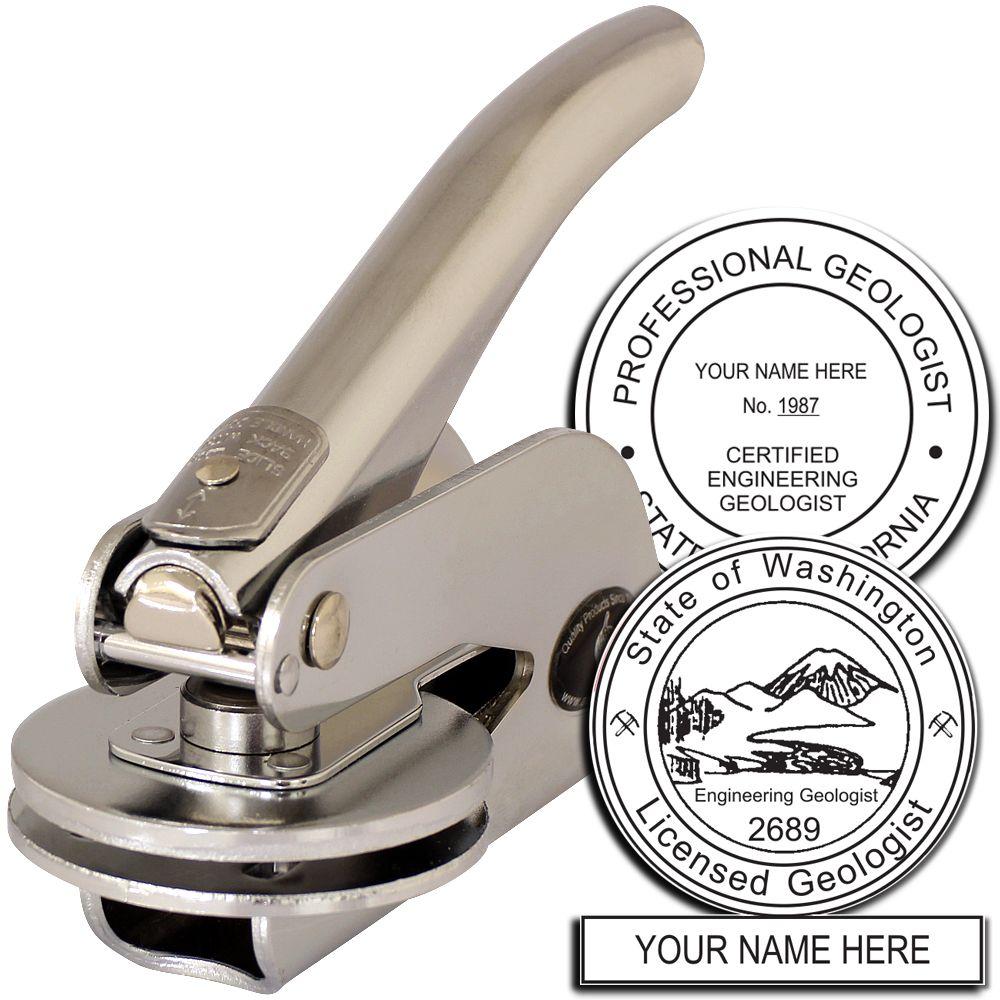
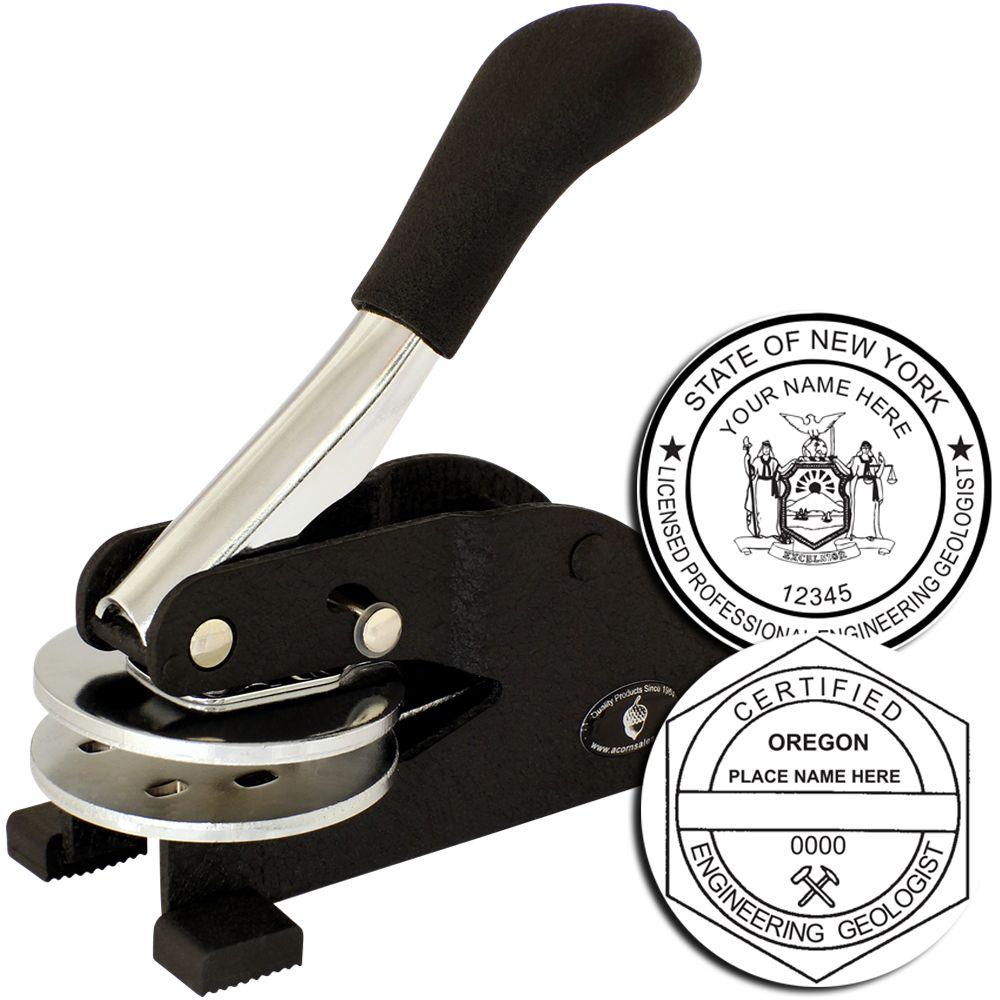
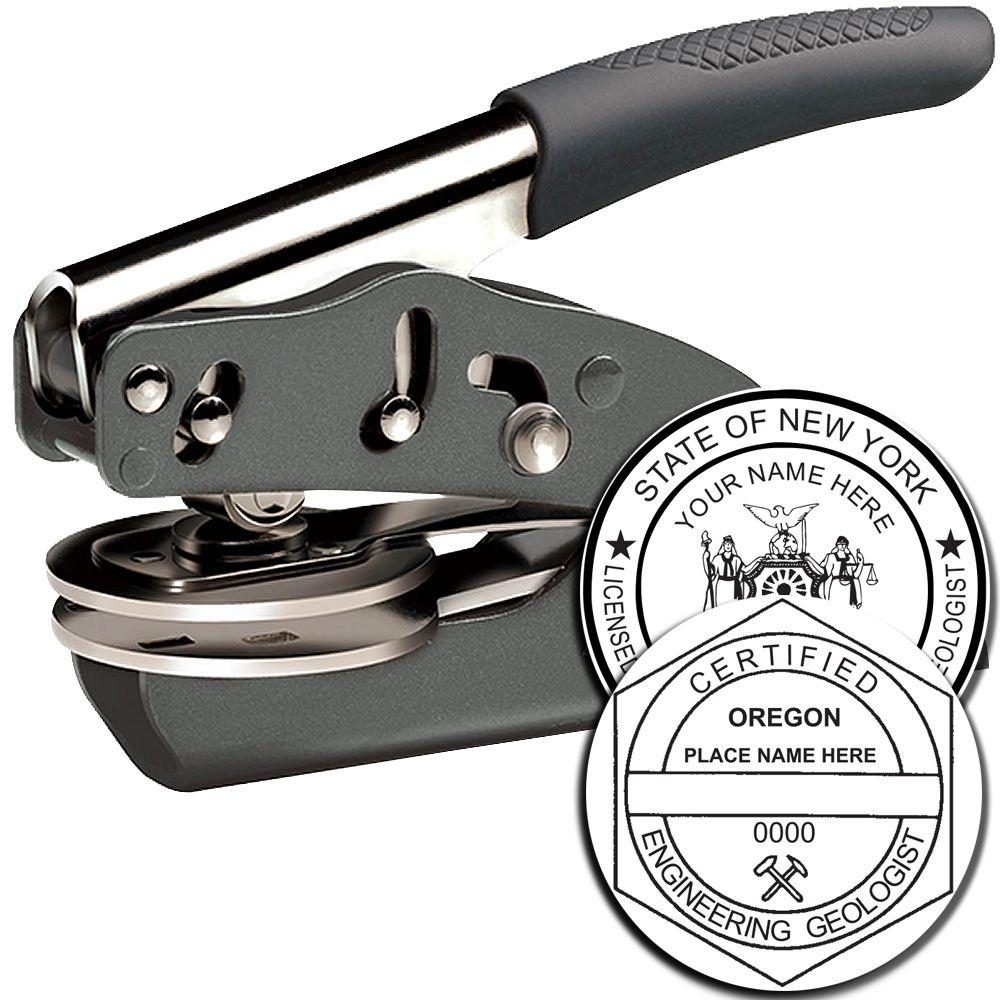
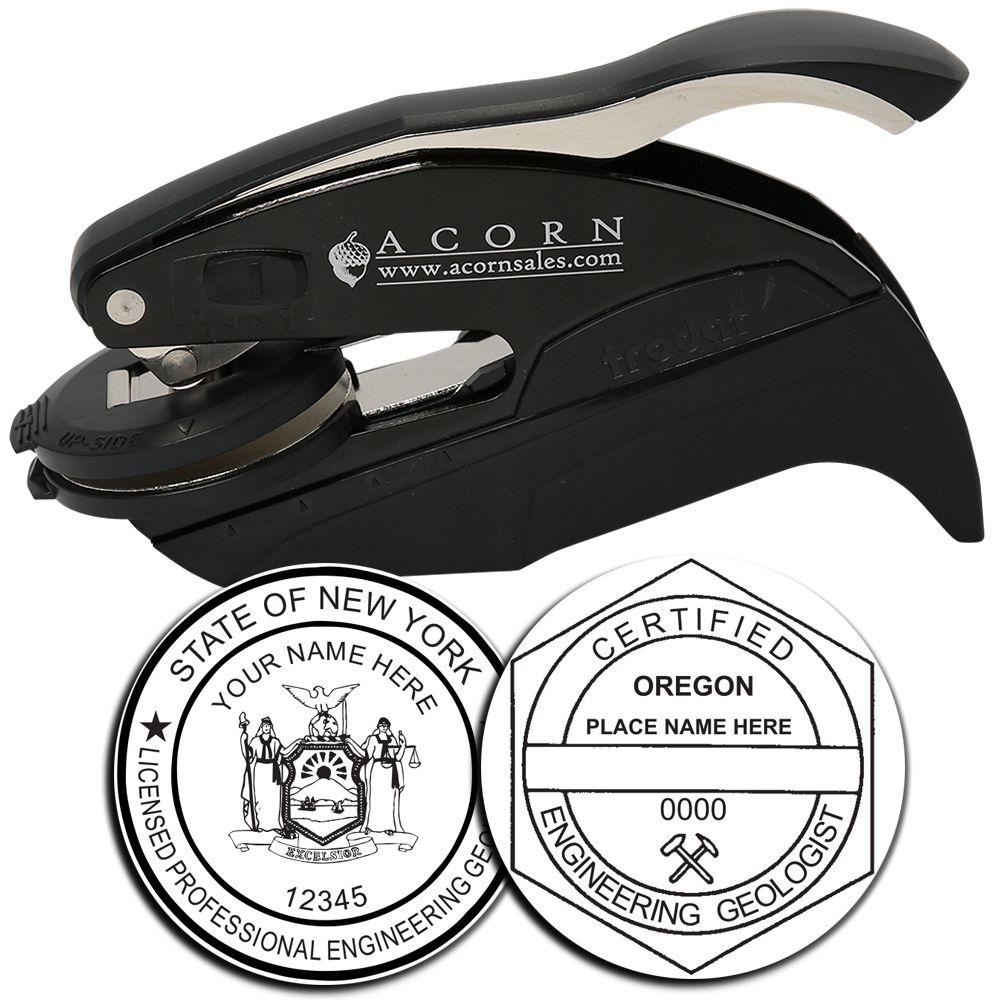
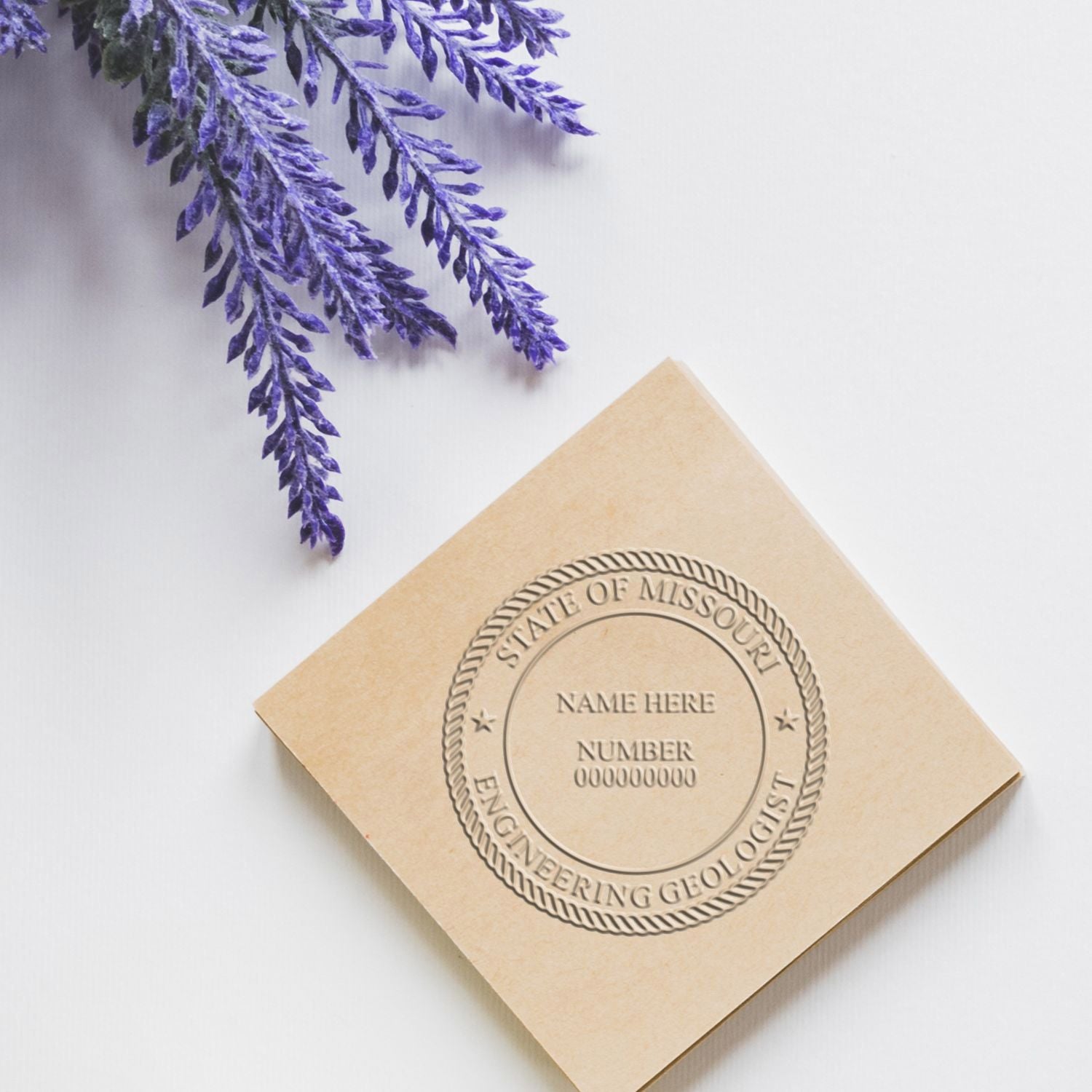
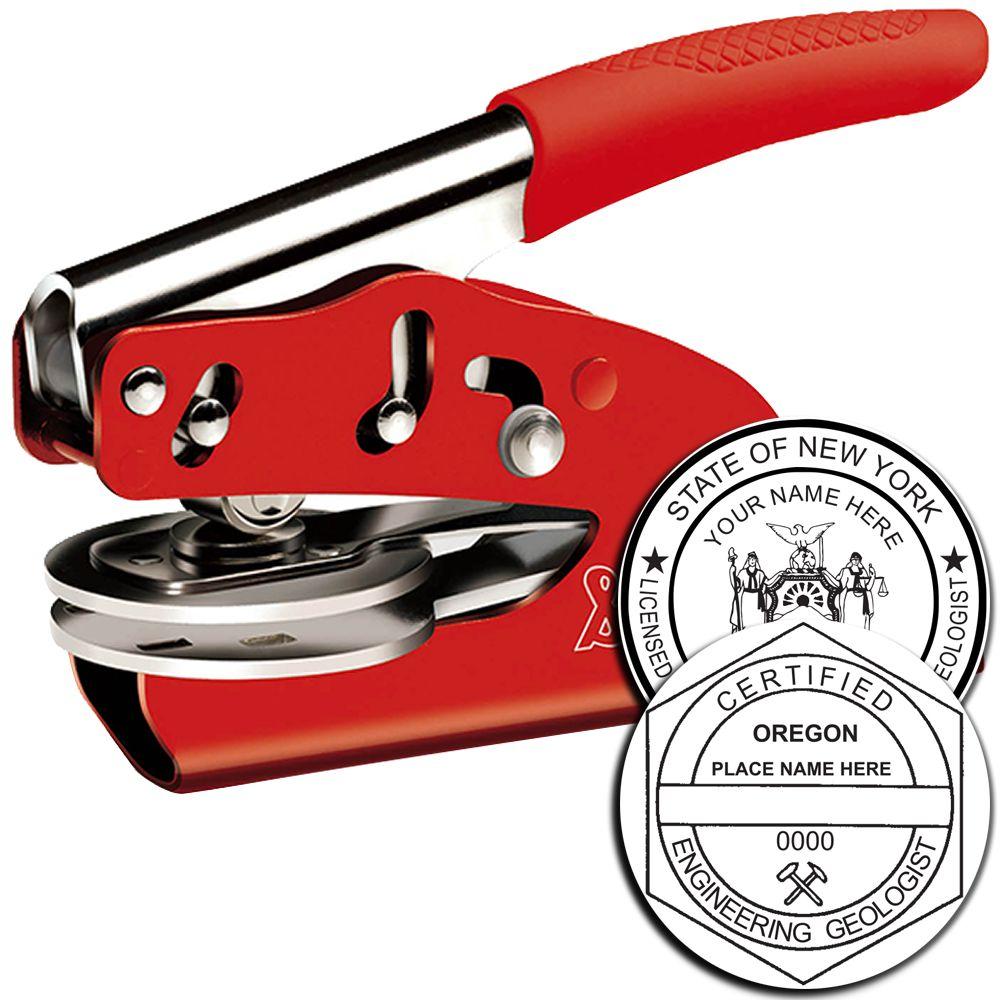
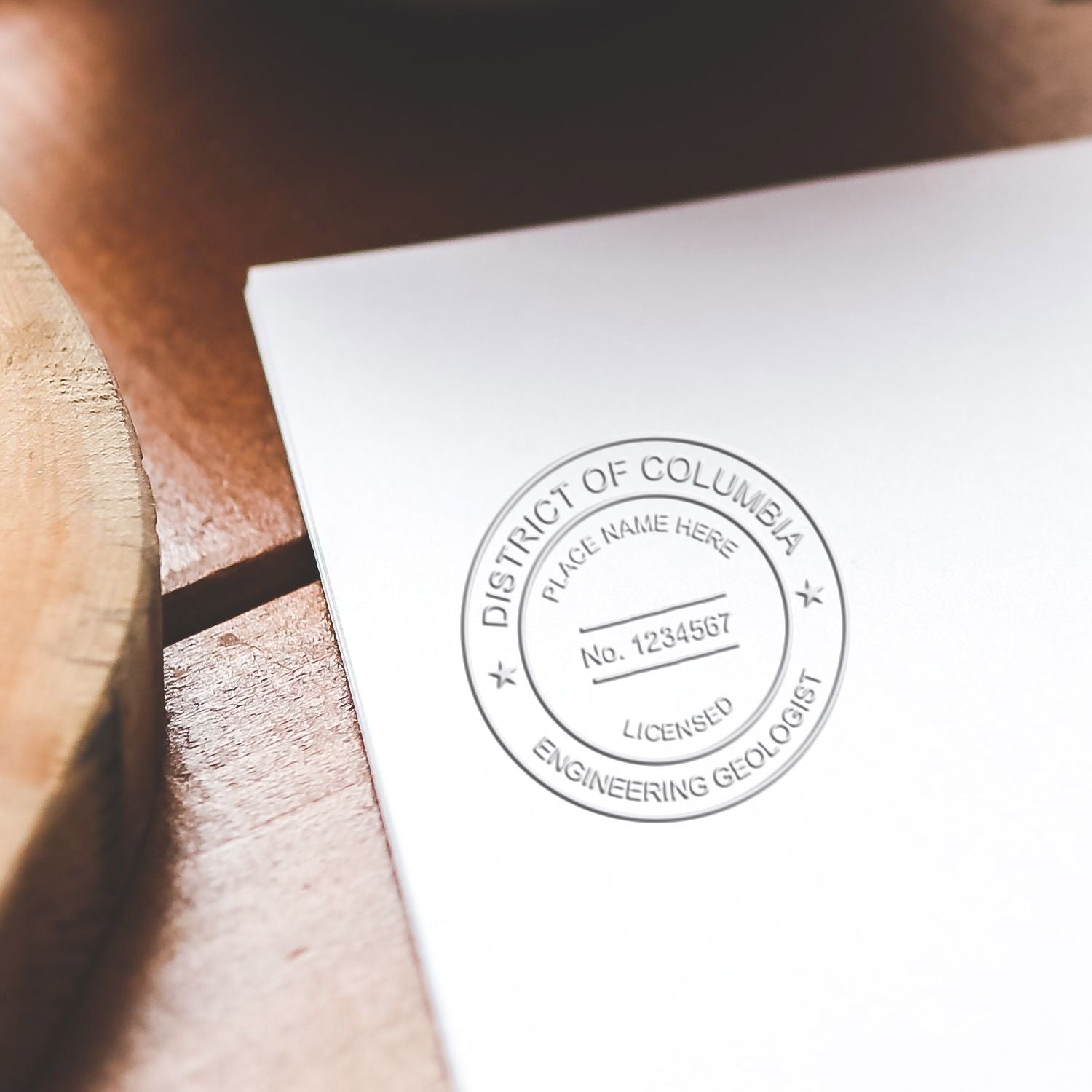
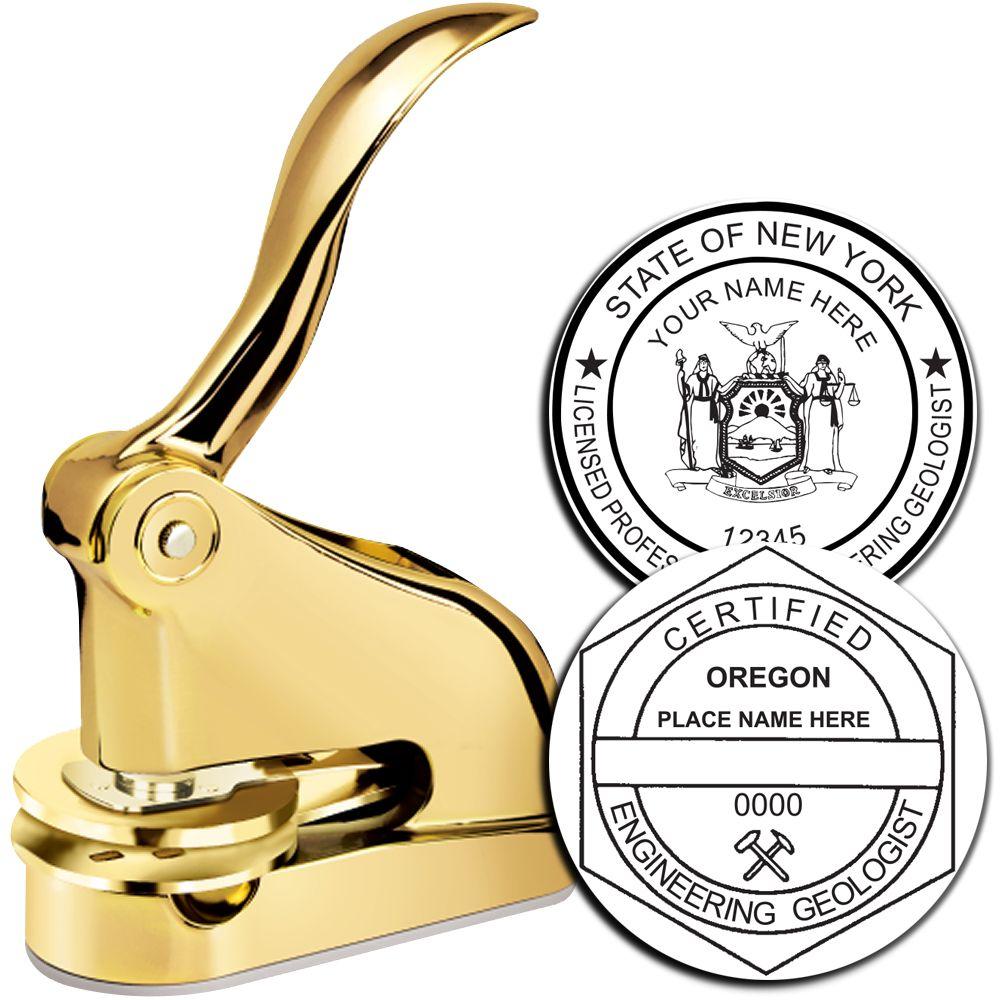
Because the signature is written across the face in permanent ink, an inked die is the working choice. The Engineering Geologist Self Inking Rubber Stamp of Seal at $39.95 carries its own pad and is the everyday device. The Regular Rubber Stamp of Seal at $34.95 is the traditional hand stamp used with a separate pad, and is the one we point at for Mylar. The MaxLight Pre Inked Rubber Stamp of Seal at $46.95 and the Slim Pre-Inked Rubber Stamp of Seal at $46.95 hold the finest lines, which matters when a long designation has to stay readable under a signature.
If you want an impression device as well, the Handheld Seal Embosser is $46.95 and the Desk Seal Embosser is $44.95. For digital documents the eSeal Electronic Image Stamp of Seal is $20.00, subject to the open question above about what OAR 809-050-0005 requires of an electronic signature. The full range sits in the engineering geologist stamps and seals collection. Send your wording through contact us and we will proof the die before cutting it.
As a manufacturing note kept separate from the rule: Acorn cuts every engineering geologist die round, with an impression area of 1-5/8 inches to 2 inches in diameter depending on the state specification. That is our own production range and not an Oregon requirement, since Oregon publishes none. If the Board gives you a dimension, we cut to it instead.
- Engineering Geologist Stamps and Seals
- Engineering geologist stamps and seals
- California CEG Seal: Two Devices, 1-1/2 Inch Floor
- Washington CEG Stamp: Its Own Authorized Design
Frequently asked questions
Does Oregon require a certified engineering geologist to have a stamp?
Yes. ORS 672.605 requires each registrant, upon issuance of a certificate, to obtain a seal of the design authorized by the State Board of Geologist Examiners, and requires geologic documents to be signed by the registered geologist and impressed with the seal. The Board’s guidance says all registered geologists and certified engineering geologists must use a stamp.
What has to appear on an Oregon CEG stamp?
Three things, per the Board: your name, your registration number, and your professional designation. The Board gives the designations as “Registered Geologist” and “Certified Engineering Geologist”. ORS 672.605 itself names only the name and the legend.
Should the stamp say “certified specialty geologist”?
No. That is the statute’s generic category. The Board’s published designation for the credential is “Certified Engineering Geologist”, and that is the wording to engrave.
Does the stamp carry the E number or the G number?
We could not establish it. Oregon lists registered geologists with a G number, geologists-in-training with a T number and certified engineering geologists with an E number, but no source we could read says which one belongs on a CEG stamp, or whether a holder of both credentials needs one stamp or two. Ask the Board before ordering.
How big does an Oregon geologist stamp have to be?
No size is published in anything we could read. ORS 672.605 prescribes none, and the Board’s stamp page publishes no image, dimension or shape. OAR 809-050-0000 might contain one, but the Secretary of State’s rules database would not serve the text to us. Do not infer a size from another state.
Does the expiration date go on the die?
No. The Board requires you to write the word “Expires” followed by your registration expiration date directly below the stamp after you apply it. It is handwritten, not engraved, and the same goes for your signature, which is written in permanent ink across the stamp.
Can I use an embosser in Oregon?
Nothing we could read excludes one, but Board practice points to an inked stamp. The Board describes a handwritten signature in permanent ink across the stamp, which a blind embossed impression does not support well. Buy the ink device first and treat an embosser as an extra.
Where do I buy an Oregon CEG stamp?
From any stamp maker. ORS 672.605 puts the duty on the registrant to obtain the seal, the Board authorizes only the design, and the Board’s stamp page names no vendor and sets no source restriction. Oregon publishes no express “any convenient source” sentence, and OAR 809-050-0000 was unreadable to us, so we state that as a strong reading rather than a quoted permission.








