
Written by Acorn Sales Company · Product facts: the 23 published Engineering Geologist listings on acornsales.com · Licensing facts, each page read 22 September 2026: California Board for Professional Engineers, Land Surveyors, and Geologists, Geologist and Geophysicist Regulations, Title 16 CCR, CEG Examination Test Plan, January 2025, CEG and CHG Application and Geologist and Geophysicist FAQs; Oregon State Board of Geologist Examiners, Apply for Registration, Qualify for Exams and Professional Stamp and Code of Conduct; Washington State Department of Licensing, Engineering geologists or hydrogeologists and Stamp requirements; Washington State Legislature, Chapter 18.220 RCW; National Association of State Boards of Geology, State Licensure, Geology Examinations and Engineering Geology Domain G · General information, not legal advice. Requirements vary by state and are set by your state board. · Updated 22 September 2026
Acorn publishes 23 engineering geologist products, from $20.00 for the electronic seal image to $2,095.00 for the Heavy Duty Long Reach Embosser, with a median of $46.95. Every die is cut round, 1-5/8″ to 2″ in diameter, to the specification your state board publishes. The credential that die carries is narrower than a geology license. Certified Engineering Geologist is a specialty laid on top of an existing geologist license, and reading the boards' own pages we confirmed it in three states: California, Oregon and Washington. All three require the geology license first, then test the specialty separately. If you want ink rather than a raised impression, the Regular Rubber Stamp of Seal is $34.95 and the Self Inking Rubber Stamp of Seal is $39.95. This page describes what boards publish and what Acorn makes. It is not legal advice, and nothing replaces your own board's rule.What these are for
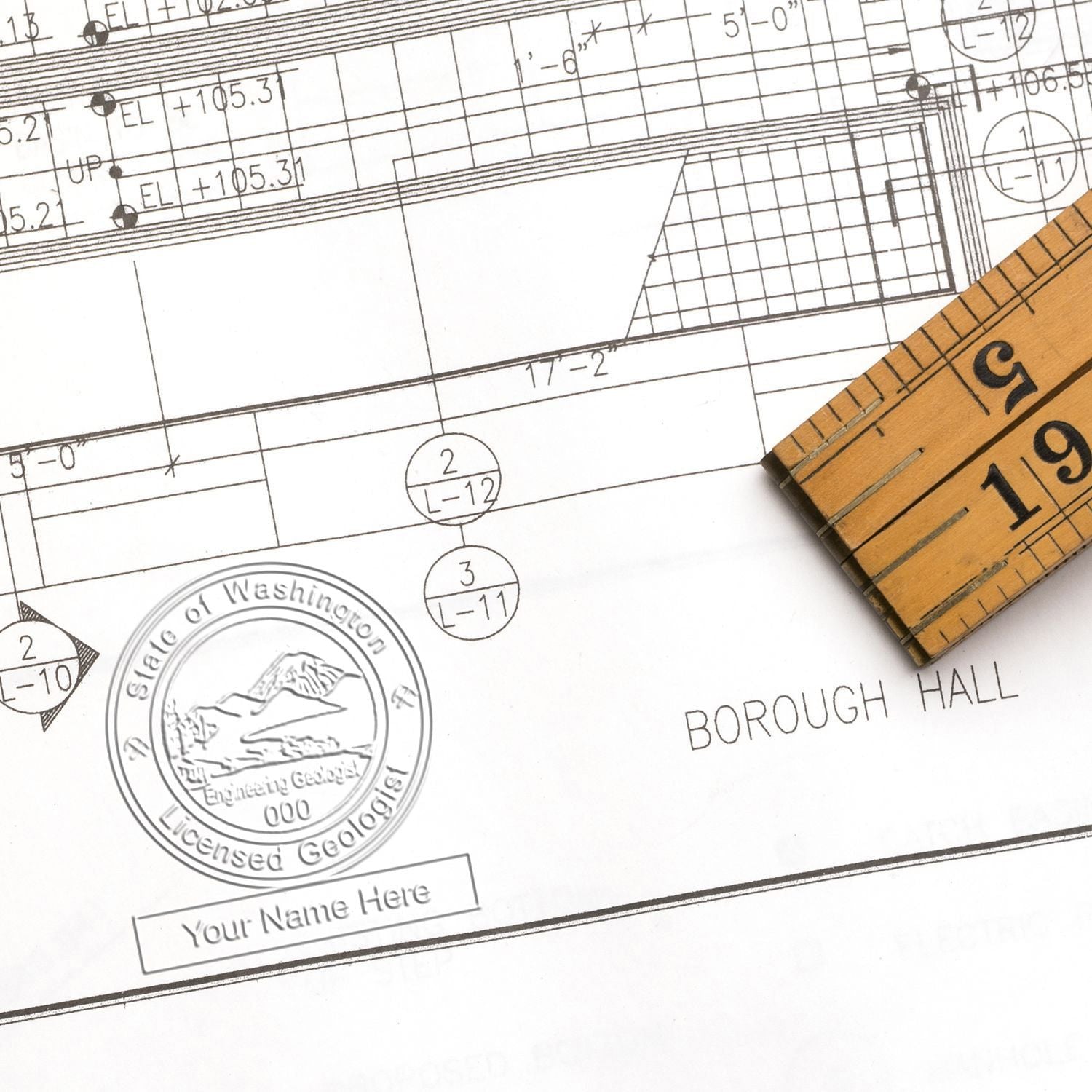
An engineering geologist's seal goes on the record of a geologic judgment somebody is about to build on. The Washington State Department of Licensing tells its licensees to stamp, sign and date every final geology or specialty geology report, letter report or document they prepare or that is prepared under their supervision and submitted to other parties, exempting figures, maps and plates bound inside a final report but not unbound ones. Oregon's State Board of Geologist Examiners requires the stamp on every final geology product created as part of public practice, with drafts exempt if clearly labeled. In practice that means slope stability evaluations, fault and seismic hazard studies, landslide investigations, grading plan reviews, geologic hazard reports for permitting, and the geologic sections of geotechnical reports. The buyer is usually one person rather than a firm, because the seal carries an individual's name and number.



The ranges we stock
Certified Engineering Geologist is a specialty, not a second license
The credential sits on top of a geologist license rather than beside it. Oregon's State Board of Geologist Examiners defines a CEG as an individual who already holds an RG registration and has received a special certification from the Board to practice engineering geology, and states the consequence directly: an RG cannot provide engineering geology services unless they also have a CEG certification or work under the supervision of a CEG.
California builds it the same way. The Board for Professional Engineers, Land Surveyors, and Geologists states in its regulations, at Title 16 section 3041, that an applicant for the engineering geology certification must be registered as a geologist in the State of California, and lists further knowledge required, including California geology, civil engineering factors, soil and rock mechanics, and grading codes. Its FAQ page puts it in a line: a licensed California Professional Geologist can apply for a specialty certification.
Washington uses the word specialty in statute. Chapter 18.220 RCW defines a specialty as a branch of geology recognized under the chapter for the purposes of licensure, and says engineering geology is considered to be a specialty of geology. The Department of Licensing repeats it: you must be a licensed geologist in Washington to apply for a specialty license.
Which states we confirmed, and exactly how we counted
We counted three. ASBOG, the National Association of State Boards of Geology, publishes a licensure page stating that thirty states and one US territory, Puerto Rico, now have registration, licensure, or certification laws for geologists. That is the pool, and also the limit of what ASBOG claims: the same page says ASBOG does not license or register geologists and provides the examination materials required by its member states. It names no engineering geology specialty at all.
From that pool we opened board sites and confirmed a distinct engineering geology credential in three jurisdictions: California, where the Board for Professional Engineers, Land Surveyors, and Geologists certifies Certified Engineering Geologists; Oregon, where the State Board of Geologist Examiners does the same; and Washington, where the Department of Licensing issues an engineering geologist specialty license under chapter 18.220 RCW.
Treat three as a confirmed floor, not a proven ceiling. We did not open all thirty-one jurisdictions, so we cannot tell you no other state has a comparable designation, and we will not guess. Some states regulate this work through a professional engineer license instead of a geology specialty, which would not show up as a credential name. Check your own state with your own board.
The ASBOG examinations and what a state specialty exam adds
ASBOG runs two examinations and states their shape on its examinations page: the Fundamentals of Geology, 140 multiple choice questions with a four hour limit across eight content domains, and the Practice of Geology, 110 multiple choice questions with a four hour limit across eight domains, both delivered spring and fall through Prometric test centers. Fundamentals targets academic knowledge, Practice applied experience.
Engineering geology is inside those examinations, but as one domain among eight. ASBOG publishes a knowledge base for Domain G, Engineering Geology, listing soil mechanics including slope stability, rock mechanics including strength criteria and failure modes, geologic hazards including floods, landslides, earthquakes and subsidence, methods of investigation including drilling and geophysical techniques, in situ and laboratory testing, and project planning marked Practice of Geology level only.
A state specialty exam is the whole paper rather than one eighth of one. California's Certified Engineering Geologist test plan, effective January 2025, weights four domains: Project Planning 18 percent, Data Collection 28 percent, Interpretation and Reporting 40 percent, Construction 14 percent. Its content includes static and dynamic slope stability, surface fault rupture hazards, deterministic and probabilistic seismic hazard analyses, geomorphic and field evidence of fault rupture, landslide types, and seismically induced landslide displacement. That plan does not state how many questions the paper holds, so we do not either.
What the boards say goes on the die
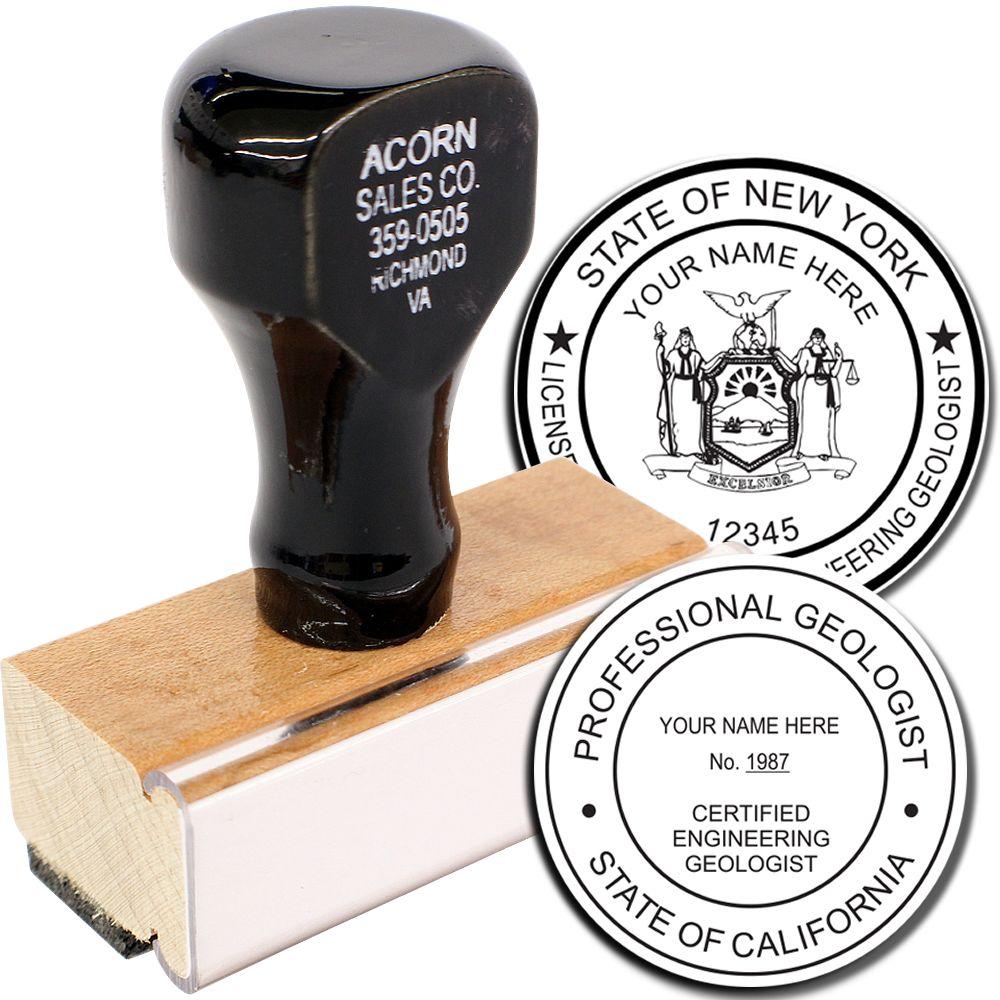
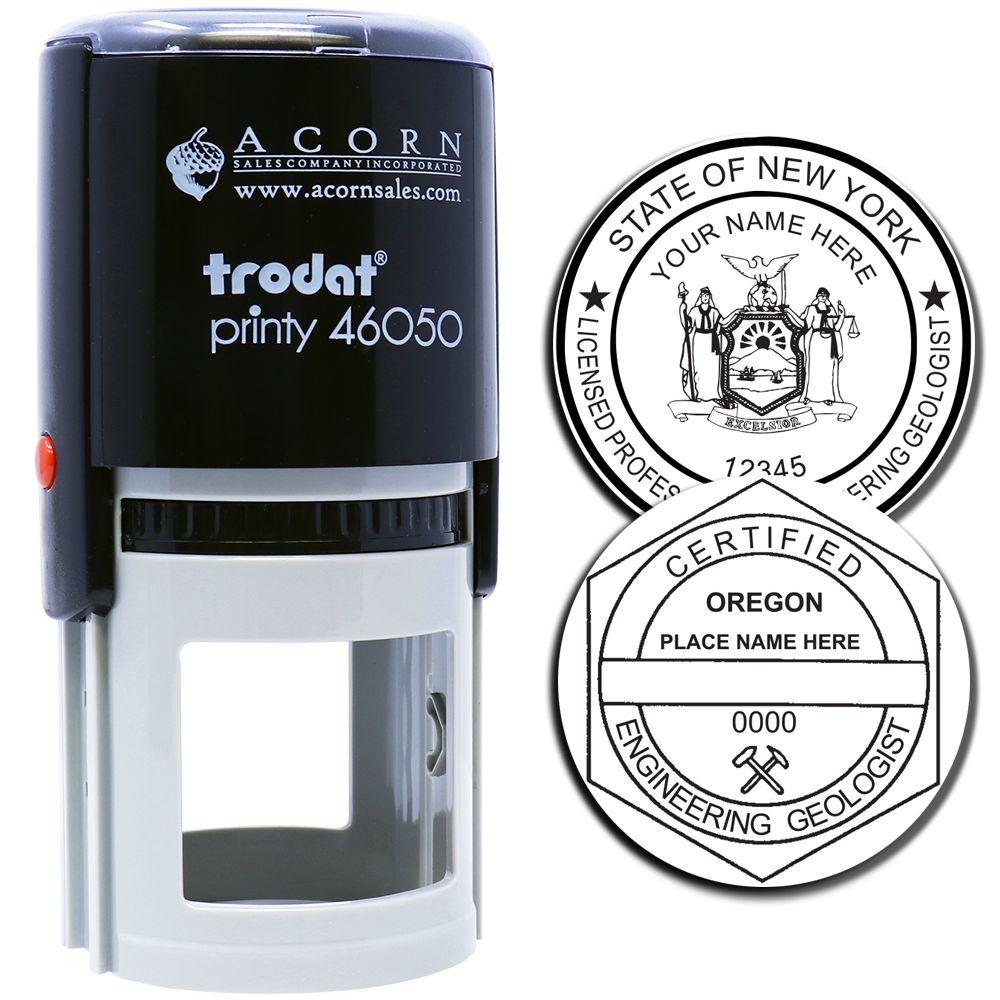
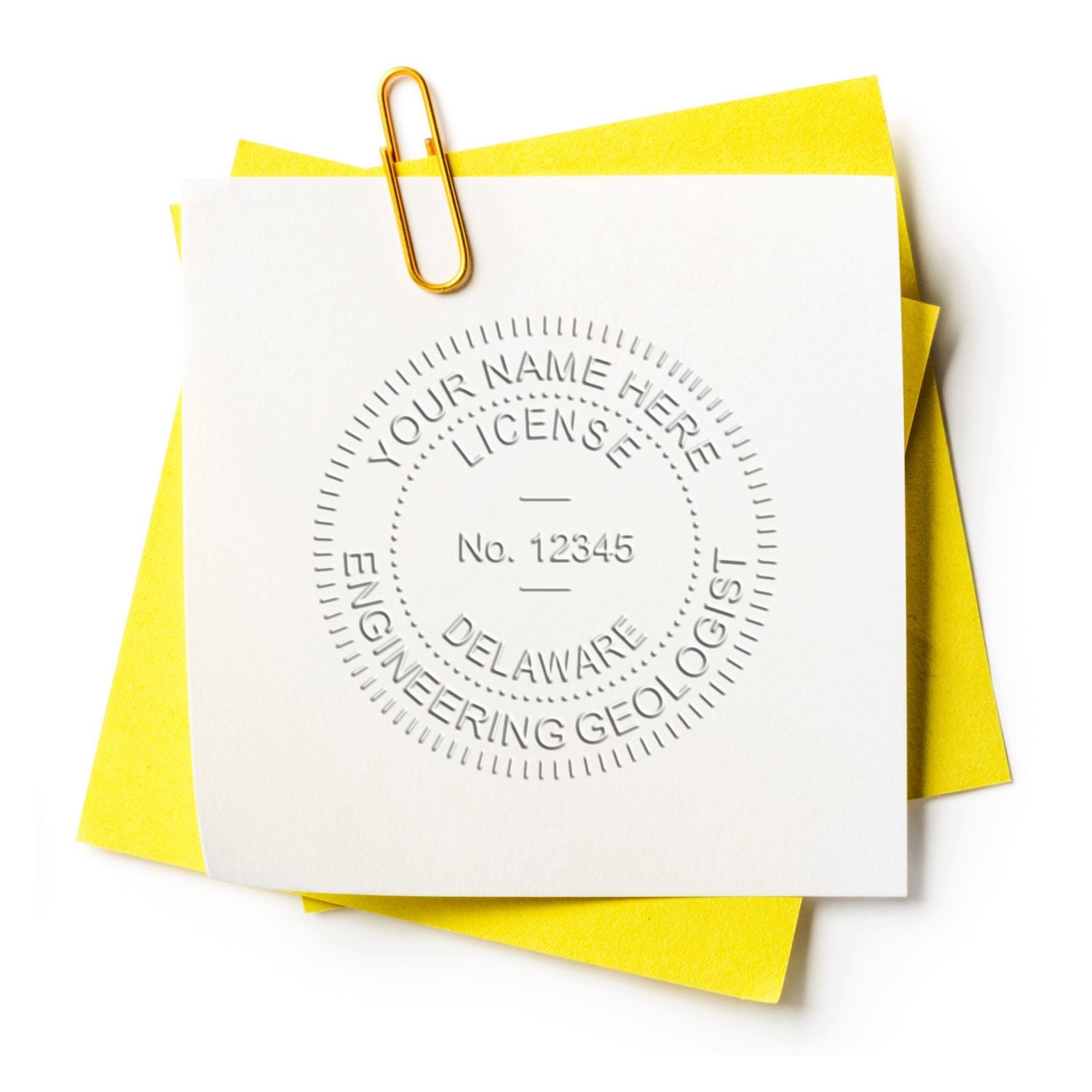
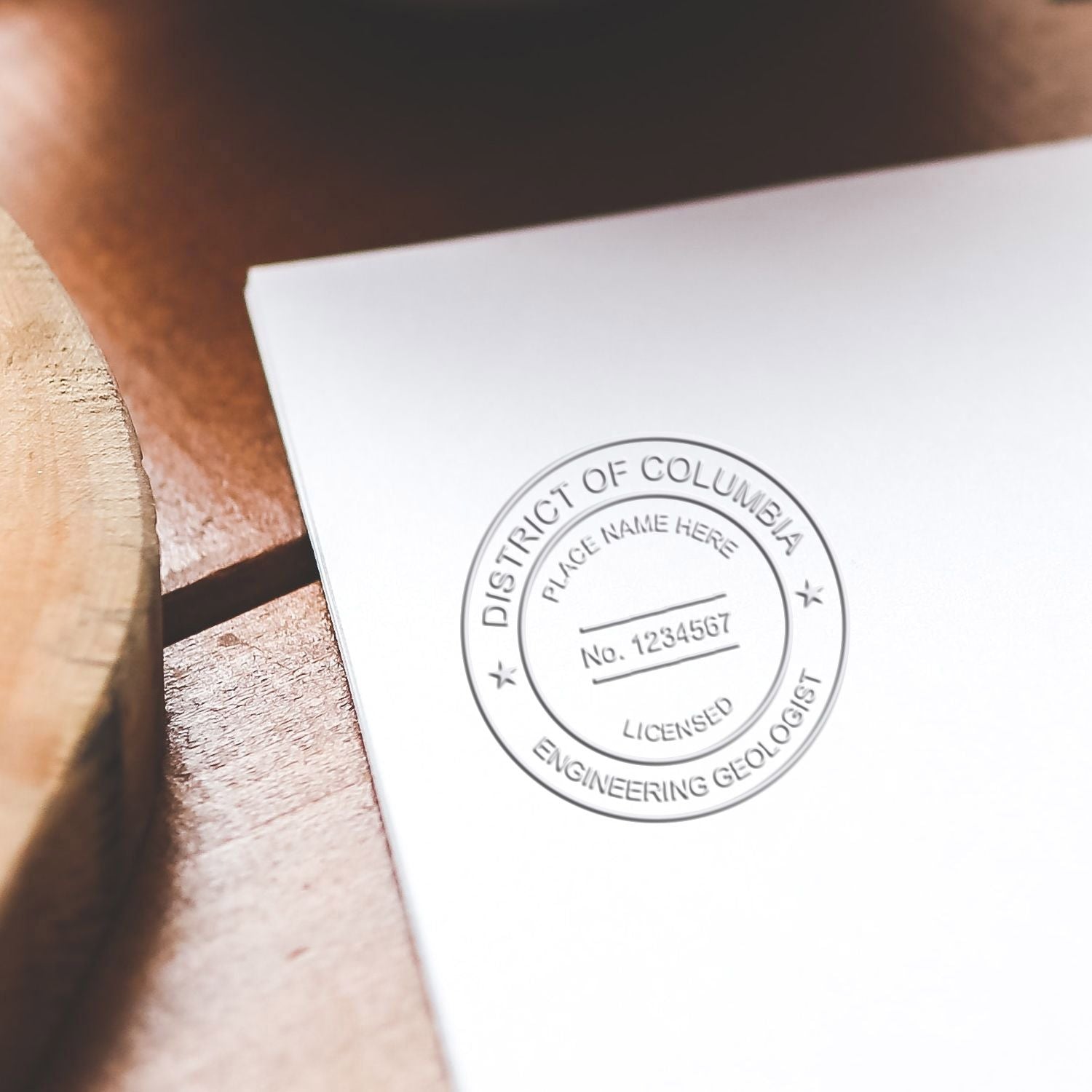
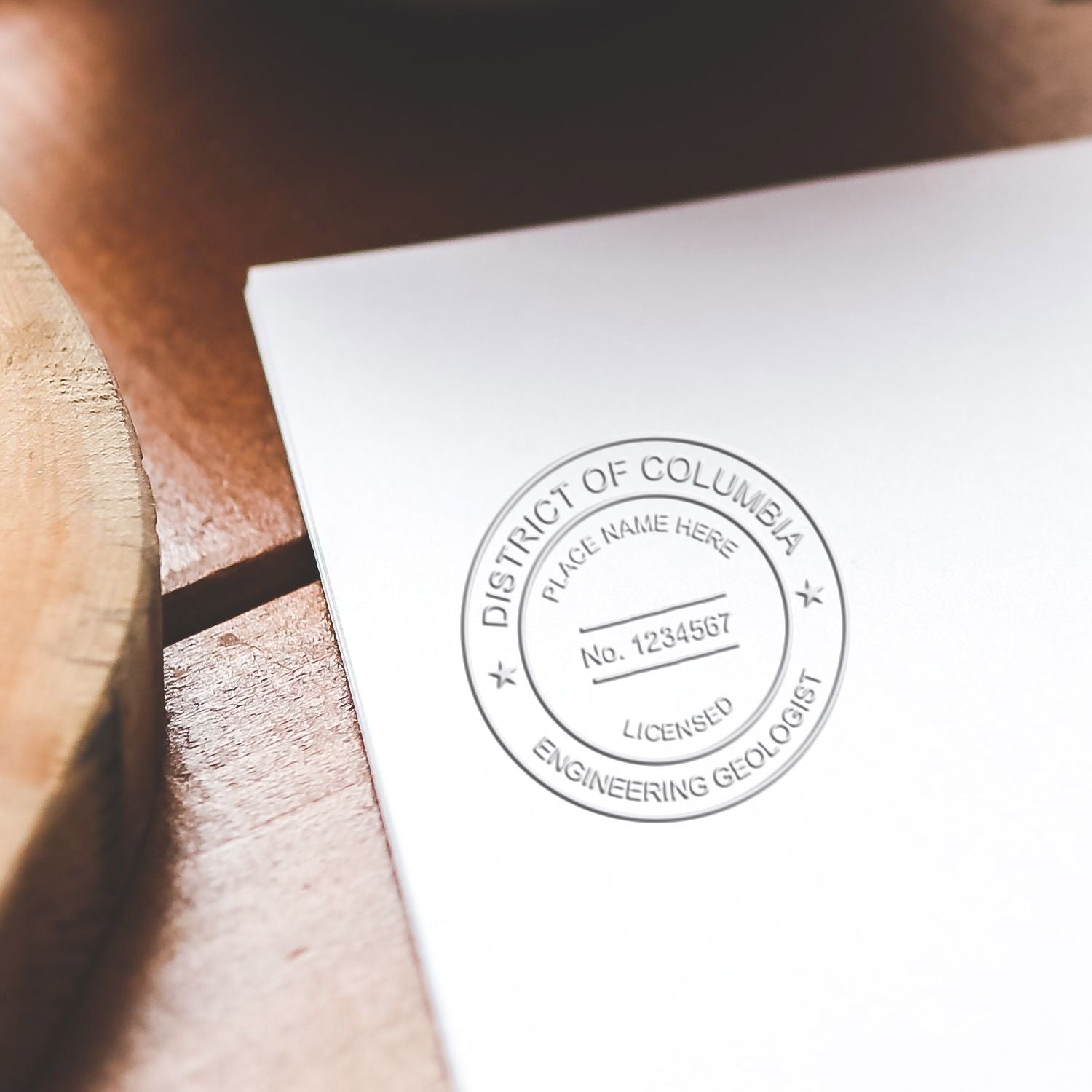
Only the board that issues your credential can say what its seal must carry, and the three we confirmed do not word it identically. California is the most prescriptive. Its regulations at Title 16 section 3008 set out separate seals for a Professional Geologist and for a certified specialty geologist. The specialty seal carries either Certified Engineering Geologist or Certified Hydrogeologist depending on the certification, State of California in the bottom border, and the holder's name and certification number, and must be not less than one and one half inches in diameter. The same section requires the seal to be capable of leaving a permanent ink representation, a permanent impression, or an electronically generated representation, putting an embosser, a stamp and an image file on the same footing there.
Washington is close but not identical. Chapter 18.220 RCW requires a seal bearing the licensee's name, certificate number and the legend licensed geologist, together with any specialty in which the individual may be authorized. The Department of Licensing adds that a specialty licensee need not hold both a geologist stamp and a specialty stamp, but may if they plan to practice outside the specialty.
Oregon states the elements without setting a size, requiring all Registered Geologists and Certified Engineering Geologists to use a stamp showing their name, registration number and professional designation, then to sign across the stamp and write the registration expiration date.
Pocket and handheld embossers
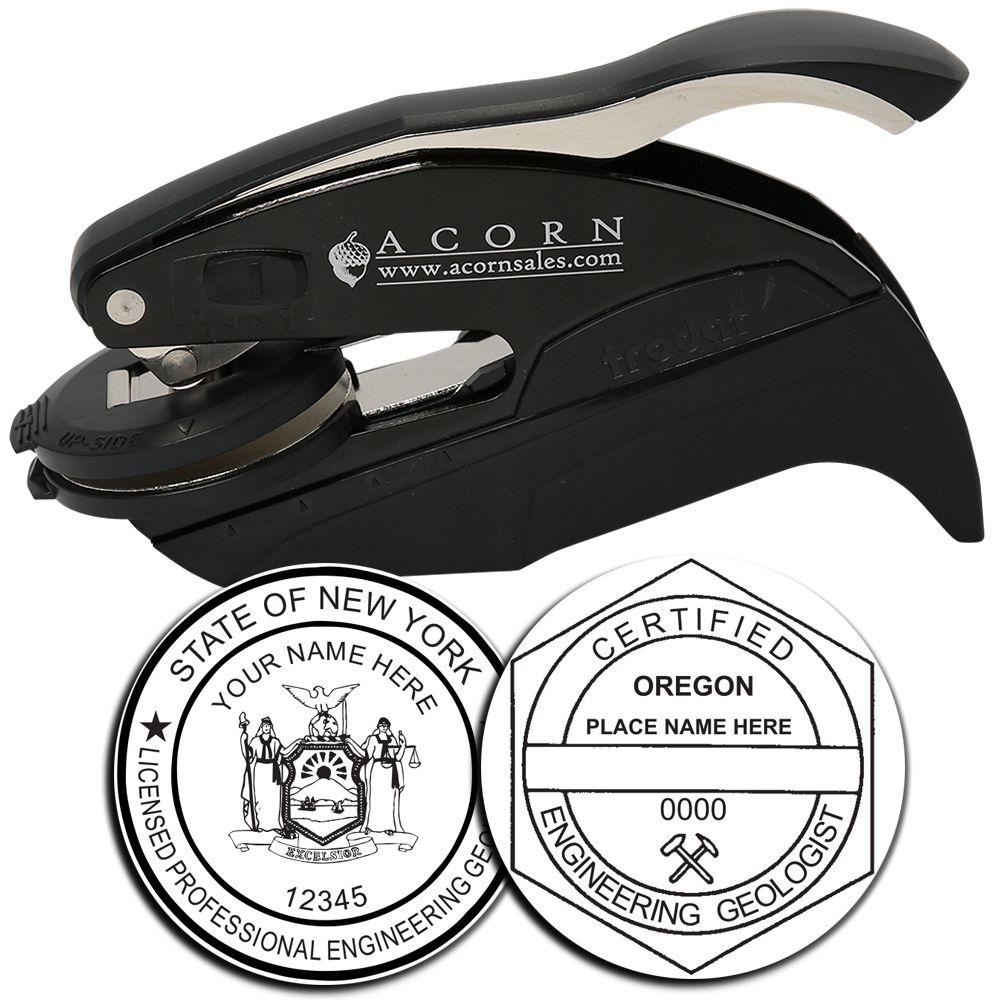
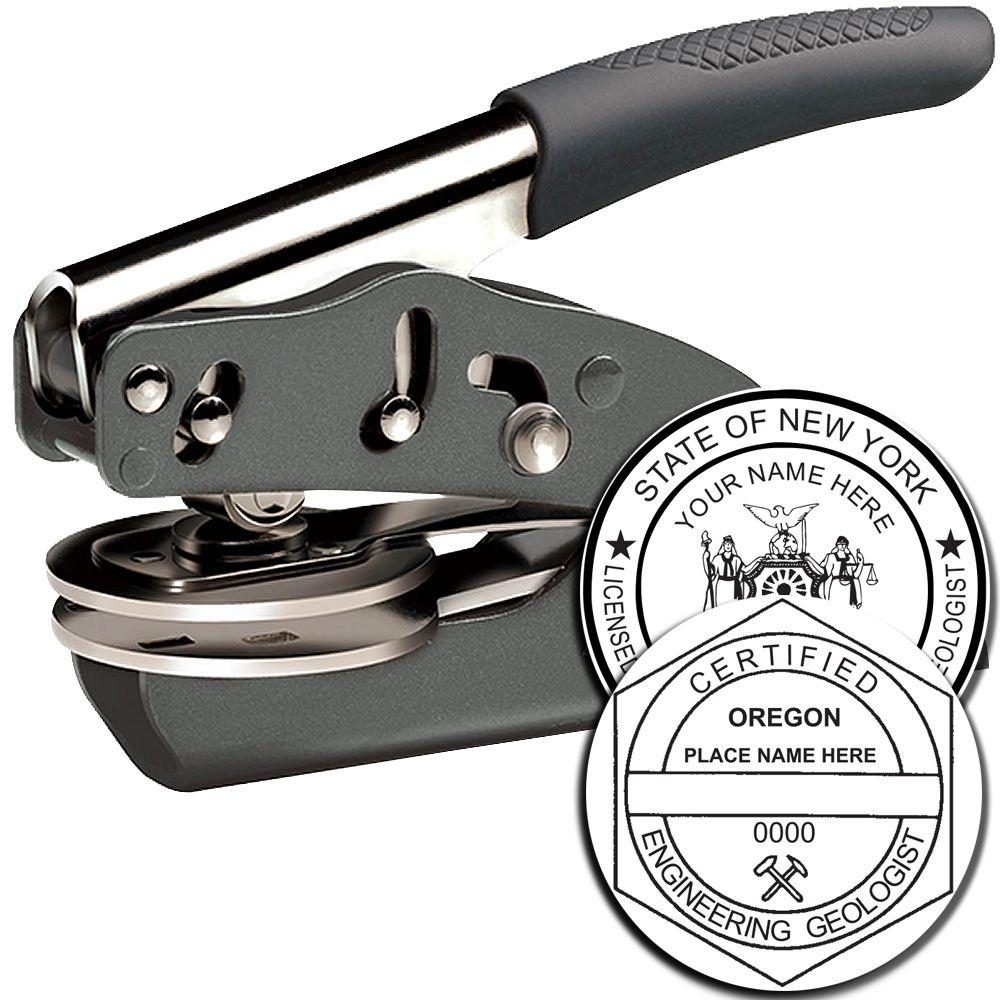
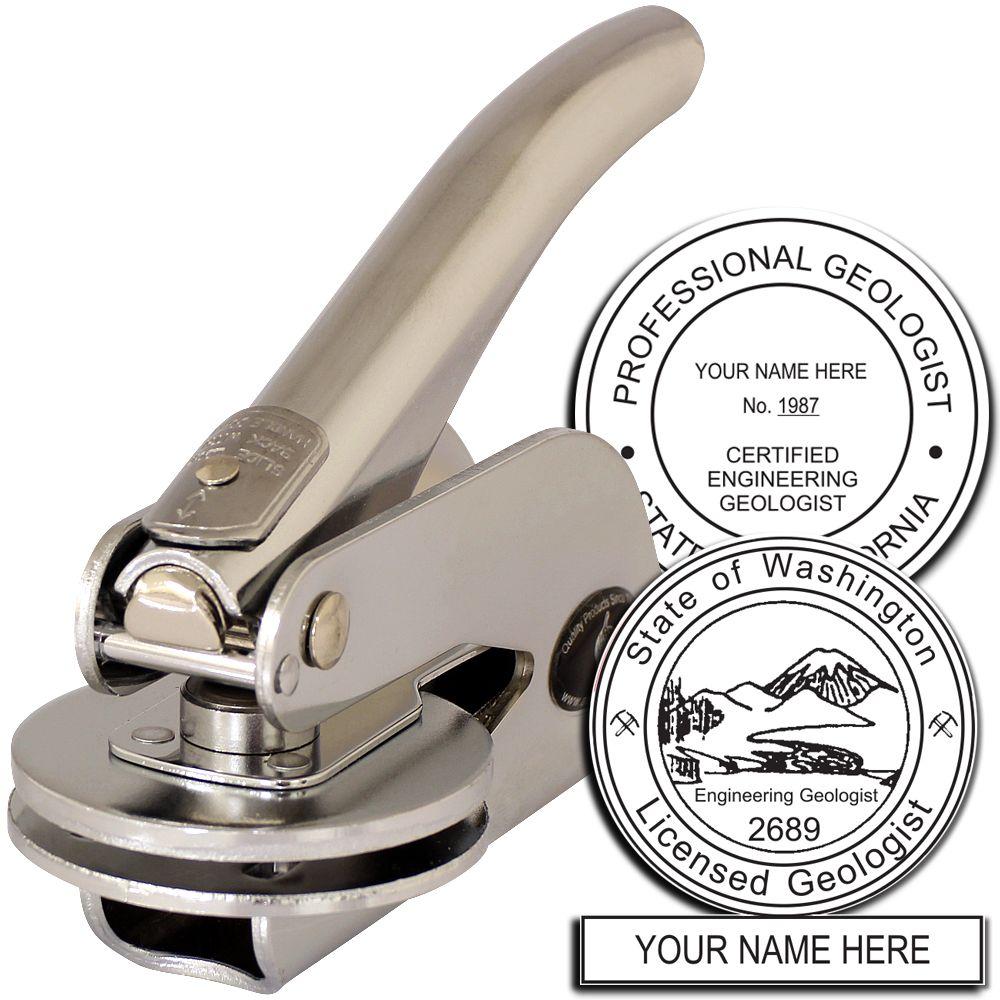
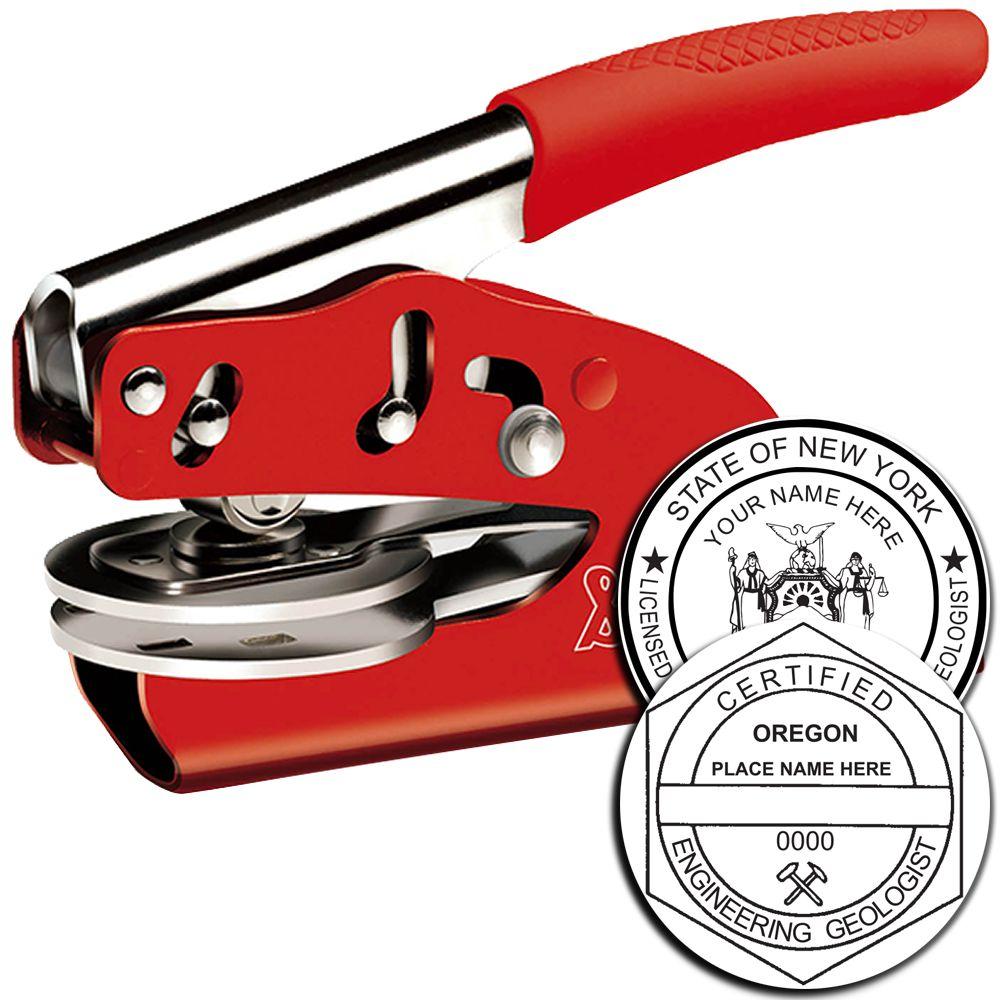
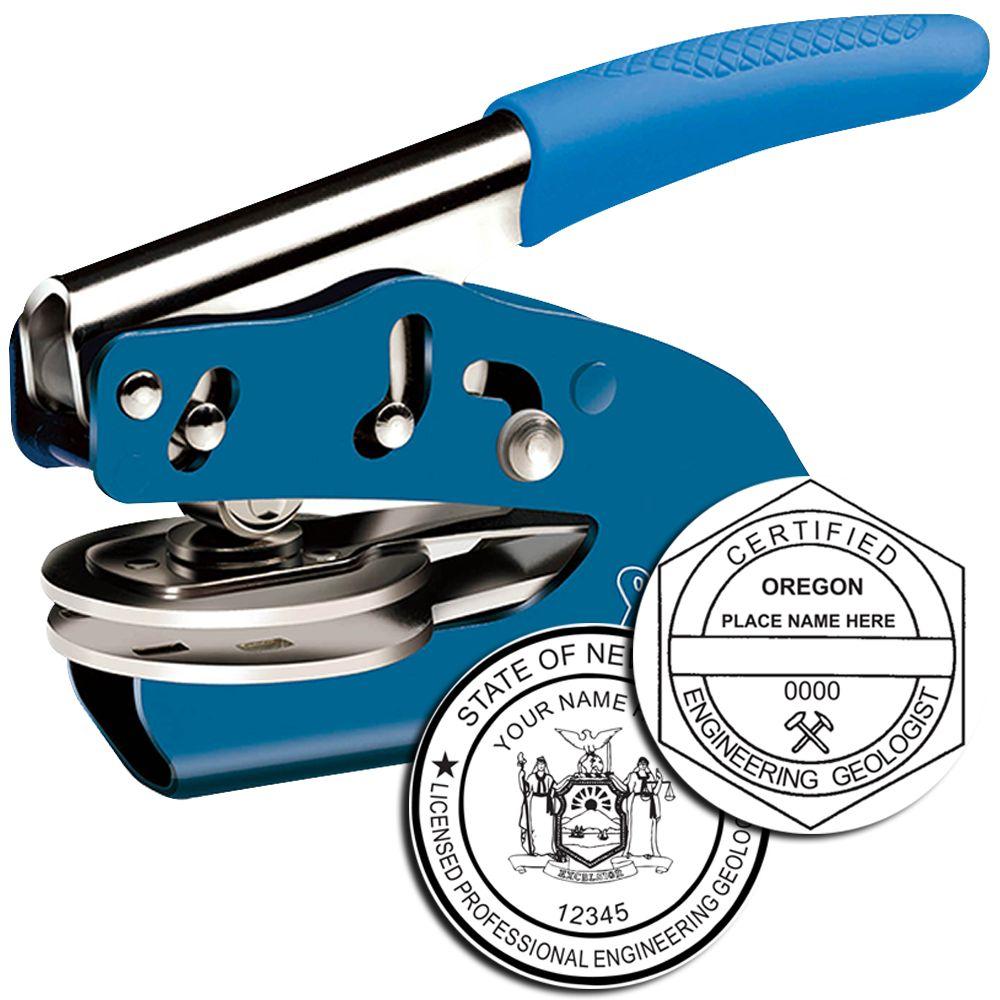
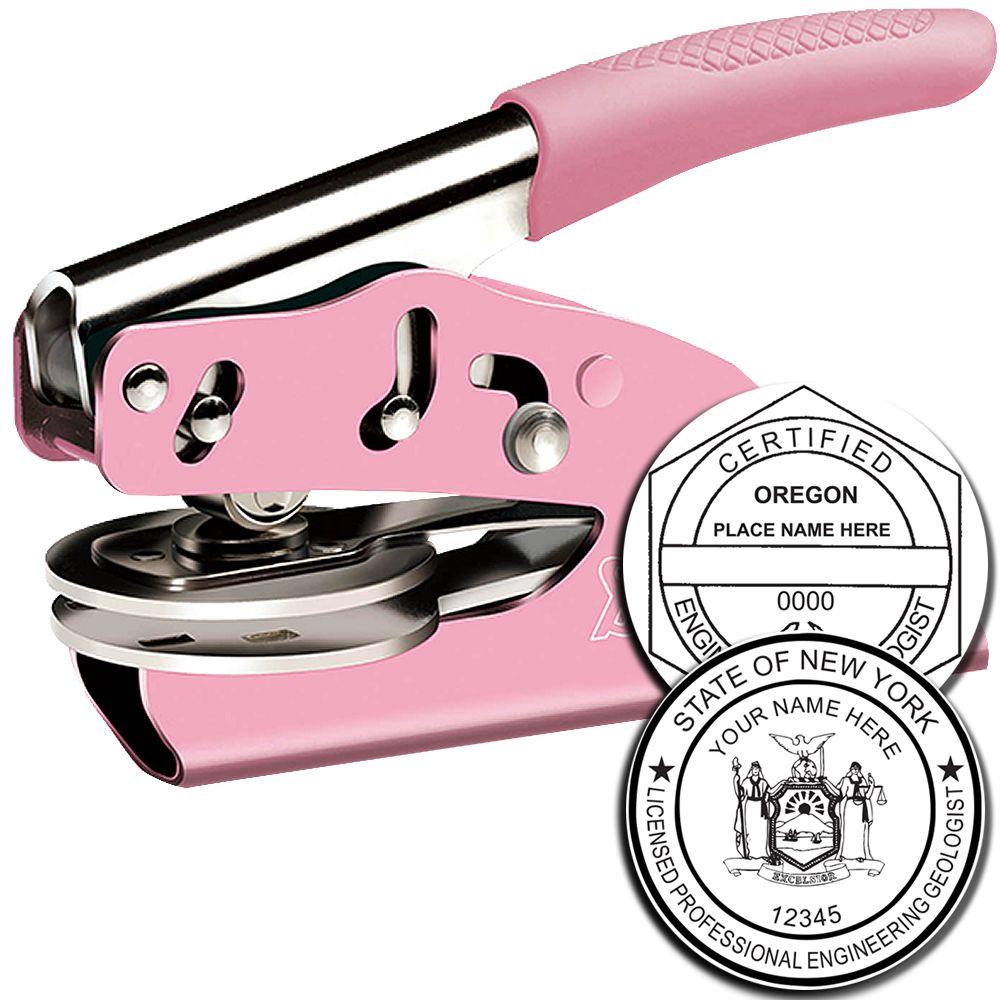
The Handheld Seal Embosser is $46.95 and its listing calls it the most economical choice for an engineering geologist embossing seal, with a sliding lock and a reach of about 1-1/2″ into a sheet. The Handheld Soft Seal Embosser at $44.95 is the same tool with rubber on the handle, which the listing says makes it easier to squeeze, at the same reach. That soft frame is also stocked in red, blue and pink at $44.95 each.
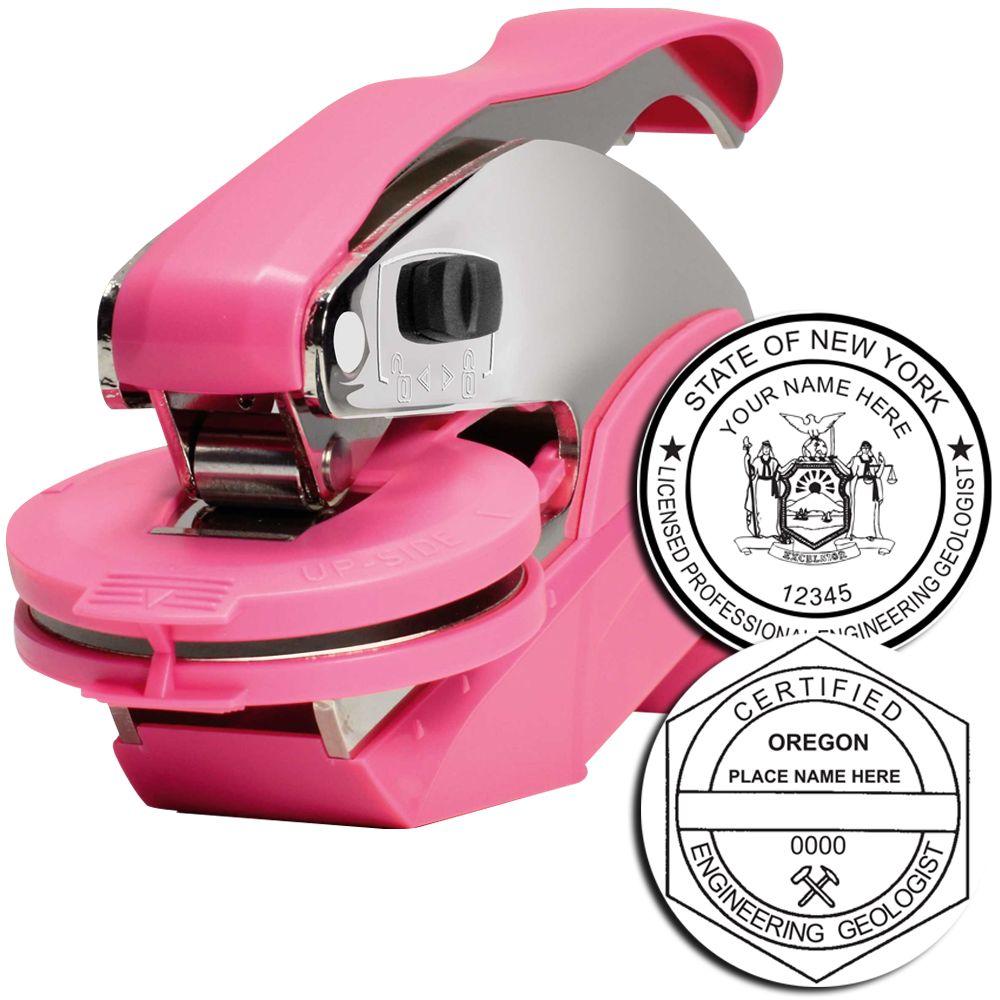
The Hybrid Seal Embosser at $42.95 is the cheapest embosser here and the most interesting pocket format: a pocket sized body with the leverage of a desk model, positioning marks to line the impression up, and an audible click confirming the impression was made properly. The Pink Hybrid Handheld Embosser is the same tool in pink at $42.95. All state a two year warranty and the standard 1-5/8″ to 2″ impression range.
Desk and gift embossers
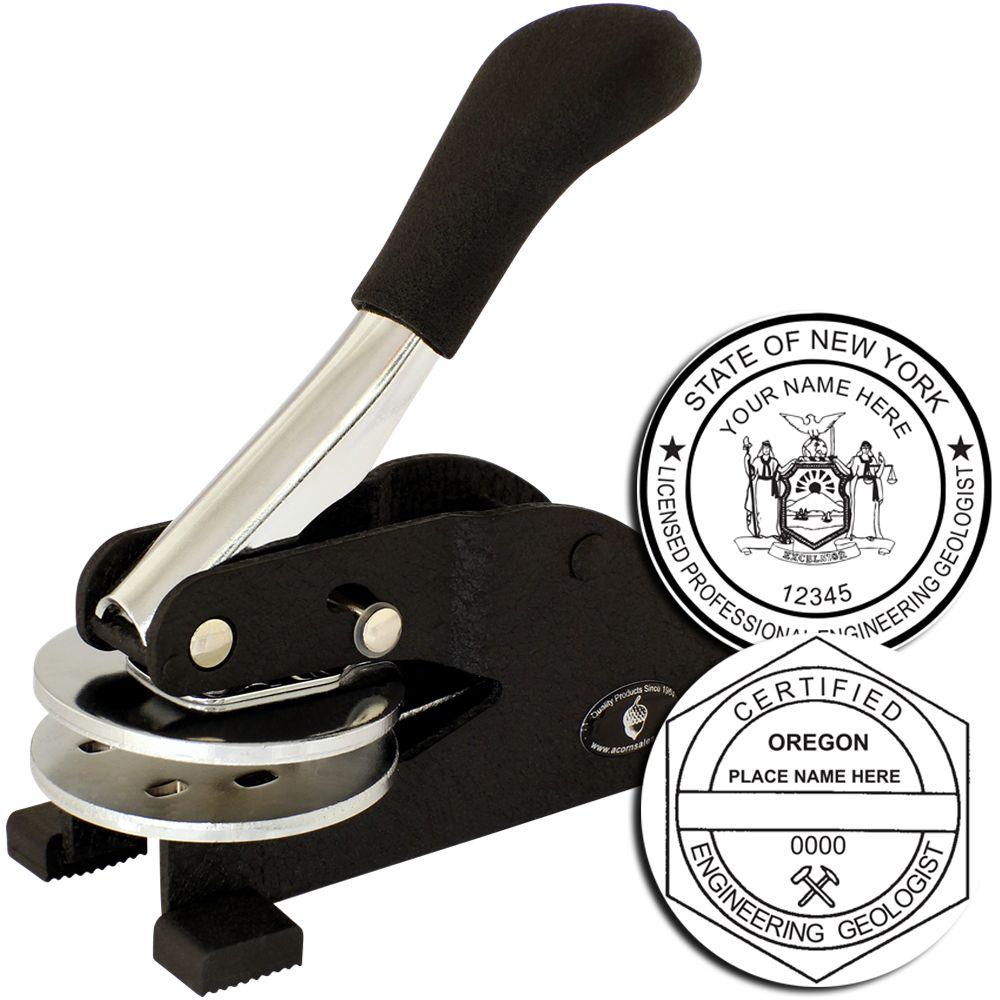
The Desk Seal Embosser at $44.95 has a metal base, a sliding lock and a reach of about 1-1/2″, the same as the handhelds; the money buys leverage rather than distance. Above it sit three finished desk models at $129.95 each, listed as gift seals in chrome, gold and black, all with a felt base and the same 1-1/2″ reach. The Pink Gift Embosser at $99.95 is the same idea in polished pink.
The Cast Iron Desk Seal Embosser at $329.95 is the outlier: the old fashioned type of seal, extremely heavy duty, with a reach of approximately 1-1/2″ to 2-1/2″ depending on the size of the body. States with a 1-5/8″ diameter specification go on the smaller cast iron frame with the 1-1/2″ reach unless the order says otherwise.
Long reach and electric embossers
Reach separates the top of this range from the bottom, and it climbs in steps. The Long Reach Desk Seal Embosser at $129.95 reaches approximately 2-1/2″ into a sheet. The Extended Long Reach Desk Seal Embosser at $169.95 reaches 4-1/2″, enough by its listing to emboss the center of an 8-1/2″ wide sheet, and includes an adjustable paper guide.
Above those are two electric units. The Heavy Duty Standard Reach Embosser is $1,795.00, weighs 12 pounds, runs on 110-120 AC volts, and allows an impression approximately 2-3/8″ from the paper's edge. The Heavy Duty Long Reach Embosser is $2,095.00, weighs 18 pounds, and reaches almost five inches into the document. Both press a solid brass die against an alloy counter die, fire from a button, and list a foot pedal as a separately priced option. The standard reach listing notes its dies are not interchangeable with the other unit, and that the frame survives a staple without damaging the die.
Ink stamps and the electronic seal
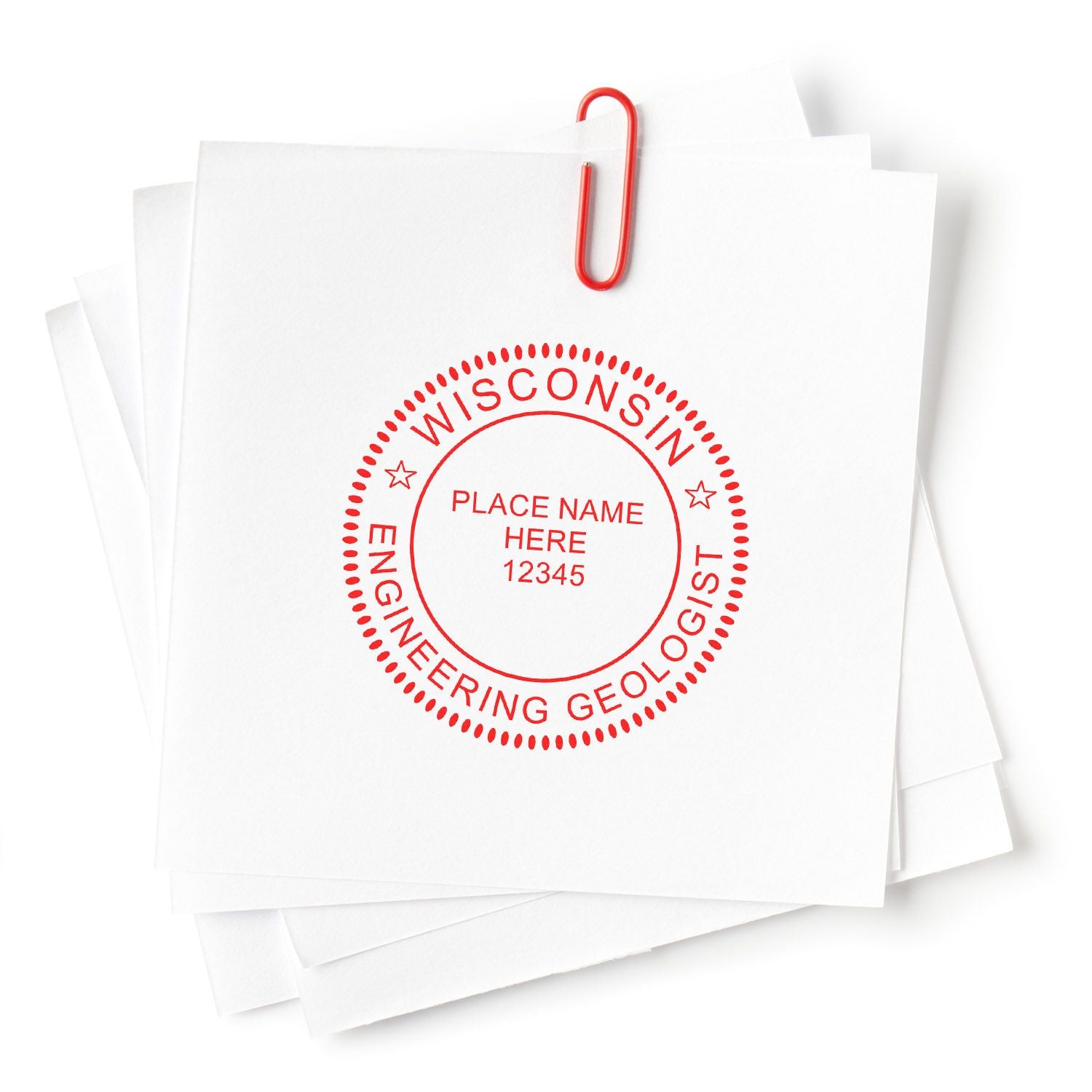
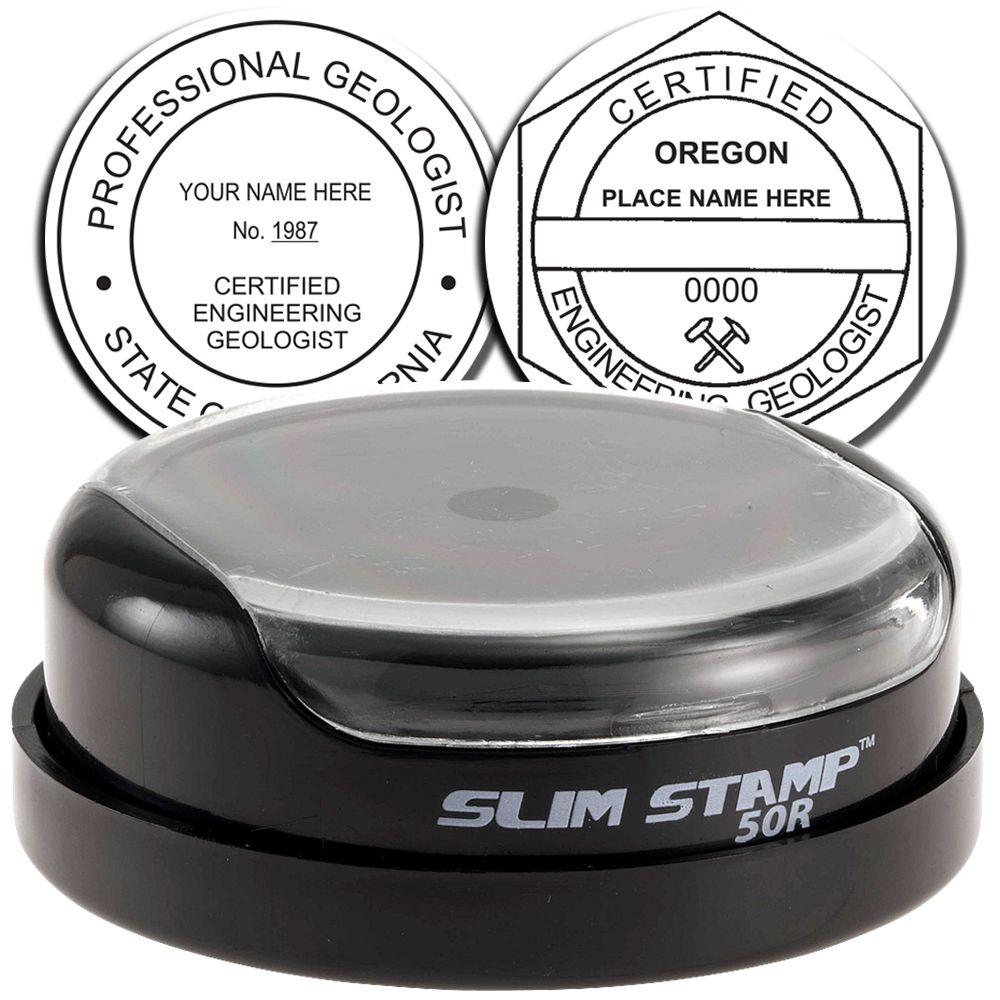
Five ink formats carry the same die design. The Regular Rubber Stamp of Seal at $34.95 is the traditional hand stamp, needs a separate felt or cloth pad, and is singled out on its listing as the best stamp for Mylar. The Self Inking Rubber Stamp of Seal at $39.95 carries its own pad and is rated at about 5,000 impressions. The Slim Pre-Inked Rubber Stamp of Seal at $46.95 is flat enough for a pocket and rated at about 25,000. The MaxLight Pre Inked Rubber Stamp of Seal, also $46.95, adds a dust cover over the impression area. The Xstamper Pre-Inked Rubber Stamp of Seal at $64.95 is the most expensive stamp, rated at up to 50,000, and says 52 percent of its weight is recycled material.
The eSeal Electronic Image Stamp of Seal is $20.00, the cheapest thing here: a 300 dpi image emailed as PNG, DWG, JPG, DXF, PDF and TIF files. It is free with the purchase of a physical stamp or seal, and electronic encryption and an electronic signature are not included.
Sizes and dimensions
Every engineering geologist die in the catalog is described the same way: an impression area varying from 1-5/8″ to 2″ in diameter depending on state specifications, with a guarantee on each listing that the seal will meet your state board specification. That is a manufacturing range, not a board's rule. Separately, and from the board rather than the catalog, California's regulations at Title 16 section 3008 require the seal to be not less than one and one half inches in diameter. We found no stamp dimension published on Oregon's stamp page and report none for Washington. Reach belongs to the frame, not the die, and runs in a ladder: about 1-1/2″ on the handheld, soft, hybrid, desk and gift models, 1-1/2″ to 2-1/2″ on the cast iron unit, approximately 2-1/2″ on the Long Reach, 2-3/8″ on the Heavy Duty Standard Reach, 4-1/2″ on the Extended Long Reach, and almost five inches on the Heavy Duty Long Reach. Measure from the sheet edge to where the seal must land, then buy the cheapest frame that covers it.
How many impressions you get
The stamp listings give impression counts, and they differ widely. The Self Inking Rubber Stamp of Seal at $39.95 is rated at about 5,000, the Slim Pre-Inked at $46.95 at about 25,000, the Xstamper at $64.95 at up to 50,000. The MaxLight Pre Inked Rubber Stamp of Seal at $46.95 contradicts itself: the description says up to 15,000, the highlight list on the same page says up to 50,000. Plan on the lower figure. The electric units carry the same disagreement. The Heavy Duty Standard Reach Embosser at $1,795.00 and the Heavy Duty Long Reach Embosser at $2,095.00 are each rated at an estimated life of 200,000 impressions. Budget against the lower number. No hand embosser here publishes a life figure.
Ink and colors
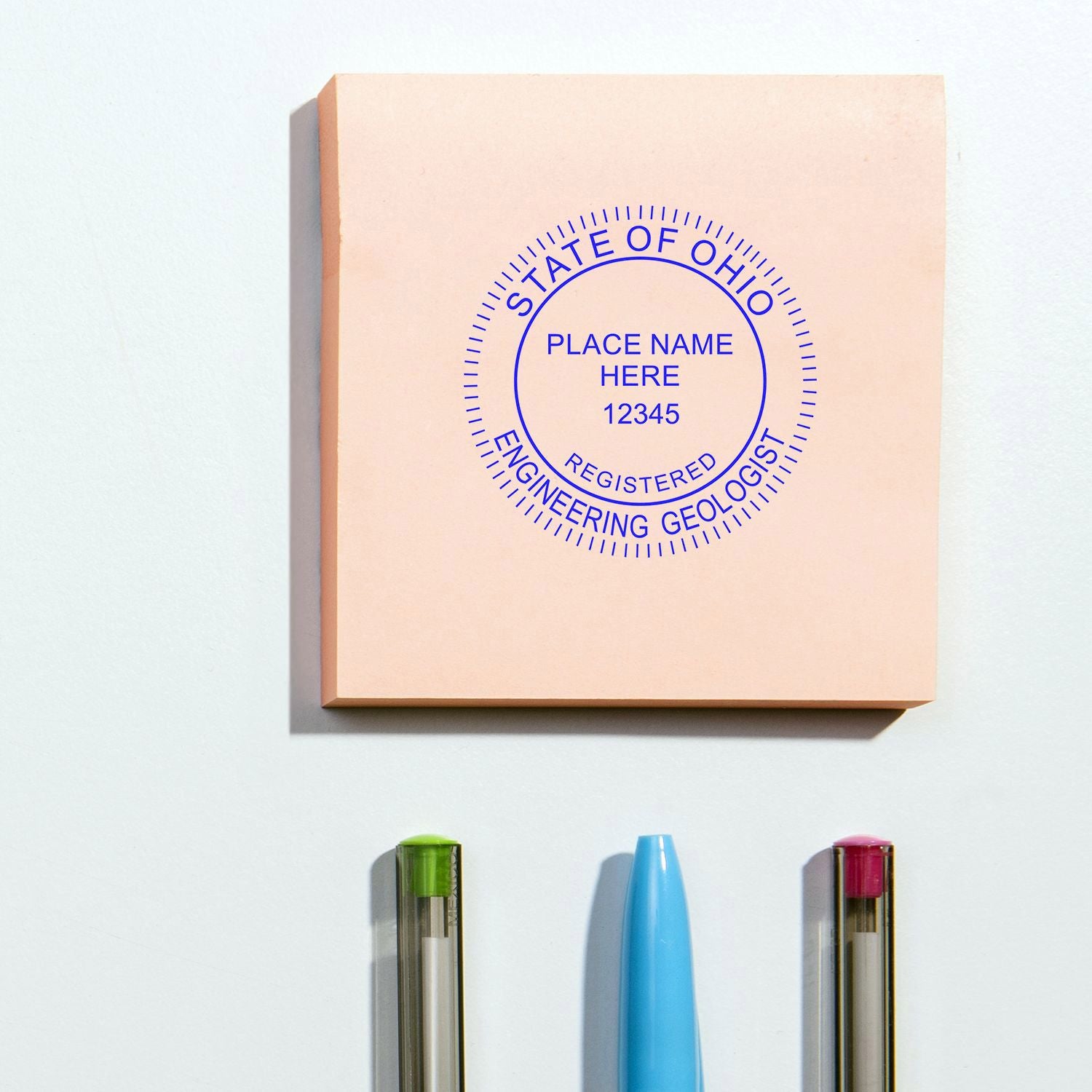
Ink color is the one place a cheaper stamp wins. The Self Inking Rubber Stamp of Seal at $39.95 is offered in 11 ink choices, more than any other format here. The Slim Pre-Inked at $46.95 comes in five: red, blue, black, green and purple. The MaxLight at $46.95 also comes in five, listed as red, blue, black, green and violet. The Regular Rubber Stamp of Seal at $34.95 has no ink of its own and takes whatever pad you put under it, which is why its listing names it the best choice for Mylar. An embosser uses no ink at all, which matters when a document has to survive handling.
What you can customize
Everything here is made to order around text you supply, and the catalog is explicit that the die is cut to your state's specification rather than a house standard. The listings say the seal carries your name, license number and the other information your state requires, and several add that you choose the orientation and may leave instructions. Because the wording is what a board polices, take it from your board: California names Certified Engineering Geologist as the legend on that specialty seal, Washington calls for the legend State of Washington Licensed Geologist together with the specialty, and Oregon asks for the professional designation without prescribing exact words. Send your board's published specimen with the order if you have one. Every physical stamp and seal ships with a complimentary electronic seal emailed as DXF, JPG, PDF and TIF files, the same artwork as the $20.00 eSeal, so there is no reason to buy that separately. Whether a board accepts the image on a submitted document is a question for the board, not the catalog.
One product line, three confirmed states, and a die whose wording is not yours to choose
Acorn lists 23 engineering geologist products and ships them anywhere, but the credential those products name is rare. Working from ASBOG's count of thirty states and one territory with geologist licensure laws, we could confirm an engineering geology specialty credential in only three. If you are buying one of these seals, you are almost certainly buying it because a board in California, Oregon or Washington, or a board we did not open, told you what to put on it.
So the decision that matters is not which $44.95 handheld to buy. It is the text. California's Title 16 section 3008 puts Certified Engineering Geologist in the border of the specialty seal, with State of California below and the holder's name and certification number inside, on a face of at least one and one half inches. Washington's chapter 18.220 RCW asks for name, certificate number and the legend licensed geologist together with the specialty, a different sentence producing a different die. Oregon asks for name, registration number and professional designation, then asks for something no die can carry: a signature across the stamp and the registration expiration date written in by hand.
That last point changes what you order. In Oregon the impression is not the finished act; the impression plus your handwriting is. A large embosser sitting mid sheet may leave no clean room to sign across, while a $34.95 rubber stamp in the corner usually does. Read your board's stamp page first, then pick the frame.

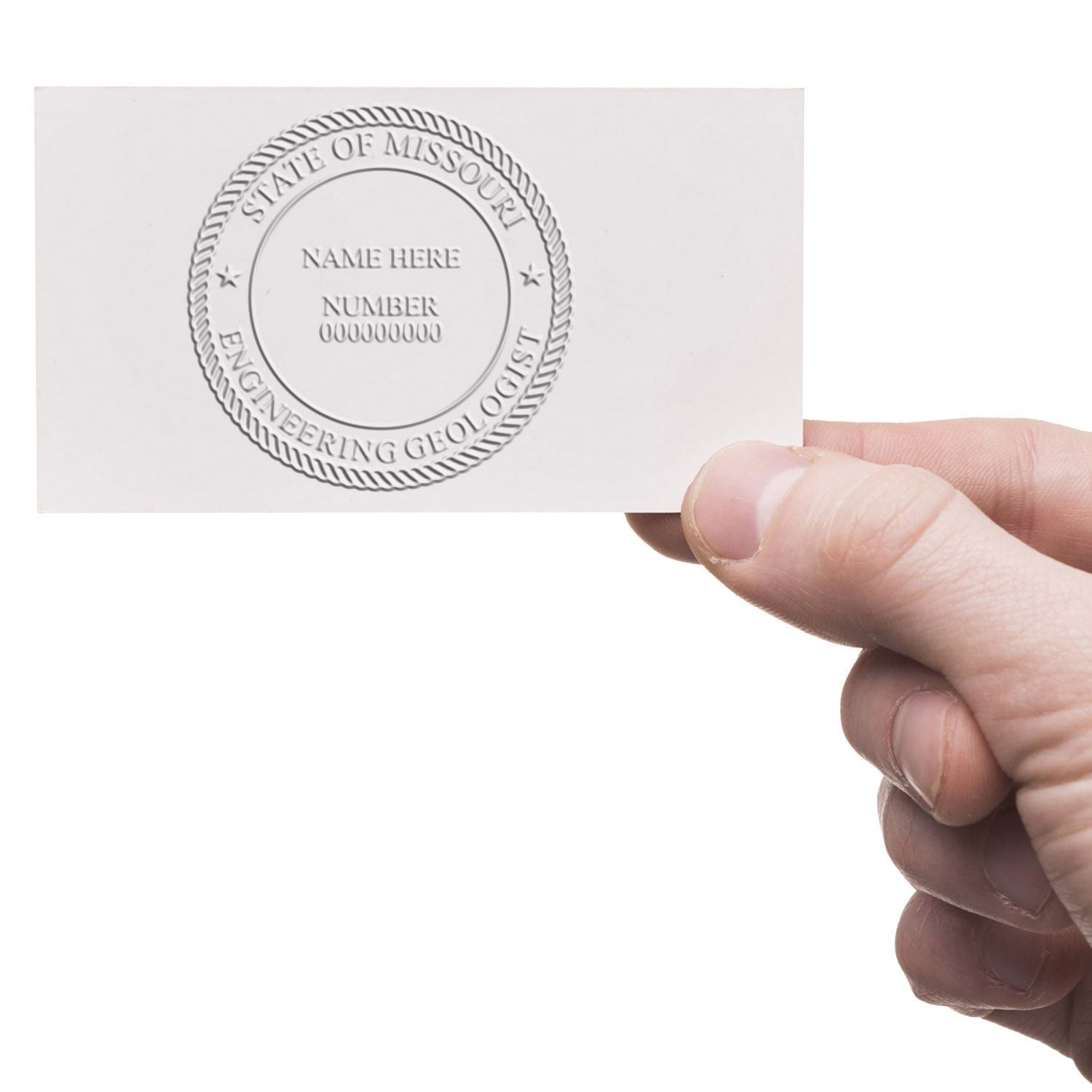
Ordering, proofs and delivery
Production is 1 business day. There is no minimum and no setup fee. Orders ship from Richmond, Virginia, where Acorn has made stamps and seals since 1964, and transit runs 3 to 10 business days by method and carrier. Several listings state their own dispatch window and say the item is completed in house and shipped in 24 to 48 hours. Order the seal by the text that goes on it, exactly as your board words it, plus the frame and orientation you want, and send your board's specimen seal if it publishes one. The two electric units have options priced separately and not included in the listed price, so name them on the order. If anything is unclear, contact us before the die is cut, because a die carrying the wrong legend is scrap.
Care and longevity
Acorn warrants embossing seals for two years and rubber stamps for six months. The embosser listings match that house term: the handheld, soft, hybrid, cast iron, desk, gift, long reach, extended long reach and both electric pages all state a two year warranty. The stamp listings are silent. None of the five ink formats publishes a warranty term of its own, so the house six months applies, and no listing here contradicts the house rule. An embosser has no ink and no pad; keep it closed on its sliding lock when idle and keep grit out of the die, since the impression is metal meeting metal. The MaxLight body carries a dust cover. If an impression starts to fill in or blur, the die is dirty far more often than worn.
Products in this range
Browse the full range: Engineering Geologist Stamps and Seals, Professional Geologist Stamps and Seals.
Related guides
- Replacing a Seal After a Renewal, Expiration or Name Change
- Electronic Seals and eSeal Image Files: What You Get and What You Do Not
- How to Choose an Embosser by Reach and Price
- Why a State Board Guaranteed Stamp Supplier Matters
- California CEG Seal: Two Devices, 1-1/2 Inch Floor
- Oregon CEG Stamp: E Number, No Published Size
- Washington CEG Stamp: Its Own Authorized Design
- PE Stamp and Seal Requirements by State
- Electronic Seals and eSeal Image Files
Frequently asked questions
What is the difference between a Professional Geologist and a Certified Engineering Geologist?
Scope and sequence. The general license comes first and the specialty is added to it. Oregon's board says a CEG already holds an RG registration plus a special certification from the Board to practice engineering geology, and that an RG cannot provide engineering geology services without it. California requires a specialty applicant to be registered as a geologist in the State of California first. Washington says you must be a licensed geologist there to apply.
How many states offer a Certified Engineering Geologist credential?
We confirmed three from the boards themselves: California, Oregon and Washington. The starting pool was ASBOG's statement that thirty states and one US territory have registration, licensure or certification laws for geologists. We did not open all thirty-one, so treat three as a confirmed floor rather than a complete list, and check your own state with your own board.
What experience does the specialty require?
It differs by state. California describes three years in the specialty with at least one supervisor holding the matching credential, or five years in responsible charge. Oregon lists several routes, including three years under the direct supervision of an engineering geologist or five years in responsible charge of engineering geological projects. Washington asks for at least five years of documented, verifiable experience in the specialty, including three under the supervision of a geologist licensed in it.
What exam covers engineering geology?
Two different things do. ASBOG's Fundamentals of Geology and Practice of Geology examinations each include Engineering Geology as one of eight domains, with a published knowledge base covering soil mechanics and slope stability, rock mechanics, geologic hazards including landslides and earthquakes, and investigation methods. A state specialty exam is the whole paper instead: California's test plan effective January 2025 is weighted Project Planning 18 percent, Data Collection 28 percent, Interpretation and Reporting 40 percent, Construction 14 percent. Oregon refers to an Engineering Geology exam on its specialty route.
What documents have to carry the seal?
It depends on the state. Washington requires a stamp, signature and date on every final geology or specialty geology report, letter report or document prepared by or under the licensee's supervision and submitted to other parties, exempting figures, maps and plates bound inside a final report but not unbound ones. Oregon requires the stamp on every final geology product created as part of public practice, drafts exempt if clearly labeled.
What appears on the seal itself?
Name, number, state and designation, with the exact wording set by your board. California's Title 16 section 3008 puts Certified Engineering Geologist or Certified Hydrogeologist in the border, State of California in the bottom border, and the holder's name and certification number inside, on a seal not less than one and one half inches in diameter. Washington asks for name, license number, the legend State of Washington Licensed Geologist, and the specialty. Oregon asks for name, registration number and professional designation.
Do I need both a geologist stamp and a specialty stamp?
Washington's stamp page addresses this directly and says a specialty licensee is not required to hold both, but may if they plan to practice geology outside the specialty. We found no equivalent guidance on the other two boards' pages, so ask yours.
Is an embosser or an ink stamp the right choice?
Both are in use. California's regulation requires the seal to be capable of leaving a permanent ink representation, a permanent impression, or an electronically generated representation. The practical split is that an embosser has nothing to smear, while a stamp copies and scans more reliably and costs less. Oregon adds a reason to favor a stamp: it requires you to sign across the impression.
What is the cheapest engineering geologist seal?
The Hybrid Seal Embosser at $42.95 is the least expensive embosser and the Regular Rubber Stamp of Seal at $34.95 the least expensive stamp. The cheapest item of any kind is the eSeal Electronic Image Stamp of Seal at $20.00, an image file rather than a tool, free with any physical stamp or seal.
Why does the range go up to $2,095.00?
Reach and volume, not a better impression. The Heavy Duty Long Reach Embosser at $2,095.00 is an 18 pound electric machine reaching almost five inches into a document. The die it presses is the same 1-5/8″ to 2″ circle as the $46.95 handheld. If your seal lands near the edge of a page, it buys nothing you need.
Does the electronic seal count as a legal signature?
No, and its listing says so: electronic encryption and an electronic signature are not included with the eSeal. It is a 300 dpi image supplied as PNG, DWG, JPG, DXF, PDF and TIF files. Whether an image of your seal is acceptable on a submitted document is a question for your board, since rules on electronic sealing vary and we are not offering legal advice.
What warranty comes with it?
Two years on embossing seals and six months on rubber stamps. Every engineering geologist embosser listing states the two year term. No stamp listing here states a term of its own, so the house six months applies, and nothing contradicts the house rule.
Where do sources disagree or run out?
In several places. The MaxLight page gives both 15,000 and 50,000 impressions. On the licensing side, the California test plan does not state how many questions the specialty exam has, Oregon's stamp page publishes no dimension, and we did not check every jurisdiction on ASBOG's list. We left those unstated.








