
Written by Acorn Sales Company, manufacturing stamps and seals since 1964 · Reviewed by Holly R, VP of Sales and Marketing at Acorn Sales, against Mississippi Department of Agriculture and Commerce on 22 September 2026 · Updated 22 September 2026
Mississippi requires a seal, the statute puts the cost on the licensee, and the statute writes the words. Miss. Code Ann. 75-27-311: “Each bonded weighmaster shall, at his or her own expense, provide himself or herself with an impression seal.” The inscription follows in the same section: “The licensee’s name and the word ‘Mississippi’ shall be inscribed around the outer margin of the seal and the words ‘Bonded Weighmaster’ shall be inscribed in the center thereof.” Note the center phrase, because it is not the one on the license paperwork: the seal says Bonded Weighmaster, while 75-27-307 and the Department’s own forms talk about a public weighmaster and a public weigher.
One thing on this page cuts against selling you a device, and we would rather lead with it than bury it. The same sentence that requires the impression permits an alternative: “Such seal, or licensee’s name and number, shall be impressed or inscribed electronically upon each weight certificate.” A Mississippi licensee whose certificates are produced electronically, and which carry the licensee’s name and license number, is working within the section without a physical die. The Department’s own application says the same thing in its own words. So not every Mississippi licensee needs to buy a seal, and you should decide which route your operation is on before you order one.
Mississippi public weighmaster seal requirements at a glance
| Requirement | Mississippi rule | Source |
|---|---|---|
| Seal required | Yes, and the licensee buys it, with an electronic alternative permitted in the same sentence. “Each bonded weighmaster shall, at his or her own expense, provide himself or herself with an impression seal.” Then: “Such seal, or licensee’s name and number, shall be impressed or inscribed electronically upon each weight certificate.” The state does not issue, own or reclaim it. | Miss. Code Ann. 75-27-311 |
| Required elements | The licensee’s name and the word “Mississippi” inscribed around the outer margin, and the words “Bonded Weighmaster” inscribed in the center. For the permitted electronic route the content is different and shorter: the licensee’s name and number. | Miss. Code Ann. 75-27-311 |
| Size and shape | Not addressed. 75-27-311 fixes the inscription and its layout, an outer margin and a center, which implies a round seal, but states no diameter, dimension or shape. No separate administrative rule prescribing the seal was located. Do not infer a size. | Miss. Code Ann. 75-27-311 |
| Device allowed | An embosser, or an electronic inscription. The physical device the statute names is an “impression seal”. The alternative route is the licensee’s name and number “inscribed electronically”. No device is excluded by anything we read. | Miss. Code Ann. 75-27-311 |
| Signature and date | Not established. The seal section says nothing about either. The signature and dating rules sit in 75-27-315, headed in part “form of weight or measurement certificate; completion of form”, which we could not read from an official publisher. Ask the Department for the current text before designing certificate stock. | Miss. Code Ann. 75-27-315, not read from an official source |
| What must be sealed | Each weight certificate. The seal, or the licensee’s name and number, shall be impressed or inscribed electronically upon each weight certificate. | Miss. Code Ann. 75-27-311 |
| Electronic seal | Expressly permitted, with no third party certificate authority required by anything we read. The statute allows the licensee’s name and number to be inscribed electronically on each weight certificate in place of the impression. The Department’s own application repeats the option, requiring “an impression seal or electronic impression of the weighers name and license number”. | Miss. Code Ann. 75-27-311; MDAC, Application for Bonded Weighmaster’s License |
| Renewal and lapse | Licenses “shall expire on June 30 of each year”. The 1997 enacted text shows fees of $25.00 for an individual and $100.00 for a business; the Department’s current application package states a $100.00 annual business license fee. Nothing is surrendered. The statute does not make the seal state property. A name change means a new seal, since the licensee’s name is on the margin by statute. | Miss. Code Ann. 75-27-307; MDAC, Application for Bonded Weighmaster’s License |
| Firm requirements | Location by location. The Department’s application package states that “a business with more than one location must obtain a license and a surety bond, for each physical location”. The filings are the application, the Weighmaster’s Oath, a Blanket Weighmaster’s Bond with a penal sum of $5,000 and a Continuation Certificate signed by the surety. The business application certifies the seal or electronic impression will be used by each public weigher employed by the applicant. | Miss. Code Ann. 75-27-313; MDAC, Application for Bonded Weighmaster’s License |
| Regulator | Mississippi Department of Agriculture and Commerce. The licensing officer named in the statute is the commissioner, meaning the Commissioner of Agriculture and Commerce. This is not a professional board. | Miss. Code Ann. 75-27-307; MDAC application package |


Does Mississippi require a weighmaster seal?
Yes. Miss. Code Ann. 75-27-311 provides that “each bonded weighmaster shall, at his or her own expense, provide himself or herself with an impression seal”. The verb is shall, the cost is the licensee’s, and the object is an impression seal, which is an embosser.
The same section then states what has to happen to a certificate: “Such seal, or licensee’s name and number, shall be impressed or inscribed electronically upon each weight certificate.” So there is a mandatory marking on every certificate, and the statute gives two ways of producing it. That second clause is why the answer to “do I need to buy a seal” in Mississippi is not automatically yes.
The wording, word for word
Here is the sentence to hand a manufacturer, quoted from 75-27-311: “The licensee’s name and the word ‘Mississippi’ shall be inscribed around the outer margin of the seal and the words ‘Bonded Weighmaster’ shall be inscribed in the center thereof.”
Two rings of content. Around the outer margin: the licensee’s name, and the word Mississippi. In the center: Bonded Weighmaster, capitalized as the statute capitalizes it. The statute does not ask for a license number on the physical seal, and it offers no abbreviation. Use the name as it appears on the license, since the statute says the licensee’s name and the license is what fixes that.
The title on the seal is not the title on the paperwork
Mississippi uses more than one label for the same person, and only one of them belongs on the die. Section 75-27-307, the licensing and fee section, speaks of a public weighmaster. The Department’s own application is headed the Bonded Weighmaster’s Business License and refers to “each public weigher employed by applicant”. The seal section, 75-27-311, puts Bonded Weighmaster in the center of the seal.
Engrave what 75-27-311 says. A die reading public weighmaster or public weigher in the center does not match the seal section, however well it matches the letterhead. This is the single most common way a correctly ordered Mississippi seal comes back wrong, and it costs a second die to fix.
The electronic alternative, and who does not need a device
The statute permits the licensee’s name and number to be inscribed electronically on each weight certificate in place of the impression. The Department repeats the option in its own application, where an applicant certifies that “an impression seal or electronic impression of the weighers name and license number as required by Section 75-27-311 of the code will be used by each public weigher employed by applicant”.
Notice that the electronic route carries different content. The physical seal reads name plus Mississippi on the margin and Bonded Weighmaster in the center. The electronic alternative is the licensee’s name and number. That is a smaller piece of information, and it is the number rather than the words that does the identifying work.
What this means commercially is simple and we will say it plainly. A Mississippi operation issuing printed certificates from a system that puts the weigher’s name and license number on each one does not need to buy an embosser to satisfy the section. An operation issuing paper certificates by hand does. Work out which you are before ordering, and if you run both, a device is the safer answer for the paper side.
What an impression seal is
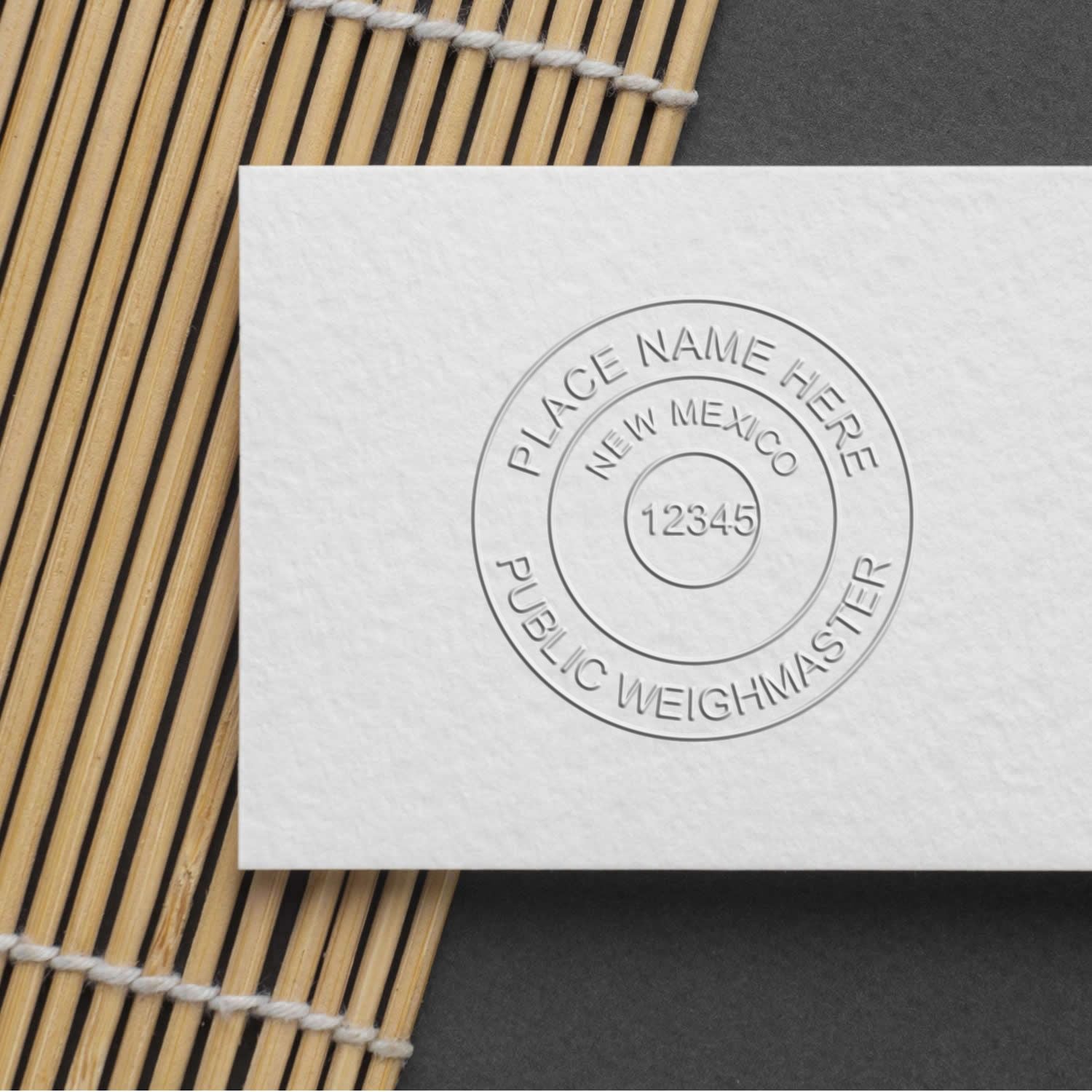
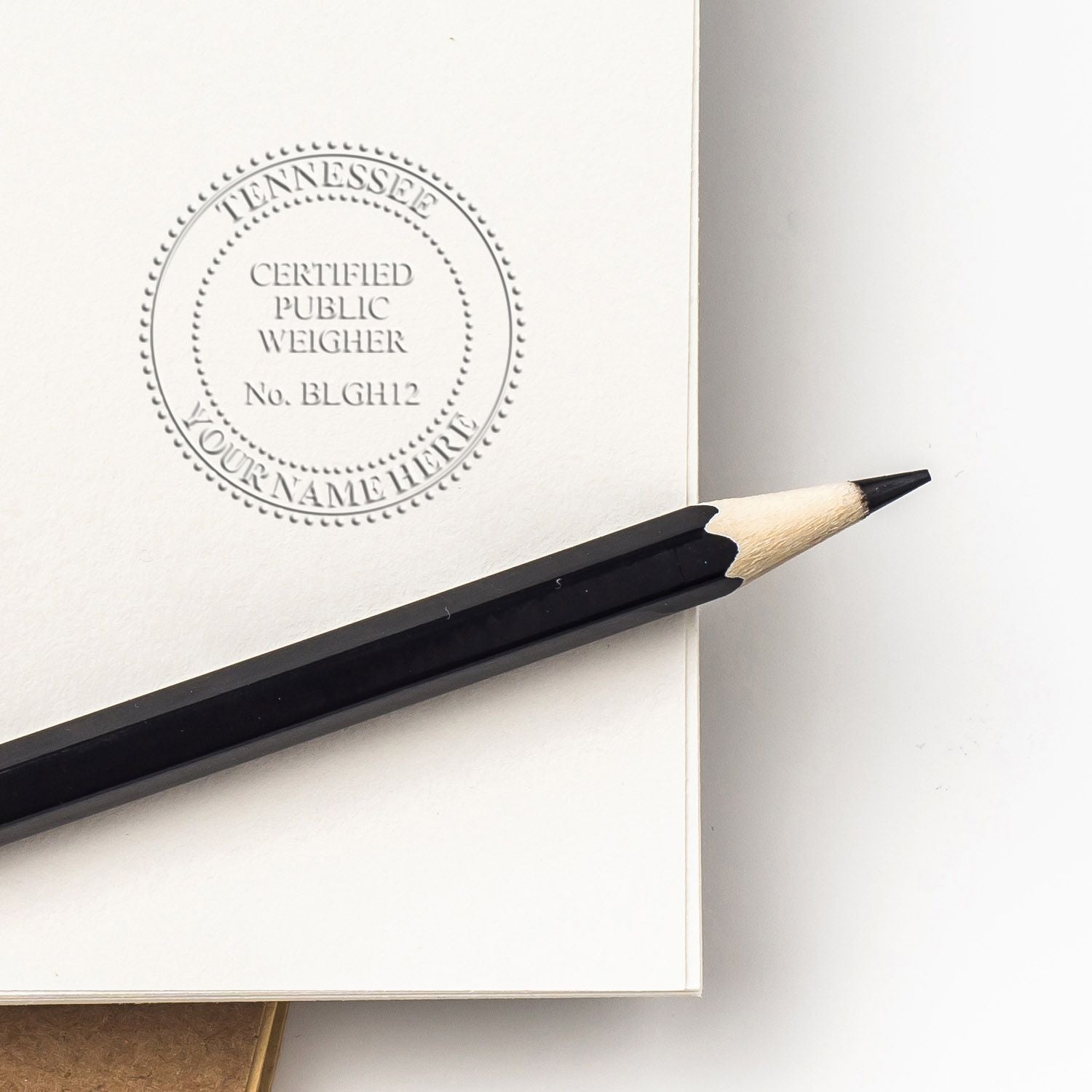
The statute’s phrase is impression seal, and the corresponding verb is impressed. That describes an embosser, which presses the wording into the paper rather than printing it in ink. There is no instruction in 75-27-311 permitting an inked stamp as the physical device, and the only alternative the section offers is the electronic one.
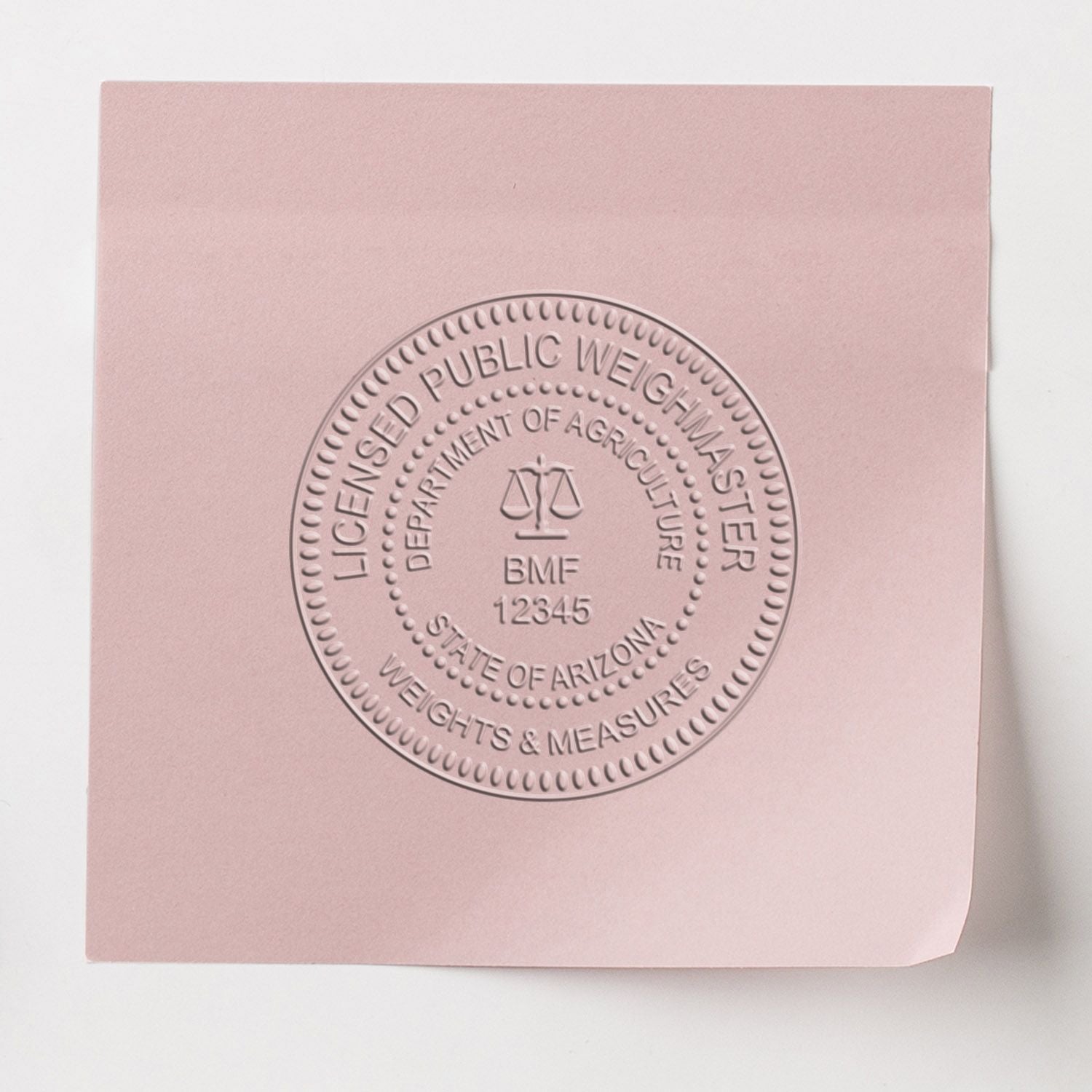
For a certificate that leaves the scale house as paper, an embossed impression is the mark the section describes. If your certificates are photocopied or scanned downstream, that is worth thinking about at the ordering stage: an embossed impression can be faint in a scan, and a deep-cut die pressed firmly into good stock reproduces better than a shallow one.
That reproduction question is also the honest argument for the electronic route in a modern operation. If the certificates a customer actually receives are printed or emailed rather than handed over as the original, an embossed impression is the element most likely to be lost between the scale and the file. The statute anticipated that by permitting the name and number to be inscribed electronically, and there is no reason to buy a device for a workflow that never produces the paper the device is meant to mark.



The bond and the oath behind the seal
Mississippi calls the credential bonded for a reason. Section 75-27-313 is the surety bond section, and the Department’s application package requires a Blanket Weighmaster’s Bond with a penal sum of $5,000, a Continuation Certificate signed by the surety and a Weighmaster’s Oath, alongside the application itself.
That package is what stands behind the words on the seal. When a certificate carries the phrase Bonded Weighmaster, it is pointing at a filed bond and a sworn oath, which is why the section writes that phrase rather than a job title. Section 75-27-315 is headed in part “false weight or measurement certificate”, and it is the enforcement end of the same arrangement, though we could not read its text.
The bond also explains why the license is issued location by location rather than once to a company. A surety bond stands behind weighing done at a place, and the Department’s package requires a license and a bond for each physical location together with a Continuation Certificate signed by the surety. If you are opening a second yard, the bond and the license are the two items to start early, because a seal cut before the license is in hand can carry a name that the new license does not match.
A license and a bond for each location
The Department’s application package is explicit: “A business with more than one location must obtain a license and a surety bond, for each physical location.” That is an entity level requirement tied to places rather than to people.
The seal question that follows is practical rather than statutory. The seal carries the licensee’s name, and the business application certifies that the seal or electronic impression will be used by each public weigher employed by the applicant, so an operation with several yards and several weighers needs to decide how many physical dies it actually keeps and where. Whatever you decide, a die that can be pressed by somebody whose name is on it is the arrangement the statute contemplates.
June 30, and what a license costs
Section 75-27-307, as amended, provides that “licenses issued hereunder by the commissioner shall expire on June 30 of each year”. That is a fixed annual date rather than an anniversary of issue, so a license taken out in spring has a short first year.
On fees we can give you the enacted figures and a caution. The 1997 amendment shows $25.00 for an individual and $100.00 for a business, and the Department’s current application package states a $100.00 annual business license fee. Later amendments to 75-27-307 could not be checked against an official code source, because Mississippi does not publish its Code free on a state-operated site. Treat the figures as indicative and confirm with the Department.
What makes a correct Mississippi seal wrong
A change of the licensed name. The statute puts the licensee’s name around the outer margin, so a marriage, a legal name change or a change of the licensed business name leaves the die reading something the license no longer says. There is no correction for that on the face of the seal; it is a new die.
Because Mississippi does not make the seal state property, nothing has to be surrendered when a license ends or a name changes. The old embosser stays yours. Retiring it rather than leaving it in a drawer at a busy scale is sensible practice, for the same reason the license is bonded: the impression is a representation about who did the weighing.

Size, shape and what Mississippi does not publish
No diameter, dimension or shape appears in 75-27-311, and no separate administrative rule prescribing the seal was located. The only geometry the statute gives is implicit in the words outer margin and center, which is how a round seal is described.
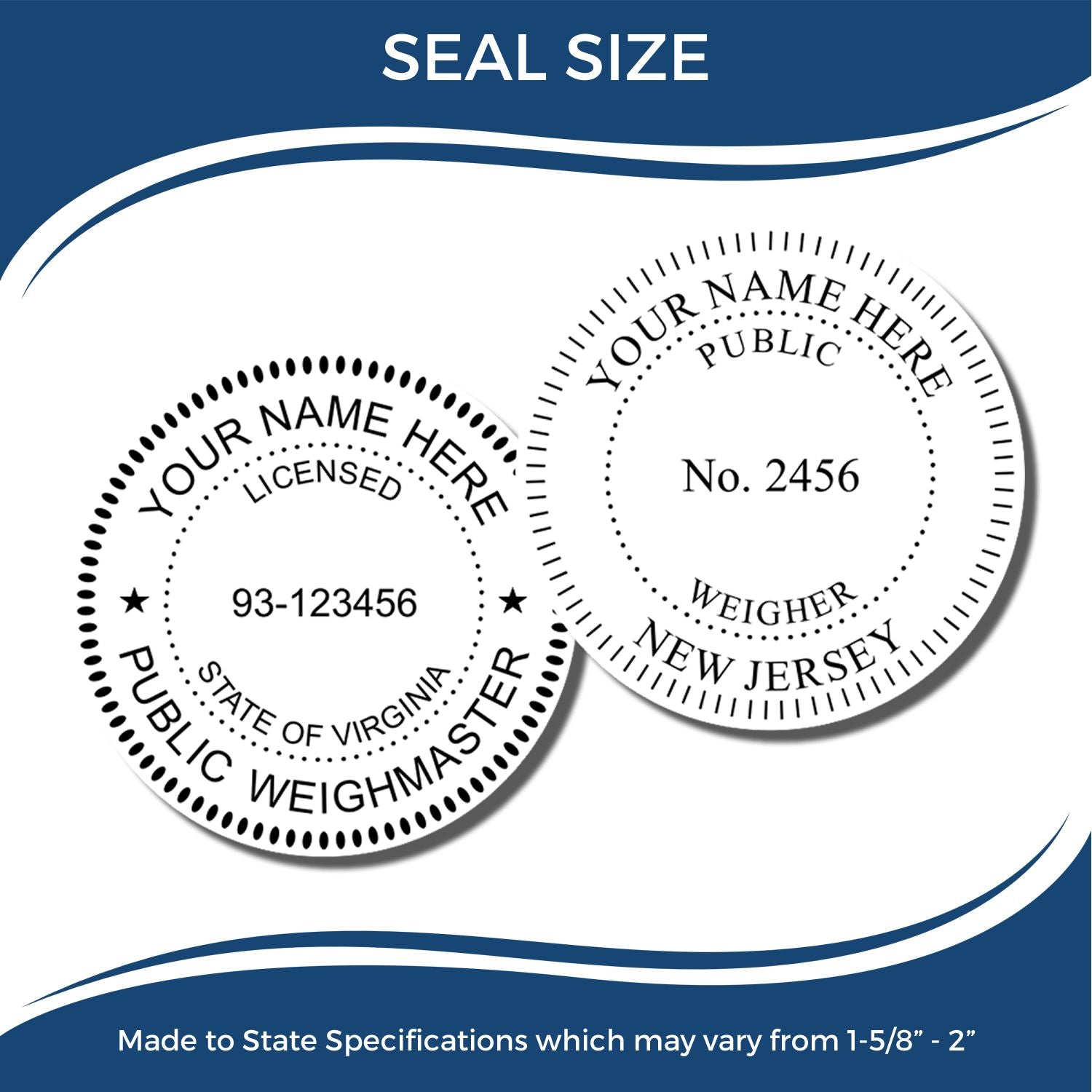
So the size is your call, bounded by legibility. As Acorn’s own production record rather than as a rule, the weighmaster embossers we make run between a 1-5/8 inch and a 2 inch impression area depending on how much wording has to fit. That is what our presses do, not what Mississippi requires. A long personal name on the margin is the thing that pushes a die toward the larger end of that range, and we proof the layout at actual size before cutting so you can see whether it reads.
Two layout notes follow from the statute rather than from us. The margin has to hold both the name and the word Mississippi, which is a long state name, so a hyphenated surname or a business style name uses the margin up quickly. And the center phrase Bonded Weighmaster is two words the statute will not let you shorten, so the center is not available for anything else. Those two constraints together are what push a Mississippi die toward the larger sizes.
What we could not read, and where to ask
This page is honest about a real gap. Mississippi does not publish its Code free on a state operated site, and this project does not quote from commercial republishers. As a result 75-27-315, which is headed “form of weight or measurement certificate; completion of form; false weight or measurement certificate”, could not be read, and neither could 75-27-301, 75-27-303, 75-27-305 or 75-27-309. H.B. 1501 of 1997 amended only 75-27-307 and 75-27-311, so it does not carry the missing text.
The consequence is narrow but worth stating. What a Mississippi weight certificate must contain is not established here, and neither is any signature or dating rule. The seal answer itself is fully established, because 75-27-311 was read from the Legislature’s own enacted text. If you are designing certificate stock rather than ordering a seal, get 75-27-315 from the Department before you print.
Ordering a Mississippi bonded weighmaster seal
Send four things: your name exactly as licensed, confirmation that the margin reads that name plus Mississippi, the center phrase Bonded Weighmaster, and the size you want. We set a proof before cutting so you can read it at actual size. If you are on the electronic route instead, what you need is your name and license number on the certificate output, which is a software question rather than a purchase.
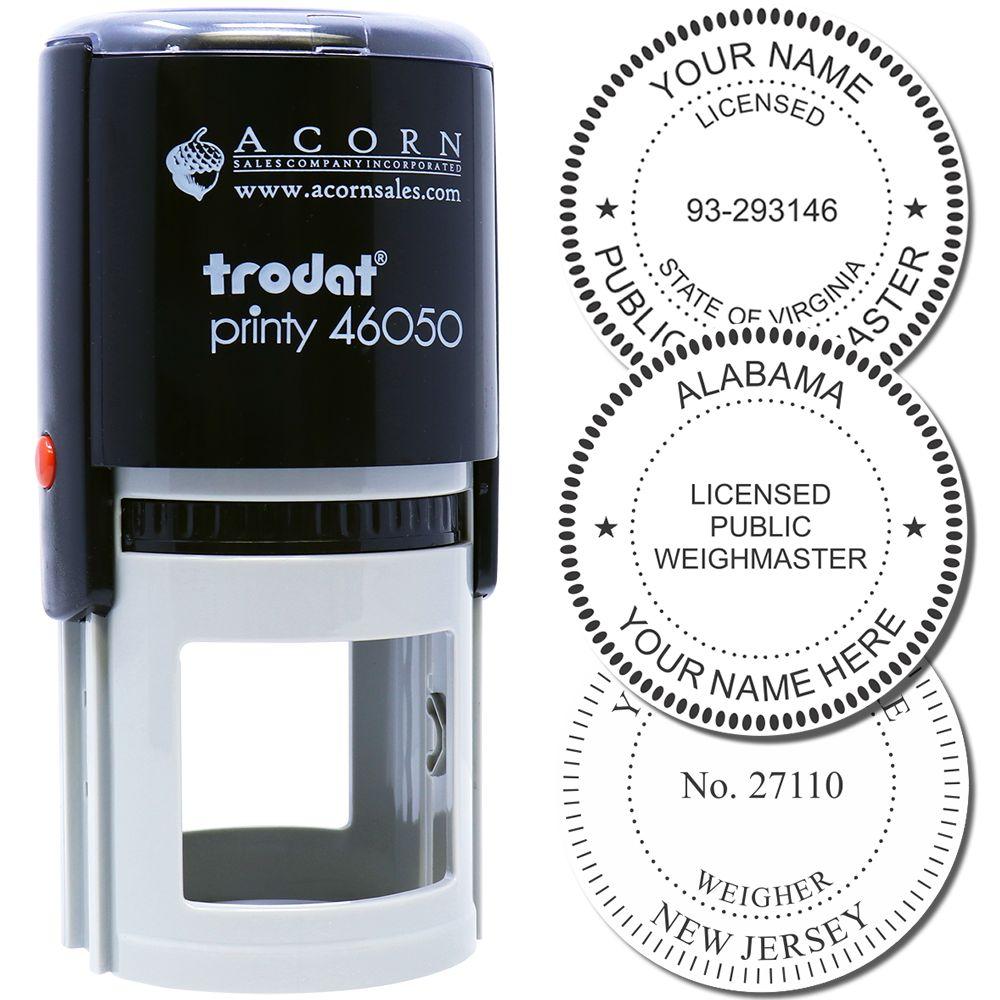
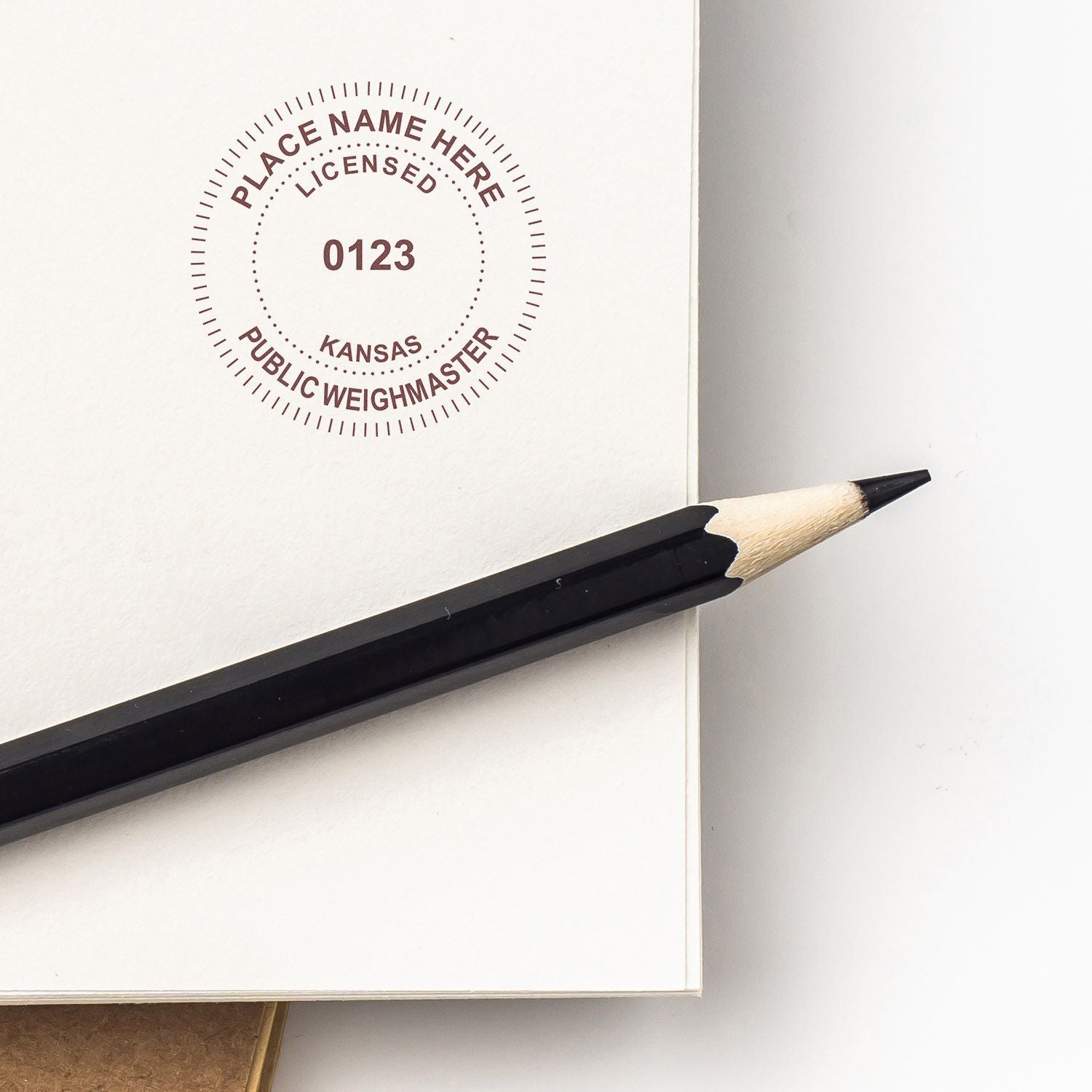
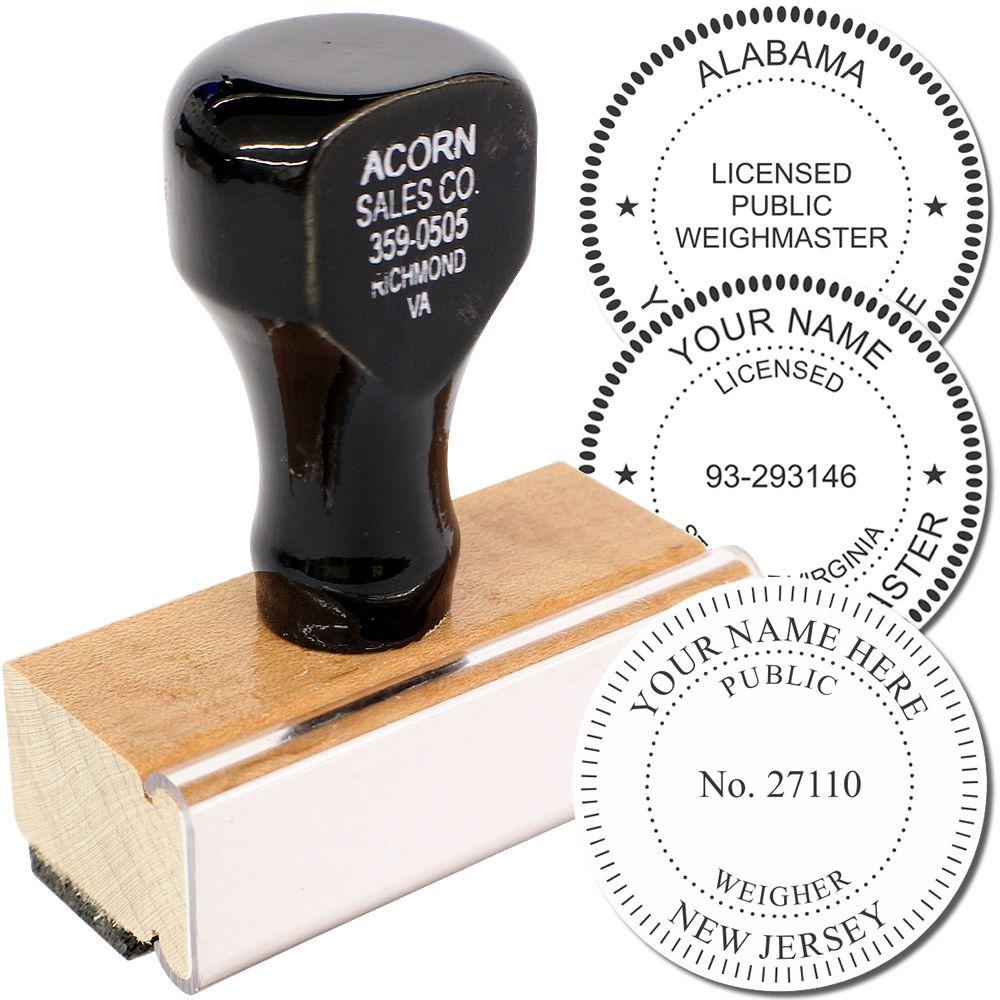
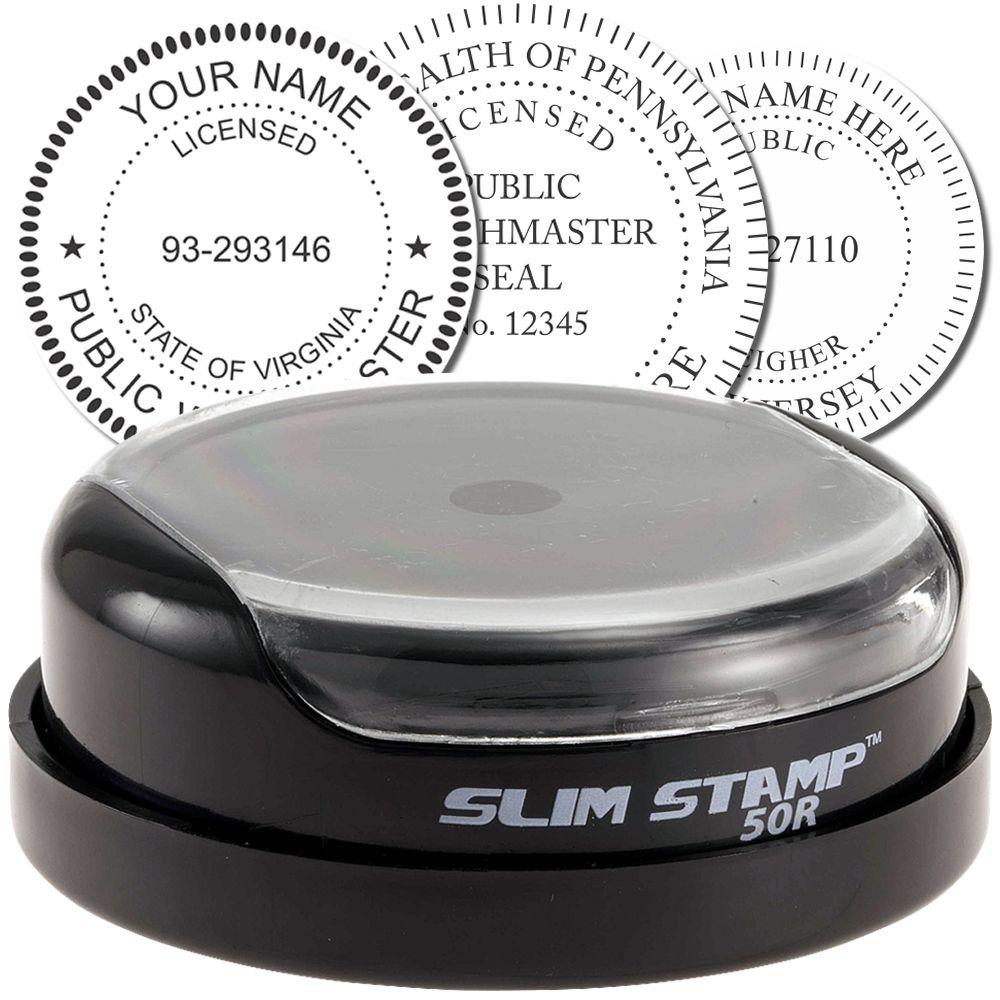
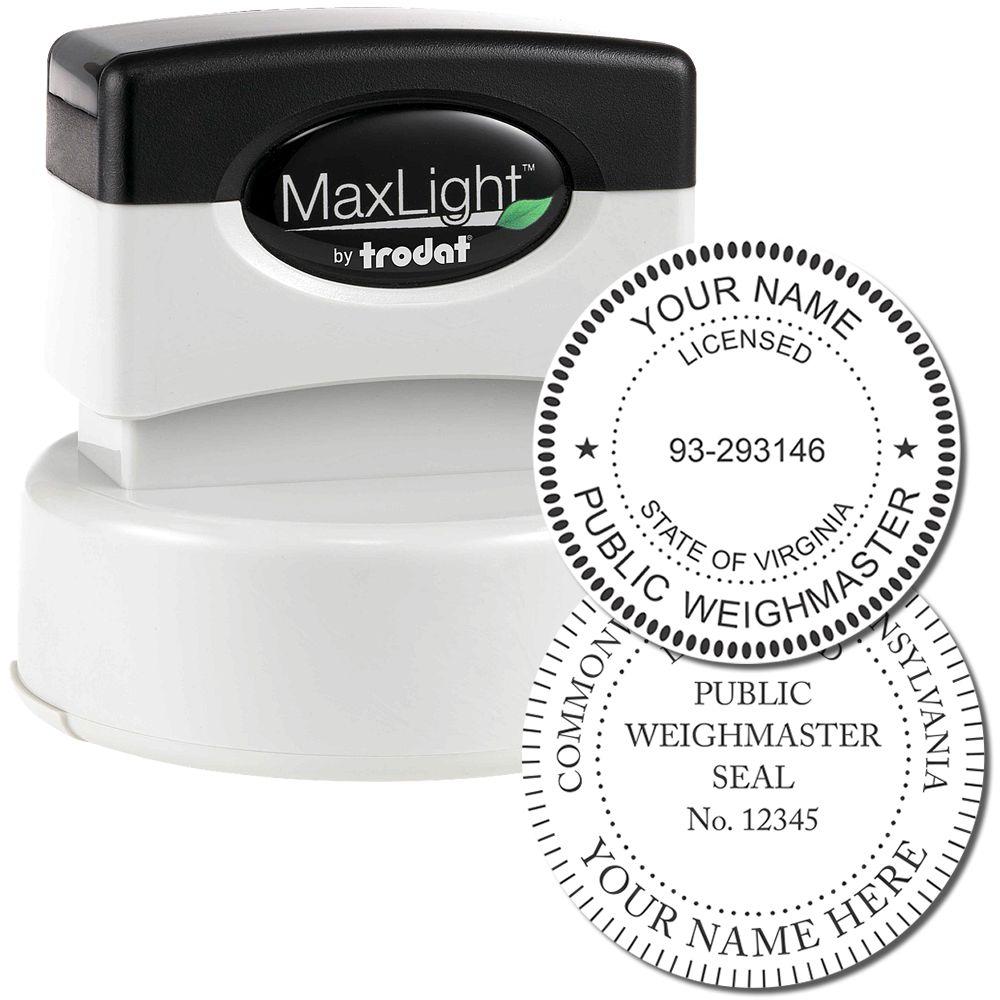
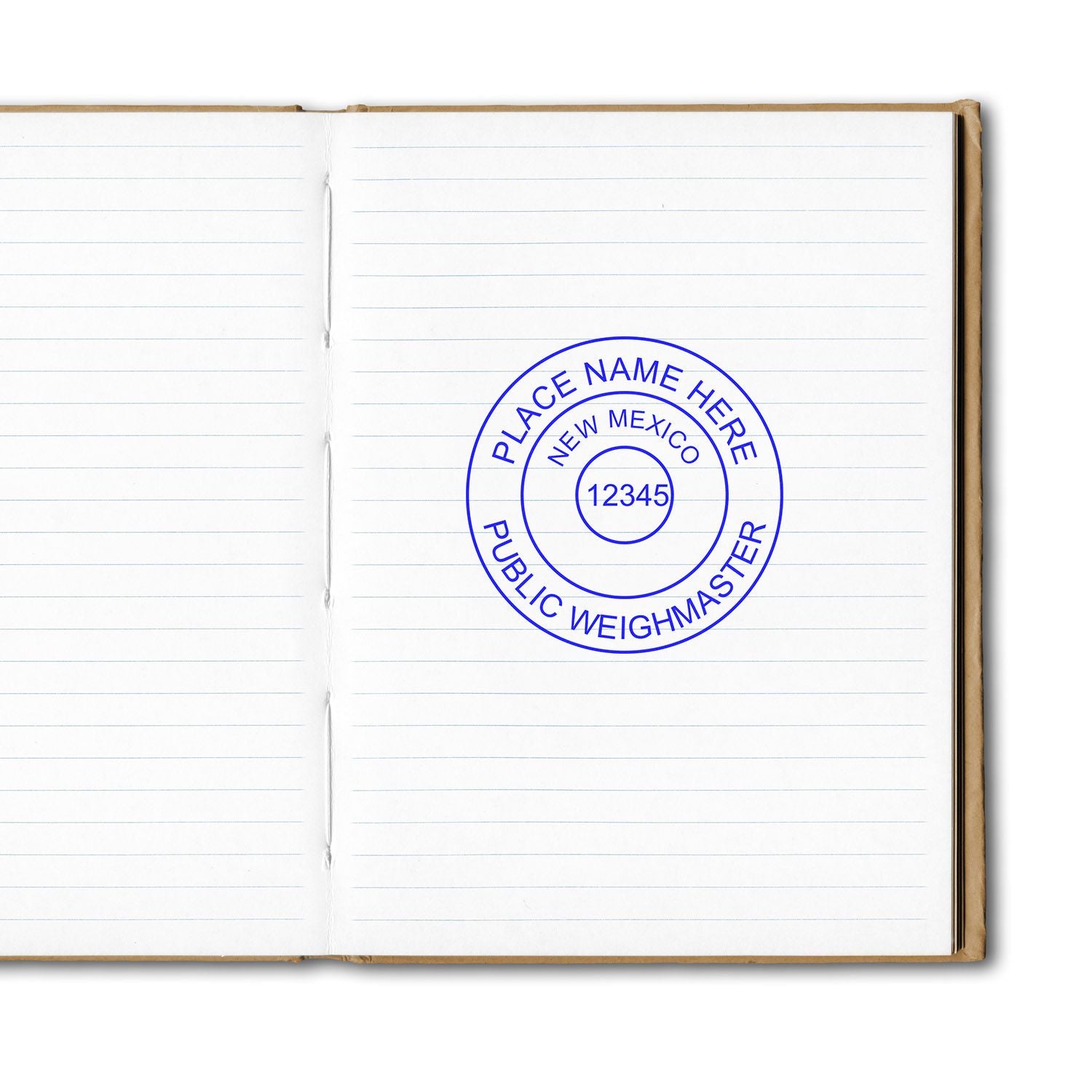
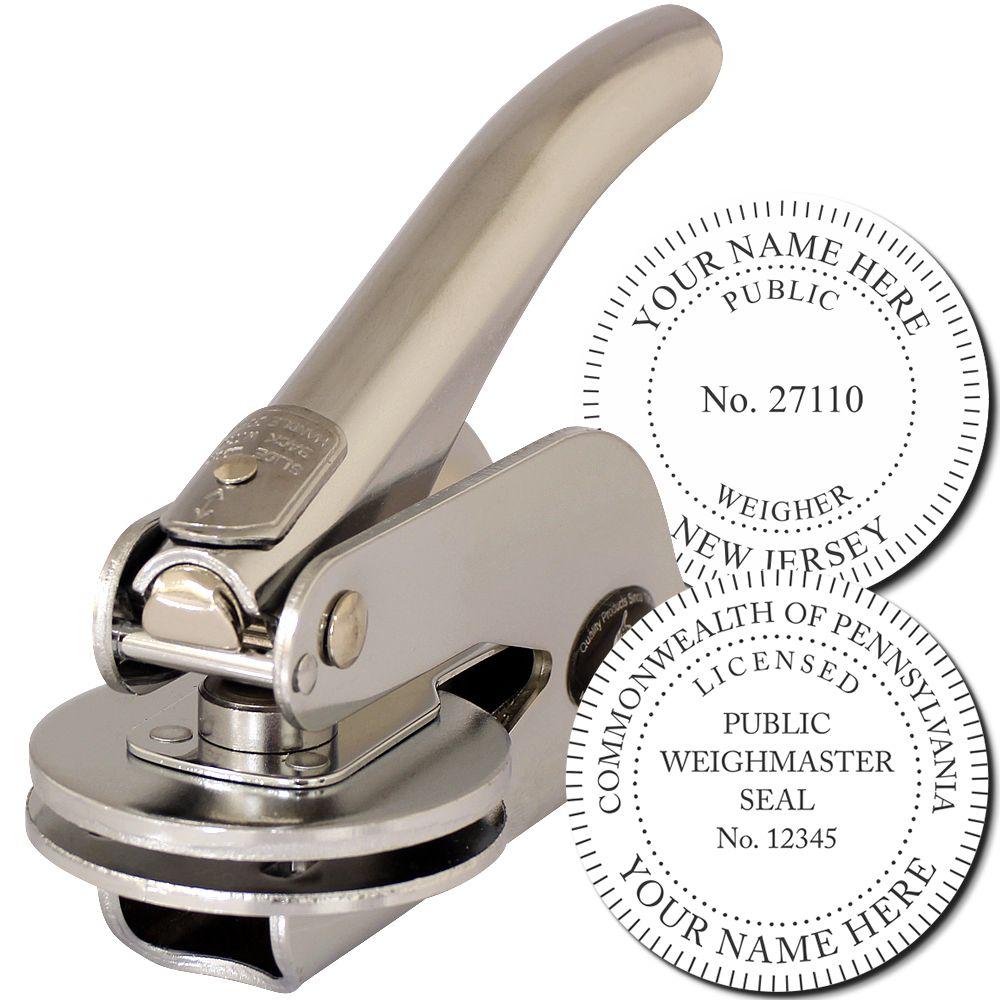
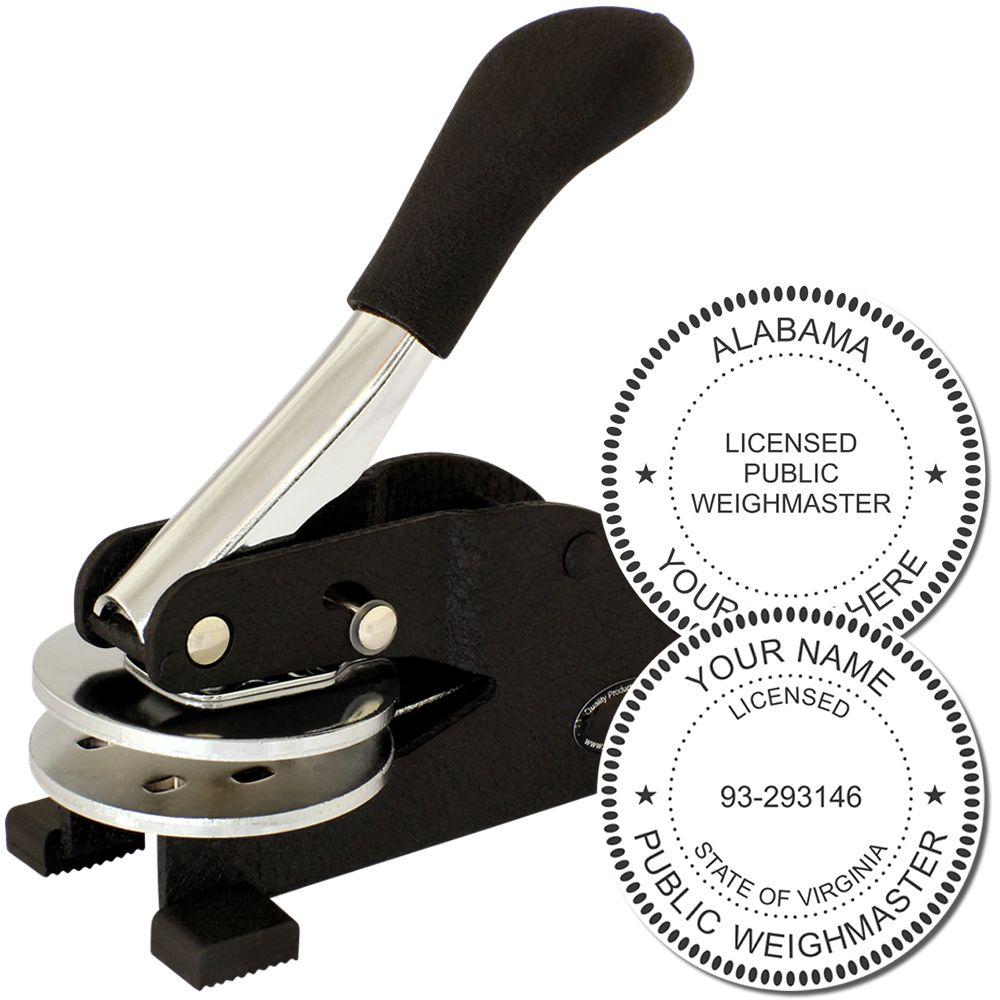
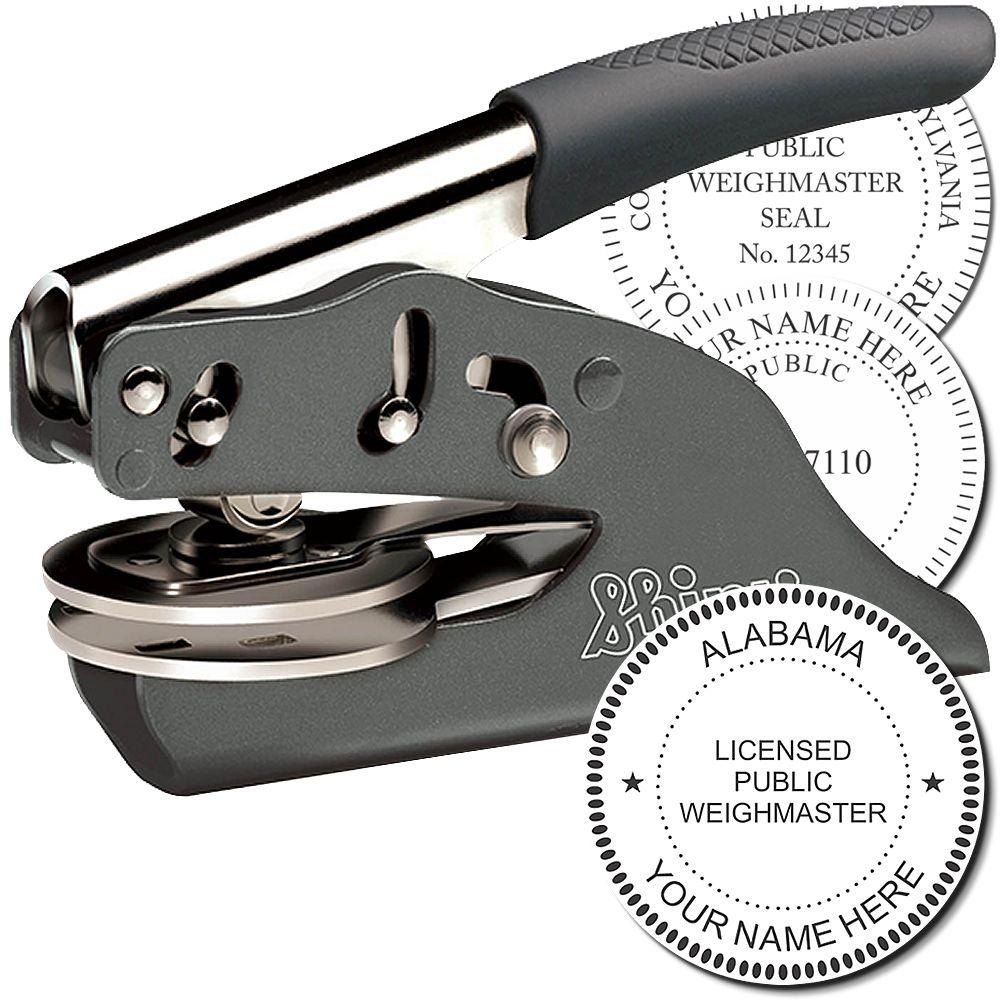
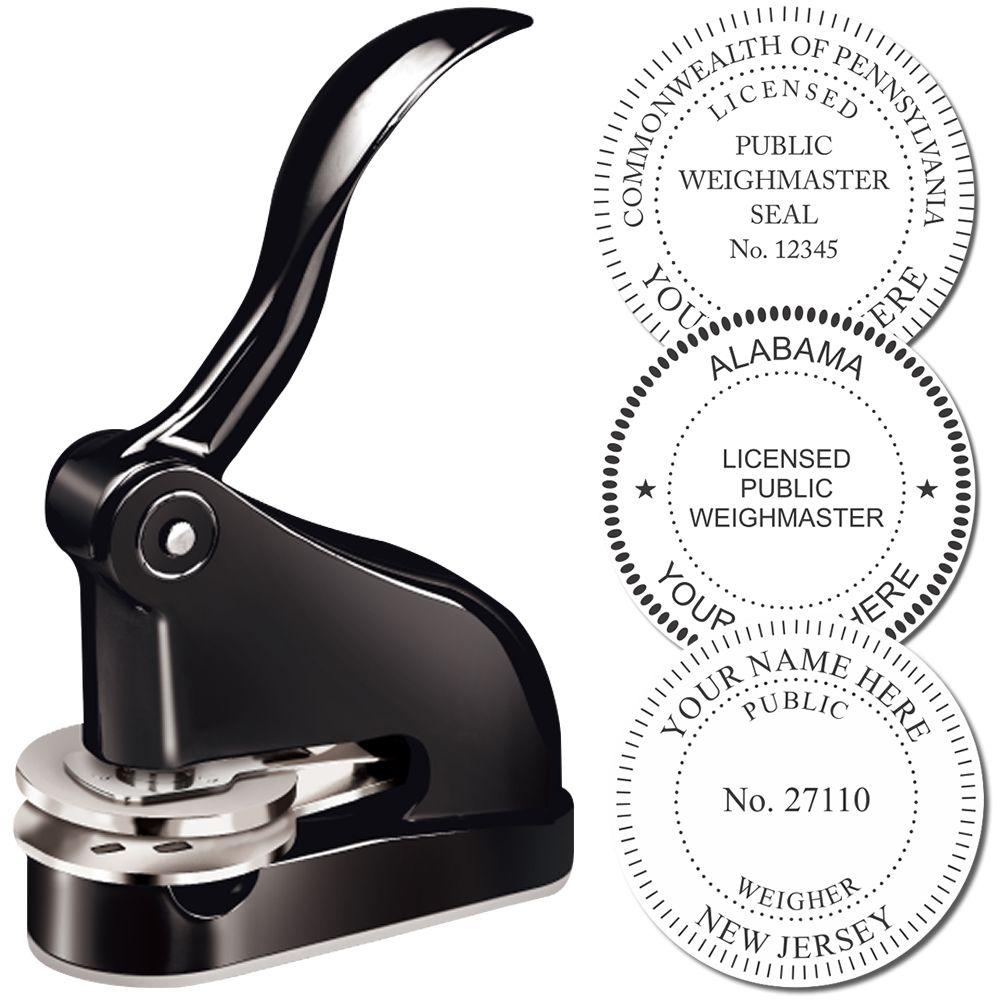
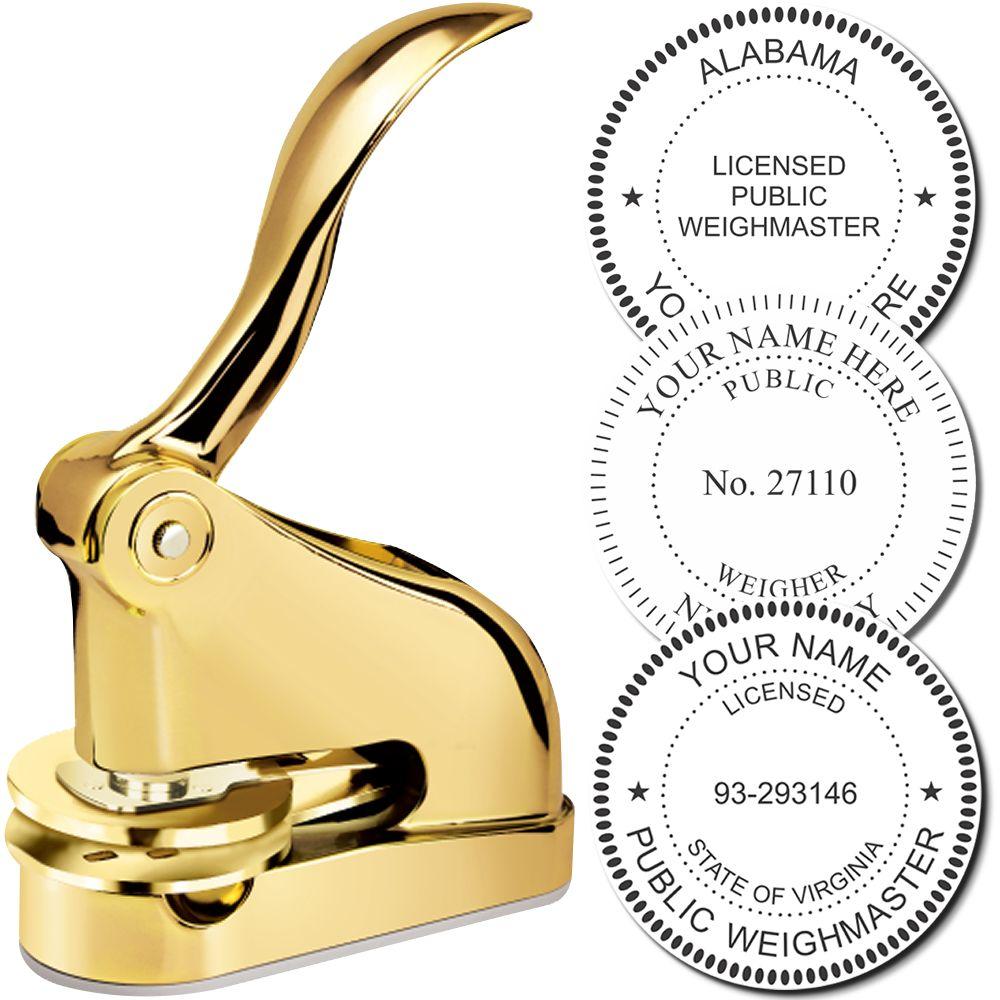
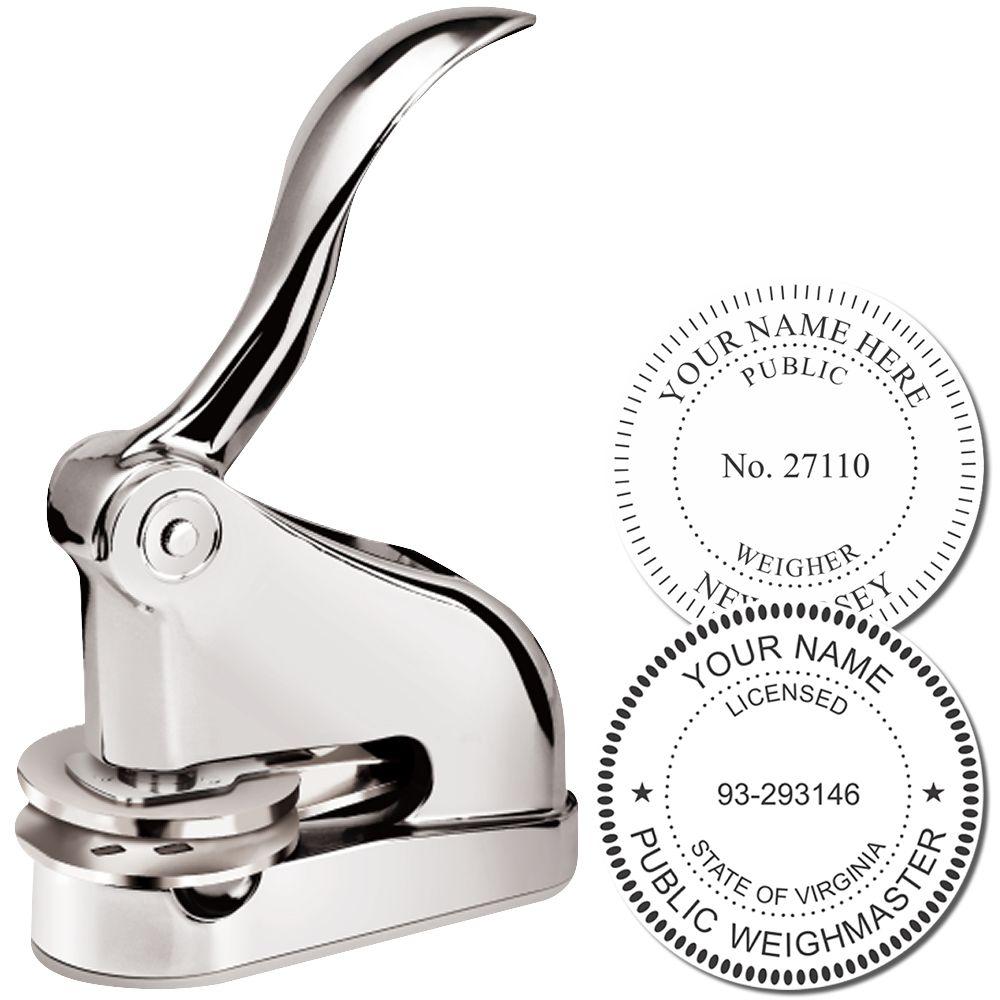
Because the statute says impression seal, the device is an embosser. The Public Weighmaster Handheld Seal Embosser at $46.95 travels between scales, and the Public Weighmaster Desk Seal Embosser at $44.95 is easier on the hand when you are sealing every certificate in a shift. The Soft Seal Embosser at $44.95 has a rubber handle for the same reason. A yard sealing continuously may want the Heavy Duty Standard Reach Embosser at $1,795.00. Browse the public weighmaster stamps and seals collection, or contact us with your wording. This page is a research summary and not legal advice.
- Public Weighmaster Stamps and Seals
- Maine Weighmaster Seal: Wording Fixed by Statute
- New Jersey Weighmaster Seal Says Public Weigher
Frequently asked questions
Does Mississippi require a weighmaster seal?
Yes, with an alternative. Miss. Code Ann. 75-27-311 requires each bonded weighmaster to provide an impression seal at his or her own expense, and requires that the seal, or the licensee’s name and number, be impressed or inscribed electronically upon each weight certificate. A licensee whose certificates carry the name and license number electronically is within the section without a physical die.
What exactly goes on a Mississippi weighmaster seal?
The licensee’s name and the word Mississippi inscribed around the outer margin, and the words Bonded Weighmaster inscribed in the center. That center phrase is fixed by 75-27-311 and is not the same as the public weighmaster or public weigher wording used on the licensing paperwork.
Can I put public weighmaster in the center instead?
No. The statute says the words Bonded Weighmaster shall be inscribed in the center thereof. Section 75-27-307 uses public weighmaster for licensing and the Department’s forms use public weigher, but the seal section fixes the wording on the die.
Is a license number required on the seal?
Not on the physical seal. 75-27-311 asks for the licensee’s name and the word Mississippi on the margin and Bonded Weighmaster in the center. The number appears in the electronic alternative, which is the licensee’s name and number.
How big should the seal be?
No size is published. 75-27-311 prescribes the inscription and its layout and states no diameter, dimension or shape, and no separate rule prescribing the seal was located. Choose a size that keeps a long name legible on the margin.
When does a Mississippi weighmaster license expire?
June 30 of each year, under 75-27-307 as amended. The 1997 enacted text shows fees of $25.00 for an individual and $100.00 for a business, and the Department’s current application package states a $100.00 annual business license fee. Later amendments could not be checked against an official code source.
What else does the state require besides the seal?
The Department’s application package calls for the application, the Weighmaster’s Oath, a Blanket Weighmaster’s Bond with a penal sum of $5,000 and a Continuation Certificate signed by the surety. A business with more than one location must obtain a license and a surety bond for each physical location. The surety bond section is 75-27-313.
What must a Mississippi weight certificate contain?
We could not establish it. That rule sits in 75-27-315, and Mississippi does not publish its Code free on a state operated site, so the section could not be read from an official source. Ask the Department for the current text of 75-27-315 before designing or printing certificate stock.








