

Written by Acorn Sales Company, manufacturing stamps and seals since 1964 · Reviewed by Holly R, VP of Sales and Marketing at Acorn Sales, against the District of Columbia Revised Uniform Law on Notarial Acts at D.C. Code §§ 1-1231.01 and following, 17 DCMR chapter 24, and the notary office’s Notary Public Handbook on 21 September 2026 · Updated 21 September 2026
The District of Columbia is not a rubber stamp jurisdiction, and ordering for it like one is the most common mistake. DC calls the device a notarial sealer: an embossing device used with a seal impression inker so the impression is legible, permanent and photographically reproducible. It must be circular and no larger than 1.75 inches, carrying your name, the words “Notary Public”, “District of Columbia” and your expiration date. And when your commission ends you surrender it rather than destroying it.
District of Columbia notary stamp requirements at a glance
| Requirement | District of Columbia rule | Source |
|---|---|---|
| Stamp required | Yes | D.C. Code § 1-1231.14(b)(1), (b)(2), (a)(5)(B) |
| Required wording | Your name, exactly as stated on the commission, The words “Notary Public”, in the center, The words “District of Columbia” and Your commission expiration date | D.C. Code § 1-1231.16(a)(1) |
| Size and shape | Circular, with a border no larger than 1.75 inches. | 17 DCMR § 2404 |
| Ink color | No color is specified anywhere. | 17 DCMR § 2404 |
| Embosser | The District is the one place where the embosser is the primary instrument rather than an optional extra. | D.C. Code §§ 1-1231.14(b)(1), 1-1231.17 |
| Commission term | Terms run five years with a $2,000 bond, and a new seal is required at every renewal because the expiration date is a mandatory element. | D.C. Code § 1-1231.19 |
| Name or address change | Notify within 15 calendar days, a deadline that lives in the rules rather than the statute. | D.C. Code § 1-1231.19 |
| Lost or stolen stamp | Notify the Mayor promptly if the sealer or signature is lost, stolen, damaged or otherwise incapable of affixing a legible image. | D.C. Code §§ 1-1231.17(a), (b), 1-1231.18(e), (f) |
| Commissioning authority | The Mayor, acting through the Office of Notary Commissions and Authentications, a division of the Office of the Secretary of the District of Columbia | the District of Columbia Revised Uniform Law on Notarial Acts at D.C. Code §§ 1-1231.01 |
Rules for other states are on notary stamp requirements by state.


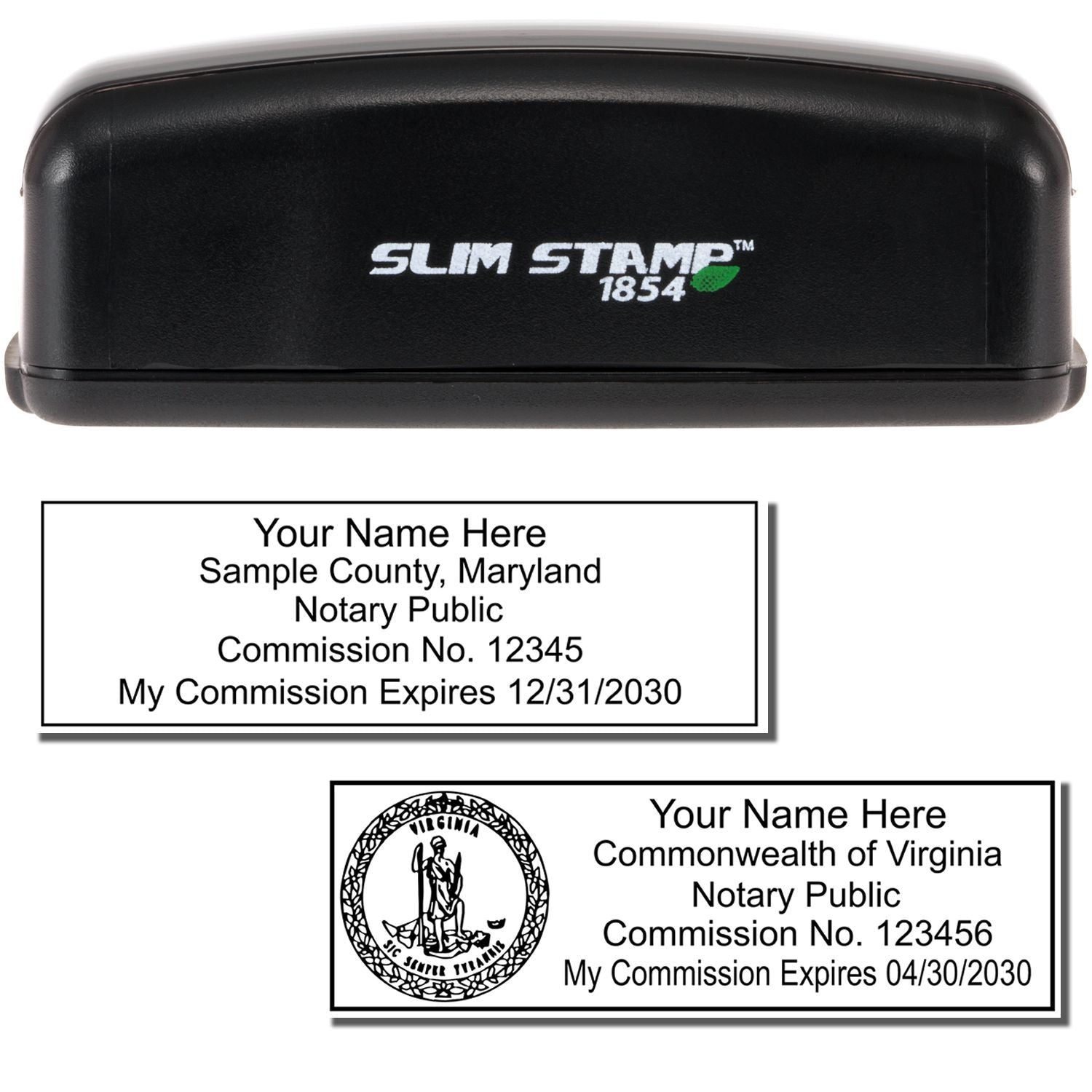





Is a notary stamp required in District of Columbia?
Yes, on every notarial certificate, and the duty is in the certificate section rather than the seal section: for a tangible record notarized by a notary public “an official seal shall be affixed to or embossed on the certificate”, and for an electronic record it “shall be attached to or logically associated with the certificate”. The certificate separately has to indicate your commission expiration date, which is a duty distinct from the seal.
The governing text is D.C. Code § 1-1231.14(b)(1), (b)(2), (a)(5)(B).
What must appear on a District of Columbia notary stamp?
- Your name, exactly as stated on the commission
- The words “Notary Public”, in the center
- The words “District of Columbia”
- Your commission expiration date
Where each element comes from matters here more than in most places. Your name, the words “District of Columbia” and the expiration date are statutory. The words “Notary Public”, the circular shape, the size cap and the top, center and bottom arrangement come from the administrative rule, because the statute says only that the seal must carry “other information required by the Mayor” and that the Mayor shall issue rules on size and form. The handbook closes the list: “No other language or description is allowed.”
What size and shape must a District of Columbia notary stamp be?
Circular, with a border no larger than 1.75 inches. The District is the rare jurisdiction with a hard dimensional cap, and note that it is a maximum rather than a specification, so a smaller compliant seal is fine. The statute itself sets no size and delegates the question to the Mayor. We should flag one thing honestly: the rule chapter was amended effective 3 November 2023 and the section was retitled, and we verified the 1.75 inch figure from the official final rulemaking text and from the current handbook rather than from the amended chapter itself.
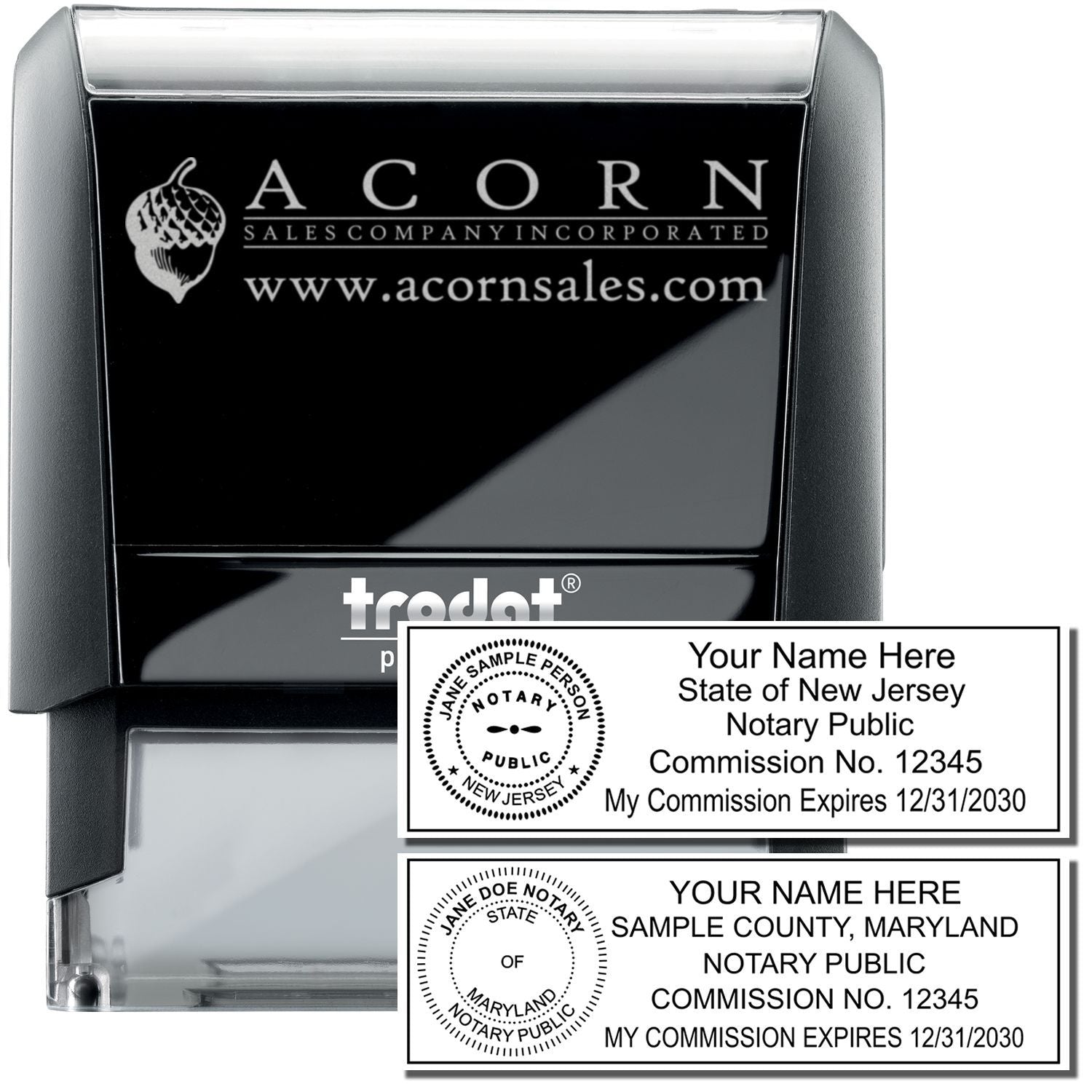
Notary public stamps are made to these conventions, and we check your lines against the statutory wording before we make the stamp.
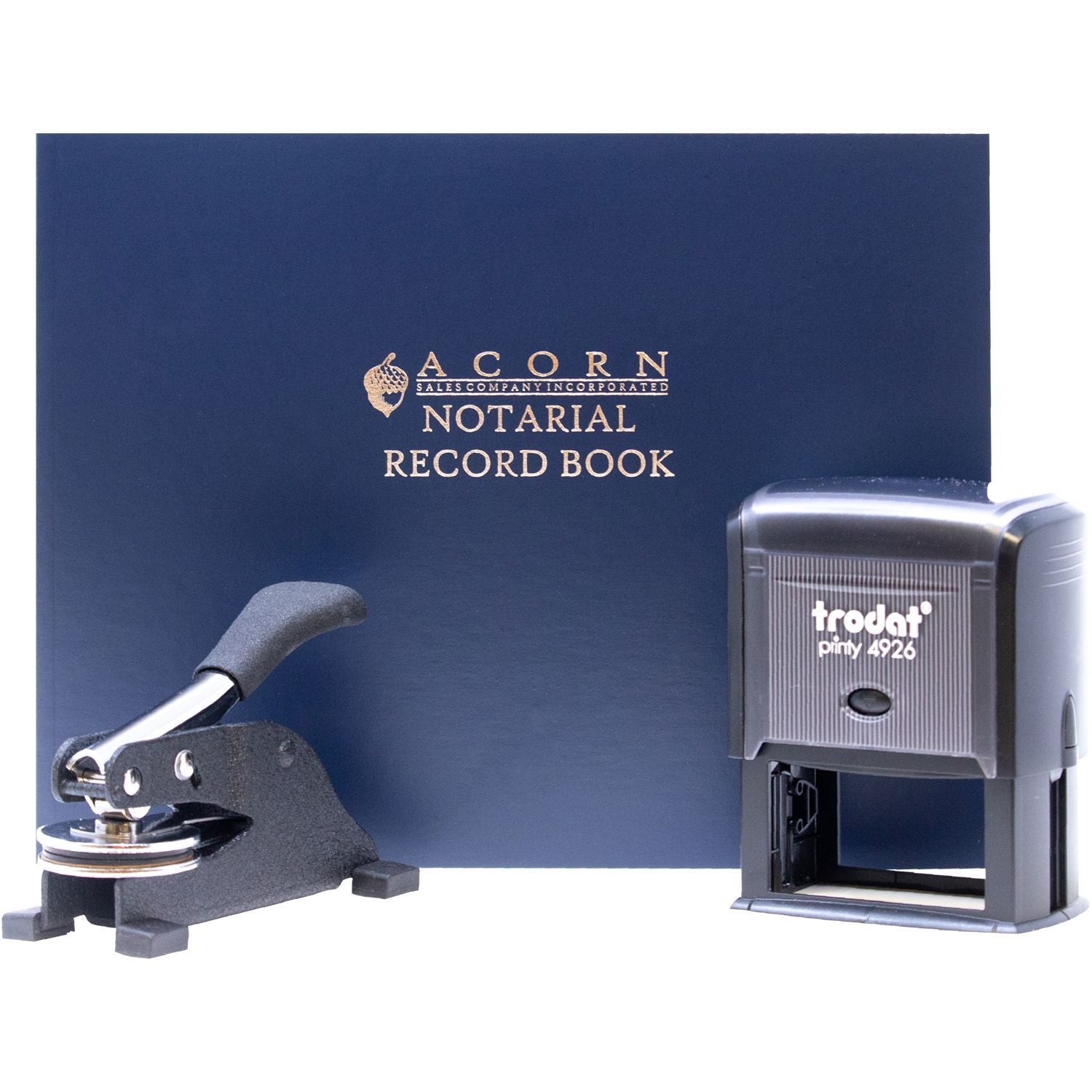

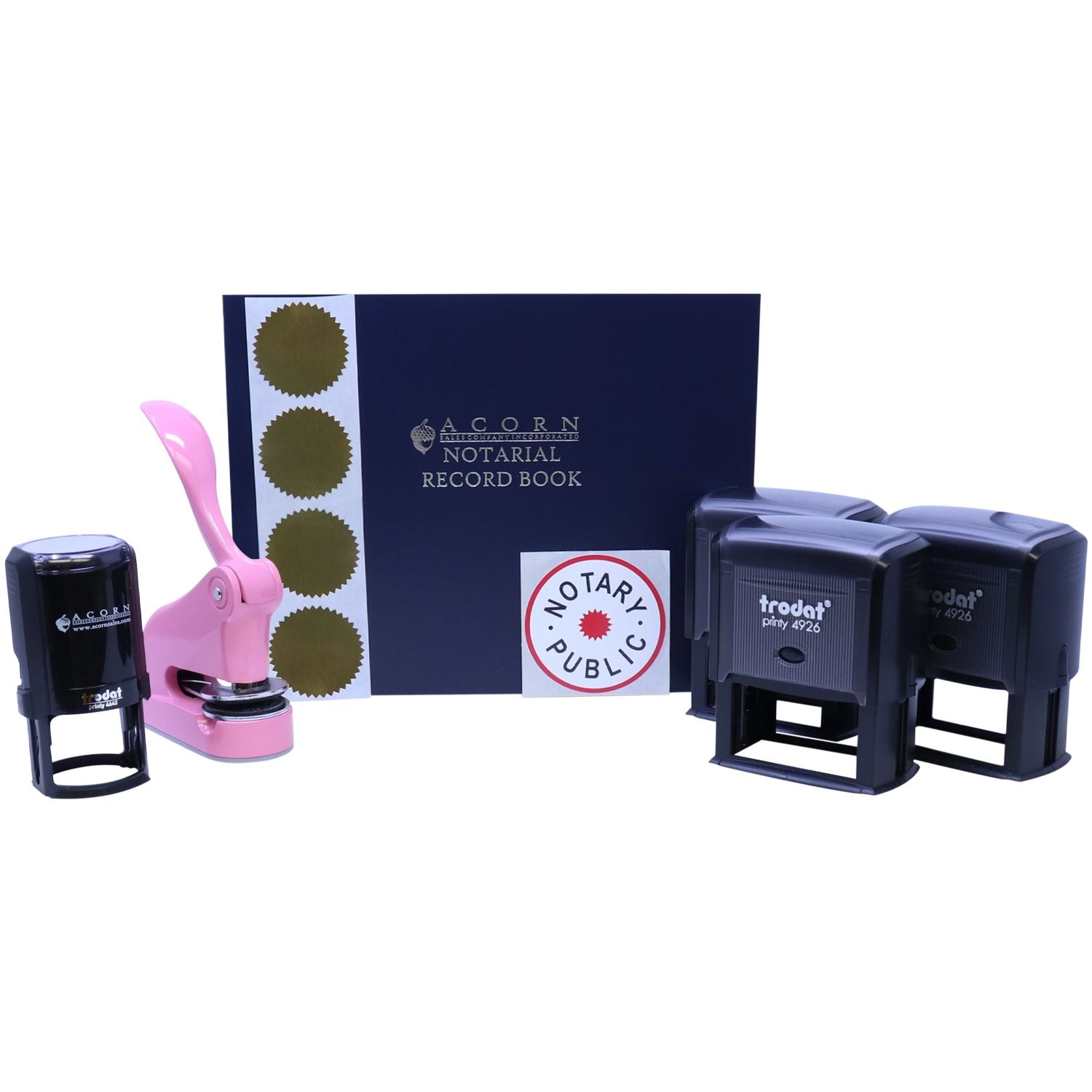

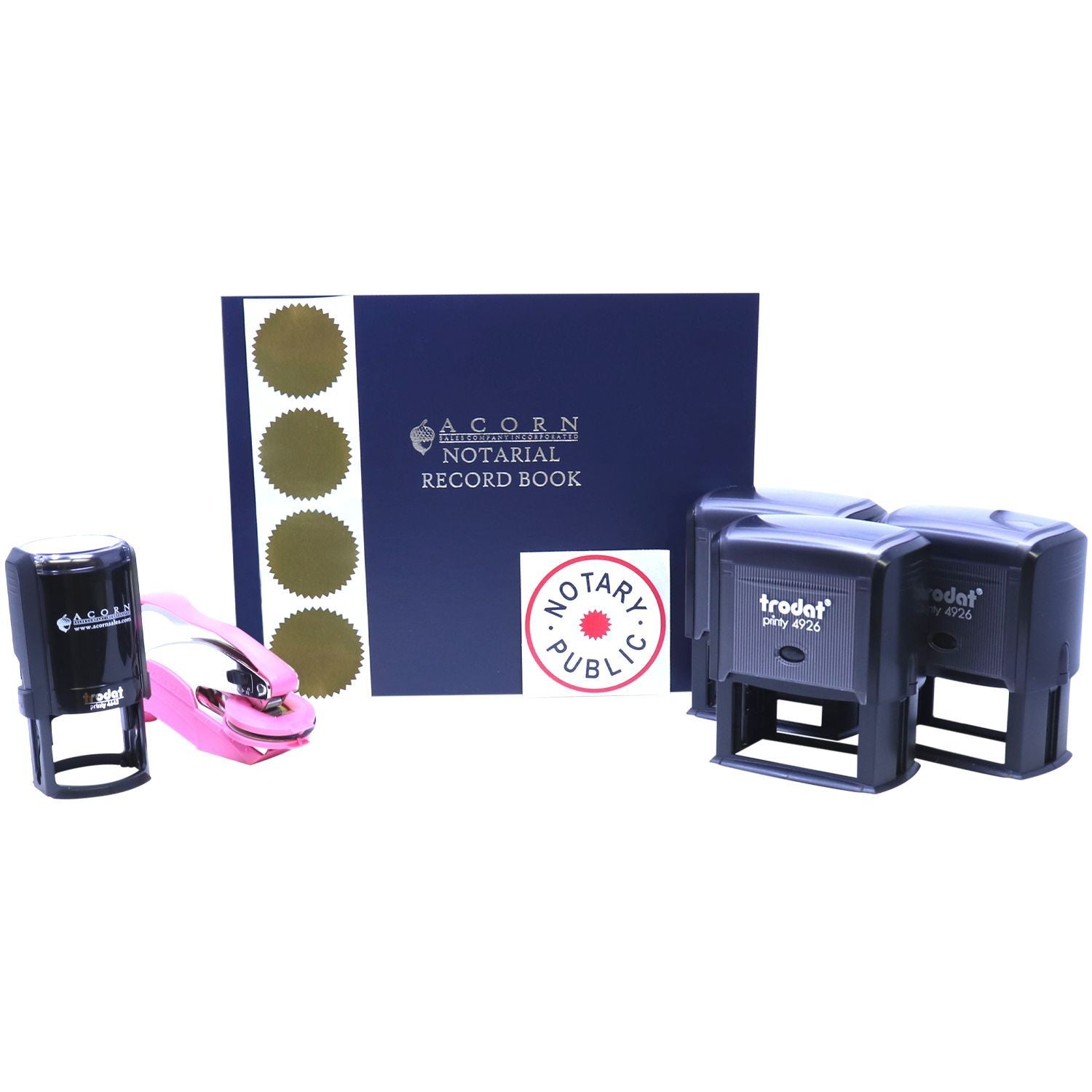


What ink color is required for a District of Columbia notary stamp?
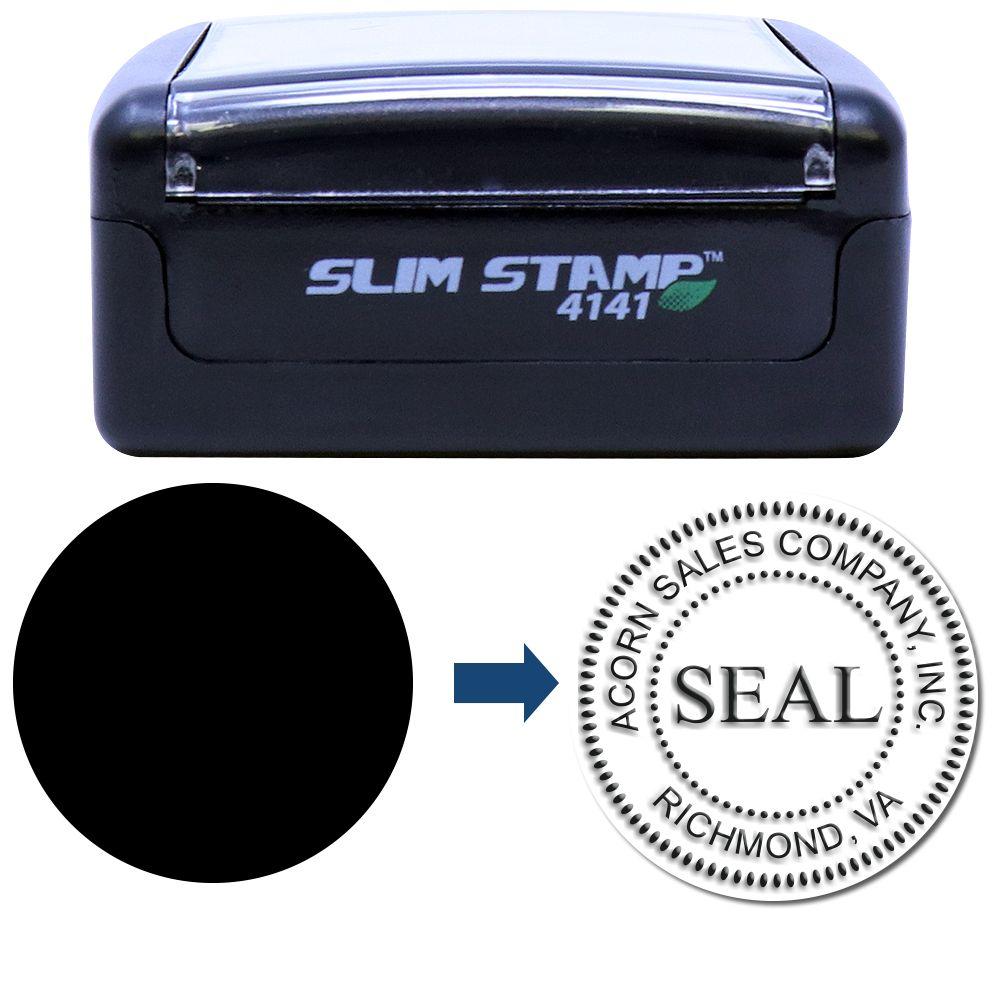
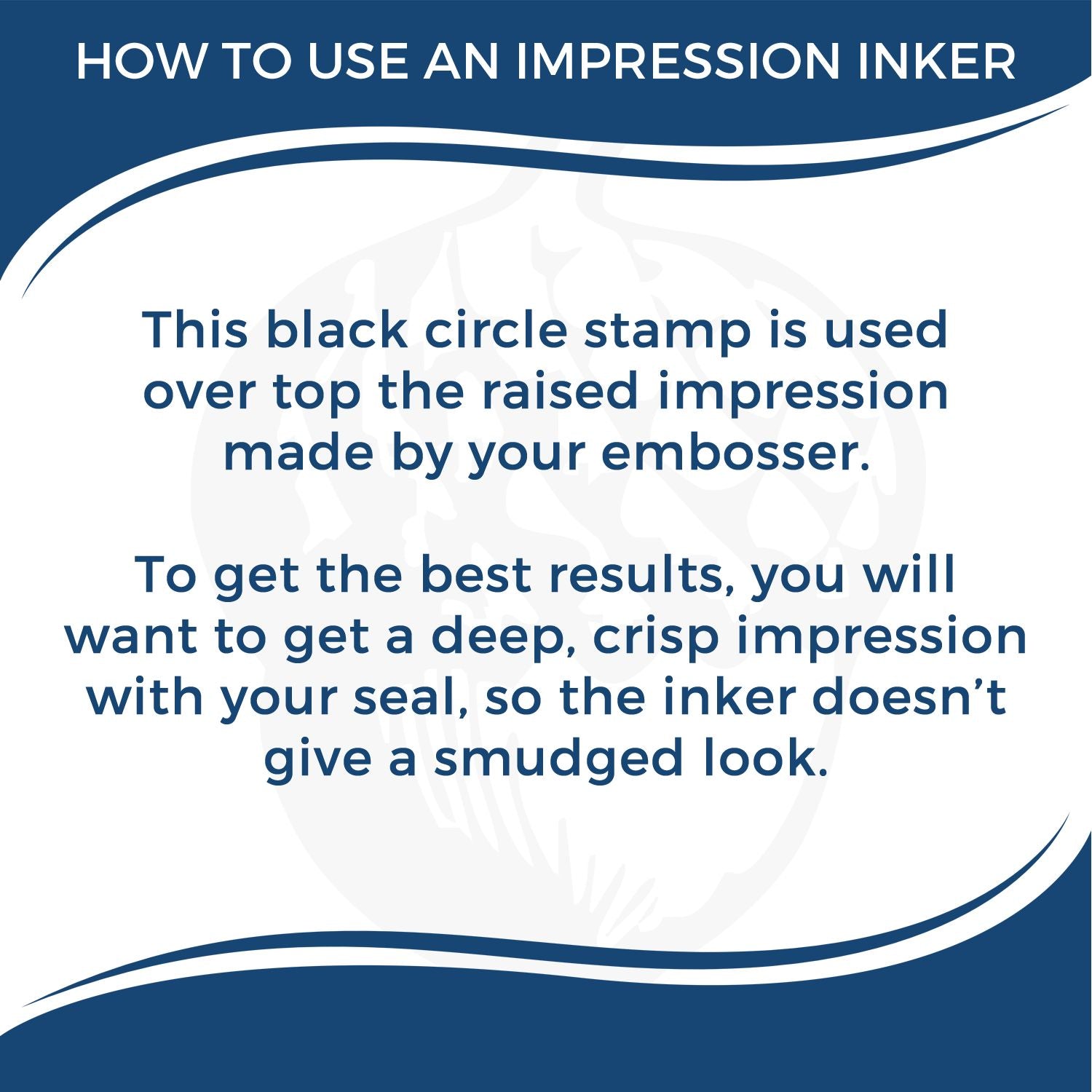
No color is specified anywhere. What the District requires instead is an inking device, which is the detail that catches out anyone ordering a seal for DC: “A seal impression inker shall be used in conjunction with the official seal, making the impression legible, permanent, and photographically reproducible.” For non-porous surfaces, an embossed seal is to be used alone or with “a non-porous, permanent ink that dries through evaporation.” The Recorder of Deeds adds only that notarized documents must carry the seal, signature, name and expiration date, and be clear and easy to read.
More on the trade-off in stamp ink color rules.
Is a notary embosser required or optional in District of Columbia?
The District is the one place where the embosser is the primary instrument rather than an optional extra. The statute contemplates a seal “affixed to or embossed on” the certificate and calls the device a notarial sealer. The handbook describes the result as making “a raised impression in the paper” and notes the sealer was once simply called the embosser. Combine that with the inker rule and the District wants a sealer used with a seal impression inker, not the self-inking rubber stamp that most states assume. You furnish it at your own expense.
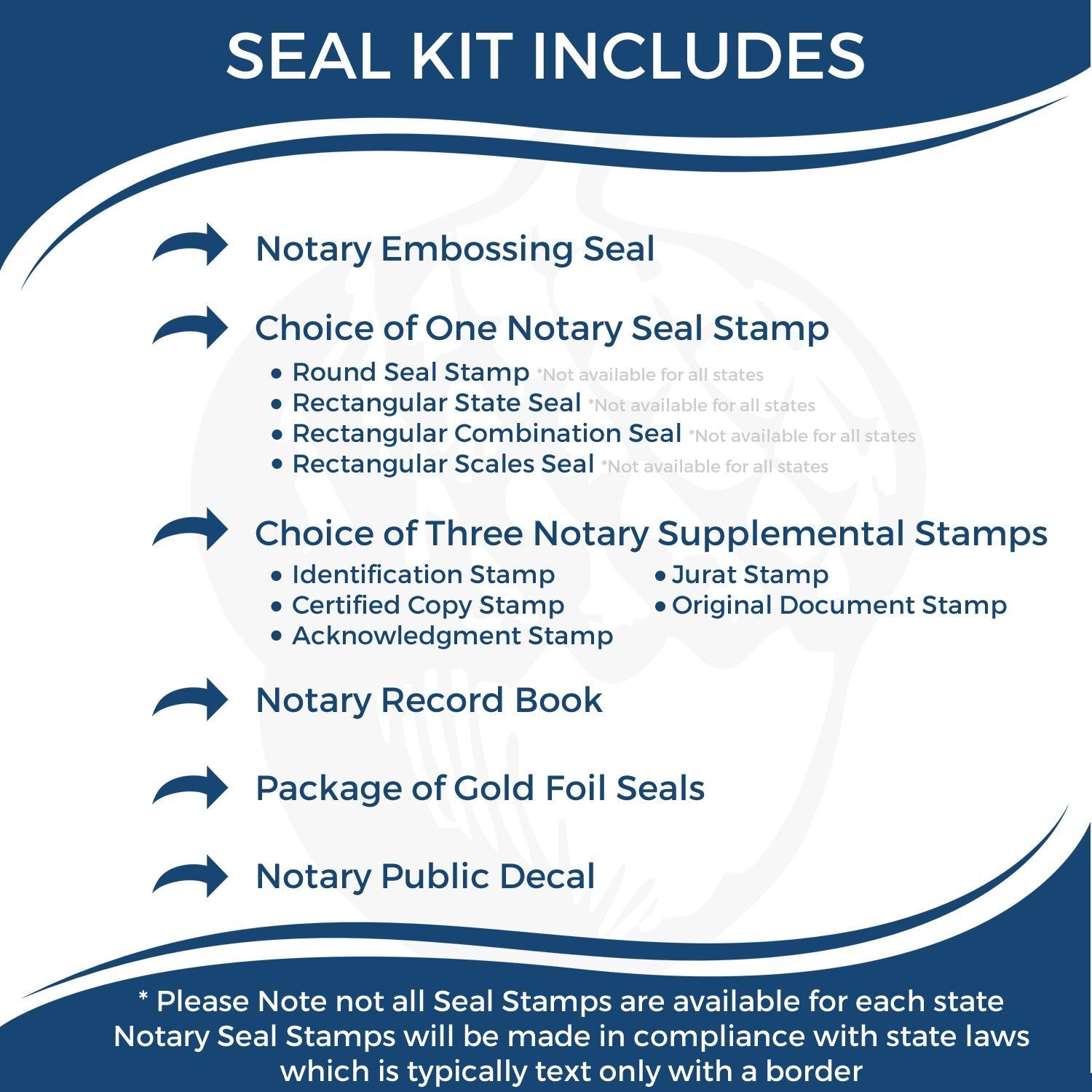
Notary embossing seal kits and inked stamp kits cover both formats. See also notary stamp vs. embosser.
The District wants a sealer and an inker, not a rubber stamp
If you order a District of Columbia notary seal the way you would order one for Maryland or Virginia, you will probably order the wrong thing.
The District calls the device a notarial sealer. Its rules describe a raised impression made with an embossing device, used together with a seal impression inker so the result is “legible, permanent, and photographically reproducible”, and for slick non-porous stock a non-porous ink that dries by evaporation. A plain self-inking rubber stamp is not what those rules describe. Where Colorado bans the embosser outright, the District builds its whole scheme around one.
Three more District rules with no equivalent nearby. Your seal must be circular and no larger than 1.75 inches. When your commission ends you surrender the sealer and the journal to the notary office rather than destroying them, which is the reverse of the habit every neighboring state teaches. And a replacement seal must carry a distinctive mark, an asterisk or a dot, so it cannot be confused with a lost one. Tell us about that mark when you order, because it has to be cut into the die.
Finally, a timing trap: the District sends no renewal reminder, your application needs approval 45 days before expiry to avoid a lapse, and you may not buy supplies until your Appointment Notice issues. Order late and you are not notarizing.
Do I need a new stamp when my commission is renewed or my name changes?
Terms run five years with a $2,000 bond, and a new seal is required at every renewal because the expiration date is a mandatory element. The District enforces the sequence procedurally: you may buy your supplies only after your Appointment Notice issues, and you then present an impression of the new seal to the notary office. Two hard deadlines catch people. You have 60 days from the start of your commission to take the oath or you must reapply, and a renewal application needs to be approved at least 45 days before your current commission expires to avoid a lapse. No renewal reminder is sent.
Notify within 15 calendar days, a deadline that lives in the rules rather than the statute. A legal name change requires the legal document plus proof that you have notified your surety bond company, a new sealer bearing a distinctive mark, and an in-person visit to provide an impression. If your District employment or residence ends you must resign, and on resigning you send both your journal and your sealer to the notary office.




What do I do if my District of Columbia notary stamp is lost or stolen?
Notify the Mayor promptly if the sealer or signature is lost, stolen, damaged or otherwise incapable of affixing a legible image. No numeric deadline appears in the statute. The notary office adds two procedural steps you will not find elsewhere: file a police report, and order the replacement seal with a distinctive mark such as an asterisk so it is visually distinguishable from the missing one, then bring an impression of it to the office.
How do I dispose of an expired District of Columbia notary stamp?
You surrender it. You do not destroy it. This is the largest divergence between the District and the states around it. On death, resignation or removal from office, the notary’s records “including all the official papers, shall be deposited with the Mayor”, and the notary office instructs a departing notary to send both the journal and the sealer in. There is no destroy, deface or disable command anywhere in the District’s law.
More on retiring an old device in how to dispose of an expired notary stamp.
Can I notarize electronically or remotely in District of Columbia?
In-person electronic notarization has been available since 10 July 2023 and is an endorsement on your existing commission rather than a new commission: a $30 fee, training with a recognized vendor, an oath, and at least one year as a commissioned DC notary. The electronic seal must be “a digital image that appears in the likeness or representation of a traditional physical notary public official seal.” Remote notarization is authorized by statute, with audio-visual recordings retained at least ten years, and the implementing rules were adopted in November 2023. But the District’s own pages currently contradict each other on whether remote notarization is operating. The notary commissions service page describes a live remote endorsement; the FAQ still says remote notarizations are not allowed yet. We are not going to resolve that for you: check with the notary commissions office before relying on it either way. A journal is required.
If you need your seal as an image file for electronic work, see electronic notary seal images.
Who is allowed to sell you a District of Columbia notary seal?
No rule restricts who may sell you a District seal, but there is a filing step that functions like one and that catches people out. You must file your official signature and an impression of your official seal with the notary office, in person, and you must do it again after any replacement. A District seal is not usable until that impression has been filed. Budget a visit into your timeline rather than assuming the seal is ready to use when it arrives.
Related District of Columbia guides
Next step
Have your commission details in front of you before you order, because they go on the stamp and a wrong line means a reorder. Then browse notary public stamps, or contact us and we will check your wording against the statute before we make it.
Frequently asked questions about District of Columbia notary seals
Is a notary seal required in the District of Columbia?
Yes. The duty is in the certificate section rather than the seal section: for a tangible record an official seal shall be affixed to or embossed on the certificate, and for an electronic record it shall be attached to or logically associated with the certificate.
What has to appear on a DC notary seal?
Your name exactly as stated on the commission, the words “Notary Public” in the center, the words “District of Columbia”, and your commission expiration date. The handbook closes the list: no other language or description is allowed.
Is a rubber stamp acceptable in DC?
DC's rules describe something different. They call for a sealer producing a raised impression, used together with a seal impression inker, and for non-porous surfaces a permanent ink that dries by evaporation. A plain self-inking rubber stamp is not what those rules describe, so order the sealer and inker combination.
What size must a DC notary seal be?
Circular, with a border no larger than 1.75 inches. That is a maximum rather than a specification, so a smaller compliant seal is fine. The statute itself sets no size and delegates the question to the rules.
What do I do with my DC seal when my commission ends?
You surrender it, which is the reverse of what most states teach. On death, resignation or removal from office the notary's records including all official papers are deposited with the Mayor, and the notary office instructs a departing notary to send in both the journal and the sealer. There is no destroy-or-deface command anywhere in DC law.
What if my DC notary seal is lost or stolen?
Notify the notary office promptly, file a police report, and order a replacement seal carrying a distinctive mark such as an asterisk so it cannot be confused with the missing one. Then bring an impression of the new seal to the office. Tell us about the distinctive mark when you order, because it has to be cut into the die.
Can I notarize remotely in the District of Columbia?
The statute authorizes it and implementing rules were adopted in November 2023, but the District's own pages currently disagree: the notary commissions service page describes a live remote endorsement while the FAQ still says remote notarization is not yet allowed. We are not going to resolve that for you. Call the notary office on the notary commissions office before relying on it either way.
When can I order my DC notary seal?
Only after your Appointment Notice issues, and you then present an impression of the new seal to the notary office in person. Build that visit into your timeline. Note also that DC sends no renewal reminder and your renewal needs approval at least 45 days before expiry to avoid a lapse.








