
Written by Acorn Sales Company, manufacturing stamps and seals since 1964 · Reviewed by Holly R, VP of Sales and Marketing at Acorn Sales, against Florida Real Estate Appraisal Board, Division of Real Estate, Department of Business and Professional Regulation on 22 September 2026 · Updated 25 September 2026
Florida is one of the few states that puts the report-marking duty in the statute rather than in a rule, and that statute prescribes a position rather than a seal. Sec. 475.622(1), Fla. Stat., requires each appraiser registered, licensed or certified under Part II to place the registration, license or certification number adjacent to or immediately beneath the designation, whether that designation is written out in full or used in one of its rule-defined abbreviations, whenever the term is used in an appraisal report or in a contract or other instrument used in real property appraisal activities.
That word “beneath” is what makes a device worth having here. Florida cares where the number sits relative to the designation, so a block that keeps the two in a fixed relationship removes a recurring chance to get it wrong. It also tells you what the block is for: it is identification, not authentication. There is a seal in chapter 475 Part II, but it belongs to the Board and not to you, and the section below explains why that distinction trips up so many Florida appraisers looking for a seal to buy.
Florida real estate appraiser seal requirements at a glance
| Requirement | Florida rule | Source |
|---|---|---|
| Seal required | No. The only seal in ch. 475, Part II is the Board’s own authenticating seal at Sec. 475.6145. No provision in the Part imposes a seal on a licensee. | Ch. 475, Part II, Fla. Stat., Secs. 475.610 to 475.631; Sec. 475.6145, Fla. Stat. |
| Required elements | The credential designation, or its rule-defined abbreviation, with the registration, license or certification number adjacent to or immediately beneath it, plus the appraiser’s signature. | Sec. 475.622(1), Fla. Stat. |
| Size and shape | Not prescribed. The statute fixes a relative position for the number and says nothing about dimension, border or shape. | Sec. 475.622(1), Fla. Stat. |
| Device allowed | Not prescribed. The statute says to place the number adjacent to or immediately beneath the designation and is silent on how. Note that Sec. 475.614(2) directs the Board to make rules on the means by which a signature is affixed. | Sec. 475.622(1), Fla. Stat.; Sec. 475.614(2), Fla. Stat. |
| Signature and date | A registered trainee or a licensed or certified appraiser may not sign a report or certification without disclosing in writing which of the four credentials is held, even where the work is outside its scope. The supervisory appraiser of a registered trainee signs each report the trainee signs. | Sec. 475.622(2) and (3), Fla. Stat. |
| What must be sealed | Nothing. The duty reaches an appraisal report and also a contract or other instrument used in real property appraisal activities, and it is a placement duty rather than a sealing one. | Sec. 475.622(1), Fla. Stat. |
| Electronic seal | Not established in rule text we could read. Sec. 475.614(2) directs the Board to adopt rules on the means by which a signature may be affixed, including protecting the security of a signature. The implementing rule is r. 61J1-7.0065, Signatures on Appraisal Report and Certification, whose text was not obtained. | Sec. 475.614(2), Fla. Stat.; Fla. Admin. Code r. 61J1-7.0065 (text not obtained) |
| Renewal and lapse | No expiry date is called for on the report, so the block survives renewals. It changes when your credential level changes, because the designation and the number both belong to the credential. | Sec. 475.622(1), Fla. Stat. |
| Firm requirements | None bearing on the face of a report in the provisions read. The Board’s seal at Sec. 475.6145 authenticates the Board’s own proceedings, records and acts. | Sec. 475.6145, Fla. Stat. |
| Regulator | Florida Real Estate Appraisal Board, Division of Real Estate, Department of Business and Professional Regulation | Ch. 475, Part II, Fla. Stat., Secs. 475.610 to 475.631; Fla. Admin. Code ch. 61J1 |



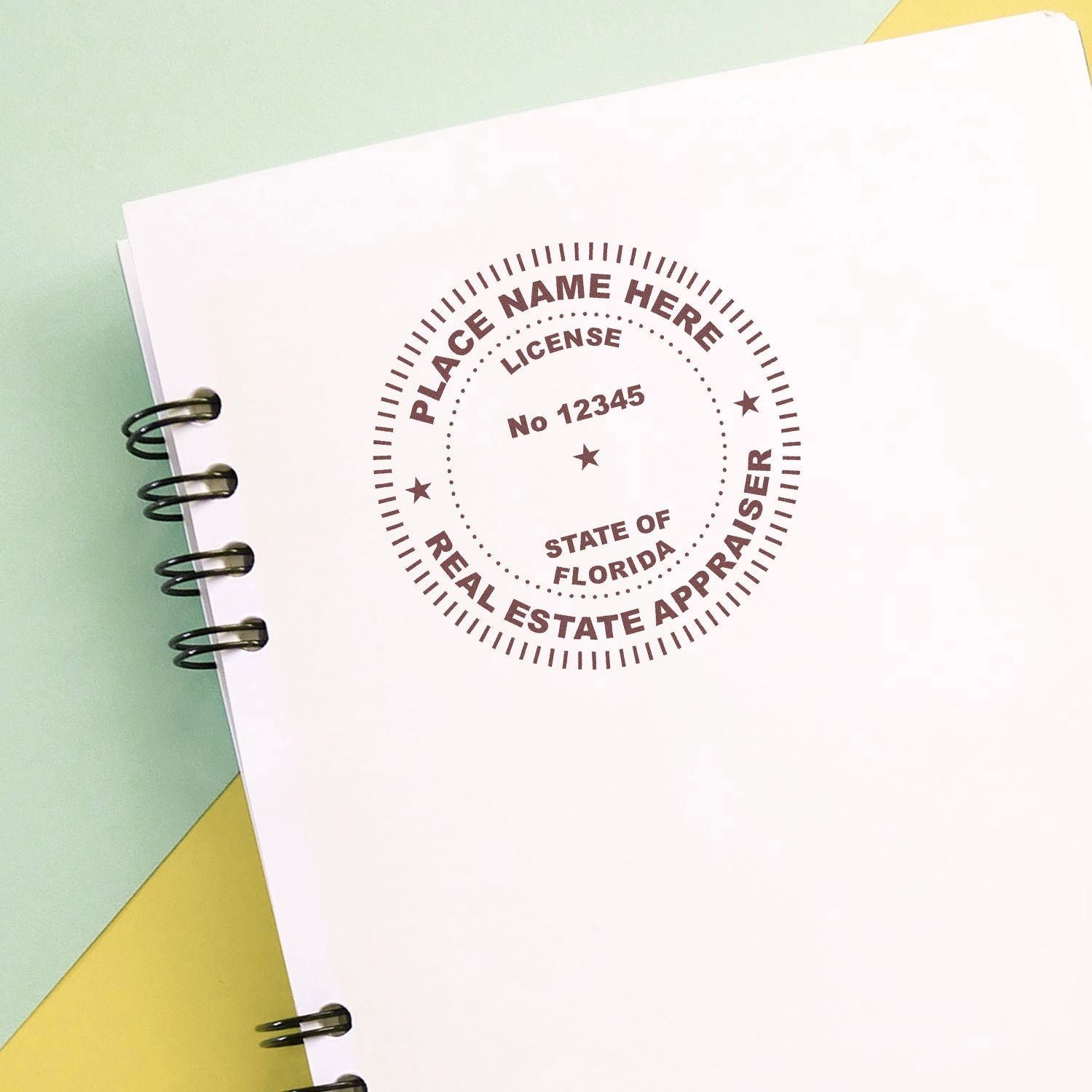
Is a seal required in Florida?
No. The section index for chapter 475, Part II was taken from the Florida Legislature’s own site and every section title from Sec. 475.610 to Sec. 475.631 was read. Exactly one of them is titled Seal, and it is Sec. 475.6145, which belongs to the Board rather than to any licensee. The report-marking duty is somewhere else entirely: Sec. 475.622, which asks for a designation and a number in a specified position. Two rules in chapter 61J1-7 could not be read and are named plainly further down, but the statute answers the question on its own, because the legislature wrote the report-marking duty into the statute rather than delegating it.
The Board’s seal is not your seal
This is the single most common Florida error and it is worth setting out in full. Sec. 475.6145 reads: the board shall adopt a seal by which it shall authenticate its proceedings, records and acts; copies of the proceedings, records and acts of the board, and certificates purporting to relate the facts concerning them, signed by the board chair, the custodian of the records or another authorised person and authenticated by that seal, are prima facie evidence in all courts of this state. A bare section headed Seal, sitting inside the appraiser chapter, is exactly what a keyword search surfaces first. Read what it does: it makes certified copies of Board records admissible in court. It imposes nothing on any appraiser and describes no device an appraiser would ever hold.
What Sec. 475.622 actually says
The operative sentence is long and every clause earns its place. Each appraiser registered, licensed or certified under this part shall place her or his registration, license or certification number adjacent to or immediately beneath the designation state-registered trainee real estate appraiser, state-licensed real estate appraiser, state-certified residential real estate appraiser or state-certified general real estate appraiser, or their appropriate abbreviations as defined by rule, as applicable, when such term is used in an appraisal report or in a contract or other instrument used by the appraiser in conducting real property appraisal activities. Note the reach: not just the report, but a contract or other instrument used in appraisal activities. Note the trigger: the duty attaches when the designation is used.
What to engrave, and where the number goes
A Florida block has two required pieces and a fixed relationship between them. First the designation for the credential you hold, in full or in the abbreviation defined by rule. Then the number, placed adjacent to it or immediately beneath it. Put the number directly under the designation line and you have satisfied the position requirement without having to think about it again. Your signature goes with the block. Your name in print is sensible practice and is not itself named in Sec. 475.622(1). Nothing calls for an expiry date, a state name or a border legend, and a circular border reading State of Florida around the block dresses an identification line up as a credential the state does not issue in that form.



Trainees and supervisory appraisers
Florida writes the supervision rules into the same statute. Sec. 475.622(2) provides that a registered trainee appraiser or a licensed or certified appraiser may not sign any appraisal report or certification, or communicate one, without disclosing in writing which of the four credentials is held, even where the appraisal performed falls outside the scope of that credential. Sec. 475.622(3) provides that the primary or secondary supervisory appraiser of a registered trainee must sign each appraisal report and certification the trainee signs. Sec. 475.622(4) then provides that the supervisory appraiser must disclose her or his own designation and number whenever the trainee is required to make those disclosures. That is two complete blocks on a trainee report, which means two devices rather than one shared one.
The signature is the authenticator here
Sec. 475.614 is headed, in part, requirements for protection of appraiser’s signature, and reading it tells you how Florida thinks about this. Subsection (2) provides that the board shall adopt rules specifying the means by which an appraiser’s signature may be affixed to an appraisal report or other work performed by the appraiser, and that those rules shall include requirements for protecting the security of an appraiser’s signature and prohibiting practices that may discredit the use of an appraiser’s signature to authenticate the work performed. The thing the legislature chose to protect, and the thing it calls the authenticator, is the signature. Not a seal. That subsection was added in 2010 and is what produced rule 61J1-7.0065.
Two rules we could not read, named plainly
Being straight about the limits of this research: the text of two rules in chapter 61J1-7 was not obtained. Fla. Admin. Code r. 61J1-7.0065, Signatures on Appraisal Report and Certification, was created 4 December 2006 and amended 20 December 2011, with rulemaking authority under Sec. 475.614 and law implemented at Secs. 475.613(2) and 475.614. Fla. Admin. Code r. 61J1-7.001, Display and Disclosure of Registration, License or Certification Designation, is the other. The official Florida Administrative Code site serves rule text only as Word documents, which the research tooling here returns as binary rather than as readable text. Both titles and both authority notes point at signatures and disclosure rather than at seals, and the statute already sets the report-marking duty, but if you want the electronic-signature detail, those are the two documents to ask the Division for.
Do not borrow another profession’s rule
Florida prescribes seals for architects, professional engineers, surveyors and mappers and landscape architects, all under the same Department of Business and Professional Regulation, and several of those provisions fix a diameter. None of them reaches a real estate appraiser. If a listing offers you a Florida appraiser seal built to a prescribed size, ask which provision the size comes from, because chapter 475 Part II does not contain one. The same caution applies to anything that quotes Sec. 475.6145 as though it were a licensee duty.
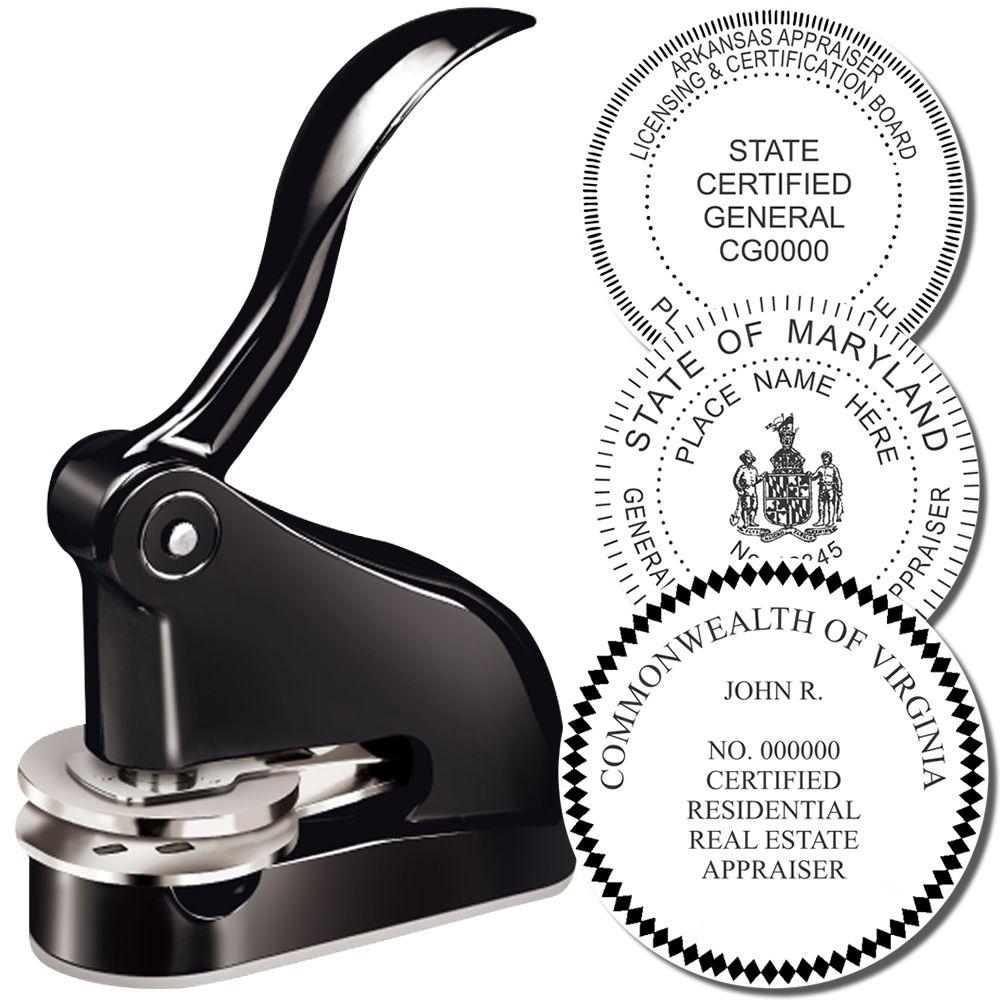


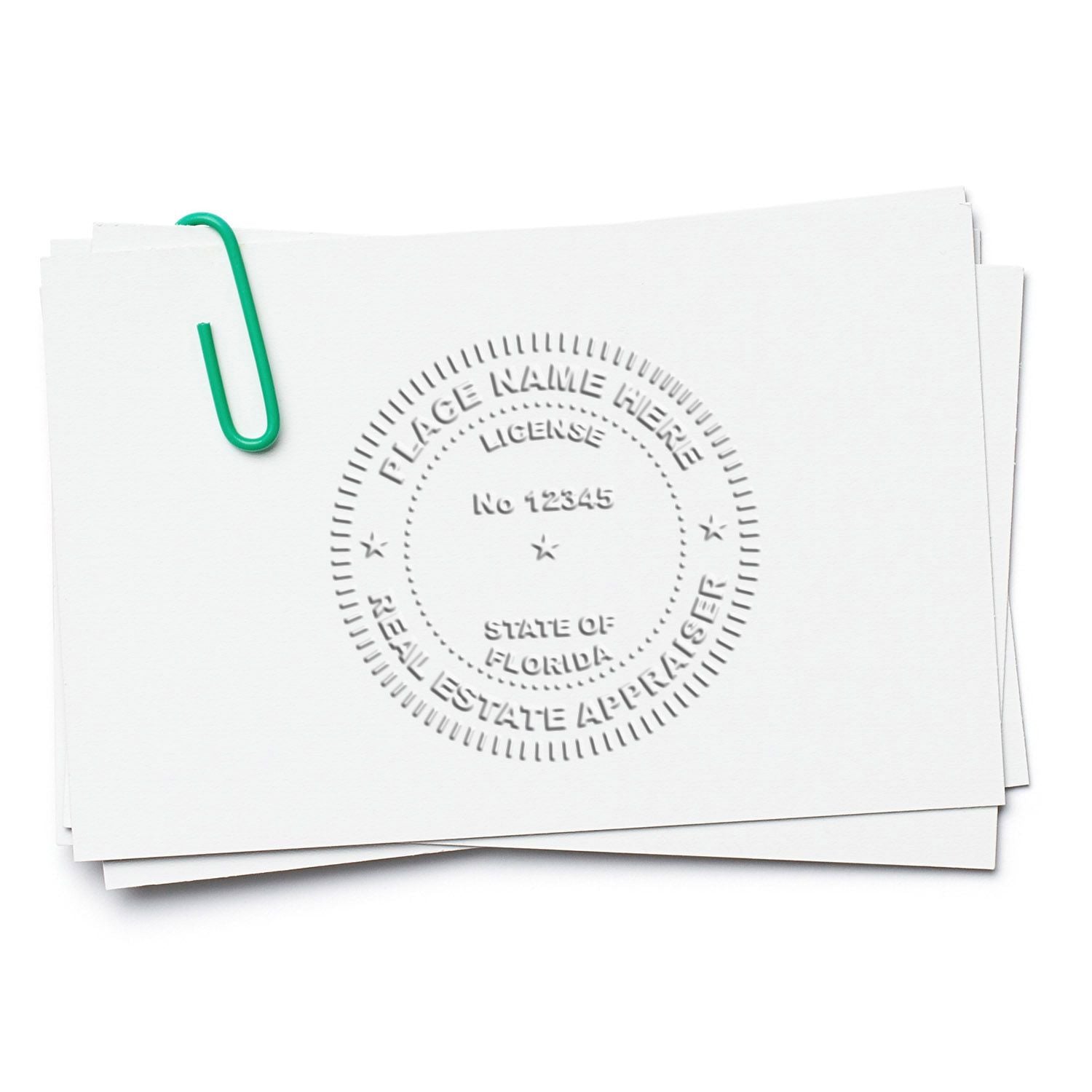

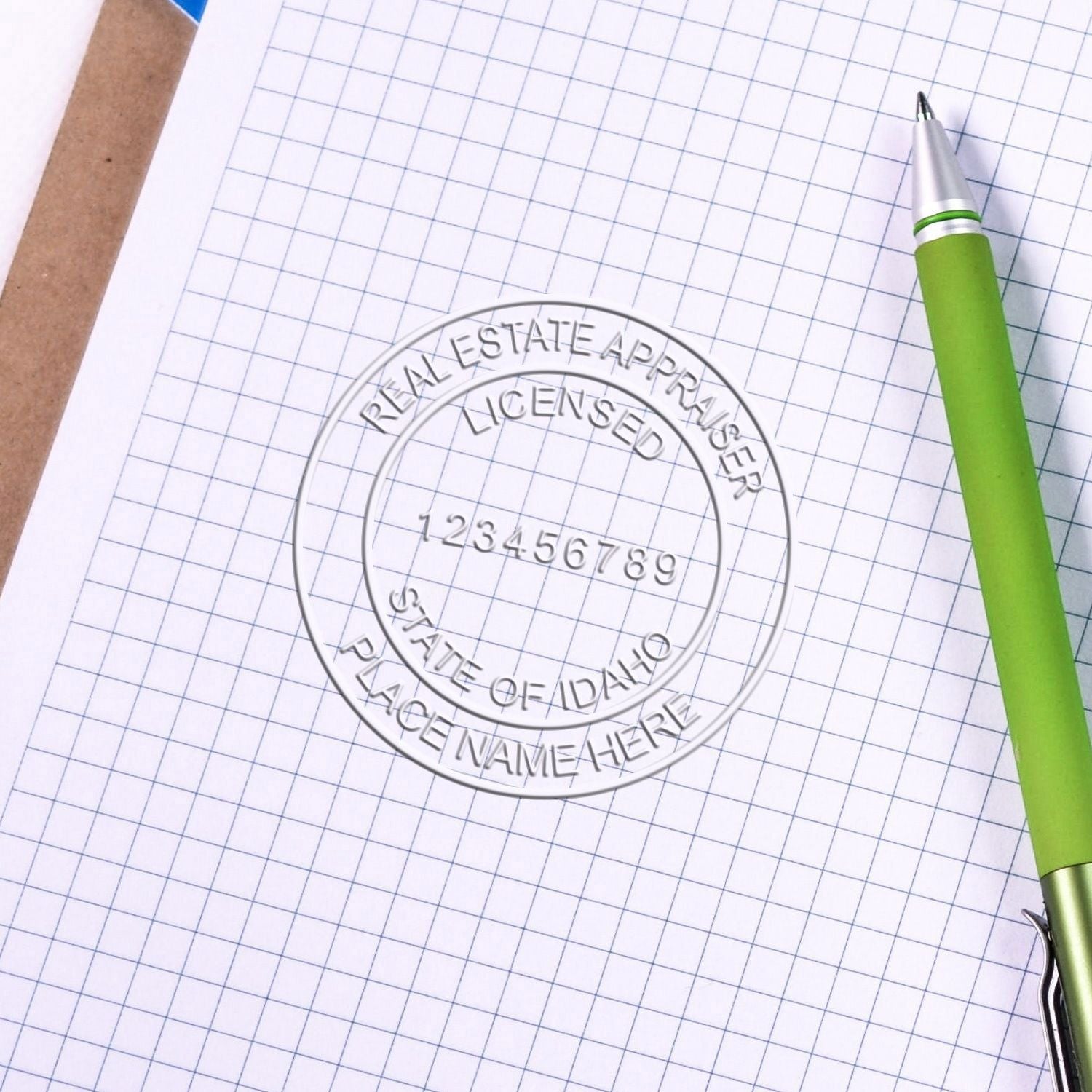
Embosser, ink stamp or the eSeal image
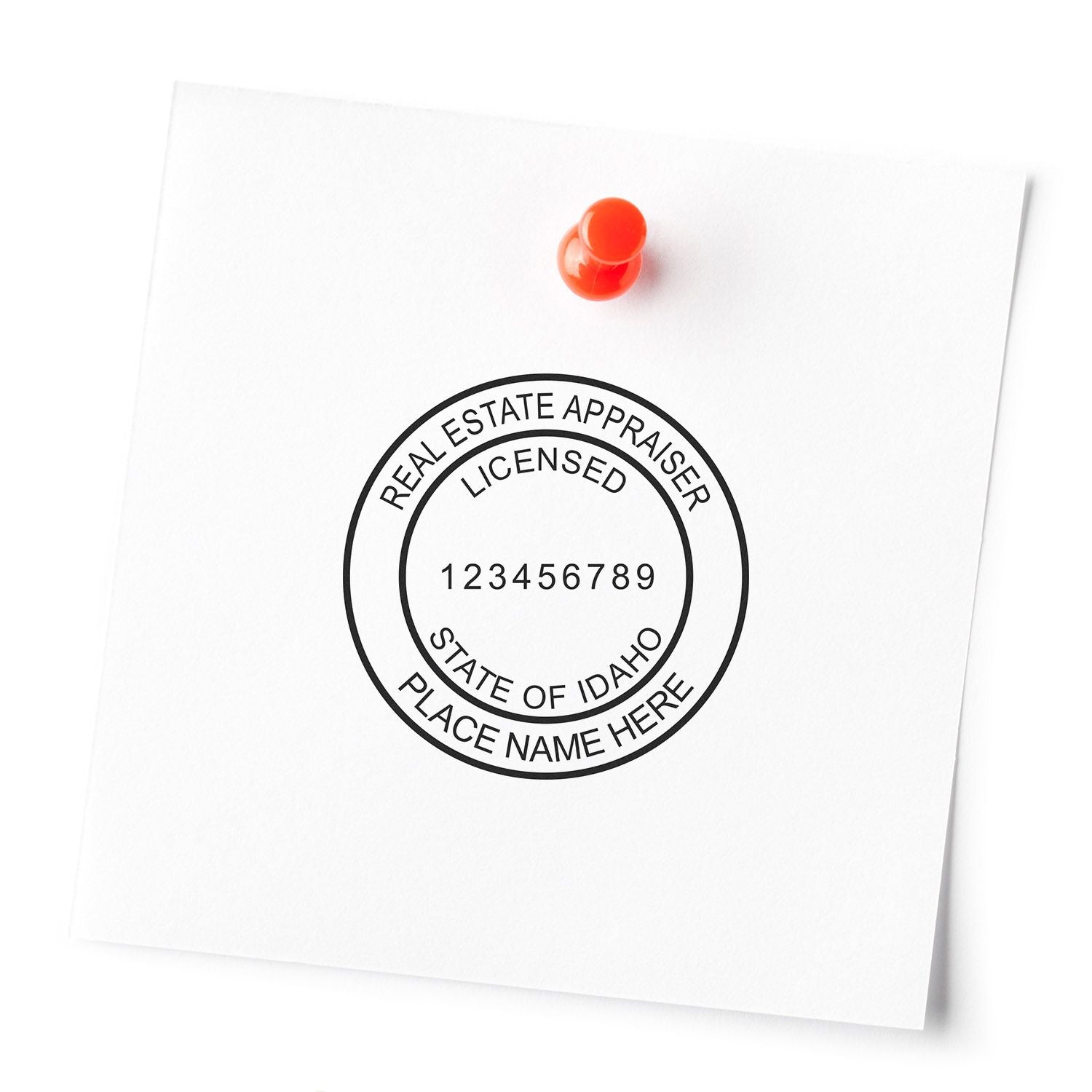
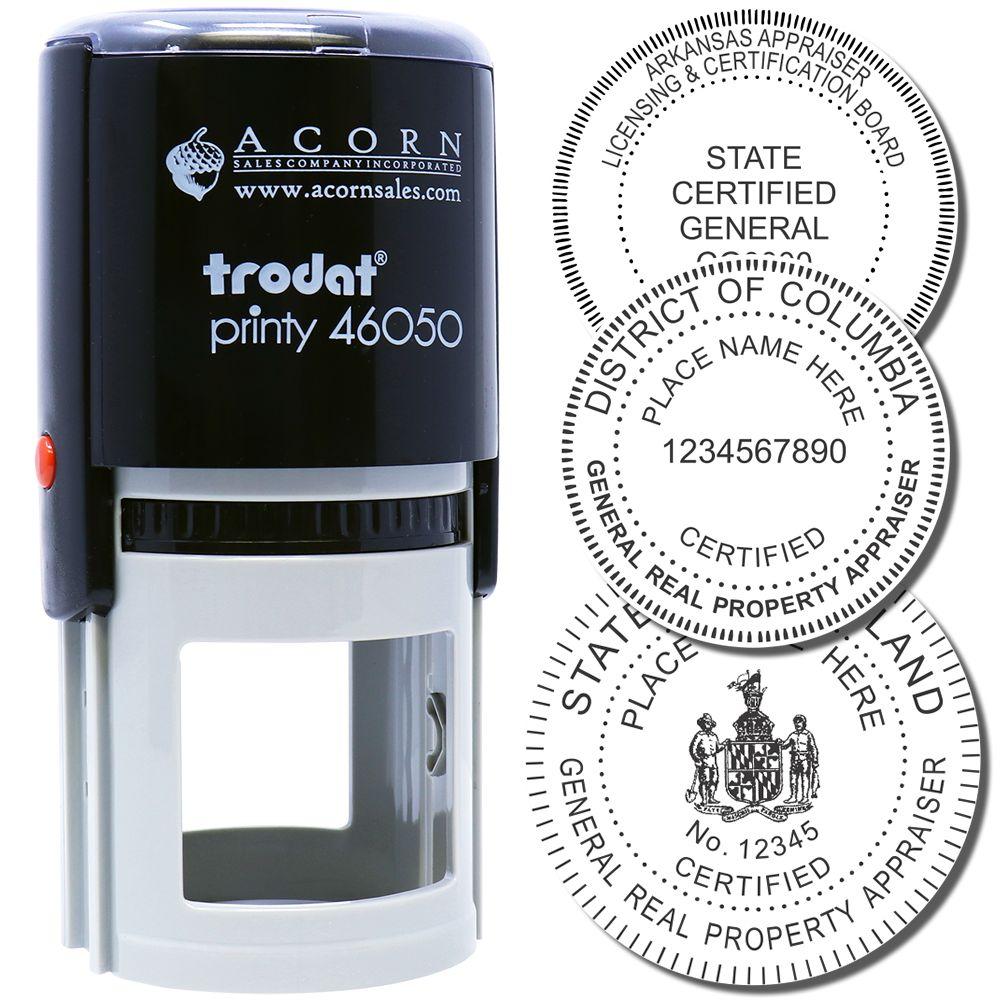
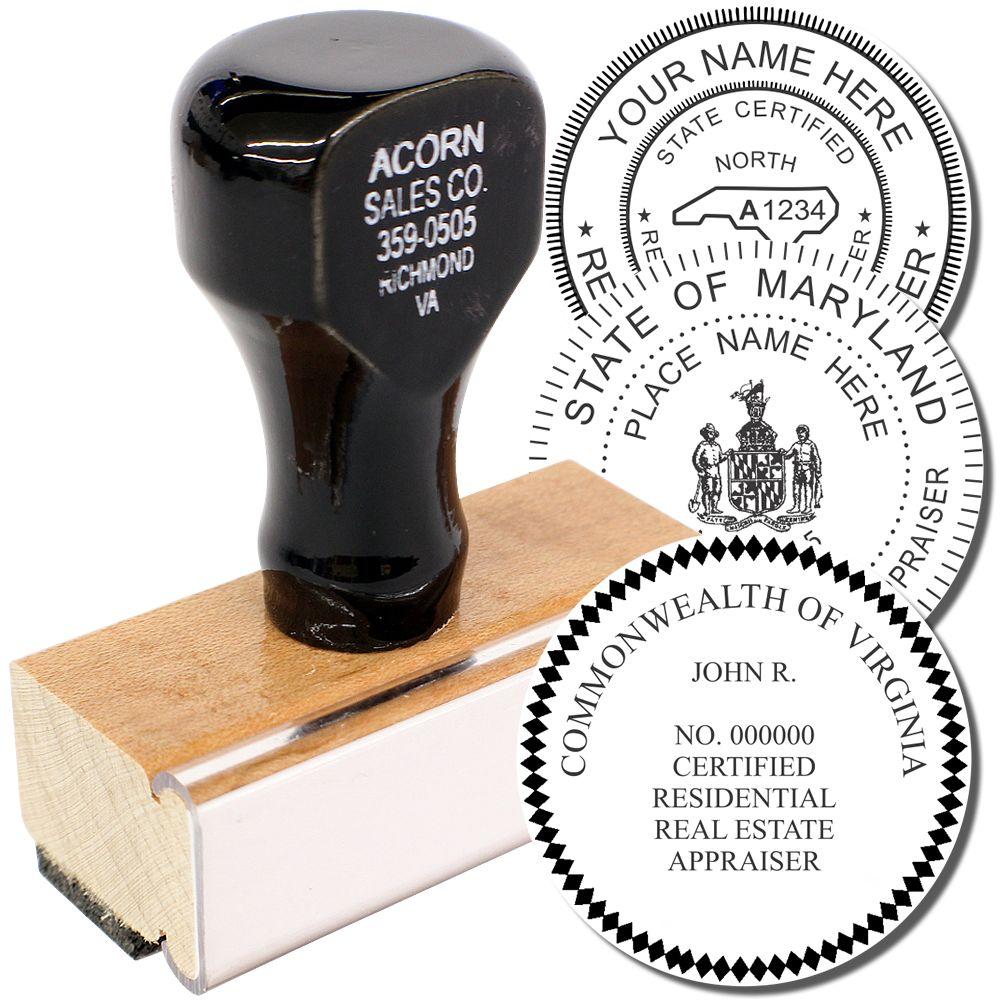
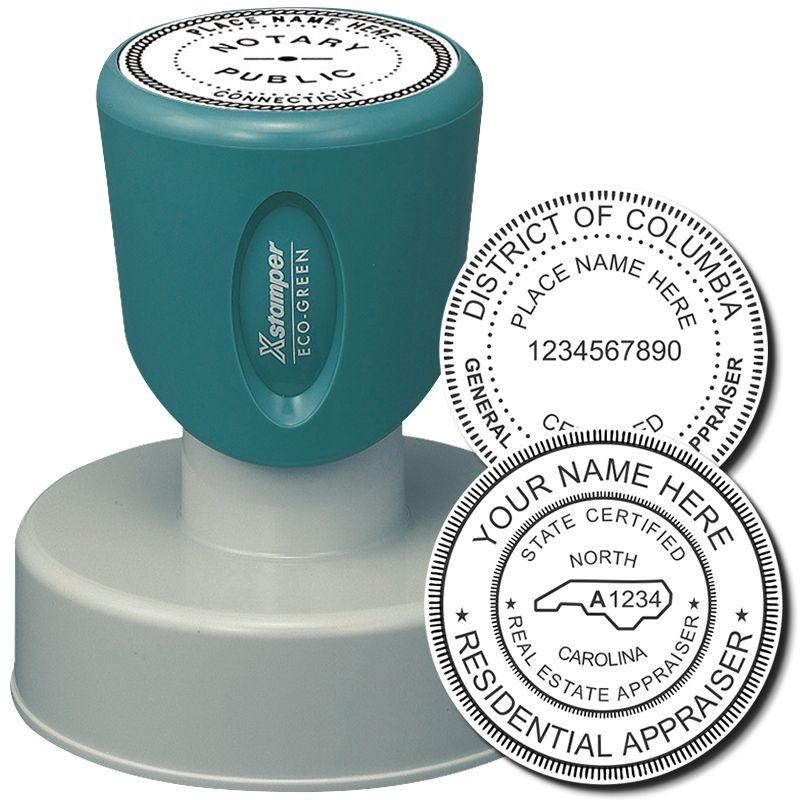
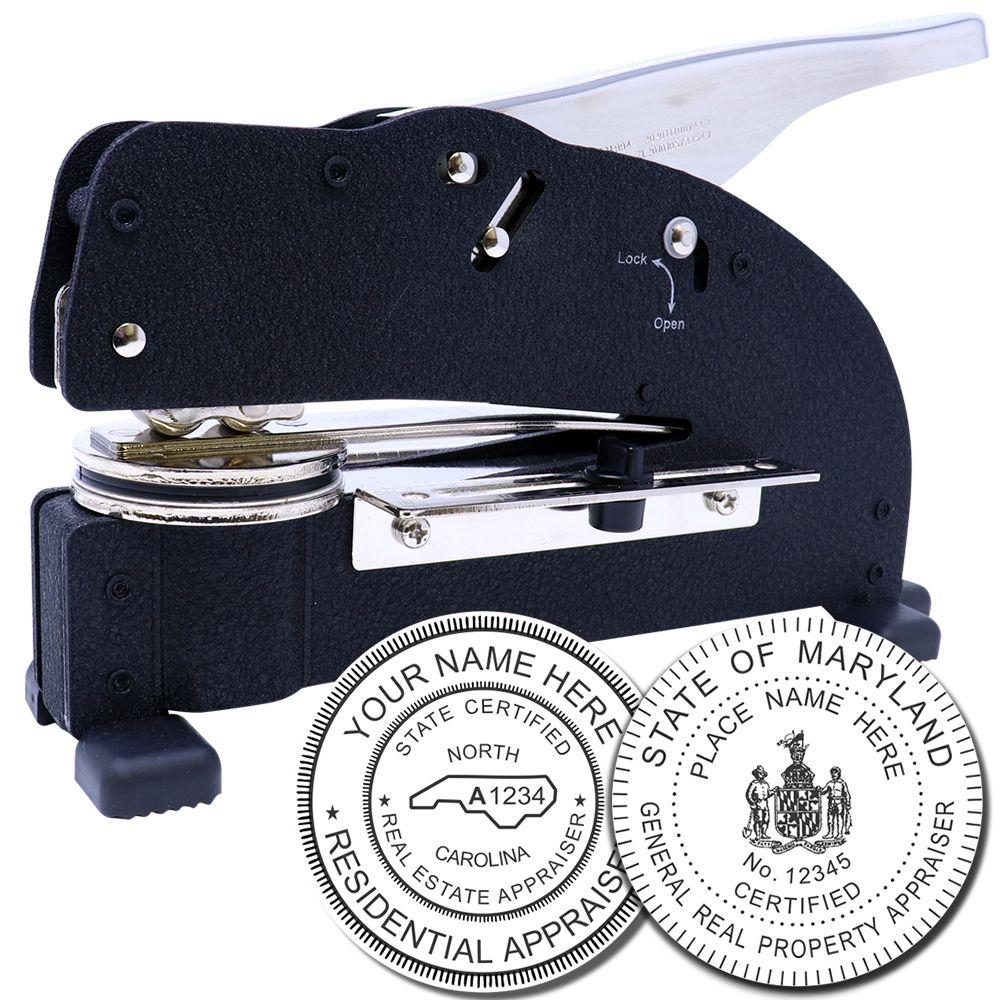
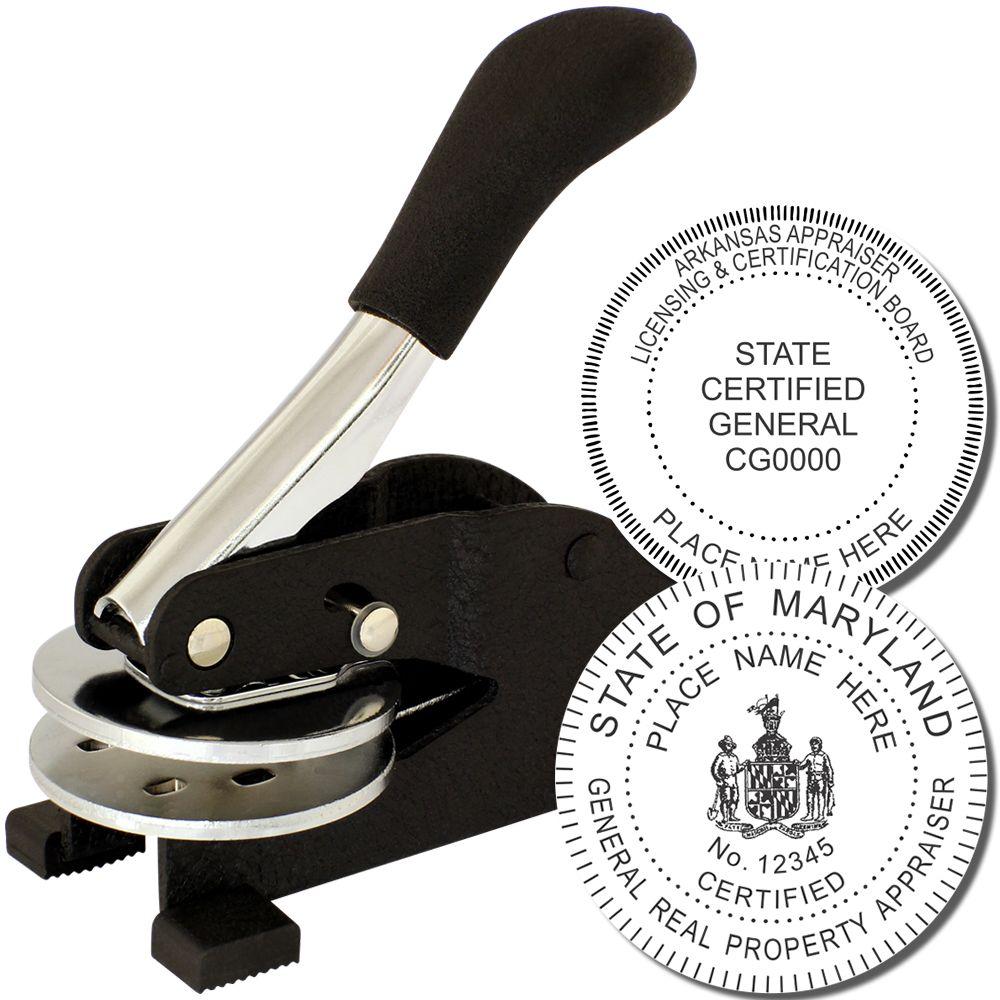
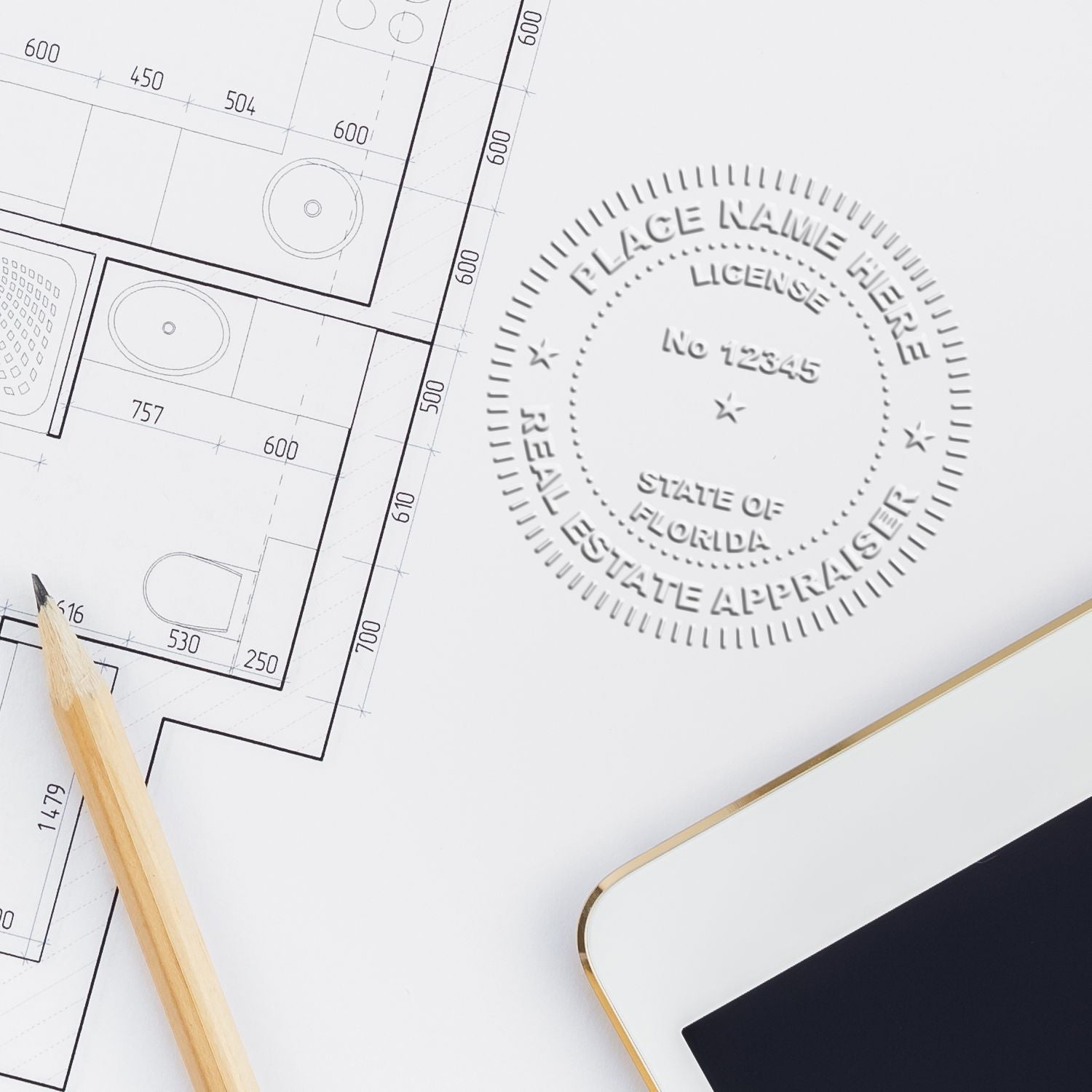
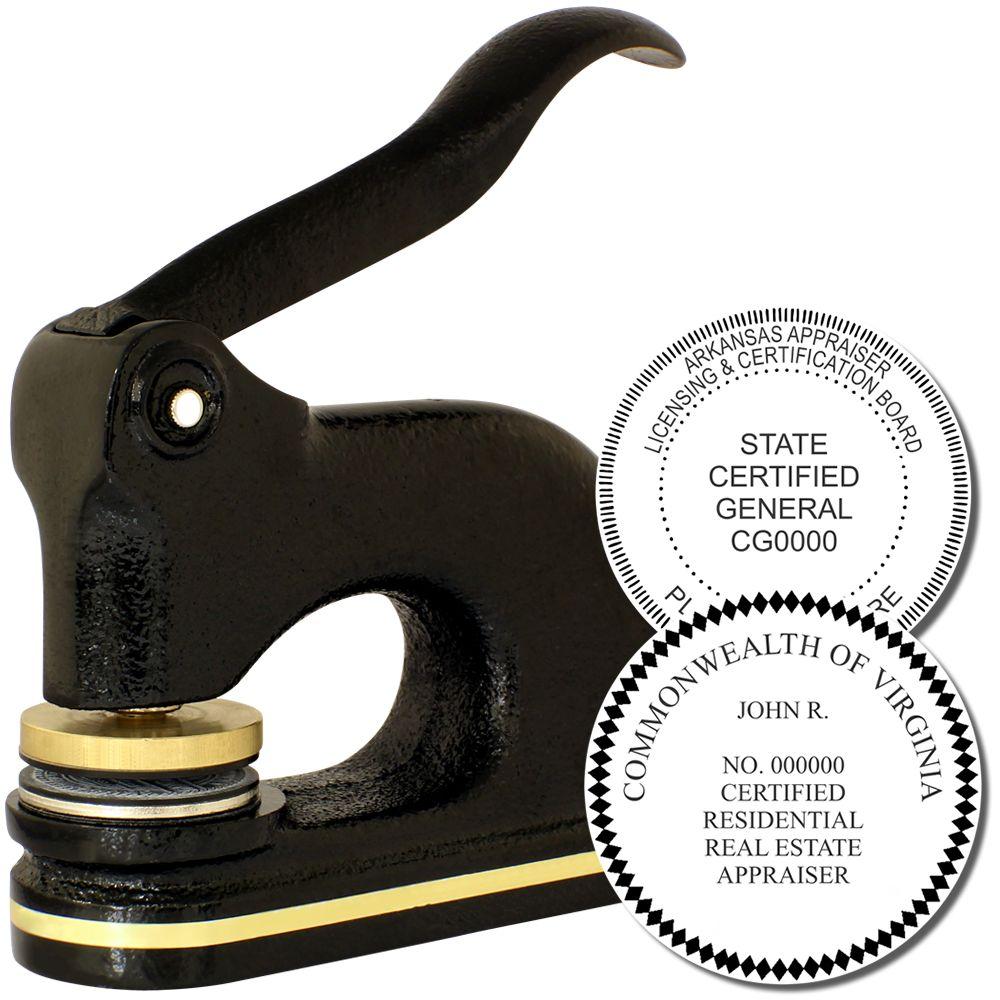
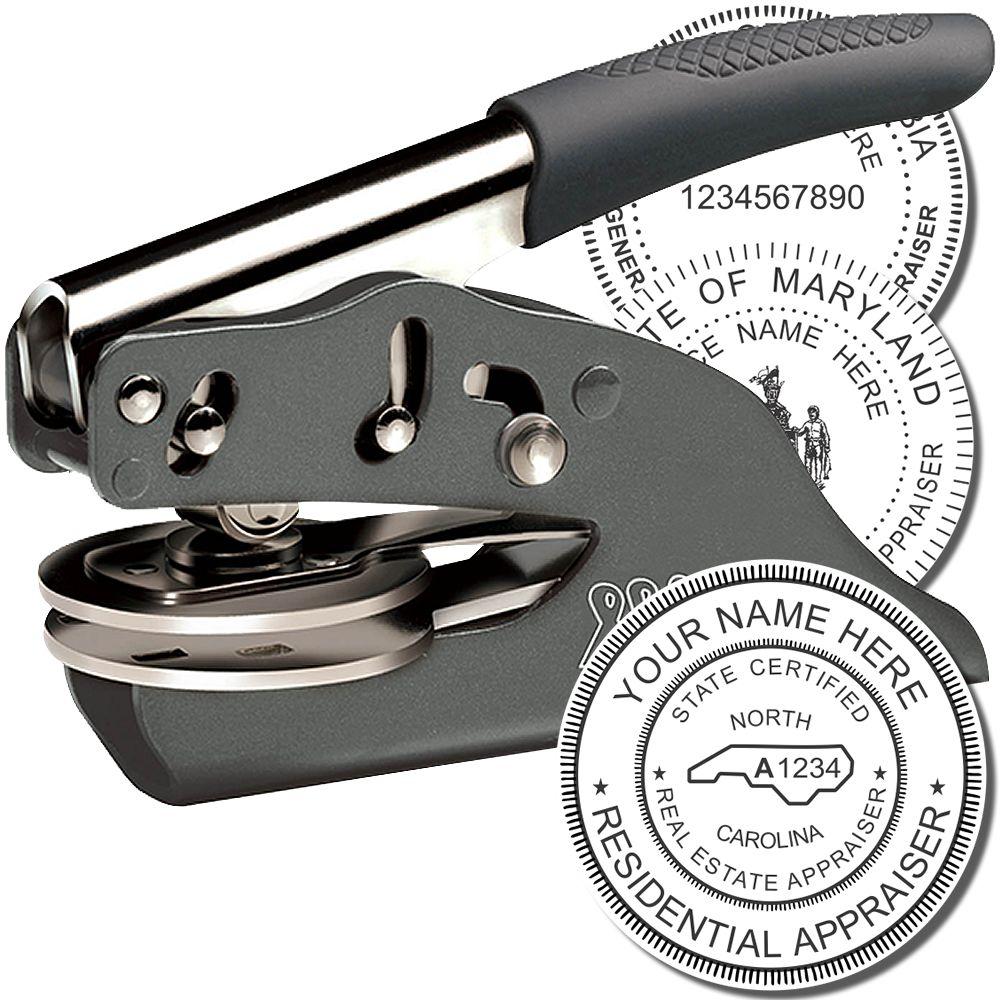
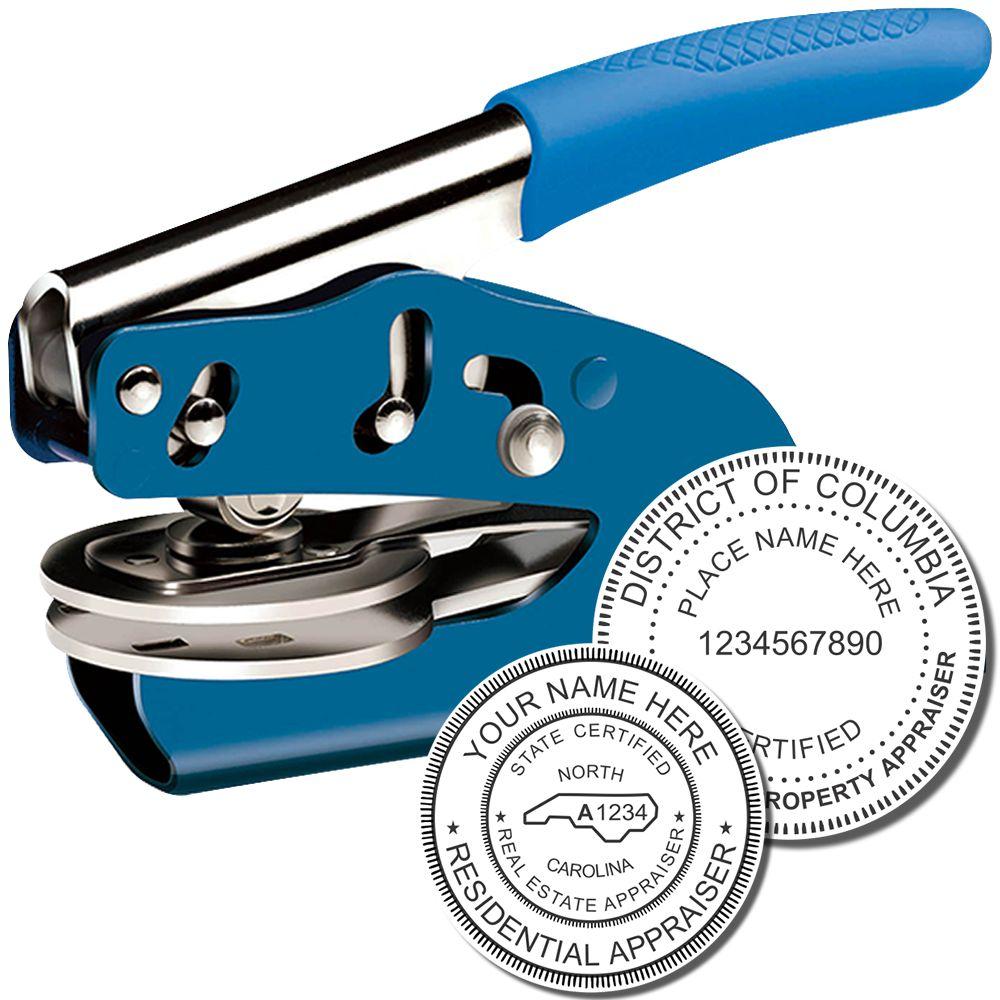
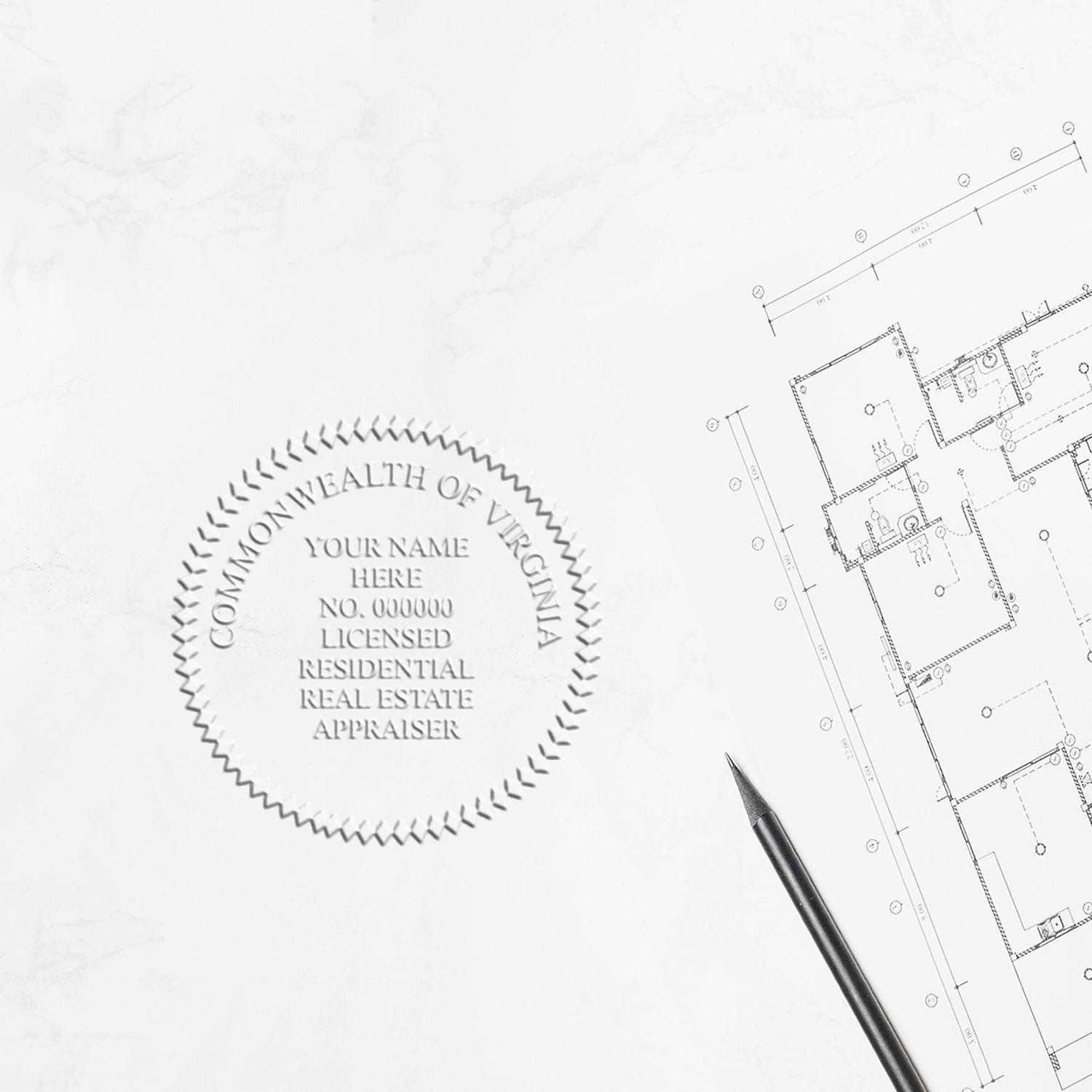
With no prescribed instrument, choose on how your work travels. An embosser leaves a raised impression that is hard to read once a page is scanned or flattened to PDF, so it suits a wet-signed original and works poorly as a daily tool for appraisal delivery. An ink stamp reproduces cleanly in a scan and is the common choice for a designation and number block. A digital image sits in the PDF beside a digital signature. Acorn cuts all three for appraisers: the Real Estate Appraiser MaxLight Pre Inked Rubber Stamp of Seal at $46.95, the Real Estate Appraiser Soft Seal Embosser at $44.95, and the Real Estate Appraiser eSeal Electronic Image Stamp of Seal at $20.00.
Sizing and layout
Florida prescribes no dimension, so the layout is driven by the position rule. State-certified residential real estate appraiser is a long phrase, and stacking the number immediately beneath it is the cleanest way to satisfy Sec. 475.622(1) in a rectangular impression. If you use the abbreviation defined by rule instead, the block gets much shorter and a compact stamp works well. A circular die is the harder option here, because the designation has to bend around the arc and the number has to stay adjacent to it or beneath it, which a curve makes ambiguous. Send us the exact designation and number as they read on your credential and we will set the artwork so the relationship is unmistakable.
Ordering, and care
Send your designation in the form you intend to use, full or abbreviated, your number, and your name as you sign. Say whether a trainee and a supervisory appraiser both need devices, because Sec. 475.622(3) and (4) put two blocks on those reports. A proof comes back before anything is cut. In use, a self-inking stamp gives thousands of clean impressions. Store an embosser flat. Reorder when your credential level changes, since the designation and the number change together. Browse the real estate appraiser stamps and seals collection, or contact us with your block. This page is a research summary and not legal advice.
- Real Estate Appraiser Stamps and Seals
- Real estate appraiser stamps and seals
- Electronic Seals and eSeal Image Files: What You Get and What You Do Not
Frequently asked questions
Does Florida require a real estate appraiser to have a seal?
No. The only section titled Seal in chapter 475, Part II is Sec. 475.6145, and it is the Board’s own authenticating seal for its proceedings, records and acts. The duty that reaches your report is Sec. 475.622(1), which asks for the credential designation with your number adjacent to it or immediately beneath it.
What is Sec. 475.6145 then?
It provides that the board shall adopt a seal by which it authenticates its proceedings, records and acts, and that certified copies bearing that seal are prima facie evidence in Florida courts. It is an evidentiary provision about Board records. It imposes nothing on a licensee, and it is the most common source of the belief that Florida appraisers need a seal.
Where exactly does my number have to go?
Adjacent to the designation or immediately beneath it, under Sec. 475.622(1). Putting the number directly under the designation line satisfies the requirement without ambiguity, which is why most Florida blocks are laid out that way.
Does the duty apply outside the appraisal report?
Yes. Sec. 475.622(1) applies when the designation is used in an appraisal report or in a contract or other instrument used by the appraiser in conducting real property appraisal activities, so engagement letters and similar documents are inside it.
Can I use an abbreviation instead of the full designation?
Yes, where one is defined by rule. Sec. 475.622(1) refers to the four designations “or their appropriate abbreviations as defined by rule”. The rule that carries the display and disclosure detail is r. 61J1-7.001, whose text we could not obtain, so confirm the exact abbreviation with the Division before you commit it to a die.
Does a trainee report carry two blocks?
Yes. Sec. 475.622(3) requires the primary or secondary supervisory appraiser to sign each report and certification the registered trainee signs, and Sec. 475.622(4) requires that supervisor to disclose her or his own designation and number whenever the trainee must make those disclosures.
What does Florida say about electronic signatures?
The statute directs the Board to say. Sec. 475.614(2) requires rules specifying the means by which a signature may be affixed and protecting its security. The implementing rule, r. 61J1-7.0065, Signatures on Appraisal Report and Certification, created 4 December 2006 and amended 20 December 2011, is the document to read, and its text was not obtainable for this page.
Does the expiry of my credential affect the block?
Not directly. Nothing in Sec. 475.622 calls for an expiry date on the report. What changes the block is a change of credential level, because the designation and the number belong to the credential rather than to you.








