
Written by Acorn Sales Company, manufacturing stamps and seals since 1964 · Product facts reviewed by Holly R, VP of Sales and Marketing at Acorn Sales, against the 23 published Real Estate Appraiser SKUs · Updated 25 September 2026 · Not legal advice; seal and report rules are set by your state board and USPAP · Licensing sources read 22 September 2026: ASC, About; ASC, FAQ; ASC, National Registries; ASC, State Compliance; ASC, State Regulators; Appraisal Foundation, Real Property Appraisal; Appraisal Foundation, Becoming an Appraiser; Appraisal Foundation, Criteria; Appraisal Foundation, USPAP; 21 NCAC 57A.0405; NC General Statutes Chapter 93E; 18VAC130-20-180; Virginia DPOR regulations PDF; RCW 18.140.140; Mississippi Administrative Code, appraisers; Florida Appraisal Law Book; California BREA, License Levels; California BREA, Practice Act; Texas Occupations Code Chapter 1103.
A real estate appraiser stamp or seal from Acorn runs from $20.00 for the electronic image on its own to $2,095.00 for the Heavy Duty Long Reach Embosser, across 23 published listings with a median of $46.95. The cheapest physical tool is the Regular Rubber Stamp of Seal at $34.95 and the cheapest embosser is the Hybrid Seal Embosser at $42.95. Every die here, ink or raised, is cut inside one window: an impression approximately 1-5/8″ to 2″ in diameter, made to what the state board specifies, with a catalog guarantee it will meet those specifications. Whether a seal is required at all is a separate question the catalog does not answer. There is no federal appraiser license. Credentials are issued by state agencies, and those agencies disagree about seals: a North Carolina rule requires one and sets what it must say, while the Virginia, Washington, Florida, Mississippi and Texas material read for this page asks for a signature and a credential number instead. Both halves are below, separately. This is product information, not legal advice.What these are for
Three groups buy here. The first is the residential fee appraiser signing reports every week who wants one tool that does the job quickly, which is where the $34.95 Regular Rubber Stamp of Seal, the $39.95 Self Inking Rubber Stamp of Seal and the $46.95 Handheld Seal Embosser sit. The second is the appraisal office buying a desk unit that stays put plus a portable for field work, so the $44.95 Desk Seal Embosser and a handheld. The third needs the impression to land where a short reach cannot reach, or seals in volume, and ends up on the $129.95 Long Reach, the $169.95 Extended Long Reach, the $329.95 Cast Iron or an electric unit at $1,795.00 or $2,095.00. Gift buying sits around all three: several listings are written as credential gifts, which is what the $99.95 Pink Gift Embosser and the three $129.95 gift finishes are for.

The ranges we stock
Handheld and pocket embossers
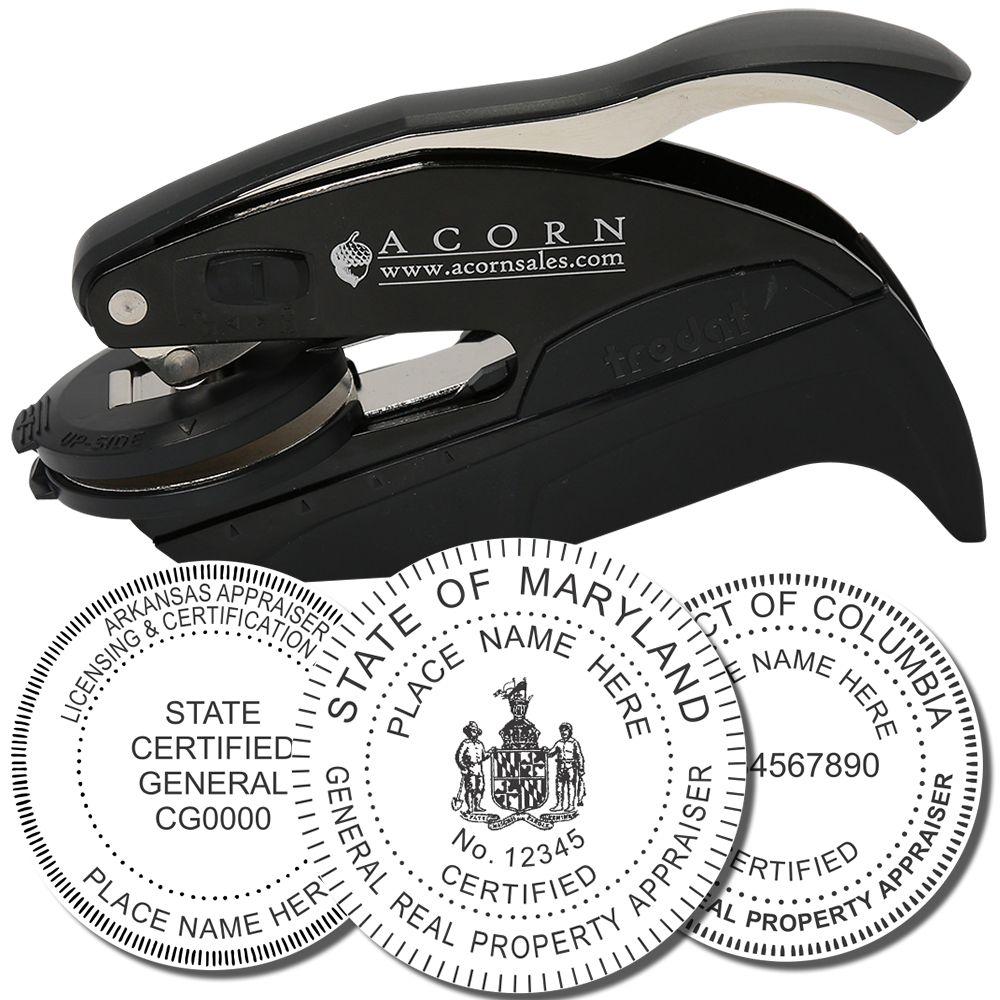
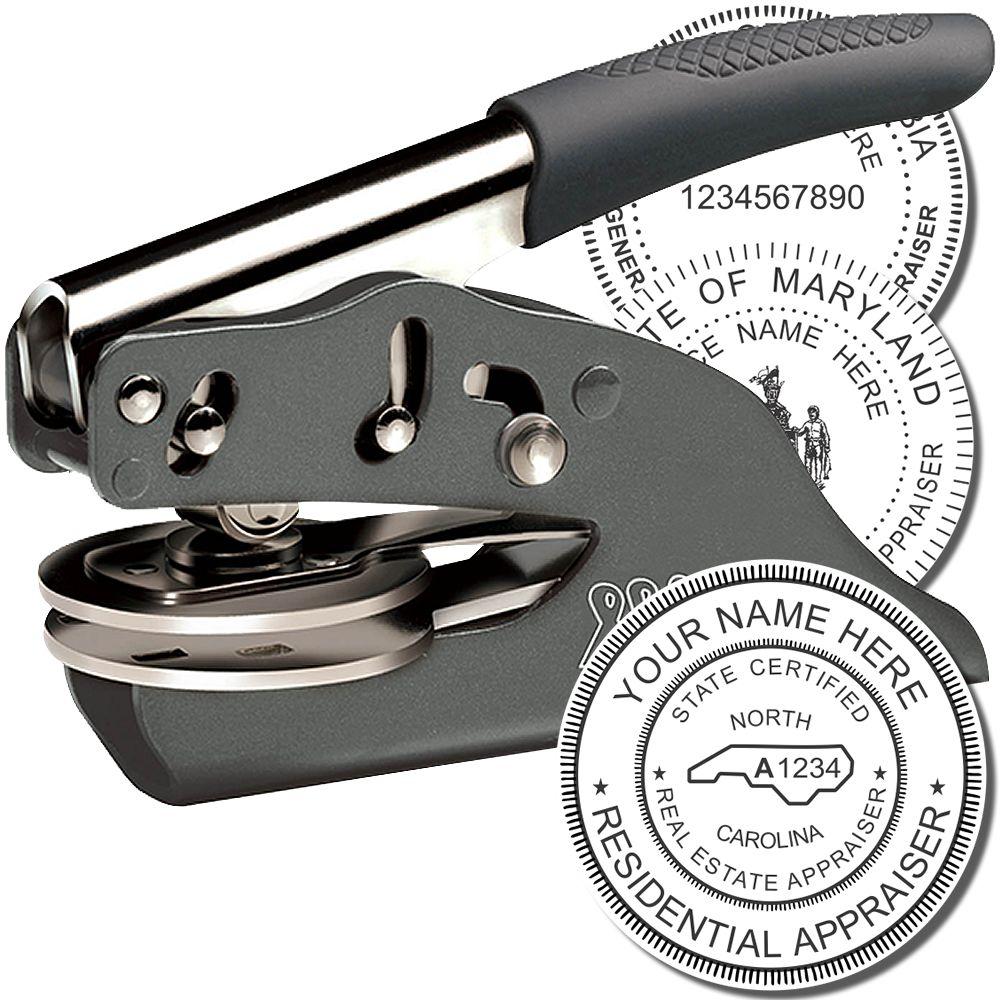
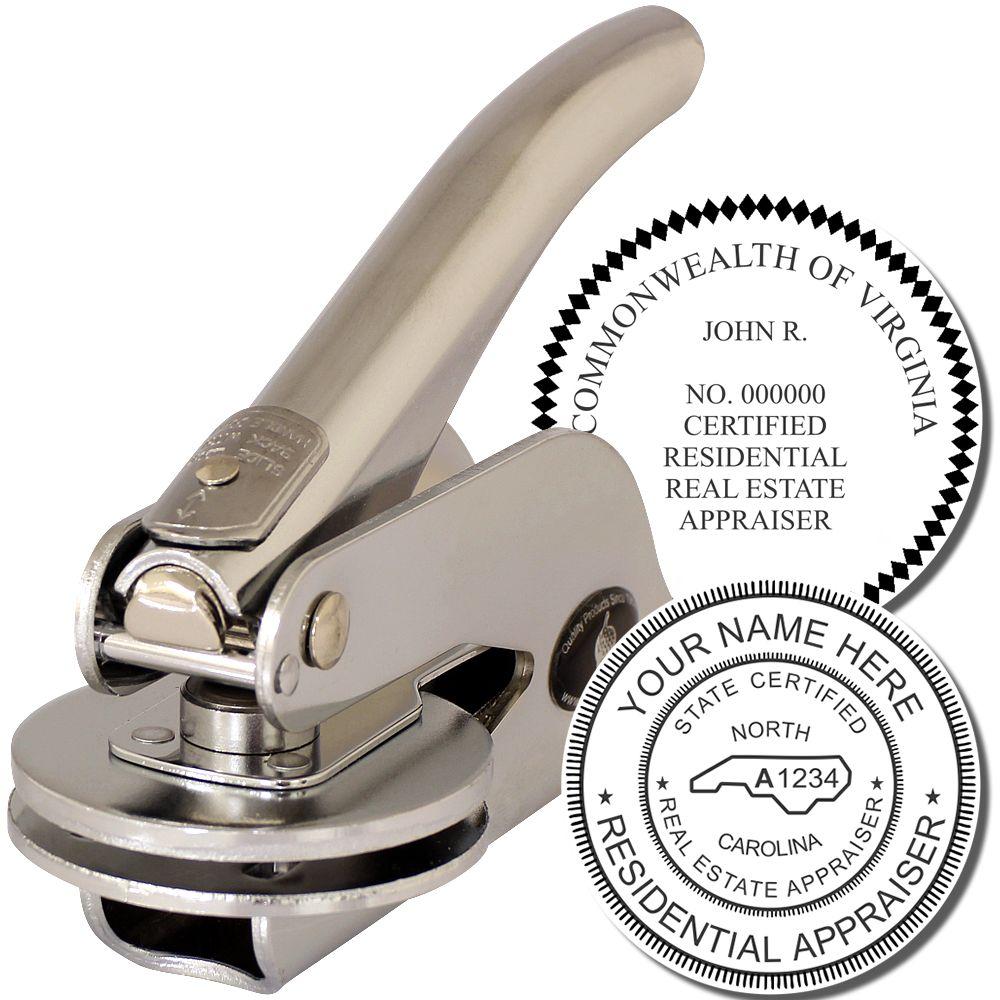
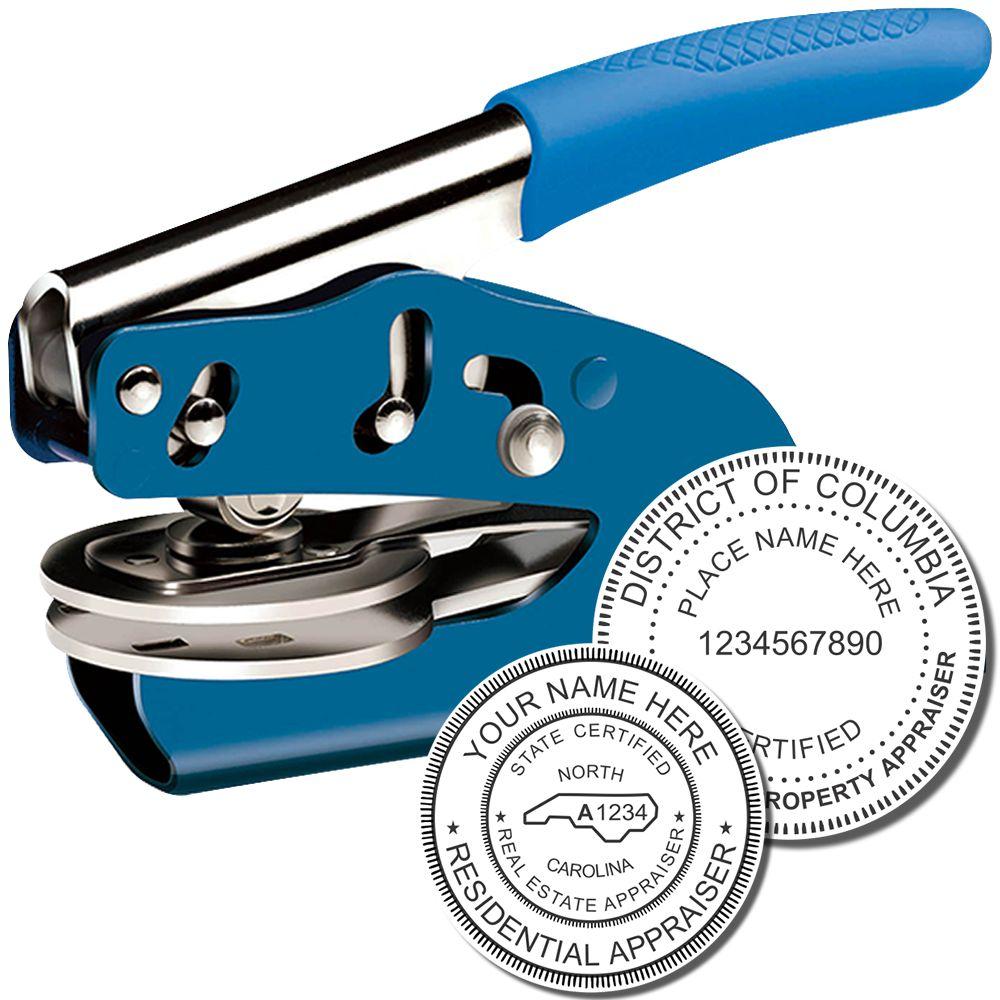
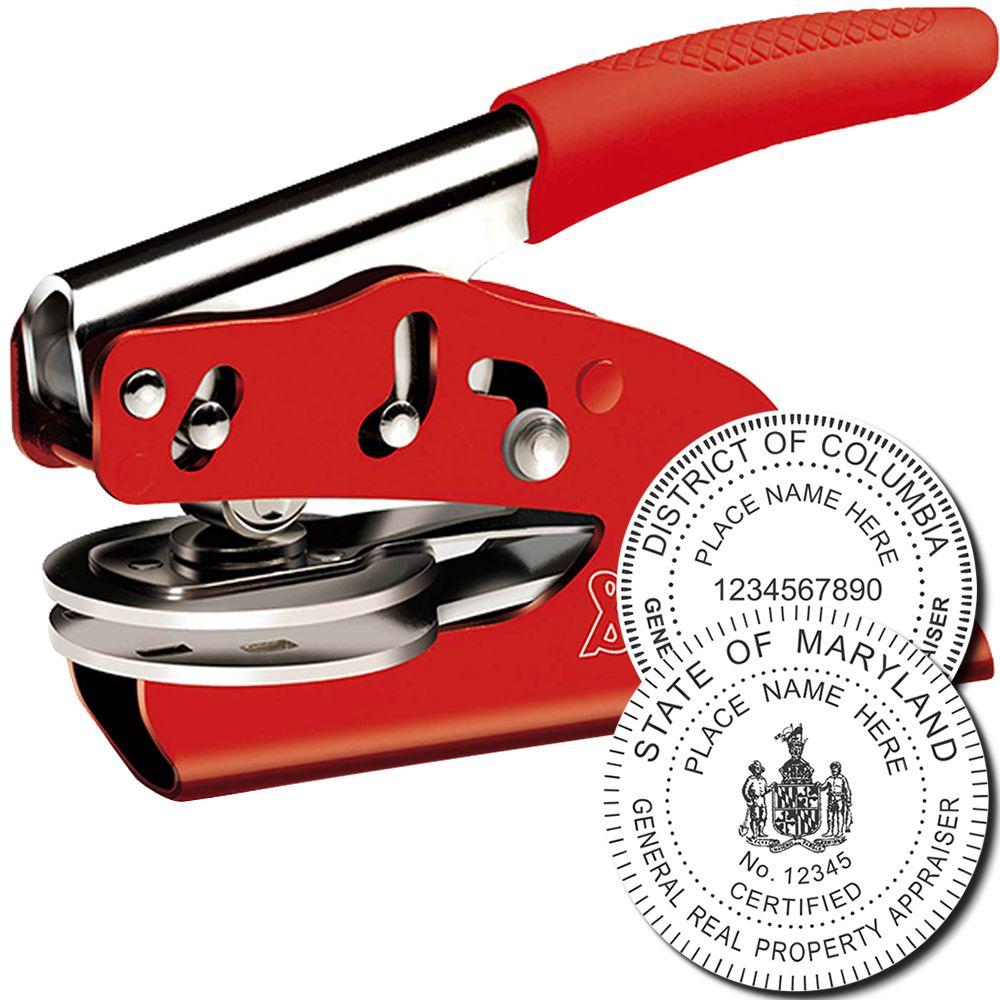
The Handheld Seal Embosser is $46.95 and the listing calls it the most economical choice for an appraiser embossing seal: heavy duty frame, sliding lock for storage, and a reach of about 1-1/2″ into a sheet of paper. The Soft Seal Embosser is $44.95, the same pocket tool with rubber on the handle to make it easier to squeeze, same reach, and it is stocked in Blue, Red and Pink at $44.95 each. The Hybrid Seal Embosser is $42.95, the lowest priced embosser here: a pocket sized body with the embossing action of a desk model, with positioning marks and an audible click when the impression is made properly. A Pink Hybrid Handheld Embosser is also $42.95 with the same reach.
Desk and gift embossers
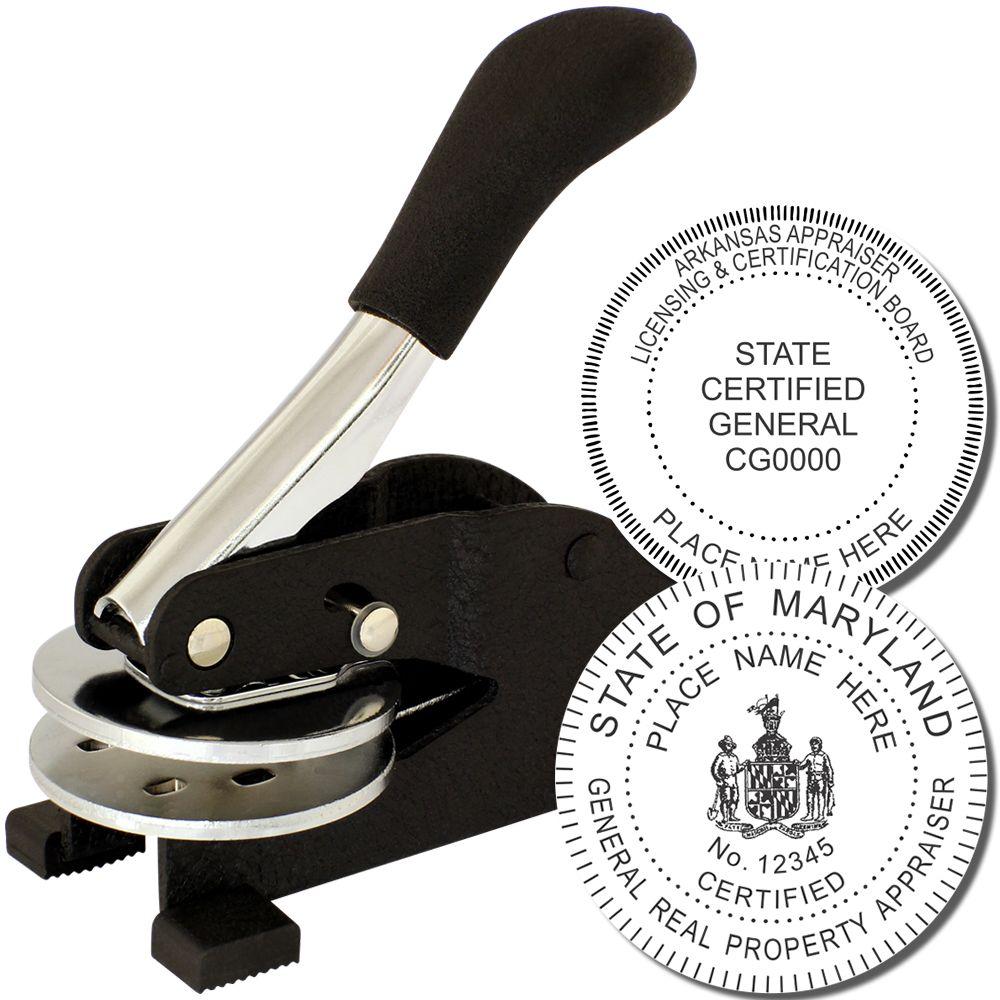
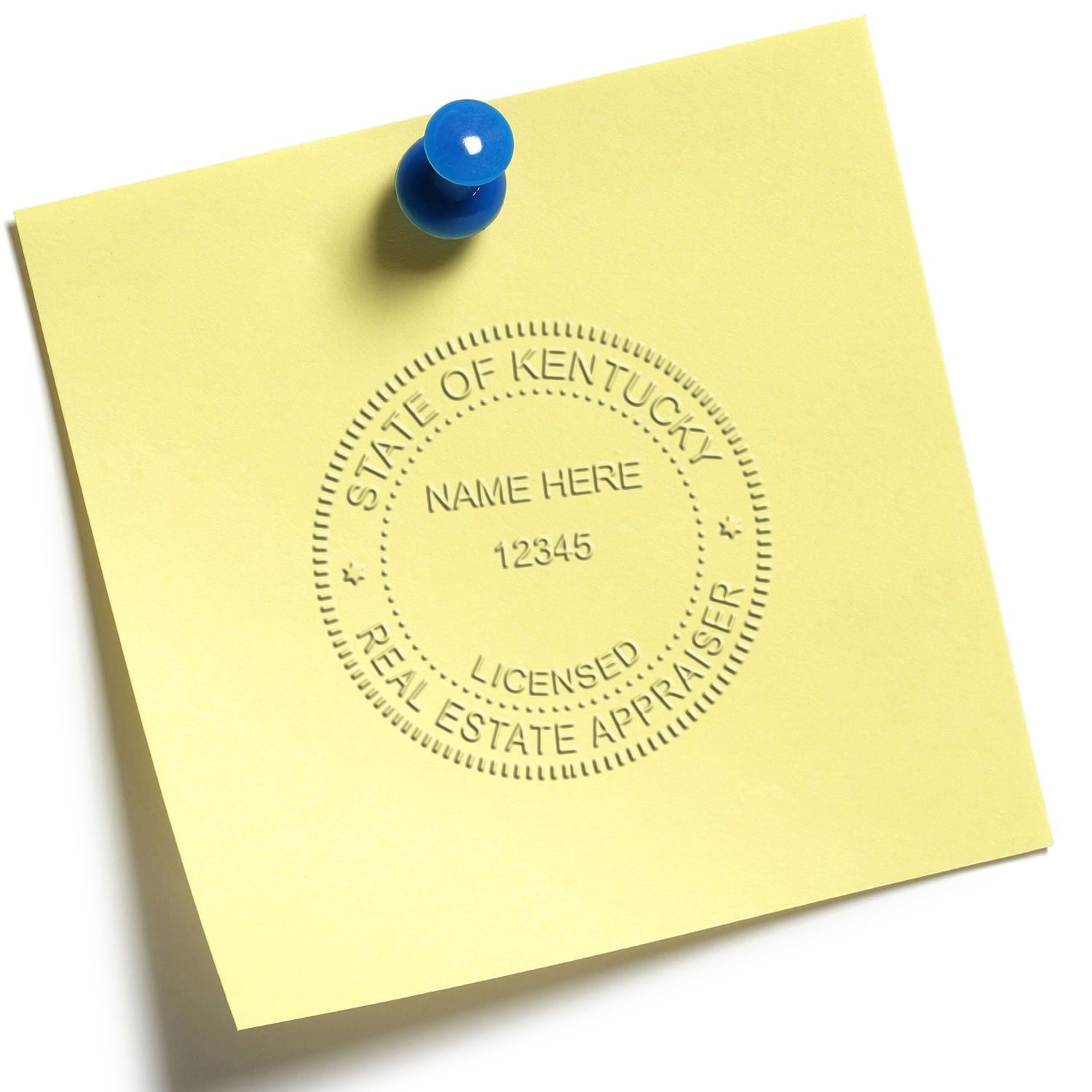
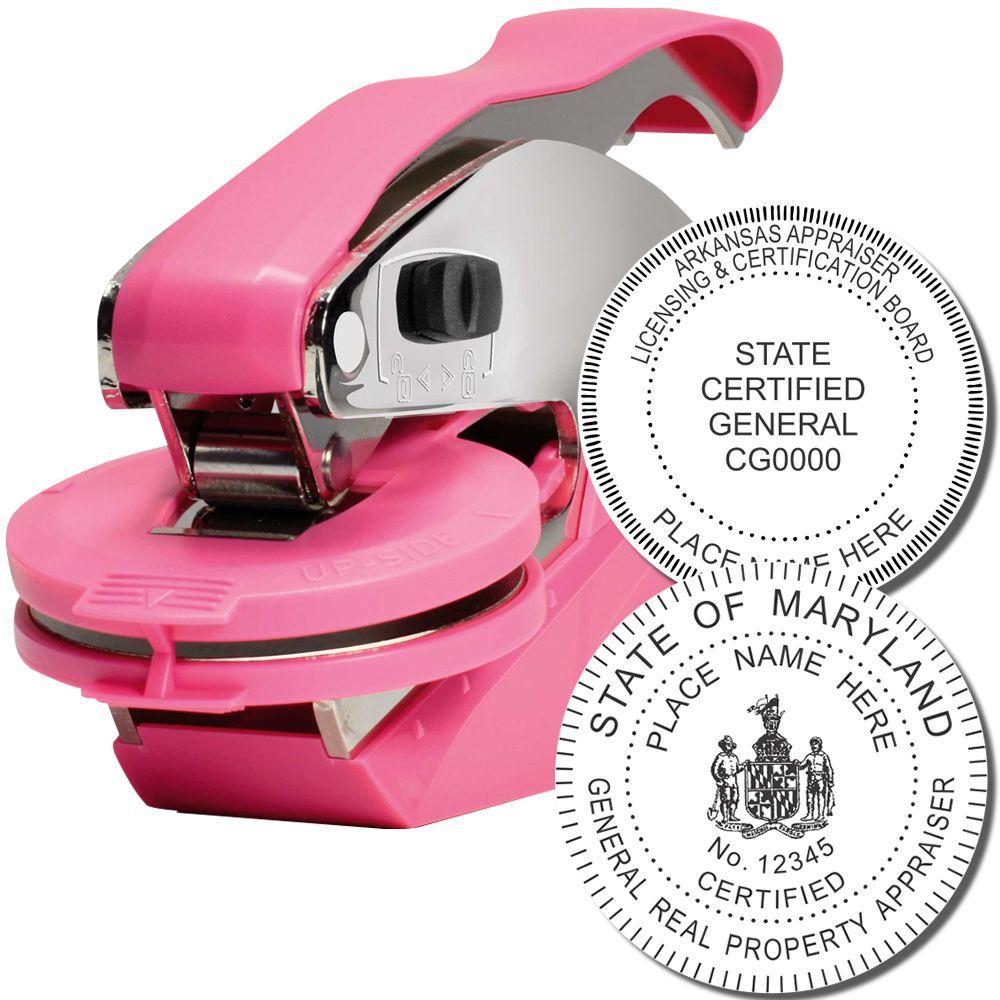
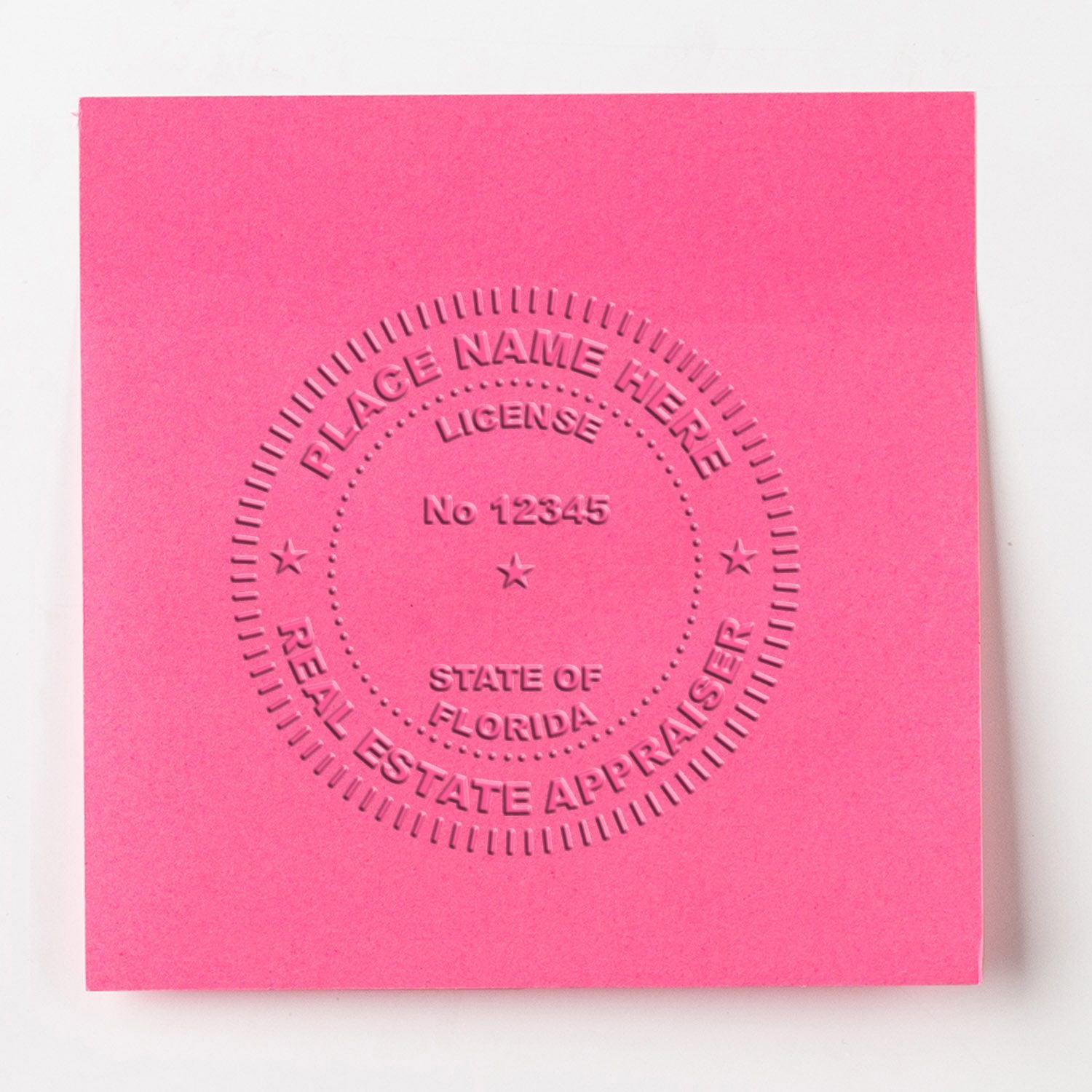
The Desk Seal Embosser is $44.95, with a sturdy metal base the listing credits with impressions at minimal effort and the same reach of about 1-1/2″. The gift finishes are that desk action in a polished shell with a felt base to stop it sliding: Chrome, Gold and Black Gift Seal Embossers at $129.95 each, all rated at about 1-1/2″ and written up as gifts for a newly credentialed appraiser. The Pink Gift Embosser is $99.95 and also has the felt bottom. No gift unit reaches further than the plain $44.95 desk model, so that money buys finish rather than reach.
Long reach and cast iron embossers
Reach is the distance from the edge of the sheet to the center of the impression, and it decides whether a seal can land where the report wants it. The Long Reach Desk Seal Embosser is $129.95 and reaches about 2-1/2″, described as a larger, heavier duty press with additional leverage. The Extended Long Reach Desk Seal Embosser is $169.95 with a 4-1/2″ reach, which the listing says lets you emboss the center of an 8-1/2″ wide sheet, and it ships with an adjustable paper guide. The Cast Iron Desk Seal Embosser is $329.95, described as the old fashioned type of seal, rated at 1-1/2″ to 2-1/2″ depending on the size of the cast iron body. One detail matters at the order stage: the listing says a 1-5/8″ diameter goes on the smaller cast iron body with the 1-1/2″ reach unless the order says otherwise.
Electric embossers
The Heavy Duty Standard Reach Embosser is $1,795.00, embosses approximately 2-3/8″ from the edge of the paper, runs on 110 to 120 AC volts, weighs 12 pounds and uses a solid brass die against an alloy counter die. The listing says the direct drive has only two moving parts and that the unit survives a staple or a paperclip without damaging the die. The Heavy Duty Long Reach Embosser is $2,095.00, reaches almost five inches into the document, weighs 18 pounds and uses the same voltage and die pairing. Both carry a two year limited warranty, and both list a foot pedal and an adjustable paper guide as extra cost options; the long reach model also lists embossing pressure control and paper activation.
Rubber stamps of seal
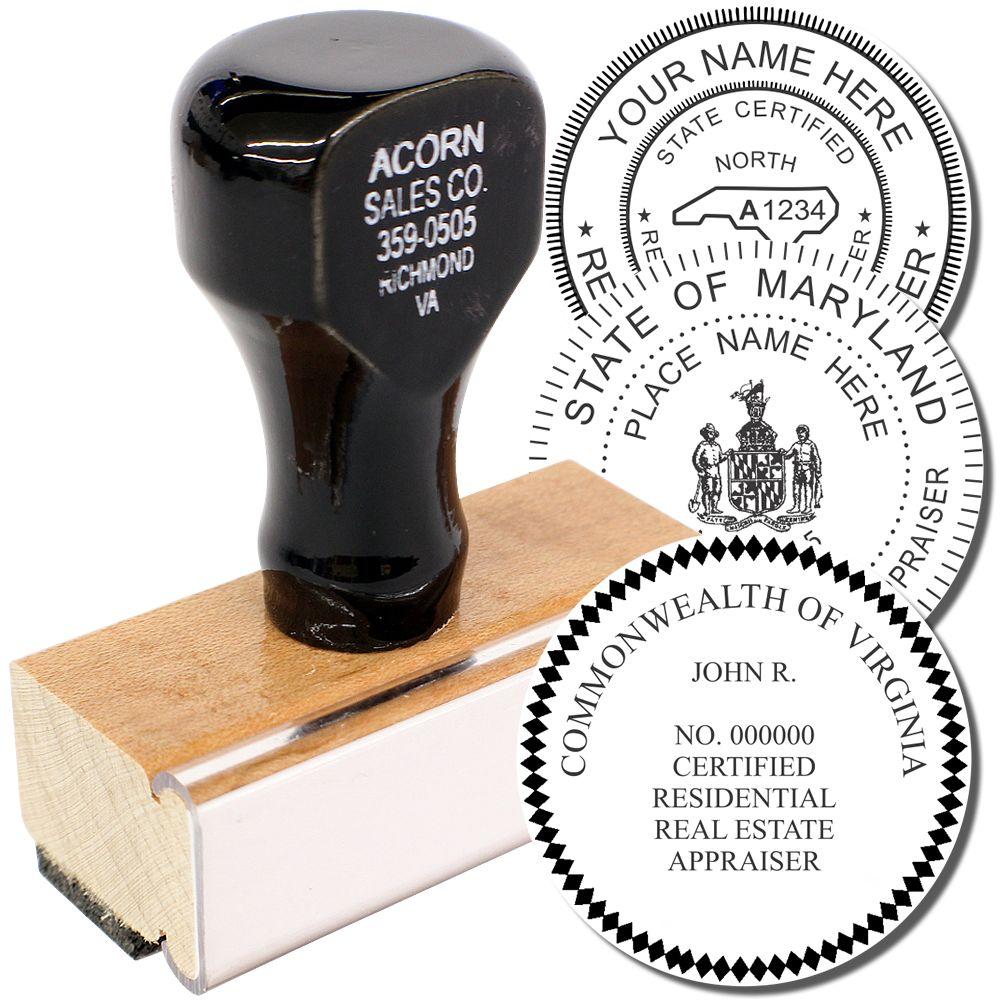
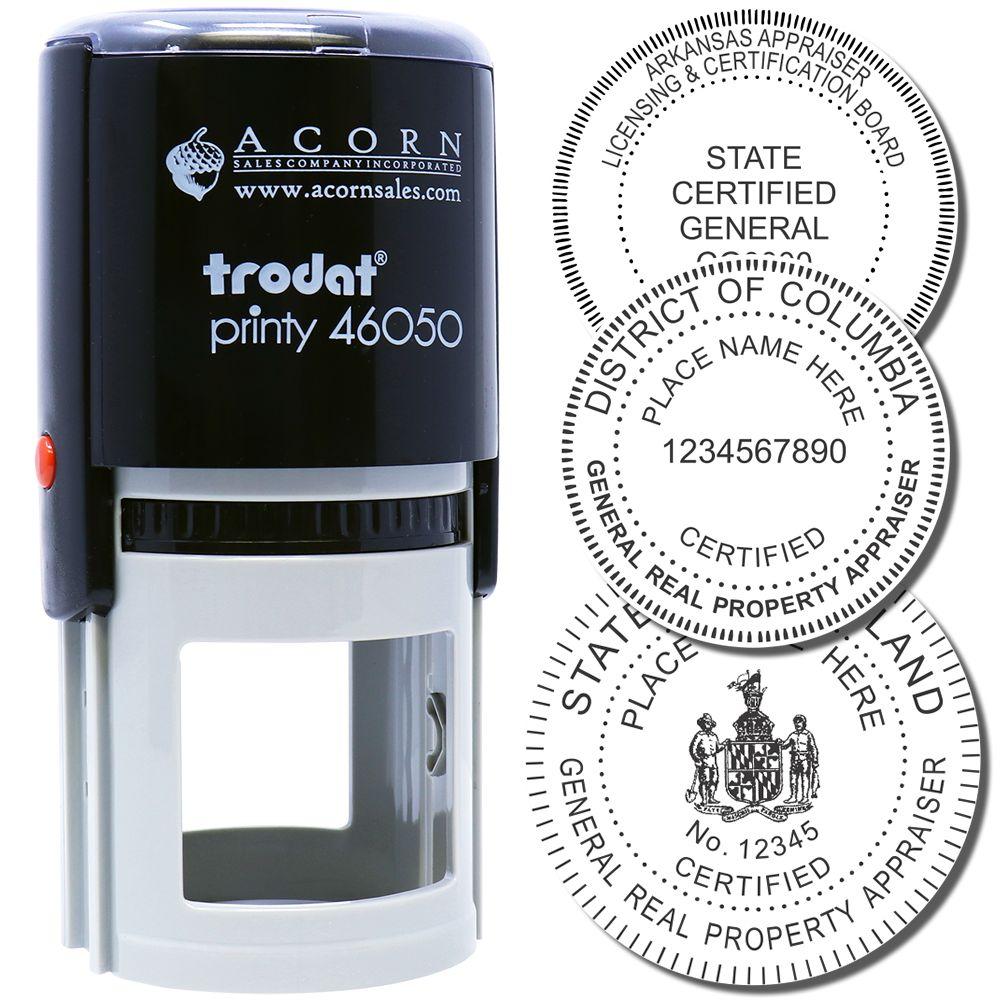
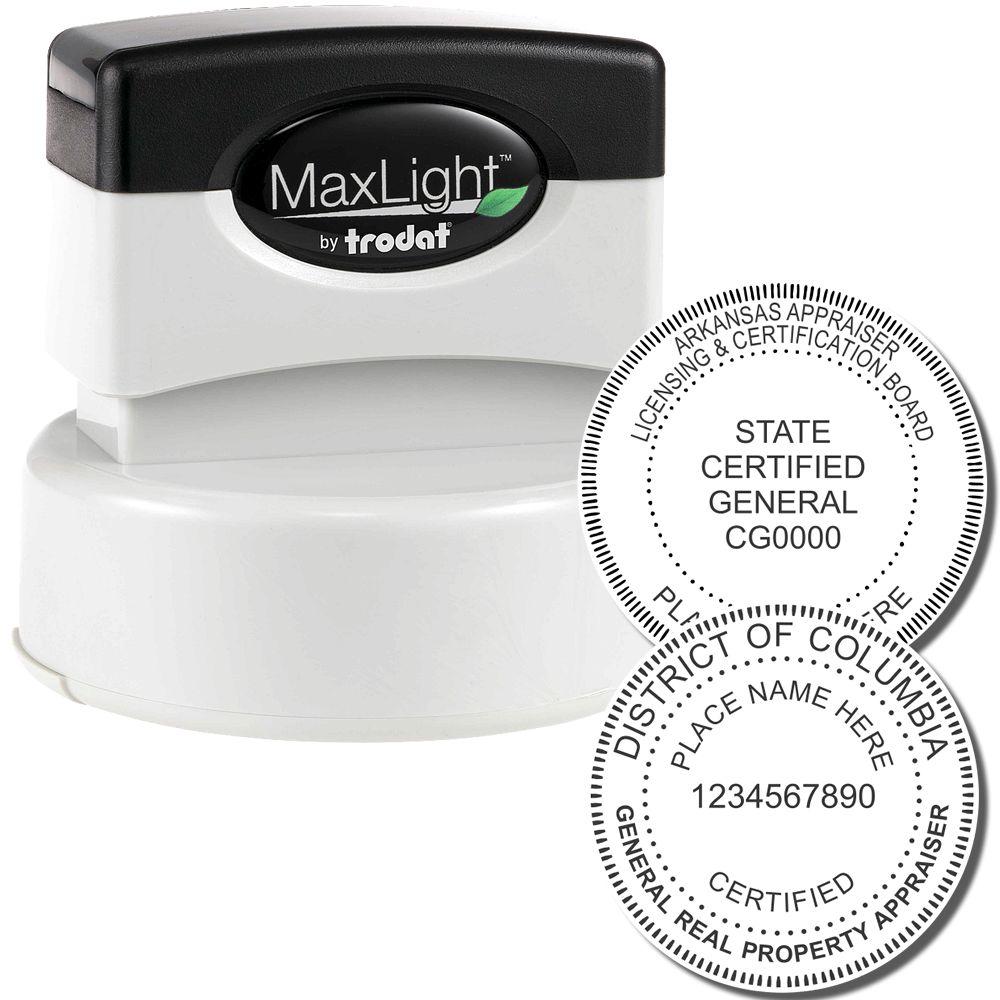
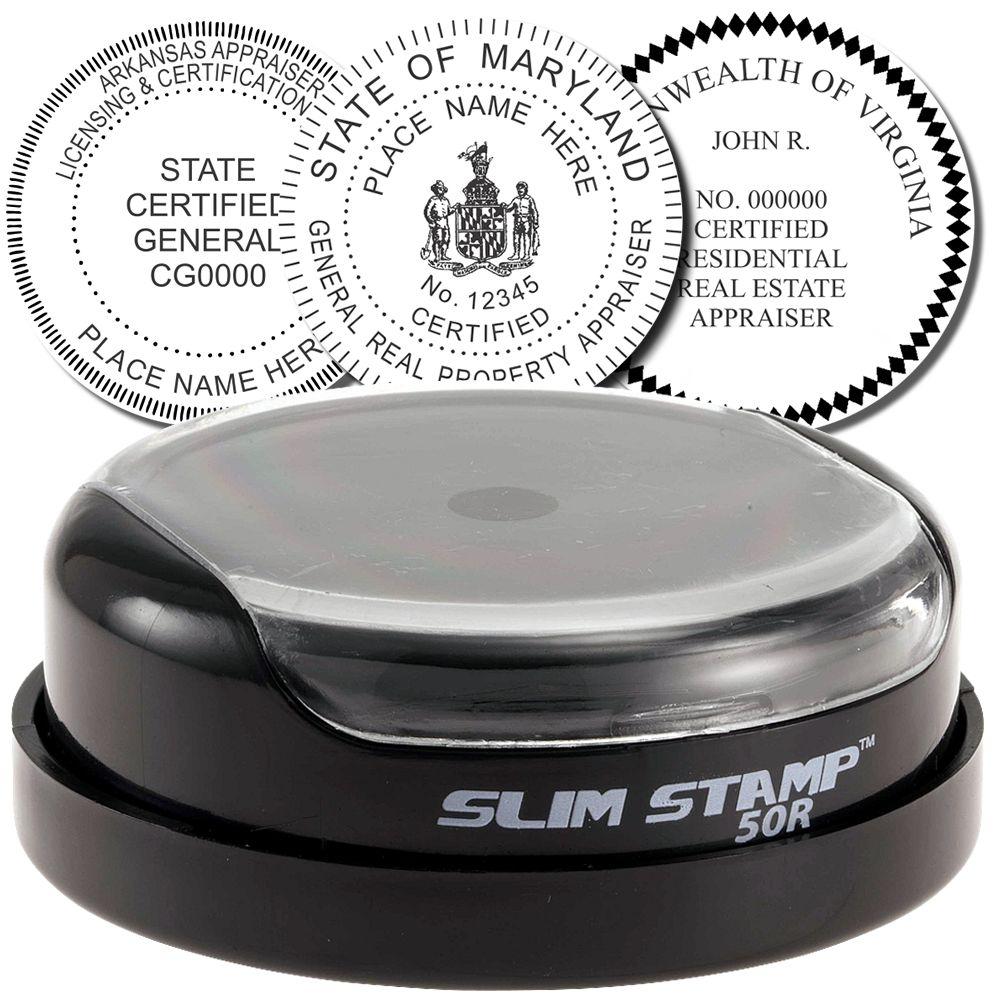
A stamp prints the same design in ink instead of raising it. The Regular Rubber Stamp of Seal is $34.95, a wooden hand stamp with a laser engraved die that needs a separate felt or cloth pad, and the listing names it the best choice for stamping on Mylar. The Self Inking Rubber Stamp of Seal is $39.95, built from durable synthetics, listed at about 5,000 impressions with 11 ink colors. The Slim Pre Inked Rubber Stamp of Seal is $46.95, compact, rated at about 25,000 impressions, and described as 50 percent postconsumer recycled content made with a LEM Flash process. The MaxLight Pre Inked Rubber Stamp of Seal is also $46.95 and adds a dust cover over the impression area. The Xstamper Pre Inked Rubber Stamp of Seal is $64.95, the dearest stamp here, listed at up to 50,000 impressions.
The eSeal electronic image
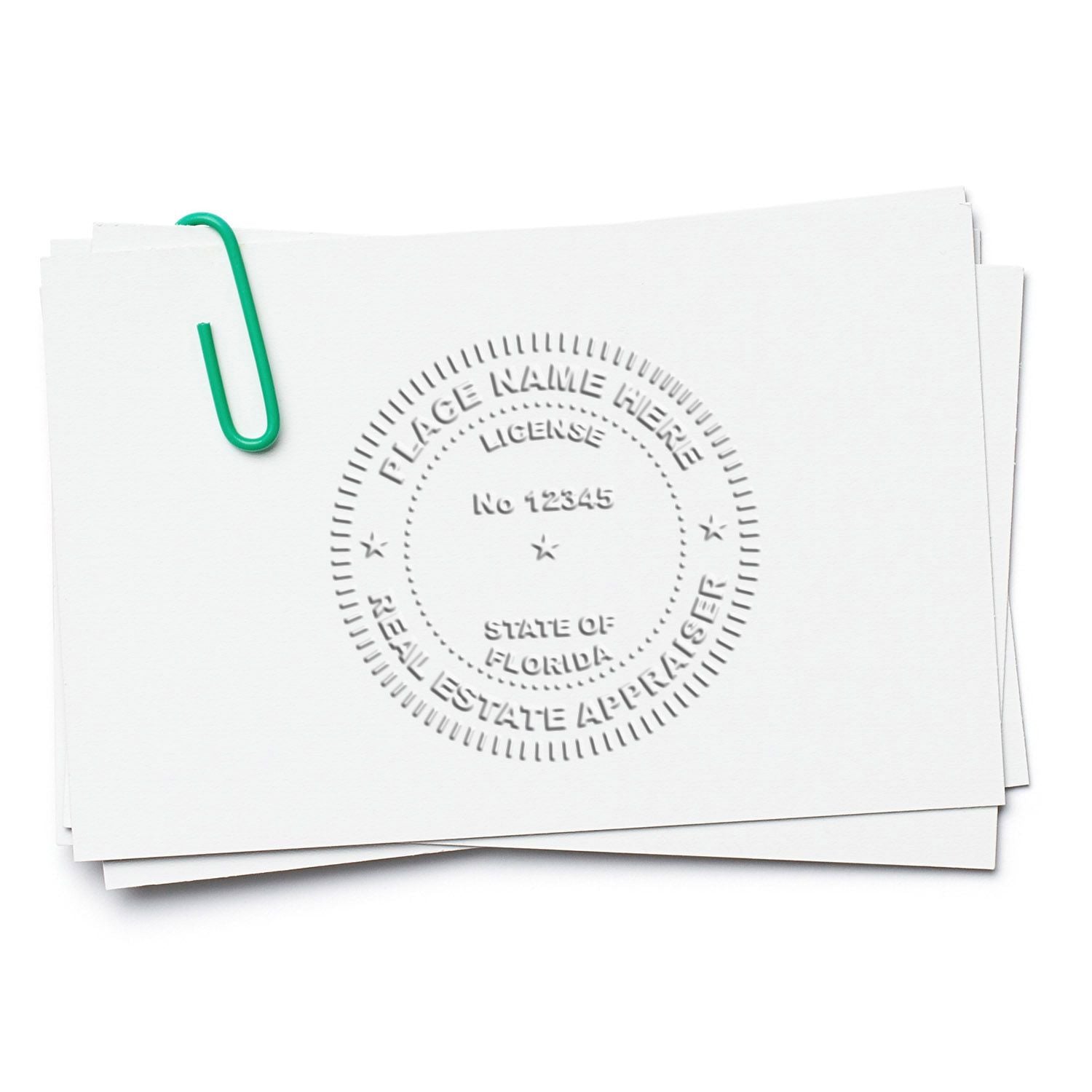
The eSeal Electronic Image Stamp of Seal is $20.00 and is the only listing here that is not a physical tool: an image of the seal at 300 dpi, delivered by email, in PNG, DWG, JPG, DXF, PDF and TIF formats. The size follows the same rule as the physical dies, approximately 1-5/8″ to 2″ depending on state specifications. Two things are easy to miss. The eSeal is free with a physical stamp or seal purchase, and most physical listings repeat that a complimentary electronic seal is emailed, so $20.00 buys the image on its own. And the listing is explicit that electronic encryption and an electronic signature are not included: an image file, not a signing credential.
Sizes and dimensions
Every appraiser die here is made to one published window: an impression area of approximately 1-5/8″ to 2″ in diameter, varying with what the state board specifies. That figure repeats on every embosser, on all five stamps and on the eSeal, so there is no size to choose at the order stage. What changes is reach: about 1-1/2″ on the handheld, soft, hybrid, desk and gift models, 1-1/2″ to 2-1/2″ on the cast iron unit depending on which body the order lands on, about 2-1/2″ on the Long Reach, approximately 2-3/8″ on the Heavy Duty Standard Reach, 4-1/2″ on the Extended Long Reach and almost five inches on the Heavy Duty Long Reach. Hold on to the 4-1/2″ figure if the seal has to sit away from the edge, because the Extended Long Reach is the only listing claiming it reaches the center of an 8-1/2″ wide sheet. No paper weight rating is published on any appraiser listing here.
How many impressions you get
Only the stamps carry impression counts: the Self Inking Rubber Stamp of Seal at about 5,000, the Slim Pre Inked at about 25,000, the Xstamper at up to 50,000. The MaxLight listing contradicts itself: the description says up to 15,000 and the highlights on the same listing say up to 50,000, so treat that one as unsettled. The Regular Rubber Stamp has no count because it uses a separate pad. Both electric embossers are rated at 200,000 impressions. The manual embossers publish no impression figure at all.


Ink and colors
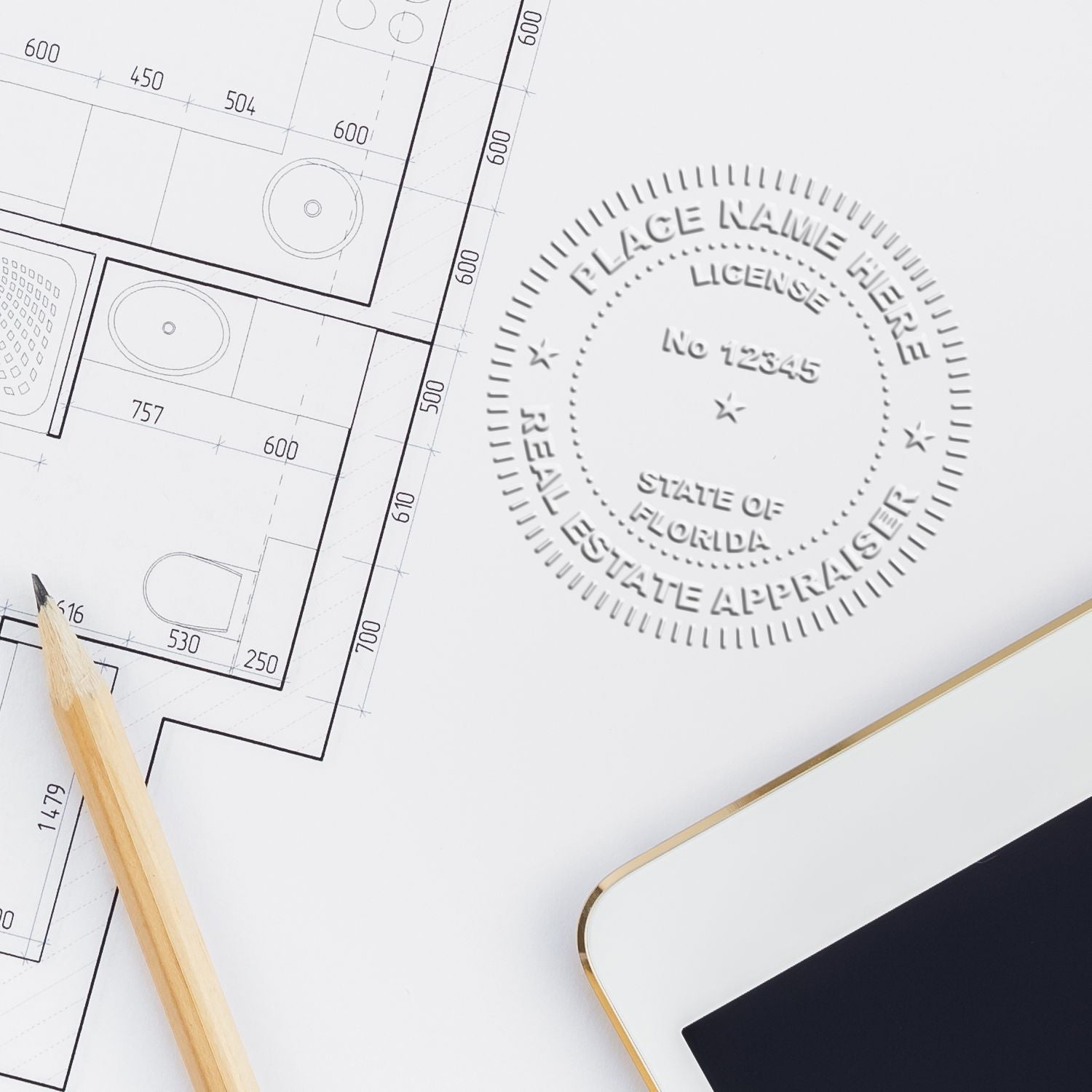
Embossers use no ink; they raise the paper, and a raised impression scans poorly unless it is inked or foiled separately, which is why appraisers delivering reports as PDFs tend to want a stamp or the electronic image as well. Among the stamps, ink choice is narrower than it looks. The Self Inking Rubber Stamp of Seal is the only one here offered in 11 ink colors. The Slim Pre Inked and the MaxLight are each listed in five: the Slim names Red, Blue, Black, Green and Purple, the MaxLight names Red, Blue, Black, Green and Violet. The Xstamper listing names no colors. The Regular Rubber Stamp takes whatever a separate felt or cloth pad holds, which is also why the catalog names it as the stamp for Mylar. Three stamps are marked made in the USA: the Regular Rubber, the Slim Pre Inked and the MaxLight.
What you can customize
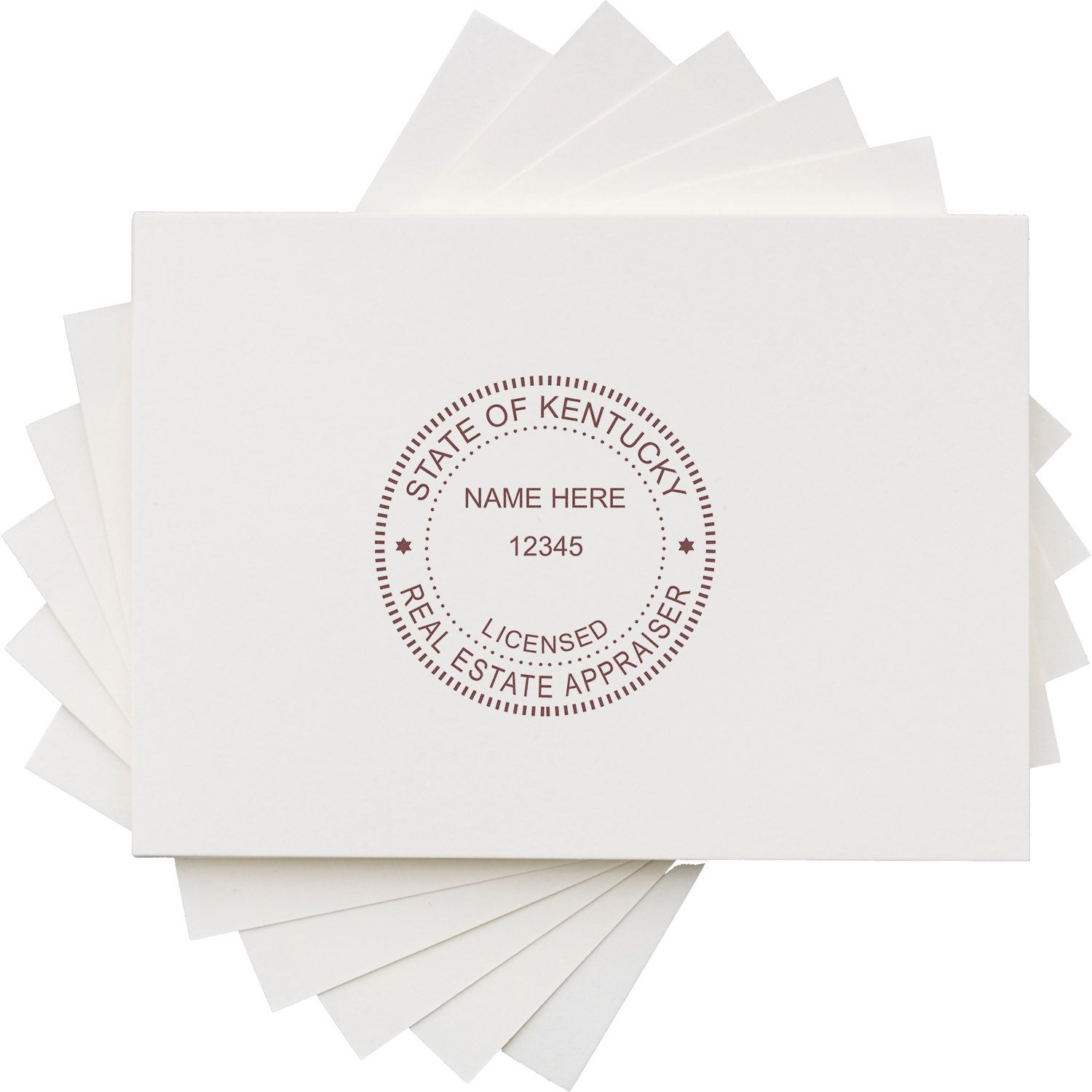
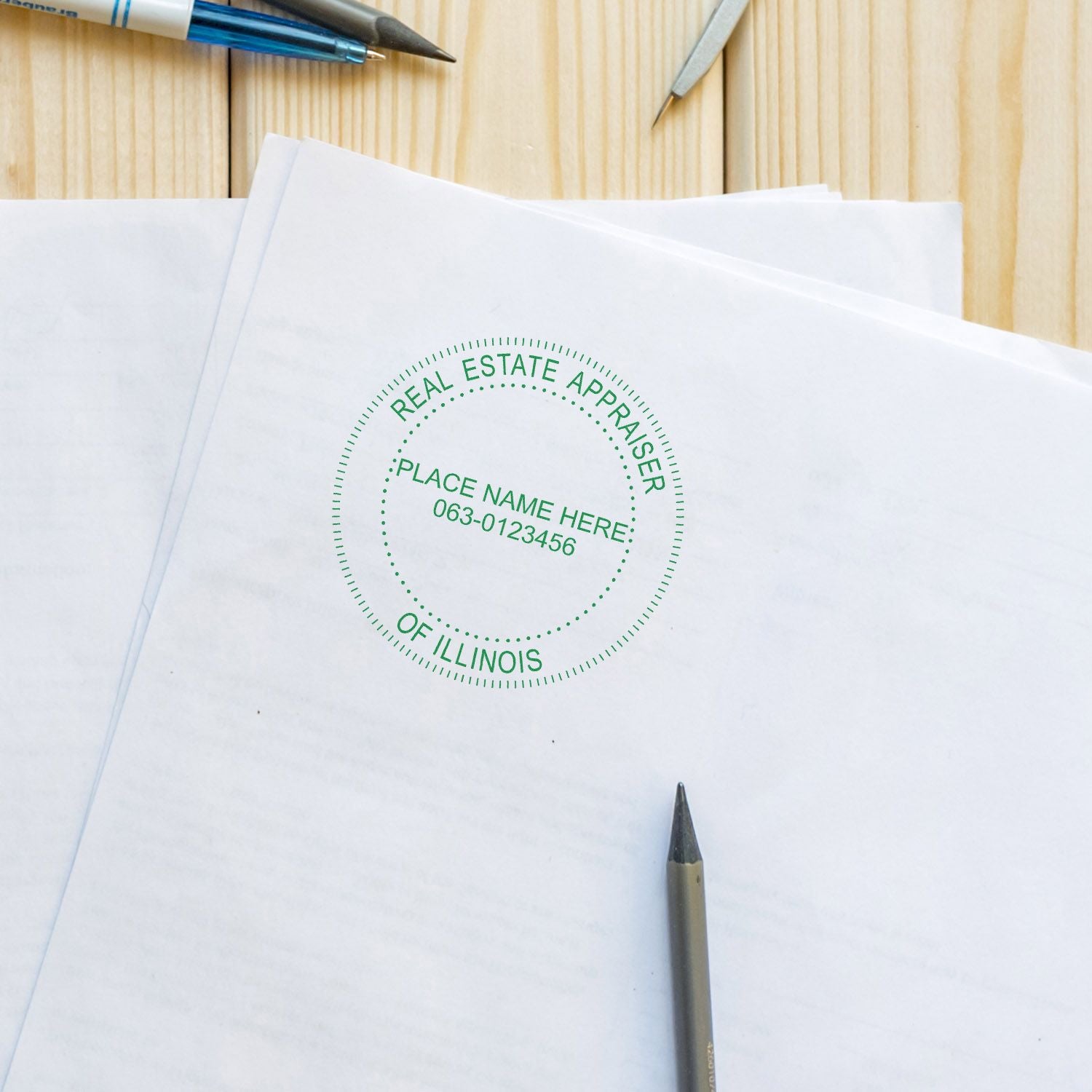
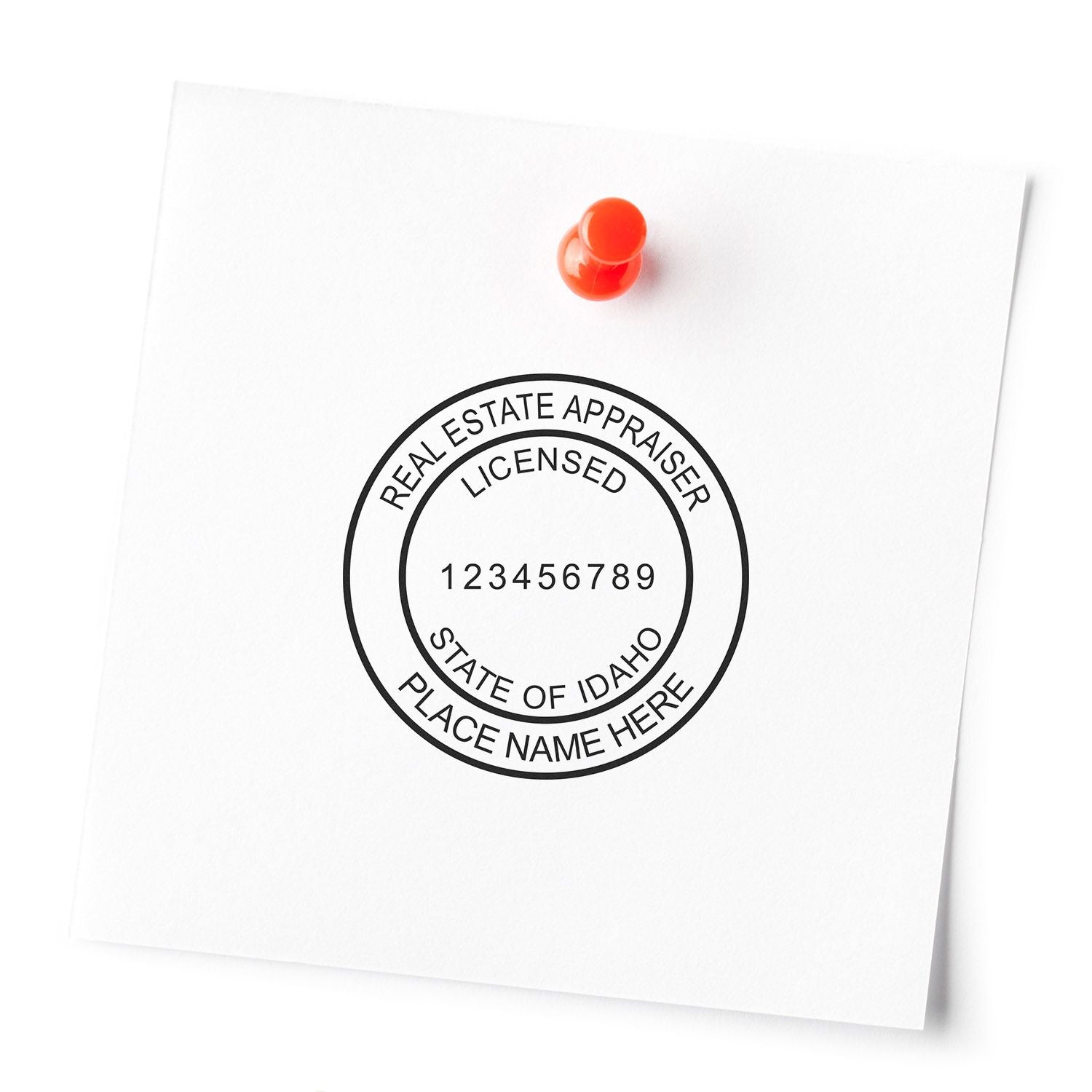
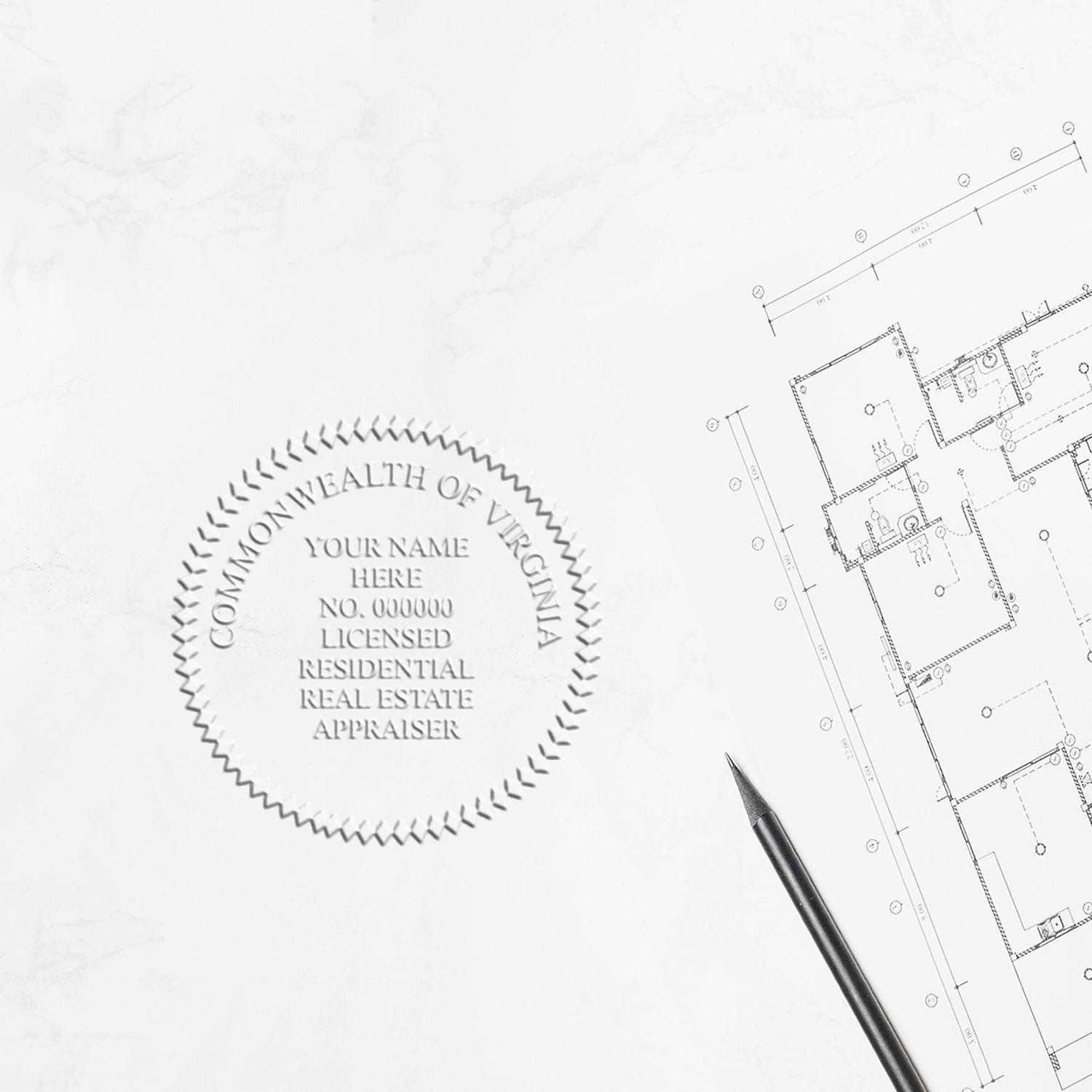
Everything here is made to order, and the catalog is consistent about what goes on the die: the appraiser name, the license or certification number, the state and the credential or job title. One listing, the Blue Soft Seal Embosser, names three wordings it can set for a North Carolina order: certified general real estate appraiser, licensed residential real estate appraiser, or certified residential real estate appraiser. Seal orientation is a choice on several listings. Almost every listing states the seal is made to the state board specification and guarantees it will meet it, which is a manufacturing commitment from Acorn rather than a legal opinion about your report. If your board has published a diagram or a wording rule, send it with the order rather than describing it, and for anything the order form does not cover, contact us.
The seal is a state question, and the states do not agree
This section is research, not catalog. None of it comes from a product listing, and none of it is legal advice: your own board and USPAP govern.
Start with what is federal and what is not. There is no federal appraiser license. The Appraisal Subcommittee, established by Title XI of the Financial Institutions Reform, Recovery, and Enforcement Act of 1989 and operating as a subcommittee of the Federal Financial Institutions Examination Council, monitors state appraiser regulatory programs. Its own FAQ says it is not within the Appraisal Subcommittee authority to regulate individual appraisers, and that the state agency is responsible for all appraiser credential entries on the Appraiser Registry. That registry is described as a database of State Licensed, State Certified Residential and State Certified General Appraisers eligible to perform appraisals in connection with federally related transactions, with states submitting at least monthly and the ASC noting it has not independently verified what they send. The Appraiser Qualifications Board of the Appraisal Foundation sets minimum education, experience and examination criteria that state programs must be no less stringent than. The Appraisal Standards Board writes USPAP. None of them issues your credential or tells you what your seal looks like. The ASC FAQ puts it plainly: each state and territory, in its laws and regulations, further defines requirements for the various categories and permitted practices.
The credential levels come from the AQB criteria, and there are four: Trainee, Licensed Residential, Certified Residential and Certified General. The Appraisal Foundation states the two certified levels are available in every state, while Trainee and Licensed Residential are not offered everywhere. The Florida law book shows a Licensed Appraiser level closed to new applicants after a statutory cutoff. California publishes four levels separated by property type and complexity, and Mississippi sets the title abbreviations an appraiser signs with. Trainees sit outside the federal picture: the ASC FAQ states the trainee level is not federally recognized and does not appear on the Appraiser Registry.
Now the seal itself. In most of the state material read for this page the requirement is a signature and a credential number rather than a seal. The current Virginia Administrative Code section on standards of professional practice states that all original appraisal reports must be signed by the licensed appraiser and contain the license number of the appraiser, and the word seal does not appear in that section. Washington requires a state certified or state licensed appraiser or registered trainee to place the certificate, license or registration number adjacent to or immediately below the title. Mississippi lists approved title abbreviations to sign with alongside the assigned number. The Florida appraisal law book uses the word seal only for the board own seal, adopted to authenticate its proceedings and records. The Texas Occupations Code chapter on real estate appraisers has no seal section at all.
North Carolina is the clear counter-example, and it is specific. The Appraisal Board rule on appraisal reports requires every licensed and certified real estate appraiser to affix or stamp a seal to all appraisal reports, and states what it must set forth: the name and the license or certificate number of the appraiser in whose name the report is issued, identifying that appraiser as a licensed residential real estate appraiser, a certified residential real estate appraiser, or a certified general real estate appraiser. The rule requires the seal to be legible, sets a minimum diameter of 1″, prohibits registered trainees from using a seal, and requires appraisers to affix their own seal personally. The enabling statute is permissive at board level: the North Carolina Appraisers Act says the Board may adopt, for the exclusive use of persons licensed or certified under the chapter, a seal, symbol, or other mark identifying the user as a licensed or certified real estate appraiser.
Two honest caveats. Sources conflict in Virginia: a copy of the board regulations posted as a PDF on the Department of Professional and Occupational Regulation site shows a seal design and the line that reports prepared without the use of a seal shall contain the license number of the appraiser, while the current Administrative Code text of the same section does not use the word seal. Where a posted PDF and the live code differ, the live code and direct guidance from the board govern, which is a question for the board rather than a stamp maker. Second, this page read the federal bodies and the states named here and nowhere else, so nothing here speaks to a state that is not named.
Where a seal is used, the elements in the rules read for this page are consistent: the appraiser name, the credential classification spelled out, the license or certificate number, and the state. An expiration date appears on some other professions seals, but no appraiser rule requiring one turned up in the states read here, so this page does not claim it. If your board requires one, say so on the order.


Ordering, proofs and delivery
What Acorn needs is the wording exactly as your board wants it, plus the credential number and the state. Send the board diagram or specification if there is one, because the guarantee is that the seal is made to that specification and the specification has to reach the workshop. Orientation is a choice on several embosser listings, and the Red Soft Seal Embosser listing asks for extra instructions with the order. On turnaround, several appraiser listings state the item is completed in house and ships within 24 to 48 hours, including the Pink Hybrid, the Blue, Red and Pink Soft Seals and the Pink Gift Embosser. The electronic image is bundled with a physical purchase, so the $20.00 eSeal listing is for buying the image alone. For a wording the order form does not cover, contact us.
Care and longevity
Embossers want very little. Keep the sliding lock engaged when the unit is idle and the jaws clear of grit so die and counter die meet cleanly. The gift units have a felt base, so wipe rather than soak, and the cast iron unit wants a stable surface. On the MaxLight stamp, the dust cover should stay on between uses. On warranty, the house term is two years on embossing seals and six months on rubber stamps, and the embosser listings agree with the first half. Two mismatches are worth flagging: none of the five stamp listings publishes a warranty term, so the six month house term applies, and the Pink Hybrid Handheld Embosser says two year in its highlights and lifetime in its description, which reads as a listing error rather than a longer warranty.
Products in this range
Browse the full range: Real Estate Appraiser Stamps and Seals.
Related guides
- Replacing a Seal After a Renewal, Expiration or Name Change
- Electronic Seals and eSeal Image Files: What You Get and What You Do Not
- How to Choose an Embosser by Reach and Price
- Alabama Appraiser Seal: License Number Below Your Title
- Alaska Appraiser Stamps: What Yours Should Say
- Arizona Appraiser Seal: The Statute Fixes Your Wording
- Arkansas Appraiser Seal: Called For by Rule, Not by Statute
- California Appraiser Seal: Your Number With Every Signature
- Colorado Appraiser Seal: Rule 12.10 Allows an Impression
- Connecticut Appraiser Stamps: Name, Number, Expiry Date
- Delaware Appraiser Seal: The DE Cert Gen X1 Format
- DC Appraiser Seal: One Rule We Could Not Read
- Florida Appraiser Seal: Number Beneath the Designation
- Georgia Appraiser Seal: Who Controls Your Signature
- Guam Appraiser Seal: Classification Only, No Number
- Hawaii Appraiser Seal: The Expiration Date Goes On
- Idaho Appraiser Seal: The Board May Adopt One. It Has Not
- Illinois Appraiser Seal: The Department Owns the Seal
- Indiana Appraiser Seal: Wording No Larger Than Your Name
- Iowa Appraiser Seal: A Signature, and Nothing Else
- Kansas Appraiser Seal: Classification, Then the Number
- Kentucky Appraiser Seal: What to Engrave Instead
- Louisiana Appraiser Seal: Classification and Number
- Maine Appraiser Seal: Signature and Prefixed Number
- Maryland Appraiser Seal: Classification and Number
- Massachusetts Appraiser Seal: Board Approved Wording
- Michigan Appraiser Stamps: License Number and Level
- Minnesota Appraiser Stamps: Number, Class and Placement
- Mississippi Appraiser Seal Rules and What to Stamp Instead
- Missouri Appraiser Seal Rule Was Rescinded in 2007
- Montana Appraiser Stamps: Certification Class and Number
- Nebraska Appraiser Seal: Credential Class and Number
- Nevada Appraiser Seal Rules: Nothing on the Report Face
- New Hampshire Appraiser Seal: Number by Signature
- New Jersey Appraiser Seal: Designation and Number
- New Mexico Appraiser Seal: Indicate Your Certification
- New York Appraiser Seal: Number Under the Title
- North Carolina Appraiser Seal: 1 Inch Minimum
- North Dakota Appraiser Seal: Permit Number and Type
- Ohio Appraiser Seal: The Number Sits Next to the Title
- Oklahoma Appraiser Seal: The Number Goes Under the Title
- Oregon Appraiser Seal: Number and Expiration Date
- Pennsylvania Appraiser Seal: Reports and Agreements
- Puerto Rico Appraiser Seal: The 2023 Rule Is Unread
- Rhode Island Appraiser Stamp: What to Engrave and Why
- South Carolina Appraiser Seal: Printed or Typed
- South Dakota Appraiser Stamp: What Goes by Your Signature
- Tennessee Appraiser Seal: None, and the Initials Rule
- Texas Appraiser Seal: Only Trainees Must Mark
- Utah Appraiser Seal: Signature Stamps Prohibited
- Vermont Appraiser Seal: What Goes on Your Report Instead
- U.S. Virgin Islands Appraiser Seal: None Found in Law
- Virginia Appraiser Seal: The Board Repealed the Design
- Washington Appraiser Seal: What Goes on Reports Instead
- West Virginia Appraiser Seal: Classification and Number
- Wisconsin Appraiser Seal: Title, Number, Abbreviations
- Wyoming Appraiser Stamps: What to Engrave, What to Skip
- PE Stamp and Seal Requirements by State
- Electronic Seals and eSeal Image Files
Frequently asked questions
Is real estate appraisal licensed in every state, and by whom?
Credentials are issued by state and territory agencies, not federally. The Appraisal Subcommittee, created by Title XI of FIRREA, monitors those state programs and says in its own FAQ that regulating individual appraisers is not within its authority and that the state agency is responsible for appraiser credential entries on the Appraiser Registry. The Appraisal Foundation states an appraiser must obtain a credential issued by their state regulatory agency. The body is usually a state appraiser board.
What are the credential levels, and do they appear on a seal?
The Appraiser Qualifications Board criteria cover four: Trainee, Licensed Residential, Certified Residential and Certified General. The Appraisal Foundation says the two certified levels are available in every state and that Trainee and Licensed Residential are not offered everywhere. Where a state requires a seal and specifies its contents, the classification can appear on it: the North Carolina rule requires the seal to identify the appraiser as a licensed residential, certified residential or certified general real estate appraiser. That is a North Carolina rule, not a general one.
Does my state require a seal on an appraisal report?
It depends on the state, and the sources read for this page disagree because the states do. North Carolina requires one by rule. The current Virginia Administrative Code section asks for the signature and the license number and does not use the word seal. Washington requires the credential number adjacent to or immediately below the title. Florida uses seal only for the board own seal, and the Texas Occupations Code chapter has no seal section. We did not read every state and will not guess about the rest.
What elements appear on an appraiser seal where one is used?
In the rules read for this page the recurring elements are the appraiser name, the credential classification written out, the license or certificate number, and the state. North Carolina names the first three and sets a minimum diameter of 1″ plus a legibility requirement. No appraiser rule requiring an expiration date turned up in the states read here, so this page does not claim one. If your board publishes a diagram, that is the answer.
Can a trainee have a seal?
Not in North Carolina: the board rule prohibits registered trainees from using a seal on appraisal reports. The Appraisal Subcommittee FAQ states the trainee level is not federally recognized and does not appear on the Appraiser Registry. Other states may differ. Ask your board before ordering a trainee seal, because the die is made to order.
What does USPAP govern, and what does my board govern?
USPAP is written by the Appraisal Standards Board of the Appraisal Foundation and described by the Foundation as the generally recognized ethical and performance standards for the profession, required of state licensed and state certified appraisers performing appraisals for federally related transactions. The Appraiser Qualifications Board sets the minimum education, experience and examination criteria. Your state board issues the credential, disciplines it, and sets the report and signature requirements, including whether a seal is required.
What size seal does Acorn make for appraisers?
The catalog publishes one window for the whole range: an impression area of approximately 1-5/8″ to 2″ in diameter, depending on state specifications. That figure appears on the embossers, on all five stamps and on the eSeal. The catalog does not give per state sizes, and the size is not a customer choice. It also states a guarantee that the seal will meet your state board specifications.
Embosser or rubber stamp?
An embosser raises the paper and leaves little behind on a scan unless it is inked or foiled. A stamp prints in ink and reproduces. Appraisers delivering reports as PDFs generally want the stamp or the electronic image, with the embosser for the physical original. The cheapest embosser here is the Hybrid at $42.95 and the cheapest stamp the Regular Rubber Stamp of Seal at $34.95.
How many impressions will a stamp give?
Per the listings: about 5,000 on the $39.95 Self Inking, about 25,000 on the $46.95 Slim Pre Inked and up to 50,000 on the $64.95 Xstamper. The $46.95 MaxLight listing contradicts itself, saying up to 15,000 in the description and up to 50,000 in the highlights, so treat that figure as unconfirmed. The $34.95 Regular Rubber Stamp uses a separate pad and has no published count.
What ink colors are available?
The $39.95 Self Inking Rubber Stamp of Seal is listed in 11 ink colors. The $46.95 Slim Pre Inked is listed in Red, Blue, Black, Green and Purple. The $46.95 MaxLight is listed in Red, Blue, Black, Green and Violet. The $64.95 Xstamper listing names none. The $34.95 Regular Rubber Stamp has no ink of its own and takes whatever pad you use with it.
Do I get an electronic seal with a physical order?
Yes, according to the listings. Almost every physical appraiser listing states a complimentary eSeal is emailed with the purchase, usually as DXF, JPG, PDF and TIF files. The standalone eSeal at $20.00 is for buying the image without a physical tool. That listing also states electronic encryption and an electronic signature are not included, so it is an image rather than a signing credential.
What reach do I need?
Measure from the edge of the sheet to where the impression has to sit. About 1-1/2″ covers the handheld, soft, hybrid, desk and gift models at $42.95 to $129.95, enough for a signature block near an edge. The $129.95 Long Reach reaches about 2-1/2″, the $169.95 Extended Long Reach 4-1/2″ and the center of an 8-1/2″ wide sheet, and the $2,095.00 electric almost five inches.
What is the warranty?
The house terms are two years on embossing seals and six months on rubber stamps. The embosser listings state a two year warranty, which matches. No stamp listing publishes a warranty term, so the six month house term applies. One listing conflicts with itself: the $42.95 Pink Hybrid Handheld Embosser says two year in its highlights and lifetime in its description. Read that as two years.
Does Acorn guarantee the seal will be accepted?
The catalog guarantee, stated on the listings, is that the seal is made to your state board specifications and will meet them. That is a manufacturing guarantee about the die, not a legal opinion about your report, and this page is not legal advice. Whether a report needs a seal, and what it must say, is set by your board and by USPAP. Send the board specification with the order, and if the wording is unusual, contact us first.








