
Written by Acorn Sales Company, manufacturing stamps and seals since 1964 · Reviewed by Holly R, VP of Sales and Marketing at Acorn Sales, against Maryland Commission of Real Estate Appraisers, Appraisal Management Companies, and Home Inspectors, Division of Occupational and Professional Licensing, Maryland Department of Labor on 22 September 2026 · Updated 25 September 2026
Maryland requires no appraiser seal, and the duty it does impose is triggered by the widest phrase in this part of the country: any document that refers to your credential, directly or indirectly. COMAR 09.19.09.01 is the rule. Paragraph A assigns every licensed and certified appraiser a license or certificate number. Paragraph B then provides: “On each document which refers, directly or indirectly, to the licensed or certified status of an appraiser, the appraiser shall indicate the appraiser’s classification and shall list the license or certificate number which has been assigned to the appraiser.” Not each report. Each document. A proposal, a letter of engagement, a business card and a signature block all sit inside that phrase once they say or imply that you are a Maryland appraiser.
What that means for a device is a block of two elements, pressed often. The classification, spelled out, and the number the Commission assigned you. Note what paragraph B does not say: it says indicate and list, and it does not itself require a signature. The signature on an appraisal report comes from USPAP, which the Commission’s code of ethics chapter adopts, not from this rule. Nothing prescribes a diameter, a shape or a position on the page.
Maryland real estate appraiser seal requirements at a glance
| Requirement | Maryland rule | Source |
|---|---|---|
| Seal required | No. Neither “seal” nor “stamp” appears in any of the twelve chapters of COMAR subtitle 09.19, and no seal provision exists in Business Occupations and Professions Article, Title 16. | COMAR 09.19.01 through 09.19.12; Md. Bus. Occ. & Prof. Title 16 |
| Required elements | The appraiser’s classification and the license or certificate number assigned by the Commission, on each document which refers, directly or indirectly, to the licensed or certified status of the appraiser. | COMAR 09.19.09.01B |
| Size and shape | None prescribed. No size, diameter or shape appears anywhere in COMAR 09.19. | COMAR 09.19 |
| Device allowed | Not addressed, and not restricted. The rule says the appraiser shall indicate the classification and list the number; it names no instrument, so typed text, an ink stamp, an embossed impression or an image all satisfy the wording. | COMAR 09.19.09.01B |
| Signature and date | Not prescribed by COMAR 09.19.09.01, which asks the appraiser to indicate and to list and says nothing about signing. The signature obligation on an appraisal report comes from USPAP, adopted through the Commission’s code of ethics chapter. | COMAR 09.19.05 (Code of Ethics) |
| What must be sealed | Nothing is sealed. What must carry the classification and number is each document referring, directly or indirectly, to the appraiser’s licensed or certified status. | COMAR 09.19.09.01B |
| Electronic seal | Not addressed for appraisers. COMAR 09.19 contains no provision on electronic seals or digital signatures; chapter .12, General Regulations, covers only the time for submitting an application and correspondence with the Commission. | COMAR 09.19.12 |
| Renewal and lapse | No expiry date is among the prescribed elements, so a die carrying your classification and number stays accurate through renewal. Note that the credential document itself does carry an expiration date under Md. Bus. Occ. & Prof. s. 16-306; that is the license, not the report marking. | Md. Bus. Occ. & Prof. s. 16-306 |
| Firm requirements | No firm seal exists. Md. Bus. Occ. & Prof. s. 16-312 requires the license to be displayed conspicuously at the principal place of business, which is a display duty for the physical credential rather than a device rule. | Md. Bus. Occ. & Prof. s. 16-312 |
| Regulator | Maryland Commission of Real Estate Appraisers, Appraisal Management Companies, and Home Inspectors, within the Division of Occupational and Professional Licensing, Maryland Department of Labor | Md. Bus. Occ. & Prof. Title 16; regulations at COMAR 09.19 |



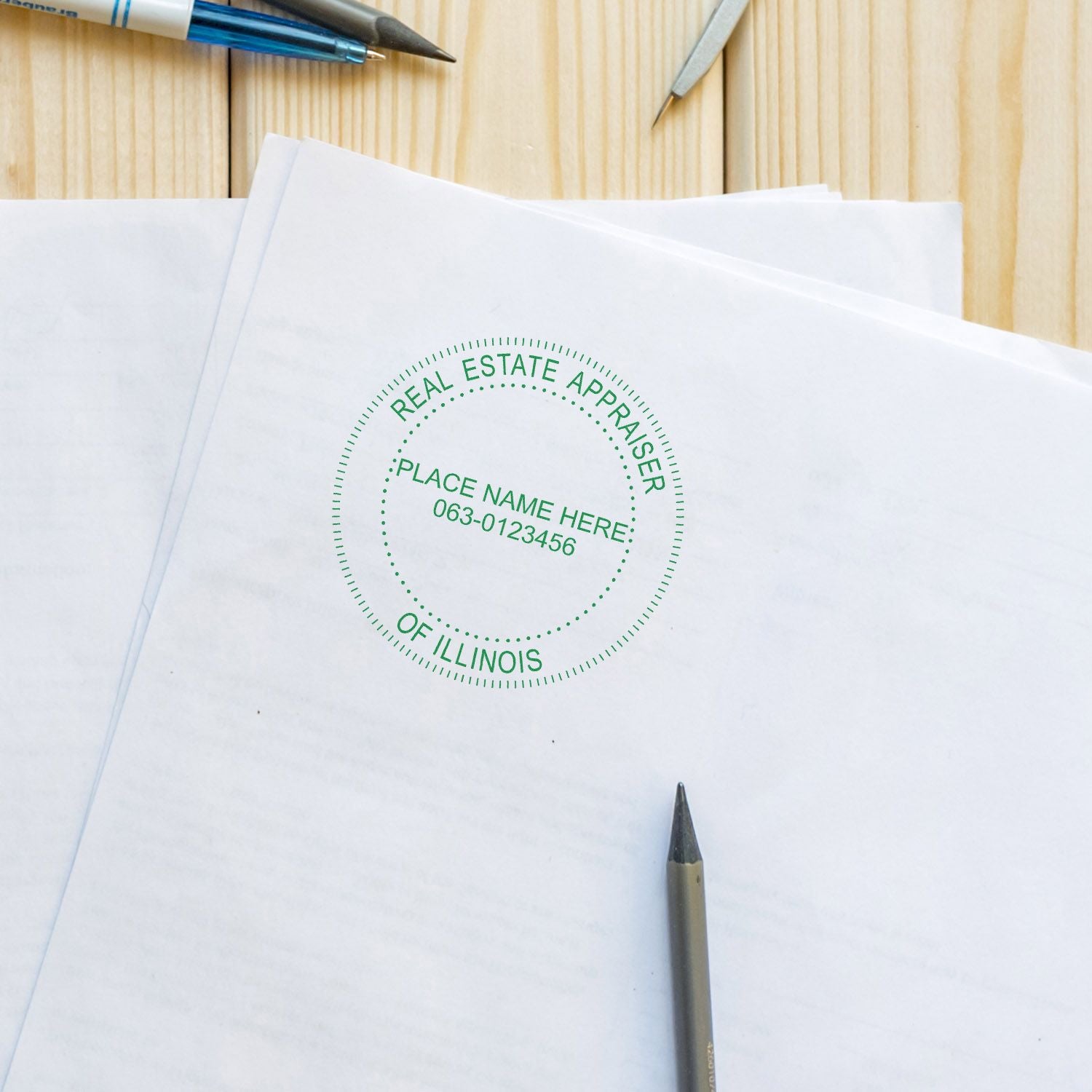
What the Maryland rule actually says
COMAR 09.19.09 is titled License and Certificate Numbers, and it is two paragraphs long. Paragraph A: each licensed and certified appraiser is assigned a license or certificate number by the Commission. Paragraph B: “On each document which refers, directly or indirectly, to the licensed or certified status of an appraiser, the appraiser shall indicate the appraiser’s classification and shall list the license or certificate number which has been assigned to the appraiser.” The elements are the classification and the number. The trigger is the document referring to credential status, which is broader than the appraisal report and broader than the usual advertising carve-out. The position on the page is not fixed, and no instrument is named.
Directly or indirectly is doing real work
The phrase to read twice is “refers, directly or indirectly, to the licensed or certified status”. A report that says Certified General Real Estate Appraiser refers directly. A letter of engagement that offers to perform an appraisal for a federally related transaction, which only a credentialed appraiser may perform, arguably refers indirectly. Maryland did not write a list of covered documents, it wrote a test, and the test catches marketing material and correspondence as readily as it catches the report. That is the practical case for a device here rather than a report template field: the same two elements have to appear in more places than a template reaches.
Indicate and list, but not sign
A detail worth being precise about, because vendors regularly get it backwards. COMAR 09.19.09.01B uses two verbs, indicate and list, and neither is sign. The rule does not itself impose a signature duty. That obligation reaches a Maryland appraisal report through USPAP, which the Commission adopts in its code of ethics chapter, COMAR 09.19.05, alongside compliance with State law and a thirty day duty to answer Commission correspondence. The distinction matters at the order stage: the element Maryland prescribes is text, and text is exactly what a die does well. The signature is a personal act and stays one.
The trap: COMAR 09.23.03.09 is engineers
Maryland does prescribe signing and sealing, in detail, for a different profession under the same Title 09 agency umbrella. COMAR 09.23.03.09 requires signing and sealing by Maryland professional engineers. It is the single most likely source of a false positive on this question, because a search for a Maryland seal rule inside the Department of Labor’s regulations lands on it, and its subtitle number sits four places from the appraiser subtitle. It is a different credential under a different board, and it does not reach appraisers. There is no appraiser analogue anywhere in COMAR 09.19.




The statute has no seal either, not even on the credential
The Business Occupations and Professions Article, Title 16, was inventoried subtitle by subtitle, and the sections where a seal would live were read in full. Section 16-306, on the granting of licenses and the issuance, form and contents of license certificates and pocket cards, lets the Commission determine the size, form and content of the license document and the pocket card and requires an expiration date to be printed. No seal is mentioned, not even on the credential itself. Section 16-312 requires the license to be displayed conspicuously at the principal place of business, which is a display rule for a physical document. Subtitle 4, the miscellaneous practice subtitle and the most likely statutory home for a seal, contains only section 16-401 on five year record retention and section 16-402 on contingent fees. Neither mentions a seal or a stamp.
Where the chapter list rules out a hidden rule
The check that settles a negative is the chapter inventory, because a seal rule hiding in an unread chapter is how this question goes wrong. COMAR subtitle 09.19 runs .01 Appraiser Classifications, .02 Educational Requirements, .03 Work Experience Requirements, .04 Supervising Appraisers and Appraiser Trainees, .05 Code of Ethics, .06 Hearing Regulations, .07 Fees, .08 Temporary Permits and Reciprocity, .09 License and Certificate Numbers, .10 Disciplinary Actions, .11 Volunteer Expert Review Appraiser Roster, .12 General Regulations. Twelve chapters, no gaps in the numbering and therefore no sign of a repealed seal chapter. The two most plausible hiding places, .05 and .12, were opened and read; .05 covers USPAP adoption, compliance with State law and the correspondence duty, and .12 covers application timing and correspondence only.
What to engrave and where it goes
Two elements are prescribed, so a Maryland block is short and presses often. Your name as it appears on the credential, the classification spelled out as the Commission issues it, and the license or certificate number. Adding Maryland is not required and is useful when the report travels. Adding an expiration date is not required and is the element that will eventually make the die wrong, so leave it off even though the credential document itself carries one under section 16-306. On position, COMAR 09.19.09.01B fixes nothing, so the certification page beside the signature is the natural home in a report, and the same die works on a letter of engagement or a proposal cover without any change.
Embosser, ink stamp or the eSeal image
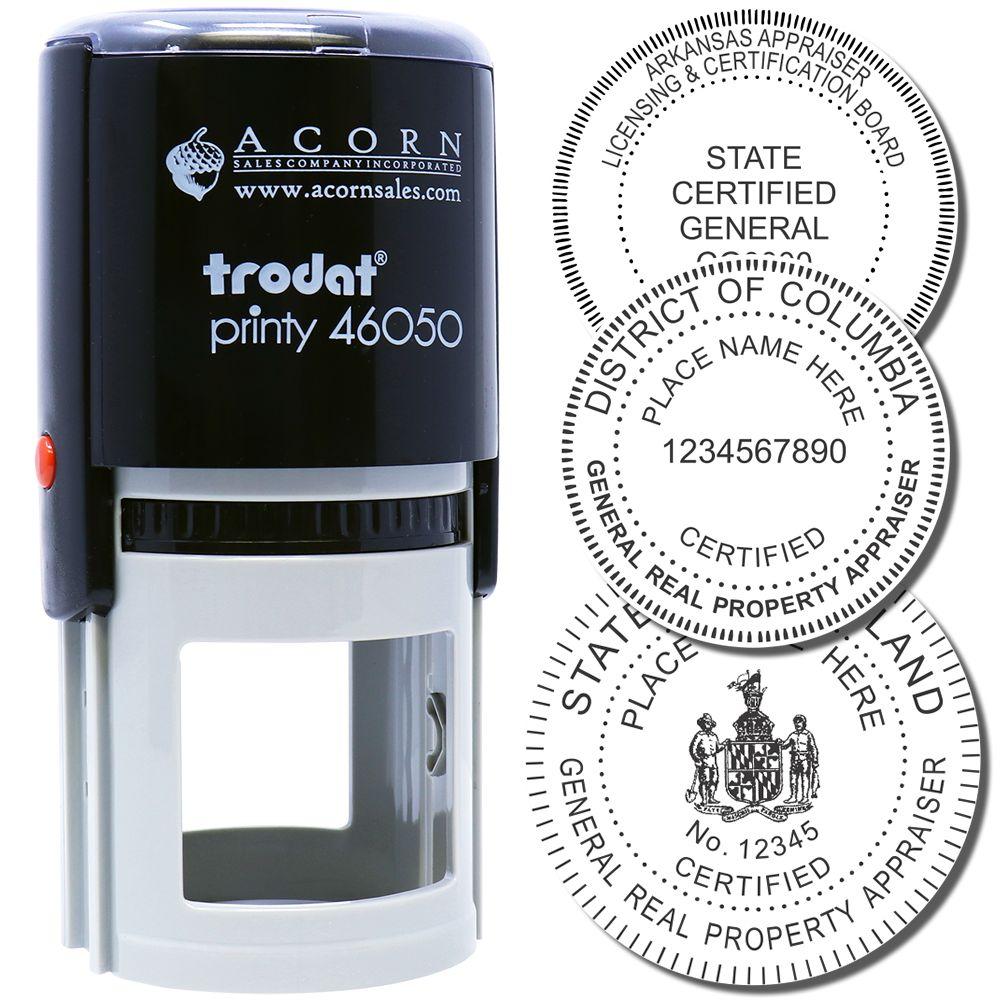
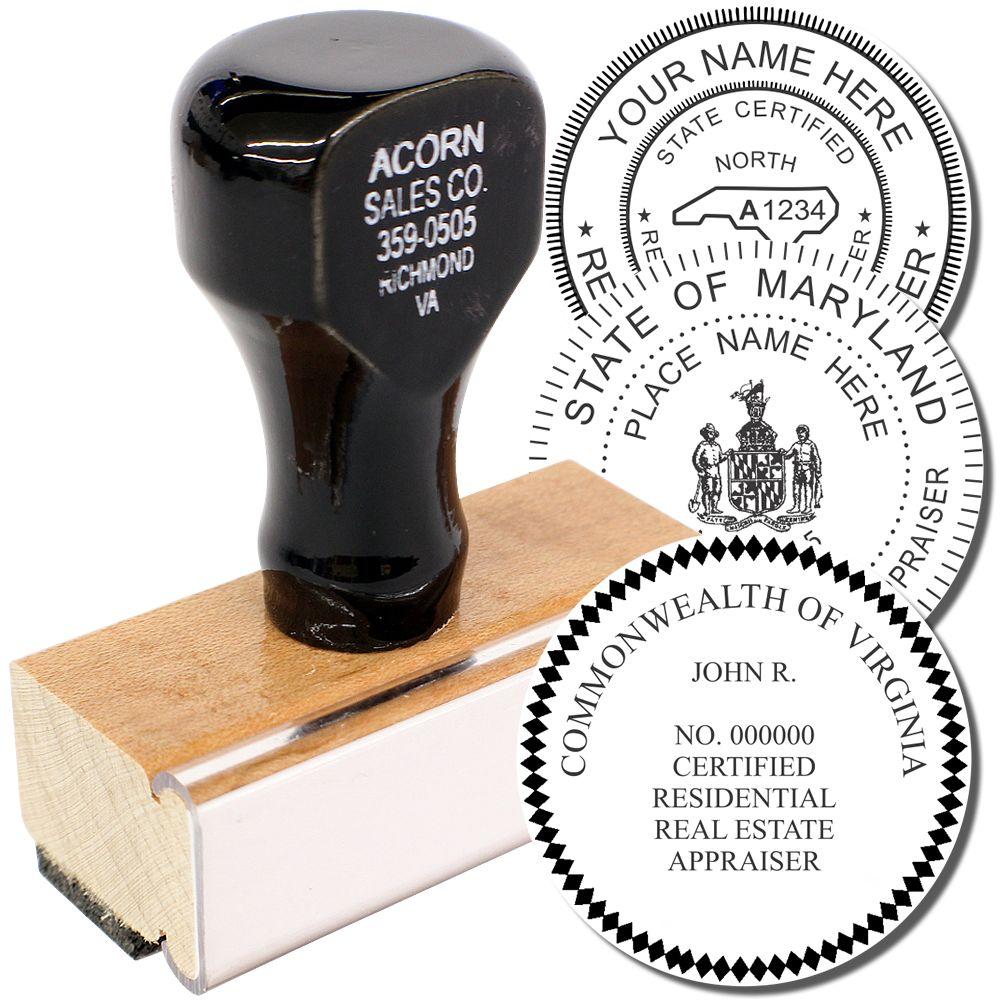
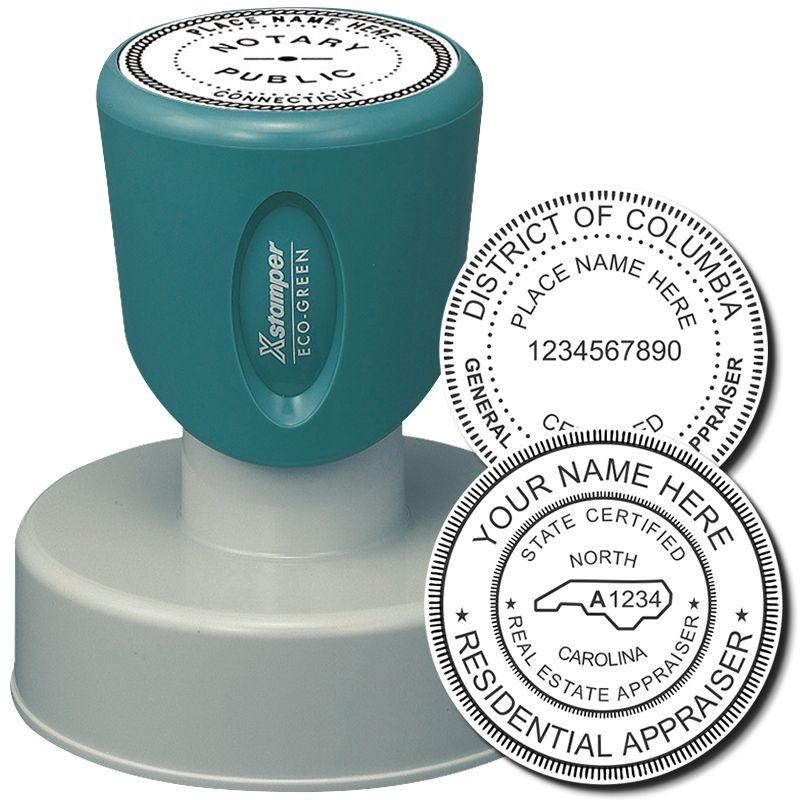
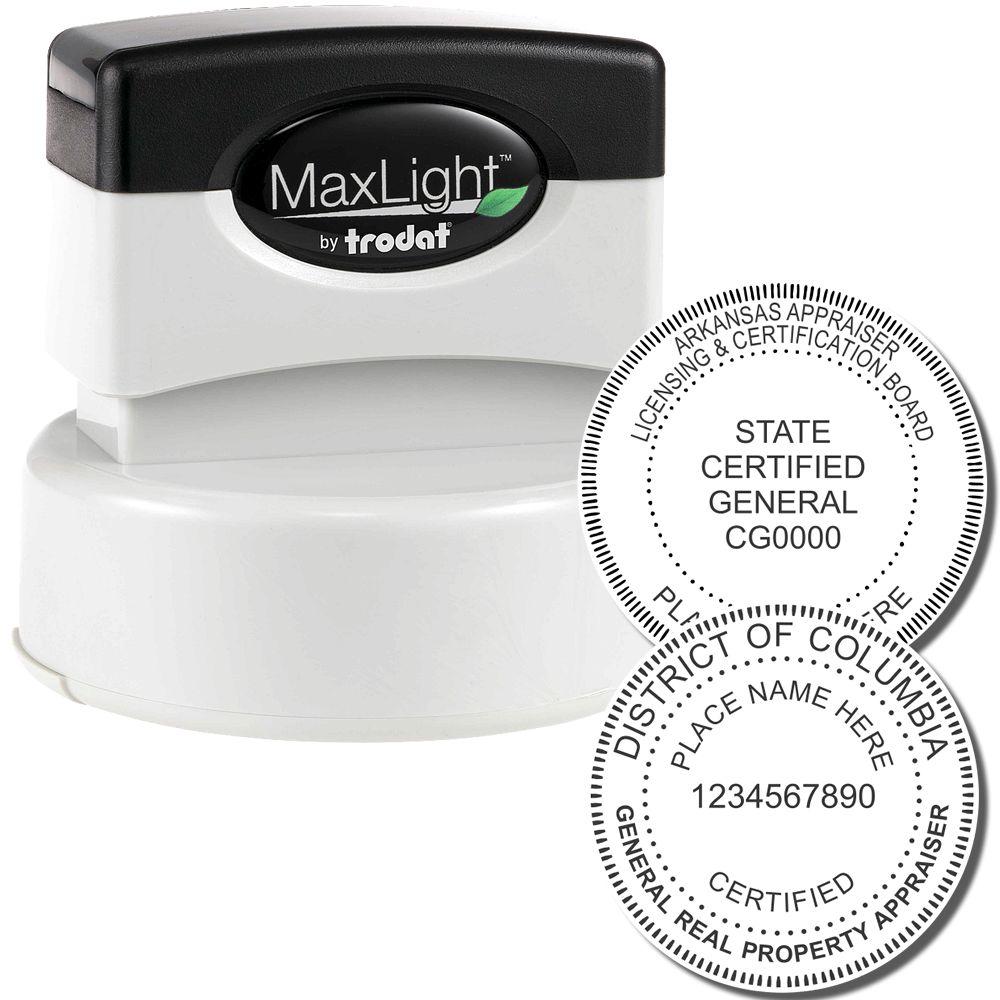
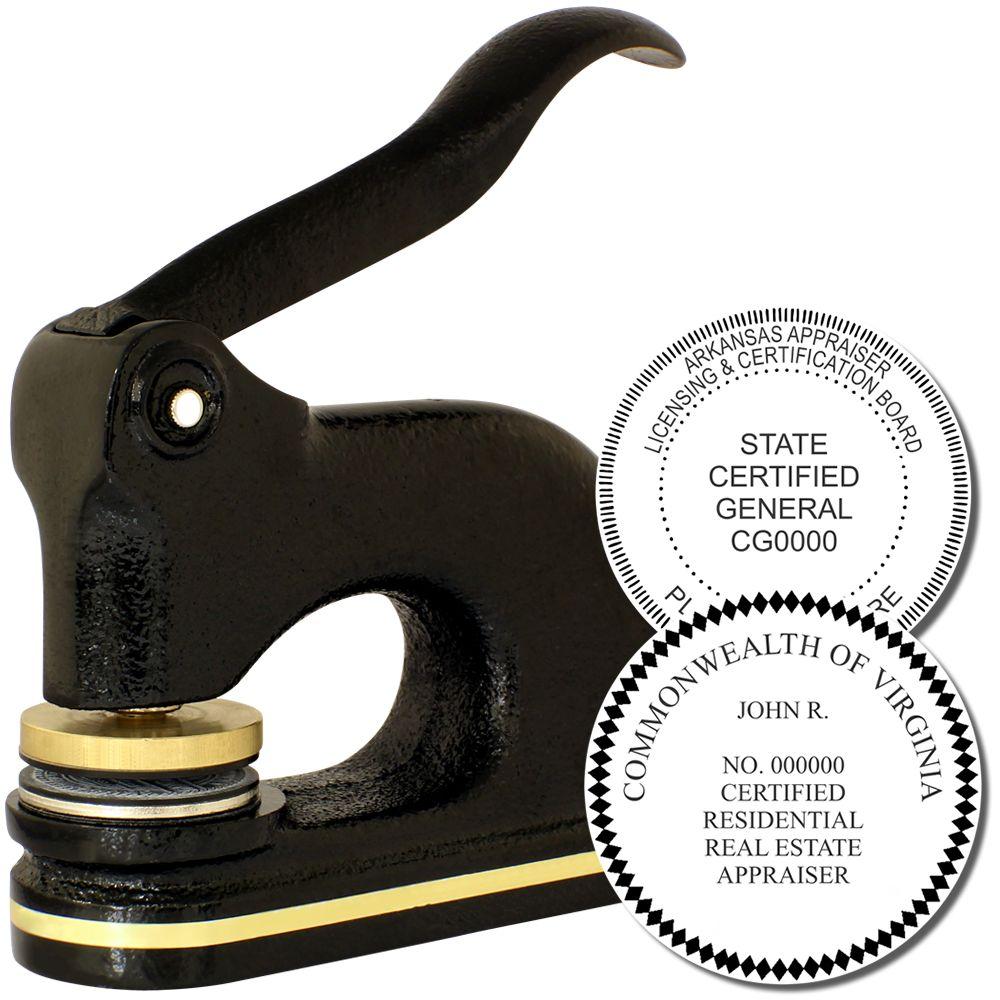
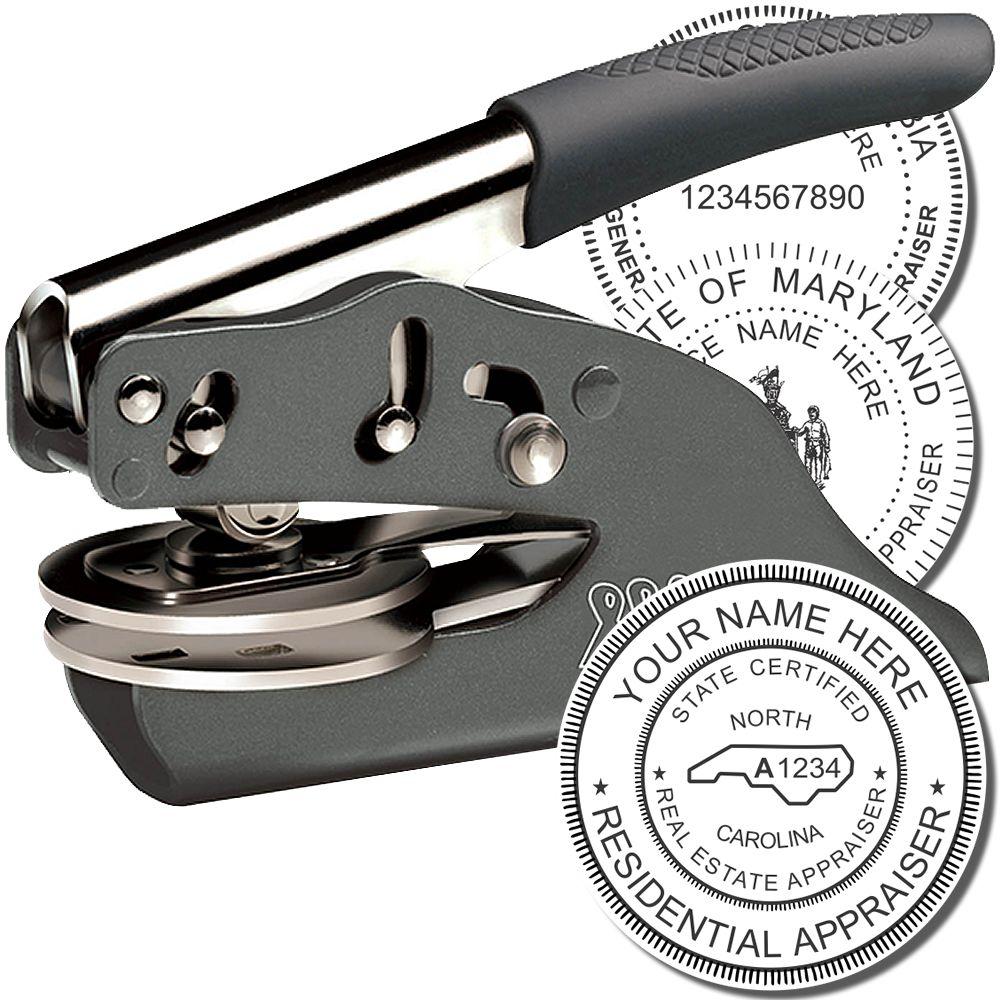
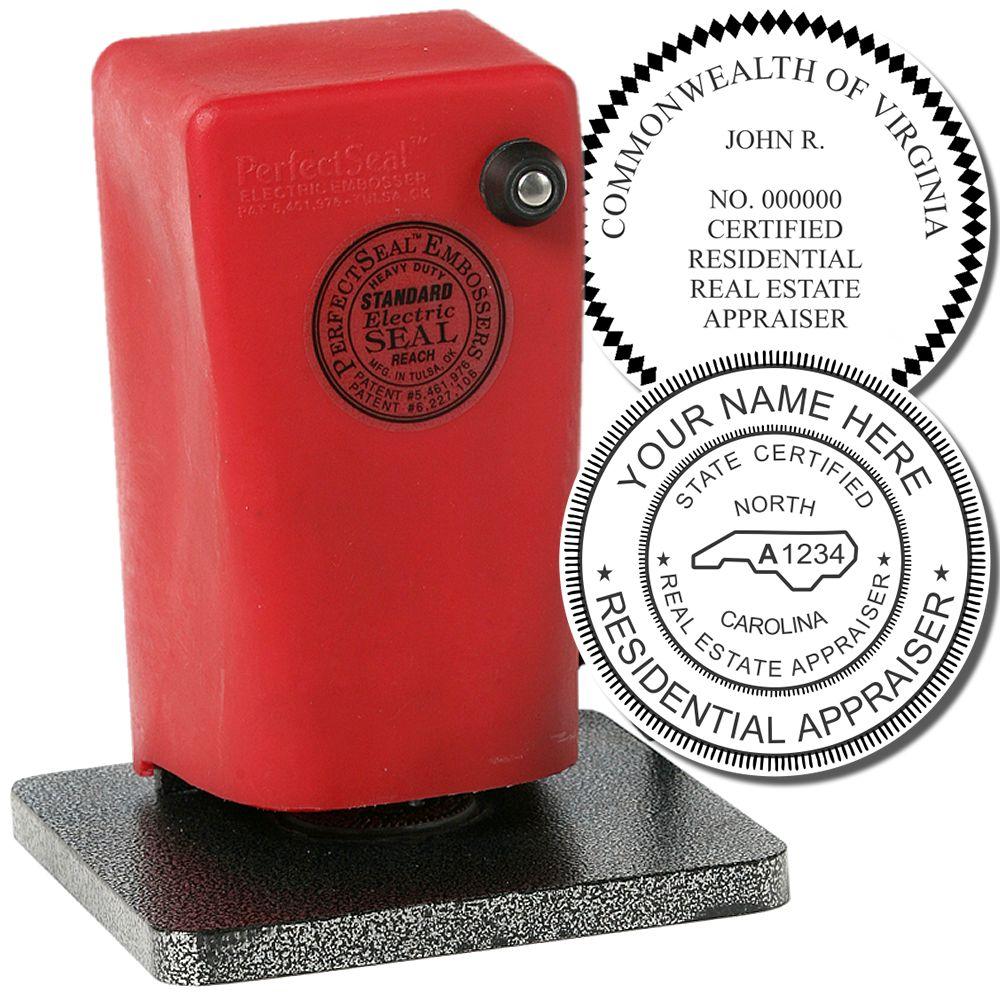
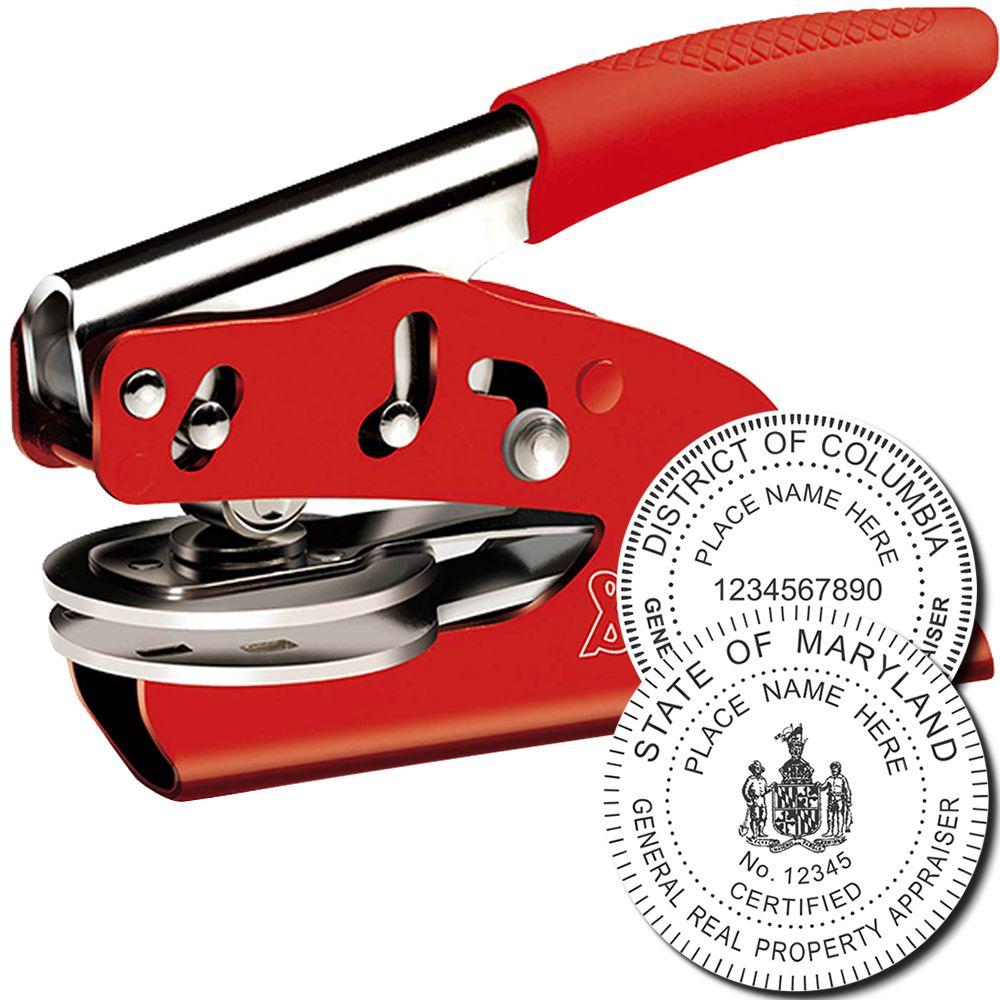
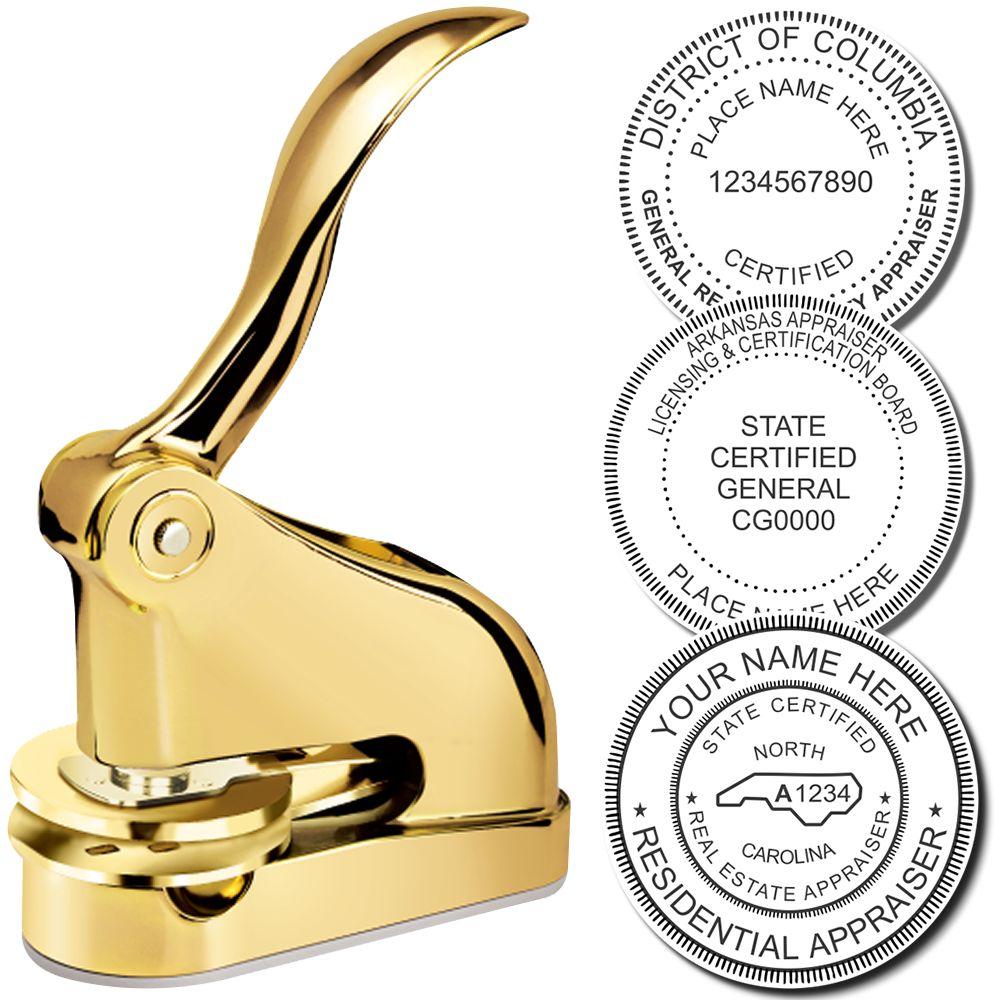
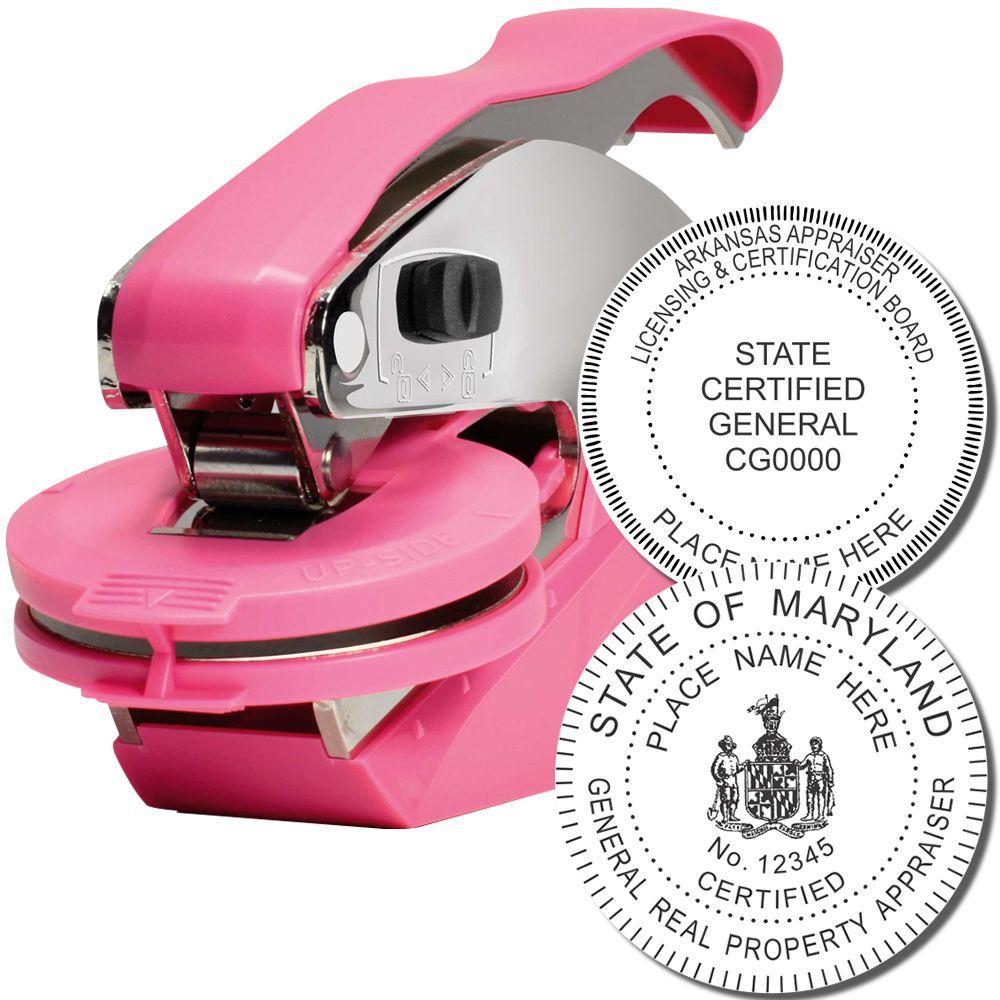
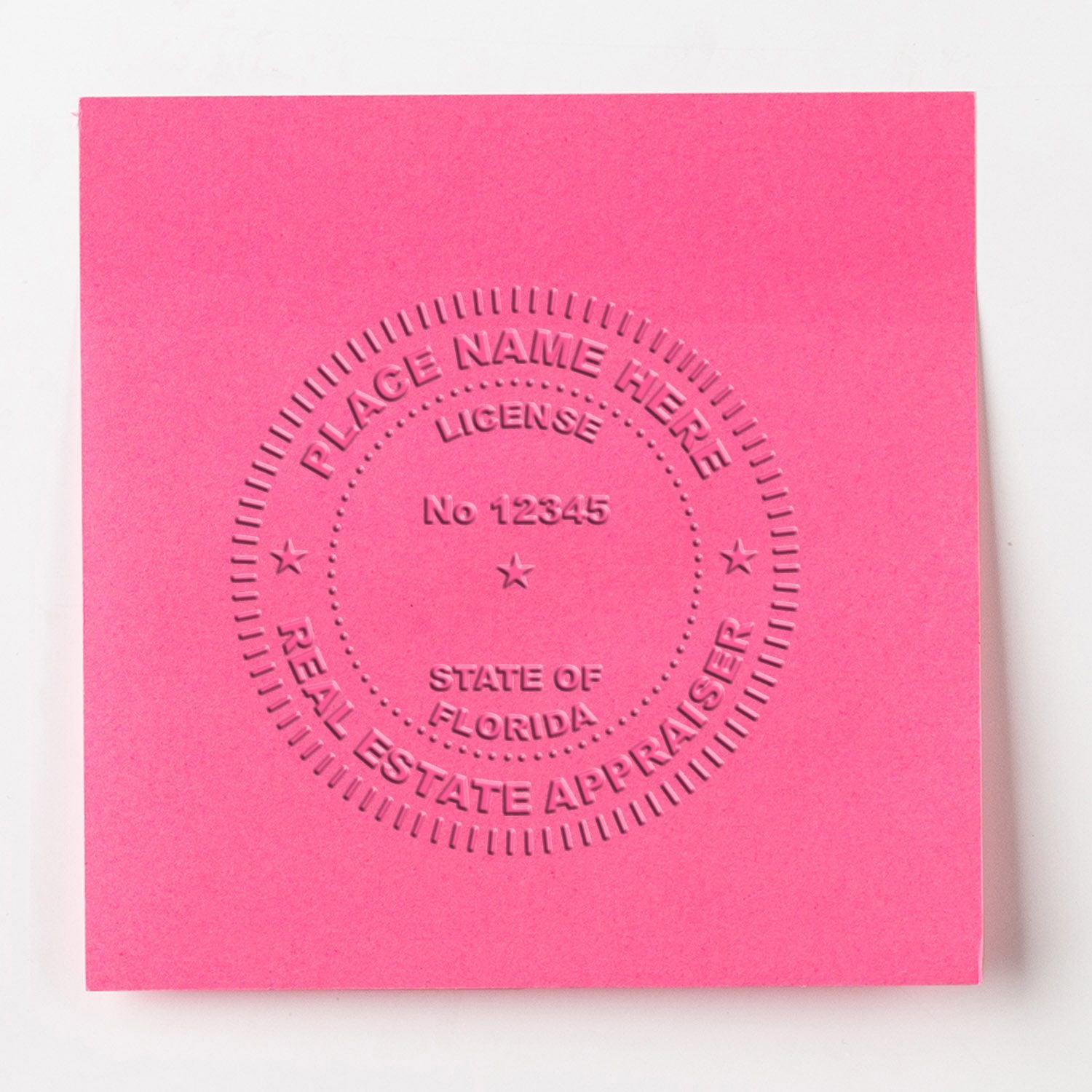
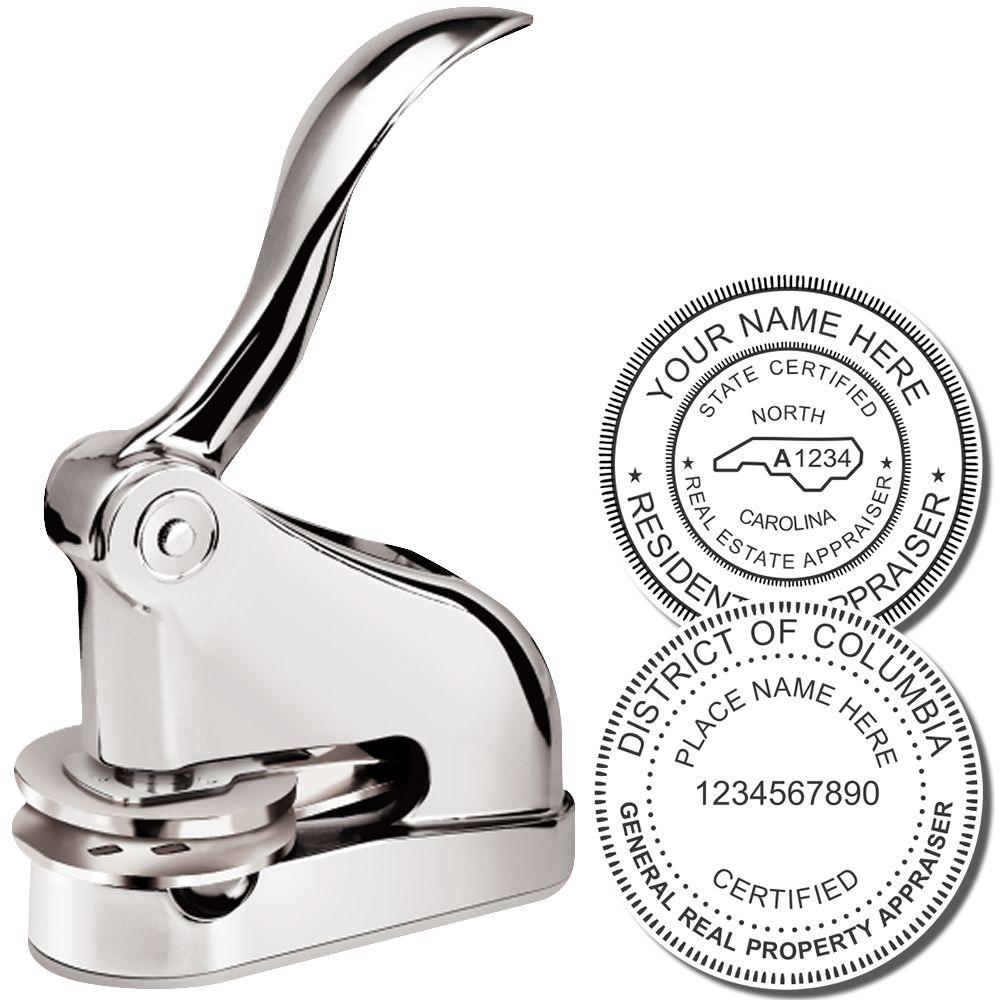
Maryland names no instrument, so pick for how the document travels. Given a duty that reaches correspondence and proposals as well as reports, an ink stamp is the tool that earns its keep: the Regular Rubber Stamp of Seal is $34.95 and takes a separate pad, the Self Inking Rubber Stamp of Seal is $39.95, the Slim and the MaxLight pre inked models are $46.95 each and the Xstamper is $64.95. An embosser raises the paper and reads as a credential object, which suits a bound report or a gift: the Hybrid Seal Embosser is $42.95, the Soft Seal and Desk Seal Embossers are $44.95 each and the Handheld Seal Embosser is $46.95. Raised impressions scan faintly, so appraisers delivering PDFs often add the eSeal Electronic Image Stamp of Seal at $20.00, an image file rather than a tool.



Sizing and layout
No size is prescribed. Maryland fixes no diameter and no shape, so the die is cut to fit the wording rather than to meet a number, and the line count is the real decision. Certified General Real Estate Appraiser wants a line to itself, which sets the rest of the block in smaller type at the same diameter. If the number has to survive a photocopy of a scan, keep the die to the name, the classification and the number, and leave the firm name, the address and the office details for stationery. Send the wording line by line with the order, because there is no state specification for us to match.
What is not settled
Two limits worth naming. The full text of Business Occupations and Professions Article, Title 16 was not read section by section end to end; the subtitle inventory was taken, Subtitles 3 and 4 were inventoried section by section, and the issuance, display and records sections were read in full, which is enough to rule out a seal in the places one would sit. Some of that statutory text was read through republishers rather than the Maryland General Assembly’s own site, which was not reachable in this pass. Separately, the authority line printed on COMAR 09.19.09 still cites pre-recodification sections 15.5-216 and 15.5-513, though the appraiser law now sits at Title 16. That is a stale citation on the face of the rule rather than a substantive change, and it does not affect the answer.
Ordering and care
Send the classification exactly as the Commission spells it on your credential, the license or certificate number, and your name as you sign it. There is no Commission diagram to match, so the wording you supply is the specification. Embossers want the sliding lock engaged when idle and the jaws kept free of grit so die and counter die meet cleanly. A pre inked model with a dust cover keeps it on between uses. Dies are cut to the wording supplied and are not refitted afterwards, so a move from certified residential to certified general means new artwork. This page is a research summary and not legal advice. Browse real estate appraiser stamps and seals, or contact us with your wording.
- Real Estate Appraiser Stamps and Seals
- Real estate appraiser stamps and seals
- Massachusetts Appraiser Seal: Board Approved Wording
- Michigan Appraiser Seal: Number and Level, No Seal
Frequently asked questions
Does Maryland require an appraiser to seal a report?
No. Neither seal nor stamp appears in any of the twelve chapters of COMAR subtitle 09.19, and no seal provision exists in Business Occupations and Professions Article, Title 16. The Maryland duty is classification plus license or certificate number.
What exactly does COMAR 09.19.09.01 require?
That on each document which refers, directly or indirectly, to the licensed or certified status of an appraiser, the appraiser indicate the appraiser’s classification and list the license or certificate number assigned by the Commission.
Does that reach my business card and my letterhead?
The rule is written as a test rather than a list, and the test is whether the document refers to your licensed or certified status, directly or indirectly. Material that presents you as a Maryland appraiser sits inside that phrase, which is why the two elements are worth setting once in a die.
Does the rule require me to sign?
Not in its own terms. COMAR 09.19.09.01B says indicate and list, and says nothing about signing. The signature on an appraisal report comes from USPAP, which the Commission adopts through its code of ethics chapter, COMAR 09.19.05.
I found COMAR 09.23.03.09 about signing and sealing. Does it apply?
No. That rule requires signing and sealing by Maryland professional engineers. It sits under the same Title 09 agency umbrella, which is why it turns up, but it is a different credential under a different board and it does not reach appraisers.
Should my Maryland appraiser stamp carry the expiration date?
No. COMAR 09.19.09.01B prescribes the classification and the number and nothing else. The credential document itself carries an expiration date under Md. Bus. Occ. & Prof. s. 16-306, but that is the license, and putting the date on a die only guarantees the die goes out of step at renewal.
Is an electronic appraiser seal recognized in Maryland?
COMAR 09.19 contains no provision on electronic seals or digital signatures, so there is no Maryland standard and no Maryland permission. Because the rule prescribes content rather than method, an image of your classification and number block in a PDF answers it the same way typed text would.
Does Maryland issue a seal to appraisal firms?
No firm seal exists. Section 16-312 requires the license to be displayed conspicuously at the principal place of business, which is a display duty for the physical credential, and nothing in COMAR 09.19 creates a device for a firm.








