
Written by Acorn Sales Company, manufacturing stamps and seals since 1964 · Reviewed by Holly R, VP of Sales and Marketing at Acorn Sales, against North Carolina Appraisal Board on 22 September 2026 · Updated 22 September 2026
North Carolina is one of only two states in the country that require a real estate appraiser to put a seal on a report. 21 NCAC 57A .0405(b) says that every licensed and certified real estate appraiser “shall affix or stamp to all appraisal reports a seal” carrying the appraiser’s name, the license or certificate number, and the credential words. The same subsection sets three conditions on the device: it has to be legible, it has to conform to the seal the Board authorized at the time of initial licensure or certification, and it has to be a minimum of 1 inch in diameter. Registered trainees are prohibited from using one.
So this page is not the usual one. In most states a stamp is a convenience for reproducing a signature block. Here the device is the thing the rule names, and the design is not open. Before you order, get the seal the Board authorized on your own record and match it, because a die that reads correctly but does not conform to that authorized design does not answer the rule.
North Carolina real estate appraiser seal requirements at a glance
| Requirement | North Carolina rule | Source |
|---|---|---|
| Seal required | Yes. Every licensed and certified real estate appraiser shall affix or stamp a seal to all appraisal reports. Registered trainees are prohibited from using a seal on appraisal reports. | 21 NCAC 57A .0405(b) |
| Required elements | The name and the license or certificate number of the appraiser in whose name the report is issued, and identification of the appraiser as a “licensed residential real estate appraiser”, a “certified residential real estate appraiser” or a “certified general real estate appraiser”, as applicable. | 21 NCAC 57A .0405(b) |
| Size and shape | A minimum of 1 inch in diameter. The seal must also be legible and must conform to the seal authorized by the Board at the time of initial licensure or certification. No maximum is set and no shape other than a diameter is described. | 21 NCAC 57A .0405(b) |
| Device allowed | The rule reads “affix or stamp” and names no instrument beyond that. What it fixes is the outcome: the impression has to be legible and has to match the design the Board authorized. | 21 NCAC 57A .0405(b) |
| Signature and date | The report bears the signature of the licensed or certified appraiser, the license or certificate number, and the designation. Appraisers sign with the same name printed on the license or certification, and personally affix both signature and seal. No date line is prescribed in .0405. | 21 NCAC 57A .0405(a), (b) |
| What must be sealed | All appraisal reports. The duty is not limited by report type, client or intended user, and it sits on the individual in whose name the report is issued. | 21 NCAC 57A .0405(b) |
| Electronic seal | No electronic seal standard is set. What the rule addresses is delivery: appraisal reports transmitted electronically to clients are sent in a secure format, such as Adobe PDF, and the appraiser retains each version transmitted. | 21 NCAC 57A .0405(f), (g) |
| Renewal and lapse | No expiration date is among the elements, and nothing in .0405(b) ties the device to a renewal cycle. The design reference point is fixed at initial licensure or certification, so a correctly made die does not go stale at renewal. | 21 NCAC 57A .0405(b) |
| Firm requirements | None in this rule. The duty is personal: appraisers affix their own seal and signature and shall not allow any other person or entity to affix either. No firm seal is described. | 21 NCAC 57A .0405(a), (b) |
| Regulator | North Carolina Appraisal Board, created by G.S. 93E-1-5(a) for the purposes set out in Chapter 93E. | N.C. Gen. Stat. 93E-1-5(a); rules at 21 NCAC Chapter 57 |


Does North Carolina require an appraiser to seal a report?
Yes, and the sentence that does it is short. 21 NCAC 57A .0405(b) provides that “every licensed and certified real estate appraiser shall affix or stamp to all appraisal reports a seal which shall set forth the name and license or certificate number of the appraiser in whose name the appraisal report is issued” and shall identify the appraiser by credential. That is a duty on the appraiser, on every appraisal report, with no carve out for report type or client.
It is worth saying how easy this one is to miss. Subsection (a) of the same rule is a signature and number provision, the kind of report marking rule that most other states stop at. A reader who finds (a) and stops has the wrong answer for North Carolina. The seal sits in the very next subsection of the very same rule.
What the seal has to carry, and in what words
Three things, taken straight from .0405(b): the name of the appraiser in whose name the report is issued, that appraiser’s license or certificate number, and the credential words, which the rule spells out and does not abbreviate. They are “licensed residential real estate appraiser”, “certified residential real estate appraiser” and “certified general real estate appraiser”.
The rule fixes that wording rather than leaving you to paraphrase it. There is no shortened form in the text, no “Cert. Res.” and no “CG”. On the name, read .0405(a) alongside it: appraisers sign reports with the same name as it is printed on the license or certification, which is the sensible standard for the name on the die as well, so signature, seal and credential record all read alike.
The 1 inch minimum and the design the Board authorized
The size rule is a floor, not a fixed dimension: the seal “must be a minimum of 1 inch in diameter”. Nothing in .0405(b) sets a maximum, and nothing describes a shape other than by naming a diameter.
The harder condition sits beside it. The seal “must conform to the seal authorized by the Board at time of initial licensure or certification”. That makes the design a matter of record rather than of taste, and the reference point is your initial licensure or certification, not your most recent renewal and not a sample on a vendor page. Get the authorized seal from the Board for your own credential and send it to us as artwork, and we cut to it. If you are not sure what is on your record, ask the Board before you ask a manufacturer.
Registered trainees may not use a seal
This is the part of .0405(b) most likely to cause an ordering mistake. The subsection ends: “Registered trainees are prohibited from using a seal on appraisal reports.” It is a prohibition, not an omission, and it is worded as a flat bar rather than a condition a supervisor can lift.
For a trainee that makes the answer to “which seal should I buy” none, not yet. The device belongs to licensure or certification, and the design that goes on it is the one the Board authorizes at that point, so ordering early buys nothing.
Subsection (a): the signature rule beside the seal
The seal does not stand alone on the page. 21 NCAC 57A .0405(a) requires each written appraisal report to bear the signature of the licensed or certified appraiser, the license or certificate number of the holder in whose name it is issued, and the same designation words. It adds two content duties with nothing to do with a device: the report states whether the appraiser personally inspected the property, and it identifies in the body any other person who assisted in the appraisal process other than by providing clerical assistance.
It also closes the loop on signing. Appraisers personally affix their signature and shall not allow any other person or entity to affix it. Read (a) and (b) together and the picture is consistent: two markings, both personal, both carrying the same name, number and credential words.



Affixing it yourself is part of the rule
.0405(b) says appraisers “shall personally affix their seal to their appraisal reports and shall not allow any other person or entity to affix their seal”. Subsection (a) says the same about the signature. Those two sentences are why a shared office device is a bad idea here, and why an assistant dropping your seal image into a report template is a problem even when the report is otherwise yours.
That has a consequence for how you hold the device. A stamp in a drawer anyone can open, or a seal image on a shared network folder, is hard to square with a rule written in the first person. Keep the stamp where you keep your signature, and keep the image file somewhere only you open.
Electronic delivery, secure format, and versions
North Carolina does not set an electronic seal standard the way some states set one for engineers. What .0405 governs instead is delivery and records. Subsection (f) provides that appraisal reports transmitted electronically to clients are sent in a secure format, such as Adobe PDF. Subsection (g) provides that the appraiser retains each version of a report transmitted to the client, to any intended user, or to any other party authorized by the client.
Put those next to the personal affixing duty and the working method falls out: a seal image you control, dropped into the report by you, flattened into a PDF, and the transmitted PDF kept as the version of record.
Two other North Carolina seals that are not yours
Chapter 93E mentions a seal twice more, and neither is the device on your report. G.S. 93E-1-3.1(a) permits the Board to adopt a seal or mark for appraisers’ exclusive use. It is permissive and addressed to the Board, so it is not the source of your duty. Your duty is the rule, .0405(b), where the Board put the 1 inch minimum and the conformity condition. G.S. 93E-1-5(d) concerns the Board’s own corporate seal, used to authenticate the Board’s records; that is an agency instrument and it never touches an appraisal report.
The cross profession trap applies here as everywhere. Architects, engineers and land surveyors have their own seal rules under their own boards, with their own diameters and legends. Those are different credentials, they do not reach an appraiser, and they should not be used to size or letter this die.
Embosser, ink stamp or a seal image
.0405(b) names no instrument. It says affix or stamp, and it sets two tests the impression has to pass: legible, and conforming to the authorized design. Read that against how North Carolina reports are actually delivered and the choice narrows on its own.
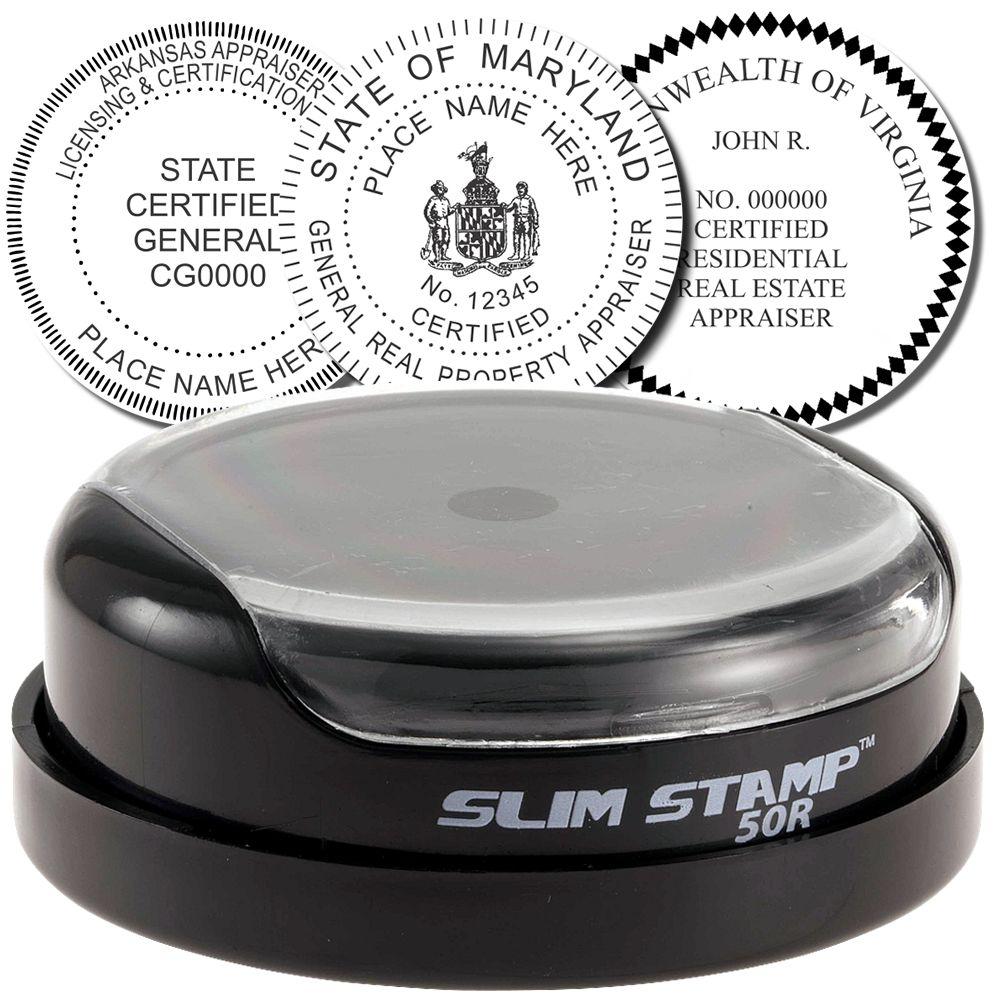
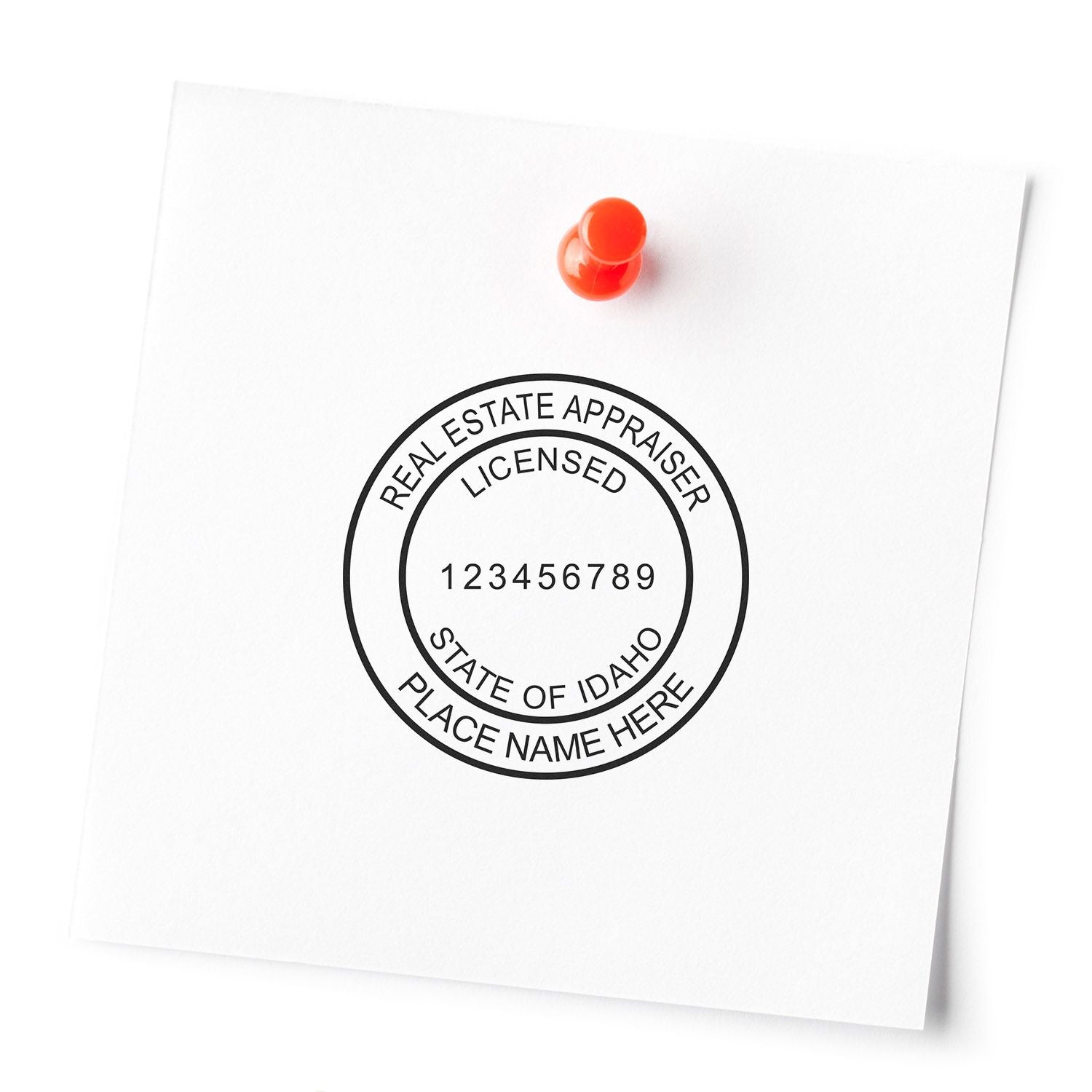
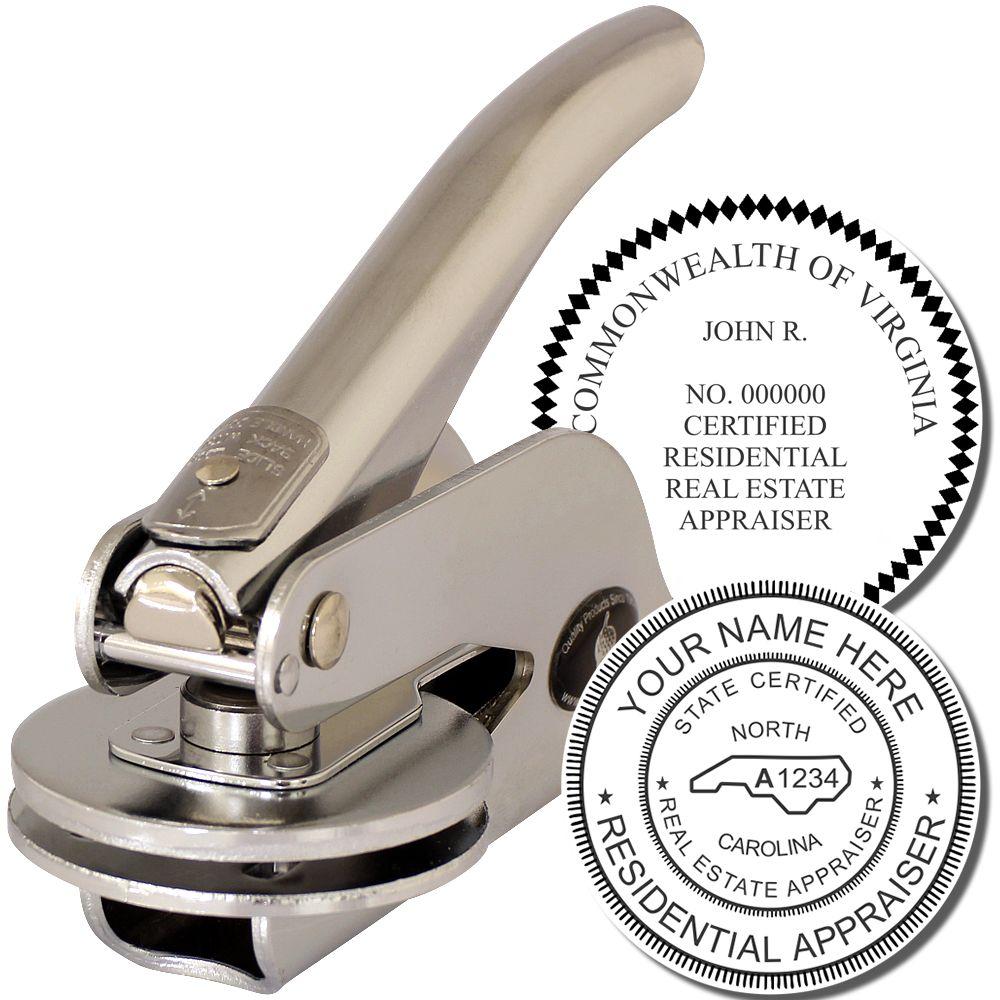
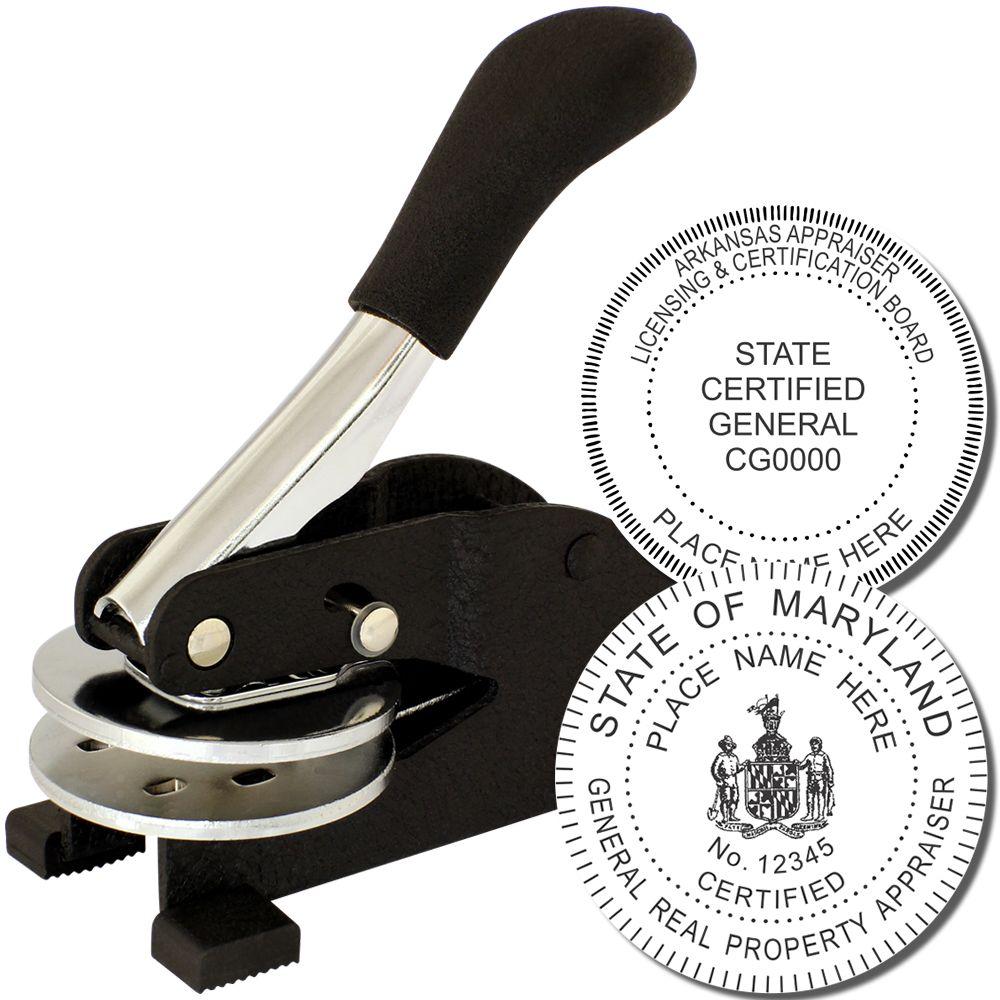
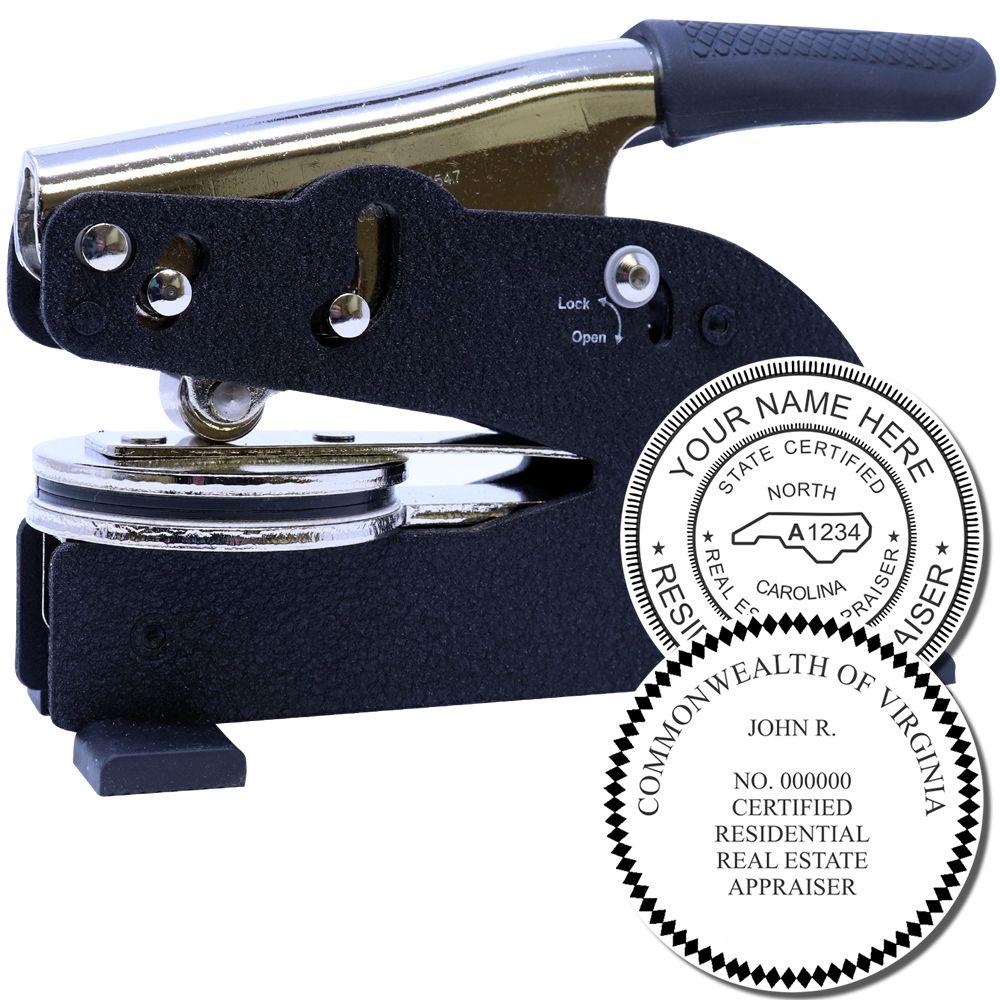
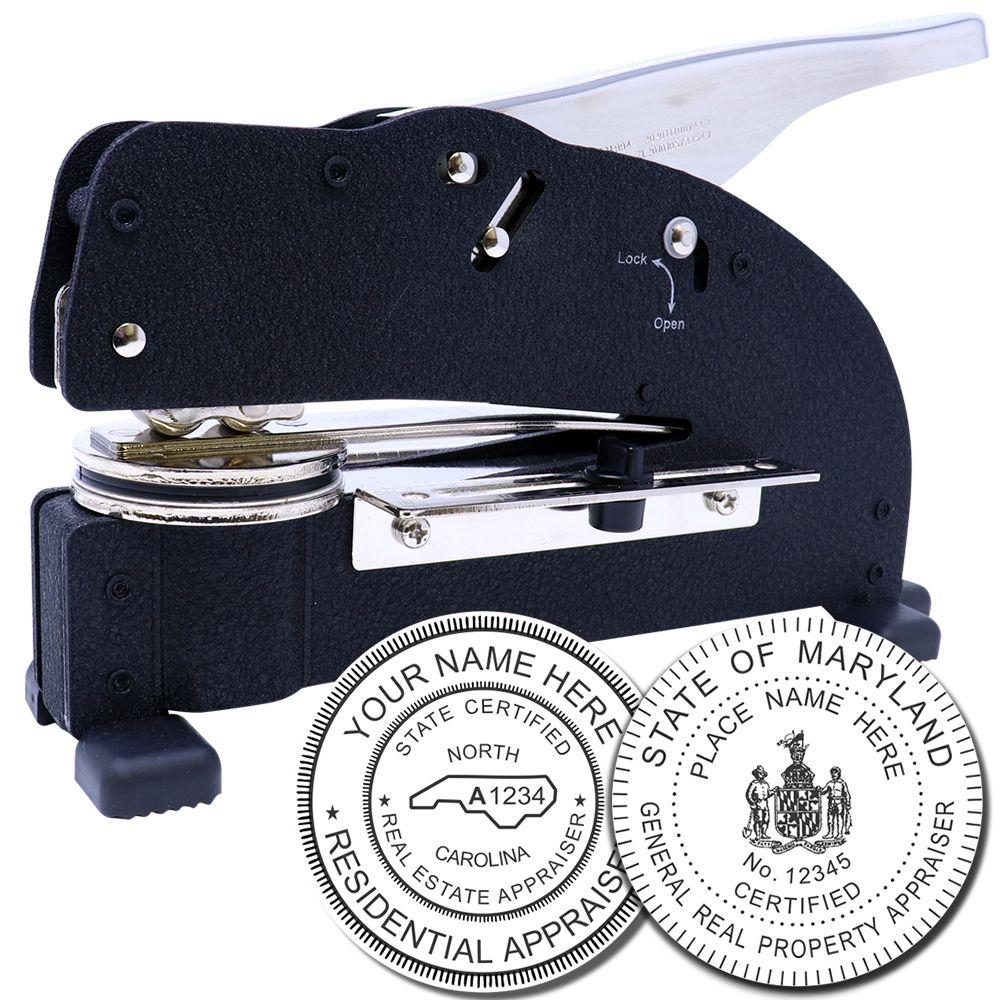
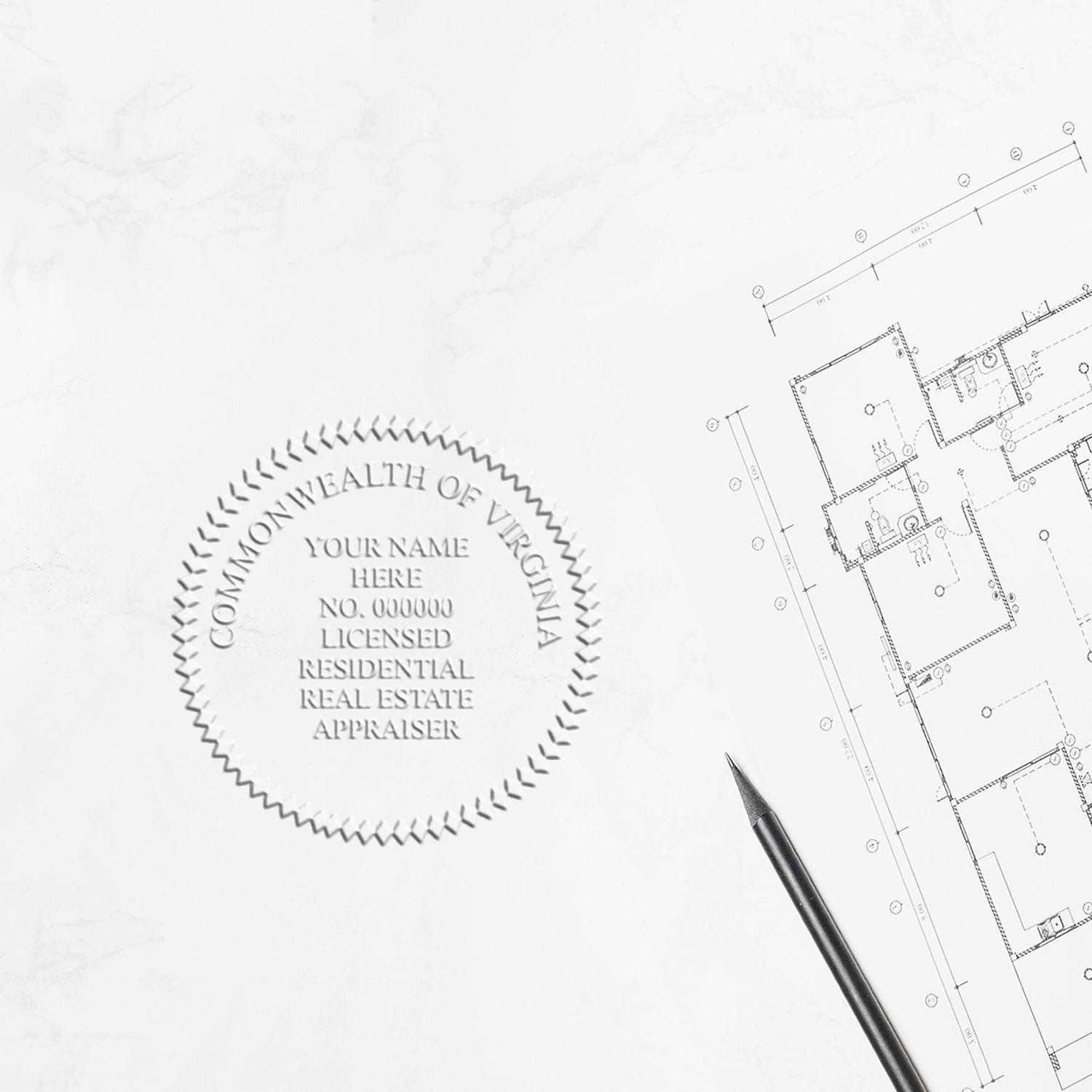
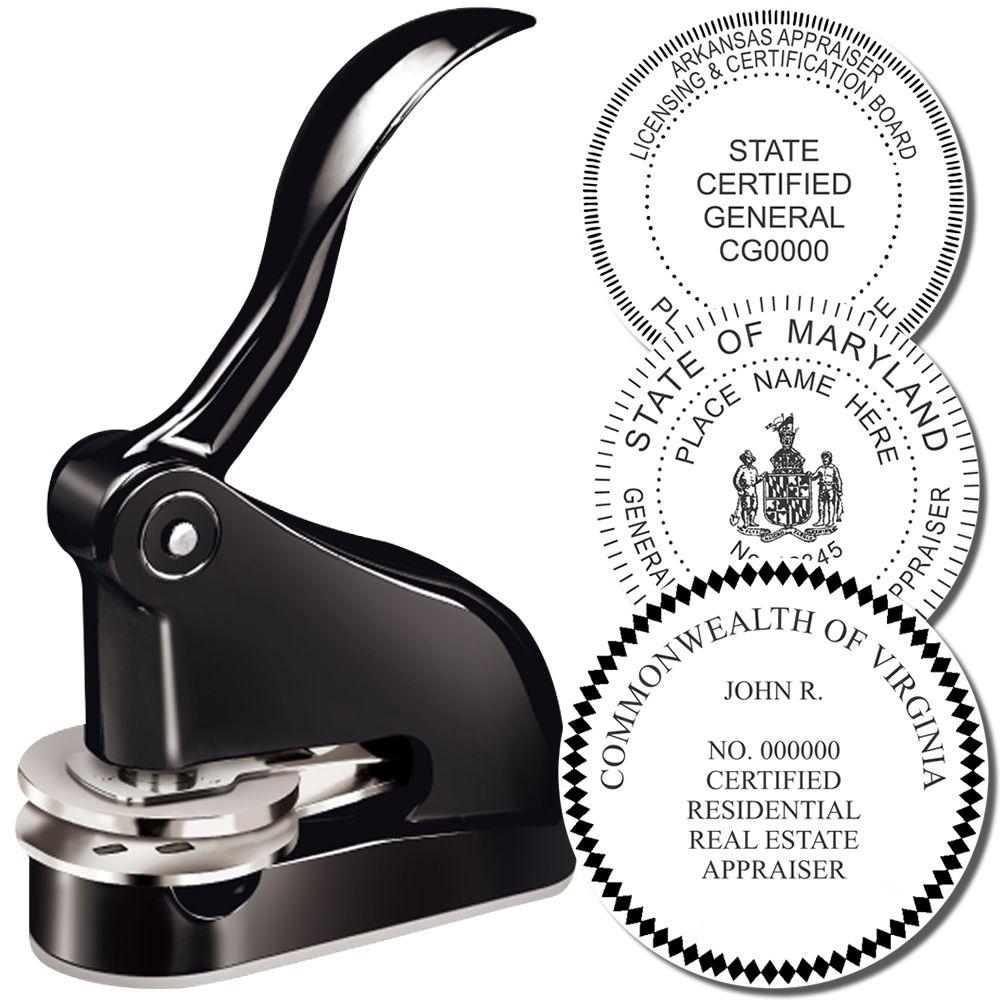
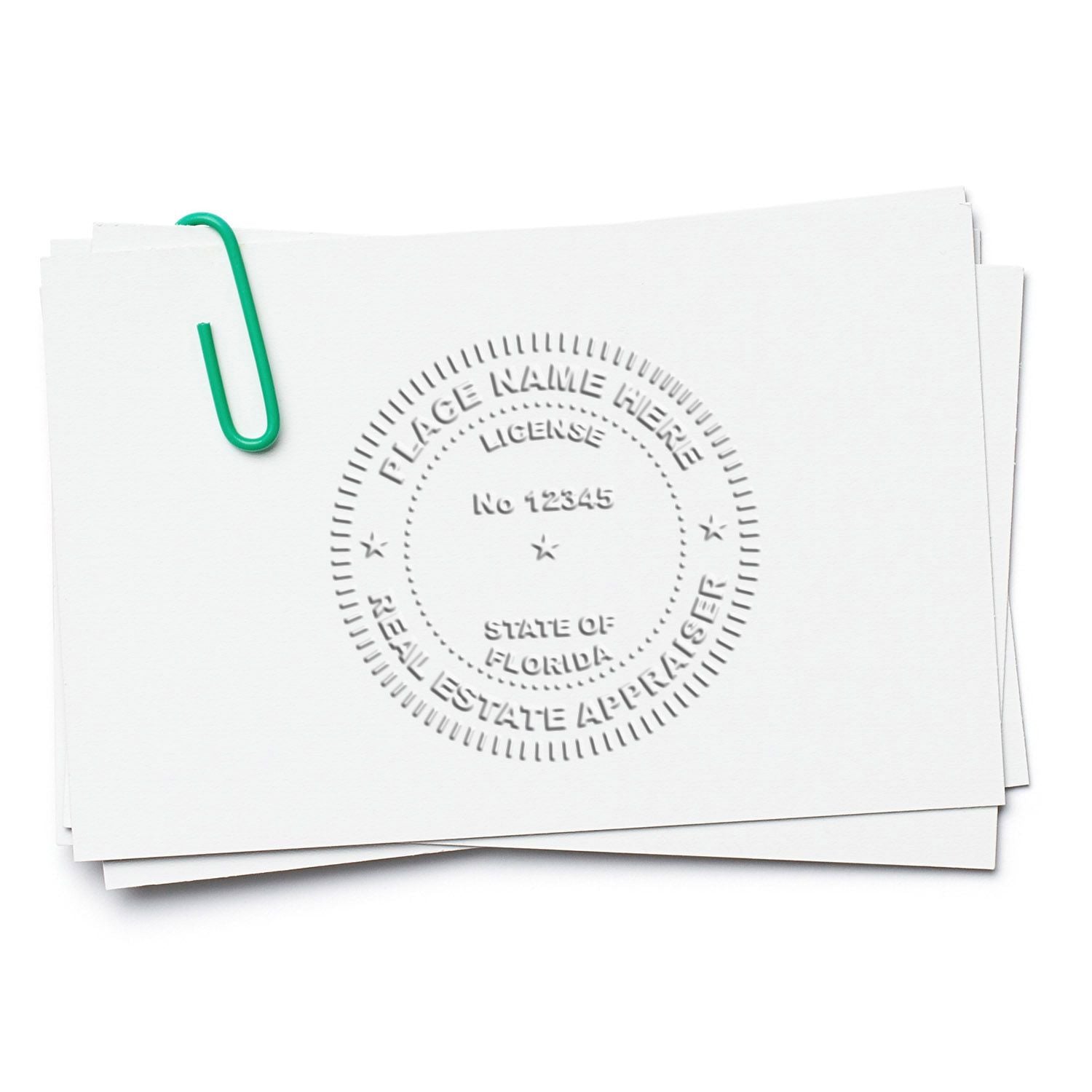
An embosser leaves a raised, uninked impression. It survives on a paper original, but a raised impression often disappears in a scan or a flat PDF export, which sits badly with a legibility test applied to the copy the client receives. An ink stamp reproduces cleanly in every scan and photocopy, which is the common answer for a wet signed report. A seal image is what goes into a PDF you assemble yourself, the delivery method subsection (f) contemplates. Many North Carolina appraisers keep two, one ink device and one image, cut and drawn from the same authorized artwork so both read identically.




Sizing and layout on a 1 inch die
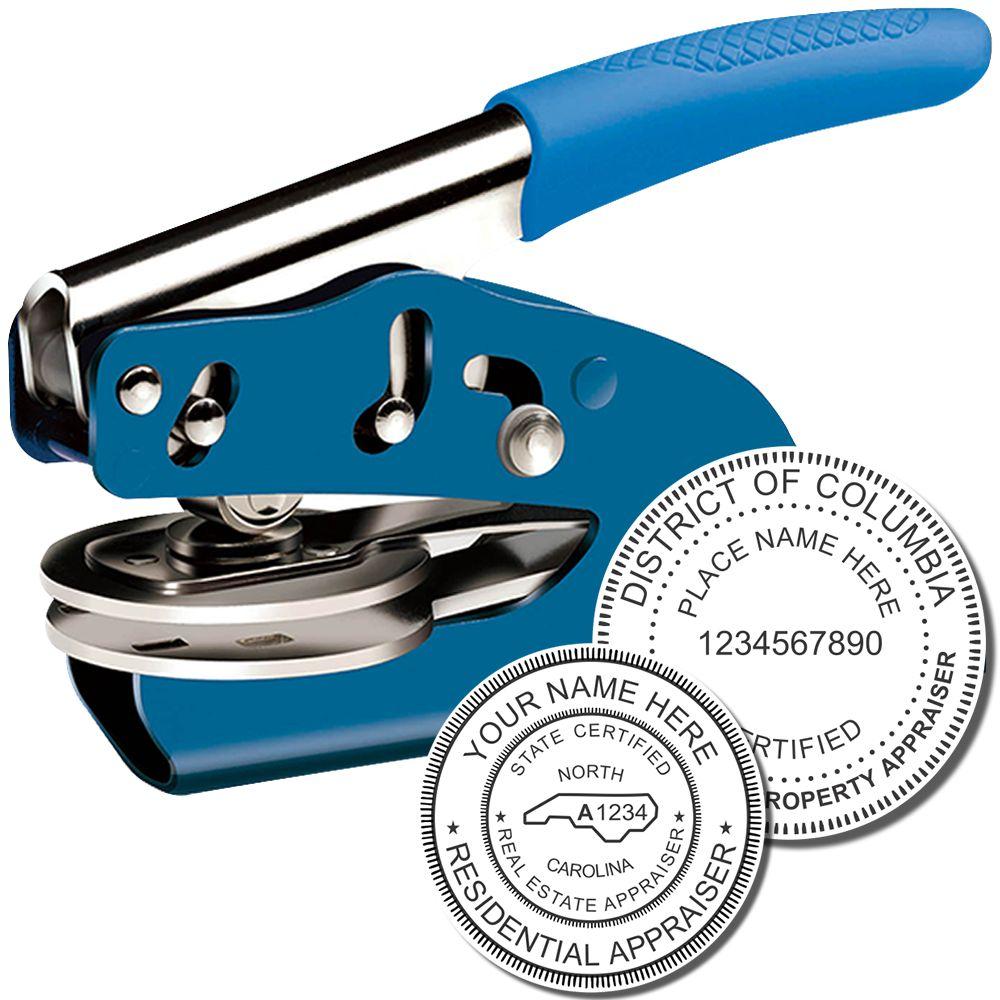
A minimum of 1 inch in diameter, three pieces of content and a credential phrase as long as “certified general real estate appraiser” is a real typographic constraint. On a round die the credential words usually curve around the perimeter, with the name and the license or certificate number stacked inside, which is what lets long wording sit at a readable size in a small circle.
If your authorized design is a known layout, none of this is your decision and no vendor should redraw it. Send the authorized artwork and we match it. Where you do have latitude, going slightly above the 1 inch floor buys legibility, since the rule tests the impression rather than the intention. We proof the die before cutting so you can read the number and the credential words at actual size.
Ordering a North Carolina appraiser seal
Send four things: your name exactly as printed on the license or certification, your license or certificate number, your credential in the rule’s own words, and the seal design the Board authorized at your initial licensure or certification. That last item is the one people skip, and it is the one .0405(b) turns on.
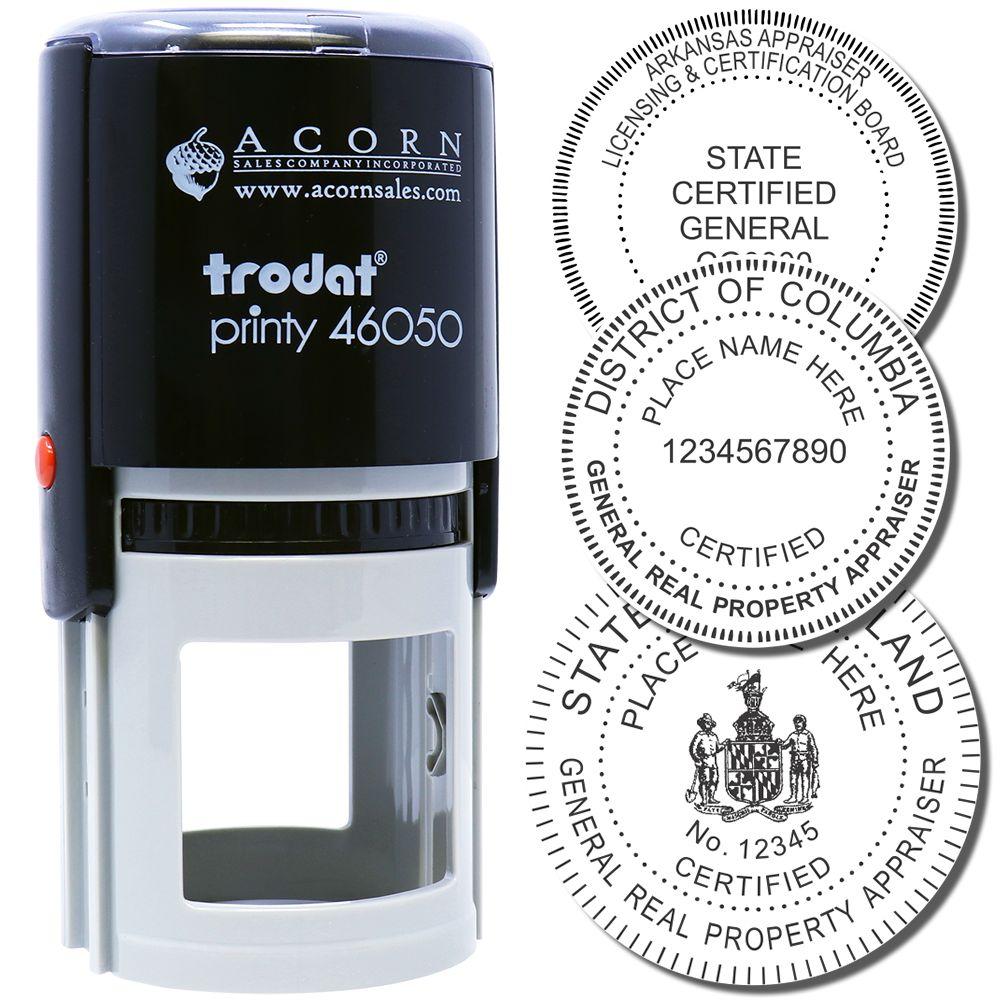
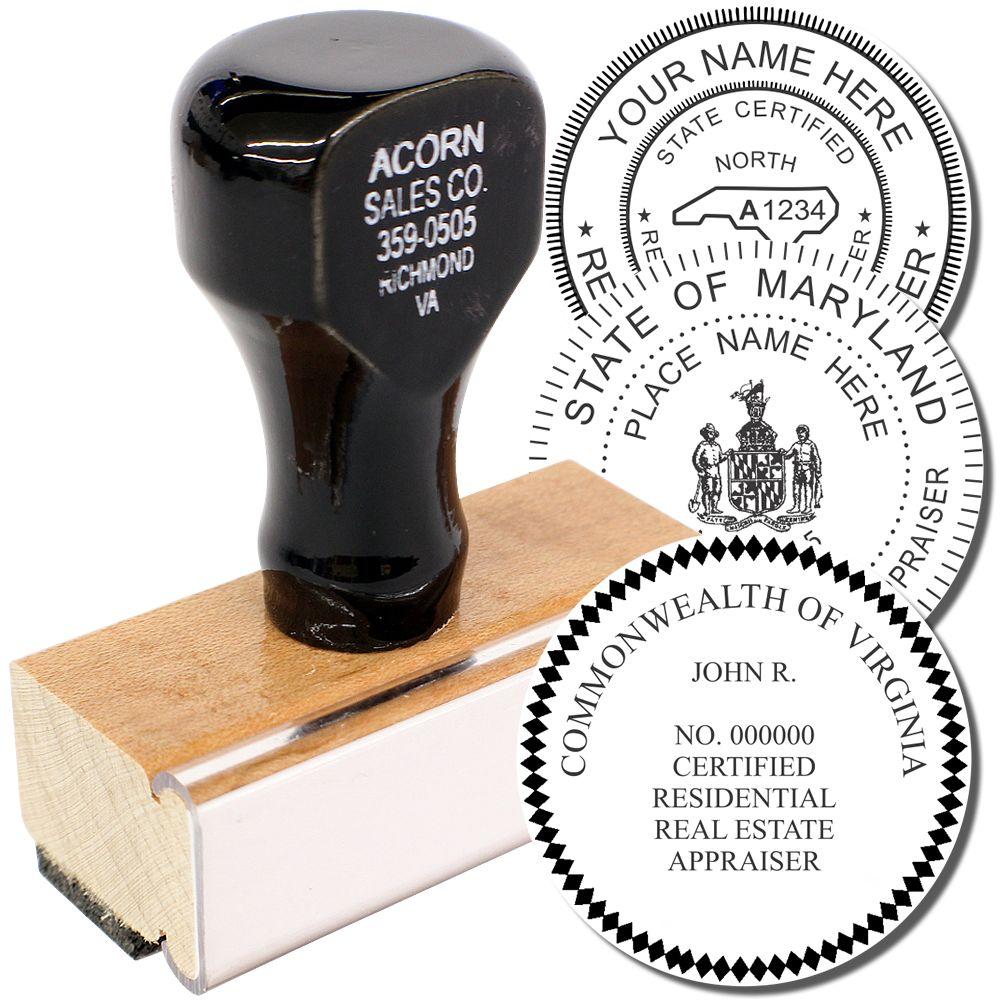
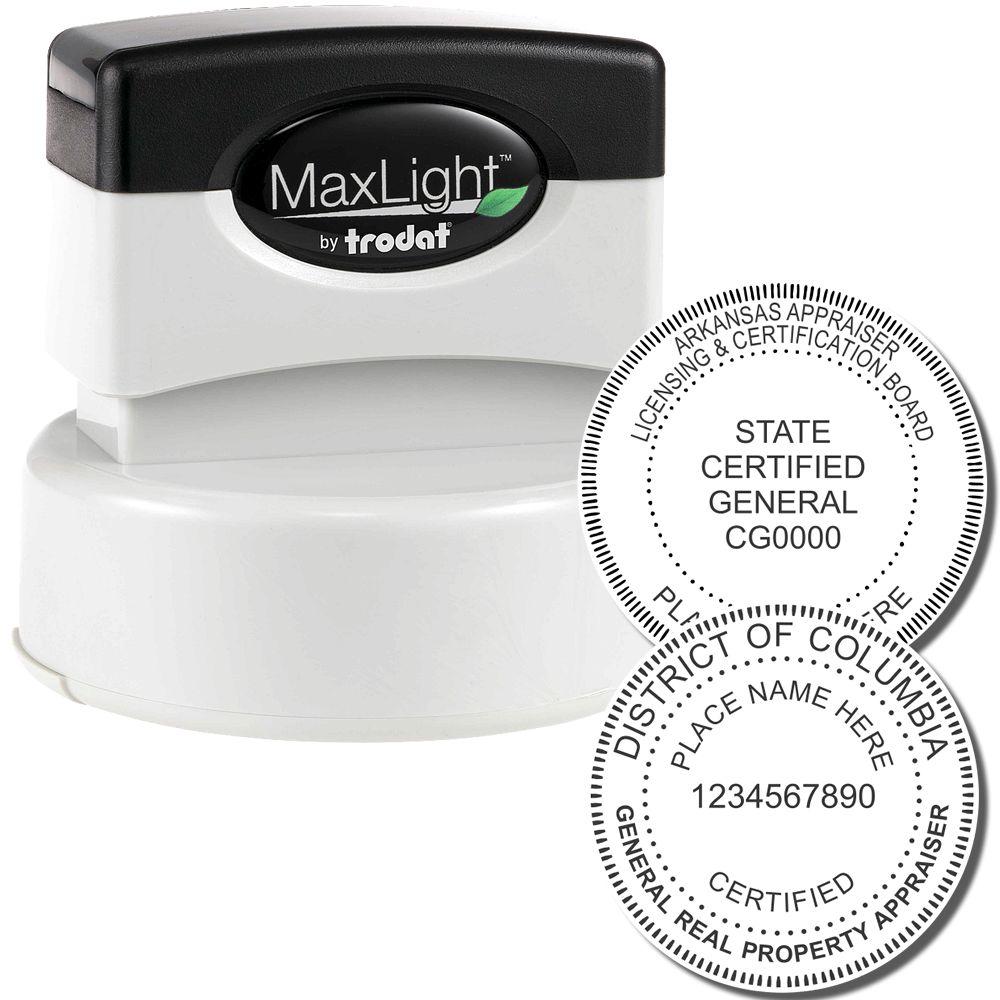
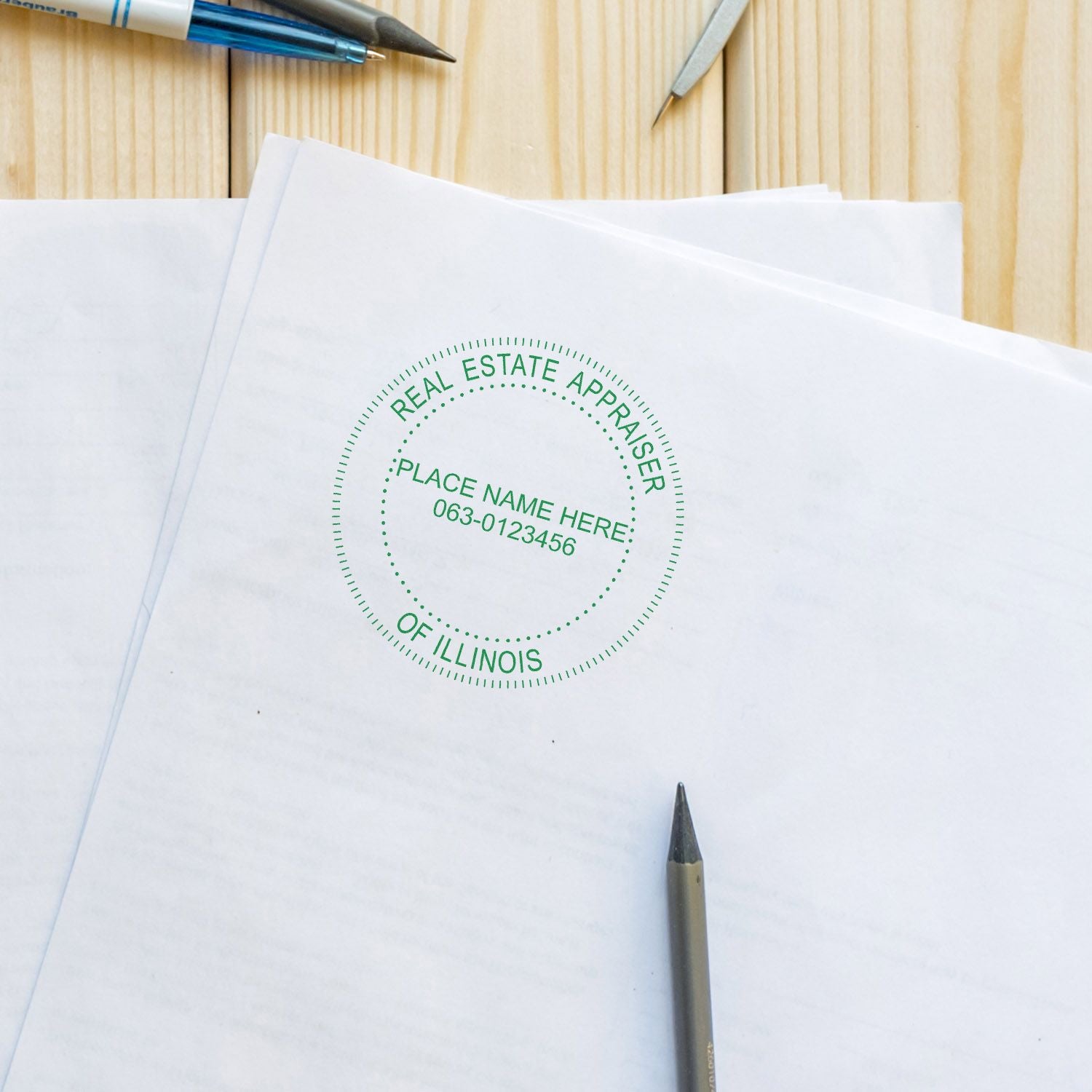
From the appraiser range, the Real Estate Appraiser Self Inking Rubber Stamp of Seal at $39.95 is the everyday ink device, and the Regular Rubber Stamp of Seal at $34.95 is the same impression on a hand stamp and pad. The MaxLight Pre Inked Rubber Stamp of Seal at $46.95 gives the sharpest edges on fine lettering, which matters when a long credential phrase has to stay readable. For electronic files the eSeal Electronic Image Stamp of Seal is $20.00. On the embossing side the Handheld Seal Embosser is $46.95 and the Desk Seal Embosser is $44.95. Browse the real estate appraiser stamps and seals collection, or contact us with your artwork.
Looking after it, and what to check each year
Re ink a self inking stamp when the impression starts to gray rather than when it fails, because .0405(b) is written about legibility and a faint impression is the failure it describes. Keep a pre inked stamp capped, and store any ink device away from a sunny window, since heat is what dries a pad out early. Embossers need little beyond keeping grit out of the die faces.
The annual check is short. Does the name on the die still match the name printed on your license or certification. Does the number still match. Does the credential line still match your current credential, which is the item that changes when a licensed residential appraiser becomes certified residential. A credential change is the one event that makes a correct die wrong, and it is worth a new device rather than a correction on the page. This page is a research summary and not legal advice.
- Real Estate Appraiser Stamps and Seals
- Real estate appraiser stamps and seals
- South Carolina Appraiser Seal: Signature and Number
- Virginia Appraiser Seal: Design Repealed in 2026
Frequently asked questions
Does North Carolina require a real estate appraiser to have a seal?
Yes. 21 NCAC 57A .0405(b) requires every licensed and certified real estate appraiser to affix or stamp a seal to all appraisal reports. North Carolina is one of only two states in the country that do, which is why advice written for appraisers generally is usually wrong here.
How big does a North Carolina appraiser seal have to be?
A minimum of 1 inch in diameter. The rule sets a floor and no ceiling, so a larger die is fine. It also requires the seal to be legible and to conform to the seal the Board authorized at the time of initial licensure or certification.
What has to appear on the seal?
The name and the license or certificate number of the appraiser in whose name the report is issued, plus identification as a “licensed residential real estate appraiser”, a “certified residential real estate appraiser” or a “certified general real estate appraiser”, as applicable. The rule spells the credential out and offers no abbreviation.
Can a registered trainee use a seal?
No. 21 NCAC 57A .0405(b) states that registered trainees are prohibited from using a seal on appraisal reports. Order the device when your license or certification issues, which is also the moment the Board authorizes the design the rule points to.
Can my assistant apply my seal for me?
No. .0405(b) requires appraisers to personally affix their seal and not to allow any other person or entity to affix it, and .0405(a) says the same about the signature. That covers a rubber stamp in a shared drawer and a seal image on a shared drive alike.
Does North Carolina recognize an electronic seal?
No electronic seal standard appears in the rule. It governs delivery instead: subsection (f) has reports transmitted electronically to clients sent in a secure format, such as Adobe PDF, and subsection (g) has the appraiser retain each version transmitted. A seal image you apply yourself fits that method.
Where does the design of the seal come from?
From the Board. The seal must conform to the seal authorized by the Board at the time of initial licensure or certification, so the design sits on your record rather than being chosen at ordering. Get it from the Board and send it to us as artwork.
Is the seal rule current?
21 NCAC 57A .0405 took effect 1 July 1994, was last amended effective 1 July 2011 and was readopted without substantive public interest effective 3 October 2017. The text quoted here was read from the North Carolina Appraisal Board’s own published Board Rules.








