
Written by Acorn Sales Company, manufacturing stamps and seals since 1964 · Reviewed by Holly R, VP of Sales and Marketing at Acorn Sales, against Real Estate Appraiser Board, Virginia Department of Professional and Occupational Regulation on 22 September 2026 · Updated 22 September 2026
Virginia no longer has an appraiser seal. The Real Estate Appraiser Board struck the illustrated seal design out of 18VAC130-20-180 C 2 by a final action effective 14 January 2026, and the words seal and stamp now appear nowhere in that section. What stands in its place was already on the books. Va. Code 54.1-2017 tells every licensed residential, certified residential and certified general appraiser to authenticate all written appraisal reports with his signature, license designation and license number.
That changes what a Virginia device should say. Until the repeal a seller could point at a figure printed in the Virginia Administrative Code and cut a die to match it. Anyone still advertising a Virginia appraiser seal made to board specification is working from a figure that has been struck out of the code. What a Virginia appraiser now repeats on every report is a short credential block of three elements, and that block is the part worth putting on a stamp.
Virginia real estate appraiser seal requirements at a glance
| Requirement | Virginia rule | Source |
|---|---|---|
| Seal required | No. The illustrated seal design at 18VAC130-20-180 C 2 was repealed effective 14 January 2026, and no seal provision replaced it. | 18VAC130-20-180; 42 Va. Register Iss. 9 |
| Required elements | Signature, license designation and license number on all written appraisal reports. | Va. Code 54.1-2017 |
| Size and shape | None. The figure that once fixed the detail and size of an optional seal is gone from the current text. | 18VAC130-20-180 (current text) |
| Device allowed | No instrument is named. The statute asks for the three elements, not for a particular way of putting them on the page. | Va. Code 54.1-2017 |
| Signature and date | All original appraisal reports must be signed by the licensed appraiser. On form appraisals the signature goes on the page designated for the appraiser’s signature and final estimate of value. The section prescribes no date. | 18VAC130-20-180 C 2 |
| What must be sealed | Nothing is sealed. All original appraisal reports are signed and carry the license number, and on a review the reviewer’s signature and license number go on the certification page. | 18VAC130-20-180 C 2 and F |
| Electronic seal | Not prescribed. The rule speaks to transmission rather than to a digital seal: signing or transmitting a report indicates the licensee has exercised complete direction and control over the appraisal. | 18VAC130-20-180 C 1 |
| Renewal and lapse | No expiry date belongs in the credential block. The statute names signature, license designation and license number, and nothing else. | Va. Code 54.1-2017 |
| Firm requirements | Not addressed in the authentication rule, which speaks to the individual licensee. A temporary licensed appraiser signs and affixes the temporary license itself to the report. | 18VAC130-20-180 C 2 |
| Regulator | Real Estate Appraiser Board, Virginia Department of Professional and Occupational Regulation | Va. Code 54.1-2012; regulations at 18VAC130-20 |


What the rule says now
Subsection C of 18VAC130-20-180 is headed Use of signature and transmission of report, and it has two paragraphs. C 1 provides that the signing or transmission of an appraisal report indicates that the licensee has exercised complete direction and control over the appraisal. C 2 provides that all original appraisal reports must be signed by the licensed appraiser and contain the license number of the appraiser, that on form appraisals the signature must appear on the page designated for the appraiser’s signature and final estimate of value, and that a temporary licensee must sign and affix the temporary license to the report or letter. The statute behind it, Va. Code 54.1-2017, is the broader duty: authenticate all written appraisal reports with signature, license designation and license number. Read the two together and the Virginia answer is a credential line, not a device.
The seal design Virginia repealed on 14 January 2026
This matters because the old text was specific enough to manufacture from. Through 13 January 2026, 18VAC130-20-180 C 2 described an appraiser seal, said that the seal shall conform in detail and size to the design illustrated in that subdivision, printed the figure, and then made the seal optional by adding that reports prepared without the use of a seal shall contain the license number of the appraiser. The Board struck those sentences. The final regulatory action appears at Virginia Register of Regulations Volume 42, Issue 9, effective 14 January 2026, and the section’s own amendment history note on Virginia’s law site records that date along with a second 2026 amendment effective 29 July 2026. A Virginia appraiser seal offered today as made to board specification is quoting a figure the Board deleted.
The statute asks for three elements. The regulation names two.
This is the gap that catches people who read only one document. 18VAC130-20-180 C 2 asks for a signature and the license number. Va. Code 54.1-2017 asks for a signature, the license designation and the license number. The designation is the credential level you hold: licensed residential real estate appraiser, certified residential real estate appraiser or certified general real estate appraiser. An appraiser working from the regulation alone will put a name and a number on the report and leave the designation off, which under-states what the statute asks for. Build the block from the statute. If all three elements are on the report, both the statute and the rule are satisfied; if only two are, the rule is satisfied and the statute is not.
What to engrave and where it goes
Three lines carry the whole Virginia requirement. Your name as it appears on the license. Your license designation spelled out, in the words the statute uses for your credential level. Your Virginia license number. Nothing in the current rule asks for the word Virginia, for the Board’s name, for an expiry date or for a border. Position is set only for form work: on form appraisals the signature belongs on the page designated for the appraiser’s signature and final estimate of value, and the block sits with it. On a narrative report the block sits with the signature on the certification. Leave room on the die for your wet signature to cross or sit beside the printed lines, because the signature is the part the rule will not let you reproduce for yourself.




Form appraisals, review assignments and consulting reports
Three different placements come out of the same section. On a form appraisal the signature goes on the designated signature and final estimate of value page. On a review assignment, 18VAC130-20-180 F provides that the reviewer’s signature and license number must appear on the certification page of the report, so a reviewer stamping the certification page is doing exactly what the rule describes. Consulting work is the outlier. An appraiser may provide market analysis studies or consulting reports that do not constitute appraisals of market value, provided the report carries a conspicuous statement that it is not an appraisal as defined in Va. Code 54.1-2009. That statement is a block of running text and not something to letter onto a seal die.
Two Virginia seals that are not yours
Va. Code 54.1-2012 says the Board shall adopt a seal by which it shall authenticate its proceedings. That is the agency’s own seal for its own records, the way a court authenticates an order. It is not an appraiser’s device, it does not go on a report, and it is the item most often miscited as proof that Virginia requires an appraiser seal. The second trap is the word affix. 18VAC130-20-180 C 2 tells a temporary licensed appraiser to sign and affix the temporary license to the appraisal report or letter for which the license was obtained. That means attaching the license document itself to the report. It does not mean applying a seal, and no die can perform it.
Embosser, ink stamp or eSeal image
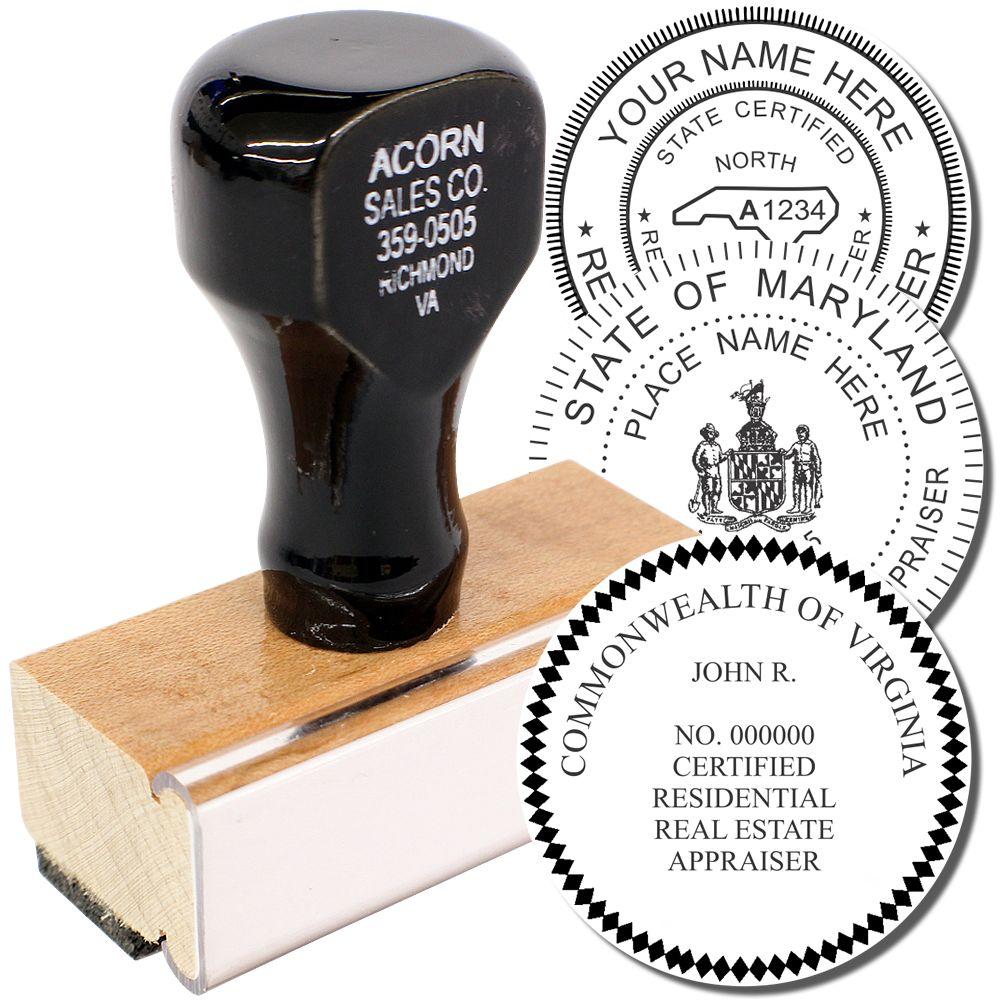
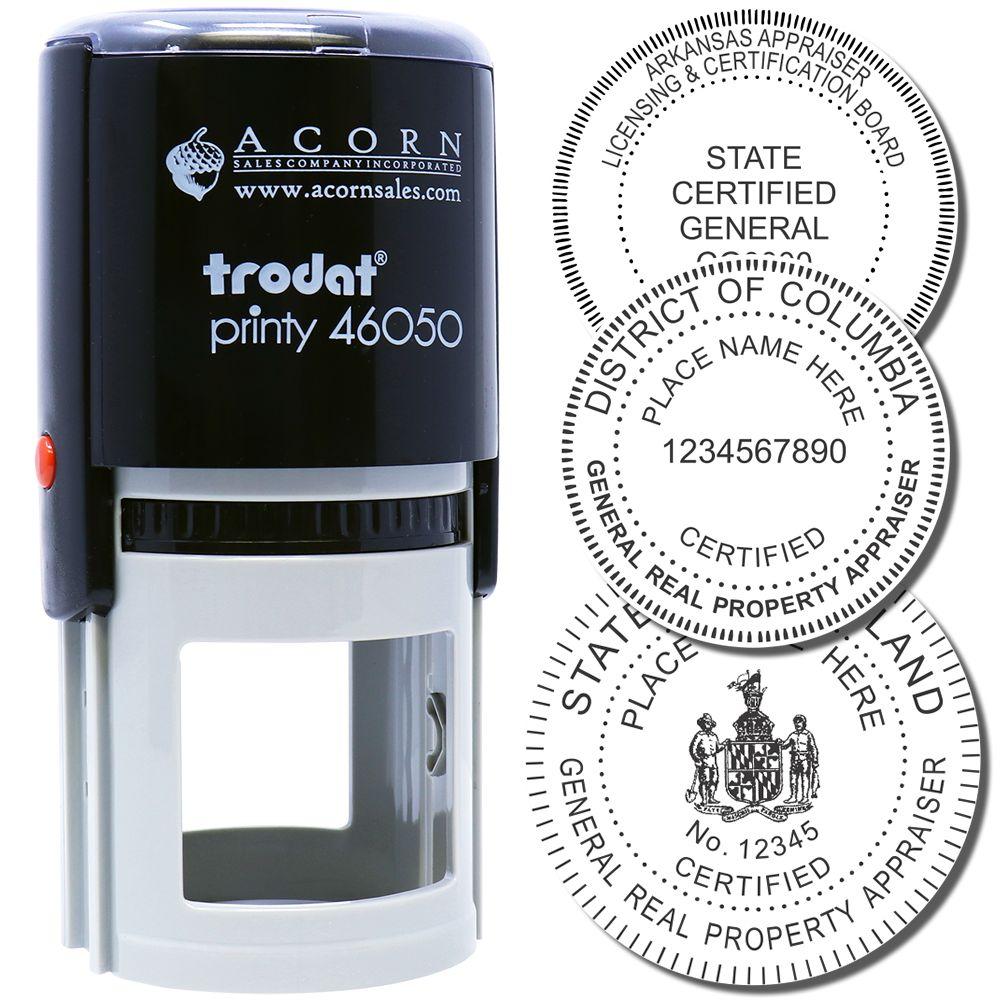
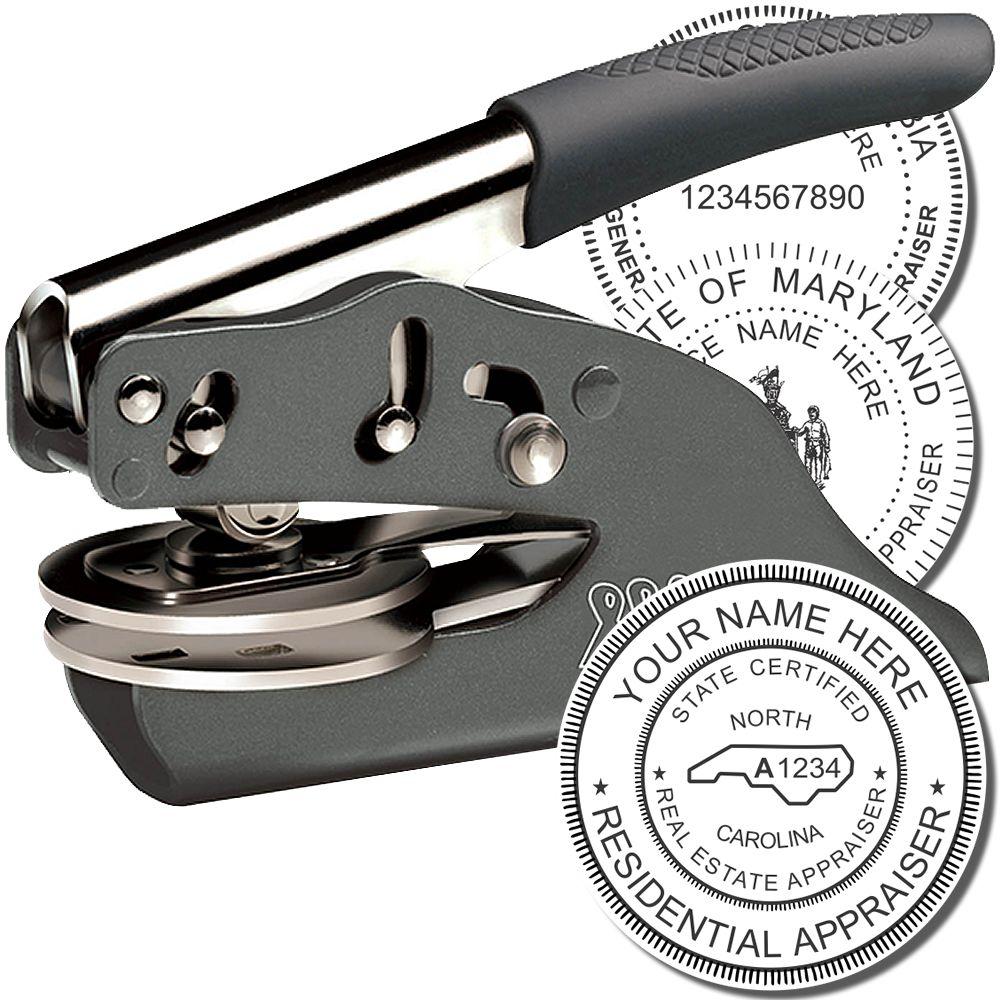
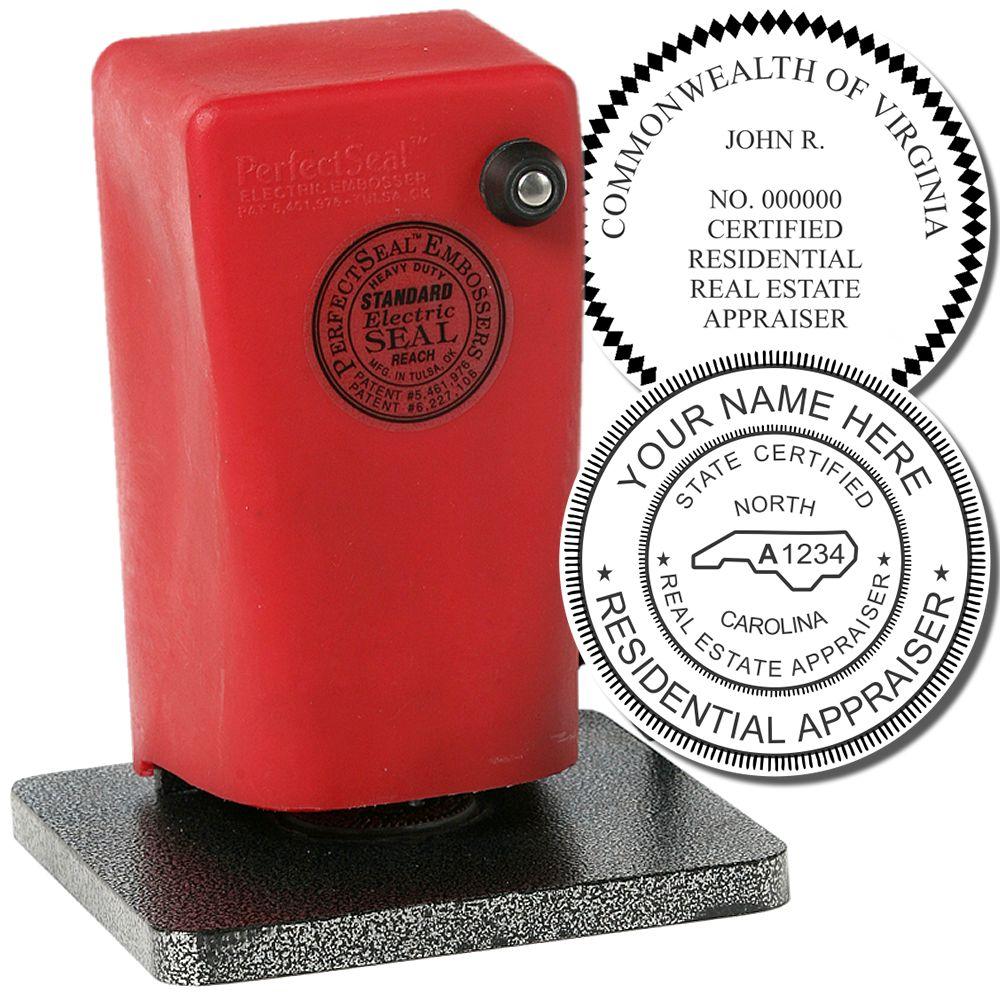
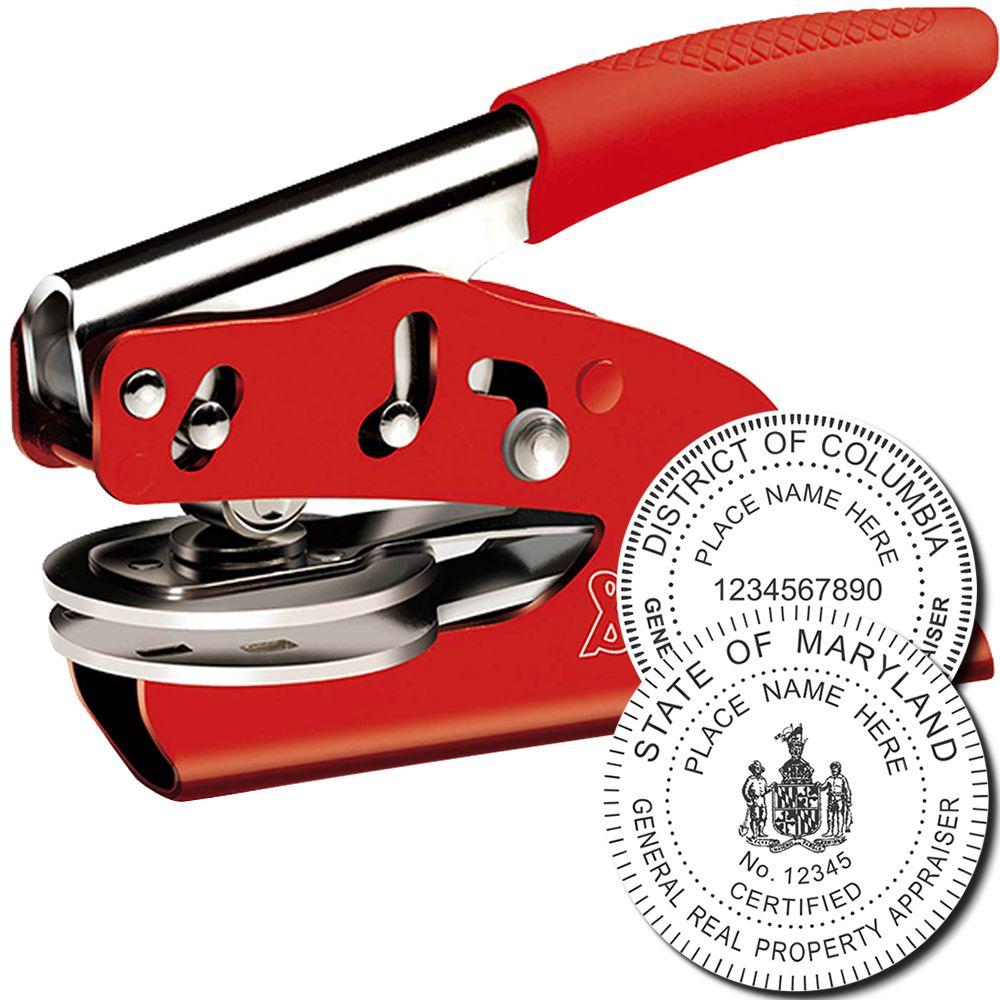
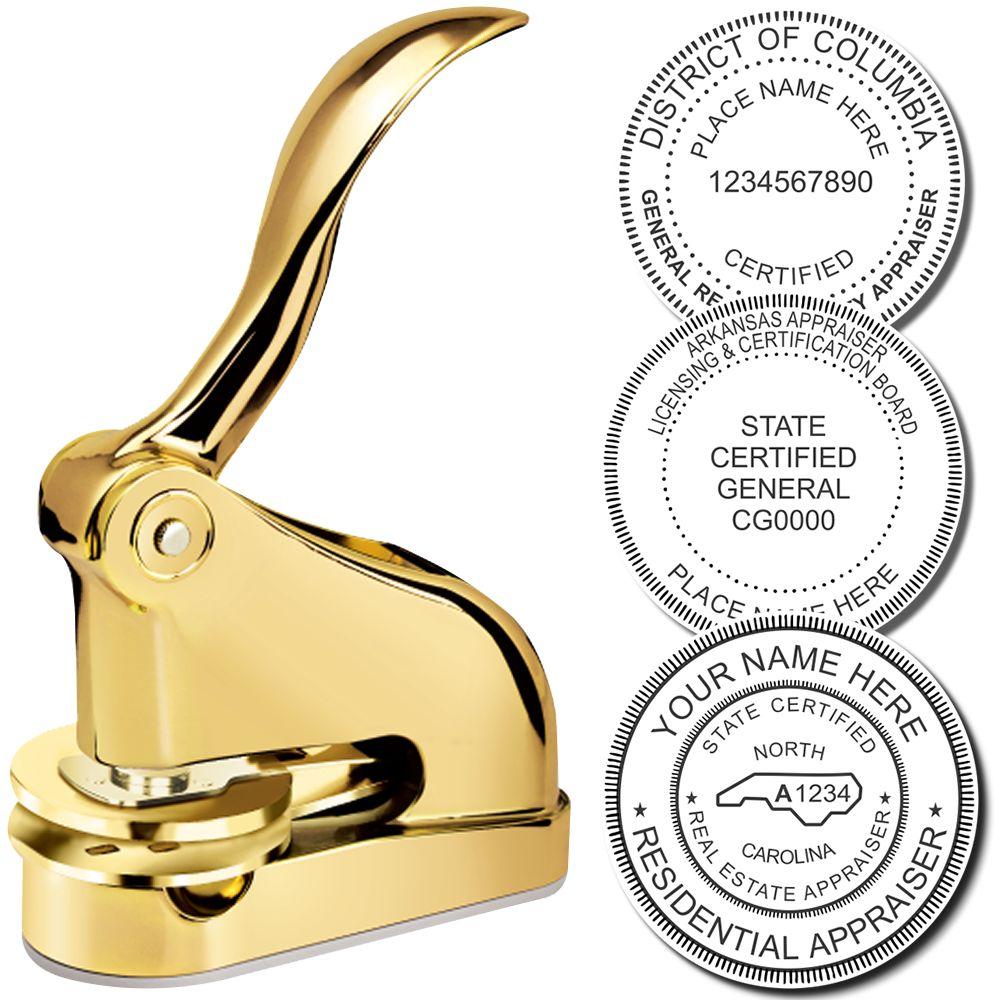
With no prescribed instrument the choice is about how the report is delivered. An embosser leaves a raised impression with no ink, which is handsome on a paper original and close to invisible in a scan or a fax. An ink stamp reproduces cleanly in every copy and every scan, which is why most appraisers working in PDF buy one. A digital image drops the same block into a PDF before it goes out. Virginia’s rule points toward whatever reproduces, because the license number has to be readable on the report the client receives. The eSeal electronic image at $20.00 covers the electronic file, and many appraisers keep an ink stamp beside it for paper.
Sizing and layout
Count the characters before you choose a size. Certified general real estate appraiser is a long string, and set beside a name and a number it wants a wider die than a short credential line does. Nothing in the Virginia rule fixes a diameter, a height or a shape, so the constraint is legibility on a copy of a copy. Two practical habits help. Keep the number on its own line so a smudge in the name line never touches it, and set the die wide enough that the designation does not have to shrink below the size of the name. If you want the block to sit alongside a handwritten signature on a form page, measure the space on the form you actually use before ordering.



Ordering a Virginia appraiser stamp
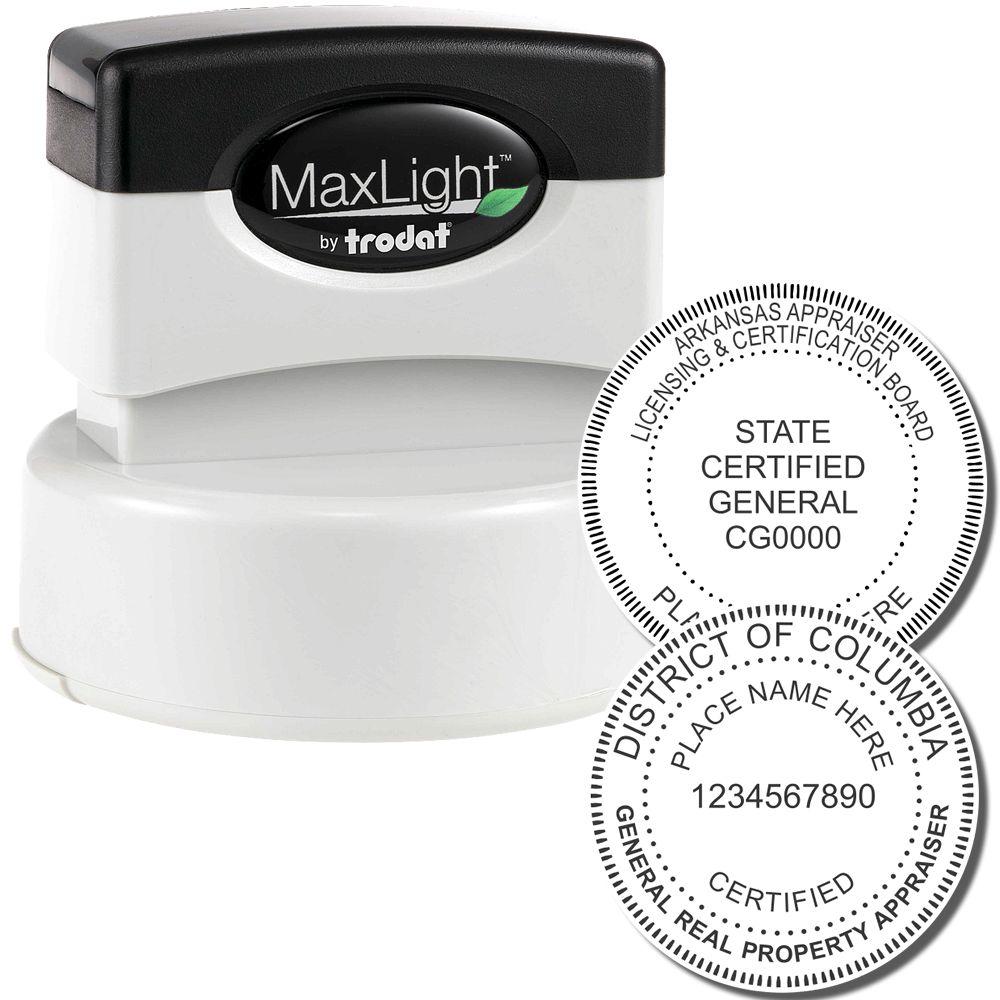
Send your name as licensed, the designation and the license number, and we set the artwork from that. Ink devices start with the regular rubber stamp at $34.95 and the self inking stamp at $39.95. The MaxLight pre inked stamp at $46.95 gives a denser impression for heavy use. If you want an embosser as well, the handheld embosser is $46.95 and the desk embosser is $44.95. Browse the appraiser range or send artwork through contact us.
Care, and when the die goes out of date
A self inking stamp keeps its edges if you re ink it before the impression starts to gray rather than after, and press once without rocking the body. A pre inked die lasts longer when it rests flat and capped. An embosser wants the paper square in the throat and one firm squeeze. Store any of them away from heat. The only thing that retires a Virginia die early is a change in what it says: a new license number, a move from licensed residential to certified residential, or a legal name change. Because the statute names no expiry date, a renewal by itself does not make the block wrong, which is a real advantage over states that put a date on the report.
What to check before you order
Read Va. Code 54.1-2017 and the current text of 18VAC130-20-180 on Virginia’s law site, and check the amendment history note under the section so you can see the 14 January 2026 entry for yourself. Confirm the exact spelling of your name and your designation against your license record at DPOR, and copy the license number from the license rather than from an old report. If a seller shows you an illustrated Virginia appraiser seal figure, ask which currently effective section it comes from. This page is a research summary and not legal advice. Send your artwork through contact us and we will set it to the wording you give us.
- Real Estate Appraiser Stamps and Seals
- Real estate appraiser stamps and seals
- West Virginia Appraiser Seal: Classification and Number
- Washington Appraiser Seal: Title and Number Instead
Frequently asked questions
Does Virginia require a real estate appraiser to seal a report?
No. The Real Estate Appraiser Board repealed the illustrated seal design at 18VAC130-20-180 C 2 effective 14 January 2026, and the words seal and stamp appear nowhere in the current section. What Va. Code 54.1-2017 asks for is authentication of all written appraisal reports by signature, license designation and license number.
A vendor is selling a Virginia appraiser seal to board specification. Is that current?
The specification it refers to is no longer in the code. The figure and the sentence saying the seal shall conform in detail and size to the illustrated design were struck by the final action at Virginia Register Volume 42, Issue 9, effective 14 January 2026. Ask which currently effective section the design comes from.
What does license designation mean on the report?
The credential level Virginia issued you: licensed residential real estate appraiser, certified residential real estate appraiser or certified general real estate appraiser. Va. Code 54.1-2017 names it as one of the three authentication elements, alongside the signature and the number.
Why does the regulation name only two elements?
Because 18VAC130-20-180 C 2 asks for a signature and the license number, while the statute at Va. Code 54.1-2017 asks for the signature, the designation and the number. An appraiser reading only the regulation will leave the designation off. Build the block from the statute and both are covered.
Does a review report carry the number too?
Yes. 18VAC130-20-180 F provides that the reviewer’s signature and license number must appear on the certification page of the report, so the block goes on that page.
I hold a temporary Virginia license. What do I do?
18VAC130-20-180 C 2 tells a temporary licensed appraiser to sign and affix the temporary license to the appraisal report or letter for which the license was obtained. That is attaching the license document to the report, not applying a device.
Can I still use a seal in Virginia if I want one?
The current rule neither describes a seal nor asks for one, so a seal carries no Virginia authority on its own. What the report needs is the signature, the designation and the number. A device that prints those three elements legibly is doing the work the statute describes.








