
Written by Acorn Sales Company, manufacturing stamps and seals since 1964 · Reviewed by Holly R, VP of Sales and Marketing at Acorn Sales, against Kentucky Real Property Appraisers Board on 22 September 2026 · Updated 25 September 2026
Kentucky does not require a real estate appraiser to seal a report, and it goes further than most states: it does not require the certificate number on the face of the report either. The words “seal” and “stamp” do not appear in 201 KAR 30:010, 30:040, 30:110 or 30:190, the four regulations that carry the board’s definitions, its standards of practice and conduct, its roster rule and its certification and licensing requirements. The only seal anywhere in KRS Chapter 324A belongs to the board itself: KRS 324A.015(5) says “The board shall adopt a seal with the design it prescribes, by which it shall authenticate its proceedings.” That is the board authenticating its own records, not an appraiser marking a report.
So a Kentucky appraiser device is a working tool rather than a compliance item. Nothing is filed with the board, no diameter is fixed, no wording is dictated and no element list has to be met. What most Kentucky appraisers put on a die is the block they retype on every certification anyway: name as it appears on the credential, the credential title in full, the certificate number and the state. Setting that once in a stamp removes the retyping, and it is a design decision from start to finish.
Kentucky real estate appraiser seal requirements at a glance
| Requirement | Kentucky rule | Source |
|---|---|---|
| Seal required | No. Nothing in KRS Chapter 324A or 201 KAR Chapter 30 requires an appraiser to seal or stamp a report. | KRS 324A.015(5); 201 KAR 30:040 |
| Required elements | None prescribed by Kentucky. 201 KAR 30:040 Section 1 provides that certificate holders and licensees “shall comply with the Uniform Standards of Professional Appraisal Practice”, and USPAP governs what the report says. | 201 KAR 30:040 Section 1 |
| Size and shape | None prescribed. No diameter, shape or layout appears anywhere in the chapter. | 201 KAR Chapter 30 |
| Device allowed | Not addressed. No Kentucky rule permits or prohibits an embosser, an ink stamp or an image file for an appraiser, because no Kentucky rule contemplates an appraiser device at all. | 201 KAR Chapter 30 |
| Signature and date | Not prescribed by regulation. The one certificate-number duty in the chapter is internal recordkeeping: 201 KAR 30:040 Section 5(1)(h) requires an appraisal log entry to carry the “Signature and state certification number of the supervising appraiser.” | 201 KAR 30:040 Section 5(1)(h) |
| What must be sealed | Nothing. No Kentucky statute or regulation calls for an appraiser’s seal on a report, a contract or any other instrument. | KRS Chapter 324A; 201 KAR Chapter 30 |
| Electronic seal | Not addressed. Nothing in 201 KAR Chapter 30 speaks to an electronic seal or a digital signature on a transmitted appraisal report. | 201 KAR Chapter 30 |
| Renewal and lapse | No expiry date is prescribed for a report marking, because no report marking is prescribed. A die carrying your certificate number stays accurate through renewal; moving up a credential level changes the title line and needs new artwork. | 201 KAR Chapter 30 |
| Firm requirements | No firm seal exists. 201 KAR 30:330 registers and supervises appraisal management companies, which is a company registration rule rather than a device rule. | 201 KAR 30:330 |
| Regulator | Kentucky Real Property Appraisers Board, formerly the Kentucky Real Estate Appraisers Board, attached to the Kentucky Real Estate Authority within the Public Protection Cabinet | KRS Chapter 324A; 201 KAR Chapter 30 |


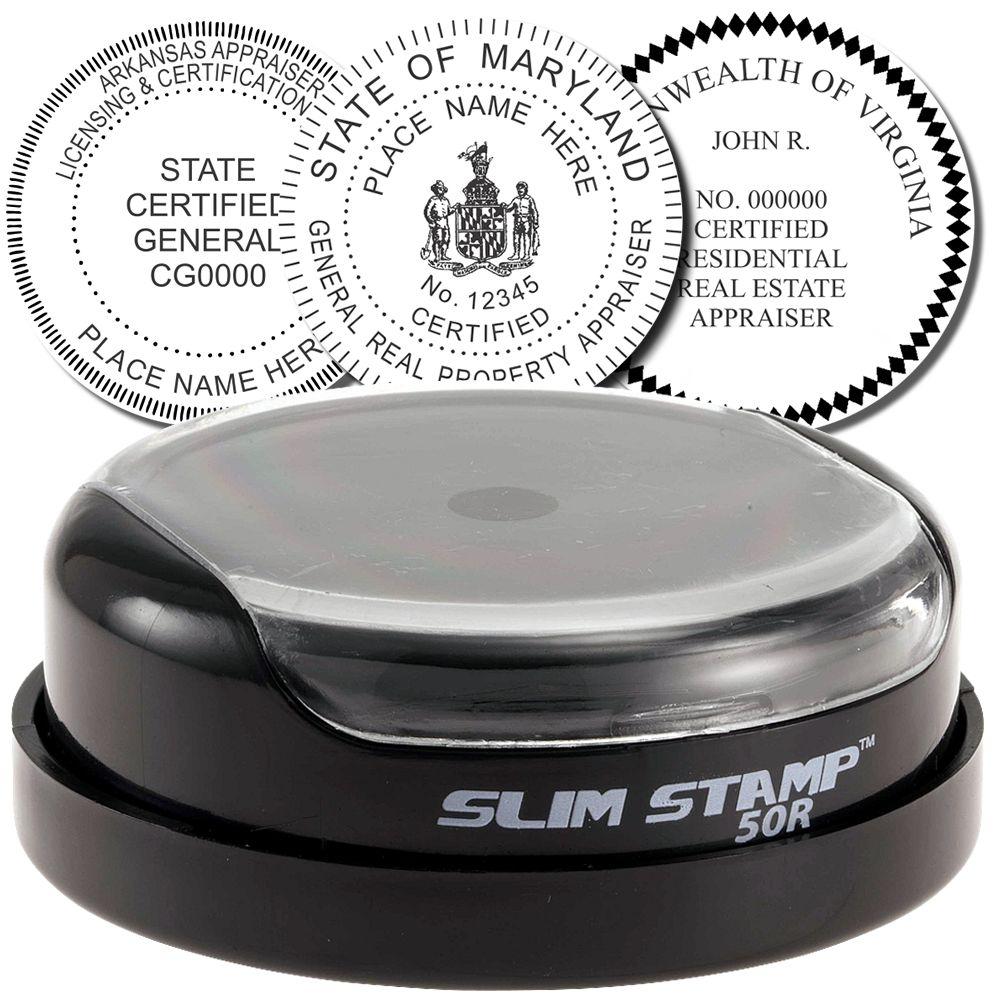

Is a seal required in Kentucky?
No. Kentucky is one of the quieter states on this question, and the quiet is the finding. The board’s regulations sit at 201 KAR Chapter 30, and the four that could plausibly carry a report-marking duty were read in full: 30:010, the definitions, twenty defined terms; 30:040, professional standards of practice and conduct; 30:190, certification and licensing requirements; and 30:110, the appraiser roster and fees. Neither “seal” nor “stamp” appears in any of them, and none of them requires the appraiser to place a certificate number on a report. The statute is the same story. KRS Chapter 324A runs from 324A.010 through 324A.100, with the Appraisal Management Company Registration Act at 324A.150 to 324A.164, and exactly one section heading in the whole chapter contains the word Seal.
The board’s seal is the board’s, not yours
That one heading is KRS 324A.015, “Real Property Appraisers Board, Members, Removal, Seal, Compensation, Duty”, and it is the single most common way this question gets answered wrongly. The body of the section has seven subsections and only subsection (5) mentions a seal: “The board shall adopt a seal with the design it prescribes, by which it shall authenticate its proceedings.” Read that twice. The holder of the seal is the board. The thing authenticated is the board’s own proceedings, meaning its orders, its certifications of record and its formal acts. The design is whatever the board chooses, because it is the board’s emblem. Nothing in the subsection reaches an appraiser, a report or a client deliverable. A vendor who cites KRS 324A.015 as the authority for a Kentucky appraiser seal is citing a provision about the regulator to sell something to the regulated.
The other near miss: KRS 324A.030
The second section people land on is KRS 324A.030, headed “Assumption or use of title, designation, or abbreviation to create impression of certification or licensure prohibited”. It sounds like a wording rule for a signature block, and it is worth knowing what it actually does. Read in full, it contains no occurrence of “seal” or “stamp”, and it imposes no report-marking duty. What it prohibits is holding yourself out under a title, designation or abbreviation that creates the impression you are certified or licensed when you are not, and it restricts appraisal work in federally related transactions to licensed persons. That does bear on a die, but as a limit rather than a requirement: put on the stamp the credential you actually hold, spelled the way the board spells it, and nothing that reads like a higher one.
What to engrave when the state prescribes nothing
With no element list, the sensible die is the one that saves the most typing while staying true. Four lines cover almost every Kentucky order. Your name exactly as it appears on the credential. The credential title in full, such as Certified General Real Property Appraiser or Certified Residential Real Property Appraiser, matching the classification the board issued you. The certificate number. And Kentucky, so a reader outside the state knows which jurisdiction issued it. Some appraisers add a line for the signature above the block and a date line beside it. None of that is prescribed, so none of it is wrong, and none of it can be cited back at you as a defect. The one thing to keep off is any construction that mimics a board act, such as a die reading Kentucky Real Property Appraisers Board around a state emblem. That is the shape of the seal the board adopted for itself under KRS 324A.015(5).




Where the block goes on the report
Kentucky does not say, which means the answer comes from USPAP rather than from Frankfort. 201 KAR 30:040 Section 1 incorporates the Uniform Standards of Professional Appraisal Practice directly, and the certification page is where a signed appraisal report identifies its author. That is where a Kentucky die naturally lands: beside or beneath the signature on the certification, where the credential title and number would otherwise be typed. Cover pages, letters of transmittal and addenda are matters of client preference here rather than state rule. Because the position is not fixed by regulation, a single-line stamp and a four-line block are equally acceptable to the board, and the choice is about how your report template is laid out.
The appraisal log is the one place a number is required
There is exactly one certificate-number duty in the chapter, and it is easy to mistake for a report rule. 201 KAR 30:040 Section 5(1)(h) requires an appraisal log entry to carry the “Signature and state certification number of the supervising appraiser.” That is the log a trainee keeps of the work performed under supervision, an internal record for the board to inspect. It is not a marking on the client’s report. Supervisory appraisers who sign a lot of log entries sometimes buy a small name and number stamp for exactly that purpose, and there is nothing in the rule against it, but note that the provision asks for a signature as well as a number, and a signature is the appraiser’s own act.
Embosser, ink stamp or the eSeal image
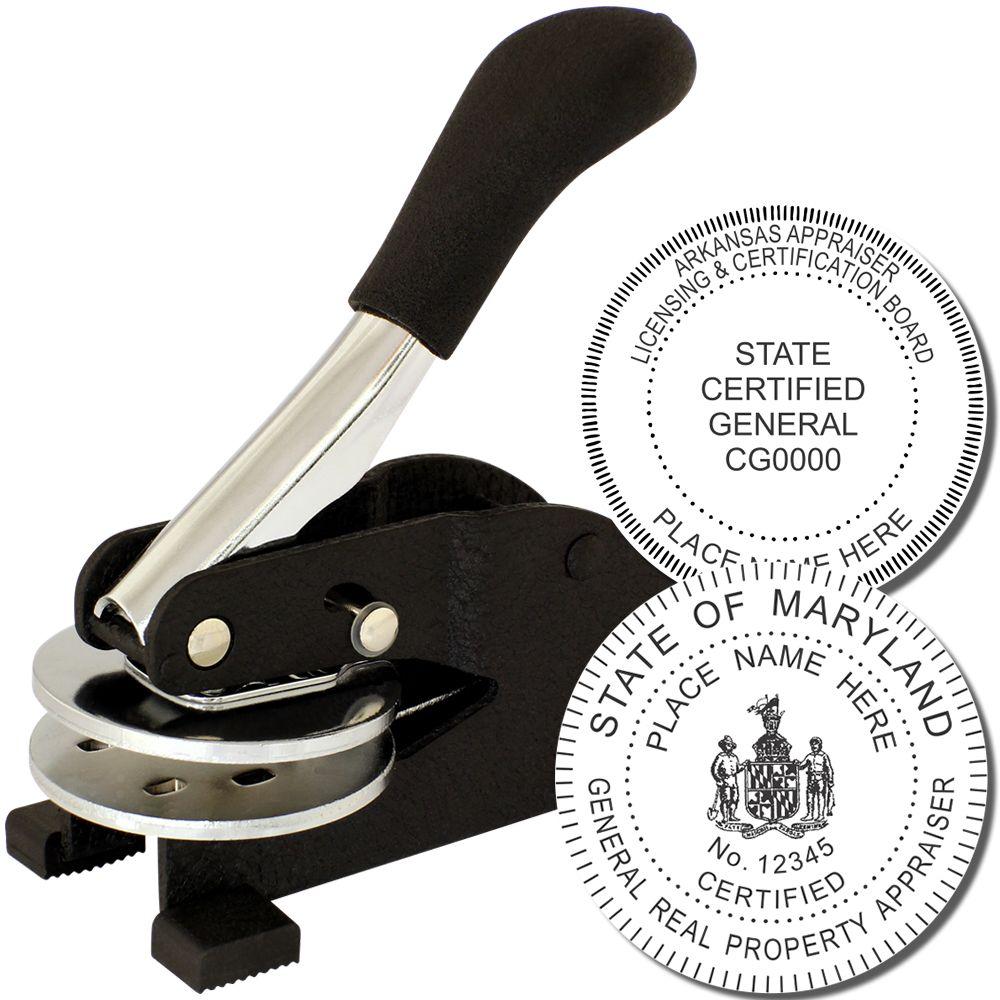
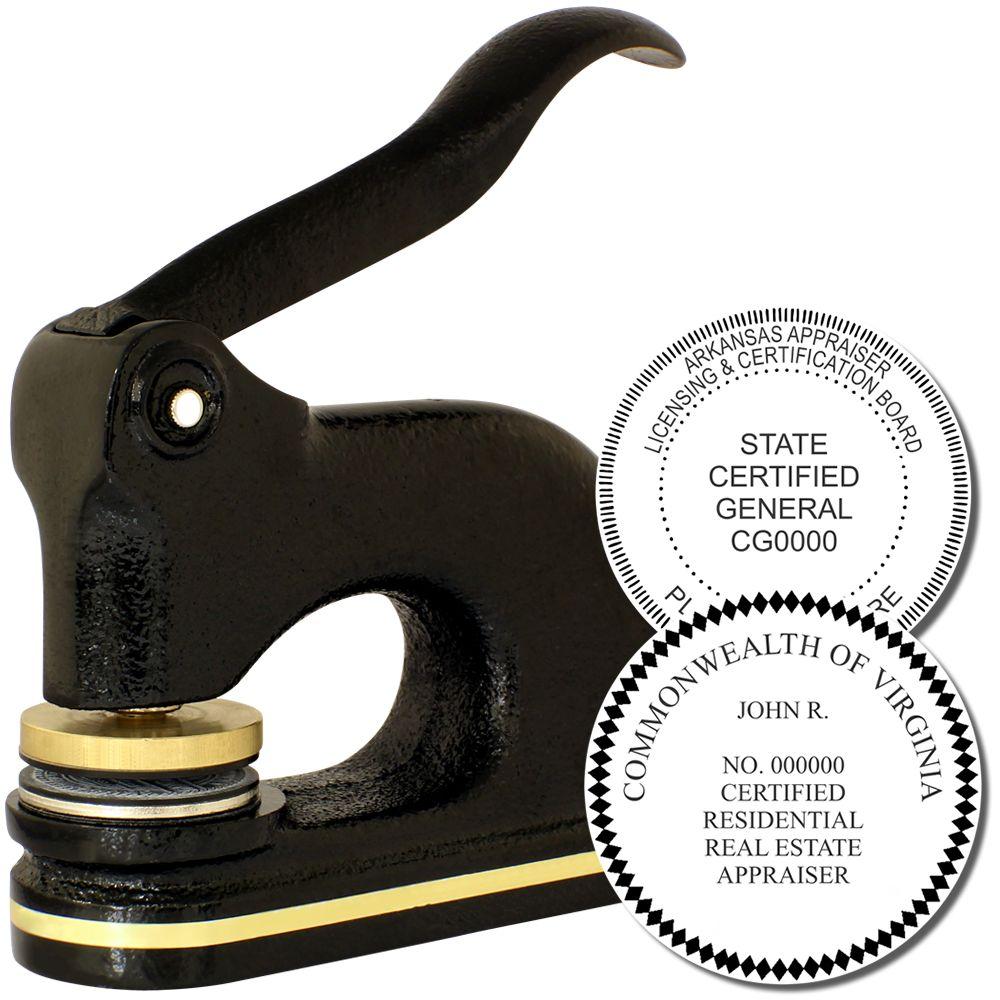
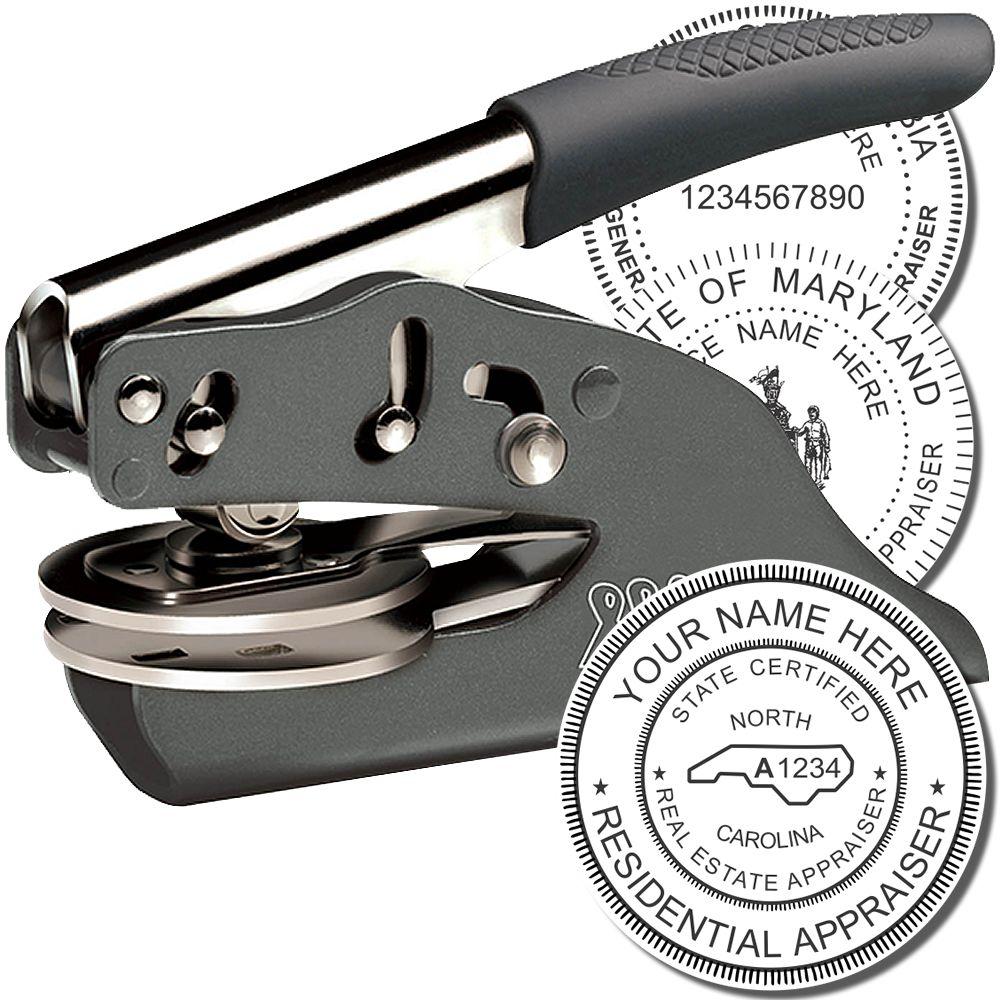
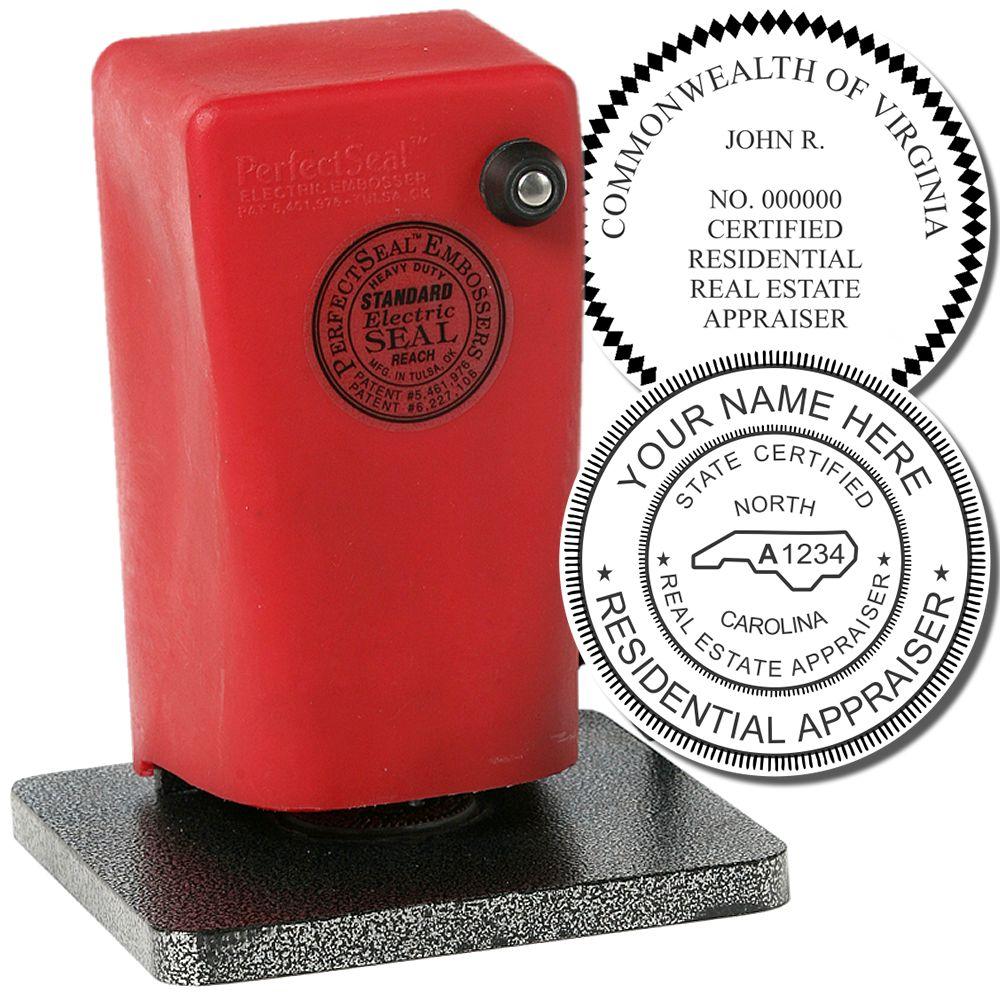
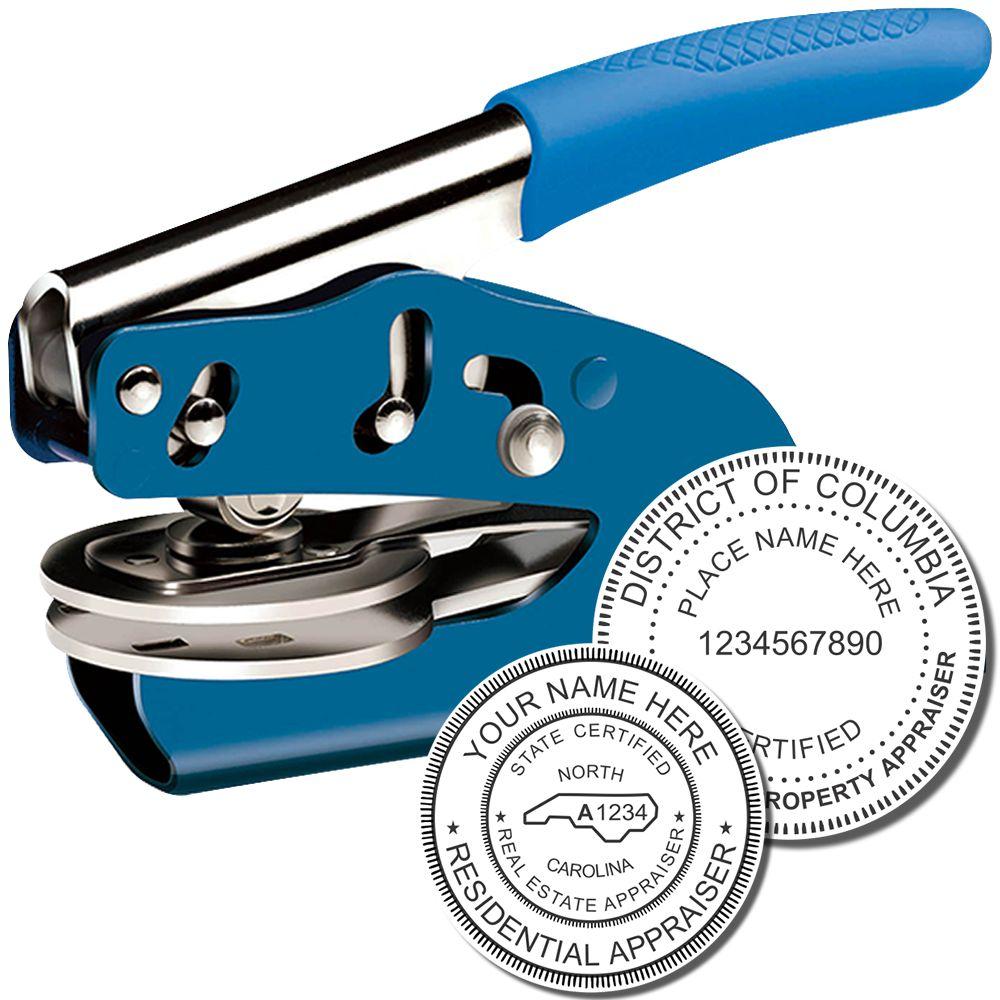
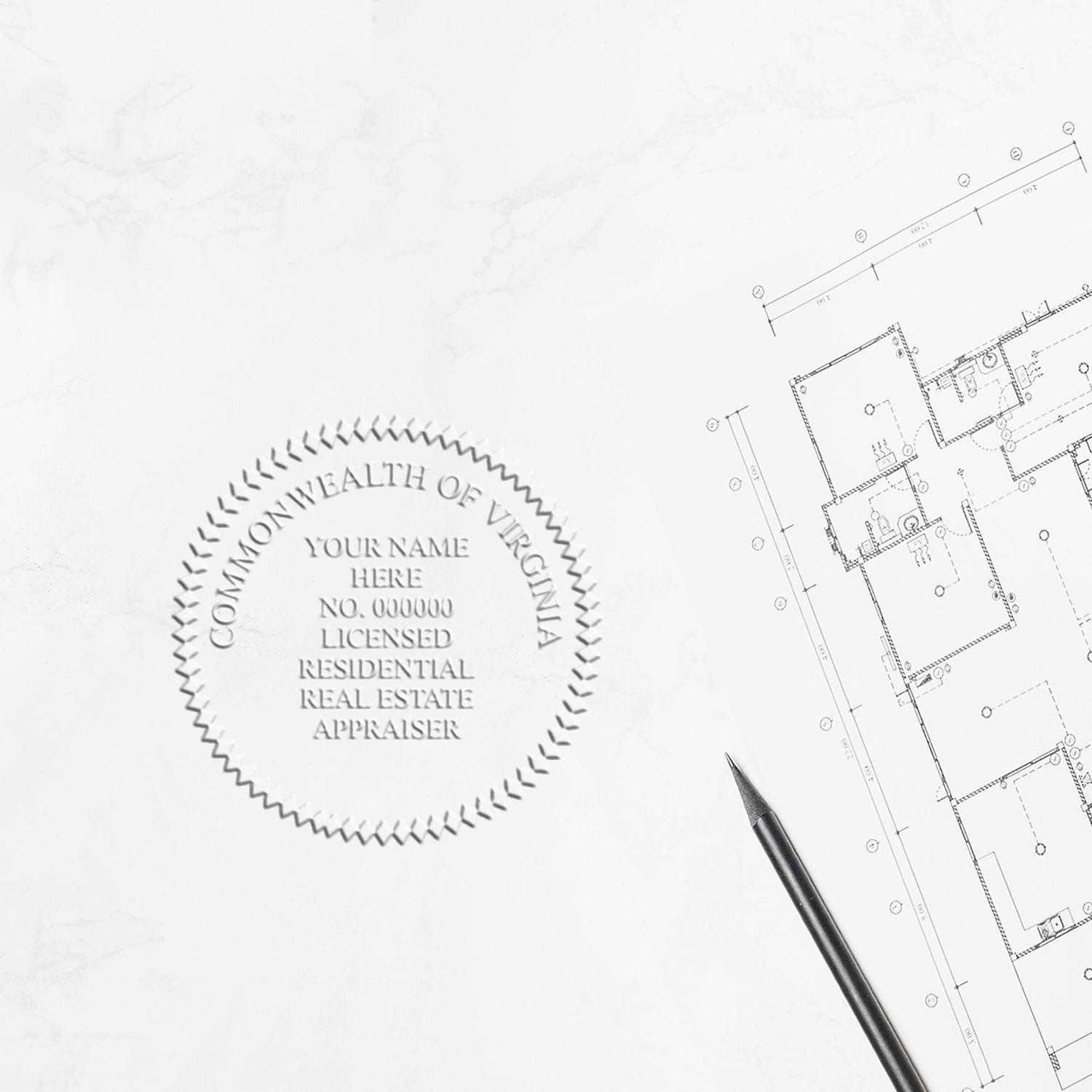
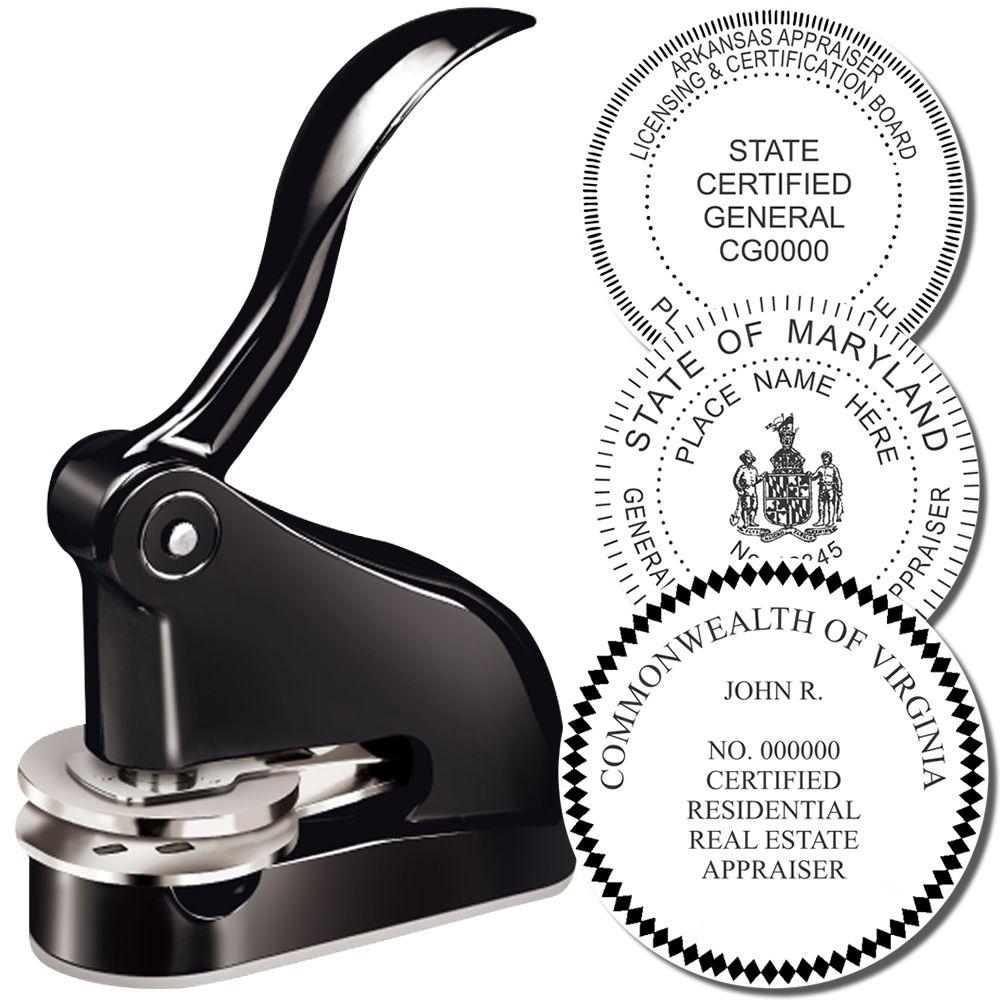
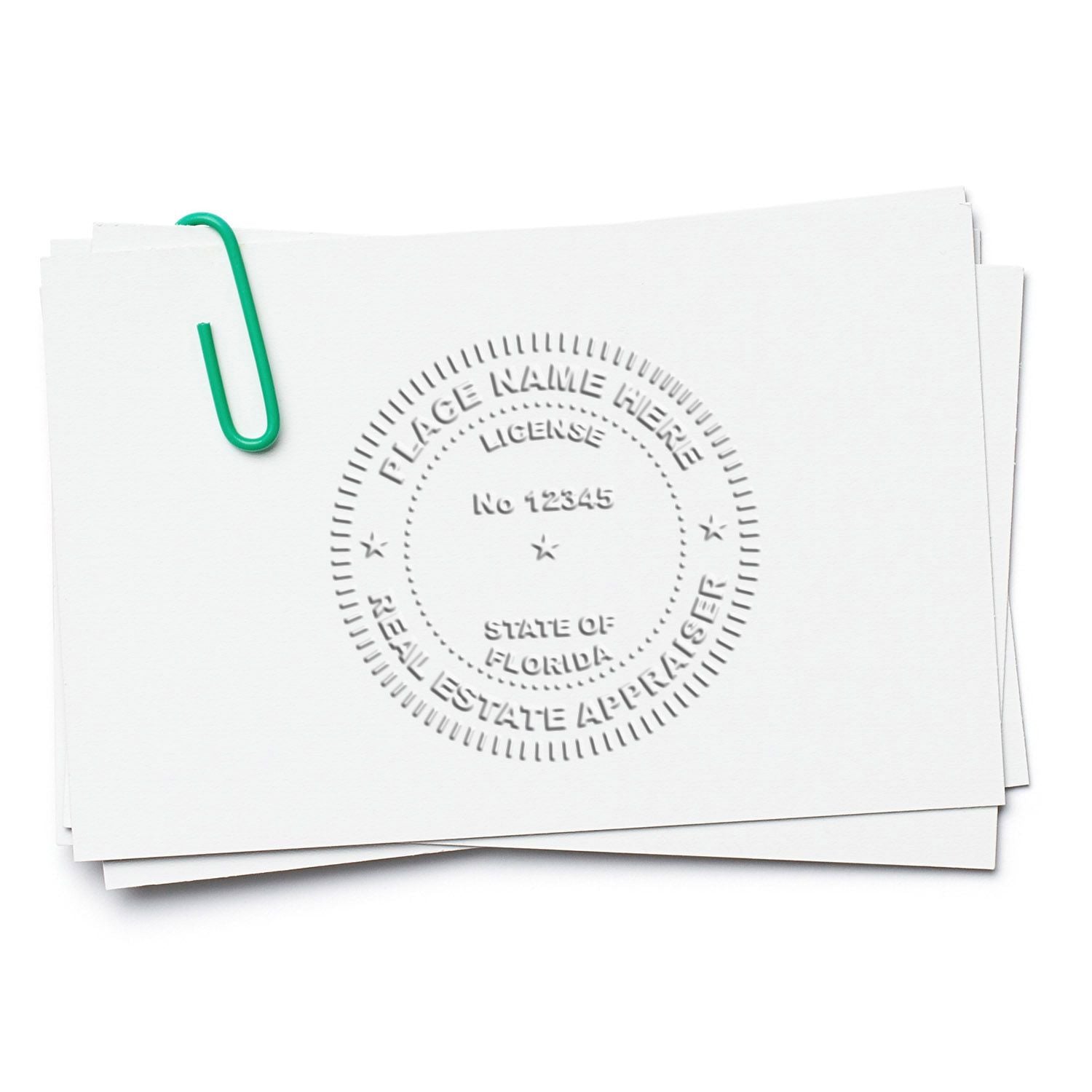
None of the three carries state authority in Kentucky, because Kentucky grants none to any of them, so the choice is about how your reports are delivered. An embosser raises the paper and reads beautifully in the hand, which is why it remains the credential gift of choice, but a raised impression scans faintly and often disappears in a PDF. An ink stamp reproduces cleanly in a scan and in a photocopy, which is what most fee appraisers want. The eSeal Electronic Image Stamp of Seal at $20.00 is a file rather than a tool, and it is the one that drops straight into a report template. On price, the Regular Rubber Stamp of Seal is $34.95, the Self Inking Rubber Stamp of Seal is $39.95, the Hybrid Seal Embosser is $42.95 and the Handheld Seal Embosser is $46.95. Nothing in Kentucky law ranks them.
Sizing and layout
No size is prescribed. Kentucky fixes no diameter, no shape and no type height, so the die is cut to fit the wording rather than to meet a number. That makes the line count the real decision. A long credential title such as Certified General Real Property Appraiser eats an entire line on its own, so a four-line block sets in smaller type than a two-line one at the same diameter. If you want the number to stay legible on a photocopy of a photocopy, keep the block to the name, the title, the number and the state, and resist adding a firm name, an office address and a telephone line to the same die. Send the exact wording with the order rather than a description of it, since there is no state specification for us to fall back on.




What is not settled
Two honest limits on this page. First, three regulations in the chapter were not read line by line: 201 KAR 30:070 on grievances, 30:130 on standards for education approval and fees, and 30:330 on the registration and supervision of appraisal management companies. None is a plausible home for a report-marking rule given its subject, but that is a judgment rather than a reading. Second, the KRS 324A.015(5) quotation above came from a well known code republisher because the Kentucky legislature’s own chapter page for 324A could not be reached in this pass; the chapter identifiers tried returned KRS Chapter 324, a different chapter. The regulation text and the full 201 KAR Chapter 30 list, including which regulations are current and which are repealed, were read on the legislature’s own site. If your engagement turns on the point, take it to the board.
What the chapter used to contain
It is worth knowing that the quiet is not the result of a repeal. Most of 201 KAR Chapter 30 has in fact been repealed, withdrawn or made inactive over the years, including 30:020, 30:030, 30:050, 30:060, 30:080, 30:100, 30:120, 30:125, 30:140, 30:150, 30:160, 30:170, 30:180, 30:200, 30:310, 30:315, 30:320, 30:360, 30:370, 30:375 and 30:380. Read through, that repealed set is education, fees, hearings, reciprocity, transitional licensure and appraisal management company operations. None of it is a seal rule. Kentucky has never had an appraiser seal regulation to lose, which is a different and more reassuring answer than a rule that quietly went away.
Ordering and care
Send the wording set out exactly as you want it cut, line by line, with your certificate number and the credential title spelled as the board spells it. There is no board diagram to send and no specification for us to match, which makes the wording you supply the whole specification. Embossers want the sliding lock engaged when idle and the jaws kept clear of grit so the die and counter die meet cleanly. A pre inked model with a dust cover should keep the cover on between uses. Nothing here is refitted after the fact, so a change of credential level or certificate number means a new die cut to the new wording. This page is a research summary and not legal advice. Browse real estate appraiser stamps and seals, or contact us with your wording.
- Real Estate Appraiser Stamps and Seals
- Real estate appraiser stamps and seals
- Michigan Appraiser Seal: Number and Level, No Seal
- Maryland Appraiser Seal: Classification and Number
Frequently asked questions
Does Kentucky require an appraiser to seal a report?
No. Neither KRS Chapter 324A nor 201 KAR Chapter 30 requires a seal or a stamp on an appraisal report, and the words do not appear in the definitions, the standards of practice and conduct, the roster rule or the certification and licensing requirements.
Does Kentucky require my certificate number on the report?
Not by regulation. Kentucky prescribes no report marking of its own; 201 KAR 30:040 Section 1 incorporates USPAP, and USPAP governs report content. Most Kentucky appraisers show the credential title and number on the certification because clients and lenders expect it, not because a Kentucky rule says so.
What is the seal mentioned in KRS 324A.015?
The board’s own. Subsection (5) reads “The board shall adopt a seal with the design it prescribes, by which it shall authenticate its proceedings.” It is the regulator’s emblem for authenticating its records and formal acts, and it reaches no appraiser and no report.
What should a Kentucky appraiser stamp say?
Whatever is true and useful: your name as it appears on the credential, the credential title in full, your certificate number and the word Kentucky. No element list governs it, so the block is yours to set. Keep off anything shaped like a board emblem or a credential you do not hold.
Is an electronic appraiser seal allowed in Kentucky?
Nothing in 201 KAR Chapter 30 addresses an electronic seal or a digital signature, so there is no state standard to meet and no state permission to rely on. An image file of your own block is a production convenience governed by your practice and by USPAP, not by a Kentucky rule.
Is a stamped signature allowed on a Kentucky appraisal report?
Kentucky does not address the question either way. Some states prohibit a stamped signature outright; Kentucky prescribes nothing, which leaves the point to USPAP and to your own control over the device. Treat a signature die as something only you use and keep it where only you can reach it.
I supervise trainees. Do I need a stamp for the appraisal log?
No, but it is the one place in the chapter where a number is required. 201 KAR 30:040 Section 5(1)(h) requires the appraisal log entry to carry the signature and state certification number of the supervising appraiser. A name and number stamp speeds the number; the signature is still yours to make.
Does the board register firms or issue a firm seal?
No firm seal exists. 201 KAR 30:330 covers the registration and supervision of appraisal management companies, which is a company registration regime rather than a device rule, and nothing in the chapter creates a seal for an appraisal firm.








