
Written by Acorn Sales Company, manufacturing stamps and seals since 1964 · Reviewed by Holly R, VP of Sales and Marketing at Acorn Sales, against Indiana Real Estate Appraiser Licensure and Certification Board, staffed by the Indiana Professional Licensing Agency on 22 September 2026 · Updated 22 September 2026
Indiana has no appraiser seal, but it does have a size rule, and it is about lettering rather than diameter. 876 IAC 3-2-9(b) says that whenever a licensee signs the appraiser’s name on an appraisal report or on correspondence about one, the appraiser must include with that signature the words “Indiana licensed trainee appraiser”, “Indiana licensed residential appraiser”, “Indiana certified residential appraiser” or “Indiana certified general appraiser”, whichever applies, and the license number. Then it adds the line that shapes every Indiana die: that wording “shall not be in letters larger than the licensed appraiser’s name.”
So the design question here is settled before you start. The credential phrase and the number may be the same size as your name or smaller, never larger, which rules out the layout people usually reach for, with the credential set big across the top and the name tucked underneath. Your name is the largest thing on the block. Everything else sits at or below it. That single constraint, plus a ban on abbreviations after your name, is most of what Indiana has to say about the device.
Indiana real estate appraiser seal requirements at a glance
| Requirement | Indiana rule | Source |
|---|---|---|
| Seal required | No. The use-of-titles rule was read to its end and has exactly three subsections, none of which mentions a seal or a stamp. No seal or stamp language appears in the article at all | 876 IAC 3-2-9; 876 IAC art. 3 |
| Required elements | Your signature, and with it the credential words “Indiana licensed trainee appraiser”, “Indiana licensed residential appraiser”, “Indiana certified residential appraiser” or “Indiana certified general appraiser”, whichever applies, plus the license number | 876 IAC 3-2-9(b) |
| Size and shape | No seal dimensions anywhere. The one dimensional rule is on lettering: the credential wording shall not be in letters larger than the licensed appraiser’s name | 876 IAC 3-2-9(b) |
| Device allowed | The rule says what must be included with the signature and says nothing about how. Typed, printed with the report or applied with a stamp all satisfy it; none is prescribed and none is prohibited | 876 IAC 3-2-9(b) |
| Signature and date | The duty hangs on the act of signing: it applies whenever a licensee signs the appraiser’s name on an appraisal report or on correspondence concerning one. No date is prescribed by the rule | 876 IAC 3-2-9(b) |
| What must be sealed | Nothing. No Indiana document was found that asks an appraiser to seal or stamp anything. The trainee rule was checked specifically and is about employment and supervision, not devices | 876 IAC 3-6-8 |
| Electronic seal | Not found. No electronic seal or digital signature provision was located in the article | 876 IAC art. 3 |
| Renewal and lapse | Nothing ties a device to renewal. No expiration date is prescribed on a report, so only a change in your credential level or number dates the die | 876 IAC 3-2-9(b) |
| Firm requirements | No firm seal was found. A separate section covers use of designation by a corporation or partnership; it could not be retrieved for this page and nothing is asserted about it here | 876 IAC 3-2-10 |
| Regulator | Indiana Real Estate Appraiser Licensure and Certification Board, staffed by the Indiana Professional Licensing Agency | IC 25-34.1; rulemaking authority IC 25-34.1-3-8 |




Does Indiana require an appraiser’s seal?
No. Indiana’s report-marking rule is 876 IAC 3-2-9, headed use of titles, and it was read to its last subsection for this page. It has exactly three: (a), (b) and (c). None of them mentions a seal or a stamp, and there is no subsection (d) at the end where a seal provision might be hiding. The rest of the article was checked for the same words. 876 IAC article 3 runs through rule 3-1, definitions; 3-2, general provisions; 3-3, licensure and certification requirements; 3-4, repealed; 3-5, continuing education; 3-6, standards of practice; and 3-7, convictions of concern. No section heading anywhere in the article refers to a seal or a stamp. Indiana prescribes a signature block instead, and it prescribes the words in it exactly.
What 876 IAC 3-2-9(b) says
The text: whenever a licensee signs the licensed appraiser’s name on an appraisal report or correspondence concerning an appraisal report, the licensed appraiser must include, with the licensed appraiser’s signature, the words “Indiana licensed trainee appraiser”, “Indiana licensed residential appraiser”, “Indiana certified residential appraiser”, or “Indiana certified general appraiser”, whichever is applicable, and the licensed appraiser’s license number. Two details carry weight for a die. The word Indiana is part of the phrase, so the credential line is not “certified general appraiser” but “Indiana certified general appraiser”. And the duty reaches correspondence about a report, not only the report itself, which is a fair part of why an Indiana appraiser wants a stamp at all: cover letters, transmittal notes and emails printed for a file all fall inside it.
The lettering cap is the Indiana difference
The last sentence of subsection (b) reads: this wording shall not be in letters larger than the licensed appraiser’s name. That is unusual. Most states that prescribe a block say what it must contain and leave the typography alone; Indiana sets a ceiling. The practical effect is on layout. A common stamp design puts the credential across the top in the largest type, because it is the longest line and filling the width looks tidy, with the name smaller underneath. That layout is the wrong way round in Indiana. Set your name at the largest size on the die, and set the credential phrase and the number at that size or smaller. Because the credential phrase is long and cannot be enlarged to fill the space, the die usually wants to be wider than it is tall rather than square, so the phrase fits on one line at a modest size.
No abbreviations after your name
Subsection (a) of the same rule bars abbreviations connoting licensure after the appraiser’s name. That closes off the shorthand appraisers in other states sometimes cut into a die, initials standing in for the credential level appended to the signature line. Indiana wants the phrase written out and wants it as part of the block rather than as letters trailing your name. When you proof a die, read the name line on its own: if anything after the name looks like a credential abbreviation, take it off.




If you are working on an Indiana temporary permit
Subsection (c) covers the appraiser licensed elsewhere who is working here on a temporary permit, and it asks for more than the resident block. Whenever such a person signs an appraisal report or correspondence about one, the temporary permit holder must include with the signature the words “Operating under Indiana Temporary Permit Number” followed by the temporary permit number. The permit holder must also state the license type, license number and state of issue of the appraisal license given on the temporary permit application. That is four moving pieces, one of which, the permit number, changes from permit to permit. A fixed die is a poor fit for it. Most people working under temporary permits keep the home-state block on a stamp and add the Indiana permit lines by hand or in the template.
Trainees, and the rule that was checked because of North Carolina
876 IAC 3-6-8 sets out the required use and prohibitions for Indiana licensed trainee appraisers, and it was read in full for this page for a specific reason. In North Carolina, one of the two states in the country that does require an appraiser seal, the trainee rule is where the seal restriction lives. If Indiana had a hidden device rule, that is the shape it would most likely take. It does not. Indiana’s trainee rule is about employment, supervision and what a trainee may not do independently, with no occurrence of the words seal or stamp in any of its subsections. A trainee’s block is the ordinary one from 876 IAC 3-2-9(b), using the “Indiana licensed trainee appraiser” wording.
What to engrave, and where the block goes
Three lines do the work: your name as you sign it, the exact credential phrase from 876 IAC 3-2-9(b) with the word Indiana in it, and your license number. The rule places the block with the signature rather than at a fixed point on the page, so the impression goes next to or beneath where you sign. Keep the phrasing to the rule’s own words. “Certified General Appraiser, State of Indiana” says the same thing in a different order, and there is no reason to depart from wording the state has already written for you. Firm name is not part of the prescribed block; add it if you want it, and keep it clearly separate from the credential line so nothing reads as a claim about the firm’s licensure.
Embosser, ink stamp, or the eSeal image
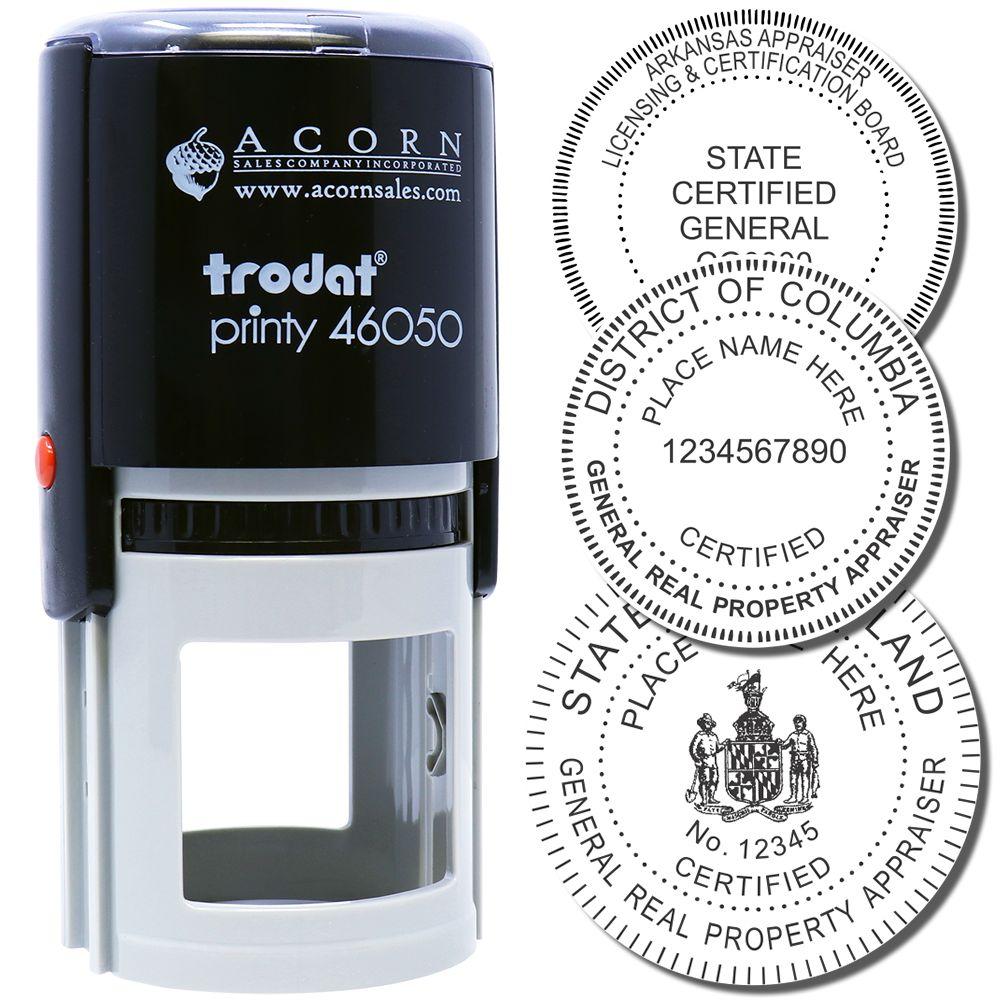
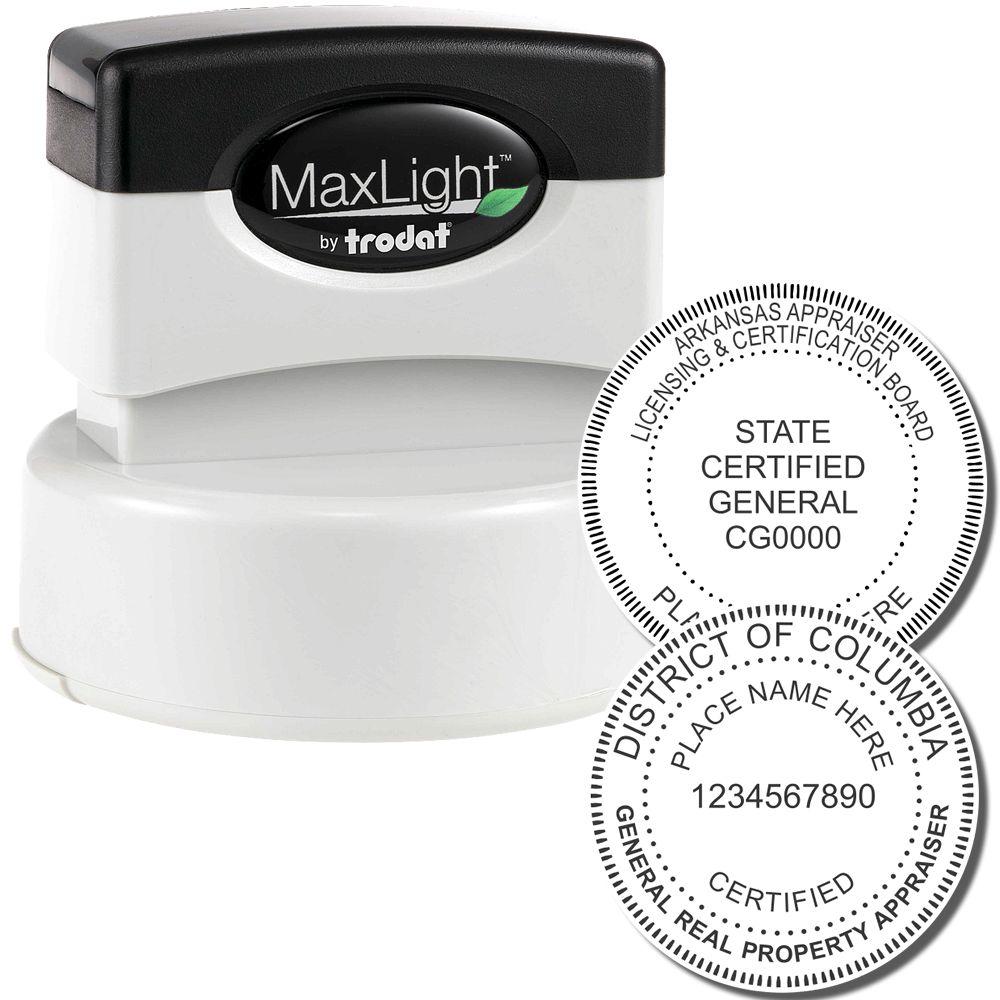
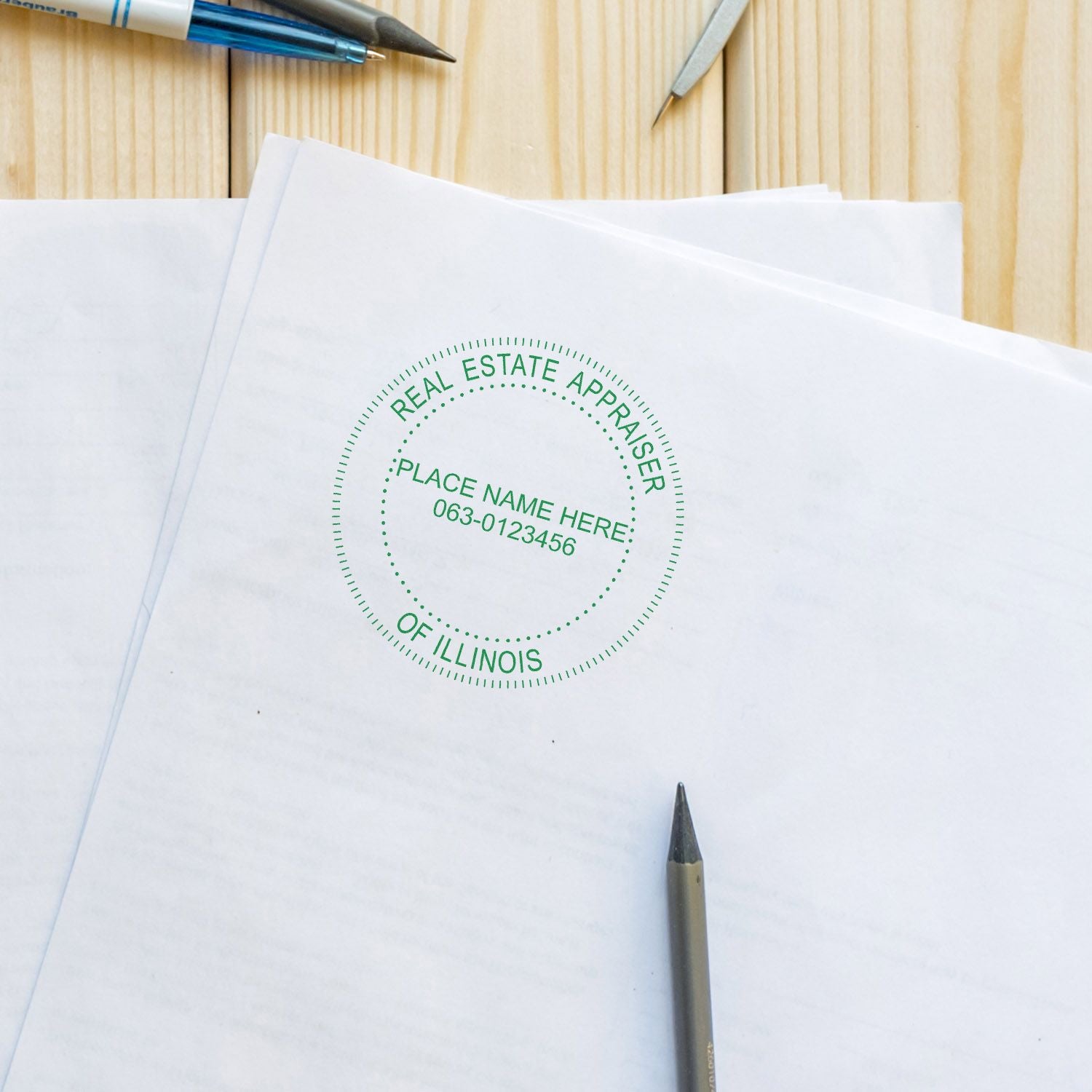
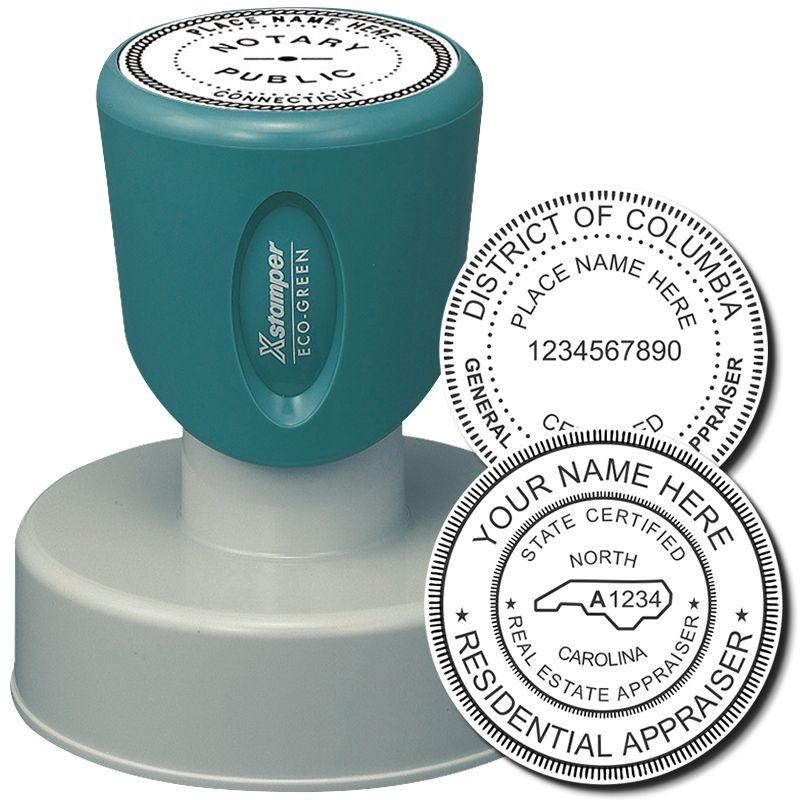
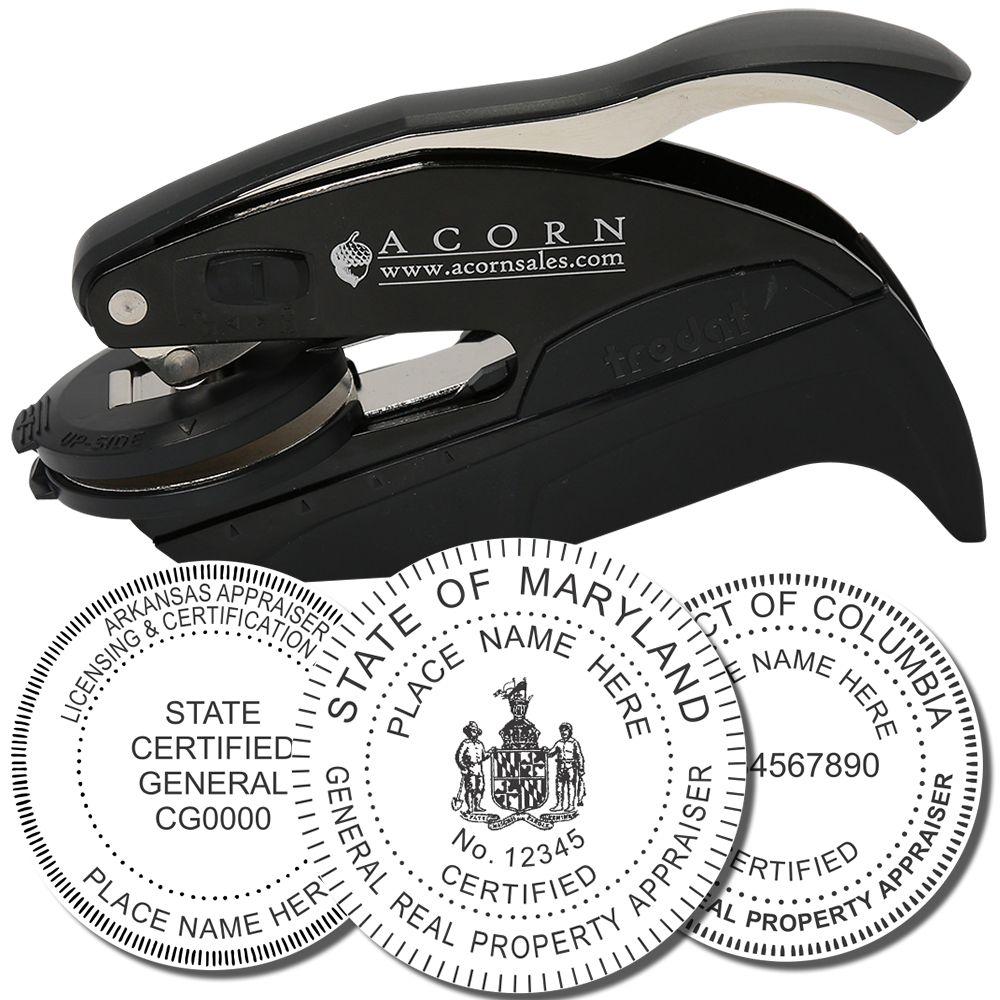
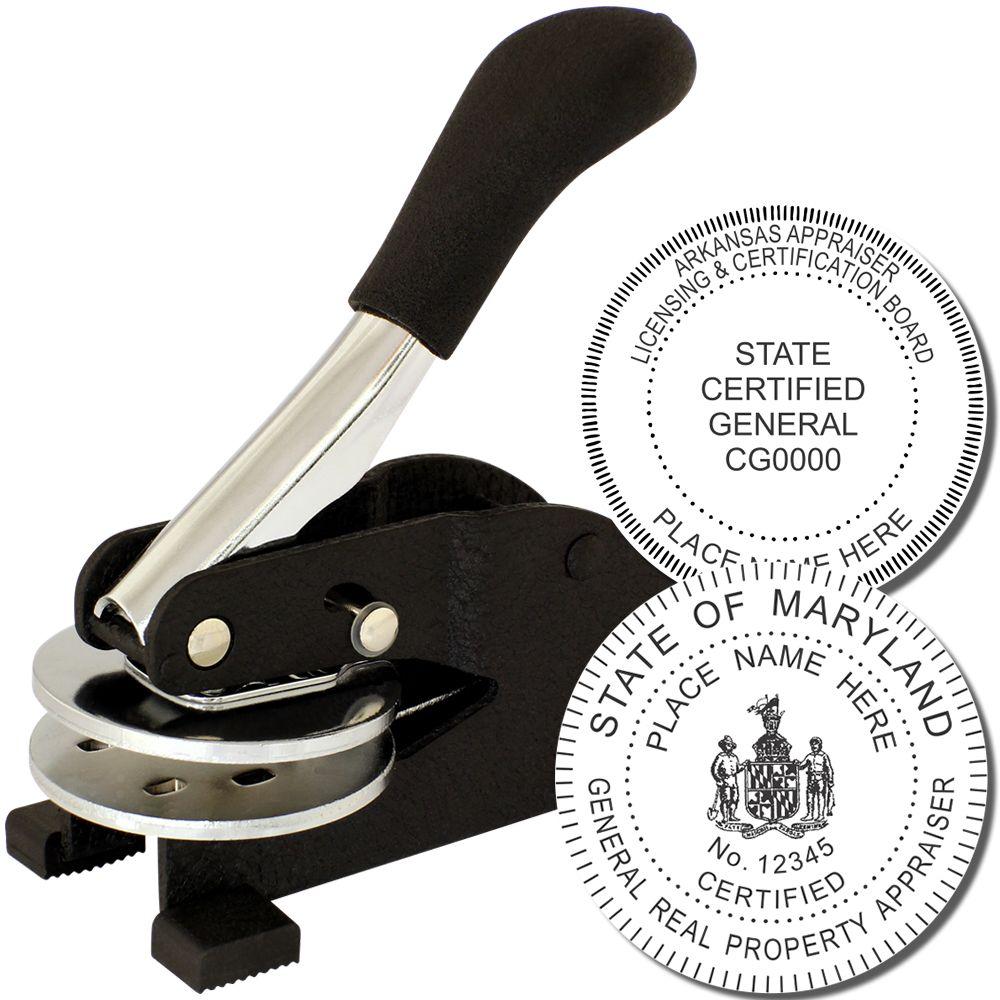
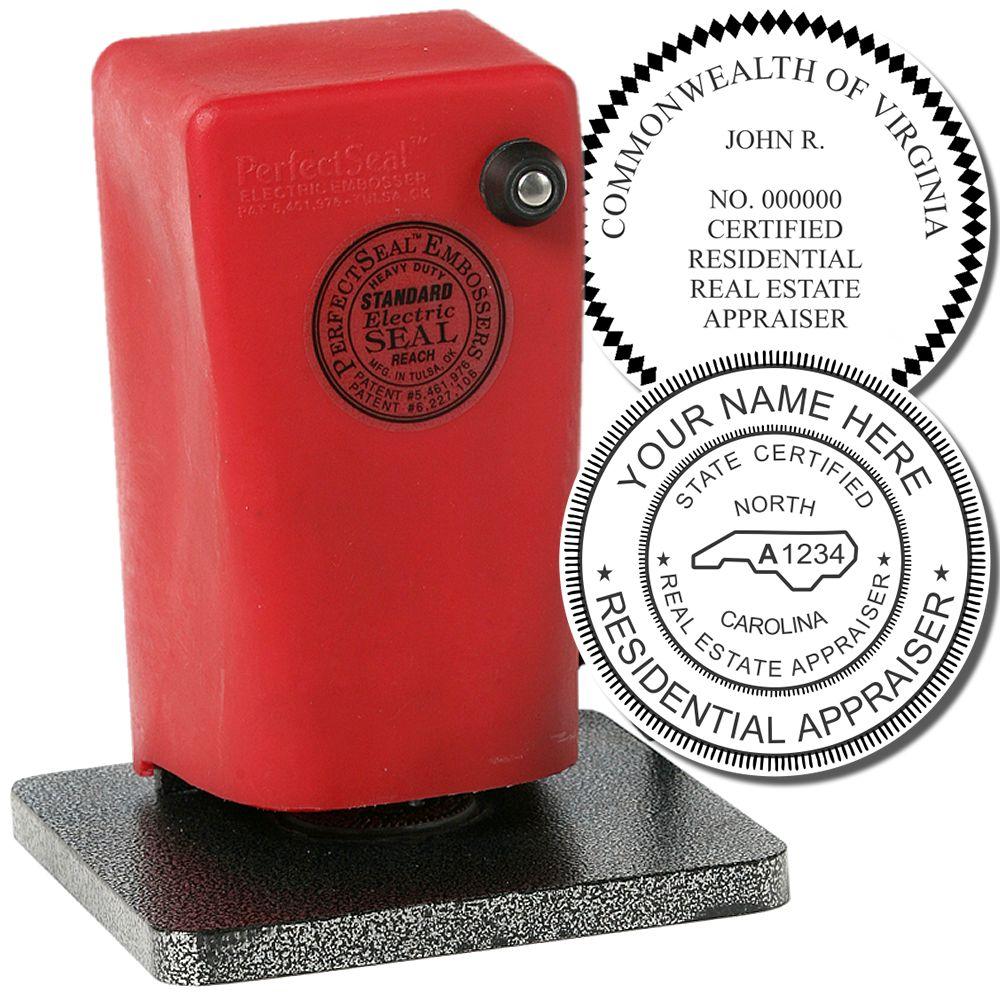
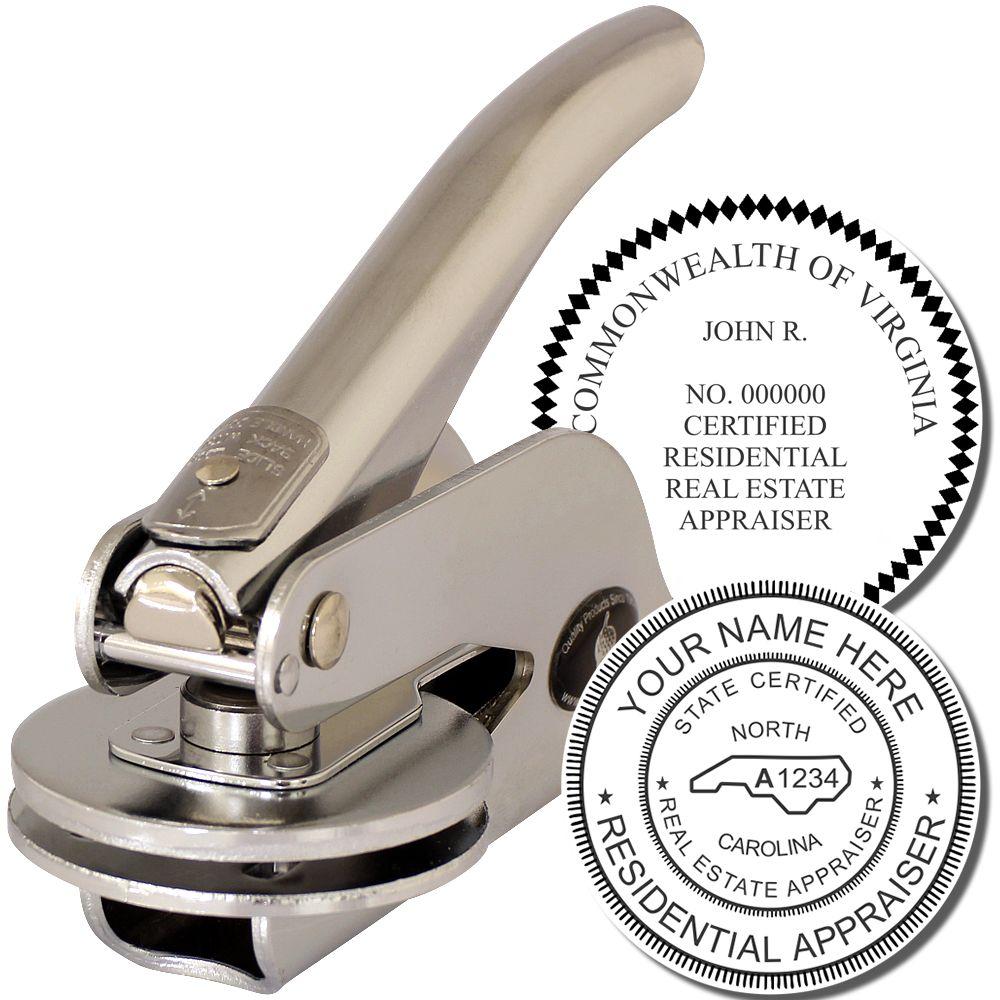
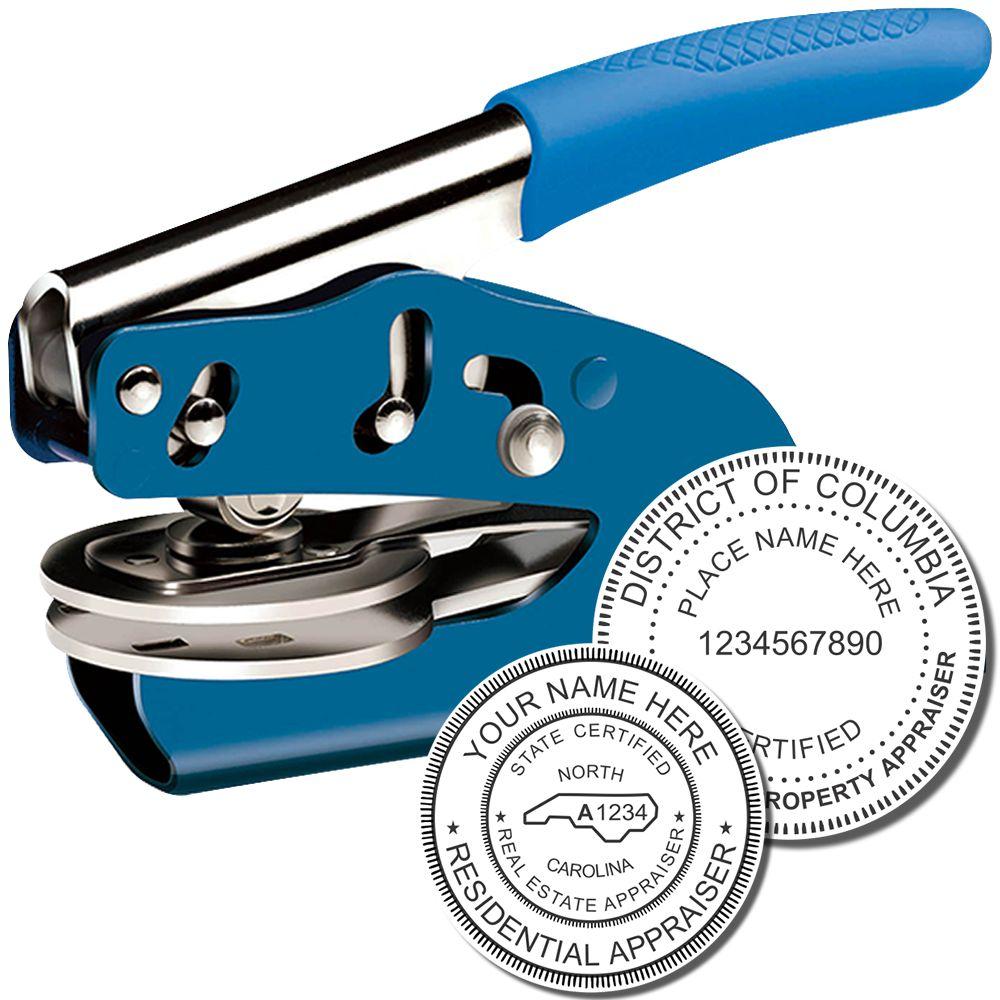
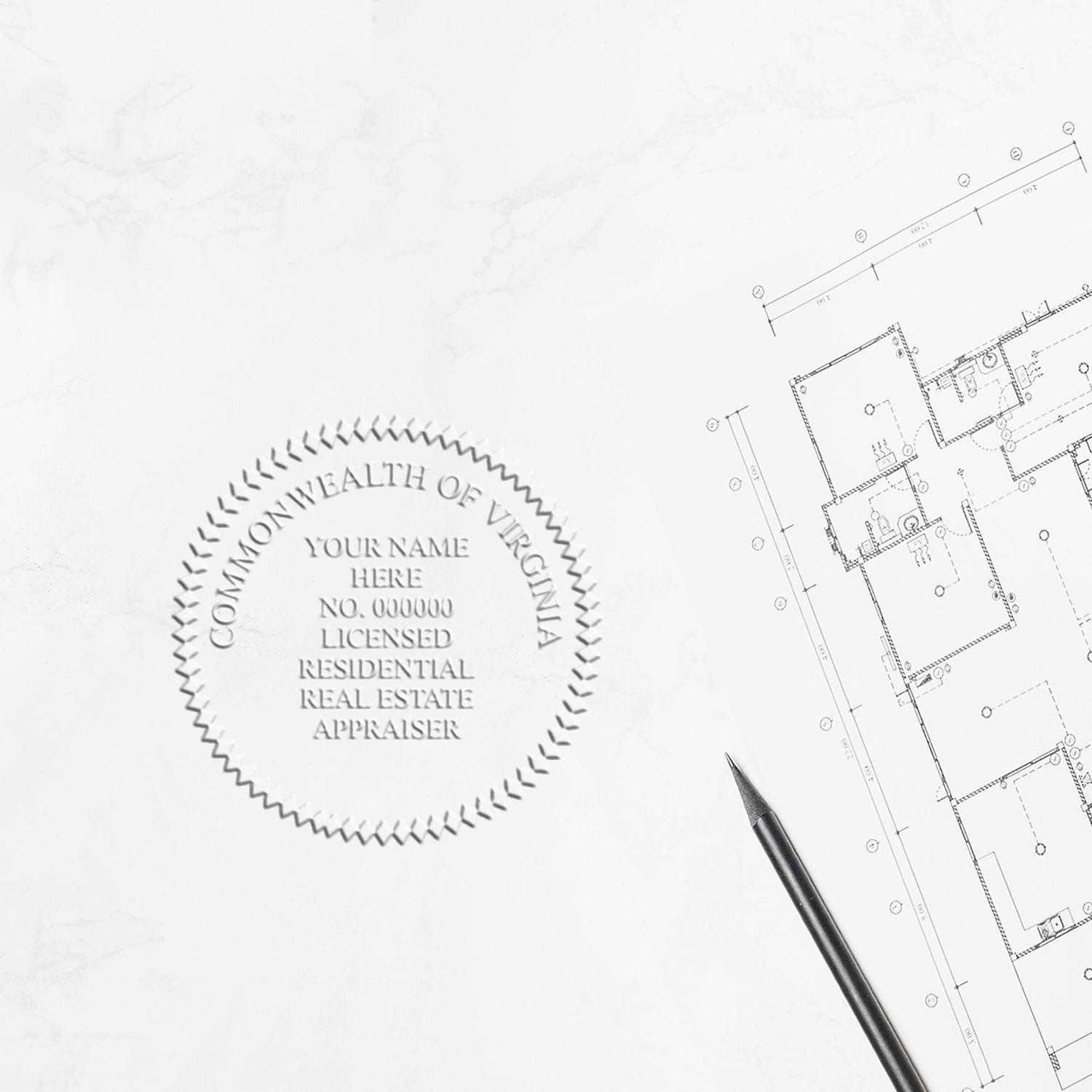
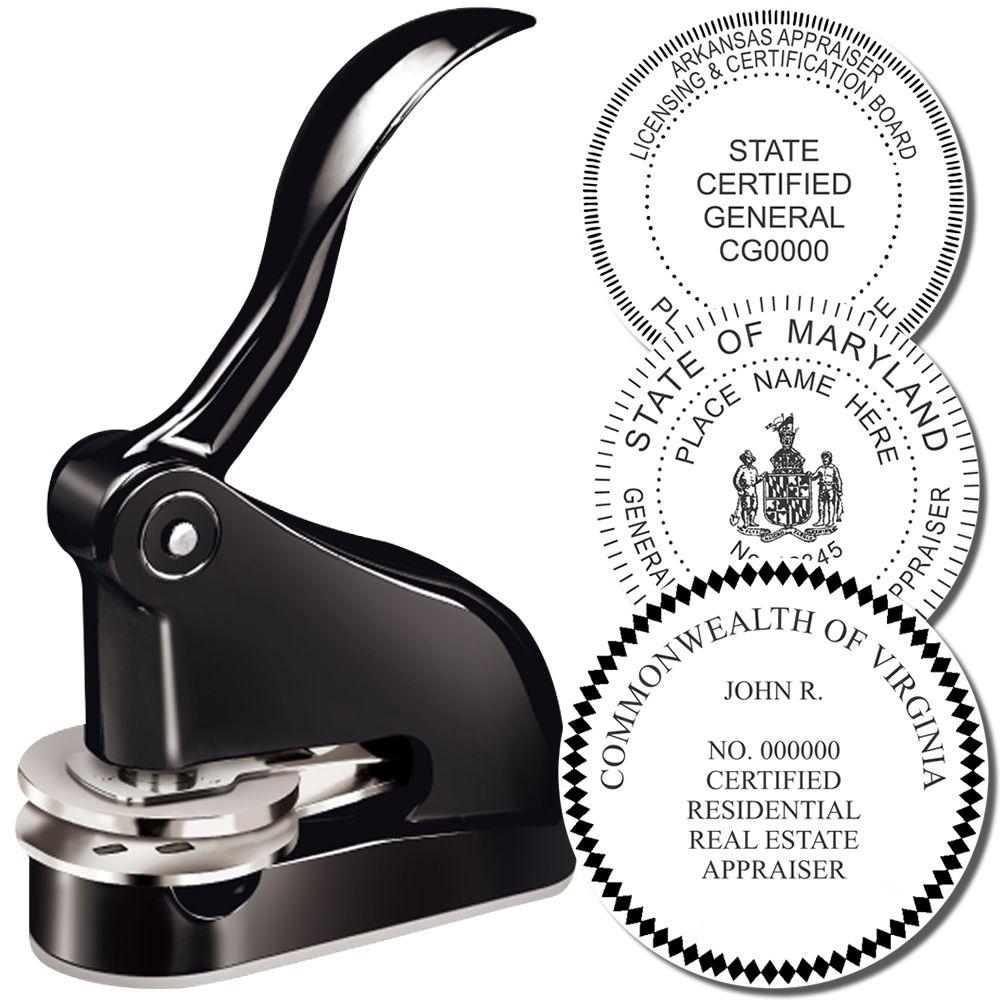
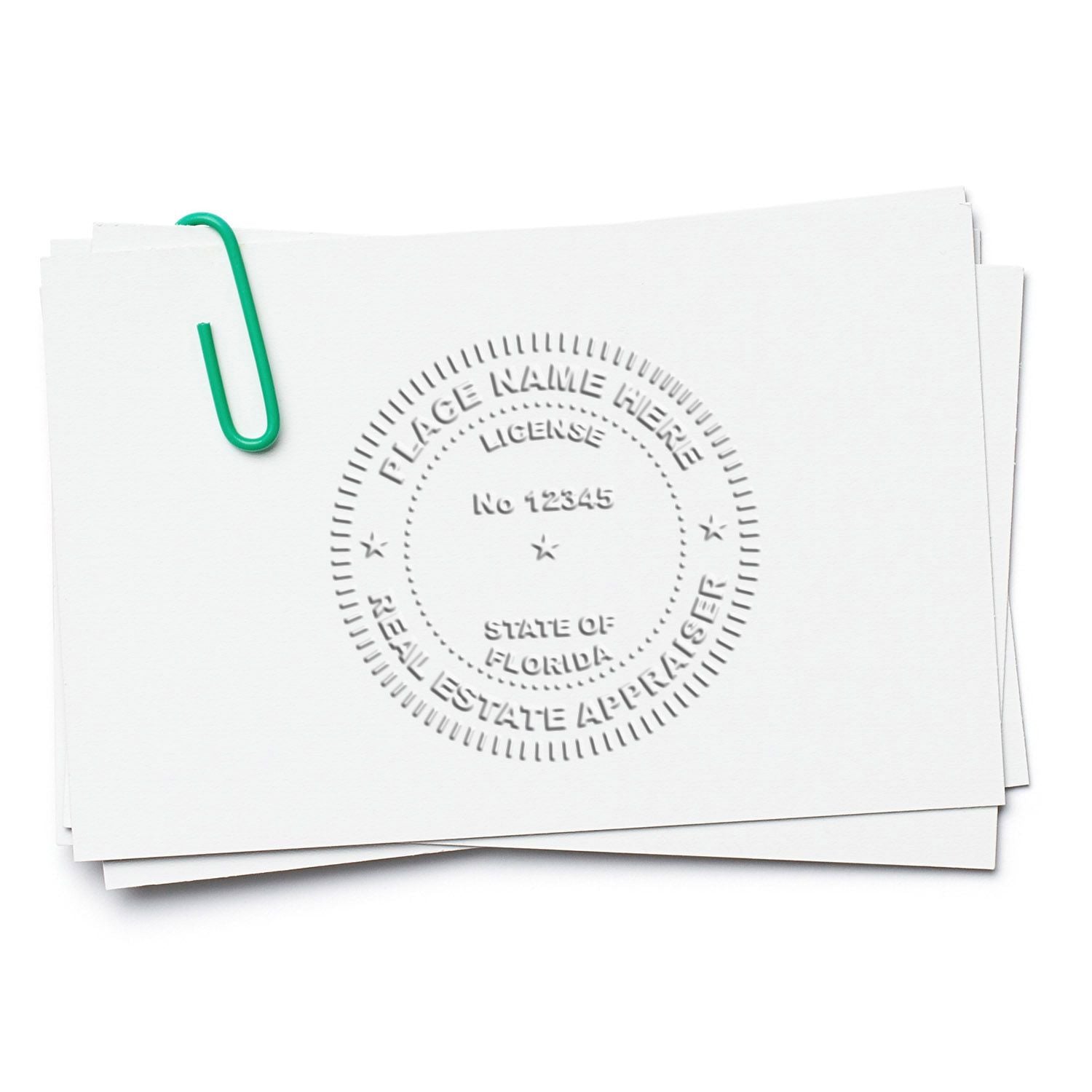
No instrument is prescribed, so pick on how the block has to reproduce. Indiana’s wording rule assumes the words are legible, and a raised impression on a scanned page often is not, which is an argument for ink on any report that leaves as a PDF: the Self Inking Rubber Stamp of Seal at $39.95, the MaxLight Pre Inked Rubber Stamp of Seal at $46.95 with a dust cover over the impression area, or the Xstamper Pre Inked Rubber Stamp of Seal at $64.95. If you send printed originals and want a raised block, the Hybrid Seal Embosser is $42.95 and the Desk Seal Embosser is $44.95. For PDF delivery alone the eSeal Electronic Image Stamp of Seal at $20.00 is an image file rather than a tool.




Sizing and layout under the lettering cap
The lettering cap changes how a die is sized here. Start by deciding the size of your name, because that sets the ceiling for everything else. Then check that the credential phrase fits on one line at that size or below: “Indiana certified residential appraiser” and “Indiana certified general appraiser” are both long, and breaking them across two lines is legal but harder to read. Widening the die is usually better than shrinking the type. The license number goes on its own line and can sit at the smallest size in the block without trouble. Send us the three lines and tell us which one is your name, and we will set the relative sizes so the credential never exceeds it.
Ordering, and the copy worth checking
Send your name as you sign it, the credential phrase copied from 876 IAC 3-2-9(b), your license number, and a note of whether the block will be inked or raised. If you are working on a temporary permit, say so, because subsection (c) asks for different content and for a permit number that a fixed die will not hold well. One honest caveat on the research: Indiana’s official administrative code site serves its rules through an application that returned no text for this page, so the rule wording above was taken from two independent code mirrors that agree word for word and both carry the same statutory authority line. It is worth opening the official copy of 876 IAC article 3 yourself, or asking the Professional Licensing Agency, before you treat any of this as settled. For anything the order form does not cover, contact us.
Care, and when to re-cut
An ink stamp wants a damp pad and a clean die face; lettering that starts to print filled is nearly always ink build-up in the counters of the letters rather than wear. An embosser wants dry storage and little else. The Indiana-specific reason to re-cut is a credential change. Moving from Indiana licensed residential appraiser to Indiana certified residential appraiser, or from certified residential to certified general, changes the phrase the rule makes you include, and the old die then states a credential you no longer hold. Order the new wording when the new license arrives, not when the old die wears out. This page is a research summary and not legal advice.
Frequently asked questions
Does Indiana require a real estate appraiser to seal a report?
No. Indiana’s report rule, 876 IAC 3-2-9, has three subsections and none of them mentions a seal or a stamp, and no seal language appears anywhere in article 3. What Indiana asks for is your signature together with the credential words and your license number.
What exactly has to go with my signature?
The words “Indiana licensed trainee appraiser”, “Indiana licensed residential appraiser”, “Indiana certified residential appraiser” or “Indiana certified general appraiser”, whichever applies, and your license number. The word Indiana is part of the phrase.
How big can the credential wording be?
No larger than your name. 876 IAC 3-2-9(b) ends with the line that the wording shall not be in letters larger than the licensed appraiser’s name, so your name is the largest element on the block and the credential and number sit at that size or below.
Can I put initials after my name instead of the full phrase?
No. 876 IAC 3-2-9(a) bars abbreviations connoting licensure after the appraiser’s name. The credential goes in as the written-out phrase the rule specifies, not as letters trailing the signature.
Does the rule cover anything besides the report?
Yes. It applies whenever the appraiser’s name is signed on an appraisal report or correspondence concerning an appraisal report, so cover letters and transmittal notes are inside it too. That breadth is a common reason Indiana appraisers want the block on a stamp.
I am here on a temporary permit. What do I sign with?
876 IAC 3-2-9(c) asks for the words “Operating under Indiana Temporary Permit Number” with the permit number, plus the license type, license number and state of issue shown on your temporary permit application. The permit number changes between permits, so a fixed die suits it poorly.
Do trainees need a device of any kind?
No. 876 IAC 3-6-8, the trainee rule, was read in full and covers employment, supervision and prohibited independent work, with no seal or stamp language. A trainee uses the ordinary block with the “Indiana licensed trainee appraiser” wording.








