
Written by Acorn Sales Company, manufacturing stamps and seals since 1964 · Reviewed by Holly R, VP of Sales and Marketing at Acorn Sales, against chapter 18-1 of the South Dakota Codified Laws and the recording standards at SDCL §§ 7-9-15 and 43-28-23. One sourcing caveat, stated plainly: the state legislature site could not be fetched, so the statutory text was read from a verbatim mirror and then cross-checked sentence by sentence against the Secretary of State’s own Notary Public Handbook and its seal, lost or stolen seal, renewal and e-notary pages, which agree throughout on 21 September 2026 · Updated 21 September 2026
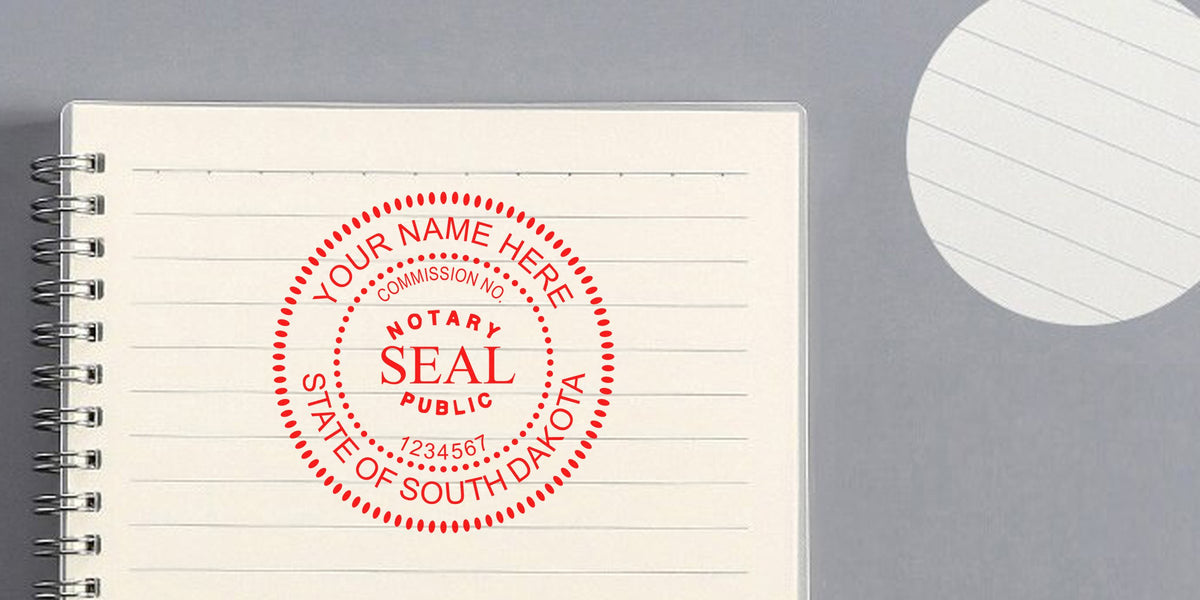
South Dakota puts one element deliberately outside the die, and it changes what you should buy. Your seal carries your name, the words “South Dakota” and “notary public” inside a border, and a rubber stamp also carries the word “Seal”. Your commission expiration date belongs below the seal, outside the border. Nothing on the die changes at renewal, so most South Dakota notaries never need a second seal. They need a separate date stamp.
South Dakota notary stamp requirements at a glance
| Requirement | South Dakota rule | Source |
|---|---|---|
| Stamp required | Yes | SDCL §§ 18-1-3, 18-1-3.1 |
| Required wording | Your name; The words “South Dakota”; The words “notary public”; A surrounding border, with the words and the seal contained inside it on a rubber stamp or an electronic seal; The word “Seal” on a rubber stamp | SDCL § 18-1-3.1 |
| Size and shape | Not addressed, and the Secretary of State says so in as many words: “There are no size or color requirements for a South Dakota notary public seal.” Shape is unconstrained too. | SDCL §§ 18-1-1 to 18-1-11.8 (silent) |
| Ink color | Not addressed in the notary act, confirmed by the same handbook sentence that disposes of size: no size or color requirements. | SDCL §§ 18-1-3, 18-1-3.1, 18-1-11.4 (silent) |
| Embosser | Permitted as a full alternative. | SDCL § 18-1-3.1 |
| Commission term | Terms run six years, expiring at midnight on the day of expiration, and renewal is a brand new application: the same form, the same $30, submitted no more than sixty days before expiry, and the office cannot back date an application. | SDCL §§ 18-1-1, 18-1-3, 18-1-3.1 |
| Name or address change | File the Notary Change Form with the Secretary of State, and note the sequencing, because South Dakota is stricter here than almost anywhere. | SDCL §§ 18-1-1, 18-1-3, 18-1-3.1 |
| Lost or stolen stamp | Report it immediately to the Secretary of State so a notation can be made on your record. | SDCL ch. 18-1 (silent on disposal) |
| Commissioning authority | The South Dakota Secretary of State, who may also appoint a resident of a bordering county in an adjoining state whose workplace is in South Dakota, and who may not appoint anyone convicted of a felony | chapter 18-1 of the South Dakota Codified Laws |
Rules for other states are on notary stamp requirements by state.




Is a notary stamp required in South Dakota?
Yes, before you may take office, and the duty sits in two sections rather than one. Each notary “before entering upon the duties of the office, shall obtain an official seal and file an impression of the same” with the oath in the Office of the Secretary of State, and separately a notarial officer “must have an official seal to be used for the purpose of acknowledging a document.” The second phrase is oddly narrow on its face, but the Secretary of State treats the seal as required for notarial acts generally, and the filed impression is a precondition to holding office either way.
The governing text is SDCL §§ 18-1-3, 18-1-3.1.
What must appear on a South Dakota notary stamp?
- Your name
- The words “South Dakota”
- The words “notary public”
- A surrounding border, with the words and the seal contained inside it on a rubber stamp or an electronic seal
- The word “Seal” on a rubber stamp
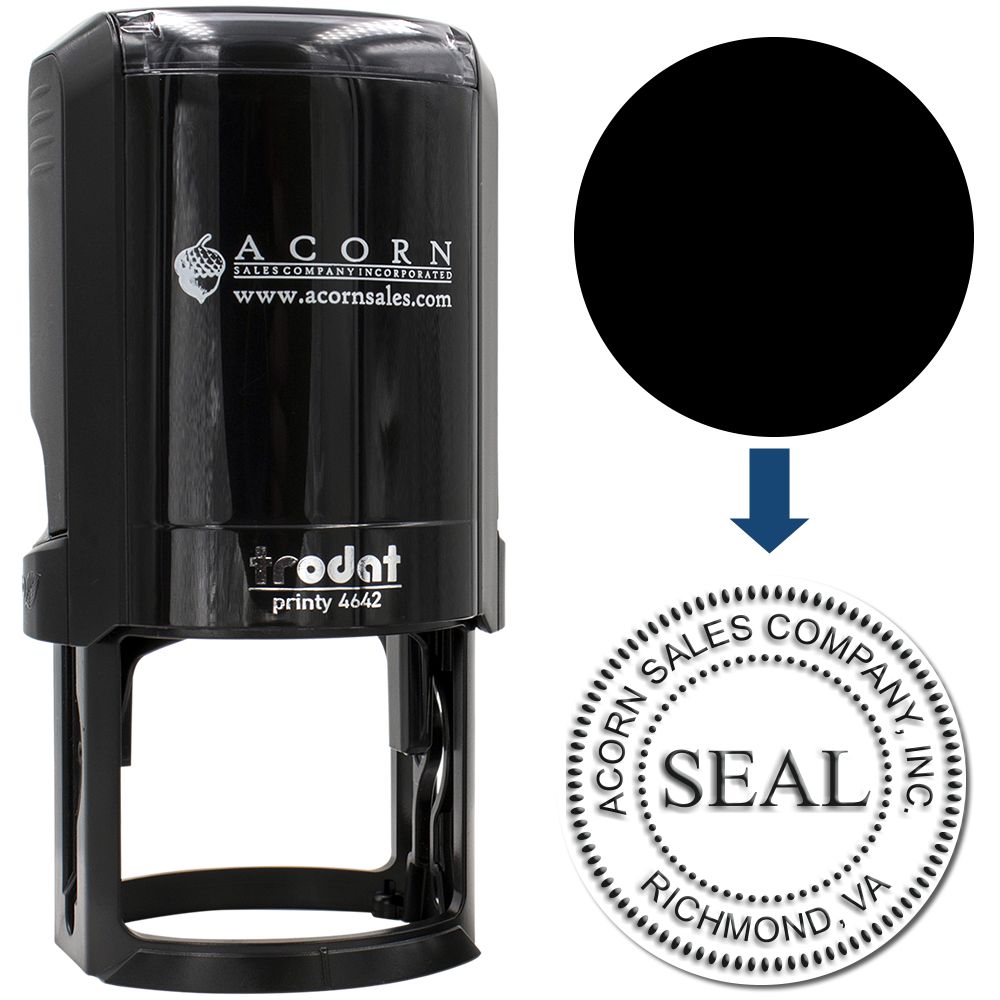
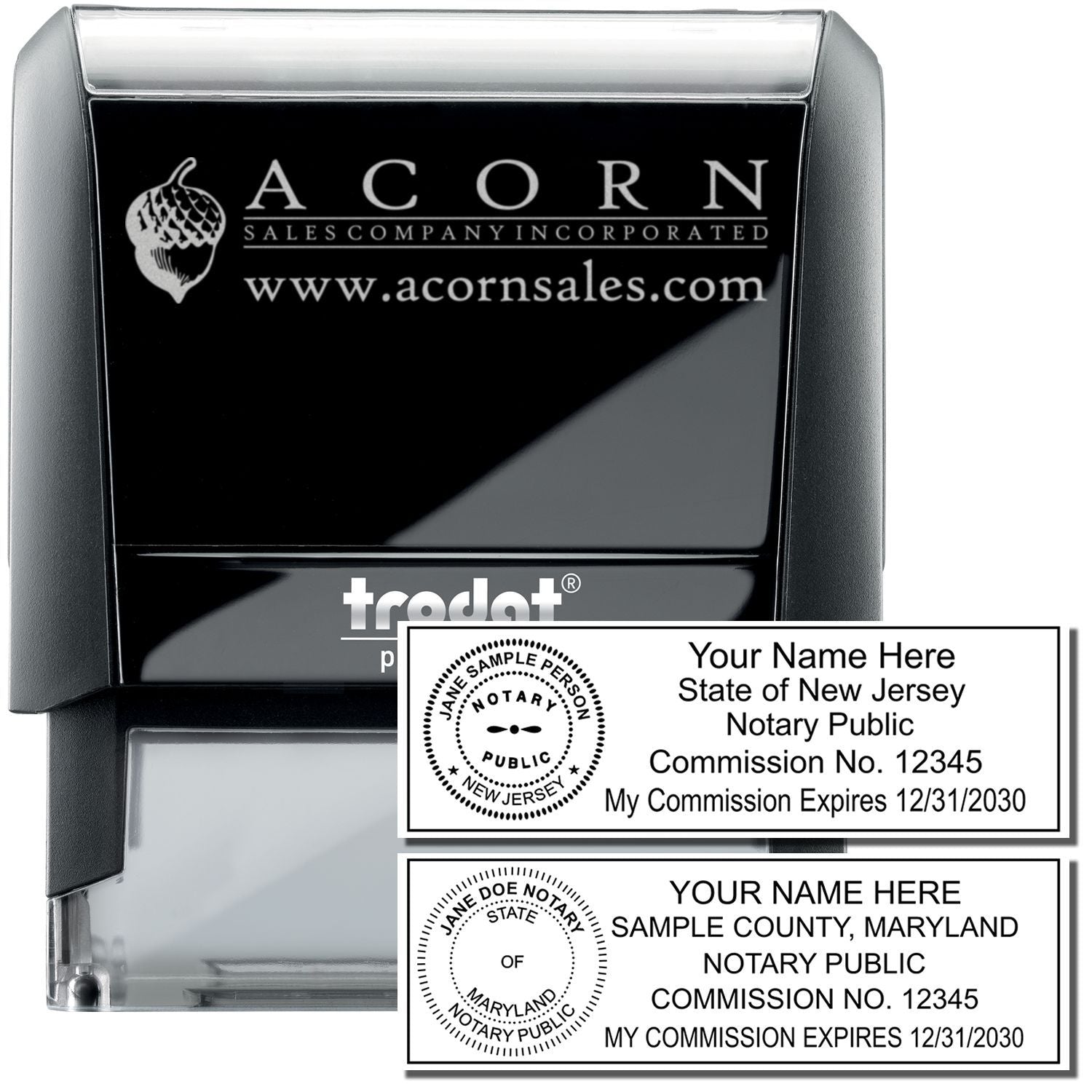
Two things about that list. First, the statute calls it a floor, requiring the seal to contain “at least” those items and to be “a type approved by the secretary of state”, so the Secretary of State has room to add. Second, the additions are real and they are handbook requirements rather than statutory ones. The word “Seal” is one of them: the handbook says that if a rubber stamp is used, the word Seal must be included on the stamp, and you will not find that in the element list at § 18-1-3.1. The handbook also requires your name “EXACTLY” as listed on the application and oath signature, requires the border to fully surround the imprint, and sets a performance standard that the seal “must be able to make a completely legible imprint EVERY TIME a notarial act is performed.” And the rule that decides how your die is laid out: the words “My Commission Expires” are not to be inside the border and may be placed outside it, because the statute puts the expiration date “below the official seal.”
What size and shape must a South Dakota notary stamp be?
Not addressed, and the Secretary of State says so in as many words: “There are no size or color requirements for a South Dakota notary public seal.” Shape is unconstrained too. The only form requirement is a surrounding border, so a circle and a rectangle are equally acceptable provided the words sit inside the border. The sources here are §§ 18-1-1, 18-1-1.1, 18-1-2, 18-1-3, 18-1-3.1, 18-1-4 and 18-1-11.1 through 18-1-11.8 and found no dimension anywhere.
Notary public stamps are made to these conventions, and we check your lines against the statutory wording before we make the stamp.

What ink color is required for a South Dakota notary stamp?
Not addressed in the notary act, confirmed by the same handbook sentence that disposes of size: no size or color requirements. Sections checked: § 18-1-3, § 18-1-3.1, § 18-1-11.4 and the balance of chapter 18-1. But South Dakota does have an ink rule that reaches a notary, and it comes from the land records. A real estate document recorded with the register of deeds must conform to the format standards and may not be rejected unless it is “not sufficiently legible or cannot be reproduced as a readable copy.” Those standards require the document to be printed, typewritten or computer generated in black ink, and then say that “dates, notarial acknowledgments, signatures, and other items may be completed in black or blue ink.” So a black or blue stamp is fine on a recorded document. The same section sets a blank space at the top of no less than three inches and other margins of at least one inch, which constrains where you place the imprint.
More on the trade-off in stamp ink color rules.
Is a notary embosser required or optional in South Dakota?
Permitted as a full alternative. The Secretary of State puts it simply, that either of the two stamps is acceptable as a notary seal, meaning an embossing seal or a rubber stamp. The statute treats them separately too, since the sentence requiring the words and seal to sit inside the border is written for “Rubber stamp seals and electronic seals” rather than for embossers. One practical caution before you choose: the handbook wants a completely legible imprint every time, and the recording statute tests whether a document can be reproduced as a readable copy. A bare embossment struggles with both on anything headed to a register of deeds.
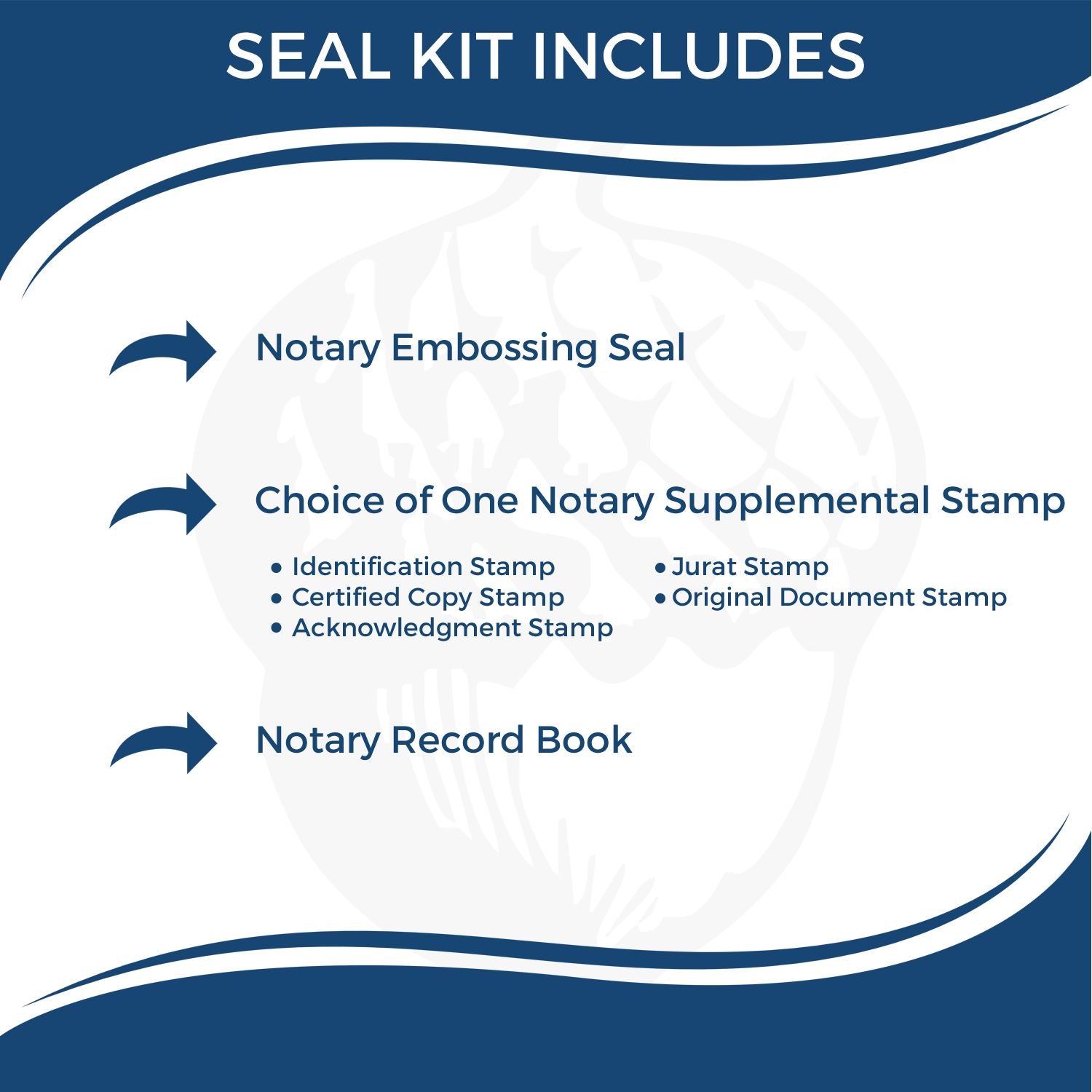
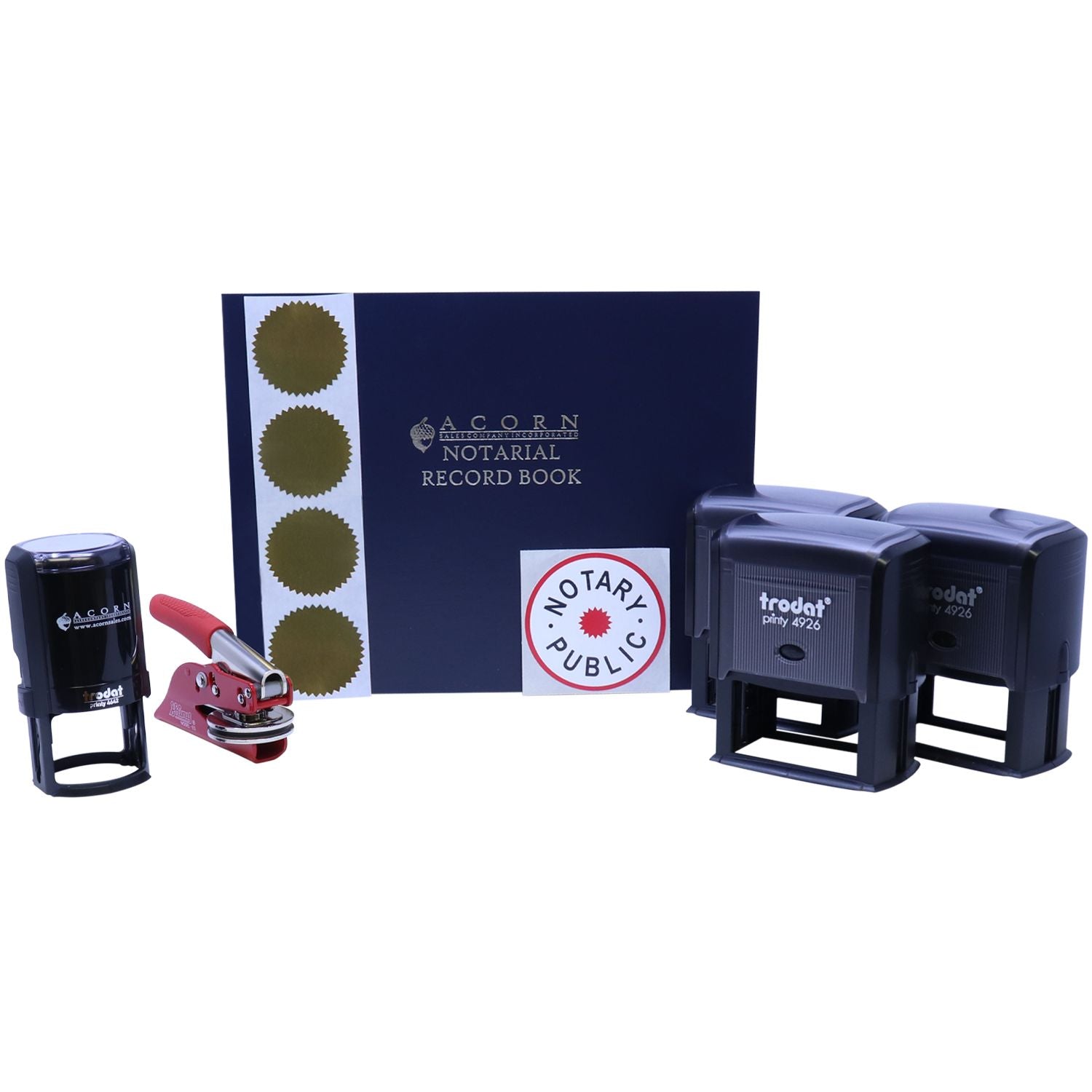
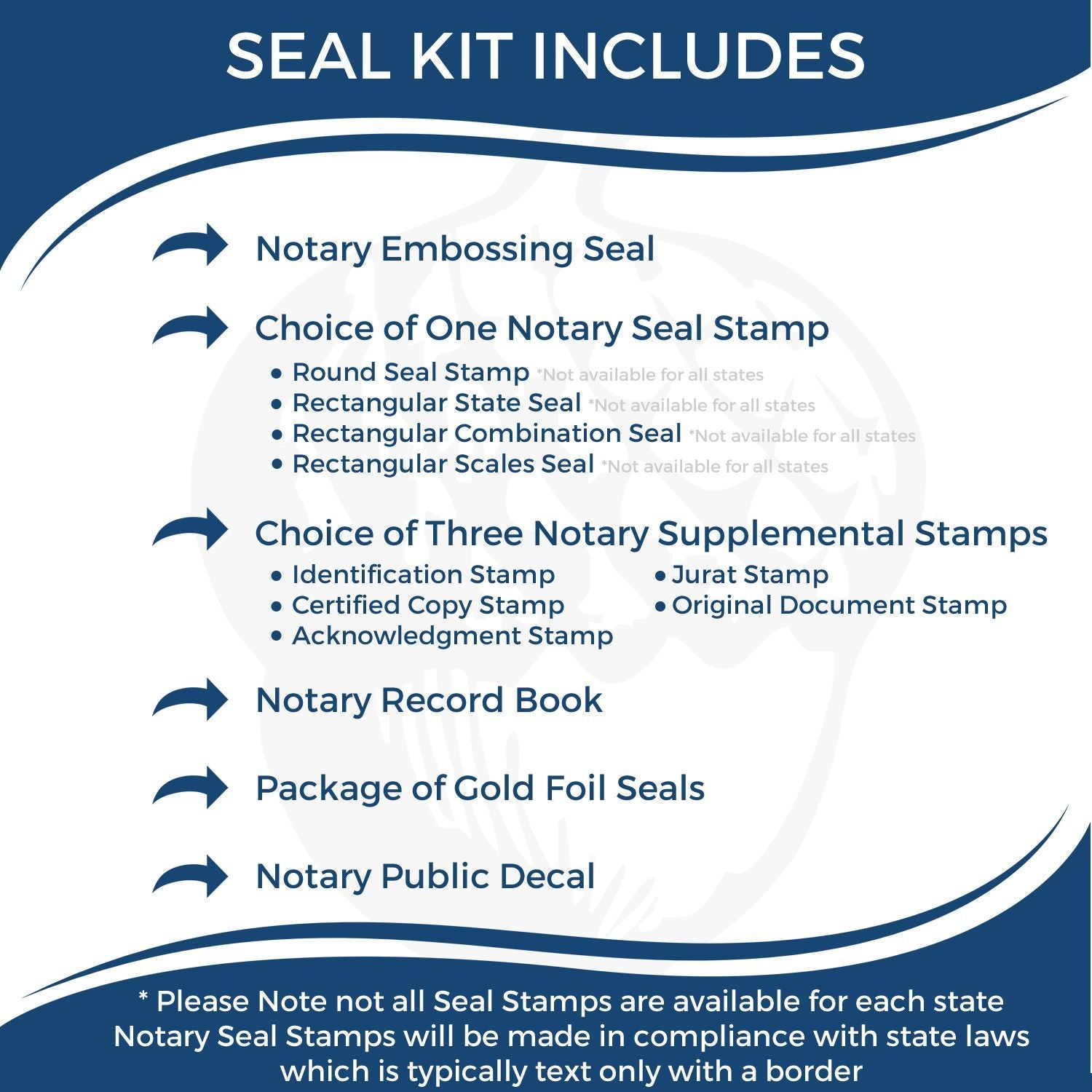
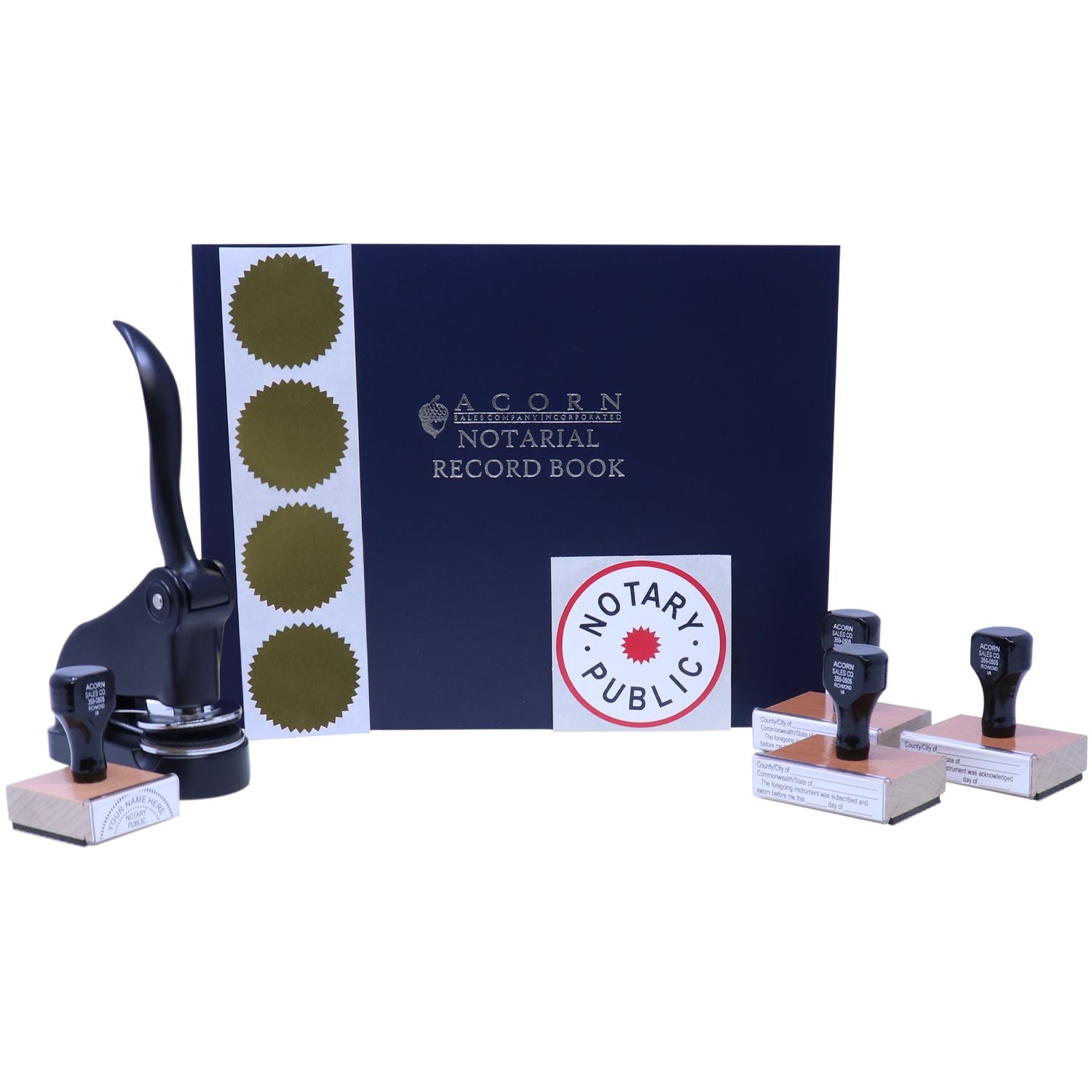
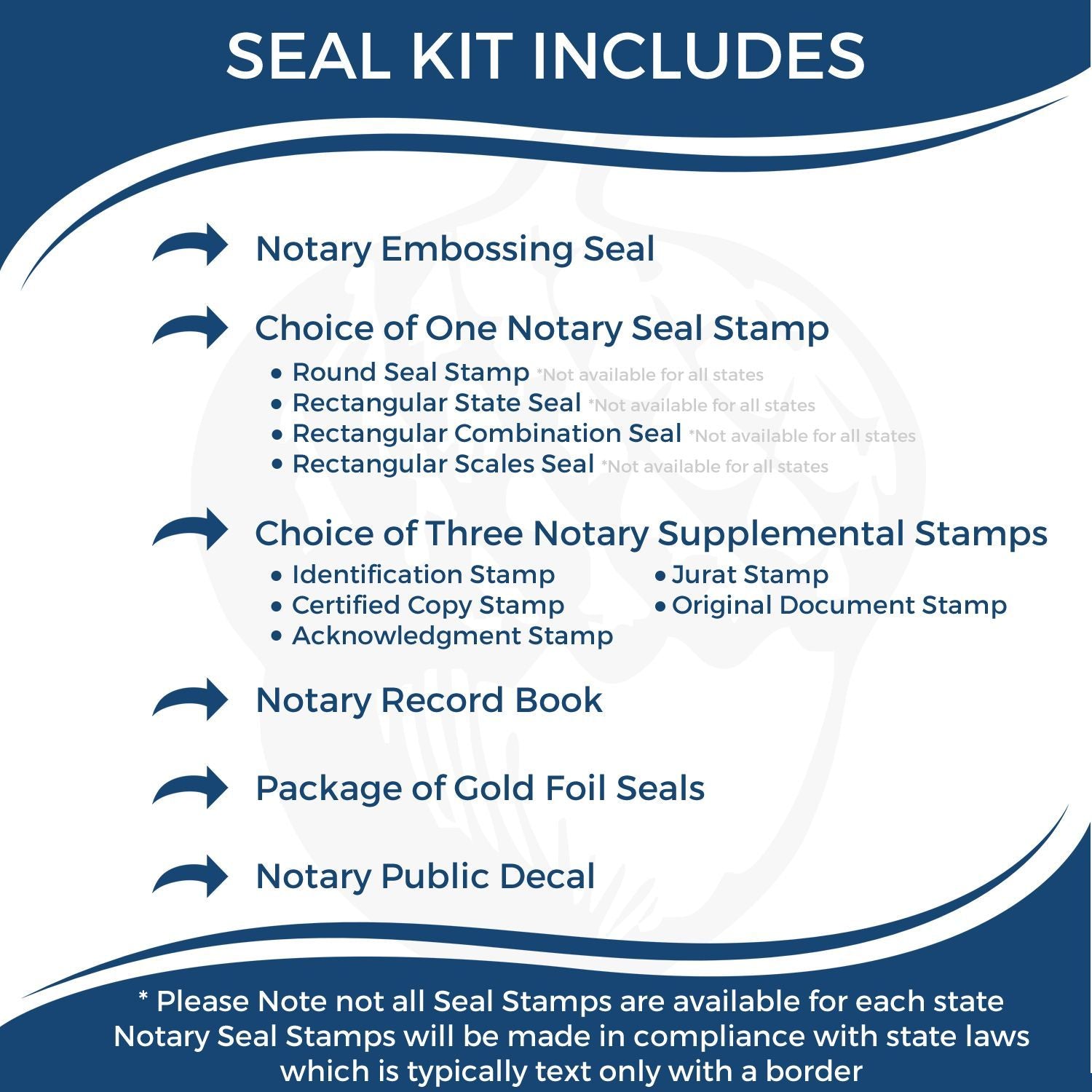
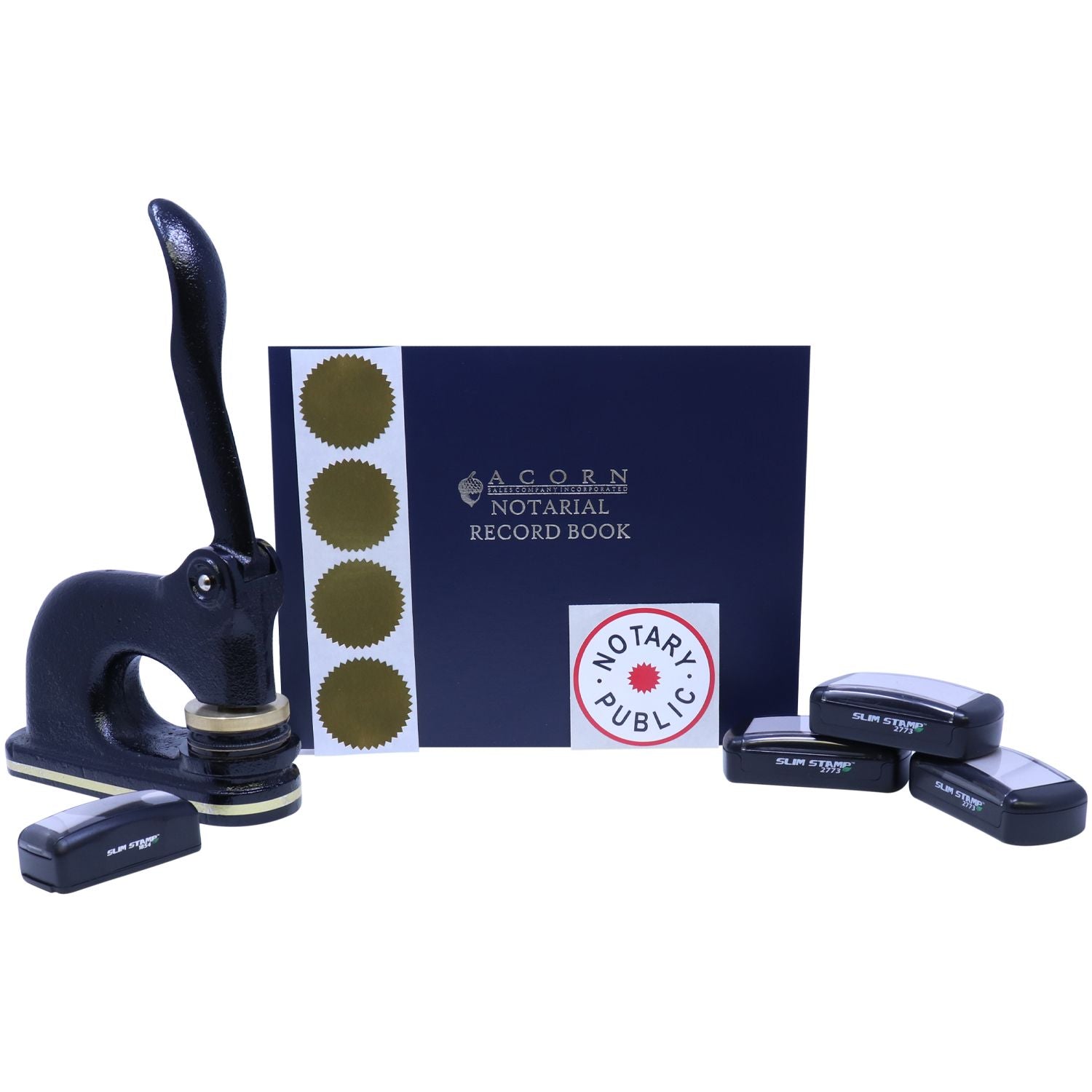
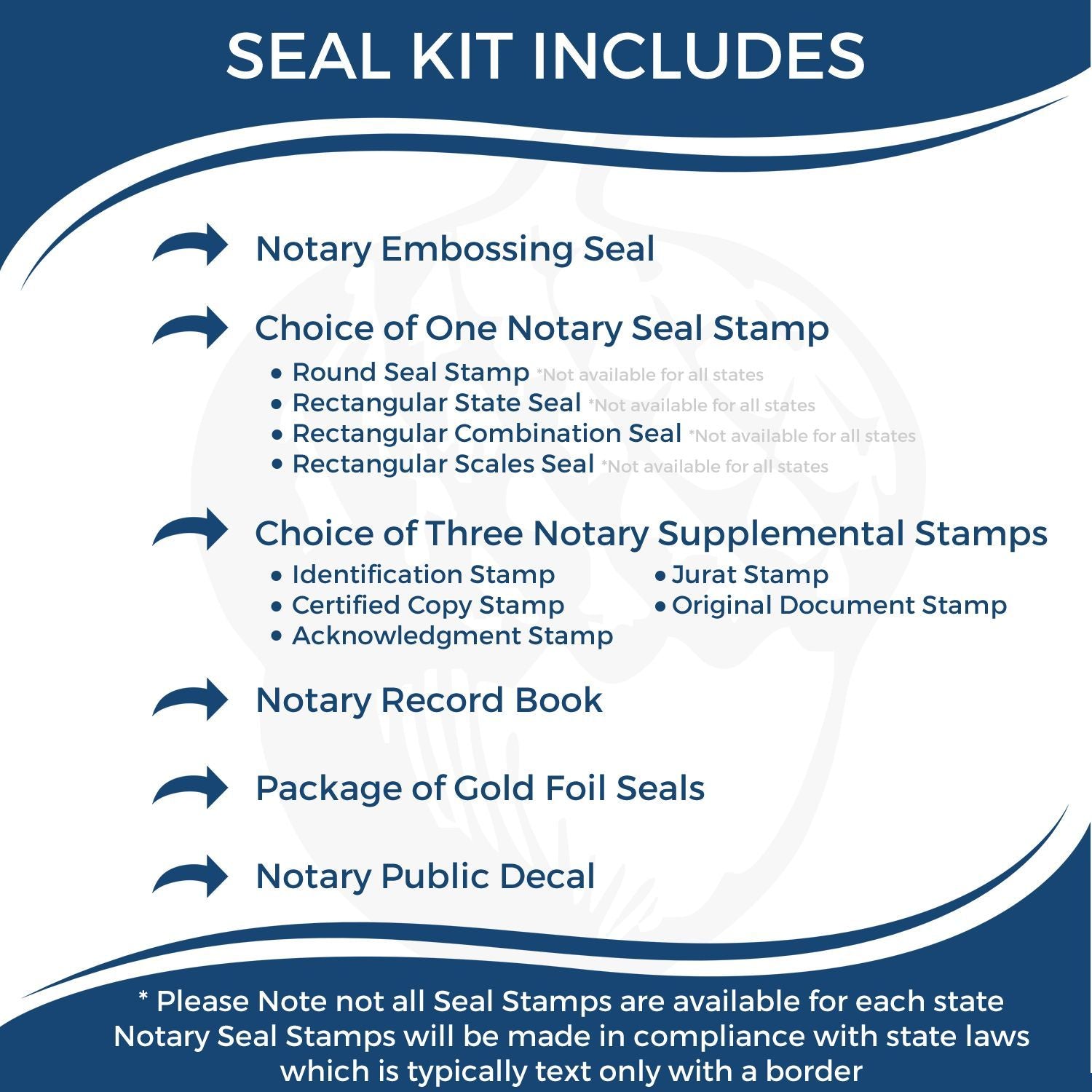
Notary embossing seal kits and inked stamp kits cover both formats. See also notary stamp vs. embosser.
The expiration date goes below the seal, not inside the border
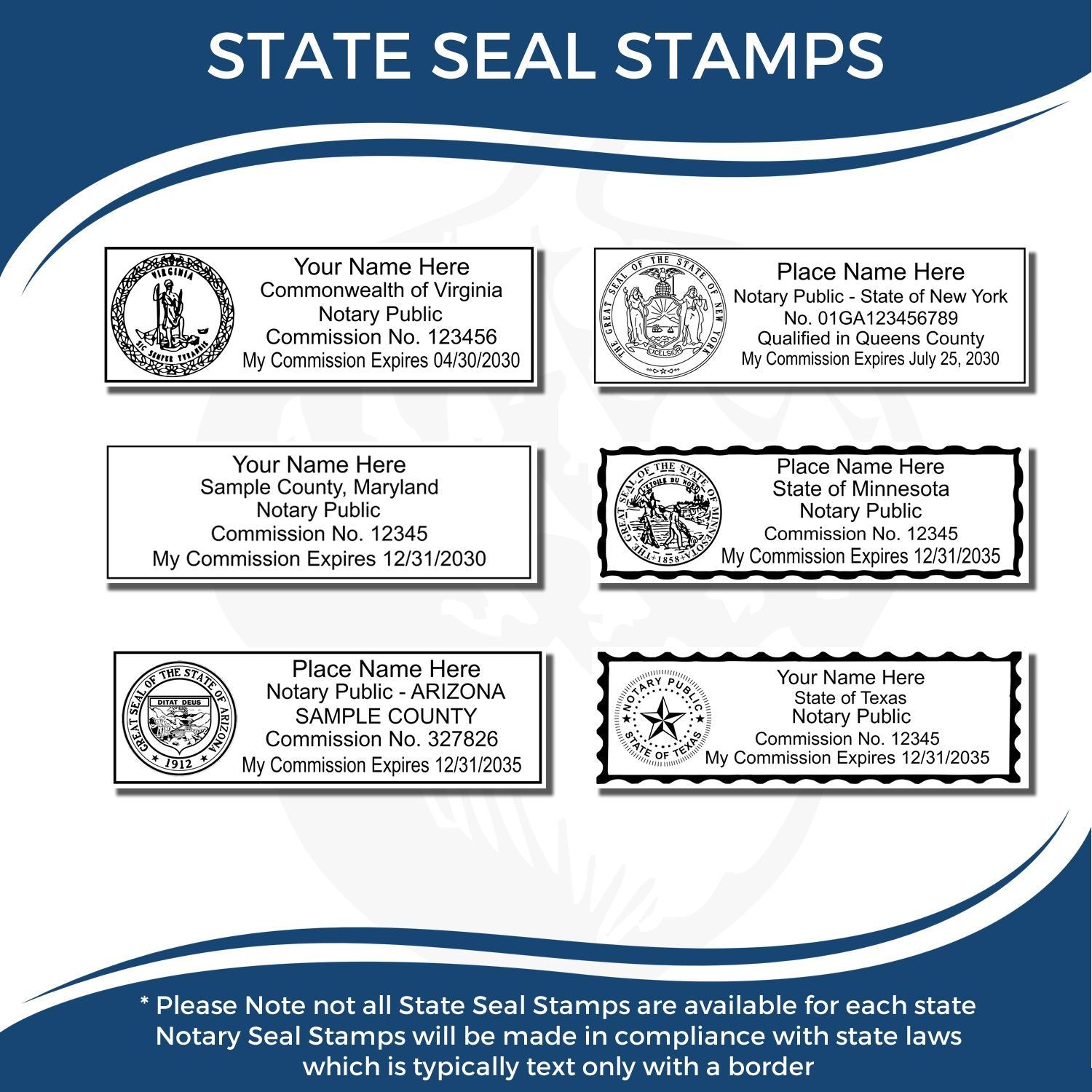
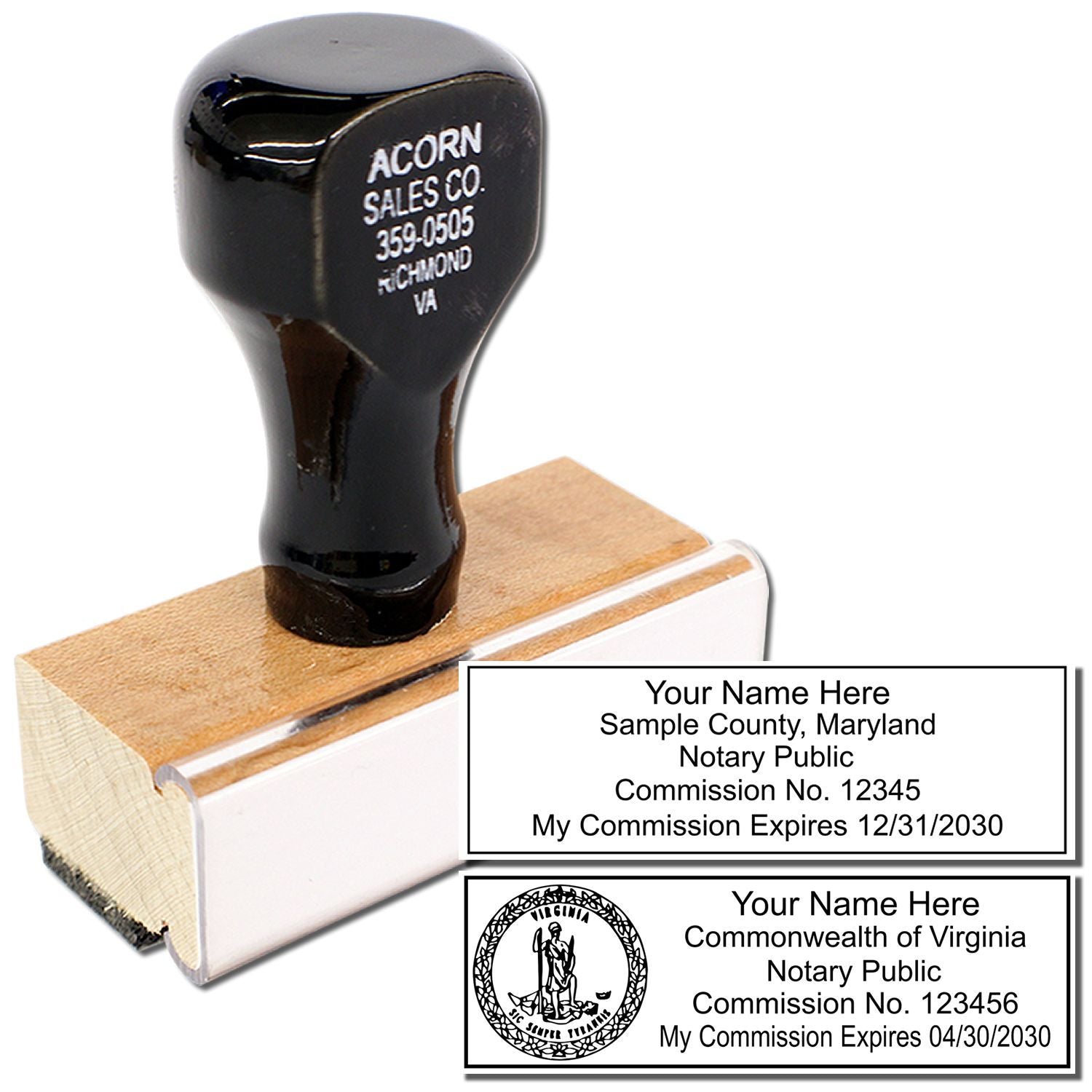
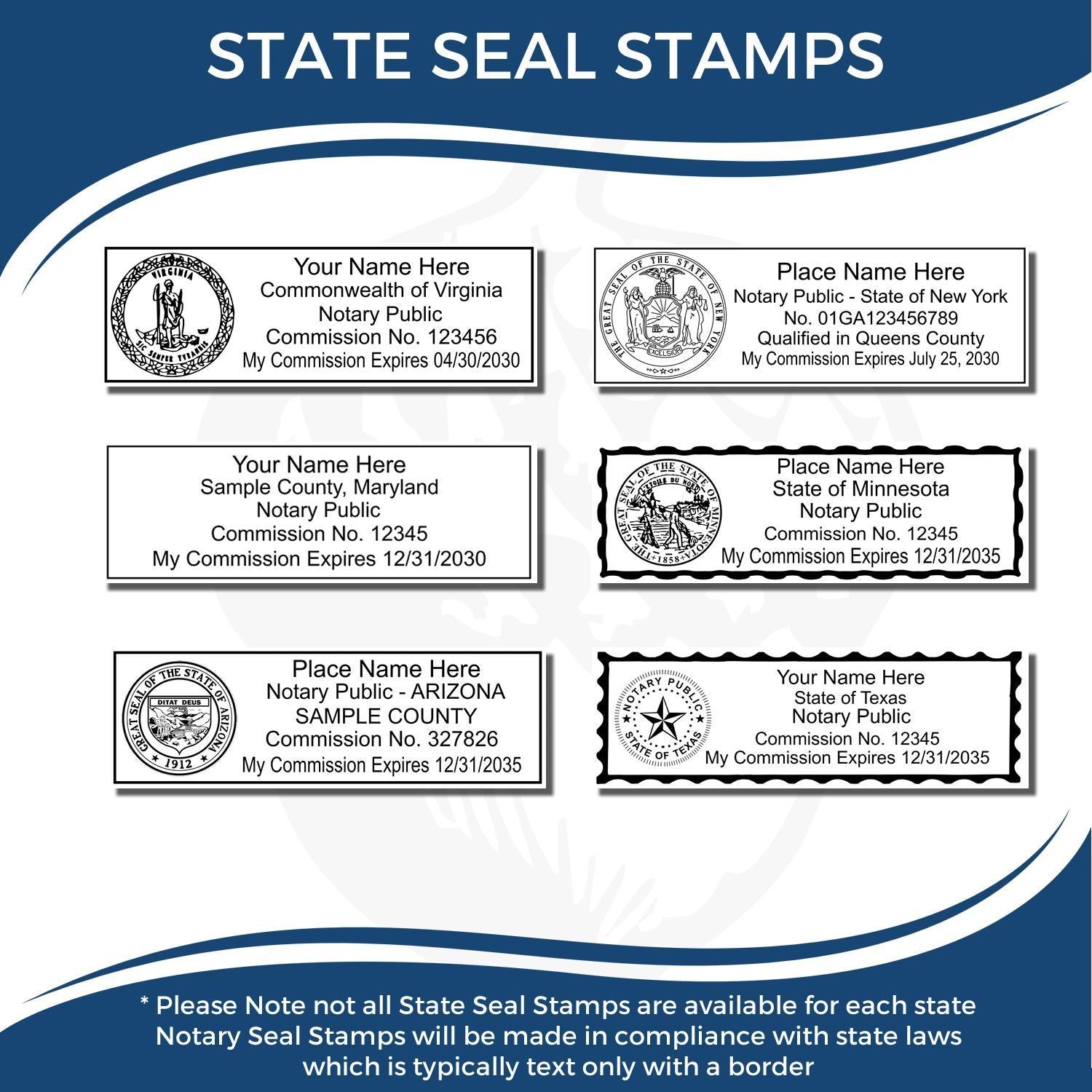
This is the rule that decides how a South Dakota stamp should be built, and it is the one most often broken at the ordering stage. SDCL § 18-1-3.1 requires that a notarial officer “indicate the date on which the notarial officer’s commission expires below the official seal”, and the Secretary of State’s handbook is blunt about the consequence: the words “My Commission Expires” are not to be inside the border, and may be placed outside it.
So a die with the expiration date baked inside the border is a non-compliant product. Vendors sell them anyway, out of habit from other states.
Get this right and it pays you back. Because the date is not part of the die, the die carries only your name, “South Dakota”, “notary public”, the word “Seal” and the border, and none of that changes when you renew. Most South Dakota notaries never need a second seal in a six year term or the term after it. What you need instead is a separate date stamp, which the Secretary of State itself suggests buying at an office supply store. One die, one small date stamp, replaced when the date changes.
Three more South Dakota points worth knowing. The word “Seal” has to appear within the border on a rubber stamp, and that requirement is in the handbook rather than in the statute’s element list. There are no size and no color requirements at all, though the recording standards want the document body in black and allow notarial items in black or blue, with a three inch clear space at the top. And an impression of your seal must be on file with the Secretary of State, with a changed seal approved before use rather than merely reported afterwards.
Do I need a new stamp when my commission is renewed or my name changes?
Terms run six years, expiring at midnight on the day of expiration, and renewal is a brand new application: the same form, the same $30, submitted no more than sixty days before expiry, and the office cannot back date an application. Now the part that saves you money. Normally you do not need a new stamp at renewal. Because the statute puts the expiration date “below the official seal”, outside the border, your die carries only your name, “South Dakota”, “notary public”, the word “Seal” and the border, and none of those changes with a new commission. What changes is the separately applied date, which is why the Secretary of State suggests buying a separate “My Commission Expires” date stamp. A new die is needed only if your name changes or you want a different design. Remember that a renewal filing still includes an imprint of the seal.
File the Notary Change Form with the Secretary of State, and note the sequencing, because South Dakota is stricter here than almost anywhere. Any change to your name, address or seal must be filed and approved with the office before you may begin notarizing with the new information. No deadline in days is prescribed. There is a prior approval gate instead, and chapter 18-1 contains no name or address change statute at all, so this is entirely administrative. On a name change the new seal impression must “correspond exactly” to the way your name is signed and recorded with the office.


What do I do if my South Dakota notary stamp is lost or stolen?
Report it immediately to the Secretary of State so a notation can be made on your record. No deadline in days is given. You then have two routes: obtain a new seal and keep your existing commission, filing a Notary Change Form with an impression of the new seal, or ask for your commission to be cancelled and reapply for a new one with a new expiration date.
How do I dispose of an expired South Dakota notary stamp?
Not addressed. South Dakota imposes no duty to destroy, deface, disable or surrender a seal when a commission expires or is revoked or resigned. The sources here are §§ 18-1-3, 18-1-3.1, 18-1-12, 18-1-13 and 18-1-14 and the Notary Public Handbook and found nothing, which puts South Dakota alone among its neighbors: Delaware, Utah and Idaho all require the device to be rendered unusable. Destroying the die anyway is the sensible course.
More on retiring an old device in how to dispose of an expired notary stamp.
Can I notarize electronically or remotely in South Dakota?
Both are authorized, with notification rather than approval, and South Dakota keeps two distinct remote paths that are easy to conflate. The older and narrower one at § 18-1-11.1 uses video communication technology and requires personal knowledge of the signer, with the document physically mailed to the signer to execute while you watch. The 2024 addition at § 18-1-11.2 is remote online notarization proper, requiring personal knowledge established “by means of two different methods of identity proofing”, a certificate indicating the signer’s remote location and the use of a tamper-evident electronic notarization system, and an audio-visual copy of the act. That copy is retained ten years. You select at least one tamper-evident system, nobody may force you onto a system you did not select, and you notify the Secretary of State of the systems you use on the Notary Change Form, including an image of your electronic seal. There is no approved vendor list: the Secretary of State does not require platform providers to seek approval and keeps no listing. You must still be physically located in South Dakota. A journal is not required; chapter 18-1 has no journal section at all.
If you need your seal as an image file for electronic work, see electronic notary seal images.
Who is allowed to sell you a South Dakota notary seal?
No rule restricts who may sell you a South Dakota seal. The Secretary of State says the state does not provide the seal and that one may be purchased at any local office supply company, stationery store or print shop. There is a buyer-side approval gate though, and it changes your timeline. The seal must be “a type approved by the secretary of state”, an impression must be filed with the office before you enter upon the duties of the office, and before using a different seal you must submit a Notary Change Request Form with an imprint of the new seal and receive approval before use. So a replacement seal cannot lawfully be used the day it arrives. Build the filing step into your schedule.
Related South Dakota guides
- Essential Tips for Choosing a South Dakota Notary Stamp and Seal
- Determine Which South Dakota Notary Supplies You Will Need
Next step
Have your commission details in front of you before you order, because they go on the stamp and a wrong line means a reorder. Then browse notary public stamps, or contact us and we will check your wording against the statute before we make it.
Frequently asked questions about South Dakota notary seals
Is a notary seal required in South Dakota?
Yes, and before you may act: each notary, before entering upon the duties of the office, shall obtain an official seal. The duty sits in two sections rather than one.
Where does the expiration date go on a South Dakota seal?
Below the official seal, outside the border. It is not a die element. That is the most useful thing to know before you order here, because it means nothing on your seal changes when your commission renews.
Do I need a new seal when my South Dakota commission is renewed?
Usually not. Terms run six years and the die carries only your name, “South Dakota”, “notary public” and the word “Seal”, none of which changes. What you need instead is a separate “My Commission Expires” date stamp, which the Secretary of State itself suggests. Building the date into the die is both non-compliant and a wasted reorder.
What size and color must a South Dakota notary seal be?
Neither is specified, and the Secretary of State says so directly: there are no size or color requirements for a South Dakota notary public seal. The constraint is legibility.
Can I use my new South Dakota seal as soon as it arrives?
No, and this catches people out. An impression of your seal is filed with the Secretary of State before you take office, and a changed seal requires a Notary Change Request Form with an imprint and approval before use. Build that step into your timeline.
What has to appear on a South Dakota notary seal?
Your name, the words “South Dakota” and “notary public”, and a surrounding border. A rubber stamp also carries the word “Seal”. The handbook adds that your name must match exactly and that the border must be complete.
How long does a South Dakota notary commission last?
Six years, expiring at midnight on the day of expiration. Renewal is a brand new application on the same form with the same fee.
What do I do with my South Dakota seal when my commission ends?
South Dakota is unusual in setting no disposal duty at all. The sources here are the seal sections and the handbook. Destroying it anyway is prudent practice rather than a legal command.








