

Written by Acorn Sales Company, manufacturing stamps and seals since 1964 · Reviewed by Holly R, VP of Sales and Marketing at Acorn Sales, against the New York State Board for Architecture, under the State Education Department Office of the Professions and N.Y. Educ. Law § 7307(1) on 21 September 2026 · Updated 21 September 2026
New York reverses the outer band for architects. Every New York design seal centers the Great Seal of New York, with the licensee’s name above it and the license number below it “with no other letters or numbers.” What changes between professions is the band. Section 68.13 puts STATE OF NEW YORK at the top and the professional legend at the bottom for engineers, land surveyors and professional geologists. Section 69.5 does the opposite for architects: Registered Architect at the top and State of New York at the bottom. A supplier reusing an engineer layout will hand you a seal with the bands reversed.
One impression is not the whole job. Section 69.5 requires that to all plans, specifications and reports bearing an architect’s seal “there shall also be applied a stamp with appropriate wording warning that it is a violation of the law for any person, unless acting under the direction of a licensed architect, to alter an item in any way.” That is a second inked device, and buyers routinely order the round seal and discover the warning block missing at filing.
The die is circular, approximately 1 3/4 inches. The word approximately gives genuine tolerance, but the Great Seal of New York has to stay legible at the center, which sets a practical floor.
New York architect seal requirements at a glance
| Requirement | New York rule | Source |
|---|---|---|
| Seal required | Yes | N.Y. Educ. Law § 7307(1) |
| Required elements | Registered Architect at the top of the outer band; State of New York at the bottom of the outer band; Your name as licensed, above the Great Seal of New York; The Great Seal of New York in the inner circle; Your license number below the Great Seal | 8 NYCRR § 69.5 |
| Size and shape | Circular, approximately 1 3/4 inches in diameter. | 8 NYCRR § 69.5 |
| Device allowed | An embossing seal, a rubber stamp or an electronic version. | N.Y. Educ. Law § 7307(1) |
| Signature and date | Seal plus a personal signature on the original, and there is no dating rule. | N.Y. Educ. Law § 7307(1) |
| What must be sealed | Working drawings and specifications prepared by the architect or by a full time or part time subordinate under the architect’s supervision, when filed with public officials. | N.Y. Educ. Law § 7307(1), (5) |
| Electronic seal | New York names no cryptographic standard for any of its design professions. | 8 NYCRR § 69.5 (silent) |
| Renewal and lapse | The New York license itself does not expire; registration does, on a three year cycle. | N.Y. Educ. Law § 7307 |
| Firm requirements | No firm seal and no firm number on the drawing. | N.Y. Educ. Law § 7307(2), (3), (4) |
| Regulator | The New York State Board for Architecture, under the State Education Department Office of the Professions | N.Y. Education Law art. 147 (§§ 7301 to 7311, principally § 7307, Special provisions) |


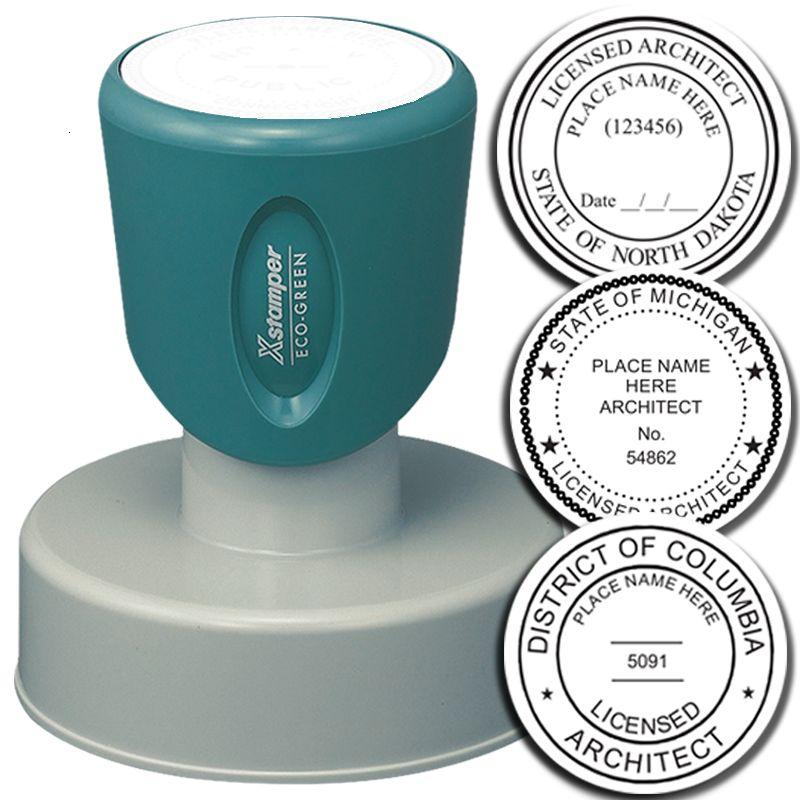

Is a seal required in New York?
The duty is statutory and the design is regulatory. Education Law section 7307(1) provides that “Every architect shall have a seal, approved by the board, which shall contain the name of the architect and either the words ‘Registered Architect’ and such other words or figures as the board may deem necessary,” and then fixes the trigger: “All working drawings and specifications, prepared by such architect or by a full-time or part-time subordinate employed under his supervision, shall be stamped with such seal and shall also be signed on the original with the personal signature of such architect when filed with public officials.” The same section closes the loop at the receiving end: no state, county, city, town or village official charged with enforcing building laws may accept or approve plans or specifications that are not stamped with the seal of a New York registered architect or professional engineer bearing the authorized facsimile of that person’s signature, subject to a limited permit route for a qualified out of state architect. The design is 8 NYCRR section 69.5.
What must appear on the seal
- Registered Architect at the top of the outer band
- State of New York at the bottom of the outer band
- Your name as licensed, above the Great Seal of New York
- The Great Seal of New York in the inner circle
- Your license number below the Great Seal
Nothing is optional inside the inner circle. Section 69.5 places the license number below the Great Seal “with no other letters or numbers,” which excludes an RA prefix, a registration expiration date, a firm name, a design professional service corporation number and any discipline line. The band order is the point most buyers get wrong: the profession goes at the top and State of New York at the bottom, which is the reverse of the engineer, land surveyor and geologist seal under section 68.13. The rule binds applicants who first applied for licensure on or after the effective date of Part 69, 1 January 1987; a device issued under the earlier design is not retrofitted.
Size and shape
Circular, approximately 1 3/4 inches in diameter. Section 69.5 says approximately, so there is genuine tolerance, but the Great Seal of New York has to stay legible at the center, which sets a practical floor. The Office of the Professions repeats the figure in its seals notice for new licensees.




Embosser, rubber stamp or digital
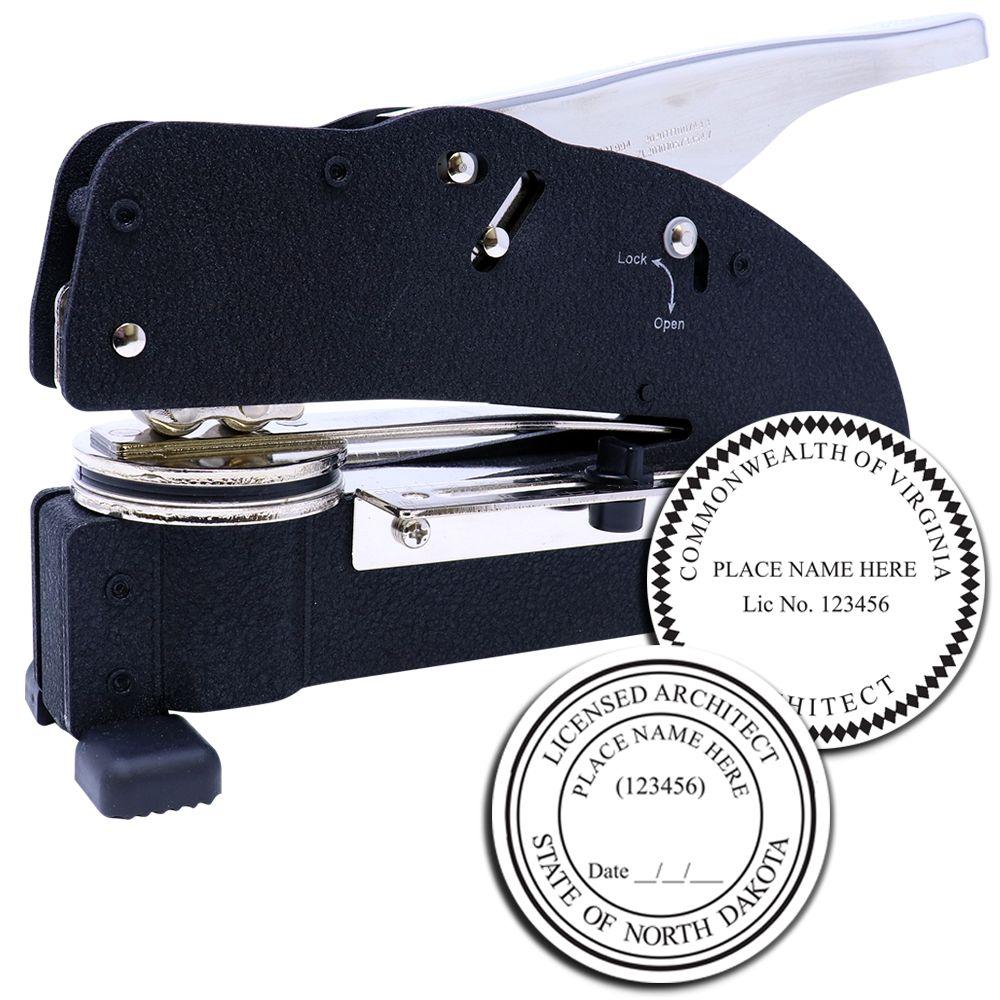
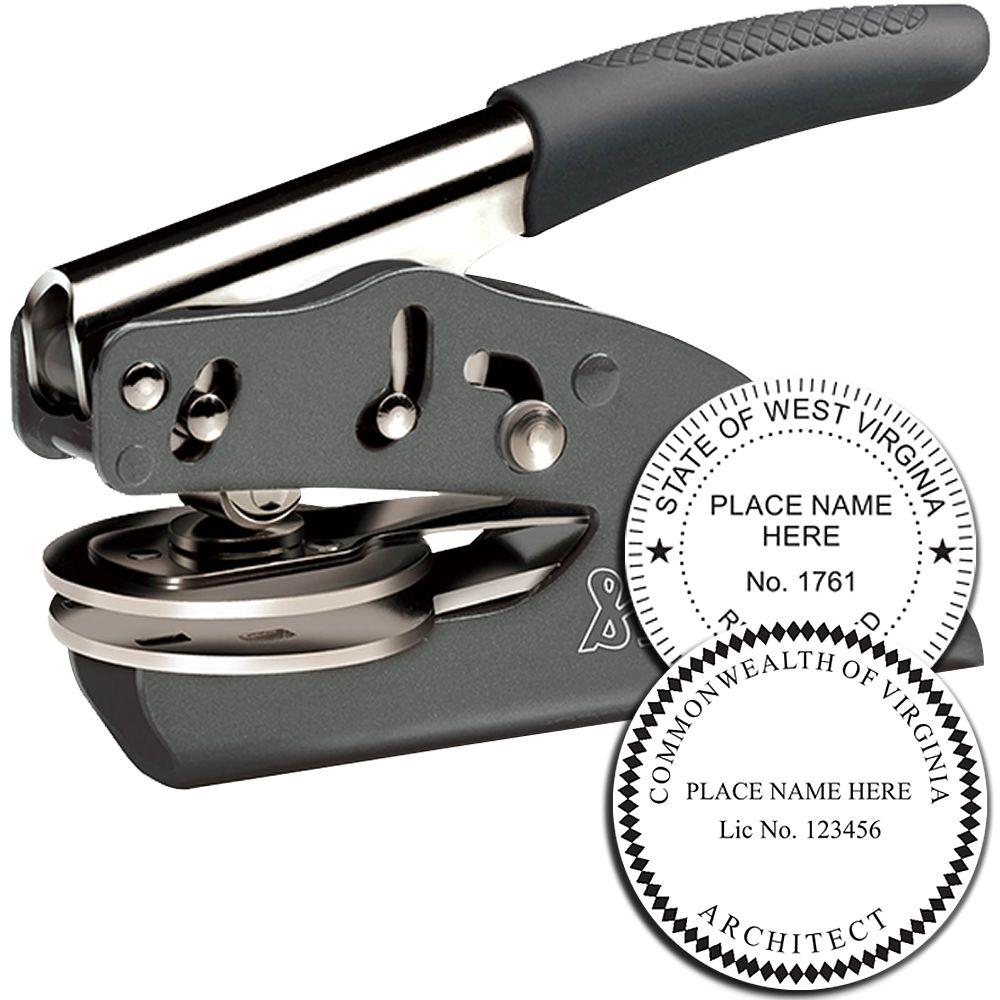
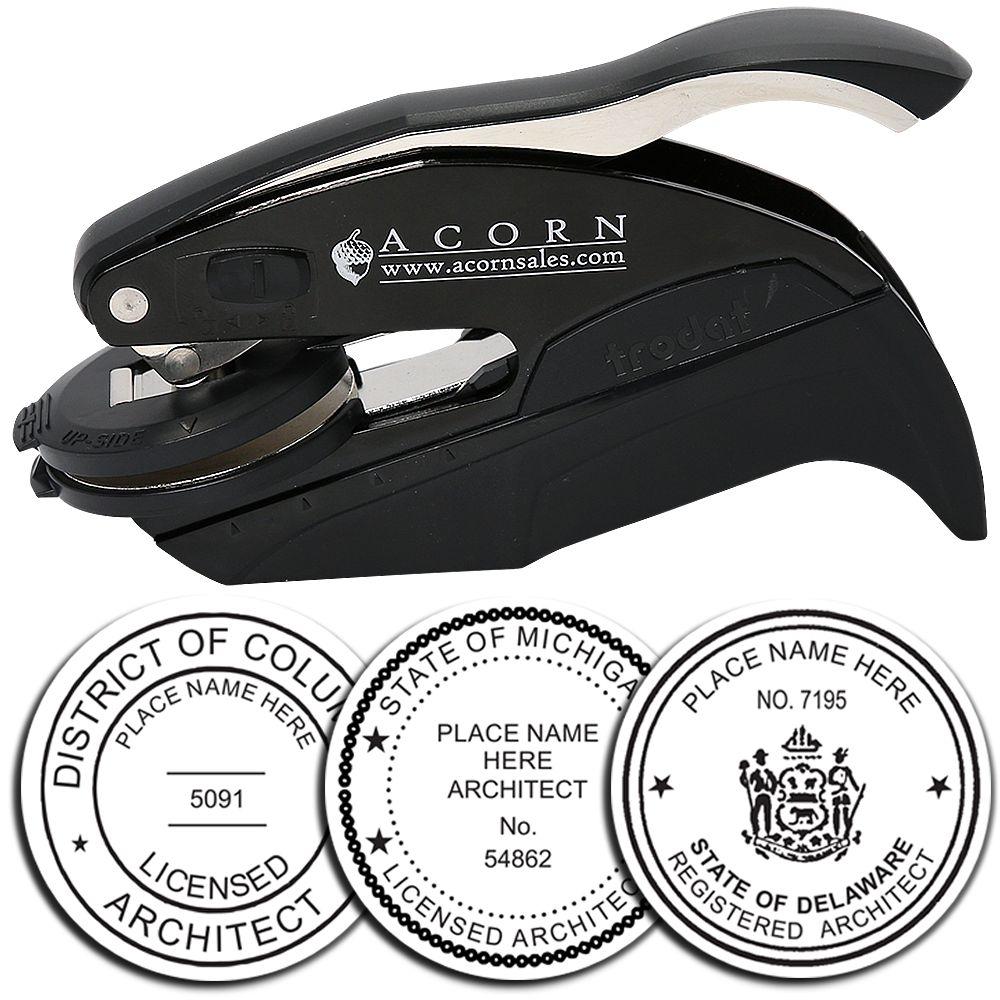
An embossing seal, a rubber stamp or an electronic version. NYSED does not manufacture, sell or pre-approve seals and directs licensees to their own engraver with the published specification in hand. The safe buy is an inked rubber stamp, because Education Law section 7307(1) requires the seal on drawings and specifications filed with public officials and a building department works from prints, where an unfilled embossed impression disappears.
Signing and dating
Seal plus a personal signature on the original, and there is no dating rule. Section 7307(1) requires working drawings and specifications to be stamped with the seal “and shall also be signed on the original with the personal signature of such architect when filed with public officials.” That is an original signature on the original document rather than a printed facsimile, although the acceptance paragraph in the same section speaks of plans bearing “the authorized facsimile of the signature” on the copies an enforcement official receives. Neither section 7307 nor section 69.5 prescribes a date beside the seal; the only dating duty in Part 69 attaches to alterations. A date block is normal New York practice and not a rule requirement.
New York inverts the bands for architects, and the round seal is only half the order
Every New York design seal centers the Great Seal of New York, with the licensee’s name above it and the license number below it “with no other letters or numbers.” What changes between professions is the outer band. Section 68.13 puts STATE OF NEW YORK at the top and the professional legend at the bottom for engineers, land surveyors and professional geologists. Section 69.5 does the opposite for architects: Registered Architect at the top and State of New York at the bottom. Section 79-1.4 follows the architect pattern for landscape architects. A supplier who reuses an engineer layout will hand an architect a seal with the bands reversed.
Which documents must be sealed
Working drawings and specifications prepared by the architect or by a full time or part time subordinate under the architect’s supervision, when filed with public officials. Two further duties ride with the seal, and both are in section 69.5 itself. First, to all plans, specifications and reports bearing an architect’s seal “there shall also be applied a stamp with appropriate wording warning that it is a violation of the law for any person, unless acting under the direction of a licensed architect, to alter an item in any way.” That is a second inked device that most buyers do not know they need. Second, where an item bearing an architect’s seal is altered, the altering architect must affix the seal and the notation “altered by” followed by the signature, the date of the alteration and a specific description of the alteration. Section 7307(5) excludes farm buildings and residences of fifteen hundred gross square feet or less, not counting garages, carports, porches, cellars and uninhabitable basements or attics, and alterations costing ten thousand dollars or less inside New York City or twenty thousand dollars or less outside it that do not affect structural or public safety.


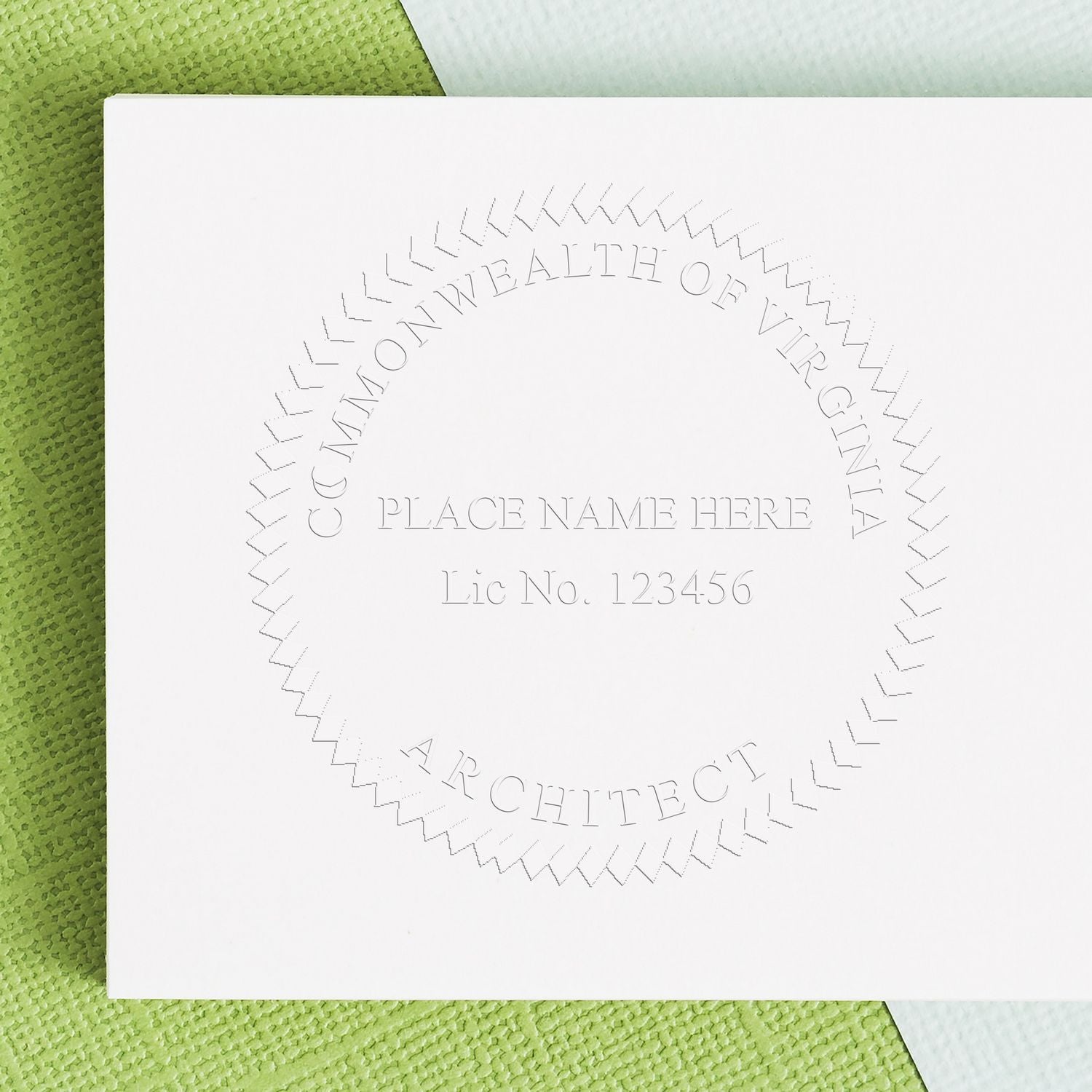


Electronic and digital seals
New York names no cryptographic standard for any of its design professions. The Office of the Professions grounds electronic seals and signatures in the New York State Electronic Signatures and Records Act, under which an electronic signature has the same validity and effect as a signature affixed by hand, and is explicit that no particular protocol is mandated and that use by state and local entities is voluntary. The practical consequence for an architect is that a municipality is not obliged to accept an electronically sealed filing, so the licensee and the receiving building department have to agree on a method in advance. Part 69 itself is silent on electronic sealing.
Renewal, lapse and retirement
The New York license itself does not expire; registration does, on a three year cycle. Because section 69.5 puts only the license number on the seal and no expiration date, the device does not change at renewal and an architect never needs a fresh stamp for registration reasons. The license number does not change. Whether a seal must be destroyed or surrendered on lapse, retirement or revocation is not addressed: neither Education Law section 7307 nor 8 NYCRR Part 69 says anything about surrendering the device, and the Office of the Professions seals notice is silent on it.
Firm requirements
No firm seal and no firm number on the drawing. Education Law section 7307(2) allows engineers, land surveyors, geologists, architects and landscape architects to join in a joint enterprise, a partnership, a professional service corporation or a design professional service corporation, or any combination of those professions, and to use the title of any profession that will be practiced in the corporate name, with each member’s profession indicated after the name. Section 7307(3) lets a firm name be continued by employees with at least fifteen years of continuous service where the retired members and legal representatives of deceased members consent. Section 7307(4) preserves a narrow grandfathered corporate practice for certain corporations lawfully practicing on or before 12 April 1929, requiring the chief executive officer in New York to be a licensed architect and the drawings, plans and specifications to bear the stamp of that architect’s official seal and the personal signature on the original. None of these put an entity identifier inside the seal, which section 69.5 closes to the name and number.
What to check before you order
Engrave the Great Seal of New York at the center, your name exactly as licensed above it, and your license number below it with nothing else beside it. The outer band reads Registered Architect at the top and State of New York at the bottom, which is the reverse of the New York engineer and surveyor seal. Circular, approximately 1 3/4 inches. Order the Education Law alteration warning stamp as a companion device, because section 69.5 requires it on every sealed plan, specification and report and it is not part of the round seal. Do not add an RA prefix, a registration expiration date or a firm name. NYSED neither sells nor pre-approves seals and asks the engraver for no proof of licensure.
Browse architect stamps and seals.
- Top Architect Seal Stamps That Will Impress Your Clients
- Affordable Options for Your New York Architect Stamp Cost
Frequently asked questions
Is an architect seal required in New York?
Yes. Education Law section 7307(1) provides that “Every architect shall have a seal, approved by the board, which shall contain the name of the architect and either the words ‘Registered Architect’ and such other words or figures as the board may deem necessary,” and requires all working drawings and specifications prepared by the architect or by a full-time or part-time subordinate under supervision to be stamped with the seal and signed on the original with the architect’s personal signature when filed with public officials. The same section bars any state, county, city, town or village building official from accepting or approving plans or specifications not stamped with the seal of a New York registered architect or professional engineer bearing the authorized facsimile of that person’s signature, subject to a limited permit route for a qualified out of state architect.
What has to appear on a New York architect seal?
Five elements under 8 NYCRR section 69.5: Registered Architect at the top of the outer band, State of New York at the bottom of it, your name as licensed above the Great Seal of New York, the Great Seal in the inner circle, and your license number below it. The number appears “with no other letters or numbers,” which excludes an RA prefix, a registration expiration date, a firm name, a design professional service corporation number and any discipline line.
What size is a New York architect seal?
Circular, approximately 1 3/4 inches in diameter, under section 69.5, and the Office of the Professions repeats the figure in its seals notice for new licensees. The word approximately gives real tolerance; the legibility of the Great Seal at the center is the practical constraint.
Can I use an embosser in New York?
An embossing seal, a rubber stamp or an electronic version are all in use, and NYSED does not manufacture, sell or pre-approve seals: it directs licensees to their own engraver with the published specification in hand. An inked rubber stamp is the practical buy, because section 7307(1) requires the seal on drawings and specifications filed with public officials and a building department works from prints, where an unfilled embossed impression disappears.
What is the New York alteration warning stamp?
A second device required by section 69.5. To all plans, specifications and reports bearing an architect’s seal there must also be applied a stamp warning that it is a violation of the law for any person, unless acting under the direction of a licensed architect, to alter an item in any way. New York engineers have the same duty from a different source, Education Law section 7209(2). Order it alongside the round seal.
What do I do if I alter another architect’s sealed work in New York?
Section 69.5 sets the marking. Where an item bearing an architect’s seal is altered, the altering architect must affix the seal and the notation “altered by” followed by the signature, the date of the alteration and a specific description of the alteration.
Does New York require a date beside the seal?
No. Neither section 7307 nor section 69.5 prescribes a date beside the seal; the only dating duty in Part 69 attaches to alterations. A date block is normal New York practice rather than a rule requirement. What section 7307(1) does require is a personal signature on the original, rather than a printed facsimile, although the acceptance paragraph in the same section speaks of plans bearing “the authorized facsimile of the signature” on the copies an enforcement official receives.
Which New York projects are exempt?
Section 7307(5) excludes farm buildings and residences of fifteen hundred gross square feet or less, not counting garages, carports, porches, cellars and uninhabitable basements or attics, and alterations costing ten thousand dollars or less inside New York City or twenty thousand dollars or less outside it that do not affect structural or public safety.
Can I seal electronically in New York?
New York names no cryptographic standard for any of its design professions. The Office of the Professions grounds electronic seals and signatures in the New York State Electronic Signatures and Records Act, under which an electronic signature has the same validity and effect as a signature affixed by hand, and is explicit that no particular protocol is mandated and that use by state and local entities is voluntary. The practical consequence is that a municipality is not obliged to accept an electronically sealed filing, so you and the receiving building department have to agree on a method in advance. Part 69 itself is silent on electronic sealing.
Does my New York seal change at renewal?
No. The New York license itself does not expire; registration does, on a three year cycle. Because section 69.5 puts only the license number on the seal and no expiration date, the device does not change at renewal and the number does not change. Whether a seal must be destroyed or surrendered on lapse, retirement or revocation is not addressed: neither section 7307 nor 8 NYCRR Part 69 says anything about surrendering the device, and the Office of the Professions seals notice is silent too.
Does a New York architecture firm get its own seal?
No, and no firm number goes on the drawing. Education Law section 7307(2) allows engineers, land surveyors, geologists, architects and landscape architects to join in a joint enterprise, a partnership, a professional service corporation or a design professional service corporation, or any combination of those professions, and to use the title of any profession that will be practiced in the corporate name with each member’s profession indicated after the name. Section 7307(3) lets a firm name be continued by employees with at least fifteen years of continuous service where the retired members and legal representatives of deceased members consent. Section 7307(4) preserves a narrow grandfathered corporate practice for certain corporations lawfully practicing on or before 12 April 1929, requiring the chief executive officer in New York to be a licensed architect and the drawings, plans and specifications to bear the stamp of that architect’s official seal and the personal signature on the original. None of that puts an entity identifier inside the seal, which section 69.5 closes to the name and number.
Does the 1987 rule apply to an older New York seal?
Section 69.5 binds applicants who first applied for licensure on or after the effective date of Part 69, 1 January 1987. A device issued under the earlier design is not retrofitted.








