

Written by Acorn Sales Company, manufacturing stamps and seals since 1964 · Reviewed by Holly R, VP of Sales and Marketing at Acorn Sales, against the Oregon State Board of Architect Examiners and Or. Admin. R. 806-010-0045(1), (3), (7) on 21 September 2026 · Updated 21 September 2026
Your city goes on the stamp and your registration number does not have to. OAR 806-010-0045(1) requires the stamp to bear “the name of the registered architect only, together with the city and state in which the architect’s principal office is located,” and then adds that “The stamp may include the architect’s registration number issued by the Board.” Mandatory city, optional number. That is the reverse of nearly every other jurisdiction, so an architect who orders a conventional round seal with a name and a number and no city has bought a device that misses a required element.
Oregon sets no diameter for an architect stamp. The Oregon engineering and surveying board demands at least 2 inches and forbids reducing or enlarging the image; the architect board demands nothing, and OAR 806-010-0045 closes with an editor’s note that images of stamps referenced are available from the agency. Anyone who assumes Oregon’s 2 inch rule reaches architects is reading the wrong chapter.
Leave the center open, because OAR 806-010-0045(6)(b)(C) requires your signature to be “Placed across the stamp of the registrant.” And note that the stamping duty survives the exemptions: subsection (7) requires the stamp on every permit or construction sheet “whether or not the project is exempt under ORS 671.030.”
Oregon architect seal requirements at a glance
| Requirement | Oregon rule | Source |
|---|---|---|
| Seal required | Yes | Or. Admin. R. 806-010-0045(1), (3), (7) |
| Required elements | Your name as the registered architect, and only your name; The city where your principal office is located; The state where your principal office is located; Optionally, your registration number issued by the board; Your signature, placed across the stamp | Or. Admin. R. 806-010-0045(1), (6)(b)(C) |
| Size and shape | Not addressed. OAR 806-010-0045 prescribes no diameter, no minimum and no maximum, and no resizing prohibition. Checked the full text of 806-010-0045, the whole of OAR chapter 806 division 10 and the rules of. | Or. Admin. R. 806-010-0045 (silent as to size) |
| Device allowed | OAR 806-010-0045(2): “The stamp may be a crimp or rubber style hand stamp or a computer-generated (digital) stamp.” All three are legal. | Or. Admin. R. 806-010-0045(2) |
| Signature and date | The signature must cross the stamp. | Or. Admin. R. 806-010-0045(6) |
| What must be sealed | Technical submissions required by public authorities for building permits or regulatory approvals, or intended for construction purposes, including all addenda and other changes. | Or. Admin. R. 806-010-0045(3), (4), (5), (7) |
| Electronic seal | Oregon architects get a criteria-based electronic route rather than a named technology. | Or. Admin. R. 806-010-0045(2), (6) |
| Renewal and lapse | Under OAR 806-010-0060, an individual architect’s certificate of registration becomes inactive on the 61st day following the renewal deadline unless renewed, and an inactive certificate bars both practicing architecture in Oregon and using the architect title in Oregon. | Or. Admin. R. 806-010-0060 |
| Firm requirements | Architectural firms must be registered, and that is a real divergence within Oregon. | Or. Admin. R. 806-010-0080 |
| Regulator | The Oregon State Board of Architect Examiners | Or. Admin. R. 806-010-0045 (stamps and signatures, as amended by BAE 3-2023, effective 2 January 2024), with 806-010-0060, 806-010-0080, 806-010-0090 and 806-010-0115, read from the Oregon Secretary of State Administrative Rules database, and Or. Rev. Stat. §§ 671.010 to 671.220. Oregon architects are governed by OAR chapter 806 and the Board of Architect Examiners, entirely separately from the engineering and surveying rules in OAR chapter 820. |
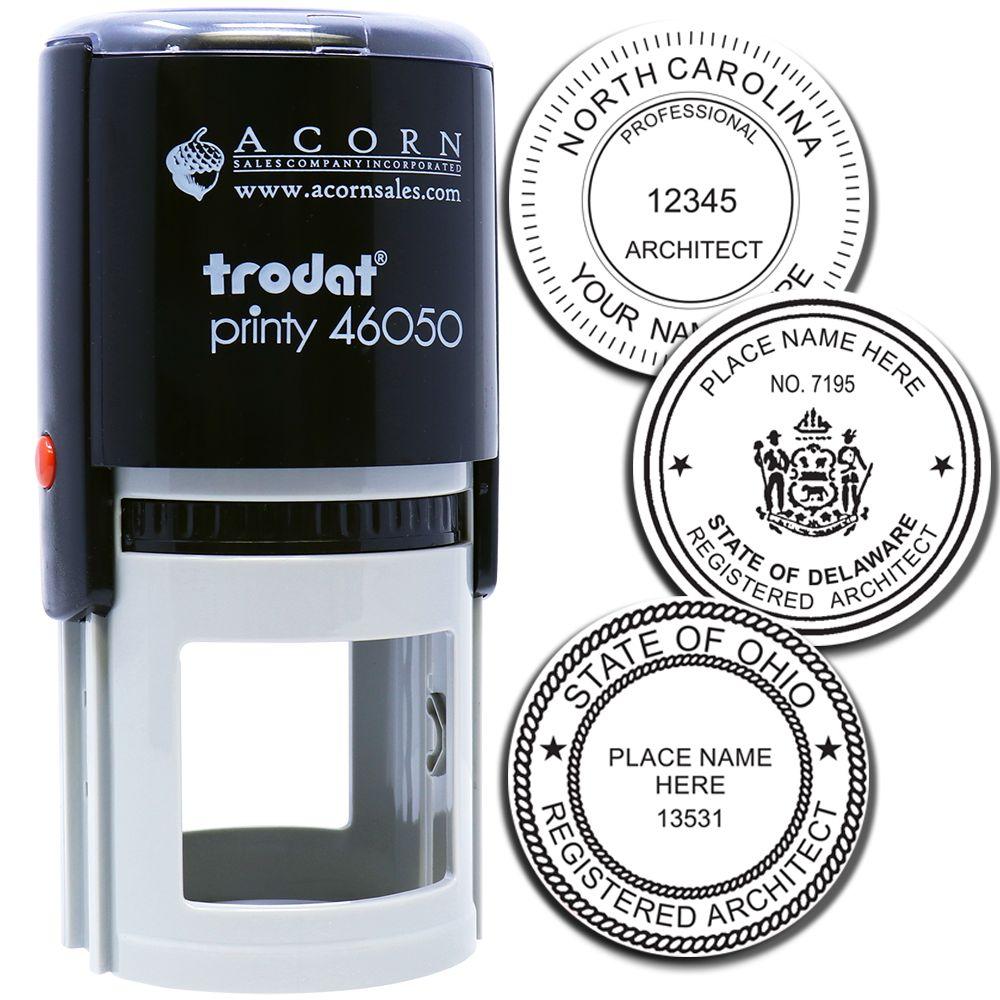

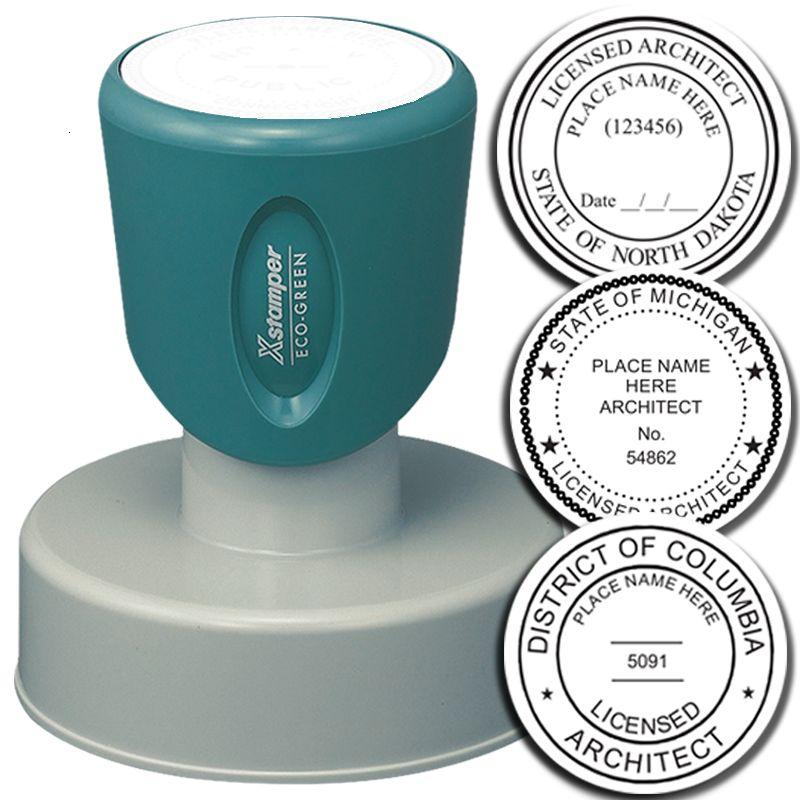





Is a seal required in Oregon?
Oregon architects answer to their own board and their own chapter, not to the engineering and surveying board. OAR 806-010-0045(1) provides that “Every registered architect shall have a stamp (seal),” and subsection (3) requires that “All technical submissions which are required by public authorities for building permits or regulatory approvals, or are intended for construction purposes, including all addenda and other changes to such submissions, shall be stamped and signed by the architect.” Subsection (7) extends the duty to every sheet and to the title page of specifications, “whether or not the project is exempt under ORS 671.030.”
What must appear on the seal
- Your name as the registered architect, and only your name
- The city where your principal office is located
- The state where your principal office is located
- Optionally, your registration number issued by the board
- Your signature, placed across the stamp
Oregon reverses the usual pattern. OAR 806-010-0045(1) requires the stamp to bear “the name of the registered architect only, together with the city and state in which the architect’s principal office is located,” and then adds that “The stamp may include the architect’s registration number issued by the Board.” The city and state are mandatory and the registration number is optional, which is the opposite of nearly every other jurisdiction and the opposite of the rule the Oregon engineering board applies to its own registrants. A stamp carrying a number and no city does not satisfy this rule. Moving your principal office to another city changes a required element.
Size and shape
Not addressed. OAR 806-010-0045 prescribes no diameter, no minimum and no maximum, and no resizing prohibition. Checked the full text of 806-010-0045, the whole of OAR chapter 806 division 10 and the rules of professional conduct in division 20. The rule ends with an editor’s note that images of stamps referenced are available from the agency, so the board holds artwork rather than a dimension. This is a sharp divergence from Oregon’s engineering and surveying board, which fixes a 2 inch minimum and forbids reduction.








Embosser, rubber stamp or digital
OAR 806-010-0045(2): “The stamp may be a crimp or rubber style hand stamp or a computer-generated (digital) stamp.” All three are legal. The rubber style hand stamp is the safe buy, because subsection (7) requires the stamp on every sheet intended for permit or construction and expressly contemplates that “The originals may be reproduced for permit and construction purposes,” which an unpigmented crimp impression does not survive.
Signing and dating
The signature must cross the stamp. OAR 806-010-0045(6)(b) requires signatures to be permanently affixed to the document, applied by the identified registrant, “Placed across the stamp of the registrant,” unique to the registrant, capable of independent verification and under the registrant’s exclusive control. A signature may be an original written by hand, a scanned image of an original handwritten identification, or a digital identification that is an electronic authentication process attached to or logically associated with the document. A date is not addressed. OAR 806-010-0045 requires a stamp and a signature and never mentions dating the stamp, which is unusual; checked the full section and the rest of division 10. OAR 806-010-0115 does require modifications, change orders and addenda to be identified and to bear the stamp and signature of the architect responsible.
Your city goes on the stamp and your registration number does not have to
Oregon architects get a stamp specification that reads backwards compared with every other credential in the state. OAR 806-010-0045(1) requires the stamp to bear “the name of the registered architect only, together with the city and state in which the architect’s principal office is located,” and then says the registration number may be included. Mandatory city, optional number. An architect who orders a conventional round seal with a name and a number and no city has bought a device that misses a required element, and one who moves the practice to a new city has invalidated a correct one.
The second surprise is what is missing. OAR 806-010-0045 sets no diameter at all. The Oregon engineering and surveying board demands at least 2 inches point to point and forbids reducing or enlarging the image; the architect board demands nothing, and the rule closes with an editor’s note that images of stamps are available from the agency. Anyone who assumes Oregon’s famous 2 inch rule applies to architects is reading the wrong chapter.
Third, the signature must be “Placed across the stamp of the registrant” under subsection (6)(b)(C), so the artwork needs an open center. And the stamping duty survives the exemptions: subsection (7) requires the stamp on every permit or construction sheet “whether or not the project is exempt under ORS 671.030.”
One more that catches firm employees. If the sheets carry a registered architectural firm’s name, the architect who stamps them must hold written legal authority to accept responsibility on the firm’s behalf.
Which documents must be sealed
Technical submissions required by public authorities for building permits or regulatory approvals, or intended for construction purposes, including all addenda and other changes. Placement is broad: the stamp with the registrant’s manual or digital signature “must appear on all technical submissions including the title page of specifications and on every sheet of the drawings intended for permit or construction.” You may stamp submissions you prepared, that were prepared under your responsible control, or that were prepared by another architect registered in the same jurisdiction whose work you have confirmed and either coordinated or integrated into your own. OAR 806-010-0045(5) requires documentation of technical submissions to be kept for at least ten years and made available to the board on request.








Electronic and digital seals
Oregon architects get a criteria-based electronic route rather than a named technology. OAR 806-010-0045(2) recognizes a computer-generated digital stamp, and (6)(a) recognizes a signature that is a digital identification constituting “an electronic authentication process attached to or logically associated with an electronic document.” The tests in (6)(b) then apply: permanently affixed, applied by the registrant, placed across the stamp, unique, independently verifiable and under exclusive control. No certificate authority is named, which distinguishes the architect rule from the Oregon engineering and surveying rule, where OAR 820-025-0010 requires a third party Certificate Authority and bans scanned facsimiles outright.
Renewal, lapse and retirement
Under OAR 806-010-0060, an individual architect’s certificate of registration becomes inactive on the 61st day following the renewal deadline unless renewed, and an inactive certificate bars both practicing architecture in Oregon and using the architect title in Oregon. Inactive for five years or less allows reinstatement on application, proof of continuing education and fees; longer than five years requires reapplication for registration. The rule contains no duty to surrender or destroy the stamp. Because the registration number is optional on the stamp and the mandatory elements are your name and your principal office city and state, an office move is a more likely reason to reorder than a renewal ever is.
Firm requirements
Architectural firms must be registered, and that is a real divergence within Oregon. OAR 806-010-0080(1): “Prior to practicing architecture or providing architectural services in Oregon, a firm must apply for and obtain a certificate of registration from the Board.” Registration requires a firm application, fees and a certificate of existence from the Oregon Secretary of State, and confirmation of the Oregon registered architects with responsible control. The firm holds no stamp of its own. OAR 806-010-0045(7) adds a condition that catches employees: if the specifications and drawings bear the name of an Oregon registered architectural firm, the registrant stamping them “must also possess written legal authority to accept responsibility for the specifications and drawings on behalf of the firm.” By contrast, Oregon issues no firm permit at all for engineering and land surveying.
What to check before you order
Tell the supplier three things they will not expect. Your name goes on the stamp and no one else’s. The city and state of your principal office are required elements, not decoration. Your registration number is optional, so decide whether you want it and say so. Oregon sets no size for an architect stamp, so choose a diameter that leaves an open center, because OAR 806-010-0045(6)(b)(C) requires your signature to be placed across the stamp. Ask the board for the stamp image it publishes, since the rule refers to images held by the agency rather than describing the layout. A rubber style hand stamp is the practical buy, with a matching digital file if you issue electronic submissions. Reorder when you move your principal office to another city.
Browse architect stamps and seals.
- The Best Architect Stamp for Oregon Professionals Revealed
- The Quick and Easy Oregon Architect Seal Stamping Process
Frequently asked questions
Is an architect stamp required in Oregon?
Yes. OAR 806-010-0045(1) provides that “Every registered architect shall have a stamp (seal),” and subsection (3) requires that “All technical submissions which are required by public authorities for building permits or regulatory approvals, or are intended for construction purposes, including all addenda and other changes to such submissions, shall be stamped and signed by the architect.” Oregon architects answer to their own board and their own chapter, not to the engineering and surveying board.
What has to appear on an Oregon architect stamp?
Your name as the registered architect, and only your name, together with the city and the state in which your principal office is located. Your registration number issued by the Board may be included and is not required. Your signature then goes across the stamp under subsection (6)(b)(C).
What size is an Oregon architect stamp?
No size is prescribed. OAR 806-010-0045 states no diameter, no minimum and no maximum, and no resizing prohibition, across the full section, the whole of OAR chapter 806 division 10 and the rules of professional conduct in division 20. The rule ends with an editor’s note that images of stamps referenced are available from the agency, so the board holds artwork rather than a dimension.
Can I use a crimp seal in Oregon?
Yes. OAR 806-010-0045(2): “The stamp may be a crimp or rubber style hand stamp or a computer-generated (digital) stamp.” All three are legal. The rubber style hand stamp is the practical buy, because subsection (7) requires the stamp on every sheet intended for permit or construction and expressly contemplates that “The originals may be reproduced for permit and construction purposes,” which an unpigmented crimp impression does not survive.
Does Oregon require a date with the stamp?
Dating is not addressed. OAR 806-010-0045 requires a stamp and a signature and never mentions dating the stamp, across the full section and the rest of division 10, which is unusual. OAR 806-010-0115 does require modifications, change orders and addenda to be identified and to bear the stamp and signature of the architect responsible.
What counts as a signature in Oregon?
Three forms under OAR 806-010-0045(6)(a): an original written by hand, a scanned image of an original handwritten identification, or a digital identification that is an electronic authentication process attached to or logically associated with the document. Subsection (6)(b) then applies five tests: permanently affixed to the document, applied by the identified registrant, placed across the stamp of the registrant, unique to the registrant, capable of independent verification and under the registrant’s exclusive control.
Where does the Oregon stamp go on a set?
Broadly. The stamp with the registrant’s manual or digital signature “must appear on all technical submissions including the title page of specifications and on every sheet of the drawings intended for permit or construction,” whether or not the project is exempt under ORS 671.030.
Whose work can an Oregon architect stamp?
Submissions you prepared, submissions prepared under your responsible control, or submissions prepared by another architect registered in the same jurisdiction whose work you have confirmed and either coordinated or integrated into your own. OAR 806-010-0045(5) requires documentation of technical submissions to be kept for at least ten years and made available to the board on request.
Can I use a digital stamp in Oregon?
Yes, on a criteria basis rather than a named technology. OAR 806-010-0045(2) recognizes a computer-generated digital stamp, and (6)(a) recognizes a signature that is a digital identification constituting “an electronic authentication process attached to or logically associated with an electronic document.” The tests in (6)(b) then apply. No certificate authority is named, which distinguishes the architect rule from the Oregon engineering and surveying rule at OAR 820-025-0010, which requires a third party Certificate Authority and bans scanned facsimiles outright.
Do I need a new Oregon stamp if I move or let registration lapse?
An office move is the likelier reason. Because the registration number is optional and the mandatory elements are your name and your principal office city and state, relocating your principal office changes a required element. On lapse, OAR 806-010-0060 makes an individual certificate inactive on the 61st day following the renewal deadline unless renewed, and an inactive certificate bars both practicing architecture in Oregon and using the architect title in Oregon. Inactive for five years or less allows reinstatement on application, proof of continuing education and fees; longer than five years requires reapplication. The rule contains no duty to surrender or destroy the stamp.
Does an Oregon architecture firm need registration?
Yes, and that is a real divergence within Oregon. OAR 806-010-0080(1): “Prior to practicing architecture or providing architectural services in Oregon, a firm must apply for and obtain a certificate of registration from the Board.” Registration requires a firm application, fees and a certificate of existence from the Oregon Secretary of State, and confirmation of the Oregon registered architects with responsible control. The firm holds no stamp of its own. OAR 806-010-0045(7) adds a condition that catches employees: if the specifications and drawings bear the name of an Oregon registered architectural firm, the registrant stamping them “must also possess written legal authority to accept responsibility for the specifications and drawings on behalf of the firm.” Oregon issues no firm permit at all for engineering and land surveying.








