

Written by Acorn Sales Company, manufacturing stamps and seals since 1964 · Reviewed by Holly R, VP of Sales and Marketing at Acorn Sales, against the Michigan Board of Professional Engineers, administered by the Department of Licensing and Regulatory Affairs and Mich. Admin. Code R 339.16032 on 21 September 2026 · Updated 21 September 2026
Mich. Admin. Code R 339.16032(1) requires a Michigan PE seal to carry the licensee’s full license number, which in Michigan is ten digits, exactly as shown on the state-issued license, along with the name as shown on that license and the legends State of Michigan and Licensed Professional Engineer. Michigan engineers routinely quote a shortened form of the number in conversation and on correspondence, and a seal cut from the short form fails the rule on its face.
There is no diameter to hit. The rule sets the standard by picture instead, requiring a design “substantially equivalent to figure 32,” an image printed in the rule itself. No minimum or maximum appears anywhere in R 339.16001 through R 339.16044 or in the Department’s Professional Engineer Licensing Guide and FAQs. Compliance turns on the artwork, not the dimension, so a Michigan die should be worked up from figure 32 rather than from a house pattern.
Michigan also split its seal law, which is why several answers below are honest gaps rather than rules. The administrative rules describe the seal; the Occupational Code at MCL 339.2007 and MCL 339.2008 governs how it is used, whether electronic seals are acceptable and how signatures work. The text of those two statute sections could not be retrieved from a primary source at the time of writing, so they are cited here and not quoted. Acorn cuts this seal to 1-3/4 inches. That is our production record rather than a Michigan rule; the rule asks for a design substantially equivalent to figure 32 and prints no diameter.
Michigan PE seal requirements at a glance
| Requirement | Michigan rule | Source |
|---|---|---|
| Seal required | Yes | Mich. Admin. Code R 339.16032 |
| Required elements | Your name as shown on your state issued professional engineer license; Your full license number, which in Michigan is ten digits; State of Michigan in the legend surrounding the seal; Licensed Professional Engineer in the legend surrounding the seal; A design substantially equivalent to figure 32 in the rule | Mich. Admin. Code R 339.16032(1) |
| Size and shape | Acorn cuts this seal to 1-3/4 inches, and that is a production record rather than a published rule. | Acorn Sales production record, Michigan professional engineer seal |
| Device allowed | Not verified. | Mich. Admin. Code R 339.16001 to R 339.16044 (silent) |
| Signature and date | Not verified. | Mich. Comp. Laws §§ 339.2007, 339.2008 (text not retrieved) |
| What must be sealed | Not verified. | Mich. Comp. Laws §§ 339.2007, 339.2008 (text not retrieved) |
| Electronic seal | Not verified. | Mich. Comp. Laws § 339.2008 (text not retrieved) |
| Renewal and lapse | The rule ties the seal to the license in one sentence: the seal “must be used by the licensee whose name appears on the seal for as long as the license is in effect,” and “A licensee is responsible for the security of the licensee’s seal.” Renewal is biennial and continuing education must be completed during the two year period immediately preceding the expiration date under R 339.16040. There is a sixty day grace period after expiration in which the license may be renewed without relicensure, with a twenty dollar late fee. | Mich. Admin. Code R 339.16025, R 339.16032(2), R 339.16040 |
| Firm number on documents | Michigan requires firm approval but issues no firm license and puts no firm number on the document. | Mich. Comp. Laws § 339.2010 |
| Licensing board | The Michigan Board of Professional Engineers, administered by the Department of Licensing and Regulatory Affairs | Mich. Admin. Code R 339.16001 to R 339.16044, Professional Engineers General Rules, as published by the Michigan Office of Administrative Hearings |
Rules for other states are on PE stamp requirements by state.




Is a seal required in Michigan?
Michigan requires a seal Michigan puts the seal specification in the administrative rules and the seal use rules in the statute. Administrative rule R 339.16032(1) requires the seal and specifies its content, and R 339.16032(2) governs who may use it: “A licensee’s seal must be used by the licensee whose name appears on the seal for as long as the license is in effect. A licensee is responsible for the security of the licensee’s seal.” The Department’s own Professional Engineer Licensing Guide and FAQs states that “Additional requirements pertaining to use of the seal, acceptability of electronic seals, and use of signatures can be found under Article 20 of the Michigan Occupational Code under MCL 339.2007 and MCL 339.2008.” The text of those two statute sections could not be retrieved from a primary source during this research pass, so the document level sealing duty is identified here by citation only and not quoted.
What must appear on the seal
- Your name as shown on your state issued professional engineer license
- Your full license number, which in Michigan is ten digits
- State of Michigan in the legend surrounding the seal
- Licensed Professional Engineer in the legend surrounding the seal
- A design substantially equivalent to figure 32 in the rule
The rule text is short and leaves little room: “The seal of a professional engineer must include the licensee’s name and full license number, as shown on the licensee’s state-issued professional engineer license and indicate ‘State of Michigan’ and ‘Licensed Professional Engineer’ in the legend surrounding the seal. The seal must have a design substantially equivalent to figure 32 below.” Two details catch template stamps. First, full license number means the complete ten digit number that Michigan issues, not the trailing digits people quote conversationally. Second, name as shown on the license leaves no room for a nickname or a form of the name the Department does not hold. The rule does not prohibit any additional element in words, but because compliance is measured against figure 32, added content is a risk rather than a feature. Not addressed in the rules: whether a discipline or branch may appear.
Size and shape
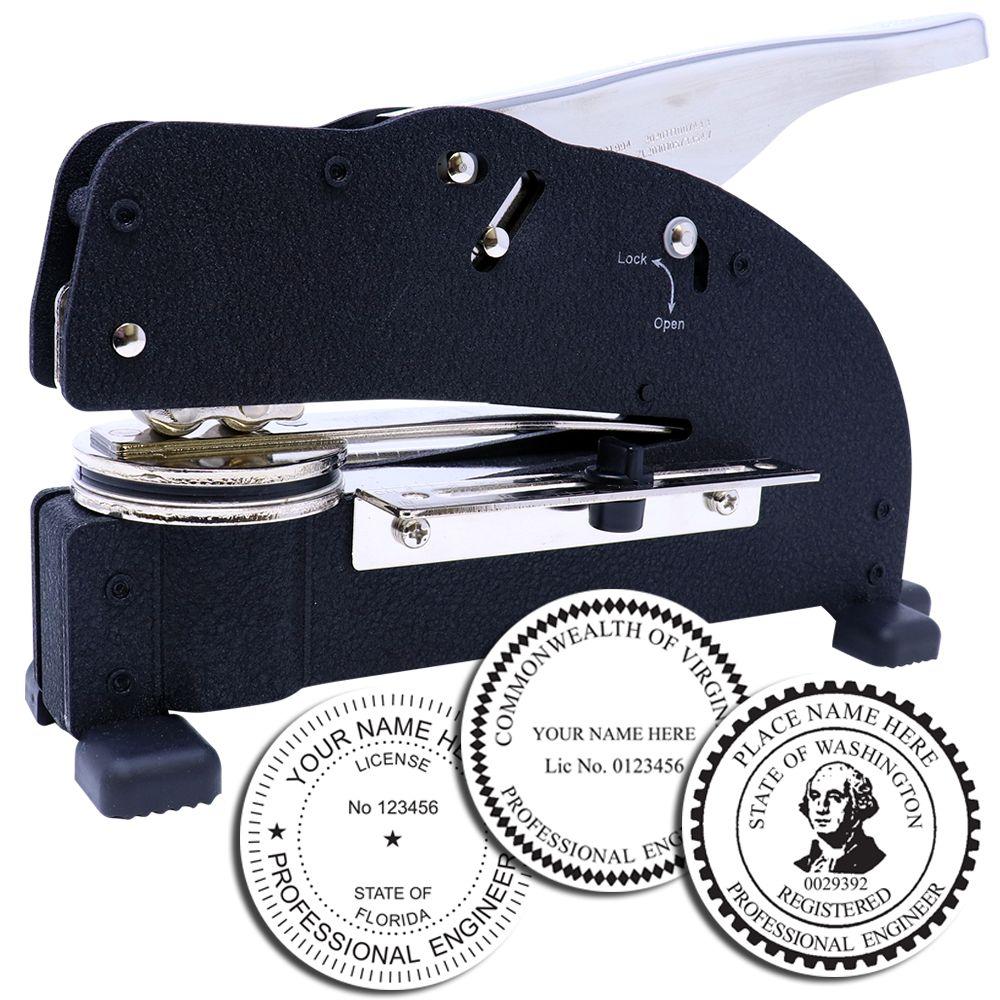
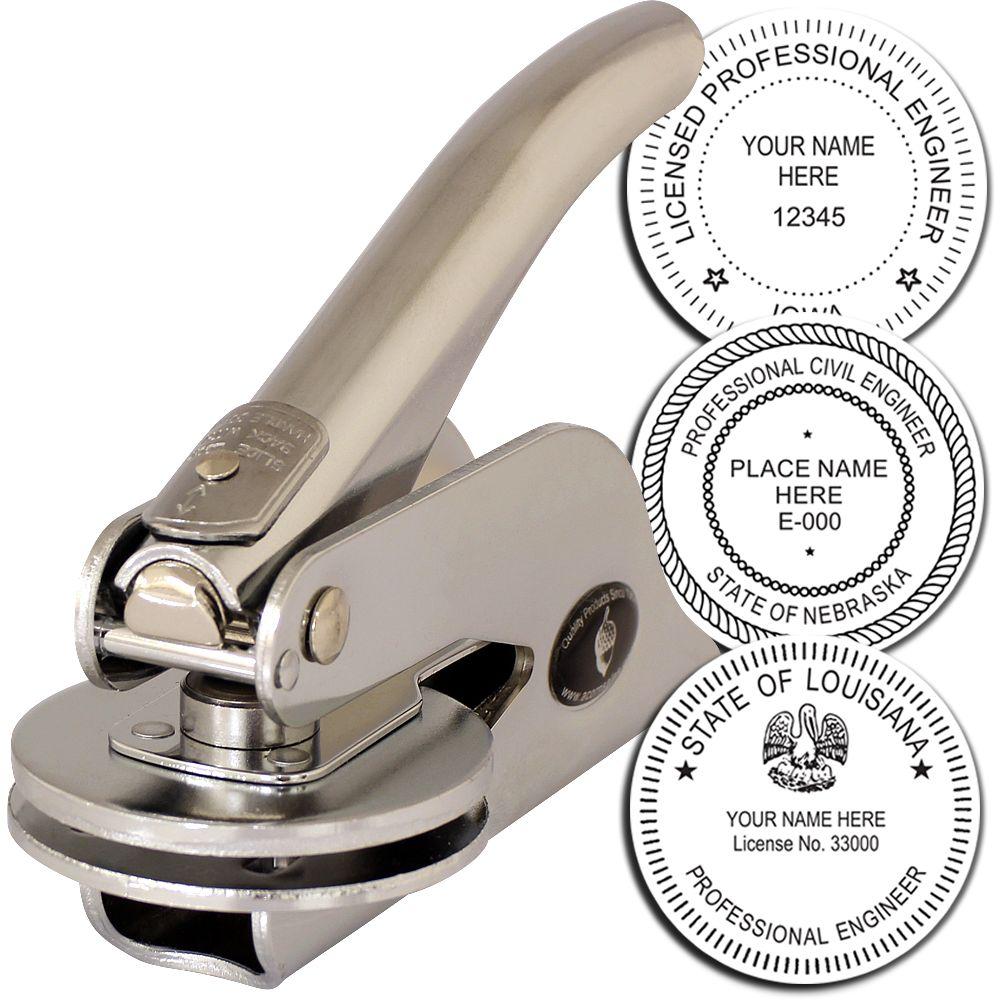
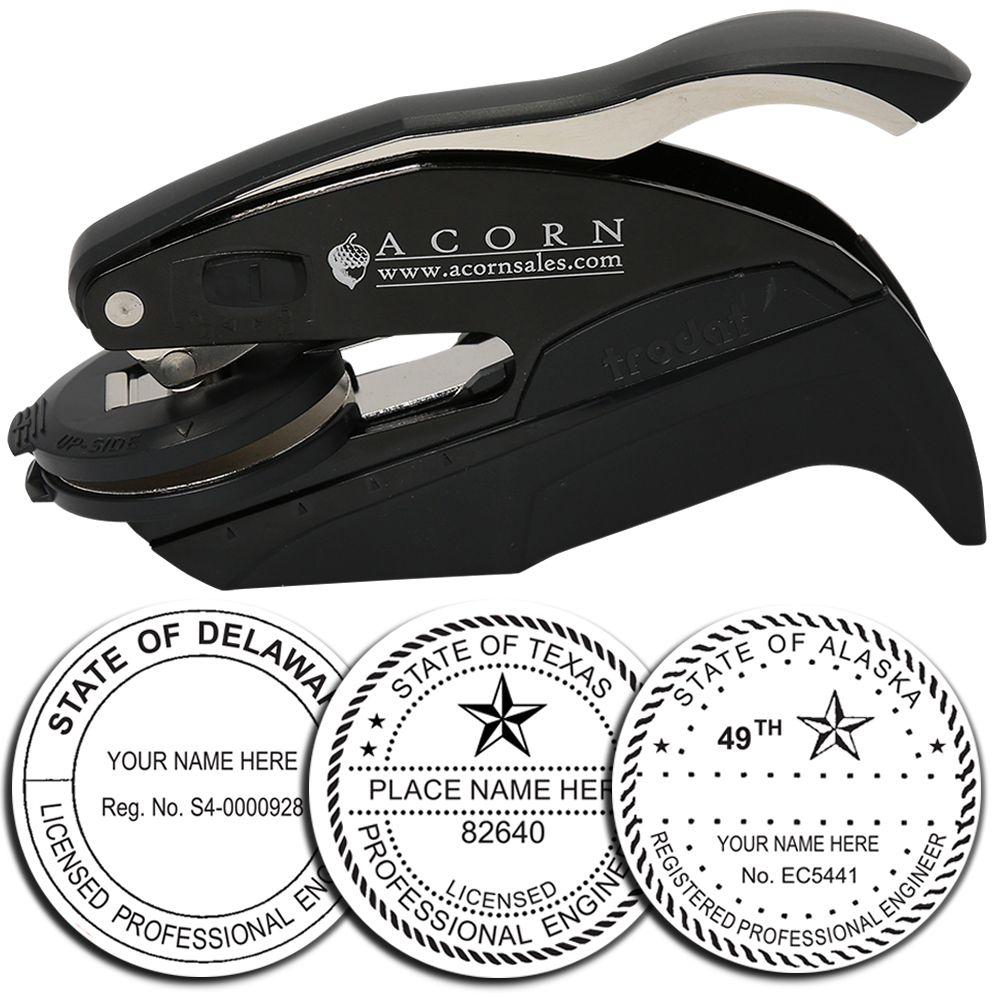
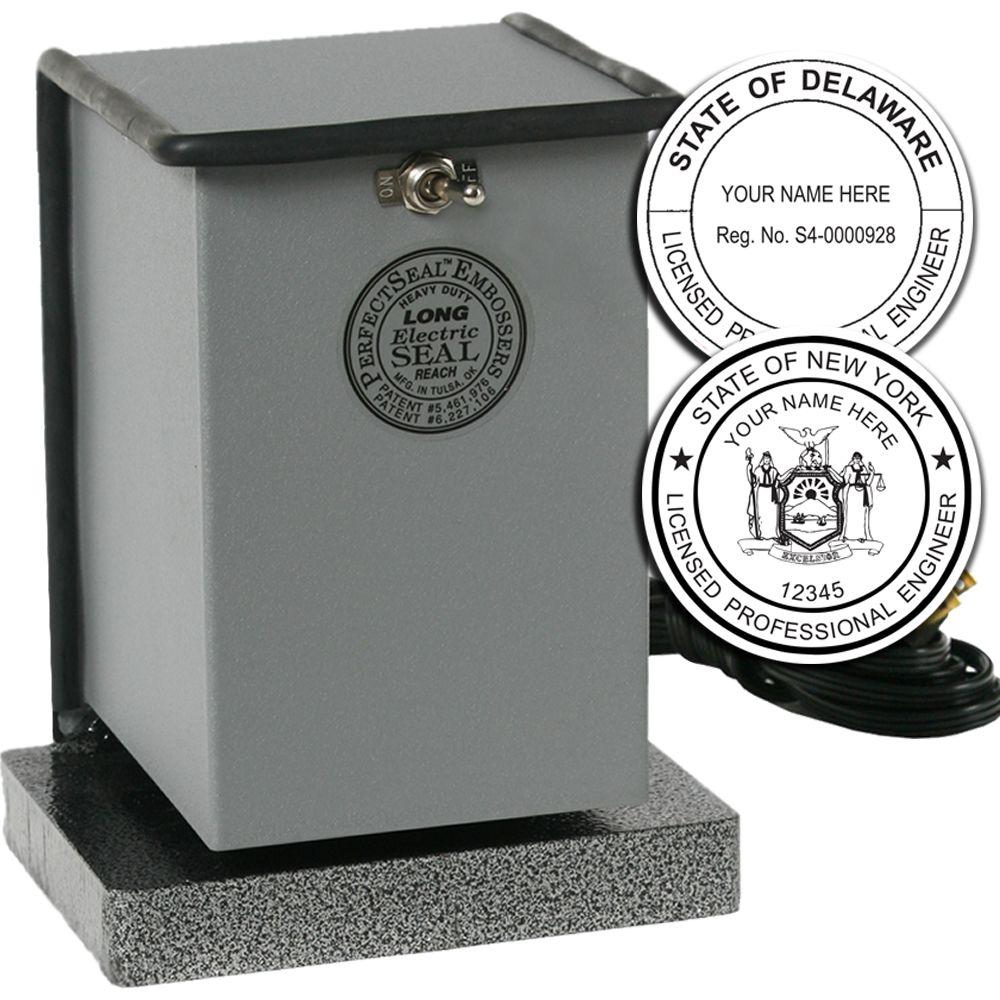
Acorn cuts this seal to 1-3/4 inches, and that is a production record rather than a published rule. The state publishes no dimension, so the figure below is what we make and ship for Michigan licensees rather than something you can point a reviewer at. The Michigan rule sets its standard by picture, asking for a design substantially equivalent to figure 32, and prints no diameter anywhere in the engineer rule set. What the state publishes: No diameter, minimum or maximum, appears anywhere in the professional engineer rule set. The rule sets the standard by picture instead, requiring a design substantially equivalent to figure 32. The sources here are the complete Michigan administrative rule set R 339.16001 through R 339.16044, Professional Engineers General Rules, and the Department’s Professional Engineer Licensing Guide and FAQs.




Embosser, rubber stamp or digital
Not verified. The Michigan rules do not name embossers, rubber stamps or computer generated facsimiles. The rule set R 339.16001 through R 339.16044 contains no rule addressing device form, and only R 339.16032 mentions the seal at all. The Department states that the acceptability of electronic seals is governed by Mich. Comp. Laws sections 339.2007 and 339.2008, and the text of those sections could not be retrieved from a primary source at the time of writing. What is verified is that the Department does not supply seals: “No. The department does not provide seals.” Checked: the full professional engineer rule set and the Department’s licensing guide and FAQs.
Signing and dating
Not verified. No signature rule and no dating rule appears in the professional engineer administrative rules. A word search of the rule set R 339.16001 through R 339.16044 returns no rule addressing signatures. The Department points to Mich. Comp. Laws sections 339.2007 and 339.2008 for “use of signatures,” and that statutory text could not be retrieved from a primary source at the time of writing. Whether Michigan demands an original signature, permits a facsimile, requires the signature to cross the seal, or requires a date at all is therefore left open here rather than guessed. The sources here are Mich. Admin. Code R 339.16001 to R 339.16044 and the Department’s licensing guide and FAQs.
Michigan specifies the seal by picture and by a ten digit number
R 339.16032 does not give a diameter. It requires a design substantially equivalent to figure 32, an image printed in the rule itself. That makes Michigan one of the states where the authoritative specification is artwork rather than a dimension, and it means a generic circular template with the right words on it is not automatically compliant. Anyone cutting a Michigan die should be working from figure 32 in the published rule set, not from a house pattern.
Which documents must be sealed
Not verified. The rules do not enumerate the documents that must be sealed. R 339.16031, the professional conduct rule, prohibits approving documents that do not conform to law and requires sustained review and approval of work done under a licensee’s supervision, but it does not list sealable document types. The document level duty sits in Mich. Comp. Laws sections 339.2007 and 339.2008, whose text could not be retrieved at the time of writing. The sources here are Mich. Admin. Code R 339.16031 and R 339.16032, and the Department’s licensing guide and FAQs.



Electronic and digital seals
Not verified. Michigan clearly contemplates electronic seals, because the Department’s own guide says the “acceptability of electronic seals” is addressed in Mich. Comp. Laws sections 339.2007 and 339.2008. No administrative rule implements that. A word search of the entire professional engineer rule set for electronic returns nothing. No named technology, certificate authority or tamper evidence standard was found in any Michigan source reviewed here. The sources here are Mich. Admin. Code R 339.16001 to R 339.16044 and the Department’s Professional Engineer Licensing Guide and FAQs.
Renewal, lapse and retirement
The rule ties the seal to the license in one sentence: the seal “must be used by the licensee whose name appears on the seal for as long as the license is in effect,” and “A licensee is responsible for the security of the licensee’s seal.” Renewal is biennial and continuing education must be completed during the two year period immediately preceding the expiration date under R 339.16040. There is a sixty day grace period after expiration in which the license may be renewed without relicensure, with a twenty dollar late fee. Past that, relicensure is required under R 339.16025: for a license lapsed less than three years, a completed application, fees, and thirty credit hours of continuing education of which two must be in professional ethics; for a license lapsed three years or more, the initial licensure requirements plus the same continuing education or proof of a valid license held elsewhere. Michigan has no retired or emeritus status, because “The Michigan Occupational Code does not authorize the department to grant retired or emeritus status,” and a licensee who simply stops renewing need not notify the Department. Not addressed: whether a relicensed engineer keeps the same ten digit license number, and whether a lapsed licensee must surrender or destroy the seal.
Firm registration
Michigan requires firm approval but issues no firm license and puts no firm number on the document. The Department states: “Firms seeking to engage in the practice of professional engineer must apply for firm approval at www.michigan.gov/miplus,” and “Approval by the department is required under MCL 339.2010; however, there is no firm license under the Michigan Occupational Code.” The Department also states that it “does not consider requests for firm approval if 2/3 of the firm’s principals do not hold Michigan licenses under Article 20 of the Michigan Occupational Code.” Nothing in R 339.16032 or elsewhere in the rule set requires a firm name or approval number on a sealed document.
What to check before you order
The Department supplies no seals, so you buy yours privately. Build it from figure 32 in Mich. Admin. Code R 339.16032 and match that figure substantially: your name exactly as shown on your state issued license, your complete ten digit license number, and both legends, State of Michigan and Licensed Professional Engineer, in the surrounding legend. There is no stated diameter to hit and no stated device restriction, so compliance turns on the design rather than the dimension. No Michigan source reviewed here asks you for proof of licensure or restricts who may sell you a seal.
Browse professional engineer stamps and seals.
- MI PE Stamps: What Every Engineer Should Know
- Your Guide to Finding the Best Michigan PE Stamp Online
Frequently asked questions
What has to appear on a Michigan PE seal?
R 339.16032(1) states it in one sentence: “The seal of a professional engineer must include the licensee’s name and full license number, as shown on the licensee’s state-issued professional engineer license and indicate ‘State of Michigan’ and ‘Licensed Professional Engineer’ in the legend surrounding the seal. The seal must have a design substantially equivalent to figure 32 below.” Name as shown on the license leaves no room for a nickname or a form of the name the Department does not hold.
How many digits is a Michigan PE license number?
Ten, and all ten belong on the seal. The rule requires the full license number as shown on the state-issued license, and the Department spells out in its own FAQ that this is a ten digit number. The shortened form engineers use conversationally is not what the rule asks for.
What size does a Michigan PE seal have to be?
Not addressed. No diameter, minimum or maximum, appears anywhere in the professional engineer rule set. The complete rule set R 339.16001 through R 339.16044, Professional Engineers General Rules, and the Department’s Professional Engineer Licensing Guide and FAQs were both checked. The rule specifies the seal by requiring a design substantially equivalent to figure 32 instead. Acorn cuts this seal to 1-3/4 inches. That is our production record rather than a Michigan rule; the rule asks for a design substantially equivalent to figure 32 and prints no diameter.
Can I use an embosser or a rubber stamp in Michigan?
The rules do not say, and that is a genuine gap rather than a permission or a prohibition. Michigan does not name embossers, rubber stamps or computer generated facsimiles anywhere in R 339.16001 through R 339.16044, and only R 339.16032 mentions the seal at all. The Department states that the acceptability of electronic seals is governed by Mich. Comp. Laws §§ 339.2007 and 339.2008, whose text could not be retrieved from a primary source at the time of writing. What is confirmed is that the Department supplies nothing: “No. The department does not provide seals.”
Does Michigan require a signature and a date next to the seal?
Not verified. No signature rule and no dating rule appears in the professional engineer administrative rules, and a word search of R 339.16001 through R 339.16044 returns none. The Department points to Mich. Comp. Laws §§ 339.2007 and 339.2008 for “use of signatures,” and that statutory text could not be retrieved from a primary source here. Whether Michigan demands an original signature, accepts a facsimile, requires the signature to cross the seal or requires a date at all is left open rather than guessed.
Which Michigan documents have to be sealed?
Not verified. The rules do not enumerate sealable document types. R 339.16031, the professional conduct rule, prohibits approving documents that do not conform to law and requires sustained review and approval of work done under a licensee’s supervision, but it lists no document categories. The document-level duty sits in Mich. Comp. Laws §§ 339.2007 and 339.2008, whose text could not be retrieved at the time of writing. R 339.16031 and R 339.16032 and the Department’s licensing guide and FAQs were all checked.
Are electronic seals accepted in Michigan?
Michigan clearly contemplates them, but no administrative rule implements them. The Department’s own guide says the “acceptability of electronic seals” is addressed in Mich. Comp. Laws §§ 339.2007 and 339.2008. A word search of the entire professional engineer rule set for the word electronic returns nothing, and no named technology, certificate authority or tamper-evidence standard was found in any Michigan source reviewed here.
Can I add my discipline or branch to a Michigan seal?
Not addressed in the rules, and it carries risk. R 339.16032 does not prohibit additional elements in words, but because compliance is measured against figure 32, anything added to the face is a deviation from the design the rule points to rather than a feature. The safer order reproduces figure 32 with the required name, ten digit number and two legends.
What happens to my Michigan seal if my license lapses?
The rule ties the two together: the seal “must be used by the licensee whose name appears on the seal for as long as the license is in effect,” and “A licensee is responsible for the security of the licensee’s seal.” Renewal is biennial, with continuing education completed during the two year period immediately preceding the expiration date under R 339.16040, and there is a sixty day grace period after expiration in which the license may be renewed without relicensure on payment of a twenty dollar late fee. Past that, R 339.16025 requires relicensure: for a lapse of less than three years, an application, fees and thirty credit hours of continuing education including two in professional ethics; for three years or more, the initial licensure requirements plus the same continuing education or proof of a valid license held elsewhere. Whether a relicensed engineer keeps the same ten digit number, and whether a lapsed licensee must surrender or destroy the seal, are not addressed.
Does Michigan have a retired or emeritus status?
No. The Department states that “The Michigan Occupational Code does not authorize the department to grant retired or emeritus status,” and a licensee who simply stops renewing need not notify the Department. There is no retired-status seal legend to order and no separate retired device.
Does my firm get a Michigan license number for the drawing?
No. Michigan requires firm approval but issues no firm license. The Department states that “Firms seeking to engage in the practice of professional engineer must apply for firm approval at www.michigan.gov/miplus” and that “Approval by the department is required under MCL 339.2010; however, there is no firm license under the Michigan Occupational Code.” It also states that it “does not consider requests for firm approval if 2/3 of the firm’s principals do not hold Michigan licenses under Article 20.” Nothing in R 339.16032 or elsewhere in the rule set requires a firm name or approval number on a sealed document.
Does the Michigan Department supply seals to licensees?
No. The Department’s answer is one word long: “No. The department does not provide seals.” Every Michigan engineer buys privately. No Michigan source reviewed here imposes any proof-of-licensure requirement on you or any restriction on who may sell a seal.








