
Written by Acorn Sales Company, manufacturing stamps and seals since 1964 · Reviewed by Holly R, VP of Sales and Marketing at Acorn Sales, against Title 5, chapter 33 of the Guam Code Annotated, read on the Guam Judiciary Compiler of Laws and cross-checked word for word against a republished copy of the same Compiler file, together with the Office of the Attorney General’s Guam Notary Program page and the Department of Land Management’s Document Recording Requirements. · Updated 21 September 2026
Guam is the least well sourced of the three, and the gaps are worth stating plainly. The chapter file we read carries a Compiler stamp of 5/19/2021, while the Compiler’s index describes the code as current through a June 2026 public law, so the text is authoritative as of 2021 and we could not confirm that no public law has amended chapter 33 since then. The seal provisions were last amended in 1996 and the remote article was added in 2020, so the substance is likely stable, but treat that as unverified. Beyond the statute, three things we could not verify at all: the Attorney General’s Rules for Remote Online Notarization at Title 19 GARR, which the statute points to and whose text we could not retrieve; the Attorney General’s own notary handouts, which were behind links we could not open, so Guam has no published handbook we can cite; and the current status of the remote online notary program, whose materials and fee are all marked “No Longer Available” on the Attorney General’s page without explanation. Nothing on this page comes from a vendor blog, an association page or a law firm summary, and where we could not establish something we have said so rather than filled it in. Confirm anything operative with the Office of the Attorney General notary program before relying on it.
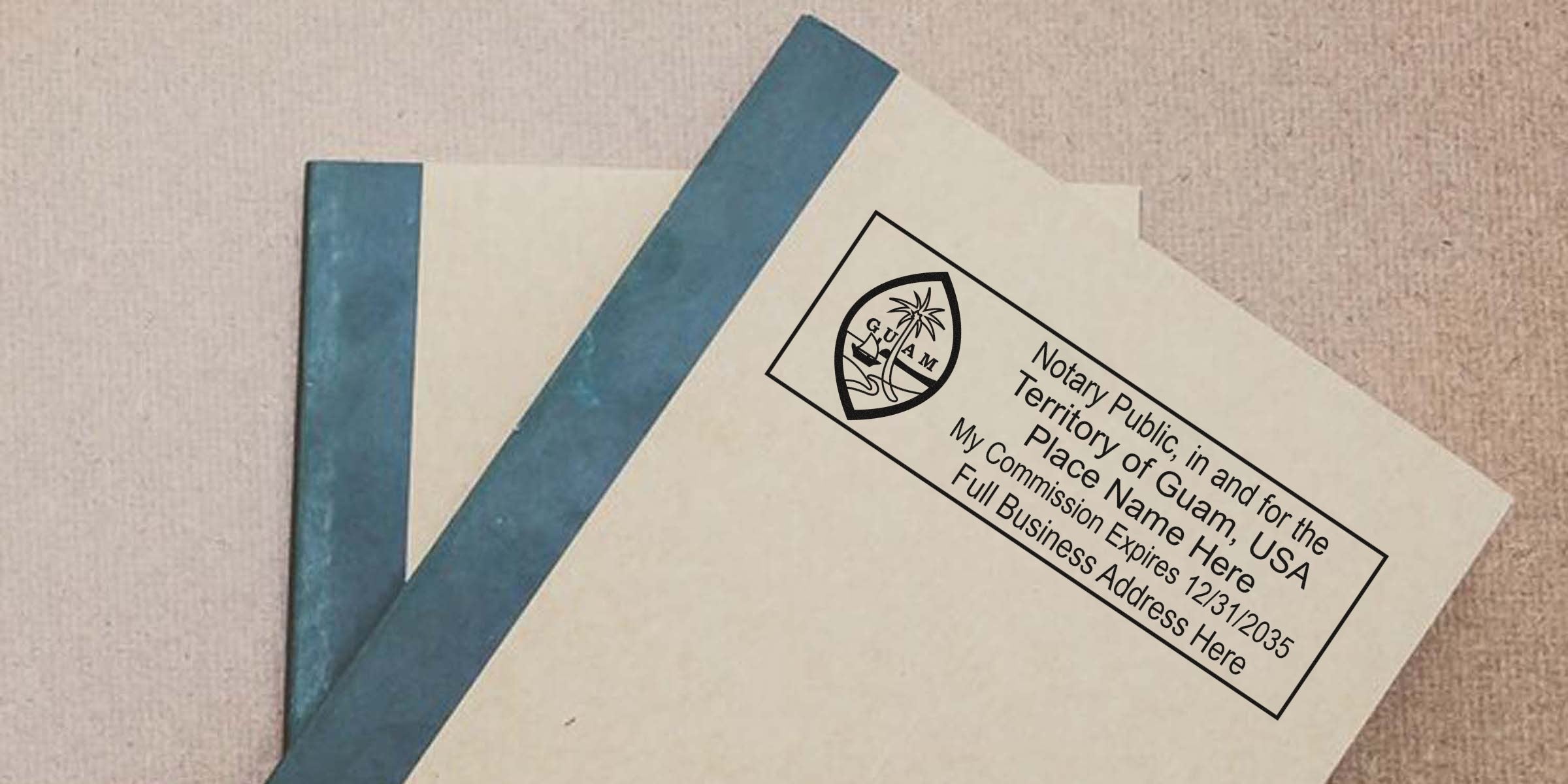
Guam is unusual in expecting two devices. The statute provides that the embossed seal “shall be used in addition to but not in lieu of” the inked stamp, so an embosser does not replace the stamp. The ink must be black, by statute rather than by a recording standard, and the seal carries your name as commissioned, the words “Notary Public, in and for the Territory of Guam”, your business or residence address, and a rectangular border. Your expiration date has to be cut into the die.
Guam notary stamp requirements at a glance
| Requirement | Guam rule | Source |
|---|---|---|
| Stamp required | Yes | 5 GCA §§ 33411(a), 33412(a) |
| Required wording | Your name exactly as it is indicated on the commission; The words “Notary Public, in and for the Territory of Guam, U.S.A.” and “My commission expires (commission expiration date)”; The address of your business or residence; A rectangular border surrounding the required words | 5 GCA § 33412(a) |
| Size and shape | Shape is prescribed and size is not. | 5 GCA § 33412(a), (a)(4) (no dimensions stated anywhere in ch. 33) |
| Ink color | Black, and by statute. | 5 GCA § 33412(a) |
| Embosser | Required in addition to the inked stamp, on the face of the statute. | 5 GCA §§ 33412(c), 33411(b) |
| Commission term | Terms run four years from the individual commission, with no fixed territory-wide expiration date. | 5 GCA §§ 33202, 33203, 33204, 33411(b), 33412(a)(2), (a)(3), (b), 33550, 33551 |
| Name or address change | Address: 30 days, and it costs you a new seal. | 5 GCA §§ 33202, 33203, 33204, 33411(b), 33412(a)(2), (a)(3), (b), 33550, 33551 |
| Lost or stolen stamp | Ten days, in writing, receipted. | 5 GCA §§ 33411(b), 33552, 33553, 33554(a)(1), (a)(2), 33555 |
| Commissioning authority | The Attorney General of Guam, who “shall commission as a notary any qualified person who submits an application in accordance with this Chapter”. Qualifying means 18 or older, resident on Guam, able to read and write English, a United States citizen, and a pass on a written examination, with a $1,000 bond for the whole term | Title 5, chapter 33 of the Guam Code Annotated, read on the Guam Judiciary Compiler of Laws |
Rules for other states are on notary stamp requirements by state.






Is a notary stamp required in Guam?
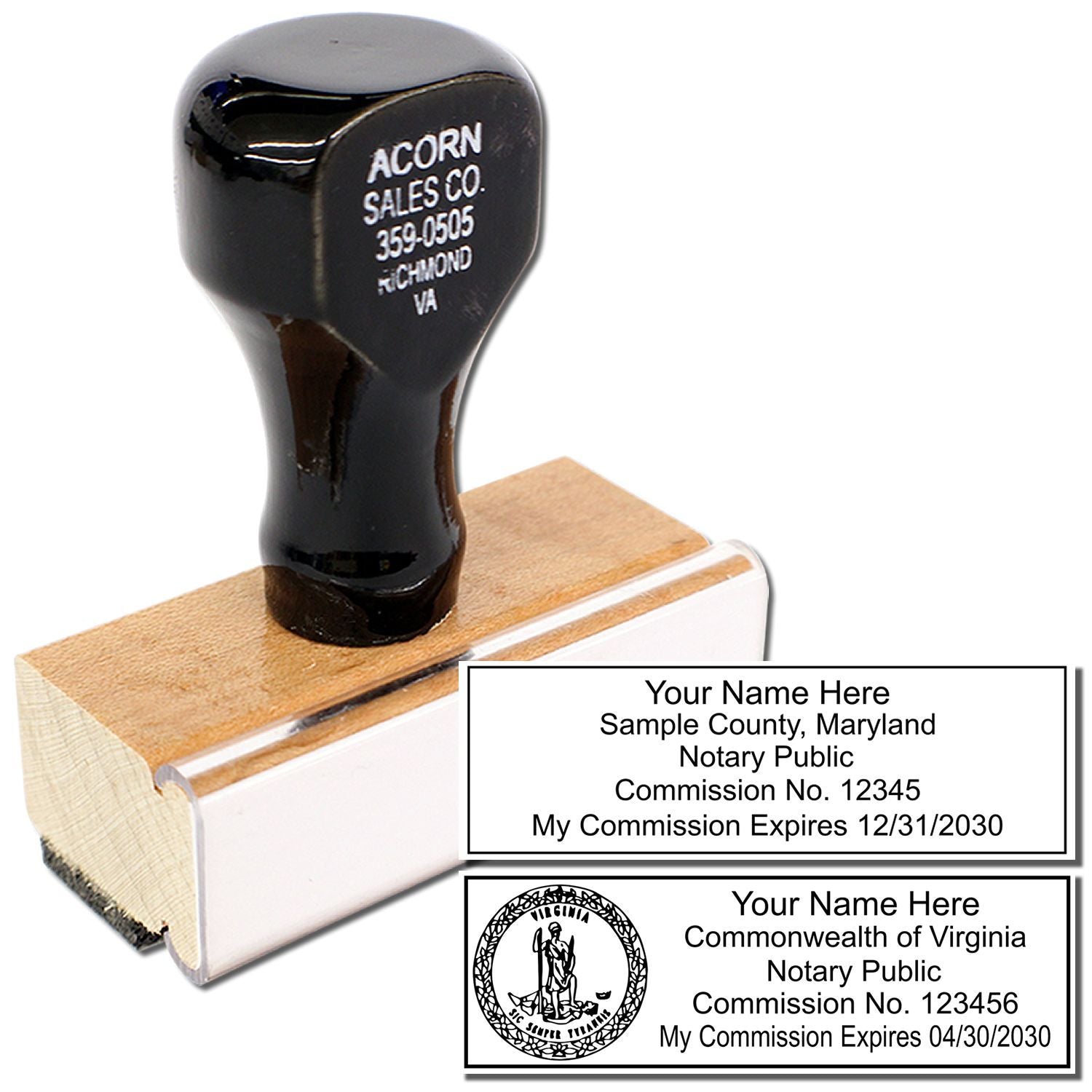
Yes, on every notarial certificate, and Guam says so twice, in two different sections, which is the trap for anyone who reads only the section titled “Official Seal”. That section creates the duty to have one: “A notary shall keep an official notarial seal that is the exclusive property of the notary and that may not be used by any other person or surrendered to an employer upon termination of employment.” The next section specifies the impression itself: “Near the notary’s official signature on a notarial certificate, the notary shall affix in black ink a sharp, legible, and photographically reproducible inked stamp impression of the notarial seal”.
The governing text is 5 GCA §§ 33411(a), 33412(a).
What must appear on a Guam notary stamp?
- Your name exactly as it is indicated on the commission
- The words “Notary Public, in and for the Territory of Guam, U.S.A.” and “My commission expires (commission expiration date)”
- The address of your business or residence
- A rectangular border surrounding the required words
Nothing on that list is optional, and one item has a manufacturing rule attached that most vendors miss. The expiration date “must be an integral part of the inked stamp notarial seal and may not be inserted into the impression”, so it has to be cut into the die. No blank line, no write-in field, no date band you fill in by hand. A Guam stamp sold with a blank “My commission expires ______” is unlawful. The same subsection does allow illegible information within an impression to be typed or printed legibly “adjacent to but not within the impression”, which is a repair for a bad strike rather than a way around the date rule. The embosser carries a shorter and differently punctuated legend: “Notary Public in and for the Territory of Guam, USA”, with no comma after Public and no periods in USA, plus your name as commissioned. Reproduce each exactly as the statute prints it. We found no rule-only or handbook-only elements, but that is partly a statement about what we could reach: Guam has no published notary handbook comparable to Minnesota’s or Wisconsin’s, and the Attorney General’s own notary handouts were hosted behind links we could not retrieve, so we cannot rule out administrative guidance we did not see.
What size and shape must a Guam notary stamp be?
Shape is prescribed and size is not. A rectangular border surrounding the required words is a statutory element. Dimensions appear nowhere in chapter 33: we checked §§ 33410, 33411, 33412 and 33413, the definitions at § 33104, and the Article 7 sections at §§ 33550 to 33556, and none of them states a height, a width or a minimum. The governing constraints are qualitative instead, that the impression be “sharp, legible, and photographically reproducible”, and one practical: the die has to carry four lines of content including a full business or residence address, which rules out a small stamp in practice. The recorder adds a placement rule rather than a size rule. Guam’s Department of Land Management instructs filers to “ensure that the notary stamp block does not overlap the notary seal”, which tells you it expects both an inked block and an embossed impression on a recorded instrument, and expects them kept apart.
Notary public stamps are made to these conventions, and we check your lines against the statutory wording before we make the stamp.



What ink color is required for a Guam notary stamp?
Black, and by statute. This is the strongest ink rule of the three jurisdictions in this group, because it sits in the notary act itself rather than in a recording standard: the notary “shall affix in black ink a sharp, legible, and photographically reproducible inked stamp impression of the notarial seal”. A Guam notary using blue is out of compliance on every notarization, not merely inconvenienced at the recorder. Note the two companion qualities in the same clause, sharp and photographically reproducible, which are requirements about the impression you actually leave on the page. Guam’s Department of Land Management recording requirements contain no independent ink, paper, margin or type-size standard of their own for the notary stamp; they point back to chapter 33.
More on the trade-off in stamp ink color rules.
Is a notary embosser required or optional in Guam?
Required in addition to the inked stamp, on the face of the statute. Section 33412(c) provides that an embossed seal bearing the jurisdiction legend and your name “shall be used in addition to but not in lieu of the seal described in subsection (a)”. Read literally, that makes Guam one of the very few United States jurisdictions where a notary must own two devices, and the recorder’s instruction about not overlapping the stamp block and the seal is consistent with that reading. We are going to leave the complication standing rather than resolve it for you, because the statute does not resolve it either: § 33411(b), enacted in the same chapter and amended at the same time in 1996, refers to “the embossing seal, if any”. Those words contemplate a notary who has no embosser, which sits awkwardly next to “shall be used”, and the two provisions have never been reconciled. We also could not determine whether the Attorney General enforces the mandatory reading. Guam notaries are commonly sold a combination kit for exactly this reason. Confirm your own requirement with the Office of the Attorney General’s notary program before you buy.
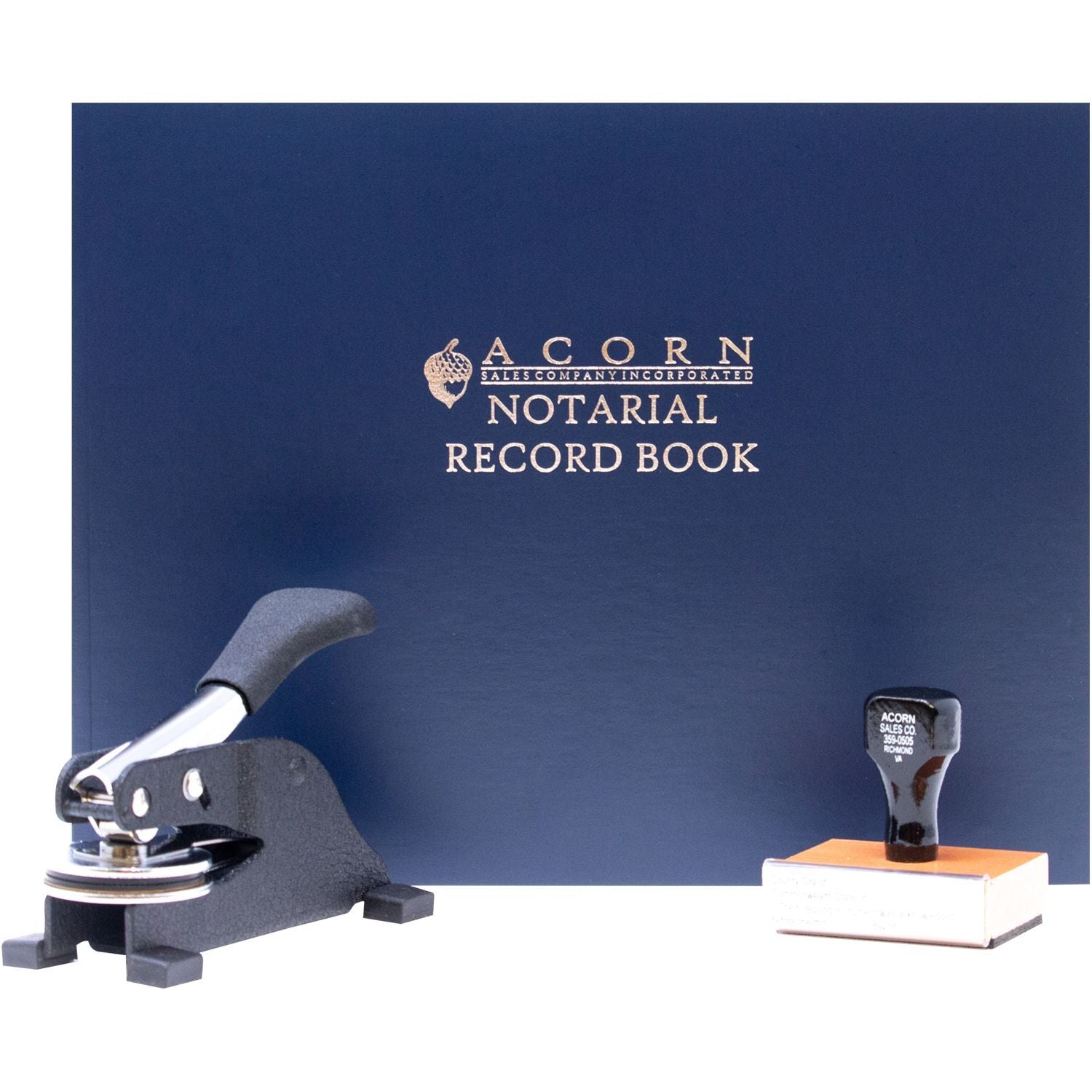
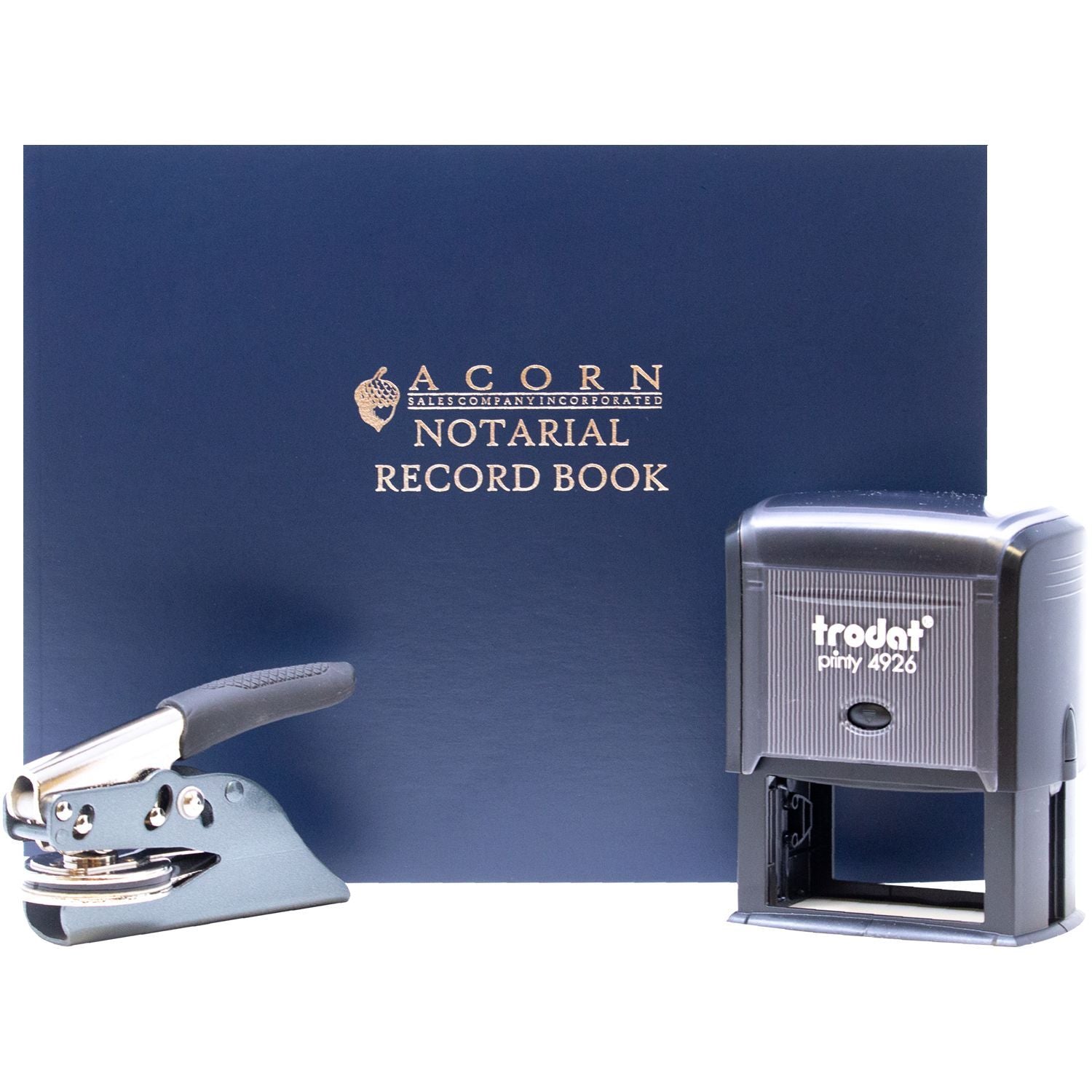
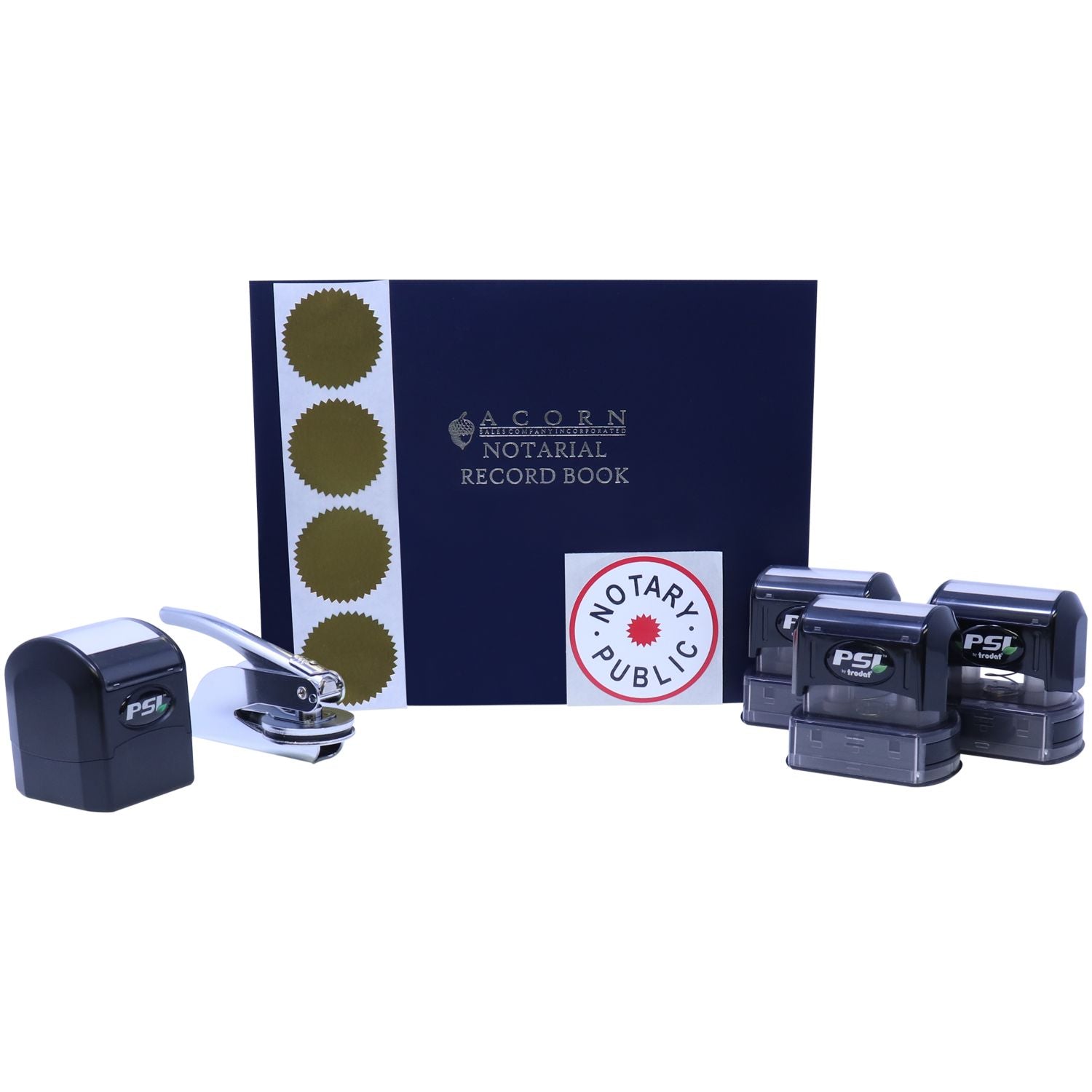
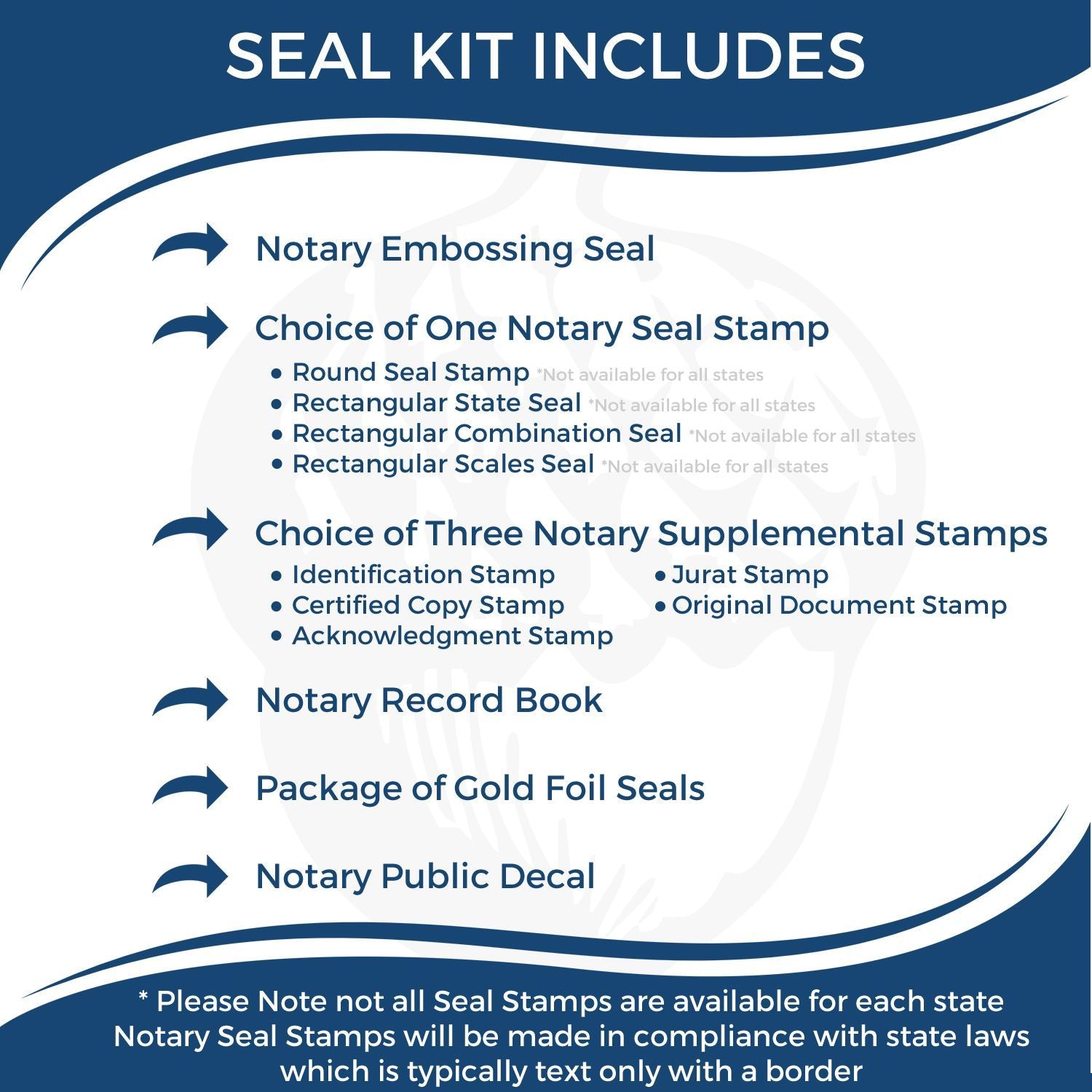
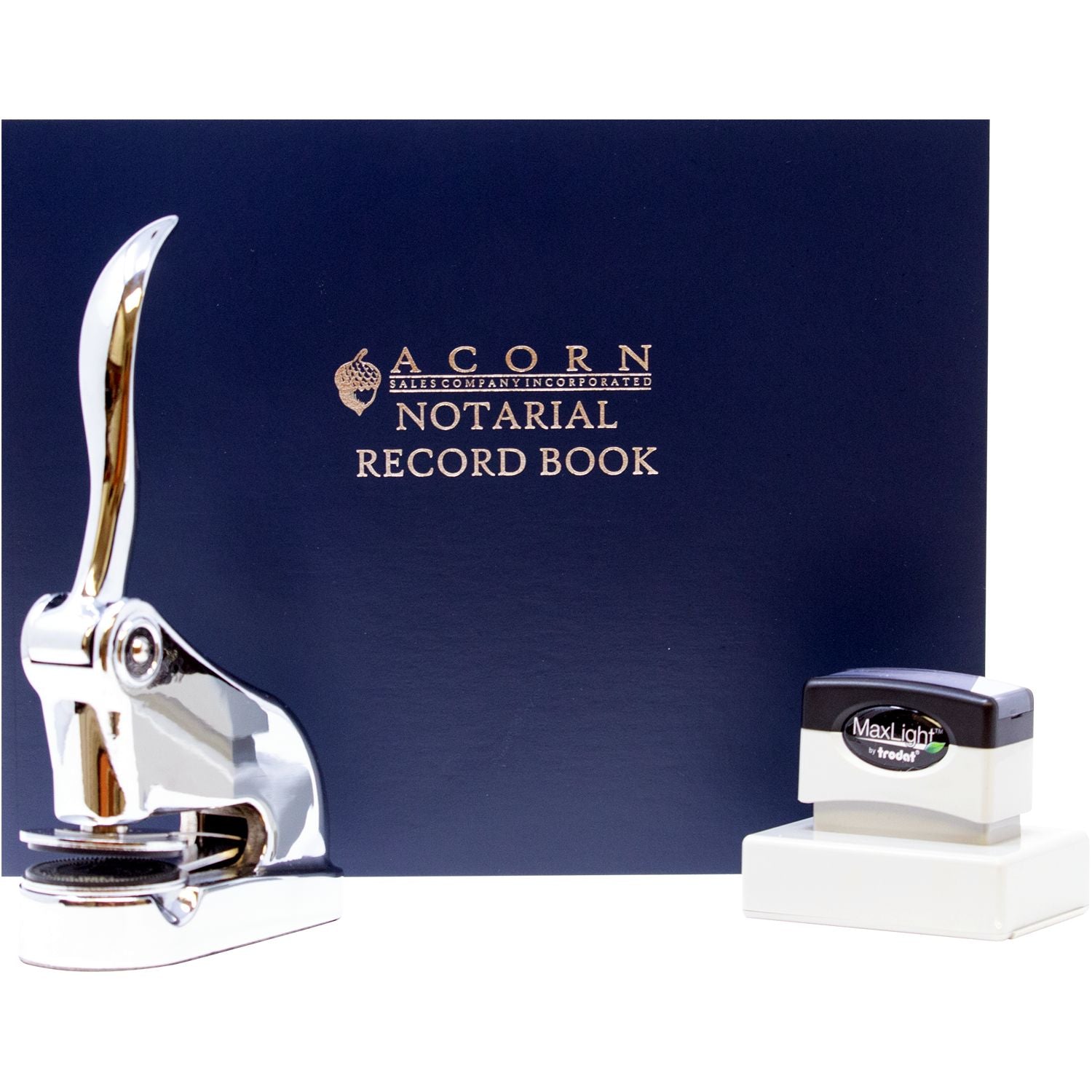
Notary embossing seal kits and inked stamp kits cover both formats. See also notary stamp vs. embosser.
Guam expects two devices, and the expiration date has to be cut into the die
Guam’s seal statute does something almost no other United States jurisdiction does. After specifying the inked stamp in detail, it turns to the embosser and says that an embossed seal bearing the jurisdiction legend and the notary’s name “shall be used in addition to but not in lieu of” the inked stamp. Read literally, a Guam notary owns two devices, not one. The Department of Land Management’s recording instruction reads the same way, telling filers to make sure “the notary stamp block does not overlap the notary seal”, which only makes sense if both marks are expected on the page.
We are publishing this as a complication rather than an answer, because the statute contains its own contradiction. Section 33411(b), amended in the same 1996 public law, speaks of “the embossing seal, if any”. Those two words contemplate a notary who has none. The provisions have never been reconciled, and we could not establish how the Attorney General enforces them in practice. If you are buying for Guam, the combination kit exists for this reason, and the notary program at the Office of the Attorney General is the right place to confirm what is expected of you.
The second surprise is a manufacturing rule, and it is the one that makes a stamp unlawful rather than merely awkward. The commission expiration date “must be an integral part of the inked stamp notarial seal and may not be inserted into the impression”. It has to be cut into the die. A blank line, a write-in field or a separate date band is not compliant, no matter how neatly it is filled in. That rule combines with two others to make Guam an expensive place to be careless: the seal also carries your business or residence address, so moving means a new seal plus a 30-day notice, and a new seal is expressly required for every new commission.
One caution about this page as a whole. Guam publishes no notary handbook, and the Attorney General’s notary materials we tried to reach were not retrievable, so everything above comes from the statute itself and nothing has been checked against official guidance. Confirm anything you are about to spend money on with the commissioning authority.
Do I need a new stamp when my commission is renewed or my name changes?
Terms run four years from the individual commission, with no fixed territory-wide expiration date. Renewal is not a renewal form: “An applicant for recommissioning as a notary shall submit a new application and comply anew with the provisions of this Article 2”, which means a new $1,000 bond and, on the face of the statute, the examination again. A new inked stamp is required for every new commission, and Guam says so expressly rather than leaving you to infer it: “A new seal must be obtained, under § 33413 of this Chapter, for any new commission.” The reasoning is sound on its own terms too, since the die must carry the expiration date as an integral part and that date changes. The embosser is the exception, and it comes with a condition people read straight past. The statute says the notary need not destroy or replace the embossing seal “if there is not time lapse between the expiration of one commission and the granting of another commission”. Let your commission lapse even briefly and you lose that exemption and buy both devices again. The embosser survives an uninterrupted renewal only because it carries no expiration date.
Address: 30 days, and it costs you a new seal. The statute requires that “within thirty (30) days after the change of a notary’s business or residence address, the notary shall deliver to the Attorney General, by certified mail or other means providing a receipt, a signed notice of the change, giving both old and new addresses.” Because § 33412(a)(3) puts your business or residence address on the seal itself, a Guam address change forces a new stamp. Name: no deadline, four preconditions. Instead of a time limit the statute front-loads conditions, and all of them must be met before you may sign the new name on any notarial certificate: the signed notice of the change has been delivered to the Attorney General, a Confirmation of Notary’s Name Change has been received back from the Attorney General, a new seal bearing the new name exactly as in the Confirmation has been obtained, and the surety on your bond has been informed in writing.





What do I do if my Guam notary stamp is lost or stolen?
Ten days, in writing, receipted. Guam is the only jurisdiction in this group with a hard statutory number: “Within ten (10) days after the loss or theft of any official journal or seal, the notary shall deliver to the Attorney General, by certified mail or other means providing a receipt, a signed notice of the loss or theft, and inform the appropriate law enforcement agency in the case of theft.” Note that the deadline covers the journal as well as the seal, and that the police report is required for a theft specifically rather than for a simple loss.
How do I dispose of an expired Guam notary stamp?
Required, on two different clocks. The seal goes “as soon as reasonably practical”: when a commission is resigned, revoked or expires, the notary shall destroy the official seal. The journal and records go on a hard deadline, within 30 days of the effective date of resignation, revocation or expiration, delivered to the Attorney General by certified mail or other receipted means. That second duty catches people, because Guam treats the journal as a public record that goes back to the government rather than something you keep. Section 33411(b) reinforces the seal duty from the other direction: any seal bearing the commission expiration date must be destroyed.
More on retiring an old device in how to dispose of an expired notary stamp.
Can I notarize electronically or remotely in Guam?
Remote online notarization is in the statute, and we could not confirm that the program is currently open. Take those separately. The statute, Article 10 of chapter 33, authorizes it and sets a registration heavier than either Minnesota’s or Wisconsin’s: you apply to the Attorney General and identify your technology, you complete an Attorney General approved course of instruction and pass an examination before each registration, you show evidence of a surety bond for electronic notarial acts, and on approval you receive a unique registration number. The electronic seal is defined as information confirming your “name, jurisdiction, identifying number and commission expiration date”. An electronic journal is mandatory, an audio and video copy of each act is mandatory, and both are kept at least ten years. Theft or vandalism of the electronic journal, signature or seal goes to law enforcement and the Attorney General “immediately”. Now the part we cannot verify. The technology standards live in the Attorney General’s Rules for Remote Online Notarization at Title 19 GARR, article 3 of chapter 1, and we could not retrieve that rules text, so anything about approved providers, technology standards or repositories is unverified. More to the point, on the Attorney General’s own Guam Notary Program page the remote online notary requirements, checklist, public law and registration form are all marked “No Longer Available”, as is the $100 remote registration fee, with no explanation given. We could not establish whether registration is suspended, in transition, or simply the victim of broken links. Do not treat Guam remote online registration as open on our say-so. Ask the notary program directly. Separately, we found no in-person electronic notarization track in chapter 33 outside the remote framework.
If you need your seal as an image file for electronic work, see electronic notary seal images.
Who is allowed to sell you a Guam notary seal?
Guam restricts who may sell a notary seal, the duty falls on the seller, and breaking it is a crime. A vendor “may not provide a notary seal, either inking or embossing, to a person claiming to be a notary” unless that person presents a photocopy of the notarial commission attached to a notarized declaration in substantially the form set out in the statute, giving the commission starting date, expiration date and commission number. The vendor must retain those documents for three years, and “a vendor who fails to keep a document specified in this section is guilty of a petty misdemeanor”. Four things follow for anyone ordering. The rule covers the embosser as well as the inked stamp. The declaration itself has to be notarized, by another notary. A photocopy of your commission has to be attached to it. And if you are ordering because of a name change, the Attorney General’s Confirmation of Notary’s Name Change takes the place of the declaration. Expect to send paperwork before anything ships.
Related Guam guides
- How to Choose the Right Guam Notary Stamp for You
- How to Secure Your Guam Notary Seal Online Hassle-Free
Next step
Have your commission details in front of you before you order, because they go on the stamp and a wrong line means a reorder. Then browse notary public stamps, or contact us and we will check your wording against the statute before we make it.
Frequently asked questions about Guam notary seals
Is a notary seal required in Guam?
Yes, and Guam says so in two different sections, which is the trap for anyone reading only the one headed “Official Seal”. One section creates the duty to keep a seal; another requires it on the certificate.
Does Guam really require two devices?
That is what the statute says: the embossed seal “shall be used in addition to but not in lieu of” the inked stamp. We should be straight with you that another section refers to an “embossing seal, if any”, which reads as permissive and sits awkwardly with the first. We have not been able to establish how the Attorney General's office resolves that, so ask them before deciding to carry only one device.
What has to appear on a Guam notary seal?
Your name exactly as indicated on the commission, the words “Notary Public, in and for the Territory of Guam”, the address of your business or residence, and a rectangular border surrounding the required words.
What ink color does Guam require?
Black, and by statute rather than by a recording standard. This is a stronger ink rule than most states have, because it sits in the notary act itself.
Can my expiration date be stamped in separately on Guam?
No. The statute requires that the expiration date “must be an integral part of the inked stamp notarial seal and may not be inserted into the impression”. It has to be cut into the die, which means a new stamp at every commission.
Do I need to show my commission to buy a Guam notary seal?
Yes. Guam restricts who may sell one and puts the duty on the seller, requiring a notarized declaration and a photocopy of the commission, retained for three years, with a criminal penalty for a seller who ignores it. Have your commission to hand when you order.
How long does a Guam notary commission last?
Four years, and recommissioning is not a renewal form: an applicant for recommissioning submits a new application. Because the expiration date must be integral to the die, every commission means a new seal.
Can I notarize remotely in Guam?
We could not verify this from a primary source. Guam has a remote notarization framework on paper, but the Attorney General's published materials on registration were unavailable when we checked, so we are not going to tell you it is open. Contact the Attorney General's notary program directly before relying on it.
How current are these Guam rules?
The statute we worked from is well sourced, read from Guam's Compiler of Laws and cross-checked against a second copy of the same file. What we could not confirm is whether any public law has amended the notary chapter since 2021, because the compiled file and the index disagree on currency. Every substantive requirement above rests on primary text, but confirm anything operative with the Attorney General's office.








