
Have you ever felt overwhelmed by the specific guidelines for your Virginia Land Surveyor Seal Specifications? You’re definitely not alone. Many surveyors, especially those who are new to the field or simply updating their current seal, find themselves uncertain about size requirements, design elements, and other critical details. Fortunately, once you get a handle on the must-knows, the entire process becomes much more manageable. In this guide, you’ll learn what goes into creating a compliant seal, why those details matter, and how to set yourself up for smooth stamping for years to come.
Understand the Legal Significance
When you’re working in Virginia, your land surveyor seal isn’t just a formality, it’s a key legal requirement that authenticates your professional work. This seal verifies that you’ve met the education, training, and licensure standards set by the state’s regulatory boards. Essentially, anytime you sign a survey or finalize a report, you need to affix your official seal to prove that the documentation reflects your best professional judgment.
Why the Seal Matters
- It Represents Accountability: Your seal symbolizes your personal and professional integrity, indicating that the data and conclusions in your survey are accurate.
- It Provides Clarity: The seal allows clients, government agencies, and other stakeholders to see exactly who prepared the survey and that it adheres to Virginia’s rules.
- It Builds Trust: Because the seal is a legal requirement, it helps reinforce your credibility. A properly executed seal assures others that you take state regulations seriously.
Know the Format and Layout
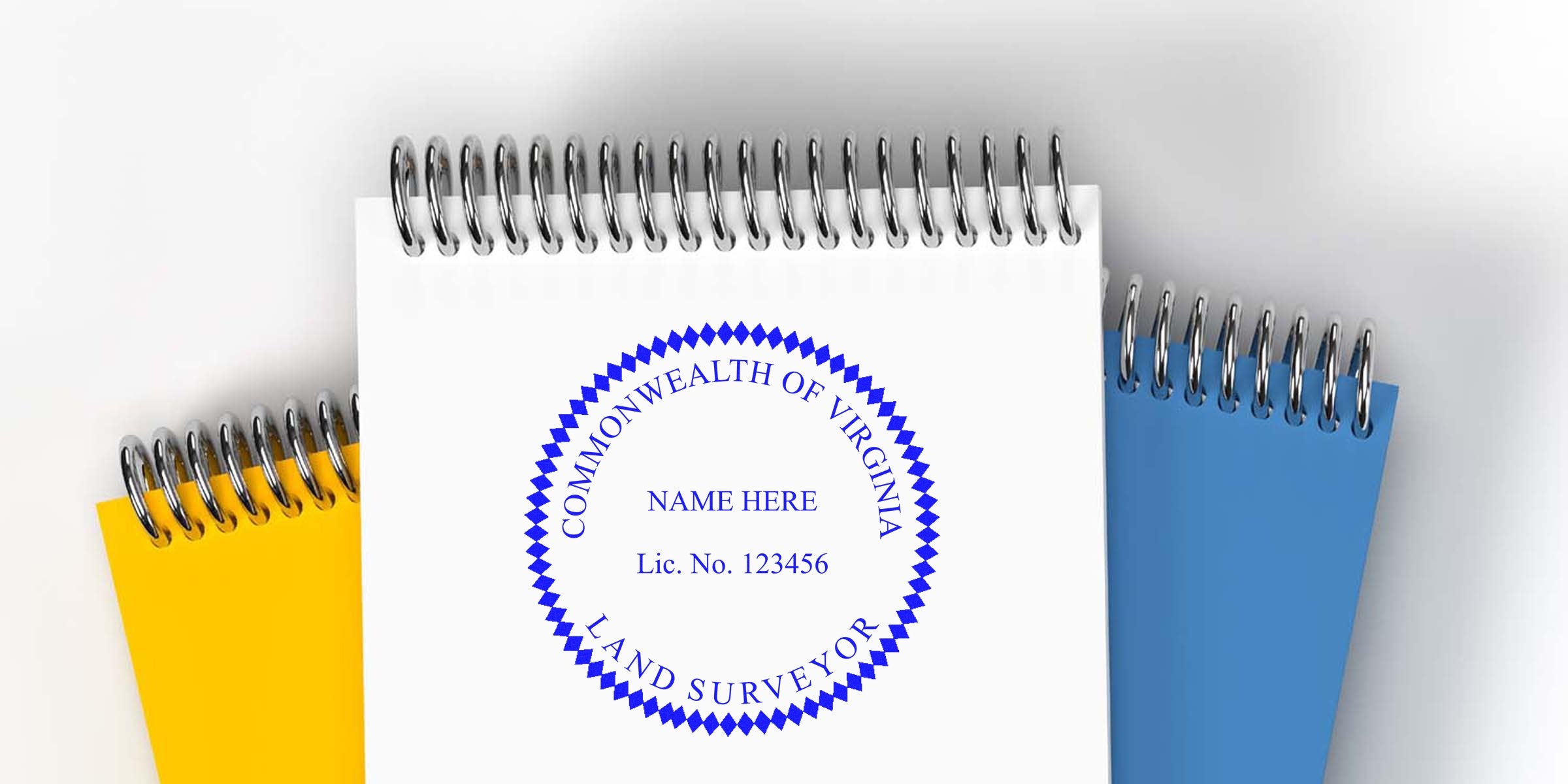
Virginia’s regulations outline specific design elements for your land surveyor seal. These elements often include a circular border, your name, license number, and the words “Licensed Land Surveyor.” You’ll want to confirm all precise layout guidelines before commissioning a stamp or embosser to ensure you meet the Virginia land surveyor seal specifications accurately.
Typical Design Elements
- Circular Shape: Most land surveyor seals are circular, with outer rings containing key text like “Commonwealth of Virginia.”
- Name and License Number: Your full name and license number must be prominent within the seal so that anyone reading it can confirm your credentials instantly.
- Professional Title: The words “Licensed Land Surveyor” or similar phrasing are typically found in the inner circle, right beneath your name.
If you want more details about the fine points of the layout, including how the lettering should be arranged, check out the virginia land surveyor stamp requirements. It’s a great resource to confirm the correct text and design approach so you don’t have to redesign your seal later.
Follow Proper Dimensions
One of the most common concerns you might have is whether the seal’s dimensions are correct, especially since regulations usually spell out a minimum or standard diameter. Ensuring the seal’s diameter meets Virginia’s guidelines helps maintain consistency and professionalism.
Recommended Size
- Standard Diameter: Many official seals measure around 1-3/4 to 2 inches in diameter. Verify what size is allowable, based on the state regulations.
- Readability: Make sure the text is easy to read. Using extremely small fonts can make your seal hard to interpret.
While a variation might seem minor, using the correct size can help you avoid having your documents rejected. Double-check your final stamp proof before ordering a large batch.
Explore Physical Versus Digital Seals
You might not realize you have options when it comes to how you apply your seal. Many licensed professionals still prefer a physical stamp or embosser because it feels tangible and traditional. Meanwhile, digital seals often make sense if you tend to file online documents. In Virginia, both physical and digital seals can be acceptable, as long as they meet the state’s requirements.
Physical Seals
- Rubber Stamps: Easy to use and convenient, these feature your official design. Just press onto an ink pad, then onto the document.
- Embossers: Create a raised impression on the paper, often seen as elegant and harder to replicate. Embossers can be handheld or desktop styles.
Digital Seals
- PDF-Friendly: Used for electronic documents, a digital seal is placed as an image over your signature line.
- Verification: Make sure any digital seal follows Virginia’s security requirements to confirm authenticity. You may need special software or a certified digital signature provider.
If you order from a reputable company such as Acorn Sales, you can often get a free digital seal included alongside your physical stamp or embosser. This convenience means you’re all set for either electronic filings or good old-fashioned paper documentation.
Acquire a Reliable Supplier
When it comes to purchasing the right seal or stamp, a quick online search might yield hundreds of vendors. However, you want to ensure you’re getting a product that’s fully compliant and built to last. The best suppliers are those who specialize in professional seals, stamps, and related equipment. They’ll be knowledgeable about Virginia’s regulations and can advise you on the exact design and format you need.
Why Choose a Trusted Source
- Regulatory Knowledge: A reputable supplier understands relevant state requirements. They can confirm that your seal meets or exceeds all legal and format standards.
- Quality Materials: You want a product that can produce a crisp, clear impression for years. High-quality stamps or embossers are worth the investment.
- Detailed Support: Companies like Acorn Sales, which has been in business since 1964, often offer dedicated help for any design or compliance questions you might have.
While cost is an important factor, quality and compliance will save you significant time in the long run. Going for a bargain stamp that fades or fails to meet requirements might lead to rejections on official documents.
Learn the Maintenance Basics
Once you have your official seal, you’ll want to keep it in good shape so the impression remains sharp. Taking simple steps to maintain your stamp or embosser saves both money and headaches down the road.
Caring for Your Stamp
- Store Properly: Keep your stamp in a cool, dry space. Excessive heat and humidity can wear down the rubber.
- Check Ink Levels: Low ink levels produce faded impressions. Refilling or replacing ink pads regularly helps keep your seal crisp.
- Clean the Rubber: Gently wiping away ink buildup prevents smudging, prolonging the life of your stamp.
Cleaning and Storing an Embosser
- Avoid Excess Force: If you press too hard, you could bend the metal insert. Use just enough pressure to achieve a clear imprint.
- Keep It Dry: Embossers can rust. Wipe off any moisture before storing.
- Lubricate Moving Parts: A drop of oil every so often can keep levers moving smoothly and reduce wear.
Use the Seal Correctly
Once you have a crisp, compliant seal, using it correctly is your next priority. Incorrect use could invalidate your entire document. For instance, stamping over text makes the survey hard to read. Similarly, a sloppy or faded seal can raise doubts about authenticity.
Placement Tips
- Choose the Right Spot: Usually near or alongside your signature line is best. Avoid overlapping text.
- Rotate If Needed: Some documents may have limited space. Just ensure the text in your seal is legible.
- Double-Check Before Submitting: A quick glance to confirm the seal is clear and properly placed can prevent rejections.
Benefit from Additional Services
Virginia land surveyors often need more than just a single stamp. You might also require address stamps for business correspondence or notary seals if you’re also a notary. Finding a one-stop shop can simplify your administrative tasks.
What Else You Might Need
- Custom Return Address Stamps: Speed up your mail-out processes with a neat, fully customized design.
- Notary Seals: If you hold additional certifications, having all your stamps in one place ensures consistent design and saved time.
- Replacement Parts: Over time, you may need new ink pads, locking mechanisms, or updated inserts. A full-service company can help you track down these parts quickly.
Remember the Digital Option
Online documentation continues to rise across many industries, and surveying is no exception. If you frequently submit drawings, boundary descriptions, or legal forms electronically, a digital seal can streamline your workflow.
- Quick Application: Insert your digital seal in a PDF without needing to print.
- Professional Appearance: Keep the same high-quality look and standardized text that you have on a physical seal.
- Security: Modern software often encrypts digital seals, preventing unauthorized duplication.
Many suppliers provide both physical and digital seals—but always verify that the digital file they offer meets current Virginia guidelines.
Rely on Acorn Sales for Support
If you decide to upgrade or change your current seal, consider Acorn Sales, a trusted name in professional markings. In business since 1964, this company has extensive experience making official seals and stamps for licensed professionals in Virginia and beyond. They’re known for:
- Free Digital Seal: When you purchase certain stamps or embossers, you’ll receive a corresponding digital file at no additional charge.
- Friendly Expertise: A knowledgeable team can walk you through each step, ensuring you meet every specification.
- High-Quality Materials: Sturdiness means your seal or stamp will stand up to high-volume use.
With expert guidance, you’re far less likely to order a design that doesn’t meet Virginia’s strict guidelines.
Whether you’re commissioning your very first seal or considering an upgrade, staying on top of every detail helps ensure your documents won’t encounter any hiccups. You’ll also project a professional image to clients and agencies, proving that you meet or exceed Virginia’s legal standards. By following the right guidelines, picking a reliable supplier like Acorn Sales, and taking good care of your tools, you’ll breeze through future submissions with confidence.
Feel free to explore the virginia land surveyor stamp requirements if you need an immediate reference. And remember, a properly executed seal is more than just a mark on your document, it’s your professional signature, a symbol of quality, and a gateway to trust in every project you undertake.
Frequently Asked Questions
Do I have to use an embosser instead of a stamp?
” Virginia generally allows both. It’s largely a matter of preference. Stamps are simpler and faster, while embossers produce a professional raised effect. Double-check the rules to ensure compliance with any specific requirement your project or client might have.
How often should I replace my ink pad?
” That depends on frequency of use. If your impressions start looking faded or patchy, it’s probably time for a new ink pad. Regularly checking your stamped documents will help you catch this early.
Can I design my own seal and just send it for production?
” Yes. However, you must ensure it meets all required design criteria. If you’re unsure, most professional stamp makers, especially those focused on Virginia requirements, can help you finalize a compliant design.
Do I need a separate seal for each license I hold?
” Typically, you need distinct seals for different professional licenses. For example, if you’re also a professional engineer, you’d have a separate seal that reflects that title and license number. Always confirm with the relevant Virginia board to see if combined seals are permitted.
Is a digital seal considered legally valid?
” In Virginia, a digital seal is acceptable as long as it meets the same requirements as a physical seal. Make sure the software provides security features, such as encryption, to maintain authenticity.








